


Product Monograph - Proleukin
Recent Major Label Changes
| 4 Dosage and Administration, 4.4 Administration | 2026-09 |
|---|---|
| 7 Warnings and Precautions | 2026-09 |
Table of Contents
Certain sections or subsections that are not applicable at the time of the preparation of the most recent authorized product monograph are not listed.
Recent Major Label Changes ................................................................................................... 2
Table of Contents ................................................................................................................... 2
Part 1: Healthcare Professional Information ........................................................................... 4
- 1.
Indications ....................................................................................................................... 4
1.1. Pediatrics .................................................................................................................. 4
1.2. Geriatrics .................................................................................................................. 4
- 2. Contraindications ............................................................................................................ 4
- 4.
Dosage and Administration ............................................................................................. 5
4.1. Dosing Considerations .............................................................................................. 5
4.2. Recommended Dose and Dosage Adjustment ......................................................... 5
4.3. Reconstitution .......................................................................................................... 7
4.4. Administration .......................................................................................................... 8
- 5. Overdose ......................................................................................................................... 8
- 6. Dosage Forms, Strengths, Composition, and Packaging ................................................... 8
- 7.
Warnings and Precautions ............................................................................................... 9
General ................................................................................................................................. 9
Carcinogenesis and Genotoxicity ........................................................................................ 10
Cardiovascular .................................................................................................................... 10
Driving and Operating Machinery ....................................................................................... 11
Endocrine and Metabolism ................................................................................................. 11
Hepatic ............................................................................................................................... 11
Immune .............................................................................................................................. 12
Monitoring and Laboratory Tests ....................................................................................... 12
Neurologic .......................................................................................................................... 13
Renal ................................................................................................................................... 13
Reproductive Health ........................................................................................................... 14
7.1. Special Populations ................................................................................................ 14
7.1.1. Pregnancy ...................................................................................................... 14
7.1.2. Breastfeeding ................................................................................................ 14
7.1.3. Pediatrics ....................................................................................................... 14
7.1.4. Geriatrics ....................................................................................................... 14
- 8.
Adverse Reactions ......................................................................................................... 15
8.1. Adverse Reaction Overview .................................................................................... 15
8.2. Clinical Trial Adverse Reactions .............................................................................. 15
8.3. Less Common Clinical Trial Adverse Reactions ....................................................... 25
8.5. Post-Market Adverse Reactions ............................................................................. 26
- 9.
Drug Interactions ........................................................................................................... 28
9.3. Drug-Behaviour Interactions .................................................................................. 28
9.4. Drug-Drug Interactions ........................................................................................... 28
9.5. Drug-Food Interactions........................................................................................... 29
9.6. Drug-Herb Interactions ........................................................................................... 29
9.7. Drug-Laboratory Test Interactions ......................................................................... 29
- 10.
Clinical Pharmacology ................................................................................................... 29
10.1. Mechanism of Action .............................................................................................. 29
10.2. Pharmacodynamics ................................................................................................ 30
10.3. Pharmacokinetics ................................................................................................... 30
10.4. Immunogenicity ...................................................................................................... 31
- 11. Storage, Stability, and Disposal ...................................................................................... 31
Part 2: Scientific Information ................................................................................................ 32
- 13. Pharmaceutical Information .......................................................................................... 32
- 14.
Clinical Trials .................................................................................................................. 33
14.1. Clinical Trials by Indication ..................................................................................... 33
- 16. Non-Clinical Toxicology .................................................................................................. 37
Patient Medication Information ........................................................................................... 38
Part 1: Healthcare Professional Information
1. Indications
PROLEUKIN (aldesleukin for injection) is indicated for:
- the treatment of adults (≥18 years of age) with metastatic renal cell carcinoma (metastatic RCC).
- the treatment of adults (≥18 years of age) with metastatic malignant melanoma (metastatic MM).
Careful patient selection is mandatory prior to the administration of PROLEUKIN. See 2 Contraindications and 7 Warnings and Precautions sections regarding patient screening, including recommended cardiac and pulmonary function tests and laboratory tests.
1.1. Pediatrics
Pediatrics (< 18 years of age): No data are available to Health Canada; therefore, Health Canada has not authorized an indication for pediatric use.
1.2. Geriatrics
Geriatrics (≥ 65 years of age): No formal clinical trials were conducted to compare the efficacy or safety of PROLEUKIN in geriatric patients to those in younger patients. It is recommended that clinicians exercise caution in prescribing PROLEUKIN to geriatric patients since decline in renal and hepatic function may occur with increasing age.
2. Contraindications
- PROLEUKIN is contraindicated in patients with a known history of hypersensitivity to interleukin-2 or any component of the PROLEUKIN formulation. For a complete listing, see 6 Dosage Forms, Strengths, Composition and Packaging.
- PROLEUKIN is contraindicated in patients with an abnormal thallium stress test or abnormal pulmonary function tests and those with organ allografts.
Retreatment with PROLEUKIN is contraindicated in patients who experienced the following drug related toxicities while receiving an earlier course of therapy:
- Sustained ventricular tachycardia (≥5 beats)
- Cardiac arrhythmias not controlled or unresponsive to management
- Chest pain with electrocardiogram (ECG) changes, consistent with angina or myocardial infarction
- Cardiac tamponade
- Intubation required >72 hours
- Renal failure requiring dialysis >72 hours
- Coma or toxic psychosis lasting >48 hours
- Repetitive or difficult to control seizures
- Bowel ischemia/perforation
- GI bleeding requiring surgery
4. Dosage and Administration
4.1. Dosing Considerations
The recommended PROLEUKIN treatment regimen is administered by 15-minute IV infusion every 8 hours. Before initiating treatment, carefully review the 1 Indications, 2 Contraindications, 7 Warnings and Precautions, and 8 Adverse Reactions sections, particularly regarding patient selection, possible serious adverse events, patient monitoring and withholding dosage.
Evaluation of clinical studies to date reveals that patients with more favorable Eastern Cooperative Oncology Group performance status (ECOG PS 0) at treatment initiation respond better to PROLEUKIN, with a higher response rate and lower toxicity (See 8 Adverse Reactions). Therefore, selection of patients for treatment should include assessment of performance status. Experience in patients with ECOG PS >1 is limited.
| Table 1: Proleukin Clinical Response by ECOG Performance Status (PS) |
| Pretreatment | Metastatic RCC | Metastatic MM | ||||||||||||||
|---|---|---|---|---|---|---|---|---|---|---|---|---|---|---|---|---|
| ECOG PS | CR | PR | CR | PR | ||||||||||||
| 0 | 14/166 (8%) | 16/166 (10%) | 14/191 (7%) | 22/191 (12%) | ||||||||||||
| >1 | 3/89 (3%) | 4/89 (4%) | 3/79 (4%) | 4/79 (5%) | ||||||||||||
CR: complete response PR: partial response |
4.2. Recommended Dose and Dosage Adjustment
The following schedule has been used to treat adult patients with metastatic RCC or metastatic MM. Each course of treatment consists of two 5-day treatment cycles separated by a rest period.
600,000 IU/kg (0.037 mg/kg) dose administered every 8 hours by a 15-minute IV infusion for a maximum of 14 doses. Following 9 days of rest, the schedule is repeated for another 14 doses, for a maximum of 28 doses per course, as tolerated. During clinical trials, doses were frequently withheld for toxicity (see 4 Dosage and Administration, 4.2 Recommended Dose and Dosage Adjustment). Metastatic RCC patients treated with this schedule received a median of 20 of the 28 doses during the first course of therapy. Metastatic MM patients received a median of 18 doses during the first course of therapy.
Retreatment
Patients should be evaluated for response approximately 4 weeks after completion of a course of therapy and again immediately prior to the scheduled start of the next treatment course. Additional courses of treatment should be given to patients only if there is some tumor shrinkage following the last course and retreatment is not contraindicated (see 2 Contraindications). Each treatment course should be separated by a rest period of at least 7 weeks from the date of hospital discharge.
Dose Modifications
Dose modification for toxicity should be accomplished by withholding or interrupting a dose rather than reducing the dose to be given. Decisions to stop, hold, or restart PROLEUKIN therapy must be made after a global assessment of the patient. With this in mind, the following guidelines should be used:
Table 2: Retreatment with PROLEUKIN is contraindicated in patients who experience the following toxicities:
| Body System | |
| Cardiovascular | Sustained ventricular tachycardia (> 5 beats) |
| Cardiac rhythm disturbances not controlled or unresponsive to management | |
| Chest pain with ECG changes, consistent with angina or myocardial infarction | |
| Cardiac tamponade | |
| Respiratory | Intubation for > 72 hours |
| Urogenital | Renal failure requiring dialysis > 72 hours |
| Nervous | Coma or toxic psychosis lasting > 48 hours |
| Repetitive or difficult to control seizures | |
| Digestive | Bowel ischemia/perforation |
| GI bleeding requiring surgery |
Table 3: Doses should be held and restarted according to the following:
| Body System | Hold dose for | Subsequent doses may be given if | ||
| Body System | Hold dose for | Subsequent doses may be given if | ||
| Cardiovascular | Atrial fibrillation, supraventricular tachycardia, or bradycardia that requires treatment or is recurrent or persistent | Patient is asymptomatic with full recovery to normal sinus rhythm | ||
| Systolic bp < 90 mm Hg with increasing requirements for pressors | Systolic bp > 90 mm Hg and stable or improving requirements for pressors | |||
| Any ECG change consistent with MI, ischemia or myocarditis with or without chest pain; suspicion of cardiac ischemia | Patient is asymptomatic, MI and myocarditis have been ruled out, clinical suspicion of angina is low; there is no evidence of ventricular hypokinesia | |||
| Respiratory | O2 saturation < 94% on room air or < 90% with 2 liters O2 by nasal prongs | O2 saturation > 94% on room air or > 90% with 2 liters O2 by nasal prongs | ||
| Nervous | Mental status changes, including moderate confusion or agitation | Mental status changes completely resolved | ||
| Body as a Whole | Sepsis syndrome, patient is clinically unstable | Sepsis syndrome has resolved, patient is clinically stable, infection is under treatment | ||
| Urogenital | Serum creatinine > 4.5 mg/dL or a serum creatinine of >4 mg/dL in the presence of severe volume overload, acidosis, or hyperkalemia | Serum creatinine < 4 mg/dL and fluid and electrolyte status is stable | ||
| Persistent oliguria, urine output of < 10 mL/hour for 16 to 24 hours with rising serum creatinine | Urine output >10 mL/hour with a decrease of serum creatinine > 1.5 mg/dL or normalization of serum creatinine | |||
| Digestive | Signs of hepatic failure including encephalopathy, increasing ascites, liver pain, hypoglycemia | All signs of hepatic failure have resolved* | ||
| Stool guaiac repeatedly >3-4+ | Stool guaiac negative | |||
| Skin | Bullous dermatitis or marked worsening of pre-existing skin condition, avoid topical steroid therapy | Resolution of all signs of bullous dermatitis | ||
*Discontinue all further treatment for that course. A new course of treatment, if warranted, should be initiated no sooner than 7 weeks after cessation of adverse event and hospital discharge.
4.3. Reconstitution
Parenteral Products:
Reconstitution and dilution procedures other than those recommended may alter the delivery and/or pharmacology of PROLEUKIN and thus should be avoided.
- 1. PROLEUKIN is a sterile, white to off-white, preservative-free, lyophilized powder suitable for IV infusion upon reconstitution and dilution. EACH VIAL CONTAINS 22 MILLION IU (1.3 MG) OF PROLEUKIN AND SHOULD BE RECONSTITUTED ASEPTICALLY WITH 1.2 ML OF STERILE WATER FOR INJECTION, USP. WHEN RECONSTITUTED AS DIRECTED, EACH ML CONTAINS 18 MILLION IU (1.1 MG) OF PROLEUKIN. The resulting solution should be a clear, colorless to slightly yellow liquid. The vial is for single-use only and any unused portion should be discarded.
- 2. During reconstitution, the Sterile Water for Injection, USP should be directed at the side of the vial and the contents gently swirled to avoid excess foaming. DO NOT SHAKE.
- 3.
The dose of PROLEUKIN, reconstituted with Sterile Water for Injection, USP (without preservative) should be diluted aseptically in 50 mL of 5% Dextrose Injection, USP (D5W) and infused over a 15-minute period.
In cases where the total dose of PROLEUKIN is 1.5 mg or less (e.g., a patient with a body weight of less than 40 kilograms), the dose of PROLEUKIN should be diluted in a smaller volume of D5W.
Concentrations of PROLEUKIN below 30 μg/mL and above 70 μg/mL have shown increased variability in drug delivery. Dilution and delivery of PROLEUKIN outside of this concentration range should be avoided.
- 4. Glass bottles and plastic (polyvinyl chloride) bags have been used in clinical trials with comparable results; it is recommended that plastic bags be used as the dilution container since experimental studies suggest that use of plastic containers results in more consistent drug delivery. In-line filters should not be used when administering PROLEUKIN.
- 5. Before and after reconstitution and dilution, store in a refrigerator at 2o to 8 o C. Do not freeze. Administer PROLEUKIN within 48 hours of reconstitution. The solution should be brought to room temperature prior to infusion in the patient (See 11 Storage, Stability and Disposal).
- 6. Reconstitution or dilution with Bacteriostatic Water for Injection, USP, or 0.9% Sodium Chloride Injection, USP should be avoided because of increased aggregation PROLEUKIN should not be co-administered with other drugs in the same container.
- 7. Parenteral drug products should be inspected visually for particulate matter and discoloration prior to administration, whenever solution and container permit.
4.4. Administration
⦁ Do not use in-line filters when administering Proleukin.
⦁ Parenteral drug products should be inspected visually for particulate matter and discoloration prior to administration, whenever solution and container permit.
⦁ Do not co-administer Proleukin with other drugs through the same intravenous line.
⦁ Administer by intravenous infusion over 15 minutes.
5. Overdose
Side effects following the use of PROLEUKIN appear to be dose related. Exceeding the recommended dose has been associated with a more rapid onset of expected dose-limiting toxicities. Symptoms which persist after cessation of PROLEUKIN should be monitored and treated supportively. Life-threatening toxicities may be ameliorated by the IV administration of dexamethasone, which may result in loss of the therapeutic effects of PROLEUKIN. NOTE: Prior to the use of dexamethasone, the physician should refer to the Product Monograph for this product.
| For the most recent information in the management of a suspected drug overdose, contact your regional poison control centre or Health Canada’s toll-free number, 1-844 POISON-X (1-844-764-7669). |
|---|
- 6. Dosage Forms, Strengths, Composition, and Packaging
To help ensure the traceability of biologic products, healthcare professionals should record both the brand name and the non-proprietary (active ingredient) name as well as other product-specific identifiers such as the Drug Identification Number (DIN) and the batch/lot number of the product supplied.
Table 4: Dosage Forms, Strengths, Composition and Packaging
| Route of Administration | Dosage Form / Strength/Composition | Non-medicinal Ingredients |
| Intravenous infusion | Lyophilized Powder/ | Disodium hydrogen phosphate dihydrate, |
Description
PROLEUKIN is supplied as a sterile, white to off-white, preservative-free lyophilized powder in individually boxed single-use vials containing 22 million IU (1.3 mg) intended for IV administration. When reconstituted with 1.2 mL Sterile Water for Injection, USP, each mL contains 18 million IU (1.1 mg) of PROLEUKIN. Note: no preservatives are present in the final product.
7. Warnings and Precautions
General
PROLEUKIN should be administered only to well informed patients in a hospital setting under the supervision of a qualified physician experienced in the use of anti-cancer agents. An intensive care facility and specialists skilled in cardiopulmonary or intensive care medicine must be available.
Because of the severe adverse events which generally accompany PROLEUKIN therapy at the recommended dosages, thorough clinical evaluation should be performed to identify patients with significant cardiac, pulmonary, renal, hepatic, or central nervous system (CNS) impairment; PROLEUKIN is contraindicated in these patients (see 2 Contraindications).
Therapy with PROLEUKIN should be restricted to patients with normal cardiac and pulmonary functions as defined by thallium stress testing and formal pulmonary function testing. Extreme caution should be used in patients with normal thallium stress tests and pulmonary function tests who have a history of prior cardiac or pulmonary disease.
PROLEUKIN administration results in fever, chills, rigors, pruritus, and gastrointestinal side effects in most patients treated at recommended doses. These side effects have been aggressively managed as described in the 8 Adverse Reactions section.
Should adverse events, which require dose modification occur, dosage should be withheld rather than reduced (see 4 Dosage and Administration, 4.2 Recommended Dose and Dosage Adjustment).Dose modification for toxicity should be accomplished by withholding or interrupting a dose rather than reducing the dose to be given. Decisions to stop, hold, or restart PROLEUKIN therapy must be made after a global assessment of the patient.
Patients should have normal cardiac, pulmonary, hepatic, and CNS function at the start of therapy. Metastatic renal cell carcinoma patients who have had a nephrectomy are eligible for treatment if they have serum creatinine levels < 1.5 mg/dL.
Patients with normal cardiovascular, pulmonary, hepatic, and CNS function may experience serious, life threatening or fatal adverse events. Adverse events are frequent, often serious, and sometimes fatal.
Experience has shown the following concomitant medications to be useful in the management of patients on PROLEUKIN therapy: a) standard antipyretic therapy, including non-steroidal anti-inflammatories (NSAIDs), started immediately prior to PROLEUKIN to reduce fever. Renal function should be monitored as some NSAIDs may cause synergistic nephrotoxicity; b) meperidine used to control the rigors associated with fever; c) H2 antagonists given for prophylaxis of gastrointestinal irritation and bleeding; d) antiemetics and antidiarrheals used as needed to treat other gastrointestinal
| 22 million IU/vial of Aldesleukin | mannitol, sodium dodecyl sulfate and sodium dihydrogen phosphate dihydrate |
side effects. Generally, these medications were discontinued 12 hours after the last dose of PROLEUKIN.
Carcinogenesis and Genotoxicity
There have been no studies conducted assessing the carcinogenic or mutagenic potential of PROLEUKIN in humans (see 16 Non-Clinical Toxicology).
Tumor Lysis Syndrome
Fatal Tumor Lysis Syndrome has been reported in combination with treatment with cis-platinum, vinblastine and dacarbazine. Concomitant use of the mentioned active substances is therefore not recommended.
Cardiovascular
Capillary Leak Syndrome
PROLEUKIN administration has been associated with capillary leak syndrome (CLS) which is characterized by a loss of vascular tone and extravasation of plasma proteins and fluid into the extravascular space. CLS results in hypotension and reduced organ perfusion which may be severe and can result in death. CLS may be associated with cardiac arrhythmias (supraventricular and ventricular), angina, myocardial infarction, respiratory insufficiency requiring intubation, gastrointestinal bleeding or infarction, renal insufficiency, edema and mental status changes.
Capillary leak syndrome (CLS) begins immediately after PROLEUKIN treatment starts and is marked by increased capillary permeability to protein and fluids and reduced vascular tone. In most patients, this results in a concomitant drop in mean arterial blood pressure within 2 to 12 hours after the start of treatment. With continued therapy, clinically significant hypotension (defined as systolic blood pressure below 90 mm Hg or a 20 mm Hg drop from baseline systolic pressure) and hypoperfusion will occur. In addition, extravasation of protein and fluids into the extravascular space will lead to the formation of edema and creation of new effusions.
Medical management of CLS begins with careful monitoring of the patient's fluid and organ perfusion status. This is achieved by frequent determination of blood pressure and pulse, and by monitoring organ function, which includes assessment of mental status and urine output. Hypovolemia is assessed by catheterization and central pressure monitoring.
Flexibility in fluid and pressor management is essential for maintaining organ perfusion and blood pressure. Consequently, extreme caution should be used in treating patients with fixed requirements for large volumes of fluid (e.g., patients with hypercalcemia).
Administration of IV fluids, either colloids or crystalloids is recommended for treatment of hypovolemia. IV fluids are usually given when the central venous pressure (CVP) is below 3 to 4 mm H2O. Correction of hypovolemia may require large volumes of IV fluids but caution is required because unrestrained fluid administration may exacerbate problems associated with edema formation or effusions.
With extravascular fluid accumulation, edema is common and ascites, pleural or pericardial effusions may develop. Management of these events depends on a careful balancing of the effects of fluid shifts so that neither the consequences of hypovolemia (e.g., impaired organ perfusion) nor the consequences of fluid accumulations (e.g., pulmonary edema) exceed the patient's tolerance.
Clinical experience has shown that early administration of dopamine (1 to 5 μg/kg/min) to patients manifesting CLS, before the onset of hypotension, can help to maintain organ perfusion particularly to the kidney and thus preserve urine output. Weight and urine output should be carefully monitored. If organ perfusion and blood pressure are not sustained by dopamine therapy, clinical investigators have increased the dose of dopamine to 6 to 10 μg/kg/min or have added phenylephrine hydrochloride (1 to 5 μg/kg/min) to low dose dopamine. Prolonged use of pressors, either in combination or as individual agents, at relatively high doses, may be associated with cardiac rhythm disturbances. If there has been excessive weight gain or edema formation, particularly if associated with shortness of breath from pulmonary congestion, use of diuretics, once blood pressure has normalized, has been shown to hasten recovery. NOTE: Prior to the use of any product mentioned, the physician should refer to the Product Monograph for the respective product.
PROLEUKIN treatment should be withheld for failure to maintain organ perfusion, as demonstrated by altered mental status, reduced urine output, a fall in the systolic blood pressure below 90 mm Hg or onset of cardiac arrhythmias (see 4 Dosage and Administration, 4.2 Recommended Dose and Dosage Adjustment). Recovery from CLS begins soon after cessation of PROLEUKIN therapy. Usually, within a few hours, the blood pressure rises, organ perfusion is restored and reabsorption of extravasated fluid and protein begins.
Oxygen is given to the patient if pulmonary function monitoring confirms that PaO2 is decreased.
PROLEUKIN administration may cause anemia and/or thrombocytopenia. Packed red blood cell transfusions have been given both for relief of anemia and to ensure maximal oxygen carrying capacity. Platelet transfusions have been given to resolve absolute thrombocytopenia and to reduce the risk of GI bleeding. In addition, leukopenia and neutropenia are observed.
Driving and Operating Machinery
PROLEUKIN may affect CNS function. Hallucination, somnolence, syncope and convulsions may occur during treatment with PROLEUKIN and may affect the patient’s ability to drive and operate machines (see 8 Adverse Reactions).
Patients should not drive or operate machines until they have recovered from the adverse drug reactions.
Endocrine and Metabolism
Glucose Metabolism Disorders
There is a possibility of disturbances in the glucose metabolism during treatment with PROLEUKIN. Blood glucose should be monitored; particular attention should be paid to patients with pre-existing diabetes (see 7 Warnings and Precautions, Monitoring and Laboratory Tests).
Hepatic
Liver function is impaired during PROLEUKIN treatment. PROLEUKIN administration results in reversible elevation of hepatic transaminases and serum bilirubin. Hepatic metabolism or excretion of concomitantly administered medicinal products may be altered by the administration of PROLEUKIN. Use of concomitant hepatotoxic medications may further increase toxicity to the liver (see 9 Drug Interactions).
No formal studies have been conducted to evaluate the pharmacokinetics; safety and tolerability of PROLEUKIN in patients with pre-existing hepatic impairment. All patients with pre-existing hepatic impairment should be closely monitored (see 7 Warnings and Precautions, Monitoring and Laboratory tests).
Immune
Autoimmune Disease
PROLEUKIN has been associated with exacerbation of pre-existing or initial presentation of autoimmune disease and inflammatory disorders. Exacerbation of Crohn’s disease, scleroderma, thyroiditis, inflammatory arthritis, diabetes mellitus, oculo-bulbar myasthenia gravis, crescentic IgA glomerulonephritis, cholecystitis, cerebral vasculitis, Stevens-Johnson syndrome and bullous pemphigoid, has been reported following treatment with IL-2.
Exacerbation of pre-existing autoimmune disease or initial presentation of autoimmune and inflammatory disorders has been reported following PROLEUKIN alone or in combination with interferon (see 8 Adverse Reactions). Impairment of thyroid function, sometimes preceded by hyperthyroidism, has been reported following PROLEUKIN treatment. Some of these patients required thyroid replacement therapy. Changes in thyroid function may be a manifestation of autoimmunity. Onset of symptomatic hyperglycemia and/or diabetes mellitus has been reported during PROLEUKIN therapy.
PROLEUKIN enhancement of cellular immune function may increase the risk of allograft rejection in transplant patients.
Infections
PROLEUKIN treatment is associated with impaired neutrophil function (reduced chemotaxis) and with an increased risk of disseminated infection, including sepsis and bacterial endocarditis. Consequently, pre-existing bacterial infections should be adequately treated prior to initiation of PROLEUKIN therapy. Patients with indwelling central lines are particularly at risk for infection with gram positive microorganisms. Antibiotic prophylaxis with oxacillin, nafcillin, ciprofloxacin, or vancomycin has been associated with a reduced incidence of staphylococcal infections. Except for several cases of urinary tract infection due to Escherichia coli, main causative organisms have been staphylococcus aureus or staphylococcus epidermidis. Disseminated infections acquired in the course of PROLEUKIN treatment are a major contributor to treatment morbidity and use of antibiotic prophylaxis and aggressive treatment of suspected and documented infections may reduce the morbidity of PROLEUKIN treatment. NOTE: Prior to the use of any product mentioned in this paragraph, the physician should refer to the Product Monograph for the respective product.
Monitoring and Laboratory Tests
The following clinical evaluations are recommended for all patients, prior to beginning treatment and then daily during drug administration:
- Standard hematologic tests - including complete blood count (CBC), differential and platelet counts
- Blood chemistries - including electrolytes, blood glucose, renal and hepatic function tests
- Chest x-rays
Serum creatinine should be <1.5 mg/dL prior to initiation of PROLEUKIN treatment.
All patients should have baseline pulmonary function tests with arterial blood gases. Adequate pulmonary function should be documented (FEV1 > 2 litres or > 75% of predicted value for height and age) prior to initiating therapy. All patients should be screened with a stress thallium study. Normal ejection fraction and unimpaired wall motion should be documented. If a thallium stress test suggests minor wall motion abnormalities further testing is suggested to exclude significant coronary artery disease.
Daily monitoring during therapy with PROLEUKIN should include vital signs (temperature, pulse, blood pressure, and respiration rate), weight, and fluid intake and output. In a patient with a decreased systolic blood pressure, especially less than 90 mm Hg, constant cardiac rhythm monitoring should be conducted. If an abnormal complex or rhythm is seen, an ECG should be performed. Vital signs in these hypotensive patients should be taken hourly.
During treatment, pulmonary function should be monitored on a regular basis by clinical examination, assessment of vital signs and pulse oximetry. Patients with dyspnea or clinical signs of respiratory impairment (tachypnea or rales) should be further assessed with arterial blood gas determination. These tests are to be repeated as often as clinically indicated.
Cardiac function should be assessed daily by clinical examination and assessment of vital signs. Patients with signs or symptoms of chest pain, murmurs, gallops, irregular rhythm or palpitations should be further assessed with an ECG examination and cardiac enzyme evaluation. Evidence of myocardial injury, including findings compatible with myocardial infarction or myocarditis, has been reported. Ventricular hypokinesia due to myocarditis may be persistent for several months. If there is evidence of cardiac ischemia or congestive heart failure, PROLEUKIN therapy should be held, and a repeat thallium study should be done.
Neurologic
Central Nervous System Effects
All patients should have thorough evaluation and treatment of CNS metastases and have a negative scan prior to receiving PROLEUKIN therapy. New neurologic signs, symptoms, and anatomic lesions following PROLEUKIN therapy have been reported in patients without evidence of CNS metastases. Clinical manifestations included changes in mental status, speech difficulties, cortical blindness, limb or gait ataxia, hallucinations, agitation, obtundation, and coma. Radiological findings included multiple and, less commonly, single cortical lesions on MRI and evidence of demyelination. Neurologic signs and symptoms associated with PROLEUKIN therapy usually improve after discontinuation of PROLEUKIN therapy; however, there are reports of permanent neurologic defects. One case of possible cerebral vasculitis, responsive to dexamethasone, has been reported. In patients with known seizure disorders, extreme caution should be exercised as PROLEUKIN may cause seizures.
PROLEUKIN administration should be held in patients developing moderate to severe lethargy or somnolence; continued administration may result in coma. Mental status changes including irritability, confusion, or depression which occur while receiving PROLEUKIN may be indicators of bacteremia or early bacterial sepsis, hypoperfusion, occult CNS malignancy, or direct PROLEUKIN-induced CNS toxicity. Alterations in mental status due solely to PROLEUKIN may progress for several days before recovery begins. Rarely, patients have sustained permanent neurologic deficits (see 8 Adverse Reactions).
Renal
Kidney function is impaired during PROLEUKIN treatment. PROLEUKIN administration results in reversible elevation of blood urea and serum creatinine. Renal metabolism or excretion of concomitantly administered medicinal products may be altered by the administration of PROLEUKIN. Use of concomitant nephrotoxic medications may further increase toxicity to the kidney (see 9 Drug Interactions).
No formal studies have been conducted to evaluate the pharmacokinetics; safety and tolerability of PROLEUKIN in patients with pre-existing renal impairment. All patients with pre-existing renal impairment should be closely monitored (see 7 Warnings and Precautions, Monitoring and Laboratory tests).
Reproductive Health
Fertility
There have been no studies conducted assessing the effect of PROLEUKIN on fertility. It is recommended that this drug not be administered to fertile persons of either gender not practicing effective contraception (see 16 Non-Clinical Toxicology, Reproductive and Developmental Toxicology).
Function
Both sexually active men and women must use highly effective methods of contraception during treatment.
7.1. Special Populations
7.1.1. Pregnancy
PROLEUKIN has been shown to have embryolethal effects in rats when given in doses at 27 to 36 times the human dose (scaled by body weight). Significant maternal toxicities were observed in pregnant rats administered PROLEUKIN by IV injection at doses 2.1 to 36 times higher than the human dose during critical period of organogenesis. No evidence of teratogenicity was observed other than that attributed to maternal toxicity. There are no adequate well-controlled studies of PROLEUKIN in pregnant women. PROLEUKIN should be used during pregnancy only if the potential benefit justifies the potential risk to the fetus (see 16 Non-Clinical Toxicology, Reproductive and Developmental Toxicology).
7.1.2. Breastfeeding
It is not known whether this drug is excreted in human milk. Because many drugs are excreted in human milk and because of the potential for serious adverse reactions in nursing infants from PROLEUKIN, a decision should be made whether to discontinue nursing or to discontinue the drug, taking into account the importance of the drug to the mother.
7.1.3. Pediatrics
Pediatrics (< 18 years of age): No data are available to Health Canada; therefore, Health Canada has not authorized an indication for pediatric use.
7.1.4. Geriatrics
No formal clinical trials were conducted to compare the efficacy or safety of PROLEUKIN in geriatric patients to those in younger patients. It is recommended that clinicians exercise caution in prescribing PROLEUKIN to geriatric patients since decline in renal and hepatic function may occur with increasing age. Hence, elderly patients may be more susceptible to the side effects of PROLEUKIN and caution is recommended in the treatment of such patients.
8. Adverse Reactions
8.1. Adverse Reaction Overview
The rate of drug-related deaths in the 255 metastatic RCC patients who received single-agent PROLEUKIN was 4% (11/255); the rate of drug-related deaths in the 270 metastatic melanoma patients who received single-agent PROLEUKIN was 2% (6/270).
8.2. Clinical Trial Adverse Reactions
Clinical trials are conducted under very specific conditions. Therefore, the frequencies of adverse reactions observed in the clinical trials may not reflect frequencies observed in clinical practice and should not be compared to frequencies reported in clinical trials of another drug.
The following data on common adverse events (reported in ≥ 1% of patients, any grade), presented by body system, decreasing frequency and by preferred term (COSTART) are based on 525 patients (255 with RCC and 270 with metastatic MM) treated with the recommended infusion dosing regimen.
Table 5: Adverse Events Occurring in ≥ 1% of Patients
| System organ class/preferred term | PROLEUKIN n = 525 (%) | |
| System organ class/preferred term | PROLEUKIN n = 525 (%) | |
| System organ class/preferred term | PROLEUKIN n = 525 (%) | |
| System organ class/preferred term | PROLEUKIN n = 525 (%) | |
| System organ class/preferred term | PROLEUKIN n = 525 (%) | |
| System organ class/preferred term | PROLEUKIN n = 525 (%) | |
| System organ class/preferred term | PROLEUKIN n = 525 (%) | |
| System organ class/preferred term | PROLEUKIN n = 525 (%) | |
| System organ class/preferred term | PROLEUKIN n = 525 (%) | |
| General Disorders | ||
| Chills | 52 | |
| Pyrexia | 29 | |
| Malaise | 27 | |
| Asthenia | 23 | |
| Infection | 13 | |
| Pain | 12 | |
| Abdominal pain | 11 | |
| Abdomen enlarged | 10 | |
| Headache | 9 | |
| Chest pain | 8 | |
| Generalized edema | 8 | |
| Back pain | 7 | |
| Face edema | 7 | |
| Reaction unevaluable | 5 | |
| Allergic reaction | 4 | |
| Lab test abnormal | 4 | |
| Mucous membrane disorder | 4 | |
| Ascites | 3 | |
| Injection site reaction | 3 | |
| Sepsis | 3 | |
| Abscess | 1 | |
| Chills and pyrexia | 1 | |
| Hypothermia | 1 | |
| Injection site pain | 1 | |
| Moniliasis | 1 | |
| Pelvic pain | 1 | |
| Shock | 1 | |
| Cardiac and Vascular Disorders | ||
| Hypotension | 71 | |
| Tachycardia | 23 | |
| Vasodilation | 13 | |
| Supraventricular tachycardia | 12 | |
| Cardiovascular disordera | 11 | |
| Arrhythmia | 10 | |
| Atrial fibrillation | 7 | |
| Bradycardia | 4 | |
| Ventricular extrasystoles | 4 | |
| Myocardial ischemia | 3 | |
| Supraventricular extrasystole | 3 | |
| Hemorrhage | 2 | |
| Syncope | 2 | |
| Atrial arrhythmia | 1 | |
| Atrial flutter | 1 | |
| AV block complete | 1 | |
| AV second block degree | 1 | |
| Congestive heart failure | 1 | |
| Electrocardiogram abnormal | 1 | |
| Endocarditis | 1 | |
| Extrasystoles | 1 | |
| Heart arrest | 1 | |
| Hypertension | 1 | |
| Myocardial infarction | 1 | |
| Nodal arrhythmia | 1 | |
| Pallor | 1 | |
| Palpitations | 1 | |
| Pericardial effusion | 1 | |
| Peripheral gangrene | 1 | |
| Peripheral vascular disorder | 1 | |
| Phlebitis | 1 | |
| Postural hypotension | 1 | |
| ST depressed | 1 | |
| Venous pressure increased | 1 | |
| Ventricular tachycardia | 1 | |
| Gastrointestinal Disorders | ||
| Diarrhea | 67 | |
| Vomiting | 50 | |
| Nausea | 35 | |
| Stomatitis | 22 | |
| Decreased appetite | 20 | |
| Nausea and vomiting | 19 | |
| Jaundice | 7 | |
| Liver function tests abnormal | 7 | |
| Dry mouth | 6 | |
| Melena | 6 | |
| Constipation | 4 | |
| Dyspepsia | 4 | |
| Mouth ulceration | 3 | |
| Gastrointestinal hemorrhage | 2 | |
| Hematemesis | 2 | |
| Bloody diarrhea | 1 | |
| Eructation | 1 | |
| Flatulence | 1 | |
| Gastrointestinal disorder | 1 | |
| Glossitis | 1 | |
| Hepatomegaly | 1 | |
| Ileus | 1 | |
| Oral moniliasis | 1 | |
| Rectal disorder | 1 | |
| Rectal hemorrhage | 1 | |
| Tongue edema | 1 | |
| Ulcerative stomatitis | 1 | |
| Blood and Lymphatic System Disorders | ||
| Thrombocytopenia | 37 | |
| Anemia | 29 | |
| Leukopenia | 16 | |
| Leukocytosis | 6 | |
| Coagulation disorder | 5 | |
| Eosinophilia | 4 | |
| WBC increased | 4 | |
| Petechia | 3 | |
| Thromboplastin increased | 2 | |
| Prothrombin increased | 1 | |
| Metabolism and Nutritional Disorders | ||
| Bilirubinemia | 40 | |
| Creatinine increased | 33 | |
| Peripheral edema | 28 | |
| SGOT increased | 23 | |
| Weight gain | 16 | |
| Edema | 15 | |
| Acidosis | 12 | |
| Hypomagnesemia | 12 | |
| Hypocalcemia | 11 | |
| Alkaline phosphatase increased | 10 | |
| BUN increased | 9 | |
| Hypophosphatemia | 8 | |
| Hyperuricemia | 6 | |
| Hypokalemia | 6 | |
| Hyperkalemia | 3 | |
| Hyponatremia | 3 | |
| Hypoproteinemia | 3 | |
| Cyanosis | 2 | |
| Hyperglycemia | 2 | |
| Respiratory alkalosis | 2 | |
| SGPT increased | 2 | |
| Glycosuria | 1 | |
| Hypercalcemia | 1 | |
| Hyperphosphatemia | 1 | |
| Hypervolemia | 1 | |
| Hypoglycemia | 1 | |
| Ketosis | 1 | |
| Lactic dehydrogenase increased | 1 | |
| NPN increased | 1 | |
| Weight loss | 1 | |
| Musculoskeletal and Connective Tissue Disorders | ||
| Arthralgia | 4 | |
| Myalgia | 4 | |
| Muscular weakness | 1 | |
| Nervous System and Psychiatric Disorders | ||
| Confusion | 34 | |
| Somnolence | 22 | |
| Anxiety | 12 | |
| Dizziness | 11 | |
| Insomnia | 8 | |
| Nervousness | 8 | |
| Agitation | 6 | |
| Neuropathy | 6 | |
| Hallucinations | 5 | |
| Paresthesia | 5 | |
| Depression | 4 | |
| Speech disorder | 3 | |
| Abnormal dreams | 2 | |
| Coma | 2 | |
| Hypesthesia | 2 | |
| Psychosis | 2 | |
| Stupor | 2 | |
| Thinking abnormal | 2 | |
| Abnormal gait | 1 | |
| Delusions | 1 | |
| Emotional liability | 1 | |
| Hostility | 1 | |
| Hypertonia | 1 | |
| Hypokinesia | 1 | |
| Paranoid reaction | 1 | |
| Tremor | 1 | |
| Vertigo | 1 | |
| Renal and Urinary Disorders | ||
| Oliguria | 63 | |
| Albuminuria | 8 | |
| Anuria | 7 | |
| Hematuria | 7 | |
| Urinary tract infection | 5 | |
| Acute kidney failure | 1 | |
| Dysuria | 1 | |
| Genital edema | 1 | |
| Kidney failure | 1 | |
| Kidney function abnormal | 1 | |
| Kidney tubular disorder | 1 | |
| Scrotal edema | 1 | |
| Urinary frequency | 1 | |
| Urinary retention | 1 | |
| Urinary tract disorder | 1 | |
| Urine abnormality | 1 | |
| Respiratory, Thoracic and Mediastinal Disorders | ||
| Dyspnea | 43 | |
| Lung disorderb | 24 | |
| Respiratory disorderc | 11 | |
| Cough increased | 11 | |
| Rhinitis | 10 | |
| Pharyngitis | 8 | |
| Pleural effusion | 7 | |
| Lung edema | 6 | |
| Hyperventilation | 5 | |
| Asthma | 4 | |
| Hypoxia | 4 | |
| Epistaxis | 2 | |
| Apnea | 1 | |
| Hemoptysis | 1 | |
| Hiccup | 1 | |
| Hypoventilation | 1 | |
| Pleural disorder | 1 | |
| Pneumonia | 1 | |
| Pneumothorax | 1 | |
| Sinusitis | 1 | |
| Voice alteration | 1 | |
| Skin and Subcutaneous Tissue Disorders | ||
| Rash | 42 | |
| Pruritus | 24 | |
| Dermatitis exfoliative | 18 | |
| Hyperhidrosis | 9 | |
| Dry skin | 8 | |
| Skin disorder | 8 | |
| Urticaria | 2 | |
| Alopecia | 1 | |
| Maculopapular rash | 1 | |
| Dermatitis bullous | 1 | |
| Special Senses | ||
| Conjunctivitis | 2 | |
| Abnormal vision | 1 | |
| Amblyopia | 1 | |
| Eye disorder | 1 | |
| Eye pain | 1 | |
| Taste perversion | 1 | |
a Cardiovascular disorder: fluctuations in blood pressure, asymptomatic ECG changes, CHF.
b Lung disorder: physical findings associated with pulmonary congestion, rales, and rhonchi.
c Respiratory disorder: ARDS, CXR infiltrates, unspecified pulmonary changes.
The following data on life-threatening adverse events (reported in greater than 1% of patients, grade 4), presented by body system, and by preferred term (COSTART) are based on 525 patients (255 with RCC and 270 with metastatic MM) treated with the recommended infusion dosing regimen.
Table 6: Life-Threatening (Grade 4) Adverse Events
| System organ class/preferred term | PROLEUKIN n = 525 n(%) | |
| System organ class/preferred term | PROLEUKIN n = 525 n(%) | |
| General Disorders | ||
| Pyrexia | 5 (1%) | |
| Infection | 7 (1%) | |
| Sepsis | 6 (1%) | |
| Cardiac and Vascular Disorders | ||
| Hypotension | 15 (3%) | |
| Supraventricular tachycardia | 3 (1%) | |
| Cardiovascular disordera | 7 (1%) | |
| Myocardial infarct | 7 (1%) | |
| Ventricular tachycardia | 5 (1%) | |
| Heart arrest | 4 (1%) | |
| Gastrointestinal Disorders | ||
| Diarrhea | 10 (2%) | |
| Vomiting | 7 (1%) | |
| Blood and Lymphatic System Disorders | ||
| Thrombocytopenia | 5 (1%) | |
| Coagulation disorderb | 4 (1%) | |
| Metabolism and Nutrition Disorders | ||
| Bilirubinemia | 13 (2%) | |
| Creatinine increased | 5 (1%) | |
| SGOT increased | 3 (1%) | |
| Acidosis | 4 (1%) | |
| Nervous System and Psychiatric Disorders | ||
| Confusion | 5 (1%) | |
| Stupor | 3 (1%) | |
| Coma | 8 (2%) | |
| Psychosis | 7 (1%) | |
| Respiratory, Thoracic and Mediastinal Disorders | ||
| Dyspnea | 5 (1%) | |
| Respiratory disorderc | 14 (3%) | |
| Apnea | 5 (1%) | |
| Renal and Urinary Disorders | ||
| Oliguria | 33 (6%) | |
| Anuria | 25 (5%) | |
| Acute kidney failure | 3 (1%) | |
a Cardiovascular disorder: fluctuations in blood pressure.
b Coagulation disorder: intravascular coagulopathy.
c Respiratory disorder: ARDS, respiratory failure, intubation.
The following life threatening (grade 4) adverse events were reported by <1% of the 525:
Blood and Lymphatic System Disorders: Anemia, leukopenia, leukocytosis;
Cardiac and Vascular Disorders: Bradycardia, ventricular extrasystoles, myocardial ischemia, syncope, hemorrhage, atrial arrhythmia, phlebitis, AV block second degree, endocarditis, pericardial effusion, peripheral gangrene, thrombosis, coronary artery disorder;
Gastrointestinal Disorders: Stomatitis, nausea and vomiting, liver function tests abnormal, gastrointestinal hemorrhage, hematemesis, bloody diarrhea, gastrointestinal disorder, intestinal perforation, pancreatitis;
General Disorders and Administration Site Conditions: Reaction unevaluable, hypothermia, shock;
Metabolism and Nutritional Disorders: Hypocalcemia, alkaline phosphatase increased, BUN increased, hyperuricemia, NPN increase, respiratory acidosis;
Nervous System and Psychiatric Disorders: Somnolence, agitation, neuropathy, paranoid reaction, convulsion, grand mal convulsion, delirium;
Renal and Urinary Disorders: Kidney function abnormal, kidney failure, acute tubular necrosis;
Respiratory, Thoracic and Mediastinal Disorders: Lung edema, hyperventilation, hypoxia, hemoptysis, hypoventilation, pneumothorax;
Special Senses: Mydriasis, pupillary disorder.
In an additional population of greater than 1,800 patients treated with PROLEUKIN-based regimens using a variety of doses and schedules (e.g., subcutaneous, continuous infusion, administration with LAK cells) the following serious adverse events were reported:
Cardiac and Vascular Disorders: Myocarditis, supraventricular tachycardia, transient ischemic attacks, pericarditis;
Gastrointestinal Disorders: Duodenal ulceration, bowel necrosis, tracheo-esophageal fistula;
Nervous System and Psychiatric Disorders: Meningitis, cerebral edema;
Renal and Urinary Disorders: Allergic interstitial nephritis;
Special Senses: Permanent or transient blindness secondary to optic neuritis.
In the same clinical population, the following events which were fatal or resulted in death each occurred with a frequency of <1%:
Cardiac and Vascular Disorders: Cardiac arrest, myocardial infarction, stroke;
Gastrointestinal Disorders: Hepatic failure, intestinal perforation;
General Disorders and Administration Site Conditions: Malignant hyperthermia;
Nervous System and Psychiatric Disorders: Severe depression leading to suicide;
Renal and Urinary Disorders: Renal failure;
Respiratory, Thoracic and Mediastinal Disorders: Pulmonary edema, respiratory arrest, respiratory failure, pulmonary emboli.
8.3. Less Common Clinical Trial Adverse Reactions
Blood and Lymphatic System Disorders: Ecchymosis, erythrocytes abnormal, lymphadenopathy, lymphocytosis, macrocytic anemia, prothrombin decreased, thrombocythemia;
Cardiac and Vascular Disorders: AV block, AV block first degree, bigeminy, cardiomyopathy, cerebral hemorrhage, cerebrovascular accident, coronary artery disorder, heart block, myocarditis, pericardial effusion, sinus bradycardia, ST elevated, T inverted, thrombophlebitis, thrombosis, varicose vein, vascular disorder, ventricular arrhythmia;
Endocrine Disorders: Hypothyroidism;
Gastrointestinal Disorders: Cheilitis, dysphagia, esophagitis, fecal incontinence, gastritis, gum hemorrhage, hepatic failure, hepatitis, hepatoma, intestinal necrosis, intestinal perforation, leukoplakia of mouth, pancreatitis, parotid gland enlargement, tenesmus, tongue discoloration, tongue disorder;
General Disorders and Administration Site Conditions: Accidental injury, cachexia, flu syndrome, injection site inflammation, neck rigidity, neoplasm;
Metabolism and Nutritional Disorders: Alkalosis, bilirubinuria, creatine phosphokinase increased, dehydration, electrolyte abnormality, electrolyte depletion, hypermagnesemia, hypernatremia, hyperchloremia, hypercholesteremia, hypovolemia, respiratory acidosis, thirst;
Musculoskeletal and Connective Tissue Disorders: Arthritis, arthrosis, bone pain, generalized spasm, joint disorder, leg cramps, pathological fracture, twitching;
Nervous System and Psychiatric Disorders: Akathisia, amnesia, ataxia, convulsion, delirium, encephalopathy, grand mal convulsion, incoordination, meningitis, movement disorder, neuralgia, neurosis, paraplegia, peripheral neuritis, personality disorder, ptosis;
Renal and Urinary Disorders: Uremia, urethritis, urinary casts, urinary incontinence, urinary urgency, vaginal moniliasis, vaginitis;
Respiratory, Thoracic and Mediastinal Disorders: Atelectasis, bronchitis, laryngismus, laryngitis, larynx edema, respiratory moniliasis, sputum increased;
Skin and Subcutaneous Tissue Disorders: Herpes simplex, herpes zoster, psoriasis, skin discoloration, skin ulcer;
Special Senses: Diplopia, dry eyes, ear pain, eye hemorrhage, miosis, mydriasis, optic neuritis, photophobia, pupillary disorder, tinnitus.
Additional adverse drug reactions reported in this patient population and not described above include:
Nervous System Disorders
Uncommon: Paralysis.
General Disorders and Administration Site Conditions
Very common: Fatigue.
8.5. Post-Market Adverse Reactions
The reactions reported in the post market setting are reported voluntarily from a population of uncertain size, therefore it is not always possible to reliably estimate their frequency or establish a causal relationship to drug exposure.
In world-wide post approval experience, the following serious adverse events have been reported in a variety of treatment regimens that include interleukin-2:
Blood and Lymphatic System Disorders: agranulocytosis, aplastic anemia, eosinophilia, hemolytic anemia, neutropenia, febrile neutropenia;
Cardiac and Vascular Disorders: cardiac arrest, cardiomyopathy, cardiac tamponade, fatal endocarditis, hypertension, pericardial effusion;
Endocrine Disorders: hyperthyroidism, hypothyroidism;
Gastrointestinal Disorders: colitis; gastrointestinal perforation, gastrointestinal necrosis/gastrointestinal gangrene, gastritis, intestinal obstruction, retroperitoneal hemorrhage;
General Disorders and Administration Site Conditions: injection site necrosis, influenza like illness;
Hepatobiliary Disorders: cholecystitis, hepatitis, hepatosplenomegaly;
Immune System Disorders: anaphylactic reaction, angioedema;
Musculoskeletal and Connective Tissue Disorders: rhabdomyolysis, myopathy, myositis;
Nervous System and Psychiatric Disorders: cerebral lesions, encephalopathy, extrapyramidal syndrome, insomnia, intracranial/cerebral hemorrhage, leukoencephalopathy, neuralgia, neuritis, neuropathy (demyelination);
Respiratory, Thoracic and Mediastinal Disorders: pulmonary embolism, pneumonia (bacterial, fungal, viral);
Skin and Subcutaneous Tissue Disorders: cellulitis, urticaria, dermatitis bullous.
Metabolism and nutrition disorders: hyponatremia, hypophosphatemia;
Leukoencephalopathy
There have been rare reports of leukoencephalopathy associated with interleukin-2 in the literature, mostly in patients treated for HIV infection. The role of interleukin-2 in elucidating this event remains uncertain. However opportunistic infections, co-administration of interferons as well as multiple courses of chemotherapy are other factors that may pre-dispose the treated population to such event. PROLEUKIN should not be used in the HIV indication.
Capillary Leak Syndrome
Cardiac arrhythmias (supraventricular and ventricular), angina pectoris, myocardial infarction, respiratory insufficiency requiring intubation, gastrointestinal bleeding or infarction, renal insufficiency, oedema and mental status changes may be associated with CLS (see 7 Warnings and Precautions).
Severe Manifestations of Eosinophilia
During treatment most patients experience lymphocytopenia and eosinophilia, with a rebound lymphocytosis within 24 to 48 hours following treatment. These may be related to the mechanism of antitumour activity of PROLEUKIN. Severe manifestations of eosinophilia involving eosinophilic infiltration of cardiac and pulmonary tissues have been reported. One clinical trial case with Hodgkin’s disease involved eosinophilic infiltration of cardiac tissue and had a fatal outcome.
Cerebral Vasculitis
Cerebral vasculitis, both isolated and in combination with other manifestations, has been reported. Cutaneous and leukocytoplastic hypersensitivity vasculitis has been reported. Some of these cases are responsive to corticosteroids.
Autoimmune Disease
Exacerbation or initial presentations of a number of autoimmune and inflammatory disorders have been reported (see 7 Warnings and Precautions). Persistent but non-progressive vitiligo has been observed in metastatic malignant melanoma patients treated with interleukin-2. Synergistic, additive and novel toxicities have been reported with PROLEUKIN used in combination with other drugs. Novel toxicities include delayed adverse reactions to iodinated contrast media and hypersensitivity reactions to antineoplastic agents (see 7 Warnings and Precautions).
Bacterial Infections
Patients with in-dwelling central lines have a higher risk of infection with gram positive organisms. A reduced incidence of staphylococcal infections in PROLEUKIN studies has been associated with the use of antibiotic prophylaxis which includes the use of oxacillin, nafcillin, ciprofloxacin, or vancomycin. Hydroxyzine or diphenhydramine have been used to control symptoms from pruritic rashes and continued until resolution of pruritus. Topical creams and ointments should be applied as needed for skin manifestations. Preparations containing a steroid (e.g., hydrocortisone) should be avoided. NOTE: Prior to the use of any product mentioned, the physician should refer to the Product Monograph for the respective product.
9. Drug Interactions
9.3. Drug-Behaviour Interactions
The interaction of PROLEUKIN with individual behavioural risks (e.g., cigarette smoking, cannabis use, and/or alcohol consumption) has not been studied.
9.4. Drug-Drug Interactions
Antineoplastics
Fatal Tumor Lysis Syndrome has been reported in combination with treatment with cis-platinum, vinblastine and dacarbazine. Concomitant use of the mentioned active substances is therefore not recommended.
Hypersensitivity reactions have been reported in patients receiving combination regimens containing sequential high dose PROLEUKIN and antineoplastic agents, specifically, dacarbazine, cis-platinum, tamoxifen and interferon-alpha. These reactions consisted of erythema, pruritus, and hypotension and occurred within hours of administration of chemotherapy. These events required medical intervention in some patients. Myocardial injury, including myocardial infarction, myocarditis, ventricular hypokinesia, and severe rhabdomyolysis appear to be increased in patients receiving PROLEUKIN and interferon-alpha concurrently.
Exacerbation or the initial presentation of a number of autoimmune and inflammatory disorders has been observed following concurrent use of interferon-alpha and PROLEUKIN, including crescentic IgA glomerulonephritis, oculo-bulbar myasthenia gravis, inflammatory arthritis, thyroiditis, bullous pemphigoid, and Stevens-Johnson syndrome.
Glucocorticoids
Although glucocorticoids have been shown to reduce PROLEUKIN-induced side effects including fever, renal insufficiency, hyperbilirubinemia, confusion, and dyspnea, concomitant administration of these agents with PROLEUKIN may reduce the antitumor effectiveness of PROLEUKIN and thus should be avoided.
Contrast Media
Delayed adverse reactions to iodinated contrast media: A review of the literature revealed that 12.6% (range 11-28%) of 501 patients treated with various interleukin-2 containing regimens who were then subsequently administered radiographic iodinated contrast media experienced acute, atypical adverse reactions. The onset of symptoms usually occurred within hours (most commonly 1 to 4 hours) following the administration of contrast media. These reactions include fever, chills, nausea, vomiting, pruritus, rash, diarrhea, hypotension, edema, and oliguria. Some clinicians have noted that these reactions resemble the immediate side effects caused by interleukin-2 administration, however the cause of contrast reactions after interleukin-2 therapy is unknown. Most events were reported to occur when contrast media was given within 4 weeks after the last dose of interleukin-2. These events were also reported to occur when contrast media was given several months after interleukin-2 treatment.
Medicinal Products with Hepatotoxic, Nephrotoxic, Myelotoxic, or Cardiotoxic Effects
Concurrent administration of drugs possessing nephrotoxic (e.g., aminoglycosides, indomethacin), myelotoxic (e.g., cytotoxic chemotherapy), cardiotoxic (e.g., doxorubicin) or hepatotoxic (e.g., methotrexate, asparaginase) effects with PROLEUKIN may increase toxicity in these organ systems. These products should be used with caution and these systems should be observed and monitored carefully (see 7 Warning and Precautions). The safety and efficacy of PROLEUKIN in combination with any antineoplastics have not been established (see 7 Warning and Precautions).
In addition, reduced kidney and liver function secondary to PROLEUKIN treatment may delay elimination of concomitant medications and increase the risk of adverse events from those drugs.
Centrally Acting Medicinal Products
PROLEUKIN may affect CNS function. Therefore, interactions could occur following concomitant administration of psychotropic drugs (e.g., narcotics, analgesics, antiemetics, sedatives, and tranquilizers) (see 7 Warning and Precautions).
Antihypertensive Agents
Beta-blockers and other antihypertensives agents may potentiate the hypotension seen with PROLEUKIN. Therefore, blood pressure should be monitored.
9.5. Drug-Food Interactions
Interactions with food have not been established.
9.6. Drug-Herb Interactions
Interactions with herbal products have not been established.
9.7. Drug-Laboratory Test Interactions
Interactions with laboratory tests have not been established.
10. Clinical Pharmacology
10.1. Mechanism of Action
PROLEUKIN, an analogue of human interleukin-2 produced by recombinant DNA technology, has been shown to possess the biological activities of human native interleukin-2. PROLEUKIN exhibits antitumour activity; the exact mechanism by which PROLEUKIN mediates its antitumor activity in animals and humans is unknown. In vitro studies performed on human cell lines demonstrate the immunoregulatory properties of PROLEUKIN, including a) enhancement of lymphocyte mitogenesis and stimulation of long-term growth of human interleukin-2 dependent cell lines; b) enhancement of lymphocyte cytotoxicity; c) induction of killer cell (lymphokine-activated (LAK) and natural (NK)) activity; and d) induction of interferon-gamma production.
10.2. Pharmacodynamics
The in vitro biological activities of the native non-recombinant molecule have been reproduced with PROLEUKIN.
PROLEUKIN biological potency is determined by a lymphocyte proliferation bioassay and is expressed in International Units (IU) as established by NIBSC (recombinant reference material), which is calibrated to the World Health Organization 1st International Standard for Interleukin-2 (human). The relationship between potency and protein mass is as follows:
18 million (18 x 106) IU PROLEUKIN = 1.1 mg protein
The in vivo administration of PROLEUKIN in animals and humans produces multiple immunological effects in a dose dependent manner. These effects include activation of cellular immunity with profound lymphocytosis, eosinophilia, and thrombocytopenia, and the production of cytokines including tumor necrosis factor, IL-1 and gamma interferon. In vivo experiments in murine tumor models have shown inhibition of tumor growth.
10.3. Pharmacokinetics
PROLEUKIN exists as biologically active, non-covalently bound microaggregates with an average size of 27 recombinant interleukin-2 molecules. The solubilizing agent, sodium dodecyl sulfate, may have an effect on the kinetic properties of this product.
Absorption
Not applicable.
Distribution
Studies of IV PROLEUKIN in sheep and humans indicated that upon completion of infusion approximately 30% of the administered dose is detectable in plasma. This finding is consistent with studies in rats using radiolabeled PROLEUKIN, which demonstrate a rapid (<1 minute) uptake of the majority of the label into the lungs, liver, kidney, and spleen.
The pharmacokinetic profile of PROLEUKIN is characterized by high plasma concentrations after a short intravenous (IV) infusion followed by rapid distribution (distribution half-life of 13 minutes) into the extravascular space.
Metabolism
Greater than 80% of the amount of PROLEUKIN distributed to plasma, cleared from the circulation and presented to the kidney is metabolized to amino acids in the proximal convoluted tubules with little or no bioactive protein excreted in the urine.
Elimination
PROLEUKIN is primarily cleared from the circulation by both glomerular filtration and peritubular extraction in the kidney. The dual mechanism for delivery of PROLEUKIN to the proximal tubule may account for the preservation of clearance in patients with rising serum creatinine values.
The elimination half-life of PROLEUKIN in 52 cancer patients following a 5-minute IV infusion was 85 minutes. The mean clearance rate in cancer patients is 268 mL/min. The relatively rapid clearance rate of PROLEUKIN has led to dosage schedules characterized by frequent, short infusions. Observed serum levels were proportional to the dose of PROLEUKIN.
10.4. Immunogenicity
Fifty-seven of 77 (74%) metastatic RCC patients treated with an every 8-hour PROLEUKIN regimen and 33 of 50 (66%) metastatic MM patients treated with a variety of IV regimens developed low titers of non-neutralizing anti-PROLEUKIN antibodies. Neutralizing antibodies were not detected in this group of patients, but have been detected in 1/106 (<1%) patients treated with IV PROLEUKIN using a wide variety of schedules and doses. The clinical significance of anti-PROLEUKIN antibodies is unknown.
Comparing the incidences of antibodies between studies or between products may be misleading due to differences in the types, sensitivities and/or specificities of the assays employed.
- 11. Storage, Stability, and Disposal
Store vials of lyophilized PROLEUKIN in a refrigerator at 2o to 8oC. Avoid exposure to heat and light. PROLEUKIN does not contain any preservatives. The vial is for single-use only and any unused portion should be discarded according to the local waste disposal requirements for pharmaceuticals. Do not use beyond the expiration date printed on the vial.
Reconstituted or diluted PROLEUKIN is stable for up to 48 hours at refrigerated and room temperatures, 2o to 25oC. This product contains no preservative.
Part 2: Scientific Information
13. Pharmaceutical Information
Drug Substance
Non-proprietary name of the drug substance: Aldesleukin
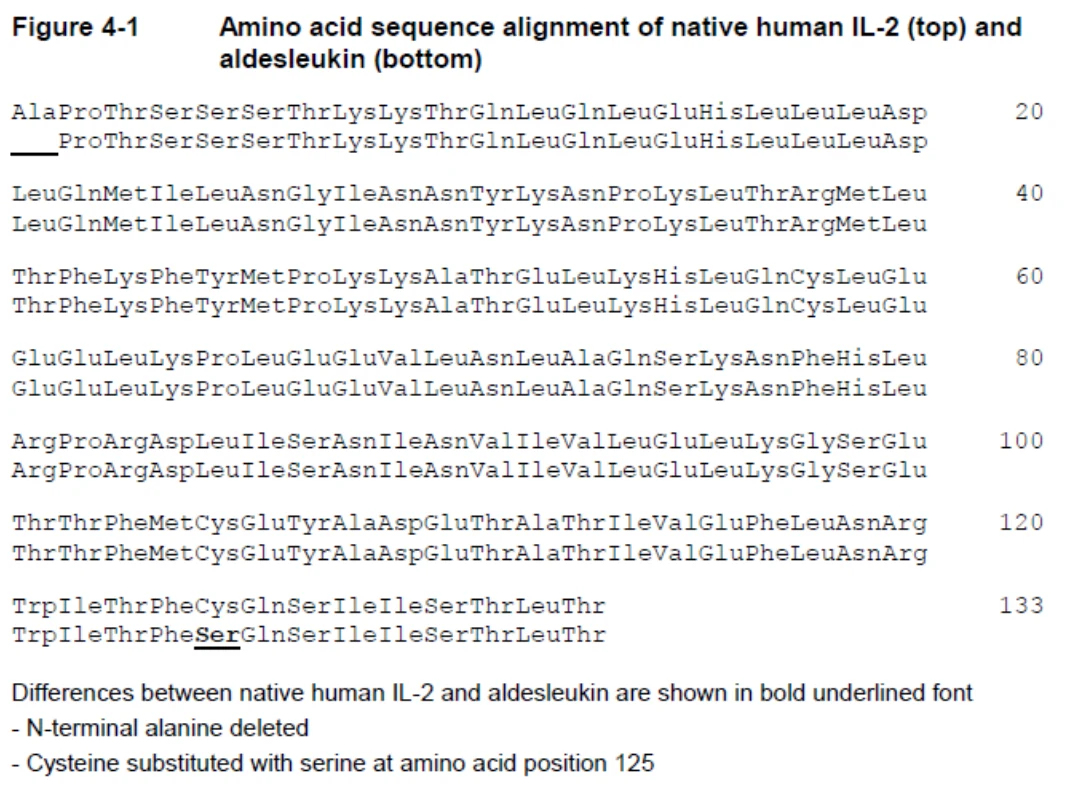
Chemical name: 125-L-serine-2-133-interleukin 2 (human reduced) 2-133-Interleukin 2 (human reduced), 125-L-serine-Des-alanyl-1, serine-125 human interleukin-2
Molecular formula and molecular mass: The molecular formula of aldesleukin derived from the 132 amino acid sequence considering the disulfide bond between Cys57 and Cys104 is C690H1113N177O203S6.
The relative molecular mass of aldesleukin calculated from the molecular formula is 15328.67 Da. The molecular mass determined by electrospray ionization mass spectrometry is 15329 Da.
Structural formula: Aldesleukin is comprised of a single peptide chain.
Physicochemical properties: Aldesleukin is supplied as a sterile, white to off-white, preservative-free lyophilized powder. The solution of aldesleukin is clear and colorless to slightly yellow, with a pH of 7.2-7.8.
Pharmaceutical standard: Professed
Product Characteristics:
Aldesleukin, a derivative of human interleukin-2 (IL-2), is a biosynthetic lymphokine with immune modulating and antineoplastic activity. It is produced by recombinant DNA
technology using a genetically engineered Escherichia coli strain containing an analog of the human interleukin-2 gene. Aldesleukin differs from native interleukin-2 in several aspects:
- The molecule is not glycosylated (being derived from E. coli)
- The N-terminal alanine has been deleted
- Serine has been substituted for cysteine at amino acid position 125
14. Clinical Trials
14.1. Clinical Trials by Indication
Metastatic Renal Cell Cancer
Table 7: Summary of Patient Demographics for Clinical Trials in the treatment of adults (≥18 years of age) with Renal Cell Cancer (RCC)
| Study # | Study design | Study subjects (n) | Age (range) | Sex |
| T89-0160 | Open-label, with patients randomly assigned to treatment with IL-2 alone. | 71 | 54 (22, 71) | Female – 19 (27%) Male – 52 (73%) |
| CS-L288-10 | Open-label, single arm study of IL-2. | 63 | 51 (18, 69) | Female – 18 (29%) Male – 45 (71%) |
| NC-L286-44-2 | Open-label, with patients randomly assigned to treatment with IL-2 alone. | 41 | 52 (24, 69) | Female – 15 (37%) Male – 26 (63%) |
| NC-L287-51 | Open-label, with patients randomly assigned to treatment with IL-2 alone. | 37 | 54 (33, 71) | Female – 11 (30%) Male – 26 (70%) |
| CS-PG90-01 | Open-label, with patients randomly assigned to treatment with IL-2 alone. | 27 | 50 (26, 65) | Female – 8 (30%) Male – 19 (70%) |
| NC-L286-81 | Single-arm, open-label Phase II clinical trial. | 8 | 46 (26, 64) | Female – 5 (63%) Male – 3 (38%) |
| NC-L286-86 | Single-arm, open-label Phase II clinical trial. | 8 | 51 (37, 60) | Female – 1 (13%) Male – 7 (88%) |
Two hundred fifty-five patients with metastatic RCC were treated with single agent PROLEUKIN in 7 clinical studies conducted at 21 institutions. Patients enrolled in trials of single agent PROLEUKIN were required to have an ECOG PS of 0 or 1 and normal organ function as determined by cardiac stress test, pulmonary function tests, and creatinine ≤1.5 mg/dL. Patients with brain metastases, active infections, organ allografts and diseases requiring steroid treatment were excluded.
Prior to enrollment into the renal cell cancer studies and the metastatic malignant melanoma studies, patients had progression of disease after prior therapies. A majority (96%) of patients had previous surgical resection of their primary lesions, lymph node dissections, or area of relapse.
PROLEUKIN was given by 15 min IV infusion every 8 hours for up to 5 days (maximum of 14 doses). No treatment was given on days 6 to 14 and then dosing was repeated for up to 5 days on days 15 to 19 (maximum of 14 doses). These 2 cycles constituted 1 course of therapy. Patients could receive a maximum of 28 doses during a course of therapy. In practice >90% of patients had doses withheld. Metastatic RCC patients received a median of 20 of 28 scheduled doses of PROLEUKIN. Doses were withheld for specific toxicities (see 4 Dosage and Administration, 4.2 Recommended Dose and Dosage Adjustment and 8 Adverse Reactions).
In the renal cell cancer studies (n=255), objective response was seen in 37 (15%) patients, with 17 (7%) complete and 20 (8%) partial responders. The 95% confidence interval for objective response was 11% to 20%. Onset of tumor regression was observed as early as 4 weeks after completion of the first course of treatment, and in some cases, tumor regression continued for up to 12 months after the start of treatment. The median duration of response for all responding patients is 54 months (3 to 131+ months). The median duration for patients with complete responses has not yet been observed and for patients with partial response was 20 months. Twelve patients who achieved a complete response and six patients who achieved a partial response had responses ongoing at the time of last contact. The median progression-free survival for all responding patients was 55 months. Responses were observed in both lung and non-lung sites (e.g., liver, lymph node, renal bed occurrences, and soft tissue). Of the 37 responding patients, 12 patients with individual bulky lesions (largest lesion >25 cm2) and 22 patients with large cumulative tumor burden (total >26 cm2) achieved responses.
Table 8: Proleukin Clinical Response Data for Metastatic Renal Cell Cancer
Number of Responding Patients (response rate) | Median Response Duration in Months (range) | |
| CR | 17 (7%) | 80+† (7 to 131+) |
| PR | 20 (8%) | 20 (3 to 126+) |
| PR + CR | 37 (15%) | 54 (3 to 131+) |
CR: complete response, PR: partial response
(+) sign means ongoing
†Median duration not yet observed; a value is presented which represents the minimum median duration of response.
Metastatic Melanoma
Table 9: Summary of Patient Demographics for Clinical Trials in the treatment of adults (≥18 years of age) with metastatic melanoma (MM)
| Study # | Study design | Study subjects (n) | Median Age | Sex |
| Study # | Study design | Study subjects (n) | Median Age | Sex |
| T84-0524 | A Phase I Trial of Purified Recombinant IL-2 in Patients with Metastatic Cancer and Have Failed Conventional Therapy Administered I.P., I.M., or as a Frequent Bolus. | 28 | 44.5 | Female – 9 Male – 19 |
| T86-0097 | The Treatment of Patients with Advanced Cancer Using Recombinant Interleukin-2. | 84 | 40.0 | Female – 31 Male - 53 |
| T90-0053 | A Randomized Comparison of the Treatment of Patients with Melanoma with Recombinant Human Interleukin-2 (rIL-2) versus rIL-2 Plus Polyethylene Glycol-Modified rIL-2 (PEG-IL-2). | 32 | 39.0 | Female – 10 Male – 22 |
| 92C-0094 | Continuing Treatment Protocol for Patients with Cancer/ AIDS/Skin Disease. | 3 | 39.0 | Female – 1 Male – 2 |
| T86-0063 | A Phase II Trial of lnterleukin-2 For Melanoma. | 9 | 40.0 | Female – 5 Male – 4 |
| T86-0170 | Phase II Study of Patients with Metastatic or Unresectable Malignant Melanoma with rIL-2. | 64 | 45.5 | Female – 21 Male – 43 |
| C87-0002 | Treatment of Patients with Metastatic or Unresectable Malignant Melanoma with IL-2. | 45 | 44.0 | Female – 17 Male – 28 |
| CS-L29 I-06 | A Phase I Study of Proleukin IL-2 administered by Rapid IV Bolus Injection in Patients with Solid Tumours. | 5 | 38.0 | Female – 2 Male - 3 |
Two hundred seventy patients with metastatic MM were treated with single agent PROLEUKIN in 8 clinical studies conducted at 22 institutions. Patients enrolled in trials of single agent PROLEUKIN were required to have an ECOG PS of 0 or 1 and normal organ function as determined by cardiac stress test, pulmonary function tests, and creatinine ≤1.5 mg/dL. Patients with brain metastases, active infections, organ allografts and diseases requiring steroid treatment were excluded.
Prior to enrollment into the renal cell cancer studies and the metastatic malignant melanoma studies, patients had progression of disease after prior therapies. A majority (96%) of patients had previous surgical resection of their primary lesions, lymph node dissections, or area of relapse.
PROLEUKIN was given by 15 min IV infusion every 8 hours for up to 5 days (maximum of 14 doses). No treatment was given on days 6 to 14 and then dosing was repeated for up to 5 days on days 15 to 19 (maximum of 14 doses). These 2 cycles constituted 1 course of therapy. Patients could receive a maximum of 28 doses during a course of therapy. In practice >90% of patients had doses withheld. Metastatic MM patients received a median of 18 of 28 scheduled doses of PROLEUKIN during the first course of therapy. Doses were withheld for specific toxicities (see 4 Dosage and Administration, 4.2 Recommended Dose and Dosage Adjustment and 8 Adverse Reactions).
In the metastatic malignant melanoma studies (n=270), objective response was seen in 43 (16%) patients, with 17 (6%) complete and 26 (10%) partial responders. The 95% confidence interval for objective response was 12% to 21%. The median duration of response for all responding patients was 9 months (1 to 122+ months); the median duration of objective complete responses has not been observed and the median duration for partial response was 6 months. Ten patients who achieved a complete response and three patients who achieved a partial response had responses ongoing at the time of last contact. The median progression-free survival for the 43 responding patients was 13 months. Responses in metastatic MM patients were observed in both visceral and non-visceral sites (e.g., lung, liver, lymph node, soft tissue, adrenal, subcutaneous). Of the 43 responding patients, 14 patients with individual bulky lesions (largest lesion >25 cm2) and 21 patients with large cumulative tumor burden (total >25 cm2) achieved responses.
Table 10: Proleukin Clinical Response Data for Metastatic Melanoma
Number of Responding Patients (response rate) | Median Response Duration in Months (range) | |
| CR | 17 (6%) | 59+† (3 to 122+) |
| PR | 26 (10%) | 6 (1 to 111+) |
| PR + CR | 43 (16%) | 9 (1 to 122+) |
CR: complete response, PR: partial response
(+) sign means ongoing
†Median duration not yet observed; a value is presented which represents the minimum median duration of response.
16. Non-Clinical Toxicology
Acute and Repeated Dose Toxicity:
An acute toxicity study in rat showed that a single intravenous dose of 12.5 mg/kg of PROLEUKIN was not lethal, and not toxic. Repeat dose studies ranging from 5 to 11 days in duration in rat, rabbit and/or sheep, provided findings consistent with those observed in man. Signs of toxicity noted included hepatotoxicity, pulmonary interstitial inflammation, decreased serum albumin, anemia, and thrombocytopenia. The toxicologic findings, which were considered to be extensions of pharmacologic properties, were characterized as leukocytosis, lymphocytosis, eosinophilia, extramedullary hematopoiesis, hepato-splenomegaly and lymphoid hyperplasia. In the sheep, hypotension due to decreased peripheral resistance, fever, and lymphopenia was observed. These effects were generally reversible after cessation of drug administration.
In the rat, repeat-dose studies indicated that the maximum tolerated dose (MTD) of PROLEUKIN was approximately 1.0 mg/kg/day (18 x 106 IU/kg/day).
Carcinogenicity/Genotoxicity
No mutagenic, genotoxic or carcinogenic assessments of the product have been made, based on the intended use of the drug to treat metastatic RCC or metastatic MM, both life-threatening diseases.
Reproductive and developmental toxicology
There have been no studies conducted assessing the effects of PROLEUKIN on fertility, early embryonic development, and prenatal and postnatal development. The effects of PROLEUKIN on male or female fertility is unknown; therefore, the use of PROLEUKIN in fertile persons is not recommended unless the benefits outweigh the potential risks. PROLEUKIN was administered to pregnant rats by IV injection during organogenesis (days 6 to 15 of gestation) at 0.5 to 2.0 mg/kg. All dose levels produced maternal toxicity; however, no evidence of teratogenicity was observed.
Collectively these data indicate that PROLEUKIN induces toxicity via extensions of its pharmacologic effects. When drug administration was discontinued, reversal of target organ toxicity was routinely observed.