


Product Monograph - Propofol-II Injection
SUMMARY PRODUCT INFORMATION
| Route of Administration | Dosage Form / Strength | All Nonmedicinal Ingredients |
| Parenteral | Intravenous Emulsion/ 10 mg/mL | Soybean oil, glycerol, egg phosphatide, benzyl alcohol, sodium benzoate and water for injection. |
INDICATIONS AND CLINICAL USE
Adults (>18 years of age):
Propofol-II Injection is indicated for:
- Induction and maintenance of general anaesthesia
- Conscious sedation for surgical and diagnostic procedures
- Sedation during intensive care
Propofol is a short-acting i.v. general anaesthetic agent that can be used for both induction and maintenance of anaesthesia as part of a balanced anaesthesia technique, including total intravenous anaesthesia (TIVA), for inpatient and outpatient surgery.
Propofol-II Injection, when administered i.v. as directed, can be used to initiate and maintain sedation in conjunction with local/regional anaesthesia in adult patients undergoing surgical procedures. Propofol-II Injection may also be used for sedation during diagnostic procedures in adults (see WARNINGS AND PRECAUTIONS: General).
Propofol-II Injection should only be administered to intubated, mechanically ventilated, adult patients in the Intensive Care Unit (ICU) to provide continuous sedation and control of stress responses. In this setting, Propofol-II Injection should be administered only by or under the supervision of persons trained in general anaesthesia or critical care medicine.
Geriatrics (> 65 years of age):
Elderly patients should be given reduced doses of propofol, commensurate with their age and physical condition (see WARNINGS AND PRECAUTIONS: Special Populations and DOSAGE AND ADMINISTRATION).
Pediatrics (≥ 3 years of age):
Propofol-II Injection is only indicated for anaesthesia in children 3 years of age and older.
Pediatrics (≤ 18 years of age):
Propofol-II Injection is not recommended for sedation or during surgical/diagnostic procedures in children under the age of 18 as safety and efficacy have not been established in this patient population. (see WARNINGS AND PRECAUTIONS: Special Populations and DOSAGE AND ADMINISTRATION).
CONTRAINDICATIONS
Propofol-II Injection is contraindicated:
- for the sedation of children 18 years or younger receiving intensive care (see DOSAGE AND ADMINISTRATION)
- when sedation or general anaesthesia are contraindicated
- in patients with a known allergy and/or hypersensitivity to propofol or to lipid emulsions (see DOSAGE FORMS, COMPOSITION AND PACKAGING: Composition).
- Propofol-II Injection is not for anaesthesia in children younger than 3 years of age.
WARNINGS AND PRECAUTIONS
PROPOFOL-II CONTAINS BENZYL ALCOHOL.
Benzyl alcohol, a component of this product, has been associated with serious adverse events and death, particularly in pediatric patients. The “gasping syndrome,” (characterized by central nervous system depression, metabolic acidosis, gasping respirations, and high levels of benzyl alcohol and its metabolites found in the blood and urine) has been associated with benzyl alcohol dosages >99 mg/kg/day in neonates and low-birth weight neonates. Additional symptoms may include gradual neurological deterioration, seizures, intracranial hemorrhage, hematologic abnormalities, skin breakdown, hepatic and renal failure, hypotension, bradycardia, and cardiovascular collapse.
Although normal therapeutic doses of this product deliver amounts of benzyl alcohol that are substantially lower than those reported in association with the “gasping syndrome”, the minimum amount of benzyl alcohol at which toxicity may occur is not known. Premature and low-birth weight infants, as well as patients receiving high dosages, may be more likely to develop toxicity. Practitioners administering this and other medications containing benzyl alcohol should consider the combined daily metabolic load of benzyl alcohol from all sources.
In the absence of sufficient clinical experience, propofol is not recommended for anaesthesia in children less than 3 years of age (see INDICATIONS AND CLINICAL USE and DOSAGE AND ADMINISTRATION).
General
Strict aseptic techniques must always be maintained during handling as Propofol-II Injection is a single-use parenteral product, for use in an individual patient. The vehicle is capable of supporting rapid growth of microorganism (see DOSAGE AND ADMINISTRATION). Failure to follow aseptic handling procedures may result in microbial contamination causing fever/infection/sepsis, which could lead to life-threatening illness.
For general anaesthesia or sedation for surgical/diagnostic procedures, Propofol-II Injection should be administered only by persons trained in the administration of general anaesthesia and not involved in the conduct of surgical/diagnostic procedures. Patients should be continuously monitored and facilities for maintenance of a patent airway, artificial ventilation, and oxygen enrichment and circulatory resuscitation must be immediately available.
For sedation of intubated, mechanically ventilated, adult patients in the Intensive Care Unit (ICU), Propofol-II Injection should be administered only by persons trained in general anaesthesia or critical care medicine.
Propofol Infusion Syndrome (PRIS)
Use of Propofol-II infusions for both adult and pediatric ICU sedation has been associated with a constellation of metabolic derangements and organ system failures, referred to as Propofol Infusion Syndrome, that have resulted in death.
The syndrome is characterized by severe metabolic acidosis, hyperkalemia, lipemia, rhabdomyolysis, hepatomegaly, cardiac and renal failure. The syndrome is most often associated with prolonged, high-dose infusions (> 5 mg/kg/h for > 48h) but has also been reported following large-dose, short-term infusions during surgical anesthesia. The following appear to be the major risk factors for the development of these events: decreased oxygen delivery to tissues; serious neurological injury and/or sepsis; high dosages of one or more of the following pharmacological agents - vasoconstrictors, steroids, inotropes and/or propofol.
In the elderly, debilitated and ASA III or IV patients, rapid (single or repeated) bolus administration should not be used during general anaesthesia or sedation in order to minimize undesirable cardiorespiratory depression including hypotension, apnea, airway obstruction and/or oxygen desaturation.
Extreme care should be used in administering Propofol-II Injection in elderly, debilitated or other ASA III or IV patients.
Very rarely reports of metabolic acidosis, rhabdomyolysis, hyperkalaemia, and/or cardiac failure, in some cases with a fatal outcome, have been received concerning seriously ill patients receiving propofol for ICU sedation (see ADVERSE REACTIONS: Post-Market Adverse Drug Reactions). The following appear to be the major risk factors for the development of these events: decreased oxygen delivery to tissues; serious neurological injury and/or sepsis; high doses of one or more of the following pharmacological agents – vasoconstrictors, steroids, inotropes and/or propofol. All sedatives and therapeutic agents used in the ICU (including propofol) should be titrated to maintain optimal oxygen delivery and haemodynamic parameters.
Extreme care should be used in administering Propofol-II Injection in patients with impaired left ventricular function because propofol may produce a negative inotropic effect.
Extreme care should be used in administering Propofol-II Injection in patients who are hypotensive, hypovolemic or in shock because propofol may cause excessive arterial hypotension.
Propofol lacks vagolytic activity and has been associated with reports of bradycardia, (occasionally profound) and also asystole. The intravenous administration of an anticholinergic agent before induction, or during maintenance of anaesthesia should be considered, especially in situations where vagal tone is likely to predominate or when Propofol-II Injection is used in conjunction with other agents likely to cause a bradycardia.
Propofol-II Injection should not be co-administered through the same i.v. catheter with blood or plasma because compatibility has not been established. In vitro tests have shown that aggregates of the globular component of the emulsion vehicle have occurred with blood/plasma/serum from humans and animals. The clinical significance is not known.
The neuromuscular blocking agents, atracurium and mivacurium should not be given through the same i.v. line as Propofol-II Injection without prior flushing.
The administration of Propofol-II Injection should be initiated as a continuous infusion and changes in the rate of administration made slowly (>5 min) in order to minimize hypotension and avoid acute overdosage.
Since Propofol-II Injection is formulated in an oil-water emulsion, patients should be monitored for lipemia. Administration of Propofol-II Injection should be adjusted if fat is being inadequately cleared from the body. A reduction in the quantity of concurrently administered lipids is indicated to compensate for the amount of lipid infused as part of the Propofol-II Injection formulation; 1.0 mL of Propofol-II Injection contains approximately 0.1 g of fat (1.1 kcal).
In adults and children, attention should be paid to minimize pain on administration of propofol. Transient local pain during intravenous injection may be reduced by prior injection of i.v. lidocaine (1.0 mL of a 1% solution).
Cardiovascular
Patients should be monitored for early signs of significant hypotension and/or cardiovascular depression, which may be profound. These effects are responsive to discontinuation of Propofol-II Injection, i.v. fluid administration, and/or vasopressor therapy.
Cardiac Anaesthesia
Propofol was evaluated in 328 patients undergoing coronary artery bypass graft (CABG). Of these patients 85% were males (mean age 61, range 32-83) and 15% were females (mean age 65, range 42-86).
The majority of patients undergoing CABG had good left ventricular function. Experience in patients with poor left ventricular function, as well as, in patients with hemodynamically significant valvular or congenital heart disease is limited.
Slower rates of administration should be utilized in premedicated patients, geriatric patients, patients with recent fluid shift, or patients who are hemodynamically unstable. Any fluid deficits should be corrected prior to administration of Propofol-II Injection. In those patients where additional fluid therapy may be contraindicated, other measures, e.g. elevation of lower extremities, or use of pressor agents, may be useful to offset the hypotension which is associated with the induction of anaesthesia with propofol.
Endocrine and Metabolism
Propofol-II Injection should not be used for Intensive Care Unit (ICU) sedation in patients who have severely disordered fat metabolism because the vehicle of Propofol-II Injection is similar to that of INTRALIPID 10%. The restrictions that apply to INTRALIPID 10% should also be considered when using Propofol-II Injection in the ICU.
Hepatic/Biliary/Pancreatic
The long-term administration of propofol to patients with hepatic insufficiency has not been evaluated.
Neurologic
Neurosurgical Anaesthesia
When using Propofol-II Injection in patients with increased intracranial pressure (ICP) or impaired cerebral circulation, significant decreases in mean arterial pressure should be avoided because of the resultant decreases in cerebral perfusion pressure. When increased ICP is suspected, hyperventilation and hypocarbia should accompany the administration of Propofol-II Injection (see DOSAGE AND ADMINISTRATION).
Epilepsy: Since various manifestations of seizures have been reported during propofol anaesthesia, special care should be taken when giving the drug to epileptic patients.
Locomotion and Coordination: Patients receiving Propofol-II Injection on an outpatient basis should not engage in hazardous activities requiring complete mental alertness such as driving a motor vehicle or operating machinery until the effects of Propofol-II Injection have completely subsided.
Peri-Operative Considerations
As with other sedative medications, there is wide interpatient variability in Propofol-II Injection dosage requirements, and these requirements may change with time.
Patients who receive large doses of narcotics during surgery may require very small doses of Propofol-II Injection for appropriate sedation.
When Propofol-II Injection is administered as a sedative for surgical or diagnostic procedures, patients should be continuously monitored by persons not involved in the conduct of the surgical/diagnostic procedure. Oxygen supplementation should be immediately available and provided where clinically indicated; and oxygen saturation should be monitored in all patients. Patients should be continuously monitored for early signs of hypotension, apnea, airway obstruction and/or oxygen desaturation. These cardiorespiratory effects are more likely to occur following rapid initiation (loading) boluses or during supplemental maintenance boluses, especially in the elderly, debilitated and ASA III or IV patients.
Patients should be continuously monitored for early signs of significant hypotension and/or bradycardia. Treatment may include increasing the rate of intravenous fluid, elevation of lower extremities, use of pressor agents or administration of anticholinergic agents (e.g. atropine) or use of plasma volume expanders. Apnea often occurs during induction and may persist for more than 60 seconds. Ventilatory support may be required. Because Propofol-II Injection is a lipid emulsion, caution should be exercised in patients with disorders of lipid metabolism such as primary hyperlipoproteinemia, diabetic hyperlipemia and pancreatitis.
As with other sedative agents, when Propofol-II Injection is used for sedation during operative procedures, involuntary patient movements may occur. During procedures requiring immobility these movements may be hazardous to the operative site.
Abrupt discontinuation of Propofol-II Injection infusion prior to weaning should be avoided since, due to the rapid clearance of propofol, it may result in rapid awakening with associated anxiety, agitation and resistance to mechanical ventilation. Infusions of Propofol-II Injection should be adjusted to maintain a light level of sedation throughout the weaning process.
Since Propofol-II Injection is rarely used alone, an adequate period of evaluation of the awakened patient is indicated to ensure satisfactory recovery from general anaesthesia or sedation prior to discharge of the patient from the recovery room or to home. Very rarely the use of propofol may be associated with the development of a period of post-operative unconsciousness, which may be accompanied by an increase in muscle tone. This may or may not be preceded by a period of wakefulness. Although recovery is spontaneous, appropriate care of an unconscious patient should be administered.
Renal
The long-term administration of propofol to patients with renal failure has not been evaluated.
Special Populations
Pregnant Women: Propofol-II Injection should not be used during pregnancy. Propofol has been used during termination of pregnancy in the first trimester. Teratology studies in rats and rabbits show some evidence of delayed ossification or abnormal cranial ossification, however such developmental delays are not considered indicative of a teratogenic effect. Reproductive studies in rats suggest that administration of propofol to the dam adversely affects perinatal survival of the offspring.
Labour and Delivery: Propofol-II Injection should not be used in obstetrics including Caesarean section deliveries, because propofol crosses the placenta and may be associated with neonatal depression.
Nursing Women: Propofol-II Injection is not recommended for use in nursing women because preliminary findings indicate that it is excreted in human milk and the effects of oral absorption of small amounts of propofol are not known.
Pediatrics (≤18 years of age): In the absence of sufficient clinical experience, Propofol-II Injection is not recommended for anaesthesia in children less than 3 years of age (see INDICATIONS AND CLINICAL USE and DOSAGE AND ADMINISTRATION).
Geriatrics (> 65 years of age): Elderly patients may be more sensitive to the effects of propofol; therefore, the dosage of Propofol-II Injection should be reduced in these patients according to their condition and clinical response (see DETAILED PHARMACOLOGY: Pharmacokinetics and DOSAGE AND ADMINISTRATION).
ADVERSE REACTIONS
Adverse Drug Reaction Overview
Anaesthesia and Sedation for Surgical/Diagnostic Procedures
During induction of anaesthesia in clinical trials, hypotension and apnea occurred in the majority of patients. The incidence of apnea varied considerably, occurring in between 30 and 100% of patients depending upon premedication, speed of administration and dose (see ACTION AND CLINICAL PHARMACOLOGY). Decreases in systolic and diastolic pressures ranged between 10 and 28%, but were more profound in the elderly and in ASA III and IV patients. Excitatory phenomena occurred in up to 14% of adult patients and in 33 to 90% of pediatric patients; they consisted most frequently of spontaneous musculoskeletal movements and twitching and jerking of the hands, arms, feet or legs. Epileptiform movements including convulsions and opisthotonus have occurred rarely, but a causal relationship with propofol has not been established. Flushing and rash have occurred in 10 to 25% of pediatric patients. Local pain occurred during intravenous injection of propofol at an incidence of 28% when veins of the dorsum of the hand were used and 5% when the larger veins of the forearm and the antecubital fossa were used. Propofol increased plasma glucose concentrations significantly, but no other significant changes in hematological or biochemical values were observed.
In the sedation clinical trials, the adverse reaction profile of propofol was similar to that seen during anaesthesia. The most common adverse reactions included hypotension, nausea, pain and/or hotness at injection site and headache. Respiratory events included upper airway obstruction, apnea, hypoventilation, dyspnea and cough.
Rarely, clinical features of anaphylaxis, which may include angioedema, bronchospasm, erythema and hypotension, occur following propofol administration.
Very rarely the use of propofol may be associated with the development of a period of post-operative unconsciousness, which may be accompanied by an increase in muscle tone. This may or may not be preceded by a period of wakefulness.
There have been reports of post-operative fever.
Pulmonary oedema may be a potential side effect associated with the use of propofol.
As with other anaesthetics, sexual disinhibition may occur during recovery.
Intensive Care Unit (ICU) Sedation - Adults
The most frequent adverse reactions during Intensive Care Unit (ICU) sedation were hypotension (31.5%), hypoxia (6.3%), and hyperlipemia (5.5%). In some patients, hypotension was severe. Other reactions considered severe were observed in single patients and included ventricular tachycardia, decreased cardiac output, decrease in vital capacity and negative inspiratory force, increase in triglycerides, and agitation. Two patients with head injury suffered renal failure with severe increases in BUN accompanied in one patient by an increase in creatinine.
There have been very rare reports of rhabdomyolysis when propofol has been administered at doses greater than 4 mg/kg/hr for ICU sedation.
Very rarely pancreatitis has been observed following the use of propofol for induction and maintenance of anaesthesia, and for intensive care sedation. A causal relationship has not been clearly established.
Clinical Trial Adverse Drug Reactions
Because clinical trials are conducted under very specific conditions the adverse reaction rates observed in the clinical trials may not reflect the rates observed in practice and should not be compared to the rates in the clinical trials of another drug. Adverse drug reaction information from clinical trials is useful for identifying drug-related adverse events and for approximating rates.
The following table compares the overall occurrence rates of adverse reactions in propofol patients from non-ICU and ICU clinical trials where the rate of occurrence was greater than 1%. Major differences include lack of metabolic/nutritional (hyperlipemia) and respiratory events in the non-ICU group and lack of nausea, vomiting, headache, movement and injection site events in the ICU group.
Table 1 Non-ICU vs. ICU adverse events occurring in greater than 1% of Propofol patients.
| Body System | Event | Non-ICU | ICU |
|---|---|---|---|
| Number of patients | 2588 | 127 | |
| Cardiovascular | Hypotension | 7.38% | 31.50% |
| Bradycardia | 2.82% | 3.94% | |
| Hypertension | 2.82% | 1.57% | |
| Arrhythmia | 1.24% | 0.79% | |
| Tachycardia | 0.81% | 3.15% | |
| Cardiovascular Disorder | 0.23% | 2.36% | |
| Hemorrhage | 0.23% | 1.57% | |
| Atrial Fibrillation | 0.15% | 1.57% |
| Body System | Event | Non-ICU | ICU |
|---|---|---|---|
| Cardiac Arrest | 0.12% | 3.15% | |
| Ventricular Tachycardia | 0.08% | 1.57% | |
| Digestive | Nausea | 14.57% | 0% |
| Vomiting | 8.31% | 0% | |
| Abdominal Cramping | 1.24% | 0% | |
| Nervous | Movement | 4.44% | 0% |
| Headache | 1.78% | 0% | |
| Dizziness | 1.70% | 0% | |
| Twitching | 1.47% | 0% | |
| Agitation | 0.19% | 2.36 | |
| Intracranial Hypertension | 0% | 3.94% | |
| Metabolic/Nutritional | Hyperlipemia | 0.08% | 5.51% |
| Acidosis | 0.04% | 1.57% | |
| Creatinine Increased | 0% | 2.36% | |
| BUN Increased | 0% | 1.57% | |
| Hyperglycemia | 0% | 1.57% | |
| Hypernaturemia | 0% | 1.57% | |
| Hypokalemia | 0% | 1.57% | |
| Respiratory | Dyspnea | 0.43% | 1.57% |
| Hypoxia | 0.08% | 6.30% | |
| Acidosis | 0% | 1.57% | |
| Pneumothorax | 0% | 1.57% | |
| Other | Injection Site: | ||
| Pain | 8.11% | 0% | |
| Burning/stinging | 7.77% | 0% | |
| Fever | 1.89% | 2.36% | |
| Hiccough | 1.78% | 0% | |
| Cough | 1.55% | 0% | |
| Rash | 1.20% | 1.57% | |
| Anemia | 0.35% | 1.57% | |
| Kidney Failure | 0% | 1.57% |
Less Common Clinical Trial Adverse Drug Reactions (≤1.0%) reported during anaesthesia and sedation for surgical/diagnostic procedures:
Cardiovascular System Significant hypotension, premature atrial contractions, premature ventricular contractions, tachycardia, syncope, abnormal ECG, bigeminy, edema.
Respiratory System Burning in throat, tachypnea, dyspnea, upper airway obstruction, wheezing, bronchospasm, laryngospasm, hypoventilation, hyperventilation, sneezing.
Excitatory Hypertonia, dystonia, rigidity, tremor.
Central Nervous System Confusion, dizziness, paresthesia, somnolence, shivering, abnormal dreams, agitation, delirium, euphoria, fatigue.
Injection Site Phlebitis, thrombosis, hives/itching, redness/discolouration.
Digestive System Hypersalivation, dry mouth.
Skin and Appendages Flushing/rash (for incidence in children, see above), urticaria, pruritus.
Special Senses Diplopia, amblyopia, tinnitus.
Musculoskeletal Myalgia.
Urogenital Urine retention, discolouration of urine.
Less Common Adverse Drug Reactions (≤ 1%) reported during ICU sedation.
Cardiovascular Arrhythmia, extrasystole, heart block, right heart failure, bigeminy, ventricular fibrillation, heart failure, myocardial infarction.
Respiratory Lung function decreased, respiratory arrest.
Central Nervous System Seizure, thinking abnormal, akathisia, chills, anxiety, confusion, hallucinations.
Digestive Ileus, hepatomegaly.
Metabolic/Nutritional Osmolality increased.
Urogenital Green urine, urination disorder, oliguria.
Body as a Whole Sepsis, trunk pain, whole body weakness.
Post-Market Adverse Drug Reactions
Clinical Trial Adverse Drug Reactions
A randomised, controlled, clinical trial that evaluated the safety and effectiveness of propofol versus standard sedative agents (SSA) in pediatric ICU patients has been conducted. In that study, a total of 327 pediatric patients were randomised to receive either propofol 2% (113 patients), propofol 1% (109 patients), or an SSA (e.g. lorazepam, chloral hydrate, fentanyl, ketamine, morphine, or phenobarbital).
Propofol therapy was initiated at an infusion rate of 5.5 mg/kg/hr and titrated as needed to maintain sedation at a standardized level. The results of the study showed an increase in the number of deaths in patients treated with propofol as compared to SSAs. A total of 25 patients died during the trial or within the 28-day follow-up period: 12 (11%) in the propofol 2% treatment group, 9 (8%) in the propofol 1% treatment group, and 4 (4%) in the SSA treatment group.
Spontaneous Reports and Publications
Propofol Infusion Syndrome (PRIS)
There are several publications identifying an association in adults between high infusion rates (greater than 5 mg/kg/h) of propofol for more than 48 hours in ICUs and a potentially fatal constellation of adverse events characterized by metabolic acidosis, rhabdomyolysis, hyperkalaemia, and cardiovascular collapse (see WARNINGS AND PRECAUTIONS).
The majority of the above-reported cases occurred in adults with head injury. These patients were treated with propofol at infusion rates greater than 5 mg/kg/h in an attempt to control intracranial hypertension It is unclear at this time whether propofol at these high infusion rates can provide enhanced intracranial pressure reduction. A causal relationship between these adverse events and propofol and/or the lipid carrier cannot yet be established.
Similar findings were first reported in the literature in 1992 in children who received high doses of propofol in the ICU. Since the 1992 publication, several similar reports have been published, including an article that summarized 18 cases of children who received propofol infusions and suffered serious adverse events, including death.
Drug Abuse and Dependence
Rare cases of self administration of propofol by health care professionals have been reported, including some fatalities.
DRUG INTERACTIONS
Overview
Propofol has been used in association with spinal and epidural anaesthesia and with a range of premedicants, muscle relaxants, inhalational agents, analgesic agents and with local anaesthetic agents; no significant adverse interactions have been observed.
Drug-Food Interactions
Interactions of propofol with food have not been established.
Drug-Herb Interactions
Interactions of propofol with herbal products have not been established.
Drug-Laboratory Interactions
Interactions of propofol with laboratory tests have not been established.
Drug-Lifestyle Interactions
Interactions of propofol with lifestyle have not been established.
DOSAGE AND ADMINISTRATION
NOTE: CONTAINS BENZYL ALCOHOL (see PRECAUTIONS section).
Dosing Considerations
General Strict aseptic techniques must always be maintained during handling. Propofol-II Injection is a single-use parenteral product, for use in an individual patient. Propofol-II Injection contains benzyl alcohol 1.5 mg/mL and sodium benzoate 0.7 mg/mL to retard the rate of growth of microorganisms in the event of accidental extrinsic contamination. However, Propofol-II Injection is capable of supporting rapid growth of microorganisms as it is not an antimicrobially preserved product under USP standards. Failure to follow aseptic handling procedures may result in microbial contamination causing fever/infection/sepsis which could lead to life-threatening illness.
Propofol-II Injection should be visually inspected for particulate matter, emulsion separation and/or discolouration prior to use. Do not use if any of these things are seen. If no signs of particulate matter, emulsion separation and/or discolouration are seen, shake gently before use.
Dosage and rate of administration should be individualized and titrated to the desired effect according to clinically relevant factors including preinduction and concomitant medications, age, ASA status and level of debilitation of the patient. In heavily premedicated patients, both the induction and maintenance doses should be reduced.
Recommended Dose and Dosage Adjustment
INDUCTION OF GENERAL ANAESTHESIA
As with most anaesthetic agents, the effects of Propofol-II Injection may be potentiated in patients who have received intravenous sedative or narcotic premedications shortly prior to induction.
Adults (< 55 years of age):
Most adult patients under 55 years of age and classified ASA I and II are likely to require 2.0 to 2.5 mg/kg of Propofol-II Injection for induction when unpremedicated or when premedicated with oral benzodiazepines or intramuscular narcotics. For induction, it is recommended that Propofol-II Injection should be titrated (approximately 40 mg every 10 seconds by bolus injection or infusion) against the response of the patient until the clinical signs show the onset of general anaesthesia.
Geriatric, debilitated and adults ASA Classes III and IV
It is important to be familiar and experienced with the appropriate intravenous use of Propofol-II Injection before treating elderly, debilitated and/or adult patients in ASA Physical Status Classes III and IV. These patients may be more sensitive to the effects of propofol; therefore, the dosage of Propofol-II Injection should be reduced in these patients by approximately 50% (20 mg every 10 seconds) according to their condition and clinical response. A rapid bolus should not be used as this will increase the likelihood of undesirable cardiorespiratory depression including hypotension, apnea, airway obstruction and/or oxygen desaturation (see WARNINGS AND PRECAUTIONS and DOSAGE AND ADMINISTRATION: Induction of General Anaesthesia - Dosage Guide).
During cardiac anaesthesia, a rapid bolus induction should be avoided. A slow rate of approximately 20 mg every 10 seconds until induction onset (0.5 to 1.5 mg/kg) should be used.
Pediatrics (3-18 years of age):
Most children over 8 years of age require approximately 2.5 mg/kg of Propofol-II Injection for induction of anaesthesia. Children 3 to 8 years of age may require somewhat higher doses, however the dose should be titrated by administering Propofol-II Injection slowly until the clinical signs show the onset of anaesthesia. Reduced dosage is recommended for children of ASA Classes III and IV.
Pediatrics < 3 years of age
Propofol-II Injection is not recommended for induction of anaesthesia in children less than 3 years of age.
Dosage Guide for Induction of General Anaesthesia
Dosage should be individualized
| Adult Patients < 55 Years of Age | Are likely to require 2.0 to 2.5 mg/kg (approximately 40 mg every 10 seconds until induction onset). |
| Elderly, Debilitated and/or Adult ASA III or IV Patients | Are likely to require 1.0 to 1.5 mg/kg (approximately 20 mg every 10 seconds until induction onset) but dose should be carefully titrated to effect. |
| Cardiac Anaesthesia | Patients are likely to require 0.5 to 1.5 mg/kg (approximately 20 mg every 10 seconds until induction onset). |
| Neurosurgical Patients | Are likely to require 1.0 to 2.0 mg/kg (approximately 20 mg every 10 seconds until induction onset). |
| Pediatric Patients 3-8 and 8-18 Years of Age | Children over 8 years of age require approximately 2.5 mg/kg. Children 3 to 8 years of age may require somewhat higher doses but doses should be titrated slowly to the desired effect. Reduced dosage is recommended for children of ASA Classes III and IV. |
| Pediatric Patients <3 Years of Age | In the absence of sufficient clinical experience, Propofol-II Injection is not recommended for induction of anaesthesia in children less than 3 years of age (see INDICATIONS AND CLINICAL USE and WARNINGS AND PRECAUTIONS). |
MAINTENANCE OF GENERAL ANAESTHESIA
Anaesthesia can be maintained by administering Propofol-II Injection by infusion or intermittent i.v. bolus injection. The patient’s clinical response will determine the infusion rate or the amount and frequency of incremental injections.
When administering Propofol-II Injection by infusion, drop counters, syringe pumps or volumetric pumps must be used to provide controlled infusion rates.
Continuous Infusion
Propofol-II Injection 0.10 to 0.20 mg/kg/min (6 - 12 mg/kg/h) administered in a variable rate infusion with 60% - 70% nitrous oxide and oxygen provides anaesthesia for patients undergoing general surgery. Maintenance by infusion of Propofol-II Injection should immediately follow the induction dose in order to provide satisfactory or continuous anaesthesia during the induction phase. During this initial period following the induction injection higher rates of infusion are generally required (0.15 - 0.20 mg/kg/min; 9 - 12 mg/kg/h) for the first 10 to 15 minutes. Infusion rates should subsequently be decreased by 30% - 50% during the first half-hour of maintenance. Changes in vital signs (increases in pulse rate, blood pressure, sweating and/or tearing) that indicate a response to surgical stimulation or lightening of anaesthesia may be controlled by the administration of Propofol-II Injection 25 mg (2.5 mL) to 50 mg (5.0 mL) incremental boluses and/or by increasing the infusion rate. If vital sign changes are not controlled after a five minute period, other means such as a narcotic, barbiturate, vasodilator or inhalation agent therapy should be initiated to control these responses.
For minor surgical procedures (i.e. body surface) 60% to 70% nitrous oxide can be combined with a variable rate Propofol-II Injection infusion to provide satisfactory anaesthesia. With more stimulating surgical procedures (i.e. intra-abdominal) supplementation with i.v. analgesic agents should be considered to provide a satisfactory anaesthetic and recovery profile. When supplementation with nitrous oxide is not provided, administration rate(s) of Propofol-II Injection and/or opioids should be increased in order to provide adequate anaesthesia.
Infusion rates should always be titrated downward in the absence of clinical signs of light anaesthesia until a mild response to surgical stimulation is obtained in order to avoid administration of Propofol-II Injection at rates higher than are clinically necessary. Generally, rates of 0.05 to 0.10 mg/kg/min should be achieved during maintenance in order to optimize recovery times.
During cardiac anaesthesia, when Propofol-II Injection is used as the primary agent, maintenance infusion rates should not be less than 0.10 mg/kg/min and should be supplemented with analgesic levels of continuous opioid administration. When an opioid is used as the primary agent, Propofol-II Injection maintenance rates should not be less than 0.05 mg/kg/min. Higher doses of Propofol-II Injection will reduce the opioid requirements.
For children, the average rate of administration varies considerably but rates between 0.10 to 0.25 mg/kg/min (6 - 15 mg/kg/h) should achieve satisfactory anaesthesia. These infusion rates may be subsequently reduced depending on patient response and concurrent medication.
Intermittent Bolus
Increments of Propofol-II Injection 25 mg (2.5 mL) to 50 mg (5.0 mL) may be administered with nitrous oxide in patients undergoing general surgery. The incremental boluses should be administered when changes in vital signs indicate a response to surgical stimulation or light anaesthesia.
Propofol has been used in conjunction with a wide variety of agents commonly used in anaesthesia such as atropine, scopolamine, glycopyrrolate, diazepam, depolarizing and nondepolarizing muscle relaxants, and narcotic analgesics, as well as with inhalational and regional anaesthetic agents. No pharmacological incompatibilities have been encountered.
Lower doses of Propofol-II Injection may be required when used as an adjunct to regional anaesthesia.
Dosage Guide for Maintenance of General Anaesthesia
Infusion: Variable rate infusion titrated to the desired clinical effect.
| Adult Patients < 55 Years of Age | Generally, 0.10 to 0.20 mg/kg/min (6 to 12 mg/kg/h). |
| Elderly, Debilitated and/or Adult ASA III or IV Patients | Generally, 0.05 to 0.10 mg/kg/min (3 to 6 mg/kg/h). |
| Cardiac Anaesthesia | Most patients require:
|
| Neurosurgical Patients | Generally, 0.10 to 0.20 mg/kg/min (6 to 12 mg/kg/h). |
| Pediatric Patients 3-18 Years of Age | Generally, 0.10 to 0.25 mg/kg/min (6-15 mg/kg/h). |
Intermittent Bolus: Increments of 25 mg to 50 mg, as needed.
SURGICAL/DIAGNOSTIC SEDATION
Adults
When Propofol-II Injection is administered for sedation, rates of administration should be individualized and titrated to clinical response. In most patients, the rates of Propofol-II Injection administration will be approximately 25 to 30% of those used for maintenance of general anaesthesia.
During initiation of sedation, slow injection or slow infusion techniques are preferable over rapid bolus administration. During maintenance of sedation, a variable rate infusion is preferable over intermittent bolus dose administration.
Initiation of sedation
Slow injection: most adult patients will generally require 0.5 to 1.0 mg/kg administered over 3 to 5 minutes and titrated to clinical response.
In the elderly, debilitated, hypovolemic and ASA III or IV patients, the dosage of Propofol-II Injection should be reduced to approximately 70 to 80% of the adult dosage and administered over 3 to 5 minutes.
Infusion: sedation may be initiated by infusing Propofol-II Injection at 0.066 to 0.100 mg/kg/min (4.0 - 6.0 mg/kg/h) and titrating to the desired level of sedation while closely monitoring respiratory function.
Maintenance of sedation
Patients will generally require maintenance rates of 0.025 to 0.075 mg/kg/min (1.5 - 4.5 mg/kg/h) during the first 10 to 15 minutes of sedation maintenance.
Infusion rates should always be titrated downward in the absence of clinical signs of light sedation until mild responses to stimulation are obtained in order to avoid sedative administration of Propofol-II Injection at rates higher than are clinically necessary.
In addition to the infusion, bolus administration of 10 to 15 mg may be necessary if a rapid increase in sedation depth is required.
In the elderly, debilitated, hypovolemic and ASA III or IV patients, the rate of administration and the dosage of Propofol-II Injection should be reduced to approximately 70 to 80% of the adult dosage according to their condition, responses, and changes in vital signs. Rapid (single or repeated) bolus dose administration should not be used for sedation in these patients (see WARNINGS AND PRECAUTIONS).
Dosage Guide for Surgical/Diagnostic Sedation
Dosage and rate should be individualized and titrated to the desired clinical effect.
| Adult Patients < 55 Years of Age | Are likely to require 0.5 to 1.0 mg/kg over 3 to 5 min to initiate sedation, followed by 0.025 to 0.075 mg/kg/min (1.5 - 4.5 mg/kg/h) for continued sedation. |
| Elderly, Debilitated, Hypovolemic and/or ASA III or IV patients | The dosage and rate of administration may need to be reduced in these patients by approximately 20 to 30% (see previous section for details). |
| Pediatric Patients <18 Years of Age | Propofol-II Injection is not recommended for sedation during surgical/diagnostic procedures in children under the age of 18, as safety and efficacy have not been established (see INDICATIONS and CLINICAL USE). |
INITIATION AND MAINTENANCE OF ICU SEDATION IN INTUBATED, MECHANICALLY VENTILATED ADULT PATIENTS
Propofol-II Injection should be individualized according to the patient's condition and response, blood lipid profile, and vital signs.
Adults
For intubated, mechanically ventilated, adult patients, Intensive Care Unit (ICU) sedation should be initiated slowly with a continuous infusion in order to titrate to desired clinical effect and minimize hypotension. When indicated, initiation of sedation should begin at 0.005 mg/kg/min (0.3 mg/kg/h). The infusion rate should be increased by increments of 0.005 to 0.010 mg/kg/min (0.3 - 0.6 mg/kg/h) until the desired level of sedation is achieved. A minimum period of 5 minutes between adjustments should be allowed for onset of peak drug effect.
Most adult patients require maintenance rates of 0.005 to 0.050 mg/kg/min (0.3 - 3.0 mg/kg/h). Administration of Propofol-II Injection for ICU sedation in adult patients should not exceed 4 mg/kg/hour. Dosages of Propofol-II Injection should be reduced in patients who have received large dosages of narcotics. As with other sedative medications, there is interpatient variability in dosage requirements and these requirements may change with time. (See DOSAGE AND ADMINISTRATION: Initiation and Maintenance of ICU Sedation in Intubated, Mechanically Ventilated Adult Patients - Dosage Guide).
Bolus administration of 10 to 20 mg should only be used to rapidly increase sedation depth in patients where hypotension is not likely to occur. A rapid bolus should not be used, as this will increase the likelihood of hypotension. Patients with compromised myocardial function, intravascular volume depletion or abnormally low vascular tone (e.g. sepsis) may be more susceptible to hypotension.
Children Under 18 Years of Age
Propofol is contraindicated for the sedation of children 18 years or younger receiving intensive care.
Dosage Guide for Initiation and Maintenance of ICU Sedation in Intubated, Mechanically Ventilated Adult Patients
Dosage and rate of infusion should be individualized.
| Adult Patients |
|
Handling and Administration
Handling Procedures Propofol-II Injection should be visually inspected for particulate matter, emulsion separation and/or discolouration prior to use whenever solution and container permit. Do not freeze. Do not use if any of these changes are seen. If no signs of particulate matter, emulsion separation and/or discolouration are seen, shake gently before use.
Aseptic techniques must be applied to the handling of the drug. Propofol-II Injection is not an antimicrobially preserved product under USP standards and the vehicle supports growth of microorganisms. When Propofol-II Injection is to be aspirated it should be drawn aseptically into a sterile syringe or intravenous administration set immediately after breaking the vial seal. Administration should commence without delay. Asepsis must be maintained for both Propofol-II Injection and the infusion equipment throughout the infusion period. Any drugs or fluids added to the infusion line must be administered close to the cannula site. Propofol-II Injection must not be administered via a microbiological filter.
In the event of accidental extrinsic contamination, Propofol-II Injection containing benzyl alcohol 1.5 mg/mL and sodium benzoate 0.7 mg/mL inhibits the rate of growth of microorganisms up to 12 hours. However, Propofol-II Injection can still support the growth of microorganisms as it is not an antimicrobially preserved product under USP standards. Accordingly, strict aseptic technique must still be adhered to. Do not use if contamination is suspected. Discard unused portions as directed within the required time limits.
Propofol-II Injection is for single use in an individual patient only. If a vial is utilized for infusion, both the reservoir of Propofol-II Injection and the infusion line must be discarded and replaced as appropriate at the end of the procedure or at 12 hours, whichever is sooner. (When using DILUTED Propofol-II Injection see DOSAGE AND ADMINISTRATION: Reconstitution).
Administration into a Running I.V. Catheter Compatibility of Propofol-II Injection with the co-administration of blood/serum/plasma has not been established (see WARNINGS AND PRECAUTIONS: General). Propofol-II Injection has been shown to be compatible with the following intravenous fluids when administered into a running i.v. catheter:
- 5% Dextrose Injection, USP
- Lactated Ringers Injection, USP
- Lactated Ringers and 5% Dextrose Injection, USP
- 5% Dextrose and 0.45% Sodium Chloride Injection, USP
- 5% Dextrose and 0.2% Sodium Chloride Injection, USP
Any unused portions of Propofol-II Injection or solutions containing Propofol-II Injection should be discarded at the end of the surgical procedure.
Dilution Prior to Administration When Propofol-II Injection is diluted prior to administration, it should only be diluted with 5% Dextrose Injection, USP, and it should not be diluted to a concentration less than 2 mg/mL because it is an emulsion. Dilutions should be prepared aseptically immediately before administration and should not be used beyond 6 hours of preparation. In diluted form it has been shown to be more stable when in contact with glass than with plastic (95% potency after 2 hours of running infusion in plastic).
Pre-mixing with alfentanil Propofol-II Injection may be pre-mixed with alfentanil injection containing 500 μg/ml alfentanil in the ratio of 20:1 to 50:1 v/v. Mixtures should be prepared using sterile technique and used within 6 hours of preparation.
Propofol-II Injection can be pre-mixed with alfentanil. Propofol-II Injection should not be mixed with other therapeutic agents prior to administration.
The neuromuscular blocking agents, atracurium and mivacurium should not be given through the same i.v. line as Propofol-II Injection without prior flushing.
OVERDOSAGE
To date, there is no known case of acute overdosage, and no specific information on emergency treatment of overdosage is available. If accidental overdosage occurs, Propofol-II Injection administration should be discontinued immediately. Overdosage is likely to cause cardiorespiratory depression. Respiratory depression should be treated by artificial ventilation with oxygen. Cardiovascular depression may require repositioning of the patient by raising the patient's legs, increasing the flow rate of intravenous fluids and if severe may require the administration of plasma volume expanders and/or pressor agents.
ACTION AND CLINICAL PHARMACOLOGY
Mechanism of Action
Propofol is an intravenous hypnotic agent for use in the induction and maintenance of general anaesthesia or sedation.
The drug, an alkylphenol formulated in an oil-in-water emulsion, is chemically distinct from currently available intravenous anaesthetic agents. Intravenous injection of a therapeutic dose of propofol produces hypnosis rapidly and smoothly, usually within 40 seconds from the start of an injection (one arm-brain circulation time), although induction times >60 seconds have been observed.
Pharmacodynamics
Propofol induces anaesthesia in a dose-dependent manner. In unpremedicated, ASA I or II patients, propofol induced anaesthesia in 87% and 95% of patients at doses of 2.0 and 2.5 mg/kg, respectively. Elderly patients require lower doses; for unpremedicated patients older than 55 years of age, the mean dose requirement was 1.66 mg/kg. Premedication profoundly alters dose requirements; at 1.75 mg/kg, propofol induced anaesthesia in 65% of patients who had no premedication and in 85% and 100% of patients who received diazepam or papaveretum-hyoscine premedication, respectively.
| For management of suspected drug overdose, contact your regional Poison Control Centre. |
During induction of anaesthesia, the hemodynamic effects of propofol vary. If spontaneous ventilation is maintained, the major cardiovascular effects are arterial hypotension (sometimes greater than a 30% decrease) with little or no change in heart rate and no appreciable decrease in cardiac output. If ventilation is assisted or controlled (positive pressure ventilation), the degree and incidence of decrease in cardiac output are accentuated. Maximal fall in blood pressure occurs within the first few minutes of the administration of a bolus dose. The fall in arterial pressure is greater under propofol anaesthesia than under anaesthesia induced by thiopental or methohexital. Increases in heart rate with propofol are generally less pronounced or absent after an induction dose, than after equivalent doses of these other two agents.
During maintenance of anaesthesia with propofol, systolic and diastolic blood pressures generally remain below pre-anaesthetic levels, although the depth of anaesthesia, the rate of maintenance infusion as well as stimulation from tracheal intubation and/or surgery may increase or decrease blood pressure. Heart rate may also vary as a function of these factors but will generally remain below pre-anaesthetic levels.
In the presence of a potent opioid (e.g. fentanyl), the blood pressure lowering effect of propofol is substantially increased. Fentanyl also decreases heart rate and this might lead to a significant decrease in cardiac output.
Age is highly correlated with the fall in blood pressure. In elderly subjects, both the incidence and degree of hypotension are greater than in younger subjects. Thus, a lower induction dose and a slower maintenance rate of administration should be used in the elderly (see DOSAGE AND ADMINISTRATION). Particular caution should be exercised in elderly patients with severe coronary and/or cerebral arteriosclerosis; reduction in perfusion pressure may impair adequate blood supply to these organs.
Insufficient data are available regarding the cardiovascular effects of propofol when used for induction and/or maintenance of anaesthesia or sedation in elderly, hypotensive, debilitated or other ASA III and IV patients. However, limited information suggests that these patients may have more profound cardiovascular responses. It is recommended that if propofol is used in these patients, a lower induction dose and a slower maintenance rate of administration of the drug be used (see WARNINGS AND PRECAUTIONS: General and DOSAGE AND ADMINISTRATION).
The first respiratory disturbance after a bolus dose of propofol is a profound fall in tidal volume leading to apnea in many patients. There has been no accompanying cough or hiccough and otherwise anaesthesia is smooth. However, there might be some difficulty in uptake of volatile agents if respiration is not assisted.
In unpremedicated, healthy patients, there is a steep dose-response relationship regarding apnea; 0% and 44% of patients had apnea after receiving 2.0 and 2.5 mg/kg of propofol, respectively. Fentanyl enhanced both the incidence and the onset of apnea and the episode lasted for >60 seconds in the majority of patients.
Opioid premedication - in the presence of hyoscine - affected respiratory function (rate of respiration and minute volume) substantially more than atropine premedication. Respiratory function was more depressed when these premedicants were combined with propofol than when they were combined with thiopental. Enhanced respiratory depression with propofol and an opioid have been observed in the postoperative period.
During maintenance, propofol (0.1 to 0.2 mg/kg/min; 6 - 12 mg/kg/h) caused a decrease in ventilation usually associated with an increase in carbon dioxide tension which may be marked depending upon the rate of administration and other concurrent medication (e.g. narcotics, sedatives, etc.). Propofol was not evaluated in patients with any respiratory dysfunction.
During sedation, attention must be given to the cardiorespiratory effects of Propofol-II Injection. Hypotension, apnea, airway obstruction, and/or oxygen desaturation can occur, especially with a rapid bolus injection. During initiation of sedation, slow infusion or slow injection techniques are preferable over rapid bolus administration, and during maintenance of sedation, a variable rate infusion is preferable over intermittent bolus administration in order to minimize undesirable cardiorespiratory effects. In the elderly, debilitated and ASA III or IV patients, rapid (single or repeated) bolus dose administration should not be used for sedation (see WARNINGS AND PRECAUTIONS: General)
Clinical and preclinical studies suggest that propofol is rarely associated with elevation of plasma histamine levels and does not cause signs of histamine release.
Clinical and preclinical studies show that propofol does not suppress the adrenal response to ACTH.
Preliminary findings in patients with normal intraocular pressure indicate that propofol anaesthesia produces a decrease in intraocular pressure which may be associated with a concomitant decrease in systemic vascular resistance.
Propofol is devoid of analgesic or antanalgesic activity.
Pharmacokinetics
The pharmacokinetic profile of propofol can be described by a 3-compartment open model. After a single bolus dose, there is fast distribution from blood into tissues (t½α: 1.8 to 8.3 min), high metabolic clearance (t½β: 34 to 66 min) and a terminal slow elimination from poorly perfused tissues (t½γ: 184-480 min). With 12 and 24 hour samplings, t½γ values of 502 and 674 min, respectively, were observed.
When given by an infusion for up to two hours, the pharmacokinetics of propofol appear to be independent of dose (0.05 - 0.15 mg/kg/min; 3 - 9 mg/kg/h) and similar to i.v. bolus pharmacokinetics. Pharmacokinetics are linear over recommended infusion rates.
Propofol is highly protein-bound (97 - 99%); the degree of binding seems to be unrelated to either sex or age.
In the presence of propofol, alfentanil concentrations were higher than expected based upon the rate of infusion. However, alfentanil did not affect the pharmacokinetics of propofol (see DOSAGE AND ADMINISTRATION, Handling and Administration).
Pharmacokinetics in Adult Patients in Intensive Care Unit (ICU)
Regarding most parameters, the pharmacokinetics of propofol in these patients are similar to those of patients undergoing anaesthesia/sedation for short surgical procedures. However, the terminal half-life (t½γ) is substantially prolonged after long-term infusion, reflecting extensive tissue distribution.
Distribution: Propofol has large volumes of distribution as would be expected with a highly lipophilic anaesthetic agent. The volume of central compartment (Vc) is between 21 and 56 L (0.35 - 0.93 L/kg based on a 60 kg patient), and the volume of distribution at steady state (Vss) is between 171 and 364 L (2.85 - 6.07 L/kg). Values for volume of distribution during the terminal phase (Vd) are two to three times the corresponding Vss values.
Metabolism: The termination of the anaesthetic or sedative effects of propofol after a single i.v. bolus or a maintenance infusion is due to extensive redistribution from the CNS to other tissues and high metabolic clearance, both of which will decrease blood concentrations. The mean propofol concentration at time of awakening is 1 µg/mL (range : 0.74 to 2.2 µg/mL). Recovery from anaesthesia or sedation is rapid. When propofol is used for both induction (2.0 to 2.5 mg/kg) and maintenance (0.1 to 0.2 mg/kg/min) of anaesthesia, the majority of patients are generally awake, responsive to verbal command and oriented in approximately 7 to 8 minutes. Recovery from the effects of propofol occurs due to rapid metabolism and is not dependent on the terminal elimination half-life since the blood levels achieved in this phase are not clinically significant.
Excretion: A study in six subjects showed that 72% and 88% of the administered radio-labelled dose was recovered in the urine within 24 hours and 5 days, respectively. Less than 2% was excreted in the feces. Unchanged drug was less than 0.3%. Propofol is chiefly metabolized by conjugation in the liver to inactive metabolites which are excreted by the kidney. Propofol glucuronide accounts for about 50% of the administered dose. The remainder consists of the 1- and 4-glucuronide and 4-sulphate conjugates of 2,6-diisopropyl-1,4-quinol.
The total body clearance (Cl) of propofol ranges from 1.6 L/min to 2.3 L/min (0.026 - 0.038 L/min/kg based on a 60 kg patient). This clearance exceeds estimates of hepatic blood flow, suggesting possible extrahepatic metabolism.
Special Populations and Conditions
Pediatrics: The results were obtained in ASA I children, ranging in age from 3 to 10 years, who received a single bolus dose of propofol, 2.5 mg/kg. Propofol was rapidly distributed from blood into tissue (t½α: 1.5 - 4.1 min), metabolic clearance was high (t½β: 9.3 - 56.1 min) and terminal elimination slow (t½γ: 209 - 735 min). The volume of central compartment (Vc)
ranged between 0.53 - 0.72 L/kg, the volume of distribution at steady state (Vss) was between 2.1 - 10.9 L/kg and clearance (Cl) ranged between 0.032 - 0.040 L/min/kg. The mean plasma concentration of propofol at awakening was 2.3 µg/mL.
Geriatrics: With increasing age, the dose of Propofol-II Injection needed to achieve a defined anaesthetic endpoint (dose-requirement) decreases. Elderly patients had higher propofol blood concentrations at 2 minutes than young ones (6.07 versus 4.15 µg/mL), probably due to a significantly lower initial distribution volume (20 versus 26 L). The relatively high blood concentrations during the first few minutes can predispose elderly patients to cardiorespiratory effects including hypotension, apnea, airway obstruction and/or oxygen desaturation. The clearance of propofol also decreased from a mean ± S.D. of 1.8 ± 0.4 L/min in young patients (18-35 years) to 1.4 ± 0.4 L/min in elderly patients (65-80 years). The reduced clearance could decrease maintenance propofol requirements and prolong recovery if inappropriate infusions are used. Obesity is associated with significantly larger volumes of distribution (399 L versus 153 L) and clearance rates (2.8 L/min versus 1.8 L/min) but there is no change in the elimination half-life.
Gender: The pharmacokinetics of propofol do not appear to be altered by gender.
Hepatic Insufficiency: The pharmacokinetics of propofol do not appear to be altered by chronic hepatic cirrhosis. The effects of acute hepatic failure on the pharmacokinetics of propofol have not been studied.
Renal Insufficiency: In renal failure, the data is based on very limited findings. There was a trend towards longer half-lives, although the differences versus control patients did not reach statistical significance.
STORAGE AND STABILITY
Store between 20 and 25°C; do not freeze. The emulsion should be visually inspected for particulate matter, emulsion separation and/or discolouration prior to use. Do not use if any of these things are seen. If no signs of particulate matter, emulsion separation and/or discolouration are seen, shake gently before use. Any unused portions of Propofol-II Injection or solutions containing Propofol-II Injection should be discarded at the end of the surgical procedure.
DOSAGE FORMS, COMPOSITION AND PACKAGING
Composition
Propofol-II Injection is a white, oil in water emulsion. Each mL contains 10 mg of propofol for i.v. administration. In addition to the active component, propofol, the formulation also contains soybean oil (100 mg/mL), glycerol (22.5 mg/mL), egg phosphatide (12 mg/mL), benzyl alcohol (1.5 mg/mL), sodium benzoate (0.7 mg/mL) and water for injection with sodium hydroxide to adjust pH. It is isotonic with a pH of 7-8.5.
Dosage Forms and Packaging
Propofol-II Injection is available as Propofol-II Injection 1% w/v in a 20 mL glass vial. Each vial contains 10 mg/mL of propofol.
PART II: SCIENTIFIC INFORMATION
PHARMACEUTICAL INFORMATION
| Drug Substance | |
| Proper Name: | propofol |
| Chemical Name: | 2,6-diisopropylphenol or 2,6-bis(1-methylethyl)phenol |
| Code Name: | |
| Molecular Formula and Molecular Mass: | C12H18O, 178.27 |
| Structural Formula: | 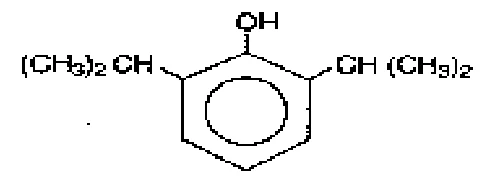 |
| Physicochemical Properties: | Colourless to pale straw-coloured liquid at room temperature. Practically insoluble in water. Completely miscible in all proportions with the following solvents at 20°C: acetone, 95% ethanol, chloroform, cyclohexane, diethyl ether, n-hexane, methanol, isooctane. pKa of 11.1 in water and a Melting Point of 18°C. |
DETAILED PHARMACOLOGY
Propofol was administered as a 1% w/v aqueous emulsion containing 10% w/v soya bean oil, 1.2% w/v egg phosphatide and 2.25% w/v glycerol. Control animals received the vehicle. The drug was administered by the intravenous route unless otherwise indicated.
Anaesthetic Activity
Mice
The HD50, i.e., the dose that abolished the righting reflex in 50% of the animals for 30 seconds or more, was 12.8 mg/kg. Induction times were significantly affected by the rate of injection.
Namely, they were 4.6 and 12.6 seconds, respectively, after the injection of a 15 mg/kg dose over one or ten seconds. However, the rate of injection did not influence sleeping times or the duration of apnea to a significant degree. To evaluate the effect of repeated bolus injections, propofol was administered at a 25 mg/kg dose, which in previous experiments was shown to induce anaesthesia for approximately 4 minutes. When the mice regained their righting reflex, they were re-injected after an interval of 30 seconds. This procedure was repeated until the animals received a total of 10 injections. Sleeping times increased with subsequent injections. The mean sleeping time was 4.6 minutes after the first injection and 19.4 minutes after the 8th injection indicating a slight cumulative effect.
Rats
In rats propofol produced a very steep dose-response curve, thus, only a range could be established for the HD50 (5.0 to 7.5 mg/kg). In this species, the anaesthetic effect was sex dependent, female rats having significantly longer sleeping times than male rats. In a separate experiment, utilizing female rats, anaesthesia was induced by a 7.5-10 mg/kg bolus dose of propofol and then maintained by the infusion of a 50 mg/kg/h dose. Anaesthesia was maintained for either one or two hours. The experiment established that heart rate and rate of respiration remained stable over the two hour infusion and did not change vis à vis baseline. Recovery times were slightly longer after the two hour infusion but were significantly shorter in propofol-treated rats than in alphaxalone/alphadolone-treated animals.
Cardiovascular and Respiratory Effects
The experiments were conducted in mini-pigs. Propofol was evaluated at a 3.75 mg/kg dose injected over a 30 second interval.
All the changes mentioned were statistically significant. Maximal changes from baseline are indicated in brackets. Mean arterial pressure decreased (107 → 78 mmHg) and was accompanied by reflex tachycardia (105 →189 beats/min). Rate of respiration became depressed (27.5 → 21.5 breaths/min) and was accompanied by decreased PO2 (94.6 → 79.1 mmHg) and increased PCO2 (40.4 → 44.3 mmHg). Total peripheral resistance decreased (2919 → 1902 dyne. sec. cm-5) while cardiac output increased (2.67 → 3.58 L/min). The hypotensive effect of propofol is probably due to reduced peripheral resistance.
Drug Interaction Studies
Preanaesthetic Medications
The experiments were conducted in mice. Diazepam, droperidol, promethazine, atropine, amylobarbital or papaveretum were administered subcutaneously, 30 minutes before the induction of anaesthesia with propofol (18 mg/kg). At the doses tested, only diazepam (2 mg/kg) enhanced significantly the duration of sleep. Recovery times were prolonged significantly by both diazepam and atropine (1 mg/kg).
Drugs Used in Balanced Anaesthesia
The experiments were conducted in dogs. Anaesthesia was induced by propofol and maintained by halothane. In the first set of experiments, the dogs were premedicated with atropine and fentanyl, while in the second set of experiments premedication was not employed. The following changes were observed in the presence of atropine and fentanyl: the induction doses of propofol were smaller (4.3 versus 7.9 mg/kg) and the concentration of halothane lower (1% versus 2%). However, both tachycardia and apnea occurred. Recovery times were shorter, probably due to the lower dose of propofol.
The Effect of Propofol on Adrenocortical Function
The effect of propofol was compared to that of etomidate on ACTH-stimulated cortisol production in two in vitro models, namely in guinea pig and bovine adrenal cells. Propofol affected cortisol production only at the 10-4M concentration, while etomidate exerted an activity at 10-7M concentration.
In propofol-anaesthetized rats, 5 µg ACTH elicited serum corticosterone levels of 37.2 µg/100 mL while in etomidate-anaesthetized rats, the value was 8.5 µg/100 mL. Since basal corticosterone levels ranged between 5.6 and 10.4 µg/100 mL, ACTH did not elevate corticosterone levels in etomidate-anaesthetized rats. The experiments indicated that propofol is only a very weak inhibitor of adrenal steroidogenesis.
In Vitro Studies
The aim of the experiments was to establish whether or not propofol exerts agonist or antagonist activity at various receptor sites. Only weak antagonist activities were detected at the β1 adrenoceptor, muscarinic cholinergic and 5-HT2 receptor sites. The pA2 values were 5.23, 5.43 and 5.18, respectively. At the same receptor sites the pA2 values for the standards were as follow: propranolol: 8.55, hyoscine: 9.38 and cyproheptadine: 8.2.
Behavioral Studies
The behaviour of mice was observed following the administration of 30, 100 and 300 mg/kg oral doses of propofol. None of the animals were anaesthetized by these oral doses. The lowest dose had no behavioral effects. The mid dose decreased locomotion. The highest dose produced sedation, ptosis, ataxia, slight tremors, hypothermia and decreased rate of respiration.
Miscellaneous Studies
Histamine Release
The administration of propofol, 7.5 mg/kg to dogs was not associated either with elevated plasma histamine levels or with clinical signs indicative of histamine release.
Hypersensitivity
Mini-pigs were anaesthetized with propofol, 2.5 mg/kg on two occasions at one week interval. No reactions, indicative of an anaphylactoid response were seen following the second injection.
Bronchomotor Tone
In the guinea-pig Konzett-Rossler technique, propofol (2.5 mg/kg) was devoid of both bronchoconstrictor and bronchodilator activity. The latter effect was tested against histamine-induced bronchoconstriction.
Blood Coagulation
ADP-induced platelet aggregation was similar in propofol (15 mg/kg) and saline-treated rats. Whole blood clotting times were similar in propofol (15 mg/kg) and saline-treated rats.
Renal Function
In rats, propofol, 15 mg/kg, had little effect on urine volume and urinary potassium and chloride levels. Sodium levels were slightly but significantly decreased (81% of control).
Cat Nictitating Membrane Preparation
Propofol, in a dose-range of 0.5 to 5.0 mg/kg, did not affect the contraction of the nictitating membrane, evoked by preganglionic stimulation of the cervical sympathetic nerve. The study indicates that propofol is devoid of ganglion blocking activity. Furthermore, propofol did not affect the pressor effect of norepinephrine, indicating a lack of effect on adrenoceptors.
Pharmacokinetics
Pharmacokinetic studies were carried out in male and female rats, male and female dogs and female rabbits. In all species, following a single intravenous dose, the pharmacokinetics fit a two-compartment open model with a very rapid distribution phase (t½α: 1.2-4.9 min) and a rapid elimination phase (t½β: 15-27 min; Table 2). In rats, but not in dogs, a sex difference was observed regarding several pharmacokinetic parameters.
In rats, maximal mean propofol blood concentrations as well as AUC values and propofol blood concentrations at awakening were significantly higher in females. However, elimination half-lives were the same for the two sexes. Both propofol blood concentrations and AUC values increased in a dose-dependent manner. In contrast, waking blood concentrations were independent of the dose. In dogs, the pharmacokinetic parameters were determined either after a bolus injection of propofol (5 and 10 mg/kg) or in an infusion model where an initial bolus dose of 7.5 mg/kg was followed by an infusion at the rate of 0.5 mg/kg/min for 45 minutes (22.5 mg/kg). Steady-state blood concentrations (Css) in the infusion model were achieved within 25 minutes. The elimination half-life was significantly longer following the infusion than after the bolus doses (Table 2). In addition, total body clearance (TBCL) was significantly slower after the infusion (TBCL= 1.0 L/min) than after the 5 mg/kg (TBCL = 1.92 L/min) or 10 mg/kg (TBCL=2.12 L/min) bolus administrations. Waking propofol concentrations in the dog were ~ 1 µg/mL.
| Table 2 Pharmacokinetic parameters following a single intravenous dose of propofol | |||||||
|---|---|---|---|---|---|---|---|
| Species | Dose (mg/kg) | Sex | Max propofol blood conc. (µg/mL) | AUC (µg.mL min) | t½β (min) | Sleeping time (min) | Waking propofol conc. (µg/mL) |
| Rat | 5 | M | 0.57 | 13.7 | 23 | Rats did not sleep | |
| F | 2.55 | 34.4 | 22 | ||||
| F (pregnant) | 2.35 | 34.8 | 25 | ||||
| 10 | M | 4.3 | 48.3 | 23 | 6.1 | 1.7 | |
| F | 11.3 | 87.9 | 18 | 7.9 | 2.8 | ||
| 15 | M | 11.3 | 97.2 | 22 | 9.6 | 1.0 | |
| F | 20.8 | 174.9 | 27 | 11.4 | 3.7 | ||
| Dog | 5 | M&F | 2.35 | 40.3 | 16 | ||
| 10 | M&F | 4.31 | 71.4 | 21 | |||
| 30 (infusion) | M&F | Css: 6.5 | 33 | ||||
| Rabbit | 5 | F | 260 | 14.4 | 15 | ||
Distribution
Tissue levels of total radioactivity and propofol were determined in rats following the administration of a 9.7 mg/kg intravenous dose of 14C-propofol. In all tissues assayed, other than fat, the highest concentration of radioactivity were detected five minutes after dosing and decreased thereafter. Maximal concentration in brown fat occurred at 10 minutes and in white fat at 30 and 60 minutes in males and females, respectively. This indicated that the distribution of propofol into fat occurs after five minutes.
| Table 3 Concentrations of total radioactivity and propofol in selected tissues of rats 5 minutes after the intravenous administration of 14C-propofol | ||||
|---|---|---|---|---|
| Tissue | Sex | Total radioactivity µg/equivalents/ mL | Propofol µg/mL of g | Propofol % of total radioactivity |
| Blood | M | 5.18 | 1.47 | 28 |
| F | 6.83 | 3.42 | 50 | |
| Brain | M | 5.54 | 5.12 | 92 |
| F | 9.87 | 9.16 | 93 | |
| Liver | M | 32.77 | 1.58 | 5 |
| F | 32.12 | 15.10 | 47 | |
Tissue concentrations of total radioactivity were similar in male and female rats, except in the brain where radioactivity was significantly higher in the females (Table 3). The rate of decrease of radioactivity was greatest in the brain; by 30 minutes total radioactivity decreased to 19% and 15% of the 5 minute levels in males and females, respectively. The concentration of propofol in the blood, brain and liver was significantly higher in females. While propofol comprised >90% of the radioactivity in the brain of both sexes, in the blood and liver propofol concentrations were considerably lower and a sex difference was evident. In the liver, propofol levels were about ten times higher in female rats indicating initial differences in the rate of metabolism between the sexes.
Metabolism And Elimination
14C-propofol (10 mg/kg) was extensively metabolized and rapidly eliminated in the urine and feces of rats and dogs. In the rabbit, excretion occurred almost exclusively in the urine (Table 4).
| Table 4 The excretion of 14C-propofol | ||||||
|---|---|---|---|---|---|---|
| % dose | ||||||
| Species | Sex | Urine | Feces | Bile | Total Recovery | |
| Rat | M | 60 | 31 | 92a | ||
| F | 75 | 15 | 91a | |||
| F (pregnant) | 77 | 16 | 95a | |||
| Mb | 13 | 1 | 78 | 95c | ||
| Fb | 15 | 1 | 53 | 82c | ||
| Dog | M & F | 60 | 29 | 90d | ||
| Rabbit | M | 95 | 2 | 93e | ||
a: includes dose found in 14CO2 and carcass; 120-h collection b: bile-duct cannulated rats c: includes dose found in gastrointestinal tract and carcass; 24-h collection d: 48-h collection e: 24-h collection
In rats, the differences between the excretion data for the two sexes were statistically significant. Extensive biliary excretion and enterohepatic recirculation was observed in both sexes. In the urine, propofol was completely metabolized prior to elimination. In the feces, propofol comprised ~ 10% and 6% of the dose in male and female rats, respectively. The presence of propofol in the feces may be due to hydrolysis of propofol glucuronide. The radioactivity in the urine consisted of the 4-glucuronide and 4-sulphate conjugates of 2,6-diisopropyl 1,4 quinol and 4-sulphate of 2-(1-propionic acid)-6-isopropyl 1,4 quinol.
In dogs, the urine contained the 4-substituted glucuronic acid and sulphate conjugates of 2,6-diisopropyl 1,4-quinol and minor metabolites; unchanged propofol was <1%. The feces contained 2,6-diisopropyl 1,4-quinol and some uncharacterized polar metabolites. At 2 minutes, the blood concentration of radioactivity was 10.02 µg equivalents/mL, that of propofol was 2.7 µg/mL, constituting 26% of total radioactivity. At 2 hours, propofol comprised only ~ 1% of radioactivity.
In rabbits, urinary radioactivity consisted of the 4-glucuronide and 4-sulphate conjugates of propofol and 2,6-diisopropyl 1,4-quinol. Unchanged propofol was not detected. At 2 minutes, the blood concentration of radioactivity was ~ 30 µg equivalents/mL, that of propofol was 15.9 µg/mL, constituting 53% of total radioactivity. At 2 hours, propofol represented ~ 2% radioactivity.
Binding to Plasma Proteins
Propofol was 98% and 97% bound to plasma proteins in the dog and rat, respectively, over a concentration range of 0.1-20 µg/mL. In the rabbit, binding was concentration dependent; propofol binding decreased from 97% at 0.5 µg/mL to 95% at 50 µg/mL.
TOXICOLOGY
Acute Toxicity
Studies in Rats and Mice
Rats and mice of the Alderley Park Albino strain received graded intravenous or oral doses of propofol. At each dose level, six male and six female animals were used. The drug was available as an emulsion for the i.v. studies and as a solution in soya bean oil for the oral studies. At the doses used, all animals became anaesthetized. Several rats and mice, both in the i.v. and oral studies, regained consciousness and then became re-anaesthetized before fully recovering. The LD50 values and observations are summarized in Table 5 below.
| Table 5 LD50 values and observations in Rats and Mice | |||
|---|---|---|---|
| Species | Route of admin | LD50 mg/kg (95% confidence limits) | Observations |
| Rats | i.v. | 42 (38-46) | Death occurred within 5 minutes of dosing. |
| oral | 600 (540-660) | The majority of rats died 1 to 3 days after propofol administration. Following recovery from anaesthesia, several rats exhibited decreased activity, piloerection, hunched posture and tremors. | |
| Mice | i.v. | 53 (46-60) | Death occurred within 2 minutes of dosing and was due to respiratory depression. |
| oral | 1230 (1010 –1500) | The majority of mice died 1 to 2 days after propofol administration. During anaesthesia, both the rate and depth of respiration was decreased. Following recovery from anaesthesia, several mice exhibited locomotor incoordination and tremors. | |
Single-Dose Tolerance Study in Rabbits
Three male and three female Dutch rabbits received propofol, 15 mg/kg, by the intravenous route. The drug was given at a rate of 0.5 mg/kg/second. All rabbits became lightly anaesthetized, with 6/6 rabbits retaining their pedal reflex and 2/6 rabbits retaining their palpebral reflex. Ten to 15 minutes after dosing, all rabbits recovered completely without any untoward effect.
Long-Term Toxicology
One-Month Toxicity Study in Rats
Five groups of albino rats were dosed daily for 28 days. Injections were given intravenously into the tail vein. Group I received saline, Group II the emulsion vehicle, Groups III, IV and V propofol at doses of 5, 10 and 15 mg/kg/day, respectively.
Propofol induced anaesthesia in a dose-dependent manner; at 5 mg/kg rats were not anaesthetized while the duration of anaesthesia was significantly longer at the 15 mg/kg than at the 10 mg/kg dose. With repeated administration, the duration of anaesthesia became prolonged and on Day 26, anaesthesia lasted significantly longer than on Day 1.
High dose male rats gained slightly but significantly less weight than control rats (131 versus 150 g). In female rats, weight gain was slightly less in all treated animals, however, the effect was not dose-related. Urine volume was significantly but not dose-dependently elevated on Day 26 in all propofol-treated rats. In female rats, relative kidney weights were significantly and dose-dependently elevated in all propofol-treated groups.
One-Month Toxicity Study in Dogs
Five groups of Beagle dogs were dosed intravenously over a 30-day period. Group I received saline, Group II the emulsion vehicle, and Groups III and IV propofol at doses of 5 and 10 mg/kg/day, respectively. Group V received propofol, 30 mg/kg 3 times weekly for a total of 13 doses.
Each dose consisted of a 7.5 mg/kg bolus dose and an infusion of 0.5 mg/kg/min for a total of 22.5 mg/kg.
Each group was comprised of 5 male and 5 female dogs. In addition, 3 dogs/sex were used to evaluate recovery in the control and high dose groups.
Propofol induced anaesthesia in a dose-dependent manner. With repeated administration, the duration of anaesthesia became prolonged and on Day 28, anaesthesia lasted significantly longer than on Day 1.
During the 30-day treatment period, Hb, RBC and PCV values declined below the normal range in a few animals. On Day 30, abnormally low values were recorded in 3/10 dogs in both Groups III and IV. (In both groups, the same three dogs were affected.) In Groups II and V, 1/16 dogs each showed similar changes.
REPRODUCTION AND TERATOLOGY
Fertility and Reproductive Performance in Rats
Three groups of 50 rats each were dosed intravenously with the vehicle or propofol at doses of 10 or 15 mg/kg/day for two weeks prior to mating, during the mating period to untreated males and up to Day 7 of gestation. Generally, reproductive studies require that treatment be continued during both gestation and lactation, thus, this study provides information about propofol's effect upon fertility but not necessarily upon reproduction.
Approximately half of the females of the F0 generation were sacrificed on Day 21 of pregnancy. The remainder were allowed to litter and rear their offspring to weaning at Day 22 of lactation. At weaning, two females and one male were selected from each litter to form the F1 generation. These animals were kept until sexually mature and then mated. As with the F0 generation, approximately half the females were sacrificed on Day 21 of pregnancy and the remainder were allowed to litter and rear their young to weaning, when the F1 dams and their pups (the F2 generation) were sacrificed.
The administration of propofol was associated with the following changes:
In the F0 generation, treated rats gained significantly less weight than controls prior to mating (9.7, -0.8 and 1.7 g in the control, low and high dose groups, respectively). However, weight gains between Days 7 and 16, or 1 to 21 of pregnancy, were similar in all three groups.
Gestation period was dose-dependently decreased. In the control, low and high dose groups 9.5, 16 and 33% of the rats, respectively delivered on Day 21, rather than Day 22.
Survival of the F1 generation pups was lower in the treated groups. On Day 1, the number of alive pups was similar in all three groups. From Day 5 on, survival in treated groups was lower. Numerical values on Day 22 were as follows: 73, 49 and 52% of pups were alive in the control, low and high dose groups, respectively.
Pups which died, were subjected to necropsy. None showed soft tissue abnormalities, however, reduced vertebral ossification was present in 13, 38 and 40% of pups in the control, low and high dose groups, respectively.
Postimplantation loss (as a % of implants) in the F1 generation was higher in rats born to high dose animals (2.3, 1.2 and 15.6% in control, low and high dose rats, respectively).
Teratology Study in Rats
Four groups of 40 mated female rats each were dosed intravenously with the vehicle or propofol at doses of 5, 10 or 15 mg/kg/day from Day 6 to Day 15 of pregnancy. The rats were sacrificed on Day 20 of pregnancy and the pups checked for internal and skeletal anomalies.
Maternal weight gain during Days 6 to 15 was significantly less in propofol-treated rats than in controls. The incidence of abnormal cranial ossification was higher in fetuses born to high dose dams than in control fetuses (19.9% versus 11.0%).
In rats, sacrificed on Day 15 of pregnancy, 10 minutes after the last dose, propofol was detected in maternal blood, amniotic fluid and the developing embryo. Drug concentrations increased linearly with increasing doses.
The study indicated that propofol is not teratogenic in rats at the doses studied.
Teratology Study in Rabbits
Four groups of 22 mated female rabbits each were dosed intravenously with the vehicle or propofol at doses of 5, 10 or 15 mg/kg/day from Day 6 to Day 18 of pregnancy. The rabbits were sacrificed on Day 28 of pregnancy.
Maternal weight gain during Days 6 to 18 was less in propofol-treated rabbits than in controls. Incomplete sternebral ossification increased dose-dependently in fetuses born to propofol-treated dams as compared to control fetuses.
Propofol was detected in maternal blood, amniotic fluid and embryonic tissue. Drug concentrations increased in a dose-dependent manner.
The study indicated that propofol is not teratogenic in rabbits at the doses studied.
Perinatal and Postnatal Study in Rats
Three groups of 22 rats each were dosed intravenously with the vehicle or propofol at doses of 10 to 15 mg/kg/day from Day 16 of gestation through Day 22 of lactation. The number of rats in whom treatment was completed was 18, 16 and 12, in the control, low and high dose groups, respectively. In the high dose group, four dams died during dosing, the cause of death might have been due to respiratory depression. In addition, mothers were sacrificed if the litters died. Maternal weight gain, during the last week of pregnancy, was significantly less in high dose rats than in control animals (47.1 versus 60.3 g). Litter survival on Day 22 was slightly but dose-dependently decreased; the percent of litters which survived was 65, 61 and 53% in the control, low and high dose groups, respectively.
Propofol did not affect the gestation period, maternal weight gain during lactation or the weight gain and developmental landmarks of the litter.
REFERENCES
General
- 1. Bone ME, Mobley K, Fell D, Smith G. Comparison of the haemodynamic responses to induction of anaesthesia with either propofol or thiopentone in ASA III patients. Br J Anaesth 1987;59:1318P-1319P.
- 2. Briggs LP, White M. The effects of premedication on anaesthesia with propofol (“DIPRIVAN®”). Postgrad Med J 1985;61(Suppl 3):35-37.
- 3. Busse J, Von Bulow S, Kentgens A, Heidrich R. Comparison of propofol and isoflurane for maintenance of anaesthesia in ASA grade 3 and 4 patients. Anaesthesia 1988;43(Suppl):121.
- 4. Cannon M.L., et al. Metabolic acidosis, rhabdomyolysis, and cardiovascular collapse after prolonged propofol infusion. Journal of Neurosurgery 2001; 95 (6): 1053-1056.
- 5. Celleno D, Capogna G, Tomassetti M, Costantino P, Di Feo G, Nisini R. Neurobehavioural effects of propofol on the neonate following elective Caesarean section. Br J Anaesth 1989;62:649-654.
- 6. Claeys MA, Gepts E, Camu F. Haemodynamic changes during anaesthesia induced and maintained with propofol. Br J Anaesth 1988;60:3-9.
- 7. Clayton KC, Mills JP. Urological surgery in the elderly. An alternative anaesthetic technique using propofol. Anaesthesia 1988;43(Suppl);119.
- 8. Coates DP, Monk CR, Prys-Roberts C, Turtle M. Haemodynamic responses of hypertensive patients to an infusion of propofol to supplement nitrous oxide anaesthesia. Beit Anaesthesiol Intens 1987;20:107-108.
- 9. Cockshott ID, Briggs LP, Douglas EJ, White M. Pharmacokinetics of propofol in female patients. Br J Anaesth 1987;59:1103-1110.
- 10. Coley S, Mobley KA, Bone ME, Fell D. Haemodynamic changes after induction of anaesthesia and tracheal intubation following propofol or thiopentone in patients of ASA grade I and III. Br J Anaesth 1989;63:423-428.
- 11. Cremer,O.L. et al. Long-term propofol infusion and cardiac failure in adult head-injured patients. Lancet 2001; 357 (9250):117-118.
- 12. De Grood PRMR, Harbers JBM, Van Egmond J, Crul JF. Anaesthesia for laparoscopy. A comparison of five techniques including propofol, etomidate, thiopentone and isoflurane. Anaesthesia 1987;42:815-823.
- 13. Dixon J, Roberts FL, Tackley RM, Lewis GTR, Connell M, Prys-Roberts C. Study of the possible interaction between fentanyl and propofol using a computer controlled infusion of propofol. Br J Anaesth 1990;64:142
- 14. Dundee JW, Robinson FP, McCollum JSC, Patterson CC. Sensitivity to propofol in the elderly. Anaesthesia 1986;41:482-485.
- 15. Dundee JW, Wyant GM. Propofol chapter in: “Intravenous Anaesthesia”. Churchill Livingstone, 1988;172-183.
- 16. Edelist G. A comparison of propofol and thiopentone as induction agents in outpatient surgery. Can J Anaesth 1987;34:110-116.
- 17. Fahmy NR, Matta E, Charchaflieh J, Almaz MG, Carr DB. Circulatory and adrenocortical effects of propofol infusion. A comparison with enflurane anesthesia. Anesthesiology 1989;71:A274.
- 18. Fragen RJ, Denissen PAF, Booij LHDJ, Crul JF. Disoprofol (ICI 35,868) for total intravenous anaesthesia. Acta Anaesthesiol Scand 1983;27:113-116.
- 19. Gepts E, Camu F, Cockshott ID, Douglas EJ. Disposition of propofol administered as constant rate intravenous infusions in humans. Anesth Analg 1987;66:1256-1263.
- 20. Gillies GWA, Lees NW. The effects of speed of injection on induction with propofol.
- 21. A comparison with etomidate. Anaesthesia 1989;44:386-388.
- 22. Glass PSA, Markham K, Ginsberg B, Hawkins ED. Propofol concentrations required for surgery. Anesthesiology 1989;71:A273.
- 23. Goodman NW, Black AMS, Carter JA. Some ventilatory effects of propofol as sole anaesthetic agent. Br J Anaesth 1987;59:1497-1503.
- 24. Grant IS, MacKenzie N. Recovery following propofol (“DIPRIVAN®”) anaesthesia - A review of three different anaesthetic techniques. Postgrad Med J 1985;61(Suppl 3):133-137.
- 25. Grounds RM, Moore M, Morgan M. The relative potencies of thiopentone and propofol. Eur J Anaesthesiol 1986;3:11-17.
- 26. Harris CE, Murray AM, Anderson JM, Grounds RM, Morgan M. Effects of thiopentone, etomidate and propofol on the hemodynamic response to tracheal intubation. Anaesthesia 1988;43(Suppl):32-36.
- 27. Heath PJ, Kennedy DJ, Ogg TW, Dunling C, Gilks WR. Which intravenous induction agent for day surgery? A comparison of propofol, thiopentone, methohexitone and etomidate. Anaesthesia 1988;43:365-368.
- 28. Herregods L, Capiau P, Rolly G, De Sommer M, Donadoni R. Propofol for arthroscopy in outpatients. Comparison of three anaesthetic techniques. Br J Anaesth 1988;60:565-569.
- 29. Hopkins CS. Recurrent opisthotonus associated with anaesthesia. Anaesthesia 1988;43:904.
- 30. Jones GW, Boykett MH, Klok M. Propofol, opisthotonus and epilepsy. Anaesthesia 1988;43:905.
- 31. Johnston R, Noseworthy T, Anderson B, Konopad E, Grace M. Propofol versus thiopental for outpatient anaesthesia. Anesthesiology 1987;67:431-433.
- 32. Kanto J. Propofol, the newest induction agent of anesthesia. Int J Clin Pharmacol Ther Toxicol 1988;26:41-57.
- 33. Kanto J, Gepts E. Pharmacokinetic implications for the clinical use of propofol. Clin Pharmacokinet 1989;17:308-326.
- 34. Kashtan H, Edelist G, Mallon J, Kapala D. Comparative evaluation of propofol and thiopentone for total intravenous anaesthesia. Can J Anaesth 1990;37:170-176.
- 35. Kirkpatrick T, Cockshott ID, Douglas EJ, Nimmo WS. Pharmacokinetics of propofol (DIPRIVAN) in elderly patients. Br J Anaesth 1988;60:146-150.
- 36. Kortilla K, Ostman PL, Faure E, Apfelbaum JL, Ekdawi M, Roizen MF. Randomized comparison of outcome after propofol-nitrous oxide or enflurane-nitrous oxide anaesthesia in operations of long duration. Can J Anaesth 1989;36:651-657.
- 37. Langley MS, Heel RC. Propofol. A review of its pharmacodynamic and pharmacokinetic properties and use as an intravenous anaesthetic. Drugs 1988;35:334-372.
- 38. Larsen R, Rathgeber J, Bagdahn A, Lange H, Reike H. Effects of propofol on cardiovascular dynamics and coronary blood flow in geriatric patients. A comparison with etomidate. Anaesthesia 1988;43(Suppl):25-31.
- 39. Lippmann M, Mok MS. Propofol causes cardiovascular depression. III. Anesthesiology 1990;72:395-396.
- 40. MacKenzie N, Grant IS. Comparison of the new emulsion formulation of propofol with methohexitone and thiopentone for induction of anaesthesia in day cases. Br J Anaesth 1985;57:725-731.
- 41. McCollum JSC, Dundee JW. Comparison of induction characteristics of four intravenous anaesthetic agents. Anaesthesia 1986;41:995-1000.
- 42. McCollum JSC, Milligan KR, Dundee JW. The antiemetic action of propofol. Anaesthesia 1988;43:239-240.
- 43. Merin RG. Propofol causes cardiovascular depression. I. Anesthesiology 1990;72:393-394.
- 44. Perrier, N.D. et al. Death related to propofol use in an adult patient. Critical Care Medicine 2000; 28 (8):3071-3074.
- 45. Perry SM, Bullington J, Davis L, Fisher K, Ramsay S, Wood M. Comparison of propofol and thiopental for the induction of anaesthesia. South Med J 1988;81:611-615.
- 46. Reike H, Seyde W, Larsen R. Total intravenous anesthesia with propofol/fentanyl in geriatric patients. Hemodynamic and myocardial perfusion. Anaesthetist 1987;36:533-534.
- 47. Rolly G, Versichelen L, Huyghe L, Mungroop H. Effect of speed of injection on induction of anaesthesia using propofol. Br J Anaesth 1985;57:743-746.
- 48. Sanders LD, Isaac PA, Yeomans WA, Clyburn PA, Rosen M, Robinson JO. Propofol-induced anaesthesia. Double-blind comparison of recovery after anaesthesia induced by propofol or thiopentone. Anaesthesia 1989;44:200-204.
- 49. Scheepstra GL, Booij LHDJ, Rutten CLG, Coenen LGJ. Propofol for induction and maintenance of anaesthesia: comparison between younger and older patients. Br J Anaesth 1989;62:54-60.
- 50. Scott RPF, Saunders DA, Norman J. Propofol: Clinical strategies for preventing the pain of injection. Anaesthesia 1988;43:492-494.
- 51. Servin F, Desmonts JM, Haberer JP, Cockshott ID, Plummer GF, Farinotti R. Pharmacokinetics and protein binding of propofol in patients with cirrhosis. Anesthesiology 1988;69:887-891.
- 52. Servin F, Trouvin JH, Farinotti R, Desmonts JM. Propofol pharmacokinetics in morbidly obese patients. Anesthesiology 1988;69:A463.
- 53. Shafer A, Doze VA, Shafer SL, White PF. Pharmacokinetics and pharmacodynamics of propofol infusions during general anesthesia. Anesthesiology 1988;69:348-356.
- 54. Spelina KR, Coates DP, Monk CR, Prys-Roberts C, Norley I, Turtle MJ. Dose requirements of propofol by infusion during nitrous oxide anaesthesia in man. I: Patients premedicated with morphine sulphate. Br J Anaesth 1986;58:1080-1084.
- 55. Stark RD, Binks SM, Dutka VN, O'Connor KM, Arnstein MJA, Glen JB. A review of the safety and tolerance of propofol (DIPRIVAN®). Postgrad Med J 1985;61(Suppl 3):152-156.
- 56. Steib A, Freys G, Beller JP, Curzola U, Otteni JC. Propofol in elderly high risk patients. A comparison of haemodynamic effects with thiopentone during induction of anaesthesia. Anaesthesia 1988;43(Suppl):111-114.
- 57. Stelow, E.B. et al. Propofol-associated rhabdomyolysis with cardiac involvement in adults - chemical and anatomic findings. Clinical Chemistry 2000; 46(4): 577-581.
- 58. Streisand JB, Nelson P, Bubbers S, Stocking-Korzen R, Posthuma W, East KA, Gillmor ST, Stanley TH. The respiratory effects of propofol with and without fentanyl. Anesth Analg 1987;66(2S):S171.
- 59. Thomson SJ, Yate PM. Bradycardia after propofol infusion. Anaesthesia 1987;42:430
- 60. Turtle MJ, Cullen P, Prys-Roberts C, Coates D, Monk CR, Faroqui MH. Dose requirements of propofol by infusion during nitrous oxide anaesthesia in man. II: Patients premedicated with lorazepam. Br J Anaesth 1987;59:283-287.
- 61. Valtonen M, Kanto J, Rosenberg P. Comparison of propofol and thiopentone for induction of anaesthesia for elective Caesarean section. Anaesthesia 1989;44:758-762.
- 62. Vanacker B, Dekegel D, Dionys J, Garcia R, Van Eeckhoutte L, Dralants G, Van de Walle J. Changes in intraocular pressure associated with the administration of propofol. Br J Anaesth 1987;59:1514-1517.
- 63. Van Aken H, Brussel T. Propofol causes cardiovascular depression. II. Anesthesiology 1990;72:394-395.
- 64. Van Aken H, Meinshausen E, Prien T, Brusses T, Heinecke A, Lawin P. The influence of fentanyl and tracheal intubation on the hemodynamic effects of anesthesia induction with propofol/N20 in humans. Anesthesiology 1988;68:157-163.
- 65. Vermeyen KM, Erpels FA, Bral JE, Meese G, Huyzen RJ, Adriaensen HF. Myocardial metabolism during anaesthesia with propofol - low dose fentanyl for coronary bypass surgery. 9th World Congr Anaesthesiol, Washington, DC 1988.
- 66. Vermeyen KM, Erpels FA, Janssen LA, Beeckman CP, Hanegreefs GH. Propofol-fentanyl anaesthesia for coronary bypass surgery in patients with good left ventricular function. Br J Anaesth 1987;59:1115-1120.
- 67. Victory RAP, Magee D. A case of convulsion after propofol anaesthesia. Anaesthesia 1988;43:904.
- 68. Williams JP, McArthur JD, Walker WE, Teunissen E, Reitsema K, Stanley TH. The cardiovascular effects of propofol in patients with impaired cardiac function. Anesth Analg 1986;65(2S):S166.
- 69. Wolf, A., et al. Impaired fatty acid oxidation in propofol infusion syndrome. The Lancet 2001; 357 (9256): 606-607.
- 70. Lessons learned from a Phase IV study of propofol: analysis of data of over 25,000 patients. Anesth Analg 1993;77(Suppl 4S).
- 71. Product Monograph: DIPRIVAN 1% w/v. AstraZeneca Canada Inc. Date of preparation: March 30, 2011.
Total Intravenous Anaesthesia (TIVA)
- 72. De Grood PMRM, Mitsukuri S, Van Egmond J. Rutten JM, Crul JF. Comparison of etomidate and propofol for anaesthesia in microlaryngeal surgery. Anaesthesia 1987;42:366-372.
- 73. Galletly DC, Short TG. Total intravenous anaesthesia using propofol infusion - 50 consecutive cases. Anaesth Intens Care 1988;16:150-157.
- 74. Hall RI, Murphy JT, Moffitt EA, Landymore R, Pollak PT, Poole L. A comparison of the myocardial metabolic and haemodynamic changes produced by propofol-sufentanil and enflurane-sufentanil anaesthesia for patients having coronary artery bypass graft surgery. Can J Anaesth 1991;38:996-1004.
- 75. Ledderose H, Rester P, Carlsson P, Peter K. Recovery times and side effects after propofol infusion and after isoflurane during ear surgery with addition infiltration anaesthesia. Anaesthesia 1988;43(Suppl):89-91.
- 76. Manara AR, Monk CR, Bolsin SN, Prys-Roberts C. Total i.v. anaesthesia with propofol and alfentanil for coronary artery bypass grafting. Br J Anaesth 1991;66:716-718.
- 77. Mele D, Consoletti L, Lattanzio A, Carrillo E. TIVA with propofol and fentanyl in neurosurgical patients. (Italian) Minerva Anestesiol 1990;56:833-834.
- 78. Milligan KR, Coppel DL, Johnston JR, Cosgrove J. Propofol anesthesia for major thoracic surgery. J Cardiothorac Anesth 1990;4:323-325.
Pediatrics
- 79. Ayala-Sandoval S, Gonzales-Guzman MDP, Pineda-Diaz, MV. Propofol as an agent for the induction and maintenance of intravenous anaesthesia in pediatric patients. Rev Mex Anesth 1991;14:55-62.
- 80. Borgeat A, Dessibourg C, Popovic MD, Meier D, Blanchard M, Schwander MD. Propofol and spontaneous movement: an EEG study. Anesthesiology 1991;74:24-27.
- 81. Borgeat A, Popovic V, Meier D, Schwander D. Comparison of propofol and thiopental/halothane for short-duration ENT surgical procedures in children. Anesth Analg 1990;71:511-515.
- 82. Braithwaithe P, Dawson S and Entress AH. Propofol and fentanyl infusions for cardiac surgery in children. J Cardiothoracic Anesth 1990;4(Suppl3):126.
- 83. Bray, R.J. Propofol infusion syndrome in children. Paediatric Anaesthesia 1998; 8 (6): 491-499.
- 84. Calamandrei M, Andreuccetti T, Messeri A, Romiti M, Busoni P. Propofol for regional blocks in neonate and children. Acta Anesth Italica 1990;41:30-33.
- 85. Cray, S.H., et al. Lactic acidemia and bradyarrhythmia in a child sedated with propofol. Critical Care Medicine 1998; 26(2): 2087-2092.
- 86. Halpern L, Crawford MW, Sloan M, Sikich N, Bissonnette B, Lerman J. Propofol for induction and maintenance of anesthesia in children: A comparative study. Anesthesiology 1991;75(3A): A962.
- 87. Hanna, J.P., and Ramundo, M.L. Rhabdomyolysis and hypoxia associated with prolonged propofol infusion in children. Neurology 1998; 50(1): 301-303.
- 88. Hannallah RS, Baker SB, Casey W, McGill WA, Broadman LM, Norden MSN. Propofol: effective dose and induction characteristics in unpremedicated children. Anesthesiology 1991;74:217-219.
- 89. Jones RDM, Chan K, Andrew LJ. Pharmacokinetics of Diprivan in Children. Br J Anaesth 1990;65:661-667.
- 90. Larson S, Asgeirsson B, Magnusson J. Propofol-fentanyl anesthesia compared to thiopental-halothane with special reference to recovery and vomiting after pediatric strabismus surgery. Acta Anaesthesiol Scand 1992;36(2):182-186.
- 91. Mehta, M., et al. Short-term propofol infusions in children. The Lancet 1999; 354(9181): 866-867.
- 92. Mirakhur RK. Induction characteristics of propofol in children: a comparison with thiopentone. Anaesthesia 1988;43:593-598.
- 93. Morton NS, Wee M, Christie G. Gray IG, Grant IS. Propofol for the induction of anaesthesia in children. A comparison with thiopentone and halothane induction. Anaesthesia 1988;43:350-355.
- 94. Motsch J. Experience with propofol for neurosurgical procedures in children. Focus on Infusion: Intravenous Anaesthesia. Cannes, 28-29 Apr 1991:175-7.
- 95. Parke, T.J. et al. Metabolic acidosis and fatal myocardial failure after propofol infusion in children. British Medical Journal 1992; 305(6854):613-616.
- 96. Patel DK, Keeling PA, Newman GB, Radford P. Induction dose of propofol in children. Anaesthesia 1988;43:949-952.
- 97. Puttick N, Rosen M. Propofol induction and maintenance with N20 in paediatric outpatients. Anaesthesia 1988;43:646-649.
- 98. Queinnec MC, de Dieuleveult C, Chupin AM, Pinaud M. Continuous propofol infusion vs enflurane for squint surgery in the child. Comparative study of anaesthetic and recovery conditions. Ann Fr Anesth Reanim 1989;8:37-41.
- 99. Saint Maurice C, Cockshott ID, Douglas EJ, Richard MO, Harmey JL. Pharmacokinetics of propofol in young children after a single dose. Br J Anaesth 1989;63(6):667-670.
- 100. Valtonen M, Iisalo E, Kanto J and Rosenberg P. Propofol as an induction agent in children: pain on injection and pharmacokinetics. Acta Anaesthesiol Scand 1989;33:152-155.
- 101. Vandermeersch E, Van Hemelrijck J, Byttebier G, Van Aken H. Pharmacokinetics of propofol during continuous infusion for pediatric anesthesia. Acta Anaesthesiol Belg 1989;40(3):161-165.
Sedation for Surgical/Diagnostic Procedures
- 102. Baldi M, Santini A, Tedeschi D, Oliva A. Potentiation of loco-regional anesthesia with propofol. Minerva Anestesiol 1990;56:797-798.
- 103. Blake DW, Donnan G, Novella J, Hackman C. Cardiovascular effects of sedative infusions of propofol and midazolam after spinal anaesthesia. Anaesth Intensive Care 1988;16:292-298.
- 104. Borms S, Dhulster D, Fassin W, Opsomer F, Alleman J. Comparison between propofol and flunitrazepam as sedative agents in patients undergoing orthopedic surgery under regional anaesthesia. 5th International Congress Belgian Society of Anesthesia and Reanimation 1988:86.
- 105. Conrad B, Larsen R, Rathgeber J, Lange H, Stueber H, Crozier T. Propofol infusion for sedation during surgery with regional blockade. A comparison with midazolam. Anasth Intensivther Notfallmed 1990;25:186-192.
- 106. David A, De Salvo R, Santamaria LB, Lucantoi T, Pratic C, Mondello E, Guzzo L, Fodale V, De Lieto I, Runci D. Combined anaesthesia with propofol. Acta Anaesthesiol Ital 1990;41:174-177.
- 107. Debaillon-Vesque P, Buffet, JP, Chaudon MP, Poitrey, HF, Dhedin G. Combining propofol with regional anaesthesia for cataract surgery. Cah Anesthesiol 1989;37:55-56.
- 108. Dertwinkel R, Nolte H. Continuous sedation for regional anesthesia with propofol (‘Disoprivan’) and midazolam (‘Dormicum’). A comparative study. Reg Anaesth 1988;11:84-91.
- 109. Johnston RG, Konopad E, Jivraj K, Hunt D. Propofol versus diazepam in outpatient arthroscopy. Can J Anaesth 1989;36(3,Part II):S110-S111.
- 110. MacKenzie N, Grant IS. Propofol for intravenous sedation. Anaesthesia 1987;42:3-6.
- 111. Pratila M. Fischer M, Alagesan R, Alagesan R, Reinsel R, Pratilas D. Propofol vs midazolam for sedation: A comparison of recovery parameters. Anesthesiology 1990;73(3A):A4.
- 112. Skipsey IG, Colvin JR, Mackenzie N, Kenny GNC. Sedation with propofol during surgery under regional block: evaluation of a computer controlled infusion system. Br J Anaesth 1991; 67:218P-219P.
- 113. Taylor E, Ghouri AF, White PF. Midazolam in combination with propofol for sedation during local anesthesia. J Clin Anesth 1992;4:213-216.
- 114. Vairo G, Marmo M, Nocerino A, Balsimelli M, Carillo A, De Luca P, Cozzolino V, Mangrella M. Propofol in blended anesthesia: experiences in ophthalmologic surgery of elderly patients. Riforma Med 1991;106:151-153.
- 115. Wilson E, MacKenzie N, Grant IS. A comparison of propofol and midazolam by infusion to provide sedation in patients who receive spinal anaesthesia. Anaesthesia 1988;43(Suppl):91-94.
Intensive Care Unit (ICU) Sedation
- 116. Aitkenhead AR, Willats SM, Park GR, Collins CH, Ledingham IM, Pepperman ML, Coates PD, Bodenham AR, Smith MB, Wallace PGM. Comparison of propofol and midazolam for sedation in critically ill patients. Lancet 1989;ii:704-709.
- 117. Albanese J, Martin C, Lacarelle B, Saux P, Durand A, Gouin F. Pharmacokinetics of long-term propofol infusion used for sedation in ICU patients. Anesthesiology 1990;73:214-217.
- 118. Boyle WA, Shear JM, White PF, Schuller D. Tolerance and hyperlipemia during long-term sedation with propofol. Anesthesiology 1990;73(3A):A245.
- 119. DuGres B, Flamens C. A comparison of propofol and midazolam infusion for post operative sedation after cardiac surgery. J Cardiothoracic Anesth 1990;4(Suppl 3):101.
- 120. Grant IS, Nimmo GR, Armstrong IR. Intensive care sedation with propofol: effects on haemodynamics and oxygen transport. J Drug Dev 1991;4(Suppl 3):86-88.
- 121. Harris CE, Grounds RM, Murray AM, Lumley J, Royston D, Morgan M. Propofol for long-term sedation in the intensive care unit. A comparison with papaveretum and midazolam. Anaesthesia 1990;45:366-372.
- 122. Herregods L, Mergaert C, Rolly G, Colardyn F. Comparison of the effects of 24-hour propofol or fentanyl infusions on intracranial pressure. J Drug Dev 1989;2(Suppl 2):99,100.
- 123. Mackenzie SJ, Kapadia F, Grant IS. Propofol infusion for control of status epilepticus. Anaesthesia 1990;45:1043-1045.
- 124. McMurray TJ, Collier PS, Carson IW, Lyons SM, Elliott P. Propofol sedation after open heart surgery. A clinical and pharmacokinetic study. Anaesthesia 1990;45:322-326.
- 125. Newman LH, McDonald JC, Wallace PGM, Ledingham IMcA. Propofol infusion for sedation in intensive care. Anaesthesia 1987;42:929-937.
- 126. O'Conner M, Stow P, Mortimer A, Fisher A, Sear JW. Propofol to provide sedation after coronary artery by-pass surgery - a comparison of three fixed-rate infusion regimens. J Drug Dev 1989;2(Suppl 2):135-137.
- 127. Pearson K, Kruse G, Demetrion E. Effects of propofol sedation on common laboratory measurements. Anesthesiology 1990; 73(3A):A299.
- 128. Reeve WG, Wallace PGM. A Survey of Sedation in Intensive Care. Care Crit Ill 1991;7:238-241.
Neurosurgery
- 129. Muzzi D, Losasso T, Weglinski M, Milde L. The effects of propofol on cerebrospinal fluid pressure in patients with supratentorial mass lesions. Anesthesiology 1992;77(3A):A216
- 130. Ravussin P, Guinard JP, Ralley F, Thorin D. Effects of propofol on cerebrospinal fluid pressure in patients undergoing craniotomy. Anaesthesia 1988;43(Suppl): 37-41.
- 131. Todd MM, Warner DS, Sokoll M, et al. A randomized trial of three anesthetics for neurosurgery. Anesthesiology 1992;77(3A):A218
Cardiac Surgery
- 132. Hall RI. Use of propofol for induction and maintenance of anesthesia in cardiac surgery patients. Sem Anesth 1992;11(Suppl 1):39-40.
- 133. Hall RI, Murphy JT, Moffitt EA. Can J Anaesth 1991;38(4, Part II A randomized study of propofol-sufentanil vs enflurane-sufentanil anesthesia in patients undergoing coronary artery revascularisation surgery: effects on myocardial metabolism.):A163.
- 134. Kaplan JA, Guffin AV, Mikula S, Dolman J, Profeta J. Comparative hemodynamic effects of propofol and thiamylal sodium during anesthetic induction for myocardial revascularization. J Cardiothoracic Anesth 1988;2(3):297-302
- 135. Mora CT, Dudek C, Epstein RH, Torjman MC, White PF. A comparison of fentanyl, enflurane, thiopental and propofol for maintenance of cardiac anesthesia. Proceedings of the 11th Annual Meeting of the Society of Cardiovascular Anesthesiologists. Seattle, 16-19 Apr 1989:193.
- 136. Mora CT, Henson M, Bailey J, Szlam F, Hug CC, Propofol plasma concentration affects alfentanil requirements for cardiac surgery. Anesthesiology 1992;77(3A):A408.
- 137. Williams JP, McArthur JD, Walker WE, Rietsema K, Teunissen E, Bonnenkamp H, Goderie P, Stanley TH. A comparison of the hemodynamics of Diprivan (propofol), thiopental, and etomidate for induction of anesthesia in patients with coronary artery disease. Sem Anesth 1988;7(Suppl 1):112-115.