


Product Monograph - Prostin Vr Sterile Solution
Recent Major Label Changes
| 2026-01 |
|---|
Table of Contents
Certain sections or subsections that are not applicable at the time of the preparation of the most recent authorized product monograph are not listed.
Recent Major Label Changes ................................................................................................... 2
Table of Contents ................................................................................................................... 2
Part 1: Healthcare Professional Information ........................................................................... 4
- 1.
Indications ....................................................................................................................... 4
1.1. Pediatrics .................................................................................................................. 4
1.2. Geriatrics .................................................................................................................. 4
- 2. Contraindications ............................................................................................................ 4
- 3. Serious Warnings and Precautions Box ............................................................................ 4
- 4.
Dosage and Administration ............................................................................................. 4
4.1. Dosing Considerations .............................................................................................. 4
4.2. Recommended Dose and Dosage Adjustment ......................................................... 5
4.3. Reconstitution .......................................................................................................... 5
4.4. Administration .......................................................................................................... 5
- 5. Overdose ......................................................................................................................... 6
- 6. Dosage Forms, Strengths, Composition, and Packaging ................................................... 6
- 7.
Warnings and Precautions ............................................................................................... 6
General ................................................................................................................................. 6
Cardiovascular ...................................................................................................................... 7
Gastrointestinal .................................................................................................................... 7
Hematologic ......................................................................................................................... 7
Monitoring and Laboratory Tests ......................................................................................... 7
Musculoskeletal .................................................................................................................... 7
Neurologic ............................................................................................................................ 7
Reproductive Health ............................................................................................................. 7
Respiratory ........................................................................................................................... 8
- 8.
Adverse Reactions ........................................................................................................... 8
8.2. Clinical Trial Adverse Reactions ................................................................................ 8
- 9.
Drug Interactions ............................................................................................................. 9
9.4. Drug-Drug Interactions ............................................................................................. 9
9.5. Drug-Food Interactions............................................................................................. 9
9.6. Drug-Herb Interactions ............................................................................................. 9
9.7. Drug-Laboratory Test Interactions ......................................................................... 10
- 10.
Clinical Pharmacology ................................................................................................... 10
10.1. Mechanism of Action .............................................................................................. 10
10.2. Pharmacodynamics ................................................................................................ 10
10.3. Pharmacokinetics ................................................................................................... 11
- 11. Storage, Stability, and Disposal ...................................................................................... 11
Part 2: Scientific Information ................................................................................................ 12
- 13. Pharmaceutical Information .......................................................................................... 12
- 14. Clinical Trials .................................................................................................................. 12
- 16. Non-Clinical Toxicology .................................................................................................. 12
Patient Medication Information ........................................................................................... 15
Part 1: Healthcare Professional Information
1. Indications
1.1. Pediatrics
PROSTIN VR STERILE SOLUTION is indicated to:
- temporarily maintain the patency of the ductus arteriosus until corrective or palliative surgery can be performed in neonates who have congenital heart defects and who depend upon a patent ductus arteriosus for survival.
PROSTIN VR STERILE SOLUTION should be administered only by medically trained personnel in facilities in which pediatric patients can receive or have access to pediatric intensive care.
1.2. Geriatrics
No data are available to Health Canada; therefore, Health Canada has not authorized an indication for geriatric use.
2. Contraindications
PROSTIN VR STERILE SOLUTION is contraindicated in the following patients:
- Cyanotic neonates with persistent fetal circulation.
- Neonates with total anomalous pulmonary venous return below the diaphragm, neonates with polysplenia or asplenia in whom pulmonary atresia is combined with anomalous pulmonary venous return which may be obstructed.
In such patients PROSTIN VR STERILE SOLUTION may precipitate pulmonary edema because of increased pulmonary blood flow.
3. Serious Warnings and Precautions Box
Approximately 10 to 12% of neonates treated with PROSTIN VR STERILE SOLUTION experienced apnea. Apnea is seen most often in neonates weighing less than 2kg at birth and usually appears during the first hour of drug infusion. Therefore PROSTIN VR STERILE SOLUTION should be used in facilities with immediately available intensive care for intubation and assisted ventilation.
4. Dosage and Administration
4.1. Dosing Considerations
PROSTIN VR STERILE SOLUTION sterile solution should be infused for the shortest period of time at the lowest dose which will produce the desired effects.
The preferred route of administration for PROSTIN VR STERILE SOLUTION is by continuous intravenous infusion into a large vein. Alternatively, PROSTIN VR STERILE SOLUTION may be administered through an umbilical artery catheter placed at the ductal opening.
Adverse effects have occurred with both routes of administration, but higher incidence of flushing has been associated with intra-arterial than with intravenous administration.
If undiluted PROSTIN VR STERILE SOLUTION comes in direct contact with a plastic container, plasticizers are leached from the sidewalls. The solution may turn hazy and the appearance of the container may change. Should this occur, the solution should be discarded and the plastic container replaced.
This appears to be a concentration-dependent phenomenon. To minimize the possibility of haze formation, PROSTIN VR STERILE SOLUTION should be added directly to the intravenous infusion solution avoiding contact with the walls of plastic containers (See 4.3 Reconstitution).
4.2. Recommended Dose and Dosage Adjustment
The initial infusion rate of PROSTIN VR STERILE SOLUTION should be 0.1 micrograms per kilogram of body weight per minute. When the desired effect on the ductus arteriosus is achieved, decrease infusion to the lowest possible dose while maintaining the desired effect. This may be accomplished by reducing the dosage from 0.1 to 0.05 to 0.025 to 0.01 micrograms per kilogram of body weight per minute. Although doses up to 0.4 micrograms per kilogram of body weight per minute have been used, doses above 0.1 micrograms per kilogram of body weight per minute generally do not offer additional benefits.
4.3. Reconstitution
Dilution Instructions: To prepare infusion solutions, dilute 1 mL of PROSTIN VR STERILE SOLUTION with sterile Sodium Chloride Injection or sterile Dextrose Injection. Dilute to volumes appropriate for the pump delivery system available. Prepare fresh infusion solution every 24 hours. Discard any solution more than 24 hours old.
4.4. Administration
For administration using a pump capable of delivering small volume constant infusions (i.e., not limited to discrete infusion rates) dissolve 1 mL PROSTIN VR (500 mcg alprostadil) in 25 to 100mL sterile 0.9% Sodium Chloride Injection USP or sterile 5% Dextrose Injection USP to provide a solution containing 500 mcg alprostadil. The infusion rate to deliver 0.1 mcg per kilogram of body weight per minute can be calculated as follows:
Infusion rate = Volume containing 500 mcg alprostadil X body weight (kg)
(ml/hr) 83.3
For administration using an infusion pump limited to discrete infusion rates, infuse 2 to 4 mL per hour. The volume of saline or glucose to be added to the 1mL PROSTIN VR STERILE SOLUTION is to be calculated as follows:
Volume of saline or Pump rate (mL/hr) X 83.3 -1
glucose needed (mL) = Body weight (kg)
The infusion solution may be mixed conveniently in a graduated mixing chamber inserted between the I.V. bottle and the pump.
Change the dosage from 0.1 micrograms per kilogram of body weight per minute to 0.05 micrograms per kilogram of body weight per minute by reducing the pump rate to one-half the original rate.
5. Overdose
Apnea, bradycardia, pyrexia, hypotension and flushing may be signs of drug overdose. If apnea or bradycardia occur, the infusion should be discontinued and the appropriate medical treatment initiated. Caution should be used if the infusion is restarted.
If pyrexia or hypotension occur, the infusion rate should be reduced until these symptoms subside. Flushing is usually attributed to incorrect intra-arterial catheter placement and is usually alleviated by repositioning the tip of the catheter.
For the most recent information in the management of a suspected drug overdose, contact your regional poison control centre or Health Canada’s toll-free number, 1-844 POISON-X (1-844-764-7669).
- 6. Dosage Forms, Strengths, Composition, and Packaging
Table 1 – Dosage Forms, Strengths, and Composition
Excipient with known effect: Each 1 ml ampoule of PROSTIN VR contains 0.79 g anhydrous alcohol (ethanol).
Description
PROSTIN VR STERILE SOLUTION is available in 1mL colourless glass ampoules, each containing 500 micrograms alprostadil in anhydrous ethanol. PROSTIN VR STERILE SOLUTION is packaged in cartons containing 5 ampoules.
7. Warnings and Precautions
See 3 Serious Warnings and Precautions Box.
General
Since PROSTIN VR STERILE SOLUTION appears most effective within 96 hours after birth due to a decreasing responsiveness of the ductus arteriosus with time after birth, every effort should be made to start infusion of the drug during this period.
PROSTIN VR STERILE SOLUTION sterile solution should be infused for the shortest period of time at the lowest dose which will produce the desired effects.
| Route of Administration | Dosage Form/ Strength/Composition | Non-Medicinal Ingredients |
| Intravenous or intra-arterial | Solution for injection / 500 mcg/mL of alprostadil | ethanol |
Risk of long-term treatment infusion of PROSTIN VR STERILE SOLUTION should be weighed against the possible benefits that critically ill infants may derive from its administration.
Cardiovascular
Pathologic studies of the ductus arteriosus and pulmonary arteries of infants treated with prostaglandin E1 have disclosed histologic changes compatible with a weakening effect upon these structures. The specificity or clinical relevance of these findings is not known.
Gastrointestinal
The administration of PROSTIN VR STERILE SOLUTION to neonates may result in gastric outlet obstruction secondary to antral hyperplasia. This effect appears to be related to duration of therapy and cumulative dose of the drug. Neonates receiving PROSTIN VR STERILE SOLUTION at recommended doses for more than 120 hours should be closely monitored for evidence of antral hyperplasia and gastric outlet obstruction.
Hematologic
PROSTIN VR STERILE SOLUTION should be used with caution in infants with suspected bleeding tendencies.
Monitoring and Laboratory Tests
In all neonates, blood pressure should be monitored by appropriate methods such as an umbilical artery catheter, or by a Doppler transducer. Should arterial pressure fall significantly, reduce the rate of infusion immediately.
Musculoskeletal
Cortical proliferation of the long bones has followed long-term infusions of PROSTIN VR STERILE SOLUTION in infants. The proliferation appeared to regress after withdrawal of the drug (see 16 Non-Clinical Toxicology).
Neurologic
This product contains ethanol as an excipient. Ethanol may cause CNS depressant effects such as somnolence and may alter the effects of other medicines. Co-administration of PROSTIN VR STERILE SOLUTION with medicines containing e.g. propylene glycol or ethanol may lead to increased accumulation of ethanol and induce adverse effects, particularly in young children with low or immature metabolic capacity.
Reproductive Health
- Fertility
Long-term carcinogenicity and fertility studies have not been done.
The Ames and Alkaline Elution assays reveal no potential for mutagenesis.
Respiratory
Care should be taken to avoid the use of PROSTIN VR STERILE SOLUTION in neonates with respiratory distress syndrome (hyaline membrane disease), which sometimes can be confused with cyanotic heart disease. If full diagnostic facilities are not immediately available, cyanosis (pO2less than 40 mm Hg) and restricted pulmonary blood flow apparent on an X-ray are good indicators of congenital heart defects.
In infants with restricted pulmonary blood flow, the increase in blood oxygenation is inversely proportional to pre-treatment pO2 values; that is, patients with low pO2 values (less than 40 torr) respond best, and patients with high pO2 values (greater than 40 torr) usually have little response.
In infants with restricted pulmonary blood flow, measure efficacy of PROSTIN VR STERILE SOLUTION by monitoring an improvement in blood oxygenation. In infants with restricted systemic blood flow, measure efficacy by monitoring improvement of systemic blood pressure and blood pH.
8. Adverse Reactions
8.2. Clinical Trial Adverse Reactions
Clinical trials are conducted under very specific conditions. Therefore, the frequencies of adverse reactions observed in the clinical trials may not reflect the frequencies observed in clinical practice and should not be compared to frequencies reported in clinical trials of another drug.
In infants whose ductus arteriosus must be kept patent, the most frequent adverse reactions observed with PROSTIN VR STERILE SOLUTION infusion are related to its known pharmacological effects. The following incidences are based on experience in 436 patients.
Blood and lymphatic system disorders: The most common adverse reaction reported was disseminated intravascular coagulation in 1.1% of patients. The following reactions were reported in less than 1% of patients: anemia, bleeding, thrombocytopenia, hypochromic anemia.
Cardiac disorders: The most common adverse reactions reported in these patients were bradycardia 6.7%, tachycardia 2.8% and cardiac arrest 1.1%. The following reactions were reported in less than 1% of patients: congestive heart failure, pneumo-pericardium, second degree heart block, spasm of the right infundibulum (conus arteriosus), supraventricular tachycardia, ventricular fibrillation, ventricular hypertrophy.
Ductus arteriosus histological changes: One group of investigators reported edema of the media, separation of the medial components by clear spaces, pathological interruption of the internal elastic lamina, and intimal lacerations some of which extended into the media in the ductus arteriosus of four patients.
Gastrointestinal disorders: The most common adverse reaction reported was diarrhea in 2.6% of patients. The following reactions were reported in less than 1% of patients: gastric regurgitation, peritonitis.
General disorders and administration site conditions: The most common adverse reactions reported in these patients were fever 13.8%, flushing 10.1% and edema 1.1%. The following reactions were reported in less than 1% of patients: hypothermia, jitteriness, lethargy, tachyphylaxis.
Hepatobiliary disorders: The following reaction was reported in less than 1% of patients: hyperbilirubinemia.
Infections and infestations: Sepsis was reported in 1.6% and peritonsillitis in less than 1% of patients.
Metabolism and nutrition disorders: The most common adverse reaction reported was hypokalemia in 1.1% of patients. The following reactions were reported in less than 1% of patients: hypoglycemia, hyperkalemia.
Musculoskeletal and connective tissue disorders: Following long term infusion of PROSTIN VR STERILE SOLUTION, cortical proliferation of long bones has been reported. This hypertrophic osteoarthropathy appeared to be reversible on discontinuation of the drug. In addition, the following reactions were reported in less than 1% of patients: hyper-extension of neck, stiffness.
Nervous system disorders: The most common adverse reaction reported was seizures in 4.1% of patients. The following reaction was reported in less than 1% of patients: intracranial bleeding.
Renal and urinary disorders: The following reactions were reported in less than 1% of patients: anuria, hematuria, renal failure.
Respiratory disorders: The most common adverse reaction reported was apnea in 11.5% of patients. The following reactions were reported in less than 1% of patients: bradypnea, bronchial wheezing, hypercapnea, pneumothorax, respiratory depression, respiratory distress, tachypnea.
Vascular disorders: The most common adverse reaction reported in these patients was hypotension 3.9%. The following reactions were reported in less than 1% of patients: hyperemia, shock.
9. Drug Interactions
9.4. Drug-Drug Interactions
No drug interactions have been reported to occur between PROSTIN VR STERILE SOLUTION and the standard therapy employed in neonates with congenital heart defects. Standard therapy includes antibiotics, such as penicillin or gentamicin; vasopressors, such as dopamine or isoproterenol; cardiac glycosides; and diuretics, such as furosemide.
9.5. Drug-Food Interactions
Interactions with food have not been established.
9.6. Drug-Herb Interactions
Interactions with herbal products have not been established.
9.7. Drug-Laboratory Test Interactions
Interactions with laboratory tests have not been established.
10. Clinical Pharmacology
10.1. Mechanism of Action
Alprostadil (also known as prostaglandin E1) relaxes the ductus arteriosus in early postnatal life and supports its patency when continuously infused intravenously or intra-arterially in neonates with congenital heart defects who depend on a patent ductus for survival. The desired pharmacological effects are obtained with an initial dosage of 0.1 micrograms per kilogram per minute. Higher doses do not offer added benefit. Postnatally the ductus arteriosus rapidly loses its responsiveness to alprostadil and consequently alprostadil appears to be most effective within 96 hours after birth, particularly when the pre-infusion arterial pO2 is less than 40 mm Hg.
10.2. Pharmacodynamics
In laboratory animals and humans, alprostadil can lower blood pressure, probably by relaxing the smooth muscle of the cardiovascular system. Alprostadil can elevate body temperature and this effect has been observed in some neonates receiving the drug.
Animal Studies
Alprostadil uniformly lowered blood pressure of mammals when administered intravenously in doses between 1 and 10 mcg/kg. The depressor action was due to a decrease in peripheral resistance. Cardiac output and rate increased in association with alprostadil induced hypotension. The decreased vascular resistance occurred in the musculocutaneous, renal, mesenteric, coronary and pulmonary circulations and the dilatation was particularly apparent after intra-arterial administration close to the regional vascular beds.
In vitro experiments with strips of lamb or calf ductus arteriosus demonstrated that alprostadil markedly relaxed the strips in a low oxygen environment, but had little, if any, effect after the strips were exposed to oxygen. It was also demonstrated in newborn rats and rabbits that alprostadil administered subcutaneously reopened the closing ductus.
The administration of the prostaglandin synthetase inhibitors, indomethacin and sodium salicylate, to near-term pregnant rats or rabbits led to closure of the fetal ductus arteriosus in utero. Additionally, gastric administration of acetylsalicylic acid to the near-term fetus in utero resulted in constriction of the ductus arteriosus and redistribution of the cardiac output, an effect which could be reversed by the intravenous infusion of alprostadil into the fetus.
Large doses of alprostadil injected intraventricularly in the rat and monkey produced a reduction in spontaneous locomotion and unresponsiveness to stimuli, followed by stupor and eventually catatonia. By contrast, only a short-lived sedation followed the administration of very high doses by the parenteral route.
The administration of alprostadil into the ventricle or into the hypothalamus produced a prompt elevation of body temperature in the rat, rabbit, cat, monkey, sheep and chicken.
Alprostadil appeared to inhibit norepinephrine release from adrenergic nerve endings and inhibit effector responses which result from adrenergic nerve stimulation. Alprostadil appeared in most cases to enhance cholinergic responses with the exception of the heart and secretion from the gastric mucosa. The clinical significance of these observations is not known.
Alprostadil relaxed bronchial muscle tone in the cat, dog and monkey and briefly reduced pulmonary artery pressure when infused into the anaesthetized dog.
Alprostadil strongly inhibited ADP-induced platelet aggregation in rat, pig and human platelet-rich plasma. The inhibition was short-lived (5 to 30 minutes) and in humans, no inhibition was produced at tolerable doses of 0.1 to 0.2 mcg/kg/minute.
10.3. Pharmacokinetics
Intravenously administered alprostadil is rapidly distributed and metabolized and the pulmonary vascular bed removes about 68% of the drug in a single pass. The major route of elimination of alprostadil and its metabolites is via the kidneys.
Distribution
In several animal species and man, intravenously or arterially administered alprostadil was very rapidly distributed throughout the entire body with the exception of the CNS where concentrations though detectable, were very low. Alprostadil is weakly bound to serum albumin.
Metabolism
In several animal species and man, intravenously or arterially administered alprostadil was very rapidly metabolized. The estimated half-life of alprostadil is 5 to 10 minutes. The primary organs for metabolism and inactivation of alprostadil were the lung, liver and kidney, which removed and metabolized 40 to 95% of the alprostadil in a single pass.
A number of other tissues possessed lesser, but significant, capacity to metabolize alprostadil. The predominant metabolites found in plasma, 15-oxo-PgE1 and 13, 14-dihydro-15-oxo-PgE1 were metabolized by ß- and ω-oxidation prior to excretion primarily via the kidney.
Elimination
Excretion of drug-related materials was essentially complete within 24 hours after dosing with no intact alprostadil found in urine, and no evidence of tissue retention of alprostadil or metabolites. The primary urinary metabolite of alprostadil in man was 11∝-hydroxy-9, 15-dioxo-2,3,4,5-tetranorprosta-1,20-dioic acid, which is different from that found in either guinea pig or rat urine. In three species, rat, rabbit and lamb, the prostaglandin metabolizing activity of fetal lung - the primary organ for the initial metabolic conversion of parenterally administered alprostadil - has been shown to be at least as great as that of adults.
- 11. Storage, Stability, and Disposal
Store PROSTIN VR STERILE SOLUTION in a refrigerator at 2°C to 8°C. Prepare fresh dilutions of PROSTIN VR STERILE SOLUTION every 24 hours. Discard any dilution more than 24 hours old.
Part 2: Scientific Information
13. Pharmaceutical Information
Drug Substance
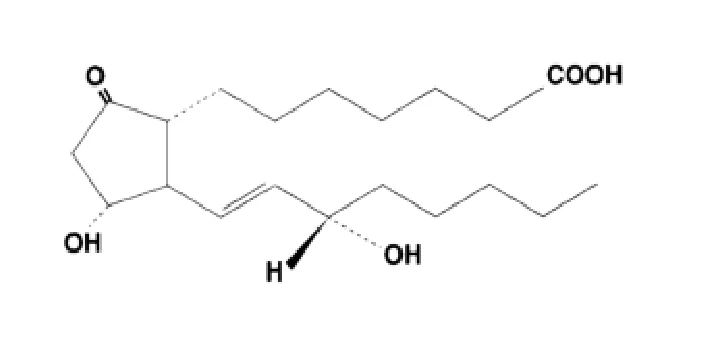
Non-proprietary name of the drug substance(s): alprostadil (PGE1)
Chemical name: (11∝, 13E, 15S)-11,15-dihydroxy-9-oxoprost-13-en-1-oic acid
Molecular formula and molecular mass: C20H34O5, 354.49
Structural formula:
Physicochemical properties: Alprostadil occurs as an odourless, white to off-white crystalline powder, which melts in the range of 110 to 116°C.
Product Characteristics:
Each mL of PROSTIN VR STERILE SOLUTION contains 500 micrograms alprostadil in anhydrous ethanol.
14. Clinical Trials
This information is not available for this drug product.
16. Non-Clinical Toxicology
General toxicology
Acute Studies
Species Route LD50 (mg/kg)
mouse intravenous 96
subcutaneous 12 (neonates)
76
rat intravenous 29
subcutaneous 33 (neonates)
25
The signs of toxicity in the above studies were diarrhea, depression and convulsions.
Subacute and Chronic Studies
5 Day Study (Rabbit)
Alprostadil was administered to the nasal mucosa of rabbits at a dose of 0.06 mg/kg once per day for 5 days. There was no evidence of damage to the nasal mucosa.
7 Day Studies (Rat, Dog)
Rats were administered alprostadil intra-arterially at 50 ng/kg/minute for 10 minutes each hour and the only adverse effect noted was a slight repression of body weight.
Alprostadil was administered to the dog via the left femoral artery at 10 ng/kg/minute for 10 minutes every hour or via the anterior vena cava at 1 mcg/kg/minute for 7 days.
In the intra-arterial study, there was little evidence of drug effect with the exception of edema in the infused extremity.
In the intravenous study, clinical responses in drug recipients included anorexia, diarrhea, vomiting, and apparent abdominal cramps. Drug recipients were lethargic, appeared weak and 3 of 4 animals developed a moist cough. Subcutaneous edema was found in the anterior limbs of drug recipients after 6 days of treatment. Treated animals showed droopy eyelids and an accumulation of mucous of the conjunctiva and palpebra.
Mean arterial blood pressure showed a transient decrease which returned to normal after the first day of drug treatment. The heart rate increased after the first day of drug treatment.
Necropsy examination showed subcutaneous edema of the anterior limbs in drug recipients. Widespread thrombosis and infarction was found in vehicle controls and drug recipients at necropsy or by microscopic examination. These changes may have been related to the infusion procedure or to the vehicle which contained 20% ethanol. In any event, no differences were noted between drug-treated and the vehicle control groups in distribution or intensity of the thromboses except that overt pulmonary infarcts were seen only in the drug recipients (2 out of 4 animals).
8 Day Study (Monkey)
Monkeys were administered alprostadil intramuscularly at doses ranging from 0.5 to 1.0 mg/kg/day for 8 days. The signs of drug effect included depression, emesis and sialorrhoea.
1 Month Studies (Rat, Dog)
Alprostadil was given intravenously to rats at a dosage level of 0.18 mg/kg 10 times per day for 30 days. Signs of drug effect included slightly repressed body weight gain in male rats, less efficient food conversion ratios in both males and females and slightly elevated hematocrit and hemoglobin levels.
Beagle dogs were treated intravenously with alprostadil for 30 days at a dose level of 25, 80 and 250 ng/kg/minute. A fourth group received diluent. There were two dogs per sex per group.
The dogs receiving 250 ng/kg/minute had swelling of the distal limbs which was first observed on the 4th day of infusion. Other clinical signs in this dose group included injection of the scleral blood vessels, ptosis of the lower eyelids, tearing, anorexia, muscle tremors, apparent discomfort and reluctance to stand.
The dogs receiving 80 ng/kg/minute had distal limb swelling, scleral injection, ptosis and tearing but the incidence was variable and to a lesser degree. Only injection of the scleral vessels was observed in the dogs in the low dose group (25 ng/kg/minute).
Hematologic changes were limited to an increased sedimentation rate in the blood from dogs in the mid and high dose group which corresponded with increased fibrinogen levels.
Clinical chemistry changes, in addition to the increased fibrinogen levels, included increased alkaline phosphatase levels and decreased serum albumin and blood urea nitrogen (high dose group only).
The occurrence of bone lesions was observed on gross necropsy. The bony proliferation was present in the long bones of the limbs of the dogs receiving 250 and 80 ng/kg/minute. The degree of change appeared to be directly dose dependent.
The proliferative bone lesions were observed at the end of the 30-day infusion, and were not anticipated. Thus because there was no stage killing or post-discontinuation observation in these studies, no other information is currently available.