


Product Monograph - Quviviq
RECENT MAJOR LABEL CHANGES
| 7 WARNINGS AND PRECAUTIONS, Respiratory | 11/2024 |
|---|---|
| 7.1.2 Breast-feeding | 11/2024 |
TABLE OF CONTENTS
Sections or subsections that are not applicable at the time of authorization are not listed.
RECENT MAJOR LABEL CHANGES ............................................................................................ 2
TABLE OF CONTENTS .............................................................................................................. 2
PART I: HEALTH PROFESSIONAL INFORMATION ...................................................................... 4
1 INDICATIONS ............................................................................................................... 4
1.1 Pediatrics ..............................................................................................................4
1.2 Geriatrics ..............................................................................................................4
2 CONTRAINDICATIONS ................................................................................................. 4
4 DOSAGE AND ADMINISTRATION ................................................................................. 4
4.1 Dosing Considerations ..........................................................................................4
4.2 Recommended Dose and Dosage Adjustment .....................................................4
4.5 Missed Dose .........................................................................................................5
5 OVERDOSAGE .............................................................................................................. 5
6 DOSAGE FORMS, STRENGTHS, COMPOSITION AND PACKAGING ................................. 6
7 WARNINGS AND PRECAUTIONS .................................................................................. 6
7.1 Special Populations ...............................................................................................9
7.1.1 Pregnant Women .............................................................................................9
7.1.2 Breast-feeding ................................................................................................10
7.1.3 Pediatrics ........................................................................................................10
7.1.4 Geriatrics ........................................................................................................10
8 ADVERSE REACTIONS ................................................................................................ 11
8.1 Adverse Reaction Overview ................................................................................11
8.2 Clinical Trial Adverse Reactions ..........................................................................11
8.3 Less Common Clinical Trial Adverse Reactions ...................................................12
8.5 Post-Market Adverse Reactions .........................................................................12
9 DRUG INTERACTIONS ................................................................................................ 12
9.2 Drug Interactions Overview ................................................................................12
9.3 Drug-Behavioural Interactions ............................................................................12
9.4 Drug-Drug Interactions .......................................................................................13
9.5 Drug-Food Interactions .......................................................................................15
9.6 Drug-Herb Interactions .......................................................................................15
9.7 Drug-Laboratory Test Interactions ......................................................................15
10 CLINICAL PHARMACOLOGY ....................................................................................... 15
10.1 Mechanism of Action ..........................................................................................15
10.2 Pharmacodynamics ............................................................................................15
10.3 Pharmacokinetics ...............................................................................................16
11 STORAGE, STABILITY, AND DISPOSAL ........................................................................ 17
PART II: SCIENTIFIC INFORMATION ....................................................................................... 17
13 PHARMACEUTICAL INFORMATION ............................................................................ 17
14 CLINICAL TRIALS ........................................................................................................ 18
14.1 Clinical Trials by Indication .................................................................................18
14.2 Study Results ......................................................................................................19
16 NON-CLINICAL TOXICOLOGY ..................................................................................... 23
PATIENT MEDICATION INFORMATION .................................................................................. 24
PART I: HEALTH PROFESSIONAL INFORMATION
1 INDICATIONS
QUVIVIQ (daridorexant) is indicated for the management of adult patients with insomnia, characterized by difficulties with sleep onset and/or sleep maintenance.
1.1 Pediatrics
Pediatrics (< 18 years of age): The safety and efficacy of QUVIVIQ in pediatric patients have not been established; therefore, Health Canada has not authorized an indication for pediatric use.
1.2 Geriatrics
Geriatrics (≥ 65 years of age): No dose adjustment is required in patients over the age of 65 years.
2 CONTRAINDICATIONS
QUVIVIQ is contraindicated in:
- Patients who are hypersensitive to daridorexant or to any ingredient in the formulation, including any non-medicinal ingredient, or component of the container. For a complete listing, see 6 DOSAGE FORMS, STRENGTHS, COMPOSITION AND PACKAGING.
- Patients with narcolepsy.
- Patients taking a concomitant strong CYP3A4 inhibitor.
4 DOSAGE AND ADMINISTRATION
4.1 Dosing Considerations
Food Effect: QUVIVIQ can be taken with or without food, however, sleep onset may be delayed if taken with or soon after a high-fat and high-calorie meal. See 9.5 Drug-Food Interactions.
Co-administration with CYP3A4 inhibitors: The recommended dose of QUVIVIQ is 25 mg when used with moderate CYP3A4 inhibitors. Concomitant use of QUVIVIQ with strong inhibitors of CYP3A4 is contraindicated. See 9.2 Drug Interactions Overview, Effect of other compounds on the PK of daridorexant, CYP3A4 Inhibitors and 9.4 Drug-Drug Interactions, Effect of other compounds on the PK of daridorexant.
Co-administration with CNS-depressants: In the case of co-administration of QUVIVIQ with CNS-depressant drugs, dose adjustments of QUVIVIQ and/or the other drug(s) may be required, based on clinical evaluation, due to potentially additive effects. See 7 WARNINGS AND PRECAUTIONS, General, CNS-depressant effects and Daytime Impairment and 9.2 Drug Interactions Overview, CNS-active agents.
4.2 Recommended Dose and Dosage Adjustment
The recommended dose of QUVIVIQ for adults is one tablet of 50 mg once per night, taken orally in the evening within 30 minutes before going to bed, with at least 7 hours remaining prior to planned awakening.
Some patients may be treated with 25 mg once per night. See 7 WARNINGS AND PRECAUTIONS, Hepatic/Biliary/Pancreatic and 9 DRUG INTERACTIONS.
Pediatrics (< 18 years of age): The safety and efficacy of QUVIVIQ in pediatric patients have not been established. Therefore, Health Canada has not authorized an indication for pediatric use.
Geriatrics (≥ 65 years of age): No dose adjustment is required in patients over the age of 65 years.
Patients with hepatic impairment: No dose adjustment is required in patients with mild hepatic impairment. The recommended dose of QUVIVIQ is 25 mg in patients with moderate hepatic impairment. QUVIVIQ has not been studied and is not recommended in patients with severe hepatic impairment. See 7 WARNINGS AND PRECAUTIONS, Hepatic/Biliary/Pancreatic and 10.3 Pharmacokinetics, Special Populations and Conditions, Hepatic Impairment.
Patients with renal impairment: No dose adjustment is required in patients with renal impairment (including severe). See 10.3 Pharmacokinetics, Special Populations and Conditions, Renal Impairment.
4.5 Missed Dose
QUVIVIQ should be taken within 30 minutes before going to bed. If a patient forgets to take QUVIVIQ, they should not take it later during the night, otherwise they may feel drowsy in the morning.
5 OVERDOSAGE
There is limited clinical experience with QUVIVIQ overdose. In clinical pharmacology studies, healthy participants were administered single doses of up to 200 mg daridorexant (4 times the recommended dose). At supratherapeutic doses, adverse reactions of somnolence, muscle weakness, sleep paralysis, disturbance in attention, fatigue, headache, and constipation were observed.
There is no specific antidote to an overdose of QUVIVIQ. In the event of an overdose, general symptomatic and supportive medical care, along with immediate gastric lavage, where appropriate, should be provided and patients should be carefully monitored. Dialysis is unlikely to be effective as daridorexant is highly protein-bound.
| For management of a suspected drug overdose, contact your regional poison control centre. |
|---|
6 DOSAGE FORMS, STRENGTHS, COMPOSITION AND PACKAGING
Table 1 – Dosage Forms, Strengths, Composition and Packaging
| Route of Administration | Dosage Form / Strength/Composition | Non-medicinal Ingredients |
| Oral | Tablets 25 mg daridorexant (as 27.02 mg of hydrochloride salt) 50 mg daridorexant (as 54.04 mg of hydrochloride salt) | Croscarmellose sodium Glycerin Hypromellose Iron oxide black Iron oxide red Iron oxide yellow (50 mg tablets only) Magnesium stearate Mannitol Microcrystalline cellulose Povidone Silicon dioxide Talc Titanium dioxide |
- QUVIVIQ 25 mg film-coated tablets are light purple, arc-triangle shaped film-coated tablets debossed with “25” on one side, and “i” (Idorsia logo) on the other side.
- QUVIVIQ 50 mg film-coated tablets are light orange, arc-triangle shaped film-coated tablets debossed with “50” on one side, and “i” (Idorsia logo) on the other side.
QUVIVIQ film-coated tablets are packaged in blisters with 1 or 3 blisters of 10 tablets per carton.
7 WARNINGS AND PRECAUTIONS
General
CNS-depressant effects and Daytime Impairment
Hypnotics including QUVIVIQ may impair daytime wakefulness even when used as prescribed. Patients should be cautioned about engaging in potentially hazardous activities, driving, or operating heavy machinery unless they are fully alert.
Prescribers should advise patients about the potential for next-day somnolence.
Caution should be exercised when prescribing QUVIVIQ concomitantly with CNS-depressant medications due to likely additive effects, and a dose adjustment of either QUVIVIQ or the concomitant CNS-depressants should be considered. See 4.1 Dosing Considerations, Co-administration with CNS-depressants and 9.2 Drug Interactions Overview, CNS-active Agents.
Patients should be advised not to consume alcohol in combination with QUVIVIQ. See 9.2 Drug Interactions Overview, Alcohol.
Sleep paralysis, hallucinations, and cataplexy-like symptoms
Sleep paralysis, an inability to move or speak for up to several minutes during sleep-wake transitions, and hypnagogic/hypnopompic hallucinations, including vivid and disturbing perceptions, can occur with QUVIVIQ.
Symptoms similar to mild cataplexy have been reported with dual orexin receptor antagonists.
Prescribers should explain the nature of these events to patients when prescribing QUVIVIQ.
Comorbid Diagnosis
Because sleep disturbances may be the presenting manifestation of a medical and/or psychiatric disorder, treatment of insomnia should be initiated only after careful evaluation of the patient. The failure of insomnia to remit after 7 to 10 days of treatment may indicate the presence of a primary psychiatric and/or medical illness that should be evaluated. Worsening of insomnia or the emergence of new cognitive or behavioural abnormalities may be the result of an unrecognized underlying psychiatric or medical disorder and can emerge during the course of treatment with sleep-promoting drugs such as QUVIVIQ.
Complex Sleep Behaviours
Complex sleep behaviours such as "sleep driving" (i.e., driving while not fully awake after taking a hypnotic) and other complex behaviours (e.g., preparing and eating food, making phone calls, leaving the house or having sex), with amnesia for the event, have been reported in association with the use of hypnotics, such as QUVIVIQ. These events can occur in hypnotic-naïve as well as in hypnotic-experienced persons. Although complex sleep-related behaviours may occur with QUVIVIQ alone at therapeutic doses, the use of alcohol and other CNS-depressants may increase the risk of such behaviours.
While complex sleep-related behaviours have been reported in patients with or without history of sleepwalking, it is possible that some predisposed patients are at increased risk of experiencing these complex behaviours during treatment with QUVIVIQ. Patients with other disorders known to affect sleep and induce frequent awakenings (e.g., sleep apnea, Periodic Limb Movement Disorder, Restless Legs Syndrome) may be also at increased risk of complex sleep-related behaviours.
Due to the risk to the patient and the community, discontinue QUVIVIQ immediately if a patient experiences a complex sleep-related behaviour.
Patients with thyroid abnormalities
In the confirmatory efficacy studies, approximately 9% of the patients had hypothyroidism and 0.4% had hyperthyroidism. Although the symptoms of insomnia in these patients seem to be responsive to treatment with QUVIVIQ, the symptoms and signs of hypothyroidism or hyperthyroidism should be addressed in specialized care.
Dependence/Tolerance
Potential for non-medicinal use
Non-medicinal use is the intentional, non-therapeutic use of a drug, even once, for its desirable psychological or physiological effects. The non-medicinal use potential of daridorexant was evaluated in non-clinical models, recreational sedative drug users, and insomnia patients.
Daridorexant showed no signs indicative of reinforcing potential or physical dependence in rats.
In a Phase 1 study conducted in 72 recreational sedative drugs users, the effect of single-dose administration of daridorexant (therapeutic dose of 50 mg, doses of 100 mg and 150 mg), zolpidem (30 mg), suvorexant (150 mg), and placebo on subjective rating of “drug liking” was evaluated.
At the therapeutic dose of 50 mg, daridorexant showed higher “drug-liking” than placebo, while showing lower “drug-liking” ratings than zolpidem (30 mg) and suvorexant (150 mg). At supratherapeutic doses of 100 mg and 150 mg, daridorexant showed similar “drug-liking” ratings to zolpidem (30 mg) and suvorexant (150 mg).
In placebo-controlled Phase 3 clinical studies in which 1232 patients with insomnia were treated with QUVIVIQ for up to 12 months, there was no indication of non-medicinal use.
Caution should be exercised when treating patients with a history of non-medicinal use of sedative drugs.
Drug dependence
Physical dependence is a state that develops as a result of physiological adaptation in response to repeated drug use, manifested by withdrawal signs and symptoms upon abrupt treatment discontinuation.
In controlled efficacy and safety studies, withdrawal effects were assessed by the Tyrer Benzodiazepine Withdrawal Symptom Questionnaire following discontinuation of 10 mg, 25 mg, and 50 mg QUVIVIQ, and by adverse event reporting during a single-blind placebo run-out period.
There was no evidence of withdrawal symptoms upon drug discontinuation in clinical trials with QUVIVIQ in patients with insomnia. This suggests that QUVIVIQ does not produce physical dependence.
Rebound insomnia
The potential of rebound insomnia was assessed during the placebo run-out period after 3 months of treatment with QUVIVIQ in Phase 3 studies, looking at the change from baseline to the run-out period in Latency to Persistent Sleep (LPS), Wake After Sleep Onset (WASO), and patient-reported Total Sleep Time (sTST). No sign of rebound insomnia was observed upon treatment discontinuation.
Driving and Operating Machinery
A randomized, double-blind, placebo- and active-controlled, four-way cross-over study evaluated the effects of nighttime administration of QUVIVIQ on next-morning driving performance, using a driving simulator, 9 hours after dosing in healthy participants aged from 50 to 79 years. Testing was conducted after 1 night (initial dosing) and after 4 consecutive nights of treatment with QUVIVIQ 50 and 100 mg. Zopiclone 7.5 mg was used as an active comparator.
In the morning after first-dose administration, QUVIVIQ impaired simulated driving performance as measured by the Standard Deviation of Lateral Position. The effect was less pronounced with 50 mg than with 100 mg QUVIVIQ. For both doses, no effect on driving performance was detected after 4 consecutive nights of administration. Zopiclone significantly impaired simulated driving performance at both time points.
Patients should be cautioned about engaging in potentially hazardous activities, driving, or operating heavy machinery unless they are fully alert.
Hepatic/Biliary/Pancreatic
QUVIVIQ has not been studied in patients with severe hepatic impairment. Use in this population is not recommended. Dosage adjustment is recommended in patients with moderate hepatic impairment. See 4.2 Recommended Dose and Dosage Adjustment, Patients with Hepatic Impairment and 10.3
Pharmacokinetics, Special Populations and Conditions, Hepatic Impairment.
Psychiatric
Worsening of depression and suicidal ideation
In primarily depressed patients treated with hypnotics, worsening of depression and suicidal thoughts and actions have been reported. As with other hypnotics, QUVIVIQ should be administered with caution in patients with depression. The risk of suicide due to pre-existing psychiatric disorders remains, even when the patient's insomnia improves.
Isolated cases of suicidal ideation have been reported in Phase 3 clinical trials (1 case on daridorexant 10 mg, 1 case on 25 mg, 1 case on 50 mg, and 1 case on placebo; the 3 events reported on daridorexant were in patients with pre-existing psychiatric conditions). Suicidal tendencies may be present in patients with depression and protective measures may be required.
Respiratory
Patients with compromised respiratory function
Prior to or in conjunction with any insomnia treatment, proper medical attention should be directed towards patients with compromised respiratory conditions.
Obstructive sleep apnea (OSA)
In a study of patients with mild or moderate OSA (apnea-hypopnea index [AHI] of 5 to < 30 events per hour of sleep) not using CPAP, QUVIVIQ did not increase the frequency of apnea-hypopnea events and did not cause oxygen desaturation.
A separate placebo-controlled, two-period crossover study evaluated the effects on respiratory function of QUVIVIQ 50 mg, administered once daily for 5 consecutive nights in 16 patients with severe OSA (AHI ≥ 30 events per hour of sleep; studied range: 30.8–82.2 events per hour of sleep) not using CPAP. The primary respiratory endpoint was the treatment difference (daridorexant – placebo) in AHI during total sleep time after repeated dosing. Although QUVIVIQ 50 mg, administered for 5 consecutive nights, did not increase the frequency of apnea-hypopnea or cause peripheral capillary oxygen desaturation, study limitations such as the small sample size and short treatment duration suggest that the potential for clinically significant respiratory effects of QUVIVIQ in patients with severe OSA cannot be excluded.
Chronic obstructive pulmonary disease (COPD)
In a study of patients with moderate COPD (FEV1/FVC ratio ≤ 70% and 40% ≤ FEV1 < 80% of predicted), QUVIVIQ did not cause oxygen desaturation. QUVIVIQ has not been studied in patients with severe COPD (FEV1 < 40% of predicted).
Caution should be exercised when prescribing QUVIVIQ to patients with severe COPD.
7.1 Special Populations
7.1.1 Pregnant Women
Pregnancy Exposure Registry
There is a pregnancy exposure registry that monitors pregnancy outcomes in women exposed to QUVIVIQ during pregnancy. Pregnant women exposed to QUVIVIQ and healthcare providers are encouraged to call Idorsia Pharmaceuticals Ltd at 1-833-957-3925.
Risk Summary
There are no data on the use of QUVIVIQ in pregnant women. Animal studies did not indicate harmful effects with respect to reproductive toxicity. See 16 NON-CLINICAL TOXICOLOGY, Reproductive and Developmental Toxicology.
Daridorexant did not result in any maternal or embryo-fetal toxicity when administered orally to pregnant rats during the period of organogenesis at dose levels of 30, 100, and 300 mg/kg/day. These doses correspond to exposures up to 90 times the maximum recommended human dose (MRHD) based on AUC.
Daridorexant did not result in any maternal or embryo-fetal toxicity when administered orally to pregnant rabbits during the period of organogenesis at dose levels of 30, 60, and 120 mg/kg/day. These doses correspond to exposures up to 89 times the MRHD based on AUC.
Daridorexant did not result in relevant maternal toxicity or adversely affect pre- or postnatal development when administered orally to rats during the period of pregnancy and lactation at doses of 50, 100, and 300 mg/kg/day. These doses correspond to exposures up to 97 times the MRHD based on AUC.
7.1.2 Breast-feeding
Available data from a lactation study conducted in 10 healthy adult lactating women receiving a single 50 mg dose of daridorexant indicate that daridorexant is excreted into breast milk at a fraction of the maternal dose (0.02%). Data following repeated doses are not available. See 10.3 Pharmacokinetics, Special Populations and Conditions, Nursing mothers.
There are no data on the effects of daridorexant on the breast-fed infant, or the effects on milk production.
Infants exposed to daridorexant through breast milk should be monitored for excessive somnolence. The benefits of breast-feeding should be considered along with the mother’s medical care and any potential adverse effects on the breast-fed infant from QUVIVIQ.
7.1.3 Pediatrics
Pediatrics (< 18 years of age): The safety and efficacy of QUVIVIQ in pediatric patients have not been established. Therefore, Health Canada has not authorized an indication for pediatric use. See 1.1 Pediatrics and 4.2 Recommended Dose and Dosage Adjustment, Pediatrics.
7.1.4 Geriatrics
Geriatrics (≥ 65 years of age): No dose adjustment is required in patients aged 65 years and older. Of the total number of patients in the Phase 3 clinical studies of QUVIVIQ with insomnia (N = 1854), approximately 39% (N = 727) were ≥ 65 years and 5.9% (N = 110) were ≥ 75 years. Overall, the efficacy and safety of QUVIVIQ were similar for patients < 65 years of age compared to patients ≥ 65 years.
Because of the general risk of falls in the elderly (see 8.2 Clinical Trial Adverse Reactions and 10.2 Pharmacodynamics, Middle of the night safety), QUVIVIQ should be used with caution in this population, although clinical studies did not show an increase in the incidence of falls on QUVIVIQ compared to placebo.
Likewise, the elderly are at higher risks of cardiovascular and cerebrovascular comorbidities in general. QUVIVIQ should be used with caution in the elderly with a higher risk of cardiovascular and cerebrovascular comorbidities.
8 ADVERSE REACTIONS
8.1 Adverse Reaction Overview
The most frequently reported adverse reaction during the double-blind treatment period in Phase 3 clinical trials with QUVIVIQ (reported in at least 2% of patients and with a ≥ 1% difference vs placebo) was headache. The majority of adverse reactions were mild to moderate in intensity. No evidence of a dose-relationship for the frequency or severity of adverse reactions was observed. The adverse reaction profile in elderly patients was consistent with younger patients.
8.2 Clinical Trial Adverse Reactions
Clinical trials are conducted under very specific conditions. The adverse reaction rates observed in the clinical trials, therefore, may not reflect the rates observed in practice and should not be compared to the rates in the clinical trials of another drug. Adverse reaction information from clinical trials may be useful in identifying and approximating rates of adverse drug reactions in real-world use.
The safety of QUVIVIQ was evaluated in three placebo-controlled Phase 3 clinical studies (two 3-month confirmatory studies of identical design [Study 1 and Study 2], and a 9-month extension study [Study 3]). Study 1 included the 50 and 25 mg doses of QUVIVIQ, while Study 2 included 25 and 10 mg QUVIVIQ. A total of 1847 patients (including approximately 39% elderly patients [≥ 65 years old]), received QUVIVIQ 50 mg (N = 308); 25 mg (N = 618); or 10 mg (N = 306) or placebo (N = 615). A total of 576 patients were treated with QUVIVIQ for at least 6 months and 331 for at least 12 months.
Table 2 shows adverse reactions that occurred in at least 2% of patients treated with QUVIVIQ and more frequently (≥ 1%) than in patients who received placebo in Study 1 and Study 2.
Table 2 – Adverse reactions reported with a frequency of ≥ 2% in QUVIVIQ-treated patients and greater (≥ 1%) than in placebo-treated patients in 3-month efficacy trials (Study 1 and Study 2)
| System organ class | QUVIVIQ 25 mg* N = 618 (%) | QUVIVIQ 50 mg* N = 308 (%) | Placebo* N = 615 (%) | ||||
|---|---|---|---|---|---|---|---|
| Nervous system disorders | |||||||
| Headache | 5 | 6 | 4 | ||||
| Somnolence | 3 | 2 | 2 | ||||
| Dizziness | 2 | 2 | 1 | ||||
| General disorders and administration site conditions | |||||||
| Fatigue | 3 | 2 | 1 | ||||
| Gastrointestinal disorders | |||||||
| Nausea | 1 | 2 | 1 | ||||
* 50 mg incidence rates are from Study 1, 25 mg rates from pooled data. Placebo rates were the same in Study 1 and in the pooled data.
The adverse reactions reported during long-term treatment up to 1 year were consistent with those observed during the first 3 months of treatment.
8.3 Less Common Clinical Trial Adverse Reactions
Sleep paralysis was reported in 0.5% and 0.3% of patients receiving daridorexant 25 mg and 50 mg, respectively, compared to no reports for placebo. Hypnagogic and hypnopompic hallucinations were reported in 0.6% of patients receiving daridorexant 25 mg compared to no cases with daridorexant 50 mg or placebo. See 7 WARNINGS AND PRECAUTIONS, General, Sleep paralysis, hallucinations, and cataplexy-like symptoms.
8.5 Post-Market Adverse Reactions
Immune system disorders: Hypersensitivity (such as angioedema, rash, urticaria)
Psychiatric disorders: Abnormal dreams or nightmares, complex sleep behaviours (see 7 WARNINGS AND PRECAUTIONS, General, Complex Sleep Behaviours)
9 DRUG INTERACTIONS
9.2 Drug Interactions Overview
CNS-active agents
Caution should be exercised when prescribing QUVIVIQ concomitantly with CNS-depressant medications due to potentially additive effects, and a dose adjustment of either QUVIVIQ or the concomitant CNS-depressants should be considered. See 4.2 Recommended Dose and Dosage Adjustment and 7 WARNINGS AND PRECAUTIONS, General, CNS Depressant Effects and Daytime Impairment.
Alcohol
Patients should be advised not to consume alcohol in combination with QUVIVIQ. See 7 WARNINGS AND PRECAUTIONS, General, CNS Depressant Effects and Daytime Impairment.
Effect of other compounds on the PK of daridorexant
CYP3A4 inhibitors
In patients taking moderate CYP3A4 inhibitors, the recommended dose of QUVIVIQ is 25 mg, see 4.1 Dosing Considerations, Co-administration with CNS-depressants. Concomitant use of QUVIVIQ with strong inhibitors of CYP3A4 (e.g., itraconazole, clarithromycin, ritonavir) is contraindicated. See 2 CONTRAINDICATIONS.
CYP3A4 inducers
Concomitant use with a moderate or strong CYP3A4 inducer substantially decreases exposure to daridorexant, which may reduce efficacy. See 9.4 Drug-Drug Interactions, Effect of other compounds on the PK of daridorexant.
9.3 Drug-Behavioural Interactions
Alcohol
Co-administration of 50 mg QUVIVIQ with alcohol led to additive effects on psychomotor performance.
9.4 Drug-Drug Interactions
The drugs listed in this table are based on drug-drug interaction studies conducted in healthy participants.
Table 3 – Effect of other compounds on the PK of daridorexant
| Interacting compound | Source of Evidence | Effect | Clinical comment |
Diltiazem (moderate CYP3A4 inhibitor) | CT | ↑ daridorexant Cmax: ↑ 41% AUC: ↑ 135% | Recommended dose: 25 mg |
Itraconazole (strong CYP3A4 inhibitor) | PBPK modeling | ↑ daridorexant Cmax: ↑ 40–50% AUC: ↑ 414–791% | Contraindicated. No clinical study was conducted with a strong CYP3A4 inhibitor. |
Efavirenz (moderate CYP3A4 inducer) | CT | ↓ daridorexant Cmax: ↓ 35% AUC: ↓ 61% | Efficacy may be reduced. |
Rifampin (strong CYP3A4 inducer) | PBPK modeling | ↓ daridorexant Cmax: ↓ 45–47% AUC: ↓ 73–75% | Not recommended. Efficacy may be reduced substantially. No clinical study was conducted with a strong CYP3A4 inducer. |
Famotidine (inhibitor of gastric secretion) | CT | ↔ daridorexant Cmax: ↓ 39% AUC: ↔ | No dose adjustment. |
| Alcohol | CT | ↔ daridorexant Cmax: ↓ 4% AUC: ↔ | No dose adjustment (Alcohol consumption not recommended). |
Citalopram (selective serotonin re-uptake inhibitor, at steady state) | CT | ↔ daridorexant Cmax: ↑ 12% AUC: ↑ 10% | No dose adjustment. |
AUC = area under the curve; Cmax = maximum observed plasma concentration; CT = Clinical Trial; PBPK = physiologically based pharmacokinetic (modeling); PK = pharmacokinetic; ↑ = increase; ↓ = decrease; ↔ = no change.
Table 4 – Effect of daridorexant on the PK of other compounds
| Interacting compound | Source of Evidence | Effect | Clinical comment |
Midazolam (sensitive CYP3A4 substrate) | CT | CYP3A4 inhibition ↑ midazolam Cmax: ↑ 13% AUC: ↑ 42% | Caution is recommended for CYP3A4 substrates with a narrow therapeutic index (e.g., high-dose simvastatin, tacrolimus). |
CYP3A4 induction ↔ midazolam Cmax: ↓ 6% AUC: ↓ 2% | |||
Warfarin (sensitive CYP2C9 substrate) | CT | ↔ warfarin Cmax:↓ 3% AUC: ↔ | No dose adjustment. |
Rosuvastatin (BCRP substrate) | CT | ↔ rosuvastatin Cmax: ↑ 6% AUC: ↔ | No dose adjustment. |
Dabigatran etexilate (sensitive P-gp substrate) | CT | P-gp inhibition ↑ dabigatran Cmax: ↑ 29% AUC: ↑ 42% | Caution is recommended for P-gp substrates with a narrow therapeutic index (e.g., digoxin). |
| Other drug transporter substrates | Non-clinical / In vitro data | Minor effect | Caution is recommended. |
| Alcohol | CT | No relevant PK interaction | Alcohol consumption not recommended. |
Citalopram (selective serotonin re-uptake inhibitor) | CT | ↔ citalopram Cmax: ↑ 2% AUC: ↔ | No dose adjustment. |
AUC = area under the curve; BCRP = breast cancer resistance protein CT = Clinical Trial; P-gp = P-glycoprotein; PK = pharmacokinetic; ↑ = increase; ↓ = decrease; ↔ = no change.
Pharmacodynamic interactions
Citalopram
No relevant interaction on psychomotor performance was observed when 50 mg QUVIVIQ was co-administered with 20 mg citalopram in healthy participants at steady state.
9.5 Drug-Food Interactions
In healthy participants, food did not affect total exposure. The tmax of 50 mg daridorexant was delayed by 1.3 h and Cmax decreased by 16% following administration of a high-fat and high-calorie meal. QUVIVIQ can be taken with or without food, however, sleep onset may be delayed if taken with or soon after a high-fat and high-calorie meal. See 4.1 Dosing Considerations.
Patients treated with QUVIVIQ should not consume grapefruit or grapefruit juice in the evening.
See 2 CONTRAINDICATIONS and 9 DRUG INTERACTIONS.
9.6 Drug-Herb Interactions
Co-administration of QUVIVIQ with a CYP3A4 inducer such as St. John’s wort is not recommended. This may result in a decrease in QUVIVIQ efficacy. See 9.4 Drug-Drug Interactions.
9.7 Drug-Laboratory Test Interactions
Interactions with laboratory tests have not been established.
10 CLINICAL PHARMACOLOGY
10.1 Mechanism of Action
Daridorexant is a dual orexin receptor antagonist, acting on both orexin 1 and orexin 2 receptors and equipotent on both. The orexin neuropeptides (orexin A and orexin B) act on orexin receptors to promote wakefulness. Daridorexant antagonizes the activation of orexin receptors by the orexin neuropeptides and consequently decreases the wake drive, allowing sleep to occur.
10.2 Pharmacodynamics
Proportion of Sleep Stages
In patients with insomnia, daridorexant increases both non-REM and REM sleep without altering proportion of sleep stages, as assessed by polysomnography.
Cardiac electrophysiology
At 4 times the recommended dose, 200 mg daridorexant did not prolong the QTc interval.
Middle of the night safety
The effect of daridorexant on middle of the night safety was evaluated in a randomized, placebo-controlled trial in 18 healthy adult (< 65 years) and 18 healthy elderly (≥ 65 years) subjects. Postural stability was assessed by measuring cumulative body sway over a 2-minute period using a body sway meter, approximately 5 minutes following a scheduled awakening, which occurred 4 hours after administration of either 25 or 50 mg of daridorexant. The ability to awaken in response to a sound stimulus, functional mobility and cognitive function (memory) were also evaluated.
In the subgroup of healthy adults (< 65 years), nighttime dosing of daridorexant 25 mg and 50 mg resulted in increased body sway compared to placebo, with differences in least squares mean (95% CI) of 64.8 mm (16.0, 113.7) and 97.3 mm (48.4, 146.1), respectively.
Patients should be cautioned about the potential for middle of the night postural instability.
10.3 Pharmacokinetics
Table 5 – Summary of daridorexant pharmacokinetic variables in healthy participants
| Cmax (ng/mL) | tmax (h) | t½ (h) | AUC0-24 (ng∙h/mL) | |
Single dose 25 mg | 632 (516, 774) | 1.0 (0.8, 2.5) | 6.1 (4.1, 9.1) | 2568 (1612, 4092) |
| 50 mg | 1231 (963, 1576) | 2.0 (0.7, 3.0) | 5.9 (4.8, 7.4) | 6947 (4838, 9976) |
Data are geometric means (and 95% CI) or for tmax the median (and range). AUC0-24 = area under the plasma concentration-time curve from time zero to 24 h; CI = confidence interval; Cmax = maximum plasma concentration; t½ = terminal half-life; tmax = time to reach maximum plasma concentration.
Absorption
Daridorexant reaches peak plasma concentrations within 1–2 h. Daridorexant has an absolute bioavailability of 62%.
Daridorexant plasma exposure is dose proportional at doses up to 50 mg. It is also dose proportional in peak concentration in general up to 50 mg.
Distribution
Daridorexant has a volume of distribution of 31 L. Daridorexant is extensively bound (99.7%) to plasma proteins. The blood to plasma ratio is 0.64.
Metabolism
Daridorexant undergoes extensive metabolism and is primarily metabolized by CYP3A4 (89%). Other CYP enzymes are not of clinical relevance and individually contribute to less than 3% of metabolic clearance. None of the major human metabolites M1, M3, and M10 contribute to the pharmacological effect of the medicinal product.
Elimination
The primary route of excretion is via feces (approximately 57%), followed by urine (approximately 28%). Only traces of parent drug were found in urine and feces.
The terminal half-life of daridorexant is approximately 8 h.
The PK profile of daridorexant following multiple-dose administration showed similar PK parameters to those observed after single-dose administration. No accumulation was observed.
Daridorexant has a total body clearance of 5 L/h.
Special Populations and Conditions
Age, sex, ethnic origin, and body size: No clinically significant differences in the PK of daridorexant were detected based on age, sex, ethnicity, or body size. This information is based on a population pharmacokinetic analysis of 1895 patients with a mean (5th – 95th percentile) age of 52 (23–74) years and mean (5th – 95th percentile) weight of 75 (54–99) kg, with 60.9% women and 39.1% men. The population includes 86.7 % Caucasian, 2.8% Asian, and 9.2% Black. There are not enough data for patients from other ethnic groups.
Hepatic impairment: Following administration of a single dose of 25 mg QUVIVIQ, patients with mild hepatic impairment had a similar exposure to unbound daridorexant compared to healthy participants. In patients with moderate hepatic impairment, exposure to unbound daridorexant (AUC) and t1/2 increased by 1.6 times and 2.1 times, respectively, compared to healthy participants. Based on these results, a dose adjustment is recommended in patients with moderate hepatic impairment, see 4.2 Recommended Dose and Dosage Adjustment, Patients with hepatic impairment. In patients with severe hepatic impairment, QUVIVIQ has not been studied and is not recommended, see 7 WARNINGS AND PRECAUTIONS, Hepatic/Biliary/Pancreatic.
Renal impairment: Following administration of a single dose of 25 mg, the PK parameters of daridorexant were similar in patients with severe renal impairment compared to healthy participants. Based on these results, QUVIVIQ can be administered to patients with any degree of renal function impairment without the need for dose adjustment. See 4.2 Recommended Dose and Dosage Adjustment, Patients with Renal Impairment.
Nursing mothers: A single dose lactation study was conducted in 10 healthy adult lactating women and confirmed the presence of daridorexant in human milk. Following a 50 mg maternal dose, 87% of the total amount of the drug excreted in milk was collected within the first 24 hours, with a mean amount of 0.009 mg/day of daridorexant recovered. This represents 0.02% of the maternal dose being excreted into breast milk, leading to an estimated relative infant dose (RID) of 0.22% (range: 0.13–0.37%) over 24 hours. There are no data on the effects of daridorexant on the breastfed infant, the effects on milk production, or infant exposure after repeated maternal dosing of daridorexant. See 7.1.2 Breast-feeding.
11 STORAGE, STABILITY, AND DISPOSAL
Store at room temperature (between 15 °C and 30 °C).
Keep out of reach and sight of children.
PART II: SCIENTIFIC INFORMATION
13 PHARMACEUTICAL INFORMATION
Drug Substance
Proper/Common name: daridorexant hydrochloride
Chemical name: [(S)-2-(5-chloro-4-methyl-1H-benzo[d]imidazol-2-yl)-2-methylpyrrolidin-1-yl](5-methoxy-2-(2H-1,2,3-triazol-2-yl)phenyl)methanone hydrochloride
Molecular formula: C23H23ClN6O2 (free base)
C23H23ClN6O2 * HCl (hydrochloride salt)
Molecular mass: 450.93 g/mol (free base)
487.38 g/mol (hydrochloride salt)
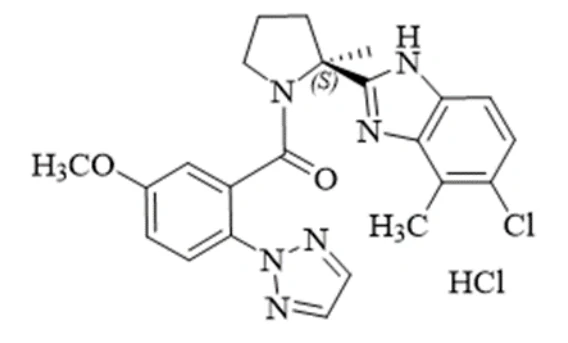
Structural formula:
Physicochemical properties: Solubility of daridorexant hydrochloride
| Solubility in aqueous buffer (phosphate buffer pH 7.4) | 15 µg/mL |
|---|---|
| Solubility in water (pH 2.6) | 173 µg/mL |
Daridorexant hydrochloride is a white to light-yellow powder that is very slightly soluble in acidic conditions (pH < 2.6) and practically insoluble in water (pH > 6.5).
14 CLINICAL TRIALS
14.1 Clinical Trials by Indication
Management of Insomnia: Two confirmatory studies were conducted in patients meeting the diagnostic criteria of Insomnia Disorder according to Diagnostic and Statistical Manual of Mental Disorders, 5th edition (DSM-5®).
Table 6 – Summary of patient demographics for clinical trials in insomnia
| Study # | Study design | Dosage, route of administration and duration | Study patients (n) | Mean age (Range) | Sex |
| Study 1 | Multicenter, randomized, double-blind, placebo-controlled, parallel-group, confirmatory Phase 3 study | QUVIVIQ 50 mg QUVIVIQ 25 mg Placebo Taken orally as a tablet each night Duration 3-month placebo-controlled treatment period followed by 7-day placebo run-out period | Total: 930 50 mg: 310 25 mg: 310 Placebo: 310 | 55.4 years (18–88) | 67.1% female and 32.9% male |
| Study 2 | Multicenter, randomized, double-blind, placebo-controlled, parallel-group, confirmatory Phase 3 study | QUVIVIQ 25 mg QUVIVIQ 10 mg Placebo Taken orally as a tablet each night Duration 3-months placebo-controlled treatment period followed by 7-day placebo run-out period | Total: 924 25 mg: 309 10 mg: 307 Placebo: 308 | 56.7 years (19-85) | 69.0% female and 31.0% male |
A total of 1854 patients with DSM-5® insomnia were randomized to receive QUVIVIQ or placebo once daily, in the evening, for 3 months. At the end of the 3-month treatment period, both confirmatory studies included a 7-day placebo run-out period, after which patients could enter a 9-month double-blind, placebo-controlled extension study (Study 3). A total of 576 patients were treated for at least 6 months of cumulative treatment, including 331 treated for at least 12 months.
In Study 1, patients had a mean age of 55.4 years (range 18 to 88 years), with 39.1% of patients ≥ 65 years of age, including 5.8% ≥ 75 years of age. The majority were female (67.1%) and White (90.2%). In Study 2, patients had a mean age of 56.7 years (range 19 to 85 years), with 39.3% of patients ≥ 65 years of age, including 6.1% ≥ 75 years of age. The majority were female (69.0%) and White (87.8%).
Primary efficacy endpoints for both studies were the change from baseline to Month 1 and Month 3 in LPS (Latency to Persistent Sleep) and WASO (Wake After Sleep Onset), measured objectively by polysomnography in a sleep laboratory. LPS is a measure of sleep induction and WASO is a measure of sleep maintenance.
Secondary endpoints included in the statistical testing hierarchy with Type 1 error control were sTST (subjective Total Sleep Time), evaluated every morning at home using a validated Sleep Diary Questionnaire.
14.2 Study Results
Effect of QUVIVIQ on insomnia
In Study 1, doses of 25 and 50 mg QUVIVIQ showed a statistically significant improvement vs placebo on objective (WASO, LPS) and subjective (sTST) sleep variables, at Month 1 and Month 3 [Table 7].
In Study 2, QUVIVIQ 25 mg showed a statistically significant improvement vs placebo on objective WASO, and subjective (sTST) sleep variables at Month 1 and Month 3 [Table 8], but not objective LPS. QUVIVIQ 10 mg did not show a statistically significant improvement on LPS, WASO, or sTST at Month 1 or Month 3 (data not presented).
The efficacy of QUVIVIQ was similar across subgroups based on age, sex, ethnicity, or body size.
Table 7 – Efficacy on sleep variables – Study 1
50 mg N = 310 | 25 mg N = 310 | Placebo N = 310 | |||||
|---|---|---|---|---|---|---|---|
WASO (wake after sleep onset, min): sleep maintenance, assessed objectively by PSG Primary endpoint | |||||||
| Baseline | Mean (SD) | 95 (38) | 98 (39) | 103 (41) | |||
| Month 1 | Mean (SD) | 65 (35) | 77 (42) | 92 (42) | |||
Change from baseline LSM (95% CL) | -29 [-33, -25] | -18 [-22, -15] | -6 [-10, -2] | ||||
Difference to placebo LSM (95% CL) | -23* [-28, -18] | -12* [-17, -7] | |||||
| Month 3 | Mean (SD) | 65 (39) | 73 (40) | 87 (43) | |||
Change from baseline LSM (95% CL) | -29 [-33, -25] | -23 [-27, -19] | -11 [-15, -7] | ||||
Difference to placebo LSM (95% CL) | -18* [-24, -13] | -12* [-17, -6] | |||||
LPS (latency to persistent sleep, min): sleep onset, assessed objectively by PSG Primary endpoint | |||||||
| Baseline | Mean (SD) | 64 (37) | 67 (39) | 67 (40) | |||
| Month 1 | Mean (SD) | 34 (27) | 38 (32) | 46 (36) | |||
Change from baseline LSM (95% CL) | -31 [-35, -28] | -28 [-32, -25] | -20 [-23, -17] | ||||
Difference to placebo LSM (95% CL) | -11* [-16, -7] | -8* [-13, -4] | |||||
| Month 3 | Mean (SD) | 30 (23) | 36 (34) | 43 (34) | |||
Change from baseline LSM (95% CL) | -35 [-38, -31] | -31 [-34, -27] | -23 [-26, -20] | ||||
Difference to placebo LSM (95% CL) | -12* [-16, -7] | -8* [-12, -3] | |||||
sTST (subjective total sleep time, min): patient-reported Secondary endpoint | |||||||
| Baseline | Mean (SD) | 313 (58) | 310 (60) | 316 (53) | |||
| Month 1 | Mean (SD) | 358 (74) | 345 (66) | 338 (65) | |
|---|---|---|---|---|---|
Change from baseline LSM (95% CL) | 44 [38, 49] | 34 [29, 40] | 22 [16, 27] | ||
Difference to placebo LSM (95% CL) | 22* [14, 30] | 13* [5, 20] | |||
| Month 3 | Mean (SD) | 372 (79) | 358 (72) | 354 (73) | |
Change from baseline LSM (95% CL) | 58 [51, 64] | 48 [41, 54] | 38 [31, 44] | ||
Difference to placebo LSM (95% CL) | 20* [11, 29] | 10* [1, 19] | |||
* Doses that were statistically significantly superior (p < 0.05) to placebo after controlling for multiple comparisons.
CL = confidence limit; LSM = least squares mean; PSG = polysomnography; SD = standard deviation; sTST = subjective Total Sleep Time.
Table 8 – Efficacy on sleep variables – Study 2
25 mg N = 309 | Placebo N = 308 | |||
|---|---|---|---|---|
WASO (wake after sleep onset, min): sleep maintenance, assessed objectively by PSG Primary endpoint | ||||
| Baseline | Mean (SD) | 106 (49) | 108 (49) | |
| Month 1 | Mean (SD) | 80 (44) | 93 (50) | |
Change from baseline LSM (95% CL) | -24 [-28, -20] | -13 [-17, -8] | ||
Difference to placebo LSM (95% CL) | -12* [-18, -6] | |||
| Month 3 | Mean (SD) | 80 (49) | 91 (47) | |
Change from baseline LSM (95% CL) | -24 [-29, -19] | -14 [-19, -9] | ||
Difference to placebo LSM (95% CL) | -10* [-17, -4] | |||
LPS (latency to persistent sleep, min): sleep onset, assessed objectively by PSG Primary endpoint | |||||
|---|---|---|---|---|---|
| Baseline | Mean (SD) | 69 (41) | 72 (46) | ||
| Month 1 | Mean (SD) | 42 (39) | 50 (40) | ||
Change from baseline LSM (95% CL) | -26 [-31, -22] | -20 [-24, -16] | |||
Difference to placebo LSM (95% CL) | -6 [-12, -1] | ||||
| Month 3 | Mean (SD) | 39 (37) | 49 (46) | ||
Change from baseline LSM (95% CL) | -29 [-33, -24] | -20 [-24, -15] | |||
Difference to placebo LSM (95% CL) | -9 [-15, -3] | ||||
sTST (subjective total sleep time, min): patient-reported Secondary endpoint | |||||
| Baseline | Mean (SD) | 308 (53) | 308 (52) | ||
| Month 1 | Mean (SD) | 353 (67) | 336 (63) | ||
Change from baseline LSM (95% CL) | 44 [38, 49] | 28 [22, 33] | |||
Difference to placebo LSM (95% CL) | 16* [8, 24] | ||||
| Month 3 | Mean (SD) | 365 (70) | 347 (65) | ||
Change from baseline LSM (95% CL) | 56 [50, 63] | 37 [31, 43] | |||
Difference to placebo LSM (95% CL) | 19* [10, 28] | ||||
* Doses that were statistically significantly superior (p < 0.05) to placebo after controlling for multiple comparisons.
CL = confidence limit; LSM = least squares mean; PSG = polysomnography; SD = standard deviation; sTST = subjective Total Sleep Time.
The effects of QUVIVIQ at 50 mg on sleep variables were observed at Month 1 and were maintained at Month 3.
16 NON-CLINICAL TOXICOLOGY
General Toxicology:
No adverse effects were observed in chronic repeated-dose toxicity studies in rats and dogs at exposures that are 3.1 times and 1.9 times, respectively, the human exposure at the maximum recommended dose of 50 mg/day.
In dogs under positive stimulation at play, episodes of sudden muscle weakness, reminiscent of cataplexy, were observed from Week 7 onwards and did not occur after treatment cessation. An overall no-observed-effect level was established at exposures that are 2.5 times (females) and 1.3 times (males) the human exposure at 50 mg/day.
Genotoxicity:
Daridorexant was not genotoxic in the in vitro bacterial reverse mutation (Ames) assay or in the in vitro mouse lymphoma thymidine kinase assay and was not clastogenic in the in vivo rat micronucleus assay.
Carcinogenicity:
Daridorexant was not oncogenic in rats treated for 2 years at oral doses of 15, 50, and 150 mg/kg/day, which corresponds to exposures up to 3.8 times the MRHD based on AUC. Daridorexant was not oncogenic in Tg-rasH2 mice treated for 26 weeks at oral doses of 100, 200 (females), 300 (males), and 1000 mg/kg/day, which corresponds to exposures up to 0.5 times the MRHD based on AUC.
Reproductive and Developmental Toxicology:
Daridorexant was not teratogenic and showed no embryo-fetal toxicity in rats and rabbits.
Daridorexant had no impact on male fertility up to the highest tested dose of 450 mg/kg/day in male rats and no impact on female fertility up to the highest tested dose of 300 mg/kg/day in female rats. These no-observed-effect levels correspond to exposures that are 8.3 times (females) and 6.7 times (males) the MRHD.
Phototoxicity:
Daridorexant was not phototoxic in vitro.
Juvenile Toxicity:
Daridorexant had no effect on juvenile development in rats.