


Product Monograph - Ramace
INDICATIONS AND CLINICAL USE
Essential Hypertension
RAMACE® (ramipril) is indicated in the treatment of essential hypertension. It may be used alone or in association with thiazide diuretics.
RAMACE® should normally be used in patients in whom treatment with a diuretic or a beta blocker was found ineffective or has been associated with unacceptable adverse effects.
RAMACE® can also be tried as an initial agent in those patients in whom use of diuretics and/or beta blockers are contraindicated or in patients with medical conditions in which these drugs frequently cause serious adverse effects.
The safety and efficacy of RAMACE® in renovascular hypertension have not been established and therefore, its use in this condition is not recommended.
The safety and efficacy of concurrent use of RAMACE® with antihypertensive agents other than thiazide diuretics have not been established.
Treatment Following Acute Myocardial Infarction
RAMACE® is indicated following acute myocardial infarction in clinically stable patients with signs of left ventricular dysfunction to improve survival and reduce hospitalizations for heart failure.
Sufficient experience in the treatment of patients with severe (NYHA class IV) heart failure immediately after myocardial infarction is not yet available. (See WARNINGS -Hypotension)
Management of Patients at Increased Risk of Cardiovascular Events
RAMACE® may be used to reduce the risk of myocardial infarction, stroke or cardiovascular death in patients over 55 years of age who are at high risk of cardiovascular events because of a history of coronary artery disease, stroke, peripheral artery disease, or diabetes that is accompanied by at least one other cardiovascular risk factor such as hypertension, elevated total cholesterol levels, low high density lipoprotein levels, cigarette smoking, or documented microalbuminuria.
The incidence of the primary outcome (composite of myocardial infarction, stroke and death from cardiovascular causes) was reduced from 17.8% in the placebo-treated group to 14.0% in the ramipril-treated group (see ACTION AND CLINICAL PHARMACOLOGY).
General
In using RAMACE® consideration should be given to the risk of angioedema (see WARNINGS).
CONTRAINDICATIONS
RAMACE® (ramipril) is contraindicated:
- In patients who are hypersensitive to this drug, or to any ingredient in the formulation, or in those patients who have a history of angioedema.
- During pregnancy
- In breast-feeding women
WARNINGS
Serious Warnings and Precautions
When used in pregnancy, angiotensin converting enzyme (ACE) inhibitors can cause injury or even death of the developing fetus. When pregnancy is detected, RAMACE® should be discontinued as soon as possible.
Angioedema:
Angioedema has been reported in patients with ACE inhibitors including RAMACE®
(ramipril). Angioedema associated with laryngeal involvement may be fatal. If laryngeal stridor or angioedema of the face, tongue, or glottis occurs, RAMACE® should be discontinued immediately, the patient treated appropriately in accordance with accepted medical care, and carefully observed until the swelling disappears. In instances where swelling is confined to the face and lips, the condition generally resolves without treatment, although antihistamines may be useful in relieving symptoms. Where there is involvement of tongue, glottis, or larynx, likely to cause airway obstruction, appropriate therapy (including, but not limited to 0.3 to 0.5ml of subcutaneous epinephrine solution 1:1000) should be administered promptly (see ADVERSE REACTIONS).
The incidence of angioedema during ACE inhibitor therapy has been reported to be higher in black than in non-black patients.
Patients with a history of angioedema unrelated to ACE inhibitor therapy may be at increased risk of angioedema while receiving an ACE inhibitor (see CONTRAINDICATIONS).
Hypotension:
Symptomatic hypotension has occurred after administration of RAMACE®, usually after the first or second dose or when the dose was increased. It is more likely to occur in patients who are volume depleted by diuretic therapy, dietary salt restriction, dialysis, diarrhea, or vomiting. In patients with ischemic heart disease or cerebrovascular disease, an excessive fall in blood pressure could result in a myocardial infarction or cerebrovascular accident (see ADVERSE REACTIONS). Because of the potential fall in blood pressure in these patients, therapy with RAMACE® should be started under close medical supervision. Such patients should be followed closely for the first weeks of treatment and whenever the dose of RAMACE® is increased. In patients with severe congestive heart failure, with or without associated renal insufficiency, ACE inhibitor therapy may cause excessive hypotension and has been associated with oliguria, and/or progressive azotemia, and rarely, with acute renal failure and/or death.
If hypotension occurs, the patient should be placed in a supine position and, if necessary, receive an intravenous infusion of 0.9% sodium chloride. A transient hypotensive response may not be a contraindication to further doses which usually can be given without difficulty once the blood pressure has increased after volume expansion in hypertensive patients. However, lower doses of RAMACE® and/or reduced concomitant diuretic therapy should be considered. In patients receiving treatment following acute myocardial infarction, consideration should be given to discontinuation of RAMACE® (see ADVERSE REACTIONS - Treatment Following Acute Myocardial Infarction, DOSING & ADMINISTRATION - Treatment Following Acute Myocardial Infarction).
Neutropenia/agranulocytosis:
Agranulocytosis and bone marrow depression have been caused by ACE inhibitors. Several cases of agranulocytosis, neutropenia or leukopenia have been reported in which a causal relationship to RAMACE® cannot be excluded. Current experience with the drug shows the incidence to be rare. Periodic monitoring of white blood cell counts should be considered, especially in patients with collagen vascular disease and/or renal disease.
Pregnant Women
ACE inhibitors can cause fetal and neonatal morbidity and mortality when administered to pregnant women. When pregnancy is detected, RAMACE® should be discontinued as soon as possible.
The use of ACE inhibitors during the second and third trimesters of pregnancy has been associated with fetal and neonatal injury including hypotension, neonatal skull hypoplasia, anuria, reversible or irreversible renal failure, and death. Oligohydramnios has also been reported, presumably resulting from decreased fetal renal function, associated with fetal limb contractures, craniofacial deformation, and hypoplastic lung development.
Prematurity, and patent ductus arteriosus and other structural cardiac malformations, as well as neurologic malformations, have also been reported following exposure in the first trimester of pregnancy.
Infants with a history of in utero exposure to ACE inhibitors should be closely observed for hypotension, oliguria, and hyperkalemia. If oliguria occurs, attention should be directed toward support of blood pressure and renal perfusion. Exchange transfusion or dialysis may be required as a means of reversing hypotension and/or substituting for impaired renal function; however, limited experience with those procedures has not been associated with significant clinical benefit.
It is not known if ramipril or ramiprilat can be removed from the body by hemodialysis.
Animal Data: No teratogenic effects of ramipril were seen in studies of pregnant rats, rabbits, and cynomolgus monkeys. The doses used were: 10, 100, or 1000 mg/kg in rats (2500 times maximum human dose), 0.4, 1.0, or 2.5 mg/kg in rabbits (6.25 times maximum human dose), and 5, 50, or 500 mg/kg in cynomolgus monkeys (1250 times maximum human dose). In rats, the highest dose caused reduced food intake in the dams, with consequent reduced birth weights of the pups and weight development during the lactation period. In rabbits, maternal effects were mortalities (high and middle dose) and reduced body weight. In monkeys, maternal effects were mortalities (high and middle dose), vomiting, and reduced weight gain.
Nursing Women
The presence of concentrations of ACE inhibitor have been reported in human milk. The use of RAMACE® is contraindicated during breast-feeding.
PRECAUTIONS
Renal Impairment:
As a consequence of inhibiting the renin-angiotensin-aldosterone system, changes in renal function have been seen in susceptible individuals. In patients whose renal function may depend on the activity of the renin-angiotensin-aldosterone system, such as patients with bilateral renal artery stenosis, unilateral renal artery stenosis to a solitary kidney, or severe congestive heart failure, treatment with agents that inhibit this system has been associated with oliguria, progressive azotemia, and rarely, acute renal failure and/or death. In susceptible patients, concomitant diuretic use may further increase risk.
Use of RAMACE® should include appropriate assessment of renal function. RAMACE® should be used with caution in patients with renal insufficiency as they may require reduced or less frequent doses (see DOSAGE AND ADMINISTRATION). Close monitoring of renal function during therapy should be performed as deemed appropriate in patients with renal insufficiency.
Anaphylactoid reactions during membrane exposure:
Anaphylactoid reactions have been reported in patients dialyzed with high-flux membranes [e.g. polyacrylonitrile (PAN)] and treated concomitantly with an ACE inhibitor. Dialysis should be stopped immediately if symptoms such as nausea, abdominal cramps, burning, angioedema, shortness of breath and severe hypotension occur. Symptoms are not relieved by antihistamines. In these patients consideration should be given to using a different type of dialysis membrane or a different class of antihypertensive agents.
Anaphylactoid reactions during LDL apheresis
Rarely, patients receiving ACE inhibitors during low density lipoprotein apheresis with dextran sulfate have experienced life-threatening anaphylactoid reactions. These reactions were avoided by temporarily withholding the ACE inhibitor therapy prior to each apheresis.
Anaphylactoid reactions during desensitization
There have been isolated reports of patients experiencing sustained life threatening anaphylactoid reactions while receiving ACE inhibitors during desensitization treatment with hymenoptera (bees, wasps) venom. In the same patients, these reactions have been avoided when ACE inhibitors were temporarily withheld for at least 24 hours, but they have reappeared upon inadvertent rechallenge.
Hyperkalemia and Potassium-Sparing Diuretics
Elevated serum potassium (greater than 5.7 mEq/L) was observed in approximately 1% of hypertensive patients in clinical trials treated with RAMACE®. In most cases these were isolated values which resolved despite continued therapy. Hyperkalemia was not a cause of discontinuation of therapy in any hypertensive patient. Risk factors for the development of hyperkalemia may include renal insufficiency, diabetes mellitus, and the concomitant use of agents to treat hypokalemia or other drugs associated with increases in serum potassium (see PRECAUTIONS - Drug Interactions).
Surgery/anesthesia:
In patients undergoing surgery or anesthesia with agents producing hypotension, RAMACE® may block angiotensin II formation secondary to compensatory renin release. If hypotension occurs and is considered to be due to this mechanism, it may be corrected by volume repletion.
Aortic Stenosis:
There is concern, on theoretical grounds, that patients with aortic stenosis might be at particular risk of decreased coronary perfusion when treated with vasodilators because they do not develop as much afterload reduction.
Patients with Impaired Liver Function:
Hepatitis (hepatocellular and/or cholestatic), elevations of liver enzymes and/or serum bilirubin have occurred during therapy with ACE inhibitors in patients with or without pre-existing liver abnormalities. In most cases the changes were reversed on discontinuation of the drug.
Elevations of liver enzymes and/or serum bilirubin have been reported with RAMACE®
(see ADVERSE REACTIONS). Should the patient receiving RAMACE® experience any unexplained symptoms particularly during the first weeks or months of treatment, it is recommended that a full set of liver function tests and any other necessary investigations be carried out. Discontinuation of RAMACE® should be considered when appropriate.
There are no adequate studies in patients with cirrhosis and/or liver dysfunction. RAMACE® should be used with particular caution in patients with pre-existing liver abnormalities. In such patients baseline liver function tests should be obtained before administration of the drug and close monitoring of response and metabolic effects should apply.
Pediatric Use:
The safety and effectiveness of RAMACE® in children have not been established; therefore use in this age group is not recommended.
Use in Elderly:
Although clinical experience has not identified differences in response between the elderly (> 65 years) and younger patients, greater sensitivity of some older individuals cannot be ruled out (see ACTION AND CLINICAL PHARMACOLOGY, Pharmacokinetics).
Patient Alertness:
RAMACE® may lower the state of patient alertness and/or reactivity, particularly at the start of treatment (see ADVERSE REACTIONS).
Cough:
A dry, persistent cough, which usually disappears only after withdrawal or lowering of the dose of RAMACE®, has been reported. Such possibility should be considered as part of the differential diagnosis of cough (see ADVERSE REACTIONS).
Drug Interactions:
Concomitant Diuretic Therapy: Patients concomitantly taking ACE inhibitors and diuretics, and especially those in whom diuretic therapy was recently instituted, may occasionally experience an excessive reduction of blood pressure after initiation of therapy. The possibility of hypotensive effects after the first dose of RAMACE® can be minimized by either discontinuing the diuretic or increasing the salt intake prior to initiation of treatment with RAMACE®. If it is not possible to discontinue the diuretic, the starting dose of RAMACE® should be reduced and the patient should be closely observed for several hours following the initial dose and until blood pressure has stabilized (see WARNINGS and DOSAGE AND ADMINISTRATION).
Agents Increasing Serum Potassium: Since RAMACE® decreases aldosterone production, elevation of serum potassium may occur. Potassium sparing diuretics such as spironolactone, triamterene or amiloride, or potassium supplements should be given only for documented hypokalemia and with caution and frequent monitoring of serum potassium, since they may lead to a significant increase in serum potassium. Salt substitutes which contain potassium should also be used with caution. (See also PRECAUTIONS - Drug Interactions - Non-steroidal anti-inflammatory agents)
Agents Causing Renin Release: The antihypertensive effect of RAMACE® is augmented by antihypertensive agents that cause renin release (e.g. diuretics).
Lithium: Increased serum lithium levels and symptoms of lithium toxicity have been reported in patients receiving ACE inhibitors during therapy with lithium. These drugs should be administered with caution, and frequent monitoring of serum lithium levels is recommended. If a diuretic is also used, the risk of lithium toxicity may be further increased.
Antacids: In one open-label, randomized, cross-over single dose study in 24 male subjects, it was determined that the bioavailability of RAMACE® and the pharmacokinetic profile of ramiprilat were not affected by concomitant administration of the antacid, magnesium and aluminum hydroxides.
Digoxin: In one open-label study in 12 subjects, administered multiple doses of both ramipril and digoxin, no changes were found in serum levels of ramipril, ramiprilat, and digoxin.
Warfarin: The co-administration of RAMACE® with warfarin did not alter the anticoagulant effects.
Acenocoumarol: In a multi-dose double-blind, placebo-controlled, pharmacodynamic interaction study with 14 patients with mild hypertension administered both ramipril and therapeutic doses of acenocoumarol, blood pressure, thrombotest time and coagulation factors were not significantly changed.
Non-steroidal anti-inflammatory agents: The antihypertensive effects of ACE inhibitors may be reduced with concomitant administration of non-steroidal anti-inflammatory agents (e.g. indomethacin). Concomitant treatment of ACE inhibitors and Non-Steroidal Anti-Inflammatory drugs may lead to an increased risk of worsening of renal function and an increase in serum potassium. (See also PRECAUTIONS - Drug Interactions - Agents Increasing Serum Potassium)
Antidiabetic agents (e.g. insulin and sulfonylurea derivates): ACE inhibitors may reduce insulin resistance. In isolated cases, such reduction may lead to hypoglycaemic reactions in patients concomitantly treated with antidiabetics. Particularly close blood glucose monitoring is, therefore, recommended in the initial phase of co-administration.
INFORMATION FOR THE PATIENT
Angioedema: Angioedema, including laryngeal edema, may occur especially following the first dose of RAMACE®. Patients should be so advised and told to report immediately any signs or symptoms suggesting angioedema, such as swelling of face, extremities, eyes, lips, tongue, difficulty in swallowing or breathing. They should immediately stop taking RAMACE® and consult with their physician (see WARNINGS).
Hypotension: Patients should be cautioned to report lightheadedness, especially during the first few days of RAMACE® therapy. If actual syncope occurs, the patients should be told to discontinue the drug and consult with their physician.
All patients should be cautioned that excessive perspiration and dehydration may lead to an excessive fall in blood pressure because of reduction in fluid volume. Other causes of volume depletion such as vomiting or diarrhea may also lead to a fall in blood pressure, patients should be advised to consult with their physician.
Agranulocytosis/Neutropenia: Patients should be told to report promptly to their physician any indication of infection (e.g. sore throat, fever) as this may be a sign of neutropenia (see WARNINGS and ADVERSE REACTIONS).
Impaired Liver Function: Patients should be advised to return to their physician if they experience any symptoms possibly related to liver dysfunction. This would include "viral-like symptoms" in the first weeks to months of therapy (such as fever, malaise, muscle pain, rash or adenopathy which are possible indicators of hypersensitivity reactions), or if abdominal pain, nausea or vomiting, loss of appetite, jaundice, itching or any other unexplained symptoms occur during therapy.
Hyperkalemia: Patients should be told not to use salt substitutes containing potassium without consulting their physician (see PRECAUTIONS).
ADVERSE REACTIONS
Essential Hypertension
| RAMACE | ® | (ramipril) has been evaluated for safety in over 4000 hypertensive patients. | ||||
| Almost 500 elderly patients have participated in controlled trials. Long-term safety has | ||||||
| been assessed in almost 700 patients treated for 1 year or more. There was no | ||||||
| increase in the incidence of adverse events in elderly patients given the same daily | ||||||
| dose. The overall frequency of adverse events was not related to duration of therapy or | ||||||
| total daily dose. | ||||||
| Serious adverse events occurring in North American placebo-controlled clinical trials | |||
| with ramipril monotherapy in hypertension (n=972) were: hypotension (0.1%); | |||
| myocardial infarction (0.3%); cerebrovascular accident (0.1%); edema (0.2%); syncope | |||
| (0.1%). Among all North American ramipril patients (n=1,244), angioedema occurred in | |||
| 0.1% patients treated with ramipril and a diuretic. | |||
| The most frequent adverse events occurring in these trials with RAMACE | ® | ||||||
| monotherapy in hypertensive patients that were treated for at least one year (n=651) | |||||||
| were: headache (15.1%); dizziness (3.7%); asthenia (3.7%); chest pain (2.0%); nausea | |||||||
| (1.8%); peripheral edema (1.8%); somnolence (1.7%); impotence (1.5%); rash (1.4%); | |||||||
| arthritis (1.1%); dyspnea (1.1%). Discontinuation of therapy due to clinical adverse | |||||||
| events was required in 5 patients (0.8%). | |||||||
| In placebo-controlled trials, an excess of upper respiratory infection and flu syndrome | |||||||||||
| was seen in the ramipril group. As these studies were carried out before the relationship | |||||||||||
| of cough to ACE inhibitors was recognized, some of these events may represent | |||||||||||
| ramipril-induced cough. In a later 1-year study, increased cough was seen in almost | |||||||||||
| 12% of RAMACE | ® | patients, with about 4% of these patients requiring discontinuation of | |||||||||
| treatment. Approximately 1% of patients treated with RAMACE | ® | monotherapy in North | |||||||||
| American controlled clinical trials (n=972) have required discontinuation because of | |||||||||||
| cough. | |||||||||||
Treatment Following Acute Myocardial Infarction
| 1004 post-AMI patients received RAMACE | ® | in a controlled clinical trial. In both the | ||||
| ramipril and placebo groups, myocardial infarction, heart failure, atrial fibrillation, | ||||||
| peripheral vascular disease and urinary tract infection were more common in elderly | ||||||
| than in younger patients. Gastrointestinal disturbances were more frequent in elderly | ||||||
| patients on ramipril. Cough and hypotension were more frequent in women receiving | ||||||
| ramipril. | ||||||
| Adverse events (except laboratory abnormalities) considered possibly/probably related | ||||||
| to study drug that occurred in more than one percent of stabilized patients with clinical | ||||||
| signs of heart failure treated with RAMACE | ® | following an acute myocardial infarction are | ||||
| shown below. The incidences represent the experiences from the AIRE (Acute | ||||||
| Infarction Ramipril Efficacy) study. The follow-up time was between 6 and 48 months for | ||||||
| this study (mean follow up= 15 months). | ||||||
| Percentage of Patients with Adverse Events Possibly/Probably Related to Study Drug Placebo-Controlled (AIRE) Mortality Study | ||
| Adverse Event | Ramipril (n=1004) | Placebo (n=982) |
Hypotension Cough increased Dizziness/Vertigo Nausea/Vomiting Angina pectoris Postural hypotension Syncope Heart failure Severe/resistant heart failure Myocardial infarct Vomiting Headache Abnormal kidney function Abnormal chest pain Diarrhea | 10.7 7.6 5.6 3.8 2.9 2.2 2.1 2.0 2.0 1.7 1.6 1.2 1.2 1.1 1.1 | 4.7 3.7 3.9 1.9 2.0 1.4 1.4 2.2 3.0 1.7 0.5 0.8 0.5 0.9 0.4 |
| Event | Percentage of Patients with Serious Adverse Events Possibly related to Study Drug Placebo-Controlled (AIRE) Mortality Study | |||||||||
RAMACE® (n = 1004) | Placebo | |||||||||
| (n = 982) | ||||||||||
| Hypotension | 3.0% | 1.1% | ||||||||
| Angina pectoris | 2.0% | 1.2% | ||||||||
| Severe/resistant heart failure | 1.9% | 2.9% | ||||||||
| Myocardial infarct | 1.7% | 1.7% | ||||||||
| Heart failure | 1.5% | 1.5% | ||||||||
| Syncope | 1.3% | 0.8% | ||||||||
| Chest pain | 0.7% | 0.9% | ||||||||
| Nausea | 0.6% | 0.5% | ||||||||
| Vomiting | 0.5% | 0.1% | ||||||||
| Dizziness | 0.5% | 0.5% | ||||||||
| Abnormal kidney function | 0.5% | 0.2% | ||||||||
| Chest infection | 0.2% | 0.0% | ||||||||
| Postural hypotension | 0.2% | 0.2% | ||||||||
| Headache | 0.1% | 0.0% | ||||||||
| Isolated cases of death have been reported with the use of ramipril that appear to be | |
| related to hypotension (including first dose effects), but many of these are difficult to | |
| differentiate from progression of underlying disease (see WARNINGS - Hypotension). | |
| Discontinuation of therapy due to adverse reactions was required in 368/1004 post-AM |
I
| patients taking ramipril (36.7%), compared to 401/982 patients receiving placeb |
o
| (40.8%). | |
| Management of Patients at Increased Risk of Cardiovascular Events | |
| In the Heart Outcome Prevention Evaluation (HOPE) study, based on a total of 4645 | |||||
| patients treated with ramipril, the safety profile of RAMACE | ® | was consistent with the | |||
| post-marketing surveillance experience. The reasons for stopping the treatment, where | |||||
| the incidence was greater in the ramipril than in the placebo group, were cough (ramipril | |||||
| 7.3%, placebo 1.8%), hypotension/dizziness (ramipril 1.9%, placebo 1.5%) and edema | |||||
| (ramipril 0.4%, placebo 0.2%). | |||||
| Clinical Adverse Events by Body System | ||||
| Clinical adverse events occurring in less than 1% of patients treated with RAMACE | ® | in | ||
| controlled clinical trials, or seen in post-marketing experience, are listed below by body | ||||
| system: | ||||
Body as a whole: anaphylactoid reactions, angioneurotic edema.
| Cardiovascular | : symptomatic hypotension, syncope, angina pectoris, arrhythmia, chest | ||
| pain, palpitations, tachycardia, myocardial infarction, cerebrovascular disorders | |||
| (including ischaemic stroke). | |||
| Respiratory | : | increased cough. |
| CNS: | anxiety, amnesia, confusion, convulsions, depression, hearing loss, insomnia, | |
| nervousness, neuralgia, neuropathy, paresthesia, polyneuritis, somnolence, tinnitus, | ||
| tremor, vertigo, vision disturbances. | ||
| Dermatologic | : apparent hypersensitivity reactions (with manifestations of urticaria, | ||
| pruritus, or rash, with or without fever), photosensitivity, purpura, erythema multiforms, | |||
| pemphigus, Stevens-Johnson syndrome. | |||
| In addition, the following cutaneous or mucosal reactions may occur: exacerbation o |
f
| psoriasis, maculo-papular exanthema, psoriasiform exanthema, pemphigoid exanthema | ||
| and enanthema, and toxic epidermal necrolysis or onycholysis. | ||
| Gastrointestinal | : abdominal pain (sometimes with enzyme changes suggesting | ||
| pancreatitis), pancreatitis, anorexia, constipation, diarrhea, dry mouth, dyspepsia, | |||
| dysphagia, gastroenteritis, hepatitis, nausea, increased salivation, smell and taste | |||
| disturbance, vomiting. | |||
Renal: increases in blood urea nitrogen (BUN) and serum creatinine.
| Haematologic | : agranulocytosis, leucopenia, eosinophilia, thrombocytopenia, | |
| pancytopaenia and hemolytic anemia. | ||
| Other: | arthralgia, arthritis, dyspnea, edema, epistaxis, impotence, increased sweating, | |
| malaise, myalgia, weight gain. | ||
| A symptom complex has been reported which may include fever, vasculitis, myalgia, | ||
| arthralgia/arthritis, a positive ANA, elevated ESR, eosinophilia and leucocytosis. Rash, | ||
| photosensitivity or other dermatologic manifestations may also occur. | ||
| Clinical Laboratory Test Findings | : increased creatinine; increases in blood urea | ||
| nitrogen (BUN); decreases in hemoglobin or hematocrit; hyponatraemia; elevations of | |||
| liver enzymes, serum bilirubin, uric acid, blood glucose; proteinuria and significant | |||
| increases in serum potassium. | |||
SYMPTOMS AND TREATMENT OF OVERDOSAGE
| Limited data are available regarding overdosage of RAMACE | ® | (ramipril) in humans. | |
| Two cases of overdosage have been reported. | |||
| In the case of an overdose with ramipril, the most likely clinical manifestation would be | |||
| symptoms attributable to severe hypotension, which should normally be treated by | |||
| intravenous volume expansion with normal saline. It is not known if ramipril or ramiprilat | |||
| can be removed from the body by hemodialysis. | |||
DOSAGE AND ADMINISTRATION
| Essential Hypertension | |||
| Dosage of RAMACE | ® | (ramipril) must be individualized. Initiation of therapy requires | |
consideration of recent antihypertensive drug treatment, the extent of blood pressure
| elevation and salt restriction. The dosage of other antihypertensive agents being used | |||
| with RAMACE | ® | may need to be adjusted. | |
| Monotherapy: | |||||
| The recommended initial dosage of RAMACE | ® | in patients not on diuretics is 2.5mg once | |||
| daily. Dosage should be adjusted according to blood pressure response, generally, at | |||||
| intervals of at least two weeks. The usual dose range is 2.5 to 10mg once daily. A daily | |||||
| dose of 20mg should not be exceeded. | |||||
| In some patients treated once daily, the antihypertensive effect may diminish towards | ||||||||
| the end of the dosing interval. This can be evaluated by measuring blood pressure jus |
t
| prior to dosing to determine whether satisfactory control is being maintained for 24 | ||||||||
| hours. If it is not, either twice daily administration with the same total daily dose, or an | ||||||||
| increase in dose should be considered. If blood pressure is not controlled with | ||||||||
| RAMACE | ® | alone, a diuretic may be added. After the addition of a diuretic, it may be | ||||||
| possible to reduce the dose of RAMACE | ® | . | ||||||
| Concomitant Diuretic Therapy: | ||||||||
| Symptomatic hypotension occasionally may occur following the initial dose of RAMACE | ||||||||
®
| and is more likely in patients who are currently being treated with a diuretic. The diuretic | ||||||||
| should, if possible, be discontinued for two to three days before beginning therapy wit | ||||||||
h
| RAMACE | ® | to reduce the likelihood of hypotension (see WARNINGS). If the diuretic | ||||
| cannot be discontinued, an initial dose of 1.25 mg RAMACE | ® | should be used with | ||||
careful medical supervision for several hours and until blood pressure has stabilized.
| The dosage of RAMACE | ® | should subsequently be titrated (as described above) to the | |
| optimal response. | |||
| Use in renal impairment: | |||||
| For patients with a creatinine clearance below 40ml/min/1.73m | 2 | ||||
(serum creatinine
| above 2.5mg/dL), the recommended initial dose is 1.25mg RAMACE | ® | once daily. | ||||||||
| Dosage may be titrated upward until blood pressure is controlled or to a maximum tota | ||||||||||
l
| daily dose of 5mg. In patients with severe renal impairment (creatinine clearance belo |
w
| 10ml/min/1.73m | 2 | ) the maximum total daily dose of 2.5mg RAMACE | ® | should not b | |||||
e
| exceeded. |
Treatment Following Acute Myocardial Infarction
| Dosage of RAMACE | ® | (ramipril) must be individualized. Initiation of therapy requires |
consideration of concomitant medication and baseline blood pressure and should be
| instituted under close medical supervision, usually in a hospital, three to ten days | |
| following an acute myocardial infarction in haemodynamically stable patients with | |
| clinical signs of heart failure. | |
| The recommended initial dosage of RAMACE | ® | is 2.5 mg given twice a day (b.i.d.), one | ||||
| in the morning and one in the evening. If tolerated, and depending on the patient' | ||||||
s
| response, dosage may be increased by doubling at intervals of one to three days. The | ||||||
| maximum daily dose of RAMACE | ® | should not exceed 5 mg twice daily (b.i.d.). | ||||
| After the initial dose of RAMACE | ® | |
, the patient should be observed under medical
| supervision for at least two hours and until blood pressure has stabilized for at least an | |||||||||||||
| additional hour. If a patient becomes hypotensive at this dosage, it is recommended that | |||||||||||||
| the dosage be lowered to 1.25 mg b.i.d. following effective management of the | |||||||||||||
| hypotension. (see WARNINGS - Hypotension). | |||||||||||||
| Patients who have been fluid or salt depleted, or treated with diuretics are at an | |||||||||||||
| increased risk of hypotension (see WARNINGS-Hypotension). An excessive fall in blood | |||||||||||||
| pressure may occur particularly in the following: after the initial dose of RAMACE® | ; after | ||||||||||||
| every first increase of dose of RAMACE | ® | ; after the first dose of a concomitant diuretic | |||||||||||
| and/or when increasing the dose of the concomitant diuretic. If appropriate, the dose o | |||||||||||||
f
| any concomitant diuretic should be reduced which may diminish the likelihood of | ||||||||||||
| hypotension (see PRECAUTIONS - Drug Interactions ). Consideration should be given | ||||||||||||
| to reducing the initial dose to 1.25 mg of RAMACE | ® | in these patients. | ||||||||||
| Use in renal impairment: | |||
| In patients with impaired renal function (creatinine clearance of 20-50 mL/min/1.73 m2 | |||
| body surface area), the initial recommended dosage is generally 1.25 mg of RAMACE | |||
®
| once daily. This dosage may be increased with caution up to 1.25 mg of RAMAC |
E®
| twice daily, depending upon clinical response and tolerability. |
Insufficient data is available concerning the use of ramipril following acute myocardial
| infarction in patients with heart failure and severe renal failure. (see ACTION & | ||
| CLINICAL PHARMACOLOGY - Pharmacokinetics & Metabolism, PRECAUTIONS - | ||
| Renal Impairment). | ||
| Use in hepatic impairment: | ||||
| Insufficient data is available concerning the use of ramipril following acute myocardial | ||||
| infarction in patients with heart failure and hepatic dysfunction. Dose reduction and | ||||
| careful monitoring of these patients is required (see ACTIONS & CLINICAL | ||||
| PHARMACOLOGY- Pharmacokinetics & Metabolism, PRECAUTIONS - Patients with | ||||
| Impaired Liver Function). | ||||
Management of Patients at Increased Risk of Cardiovascular Events
| Recommended initial dose: 2.5 mg of RAMACE | ® | once daily. Depending on the | |||||||
| tolerability, the dose is gradually increased. It is recommended to double the dose after | |||||||||
| one week of treatment and - after another three weeks - to increase it to 10 mg. Usua | |||||||||
l
| maintenance dose: 10 mg of RAMACE | ® | daily (see ACTION AND CLINICAL | ||||
| PHARMACOLOGY, WARNINGS and PRECAUTIONS). | ||||||
| Dosage recommendations for special risk groups such as patients with renal or hepatic | |||
| impairment, or at an increased risk of hypotension (fluid or salt depletion, treated with | |||
| diuretics) are to be followed as previously described (SEE WARNINGS and | |||
| PRECAUTIONS). | |||
PHARMACEUTICAL INFORMATION
I. DRUG SUBSTANCE
Proper name: Ramipril
Chemical name:
| 2-[N-[(S)-1-ethoxycarbonyl-3-phenylpropyl]-L-alanyl]-(1S, | ||
| 3S,5S)-2-azabicyclo- | ||
| [3.3.0]octane-3-carboxylic acid | ||
Empirical formula:
| C | H |
| 23 | 32 |
N2O5
Structural formula: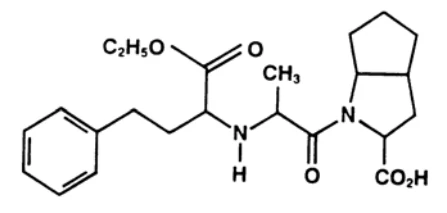
Molecular weight: 416.52
| Description: A white to off-white crystalline powder with a melting point o |
f
| 105°C to 112°C. Slightly soluble in water, and freely soluble in ethanol and | ||
| methanol. | ||
II. DOSAGE FORM
a)
| Composition | ||||||||||||||||||||||||
| RAMACE | ® | (ramipril) | 1.25 | mg, | 2.5 | mg, | 5.0 | mg, | and | 10.0 | mg | tablets | contain | the | ||||||||||
| medicinal | ingredient | ramipril | in | quantities | of | 1.25 | mg, | 2.5 | mg, | 5.0 | mg, | and | 10.0 | |||||||||||
| mg respectively. | ||||||||||||||||||||||||
| The | qualitative | formulation | for | all | potencies | of | RAMACE | ® | is: | ramipril, | |||||||||
| hydroxypropyl methylcellulose, pregelatinized starch, microcrystalline cellulose, | |||||||||||||||||||
| sodium stearyl fumarate. | |||||||||||||||||||
Yellow ferric oxide is used as colouring agent in the 2.5 mg tablets.
Red ferric oxide is used as colouring agent in the 5 mg tablets. b)
| Stability and storage recommendations | ||||||||||||||||||
| Store | RAMACE® | (ramipril) | in | origina | l | container | at | room | temperature, | between | ||||||||
| 15 and 30°C and not beyond the date indicated on the container. | ||||||||||||||||||
c)
| Availability | |||
| RAMACE | ® | (ramipril) is available in the following potencies: | |
1.25 mg
| white | to | almos | t | white | o | blong tablets with score-line. This tablet | |||||
| shold not be halved. | |||||||||||
| Upper stamp: 1.25 and Hoechst | |||||||||||
| Lower stamp: HMN and 1.25 | |||||||||||
2.5 mg
| yellowish to yellow oblong tablets with score-line. | ||
| Upper stamp: 2.5 and Hoechst log | ||
o
| Lower stamp: HMR and 2.5 |
5.0 mg
| Red oblong tablets with score-line. | ||
| Upper stamp: 5 and Hoechst | ||
| Lower stamp: 5 and HMP | ||
10.0 mg
| white to almost white oblong tablets with score-line. | ||
| Upper stamp: HMO/HMO | ||
| Lower stamp: Plain | ||
| RAMACE | ® | tablets | 1.25 | mg, | 2.5 | mg, | 5.0 | mg | and | 10.0 | mg | are | packaged | in | cartons | of | 28 | (2 |
| x 14 blister-packed) tablets. | ||||||||||||||||||
INFORMATION FOR THE CONSUMER
For Patients with Essential Hypertension
| What is hypertension? | |||||||||||||||||||||||||||||||
| Hypertension is | the | medica | l | term | f | or hig | h blood | pressure. | When blood flows through the | ||||||||||||||||||||||
| blood | vessels it | pushes | against | their wa | lls, almost l | ike | water | pushing | again | st the | sides | of | |||||||||||||||||||
| a | hose. | B | lood | pressure | is | l | ike | tha | t "push". When blood pressure is high (like the water | ||||||||||||||||||||||
| pressure i | n a hose when the nozzle is partially shut), damage can occur to | the | heart | and | |||||||||||||||||||||||||||
blood vessels.
| Although | you m | ay not | feel | any | symptom | s for | years, | hypertension | can | lead t | o stroke, h | eart |
| attack, kidney disease and other serious conditions | ||||||||||||
.
| What causes hypertension? | |||
| In | most cases, the exact cause of hypertension is not known. But we do know that several | ||
| factors increase the risk of developing the disease. | |||
| Family | history: | Hypertension, | like | some | other | diseases, | can | run i | n families. | If your | parents | |
| have high blood pressure, your chances of developing it are greater. | ||||||||||||
Age: The risk of developing hypertension increases with age.
| Race: | I | n | North | America | , there is a higher incidence of hypertension among blacks than |
among whites.
Diabetes: Diabetics are at higher risk of developing hypertension than non-diabetics.
Weight: The risk of high blood pressure is higher in people who are overweight.
| Drinking: | Heav | y alcohol | consumption in | creases | ris | k of | hypertension, | as | well | as | stroke | and |
| kidney disease. | ||||||||||||
Sedentary lifestyle: A physically inactive lifestyle can contribute to hypertension.
| Smoking | : Whil | e not a direct cause of hypertension, smoking a cigarette will temporarily | |||||||||||
| increase b | lood | pressure | . | Smoking also | increases t | he | risk | of | hea | rt disease | in people | with | |
| high blood pressure. | |||||||||||||
| Keeping your blood pressure control |
led
| Your | doct | or has | prescribed | RAMACE® , | a medicatio | n that | helps t | o control bl | ood | pressure. | ||||||
| RAMACE | ® ope | ns blood | vessels | to | redu | ce blood p | ressure, | like t | he way opening a hose | |||||||
reduces water pressure. It is not, however, a cure.
| But it t | akes m | ore | tha | n just | medication t | o reduce | blood | pressure. | Discuss t | he risk f | actors, | |||
| and ho | w they | apply t | o you | r lifestyle, w | ith your | doctor. | You | may | have to modify some of | |||||
| your daily habits to keep your blood pressure down. | ||||||||||||||
| Exerci | se regularly. It | will hel | p to | keep yo | ur weigh | t down, | mak | e you | feel | more | energetic | and | ||||||||
| is | a go | od way | to | dea | l with s | tress. | If yo | u are | not | exercising r | egularly, | be su | re to | discuss | a | |||||
| fitness plan with your docto | ||||||||||||||||||||
r.
| Remember, h | ypertension is | a long-term | disease | withou | t symptoms. | Just be | cause y | ou | feel | ||||||||
| fine do | es not | mean yo | u can | stop | taking | your | medication | . If you stop, serious complications | |||||||||
| of | the | disease | may o | ccur. T | herefore, y | ou should | continue t | o take | RAMAC | ||||||||
E® regularly,
| as | ||||||||||||||
prescribed by your doctor.
| For Patients Following a Recent Heart Attac |
k
| Your d | octor h | as prescribed | RAMACE® | to reduce | the | effort r | equired | by | your | heart t | o pump | |||||||
| blood, | to compensate | for re | duced | pumping | power | that | may | have | resulted f | rom | you | r heart | ||||||
| attack. | ||||||||||||||||||
| RAMA | CE® ha | s been | shown | to improve | survival a | nd | reduce h | ospitalizations | for hear | t failure |
| in patients recovering from recent heart attacks | ||||||||||
.
| If | you h | ave de | velope | d heart | failure | afte | r a heart | attack, | you | may | have | to lim | it your p | hysical |
| activities. Before you begin exercising, be sure to consult with your doctor | ||||||||||||||
.
| When | initiatin | g therapy in patients with heart failure after a heart attack, RAMACE | ® | is |
| usually | given | twice a day, in the morning and in the evening. Take your medication as | ||
instructed by your Doctor.
Management of Patients at Increased Risk of Cardiovascular Events
| Your doctor has prescribed RAMACE® | because | |||||
: • yo
| u have | coronar | y hear | t disease (s | uch | as c | hest | pains | or angina, | or ha | ve had | a heart | ||
att
| ack in the past |
) • yo
| u had a stroke |
- yo
| u have peripheral vascular disease (p | oor blood circulation) |
- yo
| u have | diabetes and at least one of the following physical conditions: high blood | ||||||||||||
pre
| ssure, | elevated total cholesterol levels, low high-density lipoprotein (HDL) levels, | ||||||||||||
cig
| arette smoking or documented microalbuminuri |
a.
| RAMA | CE® m | ay lower | the ri | sk of | heart a | ttack | , stroke, | or | deat | h from | a | heart d | isease i | n some | ||||
| patient | s who | have a | heart | problem or | poo | r | blood | circulation. | Take | your | medication as | |||||||
instructed by your Doctor. GENERAL
| When to take your medication | |
| It is important to take it at the same time every day as prescribed by your doctor | |
.
| Missed a dose? | |||||||||||||||||||||||||||
| If | you | f | orgo | t to | take | y | our RAMACE® | tablet, | take | it | as | soon | as | possible | . | However, | if | it | is | ||||||||
| almost time | for | your | n | ext | dose, | skip | the missed dose and go back to your regular dosing | ||||||||||||||||||||
schedule. Do not double dose.
| Managing your lifestyle | |||||||||||||||||||||||||||
| The "lifestyle" part | of | you | r t | reatment | is | as | importan | t as your medication. By working as a | |||||||||||||||||||
| team | with | y | our | doctor | , you | can | help | reduce | the | risk | of | complications | to | maintain | the | style | |||||||||||
| of life you are accustomed to. | |||||||||||||||||||||||||||
| Alcohol: | Avoid | alcoholic | be | verages until you have discussed their use with your doctor. | |||||||||||||
| Alcoho | l | consumption | may | alter | you | r | blood | pressure | and/or | increase | the | possibility of | |||||
dizziness or fainting.
Diet: Generally, avoid fatty foods and food that is high in salt or cholesterol.
Smoking: Avoid it completely.
Side effects
| Along | with | its intended action, any medication, including RAMACE | ® | , | ma | y | cause | side | |||||||||||||||||||||
| effects | . | These | includ | e | headache, | d | izziness, | fatig | ue, | nausea | or | coughing | . | These | side | ||||||||||||||
| effects | may | disappear | once | you | r system | becomes | used | to | the | medication. I | f they | persist, | |||||||||||||||||
| discuss this with your doctor. Your medication might have to be reduced or changed | |||||||||||||||||||||||||||||
.
| Dizziness or lightheadedness may occur after the first dose of this medicine. Make sure | ||
| you know how you react to this medicine before you drive, operate machinery, or do | ||
| anything requiring you to be ale | ||
rt.
| If you are suffering from excessive sweating, vomiting or diarrhea, this may cause you | |
| to lose too much water and lead to problems with low blood pressure. See your doctor. | |
| A rare, but potentially more serious, side effect is called angioedema - characterized by | ||
| swollen mouth, lips, tongue, eyes, throat or difficulty in swallowing or breathing. I | f you | |
| notice swelling or feel pain in these areas, inform your doctor immediately. You | ||
| should also inform your doctor if you have an unexplained fever, rash or itching. | ||
Serious Warnings and Precautions
RAMACE® should not be used during pregnancy. If you discover that you are pregnant while taking RAMACE®, stop the medication and please contact your physician as soon as possible.
Keep your doctor informed
Before taking RAMACE® , it is important that you inform your doctor of the following:
! Are you currently taking any other medications, whether on prescription or otherwise?
This is especially important if you are taking diuretics (water pills) or any other medication to reduce blood pressure which may add to the blood pressure lowering effect of RAMACE®. You should not be taking salt substitutes, potassium supplements or potassium containing medicine without the advice of your doctor.
! Do you suffer from any other condition? The presence of other medical problems may affect the use of RAMACE®. Make sure you tell your doctor if you have any other medical problems, especially if you have diabetes, liver disease, kidney disease, heart or blood vessel disease.
If you are being treated for other conditions by other doctors, keep them all informed of which medications you are taking. Some drugs may have negative effect on RAMACE® or RAMACE® may have a negative effect on other drugs. If you have to undergo any dental or other surgery, inform the dentist or physician in charge that you are taking this medicine.
! You are pregnant, breast-feeding or thinking of becoming pregnant? Taking
RAMACE® during pregnancy can cause injury and even death to your baby. This medicine should not be used during pregnancy. If you become pregnant while taking RAMACE®, stop the medication and report to your doctor as soon as possible. It is possible that RAMACE® passes into breast milk. You should not breast-feed while taking RAMACE®.
! Are you possibly allergic to RAMACE® (ramipril), including any of its non-medicinal ingredients: hydroxypropyl methylcellulose; pregelatinized starch; microcrystalline cellulose; sodium stearyl fumarate; yellow ferric oxide; and red ferric oxide?
After you have started taking RAMACE®, it is important that you tell your doctor at once about any unexplained symptom you might experience. Examples of this are unexplained fever, rash, itching, any sign of infection, viral-like symptoms, flu-like symptoms, coughing, sore throat, abdominal pain, loss of appetite, sad mood, or jaundice.
Store in original container at room temperature between 150 and 300 C and not beyond the date indicated on the container. Keep this medication out of the reach of children.
Remember
Use this drug as directed by your doctor. All drugs can have both helpful and harmful effects. Both depend on the person and his or her condition. This leaflet alerts you to some of the times you should call your doctor. Other situations which cannot be predicted can arise. Nothing in this leaflet should stop you from calling your doctor or pharmacist with any questions or concerns you have about RAMACE®.
PHARMACOLOGY
Mechanism of Action
| Study | Species | #/group | Route | Dose | Results |
| Inhibition of Angiotensin I-induced pressor response after oral ramipril | Rat Dog | n=6 n=3 | oral oral | 0.1 0.3 1.0 mg/kg | A dose-dependent inhibition was observed, lasting more than 6 hours |
Effect of pre-treatment with ramipril on b.p. changes induced by i.v. Angiotensin I, Angiotensin II, and sympathomimetics | Rat | n=5 or n=6 | oral | 1.0 mg/kg | Effects of Ang. I and i n d i r e c t - a c t i n g sympathomimetics are inhibited, while the effects of Ang. II and direct-acting sympathomimetics are unaffected by ramipril |
| Effect of ramipril on Na-depleted (furosemide treated) dogs | Dog | n=6 | oral | 10 mg/kg | Ramipril-induced increase in plasma renin activity is enhanced by furosemide; Ramipril has no influence on heart rate |
| In vitro inhibition of ACE by ramipril | Rabbit lung | in vitro | IC50= 26±8 nmol/L | ||
| Effect of ramipril and captopril on renal blood flow, renal vasculature resistance, and blood pressure | Rat | n=5 | i.a. | 0.1 mg/kg | Ramipril caused a greater increase in renal blood flow and decrease in renal vasculature resistance than a 10-fold higher dose of captopril; this without the decrease in systemic b.p. observed with captopril |
Effects on Blood Pressure
| Hypertensive Model | Species | #/group | Route | Dose | Duration | Result |
| Spontaneously hypertensive rats | Rat | n=5 | oral | 1 mg/kg 0.01,0.1, 1,10 mg/ kg/day | acute 5 weeks | Significant decreases in b.p.(all doses); which persisted for: 2 weeks (chronic) 72 hrs. (acute) |
| Kidney perinephretic hypertension (no increase in plasma renin activity) | Dog | n=5 | oral | 10 mg/kg 1 mg/ kg/day | acute 5 days | Significant decrease of systemic blood pressure |
| 2 kidney, 1 clip hypertension | Rat | n=8 | oral | 1,10 mg/kg | acute | Blood pressure was normalized |
| Release of an occluded renal pedicle | Rat | n=6 | oral | 0.1 mg/kg | acute | Hypertension was completely prevented |
Pharmacokinetics and Bioavailability
| Study Parameter (after oral ramipril) | Results | ||
| Rat (2 mg/kg) | Dog (2 mg/kg) | Human (10 mg) | |
| GI absorption of 14C-ramipril | 56% | 43% | 56% |
| Maximal blood levels of radioactivity | 0.5 hrs | 0.5-1 hrs | 0.3 hrs |
| Plasma t½ of radioactivity | 0.6 hrs | 1.0 and 3.8 hrs (biphasic) | 0.5 and 2.9 hrs (biphasic) |
| Distribution of radioactivity | High concentration in liver, kidney and particularly lungs. Total fetus: 0.05% Breast milk: 0.25% | - | - |
| Serum protein binding (concentration range of 0.01-10 µg/ml) | ramipril: - ramiprilat: 41% | ramipril: 72% ramiprilat: 47% | ramipril: 73% ramiprilat: 56% |
| Metabolism | metabolized to ramiprilat | metabolized to ramiprilat and inactive diketopiperazines | |
| Excretion of radioactivity | urine: 26% feces: 71% t½ (both): 1.6-4.8 and 23-42 h | urine: 15% t½: 9.3 h feces: 79% t½: 8 h | urine: 56% t½: 7.2 and 127 h feces: 40% t½: 11 and 110 h |
TOXICOLOGY
Acute Toxicity:
Below are summarized species-specific LD50 values for both oral and intravenous administrations of ramipril.
Table 1 - Acute Toxicity
| Routes | Species | Sex | LD50 |
| Oral | Mouse | Male | 10,933 mg/kg |
| Female | 10,048 mg/kg | ||
| Rat | Male | > 10,000 mg/kg | |
| Female | > 10,000 mg/kg | ||
| Dog | Male | > 1,000 mg/kg | |
| Intravenous | Mouse | Male | 1,194 mg/kg |
| Female | 1,158 mg/kg | ||
| Rat | Male | 688 mg/kg | |
| Female | 609 mg/kg |
The symptoms observed in mice were decreased spontaneous activity, crouching, hypothermia, dyspnea, and clonic convulsions; deaths occurred within 30 minutes after intravenous and 24 hours after oral administration. In survivors, the symptoms disappeared by 1 to 5 days after administration; necropsies revealed no abnormality in any of the surviving animals. In rats, reduced spontaneous activity was noted (oral administration), while after intravenous administration similar signs occurred as in mice; the sign of lethal toxicity was clonic convulsions (intravenous administration).
Table 2 - Chronic Toxicity:
| Species | Duration | No. of animals per group | Route | Dose (mg/kg/day) | Effects |
| Mouse | 28 days 90 days | 2M, 2F 3M, 3F | Oral | 1000 | Reduced erythrocytes, hemoglobin, hematocrit, increased reticulocytes. Hyperplasia of juxtaglomerular apparatus. |
| Rat | 30 days | 10-15M, 10-15F | Oral | 2.5, 80, 2500 | At all doses: decrease in body weight, reduced liver weight, increased kidney weight. At 80 & 2500 mg/kg/d: Reduced heart weight. At 2500 mg/kg/d: Reduced erythrocytes, hematocrit and bilirubin, increased BUN. |
| Rat | 3 months | 10-15M, 10-15F | Oral | 2.5, 80, 500 | At all doses: Reduced chloride and GOT, increased phosphorus and BUN. At 80 mg/kg/d: Reduced heart, liver, prostate weight, increased kidney weight. Atrophic segments of renal tubules. Increased serum creatinine. At 500 mg/kg/d: Reduced body and heart weight, increased kidney and adrenal weight. Reduced eryt h r o c yt e s , h em oglobin, hematocrit, increased bilirubin. Increased number of atrophic renal tubular segments. Moderate gastric mucosa necroses. |
| Rat | 3 months | 10M, 10F | Oral | 500, 1/3 Ringer solution for drinking | Increased number of tubular atrophies. |
Table 2 - Chronic Toxicity:
| Species | Duration | No. of animals per group | Route | Dose (mg/kg/day) | Effects |
| Rat | 6 months | 10-20M, 10-20F | Oral | 0.1, 0.25, 3.2, 40, 500 | At all doses: Serum bilirubin increased, reduced heart weight. At 40 and 500 mg/kg/d: Increased kidney weight. Reduced erythrocytes, hemoglobin, hematocrit, increased BUN. Distal tubular atrophies, fibromuscular pad formations in gastric mucosa/ muscularis not proliferative in nature. |
| Rat | 6 months | 20M, 20F | Oral | 3.2, 40, 500, 1/3 Ringer solution for drinking | All doses: Fibromuscular or solitary pad formation in gastric fundus mucosa/ muscularis. |
| Rat | 18 months | 20-25M, 20-25F | Oral | 0.25, 3.2, 40, 500 | At 3.2 to 500 mg/kg/d: Fibromuscular pads in gastric fundus mucosa, focal atrophies in renal cortex, partly with cysts. At 40 and 500 mg/kg/d: Anemia, increased BUN and serum creatinine, urinary epithelial cells. Reduced heart weight and increased kidney and adrenal weight. |
| Dog | 30 days | 2M, 2F | Oral | 3.2, 32 | No pathological findings. |
| Dog | 3 months | 3-4M, 3-4F | Oral | 3.2, 32, 320 | At 320 mg/kg/d: Anemia, increased BUN and serum creatinine, i m p a i r e d e r y t h r o p o i e s i s . Juxtaglomerular hyperplasia. |
| Dog | 6 months | 6M, 6F | Oral | 3.2, 32, 320 | A t 3 2 m g / k g / d : A n e m i a , juxtaglomerular hyperplasia. At 320 mg/kg/d: Reduced body weight. Increased BUN and serum creatinine. Distal tubular atrophies with round cell infiltrations. A n e m i a , j u x t a g l o m e r u l a r hyperplasia. |
Table 2 - Chronic Toxicity:
| Species | Duration | No. of animals per group | Route | Dose (mg/kg/day) | Effects |
| Dog | 12 months | 6M, 6F | Oral | 2.5, 25, 250 | At all doses: Reduced body weight. At 25 and 250 mg/kg/d: Anemia and leukopenia, impaired erythropoiesis, increased hemosiderin deposition in liver and spleen, juxtaglomerular hyperplasia. At 250 mg/kg/d: Increased BUN and serum creatinine. |
| Monkey | 6 months | 4-5M, 4-5F | Oral | 0.5, 16, 500 | At 16 and 500 mg/kg/d: Increased BUN, juxtaglomerular hyperplasia. Reduced body weight. At 500 mg/kg/d: Diarrhea, anemia, increased serum creatinine, some urinary casts, leukocytes and epithelial cells. |
| Monkey | 6 months | 5M 5F | Oral | 2, 8 | No pathological findings. |
Table 3 - Reproduction and Teratology:
| Species | No. of animals per group | Dose (mg/kg/day) | Duration of dosing | Results |
Rat (Wistar) | 32M, 32F | 5, 50, 500 | M 60 days before mating F14 days before mating to end of lactation | At 50 and 500 mg/kg/d: Parents renal pelvis enlargement, off-spring light brown discoloration of kidney tissue and dilatation of renal pelvis. At 500 mg/kg/d: Parents yellow-white coloring and induration of renal m a r r o w . F e r t i l i t y n o r m a l . |
Rat (Wistar) | 20F | 10, 100, 1000 | Days 7-17 of gestation | At 1000 mg/kg/d: Reduced food consumption of mothers, reduced body weight gains of young. One young circular non-ossified area in supraoccipital bone, 1 young distortion of right scapula. No teratogenic effects. |
Rat (Wistar) | 20-30F | 0.32, 1.25, 5, 10, 100, 1000 | Day 17 of gestation to day 21 of lactation | At 100 and 1000 mg/kg/d: Decreased gestation body weight of young, enlarged to day 21 renal pelvis up to hydronephrosis with light brown coloring of renal cortex and marrow. |
Rat (Sprague-Dawley) | 20F | 100 | Day 17 of gestation to day 21 of lactation | Young: Enlarged renal pelvis and light brown coloration of kidney tissue. |
| Rabbit (Himalayan) | 15F | 0.4, 1, 2.5 | Day 6 to day 18 of gestation | At 0.4 mg/kg/d: One abortion, one fetus with diaphragm hernia. At 1 mg/kg/d: One abortion, one premature delivery, two animals died, no animals gained weight. One dead fetus with possible hydrocephalus. At 2.5 mg/kg/d: Two animals died, no animals gained weight, one fetus with diaphragm hernia, one with first cervical aplasia and aplasia of one thorax vertebra and one rib pair. |
| Monkey (Cynomolgus) | 4-13F | 5, 50, 500 | Days 20-25 of gestation | At all doses: No sign of terato-genesis. At 5 mg/kg/d: Two abortions, seven diarrhea, two vomiting, ten weight loss. At 50 mg/kg/d: One animal died, three abortions, seven diarrhea, two vomiting, ten weight loss. At 500 mg/kg/d: Three animals died, one abortion, four weight loss, four vomiting, four diarrhea. |
Mutagenicity:
Ramipril was not mutagenic in the Ames microbial mutagen test, the HGPRT test in V79 cells, the micronucleus test in mice and the UDS test in human A549 cells.
Carcinogenicity:
There was no evidence of a carcinogenic effect when ramipril was administered for 104 weeks to NMRI mice at doses up to 1000 mg/kg/day and to Wistar rats at doses up to 500 mg/kg/day.
REFERENCES
Benetos A, Vasmant D, Thiéry P, et al. Effects of Ramipril on Arterial Hemodynamics. J of Cardiovascular Pharmacology 1991, 18(Suppl 2): S153-S156.
Burris JF. The Effect of Ramipril on Ambulatory Blood Pressure: A Multicenter Trial. J of Cardiovascular Pharmacology 1991, 18(Suppl 2): S131-S133.
Carré A, Vasmant D, Elmalem J, et al. Tolerability of Ramipril in a Multicenter Study of Mild-to-Moderate Hypertension in General Practice. J of Cardiovascular Pharmacology 1991, 18(Suppl 2): S141-S143.
Hall AS, Winter C, Bogle SM, Mackintosh AF, Murray GD, Ball SG, on behalf of the AIRE Study Investigators: The Acute Ramipril Efficacy (AIRE) study: rationale, design, organization and outcome definitions. J Cardiovasc Pharmacol 1991, 18(Suppl.2): S105-S109.
Heidbreder K, Froer K-L, Bauer B et al. Efficacy and Safety of Ramipril in Combination with Hydrochlorothiazide: Results of a Long-Term Study. J of Cardiovascular Pharmacology 1991, 18(Suppl 2): S169-S173.
Hosie J and Meredith P. The Pharmacokinetics of Ramipril in a Group of Ten Elderly Patients with Essential Hypertension. J of Cardiovascular Pharmacology 1991, 18(Suppl 2): S125-S127.
Lenox-Smith AJ, Street RB and Kendall FD. Comparison of Ramipril Against Atenolol in Controlling Mild-to-Moderate Hypertension. J of Cardiovascular Pharmacology 1991, 18(Suppl.2): S150-S152.
Manhem PJO, Ball SG, Morton JJ, Murray GD, Leckie BJ, Fraser R, Robertson JIS. A dose-response study of Hoe 498, a new non-sulphydryl converting enzyme inhibitor, on blood pressure, pulse rate and the renin-angiotensin-aldosterone system in normal man. Br J Clin. Pharmacol 1985, 20: 27-35.
McCarron D and The Ramipril Multicenter Study Group. 24-Hour Blood Pressure Profiles in Hypertensive Patients Administered Ramipril or Placebo Once Daily: Magnitude and Duration of Antihypertensive Effects. Clin Cardiol 1991, 14: 737-742.
Mills TP. Ramipril: A review of the new ACE inhibitor. J of the Arkansas Medical Society, February 1992, 88(9): 437-440.
Reinich W, Hoffmann H, Hoffmann W. Treatment of hypertension with the new ACE-inhibitor Ramipril. (Translation) Therapiewoche Österreich 1992, 7: 112-119.
Rosenthal J, Buehler G, Koenig W, et al. Effect of Angiotensin-Converting Enzyme Inhibition on Human Tissue Renin. J of Cardiovascular Pharmacology 1991, 18(Suppl 2): S122-S124.
Saalbach R, Wochnik G, Mauersberger H, et al. Antihypertensive Efficacy, Tolerance, and Safety of Ramipril in Young vs. Old Patients: A Retrospective Study. J of Cardiovascular Pharmacology 1991, 18(Suppl 2): S134-S136.
Schnaper HW. Dose-Response Relationship of Ramipril in Patients with Mild-to-Moderate Hypertension. J of Cardiovascular Pharmacology 1991, 18(Suppl. 2): S128-S130.
Schreiner M, Berendes B, Verho M, et al. Antihypertensive Efficacy, Tolerance, and Safety of Long-Term Treatment with Ramipril in Patients with Mild-to-Moderate Essential Hypertension. J of Cardiovascular Pharmacology 1991, 18(Suppl 2): S137-S140.
Vasmant D, Lendresse P, Lemarie J-C, et al. Comparison of Response Rates to the Angiotensin-Converting Enzyme Inhibitor Ramipril in Mild-to-Moderate Hypertension in a Double-Blind, Parallel-Group Study and an Open Single-Blind Study. J of Cardiovascular Pharmacology 1991, 18(Suppl 2): S144-S146.
Vierhapper H, Witte U, Waldhausl W. Unchanged pressor effect of norepinephrine in normal man following the oral administration of two angiotensin converting enzyme inhibitors, captopril and Hoe 498. J Hypertens 1986, 4: 9-11.
The Acute Ramipril Efficacy (AIRE) Study Investigators: Effect of ramipril on mortality and morbidity of survivors of acute myocardial infarction with clinical evidence of heart failure. Lancet 1993, 342: 821-828.
The Heart Outcomes Prevention Evaluation Study Investigators: Effects of an Angiotensin-Converting-Enzyme Inhibitor, Ramipril, on Cardiovascular Events in High-risk Patients. N Engl J Med 2000; 342:145-153.