


Product Monograph - Rapivab
SUMMARY PRODUCT INFORMATION
| Route of Administration | Dosage Form / Strength | Clinically Relevant Nonmedicinal Ingredients |
| Intravenous | 10 mg/mL (200 mg / 20 mL vial) (as sterile isotonic solution) | None For a complete listing (see Dosage Forms, Composition and Packaging section |
INDICATIONS AND CLINICAL USE
RAPIVAB is indicated for the treatment of acute uncomplicated influenza in patients 18 years and older, who have been symptomatic for no more than 2 days.
Influenza viruses change over time. Emergence of resistant substitutions could decrease drug effectiveness. Other factors (for example, changes in viral virulence) might also diminish clinical benefit of antiviral drugs. Prescribers should consider available information on influenza drug susceptibility patterns and treatment effects when deciding whether to use RAPIVAB (see MICROBIOLOGY).
Geriatrics (> 65 years of age)
Clinical trials of RAPIVAB did not include sufficient numbers of patients 65 years of age and over to determine whether they respond differently from younger patients.
Pediatrics (< 18 years of age)
Safety and efficacy of RAPIVAB in children less than 18 years of age have not been established.
CONTRAINDICATIONS
RAPIVAB is contraindicated in patients with known hypersensitivity to any of the ingredients in the formulation or components of the container (for a complete listing, see DOSAGE FORMS, COMPOSITION AND PACKAGING).
WARNINGS AND PRECAUTIONS
General
Efficacy of RAPIVAB is based on clinical trials of naturally occurring influenza in which the predominant influenza infection was influenza A virus; Data on treatment of influenza B are limited.
Efficacy of RAPIVAB in patients who begin treatment after 2 days of symptoms has not been established.
Efficacy of RAPIVAB repeated treatment has not been established.
Efficacy of prevention with RAPIVAB has not been studied.
Serious Skin / Hypersensitivity Reactions
Rare cases of serious skin reactions, including erythema multiforme, and Stevens-Johnson Syndrome, have been reported with RAPIVAB in clinical studies or in post-marketing experience. In addition, hypersensitivity including anaphylaxis has been reported with RAPIVAB in post-marketing experience. Appropriate monitoring while administering peramivir and treatment should be instituted if a serious skin reaction or anaphylaxis occurs or is suspected.
Neuropsychiatric Events
Influenza can be associated with a variety of neurologic and behavioral symptoms that can include events such as hallucinations, delirium, and abnormal behavior, in some cases resulting in fatal outcomes. These events may occur in the setting of encephalitis or encephalopathy but can occur in uncomplicated influenza as well.
There have been post-marketing reports of delirium and abnormal behavior leading to injury in patients with influenza who were receiving neuraminidase inhibitors, including RAPIVAB. Because these events were reported voluntarily during clinical practice, estimates on frequency cannot be made, but they appear to be uncommon. These events were reported primarily among pediatric patients and often had an abrupt onset and rapid resolution. The contribution of RAPIVAB to these events has not been established. Patients with influenza should be closely monitored for signs of abnormal behavior.
Bacterial Infections
There is no evidence for efficacy of RAPIVAB in any illness caused by agents other than influenza viruses. Serious bacterial infections may begin with influenza-like symptoms or may coexist with or occur as complications during the course of influenza. RAPIVAB has not been shown to prevent such complications. Prescribers should be alert to the potential for secondary bacterial infections and treat with antibiotics as appropriate.
Concomitant Use with Influenza Vaccines
Inactivated influenza vaccine can be administered at any time relative to the use of RAPIVAB.
For live attenuated influenza vaccines (LAIV), antiviral drugs may inhibit viral replication and thus may reduce vaccine efficacy. The concurrent use of RAPIVAB with LAIV intranasal has not been evaluated. Because of the potential for interference between these two products, avoid use of LAIV within 2 weeks before or 48 hours after administration of RAPIVAB, unless medically indicated.
Hepatic, Biliary, Pancreatic
Hepatic Impairment: The pharmacokinetics of peramivir in subjects with hepatic impairment has not been studied. No clinically relevant alterations to peramivir pharmacokinetics are expected in patients with hepatic impairment, as RAPIVAB is primarily cleared in the urine by glomerular filtration (see CLINICAL PHARMACOLOGY, Pharmacokinetics, Special Populations and Conditions).
Renal
Significantly increased drug exposures were observed when RAPIVAB was administered to subjects with renal dysfunction (see CLINICAL PHARMACOLOGY, Pharmacokinetics, Special Populations and Conditions). Therefore, the RAPIVAB dose should be reduced in patients with baseline creatinine clearance below 50 mL/min (see DOSAGE AND ADMINISTRATION).
In patients with chronic renal impairment maintained on hemodialysis, RAPIVAB should be administered after dialysis at a dose adjusted based on renal function (see DOSAGE AND ADMINISTRATION).
Special Populations
Pregnant Women
There are no adequate and well-controlled trials of RAPIVAB in pregnant women. Because animal reproduction studies are not always predictive of human response, and peramivir has been shown to cross the placenta in animal studies (see TOXICOLOGY, Reproductive Studies). RAPIVAB should not be used during pregnancy unless the clinical benefits outweigh the risks.
Nursing Women
RAPIVAB has not been studied in nursing mothers. It is not known whether RAPIVAB is excreted in human milk. The developmental and health benefits of breastfeeding should be considered along with the mother’s clinical need for RAPIVAB and any potential adverse effects on the breastfed child from the drug or from the underlying maternal condition. Studies in rats demonstrated that RAPIVAB is excreted in milk at levels below the mother’s plasma drug concentration with levels (AUC) approximately 0.5-fold those in the maternal blood (see TOXICOLOGY, Reproductive Studies).
Pediatrics (< 18 years of age)
Safety and efficacy of RAPIVAB in patients less than 18 years of age have not been established.
Geriatrics (> 65 years of age)
Clinical trials of RAPIVAB did not include sufficient numbers of patients 65 years of age and over to determine whether they respond differently from younger patients.
Other reported clinical experience has not identified differences in exposures between elderly and younger subjects (see CLINICAL PHARMACOLOGY, Pharmacokinetics).
Immunocompromised Patients
Clinical trials of RAPIVAB in acute uncomplicated influenza did not enroll immunocompromised patients.
ADVERSE REACTIONS
Adverse Drug Reaction Overview
Among the 664 patients with acute uncomplicated influenza receiving RAPIVAB 600 mg (intravenous or intramuscular), the most commonly observed adverse reaction was diarrhea, occurring at a rate of 8% versus 7% in patients receiving placebo. No patient receiving RAPIVAB 600 mg experienced a serious adverse event and less than 1% discontinued study because of an adverse reaction.
The following adverse reactions are discussed in other sections of the product monograph:
- Serious skin and hypersensitivity reactions [see WARNINGS AND PRECAUTIONS]
- Neuropsychiatric Events [see WARNINGS AND PRECAUTIONS]
Clinical Trial Adverse Drug Reactions
Because clinical trials are conducted under widely varying conditions, adverse reaction rates observed in the clinical trials of a drug cannot be directly compared to rates in the clinical trials of another drug and may not reflect the rates observed in practice. Adverse drug reaction information from clinical trials is useful for identifying drug-related adverse events and for approximating rates.
In five randomized, double-blind, controlled trials, 1,399 subjects with acute uncomplicated influenza received a single dose of RAPIVAB, administered intravenously or intramuscularly, at doses up to 600 mg. The most common adverse reaction was diarrhea occurring in 8% of RAPIVAB patients and 7% of patients receiving placebo.
Clinically significant laboratory abnormalities (DAIDS Grade 2-4) listed in Table 1 occurred more frequently in subjects treated with RAPIVAB 600 mg (intravenous or intramuscular) than placebo. Only events occurring in ≥2% of subjects are included in the table.
Table 1. Laboratory abnormalities occurring in ≥2% of subjects treated with RAPIVAB 600 mg
| Laboratory Parameter Abnormality a | RAPIVAB 600 mg | Placebo |
| Alanine Aminotransferase (> 2.5 x ULN) | (N=654) 3% | (N=430) 2% |
| Serum Glucose (> 160 mg/dL) | (N=660) 5% | (N=433) 3% |
| Creatine Phosphokinase (≥ 6.0 x ULN) | (N=654) 4% | (N=431) 2% |
| Neutrophils (< 1.000 x10⁹/L) | (N=654) 8% | (N=430) 6% |
- a. Frequencies based on treatment-emergent laboratory abnormalities
Post-marketing Adverse Drug Reactions
The following additional adverse reactions have been identified during post-approval use of RAPIVAB. Because post-marketing reactions are reported voluntarily from a population of uncertain size, it is not always possible to reliably estimate their frequency or establish a causal relationship to drug exposure.
Skin / hypersensitivity reactions: Stevens-Johnson Syndrome, exfoliative dermatitis, rash, anaphylaxis (see WARNINGS AND PRECAUTIONS).
Psychiatric: Abnormal behavior, hallucination (see WARNINGS AND PRECAUTIONS).
Hepatic: Hepatic dysfunction and jaundice.
Renal: Acute renal failure.
DRUG INTERACTIONS
Overview
The potential for CYP mediated interactions involving RAPIVAB with other drugs is low, as peramivir is primarily cleared in the urine by glomerular filtration. Data from in vitro studies indicated that RAPIVAB does not induce or inhibit cytochrome P450.
There was no evidence of drug-drug interactions between RAPIVAB and oral rimantidine, oseltamivir, ethyl estradiol/ levonorgestrel and oral probenecid.
Influenza Vaccines (see WARNINGS AND PRECAUTIONS)
Drug-Food Interactions
As RAPIVAB is administered by the intravenous route, interactions with food are not expected.
Drug-Herb Interactions
As RAPIVAB is not metabolized to any appreciable degree, interactions with herbal products are not expected.
Drug-Laboratory Interactions
Interactions with laboratory tests have not been established.
DOSAGE AND ADMINISTRATION
Dosing Considerations
Administer RAPIVAB within 2 days of onset of symptoms of influenza.
Recommended Dose and Dosage Adjustment
The recommended dose of RAPIVAB in adult patients 18 years of age or older with acute uncomplicated influenza is a single 600 mg dose (3 vials), administered via intravenous infusion, for 15 to 30 minutes.
Patients with Renal Impairment: Significantly increased drug exposures were observed when RAPIVAB was administered to subjects with renal dysfunction. Therefore, the RAPIVAB dose should be reduced for patients with baseline creatinine clearance below 50 mL/min using the recommendations in Table 3. No dose adjustment is required for single administration of RAPIVAB in patients with creatinine clearance of 50 mL/min or higher (see ACTION and CLINICAL PHARMACOLOGY).
In patients with chronic renal impairment maintained on hemodialysis, RAPIVAB should be administered after dialysis at a dose adjusted based on renal function (Table 3).
Table 3. Dosage adjustment for patients with altered creatinine clearance
| Creatinine Clearance* (mL/min) | ||||||
| >50 | 30-49 | 10-29 | ||||
| Recommended Dose (mg) | 600 | 200 | 100 | |||
*Calculated using the Cockcroft and Gault equation
Administration
Do not mix or co-infuse RAPIVAB with other intravenous medications.
Dilution
Care should be taken during dilution to prevent inadvertent microbial contamination. As there is no preservative or bacteriostatic agent present in this product, aseptic technique must be used in the preparation of the final parenteral solution.
RAPIVAB injection is compatible with Sodium Chloride Injection, USP (0.9%, 0.45%), Dextrose, USP (5%) and Lactated Ringer’s Injection USP.
RAPIVAB injection is compatible with materials commonly used for administration such as polyvinylchloride (PVC) bags and PVC-free bags, polypropylene syringes and polyethylene tubing.
Follow the steps below to prepare a diluted solution of RAPIVAB:
- (a) Do not use if seal over the bottle opening is broken or missing.
- (b) Visually inspect RAPIVAB for particulate matter and discoloration prior to administration.
- (c) Dilute an appropriate dose of RAPIVAB 10 mg/mL solution in Sodium Chloride Injection, USP (0.9%, 0.45%), Dextrose, USP (5%) or Lactated Ringer’s Injection, USP to a maximum of 100 mL (see table below).
| Vial Size | Nominal Concentration Before Dilution | Volume of Diluent to be Added | Approximate Available Volume for Infusion | Nominal Concentration per mL |
| 20 mL | 10 mg/mL | 40 mL for 3 x 20 mL vials1 | 100 mL | 6 mg/mL |
1Please refer to Table 3, in the DOSAGE AND ADMINISTRATION section, for recommended adjustments for patients with renal impairment
- (d) Once a diluted solution of RAPIVAB has been prepared, visually inspect the resulting solution to ensure it is clear and free from visible evidence of particulates. As with all parenteral drug products, intravenous admixtures should be inspected visually for clarity, particulate matter, precipitate, discoloration and leakage prior to administration, whenever solution and container permit. Solutions showing haziness, particulate matter, precipitate, discoloration or leakage should not be used. Discard unused portion. The diluted solution should be administered immediately. The total time from dilution to administration should not exceed 24 hours at room temperature or under refrigerated conditions, 2° to 8°C (36°F to 46°F).
- (e) Administer the diluted solution via intravenous infusion for 15 to 30 minutes.
- (f) Discard any unused diluted solution of RAPIVAB after 24 hours.
OVERDOSAGE
There is no human experience of acute overdosage with RAPIVAB. Treatment of overdosage with RAPIVAB should consist of general supportive measures including monitoring of vital signs and observation of the clinical status of the patient. There is no specific antidote for overdose with RAPIVAB.
RAPIVAB is cleared by renal excretion and can be cleared by hemodialysis.
| For management of a suspected drug overdose, contact your regional Poison Control Centre. |
ACTION AND CLINICAL PHARMACOLOGY
Mechanism of Action
RAPIVAB is an antiviral drug with activity against neuraminidase of the influenza virus (for details, see MICROBIOLOGY).
Pharmacokinetics
The pharmacokinetics of RAPIVAB was evaluated in Phase 1 trials in adults. The pharmacokinetic parameters following intravenous administration of RAPIVAB (0.17 to 2 times the recommended dose) showed a linear relationship between dose and exposure parameters (Cmax and AUC).
Absorption
Following intravenous administration of a single dose of RAPIVAB 600 mg over 30 minutes, a maximum serum concentration (Cmax) of 46,800 ng/mL (46.8 µg/mL) was reached at the end of infusion. AUC0-∞ values were 102,700 ng•hr/mL (102.7 µg/mL/hr).
Bioequivalence analyses of RAPIVAB indicated that the overall bioavailability was equivalent when given by either the IV or IM route of administration. The geometric mean value for the ratio of AUC∞ (IM/IV) was 100.5%, with 90% confidence intervals of 97.7% and 103.5%.
Distribution
In vitro binding of peramivir to human plasma proteins is less than 30%.
Based on a population pharmacokinetic analysis, the central volume of distribution was 12.56 L.
Metabolism and Excretion
Peramivir is not a substrate for CYP enzymes, does not affect glucuronidation, and is not a substrate or inhibitor of P-glycoprotein mediated transport. Peramivir is not significantly metabolized in humans.
The elimination half-life of RAPIVAB following IV administration of a single dose of 600 mg to healthy subjects is approximately 20 hours. The major route of elimination of RAPIVAB is via the kidney. Renal clearance of unchanged peramivir accounts for approximately 90% of total clearance. Negligible accumulation was observed following multiple doses, either once or twice daily, for up to 10 days.
Special Populations and Conditions
Geriatrics
Peramivir pharmacokinetics in elderly subjects was similar to non-elderly subjects. Peak concentrations of peramivir after a single 4 mg/kg IV dose were approximately 10% higher in elderly subjects when compared to young adults (22.647 vs 20.490 µg/mL, respectively). Exposure (AUC0-12) to peramivir at steady state was roughly 34% higher in elderly subjects compared to young adults (61.572 vs 46.000 µg•hr/mL, respectively). Dose adjustment is not required for elderly patients.
Gender
Peramivir pharmacokinetics was similar in healthy male and female subjects.
Race
Pharmacokinetics of peramivir was evaluated primarily in Caucasians and Asians. Based on a population pharmacokinetic analysis including race as a covariate, volume of distribution was dependent on weight and Asian race. No dose adjustment is required based on weight or Asian race.
Hepatic Insufficiency
The pharmacokinetics of peramivir in subjects with hepatic impairment has not been studied. No clinically relevant alterations to peramivir pharmacokinetics are expected in patients with hepatic impairment based on the route of peramivir elimination.
Renal Insufficiency
A trial was conducted in subjects with various degrees of renal impairment. When compared to a concurrent cohort with normal renal function, no change in mean Cmax was observed (6 subjects per cohort). However, mean AUC0-∞ after a single 2 mg/kg IV dose was increased by 28%, by 302%, and by 412% in subjects with creatinine clearance 50-79, 30-49, and 10-29 mL/min, respectively.
Hemodialysis was effective in reducing systemic exposure of peramivir by 73% to 81%. A reduced dose of RAPIVAB is recommended for patients with creatinine clearance below 50 mL/min (see ACTION AND CLINICAL PHARMACOLOGY, Metabolism and Excretion and DOSAGE AND ADMINISTRATION, Patients with Renal Impairment).
STORAGE AND STABILITY
Store vials of RAPIVAB injection in the original cartons at 20° to 25°C (68° to 77°F). Excursions are permitted to 15° to 30°C (59° to 86°F).
SPECIAL HANDLING INSTRUCTIONS
Do not use if seal over bottle opening is broken or missing.
Keep out of the sight and reach of children.
DOSAGE FORMS, COMPOSITION AND PACKAGING
RAPIVAB injection is a clear, colourless, sterile, isotonic solution, packaged in a single-use clear glass vial containing 10 mg/mL (200 mg / 20 mL vial). Vials are supplied in cartons containing three (3) single-use vials. Nonmedicinal ingredients: Water for Injection USP and sodium chloride. Hydrochloric acid and/or sodium hydroxide may have been added to adjust pH.
PART II: SCIENTIFIC INFORMATION
PHARMACEUTICAL INFORMATION
Drug Substance
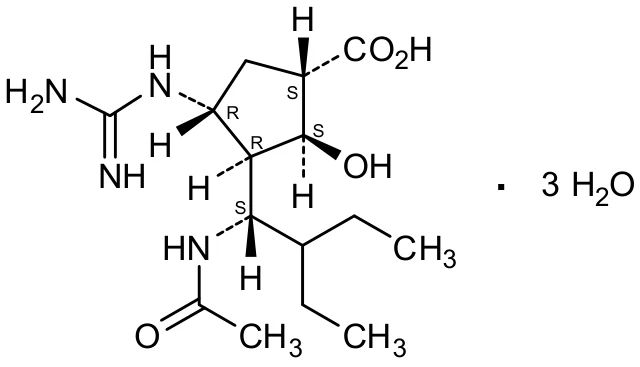
Proper name (USAN Name): Peramivir
CAS Registry Number: 1041434-82-5 (trihydrate)
Chemical name: (1S,2S,3R,4R)-3-[(1S)-1-(acetylamino)-2-ethylbutyl]-4-(carbamimidoylamino)-2-hydroxycyclopentanecarboxylic acid, trihydrate.
Molecular formula and molecular mass:
C15H28N4O4 ∙ 3H2O
382.45
Physicochemical properties:
Peramivir is a white to off-white or slightly beige powder.
It is sparingly soluble in deionized water and 0.9% sodium chloride solution;
slightly soluble in acetonitrile, dimethyl sulfoxide, ethanol, ethyl acetate, ethyl ether, isopropanol, heptane, methanol, pentane, tetrahydrofuran and toluene;
very slightly soluble in acetone, dimethyl formamide and methyl ethyl ketone.
Melting point: 250.6oC (Decomposition 271.2oC-288.0oC)
Optical rotation: -148o (-165o – -130o)
pH (10mg/mL water solution): 6.8 -7.1
pKa values: 3.8; > 12.0
Isomerism: Chiral substance: R-enantiomer is the active drug substance
Structural formula:
CLINICAL TRIALS
Study demographics and trial design
Table 4. Summary of patient demographics for clinical trials of IV RAPIVAB
| Study # | Trial design | Dosage, route of administration and duration | No. patients | Mean age years (SD)1 |
0722T0621 (Study 621) Phase 2 | Multi-center, randomized, double-blind, placebo-controlled | RAPIVAB: Single IV dose of 300 mg, 600 mg or placebo given over 30 minutes | 300 enrolled; 291 completed | 600 mg
|
0815T0631 (Study 631) Phase 3 | RAPIVAB: Single IV dose of 300 or 600 mg Oseltamivir:75 mg b.i.d. x 5 days | 1099 enrolled; 1038 completed | 600 mg 35.9 (12.0) |
1 SD- Standard Deviation
Study 621: A Phase 2 clinical study of single-dose intravenous peramivir in patients with influenza virus infection: a double-blind, parallel group, comparative dose-finding study
A total of 300 patients were enrolled into this Phase 2, double-blind, placebo-controlled, parallel group study of single-dose intravenous RAPIVAB in patients with influenza infection. Randomized and treated patients received a single intravenous dose of RAPIVAB 300 mg (n = 99), RAPIVAB 600 mg (n = 97), or placebo (n = 100), administered by intravenous infusion over 30 minutes.
Primary Endpoint
The primary endpoint of this study was the time to alleviation of symptoms (time to disappearance of influenza symptoms/duration of influenza), defined as the time from the start of investigational product dosing to the time point at which all of the 7 influenza symptoms (cough, sore throat, headache, nasal congestion, feverishness or chills, aches or pains of the muscle or joints, and fatigue) as recorded in the Patient Diary showed a score of “0: none” or “1: mild,” and when this condition persisted for at least 21.5 hours (24 hours - 10%).
This study met its primary endpoint of time to alleviation of symptoms. The combined RAPIVAB group (300 mg and 600 mg) showed a significant shortening of the time to alleviation of symptoms (one-sided P value: 0.0010) in comparison to the placebo group. The median duration of influenza was 59.1 hours in the 300-mg group, 59.9 hours in the 600-mg group, and 81.8 hours in the placebo group.
Key Secondary Endpoints
The median value for the time to resolution of fever (< 37.0°C) was 29.3 hours in the 300-mg group, 30.2 hours in the 600-mg group, and 42.4 hours in the placebo group, with patients in both the 300-mg and 600-mg groups showing significant reductions in comparison with the placebo group (P = 0.0010 and 0.0005, respectively).
The change in virus titer (TCID50/mL) from the time of Screening to Day 3 (48 hours after dosing)was significantly larger in the 600-mg group (P = 0.0027) but not in the 300-mg group (P = 0.0968) in comparison to the placebo group. The proportion of virus titer-positive patients at Visit 3 (Day 3) was significantly lower in both the 300-mg and 600-mg groups than in the placebo group. Few patients in any treatment group had detectable virus on Visit 5 (Day 9).
Study 631: A Phase 3 clinical study of single-dose intravenous peramivir in subjects with influenza virus infection: a double-blind, parallel group, comparative study with oseltamivir phosphate
A total of 1099 patients were enrolled in this Phase 3, multinational, multicenter, oseltamivir phosphate-controlled, double-blind, parallel-design study with dynamic allocation using the minimization method in patients with influenza infection. The objective of this study was to assess the non-inferiority of RAPIVAB compared to oseltamivir.
Primary Endpoint
The primary endpoint of this study was time to alleviation of symptoms (time to recovery of influenza symptoms), defined as the time from the start of study drug treatment to the time of recovery from influenza symptoms. The time to recovery from influenza symptoms was calculated as the time point where all 7 influenza symptoms (cough, sore throat, headache, nasal congestion, feeling feverishness or having chills, aches and pains of the muscle or joints, and fatigue) recorded in the Patient Diary became “0: none” or “1: mild” and persisted for at least 21.5 hours.
This study met its primary endpoint. The median time to alleviation of symptoms was 78.0 hours (95% CI: 68.4, 88.6) in the RAPIVAB 300-mg group, 81.0 hours (95% CI: 72.7, 91.5) in the RAPIVAB 600-mg group, and 81.8 hours (95% CI: 73.2, 91.1) in the oseltamivir group. In both the RAPIVAB 300-mg and 600-mg groups, the upper limits of the 97.5% CI for the hazard ratio to the oseltamivir group were below the predefined non-inferiority margin of 1.170, thus demonstrating non-inferiority.
Key Secondary Endpoints
The proportions of patients reporting normal temperature 24 hours after dosing were 59.3% (213/359 patients) in the RAPIVAB 300-mg group, 57.9% (209/361 patients) in the RAPIVAB 600-mg group, and 49.7% (181/364 patients) in the oseltamivir group. The proportions of patients reporting normal temperature 24 hours after dosing were significantly higher in the RAPIVAB 300- and 600-mg groups than in the oseltamivir group (two-sided P values = 0.0272 and 0.0326, respectively).
In virology analyses, the virus titer measured at Visit 2 (day 2 of treatment) in the RAPIVAB 600-mg group was significantly lower compared with the oseltamivir group.
MICROBIOLOGY
Mechanism of Action
Peramivir is an inhibitor of influenza virus neuraminidase, an enzyme that releases viral particles from the plasma membrane of infected cells. The median neuraminidase inhibitory activity (IC50 values) of peramivir in biochemical assays against influenza A/H1N1 virus, influenza A/H3N2 virus, and influenza B virus clinical isolates were 0.16 nM (n=44; range 0.01-1.77 nM), 0.13 nM (n=32; range 0.05-11 nM), and 0.99 nM (n=39; range 0.04-54.2 nM), respectively, in a neuraminidase assay with a fluorescently labeled MUNANA substrate.
Antiviral Activity
The antiviral activity of peramivir against laboratory strains and clinical isolates of influenza virus was determined in cell culture. The concentrations of peramivir required for inhibition of influenza virus in cell culture varied depending on the assay method used and the virus tested. The median 50% effective concentrations (EC50 values) of peramivir in cell culture assays were 2.6 nM (n=13; range 0.09-21 nM), 0.08 nM (n=17; range 0.01-1.9 nM) and 4.8 nM (n=11; range 0.06-120 nM) for influenza A/H1N1 virus, A/H3N2 virus, and B virus strains, respectively.
The relationship between the antiviral activity in cell culture, inhibitory activity in the neuraminidase assay, and the inhibition of influenza virus replication in humans has not been established.
Resistance
Cell culture: Influenza A and B virus isolates with reduced susceptibility to peramivir were recovered by serial passage of virus in cell culture in the presence of increasing concentrations of peramivir. Reduced susceptibility of influenza virus to inhibition by peramivir may be conferred by amino acid substitutions in the viral neuraminidase or hemagglutinin proteins (Table 5).
Table 5. Amino acid substitutions selected by peramivir in cell culture studies
| Type / Subtype | |||||||||||
| Protein | A / H1N1 | A/H3N2 | B | ||||||||
| HA | D129S, R208K | N63K, G78D, N145D, K189E | T139N, G141E, R162M, D195N, T197N, Y319H | ||||||||
| NA | N58D, I211T, H275Y | - | H275Y | ||||||||
In vivo: Influenza A and B virus isolates with amino acid substitutions associated with reduced susceptibility to peramivir were observed in clinical isolates collected during clinical trials with peramivir (Table 6). Amino acid substitutions have also been observed in viral isolates sampled during community surveillance studies which may be associated with reduced susceptibility to peramivir (Table 6). The clinical impact of this reduced susceptibility is unknown.
Table 6. Neuraminidase amino acid substitutions associated with reduced susceptibility to peramivir in clinical virus isolates
Circulating seasonal influenza strains expressing neuraminidase resistance-associated substitutions have been observed in individuals who have not received RAPIVAB. Prescribers should consider available information from Health Canada and the U.S. Center for Disease Control (CDC) on influenza virus drug susceptibility patterns and treatment effects when deciding whether to use RAPIVAB.
Cross Resistance
Cross-resistance between peramivir, oseltamivir and zanamivir was observed in neuraminidase biochemical assays and cell culture assays. The amino acid
| Protein | Type / Subtype | ||||||||
Influenza A/H1N1 (N1 numbering) | Influenza A/H3N2 | Influenza B (B numbering in brackets) | |||||||
| NA | Clinical Trial | H275Y | R292K, N294S | - | |||||
| Community Surveillance Studies | I223R/V, S246N, H275Y | E119V, Q136K, D151A/E/G/N/V | P141S (P139S), D198E/N/Y (D197E/N/Y), I222T/V (I221T/V), R371K (R374K) | ||||||
substitutions that resulted in reduced susceptibility to peramivir and either oseltamivir or zanamivir are summarized in Table 7. The clinical impact of this reduced susceptibility is unknown.
Table 7. Summary of amino acid substitutions with cross-resistance between peramivir and oseltamivir or zanamivir in susceptibility assays
| Type / Subtype | |||||||||
| Protein | A/H1N1 (N1 Numbering) | A/H3N2 | B | ||||||
| Oseltamivir | HA | - | N63K, N145D | - | |||||
| NA | E119V, D151G/N, Y155H, D198G, I223/R/V, S246N, H275Y, N294S | E119I/V, R292K, N294S | P139S, G140R, D197E/N/Y, I221T/V, H275Y, R371K | ||||||
| Zanamivir | HA | - | N63K, N145D | - | |||||
| NA | Q136K, Y155H, D198G, S246N, N294S | E119G/V, T148I, D151A/G/N/V, R292K, N294S | E116A/D/G, P139S, R149K, D198E/N, R292K, R371K | ||||||
No single amino acid substitution has been identified that could confer cross-resistance between the neuraminidase inhibitor class (peramivir, oseltamivir, zanamivir) and the M2 ion channel inhibitor class (amantadine, rimantadine). However, a virus may carry a neuraminidase inhibitor resistance-associated substitution in neuraminidase and an M2 ion channel inhibitor resistance-associated substitution in M2 and may therefore be resistant to both classes of inhibitors. The clinical relevance of phenotypic cross-resistance evaluations has not been established.
Immune Response
No influenza vaccine / peramivir interaction study has been conducted.
TOXICOLOGY
Animal Toxicology
Peramivir caused renal tubular necrosis and abnormal renal function in rabbits. Toxicities included tubular dilatation and necrosis with protein casts in cortical areas, dilated tubules with mineralization in corticomedullary junction areas, and multifocal tubular regeneration. The rabbit appeared to be the sensitive species for peramivir renal toxicity, which was noted at exposures approximately 2- to 4-fold those in humans at the clinically recommended dose.
Reproductive Studies
Reproductive toxicity studies have been performed in rats and rabbits. In rats, no treatment-related maternal or fetal toxicities were observed when RAPIVAB was given by intravenous bolus at the maximal feasible dose of 600mg/kg, representing exposures approximately 8-fold that in humans at the recommended dose. However, when RAPIVAB was administered by continuous intravenous infusion, fetal anomalies of reduced renal papilla and dilated ureters were observed. The exposure at the no-observed-adverse-effect level (NOAEL) was 0.8-fold the exposures in humans at the recommended dose. In rabbits, maternal toxicity (decreased food consumption and body weight, nephrotoxicity) and developmental toxicity (abortion or premature delivery) were observed. The exposure in rabbits at the NOAEL was 8-fold the exposure in humans at the recommended dose.
Studies in rats demonstrated that peramivir is excreted in milk at levels below the mother’s plasma drug concentrations, with AUC levels approximately half those in the maternal blood.
Carcinogenesis
Carcinogenicity studies by intravenous injection of peramivir were not performed.
However, in an oral carcinogenicity study in Sprague-Dawley rats, no drug-related neoplasms were observed at drug exposures 0.2- to 0.5-fold that of humans at the clinically recommended dose of 600 mg/day.
Mutagenesis
Peramivir was not mutagenic or clastogenic in a battery of in vitro and in vivo assays including the Ames bacterial reverse mutation assay, the Chinese hamster ovary chromosomal aberration test, and the in vivo mouse micronucleus test with intravenous administration.
Impairment of Fertility
Peramivir had no effects on mating or fertility in rats up to 600 mg/kg/day, at which exposures were approximately 8-fold of those in humans at the clinically recommended dose.
REFERENCES
Babu, Y. S., P. Chand, S. Bantia, P. Kotian, A. Dehghani, Y. El-Kattan, T. H. Lin, T. L. Hutchison, A. J. Elliott, C. D. Parker, S. L. Ananth, L. L. Horn, G. W. Laver and J. A. Montgomery (2000). "BCX-1812 (RWJ-270201): discovery of a novel, highly potent, orally active, and selective influenza neuraminidase inhibitor through structure-based drug design." J Med Chem 43(19): 3482-3486.
Kohno, S., H. Kida, M. Mizuguchi, J. Shimada and S. C. S. Group (2010). "Efficacy and safety of intravenous peramivir for treatment of seasonal influenza virus infection." Antimicrob Agents Chemother 54(11): 4568-4574.
Kohno, S., M. Y. Yen, H. J. Cheong, N. Hirotsu, T. Ishida, J. Kadota, M. Mizuguchi, H. Kida, J. Shimada and S. C. S. Group (2011). "Phase III randomized, double-blind study comparing single-dose intravenous peramivir with oral oseltamivir in patients with seasonal influenza virus infection." Antimicrob Agents Chemother 55(11): 5267-5276.
Whitley, R., A. Laughlin, S. Carson, E. Mitha, G. Tellier, M. Stich, J. Elder, W. J. Alexander, S. Dobo, P. Collis and W. P. Sheridan (2014). "Single dose peramivir for the treatment of acute seasonal influenza: integrated analysis of efficacy and safety from two placebo-controlled trials." Antivir Ther, 10.3851/IMP2874: epub ahead of print.