


Product Monograph - Relafen Tablets 500mg
SUMMARY PRODUCT INFORMATION
Route of Administration | Dosage Form / Strength | Clinically Relevant Nonmedicinal Ingredients |
| Oral | Tablet 500 mg, 750 mg | For a complete listing see Dosage Forms, Composition and Packaging section. |
INDICATIONS AND CLINICAL USE
RELAFEN® (nabumetone) is indicated for acute and chronic relief of the signs and symptoms of rheumatoid arthritis and osteoarthritis.
Geriatrics (≥65 years of age):
Patients older than 65 years and frail or debilitated patients are most susceptible to a variety of adverse reactions from nonsteroidal anti-inflammatory drugs (NSAIDs) and a brief discussion can be found under WARNINGS AND PRECAUTIONS.
Pediatrics:
No clinical data is available.
CONTRAINDICATIONS
- Patients who are hypersensitive to this drug or to any ingredient in the formulation or component of the container. For a complete listing of ingredients, see the DOSAGE FORMS, COMPOSITION AND PACKAGING section of the product monograph.
- Patients who have previously exhibited hypersensitivity to it or other nonsteroidal anti-inflammatory drugs. The potential for cross-reactivity between different NSAIDs must be kept in mind.
- Patients with active peptic ulcer, a history of recurrent ulceration or active inflammatory disease of the gastrointestinal system.
- Patients with severely impaired or deteriorating renal function. Individuals with lesser degrees of renal impairment are at risk of deterioration of their renal function when prescribed NSAIDs and must be monitored. See WARNINGS AND PRECAUTIONS, Renal.
- RELAFEN® should not be given to patients with the complete or partial syndrome of nasal polyps, or in whom ASA or other NSAIDs induce asthma, rhinitis, urticaria or other allergic type reactions. Fatal anaphylactoid reactions have occurred in such individuals. As well, individuals with the above medical problems are at risk of a severe reaction even if they have taken NSAIDs in the past without any adverse effects.
- Patients with significant hepatic impairment or active liver disease.
- RELAFEN® is not recommended for use with other NSAIDs because of the absence of any evidence demonstrating synergistic benefits and the potential for additive side effects.
WARNINGS AND PRECAUTIONS
General
Aseptic Meningitis: In occasional cases, with some NSAIDs, the symptoms of aseptic meningitis (stiff neck, severe headaches, nausea and vomiting, fever or clouding of consciousness) have been observed. Patients with autoimmune disorders (systemic lupus erythematosus, mixed connective tissues diseases, etc.) seem to be pre disposed. Although aseptic meningitis has not been reported for RELAFEN®, in such patients, the physician must be vigilant to the potential development of this complication.
Infection: In common with other anti inflammatory drugs, RELAFEN® may mask the usual signs of infection.
Carcinogenesis and Mutagenesis
See PART II: SCIENTIFIC INFORMATION, TOXOCOLOGY.
Cardiovascular
Fluid retention and edema have been observed in patients treated with RELAFEN®. Therefore, as with many other NSAIDs, the possibility of precipitating congestive heart failure in elderly patients or those with compromised cardiac function should be borne in mind. RELAFEN® should be used with caution in patients with heart failure, hypertension or other conditions predisposing to fluid retention.
With NSAID treatment, there is a potential risk of hyperkalemia particularly in patients with conditions such as diabetes mellitus or renal failure; elderly patients; or in patients receiving concomitant therapy with beta adrenergic blockers, angiotensin converting enzyme inhibitors or some diuretics. Serum electrolytes should be monitored periodically during long-term therapy, especially in those patients at risk.
Gastrointestinal
Peptic ulceration, perforation and gastrointestinal (GI) bleeding, sometimes severe and occasionally fatal can occur at any time, with or without symptoms during therapy with NSAIDs including RELAFEN®. Although minor upper GI problems, such as dyspepsia, are common, usually developing early in therapy, physicians should remain alert for ulceration and bleeding in patients treated chronically with nonsteroidal anti-inflammatory drugs, even in the absence of previous GI tract symptoms.
RELAFEN® should be given under close medical supervision to patients prone to gastrointestinal irritation particularly those with a history of peptic ulcer, diverticulosis or other inflammatory disease of the gastrointestinal tract such as ulcerative colitis and Crohn's disease. In these cases the physician must weigh the benefits of treatment against the possible hazards.
In controlled and open label extension clinical trials involving 1,677 patients treated with RELAFEN® (1,140 followed for 1 year and 927 for 2 years), the cumulative incidence of peptic ulcers was 0.3% (95% CI; 0%, 0.6%) at 3 to 6 months, 0.5% (95% CI; 0.1%, 0.9%) at 1 year and 0.8% (95% CI; 0.3%, 1.3%) at 2 years. Physicians should inform patients about the signs and/or symptoms of serious GI toxicity and instruct them to contact a physician immediately if they experience persistent dyspepsia or other symptoms or signs suggestive of gastrointestinal ulceration or bleeding.
Because serious GI tract ulceration and bleeding can occur without warning symptoms, physicians should follow chronically treated patients by checking their hemoglobin periodically and by being vigilant for the signs and symptoms of ulceration and bleeding and should inform the patient of the importance of this follow-up.
If ulceration is suspected or confirmed, or if GI bleeding occurs, RELAFEN® should be discontinued immediately, appropriate treatment instituted and the patient monitored closely.
Studies to date have identified that there is no group of patients not at risk of developing ulceration and bleeding. A prior history of serious GI events and other factors such as excess alcohol intake, smoking, age, female gender and anticoagulant use have been associated with increased risk. Caution should be used when administering to patients with other therapies known to increase the risk of gastrointestinal ulcer (e.g., oral corticosteroids).
High doses of any NSAID may carry a greater risk of these reactions, although controlled clinical trials showing this do not exist in most cases. In considering the use of relatively large doses (within the recommended dosage range), sufficient benefit should be anticipated to offset the potential increased risk of GI toxicity.
Patients older than 65 years and frail or debilitated patients are most susceptible to a variety of adverse reactions from NSAIDs: the incidence of these adverse reactions generally increases with dose and duration of treatment. In addition, these patients are less tolerant to ulceration and bleeding. Most reports of fatal GI events are in this population. Older patients are also at risk of lower esophageal ulceration and bleeding. However, data from controlled clinical studies with RELAFEN® (where 24% of 1677 patients were ≥ 65 years of age) have indicated that there were no overall differences in efficacy or safety between older patients and younger ones.
As with other NSAIDs, the lowest dose should be sought for each patient. Therefore, after observing the response to initial therapy, the dose should be adjusted to meet individual patients' requirements.
There is no definitive evidence that the concomitant administration of histamine H2 receptor antagonists and/or antacids will either prevent the occurrence of gastrointestinal side effects or allow continuation of RELAFEN® therapy when and if these adverse reactions occur.
Genitourinary
Some NSAIDs are known to cause persistent urinary symptoms (bladder pain, dysuria, urinary frequency), hematuria or cystitis. The onset of these symptoms may occur at any time after the initiation of therapy with an NSAID. Some cases have become severe on continued treatment. Should urinary symptoms occur, treatment with RELAFEN® must be stopped immediately to obtain recovery. This should be done before any urological investigations or treatments are carried out.
Hematologic
Drugs inhibiting prostaglandin biosynthesis do interfere with platelet function to varying degrees; therefore, patients who may be adversely affected by such an action should be carefully observed when RELAFEN® is administered. Blood dyscrasias (such as neutropenia, leukopenia, thrombocytopenia, aplastic anemia and agranulocytosis) associated with the use of NSAIDs are rare, but could have severe consequences. In one week repeat dose studies in healthy volunteers, RELAFEN® 1000 mg daily had little effect on collagen induced platelet aggregation and no effect on bleeding time. RELAFEN® can not be used as a substitute for low dose aspirin therapy in patients requiring such therapy.
Hepatic/Biliary/Pancreatic
As with other NSAIDs, borderline elevations of one or more liver tests may occur in up to 15% of patients. These abnormalities may progress, may remain essentially unchanged, or may return to normal with continued therapy. The ALT (SGPT) test is probably the most sensitive indicator of liver dysfunction. Meaningful (3 times the upper limit of normal) elevations of ALT (SGPT) or AST (SGOT) have occurred in controlled clinical trials of RELAFEN® in less than 1% of patients.
A patient with symptoms and/or signs suggesting liver dysfunction, or in whom an abnormal liver test has occurred, should be evaluated for evidence of the development of more severe hepatic reaction while on therapy with this drug.
Severe hepatic reactions, including jaundice and cases of fatal hepatitis have been reported with NSAIDs. Although such reactions are rare, if abnormal liver tests persist or worsen, if clinical signs and symptoms consistent with liver disease develop, or if systemic manifestations occur (e.g., eosinophilia, rash, etc.), this drug should be discontinued.
During long-term therapy, liver function tests should be monitored periodically. If there is a need to prescribe this drug in the presence of impaired liver function, it must be done under strict observation.
Immune
Cross-sensitivity: Patients sensitive to any one of the nonsteroidal anti-inflammatory drugs may be sensitive to any of the other NSAIDs also.
Hypersensitivity: As with other NSAIDs, allergic reactions may occur. Manifestations of allergic reactions include urticaria, dyspnea, and in rare instances anaphylaxis, or severe skin reactions such as Stevens-Johnson syndrome.
Neurologic
Some patients may experience drowsiness, dizziness, vertigo, insomnia, or depression with the use of RELAFEN®. Patients experiencing these side effects should exercise caution in carrying out activities that require alertness.
Ophthalmologic
Blurred and/or diminished vision has been reported with the use of RELAFEN® and other NSAIDs. If such symptoms develop this drug should be discontinued and an ophthalmologic examination performed; ophthalmic examinations should be carried out at periodic intervals in any patients receiving this drug for an extended period of time.
Renal
Long-term administration of NSAIDs to animals has resulted in renal papillary necrosis and other abnormal renal pathology. In humans, there have been reports of acute interstitial nephritis with hematuria, proteinuria, and occasionally nephrotic syndrome associated with NSAID use.
A second form of renal toxicity has been seen in patients with pre-renal conditions leading to the reduction in renal blood flow or blood volume, where the renal prostaglandins have a supportive role in the maintenance of renal perfusion. In these patients, administration of a NSAID may cause a dose-dependent reduction in prostaglandin formation and may precipitate overt renal decompensation. Patients at greatest risk of this reaction are those with impaired renal function, heart failure, liver dysfunction, those taking diuretics, and the elderly. Discontinuation of nonsteroidal anti-inflammatory therapy is usually followed by recovery to the pre-treatment state.
RELAFEN® and its metabolites are eliminated primarily by the kidneys, therefore the drug should be used with caution in patients with impaired renal function.
As with other NSAIDs, in patients with severely impaired renal function (creatinine clearance <30mL/min or <0.5mL/sec), lower doses of RELAFEN® should be considered and patients should be monitored more closely than patients with normal renal function. Laboratory tests should be performed at baseline and within weeks of starting therapy. Further tests should be carried out as necessary: if the impairment worsens, discontinuation of therapy may be warranted.
In moderate renal impairment (creatinine clearance 30 to 49 mL/min) there is a 50% increase in unbound plasma 6-MNA and dose reduction may be warranted (see DRUG INTERACTIONS).
During long-term therapy, kidney function should be monitored periodically.
Special Populations
Pregnant Women: There is no clinical trial experience with the use of nabumetone during human pregnancy.
Use of nabumetone during the first two trimesters of pregnancy should be restricted to situations where the potential benefit to the mother justifies the potential risk to the foetus or nursing infant.
The known effects of drugs of this class on the human foetus during the third trimester of pregnancy include constriction of the ductus arteriosis, pulmonary and cardiac changes. Therefore, use of nabumetone during the third trimester of pregnancy is not recommended.
Teratogenic effects were not observed in rats or rabbits. Postnatal development was not affected even though the active metabolite of nabumetone (6-MNA) is found in the milk of lactating rats. Nabumetone and/or its active metabolites have been shown to cross the placental barrier of rats. (See TOXICOLOGY).
Nursing Women: There is no clinical trial experience with the use of nabumetone during human lactation. As the safety and efficacy of RELAFEN® in human lactation have not been established, its use is therefore not recommended.
Pediatrics: RELAFEN® is not recommended for use in children because the safety and efficacy in children have not been established.
Geriatrics: Use in the elderly and debilitated patient should be monitored more closely as NSAID use in this population is known to be associated with a higher risk of adverse events. Data from controlled clinical studies (where 24% of 1677 patients were ≥65 years of age) and UK post marketing studies with RELAFEN® (where 43% of 10,800 patients were ≥65 years of age) indicate that there were no differences in efficacy or safety between older and younger patients. (See Cardiovascular, Gastrointestinal and Renal).
ADVERSE REACTIONS
Clinical Trial Adverse Drug Reactions
Because clinical trials are conducted under very specific conditions the adverse reaction rates observed in the clinical trials may not reflect the rates observed in practice and should not be compared to the rates in the clinical trials of another drug. Adverse drug reaction information from clinical trials is useful for identifying drug-related adverse events and for approximating rates.
The most common adverse reactions encountered with NSAIDs are gastrointestinal, of which peptic ulcer, with or without bleeding, is the most severe. Fatalities have occurred particularly in the elderly.
Adverse reaction information was derived from blinded controlled and open-labelled clinical trials and from worldwide marketing experience. Over 6,000 patients have been treated with RELAFEN® (nabumetone) in clinical trials, and over 49,000 patients included in post-marketing surveillance studies and RELAFEN® has been prescribed extensively in those countries where the drug has received registration clearance.
In large scale post-marketing studies the adverse event profile was highly consistent with the profile seen in clinical trials of RELAFEN®. The pattern of adverse events remained similar in patients treated with RELAFEN® for several years, similar in patients taking 1-2 g doses, and was similar in patients aged <65 or ≥65 years.
Information on adverse experiences observed in U.S. clinical studies is presented below. Of the 1,677 patients who received RELAFEN® during U.S. clinical trials, 1,524 were treated for at least one month, 1,327 for at least three months, 929 for at least a year and 750 for at least two years. Over 300 patients have been treated for five years or longer.
The most frequently reported adverse reactions were related to the gastrointestinal tract. They were diarrhea, dyspepsia and abdominal pain. Discontinuation of therapy due to these adverse events was 1.3% (diarrhea), 0.8% (dyspepsia) and 1.1% (abdominal pain) during the double blind phase of the US clinical trials involving 930 patients treated with RELAFEN® for up to 6 months. Of 1,677 patients treated with RELAFEN® in controlled and open label extension clinical trials (1,140 followed for one year and 927 for two years), the cumulative incidence of peptic ulcers was 0.3% at 3-6 months, 0.5% at one year and 0.8% at two years.
The following table displays adverse events reported in long-term clinical trial follow-up involving treatment for up to 8 years. Where available, percentages are based upon the total number of observations, thus patients reporting multiple incidents of an adverse event have been recorded for each occurrence. Causal relationship to RELAFEN® has not necessarily been established for all of the events listed below.
Table 1 - Adverse events reported in long-term follow-up with RELAFEN® RELAFEN®
(%)
Gastrointestinal:
Diarrhea 14
Dyspepsia 13
Abdominal Pain 12
Nausea 9
Flatulence 6
Constipation 4
Positive Stool Guaiac 2
Dry Mouth 2
Gastritis 1
Vomiting 1
Melena 1
Central Nervous System:
Headache 8
Dizziness 6
Insomnia 3
Fatigue 2
Somnolence 2
Increased Sweating 1
Nervousness 1
Dermatologic:
Rash 7
Pruritus 4
Special Senses:
Tinnitus 4
Abnormal Vision 2
Cardiovascular:
Hypertension 1.7
Palpitations 1
Respiratory:
Dyspnea 1
Less Common Clinical Trial Adverse Drug Reactions (<1%)
The following adverse events were reported in long-term clinical trial follow-up involving treatment for up to 8 years. Adverse events listed at an estimated incidence of #0.01% are based on spontaneous reports from worldwide marketing experience. Where available, percentages are based upon the total number of observations, thus patients reporting multiple incidents of an adverse event have been recorded for each occurrence. Causal relationship to RELAFEN® has not necessarily been established for all of the events listed below.
Gastrointestinal: eructation (0.7%), gastroenteritis (0.7%), anorexia (0.7%), rectal bleeding (0.5%), gastric ulcer (0.4%), duodenal ulcer (0.4%), stomatitis (0.4%), dysphagia (0.3%), increased appetite (0.2%), glossitis (0.2%), pancreatitis (0.1%), gingivitis (0.1%), duodenitis (0.1%), bilirubinuria (0.1%), gastrointestinal bleeding (0.1%) cholestatic jaundice (#0.01%), gallstones (#0.01%).
Central Nervous System: depression (0.9%), vertigo (0.9%), malaise (0.8%), paresthesia (0.8%), asthenia (0.7%), anxiety (0.4%), confusion (0.3%), agitation (0.1%), tremor (0.1%), nightmares (<0.01%).
Dermatologic: alopecia (0.9%), urticaria (0.7%), acne (0.4%), bullous eruptions (0.2%), photosensitivity (0.2%), pseudoporphyria cutanea tarda (#0.01%), erythema multiforme (#0.01%), Stevens Johnson syndrome (#0.01%), toxic epidermal necrolysis (#0.01%).
Special Senses: taste disorder (0.2%).
Cardiovascular: syncope (0.3%), thrombophlebitis (0.2%), vasculitis (0.1%), angina (0.1%), arrhythmia (0.1%), myocardial infarction (0.1%).
Respiratory: cough (0.6%), asthma (0.4%), eosinophilic pneumonia (#0.01%), hypersensitivity pneumonitis (#0.01%), interstitial pneumonitis (#0.01%).
Renal/Genitourinary: dysuria (0.7%), albuminuria (0.5%), hematuria (0.4%), impotence (0.2%), renal stones (0.2%), hyperuricemia (0.1%), azotemia (0.1%), interstitial nephritis (#0.01%), nephrotic syndrome (#0.01%), renal failure (#0.01%), vaginal bleeding (#0.01%).
Other: edema (0.7%), weight gain (0.7%), weight loss (0.4%), fever (0.4%), chills (0.2%), hyperglycemia (0.2%), hypokalemia (0.1%).
Hematologic/Lymphatic: anemia (0.5%), leucopenia (0.4%), thrombocytopenia (0.2%), granulocytopenia (0.1%), aplastic anemia (<0.01).
Hepatic: liver function abnormalities (0.5%), elevated liver function tests (#0.01%), jaundice (#0.01%), hepatic failure (#0.01%).
Allergic/Hypersensitivity: angioneurotic edema (<0.01%), anaphylactoid reaction (<0.01%), anaphylaxis (<0.01%).
DRUG INTERACTIONS
Drug-Drug Interactions
In vitro studies have shown that, because of its affinity for protein, the active metabolite of nabumetone may displace other protein-bound drugs such as sulfonylureas, tolbutamide, chlorpropamide and warfarin, from their binding site. However, clinical pharmacology studies demonstrated no significant drug interaction between warfarin and RELAFEN®.
Numerous studies have shown that the concomitant use of NSAIDs and anticoagulants increase the risk of GI adverse events such as ulceration and bleeding. For these reasons, the concomitant administration of RELAFEN® and warfarin or other highly protein bound drugs should be undertaken with caution. In addition, because prostaglandins play an important role in hemostasis, and NSAIDs affect platelet function, concurrent therapy of RELAFEN® with warfarin requires close monitoring to be certain that no change in anticoagulant dosage is necessary.
Digoxin levels should be monitored, and if necessary, a dosage adjustment made when administered concomitantly with RELAFEN®. NSAIDs have also been reported to increase steady-state plasma lithium concentrations. It is recommended that these concentrations be monitored when initiating, adjusting or discontinuing RELAFEN® treatment. Rare cases of fatal renal toxicity have occurred when methotrexate and NSAIDs are given concomitantly.
Concomitant administration of an aluminum-containing antacid had no significant effect on the bioavailability of 6-MNA.
Concomitant administration of paracetamol, ASA or cimetidine did not affect the bioavailability of the principal circulating metabolite in volunteer subjects.
Numerous studies have shown that the concomitant use of NSAIDs and oral glucocorticoids increases the risk of GI side effects such as ulceration and bleeding. This is especially the case in older (>65 years of age) individuals.
In controlled rheumatoid arthritis trials, RELAFEN® has been used in combination with gold, d-penicillamine, and corticosteroids. There was no evidence of untoward effects associated with their concurrent administration.
No specific drug interaction studies have been conducted with RELAFEN® and antihypertensives, oral contraceptives, diuretics, cyclosporine, probenecid, aminoglycosides, cholestyramine, oral hypoglycemic agents or alcohol.
DOSAGE AND ADMINISTRATION
Recommended Dose and Dosage Adjustment
Osteoarthritis and Rheumatoid Arthritis: The starting and usual adult dose is 1000 mg daily taken as a single dose with or without food. The dosage may be increased to 1500 mg or 2000 mg per day given either as a single dose or in two divided doses.
Since RELAFEN® has an average plasma half-life of 23 hours in healthy young subjects and 30 hours in elderly patients, plasma levels of 6-MNA will approximate steady-state within one week of dosing. For this reason, dosage adjustments during therapy should not be made more frequently than at one-week intervals, except in the case of side effects.
In patients with severe renal or hepatic impairment, dosage level adjustments should be made on an individual basis. In moderate renal impairment dose reduction may be warranted (see WARNINGS AND PRECAUTIONS, and DRUG INTERACTIONS).
OVERDOSAGE
Overdoses with RELAFEN® (nabumetone) have been rarely reported. There is no specific antidote and the active metabolite 6-MNA is not dialysable. If acute overdosage occurs, it is recommended that the stomach be emptied by vomiting or lavage and institution of general supportive measures as necessary. In addition, the use of activated charcoal, up to 60 g, may effectively reduce nabumetone absorption. Co-administration of nabumetone with activated charcoal orally in man has resulted in an 80% decrease in maximum plasma concentrations of the active metabolite.
ACTION AND CLINICAL PHARMACOLOGY
Mechanism of Action
Nabumetone is a non-acidic, NSAID with a naphthylalkanone structure which is virtually insoluble in water. It exhibits anti-inflammatory, analgesic and antipyretic properties in pharmacologic studies. As with the acidic NSAIDs, its mode of action is not known. However, the ability to inhibit prostaglandin synthesis may be involved in the anti-inflammatory effect.
Nabumetone as the parent compound is a pro-drug which undergoes rapid hepatic biotransformation to its principal active metabolite, 6-methoxy-2-naphthylacetic acid (6-MNA), a potent inhibitor of prostaglandin biosynthesis.
RELAFEN® (nabumetone) was compared to ASA in inducing gastrointestinal blood loss. Food intake was not monitored. Studies utilizing 51Cr tagged red blood cells in healthy males showed no difference in fecal blood loss after three or four weeks' therapy of RELAFEN® 1000 mg or 2000 mg daily when compared to either placebo-treated or non-treated subjects. In contrast, ASA 3600 mg daily produced an increase in fecal blood loss when compared to the RELAFEN®, placebo or non-treated subjects.
In one week repeat dose studies in healthy volunteers, RELAFEN® 1000 mg daily had little effect on collagen-induced platelet aggregation and no effect on bleeding time.
Pharmacokinetics
Table 2. Mean pharmacokinetic parameters of nabumetone active metabolite (6-MNA) at steady-state following oral administration of 1000 mg or 2000 mg doses of nabumetone
| Young Adults | Young Adults | Elderly | |
| Mean ±SD | Mean ± SD | Mean ± SD | |
| Abbreviations | 1000 mg | 2000 mg | 1000 mg |
| (units) | n=31 | n=12 | n=27 |
| t max (hours)* | 3.0 (1.0 to 12.0) | 2.5 (1.0 to 8.0) | 4.0 (1.0 to 10.0) |
| t ½ (hours) | 22.5 ± 3.7 | 26.2 ± 3.7 | 29.8 ± 8.1 |
| Cl ss/F (mL/min) | 26.1 ± 17.3 | 21.0 ± 4.0 | 18.6 ± 13.4 |
| Vdss/F(L) | 55.4 ± 26.4 | 53.4 ± 11.3 | 50.2 ± 25.3 |
* tmax is reported as median (range) values.
Absorption: After oral administration, approximately 80% of a radio-labelled dose of nabumetone is found in the urine, indicating that nabumetone is well absorbed from the gastrointestinal tract.
Following oral administration, peak plasma levels of 6-MNA occur between 2.5 and 4 hours (range 1 to 12 hours).
When administered with food or milk, there is more rapid absorption; however, the total amount of 6-MNA in the plasma is unchanged.
Distribution: Preliminary in vivo and in vitro studies suggest that unlike other NSAIDs, there is no evidence of enterohepatic recirculation of the active metabolite. Steady-state is generally achieved between 3 and 6 days and the elimination half-life is variable from 23 (±3.7) hours in young healthy patients to 30 (±8.1) hours in the elderly.
The active metabolite penetrates into the synovial fluids at measurable sustained levels in osteoarthritis and rheumatoid arthritis patients. There is wide inter-individual variation in plasma concentrations of 6-MNA. A correlation between plasma 6-MNA levels and efficacy has not been established.
6-MNA is more than 99% bound to plasma proteins. The free fraction is dependent on total concentration of 6-MNA and is proportional to dose over the range of 1000 to 2000 mg. It is 0.2% to 0.3% at concentrations typically achieved following administration of nabumetone 1000 mg and is approximately 0.6% to 0.8% of the total concentrations at steady-state following daily administration of 2000 mg.
Metabolism: Nabumetone itself is not quantifiable in the plasma because, after absorption, it undergoes rapid biotransformation to the principal active metabolite, 6-MNA. Approximately 35% of a 1000 mg dose of nabumetone is converted to 6-MNA and 50% is converted into unidentified metabolites which are subsequently excreted in the urine.
Excretion: After oral administration, approximately 80% of a radio-labelled dose of nabumetone is found in the urine.
Special Populations and Conditions
Geriatrics: Steady-state plasma concentrations in elderly patients were generally higher than in young healthy subjects (See Table 2).
Hepatic Insufficiency: Data in patients with severe hepatic impairment are limited. Biotransformation of nabumetone to 6-MNA and the further metabolism of 6-MNA to inactive metabolites is dependent on hepatic function and could be reduced in patients with severe hepatic impairment (history of or biopsy-proven cirrhosis).
Renal Insufficiency: In studies of patients with renal insufficiency, the mean terminal half-life of 6-MNA was increased in patients with severe renal dysfunction (creatinine clearance < 30 mL/min/1.73m2 or <0.5 mL/sec/1.73m2). In patients undergoing hemodialysis, steady state plasma concentrations of the active metabolite were similar to those observed in healthy subjects. Due to extensive protein binding, 6-MNA is not dialyzable.
STORAGE AND STABILITY
RELAFEN® (nabumetone) should be stored between 15 - 30°C in a dry place and dispensed in a light resistant container.
DOSAGE FORMS, COMPOSITION AND PACKAGING
RELAFEN® (nabumetone) is available as 500 mg and 750 mg tablets. The 500 mg tablets are white, pillow-shaped film coated tablets with RELAFEN embossed on one side and 500 embossed on the other side. The 750 mg tablets are beige, pillow-shaped film coated tablets with RELAFEN embossed on one side and 750 embossed on the other side.
In addition to the active ingredient, RELAFEN® tablets contain the following non-medicinal ingredients: microcrystalline cellulose, sodium starch glycolate, sodium lauryl sulphate, hydroxypropyl methylcellulose, and colouring and titanium dioxide in the film coating.
The 500 mg and 750 mg tablets are supplied in polyethylene bottles of 100 tablets per bottle.
PART II: SCIENTIFIC INFORMATION
PHARMACEUTICAL INFORMATION
Drug Substance
Proper name: Nabumetone
Chemical name: 4-(6-methoxy-2-naphthyl)-butan-2-one
Molecular formula and molecular mass: C15H16O2 228
Structural formula:
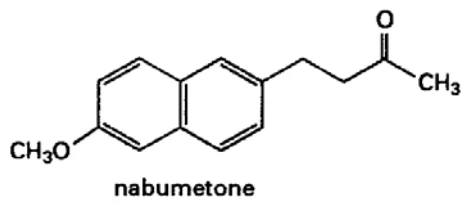
Physicochemical properties: White to off-white crystalline substance which is insoluble in water and soluble in most organic solvents, including alcohol. The melting point of nabumetone is 80°- 83°C.
DETAILED PHARMACOLOGY
Clinical:
Double-blind studies of up to 6 months duration in rheumatoid arthritis and osteoarthritis have demonstrated that RELAFEN® at a dosage of 1-2 g/day is at least as effective as daily doses of 3.6 g of acetylsalicylic acid (ASA), 1.6 g of ibuprofen, 75-150 mg of indomethacin, 100 mg of diclofenac and 500 mg - 1 g of naproxen. Long-term follow-up studies of up to 8 years duration have shown that RELAFEN® is well-tolerated.
In five endoscopically-controlled studies comparing RELAFEN® (102 patients treated at doses of 1-1.5 g/day) with naproxen (110 patients treated with doses of 500 mg - 1 g/day), RELAFEN® caused significantly fewer gastric and duodenal ulcers than naproxen. In two studies of 1 g/day RELAFEN® (n=78) compared with 600 mg ibuprofen q.i.d. alone (n=73) or in combination with 200 mcg misoprostol (q.i.d.) (n=60), RELAFEN® treatment resulted in significantly fewer gastric and duodenal ulcers than ibuprofen, and the frequency of ulcers with RELAFEN® was not significantly different from the incidence of ulcers in patients taking misoprostol concomitantly with ibuprofen.
In two clinical pharmacology studies conducted in healthy volunteers, it was demonstrated that RELAFEN® had little effect on collagen-induced platelet aggregation and no effect on bleeding time. Additionally, there was no evidence of serious hematological findings or clinically significant trends in hematological parameters associated with the use of RELAFEN® in clinical trials.
Animal:
Nabumetone has shown good activity in two animal models of acute inflammation, namely carrageenin-induced edema model in the rat and the ultra-violet induced erythema model in the guinea pig. It was also active in three rat models of chronic inflammation: the cotton pellet induced granuloma, adjuvant arthritis and arthritis induced by 6-sulfanilamido-indazole. Analgesic activity has been inferred from the effect of nabumetone in the mouse exposed to phenyl-p-quinone. In the rabbit, nabumetone was found to have antipyretic properties.
In the carrageenin-induced model of acute inflammation and the fasted model of gastric irritancy both studied in the rat, the ratio of the dose producing gastric irritancy to anti- inflammatory dose was between five and fifty times greater for nabumetone than for indomethacin, ASA, piroxicam, diclofenac or fenbufen. In this experimental situation, nabumetone exhibited a superior therapeutic index and the dose required to produce gastric irritancy was many times greater than the anti-inflammatory dose.
Nabumetone itself is a weak inhibitor of the cyclo-oxygenase system and, hence, of prostaglandin biosynthesis. Its principal metabolite in laboratory animals and in man, 6-methoxy-2-naphthylacetic acid, is a strong inhibitor of this enzyme system.
Nabumetone was well absorbed after oral administration to the rat, mouse, rabbit and rhesus monkey. Absorption in dogs was variable. Tissue distribution measured following administration of 14C-nabumetone to rats was found to be widespread except for a noteworthy absence of radioactivity in the gastric wall. Radioactive material crossed the placental barrier in the rat and also was found in rat milk.
Following its absorption from the gut, nabumetone is subject to considerable first pass biotransformation to its principal metabolite in all species (including man), 6-methoxy-2-naphthylacetic acid. Nabumetone itself can rarely be detected in the plasma, studies in the rat suggesting that its half-life is about 15 minutes. The half-life of the principal metabolite is about 20 hours in the dog and 24 hours in man. It is substantially shorter in the mouse (1 hour), the rat (2 hours), and the rhesus monkey (2 hours).
Nabumetone is metabolized in all species by three inter-related pathways: oxidative cleavage of the side chain to yield the acetic acid derivative, O-demethylation, and reduction of the ketone moiety to an alcohol.
The kidney is the major route of elimination with approximately 75% of the dose recovered in urine in the first 48 hours. Although several metabolites were observed in the urine, nabumetone itself has not been detected. Little excretion takes place in the bile except in the rat which also demonstrates enterohepatic circulation of metabolites.
TOXICOLOGY
Acute Toxicity:
The oral LD50 was in excess of 5000 mg/kg in mice and in excess of 2000 mg/kg in rats. Neonatal rats are approximately twice as sensitive. The principal target organ in rodents is the gastrointestinal tract.
Sub Acute Toxicity:
In Beagle dogs the maximum tolerated oral dose was 500 mg/kg and in a 14-day study doses of 60 and 300 mg/kg were tolerated with only minor effects which at the high dose included hematuria, fecal occult blood and mucosal erythema in the large bowel. Apart from slight reductions in serum alkaline phosphatase and, in one of the two dogs, in red cell parameters, 60 mg/kg/day was a no effect dose.
In the rhesus monkey doses up to 400 mg/kg were well tolerated in an oral maximum tolerated dose study. At doses of 800 mg/kg and above weight loss, slight gastrointestinal irritancy, and, at 1600 mg/kg, prolongation of blood coagulation time were seen. Following administration of 540 mg/kg/day for 28 days slight weight loss, slightly reduced red cell parameters, and minimal histological change in the kidney were the principal findings. Doses of 60 and 180 mg/kg/day for 14 days were without effect.
In the rat a dose of 200 mg/kg/day for 14 days was tolerated with only a moderate decrease in bodyweight gain, gastrointestinal ulceration in 1/12 rats, increased relative kidney weight, decreased relative pituitary and thymus weights and increased water intake. At 600 mg/kg/day the principal effect was marked gastrointestinal irritancy with ulceration and perforation of the small bowel resulting in 25% mortality. Apart from a slight increase in kidney weight, 67 mg/kg/day was a no-effect dose. In a study of 27 days duration a dose of 20 mg/kg/day was without effect apart from trace amounts of fecal occult blood and minimal histological change in the adrenals. Doses of 60 and 180 mg/kg/day were tolerated with only slight effects on bodyweight gain and minor histopathological changes in spleen, bladder and adrenal. More severe gastrointestinal effects including perforation of the small bowel were seen in one rat dosed at 180 mg/kg/day which was killed in extremis.
Chronic Toxicity:
Rats received nabumetone at 20, 80 and 320 mg/kg/day for 26 weeks. At the high dose, the principal finding was of gastrointestinal irritation with evidence of ulceration of the small intestine resulting in a number of mortalities. Apart from a transient pallor in two rats a dose of 80 mg/kg/day was without effect.
Rhesus monkeys received nabumetone for 26 weeks at oral doses of 20, 80 and 320 mg/kg. Apart from a transient effect on red cell parameters the no-effect dose was 80 mg/kg/day. At the high dose there was evidence of edema, blood loss from the rectum and gastric erosions in a proportion of animals.
Rhesus monkeys were also studied for 52 weeks under oral dosing regimens of 25, 75, 225 and 450 mg/kg/day. Monkeys at the highest dose showed significant gastrointestinal irritation with secondary anemia and hypoproteinemia resulting in subcutaneous edema. Some evidence of interstitial nephritis was also seen in a proportion of animals. At the intermediate dose gastrointestinal irritation was evident to a lesser degree and 75 mg/kg/day was a no effect dose.
Rats received nabumetone daily for 78 weeks at doses of 37.5, 75 and 150 mg/kg in two separate studies. An additional group in one study received 300 mg/kg for 21 weeks only. The principal finding was of gastrointestinal irritancy which was severe at 300 mg/kg resulting in ulceration of the small intestine and 30% mortality before dosing was discontinued in week 21. Increases in kidney weight and decreases in urine osmolality were associated with a dose related nephropathy. There were no consistent changes in biochemical or hematological parameters. These effects in the rat are typical of nonsteroidal anti-inflammatory agents and were minimal at the low dose of 37.5 mg/kg/day. Recovery from these effects appeared to be complete in rats maintained for a further six weeks without treatment.
Except for elevations in serum sodium and chloride, no abnormalities were apparent after the surviving rats were off treatment for six weeks. All abnormalities noted appeared to be secondary to the renal and gastrointestinal effects of nabumetone at the doses employed. Mortality at the two intermediate dose levels was not different from controls but, at necropsy, decedents had findings similar to those observed at the highest dose.
Reproductive Studies:
Teratology studies in rats and rabbits at doses of up to 400 and 300 mg/kg/day, respectively, resulted in some degree of maternal toxicity at the highest doses used, but no evidence for a teratogenic effect in either species was detected. In common with other NSAIDs, increased embryonic loss about the time of implantation was observed in rabbits.
In male and female rats, reproductive performance and fertility were not impaired at doses up to 320 mg/kg/day. Whilst males were unaffected, nabumetone was toxic to the pregnant and lactating dam at 320 mg/kg/day, dystocia leading to maternal and fetal/neonatal death, delayed parturition and reduced maternal weight gain being frequent observations. In general, nabumetone had no effect on embryonic or fetal development but, at the high dose, there was an indication of reduced live litter size at Cesarean section, associated with a reduced number of shed ova as assessed by corpora lutea count; there was also a reduced number of males per litter. Associated with the dystocia, perinatal pup loss was markedly increased at 320 mg/kg/day, this resulted in reduced litter size postnatally and increased pup weight consequent upon reduced intra-litter competition. However, the postnatal development and behaviour of surviving pups was normal as was their subsequent reproductive performance. At the lower doses of 20 and 80 mg/kg/day, occasional intergroup differences were considered to be of doubtful biological significance.
In a peri- and post-natal toxicity study in rats, where all females were allowed to litter, treatment at the high dose of 320 mg/kg/day was also associated with prolonged gestation, dystocia and increased perinatal pup mortality but, as in the fertility study, there were no effects on the development of the surviving offspring. The reduced number of ova shed at ovulation leading to reduced litter size and the dystocia leading to effects on both dam and offspring during the perinatal period are likely to be due to the effect of nabumetone on prostaglandin biosynthesis. These findings are seen with other NSAIDs.
Mutagenicity/Carcinogenicity:
In two-year studies conducted in mice and rats, nabumetone had no statistically significant tumorigenic effect. Nabumetone did not show mutagenic potential in the Ame’s test and mouse micronucleus test in vivo. However, nabumetone- and 6-MNA- treated lymphocytes in culture showed chromosomal aberrations at 80 mcg/mL and higher concentrations (equal to the average human exposure to nabumetone at the maximum recommended dose).
REFERENCES
Aronoff GR. Therapeutic implications associated with renal studies of nabumetone. J Rheumatol, 1992; 19 (Suppl 36).
Bernhard GC. Worldwide safety experience with nabumetone. J Rheumatol, 1992; 19 (Suppl 36).
Blower PR. The unique pharmacologic profile of nabumetone. J Rheumatol, 1992; 19 (Suppl 36).
Boelaert JR, Jonnaert HA, Daneels RF, Schurgers ML. Nabumetone pharmacokinetics in patients with varying degrees of renal impairment. Am J Med, 1987; 83 (Suppl 4B).
Brett MA, Buscher G, Ellrich E, Greb WH, Kurth HJ, Rulander G, Schmerenbeck B, Haddock RE, Thawley AR. Nabumetone: Evidence for the lack of enterohepatic circulation of the active metabolite 6-MNA in humans. Drugs, 1990; 40 (Suppl 5):67-70.
Carle WK, Wade AG, Kill DC, Poland M. Nabumetone compared with indomethacin in the treatment of osteoarthritis in general practice. J Rheumatol, 1992; 19 (Suppl 36).
Emery P, Clarke A, Williams P, Kill D, Cree F, Redhead R, Poland M. Nabumetone compared with naproxen in the treatment of rheumatoid arthritis: a multi centre, double blind, randomized, parallel group trial in hospital outpatients. J Rheumatol, 1992; 19 (Suppl 36).
Eversmeyer W, Poland M, Delapp RE, Jensen CP. Safety experience with nabumetone versus diclofenac, naproxen, ibuprofen and piroxicam in osteoarthritis and rheumatoid arthritis. Am J Med, 1993; 95 (Suppl 2A).
Fleischmann RM. Clinical efficacy and safety of nabumetone in rheumatoid arthritis and osteoarthritis. J Rheumatol, 1992; 19 (Suppl 36).
Freed MI, Audet PR, Ilson BE, Everitt DE, Brown LE, Zariffa BN, Rizzo SM, Kapoor SC, Krishna DK, Jorkasky DK. Effects of nabumetone, sulindac and indomethacin on renal prostaglandins and platelet function in normal females. American College of Rheumatology,.Scientific Abstracts, 1992; Oct 11-15.
Friedel HA, Langtry HD, Buckley MM. Nabumetone. A reappraisal of its pharmacology and therapeutic use in rheumatic diseases. Drugs, 1993; 45(1):131-156.
Greb WH, Von Schrader HW, Cerlek S, Dominis M, Hauptmann E, Zenic N. Endoscopic evaluation of the effect of naproxen and nabumetone on gastric and duodenal mucosa. Am J of Med, 1987; 83 (Suppl 4B):19-24.
Hilleman DE, Mohiuddin SM, Lucas BD. Non steroidal antiinflammatory drug use in patients receiving warfarin: Emphasis on nabumetone. Am J Med, 1993; 95 (Suppl 2A).
Hyneck ML. An overview of the clinical pharmacokinetics of nabumetone. J Rheumatol, 1992; 19 (Suppl 36).
Information Letter, Health Protection Branch. Nonsteroidal Anti-inflammatory Drugs. DD 33, 1985; Aug 21.
Kendall MJ, Chellingsworth MC, Jubb R, Thawley AR, Undre NA, Kill DC. A pharmacokinetic study of the active metabolite of nabumetone in young healthy subjects and older arthritis patients. Eur J Clin Pharmacol, 1989; 36:299-305.
Lister BJ, Poland M, Delapp RE. Efficacy of nabumetone versus diclofenac, naproxen, ibuprofen and piroxicam in osteoarthritis and rheumatoid arthritis. Am J Med, 1993; 95 (Suppl 2A).
Lussier A, Davis A, Lussier Y, Eng P, Lebel E. Comparative gastro intestinal blood loss associated with placebo, aspirin and nabumetone as assessed by radio chromium (51Cr). J Clin Pharmacol, 1989; 29:225-229.
Lussier A, Lebel E. Radio chromium (chromium 51) evaluation of gastro intestinal blood loss associated with placebo, aspirin and nabumetone. Am J Med, 1987; 83 (Suppl 4B):15-18.
Maleev A, Vlahov V, Gruev I, Dierdorf D, Kostova N, Bachracheva N. Liver insufficiency as a factor modifying the pharmacokinetic characteristics of the preparation nabumetone. International Journal of Clinical Pharmacology, Therapy and Toxicology, 1986; 24 (8):425-429.
Mangan FR, Flack JD, Jackson D. Pre clinical overview of nabumetone: Pharmacology, bioavailability, metabolism and toxicology. Am J Med, 1987; 83 (Suppl 4B).
McMahon FG, Vargas R, Ryan JR, Fitts DA. Nabumetone kinetics in the young and elderly. Am J Med, 1987; 83 (Suppl 4B).
Meade EA, Smith WL, Dewitt DL. Differential inhibition of prostaglandin endoperoxide synthase (cyclooxygenase) isozymes by aspirin and other non steroidal, anti inflammatory drugs. J Biol Chem, 1993; 268:6610 4.
Miehlke RK, Schneider S, Muth P, Henschke F, Giersch KH, Munzel P, Sorgel F. Penetration of nabumetone and its active metabolite 6 methoxy 2 naphthyl acetic acid (6-MNA) into synovial fluid and adherent tissue of patients with rheumatoid arthritis or osteoarthritis during steady state. Proceedings of the 17th Congress. ILAR Rheumatology Rio, 1989.
Morgan GJ, Poland M, Delapp RE. Efficacy and safety of nabumetone versus diclofenac, naproxen, ibuprofen and piroxicam in the elderly. Am J Med, 1993; 95 (Suppl 2A).
Nunn B, Chamberlain PD. Effect of nabumetone (BRL 14777), a new anti inflammatory drug, on human platelet reactivity ex vivo: comparison with naproxen. J Pharm Pharmacol, 1982; 34:576-579.
Rees T, Scott M, Saul S, Kill D, Fehilly B. A multicentre general practice trial of nabumetone and slow release diclofenac in osteoarthritis. Drug Investigations, 1990; 2 (1):53-60.
Roth SH. Upper gastro intestinal safety with nabumetone. J Rheumatol, 1992; 19 (Suppl 36).
Roth SH, Bennett R, Caldron P, Mitchell C, Swenson C, Koepp R. A five year endoscopic evaluation of arthritis patients treated with nabumetone versus naproxen. J Rheumatol, 1993; (In press).
Roth SH, Tindall EA, Jain AK, McMahon FG, April PA, Barry I, Bockow BI, Cohen SB, Fleischmann RM. A controlled study comparing the effects of nabumetone, ibuprofen and ibuprofen plus misoprostol on the upper gastrointestinal tract mucosa. Arch Int Med, 1993; 153:2565-2571.
Spangler RS. Gastrointestinal damage demonstrated with nabumetone or metodalac in preclinical studies. Am J Med, 1993; 95 (Suppl 2A).
Terziivanov D, Maleev A, Vlahov V. Nabumetone (BRL 14777) presystemic elimination and disposition in patients with liver impairment. International Journal of Clinical Pharmacology, Therapy and Toxicology, 1987; 25 (4):208-213.
Worldwide endoscopy studies of nabumetone compared to other NSAID's. Feb 18th 1992. Data on file.