


Product Monograph - Rhotral 100
SUMMARY PRODUCT INFORMATION
Route of Administration | Dosage Form / Strength | Clinically Relevant Nonmedicinal Ingredients |
| Oral | Tablet 100, 200, or 400 mg | For a complete listing see Dosage Forms, Composition and Packaging section. |
INDICATIONS AND CLINICAL USE
RHOTRAL® is indicated for the following:
- Treatment of mild to moderate hypertension.
RHOTRAL® (acebutolol hydrochloride) is usually used in combination with other drugs, particularly a thiazide diuretic.
However, it may be tried alone as an initial agent in those patients in whom, in the judgment of the physician, treatment should be started with a β-blocker rather than a diuretic.
In patients with severe hypertension a β-adrenergic blocking agent may be used as part of a multiple drug regimen which would normally include a diuretic and a vasodilator.
The combination of RHOTRAL® with a diuretic or peripheral vasodilator has been found to be compatible and generally more effective than RHOTRAL® alone. Limited experience with other antihypertensive agents has not shown evidence of incompatibility.
RHOTRAL® is not indicated in the emergency treatment of hypertensive crises.
- Long-term management of patients with angina pectoris due to ischemic heart disease.
Geriatrics: RHOTRAL® has been used in the elderly without specific adjustment of dosage. However, this patient population may require lower maintenance doses because the bioavailability of both acebutolol hydrochloride and its metabolite are approximately doubled in this age group. This increased bioavailability is probably due to decreases in first-pass metabolism and renal function in the elderly (see WARNINGS AND PRECAUTIONS, Special Populations).
Pediatrics: There is no experience with RHOTRAL® in the treatment of pediatric age groups and therefore use in children is not recommended (see WARNINGS AND PRECAUTIONS, Special Populations).
CONTRAINDICATIONS
- Patients who are hypersensitive to this drug, beta-blockers, or to any ingredient in the formulation or component of the container. For a complete listing, see DOSAGE FORMS, COMPOSITION AND PACKAGING section of the product monograph.
- Patients exhibiting sinus bradycardia.
- Patients with sinus syndrome.
- Patients with second and third degree A-V block.
- Patients with right ventricular failure secondary to pulmonary hypertension.
- Patients with congestive heart failure.
- Patients with cardiogenic shock.
- Patients with anesthesia with agents that produce myocardial depression, e.g. ether.
- Patients with severe peripheral circulatory disorders.
- Patients with phaeochromocytoma.
WARNINGS AND PRECAUTIONS
General
RHOTRAL® dosage should be individually adjusted when used concomitantly with other antihypertensive agents (see DOSAGE AND ADMINISTRATION).
Cessation of therapy with a beta-blocker should be gradual (see WARNINGS AND PRECAUTIONS section, under ‘Cardiovascular’).
Dizziness and/or fatigue may occur with beta-blocker administration and this should be taken into account when driving or operating machinery.
Cardiovascular
Severe sinus bradycardia may occur with the use of RHOTRAL® from unopposed vagal activity remaining after blockade of beta1-adrenergic receptors; in such cases, dosage should be reduced.
RHOTRAL® dosage should be individually adjusted when used concomitantly with other antihypertensive agents (see DOSAGE AND ADMINISTRATION and DRUG INTERACTIONS sections).
Caution should be used in patients with Prinzmetal angina. RHOTRAL® may increase the number and duration of angina attacks in patients with Printzmetal’s angina due to unopposed
alpha-receptor mediated coronary artery vasoconstriction. Therefore, RHOTRAL® should be used in these patients with the utmost care.
Cardiac Failure
Special caution should be exercised when administering RHOTRAL® (acebutolol hydrochloride) to patients with a history of heart failure. Sympathetic stimulation is a vital component supporting circulatory function in congestive heart failure, and inhibition with β-blockade always carries the potential hazard of further depressing myocardial contractibility and precipitating cardiac failure. RHOTRAL® acts selectively without abolishing the inotropic action of digitalis on the heart muscle. However, the positive inotropic action of digitalis may be reduced by the negative inotropic effect of acebutolol hydrochloride when the two drugs are used concomitantly.
The effects of β-blockers and digitalis are additive in depressing A-V conduction.
In patients without a history of cardiac failure, continued depression of myocardium over a period of time can, in some cases, lead to cardiac failure. Therefore, at the first sign or symptom of impending cardiac failure, patients should be fully digitalised and/or given a diuretic and the response observed closely. If cardiac failure continues despite adequate digitalisation and diuretic therapy, RHOTRAL® therapy should be immediately withdrawn.
Abrupt cessation of therapy with RHOTRAL®
Patients with angina or ischaemic heart disease should be warned against abrupt discontinuation of RHOTRAL®.
There have been reports of severe exacerbation of angina, and of myocardial infarction or ventricular arrhythmias occurring in patients with angina pectoris, following abrupt discontinuation of β-blocker therapy. The last two complications may occur with or without preceding exacerbation of angina pectoris. Therefore, when discontinuation of RHOTRAL® is planned in patients with angina pectoris, the dosage should be gradually reduced over a period of about two weeks and the patient should be carefully observed. The same frequency of administration should be maintained. In situations of greater urgency, acebutolol hydrochloride therapy should be discontinued stepwise and under conditions of closer observation. If angina markedly worsens or acute coronary insufficiency develops, it is recommended that treatment with RHOTRAL® be reinstituted promptly, at least temporarily (see DRUG INTERACTIONS).
Central Nervous Sytem
The low lipid solubility and lack of accumulation in CNS tissues of acebutolol and its active metabolite reduce the likelihood of sleep disturbances, depression or other central effects and such occurrences are rare.
Endocrine and Metabolism
In patients with thyrotoxicosis, the possible deleterious effects from long-term use of RHOTRAL® have not been adequately appraised. RHOTRAL® may give a false impression of
improvement by masking the clinical signs of continuing hyperthyroidism or its complications. Therefore, abrupt withdrawal of RHOTRAL® may be followed by an exacerbation of the symptoms of hyperthyroidism, including thyroid storm.
Immune
Increase in antinuclear antibody (ANA) titer was observed in approximately 12.5% of patients on chronic acebutolol hydrochloride therapy. Rare instances (<1%) of a syndrome resembling lupus erythematosus have been reported with maintenance RHOTRAL® therapy. Similar symptoms were occasionally observed with some other β-blockers. In addition to increase ANA titers, polyarthralgia, myalgia and pleuritic pain were the main presenting symptoms. Symptoms and ANA titers appear reversible upon discontinuation of RHOTRAL® therapy (see WARNINGS AND PRECAUTIONS, Monitoring and Laboratory Tests section). The drug should be withdrawn if symptoms appear or if the results of ANA testing are significantly positive. Patients should be followed up both clinically and serologically until resolution of symptoms.
Ophthalmologic
Conjunctival xerosis (dry eyes) has been reported with β-blockers, including RHOTRAL®. Cases of a severe syndrome (oculo-muco-cutaneous syndrome) whose signs include conjunctivitis sicca and psoriasiform rashes, otitis, and sclerosing serositis were reported with the chronic use of one β-adrenergic-blocking agent (practolol). This syndrome has not been observed with RHOTRAL® or any other such agent. However, physicians should be alert to the possibility of such reactions and should discontinue treatment in the event that they occur.
Peri-Operative Considerations
In patients undergoing elective or emergency surgery: The management of patients being treated with β-blockers and undergoing elective or emergency surgery is controversial. Although β-adrenergic-receptor blockade impairs the ability of the heart to respond to β-adrenergically-mediated reflex stimuli, abrupt discontinuation of therapy with RHOTRAL® may be followed by severe complications (see WARNINGS AND PRECAUTIONS section, under ‘Cardiovascular’). Some patients receiving β-adrenergic-blocking agents have been subject to protracted severe hypotension during anesthesia. Difficulty in restarting and maintaining the heartbeat has also been reported. For these reasons, in patients with angina undergoing elective surgery, RHOTRAL® should be withdrawn gradually following the recommendation given under “Abrupt Cessation of Therapy” (see WARNINGS AND PRECAUTIONS section, under ‘Cardiovascular’). According to available evidence, all clinical and physiological effects of β-blockade are no longer present 72 hours after cessation of medication. The patient may be protected against vagal reactions by intravenous administration of atropine.
In emergency surgery, since RHOTRAL® is a competitive inhibitor of β-adrenergic-receptor agonists, its effects may be reversed, if necessary, by sufficient doses of such agonists as isoproterenol.
Respiratory
Cases of serious pulmonary infiltration and pneumonitis complications have been reported during beta-blockage therapy. Cases of pneumonitis have been reported with acebutolol.
Patients with bronchospastic disease should in general not receive a β-blocker. Because of its relative β1 selectivity, however, low doses of RHOTRAL® may be used with caution in patients with bronchospastic disease who do not respond to, or who cannot tolerate, alternative treatment. Since β1 selectivity is not absolute and is dose-dependent, the lowest possible dose of RHOTRAL® should be used initially, preferably in divided doses to avoid the higher plasma levels associated with the longer dose-interval. A bronchodilator such as a theophylline or a β2-agonist should be made available in advance with instructions concerning its use.
Drug-induced bronchospasm is usually at least partially reversible by the use of a suitable agonist. Although cardio-selective beta blockers may have less effect on lung function than non-selective beta blockers, as with all beta blockers, they should be avoided in patients with obstructive airways disease unless there are compelling clinical reasons for their use. Where such reasons exist, cardio-selective β-blockers should be used with the utmost care.
Beta-blockers may increase both the sensitivity towards allergens and the seriousness of anaphylactic reactions.
There may be increased difficulty in treating an allergic type reaction in patients on beta-blockers. In these patients, the reaction may be more severe due to pharmacological effects of beta-blockers and problems with fluid changes. Epinephrine should be administered with caution since it may not have its usual effects in the treatment of anaphylaxis. On the one hand, larger doses of epinephrine may be needed to overcome the bronchospasm, while on the other, these doses can be associated with excessive alpha adrenergic stimulation with consequent hypertension, reflux bradycardia and heart-block and possible potentiation of bronchospasm. Alternatives to the use of large doses of epinephrine include vigorous supportive care such as fluids and the use of beta agonists including parenteral salbutamol or isoproterenol to overcome bronchospasm, and norepinephrine to overcome hypotension.
Skin
Various skin rashes have been reported with β-blockers, including RHOTRAL®. Cases of a severe syndrome (oculo-muco-cutaneous syndrome) whose signs include conjunctivitis sicca and psoriasiform rashes, otitis, and sclerosing serositis were reported with the chronic use of one β-adrenergic-blocking agent (practolol).
Patients with known psoriasis should take beta-blockers only after careful consideration.
Special Populations
Pregnant Women: Reproduction studies have been performed with RHOTRAL® in rats and rabbits at doses of up to 60 mg/kg/day by the oral route and 18 mg/kg/day by the I.V. route. In
one rabbit study where RHOTRAL® was administered by the I.V. route, the following malformations were observed: rib defects, gastroschisis, ventricular septal defect, dysplasia of urogenital system and umbilical hernia. These results could not be confirmed in a repeat intravenous study and were not seen in a study using the oral route.
Studies have also been performed with diacetolol (the major metabolite of RHOTRAL® in man) at doses of up to 450 mg/kg/day p.o. in rabbits and 1,800 mg/kg/day p.o. in rats. There was a significant elevation of postimplantation loss in rabbit dams receiving 450 mg/kg/day, a level at which food consumption and body weight gain were reduced; a non-statistically significant increase in incidence of bilateral cataracts was also noticed in rat fetuses from dams treated with 1,800 mg/kg/day.
There has been no experience with the use of RHOTRAL® in pregnant women; however, studies have shown that both acebutolol and diacetolol cross the placenta. RHOTRAL® should not be given to pregnant patients.
In animal studies beta blockers administered in late pregnancy gave rise to bradycardia, hypoglycaemia and cardiac or pulmonary complications in the fetus/neonate. Beta-blockers reduced placental perfusion, which resulted in intrauterine fetal death, immature and premature deliveries.
The use of RHOTRAL® in women with child bearing potential requires that the anticipated benefit be cautiously weighed against possible hazards.
Nursing Women: Acebutolol and diacetolol appear in breast milk with a milk plasma ratio of 7.1 and 12.2 respectively. The half-life of acebutolol in the neonate is double that in adults. The risks of hypoglycaemia and bradycardia occurring in the nursing infant have not been evaluated. Use in nursing mothers is not recommended.
Diabetics: RHOTRAL® should be administered with caution to patients subject to spontaneous hypoglycemia, or to diabetic patients (especially those with labile diabetes) who are receiving insulin or oral hypoglycemic agents. β-adrenergic blockers may mask the premonitory signs and symptoms of acute hypoglycemia.
Pediatrics: There is no experience with RHOTRAL® in the treatment of pediatric age groups and therefore use in children is not recommended.
Geriatrics: RHOTRAL® has been used in the elderly without specific adjustment of dosage. However, this patient population may require lower maintenance doses because the bioavailability of both acebutolol hydrochloride and its metabolite are approximately doubled in this age group. This increased bioavailability is probably due to decreases in first-pass metabolism and renal function in the elderly (see DOSAGE AND ADMINISTRATION section).
Patients with Impaired Renal/Liver Function: RHOTRAL® should be administered with caution to patients with impaired renal function.
Acebutolol hydrochloride is excreted through the G.I. tract, but the active metabolite diacetolol, is eliminated predominantly by the kidney. There is a linear relationship between renal clearance of diacetolol and creatinine clearance. The daily dose of RHOTRAL® should be reduced in patients with a creatinine clearance less than 50 mL/min (see DOSAGE AND ADMINISTRATION section). Liver function tests should be performed at regular intervals during long-term treatment.
Monitoring and Laboratory Tests
Increase in antinuclear antibody (ANA) titer was observed in approximately 12.5% of patients on chronic acebutolol hydrochloride therapy sometimes associated with clinical symptoms; when present, these clear promptly on discontinuation of treatment (see WARNINGS AND PRECAUTIONS, Immune section).
Liver function tests should be performed at regular intervals during long-term treatment.
ADVERSE REACTIONS
Adverse Drug Reaction Overview
The incidence of side effects is derived from clinical trials in 3,090 patients with hypertension, angina pectoris or arrhythmia.
The serious adverse reactions encountered with RHOTRAL® (acebutolol hydrochloride) are congestive heart failure, severe bradycardia and bronchospasm occurring in less than 1% of patients.
Other serious adverse reactions encountered with RHOTRAL® (acebutolol hydrochloride) in clinical trials are third degree A-V block, syncope (in the context of decreased cardiac output), sinus arrest, lupus-like syndrome (with arthralgia, myalgia, dyspnea and pleuritic pain, reversible upon cessation of the drug [see WARNINGS AND PRECAUTIONS section]), hallucinations, psychoses and pneumonitis.
A total of 2059 hypertensive patients received at least one dose of acebutolol hydrochloride during clinical trials and 89 patients (4.3%) discontinued the treatment.
A total number of 873 patients with angina received at least one dose of acebutolol hydrochloride during clinical trials and 110 patients (12.6%) discontinued the treatment.
Clinical Trial Adverse Drug Reactions
Because clinical trials are conducted under very specific conditions the adverse reaction rates observed in the clinical trials may not reflect the rates observed in practice and should not be compared to the rates in the clinical trials of another drug. Adverse drug reaction information from clinical trials is useful for identifying drug-related adverse events and for approximating rates.
Table 1 – Common Adverse Drug Reactions to RHOTRAL® in Patients with Hypertension,
Angina Pectoris or Arrhythmia
System Organ Class Adverse Event | Frequency n = 3,090 |
Gastrointestinal disorders Nausea | 2 % |
General disorders and Administration Site Conditions Fatigue | 4 % |
Nervous System disorders Dizziness | 2 % |
Respiratory, Thoracic and Mediastinal disorders Dyspnea | 2.5 % |
Vascular disorders Hypotension | 1 % |
Skin and Subcutaneous Tissue disorders Rashes | 1 % |
Less Common Clinical Trial Adverse Drug Reactions
Adverse reactions grouped by systems are as follows:
Allergic-Dermatological:
(see WARNINGS AND PRECAUTIONS section)
- Exfoliative dermatitis
- Pruritus
- Psoriasiform rash
- Sweating
- Urticaria
Cardiovascular:
- Chest pain
- Cold extremities
- Congestive heart failure (see WARNINGS AND PRECAUTIONS)
- Edema
- Hot flushes
- Intermittent claudication (pain in legs)
- Lengthening of PR interval
- Palpitation
- Raynaud's phenomenon
- Second degree A-V block
- Secondary effects of decreased cardiac output, which include: vertigo, lightheadedness and postural hypotension.
- Severe bradycardia
- Slowing of AV conduction or increase of existing AV block.
Central Nervous System:
- Anxiety
- Confusion
- Dizziness
- Drowsiness or somnolence
- Headache
- Insomnia
- Lethargy
- Lightheadedness
- Mental depression
- Paresthesia
- Tinnitus
- Tiredness
- Vivid dreams
- Weakness
Ears, Eyes, Nose, and Throat:
- Blurred vision and non-specific visual disturbances
- Conjunctival xerosis (dry eyes)
- Conjunctivitis
- Itching eyes
Gastrointestinal:
- Abdominal pain
- Constipation
- Diarrhea
- Flatulence
- Heartburn
- Indigestion
- Nausea and vomiting
Laboratory Tests:
- Reports of increased transaminase (SGOT, SGPT), alkaline phosphatase and lactic dehydrogenase (LDH) values.
- Positive antinuclear antibodies (see WARNINGS AND PRECAUTIONS section).
Respiratory:
- Bronchospasm
- Cough
- Dyspnea
- Shortness of breath
- Wheezing
Metabolism:
- Loss of appetite
- Weight gain
Urinary:
- Micturition (frequency)
- Nocturia
Miscellaneous:
- Cyanotic extremities
- Decrease in libido
- Shivering
Abnormal Hematologic and Clinical Chemistry Findings: No data available.
Post-Market Adverse Drug Reactions
Investigations:
There have been reports of patients who have developed anti-nuclear factor titers, sometimes associated with clinical symptoms; when present, these clear promptly on discontinuation of treatment.
Musculoskeletal and Connective Tissue disorders:
During acebutolol therapy, cases of systemic lupus erythematosus (SLE) were identified.
The events abated following discontinuation of acebutolol therapy within a period of a few days to 4 months. Based on this information, an association between SLE and acebutolol therapy cannot be excluded.
Respiratory, Thoracic and Mediastinal disorders:
Cases of serious pulmonary infiltration and pneumonitis complications have been reported during beta-blockage therapy. Cases of pneumonitis have been reported with acebutolol.
DRUG INTERACTIONS
Overview
Cross reactions due to displacement of other drugs from plasma protein binding sites are unlikely due to the degree of plasma protein binding exhibited by acebutolol (26%) and diacetolol.
Drug-Drug Interactions
The drug interactions discussed in this section are based on either drug interaction case reports, or studies, or potential interactions due to the expected magnitude and seriousness of the interaction (i.e., those identified as contraindicated).
Table 2 – Established or Predicted Drug-Drug Interactions
| Proper Name | Ref | Effect | Clinical Comments |
α-adrenergic Stimulants
α-adrenergic
Stimulants C ↑ hypertensive
responses
Exaggerated hypertensive responses have been reported from the combined use of β adrenergic antagonists and α-adrenergic stimulants, including those contained in proprietary cold remedies and vasoconstrictive nasal drops. Patients receiving β-blockers should be warned of this potential hazard.
Anaesthetic Agents
Cyclopropane
Trichloroethylene
T
↑ myocardial depression risk
↑ hypotension risk
RHOTRAL® therapy should be brought to the attention of the anesthetist prior to general anesthesia (see WARNINGS AND
PRECAUTIONS, Peri-Operative Considerations section). If treatment is continued, special care should be taken when using anaesthetic agents causing myocardial depression, such as ether, cyclopropane and trichloroethylene.
When it has been decided to interrupt beta-blockade prior to surgery, therapy should be discontinued for at least 24 hours (see WARNINGS AND PRECAUTIONS, Cardiovascular and Peri-Operative Considerations sections). Continuation of therapy reduces the risk of arrhythmias but the risk of hypotension may be increased. If treatment is continued, caution should be observed with the use of certain anaesthetic drugs. The patient may be protected against vagal reactions by intravenous administration of atropine.
Antiadrenergic Agents
Clonidine T
↑ clonidine withdrawal syndrome
Should it be decided to discontinue therapy in patients receiving β-blockers and clonidine concurrently, the β-blocker should be
discontinued several days before the gradual withdrawal of clonidine (see WARNINGS AND PRECAUTIONS section, under ‘Cardiovascular’ and ‘Peri-Operative Considerations’). It has been suggested that withdrawal of clonidine in the presence of β-blockade may exaggerate the clonidine withdrawal syndrome with symptoms that can include: headache, apprehension, tremors, abdominal pain, sweating, tachycardia and severe increase of blood pressure.
Antidepressants
Monoamine T hypertension There is a theoretical risk that concurrent
| Proper Name | Ref | Effect | Clinical Comments |
Oxidase Inhibitors administration of monoamine oxidase inhibitors and high doses of beta-blockers, even if they are cardio-selective, can produce hypertension.
Calcium Antagonists
Verapamil
hydrochloride
Diltiazem
hydrochloride
Diltiazem maleate
T
Hypotension
Bradycardia
Conduction defects
Heart failure
RHOTRAL® should not be used with verapamil hydrochloride or within several days of verapamil hydrochloride therapy (and vice versa). Use with great care with any other calcium antagonists, particularly diltiazem hydrochloride or diltiazem maleate.
Catecholamine Depletors
Catecholamine
Depletors T
↑ acebutolol antihypertensive and anti-anginal effects
Catecholamine-depleting drugs, such as reserpine, may have an additive effect when given with β-blocking agents. Patients treated with RHOTRAL® plus catecholamine depletors should therefore be observed closely for evidence of marked bradycardia or hypotension which may present as vertigo, syncope/ pre-syncope, or orthostatic changes in blood pressure without compensatory tachycardia.
Class I Anti-arrhythmics
Disopyramide
Amiodarone
T
negative
ionotropic
effects
↑ atrial
conduction time
Class I anti-arrhythmic drugs such as
disopyramide (Rythmodan®) and amiodarone may increase atrial conduction time and induce negative inotropic effects when used
concomitantly with beta-blockers.
Digitalis Glycosides
Digoxin C serious
bradycardia
Concurrent use of digoxin and beta-blockers may occasionally induce serious bradycardia.
Non-Steroidal Anti-Inflammatory Drugs (NSAIDs)
NSAIDs T
↓ acebutolol antihypertensive effects
The anti-hypertensive effects of beta blockers may be attenuated by non-steroidal anti-inflammatory agents.
Other Drugs
Sympathomimetic
and xanthine
bronchodilators
| T | ↓ bronchodilation |
Acebutolol may antagonize the effects of sympathomimetic and xanthine bronchodilators.
Barbiturates
Phenothiazines
Tricyclic
depressants
Other
antihypertensive agents
| T | ↑ acebutolol hypotensive effects |
Concomitant administration of tricyclic antidepressants, barbiturates and phenothiazines as well as other anti-hypertensive agents may increase the blood pressure lowering effects of beta-blockers.
Legend: C= Case Study; T= Theoretical
No significant interactions of RHOTRAL® with hydrochlorothiazide, hydralazine, sulfinpyrazone, oral contraceptives, tolbutamide or warfarin have been observed.
Drug-Food Interactions
Food intake does not have a significant effect on the area under the plasma concentration time curve [AUC] of RHOTRAL® although the rate of absorption and peak concentration decreases slightly (see ACTION AND CLINICAL PHARMACOLOGY, Pharmacokinetics-Absorption).
Drug- Herb Interaction
Interactions with herbal products have not been established.
Drug-Laboratory Interactions
Interactions with laboratory tests have not been established
DOSAGE AND ADMINISTRATION
Dosing Considerations
The following situations affect dosing with RHOTRAL® (see WARNINGS AND PRECAUTIONS):
- Hypertension
- Angina Pectoris
- Use in Geriatrics
- Use in Patients with Impaired Renal/Liver Function
Recommended Dose and Dosage Adjustment
The dose of RHOTRAL® (acebutolol hydrochloride) must always be adjusted to the individual requirements of the patient in accordance with the following guidelines.
Hypertension:
RHOTRAL® is usually used in conjunction with other antihypertensive agents, particularly thiazide diuretics but may be used alone (see INDICATIONS AND CLINICAL USE). RHOTRAL® treatment should be initiated with doses of 100 mg b.i.d. If an adequate response is not seen after one week, the dosage should be increased to 200 mg b.i.d. In some cases, the daily dosage may need further increments of 100 mg b.i.d. at intervals of not less than two weeks, up to the maximum of 400 mg b.i.d.
The maintenance dose is within the range of 400 to 800 mg daily.
Patients who show a satisfactory response at a daily dose of 400 mg or less may be given the total dose once daily in the morning. Daily doses above this should be divided into two equal doses.
Angina Pectoris:
The initial dose is 200 mg b.i.d. If after two weeks a satisfactory response has not been obtained, the dosage should be increased to a maximum of 300 mg b.i.d.
The usual maintenance dose of RHOTRAL® in angina pectoris is in the range of 200 to 600 mg daily administered in two divided doses.
In patients adequately controlled on 400 mg daily, a lower maintenance dose of 100 mg twice a day may be tried.
Use in Geriatrics:
Older patients have an approximately 2-fold increase in bioavailability and are likely to require lower maintenance doses.
Use in Patients with Impaired Renal/Liver Function:
The daily dose of acebutolol hydrochloride should be reduced by 50% when creatinine clearance is less than 50 mL/min and by 75% when it is less than 25 mL/min (see WARNINGS AND PRECAUTIONS section, under ‘Special Populations’).
RHOTRAL® and its metabolite are dialyzable.
OVERDOSAGE
Symptoms: The most common signs to be expected with a β-adrenergic blocking agent are bradycardia, congestive heart failure, hypotension, bronchospasm and hypoglycemia, cardiogenic shock, AV block, conduction defects, pulmonary edema, depressed level of consciousness, and rarely, hyperkalemia. Cases of bronchospasm have been reported during overdosage with acebutolol.
Treatment: If overdosage occurs, in all cases therapy with RHOTRAL® (acebutolol hydrochloride) should be discontinued and the patient observed closely (see WARNINGS AND PRECAUTIONS, Cardiovascular section).
In addition, if required, the following therapeutic measures are suggested:
- 1. Excess Bradycardia or Hypotension: One (1) mg atropine sulphate administered intravenously should be given without delay. If this is insufficient it should be followed by a slow intravenous injection of isoprenaline (5μg per minute) with constant monitoring until a response occurs. In severe cases of self-poisoning with circulatory collapse unresponsive to atropine and catecholamines the intravenous injection of glucagon (10-20 mg) may produce a dramatic improvement. Cardiac pacing may be employed if bradycardia becomes severe. Judicious use of vasopressors, diazepam, phenytoin, lidocaine, digoxin, and bronchodilators should be considered depending on the presentation of the patient.
- 2. Bradycardia: atropine or another anticholinergic drug.
- 3. Heart block (second or third degree): isoproterenol or transvenous cardiac pacemaker.
- 4. Congestive heart failure: conventional therapy.
- 5. Hypotension (depending on associated factors): epinephrine rather than isoproterenol or norepinephrine may be useful in addition to atropine and digitalis [see Precaution concerning the use of epinephrine in β-blocked patients].
- 6. Bronchospasm: aminophylline or isoproterenol.
- 7. Hypoglycemia: intravenous glucose.
RHOTRAL® and its major metabolite are dialyzable.
It should be remembered that RHOTRAL® is a competitive antagonist of isoproterenol and hence large doses of isoproterenol can be expected to reverse many of the effects of excessive doses of RHOTRAL®. However, the complications of excess isoproterenol should not be overlooked.
For management of a suspected drug overdose contact your regional Poison Control Centre.
ACTION AND CLINICAL PHARMACOLOGY
Mechanism of Action
RHOTRAL® (acebutolol hydrochloride) is a β-adrenergic receptor blocking agent. In vitro and in vivo animal studies show it has a preferential effect on beta1 adrenoreceptors, mainly located in cardiac muscle. This preferential effect is not absolute, however, and at higher doses, RHOTRAL® inhibits beta2 adrenoreceptors, mostly located in the bronchial and vascular musculature.
Its peripheral effects are to reduce heart rate, especially on exercise, and to lower blood pressure in hypertensive subjects. RHOTRAL® and its equally active metabolite, diacetolol, have anti-arrhythmic activity, and possess some partial agonist activity (or intrinsic sympathomimetic activity - ISA). ISA of RHOTRAL® has been demonstrated in catecholamine-depleted rats by tachycardia induced by intravenous administration of this agent. The membrane-stabilizing effect of RHOTRAL® is not manifest at the doses used clinically. ISA has been observed with RHOTRAL® in man, as shown by a slightly smaller (about 3 beats per minute) decrease in resting heart rate when compared to equivalent β-blocking doses of propranolol, metoprolol or atenolol. This property ensures that some degree of stimulation of beta receptors is maintained.
RHOTRAL® blocks the effects of excessive catecholamine stimulation resulting from stress, which are responsible for increases in heart rate, systolic blood pressure, and the velocity and extent of myocardial contraction. This reduces myocardial oxygen requirements, which may be an important factor in the mechanism of the anti-anginal effect.
Other factors that may be involved in the mechanism of the antihypertensive effect are inhibition of renin release by the kidneys and inhibition of the vasomotor centres.
RHOTRAL® is used in the treatment of hypertension and/or long-term management of angina pectoris. The mechanism of the anti-anginal effect is also uncertain. An important factor may be
the reduction of myocardial oxygen requirements by blocking catecholamine-induced increases in heart rate, systolic blood pressure, and the velocity and extent of myocardial contraction.
Pharmacokinetics
Absorption: Following oral administration, acebutolol is rapidly and almost completely (90%) absorbed from the gastrointestinal tract.
Food intake does not have a significant effect on the area under the plasma concentration time curve [AUC] of RHOTRAL® (mean decrease = 6%) although the rate of absorption and peak concentration decreases slightly (mean decrease in Cmax = 10%).
The plasma elimination half-life of RHOTRAL® under fasted conditions is approximately 3 to 4 hours, while that of its metabolite, diacetolol, is 8 to 13 hours. The time to reach peak concentration for RHOTRAL® is 2.5 hours and for diacetolol, after oral administration of RHOTRAL®, 3.5 hours.
Within the single oral dose range of 200 to 400 mg, the kinetics are dose proportional. However, this linearity is not seen at higher doses, probably due to saturation of hepatic biotransformation sites. In addition, after multiple dosing the lack of linearity is also seen by AUC increases of approximately 100% as compared to single oral dosing.
Distribution: RHOTRAL® has a low binding affinity for plasma proteins (about 26%). RHOTRAL® and its metabolite, diacetolol, are relatively hydrophilic and therefore only minimal quantities have been detected in the cerebrospinal fluid (CSF).
Metabolism: It undergoes extensive first pass hepatic biotransformation, with an absolute bioavailability of approximately 40% for the parent compound. There is rapid formation of a major equiactive metabolite, N-acetyl derivative (diacetolol). This metabolite is equipotent to RHOTRAL® ; therefore, this first-pass phenomenon does not attenuate the therapeutic effect of RHOTRAL®.
Excretion: Within the single oral dose range of 200 to 400 mg, elimination via renal excretion is approximately 30% to 40% and by non-renal mechanisms 50% to 60%, which includes excretion into the bile and direct passage through the intestinal wall.
Special Populations and Conditions
Gender: No data available.
Race: No data available.
Hepatic Insufficiency: No data available.
Renal Insufficiency: Acebutolol hydrochloride is excreted through the G.I. tract, but the active metabolite diacetolol, is eliminated predominantly by the kidney. There is a linear relationship
between renal clearance of diacetolol and creatinine clearance. The daily dose of RHOTRAL® should be reduced in patients with a creatinine clearance less than 50 mL/min (see DOSAGE AND ADMINISTRATION section).
Genetic Polymorphism: No data available.
STORAGE AND STABILITY
Store between 15-30°C.
DOSAGE FORMS, COMPOSITION AND PACKAGING
RHOTRAL® 100 mg, available in bottles of 100 and 500. White to creamy white shield-shaped, film-coated tablet. One side is scored, debossed with “RH” above scoreline and with “100" below scoreline. Other side is debossed with “RHOTRAL”.
Non-medicinal ingredients: microcrystalline cellulose, colloidal silicon dioxide, croscarmellose sodium, D&C Yellow No. 10 aluminum lake, dibasic calcium phosphate, magnesium stearate, Opadry II White Y-22-7719, polyethylene glycol, povidone, talc.
RHOTRAL® 200 mg, available in bottles of 100 and 500. Blue shield-shaped, film-coated tablet. One side is scored, debossed with “RH” above scoreline and with “200" below scoreline. Other side is debossed with “RHOTRAL”.
Non-medicinal ingredients: microcrystalline cellulose, colloidal silicon dioxide, croscarmellose sodium, dibasic calcium phosphate, FD&C Blue No. 1 aluminum lake, magnesium stearate, Opadry II White Y-22-7719, polyethylene glycol, povidone, talc.
RHOTRAL® 400 mg, available in bottles of 100 and 500. White to creamy white shield-shaped, film-coated tablet. One side is scored, debossed with “RH” above scoreline and with “400" below scoreline. Other side is debossed with “RHOTRAL”.
Non-medicinal ingredients: colloidal silicon dioxide, cornstarch, D&C Yellow No. 10 aluminum lake, lactose, magnesium stearate, methylcellulose, Opadry II White Y-22-7719, polyethylene glycol, povidone, talc.
PART II: SCIENTIFIC INFORMATION
PHARMACEUTICAL INFORMATION
Drug Substance
Proper name: acebutolol hydrochloride
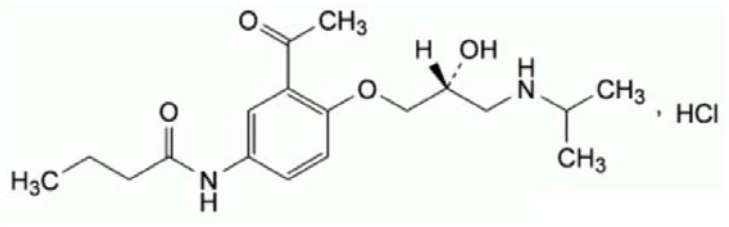
Chemical name: N-[3-Acetyl-4-[(2RS)-2-hydroxy-3-[(1-methylethyl)amino] propoxy]phenyl]butanamide hydrochloride
Content: 99.0 per cent to 101.0 per cent (dried substance)
Molecular formula and molecular weight: C18H29ClN2O4 and 372.9 g/mol
Structural formula:
Physicochemical properties: White or almost white, crystalline powder, freely soluble in water and in ethanol (96 per cent), very slightly soluble in acetone and in methylene chloride.
The melting point is about 143 °C.
DETAILED PHARMACOLOGY
Effect on the Cardiovascular System
Administration of acebutolol hydrochloride to the cat and the dog has shown that low doses block isoproterenol-induced tachycardia (chronotropic action). Higher doses are required to block isoproterenol-induced hypotension. Similar findings were seen in anesthetized cat and guinea pig.
Doses of 5 mg intravenously and 100 mg orally blocked isoproterenol-induced tachycardia in man. The action of isoproterenol on the forced expiratory volume (FEV) was not changed.
A dose-related inhibition of reflex tachycardia to passive tilting and to nitroglycerin-induced tachycardia was observed. Acebutolol hydrochloride markedly lowered exercise-induced hypertension and tachycardia.
In the anesthetized dog, high doses (10-20 mg/kg) of acebutolol hydrochloride infused slowly resulted in an increased PR interval and a decreased dP/dt.
In man, oral or intravenous acebutolol hydrochloride usually caused a dose-related reduction in heart rate, cardiac index, dP/dt (left ventricular contractility) and cardiac output. Little or no effect was produced on blood pressure, peripheral vascular resistance or pulmonary functions (FEV and FVC).
Acebutolol hydrochloride, in low doses (0.05 - 0.5 mg/kg), controls sympathetically-induced arrhythmias in several species. High intravenous and oral doses are effective in ouabain-induced arrhythmias (anaesthetized dog and conscious rabbit). Ventricular arrhythmias in dogs with coronary ligation are reduced by acebutolol hydrochloride.
Electrophysiological studies in man showed delayed AV conduction time and increased refractoriness of the AV node without significantly affecting sinus node recovery time, atrial refractory period, or the HV conduction time.
Membrane stabilizing properties have been shown in three animal models. However, this effect of acebutolol hydrochloride is not manifested at the doses used clinically.
ISA was demonstrated in catecholamine-depleted rats by tachycardia induced by intravenous administration of the drug.
Effect on Pulmonary Function
The effects on airway resistance (FEV and FVC) of single oral doses of 100 and 200 mg of acebutolol hydrochloride were assessed in 15 patients with bronchial asthma. Peak flow was measured in 9 of these patients. No bronchodilator was used.
The drug did not have a significant effect on any of the pulmonary function tests. Clinically, one subject developed bronchospasm on the 100 mg dose but not on the 200 mg.
In another study, 300 mg single doses were given to 10 patients with bronchial asthma. No bronchodilator was used. There was no significant difference on FEV (the mean reduction in FEV after acebutolol was 180 ml), but specific airway conductance (SCAW) was reduced (mean reduction = 9 units).
Effect on Plasma Renin
Acebutolol hydrochloride caused a significant decrease in plasma renin in hypertensive patients. This decrease was closely correlated to the decrease in blood pressure.
Effect on Lipolysis and Glucogenolysis
In healthy volunteers, acebutolol hydrochloride did not affect serum glucose, triglycerides or cholesterol. The release of free fatty acids following the administration of isoproterenol was inhibited. The drug potentiated the initial insulin-induced hypoglycemia but did not delay the return of normoglycemia.
TOXICOLOGY
Acute toxicity
Table 3 – Acute Toxicity
| Species | Sex | Route | LD50 (mg/kg) | Findings | ||||||||||
| Mice | F M F M | I.V. I.V. P.O. P.O. | 78 75 >2,610 >2,250 | Sedation, convulsions, respiratory depression. | ||||||||||
| Rats | F M F M | I.V. I.V. P.O. P.O. | 120 115 >5,200 >3,200 | Sedation, ataxia, respiratory depression. | ||||||||||
| Dogs | M/F M/F | I.V. P.O. | >40 to <63 >150 to <500 | Retching and vomiting, ataxia, weak pulse, respiratory depression. | ||||||||||
Subacute and Chronic Toxicity
Table 4 – Subacute and Chronic Toxicities
| Species | Route | Dose (mg/kg/day) | Animals | Duration | Findings | ||
| per Dose | |||||||
| Level | |||||||
| Rat | Oral | 0 125 250 500 | 5F 5M | 2 weeks | No abnormalities. | ||
| Species | Route | Dose (mg/kg/day) | Animals | Duration | Findings | ||
| per Dose | |||||||
| Level | |||||||
| Rat | Oral | 0 25 75 225 | 15F 15M | 13 weeks | Increased salivation in some rats in the 75 and 225 mg/kg groups. Increased blood glucose levels in high dose groups. Increased alkaline phosphatase levels in the 225 mg/kg group. Significantly greater relative liver weights. | ||
| Rat | Oral | 0 20 60 300 | 15F 15M | 26 weeks | Food intake slightly reduced in females receiving 20 and 300 mg/kg; body weight gain also depressed in females on 300 mg/kg. | ||
| Rat | Oral | 0 20 60 300 | 40F 40M | 78 weeks | Reduced grooming activity, decreased body weight gain and food intake in the 300 mg/kg group. | ||
| Rat | I.V. | 0 2 20 | 10F 10M | 4 weeks (5 days/ week) | Reduction of packed cell volume and hemoglobin levels in males at 20 mg/kg. Blood glucose decreased in treated males and sodium increased in the 20 mg/kg male group. Blood urea and potassium increased in females at 20 mg/kg. | ||
| Species | Route | Dose (mg/kg/day) | Animals | Duration | Findings | ||
| per Dose | |||||||
| Level | |||||||
| Rat | I.V. | 0 5 15 40 | 10F 10M | 4 weeks | Rats at 40 mg/kg collapsed within 5 seconds of dosing; all recovered within 2 minutes. Increased urine output and spleen weight at 40 mg/kg. Mild inflammatory reaction at injection site. | ||
| Dog | Oral | 0 15 41 113 | 3F 3M | 13 weeks | Dose-related salivation and emesis. Two deaths at 113 mg/kg. SGOT, SGPT increased and protein levels reduced in the 41 and 113 mg/kg groups. Mammary hyperplasia in two females at 113 mg/kg. | ||
| Dog | Oral | 0 20 40 110 | 3F 3M | 26 weeks | Excessive salivation and occasional emesis at 110 mg/kg. ECG recording showed prolonged slowing of heart rate; some dogs at 40 mg/kg also had delayed A-V conduction. | ||
| Species | Route | Dose (mg/kg/day) | Animals | Duration | Findings | ||
| per Dose | |||||||
| Level | |||||||
| Dog | Oral | 0 20 40 110 | 4F 4M | 52 weeks | Occasional vomiting at all dose levels. Sedation and salivation mainly in dogs receiving 110 mg/kg. Prolonged, dose-related reduction in heart rate and increase in PR interval. Increase in serum potassium at 110 mg/kg. One dog also had elevated SGPT and SGOT levels on 110 mg/kg. | ||
| Dog | I.V. | 0 2 20 | 2F 2M | 4 weeks | Vomiting at 20 mg/kg. Treated groups gained significantly less weight that controls. Sporadic variations in blood urea and serum potassium. | ||
| Dog | I.V. | 0 5 30 | 4 F 4 M | 4 weeks | Dose-related unsteadiness, retching and vomiting immediately after dosing. One female dog died on the high dose. | ||
Carcinogenicity studies
Groups of 50 male and 50 female albino rats of the CD F/Crl BR strain received, in the diet, respectively 0, 100 and 300 mg/kg/day of acebutolol hydrochloride for 78 weeks. All groups were then off medication until the study terminated at 106 weeks. Groups of 60 male and 60 female CFLP mice, received 0, 20, 60 and 300 mg/kg/day of the drug for 87 weeks in a similar study.
There were no overt signs of toxicity. The incidence of tumors in acebutolol hydrochloride treated animals was no greater than that for the controls.
Diacetolol, the major metabolite of acebutolol HCl in man, was tested for carcinogenicity in rats of the CD strain. Groups of 85 males and 85 females received, in the diet during 104 weeks,
doses of 100, 500 or 3,000 mg/kg/day; 145 animals of each sex were used as controls. No carcinogenic potential was observed.
RHOTRAL® and diacetolol were also shown to be devoid of mutagenic potential in the Ames test.
Teratogenicity Studies
A) Acebutolol
Table 5 – Teratogenicity Studies with acebutolol
| Species | Route | Dose (mg/kg/day) | Animals | Duration | Findings | ||
| per Dose | |||||||
| Level | |||||||
| Rat | Oral | 0 12 60 | 16 17 17 | Day 6-16 of gestation | No teratogenicity or embryotoxicity seen | ||
| Rat | I.V. | 0 2 6 18 | 15 16 15 15 | Day 5-17 of gestation | No teratogenicity or embryotoxicity seen. | ||
| Rabbit | Oral | 0 12 60 | 15 16 17 | Day 6-16 of gestation | No teratogenicity or embryotoxicity seen. | ||
| Rabbit | I.V. | 0 2 6 18 | 15 14 15 14 | Day 5-20 of gestation | Fetal abnormalities, not previously encountered in the strain of rabbits used, were observed at 6 and 18 mg/kg; rib defects, gastroschisis, ventricular septal defect, dysplasia of urogenital system and umbilical hernia. | ||
| Rabbit | I.V. | 0 6 18 | 11 15 17 | Day 5-20 of gestation | Mean liver fetal weight significantly reduced at 6 mg/kg. No teratogenicity or embryotoxicity seen. | ||
B) Diacetolol
Table 6 – Teratogenicity Studies with diacetolol
| Species | Route | Dose (mg/kg/day) | Animals per Dose Level | Duration | Findings | ||
| Rat | Oral | 0 50 300 1,800 | 25 | Day 5-17 of gestation | Non-significant increase in incidence of bilateral cataracts in fetuses at 1,800 mg/kg/day. | ||
| Rabbit | Oral | 0 50 150 450 | 18 18 18 19 | Day 5-20 of gestation | Increase in post-implantation loss (reduced food consumption and weight gain) at 450 mg/kg/day. No teratogenicity seen. | ||
Peri and Post-natal Study
Table 7 – Peri- and Post-Natal Study with acebutolol
| Species | Route | Dose (mg/kg/day) | Animals per Dose Level | Duration | Findings | |
| Rat | Oral | 0 50 100 200 | 20 | From day 15 of gestation to day 12 of lactation | Post-natal deaths were significantly higher in the three acebutolol groups (ceased lactation in a few rats). The length of gestation was also slightly increased. | |
Reproduction Study
A) Acebutolol
Table 8 – Reproductive Studies with acebutolol
| Species | Route | Dose (mg/kg/day) | Animals per Dose Level | Duration | Findings | |
| Rat | Oral | 0 40 240 | 13M 13F | Males* Females** | Reduction in food intake in the 240 mg/kg treated group and dose-related reduction in weight gain in the first generation rats on day 14 of gestation. No evidence of teratogenicity or adverse effect on maternal behavior, lactation or general reproductive performance. | |
* Males: for 9 weeks prior to mating
** Females: for 2 weeks prior to mating through gestation and lactation (2 generations)
B) Diacetolol
Table 9 – Reproductive Studies with diacetolol
| Species | Route | Dose | Animals per Dose | Duration | Findings | ||||
| (mg/kg/day) | Level | ||||||||
| Rat | Oral | 0 40 200 1000 | 30M 30F | Males* Females** | No significant impact on reproductive performance or fertility. | ||||
* Males: for 9 weeks prior to mating
** Females: for 2 weeks prior to mating through gestation and lactation (2 generations)
REFERENCES
- 1.
Ashton WL. An open, multicentre study of acebutolol in hypertension. Curr Med Res
Opin 1976;4: 442-454.
- 2. Ashton WL. Acebutolol (400 mg) given as a single daily dose to hypertensive patients previously stabilized on 400 mg acebutolol daily in divided doses: an open multicentre study. Curr Med Res Opin 1978; 5: 347-353.
- 3. Basil B, Jordan R, Loveless AH, Maxwell DR. Beta-adrenoceptor blocking properties and cardioselectivity of M & B 17,803A. Br J Pharmacol 1973;48:198-211.
- 4. Basil B, Jordan R, Loveless AH, Maxwell DR. A comparison of the experimental anti-arrhythmic properties of acebutolol (M and B 17,803), propranolol and practolol. Br J Pharmacol 1974;50:323-333.
- 5.
Biron P, Tremblay G. Acebultolol: basis for the prediction of effect on exercise tolerance.
Clin Pharmacol Ther 1976; 19: 333-338.
- 6. Coleman AJ, Somerville AR. The selective action of beta-adrenoceptor blocking drugs and the nature of beta1 and beta2 adrenoceptors. Br J Pharmacol 1977; 59: 83-93.
- 7. Cuthbert MF, et al. The effect of M&B 17,803A, a new β-adrenoceptor antagonist, on the cardiovascular responses to tilting and isoprenaline in man. J Pharmacol (Paris) 1971; p. 197-198.
- 8. Fillastre JP, Wolf LM. Results of the treatment of essential arterial hypertension following prolonged (24 months administration of acebutolol). Nouv Presse Med Suppl. 1975;4: 3282-3286 [French].
- 9. Gotsman MS, Lewis BS. The treatment of angina pectoris. an objective assessment of oral acebutolol (SECTRAL ®). Clin Trials J 1974;11:80-85.
- 10.
Hansson L. Controlled trial of acebutolol in hypertension. Eur J Clin Pharmacol 1977;
12: 89-92.
- 11. Khambatta RB. Patients with angina pectoris: comparison of a new β-receptor blocking agent acebutolol (SECTRAL®) and propranolol. Clin Trials J 1974; 11: 59-67.
- 12.
Leary WP. Respiratory effects of acebutolol hydrochloride. S Afr Med J 1973; 47: 1245-
1248.
- 13. Leary WP, Asmal AC, Williams PC, Marwick B. Treatment of hypertension with single daily doses of acebutolol. S Afr Med J 1978; 53: 579-581.
- 14.
Leduc GC, et al. The use of oral acebutolol in angina pectoris. Clin Trials J 1974; 11: 71-
79.
- 15. Letac B, Fillastre JP, Wolf LM, Safar M. Treatment of arterial hypertension with acebutolol. Double-blind study with placebos. Nouv Presse Med Suppl 1975; 4: 3273-3277 [French].
- 16. MacDonald IA, et al. A comparison study of acebutolol, a cardiospecific β-adrenergic blocker, and propranolol in the treatment of angina pectoris. Curr Ther Res 1978; 24:pp.
- 17.
Roux A, Aubert P, Guedon J, Flouvat B. Study of acebutolol dialysis and
pharmacokinetic data in patients with renal insufficiency undergoing hemodialysis. Nouv Presse Med Suppl 1975; 4: 3228-3233 [French].
- 18.
Tremblay G, Biron P, Proulx A. Dissociation between clinical and exercise
responsiveness to beta-blockade in angina. Int J Clin Pharmacol Biopharm 1978; 16: 508 512.