


Product Monograph - Riva-Montelukast Fc
SUMMARY PRODUCT INFORMATION
| Route of Administration | Dosage Form/Strength | All Non-Medicinal Ingredients |
|---|---|---|
| Oral | Tablets 10 mg | 10 mg film-coated tablet: carnauba wax, croscarmellose sodium, hydroxypropyl cellulose, hypromellose, lactose monohydrate, magnesium stearate, mannitol, microcrystalline cellulose, red iron oxide, titanium dioxide, and yellow iron oxide. |
Chewable tablets 4 mg, 5 mg | 4 mg and 5 mg chewable tablet: Art cherry flavor, aspartame, croscarmellose sodium, hydroxypropyl cellulose, magnesium stearate, mannitol, microcrystalline cellulose, and ferric oxide. Phenylketonurics: RIVA-MONTELUKAST 4 mg and 5 mg chewable tablets contain 1.2 mg and 1.5 mg of phenylalanine, respectively. |
INDICATIONS AND CLINICAL USE
Asthma
RIVA-MONTELUKAST FC and RIVA-MONTELUKAST (montelukast sodium) are indicated in adult and pediatric patients 2 years of age and older for the prophylaxis and chronic treatment of asthma, including prevention of day- and nighttime symptoms, and the treatment of acetylsalicylic acid (ASA)-sensitive asthmatic patients.
RIVA-MONTELUKAST FC and RIVA-MONTELUKAST are effective alone or in combination with other agents used in the maintenance treatment of chronic asthma. RIVA-MONTELUKAST FC or RIVA-MONTELUKAST and inhaled corticosteroids may be used concomitantly with additive effects to control asthma or to reduce the inhaled corticosteroid dose while maintaining clinical stability.
In patients who continue to experience asthma symptoms, RIVA-MONTELUKAST FC or RIVA-MONTELUKAST can be an additional treatment option following initial management with an “as needed” short-acting beta-agonist (SABA), an inhaled corticosteroid, or inhaled corticosteroid together with a long-acting beta agonist.
In adults, RIVA-MONTELUKAST FC or RIVA-MONTELUKAST can be a treatment option after “as needed” SABAs if patients remain symptomatic and cannot or will not use an inhaler device or would prefer not to be treated with an inhaled corticosteroid.
In children, RIVA-MONTELUKAST can be a treatment option after “as needed” SABAs if patients remain symptomatic and cannot appropriately use an inhaler device.
RIVA-MONTELUKAST FC and RIVA-MONTELUKAST are not indicated for the relief of acute asthma attacks (see WARNINGS AND PRECAUTIONS, General).
Exercise induced bronchoconstriction
RIVA-MONTELUKAST FC and RIVA-MONTELUKAST are indicated for the treatment of exercise-induced bronchoconstriction in adult and pediatric patients 2 years of age and older with asthma.
Seasonal allergic rhinitis
RIVA-MONTELUKAST FC is indicated for the relief of symptoms of seasonal allergic rhinitis in patients 15 years of age and older. RIVA-MONTELUKAST FC should only be considered when other treatments are not effective or not tolerated.
Pediatrics (< 2 years of age): Based on the data submitted and reviewed by Health Canada, the safety and efficacy of montelukast sodium in pediatric patients less than 2 years of age have not been established; therefore, Health Canada has not authorized an indication for pediatric use in patients less than 2 years of age.
Geriatrics (> 65 years of age): No dose adjustment is required in elderly patients 65 years of age or older.
CONTRAINDICATIONS
- Patients who are hypersensitive to this drug or to any ingredient in the formulation. For a complete listing, see the DOSAGE FORMS, COMPOSITION AND PACKAGING section of the product monograph.
WARNINGS AND PRECAUTIONS
Serious Warnings and Precautions
WARNING: SERIOUS NEUROPSYCHIATRIC EVENTS
Serious neuropsychiatric (NP) events have been reported with the use of montelukast sodium. The types of events reported were highly variable, and included, but were not limited to, agitation, aggression, depression, sleep disturbances, suicidal thoughts and behavior (including suicide). The mechanisms underlying NP events associated with montelukast sodium use are currently not well understood (see WARNINGS AND PRECAUTIONS).
Because of the risk of NP events, the benefits of RIVA-MONTELUKAST FC or RIVA-MONTELUKAST may not outweigh the risks in some patients, particularly when the symptoms of disease may be mild and adequately treated with alternative therapies (see INDICATIONS AND CLINICAL USE). Reserve use of RIVA-MONTELUKAST FC or RIVA-MONTELUKAST for patients with allergic rhinitis who have an inadequate response or intolerance to alternative therapies. In patients with asthma or exercise-induced bronchoconstriction, consider the benefits and risks before prescribing RIVA-MONTELUKAST FC or RIVA-MONTELUKAST.
Discuss the benefits and risks of RIVA-MONTELUKAST FC or RIVA-MONTELUKAST with patients and caregivers when prescribing RIVA-MONTELUKAST FC or RIVA-MONTELUKAST. Advise patients and/or caregivers to be alert for changes in behavior or new NP symptoms when taking RIVA-MONTELUKAST FC or RIVA-MONTELUKAST. If changes in behavior are observed, or if new NP symptoms or suicidal thoughts and/or behavior occur, advise patients to discontinue RIVA-MONTELUKAST FC or RIVA-MONTELUKAST and contact a healthcare provider immediately (see WARNINGS AND PRECAUTIONS).
Information to be Provided to the Patient
Patients should be advised to take RIVA-MONTELUKAST FC or RIVA-MONTELUKAST (montelukast sodium) daily as prescribed, even when they are asymptomatic as well as during periods of asthma worsening, and to contact their physicians if their asthma is not well-controlled. Patients should be advised that RIVA-MONTELUKAST FC and RIVA-MONTELUKAST are not for the treatment of acute asthma attacks. They should have appropriate rescue medication available.
Chewable Tablets
Phenylketonurics: Phenylketonuric patients should be informed that the 4 mg and the 5 mg chewable tablets contains 1.2 and 1.5 mg of phenylalanine (a component of aspartame) per 4 mg and 5 mg chewable tablet, respectively.
General
The efficacy of oral montelukast sodium for the treatment of acute asthma attacks has not been established. Therefore, RIVA-MONTELUKAST FC and RIVA-MONTELUKAST should not be used to treat acute asthma attacks. Patients should be advised to have appropriate rescue medication available.
While the dose of concomitant inhaled corticosteroid may be reduced gradually under medical supervision, RIVA-MONTELUKAST FC and RIVA-MONTELUKAST should not be abruptly substituted for inhaled or oral corticosteroids.
When RIVA-MONTELUKAST FC or RIVA-MONTELUKAST are prescribed for the prevention of exercise-induced bronchoconstriction, patients should be advised to always have readily available appropriate rescue medication.
Patients with known acetylsalicylic acid (ASA) sensitivity should continue avoidance of ASA or non-steroidal anti-inflammatory agents while taking RIVA-MONTELUKAST FC or RIVA-MONTELUKAST. Although RIVA-MONTELUKAST FC and RIVA-MONTELUKAST are effective in improving airway function in asthmatic patients with documented ASA sensitivity, it has not been shown to truncate bronchoconstrictor response to ASA and other non-steroidal anti-inflammatory drugs in ASA-sensitive asthmatic patients.
Neuropsychiatric post-marketing events
Serious neuropsychiatric events have been reported in adult, adolescent, and pediatric patients taking montelukast sodium. Post-market reports with montelukast sodium use include agitation, aggressive behavior or hostility, anxiousness, depression, disorientation, disturbance in attention, dream abnormalities, dysphemia (stuttering), hallucinations, insomnia, irritability, memory impairment, obsessive- compulsive symptoms, restlessness, somnambulism, suicidal thinking and behavior (including suicide), tic and tremor. The clinical details of some post-marketing reports involving montelukast sodium appear consistent with a drug-induced effect.
These neuropsychiatric events have been reported in patients with and without a previous history of psychiatric disorder. Neuropsychiatric events have been reported mostly during montelukast sodium treatment, but some were reported after montelukast sodium discontinuation. Based upon the available data, it is difficult to identify risk factors for or quantify the risk of neuropsychiatric events with montelukast sodium use.
Physicians should discuss the benefits and risks of RIVA-MONTELUKAST FC or RIVA-MONTELUKAST use with patients and caregivers when prescribing RIVA-MONTELUKAST FC or RIVA-MONTELUKAST. Patients and/or caregivers should be advised to be alert for changes in behavior or for new neuropsychiatric symptoms when taking RIVA-MONTELUKAST FC or RIVA-MONTELUKAST. If changes in behavior are observed, or if new neuropsychiatric symptoms or suicidal thoughts and/or behavior occur, patients should be advised to discontinue RIVA-MONTELUKAST FC or RIVA-MONTELUKAST and contact a healthcare provider immediately. In many cases, symptoms resolved after stopping montelukast sodium therapy; however, in some cases symptoms persisted after discontinuation of montelukast sodium. Therefore, patients should be monitored and provided supportive care until symptoms resolve. Physicians should carefully evaluate the risks and benefits of continuing treatment with RIVA-MONTELUKAST FC or RIVA-MONTELUKAST if such events occur.
Eosinophilic Conditions
In rare cases, patients with asthma on therapy with RIVA-MONTELUKAST FC or RIVA-MONTELUKAST may present with systemic eosinophilia, sometimes presenting with clinical features of vasculitis consistent with eosinophilic granulomatosis with polyangiitis (EGPA), formerly known as Churg-Strauss syndrome, a condition which is often treated with systemic corticosteroid therapy. These events have been reported as occurring both with and without steroid withdrawal or reduction. Physicians should be alert to eosinophilia, vasculitic rash, arthralgia, worsening pulmonary symptoms, cardiac complications, and/or neuropathy presenting in their patients (see ADVERSE REACTIONS). A causal association between montelukast sodium and these underlying conditions has not been established.
Hepatic/Biliary
Hepatic Insufficiency: Patients with mild-to-moderate hepatic insufficiency and clinical evidence of cirrhosis had evidence of decreased metabolism of montelukast resulting in approximately 41% higher mean montelukast area under the plasma concentration curve (AUC) following a single 10-mg dose. The elimination of montelukast is slightly prolonged compared with that in healthy subjects (mean half-life, 7.4 hours). No dosage adjustment is required in patients with mild-to-moderate hepatic insufficiency. There are no clinical data in patients with severe hepatic insufficiency (Child-Pugh score >9).
Post-Marketing Surveillance: In post-marketing surveillance, elevations in serum transaminases have been reported in patients who were treated with montelukast sodium. These events were usually asymptomatic and transient. Serious hepatic adverse events such as jaundice have been reported although no deaths or liver transplantations have been attributed to the use of montelukast sodium (see ADVERSE REACTIONS).
Special Populations
Pregnant Women: RIVA-MONTELUKAST FC should be used during pregnancy only if clearly needed.
Available data from published prospective and retrospective cohort studies with montelukast use in pregnant women evaluating major birth defects have not established a drug-associated risk. Available studies have methodologic limitations, including small sample size, in some cases retrospective data collection, and inconsistent comparator groups.
Nursing Women: It is not known if montelukast sodium is excreted in human milk. Because many drugs are excreted in human milk, caution should be exercised when RIVA-MONTELUKAST FC is given to a nursing mother.
Pediatrics (<15 years): Safety and efficacy of montelukast sodium have been established in adequate and well-controlled studies in pediatric patients with asthma 6 to 14 years of age. Safety and efficacy profiles in this age group are similar to that seen in adults (see ADVERSE REACTIONS, Clinical Trial Adverse Drug Reactions and SCIENTIFIC INFORMATION, CLINICAL TRIALS).
The safety of montelukast sodium 4 mg chewable tablets in pediatric patients 2 to 5 years of age with asthma has been demonstrated in a 12-week double-blind, placebo-controlled study in 689 patients (see ACTION AND CLINICAL PHARMACOLOGY and also ADVERSE REACTIONS). Efficacy of montelukast sodium in this age group is based on extrapolation of the demonstrated efficacy in adults 15 years of age and older and pediatric patients 6 to 14 years of age with asthma, and that the disease course, pathophysiology and the drug's effect are substantially similar among these populations. The findings of the exploratory efficacy evaluations along with pharmacokinetics and extrapolation of data from older patients, support the overall conclusion that montelukast sodium is efficacious in the maintenance treatment of asthma in patients 2 to 5 years of age (see ACTION AND CLINICAL PHARMACOLOGY).
Geriatrics (>65 years of age): In clinical studies, there were no age-related differences in the efficacy or safety profiles of montelukast sodium.
Effects on Ability to Drive and Use Machines: There is no evidence that RIVA-MONTELUKAST FC or RIVA-MONTELUKAST affects the ability to drive and use machines.
ADVERSE REACTIONS
Adverse Drug Reaction Overview
Montelukast sodium has been generally well tolerated. Side effects, which usually were mild, generally did not require discontinuation of therapy. The overall incidence of side effects reported with montelukast sodium was comparable to placebo.
Clinical Trial Adverse Drug Reactions
Adults 15 Years of Age and Older with Asthma
Montelukast sodium has been evaluated for safety in approximately 2600 adult patients 15 years of age and older in clinical studies. In two similarly designed, 12-week placebo-controlled clinical studies, the only adverse experiences reported as drug-related in ≥1% of patients treated with montelukast sodium and at a greater incidence than in patients treated with placebo were abdominal pain and headache. The incidences of these events were not significantly different in the two treatment groups.
In placebo-controlled clinical trials, the following adverse experiences reported with montelukast sodium occurred in ≥1% of patients and at an incidence greater than or equal to that in patients treated with placebo, regardless of drug relationship:
Adverse Experiences Occurring In ≥1% of Patients with an Incidence ≥ to that in Patients Treated with Placebo, Regardless of Drug Relationship
Montelukast sodium
10 mg/day
(%)
(n=1955)
Placebo
(%)
(n=1180)
Body As A Whole
Asthenia/fatigue
1.8
1.2
Fever
1.5
0.9
Pain, abdominal
2.9
2.5
Trauma
1.0
0.8
Digestive System Disorders
Diarrhea
3.1
3.1
Dyspepsia
2.1
1.1
Gastroenteritis, infectious
1.5
0.5
Pain, dental
1.7
1.0
Nervous System/Psychiatric
Dizziness
1.9
1.4
Headache
18.4
18.1
Insomnia
1.3
1.3
Respiratory System Disorders
Congestion, nasal
1.6
1.3
Cough
2.7
2.4
Influenza
4.2
3.9
Skin/Skin Appendages Disorder
Rash
1.6
1.2
Laboratory Adverse Experiences
ALT increased
2.1
2.0
AST increased
1.6
1.2
Pyuria
1.0
0.9
*Number of patients tested (montelukast sodium and placebo, respectively): ALT and AST, 1935, 1170; pyuria, 1924, 1159.
Cumulatively, 544 patients were treated with montelukast sodium for at least 6 months, 253 for one year and 21 for two years in clinical trials. With prolonged treatment, the adverse experience profile did not change.
Pediatric Patients 6 to 14 Years of Age with Asthma
Montelukast sodium has been evaluated for safety in approximately 475 pediatric patients 6 to 14 years of age. Cumulatively, 263 pediatric patients 6 to 14 years of age were treated with montelukast sodium for at least 3 months, 164 for 6 months or longer in clinical trials. The safety profile in pediatric patients is generally similar to the adult safety profile and to placebo. With prolonged treatment, the adverse experience profile did not change.
In a 56-week double-blind study evaluating growth rate in pediatric patients 6 to 8 years of age receiving montelukast sodium, the following events not previously observed with the use of montelukast sodium occurred with a frequency ≥ 2% and more frequently than in pediatric patients who received placebo, regardless of causality assessment: atopic dermatitis, myopia, rhinitis (infective), skin infection, tooth infection, headache, varicella, gastroenteritis and acute bronchitis.
Pediatric Patients 2 to 5 Years of Age with Asthma
Montelukast sodium has been evaluated for safety in 573 pediatric patients 2 to 5 years of age. In a 12-week, placebo-controlled clinical study, the only adverse experience reported as drug-related in >1% of patients treated with montelukast sodium and at a greater incidence than in patients treated with placebo was thirst. The incidence of thirst was not significantly different in the two treatment groups. Cumulatively, 363 patients 2 to 5 years of age were treated with montelukast sodium. Of these, 338 were continuously treated for at least 6 months and 256 for >1 year. The safety profile of montelukast sodium in pediatric patients 2 to 5 years of age is generally similar to the safety profiles in adults 15 years of age and older in pediatric patients 6 to 14 years of age, and to placebo. With prolonged treatment, the adverse experience profile did not change.
Adults 15 Years of Age and Older with Seasonal Allergic Rhinitis
Montelukast sodium has been evaluated in 1751 adult patients 15 years of age and older for the treatment of seasonal allergic rhinitis in clinical studies. Montelukast sodium administered once daily at bedtime was generally well tolerated with a safety profile similar to that of placebo. In similar designed, 2-week, placebo-controlled, clinical studies, no adverse experience reported as drug related in ≥1% of patients treated with montelukast sodium and at a greater incidence than in patients treated with placebo were observed. The incidence of somnolence was similar to that of placebo.
Post-Market Adverse Drug Reactions
The following adverse drug reactions have been reported very rarely (<1/10,000) in post-marketing use of montelukast sodium. Because these reactions are reported voluntarily from a population of uncertain size, it is not always possible to reliably estimate their frequency or establish a causal relationship to drug exposure.
Infections and Infestations: upper respiratory infection.
Blood and lymphatic system disorders: increased bleeding tendency, thrombocytopenia.
Immune system disorders: hypersensitivity reactions including anaphylaxis, and very rarely, hepatic eosinophilic infiltration.
Psychiatric disorders: agitation including aggressive behavior or hostility (including temper tantrums in pediatric patients), very rarely reported as serious; anxiousness, depression, disorientation, disturbance in attention, dysphemia (stuttering), irritability, memory impairment, obsessive-compulsive symptoms, restlessness, somnambulism, sleep disorders including dream abnormalities and insomnia, suicidal thinking and behavior (suicidality), tic, tremor, and visual hallucinations.
Nervous system disorders: dizziness, drowsiness, paraesthesia/hypoesthesia, and very rarely seizure
Cardiac disorders: palpitations
Respiratory, thoracic and mediastinal disorders: epistaxis, pulmonary eosinophilia
Gastrointestinal disorders: diarrhea, dyspepsia, nausea, vomiting
Skin and subcutaneous tissue disorders: angioedema, bruising, erythema multiforme, erythema nodosum, pruritus, rash, urticaria
Musculoskeletal, connective tissue and bone disorders: arthralgia, myalgia including muscle cramps
Hepato-biliary disorders: increased ALT, AST, and isolated cases of hepatitis, (including cholestatic, hepatocellular, and mixed-pattern liver injury). In post-marketing surveillance, elevations in serum transaminases have been reported in patients who were treated with montelukast sodium. These events were usually asymptomatic and transient. Serious hepatic adverse events such as jaundice have been reported although no deaths or liver transplantations have been attributed to the use of montelukast sodium (see WARNINGS AND PRECAUTIONS).
Renal and urinary disorders: enuresis in children
General disorders: asthenia/fatigue, edema, pyrexia
Eosinophilic Conditions
In rare cases, patients with asthma on therapy with RIVA-MONTELUKAST FC or RIVA-MONTELUKAST (montelukast sodium) may present with systemic eosinophilia, sometimes presenting with clinical features of vasculitis consistent with Churg-Strauss syndrome, a condition which is often treated with systemic corticosteroid therapy. These events have been reported as occurring both with and without steroid withdrawal or reduction. Physicians should be alert to eosinophilia, vasculitic rash, arthralgia, worsening pulmonary symptoms, cardiac complications, and/or neuropathy presenting in their patients. A causal association between montelukast sodium and these underlying conditions has not been established (see WARNINGS AND PRECAUTIONS, Eosinophilic Conditions).
DRUG INTERACTIONS
Overview
RIVA-MONTELUKAST FC or RIVA-MONTELUKAST (montelukast sodium) may be administered with other therapies routinely used in the prophylaxis and chronic treatment of asthma, and in the treatment of allergic rhinitis (see DRUG INTERACTIONS).
Although additional specific interaction studies were not performed, montelukast sodium was used concomitantly with a wide range of commonly prescribed drugs in clinical studies without evidence of clinical adverse interactions. These medications included thyroid hormones, sedative hypnotics, nonsteroidal anti-inflammatory agents, benzodiazepines and decongestants.
In vitro studies have shown that montelukast is a potent inhibitor of CYP 2C8. However, data from a clinical drug-drug interaction study involving montelukast and rosiglitazone (a probe substrate representative of drugs primarily metabolized by CYP 2C8) in 12 healthy individuals demonstrated that the pharmacokinetics of rosiglitazone are not altered when the drugs are coadministered, indicating that montelukast does not inhibit CYP 2C8 in vivo. Therefore, montelukast is not anticipated to alter the metabolism of drugs metabolized by this enzyme (e.g., paclitaxel, rosiglitazone, repaglinide). Based on further in vitro results in human liver microsomes, therapeutic plasma concentrations of montelukast do not inhibit CYP 3A4, 2C9, 1A2, 2A6, 2C19, or 2D6.
In vitro studies have shown that montelukast is a substrate of CYP 2C8, 2C9, and 3A4. Data from a clinical drug-drug interaction study involving montelukast and gemfibrozil (an inhibitor of both CYP 2C8 and 2C9) demonstrated that gemfibrozil increased the systemic exposure of montelukast by 4.4-fold. Based on clinical experience, no dosage adjustment of montelukast is required upon co-administration with gemfibrozil (see OVERDOSAGE). Based on in vitro data, clinically important drug interactions with other known inhibitors of CYP 2C8 (e.g., trimethoprim) are not anticipated. Co-administration of montelukast with itraconazole, a strong CYP 3A4 inhibitor, resulted in no significant increase in the systemic exposure of montelukast. In addition, co-administration of itraconazole, gemfibrozil and montelukast did not further increase the systematic exposure of montelukast.
Drug-Drug Interactions
Montelukast 10 mg once daily to pharmacokinetic steady state:
- did not cause clinically significant changes in the kinetics of an intravenous dose of theophylline.
- did not change the pharmacokinetic profile of warfarin or influence the effect of a single 30 mg oral dose of warfarin on prothrombin time or INR (International Normalized Ratio).
- did not change the pharmacokinetic profile or urinary excretion of immunoreactive digoxin.
- did not change the plasma concentration profile of terfenadine or its carboxylated metabolite and does not prolong the QTc interval following co-administration with terfenadine 60 mg twice daily.
Montelukast at doses of ≥100 mg daily to pharmacokinetic steady state:
- did not significantly alter the plasma concentrations of either component of an oral contraceptive containing norethindrone 1 mg /ethinyl estradiol 35 mcg.
- did not cause any clinically significant change in plasma profiles of either prednisone and prednisolone following administration of either oral prednisone or IV prednisolone.
Phenobarbital, which induces hepatic metabolism, decreased the AUC of montelukast approximately 40% following a single 10 mg dose of montelukast; no dosage adjustment for montelukast sodium is recommended.
DOSAGE AND ADMINISTRATION
Dosing Considerations
Serious neuropsychiatric events have been reported in adult, adolescent, and pediatric patients taking montelukast sodium. Therefore, physicians should discuss the benefits and risks of RIVA-MONTELUKAST FC or RIVA-MONTELUKAST use with patients and caregivers when prescribing RIVA-MONTELUKAST FC or RIVA-MONTELUKAST.
RIVA-MONTELUKAST FC and RIVA-MONTELUKAST should be taken as prescribed and should not be used more often than recommended.
The safety and efficacy of montelukast sodium was demonstrated in clinical trials where it was administered in the evening without regard to the time of food ingestion. There have been no clinical trials evaluating the relative efficacy of morning versus evening dosing. However, no difference in pharmacokinetics was noted between morning and evening dosing.
General Recommendations
The therapeutic effect of RIVA-MONTELUKAST FC and RIVA-MONTELUKAST (montelukast sodium) on parameters of asthma occurs within one day. RIVA-MONTELUKAST FC tablets and RIVA-MONTELUKAST chewable tablets can be taken with or without food. Patients should be advised to continue taking RIVA-MONTELUKAST FC or RIVA-MONTELUKAST while their asthma is controlled, as well as during periods of worsening asthma.
Therapy with RIVA-MONTELUKAST FC or RIVA-MONTELUKAST in Relation to Other Treatments for Asthma
RIVA-MONTELUKAST FC or RIVA-MONTELUKAST can also be added to a patient’s existing treatment regimen.
Bronchodilator Treatments: RIVA-MONTELUKAST FC or RIVA-MONTELUKAST can be added to the treatment regimen of patients who are not adequately controlled on bronchodilator alone. When a clinical response is evident (usually after the first dose), the patient’s bronchodilator therapy can be reduced as tolerated.
Inhaled Corticosteroids: Treatment with RIVA-MONTELUKAST FC or RIVA-MONTELUKAST provides additional clinical benefit to patients treated with inhaled corticosteroids. A reduction in the corticosteroid dose can be made as tolerated. The dose should be reduced gradually with medical supervision. In some patients, the dose of inhaled corticosteroids can be tapered off completely. It remains to be determined whether the withdrawal from inhaled corticosteroids can be maintained for extended periods, or possibly indefinitely. RIVA-MONTELUKAST FC and RIVA-MONTELUKAST should not be abruptly substituted for inhaled corticosteroids.
Oral Corticosteroids: Limited data suggest that RIVA-MONTELUKAST FC and RIVA-MONTELUKAST may provide additional clinical benefit in patients currently treated with oral corticosteroids.
Recommended Dose and Dosage Adjustment
Adults 15 Years of Age and Older with Asthma and/or Seasonal Allergic Rhinitis
The dosage for adults 15 years of age and older is one 10 mg tablet daily to be taken in the evening.
Pediatric Patients 6 to 14 Years of Age with Asthma
The dosage for pediatric patients 6 to 14 years of age is one 5 mg chewable tablet daily to be taken in the evening. No dosage adjustment within this age group is necessary.
Pediatric Patients 2 to 5 Years of Age with Asthma
The dosage for pediatric patients 2 to 5 years of age is one 4 mg chewable tablet daily to be taken in the evening. No dosage adjustment within this age group is necessary.
Special Population
No dosage adjustment is necessary for the elderly, for patients with renal insufficiency, or mild to moderate hepatic impairment, or for patients of either gender.
Missed Dose
RIVA-MONTELUKAST FC and RIVA-MONTELUKAST should be taken as prescribed. If a dose is missed, the patient should be instructed to take the next dose when it is due. The patient should be instructed not to take 2 doses at the same time.
OVERDOSAGE
For the most recent information in the management of a suspected drug overdose, contact your regional poison control centre or Health Canada’s toll-free number, 1-844 POISON-X (1-844-764-7669).
No specific information is available on the treatment of overdosage with montelukast sodium. In chronic asthma studies, montelukast sodium has been administered at doses up to 200 mg/day to adult patients for 22 weeks and in short-term studies, up to 900 mg/day to patients for approximately one week without clinically important adverse experiences.
There have been reports of acute overdosage in post-marketing experience and clinical studies with montelukast sodium. These include reports in adults and children with a dose as high as 1000 mg. The clinical and laboratory findings observed were consistent with the safety profile in adults and pediatric patients. There were no adverse experiences in the majority of overdosage reports.
The adverse experiences were consistent with the safety profile of montelukast sodium and most frequently included abdominal pain, somnolence, thirst, headache, vomiting, psychomotor hyperactivity, and less frequently convulsion.
It is not known whether montelukast is dialyzable by peritoneal dialysis or hemodialysis.
ACTION AND CLINICAL PHARMACOLOGY
Mechanism of Action
The cysteinyl leukotrienes (LTC4, LTD4, LTE4), are potent inflammatory eicosanoids released from various cells including mast cells and eosinophils. These important pro-asthmatic mediators bind to cysteinyl leukotriene (CysLT) receptors. The CysLT type-1 (CysLT1) receptor is found in the human airway (including airway smooth muscle cells and airway macrophages) and on other pro-inflammatory cells (including eosinophils and certain myeloid stem cells). CysLTs have been correlated with the pathophysiology of asthma and allergic rhinitis. In asthma, leukotriene-mediated effects include a number of airway actions, including bronchoconstriction, mucous secretion, vascular permeability, and eosinophil recruitment. In allergic rhinitis, CysLTs are released from the nasal mucosa after allergen exposure during both early- and late-phase reactions and are associated with symptoms of allergic rhinitis. Intranasal challenge with CysLTs has been shown to increase nasal airway resistance and symptoms of nasal obstruction.
Montelukast sodium has not been assessed in intranasal challenge studies. The clinical relevance of intranasal challenge studies is unknown.
Montelukast is an orally active compound that improves parameters of asthmatic inflammation. Based on biochemical and pharmacological bioassays, it binds with high affinity and selectivity to the CysLT1 receptor (in preference to other pharmacologically important airway receptors such as the prostanoid, cholinergic, or β-adrenergic receptor). Montelukast potently inhibits physiologic actions of LTC4, LTD4, and LTE4 at the CysLT1 receptor without any agonist activity.
Pharmacodynamics
Montelukast causes inhibition of airway cysteinyl leukotriene receptors as demonstrated by the ability to inhibit bronchoconstriction due to inhaled LTD4 in asthmatic patients. Doses as low as 5 mg cause substantial blockage of LTD4-induced bronchoconstriction. In a placebo-controlled, crossover study (n = 12), montelukast sodium inhibited early- and late-phase bronchoconstriction due to antigen challenge by 75% and 57% respectively.
Montelukast causes bronchodilation within 2 hours of oral administration; these effects were additive to the bronchodilation caused by a β-agonist.
Clinical studies in adults 15 years of age and older demonstrated there is no additional clinical benefit to montelukast doses above 10 mg once daily. This was shown in two chronic asthma studies using doses up to 200 mg once daily and in one exercise challenge study using doses up to 50 mg, evaluated at the end of the once daily dosing interval.
The effect of montelukast sodium on eosinophils in the peripheral blood was examined in clinical trials in adults and pediatric (6 to 14 years of age) asthmatic patients. Montelukast sodium decreased mean peripheral blood eosinophils approximately 13% to 15% from baseline compared with placebo over the double-blind treatment periods.
In patients with seasonal allergic rhinitis aged 15 years and older who received montelukast sodium, a median decrease of 13% in peripheral blood eosinophil counts was noted, compared with placebo, over the double-blind treatment periods.
There have been no clinical trials evaluating the relative efficacy of morning versus evening dosing. Although the pharmacokinetics of montelukast are similar whether dosed in the morning or the evening, efficacy was demonstrated in clinical trials in adults and pediatric patients in which montelukast was administered in the evening without regard to the time of food ingestion.
Pharmacokinetics
Absorption: Montelukast is rapidly absorbed following oral administration. For the 10 mg film-coated tablet, the mean peak plasma concentration (Cmax) is achieved in 3 to 4 hours (Tmax) after administration in adults in the fasted state. The mean oral bioavailability is 64%. The oral bioavailability and Cmax are neither influenced by a standard meal in the morning nor by a high fat snack in the evening. Safety and efficacy were demonstrated in clinical trials where the 4 mg chewable tablet, the 5 mg chewable tablet, and the 10 mg film-coated tablet were administered in the evening without regard to the timing of food ingestion.
For the 5 mg chewable tablet, the Cmax is achieved 2 hours after administration in adults in the fasted state. The mean oral bioavailability is 73% in the fasted state versus 63% when administered with a standard meal in the morning. However, food does not have a clinically important influence with chronic administration of the chewable tablet. The comparative pharmacokinetics of montelukast when administered as two 5 mg chewable tablets versus one 10 mg film-coated tablet has not been evaluated.
For the 4 mg chewable tablet, Cmax is achieved 2 hours after administration in pediatric patients 2 to 5 years of age in the fasted state.
Distribution: Montelukast is more than 99% bound to plasma proteins. The steady-state volume of distribution of montelukast averages 8 to 11 liters. Studies in rats with radiolabeled montelukast indicate minimal distribution across the blood-brain barrier. In addition, concentrations of radiolabeled material at 24 hours postdose were minimal in all other tissues.
Metabolism: Montelukast is extensively metabolized. In studies with therapeutic doses, plasma concentrations of metabolites of montelukast are undetectable at steady state in adults and pediatric patients.
In vitro studies using human liver microsomes indicate that cytochrome P450 3A4, 2C8 and 2C9 are involved in the metabolism of montelukast. CYP 2C8 appears to play a major role in the metabolism of montelukast at clinically relevant concentrations.
Excretion: The plasma clearance of montelukast averages 45 mL/min in healthy adults. Following an oral dose of radiolabeled montelukast, 86% of the radioactivity was recovered in 5-day fecal collections and <0.2% was recovered in urine. Coupled with estimates of montelukast oral bioavailability, this indicates montelukast and its metabolites are excreted almost exclusively via the bile.
In several studies, the mean plasma half-life of montelukast ranged from 2.7 to 5.5 hours in healthy young adults. The pharmacokinetics of montelukast are nearly linear for oral doses up to 50 mg. No difference in pharmacokinetics was noted between dosing in the morning or in the evening. During once-daily dosing with 10 mg montelukast, there is little accumulation of the parent drug in plasma (~14%).
Special Populations and Conditions
Pediatrics: The plasma concentration profile of montelukast following the administration of 10 mg film-coated tablet is similar in adolescents ≥ 15 years old and young adults. The 10 mg film-coated tablet is recommended for use in patients ≥ 15 years old.
Pharmacokinetic studies show that the plasma profiles of the 4 mg chewable tablet in pediatric patients 2 to 5 years of age, and the 5 mg chewable tablets in pediatric patients 6 to 14 years of age were similar to the plasma profile of the 10 mg film-coated tablet in adults. The 5 mg chewable tablet should be used in pediatric patients 6 to 14 years of age and the 4 mg chewable tablet should be used in pediatric patients 2 to 5 years of age.
Geriatrics: The pharmacokinetic profile and the oral bioavailability of a single 10 mg oral dose of montelukast are similar in elderly and younger adults. The plasma half-life of montelukast is slightly longer in the elderly. No dosage adjustment in the elderly is required.
Gender: The pharmacokinetics of montelukast are similar in males and females.
Race: Pharmacokinetic differences due to race have not been studied. In clinical studies, there do not appear to be any differences in clinically important effects.
Hepatic Insufficiency: Patients with mild to moderate hepatic insufficiency and clinical evidence of cirrhosis had evidence of decreased metabolism of montelukast resulting in approximately 41% higher mean montelukast area under the plasma concentration curve (AUC) following a single 10 mg dose. The elimination of montelukast is slightly prolonged compared with that in healthy subjects (mean half-life, 7.4 hours). No dosage adjustment is required in patients with mild to moderate hepatic insufficiency. There are no clinical data in patients with hepatitis or severe hepatic insufficiency (Child-Pugh score >9).
Renal Insufficiency: Since montelukast and its metabolites are not excreted in the urine, the pharmacokinetics of montelukast were not evaluated in patients with renal insufficiency. No dosage adjustment is recommended in these patients.
STORAGE AND STABILITY
Store the 10 mg film-coated tablets, and the 4 mg and 5 mg chewable tablets at room temperature (15°C-30°C), protected from moisture and light.
DOSAGE FORMS, COMPOSITION AND PACKAGING
Each 10 mg film-coated tablet contains 10.4 mg montelukast sodium, which is the molar equivalent to 10 mg of free acid and the following non-medicinal ingredients: lactose monohydrate, mannitol, croscarmellose sodium, hydroxypropyl cellulose, microcrystalline cellulose, magnesium stearate, titanium dioxide, red iron oxide, hypromellose, carnauba wax and yellow iron oxide.
Each 4 mg and 5 mg chewable tablet contains 4.16 and 5.2 mg montelukast sodium, respectively, which are the molar equivalents to 4 and 5 mg of free acid, respectively. Both chewable tablets contain the following inactive ingredients: mannitol, croscarmellose sodium, hydroxypropyl cellulose, microcrystalline cellulose, aspartame, Art cherry flavor, magnesium stearate and ferric oxide.
RIVA-MONTELUKAST FC Tablets 10 mg, are beige, rounded square-shaped film-coated tablets de-bossed with ‘I’ on one side and ‘114’ on the other side.
RIVA-MONTELUKAST Chewable Tablets 5 mg, are light pink to pink colored, speckled, round biconvex shaped chewable tablets de-bossed with ‘I’ on one side and ‘113’ on the other side.
RIVA-MONTELUKAST Chewable Tablets 4 mg, are light pink to pink colored, speckled, oval biconvex shaped chewable tablets de-bossed with ‘I’ on one side and ‘112’ on the other side.
RIVA-MONTELUKAST FC 10 mg Tablets, and RIVA-MONTELUKAST 4 mg and 5 mg Chewable Tablets are available in blister packages of 30’s (3x10) and in bottles of 100’s.
PART II: SCIENTIFIC INFORMATION
PHARMACEUTICAL INFORMATION
Drug Substance
Proper name:
Montelukast sodium
Chemical name:
[R-(E)]-1-[[[1-[3-[2-(7-chloro-2-quinolinyl)ethenyl]phenyl]-3-[2(1- hydroxy-1-methylethyl) phenyl] propyl] thio]methyl]cyclopropane acetic acid, monosodium salt.
Molecular formula:
C35H35ClNNaO3S
Molecular mass:
608.18 g/mol
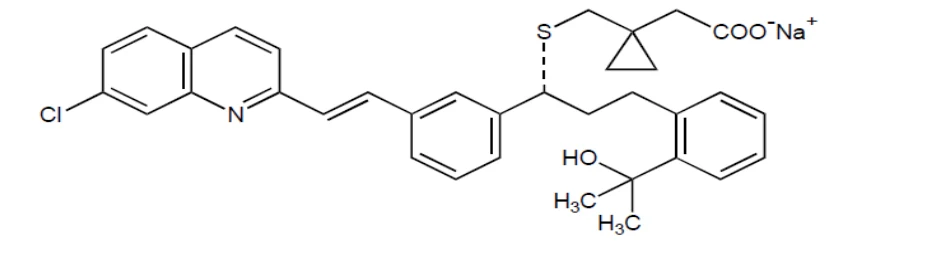
Structural formula:
Physicochemical properties:
Montelukast sodium is a hygroscopic, optically active, white to off-white, free-flowing powder. Montelukast sodium is freely soluble in ethanol, methanol, and water and practically insoluble in acetonitrile.
CLINICAL TRIALS
A randomized, blinded, two-treatment, two-period, two sequence, single dose, crossover, oral bioequivalence study of RIVA-MONTELUKAST FC (montelukast sodium) 10 mg tablets (Laboratoire RIVA Inc.) and SINGULAIR® (montelukast sodium) 10 mg tablets (Merck Frosst Canada Ltd.) in 36 healthy human adult, male subjects under fasting condition was conducted. The results are presented below.
SUMMARY TABLE OF THE COMPARATIVE BIOAVAILABILITY DATA
Montelukast Sodium Tablets (1 x 10 mg) From measured data uncorrected for potency Geometric Least Squares Mean | ||||
Montelukast Sodium Tablets (1 x 10 mg) From measured data uncorrected for potency Geometric Least Squares Mean | ||||
| Pharmacokinetic Parameter | Test* | Reference** | % Ratio of Geometric Least Squares Means | 90% Confidence Interval |
| Pharmacokinetic Parameter | Test* | Reference** | % Ratio of Geometric Least Squares Means | 90% Confidence Interval |
AUCT (ng.h/mL) | 3157.640 3272.985 (26.99) | 3336.319 3461.808 (27.25) | 94.64% | 86.03% - 104.12% |
AUCI (ng.h/mL) | 3249.617 3365.897 (26.94) | 3422.091 3548.089 (27.02) | 94.96% | 86.46% - 104.30% |
Cmax (ng/mL) | 503.575 533.637 (35.26) | 533.037 560.881 (30.66) | 94.47% | 83.57% - 106.79% |
Tmax§ (h) | 4.250 (1.50, 5.67) | 3.250 (1.00, 6.00) | ||
t ½€ (h) | 4.783 | 4.706 | ||
*RIVA-MONTELUKAST FC (montelukast sodium) 10 mg tablets (Laboratoire RIVA Inc.)
** SINGULAIR® (montelukast sodium) 10 mg tablets (Merck Frosst Canada Ltd) purchased in Canada.
§ Expressed as the median (range) only.
€ Expressed as the arithmetic mean (CV %) only.
A randomized, blinded, two-treatment, two-period, two-sequence, single dose, crossover, oral bioequivalence study of RIVA-MONTELUKAST (montelukast sodium) 5 mg chewable tablets (Laboratoire RIVA Inc.) and SINGULAIR® (montelukast sodium) 5 mg chewable tablets (Merck Frosst Canada Ltd.) in 39 healthy human adult, male subjects under fasting condition was conducted. The results are presented below.
Montelukast sodium tablets (1 x 5 mg) From measured data uncorrected for potency Geometric Least Squares Mean | ||||
| Pharmacokinetic Parameter | Test1 | Reference2 | % Ratio of Geometric Least Squares Means | 90% Confidence Interval |
AUCT (hr.ng/mL) | 1445.002 1515.896 (30.31) | 1409.515 1450.376 (23.35) | 102.52 | 97.84 - 107.42 |
AUCI (hr.ng/mL) | 1502.364 1573.722 (30.02) | 1456.841 1497.538 (22.87) | 103.12 | 98.63 - 107.83 |
Cmax (ng/mL) | 241.783 251.143 (26.97) | 248.949 257.069 (25.38) | 97.12 | 91.10 - 103.54 |
Tmax3 (h) | 2.670 (1.67, 5.50) | 2.670 (1.33, 6.02) | ||
t ½4 (h) | 3.928 (20.92%) | 3.833 (21.96%) | ||
1 RIVA-MONTELUKAST (montelukast sodium) 5 mg chewable tablets (Laboratoire RIVA Inc.)
2 PrSINGULAIR® (montelukast sodium) 5 mg chewable tablets (Merck Frosst Canada Ltd.) purchased in Canada.
3 Expressed as the median (range) only.
4 Expressed as the arithmetic mean (CV %) only.
Study Results – Asthma
Adults 15 Years of Age and Older
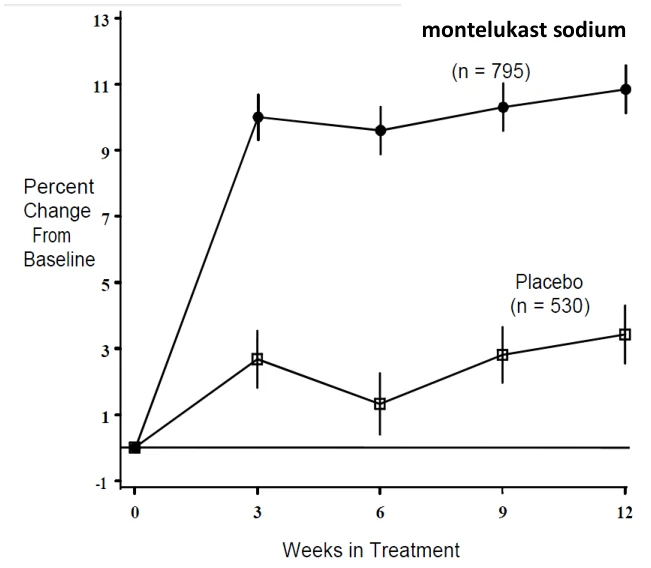
The efficacy of montelukast sodium for the chronic treatment of asthma in adults 15 years of age and older was demonstrated in two (US and Multinational) similarly- designed 12-week, double-blind, placebo-controlled studies in 1325 patients (795 treated with montelukast sodium and 530 treated with placebo). Patients were symptomatic and using approximately 5 puffs of β-agonist per day on an “as-needed” basis. The mean baseline percent of predicted forced expiratory volume in 1 second (FEV1) was 66% (approximate range, 40 to 90%). In these studies, asthma symptoms, asthma-related outcomes, respiratory function, and as-needed β-agonist use were measured. Endpoints were analyzed in each study and in a combined analysis according to a prespecified data analysis plan. The following clinical results were observed:
Asthma Symptoms and Asthma-related Outcomes
Montelukast sodium 10 mg once daily at bedtime, significantly improved measurements of patient-reported daytime symptoms and nighttime awakenings in each study and in the combined analysis, compared with placebo. In patients with nocturnal awakenings of at least 2 nights per week, montelukast sodium reduced the nocturnal awakenings by 34% from baseline, significantly better than the reduction of 14% for the placebo group (combined analysis).
Montelukast sodium, compared with placebo, significantly improved asthma-related outcome measurements. In the combined analysis, montelukast sodium, compared with placebo, decreased asthma attacks by 37%, corticosteroids rescue by 39%, discontinuations due to worsening asthma by 65%, asthma exacerbations by 38% and increased asthma-free days by 42%.
Physicians’ and patients’ global asthma evaluations and asthma-specific quality-of-life evaluations (in all domains, including normal daily activity and asthma symptoms) were significantly better with montelukast sodium in each study and in the combined analysis compared with placebo.
Respiratory Function
Compared with placebo, montelukast sodium caused significant improvements in parameters of respiratory function (FEV1, and peak expiratory flow rate, PEFR) in each study and in the combined analysis:
Effect of Montelukast Sodium, 10 mg Daily, on Parameters of Respiratory
Function in Adults 15 Years and Older (Combined Analysis)
| Montelukast Sodium (n=795) | Placebo (n=530) | |
|---|---|---|
| Morning FEV1 (% change from baseline) | 10.4* | 2.7 |
| AM PEFR (L/min change from baseline) | 24.5* | 3.3 |
| PM PEFR (L/min change from baseline) | 17.9* | 2.0 |
* Significantly better than placebo (p≤0.001)
Figure 1
Morning FEV1 (Percent Change from Baseline)
montelukast sodium
β-agonist Use
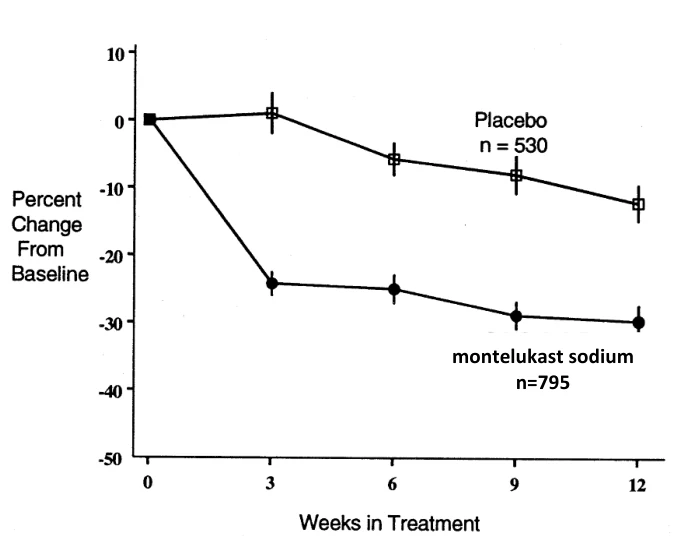
Compared with placebo, montelukast sodium significantly decreased the use of “as-needed” β-agonist by 26.1% from baseline compared with 4.6% in the placebo group in the combined analysis. The decreases were also significant in each of the studies (p≤0.001).
Figure 2
“As-Needed” β-agonist Use (Percent Change from Baseline)
Onset of Action and Maintenance of Benefits
In each study and in the combined analysis the treatment effect of montelukast sodium, measured by daily diary card parameters, including symptom scores, “as-needed” β-agonist use and PEFR measurements, was achieved after the first dose and was maintained throughout the dosing interval (24 hours). Treatment effect also remained constant during continuous once-daily administration in extension trials for up to one year. Withdrawal of montelukast sodium in asthmatic patients after 12 weeks of continuous use, as with all asthma therapies, resulted in a gradual decline toward baseline. Additionally, withdrawal of montelukast sodium did not cause rebound worsening of asthma (see also Effects on Exercise-induced Bronchoconstriction).
Effects Relative to Inhaled Corticosteroids
In one of the two 12-week, double-blind studies in adults (Multinational), montelukast sodium was compared with inhaled beclomethasone (200 mcg twice daily with a spacer device). Montelukast sodium demonstrated a more rapid initial response although over the full duration of the study, beclomethasone provided a greater average treatment effect. However, a high percent of patients treated with montelukast sodium achieved similar clinical responses compared with inhaled beclomethasone (50% of patients on beclomethasone achieved an improvement in FEV1 of approximately 11% or more over baseline while 42% of patients treated with montelukast sodium achieved the same response).
Pediatric Patients 6 to 14 Years of Age
The efficacy of montelukast sodium in pediatric patients 6 to 14 years of age with asthma was demonstrated in one 8-week double-blind, placebo-controlled study in 336 patients (201 treated with montelukast sodium and 135 treated with placebo) using β-agonist on an “as-needed” basis. The mean baseline percent predicted FEV1 was 72% (approximate range, 45 to 90%) and approximately 36% of the patients were on inhaled corticosteroids.
montelukast sodium
n=795
Compared with placebo, montelukast sodium, one 5 mg chewable tablet daily at bedtime, significantly decreased the percent of days asthma exacerbations occurred. Parents’ global asthma evaluations and the pediatric asthma-specific quality-of-life evaluations (in all domains, including normal daily activity and asthma symptoms) were significantly better with montelukast sodium compared with placebo.
Compared with placebo, there was a significant improvement in morning FEV1 (8.7% versus 4.2% change from baseline in the placebo group, p<0.001) and a significant decrease in total “as-needed” β-agonist use (11.7% decrease from baseline versus 8.2% increase from baseline in the placebo group, p≤0.05).
Similar to the adult studies, the treatment effect was achieved after the first dose and remained constant during continuous once-daily administration in clinical trials for up to 6 months.
Growth Rate in Pediatric Patients
In a 56-week, multi-center, double-blind, randomized, placebo-controlled parallel group study, the effect of montelukast sodium 5 mg once daily on growth rate was compared to placebo in patients aged 6 to 8 years with mild asthma. Growth rates expressed as least-squares (LS) mean (95% CI) in cm/year for the montelukast sodium and placebo groups were 5.67 (5.46, 5.88) and 5.64 (5.42, 5.86), respectively.
Pediatric Patients 2 to 5 Years of Age
The efficacy of montelukast sodium for the chronic treatment of asthma in pediatric patients 2 to 5 years of age was explored in a 12-week placebo-controlled safety and tolerability study in 689 patients, 461 of whom were treated with montelukast sodium. While the primary objective was to determine the safety and tolerability of montelukast sodium, the study included efficacy evaluations, including daytime and overnight asthma symptom scores, β-agonist use, oral corticosteroid rescue, and the physician’s global evaluation. Compared with placebo, treatment with one 4-mg montelukast sodium chewable tablet daily resulted in a significant improvement in daytime asthma symptom score [scale 0 to 5] (montelukast sodium -0.37 vs placebo -0.25, p=0.003) and overnight asthma symptom score [scale 0 to 4] (montelukast sodium -0.41 vs placebo -0.30, p<0.05). Both daytime and overnight asthma symptom scores were measured as a mean change from baseline with a decrease indicating improvement. There were significant decreases in the mean percentage of days of β-agonist use (montelukast sodium 50.1% vs placebo 56.3%, p<0.001) and in the percentage of patients using oral corticosteroid rescue (montelukast sodium 19.1% vs placebo 28.1%, p<0.01). In addition, the physicians’ global evaluations were significantly better with montelukast sodium compared with placebo (montelukast sodium 1.2 vs placebo 1.5, p<0.01). The treatment effect for daytime asthma symptoms, as recorded on a caregiver asthma diary, was achieved after the first dose. The findings of these exploratory efficacy evaluations, along with pharmacokinetics and extrapolation of data from older patients, support the overall conclusion that montelukast sodium is efficacious in the maintenance treatment of asthma in patients 2 to 5 years of age.
Effects in Patients on Concomitant Inhaled Corticosteroids
Separate studies in adults demonstrated the ability of montelukast sodium to add to the clinical effect of inhaled corticosteroids, and to allow steroid tapering when used concomitantly.
Three large studies demonstrated montelukast sodium has additional benefits in patients taking corticosteroids. In a randomized, placebo-controlled, parallel-group study (n=226), stable asthmatic patients on initial inhaled corticosteroid doses of approximately 1600 mcg per day reduced their steroid use by approximately 37% during a placebo run-in period. Montelukast sodium allowed a further 47% reduction in inhaled corticosteroid dose compared with 30% for placebo over the 12-week active treatment period (p≤0.050). Approximately 40 % of the montelukast-treated patients and 29% of the placebo-treated patients could be tapered off inhaled corticosteroids and remained off inhaled corticosteroids at the conclusion of the study (p=NS). It is not known whether the results of this study are generalizable to asthmatics who require higher doses of inhaled corticosteroids or systemic corticosteroids.
In another randomized, placebo-controlled, parallel-group trial (n=642) in a similar population of adult patients previously maintained, but not adequately controlled, on inhaled corticosteroids (beclomethasone 400 mcg/day), the addition of montelukast sodium to beclomethasone resulted in statistically significant improvements in FEV1 compared with those patients who were continued on beclomethasone alone or those patients who were withdrawn from beclomethasone and treated with montelukast or placebo alone over the last 10 weeks of the 16-week, blinded treatment period. Patients who were randomized to treatment arms containing beclomethasone had statistically significantly better asthma control than those patients randomized to montelukast sodium alone or placebo alone as indicated by FEV1, daytime asthma symptoms, PEFR, nocturnal awakenings due to asthma, and “as-needed” β-agonist requirements. While the dose of inhaled corticosteroid may be reduced gradually under medical supervision, montelukast sodium should not be abruptly substituted for inhaled or oral corticosteroids.
In adult asthmatic patients with documented ASA sensitivity, nearly all of whom were receiving concomitant inhaled and/or oral corticosteroids, a 4-week, randomized, parallel-group trial (n=80) demonstrated that montelukast sodium, compared with placebo, resulted in significant improvement in parameters of asthma control. The magnitude of effect of montelukast sodium in ASA-sensitive patients were similar to the effect observed in the general population of asthmatic patients studied. The effect of montelukast sodium on the bronchoconstrictor response to ASA or other non-steroidal anti-inflammatory drugs in ASA-sensitive asthmatic patients has not been evaluated (see WARNINGS AND PRECAUTIONS).
Effects on Exercise-induced Bronchoconstriction
In a 12-week, parallel group study of 110 adult and adolescent patients 15 years of age and older with asthma, montelukast sodium, 10 mg, administered once daily, prevented exercise-induced bronchoconstriction (EIB) as demonstrated by significant inhibition of the following, compared with placebo:
- the extent and duration of fall in FEV1 over 60 minutes after exercise (as measured by the area under the % fall in FEV1 versus time curve after exercise, AUC);
- the maximal percent fall in FEV1 after exercise;
- the time to recovery to within 5% of the pre-exercise FEV1.
Protection was consistent throughout the 12-week treatment period, indicating that tolerance did not occur. In a separate crossover study, protection was observed after two once-daily doses.
In 27 pediatric patients 6 to 14 years of age with asthma administered the 5 mg chewable tablet once daily a 2-day cross-over study demonstrated similar protection, and the protection was maintained throughout the dosing interval (24 hours).
Effects on Asthmatic Inflammation
Several studies have shown montelukast sodium inhibits parameters of asthmatic inflammation. In a placebo-controlled, crossover study (n=12), montelukast sodium inhibited early- and late-phase bronchoconstriction due to antigen challenge by 75% and 57%, respectively.
Because inflammatory cell (eosinophil) infiltration is an important feature of asthma, the effects of montelukast sodium on eosinophils in the peripheral blood and airway were examined. In Phase IIb/III clinical trials in adults, montelukast sodium significantly decreased peripheral blood eosinophils approximately 15% from baseline, compared with placebo. In pediatric patients age 6 to 14 years of age, montelukast sodium also significantly decreased peripheral blood eosinophils 13% over the 8-week treatment period, compared with placebo.
In a 4-week, randomized, parallel group study (n=40) in adults, montelukast sodium significantly decreased airway eosinophils (as assessed in sputum) by 48% from baseline compared with an increase of 23% from baseline with placebo. In this study, peripheral blood eosinophils significantly decreased, and clinical asthma endpoints improved with treatment with montelukast sodium.
Study Results – Seasonal Allergic Rhinitis
The efficacy of montelukast sodium for the treatment of seasonal allergic rhinitis was investigated in similarly designed randomized, 2-week, double-blind, placebo-controlled trials. Patients were 15 years of age and older with a history of seasonal allergic rhinitis, a positive skin test to at least one relevant seasonal allergen, and active symptoms of seasonal allergic rhinitis at study initiation.
In a combined analysis of three pivotal studies, montelukast sodium 10-mg tablets administered to 1189 patients once daily in the evening resulted in a statistically significant improvement in the primary endpoint, daytime nasal symptoms score, and its individual components (nasal congestion, rhinorrhea, nasal itching, and sneezing); nighttime symptoms score, and its individual components (nasal congestion upon awakening, difficulty going to sleep, and nighttime awakenings); daytime eye symptoms score, and its individual components (tearing, itchy, red, and puffy eyes); global evaluations of allergic rhinitis by patients and by physicians; and composite symptoms score (composed of the daytime nasal and nighttime symptoms scores), compared with placebo.
TOXICOLOGY
Animal Toxicology
No mortality occurred following a single oral administration of montelukast sodium at doses up to 5000 mg/kg, in mice and rats, (15,000 mg/m2 and 29,500 mg/m2 in mice and rats, respectively) the maximum dose tested (oral aLD50 >5000 mg/kg). This dose is equivalent to 25,000 times the recommended daily adult human dose (determined using mg/kg/day values)*.
Chronic Toxicity
The toxic potential of montelukast sodium was evaluated in a series of repeated dose toxicity studies of up to 53 weeks in monkeys and rats and up to 14 weeks in infant monkeys and in mice. Montelukast sodium was well tolerated at doses which provide a wide margin of safety based on total dose administered. The no effect level was evaluated to be 150 mg/kg/day in female monkeys, 300 mg/kg/day in male monkeys, 50 mg/kg/day in rats, >150 mg/kg/day in infant monkeys and 50 mg/kg/day in mice. For all toxicological parameters, the no effect level was at least 125 times the recommended human dose (determined using mg/kg/day values)*. There were no findings that would preclude administration at the therapeutic dosage level for both adults and pediatric patients.
Carcinogenicity
No evidence of tumorigenicity was seen in a 2-year carcinogenicity study in Sprague-Dawley rats, at oral (gavage) doses up to 200 mg/kg/day (approximately 160 times the maximum recommended daily oral doses in adults and 190 times the maximum recommended daily oral dose in children, on a mg/m2 basis)
* Based on an adult patient weight of 50 kg.
or in a 92-week carcinogenicity study in mice at oral doses up to 100 mg/kg/day (approximately 40 times the maximum recommended daily oral dose in adults and 50 times the maximum recommended daily oral dose in children, on a mg/m2 basis).
Mutagenesis
Montelukast demonstrated no evidence of mutagenic or clastogenic activity in the following assays: the microbial mutagenesis assay, the V-79 mammalian cell mutagenesis assay, the alkaline elution assay in rat hepatocytes, the chromosomal aberration assay in Chinese hamster ovary cells, and in the in vitro mouse bone marrow chromosomal aberration assay.
Reproduction and Teratology
In fertility studies in female rats, montelukast produced reductions in fertility and fecundity indices at an oral dose of 200 mg/kg (approximately 160 times the maximum recommended daily oral dose in adults on a mg/m2 basis). No effects on female fertility or fecundity were observed at an oral dose of 100 mg/kg (approximately 80 times the maximum recommended daily oral dose in adults, on a mg/m2 basis). Montelukast had no effects on fertility in male rats at oral doses up to 800 mg/kg (approximately 650 times the maximum recommended daily oral dose in adults, on a mg/m2 basis).
No teratogenicity was observed in rats at oral doses up to 400 mg/kg/day (approximately 320 times the maximum recommended daily oral dose in adults, on a mg/m2 basis) and in rabbits at oral doses up to 300 mg/kg/day (approximately 490 times the maximum recommended daily oral doses in adults, on a mg/m 2 basis).
Montelukast crosses the placenta following oral dosing in rats and rabbits. There are, however, no adequate and well-controlled studies in pregnant women. Because animal reproduction studies are not always predictive of human response, montelukast sodium should be used during pregnancy only if clearly needed.
BIBLIOGRAPHY
- 1. Cheng H, Leff JA, Amin R, Gertz BJ, De Smet M, Noonan N, Rogers JD, Malbecq W, Meisner D, Somers G. Pharmacokinetics, bioavailability, and safety of montelukast sodium (MK-0476) in healthy males and females. Pharm Res 1996;13(3):445-48.
- 2. Harris RR, Carter GW, Bell RL, Moore JL, Brooks DW. Clinical activity of leukotriene inhibitors. Int J Immunopharmacol 1995;17:147-56.
- 3. Jones TR, Labelle M, Belley M, Champion E, Charette L, Evans J, Ford-Hutchinson AW, Gauthier J-Y, Lord A, Masson P, McAuliffe M, McFarlane CS, Metters KM, Pickett C, Piechuta H, Rochette C, Rodger IW, Sawyer N, Young RN. Erratum: Pharmacology of montelukast sodium (Singulair™), a potent and selective leukotriene D4 receptor antagonist. Can J Physiol Pharmacol 1995;73:747.
- 4. Jones TR, Labelle M, Belley M, Champion E, Charette L, Evans J, Ford-Hutchinson AW, Gauthier J-Y, Lord A, Masson P, McAuliffe M, McFarlane CS, Metters KM, Pickett C, Piechuta H, Rochette C, Rodger IW, Sawyer N, Young RN. Pharmacology of montelukast sodium (Singulair™), a potent and selective leukotriene D4 receptor antagonist. Can J Physiol Pharmacol 1995;73(2):191-201.
- 5. Knorr B, Franchi LM, Bisgaard H, Vermeulen JH, LeSouef P, Santanello N, Michele TM, Reiss TF, Nguyen HH, Bratton DL. Montelukast, a leukotriene receptor antagonist, for the treatment of persistent asthma in children aged 2 to 5 years. Pediatrics 2001;108(3):1-10.
- 6. Malmstrom K, Rodriguez-Gomez G, Guerra J, Villaran C, Pinero A, Wei LX, Seidenberg BC, Reiss TF. Oral montelukast, inhaled beclomethasone, and placebo for chronic asthma. Ann Intern Med 1999;130(6):487-95.
- 7. Philip G, Hustad C, Noonan G, Malice MP, Ezekowitz A, Reiss TF et al. Reports of suicidality in clinical trials of montelukast. J Allergy Clin Immunol. 2009 Oct;124(4):691-6.e6.
- 8. Philip G, Hustad CM, Malice MP, Noonan G, Ezekowitz A, Reiss TF et al. Analysis of behavior-related adverse experiences in clinical trials of montelukast. J Allergy Clin Immunol. 2009 Oct;124(4):699-706.e8.
- 9. Reiss TF. MK-0476, a potent and specific leukotriene (LT)D-4 receptor antagonist exhibits a dose response in the inhibition of exercise induced bronchoconstriction at the end of a once daily dosing interval. J Invest Med 1995;43(Suppl 2):275A.
- 10. Reiss TF, Chervinsky P, Altman L, Bewtra A, Stricker W, Kundu S, Zhang J. Therapy with MK-0476, a potent and specific LTD-4 receptor antagonist produces improvements in the signs and symptoms of asthma. Eur Respir J 1994;18(Suppl 7):282S.
- 11. Reiss TF, Chervinsky P, Noonan M, Prenner B, Zhang J, Hess J, Friedman B, Kundu S. MK-0476, an LTD-4 receptor antagonist, exhibits a dose related improvement in the once daily treatment of patients with chronic asthma. Eur Respir J 1995;19:289S.
- 12. Schoors DF, De Smet M, Reiss TF, Margolskee D, Cheng H, Larson P, Amin R, Somers G. Single dose pharmacokinetics, safety and tolerability of MK-0476, a new leukotriene D-4 receptor antagonist, in healthy volunteers. Br J Clin Pharmacol 1995;40(3):277-80.
- 13. Williams B, Noonan G, Reiss TF, Knorr B, Guerra J, White R, Matz J. Long-term asthma control with oral montelukast and inhaled beclomethasone for adults and children 6 years and older. Clin Exp Allergy 2001;31:845-54.
- 14. Product Monograph of SINGULAIR® (montelukast sodium), Merck Canada Inc. Date of Revision – July 22, 2020, Control No. 230733.