


Product Monograph - Rivastigmine Patch 5
RECENT MAJOR LABEL CHANGES
| 2 CONTRAINDICATIONS | 05/2024 |
|---|---|
| 7 WARNINGS AND PRECAUTIONS, Cardiovascular | 05/2024 |
TABLE OF CONTENTS
RECENT MAJOR LABEL CHANGES ........................................................................................ 2
TABLE OF CONTENTS ........................................................................................................... 2
PART I: HEALTH PROFESSIONAL INFORMATION .................................................................. 4
1 INDICATIONS ........................................................................................................... 4
1.1 Pediatrics ............................................................................................................ 4
1.2 Geriatrics ............................................................................................................ 4
2 CONTRAINDICATIONS .............................................................................................. 4
3 SERIOUS WARNINGS AND PRECAUTIONS BOX ......................................................... 5
4 DOSAGE AND ADMINISTRATION ............................................................................. 5
4.1 Dosing Considerations ........................................................................................ 5
4.2 Recommended Dose and Dosage Adjustment .................................................... 6
4.4 Administration .................................................................................................... 7
4.5 Missed Dose ....................................................................................................... 8
5 OVERDOSAGE .......................................................................................................... 8
6 DOSAGE FORMS, STRENGTHS, COMPOSITION AND PACKAGING ........................... 10
7 WARNINGS AND PRECAUTIONS ............................................................................. 11
7.1 Special Populations ........................................................................................... 19
7.1.1 Pregnant Women ........................................................................................................... 19
7.1.2 Breast-feeding ............................................................................................................... 19
7.1.3 Pediatrics ....................................................................................................................... 19
7.1.4 Geriatrics ........................................................................................................................ 19
8 ADVERSE REACTIONS ............................................................................................. 20
8.1 Adverse Reaction Overview .............................................................................. 20
8.2 Clinical Trial Adverse Reactions ........................................................................ 20
8.3 Less Common Clinical Trial Adverse Reactions ................................................. 27
8.5 Post-Market Adverse Reactions ........................................................................ 29
9 DRUG INTERACTIONS ............................................................................................ 31
9.2 Drug Interactions Overview .............................................................................. 31
9.3 Drug-Behavioural Interactions .......................................................................... 31
9.4 Drug-Drug Interactions ..................................................................................... 31
9.5 Drug-Food Interactions ..................................................................................... 33
9.6 Drug-Herb Interactions ..................................................................................... 33
9.7 Drug-Laboratory Test Interactions .................................................................... 33
10 CLINICAL PHARMACOLOGY .................................................................................... 33
10.1 Mechanism of Action ........................................................................................ 33
10.2 Pharmacodynamics .......................................................................................... 33
10.3 Pharmacokinetics ............................................................................................. 34
11 STORAGE, STABILITY AND DISPOSAL ..................................................................... 38
12 SPECIAL HANDLING INSTRUCTIONS ....................................................................... 38
PART II: SCIENTIFIC INFORMATION ................................................................................... 39
13 PHARMACEUTICAL INFORMATION ........................................................................ 39
14 CLINICAL TRIALS .................................................................................................... 40
14.1 Efficacy and Safety Studies ............................................................................... 40
14.2 Study Results .................................................................................................... 43
14.3 Comparative Bioavailability Studies .................................................................. 49
15 MICROBIOLOGY ..................................................................................................... 49
16 NON-CLINICAL TOXICOLOGY .................................................................................. 50
17 SUPPORTING PRODUCT MONOGRAPHS ................................................................ 57
PATIENT MEDICATION INFORMATION .............................................................................. 58
PART I: HEALTH PROFESSIONAL INFORMATION
1 INDICATIONS
RIVASTIGMINE PATCH (rivastigmine transdermal patch) is indicated for:
- The symptomatic treatment of patients with mild to moderately severe dementia of the Alzheimer's type.
Rivastigmine transdermal patch has not been studied in controlled clinical trials for longer than 6 months.
RIVASTIGMINE PATCH should only be prescribed by (or following consultation with) clinicians who are experienced in the diagnosis and management of Alzheimer’s disease.
1.1 Pediatrics
Pediatrics (< 18 years of age): No data are available to Health Canada; therefore, Health Canada has not authorized an indication for pediatric use.
1.2 Geriatrics
Geriatrics (≥ 65 years of age): Age had no impact on the exposure to rivastigmine in Alzheimer’s disease patients treated with rivastigmine transdermal patch.
2 CONTRAINDICATIONS
- Patients with known hypersensitivity to rivastigmine, to other carbamate derivatives or to the excipients of the formulation. For a complete listing, see the 6 DOSAGE FORMS, STRENGTHS, COMPOSITION AND PACKAGING.
- Patients with severe liver impairment since rivastigmine has not been studied in this population.
- Patients with previous history of application site reactions with rivastigmine transdermal patch suggestive of allergic contact dermatitis or other severe skin reactions (e.g., allergic dermatitis (disseminated), Stevens-Johnson syndrome) with rivastigmine, oral or transdermal patch (see 7 WARNINGS AND PRECAUTIONS, Skin).
- Patients with history of QT prolongation and/or torsade de pointes, including congenital long QT syndromes, history of cardiac arrhythmias (see 7 WARNINGS AND PRECAUTIONS and 9 DRUG INTERACTIONS).
3 SERIOUS WARNINGS AND PRECAUTIONS BOX
Serious Warnings and Precautions
| Do not wear more than one patch at a time. It is potentially dangerous and can be a medical emergency. If you accidently apply more than one RIVASTIGMINE PATCH, remove all the patches from your skin and get medical help right away. |
|---|
4 DOSAGE AND ADMINISTRATION
4.1 Dosing Considerations
- Exposure to sources of heat may increase a drug’s ability to penetrate the skin when administered to a patient by transdermal patch and this may result in increased drug exposure. The applied patch area should not be exposed to, or have direct contact with, external heat sources such as excessive sunlight, heat lamps, heating pads, saunas, hot tubs, etc. This may also occur if the patient has a fever. Patients and caregivers should be advised that the patch area should not be exposed to external heat sources while wearing RIVASTIGMINE PATCH.
- Hepatic Impairment: rivastigmine transdermal patch has not been studied in hepatic impairment. Due to increased exposure in mild to moderate hepatic impairment, as observed with the oral formulation, dosing recommendations to titrate according to individual tolerability should be closely followed. Patients with clinically significant hepatic impairment may experience more adverse events. Caution should be used when titrating hepatically impaired patients (see 10 CLINICAL PHARMACOLOGY).
- Renal Impairment: rivastigmine transdermal patch has not been studied in renal impairment. Dose titration for patients with renal impairment should be undertaken with caution (see 10 CLINICAL PHARMACOLOGY).
- Low Body Weight: Particular caution should be exercised in titrating patients with lower body weight (e.g. below 50 kg), as they may experience more adverse reactions. Carefully titrate and monitor these patients for adverse reactions (e.g. excessive nausea or vomiting) and consider reducing the dose if such adverse reactions develop.
- Dose escalation for patients with serious comorbid diseases should be undertaken with particular caution.
- In a population of cognitively-impaired individuals, the correct and safe use of this and all other medications may require supervision (see 7 WARNINGS AND PRECAUTIONS, Patient and Caregiver Counselling Information).
- Adverse effects (e.g. hypertension and hallucinations and worsening of extrapyramidal symptoms) in patients with Alzheimer’s dementia have been observed shortly after dose increase. They may respond to a dose reduction or discontinuation.
4.2 Recommended Dose and Dosage Adjustment
RIVASTIGMINE PATCH should only be prescribed by (or following consultation with) clinicians who are experienced in the diagnosis and management of Alzheimer’s disease.
| Patches | Rivastigmine base dose load† | Rivastigmine base in vivo release rates per 24 h‡ |
|---|---|---|
| RIVASTIGMINE PATCH 5 | 9 mg | 4.6 mg |
| RIVASTIGMINE PATCH 10 | 18 mg | 9.5 mg |
| RIVASTIGMINE PATCH 15 | 27 mg | 13.3 mg |
† Drug content of the patch
‡ Quantity of drug released over a 24-h patch application time interval
Initial dose: Treatment is started with RIVASTIGMINE PATCH 5 applied once a day. Replace with a new patch every 24 hours.
Dose titration: Increase the daily dose by increasing the patch size, only after a minimum of 4 weeks at the previous dose, and only if the previous dose has been well tolerated. Continue the recommended dose of RIVASTIGMINE PATCH 10 for as long as therapeutic benefit persists. Based on clinical judgment, RIVASTIGMINE PATCH 15 may be considered for patients with moderately severe AD. Doses higher than RIVASTIGMINE PATCH 15 (13.3 mg/24 hours) confer no appreciable additional benefit, and are associated with further increases in the incidence of adverse reactions (see 8 ADVERSE REACTIONS).
The clinical benefit of rivastigmine should be reassessed on a regular basis. Discontinuation should also be considered when evidence of a therapeutic effect at the optimal dose is no longer present.
Interruption of treatment: Treatment should be temporarily interrupted if gastrointestinal adverse effects are observed, until these adverse effects resolve. Patch treatment can be resumed at the same dose if treatment is not interrupted for more than three days. Otherwise, treatment should be reinitiated with RIVASTIGMINE PATCH 5.
If adverse effects persist on re-initiation of therapy, the dose should be temporarily reduced to RIVASTIGMINE PATCH 5.
Hepatic impairment: rivastigmine transdermal patch has not been studied in patients with hepatic impairment. Caution should be used when dosing hepatically impaired patients according to individual tolerability and these patients should be closely monitored. (see 10 CLINICAL PHARMACOLOGY)
Renal Impairment: No dose adjustment is necessary for patients with renal impairment.
Switching from Capsules or Oral Solution: Patients treated with rivastigmine capsules or oral solution may be switched to RIVASTIGMINE PATCH as follows:
- A patient who is on a dose of < 3 mg BID (<6 mg/ day) oral rivastigmine can be switched to RIVASTIGMINE PATCH 5.
- A patient who is on a dose of 3 to 6 mg BID (6 to 12 mg/ day) oral rivastigmine may be directly switched to RIVASTIGMINE PATCH 10.
It is recommended to apply the first patch on the day following the last oral dose.
4.4 Administration
RIVASTIGMINE PATCH should be applied once a day to clean, dry, hairless, intact healthy skin on the upper or lower back, upper arm, or chest, in a place that will not be rubbed by tight clothing. Application of the patch to other areas, such as the abdomen and thighs, has been shown to decrease the bioavailability of rivastigmine and cause more skin irritation (see 10.3 Pharmacokinetics; 8 ADVERSE REACTIONS, Skin irritation). The same skin location should not be used within 14 days.
Important administration instructions (patients and caregivers should be instructed accordingly (see 7 WARNINGS AND PRECAUTIONS, Patient and Caregiver Counselling Information; PATIENT MEDICATION INFORMATION)
- Only one patch should be worn at a time (see 7 WARNINGS AND PRECAUTIONS and 5 OVERDOSAGE, Symptoms).
- The previous day’s patch must be removed before applying a new one. The patch should be replaced by a new one after 24 hours.
- The patch should not be applied to skin that is red, irritated or cut. It is recommended to change the application site daily to avoid potential irritation, although consecutive patches can be applied to the same general anatomic site (e.g., another spot on the upper back).
- The patch should be pressed down firmly by applying pressure with the hand over the entire patch for at least 30 seconds, making sure that the edges stick well.
- If the patch falls off, a new one should be applied for the rest of the day, then it should be replaced at the same time as usual the next day.
- The patch can be used in everyday situations, including bathing and during hot weather however, it should be checked to ensure it has remained well adhered. Showering and washing the RIVASTIGMINE PATCH site is possible without loss of adherence. To ensure proper adherence, the patch should not be applied to wet or damp skin.
- The patch should not be exposed to any external heat sources (e.g. excessive sunlight, saunas, solarium) for long periods of time.
- The patch should not be cut into pieces.
Wash your hands with soap and water after removing the patch. In case of contact with eyes or if the eyes become red after handling the patch, rinse immediately with plenty of
Incompatibilities: To prevent interference with the adhesive properties of the patch, the patch should not be applied to a skin area where cream, lotion or powder has recently been applied.
4.5 Missed Dose
The missed dose should be taken immediately or at the next scheduled dose. Doses should not be doubled. Following initiation of therapy or any dosage increase, patients should be closely monitored for adverse effects. If adverse effects (e.g. nausea, vomiting, abdominal pain, loss of appetite) are observed during treatment, the patient should be instructed to stop treatment and then restart at the same dose level, or lower, as clinically indicated. If therapy has been interrupted for three days, treatment should be reinitiated with RIVASTIGMINE PATCH 5. If side effects persist, the drug should be discontinued (see 7 WARNINGS AND PRECAUTIONS).
5 OVERDOSAGE
Symptoms: Manifestations include nausea, vomiting, diarrhea, abdominal pain, dizziness, tremor, headache, somnolence, bradycardia, confusional state, hyperhidrosis, hypertension, hallucinations and malaise. Overdosage with cholinesterase inhibitors can result in cholinergic crisis characterised by severe nausea, vomiting, salivation, sweating, bradycardia, hypotension, respiratory depression, collapse and convulsions. Increasing muscle weakness is a possibility and may result in death if respiratory muscles are involved. Atypical responses in blood pressure and heart rate have been reported with other cholinomimetics when co-administered with quaternary anticholinergics such as glycopyrrolate.
Due to the known vagotonic effect of cholinesterase inhibitors on heart rate, bradycardia and/or syncope may also occur.
In a documented case of a 46 mg overdose with rivastigmine capsules, a 69 year old female patient experienced vomiting, incontinence, hypertension, psychomotor retardation and loss of consciousness. The patient was managed conservatively with only supportive measures and fully recovered within 24 hours.
In a documented case of medication error leading to overdose with rivastigmine transdermal patches, an 87 year old male patient on a prescribed maintenance dose of one rivastigmine transdermal patch 10 cm2 (9.5 mg/24hrs) per day was accidentally administered 6 patches per day on two consecutive days. The patient experienced vomiting, fall and hyperhidrosis and was hospitalized on the second day. At the time of hospitalization, he presented with an elevated creatinine level (149 µmol/L; normal range: 70-115 µmol/L) and signs of urinary infection. He was treated by removal of all patches and ciprofloxacin was initiated. Subsequently, the patient developed acute renal failure with anuria and died approximately 14 days after hospitalization. The reporter suspected that overdose contributed to the patient's dehydration and renal failure. Autopsy results were not provided by the reporter.
Dose-related signs of toxicity in animals included lacrimation, excessive salivation, vomiting, decreased locomotor activity, ataxia, twitches/flutters, tremors and clonic convulsions.
Overdose with rivastigmine transdermal patch resulting from misuse/medication errors (application of multiple patches at a time) has been reported in the post-marketing setting (see 7 WARNINGS AND PRECAUTIONS; 8.5 Post-Market Adverse Reactions). The typical symptoms reported among these cases are similar to those seen with cases of overdose associated with rivastigmine oral formulations.
Treatment: As rivastigmine has a plasma half-life of about 3.4 hours after patch administration and a duration of acetylcholinesterase inhibition of about 9 hours, it is recommended that in cases of asymptomatic overdose the patch should be immediately removed, and no further patch should be applied for the next 24 hours.
In overdoses accompanied by severe nausea and vomiting, the use of antiemetics should be considered.
Symptomatic treatment for other adverse events should also be given as necessary.
Tertiary anticholinergics such as atropine may be used as an antidote for rivastigmine overdosage. Intravenous atropine sulfate titrated to effect is recommended: an initial dose of 1.0 to 2.0 mg IV with subsequent doses based upon clinical response.
Due to the short plasma elimination half-life of rivastigmine after patch administration, dialysis (hemodialysis, peritoneal dialysis, or hemofiltration) would not be clinically indicated in the event of an overdose.
| For management of a suspected drug overdose, contact your regional poison control centre. |
|---|
6 DOSAGE FORMS, STRENGTHS, COMPOSITION AND PACKAGING
Table 1 – Dosage Forms, Strengths, Composition and Packaging
| Route of Administration | Dosage Form / Strength/Composition | Non-medicinal Ingredients |
|---|---|---|
| Transdermal | RIVASTIGMINE PATCH 5, Each patch of 5 cm2 contains 9 mg rivastigmine, in vivo release rate of 4.6 mg/24 h. RIVASTIGMINE PATCH 10, Each patch of 10 cm2 contains 18 mg rivastigmine, in vivo release rate of 9.5 mg/24 h. RIVASTIGMINE PATCH 15, Each patch of 15 cm2 contains 27 mg rivastigmine, in vivo release rate of 13.3 mg/24 h. | acrylates copolymer poly(butyl methacrylate-co methyl methacrylate), acrylic adhesive, ethyl acetate, silicone adhesive applied to a polyester backing film imprinted with thermal transfer ribbon ink AXR 600 (resin, wax), silicone-coated polyester film and fluoro-coated polyester film. |
RIVASTIGMINE PATCH (rivastigmine) is a transdermal patch for transdermal administration.
Each patch is a thin, matrix-type transdermal system consisting of three layers when worn by the patient. A fourth layer, the release liner, covers the adhesive layer prior to use and is removed at the time the system is applied to the skin.
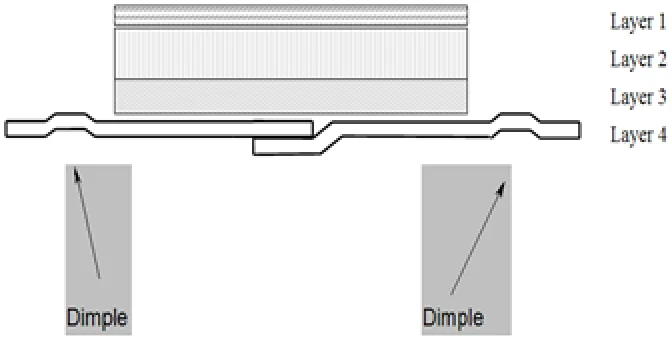
Layer 1 = Backing film
Layer 2 = Drug product (acrylic) matrix
Layer 3 = Adhesive (silicone) matrix
Layer 4 = Release liner (removed at time of use)
RIVASTIGMINE PATCH 5: each patch of 5 cm2 contains 9 mg rivastigmine, with in vivo release rate of 4.6 mg/24 hours. This is a circular 5 cm2 area transdermal drug delivery system, white backing film, bilayer round translucent adhesive matrix and an oversized rectangular over-lapping release liner with embossing. The backing film is labeled with rivastigmine using black colored ink. Available in cartons of 30.
RIVASTIGMINE PATCH 10: each patch of 10 cm2 contains 18 mg rivastigmine, with in vivo release rate of 9.5 mg/24 hours. This is a circular 10 cm2 area transdermal drug delivery system, white backing film, bilayer round translucent adhesive matrix and an oversized rectangular over-lapping release liner with embossing. The backing film is labeled with rivastigmine using black colored ink. Available in cartons of 30.
RIVASTIGMINE PATCH 15: each patch of 15 cm2 contains 27 mg rivastigmine, with in vivo release rate of 13.3 mg/24 hours. This is a circular 15 cm2 area transdermal drug delivery system, white backing film, bilayer round translucent adhesive matrix and an oversized rectangular over-lapping release liner with embossing. The backing film is labeled with rivastigmine using black colored ink. Available in cartons of 30.
Each patch is individually sealed in a separate pouch.
7 WARNINGS AND PRECAUTIONS
General
Overdose with rivastigmine resulting from medication errors and inappropriate use of rivastigmine transdermal patch (e.g. failure to remove the previous day’s patch before applying a new patch and application of multiple patches at a time) has been reported. As with medication errors and misuse in general, serious medical outcomes, including death, have been reported with rivastigmine transdermal patch (see 5 OVERDOSAGE). Health care providers may request copies of the Patient Reminder Card from the MAH to provide to their patients.
The typical symptoms reported in association with overdose include nausea, vomiting, diarrhea, hypertension, and hallucinations. Bradycardia and/or syncope, that may be associated with malaise or falls, may also occur (see 8.5 Post-Market Adverse Reactions; 5 OVERDOSAGE).
In a population of cognitively impaired individuals, safe use of this medication may require supervision. Patients and caregivers should be instructed in the proper use of RIVASTIGMINE PATCH (see 7 WARNINGS AND PRECAUTIONS, Patient and Caregiver Counselling Information).
The incidence and severity of adverse reactions generally increases with increasing dose, particularly at the time surrounding dose changes. If treatment is interrupted for more than three days, it should be reinitiated with RIVASTIGMINE PATCH 5 (rivastigmine).
As with other cholinergic substances care must be taken when prescribing RIVASTIGMINE PATCH:
- to patients predisposed to urinary obstruction.
- to patients with lower body weight (e.g. below 50 kg) as they may experience more adverse reactions and may be more likely to discontinue therapy (see 4.1 Dosing Considerations). See 7 WARNINGS AND PRECAUTIONS, Metabolism and Nutrition Disorders and 8.2 Clinical Trial Adverse Reactions, for additional information on weight loss.
Rivastigmine transdermal patch has not been studied in patients with non-Alzheimer dementias or individuals with dementia associated with Parkinson’s disease. The efficacy and safety of rivastigmine transdermal patch in these patient populations is unknown (see 8.5 Post-Market Adverse Reactions).
Contact with the eyes should be avoided after handling RIVASTIGMINE PATCH.
Patient and Caregiver Counselling Information: Patient Medication Information is included in the package of RIVASTIGMINE PATCH dispensed to the patient. Caregivers should be advised to read this sheet prior to administering RIVASTIGMINE PATCH.
Patients receiving RIVASTIGMINE PATCH and caregivers should be given the following instructions by the physician and/or pharmacist:
- 1.
Importance of Correct Usage
Patients or caregivers should be advised of the importance of applying the correct dose on the correct part of their body. They should be instructed to remove any used RIVASTIGMINE PATCH before applying a new one and to apply only one patch per day to one site. Only one patch should be worn per day to avoid the risk of overdose (see 7 WARNINGS AND PRECAUTIONS; 8 ADVERSE REACTIONS; 5 OVERDOSAGE).
The application site should be rotated in order to minimize skin irritation. The same site should not be used within 14 days. Patches should be replaced every 24 hours and the time of day should be consistent. It may be helpful for this to be part of a daily routine, such as the daily bath or shower.
Patients or caregivers should be told to avoid exposure of the patch to external heat sources (excess sunlight, saunas, solarium) for long periods of time.
- 2.
Concomitant Use of Drugs with Cholinergic Action
Patients or caregivers should be told that while wearing RIVASTIGMINE PATCH they should not be taking rivastigmine capsules or other drugs with cholinergic effects.
- 3.
Gastrointestinal Adverse Reactions
Patients or caregivers should be informed of the potential gastrointestinal adverse reactions such as nausea, vomiting and diarrhea. Patients and caregivers should be instructed to observe for these adverse reactions at all times, and in particular when treatment is initiated, or the dose is increased. Patients and caregivers should be instructed to inform their physician if these adverse events persist as a dose adjustment/reduction may be required.
- 4.
Monitoring the Patient’s Weight
Patients or caregivers should be informed that the RIVASTIGMINE PATCH may affect the patient’s appetite and/or the patient’s weight. Any loss of appetite or weight reduction needs to be monitored.
- 5.
Skin Reactions
Patients or caregivers should be advised that skin reactions may develop any time during treatment with RIVASTIGMINE PATCH. These may include application site skin reactions that are usually mild to moderate in severity, or potentially more serious skin reactions that spread beyond the application site (potential allergic contact dermatitis reactions) or are generalized. Patients or caregivers should be instructed to immediately inform a physician if application site reactions spread beyond the patch size, if there is evidence of a more intense local reaction (e.g. increasing erythema, edema, papules, vesicles), and if symptoms do not improve within 48 hours after patch removal.
- 6.
Missed Doses
If the patient has missed a dose, he/she should be instructed to apply a new patch immediately. They may apply the next patch at the usual time the next day, after removing the previous day’s patch. Patients should not apply two RIVASTIGMINE PATCH patches to make up for one missed. If treatment has been missed for more than three days, the patient or caregiver should be informed to restart treatment with the starting patch dose of 4.6 mg/24 hours (RIVASTIGMINE PATCH 5). Titration to the next patch dose should proceed after 4 weeks (see 4 DOSAGE AND ADMINISTRATION).
- 7.
Discarding Used Patches
Patients or caregivers should be instructed to fold the patch in half after use and to discard it out of the reach and sight of children and pets. They should also be informed that drug still remains in the patch after 24-hour usage. They should be instructed to avoid eye contact and to wash their hands after handling the patch.
Cardiovascular
Because of their pharmacological action, cholinomimetics may have vagotonic effects on heart rate (e.g., bradycardia). The potential for this action may be particularly important to patients with “sick sinus syndrome” or other supraventricular cardiac conduction conditions. In clinical trials patients with serious cardiovascular disease were excluded. Caution should therefore be exercised in treating patients with active coronary artery disease or congestive heart failure.
Syncopal episodes have been reported in association with the use of rivastigmine capsules and rivastigmine transdermal patch. It is recommended that RIVASTIGMINE PATCH not be used in patients with cardiac conduction abnormalities (except for right bundle branch block) including “sick sinus syndrome” and those with unexplained syncopal episodes.
There have been post-marketing reports of QTc prolongation and/or torsade de pointes in patients using rivastigmine. Rivastigmine should therefore be used with caution in patients with pre-existing or family history of QTc prolongation, in patients treated with drugs affecting the QTc interval, or in patients with relevant pre-existing cardiac disease (e.g. uncompensated heart failure, recent myocardial infarction, bradyarrhythmias), or electrolyte disturbances (e.g., hypokalaemia, hypomagnesaemia).
Driving and Operating Machinery
Alzheimer’s disease may cause gradual impairment of driving performance or compromise the ability to use machinery. Rivastigmine may induce dizziness and somnolence, mainly when initiating treatment or increasing the dose. Therefore, in patients with dementia treated with rivastigmine, the ability to continue driving or operating complex machines should be routinely evaluated by the treating physician.
Endocrine and Metabolism
Genetic Polymorphism: The effect of genetic polymorphism of butyrylcholinesterase enzyme on rivastigmine metabolism is unknown.
Gastrointestinal
Treatment with rivastigmine transdermal patch at higher than recommended doses is associated with significant gastrointestinal adverse reactions, including nausea, vomiting, diarrhea, and weight loss (see 8 ADVERSE REACTIONS). Patients who show signs or symptoms of dehydration resulting from prolonged vomiting or diarrhea can be managed with iv fluids and discontinuation if recognized and treated promptly. Dehydration can be associated with serious outcomes (see 8 ADVERSE REACTIONS).
Due to the risk of gastrointestinal adverse reactions treatment should always be started with RIVASTIGMINE PATCH 5. A dose increase to RIVASTIGMINE PATCH 10, the recommended maintenance dose, should only occur after a minimum of 4 weeks of treatment with RIVASTIGMINE PATCH 5 and if well tolerated. Based on clinical judgment, RIVASTIGMINE PATCH 15 may be considered for patients with moderately severe Alzheimer’s Disease, only after a minimum of 4 weeks and if well tolerated at the previous dose. If treatment is interrupted for longer than three days, treatment should be reinitiated with RIVASTIGMINE PATCH 5 to reduce the possibility of severe vomiting and its potentially serious sequelae (e.g., there have been very rare post-marketing reports of severe vomiting with esophageal rupture following oral administration) (see 4 DOSAGE AND ADMINISTRATION).
Caregivers should be advised of the high incidence of nausea and vomiting, along with the possibility of anorexia and weight loss, associated with the use of the RIVASTIGMINE PATCH at higher than recommended doses (see 8 ADVERSE REACTIONS). Caregivers should be encouraged to monitor for these adverse reactions and inform the physician if they occur at any dose of RIVASTIGMINE PATCH. It is critical to inform caregivers that if therapy has been interrupted for more than three days, the next dose should not be administered until they have discussed this with the physician.
Nausea and Vomiting: Gastrointestinal disorders such as nausea, vomiting and diarrhea may occur when initiating treatment and/or increasing the dose. Patients may respond to a dose reduction. In other cases, use of RIVASTIGMINE PATCH has been discontinued. Patients who show signs or symptoms of dehydration resulting from prolonged vomiting or diarrhea can be managed with iv fluids and dose reduction or discontinuation if recognized and treated promptly. Dehydration can be associated with serious outcomes (see 8 ADVERSE REACTIONS).
In the controlled clinical trial, 7% of patients treated with the rivastigmine transdermal patch 10 cm2 developed nausea, as compared to 23% of patients who received the rivastigmine capsule at doses up to 6 mg BID and 5% of those who received placebo. In the same clinical trial, 6% of patients treated with rivastigmine transdermal patch 10 cm2 developed vomiting, as compared with 17% of patients who received the rivastigmine capsule at doses up to 6 mg BID and 3% of those who received placebo.
The proportion of patients who discontinued treatment due to vomiting was 0% of the patients who received the rivastigmine transdermal patch 10 cm2 as compared to 2% of patients who received the rivastigmine capsule at doses up to 6 mg BID and 0% of those who received placebo. Vomiting was severe in 0% of patients who received the rivastigmine transdermal patch 10 cm2 and 1% of patients who received the rivastigmine capsule at doses up to 6 mg BID and 0% of those who received placebo. In this study, patients treated with a higher dose of the patch (rivastigmine transdermal patch 20 cm2) experienced nausea and vomiting at higher frequencies than patients treated with rivastigmine transdermal patch 10 cm2 (see 8 ADVERSE REACTIONS; 4 DOSAGE AND ADMINISTRATION).
Diarrhea: In the controlled clinical trial, 6% of the patients treated with the rivastigmine transdermal patch 10 cm2 developed diarrhea, as compared with 5% of patients who received the rivastigmine capsule at doses up to 6 mg BID, and 3% of those who received placebo.
Peptic Ulcers/Gastrointestinal Bleeding: Through their primary action, cholinesterase inhibitors may be expected to increase gastric acid secretion due to increased cholinergic activity. Therefore, patients should be monitored for symptoms of active or occult gastrointestinal bleeding, especially those at increased risk for developing ulcers, e.g., those with a history of ulcer disease or those receiving concurrent nonsteroidal anti-inflammatory drugs (NSAIDS). Clinical studies of rivastigmine transdermal patch have shown no significant increase, relative to placebo, in the incidence of either peptic ulcer disease or gastrointestinal bleeding.
Genitourinary
Although not reported in clinical trials of rivastigmine, cholinomimetics may cause bladder spasms.
Hepatic/Biliary/Pancreatic
Hepatic impairment: No study was conducted with rivastigmine transdermal patch in subjects with hepatic impairment (see 10.3 Pharmacokinetics, Special Populations and Conditions). Due to increased exposure in mild to moderate hepatic impairment, as observed with the oral formulation, it is recommended that dose escalation with rivastigmine in hepatically impaired patients be undertaken according to individual tolerability and under conditions of close monitoring for adverse effects as these patients may experience more adverse events (see 4.1 Dosing Considerations). RIVASTIGMINE PATCH is contraindicated in patients with severe liver impairment since it has not been studied in this population (see 2 CONTRAINDICATIONS).
Pancreatic: In the pivotal clinical trial involving AD patients treated with the rivastigmine transdermal patch, acute pancreatitis was reported as an adverse event for one patient treated with rivastigmine capsule (0.3%) during double-blind treatment and one patient treated with rivastigmine transdermal patch (0.2%) during open label treatment. Cases of pancreatitis have also been reported during post- marketing experience with rivastigmine transdermal patch and rivastigmine capsules shortly after initial use as well as after several months or years of use.
Patients experiencing persistent and unexplained upper abdominal pain, that may or may not be accompanied by vomiting and confusion, should promptly seek medical attention.
Metabolism and Nutrition Disorders
Weight Loss: Cholinesterase inhibitors as well as Alzheimer’s disease can be associated with significant weight loss. Patients may lose weight while taking cholinesterase inhibitors, including rivastigmine. Therefore, the patient’s weight should be monitored during therapy with RIVASTIGMINE PATCH.
In the controlled clinical trial, 3% of the patients treated with rivastigmine transdermal patch 10 cm2 had a decreased weight, as compared with 5% of patients who received the rivastigmine capsule at doses up to 6 mg BID and 1% of those who received placebo. The proportion of patients who had weight loss equal to or greater than 7% of their baseline weight was 8% (5.4% males and 9.6% females) of those treated with rivastigmine transdermal patch 10 cm2 compared with 11% of patients (9.9% males and 11.4% females) who received the rivastigmine capsule at doses up to 6 mg BID and 6% (5.0% males and 6.5% females) of those who received placebo.
Low Body Weight: Patients with body weight below 50 kg may experience more adverse reactions and may be more likely to discontinue due to adverse reactions. Carefully titrate and monitor these patients for adverse reactions (e.g. excessive nausea or vomiting) and consider reducing the dose if such adverse reactions develop.
Anorexia/Decreased Appetite: In the controlled clinical trial, 3% of the patients treated with the rivastigmine transdermal patch 10 cm2 were recorded as developing decreased appetite or anorexia, as compared with 9% of patients who received the rivastigmine capsule at doses up to 6 mg BID and 2% of those who received placebo.
Monitoring and Laboratory Tests
Laboratory values were not systematically evaluated during the controlled clinical trial with rivastigmine transdermal patch after screening.
Modest elevations in serum amylase (>2× normal range) and lipase (>7× normal range) in a clinical trial with rivastigmine capsules in patients with dementia associated with Parkinson’s disease were seen more frequently with rivastigmine capsule-treatment than in patients receiving placebo. These elevations were not associated with clinical consequences.
Neurologic
Seizures: Cholinomimetics are believed to have some potential to cause generalized convulsions. However, seizure activity also may be a manifestation of Alzheimer’s disease. The risk/benefit of RIVASTIGMINE PATCH treatment for patients with a history of seizure disorder must therefore be carefully evaluated (see 8.5 Post-Market Adverse Reactions).
Extrapyramidal symptoms: Like other cholinomimetics, rivastigmine may exacerbate or induce extrapyramidal symptoms. Worsening of parkinsonian symptoms, particularly tremor, has been observed in patients with dementia associated with Parkinson’s disease who were treated with rivastigmine capsules. Such adverse events may also occur with rivastigmine transdermal patch. RIVASTIGMINE PATCH is not indicated for the treatment of dementia associated with Parkinson’s disease (see 8.5 Post-Market Adverse Reactions).
In the rivastigmine transdermal patch controlled clinical trial 1.4% of patients treated with rivastigmine transdermal patch 10 and 0.3% of patients treated with placebo experienced extrapyramidal symptoms including tremor, bradykinesia, dyskinesia and rigidity. Most patients who experienced extrapyramidal symptoms were treated concomitantly with antipsychotics.
Peri-Operative Considerations
RIVASTIGMINE PATCH as a cholinesterase inhibitor, is likely to exaggerate succinylcholine-type muscle relaxation during anesthesia.
Renal
Renal impairment: No study was conducted with the rivastigmine transdermal patch in subjects with renal impairment (see 10.3 Pharmacokinetics, Special Populations and Conditions). It is therefore recommended that dose escalation with rivastigmine in renally impaired patients be undertaken according to individual tolerability with caution and under conditions of close monitoring for adverse effects as these patients might experience more adverse events (see 4.1
Dosing Considerations).
Reproductive Health: Female and Male Potential: There is no information on fertility in humans. However, in rats a minor delay in development up to mating was noted for the F1 generation (See 16 NON-CLINICAL TOXICOLOGY, Reproductive and Developmental Toxicology).
Respiratory
Like other cholinomimetic drugs, RIVASTIGMINE PATCH should be used with care in patients with a history of asthma or obstructive pulmonary disease. No clinical trial experience is available in treating patients with these conditions.
Skin
Application site hypersensitivity, urticaria, blister (including application site and generalized blistering), and allergic contact dermatitis have been reported with the use of rivastigmine transdermal patch. Skin application site reactions with rivastigmine transdermal patch are usually mild or moderate in intensity (see 8 ADVERSE REACTIONS, Skin irritation).
Skin hypersensitivity reactions, including blister (e.g., generalized blistering), allergic dermatitis (disseminated), and Stevens-Johnson syndrome, have been also reported in patients treated with transdermal or oral rivastigmine. In these cases, treatment should be discontinued (see 2 CONTRAINDICATIONS; 7 WARNINGS AND PRECAUTIONS, Patient and Caregiver Counselling Information; 8.5 Post-Market Adverse Reactions). During post-marketing experience there have been reports of hypersensitivity type skin reactions with rivastigmine transdermal patch that worsened when patients were switched to oral rivastigmine (see 8.5 Post- Market Adverse Reactions).
Skin reactions (application site reactions and/or generalized reactions) may develop at any time during treatment.
Allergic contact dermatitis has been reported with the use of rivastigmine patch (see 8.5 Post-Market Adverse Reactions). Allergic contact dermatitis should be suspected if application site reactions spread beyond the patch size and/or if there is evidence of a more intense local reaction (e.g. increasing erythema, edema, papules, vesicles), and if symptoms do not improve within 48 hours after patch removal. In these cases, treatment should be discontinued (see 2 CONTRAINDICATIONS).
For patients who develop application site reactions suggestive of allergic contact dermatitis to RIVASTIGMINE PATCH and who still require rivastigmine, a switch to oral rivastigmine should only be made after negative allergy testing and under close medical supervision. Some patients sensitized to rivastigmine by exposure to rivastigmine patch may not be able to tolerate rivastigmine in any form.
7.1 Special Populations
7.1.1 Pregnant Women
The safety of rivastigmine in pregnant women has not been established. RIVASTIGMINE PATCH should not be used in women of childbearing potential unless, in the opinion of the physician, the potential benefit to the patient justifies the potential risk to the fetus.
7.1.2 Breast-feeding
It is not known whether rivastigmine is excreted into human milk, and therefore RIVASTIGMINE PATCH should not be used in nursing mothers. 14C Rivastigmine was excreted into the milk of pregnant rats after a single oral dose. In rats given rivastigmine orally, concentrations of rivastigmine plus metabolites were approximately two times higher in milk than in plasma. (See 10.3 Pharmacokinetics, and 16 NON-CLINICAL TOXICOLOGY, Reproductive and Developmental Toxicology).
7.1.3 Pediatrics
Pediatrics (< 18 years of age): No data are available to Health Canada; therefore, Health Canada has not authorized an indication for pediatric use.
7.1.4 Geriatrics
Geriatrics (≥ 65 years of age): Age had no impact on the exposure to rivastigmine in Alzheimer’s disease patients treated with rivastigmine transdermal patch.
Comorbid Disease: Use in elderly patients with serious comorbid disease has not been studied in large phase III-IV clinical studies. The use of rivastigmine in Alzheimer’s disease patients with chronic illnesses common among the geriatric population, should be considered after careful risk/benefit assessment and include close monitoring for adverse events. Dose escalation in this patient population should proceed with caution (see 4.1 Dosing Considerations).
Patients with vascular dementia: Patients diagnosed with probable vascular dementia, according to NINDS-AIREN criteria, were randomized to double-blind treatment with rivastigmine capsules (3-12 mg/day, N=363) or placebo (N=344) for 6 months in a controlled clinical trial. The NINDS-AIREN criteria are designed to identify patients with dementia that appears to be due primarily to vascular causes, and to exclude patients with Alzheimer’s disease. Overall, rivastigmine was not shown to be an effective treatment for patients with vascular dementia in this study.
The study also showed that the overall rate of occurrence of treatment emergent adverse events was lower in vascular dementia patients than what was observed previously in Alzheimer’s disease patients. However, rates of serious adverse events were generally greater for vascular dementia patients compared to mild to moderate Alzheimer’s disease patients for both rivastigmine and placebo groups, and may relate to the greater number of co-morbid medical conditions in the vascular dementia population.
In vascular dementia patients, higher rates of all-cause mortality (2.2% on rivastigmine vs. 1.2% on placebo) and certain cardiovascular and cerebrovascular adverse events such as, angina pectoris, myocardial infarction, coronary artery disease, hypertension, dysarthria and cerebrovascular accident were observed in patients who were treated with rivastigmine compared to those who received placebo. The majority of deaths in patients taking either rivastigmine or placebo resulted from either cardiovascular or cerebrovascular disorders or respiratory failures.
8 ADVERSE REACTIONS
8.1 Adverse Reaction Overview
The most commonly reported adverse events, defined as those occurring at a frequency of at least 5% in the rivastigmine transdermal patch groups and twice the placebo rate, are largely predicted by rivastigmine’s cholinomimetic effects. These are nausea, vomiting and diarrhea. All of these events were more common in the titration phase than during the maintenance phase.
8.2 Clinical Trial Adverse Reactions
Clinical trials are conducted under very specific conditions. The adverse reaction rates observed in the clinical trials; therefore, may not reflect the rates observed in practice and should not be compared to the rates in the clinical trials of another drug. Adverse reaction information from clinical trials may be useful in identifying and approximating rates of adverse drug reactions in real-world use.
Mild to Moderate Dementia of the Alzheimer’s Type
In the single 24-week placebo controlled clinical trial with the rivastigmine transdermal patch in mild to moderate Alzheimer’s disease (Mini Mental Status Examination (MMSE) 10 - 20), 1190 patients were treated with rivastigmine transdermal patch 20 cm2, rivastigmine transdermal patch 10 cm2, rivastigmine capsule and placebo. The overall incidence of adverse events in patients treated with rivastigmine transdermal patch 10 cm2 was lower than the rate in patients who received rivastigmine transdermal patch 20 cm2 and rivastigmine capsule treatment. Nausea and vomiting were the most common adverse events in patients who received active treatment and occurred at similar rates in both rivastigmine transdermal patch 20 cm2 and capsule groups. The rates of both these events were substantially lower in the rivastigmine transdermal patch 10 cm2 group compared to the rivastigmine transdermal patch 20 cm2 and rivastigmine capsule groups.
Adverse Events Leading to Discontinuation: Overall, 11% of patients treated with rivastigmine transdermal patch 10 cm2, 10% of patients treated with rivastigmine transdermal patch 20 cm2, 9% of patients treated with rivastigmine capsule (12 mg/day), compared to 6% of patients treated with placebo discontinued from the rivastigmine transdermal patch controlled clinical trial, due to adverse events. During the titration phase the incidence of discontinuations due to adverse events was 3.6% for placebo, 6.8% for rivastigmine capsule (12 mg/day), 9.6% for rivastigmine transdermal patch 10 cm2, and 7.3% for rivastigmine transdermal patch 20 cm2. During the maintenance phase, 2.5% of patients who received placebo, 2.0% of patients who received rivastigmine capsule, 1.2% of patients who received rivastigmine transdermal patch 10 cm2, and 3.8% of patients who received rivastigmine transdermal patch 20 cm2 withdrew due to adverse events.
The most frequent adverse events leading to discontinuation from this study, defined as those occurring in at least 1% of patients receiving rivastigmine transdermal patch 20 cm2 or rivastigmine transdermal patch 10 cm2 and more frequent than those receiving placebo, were nausea, vomiting, anorexia, weight decreased, asthenia, application site pruritus, cerebrovascular accident, dizziness, syncope, agitation, anxiety, delirium, erythema and pruritus. Only nausea and vomiting resulted in discontinuation of >1% of patients in an rivastigmine transdermal patch treatment group (nausea- rivastigmine transdermal patch 20 cm2 2% vs placebo 1%; vomiting- rivastigmine transdermal patch 20 cm2 2% vs placebo <1%). All other adverse events leading to discontinuation occurred in 1% of patients treated with rivastigmine transdermal patch and <1% of patients who received placebo.
Most Frequent Adverse Events: Table 2 presents a comparison of common adverse events (≥ 5% incidence and twice the placebo rate in the rivastigmine transdermal patch groups) by treatment group during titration (weeks 1-16) and maintenance (weeks 17-24) phases.
Table 2 - Common adverse events (≥5% and twice the placebo rate in the rivastigmine transdermal patch groups) in the 24-Week Clinical Trial Conducted with rivastigmine transdermal patch in Patients with Mild to Moderate Alzheimer’s Disease, during titration and maintenance phases†
| Titration phase (Weeks 1-16) | Maintenance phase (Weeks 17-24) | ||||||||||||||||
|---|---|---|---|---|---|---|---|---|---|---|---|---|---|---|---|---|---|
Adverse event | Placebo n=302 (%) | Rivastigmine capsulesa n=294 (%) | Rivastigmine transdermal patch 10 cm2 n=291 (%) | Rivastigmine transdermal patch 20 cm2 b n=303 (%) | Placebo n=280 (%) | Rivastigmine capsules 6 mg BID n=250 (%) | Rivastigmine transdermal patch 10 cm2 n=241 (%) | Rivastigmine transdermal patch 20 cm2 b n=263 (%) | |||||||||
| Gastrointestinal Disorders | |||||||||||||||||
| Nausea | 5 | 21 | 7 | 17 | < 1 | 4 | 1 | 6 | |||||||||
| Vomiting | 3 | 15 | 6 | 15 | 1 | 3 | 1 | 8 | |||||||||
| Diarrhea | 3 | 5 | 6 | 9 | < 1 | < 1 | 1 | 2 | |||||||||
| Investigations | |||||||||||||||||
| Weight decreased | 1 | 5 | 2 | 5 | 0 | 1 | < 1 | 3 | |||||||||
| Nervous System Disorders | ||||||||
|---|---|---|---|---|---|---|---|---|
| Dizziness | 2 | 6 | 2 | 6 | 0 | 2 | < 1 | 2 |
†All patients who received at least one dose of study medication were included in the results for the titration phase. All patients who entered the maintenance phase were represented in the
results for the maintenance phase.
a Doses up to 6 mg BID
b Rivastigmine transdermal patch 20 cm2 did not confer appreciable additional benefit and was associated with significant increases in adverse events.
Table 3 shows the adverse events (≥2% in rivastigmine transdermal patch groups) from the 24-week clinical trial conducted with rivastigmine transdermal patch in patients with Alzheimer’s disease.
Table 3 - Adverse Events (≥2% in rivastigmine transdermal patch Groups, and occurring with a rate greater than placebo) of the 24-Week Clinical Trial Conducted with rivastigmine transdermal patch in Patients with Mild to Moderate Alzheimer’s Disease
Placebo N=302 | Rivastigmine capsules 6 mg BID N=294 | Rivastigmine transdermal patch 10 cm2 N=291 | Rivastigmine transdermal patch 20 cm2 a N=303 | |||||
|---|---|---|---|---|---|---|---|---|
| Percent of patients with AE(s) | 46 | 63 | 51 | 66 | ||||
| Ear and Labyrinth Disorders | ||||||||
| Vertigo | 1 | 1 | 0 | 2 | ||||
| Gastrointestinal Disorders | ||||||||
| Nausea | 5 | 23 | 7 | 21 | ||||
| Vomiting | 3 | 17 | 6 | 19 | ||||
| Diarrhea | 3 | 5 | 6 | 10 | ||||
| Abdominal pain | 1 | 1 | 2 | 4 | ||||
| Abdominal pain upper | 2 | 2 | 1 | 3 | ||||
| General Disorders and Administration Site Conditions | ||||||||
| Asthenia | 1 | 6 | 2 | 3 | ||||
| Fatigue | 1 | 1 | 2 | 2 | ||||
| Infections and Infestations | ||||||||
| Urinary tract infection | 1 | 1 | 2 | 2 | ||||
| Investigations | ||||||||
| Weight decreased | 1 | 5 | 3 | 8 | ||||
| Metabolism and Nutrition Disorders | ||||||||
| Anorexia | 1 | 5 | 2 | 4 | ||||
| Decreased appetite | 1 | 4 | 1 | 5 | ||||
| Nervous System Disorders | ||||
|---|---|---|---|---|
| Dizziness | 2 | 7 | 2 | 7 |
| Headache | 2 | 6 | 3 | 4 |
| Psychiatric Disorders | ||||
| Depression | 1 | 4 | 4 | 4 |
| Insomnia | 2 | 2 | 1 | 4 |
| Anxiety | 1 | 2 | 3 | 3 |
a Rivastigmine transdermal patch 20 cm2 did not confer appreciable additional benefit and was associated with significant increases in adverse events.
Application Site Reactions (Skin irritation): In clinical trials, skin reactions were measured at each visit using a skin irritation rating scale that rated the degree of erythema, edema, scaling, fissures, pruritus and pain/stinging/burning at the application site. The most commonly observed symptom was erythema which disappeared within 24 hours in the vast majority of patients.
In the 24-week placebo controlled clinical trial, cases of skin irritation were captured separately on an investigator-rated skin irritation scale and not as adverse events, unless they fulfilled the criteria for a serious adverse event. During this study, symptoms or signs of skin irritation, as captured by the skin irritation scale, were mainly erythema or pruritus and were mostly slight or mild in severity. Skin irritation rated as severe was observed on at least one occasion in ≤2.2% of rivastigmine transdermal patch patients, versus ≤1.0% of patients on placebo patch. Most skin reactions were limited to the application site and resulted in discontinuation in only 2.4% of the patients on rivastigmine transdermal patch 10 cm2.
Application site skin reactions that met the criteria for reporting as adverse events (i.e., adverse events fulfilling serious adverse event criteria) included the following: application site reaction, application site dermatitis, application site irritation, application site pruritus, application site erythema, application site eczema and application site edema. Adverse events reported for more than one patient on any treatment are summarized in Table 4 (see 7 WARNINGS AND PRECAUTIONS, Skin).
Table 4 - Skin reaction adverse events (> 1 patient in any group) in the 24-Week Clinical Trial Conducted with rivastigmine transdermal patch in Patients with Mild to Moderate Alzheimer’s Disease
Placebo N=302 n (%) | Rivastigmine transdermal patch 10 cm2 N=291 n (%) | Rivastigmine transdermal patch 20 cm2 N=303 n (%) | |
|---|---|---|---|
| General Disorders and Administration Site Conditions | 12 (4.0) | 24 (8.2) | 31 (10.2) |
| Application site |
| irritation | 0 (0) | 2 (0.7) | 0 (0) |
|---|---|---|---|
Application site pruritus | 1 (0.3) | 1 (0.3) | 3 (1.0) |
Application site erythema | 1 (0.3) | 1 (0.3) | 4 (1.3) |
Skin and Subcutaneous Tissue Disorders | 16 (6.3) | 20 (6.9) | 11 (3.6) |
Pruritus/pruritus generalized | 1 (0.3) | 4 (1.4) | 2 (0.7) |
| Erythema | 1 (0.3) | 2 (0.7) | 0 (0) |
| Rash | 1 (0.3) | 3 (1.0) | 0 (0) |
In one crossover trial in 40 healthy volunteers, the application of the patch to the abdomen or outer thigh was more likely to result in skin irritation (mild to moderate erythema), whereas application to the upper arm and chest was less likely to cause skin irritation when compared to application to the upper back (see also 10.3 Pharmacokinetics, Absorption) for effect of application site on plasma concentrations.
Cerebrovascular Accident: In the 24-week placebo controlled clinical trial involving mild to moderate Alzheimer’s disease patients treated with rivastigmine transdermal patch cerebrovascular accident occurred in 1.0% of patients treated with rivastigmine transdermal patch 20 cm2, 0.7% of patients treated with rivastigmine transdermal patch 10 cm2 and 0.3% of patients treated with placebo. The events were fatal in the rivastigmine transdermal patch 10 cm2 and placebo groups. A lower frequency of cerebrovascular accident was observed in the controlled clinical trials involving patients with mild to moderate Alzheimer’s disease who were treated with rivastigmine capsules.
Moderately Severe to Severe dementia of the Alzheimer’s type
In Study US44, a 24-week double-blind, double-dummy, controlled clinical trial in patients with moderately severe to severe Alzheimer’s disease (MMSE 3 - 12), 716 patients were randomized to rivastigmine transdermal patch 5 cm2 or rivastigmine transdermal patch 15 cm2 in a 1:1 ratio. This 24-week study was divided into an 8-week titration phase followed by a 16-week maintenance phase. The overall incidence rate of adverse events was similar in both treatment groups (rivastigmine transdermal patch 15 cm2: 75%; rivastigmine transdermal patch 5 cm2: 73%), and higher in patients with severe dementia, regardless of treatment (81% for MMSE <=9; 67% for MMSE 10-12).
Adverse Events Leading to Discontinuation: A total of 125 (17.5%) patients discontinued study drug as a result of an adverse event. A higher number of discontinuations due to adverse events occurred in the rivastigmine transdermal patch 15 cm2 group than in the rivastigmine transdermal patch 5 cm2 group (20.6% vs. 14.5%, respectively). A higher number of discontinuations were due to serious adverse events in the rivastigmine transdermal patch 15 cm2 group compared to the rivastigmine transdermal patch 5 cm2 group (8% vs. 4% of patients, respectively).
The most common adverse event leading to discontinuation was agitation, which was reported in both the rivastigmine transdermal patch 15 cm2 and rivastigmine transdermal patch 5 cm2 treatment groups (2.8% and 2.2%, respectively). This was followed by vomiting (2.5% and 1.1%, respectively), nausea (1.7% and 1.1%, respectively), decreased appetite (1.7% and 0.0%, respectively), aggression, syncope, fall and weight decreased (each 1.1% and 0.3%, respectively), and confusional state (0.8% and 1.1%, respectively). Otherwise, all adverse events leading to discontinuation were reported in <1% of patients in either treatment group.
In Alzheimer’s dementia patients treated with rivastigmine transdermal patch 15 cm2, discontinuation due to adverse events occurred in a higher percentage of patients in the subgroup with severe dementia (baseline MMSE <=9) than those with moderately severe dementia (baseline MMSE 10-12) (AEs: 26% and 15%, respectively). This severity-based difference was not as evident in patients treated with rivastigmine transdermal patch 5 cm2 (16% and 12%, respectively). Among patients treated with rivastigmine transdermal patch 15 cm2, those with severe dementia at baseline also discontinued treatment due to serious adverse events more often than those with moderately severe dementia (10% vs 6% of patients, respectively; 4% in either severity subgroup treated with rivastigmine transdermal patch 5 cm2).
Most Frequent Adverse Events: The most commonly observed adverse events in study patients treated with rivastigmine transdermal patch were agitation and application site erythema. Agitation was more common in patients with severe Alzheimer’s Disease, regardless of rivastigmine transdermal patch dose (17% of patients with baseline MMSE <=9; 9% of patients with baseline MMSE 10-12). Other common adverse events, occurring in the rivastigmine transdermal patch 15 cm2 arm more often than in the lower dose arm were fall, insomnia, and gastrointestinal-related events (vomiting, diarrhea, weight decreased, nausea, decreased appetite) (see Table 5).
Agitation was observed in 12% of patients with rivastigmine transdermal patch 15 cm2 and in 14% in patients with rivastigmine transdermal patch 5 cm2. Within each treatment arm, agitation was reported in a higher percentage of patients with severe dementia. More events of urinary tract infection and hallucination were observed in patients in the rivastigmine transdermal patch 5 cm2 group than the rivastigmine transdermal patch 15 cm2 group.
Table 5 - Frequency of Common Adverse Events (≥2% in either treatment group) in the Double-Blind Randomized Controlled Clinical Trial in Patients with Moderately Severe to Severe Alzheimer’s Disease
| Rivastigmine transdermal patch 15 cm2† | Rivastigmine transdermal patch 5 cm2†† |
|---|
| N = 355 | N = 359 | |
| Total percentage of patients with AE(s) | 75 | 73 |
|---|---|---|
| Gastrointestinal Disorders | 20 | 16 |
| Vomiting | 7 | 3 |
| Diarrhea | 7 | 5 |
| Nausea | 6 | 3 |
| Constipation | 3 | 3 |
| General Disorders and Administration Site Conditions | 33 | 32 |
| Application site erythema | 13 | 12 |
| Application site dermatitis | 8 | 9 |
| Application site pruritus | 4 | 2 |
| Application site irritation | 3 | 3 |
| Fatigue | 3 | 1 |
| Edema peripheral | 2 | 3 |
| Asthenia | 2 | 1 |
| Infections and infestations | 18 | 19 |
| Urinary tract infection | 8 | 10 |
| Injury, Poisoning and Procedural Complications | 12 | 13 |
| Fall | 8 | 6 |
| Laceration | 3 | 1 |
| Investigations | 12 | 8 |
| Weight decreased | 7 | 3 |
| Metabolism and Nutrition Disorders | 12 | 8 |
| Decreased appetite | 5 | 1 |
| Dehydration | 3 | 2 |
| Hypokalaemia | 2 | 2 |
| Nervous System Disorders | 16 | 16 |
| Somnolence | 3 | 3 |
| Dizziness | 3 | 1 |
| Syncope | 2 | 2 |
| Psychiatric Disorders | 31 | 27 |
| Agitation | 12 | 14 |
| Insomnia | 7 | 4 |
| Depression | 5 | 4 |
| Anxiety | 5 | 5 |
| Confusional state | 3 | 4 |
| Hallucination | 2 | 5 |
| Abnormal behaviour | 2 | 3 |
| Renal and Urinary Disorders | 8 | 8 |
| Urinary incontinence | 3 | 3 |
|---|---|---|
| Respiratory, Thoracic, and Mediastinal Disorders | 7 | 6 |
| Upper respiratory tract infection | 3 | 3 |
| Skin and Subcutaneous Tissue Disorders | 9 | 7 |
| Rash | 2 | 1 |
| Contusion | 2 | 2 |
| Vascular Disorders | 7 | 6 |
| Hypertension | 4 | 3 |
| Hypotension | 1 | 2 |
†For the rivastigmine transdermal patch 15 cm2 group, rivastigmine transdermal patch 5 cm2 was administered for the first 4 weeks, then rivastigmine transdermal patch 10 cm2 was administered for 4 weeks and from Week 9 until the end of the study, the maintenance dose was rivastigmine transdermal patch 15 cm2.
††For rivastigmine transdermal patch 5 cm2 group, treatment was initiated with rivastigmine transdermal patch 5 cm2 and maintained until the end of the study.
About 70% of the patients had an exposure of more than 12 weeks in the maintenance phase
Application Site Reactions: Approximately 25% of all patients in each treatment group experienced at least one application site reaction, including erythema (over 10% of patients), edema, scaling, fissure, pruritus and pain, stinging, and/or burning. Application site erythema was mostly mild or moderate in severity, and led to discontinuation in 0.8% of the patients in rivastigmine transdermal patch 15 cm2 group and in 0.6% of patients in rivastigmine transdermal patch 5 cm2 group. Application site dermatitis, pruritus and irritation were also very common (see Table 5).
Cerebrovascular Accident: Study US44 showed an overall incidence rate for cerebrovascular accident of 2.3% (8/355, 95% CI 1.0- 4.4) and 0.8% (3/359, 95% CI 0.2-2.4) for patients on rivastigmine transdermal patch 15 cm2 and rivastigmine transdermal patch 5 cm2, respectively, with an observed risk difference of 1.4% (95% CI -0.4-3.2).
8.3 Less Common Clinical Trial Adverse Reactions
Rivastigmine transdermal patch has been administered to 2348 patients with Alzheimer’s disease during clinical trials worldwide. Of these, 1954 patients have been treated for at least 12 weeks, 1643 patients have been treated for at least 24 weeks, and 847 patients have been treated for at least 48 weeks.
Treatment-emergent signs and symptoms that occurred during 3 controlled and 4 open-label trials in North America, Europe, Latin America, Asia and Japan were recorded as adverse events by the clinical investigators using terminology of their own choosing.
To provide an overall estimate of the proportion of individuals having similar types of events, the events were grouped into a smaller number of standardized categories using MedDRA dictionary, and event frequencies were calculated across all studies. These categories are used in the listing below. The frequencies represent the proportion of 2348 patients from these trials who experienced that event while receiving rivastigmine transdermal patch. All patch doses are pooled. In general, adverse event rates with the patch were dose-related.
All adverse events occurring in at least 1 patient (approximately 0.1%) are included, except for those already listed elsewhere in labeling, too general to be informative, or relatively minor events.
Events are classified by system organ class and listed using the following definitions: Frequent – those occurring in at least 1/100 patients; Infrequent – those occurring in 1/100 to 1/1,000 patients. These adverse events are not necessarily related to rivastigmine transdermal patch treatment and in most cases were observed at a similar frequency in placebo-treated patients in the controlled studies.
Blood and Lymphatic System Disorders: Frequent: Anemia.
Cardiac Disorders: Infrequent: Angina pectoris, coronary artery disease, cardiac failure, bradycardia, atrial fibrillation, syncope, electrocardiogram QT prolonged, supraventricular extrasystoles, myocardial infarction, tachycardia, arrhythmia, atrioventricular block.
Ear and Labyrinth Disorders: Infrequent: Tinnitus.
Eye Disorders: Infrequent: Cataract, glaucoma, vision blurred.
Gastrointestinal Disorders: Frequent: Constipation, gastritis, dyspepsia. Infrequent: Gastroesophageal reflux disease, hematochezia, peptic ulcer, hematemesis, pancreatitis, salivary hypersecretion.
General Disorders and Administration Site Conditions: Frequent: Application site reaction, application site erythema, application site pruritus, Infrequent: Application site dermatitis, application site irritation, application site vesicles, peripheral edema, chest pain, application site eczema, hyperpyrexia, malaise.
Hepatobiliary Disorders: Infrequent: Cholecystitis.
Infections and Infestations: Frequent: Nasopharyngitis, pneumonia. Infrequent: Diverticulitis.
Injury, Poisoning and Procedural Complications: Frequent: Fall. Infrequent: Hip fracture, subdural hematoma.
Investigations: Infrequent: Blood creatine phosphokinase increased, lipase increased, blood amylase increased, electrocardiogram QT prolonged.
Metabolic and Nutrition Disorders: Frequent: Dehydration. Infrequent: Blood amylase increased, blood creatine phosphokinase increased, hyperlipidemia, hypokalemia, hyponatremia, lipase increased.
Musculoskeletal and Connective Tissue Disorders: Infrequent: Arthralgia, muscle spasms, myalgia.
Nervous System Disorders: Frequent: Tremor. Infrequent: Migraine, parkinsonism, extrapyramidal disorder, gait disorder, cerebrovascular accident, cerebral hemorrhage, cerebellar hemorrhage, transient ischemic attack, somnolence.
Psychiatric Disorders: Infrequent: Delusion, delirium, hallucinations.
Renal and Urinary Disorders: Frequent: Urinary incontinence. Infrequent: Pollakiuria, hematuria, nocturia, renal failure.
Reproductive System and Breast Disorders: Infrequent: Benign prostatic hyperplasia.
Respiratory, Thoracic, and Mediastinal Disorders: Infrequent: Dyspnea, bronchospasm, chronic obstructive pulmonary disease.
Skin and Subcutaneous Tissue Disorders: Frequent: Pruritus. Infrequent: Erythema, eczema, dermatitis, rash erythematous, skin ulcer, hyperhidrosis.
Vascular Disorders: Infrequent: Hypotension, cerebrovascular accident.
Additional adverse drug reactions which have been reported with rivastigmine capsules or oral solution
The following additional adverse events have been observed in clinical trials with rivastigmine capsules: confusion (frequent), abnormal liver function tests (infrequent), duodenal ulcers (infrequent).
8.5 Post-Market Adverse Reactions
Rivastigmine transdermal patch: The following additional adverse events have been identified based on post- marketing spontaneous reports and are not listed above. Because these reactions are reported voluntarily from a population of uncertain size, it is not always possible to reliably estimate their frequency.
Cardiac Disorders: sick sinus syndrome
General Disorders and Administration Site Conditions: application site hypersensitivity/allergic reaction
Hepatobiliary Disorders: abnormal liver function tests, pancreatitis, hepatitis, hepatic failure
Nervous System Disorders: Worsening of tremor in patients with Parkinson’s disease who were treated with rivastigmine transdermal patch (see 7 WARNINGS AND PRECAUTIONS); seizure, extrapyramidal symptoms in patients with Alzheimer’s dementia
Psychiatric Disorders: aggression, restlessness.
Nightmares: There have been serious and non-serious reports of nightmares from post- marketing sources and non-serious reports from clinical trials of rivastigmine transdermal patch. In placebo controlled clinical trials, 0.1% of rivastigmine transdermal patch -treated patients reported nightmares vs 0.0% in placebo. In some cases, causal relationship could not be ruled out and rivastigmine transdermal patch dose reduction or discontinuation led to relief of symptoms.
Skin and Subcutaneous Tissue Disorders: urticaria, blister (including application site and generalized blistering), allergic dermatitis (disseminated), Stevens Johnson syndrome.
Vascular Disorders: hypertension
Overdose with rivastigmine resulting from medication errors and inappropriate use of rivastigmine transdermal patch (e.g. failure to remove the previous day’s patch and application of multiple patches at a time) has been reported. As with medication errors and misuse in general, serious medical outcomes, including death, have been reported with rivastigmine transdermal patch (see 5 OVERDOSAGE for details).
The typical symptoms reported in association with overdose include nausea, vomiting, diarrhea, hypertension, and hallucinations. Bradycardia and/or syncope, that may be associated with malaise or falls, may also occur (see 7 WARNINGS AND PRECAUTIONS, General; 5 OVERDOSAGE).
Rivastigmine Capsules: The following additional adverse events, temporally associated with rivastigmine, have been identified based on post-marketing spontaneous reports and are not listed above. Because these reactions are reported voluntarily from a population of uncertain size, it is not always possible to reliably estimate their frequency.
Gastrointestinal Disorders: Severe vomiting with esophageal rupture, pancreatitis (see 7 WARNINGS AND PRECAUTIONS, Gastrointestinal, Pancreatic).
Skin and Subcutaneous Tissue Disorders: Stevens-Johnson syndrome, blister.
Worsening of cutaneous hypersensitivity reactions has been reported when patients who were treated with transdermal rivastigmine were switched to oral rivastigmine.
Additional post-approval clinical trials experience: Post-approval, 24-week double-blind controlled clinical trials were conducted in China and Japan in patients with mild to moderate Alzheimer’s Disease. Generally, the adverse event profiles of these Chinese and Japanese clinical trials are similar to those previously described. However, in Chinese patients, somnolence was reported as “frequent” whereas in previous clinical trials it was reported as “infrequent” (see Other Adverse Events observed in Clinical Trials - Nervous system disorders). In Japanese patients, application site erythema, application site oedema, and application site pruritus and contact dermatitis were reported as “very common” whereas in previous clinical trials it was reported as “frequent” (see Other Adverse Events observed in Clinical Trials - General Disorders and Administration Site Conditions) In addition, the incidence of application site skin reactions leading to discontinuation was ≤2.3% in previous clinical trials, but was found to be 4.9% and 8.4% in the Chinese and Japanese population, respectively. Overall, application site reactions observed in all clinical trials were mostly mild to moderate in severity.
9 DRUG INTERACTIONS
9.2 Drug Interactions Overview
In view of its pharmacodynamic effects, rivastigmine should not be given concomitantly with anticholinergics and cholinomimetic drugs due to possible additive effects leading to increased cholinergic activity. Rivastigmine transdermal patch may interfere with cholinomimetic drugs, anticholinergic medications, succinylcholinetype muscle relaxants during anesthesia.
Caution is advised when rivastigmine is used in combination with other medicinal products known to prolong the QTc interval and clinical monitoring (ECG) may be required. Examples may include but are not limited to: Class IA antiarrhythmics (e.g. quinidine), Class III antiarrhythmics (e.g. amiodarone, sotalol), certain antidepressants (e.g. citalopram, escitalopram, amitriptyline), other antipsychotics (e.g. phenothiazine derivatives, sertindole, pimozide, ziprasidone), gastroprokinetic agents (e.g. cisapride), antihistamines (e.g. mizolastin), certain antibiotics (e.g. clarithromycin, erythromycin, levofloxacin, moxifloxacin) and antimalarials (e.g. halofrantrine).
9.3 Drug-Behavioural Interactions
Interaction with nicotine: A population pharmacokinetic analysis showed that nicotine use increases the oral clearance of rivastigmine by 23% in patients with Alzheimer’s dementia (n=75 smokers and 549 non-smokers) following rivastigmine oral capsule doses of up to 12 mg/day.
9.4 Drug-Drug Interactions
Studies to assess the potential of rivastigmine administered orally for interaction with digoxin, warfarin, diazepam or fluoxetine were limited to short term, single-dose studies in young healthy volunteers. No significant effects on the pharmacokinetics of these drugs or on the metabolism of rivastigmine were observed. Similar studies in elderly patients were not done.
No specific interaction studies have been conducted with rivastigmine transdermal patch.
Use with Anticholinergics: Because of their mechanism of action, cholinesterase inhibitors have the potential to interfere with the activity of anticholinergic medications (eg. oxybutynin, tolterodine), and their concomitant use should be avoided.
Use with Cholinomimetics and Other Cholinesterase Inhibitors: In view of its pharmacodynamic effects, rivastigmine should not be given concomitantly with other cholinomimetic drugs due to possible additive effects leading to increased cholinergic activity. A synergistic effect may be expected when cholinesterase inhibitors are given concurrently with succinylcholine, similar neuromuscular blocking agents or cholinergic agonists such as bethanechol.
Use with other Psychoactive Drugs: In controlled clinical trials with rivastigmine capsules few patients received neuroleptics, antidepressants (e.g. citalopram, escitalopram, amitriptyline), antipsychotics (e.g. phenothiazine derivatives, sertindole, pimozide, ziprasidone) or anticonvulsants, there is thus limited information concerning the interaction of rivastigmine with these drugs.
Anesthesia: rivastigmine as a cholinesterase inhibitor, is likely to exaggerate succinylcholine-type muscle relaxation during anesthesia.
Metoclopramide: Considering the possibility of an additive extra-pyramidal effect the concomitant use of metoclopramide and rivastigmine is not recommended.
Beta-blockers: Additive effects leading to bradycardia (which may result in syncope) have been reported with the combined use of various beta-blockers (including atenolol) and rivastigmine. Cardioselective beta-blockers are expected to be associated with the greatest risk, but reports have also been received in patients using other beta-blockers.
Effect of Rivastigmine on the Metabolism of Other Drugs: Rivastigmine is mainly metabolised through hydrolysis by esterases. No in vivo studies have investigated the effects of rivastigmine on the clearance of drugs metabolised by CYP450. Based on evidence from animal studies, the major cytochrome P450 isozymes are minimally involved in rivastigmine metabolism. Based on in vitro studies, no pharmacokinetic drug interactions with drugs metabolised by the following isoenzyme systems are expected: CYP1A2, CYP2D6, CYP3A4/5, CYP2E1, CYP2C9, CYP2C8, CYP2C19 or CYP2B6. Thus, no pharmacokinetics interactions are anticipated with other drugs metabolized by these enzymes.
Rivastigmine may inhibit the butyrylcholinesterase mediated metabolism of other drugs (see 10.3 Pharmacokinetics, Metabolism).
Effect of Other Drugs on the Metabolism of Rivastigmine: Drugs which induce or inhibit
CYP450 metabolism are not expected to alter the metabolism of rivastigmine. Formal pharmacokinetic studies to assess the potential for drug interaction with other medications commonly taken by the elderly were not done. Population-pharmacokinetic analyses of a subset (n = 359; 6-12mg/day) of patients with Alzheimer’s disease in controlled clinical trials do not suggest that the oral administration of rivastigmine with some commonly prescribed medications is associated with an alteration in the kinetics of rivastigmine, or an increased risk of clinically relevant untoward effects. However, the number of patients who received concomitant medications chronically was as follows: anilides (e.g. acetaminophen) (10%), antacids (12%), antianginals (6%), antihistamines (2%), antihypertensives (12%), benzodiazepines (<1%), ß-blockers (7%), calcium channel blockers (12%), digitalis glycosides (5%), non-steroidal anti-inflammatory drugs (13%), oral hypoglycemics (3%), and salicylic acid and derivatives (28%).
9.5 Drug-Food Interactions
Interactions with food have not been established.
9.6 Drug-Herb Interactions
Interactions with herbal products have not been established.
9.7 Drug-Laboratory Test Interactions
Interactions with laboratory tests have not been established.
10 CLINICAL PHARMACOLOGY
10.1 Mechanism of Action
Pathological changes in Dementia of the Alzheimer type involve cholinergic neuronal pathways that project from the basal forebrain to the cerebral cortex and hippocampus. A decrease in the function of these cholinergic pathways has been proposed to account for some of the clinical manifestations of dementia. Rivastigmine, a reversible cholinesterase inhibitor of the carbamate-type, is thought to enhance cholinergic neurotransmission by slowing the degradation of acetylcholine released by cholinergic neurons through the inhibition of acetylcholinesterase. If this proposed mechanism of action is correct, rivastigmine’s effect may lessen as the disease process advances and fewer cholinergic neurons remain functionally intact.
There is no evidence that rivastigmine alters the course of the underlying dementing process.
10.2 Pharmacodynamics
Rivastigmine inhibits acetylcholinesterase (AChE) and butyrylcholinesterase (BuChE) activity. In patients with Alzheimer’s disease significant dose-dependent inhibition of AChE and BuChE activity were noted in cerebrospinal fluid, with comparable maximum mean inhibition (62%). In plasma, significant inhibition of BuChE activity is generally observed from 1.5 hours post-dose up to 8 hours post-dose, with a maximum observed inhibition of 51% at 5 mg b.i.d.
Rivastigmine may therefore inhibit the butyrylcholinesterase mediated metabolism of other drugs (see 9.2 Drug Interactions Overview).
10.3 Pharmacokinetics
Absorption
Absorption of rivastigmine from rivastigmine transdermal patch (rivastigmine) transdermal systems is slow. After the first dose, detectable plasma concentrations are observed after a lag time of 0.5-1 hour. Concentrations then rise slowly and typically after 8 hours reach levels close to maximum, although maximum values (Cmax) are often reached at later times (10-16 hours) at steady state.
After the peak, plasma concentrations slowly decrease over the remainder of the 24-hour period of application. With multiple dosing (such as at steady state), after the previous patch is replaced with a new one, plasma concentrations initially decrease slowly for about 40 minutes on average, until absorption from the newly applied patch becomes faster than the elimination, and plasma levels begin to rise again to reach a new peak at approximately 8 hours. At steady state, trough levels are approximately 50% of peak levels, in contrast to oral dosing, with which concentrations fall off to virtually zero between doses (see Figures 1 and 2).
Although less pronounced than with the oral formulation, the pharmacokinetics of rivastigmine is non-linear, with exposure (Cmax and AUC) increasing over-proportionally by a factor of 2.6 when escalating from rivastigmine transdermal patch 5 cm2 to rivastigmine transdermal patch 10 cm2 and by a factor of 4.9 when escalating from rivastigmine transdermal patch 5 cm2 to rivastigmine transdermal patch 15 cm2.
The fluctuation index (FI), i.e., a measure of the relative difference between peak and trough concentrations [(Cmax-Cmin)/Cavg)], was in the range 0.58 to 0.77, thus demonstrating a much smaller fluctuation between trough and peak concentrations than for the oral formulation (FI = 3.96 to 6.24); therefore providing a more continuous delivery of rivastigmine with the patch. As determined by compartmental modeling, rivastigmine transdermal patch 10 cm2 exhibited exposure approximately the same as that provided by an oral dose of about 6 mg twice daily (i.e., 12 mg/day).
Figure 1 - Rivastigmine Plasma Concentrations Following Dermal 24-Hour Patch Application
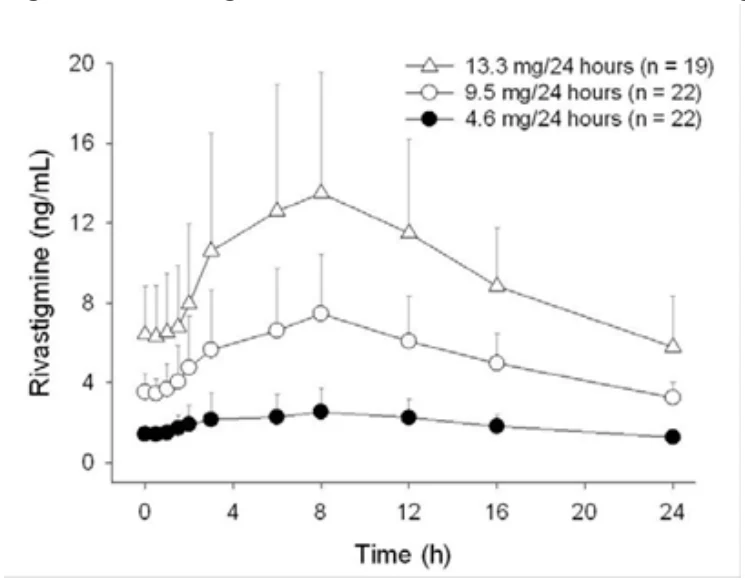
Figure 2 - Rivastigmine Plasma Concentrations Following Oral (twice daily) Capsule
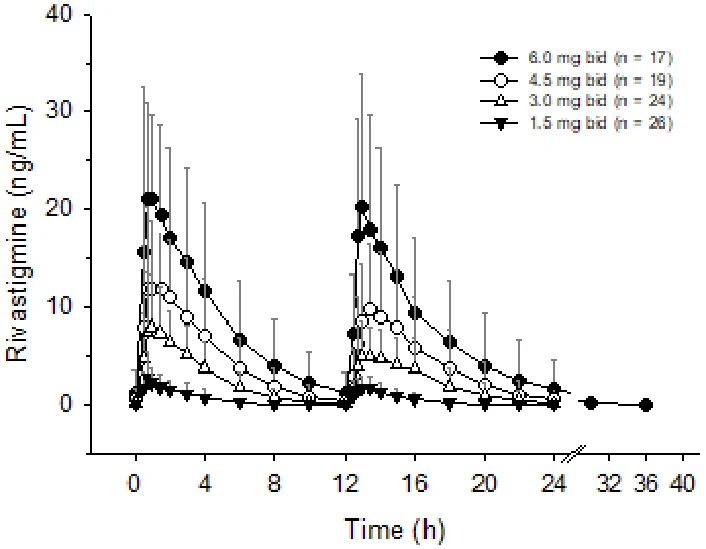
In a single dose study directly comparing the patch (10 cm2) versus oral (3 mg) administration, the inter-subject variability in rivastigmine pharmacokinetic parameters (normalized to dose/kg bodyweight) was 43% (Cmax) and 49% (AUC0-24h) after the patch versus 74% and 103%, respectively, after the oral capsule. Similarly, inter-subject variability in rivastigmine pharmacokinetic parameters was lower after the patch than after the oral capsule in a steady- state study in Alzheimer’s disease patients given repeated doses. The inter-patient variability was at most 45% (Cmax) and 43% (AUC0-24h) after the patch, while 71% and 73%, respectively, after the oral form.
A relationship between drug exposure at steady state (rivastigmine and metabolite NAP226-90) and bodyweight was observed in Alzheimer’s disease patients. Compared to a patient with a body weight of 65 kg, the rivastigmine steady-state concentrations in a patient with a body weight of 35 kg would be approximately doubled, while for a patient with a body weight of 100 kg the concentrations would be approximately halved. The effect of bodyweight on drug exposure suggests special attention to patients with very low body weight during up-titration (see 4 DOSAGE AND ADMINISTRATION).
Rivastigmine was well released from the transdermal system over a 24-hour dermal application with approximately 50% of the drug load released from the system.
Exposure (AUC∞) to rivastigmine (and metabolite NAP266-90) was highest when the patch was applied to the upper back, chest, or upper arm. Two other sites (abdomen and thigh) could be used if none of the three other sites is available, but the practitioner should keep in mind that the rivastigmine plasma exposure associated with these sites was approximately 20-30% lower (see 8 ADVERSE REACTIONS, Skin irritation).
There was no relevant accumulation of rivastigmine or the metabolite NAP226-90 in plasma in patients with Alzheimer’s disease.
Distribution
Rivastigmine is weakly bound to plasma proteins (approximately 40%). It readily crosses the blood-brain barrier and has an apparent volume of distribution in the range of 1.8-2.7 l/kg.
Metabolism
Rivastigmine is rapidly and extensively metabolized with an apparent elimination half-life in plasma of approximately 3.4 hours after patch removal. Elimination was absorption rate limited (flip-flop kinetics), which explains the longer t½ after patch (3.4 hours) versus oral or i.v. administrations (1.4 to 1.7 hours). Metabolism is primarily via cholinesterase-mediated hydrolysis to the decarbamylated metabolite. In vitro, this metabolite shows minimal inhibition of acetylcholinesterase (<10%). Based on in vitro studies, no pharmacokinetic drug interactions are expected with drugs metabolized by the following cytochrome isoenzymes: CYP1A2, CYP2D6, CYP3A4/5, CYP2E1, CYP2C9, CYP2C8, CYP2C19, or CYP2B6. Based on evidence from in vitro and animal studies, the major cytochrome P450 isoenzymes are minimally involved in rivastigmine metabolism.
The metabolite-to-parent AUC∞ ratio was around 0.7 after patch versus 3.5 after oral administration, indicating that much less metabolism occurred after dermal treatment. Less NAP226-90 is formed following patch application, presumably because of the lack of presystemic (hepatic first pass) metabolism.
Elimination
Unchanged rivastigmine is found in trace amounts in the urine; renal excretion of the metabolites is the major route of elimination. Following administration of 14C-rivastigmine, renal elimination was rapid and essentially complete (>90 %) within 24 hours. Less than 1% of the administered dose is excreted in the feces.
Special Populations and Conditions
- Pediatrics: No data are available in children.
Geriatrics: Age had no impact on the exposure to rivastigmine in Alzheimer’s disease
patients treated with rivastigmine transdermal patch
- Genetic Polymorphism: The pharmacokinetics of rivastigmine in patients with butyrylcholinesterase enzyme deficiency are unknown (see 7 WARNINGS AND PRECAUTIONS, Endocrine and Metabolism, Genetic Polymorphism).
- Hepatic Insufficiency: No study was conducted with rivastigmine transdermal patch in subjects with hepatic impairment. After oral administration of either single or multiple (b.i.d.) doses of 3 or 6 mg rivastigmine, Cmax of rivastigmine was approximately 60% higher and the AUC up to more than twice as high in subjects with mild to moderate hepatic impairment compared to healthy subjects. Oral clearance of rivastigmine was approximately 60-65% lower in mild (n=7, Child-Pugh score 5-6) and moderate (n=3, Child-Pugh score 7-9) hepatically impaired subjects (n=10, biopsy proven) than in healthy subjects (n=10). Plasma levels of the inactive metabolite NAP226-90 (decarbamylated phenolic metabolite) were lower in subjects with hepatic impairment compared to healthy subjects with a metabolite-to-parent AUC ratio being statistically significantly lower (approximately 3-fold lower), indicating a less extensive metabolism of rivastigmine in subjects with liver disease conditions. These pharmacokinetic changes had no effect on either the incidence or severity of adverse effects. The safety and efficacy of rivastigmine in patients with hepatic impairment have not been studied (see 7.1 Special Populations).
Renal Insufficiency: No study was conducted with rivastigmine transdermal patch in subjects with renal impairment. In a single oral dose study (1, 2 and 3 mg) of 8 subjects with moderate renal impairment (GFR = 10-50 mL/min) mean peak plasma concentrations of rivastigmine after oral administration were increased by almost 2.5 fold and overall plasma levels (AUC) of the decarbamylated phenolic metabolite were increased by approximately 50% compared to levels in age, weight, and gender matched control subjects. In this same study, subjects with severe renal impairment (GFR <10 mL/min, n = 8) showed no difference in rivastigmine blood levels compared to controls. The reason for this discrepancy is unclear. Based on pooled analysis of placebo- and active-controlled patch studies D2320 and DUS44, almost 90% of the overall patients had baseline renal impairment. Retrospective pharmacokinetic re-analysis of study D2320 did not reveal a relevant difference in steady-state plasma concentrations of rivastigmine or its main metabolite NAP226-90 between patients with different renal impairment stages including patients with normal renal function. The safety and efficacy of rivastigmine in patients with renal
- 7.1 Special Populations).
- Nicotine Use: Population PK analysis showed that nicotine use increases the clearance of oral rivastigmine by 23% (Smokers: n = 75; Nonsmokers: n = 549).
11 STORAGE, STABILITY AND DISPOSAL
Store between 15°C and 30°C.
Used patches should be folded, with the adhesive surfaces pressed together, and discarded safely.
12 SPECIAL HANDLING INSTRUCTIONS
Keep RIVASTIGMINE PATCH in the individual sealed pouch until use.
Contact with the eyes should be avoided after handling RIVASTIGMINE PATCH.
PART II: SCIENTIFIC INFORMATION
13 PHARMACEUTICAL INFORMATION
Drug Substance
Proper name: Rivastigmine
Chemical name: 3-[(1S)-1-(Dimethylamino)ethyl]phenyl ethyl(methyl)carbamate
Molecular formula: C14H22N2O2
Molecular mass: 250.3 g/mol
Structural formula:
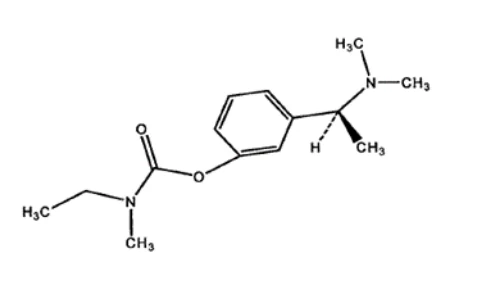
Physicochemical properties:
Description: Viscous, clear, colourless to yellow or very slightly brown, hygroscopic liquid.
Solubilities: Sparingly soluble in water and very soluble in diethyl ether and anhydrous ethanol and in heptane
14 CLINICAL TRIALS
14.1 Efficacy and Safety Studies
Trial Design and Study Demographics
Mild to Moderate Dementia of the Alzheimer’s Type – Study 2320 (International 24-week Study)
The efficacy of rivastigmine transdermal patch in patients with mild to moderate dementia of the Alzheimer’s type has been demonstrated in a 24-week double-blind core study (2320) and its 26 weeks open-label extension phase (up to 52 weeks of treatment). Patients involved in this study had an MMSE (Mini-Mental State Examination) score of 10–20. The mean age of patients was 73.6 years (range 50-90 years). Approximately 66.6% of patients were women and 33.4% of patients were men. The racial composition of the population was 75% Caucasian, and approximately 9% Oriental and 15% Other.
Patients received treatment with either rivastigmine transdermal patch 10 cm2, rivastigmine transdermal patch 20 cm2, rivastigmine capsules (6 mg BID), or placebo after titration to the assigned dose. Efficacy was established by the use of independent, domain-specific assessment tools which were applied at Week 16 (end of titration) and Week 24 (study endpoint).
Table 6 - Summary of patient demographics for Study 2320 in patients with mild to moderate dementia of the Alzheimer’s type
| Study # | Study design | Dosage, route of administration and duration | Study subjects (n) | Mean age (Range) | Sex |
|---|---|---|---|---|---|
| 2320 | Multicenter, randomized, double-blind, placebo- and active (rivastigmine capsule)- controlled, parallel-group study | rivastigmine patch 10 cm2 (transdermal) rivastigmine patch 20 cm2 (transdermal) rivastigmine capsules 6 mg BID (oral) Matching placebo 24-week study | n=291 n=303 n=294 n=302 | 73.6 (50-90 years) | Male: 33.4% Female: 66.6% |
† Target patch size/capsule
Efficacy Measures: The efficacy of rivastigmine transdermal system was evaluated using a dual outcome assessment strategy. The ability of rivastigmine transdermal patch to improve cognitive performance was assessed with the cognitive subscale of the Alzheimer’s Disease Assessment Scale (ADAS-Cog), a multi-item instrument that has been extensively validated in longitudinal cohorts of Alzheimer’s disease patients. The ADAS-Cog examines selected aspects of cognitive performance including elements of memory, orientation, attention, reasoning, language and praxis. The ability of rivastigmine transdermal patch to produce an overall clinical effect was assessed using the Alzheimer’s Disease Cooperative Study - Clinical Global Impression of Change (ADCS-CGIC), a comprehensive global assessment of the patients by the physician incorporating caregiver input. The ADCS-CGIC is a more standardized form of CIBIC-Plus that focuses on clinicians' observations of change in the patient's cognitive, functional and behavioral performance. The ADAS-Cog (performance-based measure of cognition) and the ADCS-CGIC (comprehensive global assessment of the patient by the physician incorporating caregiver input) were the co- primary efficacy measures.
The ability of rivastigmine transdermal patch to improve activities of daily living was assessed using the Alzheimer’s Disease Cooperative Study - Activities of Daily Living (ADCS-ADL) scale. ADCS-ADL is a caregiver-rated assessment of the activities of daily living including personal hygiene, feeding, dressing, household chores such as shopping, retention of ability to orient oneself to surroundings as well as involvement in activities related to finances.
Moderately Severe to Severe dementia of the Alzheimer’s type – Study US44
In this double-blind controlled study, 716 patients were randomized into one of the following treatments: rivastigmine transdermal patch 15 cm2 (13.3 mg/ 24 hours) or rivastigmine transdermal patch 5 cm2 (4.6 mg/24 hours) in a 1:1 ratio. This 24-week study was divided into an 8-week titration phase followed by a 16-week maintenance phase. Patients were diagnosed with probable AD according to NINCDS-ADRDA criteria and had an MMSE range of 3-12. Ongoing stable treatment with memantine or with a psychotropic medication was permitted. Patients were ambulatory or ambulatory with aid, and resided in the community. Most patients resided at home with a caregiver (89%).
At randomization, approximately half of enrolled patients had MMSE scores ranging from 10-12, a quarter had MMSE scores from 7-9, and the remainder had baseline MMSE scores from 3-6. Patients in this study with baseline MMSE scores of 10-12 are considered to have moderately severe dementia. Baseline ADCS-ADL-SIV scores indicate that the majority of patients were continent (89%), capable of basic grooming (76%), and retained some verbal ability (62%).
Supervision or help was typically needed for bathing (75%), dressing (64%), and sometimes for toileting (42%) and eating (39%).
The mean age of patients was 77.0 years (range 51-96 years). Approximately 64% of patients were women and 36% of patients were men. The racial composition of the population was 87% Caucasian, 7% Black, 1% Asian, and other 5% races.
Patients were randomized to receive either rivastigmine transdermal patch 15 cm2 (13.3 mg/24h) or rivastigmine transdermal patch 5 cm2 (4.6 mg/24h) in a 1:1 ratio. For the low dose active comparator rivastigmine transdermal patch 5 cm2 group, treatment was initiated at 4.6 mg/24 h. For the rivastigmine transdermal patch 15 cm2 group, 4.6 mg/24 h were administered for the first 4 weeks, then 9.5 mg/24 h were administered for 4 weeks and from Week 9 onwards for a planned duration of 16 weeks, the dose was 13.3 mg/24 h (median duration of exposure to rivastigmine transdermal patch 15 cm2 was 16 weeks in the maintenance phase, with about 70% of the patients exposed for at least 12 weeks). Temporary dose adjustments below the target dose were permitted during the titration and maintenance phase in the event of poor tolerability.
Table 7 - Summary of patient demographics for Study US44 in patients with moderately severe to severe dementia of the Alzheimer’s type
| Study # | Study design | Dosage, route of administration and duration | Study subjects (n) | Mean age (Range) | Sex |
|---|---|---|---|---|---|
| US44 | Rivastigmine patch 15 cm2 (transdermal) Rivastigmine patch 5 cm2 (transdermal) 24-week study (8-week titration, and 16- week maintenance) | n=338 n=335 | 77.0 (51-96 years) | Male: 36% Female: 64% |
Efficacy Measures: Efficacy was evaluated after 24 weeks of double-blind treatment (including 16 weeks treatment on rivastigmine transdermal patch 15 cm2), based on change from baseline in two independent, assessment tools assessing cognition (SIB) and overall function (ADCS-ADL-SIV).
The Severe Impairment Battery (SIB) is a 40-item scale that evaluates cognitive function in more advanced AD patients. The domains assessed included memory, language, attention, orientation, visuospatial ability, construction, social interaction, praxis, and orientation to name. The SIB Total Score ranges from 100 to 0, with lower scores reflecting lower levels of cognitive ability.
The Alzheimer’s Disease Cooperative Study-Activities of Daily Living – Severe Impairment Version (ADCS-ADL-SIV) tool is used to evaluate overall function. It is a caregiver-based scale composed of 19 items that assess the patient's performance of both basic and instrumental activities of daily living. A total score is calculated by adding the scores of the individual items and can range from 54 to 0, with lower scores indicating lower levels of function.
Secondary efficacy endpoints assessed at study week 24 included the Alzheimer's Disease Cooperative Study-Clinical Global Impression of Change (ADCS-CGIC), and change from baseline in the Neuropsychiatric Inventory (NPI-12) Score. The ADCS-CGIC is a comprehensive global assessment of the mental/cognitive state, behavior, and functioning of the patient, rated by the physician incorporating caregiver input. The NPI-12 assesses a range of behaviors and psychiatric disorders encountered in dementia patients, based on caregiver ratings of behavior frequency, severity and associated caregiver distress.
14.2 Study Results
Mild to Moderate Dementia of the Alzheimer’s Type - Study 2320
The results shown are from the Intent-to-Treat (ITT) population. The protocol-specified ITT population included all patients randomized to treatment, who had at least one dose of study medication and a valid baseline and on-treatment post-baseline efficacy assessment for either co-primary efficacy variable. Only post-baseline efficacy assessments that were made within two days of the last known dose of study medication were included as (on-treatment) post- baseline assessments. For patients unable to complete the study, the last observation while on treatment was carried forward and used at endpoint for the ITT-LOCF analysis.
The 24-week results for the two primary assessment tools are summarized in Table 8. Time course of ADAS-Cog scores and ADCS-CGIC scores are illustrated in Figures 3 and 4.
Table 8 - Efficacy Results of the 24-Week Double-Blind Core Study 2320 in patients with mild to moderate dementia of the Alzheimer’s type
| ITT-LOCF population | Placebo N = 282 | Rivastigmine capsule 6 mg BID N=256 | Rivastigmine transdermal patch 10 cm2 N = 251 | Rivastigmine transdermal patch 20 cm2 3 N = 264 |
|---|---|---|---|---|
| ADAS-Cog | ||||
| (n=281) | (n=253) | (n=248) | (n=262) | |
| Mean baseline ± SD | 28.6 ± 9.9 | 27.9 ± 9.4 | 27.0 ±10.3 | 27.4 ± 9.7 |
Mean change at week 24 ± SD | 1.0 ± 6.8 | -0.6 ± 6.2 | -0.6 ± 6.4 | -1.6 ± 6.5 |
| p-value versus placebo | 0.003*1 | 0.005*1 | <0.001*1 |
| ADCS-CGIC | (n=278) | (n=253) | (n=248) | (n=260) |
|---|---|---|---|---|
| Mean score ± SD | 4.2 ± 1.26 | 3.9 ± 1.25 | 3.9 ± 1.20 | 4.0 ± 1.27 |
| p-value versus placebo | 0.009†2 | 0.010†2 | 0.0542 |
†p≤0.05 versus placebo
ITT: Intent-To-Treat; LOCF: Last Observation Carried Forward
1 Based on ANCOVA with treatment and country as factors and baseline value as a covariate. Negative ADAS-Cog changes indicate improvement.
2 Based on CMH test (van Elteren test) blocking for country. ADCS-CGIC scores <4 indicate improvement.
3 rivastigmine transdermal patch 20 cm2 did not confer appreciable additional benefit and was associated with significant increases in adverse events (see 8 ADVERSE REACTIONS).
Within the protocol-specified ITT-LOCF population, patients in the rivastigmine transdermal patch 10 cm2 (N=251), rivastigmine transdermal patch 20 cm2 (N=264), and Rivastigmine capsule (N=256) groups demonstrated statistically significant improvements in cognition, as assessed by ADAS-Cog, as compared to placebo- treated patients. In addition, patients in both the rivastigmine transdermal patch 10 cm2 and Rivastigmine capsule groups showed statistically significant improvement in the clinical global impression of change (cognition, behavior, and functioning) as assessed by the ADCS-CGIC, as compared to placebo at Week 24.
Figure 3 - Time Course of the Change from Baseline in ADAS-Cog Score at 24 Weeks of Treatment (ITT-LOCF) in core Study 2320 in patients with mild to moderate dementia of the Alzheimer’s type
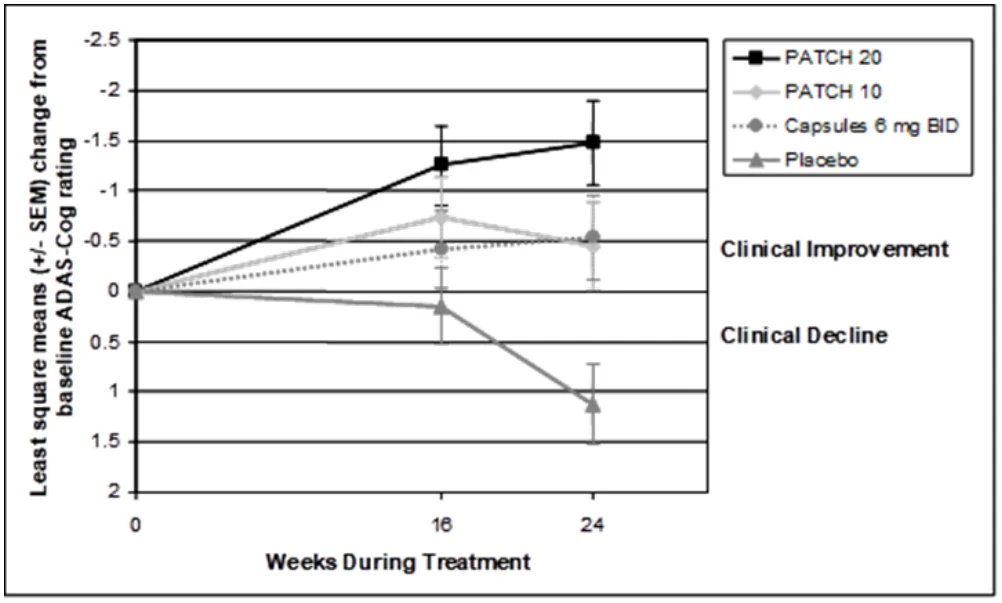
Figure 4 - Distribution of ADCS-CGIC Scores at 24 Weeks of Treatment (ITT-LOCF) core Study 2320 in patients with mild to moderate dementia of the Alzheimer’s type
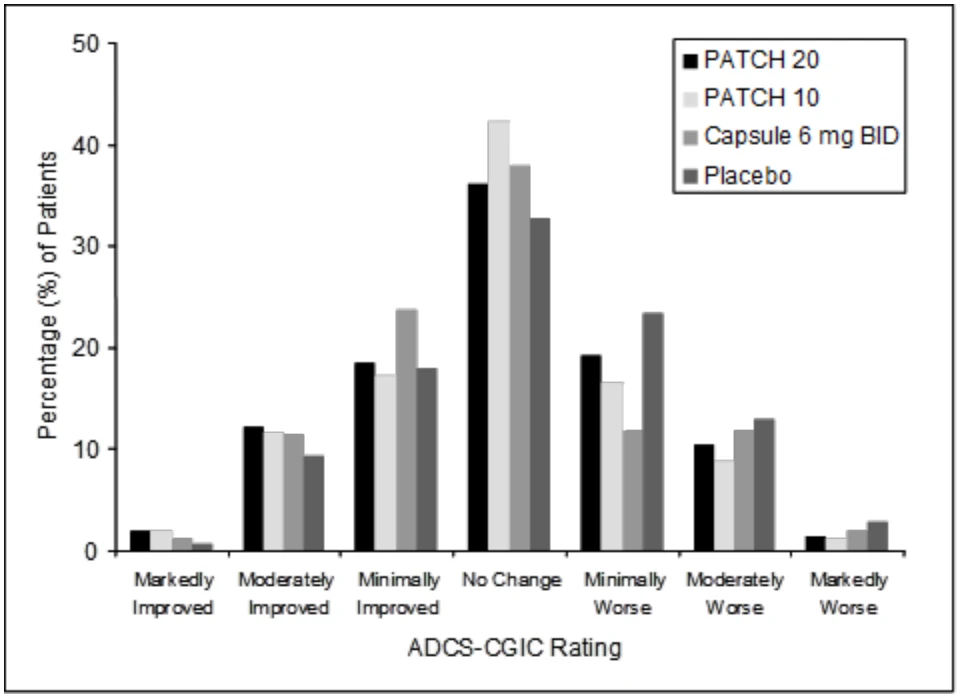
Secondary Efficacy Measures
Results from the ITT-LOCF analysis of the ADCS-ADL showed significantly less deterioration in activities of daily living at Week 24 for patients treated with rivastigmine transdermal patch 10 cm2, rivastigmine transdermal patch 20 cm2 and Rivastigmine capsule compared to patients who received placebo.
Moderately Severe to Severe dementia of the Alzheimer’s type – Study US44
About 65% of randomized patients completed the study in each treatment group. Summary results for the co-primary efficacy endpoints are shown for the 673 patients in the Modified Full Analysis Set (MFAS). The MFAS includes patients with baseline data and any post-baseline data from Study Week 24 (end maintenance phase), or an interim time point (Study Week 8 end titration phase, or Study Week 16). In the absence of an SIB or ADCS-ADL-SIV Total Score for Week 24, data from the last available time point were used (Last Observation Carried Forward, LOCF).
The 24-week results for the two efficacy primary assessment tools are summarized in Table 9.
Table 9 - Change from Baseline for Co-primary Efficacy Endpoints in Study US44 in patients with moderately severe to severe dementia of the Alzheimer’s type
| MFAS-LOCF population | Rivastigmine transdermal patch 15 cm2 13.3 mg/24h | Rivastigmine transdermal patch 5 cm2 4.6 mg/24h | ||||||||
|---|---|---|---|---|---|---|---|---|---|---|
| N = 338 | N = 335 | |||||||||
| SIB Total Score (Cognition) | ||||||||||
| n, Baseline | (n=336) | (n=334) | ||||||||
| Mean baseline ± SD | 69.3 ± 21.54 | 68.3 ± 22.79 | ||||||||
| n, Week 24 | n = 313 | n = 316 | ||||||||
| Mean change (baseline to Week 24) ± SD | -1.6 ± 13.5 | -6.4 ± 14.0 | ||||||||
| LS Mean change at week 24 ± SE | -1.7 ± 0.79 | -6.6 ± 0.79 | ||||||||
| LS Mean difference (95% CI)1 | 4.9 (2.80, 6.95) | |||||||||
| p-value1 | <0.0001† | |||||||||
| ADCS-ADL-SIV Total Score (Function) | ||||||||||
| n, baseline | (n=333) | (n=319) | ||||||||
| Mean baseline ± SD | 29.7 ± 11.29 | 29.1 ± 11.94 | ||||||||
| n, Week 24 | n=310 | n=303 | ||||||||
| Mean change (baseline to Week 24) ± SD | -2.6 ± 6.8 | -3.6 ± 7.7 | ||||||||
| LS Mean change at week 24 ± SE | -2.4 ± 0.41 | -3.6 ± 0.42 | ||||||||
| LS Mean difference (95% CI)1 | 1.2 (0.16, 2.32) | |||||||||
| p-value1 | 0.0247† | |||||||||
† p≤0.05
MFAS: Modified Full Analysis Set.
LOCF: Last Observation Carried Forward. LS: Least Squares
SE: Standard Error
1 Obtained from an ANCOVA model with treatment and pooled center as factors, and baseline score (SIB or ADCS-ADL-SIV, respectively) as a covariate.
Visit window for week 24 analysis: Day 141 – end of treatment+2 days
Retrospective subgroup analysis by dementia severity indicates that the results reported for function (ADCS-ADL-SIV; see Table 9) was driven by patients with moderately severe dementia (baseline MMSE 10-12). Clinically relevant effects on cognition (SIB Total Score) were apparent for both severity subgroups in Study US44.
Figure 5 - Time Course of the Change from Baseline in SIB Total Score (MFAS–LOCF) in Study US44 in patients with moderately severe to severe dementia of the Alzheimer’s type
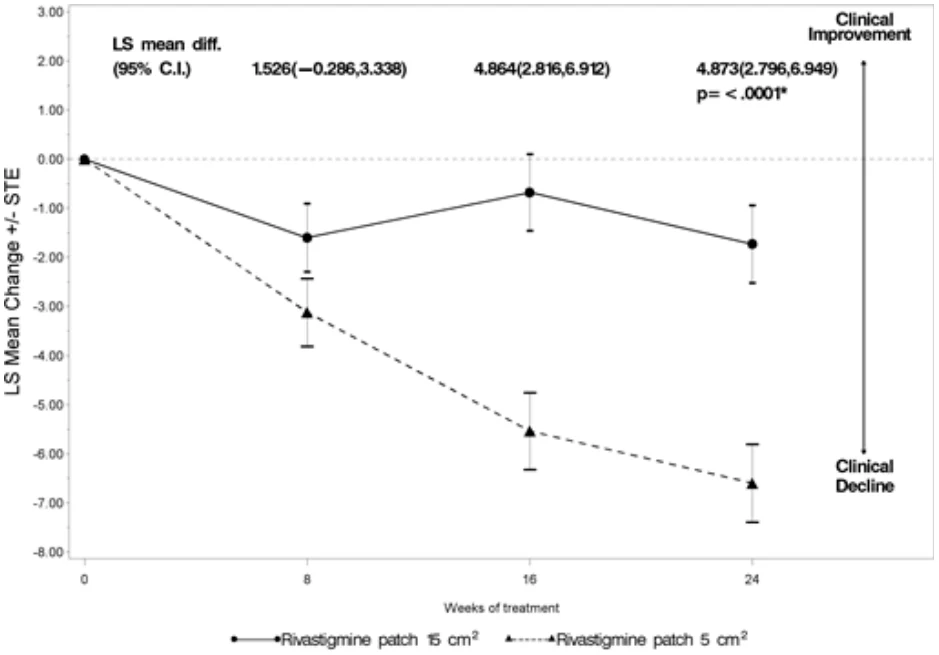
Least square means (LS means) and standard error of the LSMEANS (SE) are based on an analysis of covariance model adjusted for pooled center and baseline.
* indicating statistical significance at the level of 0.05.
For the rivastigmine transdermal patch 15 cm2 group, rivastigmine transdermal patch 5 cm2 was administered for the first 4 weeks, then rivastigmine transdermal patch 10 cm2 was administered for 4 weeks and from Week 9 until the end of the study, the dose was rivastigmine transdermal patch 15 cm2. For rivastigmine transdermal patch 5 cm2 group, treatment was initiated with rivastigmine transdermal patch 5 cm2 and continued until the end of the study.
Figure 6 - Time Course of the Change from Baseline in ADCS-ADL-SIV Total Score (MFAS–LOCF) in Study US44 in patients with moderately severe to severe dementia of the Alzheimer’s type
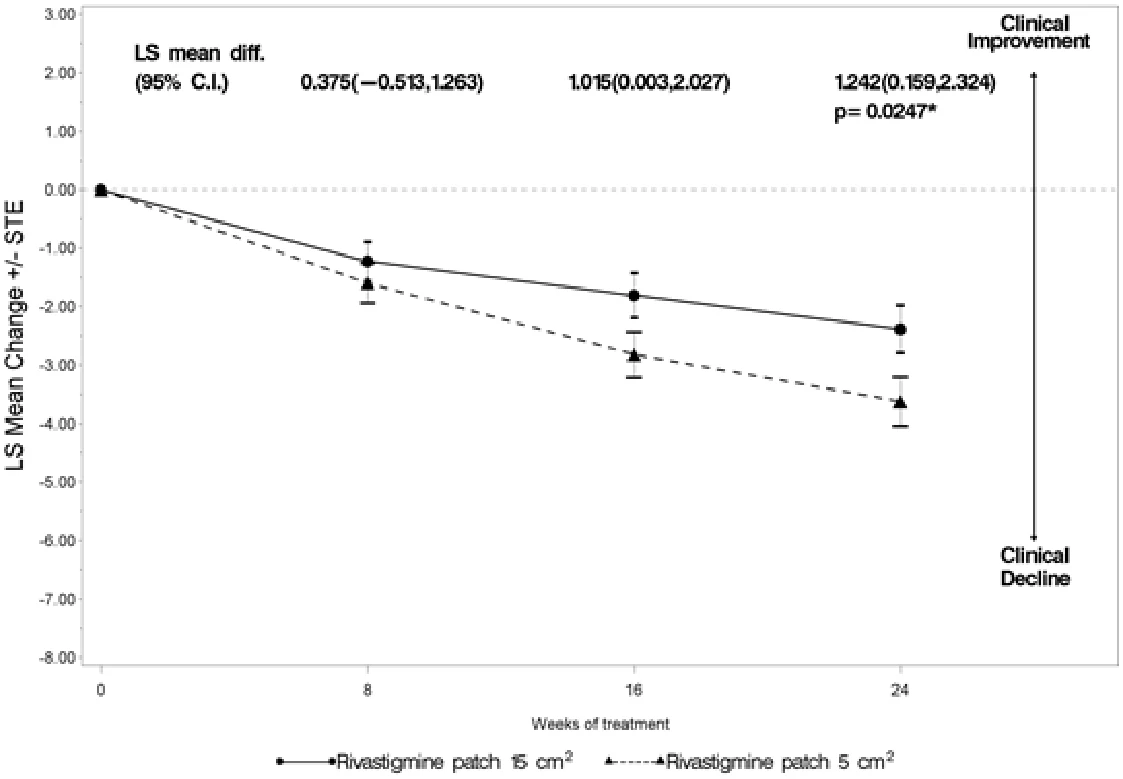
Least square means (LS means) and standard error of the LSMEANS (SE) are based on an analysis of covariance model adjusted for pooled center and baseline.
* indicating statistical significance at the level of 0.05.
For the rivastigmine transdermal patch 15 cm2 group, rivastigmine transdermal patch 5 cm2 was administered for the first 4 weeks, then rivastigmine transdermal patch 10 cm2 was administered for 4 weeks and from Week 9 until the end of the study, the dose was rivastigmine transdermal patch 15 cm2. For rivastigmine transdermal patch 5 cm2 group, treatment was initiated with rivastigmine transdermal patch 5 cm2 and continued until the end of the study.
Secondary Efficacy Measures
For ADCS-CGIC, the between group difference in the distribution of ratings was significant in favour of rivastigmine transdermal patch 15 cm2 compared to rivastigmine transdermal patch 5 cm2 (MFAS-LOCF). For NPI-12, there were no significant between-treatment differences at Week 24.
14.3 Comparative Bioavailability Studies
A single dose, randomised, open label, two-treatment, two-period, two-sequence crossover comparative bioavailability study of rivastigmine after single dose administration of RIVASTIGMINE PATCH 15 (rivastigmine) 13.3 mg/24 h (Pharmascience Inc.) and EXELON® PATCH 15 (rivastigmine) 13.3 mg/24 h Transdermal Patch (Novartis Pharmaceuticals Canada Inc.) in 36 healthy subjects was conducted. Data from 35 subjects were included in the pharmacokinetic and statistical analysis. The summary of results is in the following table.
SUMMARY TABLE OF THE COMPARATIVE BIOAVAILABILITY DATA
Rivastigmine (1 x 27 mg/patch) From measured data Arithmetic Mean (CV %) | ||||
|---|---|---|---|---|
| Parameter | Test1 | Reference2 | % Ratio of Geometric Means | 90 %-Confidence Interval |
AUCT (ng·h/ml) | 192.16 207.63 (37.8) | 197.97 218.38 (44.5) | 97.2 | 92.5 – 102.1 |
AUCI (ng·h/ml) | 192.91 208.31 (37.7) | 198.73 219.01 (44.3) | 97.2 | 92.5 – 102.1 |
Cmax (ng/ml) | 10.44 11.27 (38.5) | 10.94 12.29 (49.0) | 95.4 | 89.8 – 101.3 |
Tmax3 (h) | 13.1 (43.6) | 11.8 (45.8) | ||
T½3 (h) | 4.6 (39.3) | 4.5 (35.9) | ||
1 RIVASTIGMINE PATCH 15 (rivastigmine) 13.3 mg/24 h, Pharmascience Inc.
2 EXELON® PATCH 15 (rivastigmine) 13.3 mg/24 h Transdermal Patches, Novartis Pharmaceuticals Canada Inc.
3 Expressed as the arithmetic mean (CV%)
15 MICROBIOLOGY
No microbiological information is required for this drug product.
16 NON-CLINICAL TOXICOLOGY
Animal Pharmacodynamics
In vitro and in vivo oral pharmacology studies with rivastigmine predominantly focused on the main action of the drug: inhibition of acetylcholinesterase (AChE) activity, accumulation of acetylcholine (ACh) levels and cholinergic effects.
IC50 values for rivastigmine-induced inhibition of AChE activity in vitro in various rat brain areas were as follows: Cortex: 1.7 x 10⁻⁵M; Hippocampus: 1.5 x 10⁻⁵M, Striatum: 2.0 x 10⁻⁵M and Pons/Medulla: 2.0 x 10⁻⁵M.
AChE activity measured ex vivo was inhibited in several rat brain regions following p.o. administration of single rivastigmine doses. The effect of rivastigmine single p.o. doses on enzyme activity was noted to be more pronounced in the hippocampus and cortex than in the striatum and pons/medulla of these rats (IC50 : Cortex: 0.5 mg/kg, p.o.; Hippocampus: 1 mg/kg, p.o.; Striatum: 1.75 mg/kg, p.o. and Pons/Medulla: 2mg/kg, p.o.). Physostigmine, administered s.c., inhibited AChE activity to an equal degree in all rat brain regions examined (IC50: Cortex: 0.22 mg/kg; Hippocampus: 0.27 mg/kg; Striatum: 0.28 mg/kg and Pons/Medulla: 0.27mg/kg).
Single p.o. doses of rivastigmine also resulted in an increased accumulation of ACh levels in the rat brain which were more pronounced in the cortex than the hippocampus or striatum.
When administered s.c., a single dose (0.75 mg/kg) of rivastigmine inhibited AChE activity in the periphery (Heart: 55% control values; Blood: 34% control values) to an equivalent degree as in brain (Cortex: 37% control values; Hippocampus 45% control values).
Chronic continuous dosing with rivastigmine also resulted in diminished selectivity of the drug for AChE activity in brain versus the periphery (heart/blood). Similarly, the apparent selectivity of rivastigmine for AChE within specific rat brain areas was also lost with chronic continuous dosing (14 days).
Induction of slow rhythmic activity in the hippocampal EEG (synchronization of theta-waves) has been proposed to reflect increased central muscarinic activity. Rivastigmine synchronized rhythmical slow wave activity in the hippocampal EEG in rats at a threshold dose of 75 μg/kg both i.p. and p.o. Similar effects were noted with physostigmine at a dose of 75 μg/kg i.p.
The pulmonary effects of rivastigmine were assessed using the ventilated guinea-pig model. Rivastigmine at doses of 0.01 to 1 mg/kg i.v. did not affect airway resistance. However, pretreatment with 0.1 mg/kg i.v. rivastigmine resulted in a potentiation of ACh-induced bronchospasm at all ACh doses tested (3.2 μg/kg, 5.6 μg/kg and 10 μg/kg, i.v.).
It was concluded that rivastigmine is an acetylcholinesterase inhibitor of the carbamate type. Its main preclinical properties are:
- high central to peripheral cholinergic activity ratio after a single p.o. dose;
- selectivity for cortical and hippocampal brain regions after a single p.o. dose;
- prolonged duration of action (hours).
Animal Pharmacokinetics
The studies conducted to characterize the pharmacokinetic profile of dermally administered rivastigmine allow the following conclusions to be drawn:
- Rivastigmine and/or its metabolites were transferred to the fetal compartment of rats to a low extent.
- Rivastigmine and/or its metabolites were excreted into the milk of pregnant rats.
General Toxicology
Acute Toxicology: Acute toxicity was not specifically evaluated by the dermal route of administration. The estimated oral LD50 values in mice were 5.6 mg/kg (males) and 13.8 mg/kg (females). The estimated oral LD50 values in rats were 8.1 mg/kg (males) and 13.8 mg/kg (females). These dose levels are more than 20 times the maximum recommended human dose of 12 mg/day (assuming a 50 kg body weight). The LD50 values determined in these studies are summarised in Table 10.
Table 10
| Species | Strain | Sex | Route | Dose Levels (mg/kg) | LD50 value (mg/kg) |
|---|---|---|---|---|---|
| Mouse | CD-1 | M | Oral | 0.63, 6.25, 31.25 | 5.6 |
| F | Oral | 0.63, 6.25, 31.25 | 13.8 | ||
| CD-1 | M | i.v. | 1.25, 3.13, 3.75 | 2.8 | |
| F | i.v. | 3.13, 3.75, 5.0 | 4.1 | ||
| Rat | CD | M | Oral | 0.63, 6.25, 31.25 | 8.1 |
| F | Oral | 0.63, 6.25, 31.25 | 13.8 | ||
| Mouse | CD-1 | M | i.p. | 0.63, 6.25, 31.25 | 1.9 |
| F | i.p. | 0.63, 6.25, 31.25 | 1.9 | ||
| Rat | CD | M | i.p. | 0.63, 6.25, 31.25 | 4.4 |
| F | i.p. | 0.63, 6.25, 31.25 | 1.9 | ||
| Dog | Beagle | M | Oral | 0.31, 1.25, 5.0 | >1 and < 5 |
The results of these studies demonstrate the moderate toxicity of rivastigmine following acute oral, i.v., and i.p. administration to mice, rats or dogs.
Long Term Toxicology: Table 11 outlines the long-term toxicology studies done in rats, mice, dogs and monkeys with rivastigmine using the oral and i.v. routes of administration.
Table 11
| Species | Duration of Study Weeks | Route of Administratio n | No. of animals/ group | Dose Levels (mg/kg/day) |
|---|---|---|---|---|
| Mouse | 8 13 104 | oral (gav) oral (diet) oral (gav) | 5M, 5F 10M, 10F 70M, 70F | 0, 0.38, 0.78, 1.56, 2.5, 3.13, 6.25 0, 0.13, 0.5-75.0, 1.5 0, 0.25, 0.63, 1.56 |
| Rat | 2 2 4 13 26 52+ 104 | oral (gav) i.v. oral (gav) oral (gav) oral (gav) oral (gav) oral (gav) | 10M 15M, 15F 10M, 10F 10M 15M, 15F 25M, 25F 75M, 75F | 0.03, 0.25, 2.50 0, 0.5, 2.5 0, 0.38, 1.5, 3.75 0, 0.13, 0.5-6.0, 1.50 0, 0.11, 0.45, 1.50 0, 0.13, 0.38, 1.13, 1.88 0, 0.13, 0.38, 1.13 |
| Dog | 2 2 4 4 26 52 | oral (gav) i.v. oral (gav) oral (gav) oral (gav) oral (gav) | 1M, 1F 2M, 2F 3M, 3F 3M, 3F 3M, 3F 4M, 4F | 0.06, 0.63, 2.50-1.88 0, 0.09, 0.47 0, 0.04, 0.38, 2.25-1.88 0, 0.11, 0.19, 0.26 0, 0.11, 0.45, 1.58 0, 0.19, 0.38, 1.56-1.31 |
| Monkey | 2 | oral (gav) | 1M, 1F | 1.88 (days 1-7) 2.50 (days 8-10) 3.75 (days 11-13) 6.25 (day 14) |
Mice: In multidose studies in mice, the toxic dose for rivastigmine was 2.5 mg/kg/day by oral gavage; oral admixture doses up to 75 mg/kg/day resulted in one mortality during Week 14 at a dose of 75 mg/kg/day.
Clinical signs were typical of cholinergic stimulation and statistically significant decreases in body weights and food consumption were seen at doses of 2.5 mg/kg/day and higher. Plasma (butyryl) and acetylcholinesterase activities were decreased in the 13-week study in the 0.5-75 mg/kg/day group. Selected tissue cholinesterase activity (liver, brain, and psoas muscle) was reduced at doses of 1.5 and 0.5-75 mg/kg/day.
Rats: One mortality in rats at 0.11 mg/kg/day was of unknown causes and was considered to be of questionable biological significance. There were no treatment-related effects on mortality at doses as high as 1.13 mg/kg/day. Treatment related dose-dependent clinical signs were consistent with excessive cholinergic stimulation of the peripheral and central nervous systems and were observed at a dose as low as 0.11 mg/kg/day. Statistically significant decreases in body weight gains and food consumption were observed at 1.13 mg/kg/day. Statistically significant decreases in triglycerides were observed at doses of 1.13, 1.5, 1.88, and 3.75 mg/kg/day in the 4- and 52-week studies, and were considered to be related to rivastigmine.
Significant decrease in butylcholinesterase activities was observed at 2.5 and 3.75 mg/kg/day in the 15-day and 4-week studies; and in urinary pH at 3.75 mg/kg/day in males in the 4-week study, considered to be of minimal biological significance. Effects on plasma cholinesterase activity were not observed at doses below 2.5 mg/kg/day in any oral gavage study.
Dogs: Doses were lowered in three studies due to overt clinical signs. Treatment related unscheduled deaths occurred in two dog studies at doses of 1.56/1.31 or 2.25/1.88 mg/kg/day. Treatment related dose-dependent clinical signs were observed at doses as low as 0.19 mg/kg/day and were typical of excessive cholinergic stimulation. Clonic/tonic convulsion was observed in one 0.38 mg/kg/day male on one episode and one female (1.56/1.31 mg/kg/day) on two episodes. Statistically significant dose-related decreases in butylcholinesterase activity were observed at doses as low as 0.04 mg/kg/day. Statistically significant decreases in liver and brain cholinesterase activity at 2.25/1.88 mg/kg/day and liver cholinesterase at 0.45 and 1.58 mg/kg/day were observed in the 4-week and 26-week studies. In life pathology findings revealed that dogs were very sensitive to rivastigmine, particularly on the GI tract.
Monkeys: There was no mortality in the monkey study, however only 2 animals were treated for a period of 2 weeks (see Table 11). There appeared to be slight reduction in body weight and food consumption. Plasma (butyryl) cholinesterase activity was reduced by 15% or 29% and 6% or 14% on Days 6 and 14, respectively. Erythrocyte cholinesterase activity was reduced by 60% or 90% and 40% or 60% at the same time points. It was concluded that rivastigmine was better tolerated in monkeys for up to 2 weeks, than in rats or dogs.
Repeated dose toxicity studies with toxicity studies using topical administration of rivastigmine have been conducted in mice, rats, rabbits and minipigs. Table 12 provides an overview of all repeated dose toxicity studies.
Table 12
| Species | Duration of dosing | Route of administration | Number/ sex/group | Dose or concentration/day |
|---|---|---|---|---|
| Mouse | 2 weeks | Dermal (solution) | 21 | 50 μl of 0.25, 0.6, 0.75 mg/mL [approx. 0.4, 1.0, 1.2 (M); 0.5, 1.2, 1.5 (F) mg/kg] |
| 24 days | Dermal (solution) | 5 | 50 µL of: 0 (untreated D 1-23) → 0.3 (D 24) 0 (vehicle D 1-23) → 0.4 (D 24) 0.1 (D 1-14) → 0.3 (D 15-24) 0.2 (D 1-23) → 0.4 (D 24) mg/mL |
| 13 weeks | Dermal (solution) | 10 | 50 µL of: 0 (untr.), 0 (vehicle), 0.1, 0.25, 0.5, 1.0 → 0.75† mg/mL [approx. 0, 0.2, 0.4, 0.8, 1.6→1.2 mg/kg] |
| Rat | |||
|---|---|---|---|
2 weeks or 1 week | Dermal (solution) | 8 6 | 0, 0 (vehicle), 0.375, 1.125, 1.5, 3.0 mg/kg 15, 30, 50 mg/kg |
| 4 weeks | Dermal (solution) | 10 | 0, 0 (vehicle), 5, 15, 50 mg/kg |
| Rabbit | |||
| 5 days | Dermal (patch) | 1 | 0, 0.37, 0.73, 1.46, 2.92 mg/animal |
| 4 weeks | Dermal (patch) | 5 | 0, 0.77, 1.65 mg/animal |
| 4 weeks | Dermal (patch) | 4 | 0, 18 mg/animal |
| Minipig | |||
| 4 weeks | Oral gavage | 3 | 0, 0.6, 2.0, 6.0 mg/kg |
| 1 day each | Dermal (patch) | 1 | 36, 72, 108, 144, 180, 216 mg/animal |
| 2 weeks | Dermal (patch) | 1 | 0, 36, 108, 216 mg/animal |
| 4 weeks | Dermal (patch) | 3 | 0, 36, 108, 216 mg/animal |
| 4 weeks | Dermal (patch) | 3 | 0, 18, 36, 72, 72 mg/animal |
| 26 weeks | Dermal (patch) | 4 | 0, 18, 36, 36 mg/animal |
Dermal administration of rivastigmine to mice (up to 13 weeks), rats (up to 4 weeks), rabbits (up to 28 days), or minipigs (up to 26 weeks) resulted in clinical signs of cholinergic stimulation in the absence of marked systemic toxicity or target organ toxicity. The systemic effects seen with liquid application to rodents and the patch formulation in non rodents in the toxicology studies are similar to those seen with the oral formulation.
In mice, the initial rivastigmine high dose of 50 μL of 1.0 mg/mL/mouse/day (about 1.6 mg/kg/day) was associated clinical signs of severe tremors, underactivity, piloerection, and prostrate posture after the first dose that were sufficiently severe as to necessitate euthanasia of 3 animals. The dose was subsequently lowered to 0.75 mg/mL/day (~1.2 mg/kg). The NOAEL (no observed adverse effect level) in mice (13 weeks) was 0.25 mg/mL/day. With repeated dosing in mice, cholinergic signs (tremors, hypoactivity, unusual posture, yawning) occurred during the first week of the studies as early as 20 minutes post dose consistent with the rapid absorption. Clinical signs in rats included twitching at 30 and/or 50 mg/kg and salivation, tremor, and lacrimation at 50 mg/kg. Clinical signs apart from local skin irritation were not seen in rabbits or minipigs with patch applications. Transient cholinergic signs consisting of tremor, decreased activity, and salivation in minipigs only occurred at the high dose of 6 mg/kg in a 4- week oral study. Dose-related decreases in plasma/erythrocyte cholinesterase activity were demonstrated in mice, rabbits and minipigs. Administration of the rivastigmine transdermal patch was associated with better systemic tolerability compared with oral administration (e.g. minipigs, dermal route: no clinical signs at about 10 mg/kg/day vs oral: no clinical signs at 2 mg/kg/day, but moderate signs at 6 mg/kg/day). However, at least half of the dermally applied dose would be retained within the patch and exposure to parent rivastigmine was higher after dermal compared to oral administration in minipigs.
There was no erythema or edema in mice treated up to 13 weeks and rats treated up to 4 weeks with rivastigmine dermally.
Erythema and edema were seen with rivastigmine transdermal, but not placebo, patches in the 5- and 28-day studies in minipigs. However, a second 28-day study conducted with one dose level of 9 mg/day, in which the application site rotated among 14 locations such that each was used twice during the study, revealed no gross effects on the skin with rivastigmine transdermal or placebo patches. Microscopic findings at the application sites (mononuclear and inflammatory cell infiltration, dermal hyperplasia, akanthosis, fibroplasia and necrosis) were considered to be the result of mechanical injury incurred during the removal of tightly adhering placebo or test patches rather than rivastigmine-related irritation.
In minipigs, local irritation became sufficiently severe as to require change in application site after 9 doses in the 2-week study and euthanasia of some animals between days 12 and 19 in the 4-week study. This occurred with animals in both rivastigmine and placebo patch groups thereby indicating that it was the formulation/patch adhesive or removal process that was the primary cause. Microscopically, the skin changes were diagnosed as perivascular dermatitis of minimal to moderate severity in surviving rivastigmine and placebo-treated animals. Skin reactions were more severe in animals sacrificed early and extended to naïve skin. In a second 4 week study in minipigs, the application site was rotated among 2 or 6 locations. Erythema at the application sites occurred with placebo and rivastigmine patches and was less severe with the 6 site rotation compared to 2 site alternating regimen. In the 26-week minipig study, daily applied placebo patches and rivastigmine patch dose levels of 18 and 36 mg/day were rotated among 12 or 6 application sites. Mild erythema was dose dependent and greater with the 6 site rotation than with the 12 site rotation regimen. There were no microscopic findings.
The mild irritant effect on the skin of laboratory animals, including controls, may indicate a potential for the rivastigmine transdermal patch to induce mild erythema in patients. However, the patch formulation or application itself induces inflammation. This conclusion is supported by the observation that increased rotation of patch application sites reduced inflammation and that there was no dose-relationship for dermatitis in minipigs.
Carcinogenicity
No evidence of carcinogenicity was found in studies conducted with the oral route at dose levels up to 1.1 mg-base/kg/day in rats and 1.6 mg-base/kg/day in mice. Normalized to body surface area, these dose levels are approximately equivalent to 12 mg of rivastigmine base administered to a 70 kg human.
Dermal administration of rivastigmine for at least 98 weeks did not show a carcinogenic potential or any effect on the incidence of spontaneously occurring tumors at doses up to 0.75 mg/kg/day in mice, a dose at which exposures were from about 1/10th to 1/3rd of human exposure after administration of 36 mg in patches.
Genotoxicity
Rivastigmine was not mutagenic in the Ames test, a test for induction of DNA repair synthesis, the in vivo micronucleus test in mice, and the HGPRT test in V79 Chinese hamster cells. The in vitro chromosomal aberration test in V79 Chinese hamster cells showed an increase in aberrations only in the presence of liver metabolic enzymes and at a concentration at least 10 000 times greater than that likely to be found in human plasma.
Reproductive and Developmental Toxicology
Oral studies in pregnant rats at dose levels up to 2.3 mg-base/kg/day and pregnant rabbits at dose levels up to 2.3 mg-base/kg/day gave no indication of a teratogenic potential for rivastigmine. Similarly, there was no evidence of adverse effects of rivastigmine on fertility and reproductive performance in the rat at dose levels up to 1.1 mg-base/kg/day. A minor delay in development up to mating was noted for the F1 generation, however, no teratological changes were reported.
Specific dermal studies in pregnant animals have not been conducted.
Special Toxicology
Local tolerance: Rivastigmine patches were not phototoxic. In some other dermal toxicity studies, a mild irritant effect on the skin of laboratory animals, including controls, was observed with rivastigmine and placebo patches. Repeated application to the same dermal site in one study in minipigs led to more severe skin reactions in both placebo and rivastigmine-treated animals that necessitated euthanasia in one study. Irritation was significantly reduced by rotation of the application site to different anatomic locations. This may indicate a potential for rivastigmine transdermal patch to induce mild erythema in patients.
Eye Irritation: Rivastigmine in concentrated liquid form caused mild reversible irritation to rabbit eyes which may indicate some potential for eye irritation in patients should contact occur.
Contact Hypersensitivity: Rivastigmine administered to guinea pigs did not demonstrate any potential to cause contact hypersensitivity. Irritation due to the patch formulation was seen, consistent with findings in other species and treatment-related mortality due to hypercholinergic effects occurred in one study at a high (~60 mg/kg) dose.
17 SUPPORTING PRODUCT MONOGRAPHS
- 1. EXELON® PATCH; Transdermal Patch 4.6 mg/24 h, 9.5 mg/24h and 13.3 mg/24h, submission Control 273433, Product Monograph, Knight Therapeutics Inc. AUG 15, 2023.