


Product Monograph - Sandoz Amiodarone
Recent Major Label Changes
| 7 WARNINGS AND PRECAUTIONS, Peri-Operative Considerations | 2025-05 |
|---|
Table of Contents
Sections or subsections that are not applicable at the time of authorization are not listed.
Recent Major Label Changes .................................................................................................. 2
Table of Contents ................................................................................................................... 2
Part 1: Healthcare Professional Information ........................................................................... 4
1 Indications ................................................................................................................. 4
1.1 Pediatrics ................................................................................................................. 4
1.2 Geriatrics ................................................................................................................. 4
2 Contraindications ....................................................................................................... 4
3 Serious Warnings and Precautions Box ....................................................................... 5
4 Dosage and Administration ......................................................................................... 6
4.1 Dosing Considerations ............................................................................................ 6
4.2 Recommended Dose and Dosage Adjustment ....................................................... 7
4.4 Administration ........................................................................................................ 7
4.5 Missed Dose ............................................................................................................ 8
5 Overdose.................................................................................................................... 8
6 Dosage Forms, Strengths, Composition, and Packaging ............................................... 9
7 Warnings and Precautions .......................................................................................... 9
7.1 Special Populations ............................................................................................... 21
7.1.1 Pregnancy .......................................................................................................... 21
7.1.2 Breastfeeding .................................................................................................... 22
7.1.3 Pediatrics ........................................................................................................... 22
7.1.4 Geriatrics ........................................................................................................... 22
8 Adverse Reactions .................................................................................................... 22
8.1 Adverse Reaction Overview .................................................................................. 22
8.2 Clinical Trial Adverse Reactions ............................................................................. 23
8.3 Less Common Clinical Trial Adverse Reactions ..................................................... 27
8.5 Post-Market Adverse Reactions ............................................................................ 27
9 Drug Interactions ...................................................................................................... 28
9.2 Drug Interactions Overview .................................................................................. 28
9.3 Drug-Behaviour Interactions ................................................................................. 31
9.4 Drug-Drug Interactions ......................................................................................... 31
9.5 Drug-Food Interactions ......................................................................................... 32
9.6 Drug-Herb Interactions ......................................................................................... 33
9.7 Drug-Laboratory Test interactions ........................................................................ 33
10 Clinical Pharmacology............................................................................................... 33
10.1 Mechanism of Action ............................................................................................ 33
10.2 Pharmacodynamics ............................................................................................... 34
10.3 Pharmacokinetics .................................................................................................. 34
11 Storage, Stability, and Disposal ................................................................................. 36
Part 2: Scientific Information ............................................................................................... 37
13 Pharmaceutical Information ..................................................................................... 37
14 Clinical Trials ............................................................................................................ 38
14.1 Clinical Trials .......................................................................................................... 38
14.2 Comparative Bioavailability Studies ...................................................................... 40
15 Microbiology ............................................................................................................ 41
16 Non-Clinical Toxicology ............................................................................................. 41
17 Supporting Product Monographs .............................................................................. 59
Patient Medication Information ........................................................................................... 60
Part 1: Healthcare Professional Information
1 Indications
Considering its potential for life-threatening side effects and the substantial management difficulties associated with its oral use, SANDOZ AMIODARONE (amiodarone hydrochloride) is indicated only for the treatment of patients with the following documented life-threatening, recurrent ventricular arrhythmias when these have not responded to documented adequate doses of other available antiarrhythmics, or when alternative agents could not be tolerated:
- Hemodynamically unstable ventricular tachycardia (VT).
- Recurrent ventricular fibrillation (VF).
As is the case for other antiarrhythmic agents, there is no evidence from controlled clinical trials that the use of amiodarone hydrochloride tablets favourably affects survival.
Because the life-threatening nature of arrhythmias treated, potential interaction with prior therapy, and potential exacerbation of arrhythmia, initiation of therapy with SANDOZ AMIODARONE should be carried out in the hospital.
SANDOZ AMIODARONE should be used only by healthcare professionals familiar with and with access to (directly or referral) the use of all available modalities for treating recurrent life-threatening ventricular arrhythmias, and who have access to appropriate monitoring facilities, including in-hospital and ambulatory continuous electrocardiographic monitoring and electrophysiologic technique.
1.1 Pediatrics
Pediatrics (<18 years of age): Based on the data submitted and reviewed by Health Canada, the safety and efficacy of SANDOZ AMIODARONE in pediatric patients has not been established; therefore, Health Canada has not authorized an indication for pediatric use.
1.2 Geriatrics
Geriatrics (> 65 years of age): Clinical studies of amiodarone tablets did not include sufficient number of subjects aged 65 years and over to determine whether they respond differently from younger subjects. Other reported clinical experience has not identified differences in responses between the elderly and younger patients. In general, dose selection for an elderly patient should be cautious, usually starting at the low end of the dosing range, reflecting the greater frequency of decreased hepatic, renal, or cardiac function, and of concomitant disease or other drug therapy.
2 Contraindications
SANDOZ AMIODARONE is contraindicated in:
- Patients with known hypersensitivity to any of the components of oral amiodarone hydrochloride (tablets) including iodine, and in patients with cardiogenic shock.
- Severe sinus-node dysfunction, causing bradycardia; second- or third-degree V block, and when episodes of bradycardia have caused syncope (except when used in conjunction with a pacemaker).
- Patients with evidence of hepatitis (see 7 Warnings and Precautions, Hepatic/Biliary/Pancreatic), thyroid dysfunction (see 7 Warnings and Precautions, Thyroid Dysfunction), or pulmonary interstitial abnormalities (see 7 Warnings and Precautions, Pulmonary Toxicity).
3 Serious Warnings and Precautions Box
Serious Warnings and Precautions
No antiarrhythmic drug has been shown to reduce the incidence of sudden death in patients with asymptomatic ventricular arrhythmias. Most antiarrhythmic drugs have the potential to cause dangerous arrhythmias; some have been shown to be associated with an increased incidence of sudden death. In light of the above, healthcare professionals should carefully consider the risks and benefits of antiarrhythmic therapy for all patients with ventricular arrhythmias. SANDOZ AMIODARONE is intended for use only in patients with the indicated life-threatening arrhythmias because its use is accompanied by substantial toxicity. Amiodarone hydrochloride has several potentially fatal toxicities, the most important of which is pulmonary toxicity (hypersensitivity pneumonitis or interstitial/alveolar pneumonitis) that has resulted in clinically manifest disease at rates as high as 10 to 17% in some series of patients with ventricular arrhythmias given doses around 400 mg/day, and as abnormal diffusion capacity without symptoms in a much higher percentage of patients. Pulmonary toxicity has been fatal about 10% of the time. Liver injury is common with amiodarone hydrochloride, but is usually mild and evidenced only by abnormal liver enzymes. Overt liver disease can occur, however, and has been fatal in a few cases. Like other antiarrhythmics, amiodarone hydrochloride can exacerbate the arrhythmia, e.g., by making the arrhythmia less well tolerated or more difficult to reverse. This has occurred in 2 to 5% of patients in various series, and significant heart block or sinus bradycardia has been seen in 2 to 5%. All of these events should be manageable in the proper clinical setting in most cases. Although the frequency of such proarrhythmic events does not appear greater with amiodarone hydrochloride than with many other agents used in this population, the effects are prolonged when they occur. Even in patients at high risk of arrhythmic death, in whom the toxicity of amiodarone is an acceptable risk, amiodarone hydrochloride poses major management problems that could be life-threatening in a population at risk of sudden death, so that every effort should be made to utilize alternative agents first. The difficulty of using amiodarone hydrochloride effectively and safely itself poses a significant risk to patients. Patients with the indicated arrhythmias must be hospitalized while the loading dose of SANDOZ AMIODARONE is given, and a response generally requires at least one week, usually two or more. Because absorption and elimination are variable, maintenance-dose selection is difficult, and it is not unusual to require dosage decrease or discontinuation of treatment. In a retrospective survey of 192 patients with ventricular tachyarrhythmias, 84 required dose reduction and 18 required at least temporary discontinuation because of adverse effects, and several series have reported 15 to 20% overall frequencies of discontinuation due to adverse reactions. The time at which a previously controlled life-threatening arrhythmia will recur after discontinuation or dose adjustment is unpredictable, ranging from weeks to months. The patient is obviously at great risk during this time and may need prolonged hospitalization. Attempts to substitute other antiarrhythmic agents when SANDOZ AMIODARONE must be stopped will be made difficult by the gradually, but unpredictably, changing amiodarone hydrochloride body burden. A similar problem exists when amiodarone hydrochloride is not effective; it still poses the risk of an interaction with whatever subsequent treatment is tried. |
|---|
4 Dosage and Administration
4.1 Dosing Considerations
See 7 Warnings and Precautions, Monitoring and Laboratory Tests and Monitoring Effectiveness.
General Considerations:
BECAUSE OF THE UNIQUE PHARMACOKINETIC PROPERTIES, DIFFICULT DOSING SCHEDULE, AND SEVERITY OF SIDE EFFECTS IF PATIENTS ARE IMPROPERLY MONITORED, SANDOZ AMIODARONE (AMIODARONE HYDROCHLORIDE) THERAPY SHOULD BE INITIATED IN HOSPITAL AND CONTINUED IN A MONITORED ENVIRONMENT UNTIL ADEQUATE CONTROL OF THE ARRHYTHMIA HAS OCCURRED. PATIENTS TREATED WITH SANDOZ AMIODARONE SHOULD BE UNDER THE SUPERVISION OF A CARDIOLOGIST OR A HEALTHCARE PROFESSIONAL WITH EQUIVALENT EXPERIENCE IN CARDIOLOGY WHO IS EXPERIENCED IN THE TREATMENT OF LIFE-THREATENING ARRHYTHMIAS, WHO IS THOROUGHLY FAMILIAR WITH THE RISK AND BENEFIT OF SANDOZ AMIODARONE THERAPY, AND WHO HAS ACCESS TO LABORATORY FACILITIES CAPABLE OF ADEQUATELY MONITORING EFFECTIVENESS AND SIDE EFFECTS OF TREATMENT. DOSE ADMINISTRATION MUST BE INDIVIDUALIZED, PARTICULARLY TAKING INTO ACCOUNT CONCOMITANT ANTIARRHYTHMIC THERAPY.
The dosage schedule for amiodarone hydrochloride is still somewhat controversial, probably in part due to its poor absorption, unusually long elimination half-life, and huge volume of distribution. Extensive tissue stores of amiodarone hydrochloride must be established before the effects on the heart of oral dose administration are apparent. Intersubject variability as well as differences in dosage regimens and methods of assessment have made it difficult to precisely define the time of onset of initial and maximal antiarrhythmic effect in an individual patient. In order to ensure that an antiarrhythmic effect will be observed without waiting several months, loading doses are required. A uniform, optimal dosage schedule for administration of amiodarone hydrochloride has not been determined. Because of the food effect on the absorption of amiodarone hydrochloride, administration of Sandoz Amiodarone should be consistent with regard to meals (see 10.3 Pharmacokinetics section of 10 Clinical Pharmacology). Amiodarone hydrochloride's antiarrhythmic effect after oral administration may be noted in as early as 3 days (72 hours) but more often takes 1 to 3 weeks.
Because of the slow rate of elimination of amiodarone hydrochloride, its antiarrhythmic effects may persist for weeks or months after its discontinuation, but the time of arrhythmia recurrence is variable and unpredictable. In general, when the drug is resumed after recurrence of the arrhythmia, control is established more rapidly relative to the initial response, possibly because tissue stores were not wholly depleted at the time of recurrence.
The combination of SANDOZ AMIODARONE with other antiarrhythmic therapy should be reserved for patients with life-threatening arrhythmias who are unresponsive to adequate doses of a single agent (see 9 Drug Interactions).
Since grapefruit juice is known to inhibit CYP3A4-mediated metabolism of oral amiodarone hydrochloride in the intestinal mucosa, resulting in significant increased plasma levels of amiodarone hydrochloride, grapefruit juice should not be taken during treatment with oral SANDOZ AMIODARONE (see 9 Drug Interactions ).
4.2 Recommended Dose and Dosage Adjustment
Adult Dosage:
Ventricular Arrhythmias
Loading Dose: Loading doses of 800 to 1600 mg/day are required for 1 to 3 weeks (occasionally longer) until therapeutic response occurs. (Administration of SANDOZ AMIODARONE in divided doses at meals is suggested for total daily doses of 1000 mg or higher, when gastrointestinal intolerance occurs). If side effects become excessive, the dose should be reduced.
Maintenance Dose: When adequate arrhythmia control has been achieved, or if adverse drug reactions become prominent, the SANDOZ AMIODARONE dose should be reduced to 600 to 800 mg/day for one month and then to the maintenance dose, usually 200 to 400 mg/day (occasionally 600 mg/day). SANDOZ AMIODARONE may be administered as a single daily dose, or in patients with severe gastrointestinal intolerance, as a b.i.d. dose. In each patient, the chronic maintenance dose should be determined according to antiarrhythmic effect as assessed by symptoms, Holter recordings, and/or programmed electrical stimulation, and by patient tolerance. Plasma concentrations may be helpful in evaluating nonresponsiveness or unexpectedly severe toxicity.
The lowest effective dose should be used to prevent the occurrence of adverse drug reactions. In all instances, the healthcare professional must be guided by the severity of the individual patient's arrhythmia and response to therapy. When dose adjustments are necessary, the patient should be closely monitored for an extended period of time because of the long and variable half-life of amiodarone hydrochloride and the difficulty in predicting the time required to attain a new steady-state level of drug. Dosage suggestions are summarized below:
Table 1 – Dosage Forms, Strengths, Composition and Packaging
Loading Dose (Daily) | Adjustment and Maintenance Dose (Daily) | ||||||
|---|---|---|---|---|---|---|---|
| 1 - 3 weeks | 1 month | usual maintenance | |||||
| 800 - 1600 mg | 600 - 800 mg | 200 - 400 mg (some 600 mg) | |||||
Geriatric Patients
In general, dose selection for an elderly patient should be cautious, usually starting at the low end of the dosing range, reflecting the greater frequency of decreased hepatic, renal, or cardiac function, and of concomitant disease or other drug therapy.
Health Canada has not authorized an indication for pediatric use.
4.4 Administration
SANDOZ AMIODARONE may be administered as a single daily dose, or in patients with severe gastrointestinal intolerance, as a b.i.d. dose.
Food increases the rate and extent of absorption of amiodarone hydrochloride. Because of the food effect on the absorption of amiodarone hydrochloride, administration of SANDOZ AMIODARONE should be consistent with regard to meals.
Administration of SANDOZ AMIODARONE in divided doses at meals is suggested for total daily doses of 1000 mg or higher, when gastrointestinal intolerance occurs. If side effects become excessive, the dose should be reduced.
4.5 Missed Dose
If you miss a dose of SANDOZ AMIODARONE, you do not need to make up the missed dose. Skip the missed dose and continue with your next scheduled dose. Do NOT take two doses to make up for the missed dose.
5 Overdose
There have been cases, some fatal, of amiodarone hydrochloride overdose. Overdose may lead to severe bradycardia and to conduction disturbances with the appearance of an idioventricular rhythm, particularly in elderly patients or patients on digitalis therapy.
One report of the acute ingestion of a single 8 g dose of oral amiodarone hydrochloride by a healthy 20 year old female has been reported. At first assessment, the patient was conscious and profuse perspiration and a slight tachycardia were the only abnormal findings on clinical observation. Slight bradycardia was observed during the second and third day; thereafter, QT interval and heart rate returned to normal. No clinical adverse events were documented over the subsequent 3-month monitoring period.
The acute oral LD50 of amiodarone hydrochloride in mice and rats is greater than 3000 mg/kg.
Intravenous Amiodarone
There have been cases, some fatal, of amiodarone hydrochloride overdose. Effects of an inadvertent overdose of I.V. amiodarone hydrochloride include hypotension, cardiogenic shock, bradycardia, AV block, and hepatotoxicity. Hypotension and cardiogenic shock should be treated by slowing the infusion rate or with standard therapy: vasopressor drugs, positive inotropic agents and volume expansion. Bradycardia and AV block may require temporary pacing. Hepatic enzyme concentrations should be monitored closely. Neither amiodarone hydrochloride nor DEA is dialyzable.
Overdosage Management
If an overdose should occur, gastric lavage or induced emesis should be employed to reduce absorption, in addition to general supportive measures. The patient's cardiac rhythm and blood pressure should be monitored, and if clinically significant bradycardia ensues, a ß-adrenergic agonist or a temporary pacemaker should be used. Hypotension with inadequate tissue perfusion should be treated with positive inotropic and/or vasopressor agents. Neither amiodarone hydrochloride nor its metabolite is dialyzable.
| For the most recent information in the management of a suspected drug overdose, contact your regional poison control centre or Health Canada’s toll-free number, 1-844 POISON-X (1-844-764-7669). |
|---|
6 Dosage Forms, Strengths, Composition, and Packaging
Table 2 – Dosage Forms, Strengths, Composition and Packaging
| Route of Administration | Dosage Form/ Strength/ Composition | Non-medicinal Ingredients |
|---|---|---|
| oral | tablet 200 mg | anhydrous colloidal silica, cornstarch, erythrosine, lactose, magnesium stearate and polyvidone. |
Description
Each SANDOZ AMIODARONE tablet 200 mg is pink, round, biconvex with a single score notch on one side and "R-200" on the other, contains 200 mg of amiodarone hydrochloride and is available in HDPE bottles of 100 tablets.
7 Warnings and Precautions
See 3 Serious Warnings and Precautions Box.
General
Mortality
The results of the Cardiac Arrhythmia Suppression Trial (CAST) in post myocardial infarction patients with asymptomatic non-life threatening ventricular arrhythmias who had a myocardial infarction more than six days but less than two years previously showed a significant increase in mortality and non-fatal cardiac arrest rate in patients treated with encainide or flecainide (56/730) compared with a matched placebo treatment group (22/725). CAST was continued using a revised protocol with moricizine and placebo treatment groups only. The trial was prematurely terminated because of the trend towards an increase in mortality in the moricizine-treated group.
The applicability of these results to other populations or other anti-arrhythmic agents is uncertain, but at present, it is prudent to consider these results when using any anti-arrhythmic agent.
Amiodarone hydrochloride therapy was evaluated in two multi-center, randomized, double-blind, placebo-controlled trials involving 1202 (Canadian Amiodarone Myocardial Infarction Arrhythmia Trial; CAMIAT) and 1486 (European Myocardial Infarction Amiodarone Trial; EMIAT) post-MI patients followed for up to 2 years. Patients in CAMIAT qualified with ventricular arrhythmias, and those randomized to amiodarone hydrochloride received weight- and response-adjusted doses of 200 to 400 mg/day. Patients in EMIAT qualified with ejection fraction <40%, and those randomized to amiodarone hydrochloride received fixed doses of 200 mg/day. Both studies had weeks-long loading dose schedules. Intent-to-treat all-cause mortality results were as follows:
| Placebo | Amiodarone | Relative Risk | ||||
|---|---|---|---|---|---|---|
| N | Deaths | N | Deaths | 95% CI | ||
| EMIAT | 743 | 102 | 743 | 103 | 0.99 | 0.76-1.31 |
| CAMIAT | 596 | 68 | 606 | 57 | 0.88 | 0.58-1.16 |
These data are consistent with the results of a pooled analysis of 13 smaller, controlled studies involving patients with structural heart disease (including myocardial infarction) where total mortality was reduced by only 13% (odds ratio 0.87, [95% confidence interval 0.75 to 0.99] p=0.03) based on classic fixed effects meta-analysis.
Patients with life-threatening arrhythmias may experience serious adverse events during their treatment and therefore should be properly monitored. Amiodarone hydrochloride should be administered only by healthcare professionals who are experienced in the treatment of life-threatening arrhythmias, who are thoroughly familiar with the risks and benefits of amiodarone hydrochloride therapy, and who have access to facilities adequate for monitoring the effectiveness and adverse events of treatment (see 1 Indications ).
Loading Phase
The higher doses of oral amiodarone hydrochloride used in the loading phase may sometimes be associated with adverse effects such as nausea or tremor. The nausea may respond to dividing the total dose into two or three fractions taken with meals, or by decreasing the total daily dose. The tremor may respond to dose reduction as well.
Carcinogenesis and Mutagenesis
Oral amiodarone hydrochloride caused a statistically significant, dose-related increase in the incidence of thyroid tumors (follicular adenoma and/or carcinoma) in rats. The incidence of thyroid tumors in rats was greater than the incidence in controls even at the lowest dose level tested, i.e., 5 mg/kg/day (approximately 0.08 times the maximum recommended human maintenance dose∗).
Mutagenicity studies conducted with amiodarone hydrochloride (Ames, micronucleus, and lysogenic induction tests) were negative.
In a study which amiodarone hydrochloride was orally administered to male and female rats, beginning 9 weeks prior to mating, reduced fertility was observed at a dose level of 90 mg/kg/day (approximately 1.4 times the maximum recommended human maintenance dose*).
Cardiovascular
Proarrhythmia/QT Interval Prolongation
Amiodarone hydrochloride may cause a worsening of the existing arrhythmias or precipitate a new arrhythmia. Amiodarone hydrochloride causes prolongation of the QT interval. Proarrhythmia, primarily torsades de pointes, has been associated with prolongation of the QTc interval to 500 ms or greater. Proarrhythmic effects generally occur in the context of QT prolongation factors such as drug interactions and/or electrolytic disorders. Despite QT interval prolongation, amiodarone hydrochloride exhibits a low torsadogenic activity. Proarrhythmia has been reported (2% to 5%) with oral amiodarone hydrochloride, especially in the presence of concomitant antiarrhythmic therapy and has included new-onset VF, incessant VT, increased resistance to cardioversion, and paroxysmal polymorphic VT associated with QT prolongation “torsades de pointes”. Although QTc prolongation occurred frequently in patients receiving IV amiodarone hydrochloride, torsades de pointes or new-onset VF occurred infrequently (less than 2% of all patients treated with IV amiodarone hydrochloride in controlled clinical trials). Patients should be
*600 mg in a 50 kg patient (dose compared on a body surface area basis).
monitored carefully for QTc prolongation during amiodarone hydrochloride therapy. Combination of amiodarone hydrochloride with other antiarrhythmic therapy that prolongs the QTc should be reserved for patients with life-threatening ventricular arrhythmias who are incompletely responsive to a single agent.
The need to co-administer amiodarone hydrochloride with any other drug known to prolong the QTc interval must be based on a careful assessment of the potential risks and benefits of doing so for each patient.
Fluoroquinolones, macrolide antibiotics, and azoles are known to cause QTc prolongation. There have been reports of QTc prolongation, with or without torsades de pointes, in patients taking amiodarone hydrochloride when fluoroquinolones, macrolide antibiotics, or azoles were administered concomitantly.
A careful assessment of the potential risks and benefits of administering oral amiodarone hydrochloride must be made in patients with thyroid dysfunction due to the possibility of arrhythmia breakthrough or exacerbation of arrhythmia in these patients. For patients receiving IV amiodarone hydrochloride, death may result.
Even in patients at high risk of arrhythmic death, in whom the toxicity of amiodarone hydrochloride is an acceptable risk, amiodarone hydrochloride poses major management problems that could be life-threatening in a population at risk of sudden death, so that every effort should be made to utilize alternative agents first.
The difficulty of using amiodarone hydrochloride effectively and safely poses a significant risk to patients. Patients with the indicated arrhythmias must be hospitalized while the loading dose of amiodarone hydrochloride is given, and a response generally requires at least one week, usually two or more. Because absorption and elimination are variable, maintenance dose selection is difficult and it is not unusual to require dosage decrease or discontinuation of treatment. In a retrospective survey of 192 patients with ventricular tachyarrhythmias, 84 required dose reduction and 18 required at least temporary discontinuation because of adverse effects, and several series have reported 15 to 20% overall frequencies of discontinuation due to adverse reactions. The time at which a previously controlled life-threatening arrhythmia will recur after discontinuation or dose adjustment is unpredictable, ranging from weeks to months. The patient is obviously at great risk during this time and may need prolonged hospitalization. Attempts to substitute other antiarrhythmic agents when amiodarone hydrochloride must be stopped will be made difficult by the gradually, but unpredictably, changing amiodarone hydrochloride body burden. A similar problem exists when amiodarone hydrochloride is not effective; it still poses the risk of an interaction with whatever subsequent treatment is tried.
Bradycardia and AV Block
In patients treated with oral amiodarone hydrochloride, symptomatic bradycardia or sinus arrest with suppression of escape foci occurs in approximately 2% to 4% of patients. Bradycardia was reported as an adverse drug reaction in 4.9% of patients receiving IV amiodarone hydrochloride for life-threatening VT/VF in clinical trials. AV block was reported as an adverse drug reaction in 1.4% of patients receiving IV amiodarone hydrochloride. There was no dose-related increase in bradycardia or AV block in these studies.
In patients who develop symptomatic bradycardia while taking oral amiodarone hydrochloride, dose reduction or discontinuation, and possibly pacing, may be considered. Due to the large body load of amiodarone hydrochloride that accumulates with chronic dose administration, and the long half-life of the drug, serum concentrations decline slowly after dose reduction or discontinuation.
Severe Bradycardia
Cases of severe, potentially life-threatening bradycardia and heart block have been observed when amiodarone hydrochloride is used in combination with sofosbuvir alone or in combination with another hepatitis C virus (HCV) direct acting antiviral (DAA), such as daclatasvir, simeprevir, or ledipasvir. Therefore, coadministration of these agents with amiodarone hydrochloride is not recommended.
If concomitant use with amiodarone hydrochloride cannot be avoided, it is recommended that patients are closely monitored when initiating sofosbuvir alone or in combination with other DAAs. Patients who are identified as being at high risk of bradyarrhythmia should be continuously monitored for at least 48 hours in an appropriate clinical setting after initiation of the concomitant treatment with sofosbuvir.
Due to the long half-life of amiodarone hydrochloride, appropriate monitoring should also be carried out for patients who have discontinued amiodarone hydrochloride within the past few months and are to be initiated on sofosbuvir alone or in combination with other direct DAAs.
Patients receiving these hepatitis C medicines with amiodarone hydrochloride, with or without other medicines that lower heart rate, should be warned of the symptoms of bradycardia and heart block and should be advised to seek urgent medical advice if they experience them.
Intravenous Amiodarone
Hypotension
Hypotension is the most common adverse event seen with IV amiodarone hydrochloride therapy: it is uncommon (<1%) during oral amiodarone hydrochloride therapy. In clinical trials, treatment-emergent, drug-related hypotension was reported as an adverse effect in 288 (16%) of 1836 patients treated with IV amiodarone hydrochloride. Clinically significant hypotension during infusions was seen most often in the first several hours of treatment and was not dose related, but appeared to be related to the rate of infusion. Hypotension necessitating temporary discontinuation of IV amiodarone hydrochloride therapy was reported in 3% of the 814 patients, with permanent discontinuation required in an additional 2% of the 814 patients. In some cases, hypotension may be refractory resulting in fatal outcome.
Oral Amiodarone
Cardiac Disorders
SANDOZ AMIODARONE should be used with caution in patients with latent or manifest heart failure because this condition may be worsened by its administration. In these cases, Sandoz Amiodarone should be given with appropriate concurrent therapy.
SANDOZ AMIODARONE therapy may be considered in the treatment of patients with Wolff-Parkinson-White (WPW) syndrome, atrial flutter, or atrial fibrillation, when these conditions are complicated by life-threatening ventricular tachyarrhythmias. In such cases, care is required since the effect of oral amiodarone hydrochloride in these conditions does not appear to be uniform. Electrophysiologic studies may be of value in the selection of these patients who may respond to oral amiodarone hydrochloride, particularly in WPW syndrome.
Implantable Cardiac Devices
In patients with implanted defibrillators or pacemakers, chronic administration of anti-arrhythmic drugs affects pacing or defibrillating thresholds. Therefore, at the inception of and during amiodarone hydrochloride treatment, pacing and defibrillation thresholds should be assessed.
Endocrine and Metabolism
Thyrotoxicosis
Amiodarone hydrochloride -induced hyperthyroidism may result in thyrotoxicosis and/or the possibility of arrhythmia breakthrough or aggravation. There have been reports of death associated with amiodarone hydrochloride -induced thyrotoxicosis. If any new signs of arrhythmia appear, the possibility of hyperthyroidism should be considered (also see 7 Warnings and Precautions, Thyroid Dysfunction below).
Thyroid Abnormalities and Dysfunction
Amiodarone hydrochloride inhibits peripheral conversion of thyroxine (T4) to triiodothyronine (T3) and may cause increased thyroxine levels, decreased T3 levels, and increased levels of inactive reverse T3 (rT3) in clinically euthyroid patients. It is also a potential source of large amounts of inorganic iodine. Both hyper- and hypothyroidism may occur during, or soon after treatment with SANDOZ AMIODARONE. Because of its release of inorganic iodine, or perhaps for other reasons, SANDOZ AMIODARONE can cause either hypothyroidism or hyperthyroidism. Thyroid function should be monitored prior to treatment and periodically thereafter, particularly in elderly patients, and in any patient with a history of thyroid nodules, goiter, or other thyroid dysfunction. Because of the slow elimination of amiodarone hydrochloride and its metabolites, high plasma iodide levels, altered thyroid function, and abnormal thyroid-function tests may persist for several weeks or even months following amiodarone hydrochloride withdrawal.
Hypothyroidism has been reported in 2% to 4% of patients in most series, but in 8% to 10% in some series. This condition may be identified by relevant clinical symptoms and particularly by elevated serum TSH levels. In some clinically hypothyroid amiodarone hydrochloride -treated patients, free thyroxine index values may be normal. Hypothyroidism is best managed by amiodarone hydrochloride dose reduction and/or thyroid hormone supplement. However, therapy must be individualized, and it may be necessary to discontinue SANDOZ AMIODARONE tablets in some patients.
Hyperthyroidism occurs in about 2% of patients receiving amiodarone hydrochloride, but the incidence may be higher among patients with prior inadequate dietary iodine intake. Amiodarone hydrochloride -induced hyperthyroidism usually poses a greater hazard to the patient than hypothyroidism because of the possibility of arrhythmia breakthrough or aggravation, which may result in death. There have been reports of death associated with amiodarone hydrochloride -induced thyrotoxicosis. In fact, IF ANY NEW SIGNS OF ARRHYTHMIA APPEAR, THE POSSIBILITY OF HYPERTHYROIDISM SHOULD BE CONSIDERED. Hyperthyroidism is best identified by relevant clinical symptoms and signs, accompanied usually by abnormally elevated levels of serum T3 RIA, and further elevations of serum T4, and a subnormal serum TSH level (using a sufficiently sensitive TSH assay). The finding of a flat TSH response to TRH is confirmatory of hyperthyroidism and may be sought in equivocal cases. Since arrhythmia breakthroughs may accompany amiodarone hydrochloride -induced hyperthyroidism, aggressive medical treatment is indicated, including, if possible, dose reduction or withdrawal of amiodarone hydrochloride.
The institution of anti-thyroid drugs, beta-adrenergic blockers and/or temporary corticosteroid therapy may be necessary. The action of anti-thyroid drugs may be especially delayed in amiodarone hydrochloride -induced thyrotoxicosis because of substantial quantities of preformed thyroid hormones stored in the gland. There have been reports of death associated with amiodarone hydrochloride -induced thyrotoxicosis. Radioactive iodine therapy is contraindicated because of the low radioiodine uptake associated with amiodarone hydrochloride -induced hyperthyroidism. Experience with thyroid surgery in this setting is extremely limited, and this form of therapy could induce thyroid storm. Amiodarone hydrochloride -induced hyperthyroidism may be followed by a transient period of hypothyroidism.
There have been post-marketing reports of thyroid nodules/thyroid cancer in patients treated with amiodarone. In some instances hyperthyroidism was also present.
In a rat carcinogenicity study, at doses of 5, 16 and 50 mg/kg/day, amiodarone hydrochloride produced statistically significant dose-related changes in the thyroid gland, including follicular adenomas and carcinomas. The significance of these changes for the long-term use of amiodarone hydrochloride in humans is unknown.
Neonatal Hypo- or Hyperthyroidism
SANDOZ AMIODARONE can cause fetal harm when administered to a pregnant woman. Although amiodarone use during pregnancy is uncommon, there have been a small number of published reports of congenital goiter/hypothyroidism and hyperthyroidism associated with its oral administration. If SANDOZ AMIODARONE is used during pregnancy, or if the patient becomes pregnant while taking SANDOZ AMIODARONE, the patient should be apprised of the potential hazard to the fetus.
In general, amiodarone hydrochloride should be used during pregnancy only if the potential benefit to the mother justifies the unknown risk to the fetus.
In pregnant rats and rabbits, amiodarone hydrochloride in dose of 25 mg/kg/day (approximately 0.4 and 0.9 times, respectively, the maximum recommended human maintenance dose∗). had no adverse effects on the fetus. In the rabbit, 75 mg/kg/day (approximately 2.7 times the maximum recommended human maintenance dose*) caused abortions in greater than 90% of the animals. In the rat, doses of 50 mg/kg/day or more were associated with slight displacement of the testes and an increased incidence of incomplete ossification of some skull and digital bones; at 100 mg/kg/day or more, fetal body weights were reduced; at 200 mg/kg/day, there was an increased incidence of fetal resorption. (These doses in the rat are approximately 0.8, 1.6 and 3.2 times the maximum recommended human maintenance dose.*) Adverse effects on fetal growth and survival also were noted in one of two strains of mice at a dose of 5 mg/kg/day (approximately 0.04 times the maximum recommended human maintenance dose*).
Gastrointestinal
Certain gastrointestinal reactions (e.g., nausea, vomiting, constipation, and bad taste) occur frequently at the initiation of therapy when high doses are used. These may disappear on reduction of the dose.
Hepatic/Biliary/Pancreatic
Liver Enzyme Elevations
In patients with life-threatening arrhythmias, the potential risk of hepatic injury should be weighed against the potential benefit of amiodarone hydrochloride therapy. However, patients receiving oral amiodarone hydrochloride should be monitored carefully for evidence of progressive hepatic injury.
Elevations of blood hepatic enzyme values-alanine aminotransferase (ALT), aspartate aminotransferase (AST), and gamma-glutamyl transferase (GGT) - are seen commonly in patients with immediately life-threatening VT/VF. Interpreting elevated AST activity can be difficult because the values may be elevated in patients with recent myocardial infarction, congestive heart failure, and in those who have received multiple electrical defibrillations.
∗600 mg in a 50 kg patient (dose compared on a body surface area basis).
If the increase in hepatic enzyme levels exceeds three times normal or double in a patient with elevated baseline, discontinuation of SANDOZ AMIODARONE should be considered.
Asymptomatic elevations of liver enzymes (AST/SGOT and ALT/SGPT) are frequently associated with the use of oral amiodarone hydrochloride. The mechanism whereby this hepatic effect occurs has not been defined. Phospholipidosis and fibrosis of the liver resembling alcoholic hepatitis or cirrhosis, accompanied by only a mild elevation of hepatic enzymes, have been reported in association with the use of oral amiodarone hydrochloride. Rises in hepatic enzymes, especially when associated with clinical signs and symptoms of hepatitis, or with asymptomatic hepatomegaly, may indicate a liver scan and, if needed, a liver biopsy with ultrastructural study. If serum enzyme levels increase significantly, or persist over time, consideration should be given to discontinuation or reducing the dose of amiodarone hydrochloride. Hepatic failure has been a rare cause of death in patients treated with oral amiodarone hydrochloride.
Approximately 54% of patients receiving IV amiodarone in clinical studies had baseline elevations in liver enzyme values, and 13% had clinically significant elevations. In 81% of patients with baseline and on-therapy data available, the liver enzyme elevations either improved during therapy or remained at baseline levels. Baseline abnormalities in hepatic enzymes are not a contraindication to treatment.
Rare cases of fatal hepatocellular necrosis after treatment with IV amiodarone hydrochloride have been reported. Two patients, one 28 and the other 60 years of age, received an initial infusion of 1500 mg over 5 hours, a rate much higher than recommended. Both patients developed hepatic and renal failure within 24 hours after the start of IV amiodarone hydrochloride treatment and died on day 14 and day 4, respectively. Because these episodes of hepatic necrosis may have been due to the rapid rate of infusion and hypotension is related to the rate of infusion, the initial rate of infusion should be monitored closely and should not exceed that recommended.
Monitoring and Laboratory Tests
SANDOZ AMIODARONE should be used only by healthcare professionals familiar with and with access to (directly or referral) the use of all available modalities for treating recurrent life-threatening ventricular arrhythmias, and who have access to appropriate monitoring facilities, including in-hospital and ambulatory continuous electrocardiographic monitoring and electrophysiologic technique.
In addition, the following should be considered and/or monitored for patient on amiodarone hydrochloride:
Electrolyte Disturbances
Since antiarrhythmic drugs may be ineffective or may be arrhythmogenic in any patient with potassium or magnesium deficiency, patients with hypokalemia or hypomagnesemia should have the condition corrected before instituting SANDOZ AMIODARONE tablets therapy, since these disorders can exaggerate the degree of QTc prolongation and increase the potential for torsades de pointes. Special attention should be given to electrolyte and acid-base in patients experiencing severe or prolonged diarrhea or in patients receiving concomitant diuretics. Use caution when co-administering SANDOZ AMIODARONE with drugs which may induce hypokalemia and/or hypomagnesemia.
Thyroid Function
Thyroid function should be monitored prior to treatment and periodically thereafter, particularly in elderly patients, and in any patient with a history of thyroid nodules, goiter, or other thyroid dysfunction. Because of the slow elimination of amiodarone hydrochloride and its metabolites, high plasma iodide levels, altered thyroid function, and abnormal thyroid-function tests may persist for several weeks or even months following amiodarone hydrochloride withdrawal.
Liver Enzyme Elevations
In patients with life-threatening arrhythmias, the potential risk of hepatic injury should be weighed against the potential benefit of SANDOZ AMIODARONE therapy. However, patients receiving SANDOZ AMIODARONE should be monitored carefully for evidence of progressive hepatic injury.
QTc Prolongation
Patients should be monitored carefully for QTc prolongation during amiodarone hydrochloride therapy.
Surgery
It is recommended that FiO2 and the determinants of oxygen delivery to the tissues (e.g., SaO2, PaO2) be closely monitored in patients on SANDOZ AMIODARONE.
Geriatrics
During chronic treatment with oral amiodarone hydrochloride, close monitoring may be prudent for elderly patients.
Ventricular Dysfunction
During chronic treatment with oral amiodarone hydrochloride, close monitoring may be prudent for patients with severe left ventricular dysfunction.
Monitoring Effectiveness
Predicting the effectiveness of any antiarrhythmic agent in long-term prevention of recurrent ventricular tachycardia and ventricular fibrillation is difficult and controversial, with highly qualified investigators recommending use of ambulatory monitoring, programmed electrical stimulation with various stimulation regimens, or a combination of these, to assess response. There is no present consensus on many aspects of how best to assess effectiveness, but there is a reasonable consensus on some aspects:
- 1. If a patient with a history of cardiac arrest does not manifest a hemodynamically unstable arrhythmia during electrocardiographic monitoring prior to treatment, assessment of the effectiveness of amiodarone hydrochloride requires some provocative approach, either exercise or programmed electrical stimulation (PES).
- 2. Whether provocation is also needed in patients who do manifest their life-threatening arrhythmia spontaneously is not settled, but there are reasons to consider PES or other provocation in such patients. In the fraction of patients whose PES-inducible arrhythmia can be made noninducible by amiodarone hydrochloride (a fraction that has varied widely in various series from less than 10% to almost 40%, perhaps due to different stimulation criteria), the prognosis has been almost uniformly excellent, with very low recurrence (ventricular tachycardia or sudden death) rates. More controversial is the meaning of continued inducibility. There has been an impression that continued inducibility in amiodarone hydrochloride patients may not foretell a poor prognosis but, in fact, many observers have found greater recurrence rates in patients who remain inducible than in those who do not. A number of criteria have been proposed, however, for identifying patients who remain inducible but who seem likely nonetheless to do well on amiodarone hydrochloride. These criteria include increased difficulty of induction (more stimuli or more rapid stimuli), which has been reported to predict a lower rate of recurrence, and ability
- to tolerate the induced ventricular tachycardia without severe symptoms, a finding that has been reported to correlate with better survival but not with lower recurrence rates. While these criteria require confirmation and further study in general, easier inducibility or poorer tolerance of the induced arrhythmia should suggest consideration of a need to revise treatment.
Several predictors of success not based on PES have also been suggested, including complete elimination of all nonsustained ventricular tachycardia on ambulatory monitoring and very low premature ventricular-beat rates (less than 1 VPB/1000 normal beats).
While these issues remain unsettled for amiodarone hydrochloride, as for other agents, the prescriber of SANDOZ AMIODARONE should have access to (direct or through referral), and familiarity with, the full range of evaluatory procedures used in the care of patients with life-threatening arrhythmias.
It is difficult to describe the effectiveness rates of amiodarone hydrochloride, as these depend on the specific arrhythmia treated, the success criteria used, the underlying cardiac disease of the patient, the number of drugs tried before resorting to amiodarone hydrochloride, the duration of follow-up, the dose of amiodarone hydrochloride, the use of additional antiarrhythmic agents, and many other factors. As amiodarone hydrochloride has been studied principally in patients with refractory life-threatening ventricular arrhythmias, in whom drug therapy must be selected on the basis of response and cannot be assigned arbitrarily, randomized comparisons with other agents or placebo have not been possible. Reports of series of treated patients with a history of cardiac arrest and mean follow-up of one year or more have given mortality (due to arrhythmia) rates that were highly variable, ranging from less than 5% to over 30%, with most series in the range of 10 % to 15%. Overall arrhythmia-recurrence rates (fatal and nonfatal) also were highly variable (and, as noted above, depended on response to PES and other measures), and depend on whether patients who do not seem to respond initially are included. In most cases, considering only patients who seemed to respond well enough to be placed on long-term treatment, recurrence rates have ranged from 20 % to 40% in series with a mean follow-up of a year or more.
Neurologic
Nervous System Disorders
Chronic administration of oral amiodarone hydrochloride in rare instances may lead to the development of peripheral neuropathy that may resolve when amiodarone hydrochloride is discontinued, but this resolution has been slow and incomplete.
Ophthalmologic
Loss of Vision
Cases of optic neuropathy and/or optic neuritis, usually resulting in visual impairment, have been reported in patients treated with amiodarone hydrochloride. In some cases, visual impairment has progressed to permanent blindness. Optic neuropathy and/or neuritis may occur at any time following initiation of therapy. A causal relationship to the drug has not been clearly established. If symptoms of visual impairment appear, such as changes in visual acuity and decreases in peripheral vision, prompt ophthalmic examination is recommended. Appearance of optic neuropathy and/or neuritis calls for re-evaluation of amiodarone hydrochloride therapy. The risks and complications of antiarrhythmic therapy with amiodarone hydrochloride must be weighed against its benefits in patients whose lives are threatened by cardiac arrhythmias. Regular ophthalmic examination, including fundoscopy and slit-lamp examination, is recommended during administration of SANDOZ AMIODARONE (see 8.2 Adverse Reactions, Ophthalmological Abnormalities).
Ocular Abnormalities (Corneal Microdeposits)
Corneal micro-deposits appear in the majority of adults treated with amiodarone hydrochloride, they are usually discernible only by slit-lamp examination, but give rise to symptoms such as visual halos or blurred vision in as many as 10% of patients. Corneal microdeposits are reversible upon reduction of dose or termination of treatment. Asymptomatic microdeposits alone are not a reason to reduce dose or discontinue treatment (see 8.2 Adverse Reactions, Ophthalmological Abnormalities).
Peri-Operative Considerations
Surgery
Occurrences of adult respiratory syndrome (ARDS) and low cardiac output syndrome have been reported postoperatively in patients receiving oral amiodarone hydrochloride therapy who have undergone either cardiac or noncardiac surgery. An intra-aortic balloon pump augmentation has been required in some patients with the low cardiac output syndrome at discontinuation of cardiopulmonary bypass. In the case of ARDS, although patients usually respond well to vigorous respiratory therapy, in rare instances the outcome has been fatal. A number of patients who developed ARDS were subjected to a high concentration of oxygen in the inspired air; this could have been a factor in the respiratory complications. Until further studies have been performed, it is recommended that FiO2 and the determinants of oxygen delivery to the tissues (e.g. SaO2, PaO2) be closely monitored in patients on Sandoz Amiodarone. Caution should also be exercised in considering SANDOZ AMIODARONE patients for surgery in the presence of preoperative pulmonary dysfunction. However, as amiodarone hydrochloride has a very long half-life, withdrawal before surgery implies delaying operations by several weeks and putting patients at increased risk of malignant dysrhythmias. The ARDS in these cases has rarely been fatal.
Hypotension independent of, or associated with, discontinuation of cardiopulmonary bypass following open-heart surgery has been reported. Blood vessels may respond poorly to adrenoreceptor agonists. Atropine-resistant bradycardia and complete heart block have also been reported in patients being weaned from cardiopulmonary bypass.
Corneal Refractive Surgery
Patients should be advised that most manufacturers of corneal refractive laser surgery devices contraindicate that procedure in patients taking amiodarone hydrochloride.
Volatile anaesthetic agents: close peri-operative monitoring is recommended in patients undergoing general anaesthesia who are on amiodarone hydrochloride therapy as they may be more sensitive to the myocardial depressant and conduction effects of halogenated inhalation anaesthetics.
Primary graft dysfunction (PGD) post cardiac transplant
There is supportive evidence based on observational studies linking recipient use of amiodarone pre-heart transplant with increased risk of primary graft dysfunction. The certainty of the evidence is low due to the lack of randomization and retrospective nature of these observational studies, that are susceptible to confounding and bias.
PGD is a life-threatening complication of heart transplantation that presents as a left, right or biventricular dysfunction occurring within the first 24 hours of transplant surgery for which there is no identifiable secondary cause. Severe PGD may be irreversible.
For patients who are on a heart transplant waiting list, consideration should be given to use of an alternative antiarrhythmic drug as early as possible before transplant.
Reproductive Health: Female and Male Potential
Urogenital System Disorders
Oral amiodarone hydrochloride -induced epididymitis has been observed in some patients. This form of epididymitis is rare, benign, self-limited, and requires no treatment. Healthcare professionals should be aware of it to protect their patients from unnecessary invasive urologic examinations and antibiotic therapy.
Respiratory
Intravenous and Oral amiodarone hydrochloride
Pulmonary Toxicity
There have been post-marketing reports of acute-onset (days to weeks) pulmonary injury in patients treated with oral amiodarone hydrochloride with or without initial IV therapy. Findings have included pulmonary infiltrates and/or mass on X-ray, pulmonary alveolar hemorrhage, pleural effusion, bronchospasm, wheezing, fever, dyspnea, cough, hemoptysis, and hypoxia. Some cases have progressed to respiratory failure and/or death.
One of the most serious complications resulting from oral amiodarone hydrochloride therapy is pulmonary toxicity, characterized by pneumonitis. Clinical symptoms include cough, progressive dyspnea, accompanied by functional, radiographic, gallium-scan, weight loss, weakness and pathological data consistent with pulmonary toxicity. On chest x-ray, there is a diffuse interstitial pattern lung involvement frequently with patchy alveolar infiltrates, particularly in the upper lobe. Predicting which patient will develop pulmonary toxicity has been difficult (see 2 Contraindications). Pulmonary toxicity can appear abruptly either early or late during therapy and it commonly mimics viral or bacterial infection or worsening congestive heart failure. The relationship of pulmonary toxicity to duration of therapy, maintenance dose, and total dose is unclear. The majority of patients have recovered with this management, although some fatalities have occurred. Therefore, when SANDOZ AMIODARONE therapy is initiated, a baseline chest x-ray and pulmonary-function tests, including diffusion capacity, should be performed. The patient should return for a history, physical exam, and chest x-ray every 3 to 6 months.
Pulmonary toxicity secondary to amiodarone hydrochloride seems to result from either indirect or direct toxicity as represented by hypersensitivity pneumonitis (including eosinophilic pneumonia) or interstitial/alveolar pneumonitis, respectively at rates as high as 10-17% in patients with ventricular arrhythmias given doses around 400 mg/day. Pulmonary toxicity has been fatal about 10% of the time.
Recent reports suggest that the use of lower loading and maintenance doses of amiodarone hydrochloride are associated with a decreased incidence of amiodarone hydrochloride -induced pulmonary toxicity.
Hypersensitivity pneumonitis usually appears earlier in the course of therapy, and rechallenging these patients with amiodarone hydrochloride results in a more rapid recurrence of greater severity. Bronchoalveolar lavage is the procedure of choice to confirm this diagnosis, which can be made when a T suppressor/cytotoxic (CD8-positive) lymphocytosis is noted. Steroid therapy should be instituted and amiodarone hydrochloride therapy discontinued in these patients.
Interstitial/alveolar pneumonitis may result from the release of oxygen radicals and/or phospholipidosis and is characterized by findings of diffuse alveolar damage, interstitial pneumonitis or fibrosis in lung biopsy specimens. Phospholipidosis (foamy cells, foamy macrophages), due to inhibition of phospholipase, will be present in most cases of amiodarone hydrochloride -induced pulmonary toxicity; however, these changes also are present in approximately 50% of all patients on amiodarone hydrochloride therapy. These cells should be used as markers of therapy, but not as evidence of toxicity. A diagnosis of amiodarone-induced interstitial/alveolar pneumonitis should lead, at a minimum, to dose reduction or, preferably to withdrawal of the amiodarone hydrochloride to establish reversibility, especially if other acceptable antiarrhythmic therapies are available. Where these measures have been instituted, a reduction in symptoms of amiodarone hydrochloride -induced pulmonary toxicity was usually noted within the first week, and a clinical improvement was greatest in the first two to three weeks. Chest x-ray changes usually resolve within two to four months. According to some experts steroids may prove beneficial. Prednisone in doses of 40 to 60 mg/day or equivalent doses of other steroids have been given and tapered over the course of several weeks depending upon the condition of the patient. In some cases rechallenge with amiodarone hydrochloride at a lower dose has not resulted in return of toxicity.
In a patient receiving SANDOZ AMIODARONE, any new respiratory symptoms should suggest the possibility of pulmonary toxicity, and the history, physical exam, chest x-ray, and pulmonary-function tests (with diffusion capacity) should be repeated and evaluated. A 15% decrease in diffusion capacity has a high sensitivity but only a moderate specificity for pulmonary toxicity; as the decrease in diffusion capacity approaches 30%, the sensitivity decreases but the specificity increases. A gallium-scan also may be performed as part of the diagnostic workup.
Fatalities, secondary to pulmonary toxicity, have occurred in approximately 10% of cases. However, in patients with life-threatening arrhythmias, discontinuation of SANDOZ AMIODARONE therapy due to suspected drug-induced pulmonary toxicity should be undertaken with caution, as the most common cause of death in these patients is sudden cardiac death. Therefore, every effort should be made to rule out other causes of respiratory impairment (i.e. congestive heart failure with Swan-Ganz catheterization if necessary, respiratory infection, pulmonary embolism, malignancy, etc.) before discontinuing SANDOZ AMIODARONE in these patients. In addition, bronchoalveolar lavage, transbronchial lung biopsy and/or open lung biopsy may be necessary to confirm the diagnosis, especially in those cases where no acceptable alternative therapy is available.
If a diagnosis of amiodarone hydrochloride -induced hypersensitivity pneumonitis is made, amiodarone hydrochloride should be discontinued, and treatment with steroids should be instituted. If a diagnosis of amiodarone-induced interstitial/alveolar pneumonitis is made, steroid therapy should be instituted and, preferably, SANDOZ AMIODARONE discontinued or, at a minimum, reduced in dosage.
Some cases of amiodarone hydrochloride -induced interstitial/alveolar pneumonitis may resolve following a reduction in amiodarone hydrochloride dosage in conjunction with the administration of steroids. In some patients, rechallenge at a lower dose has not resulted in return of interstitial/alveolar pneumonitis; however, in some patients (perhaps because of severe alveolar damage) the pulmonary lesions have not been reversible.
Only 1 of more than 1000 patients treated with IV amiodarone hydrochloride in clinical studies developed pulmonary fibrosis. For that patient, the condition was diagnosed 3 months after treatment with IV amiodarone hydrochloride, during which time she had received oral amiodarone hydrochloride. IV amiodarone hydrochloride therapy should be discontinued if a diagnosis of pulmonary fibrosis is made.
During clinical studies of IV amiodarone hydrochloride, 2% of patients were reported to have adult respiratory distress syndrome (ARDS). ARDS is a disorder characterized by bilateral, diffuse pulmonary infiltrates with pulmonary edema and varying degrees of respiratory insufficiency. The clinical and radiographic picture can arise after a variety of lung injuries, such as those resulting from trauma, shock, prolonged cardiopulmonary resuscitation, and aspiration pneumonia, conditions present in many of the patients enrolled in the clinical studies. It is not possible to determine what role, if any, IV amiodarone hydrochloride played in causing or exacerbating the pulmonary disorder in those patients.
Skin
Dermatologic Disorders/Photosensitivity
Oral amiodarone hydrochloride induces photosensitization in about 10% of patients. Sunscreen preparations or protective clothing may afford some protection to individual patients experiencing photosensitization. Blue-grey discolouration of exposed skin has been reported during long-term treatment. With discontinuation of therapy, the pigmentation regresses slowly over a period of up to several years. The risk may be increased in patients of fair complexion or those with excessive sun exposure, and may be related to cumulative dose and duration of therapy.
Intravenous and Oral amiodarone hydrochloride
Severe Bullous reactions
Life-threatening or even fatal cutaneous reactions: Steven-Johnson syndrome (SJS), Toxic
Epidermal Necrolysis (TEN) have been reported (see 8 Adverse Reactions). If symptoms or signs of SJS, TEN (e.g. progressive skin rash often with blisters or mucosal lesions) are present amiodarone hydrochloride treatment should be discontinued immediately.
7.1 Special Populations
7.1.1 Pregnancy
Amiodarone hydrochloride has been shown to be embryotoxic in some animal species. In three different human case reports, both the parent drug and its DEA metabolite have been shown to pass through the placenta, quantitatively ranging between 10% and 50% of human maternal serum concentrations. Although amiodarone hydrochloride use during pregnancy is uncommon, there have been a small number of published reports of congenital goiter/hypothyroidism and hyperthyroidism. Therefore, amiodarone hydrochloride should be used during pregnancy only if the potential benefit to the mother justifies the risk to the fetus.
In addition to causing infrequent congenital goiter/hypothyroidism and hyperthyroidism (see 7 Warnings and Precautions, Neonatal Hypo- or Hyperthyroidism), amiodarone hydrochloride has caused a variety of adverse effects in animals.
In a reproductive study in which amiodarone hydrochloride was given intravenously to rabbits at dosages of 5, 10, or 25 mg/kg per day (about 0.1, 0.3, and 0.7 times the maximum recommended human dose [MRHD] on a body surface area basis), maternal deaths occurred in all groups, including controls. Embryotoxicity (as manifested by fewer full-term fetuses and increased resorptions with concomitantly lower litter weights) occurred at dosages of 10 mg/kg and above. No evidence of embryotoxicity was observed at 5 mg/kg and no teratogenicity was observed at any dosages.
In a teratology study in which amiodarone hydrochloride was administered by continuous IV infusion to rats at dosages of 25, 50, or 100 mg/kg per day (about 0.4, 0.7, and 1.4 times the MRHD when compared on a body surface area basis), maternal toxicity (as evidenced by reduced weight gain and food consumption) and embryotoxicity (as evidenced by increased resorptions, decreased live litter size, reduced body weights, and retarded sternum and metacarpal ossification) were observed in the 100 mg/kg group. Intravenous amiodarone hydrochloride should be used during pregnancy only if the potential benefit to the mother justifies the risk to the fetus.
Use During Labour and Delivery: It is not known whether the use of amiodarone hydrochloride during labour or delivery has any immediate or delayed adverse effects. Preclinical studies in rodents have not shown any effect on the duration of gestation or on parturition.
7.1.2 Breastfeeding
Amiodarone hydrochloride and its DEA metabolite are excreted in human milk, suggesting that breast-feeding could expose the nursing infant to a significant dose of the drug. Nursing offspring of lactating rats administered amiodarone hydrochloride have demonstrated reduced viability and reduced body weight gains. The risk of exposing the infant to amiodarone hydrochloride should be weighed against the potential benefit of arrhythmia suppression in the mother. The mother should be advised to discontinue nursing.
7.1.3 Pediatrics
Pediatrics (<18 years of age): No data are available to Health Canada; therefore, Health Canada has not authorized an indication for pediatric use.
7.1.4 Geriatrics
Clinical studies of amiodarone hydrochloride tablets did not include sufficient number of subjects aged 65 years and over to determine whether they respond differently from younger subjects. Other reported clinical experience has not identified differences in responses between the elderly and younger patients. In general, dose selection for an elderly patient should be cautious, usually starting at the low end of the dosing range, reflecting the greater frequency of decreased hepatic, renal, or cardiac function, and of concomitant disease or other drug therapy.
8 Adverse Reactions
8.1 Adverse Reaction Overview
Because of the extensive distribution of amiodarone hydrochloride in body tissues, and the prolonged time required for its elimination from the body following discontinuation of long-term therapy, the relationship between adverse reactions and dosage and duration of therapy, has not been fully established. For some adverse reactions - for example, corneal microdeposits - a relationship to dosage and duration of therapy has been established, so that corneal deposits are reversible with dose-reduction or with discontinuation of therapy. However, for other adverse reactions - for example, fibrosing alveolitis or peripheral neuropathy - the dose relationship and the reversibility of the adverse reaction have not been established. Certain gastrointestinal reactions (e.g. nausea, vomiting, constipation, and bad taste) and central nervous system reactions (e.g. fatigue, headaches, vertigo, nightmares, and sleeplessness) occur frequently at the initiation of therapy when high doses are used. These may disappear on reduction of the dose. The time and dose relationship of adverse events are under continued study.
The most serious and potentially life-threatening adverse effects associated with the use of amiodarone hydrochloride are pulmonary fibrosis, the aggravation of arrhythmias, and cirrhotic hepatitis. Published data reflecting the North American experience with chronic oral amiodarone hydrochloride therapy suggest that amiodarone hydrochloride -associated adverse drug reactions are very common, having occurred in approximately 75% of patients taking 400 mg or more per day; these adverse events have led to the discontinuation of amiodarone treatment in 7% to 18% of patients. The adverse reactions most frequently requiring discontinuation of amiodarone hydrochloride have included pulmonary infiltrates or fibrosis, paroxysmal ventricular tachycardia, congestive heart failure, and elevation of liver enzymes. Other symptoms causing discontinuations less often have included visual disturbances, solar dermatitis, blue skin discolouration, hyperthyroidism, and hypothyroidism.
8.2 Clinical Trial Adverse Reactions
Clinical trials are conducted under very specific conditions. The adverse reaction rates observed in the clinical trials; therefore, may not reflect the rates observed in practice and should not be compared to the rates in the clinical trials of another drug. Adverse reaction information from clinical trials may be useful in identifying and approximating rates of adverse drug reactions in real-world use.
Please see Tables 3 (oral amiodarone hydrochloride) and 4 (intravenous amiodarone hydrochloride), below.
Commonly Observed Adverse Reactions
Intravenous amiodarone hydrochloride
In a total of 1836 patients in controlled and uncontrolled clinical trials, 14% of patients received IV amiodarone hydrochloride for up to 1 week, 5% received it for up to 2 weeks, 2% received it for up to 3 weeks, and 1% received it for more than 3 weeks, without an increased incidence of serious adverse events. The mean duration of therapy in these studies was 5.6 days.
Overall, treatment was discontinued in 9% of the patients because of adverse events. The most common serious adverse events leading to discontinuation of IV amiodarone hydrochloride therapy were ventricular tachycardia (2%), hypotension (2%), cardiac arrest (asystole/cardiac arrest/electromechanical dissociation) (1%), and cardiogenic shock (1%).
The following adverse events are based upon retrospective multicentre analysis of 241 patients treated at various doses of amiodarone for 2 to 1515 days (mean duration: 441.3 days).
Table 3 – Incidence of Adverse Events in patients receiving oral amiodarone hydrochloride
| System organ class/preferred term | Amiodarone hydrochloride n = 241 (%) | ||
|---|---|---|---|
| Cardiovascular | |||
| Congestive heart failure, cardiac arrhythmias, SA node dysfunction | 1-3 | ||
| Dermatologic | |||
| Blue skin discolouration, rash | 1-3 | ||
| Solar dermatitis/photosensitivity | 4-9 | ||
| Gastrointestinal | |||
| Abdominal pain, dyspepsia, diarrhea, abnormal taste, dry mouth | 1-3 | ||
| Constipation, anorexia | 4-9 | ||
| Nausea, vomiting | 10-33 | ||
| Hepatic | |||
| Hepatomegaly, abnormal liver function test results. | 4-9 | ||
| Non-specific hepatic disorders. | 1-3 | ||
| Neurologic | |||
| Decreased libido/impotence, insomnia and other sleep disturbances, headache, cognitive disturbances and disorders of alertness, general weakness, peripheral motor and sensory neuropathies | 1-3 | ||
| Malaise/fatigue, tremor/abnormal involuntary movements, lack of coordination, abnormal gait/ataxia, dizziness, paresthesias. | 4-9 | ||
| Opthalmologic | |||
| Corneal microdeposits. | 10-33 | ||
| Optic neuropathology with visual impairment/decreased acuity* | up to 2 | ||
| Visual disturbances | 4-9 | ||
| Respiratory | |||
| Pulmonary inflammation or fibrosis. | 4-9 | ||
| Thyroid | |||
| Hyperthyroidism, hypothyroidism. | 1-3 | ||
| Other | |||
| Flushing, coagulation abnormalities. | 1-3 | ||
* Based on one retrospective study from 1981 to June 1986 at the Mayo Clinic, up to 2% optic neuropath with visual impairment/decreased acuity.
Table 4 lists the most common (incidence ≥ 1%) adverse drug reactions during IV amiodarone hydrochloride therapy that were collected from controlled and open-label clinical trials involving 1836 patients with hemodynamically unstable VT or VF.
Table 4 – Summary tabulation of Adverse Drug Reactions in patients receiving IV amiodarone hydrochloride in controlled and open-label studies (≥ 1% incidence)
| System organ class/preferred term | Amiodarone hydrochloride Controlled Trials (N=241) | Amiodarone hydrochloride Open-Label Trials (N=1022) | Amiodarone hydrochloride Total Incidence (N=1836) |
|---|---|---|---|
| System organ class/preferred term | Amiodarone hydrochloride Controlled Trials (N=241) | Amiodarone hydrochloride Open-Label Trials (N=1022) | Amiodarone hydrochloride Total Incidence (N=1836) |
| Any Adverse Reactions | 412 (50.6%) | 384 (37.5%) | 796 (43.3%) |
| Body as a Whole | 54 (6.6%) | 32 (3.1%) | 86 (4.6%) |
| Fever | 24 (2.9%) | 13 (1.2%) | 37 (2.0%) |
| Cardiovascular System | 308 (37.8%) | 264 (25.8%) | 572 (31.1%) |
| Atrial Fibrillation | 15 (1.8%) | 9 (<1%) | 24 (1.3%) |
| AV Block | 14 (1.5%) | 12 (1.2%) | 26 (1.4%) |
| Bradycardia | 49 (6.0%) | 41 (4.0%) | 90 (4.9%) |
| Congestive Heart Failure | 18 (2.2%) | 21 (2.0%) | 39 (2.1%) |
| Heart Arrest | 29 (3.5%) | 26 (2.5%) | 55 (2.9%) |
| Hypotension | 165 (20.2%) | 123 (12.0%) | 288 (15.6%) |
| Nodal Arrhythmia | 15 (1.8%) | 15 (1.4%) | 30 (1.6%) |
| QT Interval Prolonged | 15 (1.8%) | 4 (<1%) | 19 (1.0%) |
| Shock | 13 (1.5%) | 12 (1.1%) | 25 (1.3%) |
| Ventricular Fibrillation | 12 (1.4%) | 13 (1.2%) | 25 (1.3%) |
| Ventricular Tachycardia | 15 (1.8%) | 30 (2.9%) | 45 (2.4%) |
| Digestive System | 102 (12.5%) | 97 (9.4%) | 199 (10.8%) |
| Diarrhea | 8 (<1%) | 12 (1.1%) | 20 (1.0%) |
| Liver Function Tests Abnormal | 35 (4.2%) | 29 (2.8%) | 64 (3.4%) |
| Nausea | 29 (3.5%) | 43 (4.2%) | 72 (3.9%) |
| Vomiting | 16 (1.9%) | 17 (1.6%) | 33 (1.7%) |
| Hemic and Lymphatic System | 34 (4.1%) | 34 (3.3%) | 68 (3.7%) |
| Thrombocytopenia | 14 (1.7%) | 16 (1.5%) | 30 (1.6%) |
| Metabolic and Nutritional | 56 (6.8%) | 49 (4.7%) | 105 (5.7%) |
| SGOT Increased (AST) | 14 (1.7%) | 6 (<1%) | 20 (1.0%) |
| SGPT Increased (ALT) | 14 (1.7%) | 5 (<1%) | 19 (1.0%) |
| Nervous System | 46 (5.6%) | 38 (3.7%) | 84 (4.5%) |
| Respiratory System | 54 (6.6%) | 61 (5.9%) | 115 (6.2%) |
| Lung Edema | 6 (<1%) | 15 (1.4%) | 21 (1.1%) |
| Respiratory Disorder | 11 (1.3%) | 8 (<1%) | 19 (1.0%) |
| Urogenital System | 27 (3.3%) | 30 (2.9%) | 57 (3.1%) |
| Kidney Function Abnormal | 8 (<1%) | 16 (1.5%) | 24 (1.3%) |
Ophthalmological Abnormalities: Corneal microdeposits are apparent upon slit-lamp examination in virtually all adult patients who have taken amiodarone for longer than 6 months. These deposits may give rise to symptoms such as visual halos or blurred vision (see 7 Warnings and Precautions). Other reported amiodarone hydrochloride -associated abnormalities have included photophobia corneal degeneration, papilledema, photosensitivity, eye discomfort, dry eyes, scotoma, lens opacities, and macular degeneration, optic neuropathy and/or optic neuritis, in some cases progressing to permanent blindness (see 7 Warnings and Precautions, Ophthalmologic).
Neurological Abnormalities: Occurring in 20% to 40% of patients, these common problems have included ataxia, tremor, fatigue, dizziness, weakness, sleep disorders, headaches, cognitive disorders, disturbances of alertness, peripheral motor and sensory neuropathies, proximal muscle weakness, impotence (see 7 Warnings and Precautions, Neurologic) and pseudotumour cerebri. There have been spontaneous reports of demyelinating polyneuropathy.
Pulmonary Abnormalities: In some studies symptomatic pulmonary disease has been detected at rates as high as 10% to 15%, whereas asymptomatic abnormalities of pulmonary diffusion capacity have been demonstrated at greater than twice that incidence. Pulmonary toxicity has been fatal about 10% of the time (see 7 Warnings and Precautions, Respiratory).
Cardiovascular Abnormalities: Exacerbation of arrhythmia has had a reported incidence of about 2% to 5% in most series (new ventricular fibrillation, incessant ventricular tachycardia, increased resistance to cardioversion, and paroxysmal polymorphic ventricular tachycardia (torsades de pointes). In addition, symptomatic bradycardia or sinus arrest with suppression of escape foci has occurred in 2% to 4% of patients. Congestive heart failure has occurred in approximately 3% of patients. Second degree AV block and left bundle branch block (LBBB) have occurred in less than 1% of patients, vasculitis and angioedema have also been reported. Hypotension independent of - as well as associated with - discontinuation of cardiopulmonary bypass following open heart surgery has also been reported (see 7 Warnings and Precautions, Cardiovascular).
Gastrointestinal Abnormalities: Complaints of this nature have occurred in about 25% of patients and have included nausea, vomiting, constipation, anorexia, abnormal taste and smell, abnormal salivation, dyspepsia, abdominal pain, and diarrhea (see 7 Warnings and Precautions, Gastrointestinal).
Hepatic Abnormalities: Abnormal elevations of serum levels of enzymes associated with hepatic dysfunction have occurred in approximately 15% of patients. Symptomatic hepatitis has occurred in less than 1% of patients and cholestatic hepatitis and cirrhosis have been reported (see 7 Warnings and Precautions, Hepatic/Biliary/Pancreatic). The frequency of rare serious liver injury, abnormal liver-function tests, hepatitis, cholestatic hepatitis and cirrhosis is undetermined. Overt liver disease can occur however, and has been fatal in a few cases.
Dermatologic Abnormalities: These have occurred in approximately 15% of patients, with photosensitivity (10% of patients) being the most common. Blue-grey skin pigmentation has been reported in 2% to 3% of patients. Hair loss (alopecia) has been observed in up to 4% of patients. Other amiodarone hydrochloride -associated phenomena reported with less than 1% incidence have included non-specific skin eruptions, pruritus, acquired keratoderma, hyperhidrosis, onycholysis, generalized pustular psoriasis, vasculitis and polyserositis, and toxic epidermal necrolysis (sometimes fatal) (see 7 Warnings and Precautions, Dermatologic Disorders/Photosensitivity).
Thyroid Abnormalities: Amiodarone hydrochloride -associated hypothyroidism has been reported in 2% to 4% of patients in most series but in 8% to 10% of patients with other series: hyperthyroidism has been reported in 1% to 3% of patients (see 7 Warnings and Precautions, Thyroid Dysfunction).
8.3 Less Common Clinical Trial Adverse Reactions
Cardiovascular: Hypotension, cardiac conduction abnormalities.
Dermatologic: Alopecia, onycholysis.
Neurological: Tinnitus.
Thyroid: Goiter.
Other: Spontaneous ecchymosis, epididymitis.
8.5 Post-Market Adverse Reactions
In post-marketing surveillance, hypotension (sometimes fatal), sinus arrest, anaphylactic/anaphylactoid reaction (including shock), angioedema, eosinophilic pneumonia, hepatitis, cholestatic hepatitis, cirrhosis, pancreatitis/acute pancreatitis, dry mouth, constipation, renal impairment, renal insufficiency, acute renal failure, bronchospasm, possibly fatal respiratory disorders (including distress, failure, arrest, and ARDS), bronchiolitis obliterans organizing pneumonia (possibly fatal), fever, dyspnea, cough, hemoptysis, wheezing, hypoxia, pulmonary infiltrates and/or mass, pulmonary alveolar hemorrhage, pleural effusion, pleuritis, pseudotumor cerebri, parkinsonian symptoms such as akinesia and bradykinesia (sometimes reversible with discontinuation of therapy), syndrome of inappropriate antidiuretic hormone secretion (SIADH), thyroid nodules/thyroid cancer, eczema, urticaria, erythema multiforme, exfoliative dermatitis, severe skin reactions sometimes fatal including toxic epidermal necrolysis/ Stevens-Johnson syndrome, bullous dermatitis and drug reactions with eosinophilia and systemic symptoms (DRESS), skin cancer, vasculitis, pruritus, hemolytic anemia, aplastic anemia, pancytopenia, neutropenia, thrombocytopenia, agranulocytosis, granuloma including bone marrow granuloma, myopathy, muscle weakness, rhabdomyolysis, demyelinating polyneuropathy, hallucination, confusional state, disorientation, delirium, epididymitis, decreased appetite, parosmia, libido decreased and impotence, also have been reported in patients receiving amiodarone hydrochloride.
Women receiving amiodarone hydrochloride have been reported to be at greater risk of experiencing torsade de pointes.
Also, in patients receiving recommended dosages, there have been postmarketing reports of the following injection site reactions: pain, erythema, edema, pigment changes, venous thrombosis, phlebitis, thrombophlebitis, cellulitis, necrosis, and skin sloughing (see 4 Dosage and Administration).
Injury, poisoning and procedural complications: primary graft dysfunction post cardiac transplant
9 Drug Interactions
9.2 Drug Interactions Overview
Volatile Anesthetic Agents
Close perioperative monitoring is recommended in patients undergoing general anesthesia who are on amiodarone hydrochloride therapy as they may be more sensitive to the myocardial depressant and conduction effect of halogenated inhalation anesthetics.
Beta-Blockers
Amiodarone hydrochloride should be used with caution in patients receiving ß-receptor blocking agents (e.g., propranolol, a CYP3A4 inhibitor) because of the possible potentiation of bradycardia, sinus arrest, and AV block. If necessary, amiodarone hydrochloride can continue to be used after insertion of a pacemaker in patients with severe bradycardia or sinus arrest.
Calcium Channel Antagonists
Amiodarone hydrochloride should be used with caution in patients receiving calcium channel antagonists (e.g., verapamil, a CYP3A4 substrate, and diltiazem, a CYP3A4 inhibitor) because of the possible potentiation of bradycardia, sinus arrest, and AV block. If necessary, amiodarone hydrochloride can continue to be used after insertion of a pacemaker in patients with severe bradycardia or sinus arrest.
Anticoagulants
Potentiation of warfarin-type (CYP2C9 and CYP3A4 substrate) anticoagulant response is almost always seen in patients receiving amiodarone hydrochloride and can result in serious or fatal bleeding. Since the concomitant administration of warfarin with amiodarone hydrochloride increases the prothrombin time by 100% after 3 to 4 days, the dose of warfarin should be reduced by one-third to one-half, and prothombin times should be monitored closely.
Clopidogrel, an inactive thienopyridine prodrug, is metabolized in the liver by CYP3A4 to an active metabolite. A potential interaction between clopidogrel and amiodarone hydrochloride resulting in ineffective inhibition of platelet aggregation has been reported.
Antidepressants
Trazodone, an antidepressant, is metabolized primarily by CYP3A4. QT interval prolongation and torsade de pointes have been reported with the co-administration of trazodone and amiodarone hydrochloride.
Drugs Affecting Cardiac Conduction
Hemodynamic and electrophysiologic interactions have also been observed after concomitant administration with propranolol, diltiazem, and verapamil.
Drugs prolonging QT
Co-administration of amiodarone hydrochloride with drugs known to prolong the QT interval must be based on a careful assessment of the potential risks and benefits for each patient since the risk of torsade de pointes may increase and patients should be monitored for QT prolongation.
Antiarrhythmics
In general, combination of amiodarone hydrochloride with other antiarrhythmic therapy should be reserved for patients with life-threatening ventricular arrhythmias who are incompletely responsive to a single agent or incompletely responsive to amiodarone hydrochloride. During transfer to amiodarone hydrochloride the dose levels of previously administered agents should be reduced by 30 to 50% several days after the addition of amiodarone hydrochloride, when arrhythmia suppression should be beginning.
The continued need for the other antiarrhythmic agent should be reviewed after the effects of amiodarone hydrochloride have been established, and discontinuation ordinarily should be attempted. If the treatment is continued, these patients should be particularly carefully monitored for adverse effects, especially conduction disturbances and exacerbation of tachyarrhythmias, as amiodarone is continued. In amiodarone hydrochloride -treated patients who require additional antiarrhythmic therapy, the initial dose of such agents should be approximately half of the usual recommended dose.
Interactions via Cytochrome P450 System
Amiodarone hydrochloride is metabolized to desethylamiodarone by the cytochrome P450 (CYP450) enzyme group, specifically cytochrome P450 3A4 (CYP3A4) and CYP2C8. The CYP3A4 isoenzyme is present in both the liver and intestines (see 10 Clinical Pharmacology, Pharmacokinetics). Amiodarone hydrochloride is a substrate and an inhibitor of CYP3A4 and a substrate of p-glycoprotein. Therefore, amiodarone hydrochloride has the potential for interactions with drugs or substances that may be substrates, inhibitors or inducers of CYP3A4 and substrates of p-glycoprotein. While only a limited number of in vivo drug-drug interactions with amiodarone hydrochloride have been reported, chiefly with the oral formulation, the potential for other interactions should be anticipated. This is especially important for drugs associated with serious toxicity, such as other antiarrhythmics. If such drugs are needed, their dose should be reassessed and, where appropriate, plasma concentration measured. In view of the long and variable half-life of amiodarone hydrochloride, potential for drug interactions exists not only with concomitant medication but also with drugs administered after discontinuation of amiodarone hydrochloride.
Examples of drugs that may have serum concentrations increased by amiodarone
Amiodarone hydrochloride inhibits p-glycoprotein and certain CYP450 enzymes (enzyme inhibition: CYP3A4,CYP2C9, CYP2D6). This can result in unexpectedly high plasma levels of other drugs which are metabolized by those CYP450 enzymes or are substrates of p-glycoprotein and may lead to toxic effects. Due to the long half-life of amiodarone hydrochloride, interactions may be observed for several months after discontinuation of amiodarone hydrochloride. Reported examples of this interaction include the following:
HMG-CoA Reductase Inhibitors
HMG-CoA reductase inhibitors that are CYP3A4 substrates (including simvastatin and atorvastatin) in combination with amiodarone hydrochloride have been associated with reports of myopathy/rhabdomyolysis.
Immunosuppressives
Oral amiodarone hydrochloride administered in combination with cyclosporine (CYP3A4 substrate) has been reported to produce persistently elevated plasma concentrations of cyclosporine resulting in elevated creatinine, despite reduction in dose of cyclosporine. Combination of amiodarone hydrochloride with other antiarrhythmic therapy should be reserved for patients with life-threatening ventricular arrhythmias who are incompletely responsive to a single agent or incompletely responsive to amiodarone hydrochloride. During transfer to amiodarone hydrochloride the dose levels of previously administered agents should be reduced by 30 % to 50% several days after the addition of amiodarone hydrochloride, when arrhythmia suppression should be beginning. The continued need for the other antiarrhythmic agent should be reviewed after the effects of amiodarone hydrochloride have been established, and discontinuation ordinarily should be attempted. If the treatment is continued, these patients should be particularly carefully monitored for adverse effects, especially conduction disturbances and exacerbation of tachyarrhythmias, as amiodarone hydrochloride is continued. In amiodarone hydrochloride -treated patients who require additional antiarrhythmic therapy, the initial dose of such agents should be approximately half of the usual recommended dose.
Antihypertensives
Amiodarone hydrochloride should be used with caution in patients receiving ß-receptor blocking agents (e.g., propranolol, a CYP3A4 inhibitor) or calcium channel antagonists (e.g., verapamil, a CYP3A4 substrate, and diltiazem, a CYP3A4 inhibitor) because of the possible potentiation of bradycardia, sinus arrest, and AV block; if necessary, amiodarone hydrochloride can continue to be used after insertion of a pacemaker in patients with severe bradycardia or sinus arrest.
Anticoagulants
Potentiation of warfarin-type (CYP2C9 and CYP3A4 substrate) anticoagulant response is almost always seen in patients receiving amiodarone hydrochloride and can result in serious or fatal bleeding. Since the concomitant administration of warfarin with amiodarone hydrochloride increases the prothrombin time by 100% after 3 to 4 days, the dose of the anticoagulant should be reduced by one-third to one-half, and prothrombin times should be monitored closely.
Since amiodarone hydrochloride is a substrate for CYP3A4 and CYP2C8, drugs/substances that inhibit these isoenzymes may decrease the metabolism and increase serum concentrations of amiodarone hydrochloride, with the potential for toxic effects. Reported examples include the following:
Protease Inhibitors
Protease inhibitors are known to inhibit CYP3A4 to varying degrees. Inhibition of CYP3A4 by indinavir has been reported to result in increased serum concentrations of amiodarone hydrochloride. Monitoring for amiodarone hydrochloride toxicity and serial measurement of amiodarone hydrochloride serum concentration during concomitant protein inhibitor therapy should be considered.
Histamine H1 antagonists
Loratadine, a non-sedating antihistaminic, is metabolized primarily by CYP3A4. QT interval prolongation and torsade de pointes have been reported with the co-administration of loratadine and amiodarone hydrochloride.
Antiviral drugs
Coadministration of amiodarone hydrochloride with sofosbuvir alone or in combination with another HCV direct acting antiviral (such as daclatasvir, simeprevir, or ledipasvir) is not recommended as it may lead to serious symptomatic bradycardia. The mechanism for this bradycardia effect is unknown. If coadministration cannot be avoided, cardiac monitoring is recommended.
Other Drugs
Dextromethorphan is a substrate for both CYP2D6 and CYP3A4. Amiodarone hydrochloride inhibits CYP2D6.
P-glucoprotein substrates: amiodarone is a P-gp inhibitor. Co-administration with P-gp substrates is expected to result in an increase of their exposure.
Some drugs/substances are known to accelerate the metabolism of amiodarone by stimulating the synthesis of CYP3A4 (enzyme induction). This may lead to low amiodarone hydrochloride serum levels and potential decrease in efficacy. Reported examples of this interaction include the following:
Antibiotics
Rifampin is a potent inducer of CYP3A4. Administration of rifampin concomitantly with oral amiodarone hydrochloride has been shown to result in decreases in serum concentrations of amiodarone hydrochloride and desethylamiodarone.
In addition to the interactions noted above, chronic (>2 weeks) oral amiodarone hydrochloride administration impairs metabolism of phenytoin, dextromethorphan, and methotrexate.
Agents which may induce hypokalaemia
Combined therapy with stimulating laxative agents which may cause hypokalaemia thus increasing the risk of torsade de pointes is not recommended. Other types of laxatives should be used.
9.3 Drug-Behaviour Interactions
The interaction of SANDOZ AMIODARONE with individual behavioural risks (e.g. cigarette smoking, cannabis use, and/or alcohol consumption) has not been studied.
9.4 Drug-Drug Interactions
Table 5 – Summary of drug interactions with amiodarone hydrochloride, drugs whose effects may be increased by amiodarone hydrochloride
| Concomitant Drug | Effect |
|---|---|
| Concomitant Drug | Effect |
| Warfarin | Increases prothrombin time. |
| Digoxin | Oral amiodarone hydrochloride, increases digoxin serum concentration by 70% after one day. May reach toxic levels with resultant clinical toxicity. |
| Dabigatran | Caution should be exercised when amiodarone is co-administered with dabigatran due to the risk of bleeding. It may be necessary to adjust the dosage of dabigatran as per its label. |
| Digitalis | With oral amiodarone hydrochloride, the need for digitalis therapy should be reviewed and the dose reduced by approximately 50% or discontinued. If digitalis treatment is continued, serum levels should be closely monitored and patients observed for clinical evidence of toxicity. These precautions probably should apply to digitoxin administration as well. |
| Quinidine | Increases quinidine serum concentration by 33% after two days. Quinidine dose should be reduced by 1/3 when administered with amiodarone hydrochloride. |
| Procainamide | Increases plasma concentrations of procainamide and n-acetyl procainamide by 55% and 33%, respectively if taken for less than 7 days. Procainamide dose should be reduced by 1/3 when administered with amiodarone hydrochloride. |
| Flecainide | Plasma levels of flecainide have been reported to increase in the presence of oral amiodarone hydrochloride; because of this, the dosage of flecainide should be adjusted when these drugs are administered concomitantly. |
| Lidocaine | Oral: Sinus bradycardia was observed in a patient receiving oral amiodarone hydrochloride who was given lidocaine for local anaesthesia. IV: Seizure associated with increased lidocaine concentrations was observed in one patient. |
| Phenytoin | Increases phenytoin serum concentration. |
| Disopyramide | Increases QT prolongation which could cause arrhythmia. |
| Fentanyl | May cause hypotension, bradycardia, decreased cardiac output. |
| Cyclosporine | Administered in combination with oral amiodarone hydrochloride, produces persistently elevated plasma concentrations of cyclosporine resulting in elevated creatinine, despite reduction in dose of cyclosporine. |
| Fluoroquinolones, Macrolide Anti-biotics, Azoles | Are known to cause QTc prolongation. There have been reports of QTc prolongation, with or without torsades de pointes, in patients taking amiodarone hydrochloride when fluoroquinolones, macrolide antibiotics, or azoles were administered concomitantly. |
Table 6 – Summary of drug interactions with amiodarone, drugs that may interfere with the actions of amiodarone
| Concomitant Drug | Interaction |
|---|---|
| Cholestyramine | Increases enterohepatic recirculation of amiodarone hydrochloride and may reduce serum levels and t1/2. |
| Cimetidine | Increases serum amiodarone hydrochloride levels. |
| Phenytoin | Decreases serum amiodarone hydrochloride levels. |
9.5 Drug-Food Interactions
Grapefruit Juice
Grapefruit juice inhibits CYP3A4-mediated metabolism of oral amiodarone hydrochloride in the intestinal mucosa, resulting in significant increased plasma levels of amiodarone hydrochloride (Cmax and AUC increased by 84% and 50%, respectively); therefore, grapefruit juice should not be taken during treatment with oral amiodarone hydrochloride. Therefore, this information should be considered when changing from intravenous amiodarone to oral amiodarone hydrochloride.
9.6 Drug-Herb Interactions
St. John’s Wort
St. John’s Wort (Hypericum perforatum) induces CYP3A4. Since amiodarone hydrochloride is a substrate for CYP3A4, there is the potential that the use of St. John’s Wort in patients receiving amiodarone hydrochloride could result in reduced amiodarone levels.
9.7 Drug-Laboratory Test interactions
Interactions with laboratory tests have not been established.
10 Clinical Pharmacology
10.1 Mechanism of Action
Amiodarone hydrochloride is generally considered a class III antiarrhythmic drug, but it possesses electrophysiologic characteristics of all four Vaughan Williams classes. Like Class I drugs, amiodarone hydrochloride blocks sodium channels at rapid pacing frequencies, and like Class II drugs, it exerts antisympathetic activity. One of its main effects, with prolonged administration, is to lengthen the cardiac action potential, a Class III effect. The negative chronotropic effect of amiodarone hydrochloride in nodal tissues is similar to the effect of Class IV drugs. In addition to blocking sodium channels, amiodarone hydrochloride blocks myocardial potassium channels, which contributes to slowing of conduction and prolongation of refractoriness (Class III effect). The antisympathetic action and block of calcium and potassium channels are responsible for the negative dromotropic effects on the sinus node and for the slowing of conduction and prolongation of refractoriness in the atrioventricular (AV) node.
Additionally, amiodarone hydrochloride has vasodilatory action that can decrease cardiac workload and consequently myocardial oxygen consumption.
A comparison of the electrophysiologic effects of oral and intravenous (IV) amiodarone hydrochloride is shown in Table 7 below.
Table 7 – Effects of oral and intravenous Amiodarone on electrophysiologic parameters
| Formulation | SCL | QRS | QTc | AH | HV | ERP RA | ERP RV | ERP AVN |
|---|---|---|---|---|---|---|---|---|
| Oral | ↑ | ↔ | ↑ | ↑ | ↔ | ↑ | ↑ | ↑ |
| Intravenous | ↔ | ↔ | ↔ | ↑ | ↔ | ↔ | ↔ | ↑ |
↔ No change
Abbreviations: SCL=sinus cycle length; QRS=a measure of intraventricular conduction;
QTc=corrected QT, a measure of repolarization; AH=atrial His, a measure of intranodal conduction;
HV=His ventricular, a measure of infranodal conduction; ERP=effective refractory period; RA=right atrium; RV=right ventricle; AVN=atrioventricular node.
At higher doses (>10 mg/kg) of IV amiodarone, prolongation of the ERP RV and modest prolongation of the QRS have been seen. These differences between oral and intravenous focused on the AV node, causing an intranodal conduction delay and increased nodal refractoriness due to calcium channel blockade (Class IV activity) and β-adrenoreceptor antagonism (Class II activity).
10.2 Pharmacodynamics
Amiodarone hydrochloride has been reported to produce negative inotropic and vasodilating effects in animals and humans. After long-term treatment with oral amiodarone hydrochloride in a dose range of 200 to 600 mg/day, patients with decreased left ventricular ejection fraction (LVEF) show no significant change in mean LVEF. Hypotension is uncommon (<1%) during chronic oral amiodarone hydrochloride therapy. In clinical studies of patients with (VF) or (VT), drug-related hypotension occurred in 15.6% of 1 836 patients treated with IV amiodarone hydrochloride. No correlations were seen between the baseline ejection fraction and the occurrence of clinically significant hypotension during infusion of IV amiodarone hydrochloride.
10.3 Pharmacokinetics
Absorption
The absorption of oral amiodarone hydrochloride is slow and variable, with peak serum amiodarone hydrochloride concentrations being attained at 3 to 12 hours after administration. Absorption may continue for up to 15 hours after oral ingestion. There is extensive intersubject variation: mean oral bioavailability is approximately 50% (mean range, 33% to 65%). First-pass metabolism in the gut wall and liver appears to be an important factor in determining the systemic availability of the drug. The mean terminal half-life after steady-state administration is approximately 53 days and has been found in one study (n=8) to range from 26 to 107 days. Since at least 3 to 4 half-lives are needed to approach steady-state concentrations, loading doses must be administered at the onset of oral amiodarone hydrochloride therapy. In the absence of a loading-dose period, steady-state plasma concentrations, at constant oral dosing, would therefore be reached between 130 and 535 days, with an average of 265 days. For the metabolite, the mean plasma-elimination half-life was approximately 61 days. These data probably reflect an initial elimination of drug from well-perfused tissue (the 2.5- to 10-day half-life phase), followed by a terminal phase representing extremely slow elimination from poorly perfused tissue compartments such as fat.
Food increases the rate and extent of absorption of amiodarone hydrochloride. The effects of food upon the bioavailability of amiodarone hydrochloride have been studied in thirty healthy subjects who received a single 600 mg dose both immediately after consuming a meal and following an overnight fast. The area under the plasma concentration-time curve (AUC) and the peak plasma concentration (Cmax) of amiodarone hydrochloride increase by as much as 2.4 and 3.8 times, respectively, in the presence of food. Food also increased the rate of absorption, decreasing the time to peak plasma concentration (Tmax) by 37%.
Distribution
Amiodarone hydrochloride has a very high apparent volume of distribution (approximately 5000 L) with an extensive accumulation in tissues, especially adipose tissues, and in highly perfused organs such as liver, lung, spleen, heart and kidney. One major metabolite of amiodarone hydrochloride, desethylamiodarone, has been identified, but the pharmacological activity of this metabolite is not known in humans. During chronic treatment, the plasma ratio of metabolite to parent compound approximates 1.
Amiodarone hydrochloride exhibits complex disposition characteristics after intravenous administration. Peak serum concentrations after single 5 mg/kg 15-minute intravenous infusions in healthy subjects range between 5 and 41 mg/L. Peak concentrations after 150 mg supplemental infusions in patients with VF or VT range between 7 and 26 mg/L. Due to rapid disposition, serum concentrations decline to 10% of peak values within 30 to 45 minutes after the end of the infusion. In clinical trials, after 48 hours of continued infusions (125, 500, or 1000 mg/day) plus supplemental (150 mg) infusions (for recurrent arrhythmias), amiodarone hydrochloride mean serum concentrations between 0.7 to 1.4 mg/L were observed (n = 260).
Metabolism
Amiodarone hydrochloride is eliminated primarily by hepatic metabolism and biliary excretion. Desethylamiodarone (DEA) is the major active metabolite of amiodarone hydrochloride. At the usual amiodarone hydrochloride daily maintenance dose of 400 mg, mean steady-state DEA/amiodarone hydrochloride ratios ranged from 0.61 to 0.93. High-dose oral amiodarone hydrochloride loading in patients yielded 24-hour DEA/amiodarone hydrochloride ratios of 0.083 to 0.19. High-dose intravenous loading yielded a mean 24-hour DEA/amiodarone hydrochloride ratio of 0.041. No data are presently available on the activity of DEA in humans, but animal studies have shown that it has significant electrophysiologic and antiarrhythmic properties. The major enzyme responsible for the N-deethylation to DEA is believed to be cytochrome P-450 3A4. Large interindividual variability in CYP-450 3A4 activity may explain the variable systemic availability of amiodarone hydrochloride. DEA is highly lipophilic and has a very large apparent volume of distribution, showing a higher concentration than amiodarone hydrochloride in all tissue except fat at steady state. Myocardial concentrations of DEA are approximately 3- to 4.5-fold greater than those of amiodarone hydrochloride during long-term oral amiodarone hydrochloride therapy. However, after either acute oral or acute intravenous administration, both mean serum and mean myocardial DEA concentrations are quite low compared to those of amiodarone hydrochloride.
Elimination
Amiodarone hydrochloride is eliminated primarily by hepatic metabolism and biliary excretion. There is negligible excretion of amiodarone or DEA in urine. Neither amiodarone hydrochloride nor DEA is dialyzable. Amiodarone hydrochloride and DEA cross the placenta and both appear in breast milk.
Table 8 summarizes the mean ranges of pharmacokinetic parameters of amiodarone hydrochloride reported in single dose IV (5 mg/kg over 15 min) and oral (400 or 600 mg) studies of healthy subjects and in in vitro (protein binding) studies. Pharmacokinetics were similar in males and females.
Table 8 – Amiodarone hydrochloride pharmacokinetic profile
| Drug | Clearance (mL/h/kg) | VC (L/kg) | VSS (L/kg) | t1/2 (days) | Protein binding | Foral (%) |
|---|---|---|---|---|---|---|
| Amiodarone hydrochloride | 90-158 | 0.2 | 40-84 | 20-47 | > 0.96 | 33-65 |
| Desethylamiodarone | 197-290 | — | 68-168 | ≥ AMI t1/2 | — | — |
Notes: VC and VSS denote the central and steady-state volumes of distribution from I.V. studies; Foral is systemic availability of amiodarone. "—" denotes not available. AMI is Amiodarone. t½ = terminal phase elimination half-life. Desethylamiodarone clearance and volume involve an unknown biotransformation factor.
There is no well-established relationship between drug concentration and therapeutic response for long-term oral use. Steady-state amiodarone hydrochloride concentrations of 1 to 2.5 mg/L, however, have been effective with minimal toxicity following chronic oral amiodarone hydrochloride.
Special Populations and Conditions
- Pediatrics: No data are available to Health Canada; therefore, Health Canada has not authorized an indication for pediatric use.
- Geriatrics: Clinical studies of amiodarone hydrochloride tablets did not include sufficient number of subjects aged 65 years and over to determine whether they respond differently from younger subjects.
Other reported clinical experience has not identified differences in responses between the elderly and younger patients. In general, dose selection for an elderly patient should be cautious, usually starting at the low end of the dosing range, reflecting the greater frequency of decreased hepatic, renal, or cardiac function, and of concomitant disease or other drug therapy.
- Sex: No data on dosage adjustment is available for the oral formulation. Based on a single-dose clinical trial with the intravenous formulation, no gender-based dosage adjustment is required. Recommendations regarding gender-based dosage adjustment are based on intravenous data, and may not be representative of the oral formulation.
- Hepatic Insufficiency: No data on dosage adjustment is available for the oral formulation. Based on a single-dose clinical trial with the intravenous formulation, no dosage adjustment is required for patients with hepatic impairment, although these patients should be monitored closely. Recommendations regarding dosage adjustment for patients with hepatic impairment are based on intravenous data, and may not be representative of the oral formulation (see 7 Warnings and Precautions, Hepatic/Biliary/Pancreatic).
- Renal Insufficiency: No data on dosage adjustment is available for the oral formulation. Based on a single-dose clinical trial with the intravenous formulation, no dosage adjustment is required for patients with renal dysfunction, end-stage renal disease or dialysis. Recommendations regarding dosage adjustment for patients with renal dysfunction, end-stage renal disease or dialysis are based on intravenous data, and may not be representative of the oral formulation.
11 Storage, Stability, and Disposal
SANDOZ AMIODARONE tablets should be stored between 15 and 30°C. Protect from light.
Part 2: Scientific Information
13 Pharmaceutical Information
Drug Substance
Non-proprietary name of the drug substance: Amiodarone hydrochloride
Chemical name: (2-butyl-3-benzofuranyl)[4-[2-(diethylamino)ethoxy]-3,5-diiodophenyl]methanone hydrochloride
Molecular formula and molecular mass: C25H29I2NO3, 681.78 g/mol
Structural formula:
Physicochemical properties: White to slightly yellow crystalline powder
Pharmaceutical standard: BP
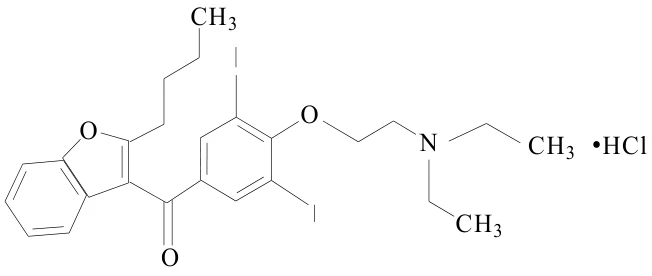
14 Clinical Trials
14.1 Clinical Trials
Intravenous amiodarone hydrochloride
Table 9 – Clinical trials summary
| Study Drug/ Route of Administration | Study Type | Dose | Patients/ Indication | Results |
|---|---|---|---|---|
| Study Drug/ Route of Administration | Study Type | Dose | Patients/ Indication | Results |
| IV amiodarone hydrochloride | Placebo-controlled | Approximately 1500 mg/day IV amiodarone administered using 2- and 3-stage infusion regimens | Patients with supraventricular arrhythmias and 2- to 3-consecuive-beat ventricular arrhythmias | Rapid onset of antiarrhythmic activity. In patients with complex ventricular arrhythmias, amiodarone therapy reduced episodes of VT by 85%. |
| IV amiodarone hydrochloride | Pharmacokinetic/ pharmacodynamic study evaluating rapid IV loading | Approximately 1500 mg/day IV amiodarone administered using 2- and 3-stage infusion regimens | Patients with recurrent, refractory VT/VF | Rapid onset of antiarrhythmic activity. In patients with complex ventricular arrhythmias, amiodarone therapy reduced episodes of VT by 85%. |
| IV amiodarone hydrochloride | Two randomized, parallel, dose-response trials | Approximately 125, 500 (one trial only) or 1000 mg over the first 24 hours; The dose regimen consisted of an initial rapid loading infusion, followed by a slower 6-hour loading infusion, and then an 18-hour maintenance infusion; the maintenance infusion was | Acute effectiveness in suppressing recurrent VF or hemodynamically unstable VT in patients with at least two episodes of VF or hemodynamically unstable VT in the preceding 24 hours | Prospectively defined primary efficacy end point: rate of VT/VF episodes per hour. Median rate was 0.02 episodes per hour in patients receiving the high dose and 0.07 episodes per hour in patients receiving the low dose, or approximately 0.5 versus 1.7 |
| continued up to hour 48. | episodes per day (p = 0.07, 2-sided). Significantly fewer supplemental infusions were given to patients in the high-dose group. In one study, the time to first episode of VT/VF was significantly prolonged. Mortality was not affected. | |||
A placebo-controlled study of IV amiodarone hydrochloride in patients with supraventricular arrhythmias and 2- to 3-consecutive-beat ventricular arrhythmias, and a pharmacokinetic/ pharmacodynamic study evaluating rapid IV loading in patients with recurrent, refractory VT/VF have shown rapid onset of antiarrhythmic activity well before significant blood levels of desethylamiodarone (DEA) were present; approximately 1500 mg/day of IV amiodarone hydrochloride were administered using 2- and 3-stage infusion regimens. In the patients with complex ventricular arrhythmias, including sustained and nonsustained VT, amiodarone hydrochloride therapy reduced episodes of VT by 85%.
The acute effectiveness of IV amiodarone hydrochloride in suppressing recurrent VF or hemodynamically unstable VT is supported by two randomized, parallel, dose-response studies of approximately 300 patients each. In these studies, patients with at least two episodes of VF or hemodynamically unstable VT in the preceding 24 hours were randomly assigned to receive doses of approximately 125 or 1000 mg over the first 24 hours, an 8-fold difference. In one study, a middle dose of approximately 500 mg was evaluated. The dose regimen consisted of an initial rapid loading infusion, followed by a slower 6-hour loading infusion, and then an 18-hour maintenance infusion. The maintenance infusion was continued up to hour 48. Additional supplemental infusions of 150 mg were given for “breakthrough” VT/VF more frequently to the 125-mg dose group, thereby considerably reducing the planned 8-fold differences in total dose to 1.8- and 2.6-fold, respectively, in the two studies.
The prospectively defined primary efficacy end point was the rate of VT/VF episodes per hour. For both studies, the median rate was 0.02 episodes per hour in patients receiving the high dose and 0.07 episodes per hour in patients receiving the low dose, or approximately 0.5 versus 1.7 episodes per day (p = 0.07, 2-sided, in both studies). In one study, the time to first episode of VT/VF was significantly prolonged (approximately 10 hours in patients receiving the low dose and 14 hours in patients receiving the high dose). In both studies, significantly fewer supplemental infusions were given to patients in the high-dose group. Mortality was not affected in these studies; at the end of double-blind therapy or after 48 hours, all patients were given open access to whatever treatment (including IV amiodarone hydrochloride) was deemed necessary.
14.2 Comparative Bioavailability Studies
A biostudy conducted in healthy volunteers under fed conditions with SANDOZ AMIODARONE 200 mg tablets vs the Canadian reference drug has shown that the products are bioequivalent (see following table).
Table 10 - Summary table of the comparative bioavailability data
Amiodarone hydrochloride (1 x 200 mg) Geometric Mean Arithmetic Mean (CV %) | ||||
|---|---|---|---|---|
| Parameter | Test1 | Reference2 | % Ratio of Geometric Means | 95 % Confidence Interval |
AUCT (ng.h/mL) | 5917.94 6135.44 (27.7) | 6365.43 6599.43 (28.5) | 93 | 89-98 |
AUC (ng.h/mL) | 6580.76 6894.12 (26.6) | 7080.67 7342.66 (28.4) | 93 | 88-98 |
Cmax (ng/mL) | 327.10 355.24 (44.0) | 376.47 394.07 (30.7) | 87 | 80-95 |
Tmax 3 (h) | 4.65 (42.2) | 3.81 (45.2) | -- | -- |
T½el 4 (h) | 22.43 (29.9) | 22.82 (27.1) | -- | -- |
1 SANDOZ AMIODARONE (amiodarone hydrochloride) 200 mg Tablets (manufactured for Sandoz Canada Inc.)
2 Cordarone(amiodarone hydrochloride) 200 mg Tablets ( (Pfizer Canada Inc formerly Wyeth-Ayerst) purchased in Canada.
3 and 4 for Tmax and T½el, the arithmetic mean only is presented.
Another study was conducted in healthy volunteers under fasting conditions with SANDOZ AMIODARONE 200 mg tablets vs the Canadian reference drug and has also shown that the products were bioequivalent (see following table).
Table 11 - Summary table of the comparative bioavailability data
Amiodarone hydrochloride (1 x 200 mg) Geometric Mean Arithmetic Mean (CV %) | ||||
|---|---|---|---|---|
| Parameter | Test1 | Reference2 | % Ratio of Geometric Means | 95 % Confidence Interval |
AUCT (ng.h/mL) | 2969.71 3103.19 (29.6) | 3202.71 3333.39 (29.6) | 93 | 84-102 |
AUC (ng.h/mL) | 3403.34 3576.74 (32.5) | 3602.38 3762.16 (31.0) | 94 | 85-105 |
Cmax (ng/mL) | 129.54 137.02 (33.0) | 141.74 150.37 (35.0) | 91 | 80-104 |
Tmax3 (h) | 7.08 (27.4) | 7.15 (34.7) | -- | -- |
T½el4 (h) | 24.33 (35.4) | 23.6 (28.2) | -- | -- |
1 SANDOZ AMIODARONE (amiodarone hydrochloride) 200 mg Tablets (manufactured for Sandoz Canada Inc.)
2 Cordarone (amiodarone hydrochloride) 200 mg Tablets (Pfizer Canada Inc formerly Wyeth-Ayerst) purchased in Canada.
3 and 4 for Tmax and T½el, the arithmetic mean only is presented.
15 Microbiology
No microbiological information is required for this drug product.
16 Non-Clinical Toxicology
Acute Toxicity
Amiodarone hydrochloride was evaluated in acute oral studies in mice, rats, and dogs, and in acute intravenous studies in rats and dogs. Multiple-dose toxicity studies were performed by oral administration to mice (20 months), rats (3 to 104 weeks), dogs (4 weeks to 9 months), and pigs (3 or 10 months). Amiodarone hydrochloride was administered intravenously in multiple-dose toxicity studies to rabbits (6 weeks), dogs (4 weeks), and baboons (4 weeks).
Table 12 – Oral Amiodarone hydrochloride: Acute Toxicity Studies
| Species/Strain | Mode of Administration | Dosage (mg/kg per day)/Duration | Results |
|---|---|---|---|
| Mouse/NMRI | Oral (gavage) | 500 to 3000/Single dose | The oral LD50 was greater than 3000 mg/kg. For technical reasons (high viscosity of the solutions at concentrations greater than 10%), the highest dose that could be administered was 3000 mg/kg. |
| Rat/Wistar | Oral (gavage) | 500, 750, 1000, 2000, 3000/Single dose | The oral LD50 was greater than 3000 mg/kg. No deaths occurred at the highest dosage. |
| Dog* | Oral (diet) | 0, 1000, 3000, or 5000 in feed | The oral LD50 was greater than 5000 mg/kg. No deaths occurred. All dogs vomited within 6 hours of ingestion. One dog given 5000 mg/kg demonstrated tremors 24 hours after ingesting the drug. This lasted for more than 96 hours and was accompanied by hindquarter paralysis. |
* Report does not identify strain
Table 13 – Intravenous Amiodarone hydrochloride : Acute Toxicity Studies
| Species/Strain | Mode of Administration | Dosage (mg/kg per day)/Duration | Results |
|---|---|---|---|
| Rat/Wistar | IV | 100, 150, 200 /Single dose | The IV LD50 was 135 mg/kg. Dyspnea, resulting in cyanosis, was observed premortem. |
| Rat/Wistar | IV | 100, 120, 140, 160, 180, 200 /Single dose | The IV LD50 was 150 mg/kg. |
| Rat/SD (BR) | IV | Males 0, 100, 120, 150, 160, 180 Females 0, 160, 170, 180, 220 /Single dose | The IV LD50 for males and females was 170 and 175 mg/kg, respectively. Clonic convulsions were observed at dosages of 120 mg/kg and above. |
| Dog/Beagle | IV | 5 minute injections of 25-150 5 minute injections of 75-100 20 minute injections of 100-150 /Single dose | The I.V. LD50 for a 5-minute infusion was 75 to 100 mg/kg. The LD50 for a 20-minute infusion was 150 mg/kg. Injections were followed by excitation with redness of the skin and mucous membranes, sedation, dyspnea, convulsions, and electrocardiographic alterations. |
| Dog* | IV | 0.75 mg/kg/min to 110 or 95 | The I.V. LD50 was 110 to 125 mg/kg for an infusion rate of 0.6 to 0.75 mg/kg per min and |
mg/kg 0.62 mg/kg/min to 124 mg/kg 0.45 mg/kg/min to 190 mg/kg /Single dose | was > 90 mg/kg for an infusion rate of 0.45 mg/kg per min. |
* Report does not identify sex or strain of dogs.
Long Term Toxicity/Carcinogenicity
Table 14 – Intravenous Amiodarone hydrochloride : Subchronic Toxicity Studies
| Species/Strain | Mode of Administration | Dosage (mg/kg per day)/Duration | Results | ||
|---|---|---|---|---|---|
| Rabbit/Dutch | IV | 0, 5, 10 and 25/6 weeks | No drug-related mortality occurred. There was a statistically significant decrease in red blood cell count and hemoglobin values for both males and females at all dose levels. Significant increases in total cholesterol (143% to 200%) were observed at all dose levels. Total lipids were also significantly increased (168%) in males at 25 mg/kg. For females, total lipids were significantly increased at 5 (127%) and 10 (147%) mg/kg, but not at 25 mg/kg. All other blood chemistry parameters showed no difference between treated and control animals. At necropsy, several treated animals exhibited white patches and/or signs of cirrhosis in the liver. Microscopic evaluation revealed hepatocytes and Kupffer cells containing numerous pigments (probably hemosiderines) in several control and treated rabbits. In several treated animals (2, 2 and 1 rabbits at 5, 10 and 25 mg/kg, respectively), part of the hepatic parenchyma degenerated and was replaced by necrotic tissue surrounded by fibrous tissue, giving a cirrhotic appearance. However, these histologic changes were not considered related to drug administration. As a result of the hemotological and biochemical changes, a no toxicologic effect level (NTEL) could not be determined. | ||
| Dog/Beagle | IV | 0, 7.5, 15, 30 and 60/4 weeks | Mortality was observed at 60 mg/kg. Adverse physical examination findings were observed in all groups; however, only sedation occurred solely in drug-treated groups at dosages of 30 mg/kg and above. Body weight and food consumption were decreased at 30 and 60 mg/kg. Hematologic (increased fibrinogen and monocyte levels; decreased red blood cell count, hematocrit, and hemoglobin levels), biochemical (increased | ||
cholesterol [122% to 216%], triglycerides, alanine aminotransferase, alkaline phosphatase, potassium, and T4; and decreased protein and T3/T4 ratio) changes occurred at all dosage levels, although most frequently at dosages of 30 mg/kg and above. Alterations in cardiac parameters (decreased heart rate, lengthened PR and ST segments, increased T wave amplitude) occurred at 60 mg/kg. Liver weights were increased in all drug-treated groups while adrenal and prostate weights were decreased at 60 mg/kg. Macroscopic changes to the liver, bile, colonic mucosa, and renal cortex occurred in all drug-treated groups. Many of the drug-treated dogs exhibited clots and outgrowths of the valvula tricuspidalis and pulmonary lesions (congestion, crepitation, foamy discharge at sectioning) were observed in the 3 animals that died during the study. Injection site lesions were observed in all groups, including controls. However, the severity in the drug-treated groups followed a dose-response pattern. Microscopic examination revealed foamy macrophages in the lymph nodes, spleen and Peyer’s patches at 60 mg/kg and in 1 dog that received 30 mg/kg. Dogs at all dose levels showed islets of clear cells in the adrenal cortex. Marked cholestasis and thymic regression were observed at 60 mg/kg; evidence of increased thyroid activity was observed in all treated animals. As a result of the observed effects, a NTEL could not be determined. | |||||
| Baboon/Papio papio | IV | 0, 12.5, 25 and 50/4 weeks | One 12.5 mg/kg female and all four 50 mg/kg animals died or were killed in extremis. A dosage of 50 mg/kg produced gradual changes in the general condition of the animals (prostration, piloerection) from week 2 onward. Decreased food consumption in all drug-treated groups were associated with body weight loss in the 25 and 50 mg/kg groups. Decreased heart rates (lengthening of the ST segment) were noted in the 25 and 50 mg/kg dosage groups. Changes in hematologic (decreased red blood cell count, hemoglobin, hematocrit, mean cell hemoglobin, and mean cell hemoglobin concentrations; increased reticulocytes, neutrophils and monocytes) and biochemical (increased bilirubin, triglycerides, BUN, creatinine, and T4 levels) parameters were observed in all drug-treated | ||
groups; the majority of effects were observed at 25 and 50 mg/kg. Organ weight changes included a thyroid weight increase at all dose levels. Increased liver and kidney weights occurred at the higher dosage levels and a dose-related thymus weight decrease occurred. Discoloured livers and a cirrhotic appearance was observed in all 4 baboons at 50 mg/kg. All 3 of the animals that died during the study exhibited cardiac lesions, 2 of which had a clot adherent to the endocardium and valvulae in the right side of the heart, while the third showed discolouration of the myocardium and necrotic magma in the muscle. These changes were probably attributable to the irritative properties of amiodarone hydrochloride when the compound is repeatedly administered into the cephalic or saphenous veins. Intravenous treatment with amiodarone hydrochloride caused indurations, edema, abscesses and local necrosis with eschars at the injection sites; the degree of these lesions was dose related. The vehicle alone induced only local indurations that partially regressed when the injection site was changed. Microscopic examination revealed a dose-related increase in incidence and degree of thymic regression at all dose levels, changes in the gall bladder at the higher doses, and colloid retention in the thyroids in all treated groups. As a result of the observed mortality, effects on the thyroid, and injection site lesions, a NTEL could not be determined. | |||||
IV = Intravenous administration
Table 15: Oral amiodarone hydrochloride : Chronic Toxicity Studies
| Species/Strain | Mode of Administration | Dosage (mg/kg per day) /Duration | Results |
|---|---|---|---|
| Species/Strain | Mode of Administration | Dosage (mg/kg per day) /Duration | Results |
| Species/Strain | Mode of Administration | Dosage (mg/kg per day) /Duration | Results |
| Species/Strain | Mode of Administration | Dosage (mg/kg per day) /Duration | Results |
| Species/Strain | Mode of Administration | Dosage (mg/kg per day) /Duration | Results |
| Species/Strain | Mode of Administration | Dosage (mg/kg per day) /Duration | Results |
| Species/Strain | Mode of Administration | Dosage (mg/kg per day) /Duration | Results |
| Rat/Wistar | Oral (gavage) | 100, 200, 300, 450, or 600/ 3 weeks* | The LD50 was 420 mg/kg. |
| Rat/Wistar | Oral (gavage) | 0, 100, 200, 300, 450 or 600/for 3 weeks* | The LD50 was greater than 600 mg/kg. A dose related decrease in mean body weights of both males and females occurred. |
| Rat/Crl BR | Oral (gavage) | 10, 19, 37.5, 75, or 150/4 weeks | Drug treatment at 37.5 mg/kg or less did not produce any adverse reactions. At doses of 75 or 150 mg/kg, there was a deterioration in animals’ health. |
Increased mortality occurred at 150 mg/kg. Postmortem examinations showed that those animals that died on test were cachectic. Body weight gains were decreased in both sexes at 150 mg/kg and in females at 75 mg/kg; food intake was also reduced. Although there were no clinically significant changes in blood pressure among treated animals, heart rate changes did occur at dosages of 37.5 mg/kg and above. Significant increases in the number of neutrophils and a decrease in the number of lymphocytes were observed in the high-dose treatment group. Clinical chemistry values for blood urea nitrogen (BUN), alkaline phosphatase, and total and esterified cholesterol (dose-related in males) were elevated at 75 mg/kg and above. There was an increase in T4 and a decrease in the T3/T4 ratio at 75 mg/kg and 150 mg/kg. At 75 and 150 mg/kg, there was an increase in lung and adrenal weights, and a decrease in thymus, prostate, seminal vesicle, uterine and ovarian weights. At 37.5 mg/kg and higher, the relative weight of the liver in females appeared slightly increased. Macroscopically, the only observation associated with the drug was a yellow colouring of mesenteric lymph nodes in most animals treated at 75 and 150 mg/kg. Histologically, this proved to be a dose-dependent accumulation of foamy macrophages involving the mesenteric lymph nodes with spreading to the liver, spleen and lungs. The adrenal cortex contained lipid-like material. There was a moderate degree of thymic involution observed in high-dose animals and this was possibly associated with stress at this level. The thyroids of treated animals presented a histologic appearance of increased activity. | |||
| Rat/Fisher 344 | Oral (gavage) | Vehicle-control, 160/7 days * | Treated animals showed signs of toxicity by the fourth day of dosing. This included weakness accompanied by piloerection, epistaxis and softening of the feces. Reversibility of these symptoms did not occur until 8 days after treatment had stopped and often persisted to the 20th day. One death was recorded on day 7 of administration. Initially, body weight gains were depressed in all groups but returned to normal by the end of the treatment schedule. Increases in the weights of the liver and adrenals were also observed, but these too returned to control values 1 to 2 weeks after dosing had stopped. A marked decrease in thymus weight was partially reversible after 2 weeks and completely reversible by 8 weeks. Macroscopic examination revealed a white coloration of the mesenteric lymph nodes in animals sacrificed on days 7 and 14. Histologically, foam cells were present in the mesenteric lymph nodes and lungs. These changes disappeared after a recovery period of about 2 weeks. |
| Rat/Wistar | Oral (gavage) | Vehicle control, 100, 200, or 300/ 3 months ** | Dose-related increases in mortality were observed (0 at 100 mg/kg, 15% at 200 mg/kg and 25% at 300 mg/kg). Body weights of male rats receiving 200 or 300 mg/kg were depressed 19% and 30% respectively. Female body weights at 300 mg/kg were depressed by 14% relative to controls. Hemoglobin values slightly depressed at 200 mg/kg and markedly decreased at 300 mg/kg. At 300 mg/kg, the ratio of circulating lymphocytes to polymorphonuclear leukocytes increased during the study; this was more marked in females. Blood urea nitrogen (BUN) was significantly increased in both the 200 and 300 mg/kg groups. Blood |
glucose levels were not affected by the administration of the drug. At 100 mg/kg, no microscopic lesions were noted except for some hypertrophy of the thyroid gland. With both the 200 and 300 mg/kg, there was centrilobular congestion in the liver which was more marked at the high dose level. In 2 of 14 rats given 300 mg/kg, lesions of the myocardium were present. | |||
| Dog/Beagle | Oral (capsule) | Vehicle control, 100, 200, or 300/ 3 months ** | A 38% decrease in mean body weight was observed in treated animals and this was associated with decreased food intake. One treated animal was moribund sacrificed due to its cachectic state. Autopsy revealed an abnormal increase in bile contained in the gall bladder and intestine. There were no other deaths during the study. Clinically significant increases in SGPT (129%), SGOT (300%), and LDH (363%) were noted in treated animals. All other parameters were similar between dosed and control groups. Increases in the absolute and relative weights of the adrenals and the liver plus the absence of a recognizable thymus were noted in the treated dogs. Macroscopic examinations revealed congestion of the digestive mucosa (primarily in the small intestine), and the presence of an abnormal amount of bile in the gall bladder and/or the intestine in the treated animals. Microscopic examination showed the presence of foamy cells in the mesenteric lymph nodes, spleen and lymphoid tissue of the digestive tract. The foamy cells were characterized by an abundance of polymorphic cytoplasmic inclusions of probable dyslipidic origin. Electron microscopy revealed the dyslipidosis to be widespread although minimal in any one tissue. |
| Dog/Beagle | Oral (diet at 0 and 30 mg/kg, capsule at 150 | Dietary control, 30 or 150/ 3 months** | There were no deaths. At 150 mg/kg, gastrointestinal intolerance (vomiting, diarrhea and anorexia) was observed for |
| mg/kg) | the first 1½ months and intermittently thereafter. Excessive salivation was noted throughout. Concurrent with the epigastric distress, dogs receiving 150 mg/kg showed a 20% loss in weight during the first 40 days of dosing. Thereafter weight gains were normal. Apart from minor changes in several hematology values, parameters were similar between control and treated groups. A dose-related increase in leukocyte counts was noted at all 3 sampling intervals and decreases on neutrophils during the last month in the high-dose group. Clinical chemistry values were also similar between control and treated animals. SGPT levels rose in animals receiving 150 mg/kg/day during the first month of testing but were normal thereafter. Alkaline phosphatase levels in the high-dose group rose during the study but remained within the normal range for this species. The results of the postmortem macroscopic examination were unremarkable. One dog in the high-dose group exhibited hypertrophy of the thyroid but histopathology was unremarkable. No generalized histopathologic abnormalities were found which were related to drug administration. All findings were slight and occurred either in or were isolated instances or were present in both treated and control animals and could not be attributed to the drug. | ||
| Dog*** | Oral (diet) | Dietary control, 30 or 60/9 months | One control animal died during the first month of the study and was replaced. There were no abnormal clinical observations or evidence of gastric intolerance in animals receiving amiodarone hydrochloride. Body weights and food intake were unaffected. The |
| only significant laboratory abnormality was a dose-dependent hypercholesteremia. Macroscopic and histological examinations revealed only incidental lesions probably secondary to intercurrent diseases. Organ weights were not markedly different between treated and control animals. | |||
| Pig** | Oral (diet) | Dietary control, 10, 20, 50, or 150/ 3 months | At 150 mg/kg, clinical signs of toxicity included ataxia, hypotonia and no weight gain; appetite was not affected. At 1 ½ months, 2 high-dose animals died during blood collecting. An autopsy revealed only gastritis and gastric ulceration. At 2 ½ months, the remaining 2 high-dose pigs were sacrificed in extremis. Autopsy findings were unremarkable. No other mortalities were recorded. Animals in the other treated groups showed no signs of toxicity and weight gains paralleled those of the controls. High-dose animals did not undergo blood tests due to the deaths of 2 animals at the first blood sampling and due to the poor health of the remaining 2 animals. In all other animals, results were within normal limits. Both the treated and control values for a number of the clinical tests were similar between groups. Apart from the gastritis and ulcers noted in animals given 150 mg/kg, no other macroscopic lesions were attributed to drug intake. One control animal also displayed gastritis. Histologically, doses of 10, 20, or 50 mg/kg produced no toxic effects on any organs examined. At the 150 mg/kg dose, there were liver lesions and endocrine (pituitary, thyroid, adrenal) dysfunction in pigs treated for 2 ½ months. In the liver, this was characterized by a disorganization of the hepatic parenchyma, focal necrosis, sclerosed Kiernan’s spaces, and brown pigmented macrophages in the interstitial spaces. In the endocrine |
| system, the adrenal cortex showed clusters of lymphomonocytes and hemorrhagic foci principally in the zona fasciculate. In both the zona glomerulosa and zona fasciculata of the adrenal cortex, there was evidence of hyperfunction. In the thyroid, numerous follicle cells that were larger than normal with vacuolar cytoplasm were suggestive of increased activity. In the pituitary of 1 pig in the 150 mg/kg group, the basophilic cells were more numerous and larger than normal. | |||
| Pig** | Oral (diet) | Dietary control, 50/10 months | There were no deaths, abnormal behaviour, or clinical signs of toxicity. Increase in body weight was parallel for treated and control animals. No abnormalities were noted for hematology, clinical chemistry, ophthalmic, or macroscopic examinations. |
* Treatment was followed by a sequential sacrifice of 7 animals on days 11, 18, 25, 39, 67 and 121 of study
** Animals were dosed 5 days/week
*** Report does not identify strain.
Table 16 - Oral amiodarone hydrochloride: Chronic Toxicity Studies/Carcinogenicity Studies
| Species/Strain | Mode of Administration | Dosage (mg/kg per day) / Duration | Results | ||
|---|---|---|---|---|---|
| Species/Strain | Mode of Administration | Dosage (mg/kg per day) / Duration | Results | ||
| Species/Strain | Mode of Administration | Dosage (mg/kg per day) / Duration | Results | ||
| Mouse /BGC3F1 | Oral (gavage) | 0, 5, 16, 50/20 months | No drug-related effects on mortality occurred. Adverse clinical observations mainly consisted of urogenital trauma, resulting from fighting between male cage mates, and palpable masses. The palpable masses were primarily related to the presence of neoplasms. Weight gain and food intake were slightly increased in treated males during the first months of the study only; the effect was not dose related. A dose-related increase in the thyroid weight in both sexes was observed. Macroscopically, thyroid hypertrophy was observed. Histopathologically, a dose-related increase in incidence and degree of hyperplasia was seen in the thyroids of animals from test groups. However, the only tumors of the thyroid were diagnosed as follicular adenomas. | ||
| These occurred in 1 control animal and in 4 high-dose animals and were within the normal range for this species at this age. No other non-neoplastic or neoplastic change associated with treatment was observed. The remainder of tumors diagnosed were recognized as those that occur commonly in mice. There was no increase in incidence or change in biological type of these tumors in treated animals when compared to controls. In addition, examination of blood smears taken at autopsy showed no treatment-related effect. | |||||
| Rat/Sprague-Dawley CD | Oral (gavage) | 0, 5, 16, 50/ 104 weeks | No effect on mortality occurred. Drug treatment at 16 and 50 mg/kg per day to males and females induced minor effects including salivation immediately after dosing, staining of the fur/reduced grooming, paddling of the forefeet, reduced food consumption, reduced body weight gain, decreased erythroid values, and increased alkaline phosphatase activity and cholesterol levels. Liver weight was marginally increased in males treated at 50 mg/kg per day. At terminal examination, an increased incidence of pale foci in the lungs of all treated male groups and females given 16 or 50 mg/kg per day, an increased incidence of thyroid enlargement in all treated male groups, increased incidence of liver masses in males given 50 mg/kg per day, and a slightly higher incidence of pancreatic masses in treated male groups were observed. Liver weight was marginally higher in males given 50 mg/kg per day, and thyroid weight was markedly higher in males given 50 mg/kg per day. An increased incidence of neoplastic changes to the thyroid (follicular tumors) occurred in all treated groups. These changes were statistically significant overall for all male groups, but only at 16 mg/kg per day and above in the females. Non-neoplastic findings included changes to the thyroid at all dosages, and lung lesions in all treated male groups and in females given 16 or 50 mg/kg per day. Lymph node changes occurred in males and females given 16 or 50 mg/kg per day, and | ||
| systemic and thymic lesions occurred in males given 50 mg/kg per day. | |||||
Table 17 - Oral Amiodarone hydrochloride : Chronic Toxicity Studies
| Species/Strain | Mode of Administration | Dosage (mg/kg/d) / Duration | Results | |
|---|---|---|---|---|
| Dog/Beagle | Oral (gavage) | 0, 12.5, 25, 50, 100 12 months, plus a 3 month recovery period | Mortality and adverse clinical signs (equilibrium and locomotion disorders, vomiting, diarrhea, tremors) occurred at 25 mg/kg per day and above. Electrocardiograms were altered at 50 and 100 mg/kg per day. Dyslipidosis, characterized by the presence of foam cells was observed at 25 mg/kg per day and above in the lymph nodes and lungs. In the lungs these lesions appeared to be totally reversible after 3 months without treatment at 25 mg/kg per day. The dyslipidosis could be related to the increases in total and esterified cholesterol (without any modification of the ratio), together with a moderate but inconsistent increase in triglycerides and phospholipids. A malabsorption syndrome occurred in some animals treated at 100 mg/kg per day. This syndrome was characterized by diarrhea, vomiting, anorexia, weight loss, and partial or subtotal jejunal villi atrophy accompanied by the presence of foam cells observed histologically. Changes in thyroid function were characterized by an increase in T4 at dose levels of 12.5 mg/kg per day and above, without any variation in T3 levels or the thyroid weight. There were no pathological changes in this organ attributed to drug treatment. The increase in T4 was reversible by the end of the recovery phase. Minor adverse effects such as cholestasis and nonspecific changes such as regression or disappearance of the thymus, amyotrophy, | |
| and altered spermatogenesis in males were also recorded at dosage levels of 50 and 100 mg/kg per day. | ||||
Reproductive Toxicity
Reproductive toxicology studies were performed by both oral and intravenous administration. Amiodarone was administered by oral gavage to mice, rats, and rabbits, and intravenously to rats (continuous infusion) and rabbits (bolus injection). In addition, the mutagenic potential was assessed in studies supporting the oral formulation.
Table 18 - Oral amiodarone hydrochloride : Reproductive Studies
| Species/Strain | Mode of Administration | Dosage (mg/kg per day) / Duration | Results | |
|---|---|---|---|---|
| Species/Strain | Mode of Administration | Dosage (mg/kg per day) / Duration | Results | |
| Species/Strain | Mode of Administration | Dosage (mg/kg per day) / Duration | Results | |
| Species/Strain | Mode of Administration | Dosage (mg/kg per day) / Duration | Results | |
| Mouse/NMRI | Oral (gavage) | 0 (water control), 5, 50 or 100/ Gestation days 1 to 15 | Drug treatment did not result in any fetal malformations in the mouse. However, there was a clear drug-related reduction in litter size due to an increase in the number of resorptions. It was concluded from this study that amiodarone was embryotoxic to mice. Since signs of maternal toxicity were not recorded in this study, no statement can be made about an association between maternal and fetal toxicity. Drug treatment (50 mg/kg) administered from days 6 to 16. | |
| Mouse/Charles River | Oral (gavage) | 0(vehicle control), 5, 50, or 100/Gestation days 1 to 16; 50 mg/kg in an additional group/Gestation days 6 to 16. | Gestation did not appear to be toxic to the fetus. In doses of 5, 50 and 100 mg/kg administered from days 1 to 16 gestation, the drug did not reduce the number of implantations or cause fetal malformations. The study demonstrated no teratogenicity in mice. | |
Rat/OFA /Sprague-Dawley | Oral (gavage) | Vehicle control 10, 30, 60, or 90/ Males-64 days prior to mating and throughout the mating period. Females-64 days prior to mating, throughout the mating period, gestation, and until termination | There were no effects on F0 survival, clinical observations, or postpartum observations. Body weight gain of females given 60 mg/kg was slightly decreased beginning at week 8, and that of females given 90 mg/kg was decreased throughout the mating and gestation periods. This depression may have resulted from the significantly reduced litter weights and sizes of these groups. Body weight gain of males was marginally reduced only at the highest dose. Food consumption was similar in all groups. There was no effect on estrous cyclicity and pre-coital interval. However, the fecundity index was significantly depressed in the 90 mg/kg group. Drug treatment had no adverse effect on parturition, although 1 female in the 60 mg/kg group died | |
| on day 21 postpartum. | suddenly after delivering 9 live fetuses. During the lactation period, the mean body weight gain of the females was significantly depressed in the highest dose group for the first 10 days; other groups gained weight normally. There were no observed drug-related abnormalities among the offspring. Postnatal viability was reduced in the 90 mg/kg group. Growth and functional development of offspring were similar in all groups, except in the 90 mg/kg group where body weight gain of offspring was markedly depressed from day 1 to day 10 postpartum but not thereafter. Terminal necropsy of adults and of offspring which were not selected for continuation of the study did not reveal any treatment-related abnormalities. The functional development of the special senses (hearing and vision) and reflexes of the offspring was comparable in all treated and control groups as was the body weight gain from 40 days postpartum onwards and of estrous cycles from day 80 to day 100 postpartum. | |||
| Rat/Wistar | Oral (gavage) | Water control and 200/ Gestation day 1 to 21 | Drug-treated females demonstrated adverse physical examination findings (listless, shaggy, and dull fur) and reduced weight gain. Conjunctivitis and a nasal suppuration mixed with blood were observed in several of the treated rats. Six (6) of the 30 treated rats died during the study. These animals were observed to have macerations of the abdominal viscera and severe enteritis. Excluding deaths, the percentage of successful matings was comparable in the treated and control groups. Drug treatment (200 mg/kg) was associated with embryotoxicity. The number of resorptions expressed as a percentage of pregnancies or as a percentage of implantations was significantly increased in the treated group as compared to controls. The percentage of females presenting fetuses with major deformities as well as the percentage of fetuses with major deformities was increased in the treated group. Given the limited number of viable litters from the treated rats, however, no conclusions regarding teratogenicity can be drawn. The mean weight of fetuses from the treated group was also slightly less than the control group. | |
| Rat/Sprague-Dawley | Oral (gavage) | 0 (water control), 10, 30, or 90/ 64 days premating, during mating and from gestation day 1 to 19 (females only) | Prior to mating, treated animals showed no changes in behaviour, food consumption, or estrous cyclicity. Mean body weight gain was slightly depressed in females receiving 90 mg/kg. Although seven deaths occurred during the pre-mating period, none were considered related to amiodarone treatment. The mating period tended to be shorter in the treated groups than controls, though not significantly shorter. There was a significant increase in the number of barren matings in the 90 mg/kg group. The decrease in number of corpora lutea and implantation sites among dams of the highest dose treatment group may partially explain the reduced fertility rate. Because total litter loss due to resorption occurred in 1 or 2 of the dams from each treatment group and none occurred in the control group, the percentage of resorbed fetuses was higher in the treated groups than in the control group. Discounting these total litter losses, no significant increase in fetal resorptions occurred in any of the treated groups. No teratogenicity was observed. The number of fetuses which presented minor abnormalities (most commonly incomplete skeletal ossification) was significantly greater in the treated groups compared to controls. However, these minor abnormalities resulted primarily from fetal growth retardation, which is a reversible phenomenon, and are not indicative of a true teratogenic event. Thus, it was concluded that amiodarone was without teratogenic potential in rats. | |
| Rat/Sprague-Dawley | Oral (gavage) | 0 (vehicle control), 10, 30, or 90/ Gestation day 14 to Postpartum day 21 | There were no clinical signs of toxicity and no rats died. A decrease in mean maternal weight gain was observed beginning on gestation day 16 in the 90 mg/kg treatment group. No differences in weight gain were seen during lactation. The duration of gestation was unchanged and parturition was unaffected by amiodarone treatment. The mean live litter size and sex ratio were comparable in treated and control groups. The mean fetal weights were significantly reduced (18% smaller than control) only at 90 mg/kg. This difference was increased on days 4 and 10 of neonatal life (-29% and -31%, respectively), but remained stable thereafter. Although the number of young born to treated females of this group was the same as in the control group, neonatal mortality was higher. Of those terminal offspring, one-third | |
died between birth and day 4, and the remaining two-thirds died between day 5 and weaning. Necropsy revealed no abnormalities related to drug intake in any of the offspring sacrificed on day 21. One offspring from the 10 mg/kg group exhibited agenesis of the right hind limb and a short tail. | ||||
| Rat/Sprague-Dawley | Oral (gavage) | 0 (water control), 5, 50, or 100/ Gestation days 1 to 15 | Drug treatment did not have any toxic effect on fetuses of rats at administered doses up to 100 mg/kg. The ratio of the number of living fetuses counted at term to the number of implantation sites was not significantly different in treated and untreated groups. None of the fetuses examined showed any external malformations, microscopic or skeletal abnormalities. | |
| Rabbit/Belgian Hare | Oral (gavage) | 0 (water control), 5, 50 or 100/ Gestation days 1 to 18 | Neither the number of implantations or live fetuses observed at sacrifice appeared to vary among treated and control groups. The number of resorptions was higher than control in the low- and mid-dose treatment groups, but was lower in the high-dose group. Drug treatment did not affect the fecundity of the animals. Examination of the fetuses revealed no malformations. | |
Table 19 - Mutagenicity Studies
| Study | Test System | Concentrations | Conclusions |
|---|---|---|---|
| Ames Test | S. typhimurium Tester Strains TA98 TA100 TA1535 TA1537 TA1538 | Not identified | No evidence of mutagenicity occurred in the presence or absence of S-9. |
| Lysogenic Induction Test | Bacterial Strains GY5027 GY4015 | Not identified | At concentrations that approached toxic levels (~ 100 micrograms/dish), no increase in spontaneous lysis occurred. |
| Micronucleus Test | Mouse/Charles River | 50, 100, 225 mg/kg (each animal received 2 intra-peritoneal injections administered over a 24 hour period) | No increase in the number of micronuclei per 200 polychromatic erythrocytes was induced by drug treatment. |
Table 20 - Oral amiodarone hydrochloride: Reproductive Studies
| Species/Strain | Mode of Administration | Dosage (mg/kg per day) / Duration | Results |
|---|---|---|---|
| Species/Strain | Mode of Administration | Dosage (mg/kg per day) / Duration | Results |
| Rat/CD® BR | IV (Infusion) | 0 (saline), 0 (stock), 25, 50, 100/ Gestation days 8-16 | An increased incidence of minor adverse physical examination findings related to the injection procedures and necropsy observations correlated with increased dosage and treatment duration. Body weight gains were decreased in the control-stock group; a dose-related reduction in body weight gains occurred in animals in the 50 and 100 mg/kg dosage groups compared to the saline and/or control-stock group. Food consumption was decreased for animals in the 100 mg/kg dosage group compared to either control group. Resorptions were increased, and live litter size and fetal body weights were decreased at a dosage of 100 mg/kg. Delayed ossification of the sternum and metacarpals occurred at the dosage of 100 mg/kg; this delay was reversible and was related to the reduced fetal body weights at this dosage level. Fetal thyroid tissues appeared normal in all groups. Based on reduced body weight gains and food consumption at a dosage of 100 mg/kg, the maternal NTEL was 50 mg/kg. The developmental NTEL was 50 mg/kg, based on resorptions, reductions in live litter size and fetal body weights, and delayed ossification of the sternum and metacarpais. |
| Rabbit/Dutch | IV | 0, 5, 10 and 25/ Gestation days 8 - 16 | No drug-related changes in behaviour or maternal body weight were observed during the study. The only evidence of maternal toxicity observed was an increase in mortality that was statistically significant at the high dose. The incidence of deaths was 1, 3, 5 and 8 in the control, low-, middle-, and high-dose groups, respectively. Necropsies revealed degeneration of the liver in the control, bronchopneumonia in the low-dose group, and bronchopneumonia with peritonitis and enteritis in the middle- and high-dose rabbits. Mean fetal weights were significantly decreased at the low- and middle-dose levels. Evidence of embryotoxicity was significant at 10 and 25 mg/kg. However, there was no |
| significant difference in the number of minor abnormalities, and no major abnormalities were observed. |
IV = Intravenous administration
17 Supporting Product Monographs
- 1. Pfizer Canada Inc, Cordarone®, Product Monograph, Control no. 189723, Date of Revision: February 18, 2016.