


Product Monograph - Sandoz Silodosin
SUMMARY PRODUCT INFORMATION
| Route of Administration | Dosage Form / Strength | All Nonmedicinal Ingredients |
| Oral | Capsule, Immediate- Release, 8 mg and 4 mg | Gelatin, iron oxide black, magnesium stearate, mannitol, potassium hydroxide, pregelatinized starch, propylene glycol, shellac, sodium lauryl sulfate and titanium dioxide |
INDICATIONS AND CLINICAL USE
Sandoz Silodosin (silodosin) is indicated for:
- The treatment of the signs and symptoms of benign prostatic hyperplasia (BPH).
Geriatrics (≥ 65 years of age): Silodosin has been found to be safe and effective when administered at therapeutic doses (8 mg once daily) to patients over the age of 65 years (see
CLINICAL TRIALS section).
Pediatrics (< 18 years of age): The safety and effectiveness of silodosin in pediatric patients have not been established. Sandoz Silodosin is not indicated for use in children (see WARNINGS AND PRECAUTIONS section).
Women: The safety and effectiveness of silodosin in female patients have not been established. Sandoz Silodosin is not indicated for use in women (see WARNINGS AND PRECAUTIONS section).
CONTRAINDICATIONS
Sandoz Silodosin (silodosin) is contraindicated in patients known to have hypersensitivity to silodosin or any component of the Sandoz Silodosin formulation. For a complete
- listing, see the DOSAGE FORMS, COMPOSITION AND PACKAGING section of the Product Monograph.
- Sandoz Silodosin should not be administered to patients with severe hepatic impairment (Child-Pugh scores ≥ 10) (see WARNINGS AND PRECAUTIONS section).
- Sandoz Silodosin should not be administered to patients with severe renal impairment (CCr < 30 mL/min) (see WARNINGS AND PRECAUTIONS section).
- Sandoz Silodosin should not be administered to patients using concomitant potent CYP3A4 inhibitors (e.g., ketoconazole, clarithromycin, itraconazole, ritonavir) (see WARNINGS AND PRECAUTIONS section).
- Sandoz Silodosin should not be administered to patients using concomitant alpha-blockers (e.g., prazosin, terazosin, doxazosin) (see WARNINGS AND PRECAUTIONS section).
WARNINGS AND PRECAUTIONS
As with all α1-adrenoceptor antagonists, a reduction in blood pressure can occur in individual cases during treatment with Sandoz silodosin, as a result of which, rarely, syncope can occur. At the first signs of orthostatic hypotension (dizziness, weakness), the patient should sit or lie down until the symptoms have disappeared (see WARNINGS AND PRECAUTIONS, Cardiovascular section and ADVERSE REACTIONS section).
Patients beginning treatment with Sandoz Silodosin should be cautioned to avoid situations where injury could result should syncope occur.
General
Prostatic carcinoma: Carcinoma of the prostate and BPH cause many of the same symptoms. These two diseases frequently co-exist. Therefore, patients thought to have BPH should be examined prior to starting therapy with Sandoz silodosin to rule out the presence of carcinoma of the prostate.
Carcinogenesis and Mutagenesis
Carcinogenicity and mutagenicity studies have been performed in animals (see TOXICOLOGY section).
Cardiovascular
Sandoz Silodosin is not indicated for the treatment of hypertension.
Orthostatic hypotension, with or without symptoms (e.g., dizziness) may develop when beginning Sandoz Silodosin treatment. As with other alpha-blockers, there is potential for syncope. Patients should be cautioned about driving, operating machinery, or performing hazardous tasks when initiating therapy.
Sandoz Silodosin should not be administered to patients using concomitant alpha-blockers. Sandoz Silodosin should be administered with caution to patients using other concomitant pharmaceuticals known or suspected of inducing orthostatic hypotension or syncope (see ADVERSE REACTIONS, Vascular Disorders section and DRUG INTERACTIONS, Drug-Drug Interactions section).
Endocrine and Metabolism
Sandoz Silodosin should not be administered to patients using concomitant potent CYP3A4 inhibitors.
Hepatic
Sandoz Silodosin should not be administered to patients with severe hepatic insufficiency (Child-Pugh scores ≥ 10).
Ophthalmologic
Intraoperative Floppy Iris Syndrome has been observed during cataract surgery in some patients on alpha-1 blockers or previously treated with alpha-1 blockers. This variant of small pupil syndrome is characterized by the combination of a flaccid iris that billows in response to intraoperative irrigation currents; progressive intraoperative miosis despite preoperative dilation with standard mydriatic drugs; and potential prolapse of the iris toward the phacoemulsification incisions. Patients planning cataract surgery should be told to inform their ophthalmologist that they are taking Sandoz Silodosin.
Renal
Sandoz Silodosin should not be administered to patients with severe renal insufficiency
(CCr < 30 mL/min). In patients with moderate renal impairment (CCr 30-50 mL/min), the dose should be reduced to 4 mg once daily taken with a meal. No dosage adjustment is needed in patients with mild renal impairment (CCr 50-80 mL/min).
Special Populations
Pregnant Women: Sandoz Silodosin is not indicated nor recommended for use in women. No embryotoxic and/or teratogenic effects in rats or rabbits were observed with silodosin.
Nursing Women: Sandoz Silodosin is not indicated nor recommended for use in women. It is unknown if the drug is excreted in human milk.
Pediatrics (< 18 years of age): Sandoz Silodosin is not indicated for use in children.
Geriatrics (≥ 65 years of age): In double-blind, placebo-controlled, 12-week clinical studies of silodosin, 259 (55.6%) patients were under 65 years of age, 207 (44.4%) patients were 65 years of age and over, while 60 (12.9%) patients were 75 years of age and over. Orthostatic hypotension was reported in 2.3% of silodosin patients < 65 years of age (1.2% for placebo), 2.9% of silodosin patients ≥ 65 years of age (1.9% for placebo), and 5.0% of patients ≥ 75 years of age (0% for placebo). There were otherwise no significant differences in safety or effectiveness between older and younger patients.
ADVERSE REACTIONS
Adverse Drug Reaction Overview
Retrograde ejaculation and dizziness are the most frequent adverse events with silodosin. Retrograde ejaculation is reversible upon discontinuation of the drug.
Clinical Trial Adverse Drug Reactions
Because clinical trials are conducted under very specific conditions the adverse reaction rates observed in the clinical trials may not reflect the rates observed in practice and should not be compared to the rates in the clinical trials of another drug. Adverse drug reaction information from clinical trials is useful for identifying drug-related adverse events and for approximating rates.
In U.S. Phase 3 clinical trials, 897 patients with BPH were exposed to 8 mg silodosin daily. This includes 486 patients exposed for 6 months and 168 patients exposed for 1 year. The population was 44 to 87 years of age, and predominantly Caucasian. Of these patients, 42.8% were 65 years of age or older and 10.7% were 75 years of age or older.
Safety information was derived from two U.S. Phase 3 double-blind, placebo-controlled clinical studies (Studies 1 and 2) in which 466 patients were administered silodosin and 457 patients were administered placebo. At least one treatment-emergent adverse reaction was reported by 55.2% of silodosin treated patients (36.8% for placebo treated). A total of 6.4% of silodosin treated patients (2.2% for placebo treated) discontinued therapy due to an adverse reaction (treatment-emergent), the most common reaction being retrograde ejaculation (2.8%) for silodosin treated patients. Retrograde ejaculation is reversible upon discontinuation of treatment.
The incidence of adverse treatment-emergent events listed in the following table were derived from two 12-week, multicenter, double-blind, placebo-controlled clinical studies of silodosin 8 mg daily in BPH patients. Adverse events that occurred in at least 2% of patients treated with silodosin and more frequently than with placebo are shown in Table 1.
Table 1 Adverse Treatment-Emergent Events Occurring in ≥ 2% of Patients in 12- week, Placebo-Controlled Clinical Trials
| Adverse Events | Silodosin (N = 466) n (%) | Placebo (N = 457) n (%) |
| Retrograde Ejaculation | 131 (28.1) | 4 (0.9) |
| Dizziness | 15 (3.2) | 5 (1.1) |
| Diarrhea | 12 (2.6) | 6 (1.3) |
| Orthostatic Hypotension | 12 (2.6) | 7 (1.5) |
| Headache | 11 (2.4) | 4 (0.9) |
| Nasopharyngitis | 11 (2.4) | 10 (2.2) |
| Nasal Congestion | 10 (2.1) | 1 (0.2) |
In Studies 1 and 2, treatment-related adverse events that were reported as ≥ 1% and < 2% of patients receiving silodosin and occurred more frequently than with placebo are presented in Table 2.
Table 2 Treatment-Related Adverse Events Occurring in ≥ 1% and < 2% of Patients in 12-week, Placebo-Controlled Clinical Trials
Adverse Events
Silodosin (N = 466) % of patients | Placebo (N = 457) % of patients | |
Nervous System Disorders Headache | 6 (1.3) | 1 (0.2) |
Vascular Disorders Orthostatic Hypotension | 9 (1.9) | 7 (1.5) |
Gastrointestinal Disorders Diarrhea | 5 (1.1) | 1 (0.2) |
Respiratory Thoracic and Mediastinal Disorders Nasal Congestion | 7 (1.5) | 1 (0.2) |
Vascular Disorders
In two U.S. Phase 3 double-blind, placebo-controlled clinical studies (Studies 1 and 2), treatment-related dizziness was seen in 2.4% of patients receiving silodosin and 0.7% of those receiving placebo.
A test for orthostatic hypotension was conducted 2 to 6 hours after the first dose in the two
12-week, double-blind, placebo-controlled clinical studies. After the patient had been at rest in a supine position for 5 minutes, the patient was asked to stand. Blood pressure and heart rate were assessed at 1 minute and 3 minutes after standing. A positive result was defined as a
> 30 mmHg decrease in systolic blood pressure, or a > 20 mmHg decrease in diastolic blood pressure, or a > 20 bpm increase in heart rate, as presented in Table 3.
Table 3 Summary of Orthostatic Test Results in 12-week, Placebo-Controlled Clinical Trials
| Time of Measurement | Test Result | Silodosin (N = 466) % of patients | Placebo (N = 457) % of patients | |||||
| 1 Minute After Standing | Negative | 459 (98.7%) | 454 (99.6%) | |||||
| Positive | 6 (1.3%) | 2 (0.4%) | ||||||
| 3 Minutes After | Negative | 456 (98.1%) | 454 (99.6%) | |||||
| Standing | Positive | 9 (1.9%) | 2 (0.4%) | |||||
Less Common Clinical Trial Adverse Drug Reactions (< 1%)
Vascular Disorders
One case of syncope in a patient taking prazosin concomitantly was reported in the silodosin treatment group. In a 9-month open-label safety study, loss of consciousness was observed in one patient. Because the investigator who examined this patient could not rule out the possibility that silodosin was causative, this event was considered related to silodosin use.
Post-Market Adverse Drug Reactions
The following adverse events have been identified during post-approval use of silodosin. Because these events are reported voluntarily from a population of uncertain size, it is not always possible to reliably estimate their frequency or establish a causal relationship to drug exposure:
Eye Disorders:
Cases of Intraoperative Floppy Iris Syndrome have been reported (see WARNINGS AND PRECAUTIONS, Ophthalmologic).
Hepatobiliary Disorders:
Cases of jaundice, impaired hepatic function associated with increased transaminase values, and abnormal liver function tests have been reported.
Immune System Disorders:
Cases of allergic-type reactions, not limited to skin reactions including swollen tongue and pharyngeal edema resulting in hospitalization have been reported.
Skin and Subcutaneous Tissue Disorders:
Cases of toxic skin eruption (drug eruption), purpura, skin rash, pruritus, urticaria, angioedema, dermatitis exfoliative, swelling face, erythema and erythema multiforme have been reported.
Cardiac Disorders:
Cases of tachycardia and palpitations have been reported.
Respiratory Disorders:
Cases of dyspnoea, interstitial lung disease, eosinophilic pneumonia, and eosinophilic pneumonia (acute) have been reported.
DRUG INTERACTIONS
Overview
Sandoz Silodosin is not an inducer or an inhibitor of any of the principal hepatic enzymes involved in the metabolism of other drugs.
CYP3A4 is a principal hepatic enzyme isoform involved in the metabolism of Sandoz Silodosin.
Potent CYP3A4 inhibitors, such as ketoconazole, itraconazole, clarithromycin and ritonavir, increase silodosin blood levels and exposure (Area Under the Curve - AUC). Sandoz Silodosin should not be co-administered with potent inhibitors of CYP3A4 (see CONTRAINDICATIONS). See Drug-Drug Interactions for details of increased silodosin blood levels. As this is only a partial list, the physician is advised to consult current scientific literature regarding other CYP3A4 competitive inhibitors prior to prescribing Sandoz Silodosin if other concomitant medications are used.
Moderate CYP3A4 inhibitor diltiazem increased the silodosin AUC by approximately 30%, but the maximum concentration (Cmax) and half-life were not affected. No dose adjustment is required.
It is not known how combined exposure of any medications metabolized by the CYP3A4 hepatic enzyme isoform (such as alpha1-blockers), herbal remedies (particularly St. John’s Wort, Milk Thistle), and grapefruit juice may influence the overall efficacy and unwanted side effects of these medications. Therefore, caution should be exercised.
Strong P-glycoprotein (P-gp) Inhibitors
In vitro studies indicated that silodosin is a P-gp substrate. Ketoconazole, a CYP3A4 inhibitor that also inhibits P-gp, caused significant increase in exposure to silodosin. Inhibition of P-gp may lead to increased silodosin concentration. Sandoz Silodosin is therefore not recommended in patients taking strong P-gp inhibitors such as cyclosporine.
Drug-Drug Interactions
The drugs listed in this table are based on either drug interaction case reports or studies, or potential interactions due to the expected magnitude and seriousness of the interaction (i.e., those identified as contraindicated).
Table 4 Established or Potential Drug-Drug Interactions
| Drug / Class | Reference | Effect | Clinical Comment |
|---|---|---|---|
| Ketoconazole, 400 mg | CT | Increased silodosin plasma concentration 3.7-fold | Recommend not using silodosin with potent CYP3A4 inhibitors. |
| Potent CYP3A4 Inhibitors (ritonavir) | T | Increased silodosin plasma concentration | Recommend not using silodosin with potent CYP3A4 inhibitors. |
| Strong P-glycoprotein (P-gp) Inhibitors (cyclosporine) | T | Increased silodosin plasma concentration | Recommend not using silodosin with potent P-gp inhibitors. |
| Diltiazem, 300 mg | CT | Increased silodosin plasma AUC by 30% | AUC was elevated by approximately 30%, but other parameters were not increased. No dosage adjustment needed. |
| Digoxin, 0.25 mg | CT | None | Seven day co-administration did not influence the steady state pharmacokinetics of either drug. |
| Sildenafil, 100 mg | CT | In subjects < 65 years of age a mean increase in heart rate was observed during orthostatic tests, while those ≥ 65 demonstrated a slight mean decrease in blood pressure. | No events of symptomatic orthostasis occurred in subjects receiving silodosin with sildenafil, nor were there any events of dizziness. |
| Tadalafil, 20 mg | CT | In subjects < 65 years of age a mean increase in heart rate was observed during orthostatic tests, while those ≥ 65 demonstrated a slight mean decrease in blood pressure. | No events of symptomatic orthostasis occurred in subjects receiving silodosin with tadalafil, nor were there any events of dizziness. |
| Drug / Class | Reference | Effect | Clinical Comment |
|---|---|---|---|
| Antihypertensives | CT | Slightly higher incidence of adverse effects when used concomitantly | Approximately one-third of the patients in the two Phase 3 clinical studies used concomitant antihypertensive medications. The incidence of dizziness and orthostatic hypotension in these patients was higher than in the general silodosin population (4.6% versus 3.8% and 3.4% versus 3.2%, respectively). Exercise caution during concomitant use with antihypertensives and monitor patients for possible adverse events. |
| Alpha-1 blockers | T | Increase in orthostatic effects | The pharmacodynamic interactions may be expected, and silodosin should not be used in combination with other alpha-blockers. Nevertheless, exercise caution during concomitant use with antihypertensives and monitor patients for possible adverse events. |
Legend: CT = Clinical Trial; T = Theoretical
Drug-Food Interactions
The oral bioavailability of silodosin is not changed when taken with food. Food decreases Cmax by approximately 30% and increases tmax by approximately 1 hour.
Sandoz Silodosin should be taken orally once daily with a meal.
Drug-Herb Interactions
Interactions with herbal products have not been established.
Drug-Laboratory Test Interactions
No laboratory test interactions were observed during clinical evaluations. Treatment with silodosin for up to 52 weeks had no significant effect on prostate-specific antigen (PSA).
DOSAGE AND ADMINISTRATION
Dosing Considerations
Before prescribing Sandoz Silodosin, consider the following situations that may affect dosing of the drug:
- Potent CYP3A4 inhibitors (see WARNINGS AND PRECAUTIONS, Endocrine and Metabolism section)
- Hepatic insufficiency (see WARNINGS AND PRECAUTIONS, Hepatic section)
- Renal insufficiency (see WARNINGS AND PRECAUTIONS, Renal section)
Recommended Dose and Dosage Adjustment
Sandoz Silodosin 8 mg once daily with a meal is recommended as the dose for the treatment of the signs and symptoms of BPH.
Renal impairment: Sandoz Silodosin is contraindicated in patients with severe renal impairment
(CCr < 30 mL/min). In patients with moderate renal impairment (CCr 30-50 mL/min), the dose should be reduced to 4 mg once daily taken with a meal. No dosage adjustment is needed in patients with mild renal impairment (CCr 50-80 mL/min).
Hepatic impairment: Silodosin has not been studied in patients with severe hepatic impairment (Child-Pugh score ≥ 10) and is therefore contraindicated in these patients. No dosage adjustment is needed in patients with mild or moderate hepatic impairment.
Missed Dose
If a dose of Sandoz Silodosin is missed, the missed dose can be taken later the same day. If a day is missed, the missed dose should be skipped and the regular dosing schedule should be resumed.
Doses must not be doubled.
Administration
Sandoz Silodosin should be taken orally once daily with a meal.
Sandoz Silodosin capsules may also be administered by carefully opening the capsule and sprinkling the powder inside on a spoonful of applesauce. The applesauce should be swallowed immediately without chewing and followed with a glass of cool water to ensure complete swallowing of the powder. The applesauce used should not be hot, and it should be soft enough to be swallowed without chewing. Any powder/applesauce mixture should be used immediately and not stored for future use. Subdividing the contents of a Sandoz Silodosin capsule is not recommended.
OVERDOSAGE
Silodosin was evaluated at doses of up to 48 mg/day in healthy male subjects. The dose- limiting adverse event was orthostatic hypotension.
Should overdose of Sandoz Silodosin lead to hypotension, support of the cardiovascular system is of first importance. Restoration of blood pressure and normalization of heart rate may be accomplished by maintaining the patient in the supine position. If this measure is inadequate, administration of intravenous fluid should be considered. If necessary, vasopressors could be used, and renal function should be monitored and supported as needed. Dialysis is unlikely to be of significant benefit since silodosin is highly (97%) protein bound.
ACTION AND CLINICAL PHARMACOLOGY
Mechanism of Action
Silodosin, indicated for the treatment of benign prostatic hyperplasia (BPH), is a uroselective antagonist of post-synaptic α1A-adrenoceptors located in the prostate, prostatic capsule, bladder base, bladder neck, and prostatic urethra.
Pharmacodynamics
The clinical manifestations of benign prostatic hyperplasia (BPH) are due to bladder outlet obstruction caused by anatomical (static) and functional (dynamic) factors. The static component is related to an increase in prostate size which may not cause symptoms. The dynamic component is related primarily to an increase in smooth muscle tone in the prostate, prostatic capsule, bladder base, bladder neck, and prostatic urethra. This increased tone is mediated by the activation of α1-adrenoceptors and leads to an increased resistance to urinary voiding and the symptoms of BPH such as a hesitant, interrupted, weak stream; urgency and leaking or dribbling; and/or more frequent urination, especially at night.
The treatment effects of silodosin are related to its effects on sympathetic nervous system adrenoreceptors. These adrenoreceptors are G protein coupled transmembrane receptors that mediate catecholaminergic actions. To date, three distinct members of this family have been identified: α1A, α1B, and α1D. α1A-adrenoreceptors are expressed abundantly in the prostatic stroma, while α1D-adrenoreceptors are the predominate subtype in the nasal passages, spinal cord, and human bladder. α1A-adrenoreceptors and α1B-adrenoreceptors are both expressed within human vascular smooth muscle. However, as patients age, the ratio between these subtypes changes with α1B-adrenoreceptors becoming predominate in the vasculature, particularly in patients over 65 years of age.
Silodosin is highly selective for α1A-adrenoreceptors. Blockade of these α1A-adrenoreceptors causes smooth muscle in the prostate to relax, resulting in an improvement in urine flow and a reduction in BPH symptoms. Silodosin has a substantially lower affinity for the
α1B-adrenoreceptors.
An in vitro study examining binding affinity of silodosin to the three subtypes of the alpha-1 adrenoreceptors (alpha-1A, alpha-1B, and alpha-1D) was conducted. The results of the study
| For management of a suspected drug overdose, contact your regional Poison Control Centre. |
demonstrated that silodosin binds with high affinity to the alpha-1A subtype and that the α1A:α1B binding ratio of silodosin is extremely high (162:1), while the α1A:α1D binding ratio of silodosin is moderate (55:1). This is illustrated in the table below.
Table 5 Affinity for Human α1A-AR subtype and α1A-AR Subtype Selectivity of Silodosin
| Test Drug | pKi Value | α1A-AR Subtype Selectivity a) |
| α1A-AR | α1B-AR | |
| α1D-AR | α1A/α1B Ratio | |
| α1A/α1D Ratio | ||
| silodosin (KMD-3213) | ||
| 10.4 ± 0.07 | 8.19 ± 0.04 | |
| 8.66 ± 0.02 | 162 | |
| 55.0 | ||
The pKi value in the table represents the mean ± S.E. of 3 runs.
- a) The subtype selectivity (α1A/α1B and α1A/α1D ratios) was calculated from the ratio after converting the concentration, specifically, using 10M [M=pKi (α1A) – pKi (α1B or α1D)]. (Example: M=10.4-8.18 = 2.21 102.21 = 162)
In placebo-controlled clinical studies in patients with BPH, silodosin was shown to significantly increase average urine peak flow rate (Qmax) by 30% which is observed after the first dose. These favorable urodynamic effects may have been responsible for the improvement of lower tract irritative and obstructive symptoms that were observed. The Quality of Life Index also significantly improved in the silodosin patients.
Electrocardiography
The effect of silodosin on QT interval was evaluated in a double-blind, randomized, active- (moxifloxacin) and placebo-controlled, parallel-group study in 183 healthy male subjects aged 18 to 45 years. Subjects received silodosin 8 mg, silodosin 24 mg, or placebo once daily for 5 days, or a single dose of moxifloxacin 400 mg on Day 5 only. The 24 mg dose of silodosin was selected to achieve blood levels of silodosin that may be seen in a “worst-case” scenario exposure (i.e., in the setting of concomitant renal disease or use of strong CYP3A4 inhibitors).
QT interval was measured during a 24-hour period following dosing on Day 5 (at silodosin steady state).
In 183 patients analyzed, silodosin was not associated with an increase in individual corrected (QTcI) QT interval at any time during steady state measurement, while moxifloxacin, the active control, was associated with a maximum 9.59 msec increase in QTcI.
There has been no signal of Torsade de Pointes in the post-marketing experience of silodosin.
Pharmacokinetics
The pharmacokinetics of silodosin have been evaluated in adult male subjects with doses ranging from 0.1 mg to 24 mg per day. The pharmacokinetics of silodosin are linear throughout this dosage range.
Absorption:
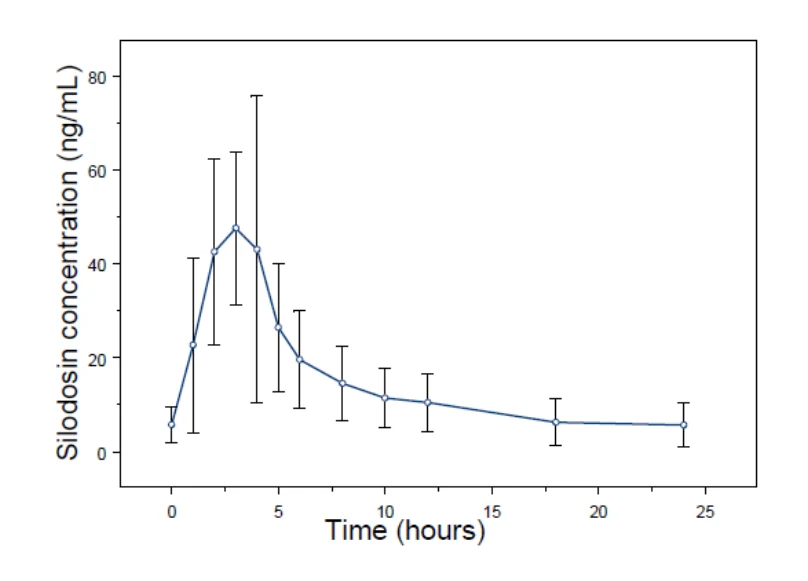
The pharmacokinetic characteristics of silodosin 8 mg once daily were determined in a multi- dose, open-label, 7-day pharmacokinetic study completed in 19 healthy, target-aged (≥ 45 years of age) male subjects. Table 6 and Figure 1 present the steady state pharmacokinetics of this study.
Table 6 Mean (±SD) Steady State Pharmacokinetic Parameters in Males Following Silodosin 8 mg Once Daily with a Meal
| Cmax (ng/mL) | tmax (hours) | t1/2 (hours) | AUCss (ng•hr/mL) |
| 61.6 ± 27.54 | 2.6 ± 0.90 | 13.3 ± 8.07 | 373.4 ± 164.94 |
Cmax = maximum concentration, tmax = time to reach Cmax, t1/2 = elimination half-life, AUCss = steady state area under the concentration-time curve
Figure 1 Mean (±SD) Silodosin Steady State Plasma Concentration-Time Profile in Healthy Target-Aged Subjects following Silodosin 8 mg Once Daily with Food
The absolute bioavailability is approximately 32%.
The effect of a moderate fat, moderate calorie meal was variable and decreased silodosin Cmax by approximately 18 - 43% and AUC by 4 - 49% across three different studies.
Distribution:
Silodosin has an apparent volume of distribution of 49.5 L and is approximately 97% protein bound.
Metabolism:
Silodosin undergoes extensive metabolism through glucuronidation, alcohol and aldehyde dehydrogenase, and cytochrome P450 3A4 (CYP3A4) pathways. The main metabolite of silodosin is a glucuronide conjugate (KMD-3213G) that is formed via direct conjugation of silodosin by UDP-glucuronosyltransferase 2B7 (UGT2B7). Co-administration with inhibitors of UGT2B7 (e.g., probenecid, valproic acid, fluconazole) may potentially increase exposure to silodosin. KMD-3213G, which has been shown in vitro to be active, has an extended half-life (approximately 24 hours) and reaches plasma exposure (AUC) approximately 4 times greater than that of silodosin. The second major metabolite (KMD-3293) is formed via alcohol and aldehyde dehydrogenases and reaches plasma exposures similar to that of silodosin. KMD-3293 is not expected to contribute significantly to the overall pharmacologic activity of silodosin.
Excretion:
Following oral administration of 14C-labeled silodosin, the recovery of radioactivity after 10 days was approximately 33.5% in urine and 54.9% in feces. After intravenous administration, the plasma clearance of silodosin was approximately 10 L/hour.
Special Populations and Conditions
Pediatric:
Silodosin has not been evaluated in patients less than 18 years of age.
Geriatric:
A study comparing 16 males 65 to 75 years of age, 15 males > 75 years of age, and 16 males 45 to 64 years of age was conducted. The exposure (AUC) and elimination half-life of silodosin were approximately 10% less and 17% greater, respectively, in geriatric males 65 to 75 years of age than the younger subjects, and approximately 16% less and 35% greater, respectively in geriatric males > 75 years of age than the younger subjects. A decrease in Cmax of 13% and 40% was seen in males 65 to 75 years of age and > 75 years of age, respectively. Because of the modest degree of these changes, no dose adjustment is needed in elderly subjects (see WARNINGS AND PRECAUTIONS, Geriatrics section).
Gender:
Silodosin has not been evaluated in women.
Race:
No clinical studies specifically investigating the effects of race have been performed. However, available clinical data do not suggest clinically important differences.
Hepatic Insufficiency:
In a study comparing nine male patients with moderate hepatic impairment (Child-Pugh scores 7 to 9), to nine healthy male subjects, the single dose pharmacokinetic disposition of silodosin was not significantly altered in the patients with moderate hepatic impairment. No dosing adjustment is required in patients with mild or moderate hepatic impairment. The pharmacokinetics of silodosin in patients with severe hepatic impairment have not been studied. Sandoz Silodosin should not be administered to patients with severe hepatic impairment (Child-Pugh scores ≥ 10).
Renal Insufficiency:
In a study with six subjects with moderate renal impairment, the total silodosin (bound and unbound) AUC, Cmax, and elimination half-life were 3.2-, 3.1-, and 2-fold higher, respectively, compared to seven subjects with normal renal function. The unbound silodosin AUC and Cmax were 2.0- and 1.5-fold higher, respectively, in subjects with moderate renal impairment compared to the normal controls.
In another study with eight subjects with mild and moderate renal impairment, and five subjects with severe renal impairment, the total silodosin AUC, Cmax, and elimination half-life were 1.9-, 1.7-, and 1.3-fold higher for the mild, and 2.2-, 1.5-, and 1.7-fold higher for moderate compared to eight subjects with normal renal function. The increase in exposure to unbound silodosin was greater in patients with severe renal impairment (Cmax and AUC 2.2- and 3.7-fold, respectively, compared to subjects with normal renal function) than in patients with moderate and mild impairment (Cmax and AUC 1.6- and 1.8-fold, respectively).
In controlled and uncontrolled clinical studies, the incidence of orthostatic hypotension and dizziness was greater in subjects with moderate renal impairment treated with 8 mg silodosin daily than in subjects with normal or mildly impaired renal function.
Sandoz Silodosin is contraindicated in patients with severe renal impairment (CCr < 30 mL/min). In patients with moderate renal impairment (CCr 30-50 mL/min), the dose should be reduced to
4 mg once daily taken with a meal. No dosage adjustment is needed in patients with mild renal impairment (CCr 50-80 mL/min).
STORAGE AND STABILITY
Store at room temperature (15°C to 30°C). Protect from light and moisture.
Keep out of reach and sight of children.
SPECIAL HANDLING INSTRUCTIONS
There are no special handling instructions.
DOSAGE FORMS, COMPOSITION AND PACKAGING
8 mg Capsules:
White hard gelatine capsules inked an S on the lid and an 8 in the body, containing white or almost white fine powder.
Each Sandoz Silodosin 8 mg capsule for oral administration contains 8 mg silodosin, and the following inactive ingredients: Gelatin, iron oxide black, magnesium stearate, mannitol, potassium hydroxide, pregelatinized starch, propylene glycol, shellac, sodium lauryl sulfate and titanium dioxide.
8 mg capsules are supplied in unit of use HDPE bottles of:
- 30 capsules
- 100 capsules
4 mg Capsules:
White hard gelatine capsules inked an S on the lid and a 4 in the body, containing white or almost white fine powder.
Each Sandoz Silodosin 4 mg capsule for oral administration contains 4 mg silodosin, and the following inactive ingredients: Gelatin, iron oxide black, magnesium stearate, mannitol, potassium hydroxide, pregelatinized starch, propylene glycol, shellac, sodium lauryl sulfate and titanium dioxide.
4 mg capsules are supplied in unit of use HDPE bottles of:
- 30 capsules
- 100 capsules
PART II: SCIENTIFIC INFORMATION
PHARMACEUTICAL INFORMATION
Drug Substance
Common Name: silodosin
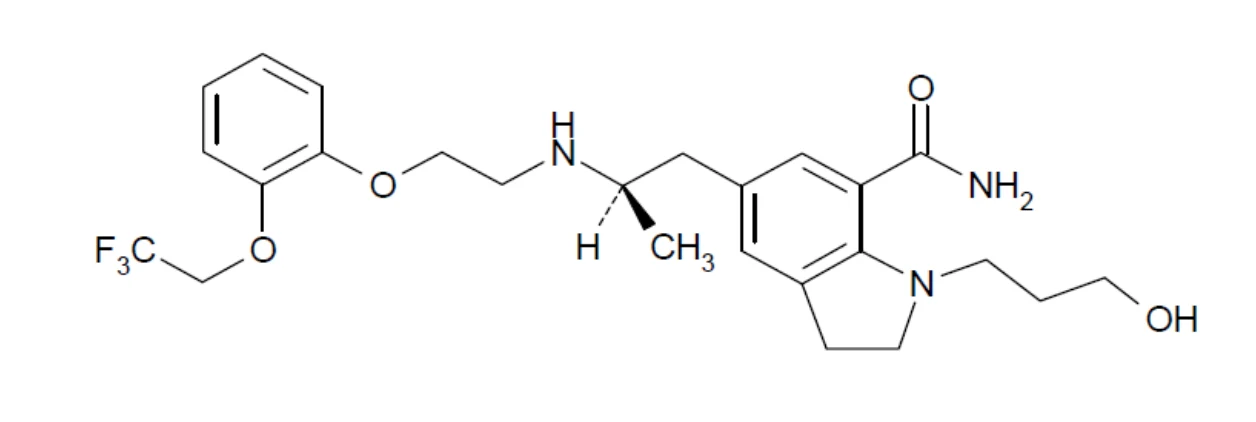
Chemical name: (-)-1-(3-Hydroxypropyl)-5-[(2R)-2-({2-[2-(2,2,2-trifluoroethoxy)- phenoxy]ethyl}amino)propyl]-2,3-dihydro-1H-indole-7-carboxamide.
Molecular formula: C25H32F3N3O4
Molecular mass: 495.53 g/mol
Structural formula:
Physiochemical properties: Silodosin is a white or almost white powder that melts at approximately 107 - 108°C. Freely soluble in acetic acid, methanol and dimethylformamide. Sparingly soluble in acetonitrile. Very slightly soluble in water.
CLINICAL TRIALS
Comparative Bioavailability Studies
A randomised, single-dose, two-treatment, two-period, crossover comparative bioavailability study of Sandoz Silodosin (Sandoz Canada Inc.) 8 mg capsule and RAPAFLO® (Actavis Specialty Pharmaceuticals Co.) 8 mg capsule was conducted in 24 healthy adult male volunteers under fasting conditions. Comparative bioavailability data from the 23 subjects that were included in the statistical analysis are presented in the following table:
Summary Table of the Comparative Bioavailability Data
1 Sandoz Silodosin capsule 8 mg (Sandoz Canada Inc.)
2 RAPAFLO® (silodosin) capsule 8 mg (Actavis Specialty Pharmaceuticals Co., Canada)
3 Expressed as the median (range) only
4 Expressed as the arithmetic mean (CV%) only
Silodosin (1 x 8 mg) Geometric Mean Arithmetic Mean (CV %) | ||||
|---|---|---|---|---|
| Parameter | Test1 | Reference2 | % Ratio of Geometric Means | 90% Confidence Interval |
AUCT (ng·h/mL) | 368.33 405.30 (47.7) | 362.77 399.81 (52.2) | 101.5 | 90.2 – 114.3 |
AUCI (ng·h/mL) | 374.35 412.12 (46.9) | 368.38 406.79 (51.3) | 101.4 | 90.3 – 113.9 |
Cmax (ng/mL) | 85.06 95.82 (48.4) | 81.11 93.5 (58.3) | 104.9 | 92.0 – 119.5 |
Tmax3 (h) | 1.00 (0.33-3.50) | 1.25 (0.50-3.50) | ||
T½4 (h) | 11.10 (46.4) | 10.21 (26.4) | ||
Study Demographic and Trial Design
Benign Prostatic Hyperplasia (BPH):
Two 12-week, randomized, double-blind, placebo-controlled, multicenter studies were conducted with 8 mg daily of silodosin. In these two studies, 923 patients [mean age 64.6 years; Caucasian (89.3%), Hispanic (4.9%), Black (3.9%), Asian (1.2%), Other (0.8%)] were randomized and 466 patients received silodosin 8 mg daily. The two studies were identical in design except for the inclusion of pharmacokinetic sampling in Study 1. The primary efficacy assessment was the International Prostate Symptom Score (IPSS) which evaluated irritative (frequency, urgency, and nocturia), and obstructive (hesitancy, incomplete emptying, intermittency, and weak stream) symptoms. Maximum urine flow rate (Qmax) was a secondary efficacy measure.
Study Results
Mean changes from baseline to last assessment (Week 12) in total IPSS score were statistically significantly greater for groups treated with silodosin than those treated with placebo in both studies (Table 7 and Figure 2 and Figure 3).
Table 7 Mean Change from Baseline in International Prostate Symptom Score (IPSS) in Two Randomized, Controlled, Double-Blind Studies
| Total Symptom Score | Study 1 | Study 2 | ||||
Silodosin 8 mg (n = 233) | Placebo (n = 228) | p-value | Silodosin 8 mg (n = 233) | Placebo (n = 229) | p-value | |
| Baseline | 21.5 (5.38) | 21.4 (4.91) | 21.2 (4.88) | 21.2 (4.92) | ||
| 3 to 4 Day Change From Baseline | -3.9 (5.40) | -2.0 (4.34) | < 0.0001 | -4.4 (5.12) | -2.5 (4.39) | < 0.0001 |
| Week 12 / LOCF Change from Baseline | -6.5 (6.73) | -3.6 (5.85) | < 0.0001 | -6.3 (6.54) | -3.4 (5.83) | < 0.0001 |
LOCF – Last observation carried forward for those not providing data at 12 weeks of treatment.
Figure 2 Mean Change from Baseline in IPSS Total Score by Treatment Group and Visit in Study 1
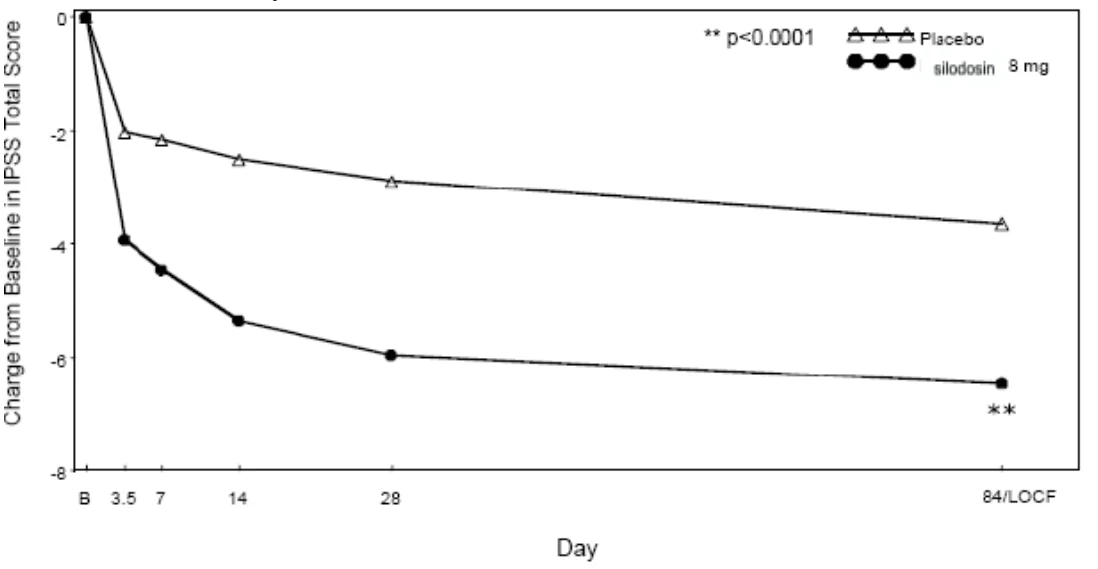
B – Baseline determination taken Day 1 of the study before the initial dose. Subsequent values are observed cases except for LOCF values.
LOCF – Last observation carried forward for those not completing 12 weeks of treatment.
Figure 3 Mean Change from Baseline in IPSS Total Score by Treatment Group and Visit in Study 2
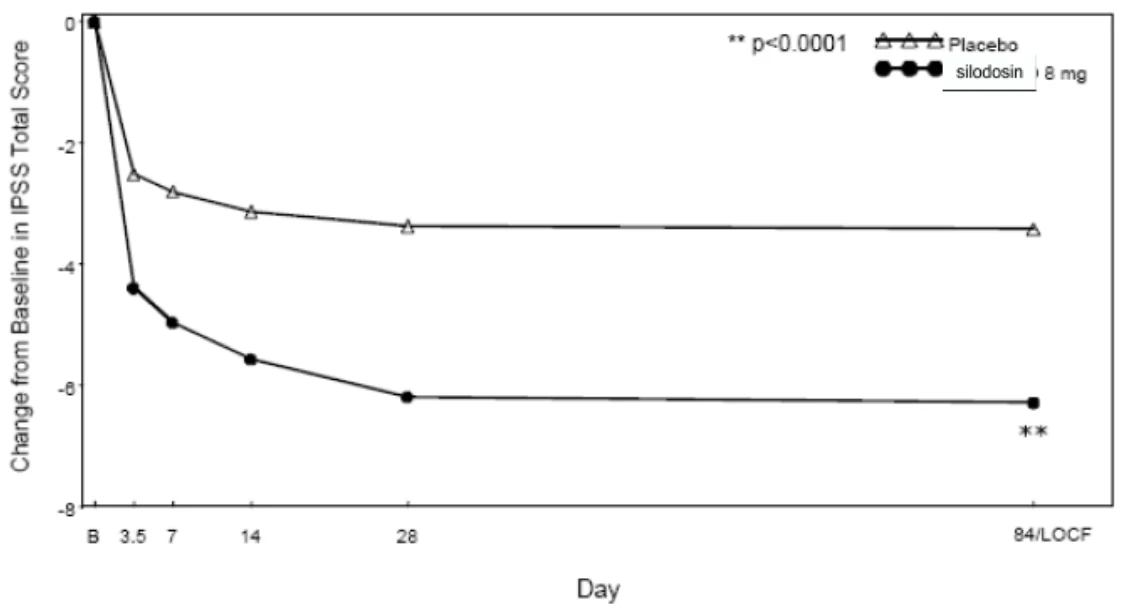
B – Baseline determination taken Day 1 of the study before the initial dose. Subsequent values are observed cases except for LOCF values.
LOCF – Last observation carried forward for those not providing data at 12 weeks of treatment.
Silodosin produced highly significant reductions (p < 0.0001) of total IPSS scores at all time points in the studies, demonstrating both rapid (within 3 to 4 days) and sustained positive effects.
Silodosin produced significant, rapid, and sustained reductions in both irritative and obstructive symptoms as measured by the change from baseline in the appropriate IPSS subscales. Table 8 and Table 9 present IPSS irritative and obstructive subscale results.
Table 8 Mean Change (SD) from Baseline in the IPSS Irritative Symptoms Subscale in Two Randomized, Controlled, Double-Blind Studies
| Irritative Symptom Score | Study 1 | Study 2 | ||||
Silodosin 8 mg (n = 233) | Placebo (n = 228) | p-value | Silodosin 8 mg (n = 233) | Placebo (n = 229) | p-value | |
Baseline 3 to 4 Day Change from Baseline | 9.5 (2.56) -1.3 (2.42) | 9.4 (2.44) -0.8 (2.17) | 0.0192 | 9.2 (2.62) -1.5 (2.29) | 9.2 (2.59) -0.9 (2.15) | 0.0033 |
| Week 12 / LOCF Change from Baseline | -2.3 (2.97) | -1.4 (2.70) | 0.0004 | -2.4 (2.89) | -1.3 (2.62) | 0.0001 |
LOCF – Last observation carried forward for those not providing data at 12 weeks of treatment.
Table 9 Mean Change (SD) from Baseline in the IPSS Obstructive Symptoms Subscale in Two Randomized, Controlled, Double-Blind Studies
| Obstructive Symptom Score | Study 1 | Study 2 | ||||
Silodosin 8 mg (n = 233) | Placebo (n = 228) | p-value | Silodosin 8 mg (n = 233) | Placebo (n = 229) | p-value | |
| Baseline | 12.0 (3.85) | 12.0 (3.57) | 12.0 (3.26) | 11.9 (3.49) | ||
3 to 4 Day Change from Baseline | -2.6 (3.57) | -1.2 (2.91) | < 0.0001 | -2.9 (3.53) | -1.6 (3.06) | < 0.0001 |
| Week 12 / LOCF Change from Baseline | -4.2 (4.32) | -2.2 (3.75) | < 0.0001 | -3.9 (4.31) | -2.1 (3.77) | < 0.0001 |
LOCF – Last observation carried forward for those not providing data at 12 weeks of treatment.
Silodosin produced rapid and significant increases in maximum urinary flow rates from baseline to last assessment versus placebo in both studies (Table 10 and Figure 4 and Figure 5). Statistically significant treatment effects on maximum urine flow rates were noted within 2 to 6 hours after the first dose and at the end of both Study 1 and 2.
Table 10 Mean Change (SD) from Baseline in Maximum Urinary Flow Rate (mL/sec) in Two Randomized, Controlled, Double-Blind Studies
| Mean Maximum Flow Rate (mL/sec) | Study 1 | Study 2 | ||||
Silodosin 8 mg (n = 233) | Placebo (n = 228) | p-value | Silodosin 8 mg (n = 233) | Placebo (n = 229) | p-value | |
| Baseline | 9.0 (2.60) | 9.0 (2.85) | 8.4 (2.48) | 8.7 (2.67) | ||
| 2 to 6 Hours Change from Baseline | 2.7 (3.48) | 0.8 (3.05) | < 0.0001 | 2.9 (3.41) | 2.1 (4.26) | 0.0494 |
| Week 12 / LOCF Change from Baseline | 2.2 (4.31) | 1.2 (3.81) | 0.0060 | 2.9 (4.53) | 1.9 (4.82) | 0.0431 |
LOCF – Last observation carried forward for those not providing data at 12 weeks of treatment.
Figure 4 Mean Change from Baseline in Qmax (mL/sec) by Treatment Group and Visit in Study 1
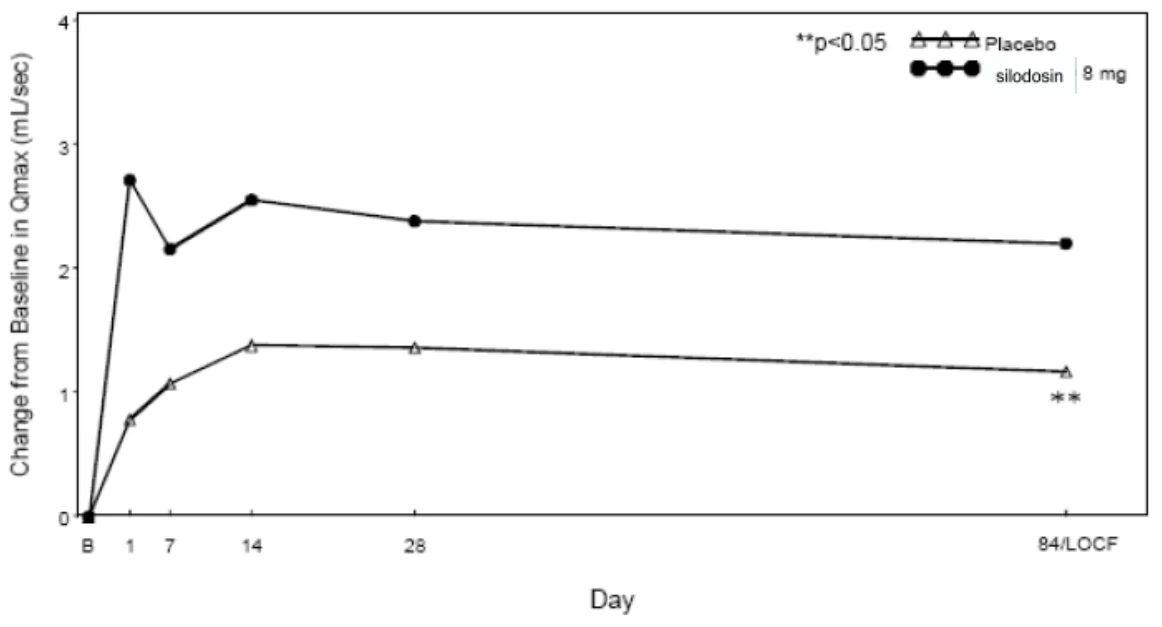
B – Baseline determination taken Day 1 of the study before the initial dose. Subsequent values are observed cases except for LOCF values.
LOCF – Last observation carried forward for those not providing data at 12 weeks of treatment.
Note – The first Qmax assessments at Day 1 were taken 2-6 hours after patients received the first dose of double- blind medication.
Note – Measurements at each visit were scheduled 2-6 hours after dosing (approximate peak plasma silodosin concentration).
Figure 5 Mean Change from Baseline in Qmax (mL/sec) by Treatment Group and
Visit in Study 2
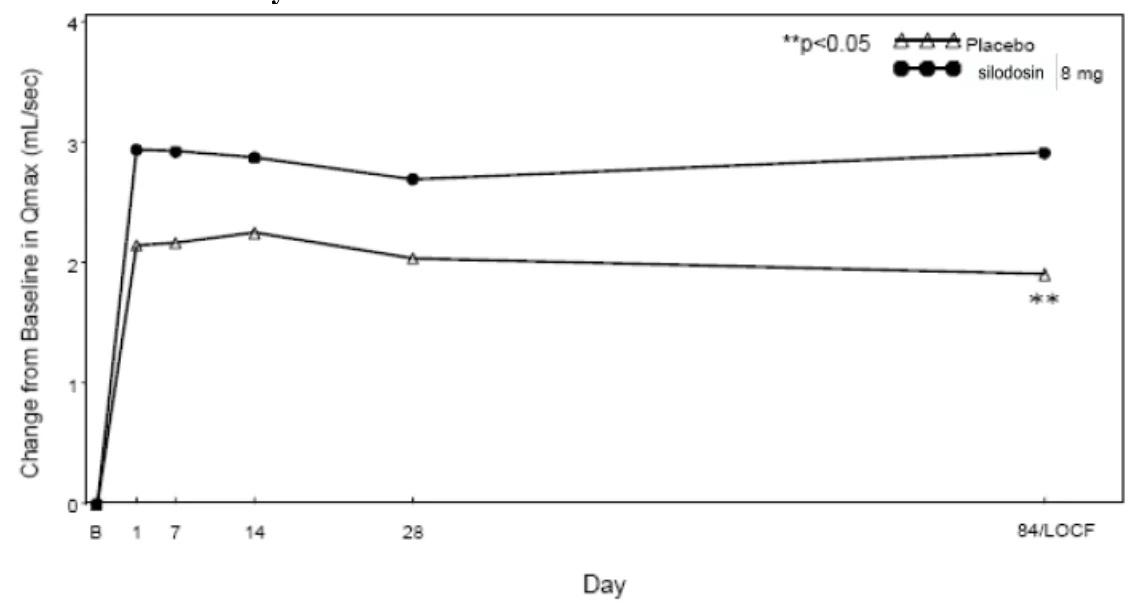
B – Baseline determination taken Day 1 of the study before the initial dose. Subsequent values are observed cases except for LOCF values.
LOCF – Last observation carried forward for those not providing data at 12 weeks of treatment.
Note – The first Qmax assessments at Day 1 were taken 2-6 hours after patients received the first dose of double-blind medication.
Note – Measurements at each visit were scheduled 2-6 hours after dosing (approximate peak plasma silodosin concentration).
Silodosin had positive effects on quality of life based on the IPSS Quality of Life subscale, as measured at various intervals during dosing. The silodosin treatment effects exceeded treatment effects of placebo. The percentage of silodosin patients reporting to be in the delighted, pleased, mostly satisfied, and mixed categories increased from 6.9% to 32%, whereas the percentage of placebo patients using these descriptors increased from 7.2% to 22.5%.
Table 11 Summary of Quality of Life Related to Urinary Symptoms in Two Randomized, Controlled, Double-Blind Studies
| IPSS Question 8 Responses | Treatment, n (%) | |
| Silodosin (n = 466) | Placebo (n = 457) | |
| Baseline | 32 (6.9) | 33 (7.2) |
| Delighted, pleased, or mostly satisfied | ||
| Mixed about equally satisfied and dissatisfied | 126 (27.0) | 124 (27.1) |
| Mostly dissatisfied, unhappy, or terrible | 308 (66.1) | 300 (65.6) |
| Week 12 (LOCF) | 149 (32.0) | 103 (22.5) |
| Delighted, pleased, or mostly satisfied | ||
| Mixed about equally satisfied and dissatisfied | 141 (30.3) | 110 (24.1) |
| Mostly dissatisfied, unhappy, or terrible | 176 (37.3) | 244 (53.4) |
LOCF – Last observation carried forward for those not providing data at 12 weeks of treatment.
Long Term Treatment of BPH
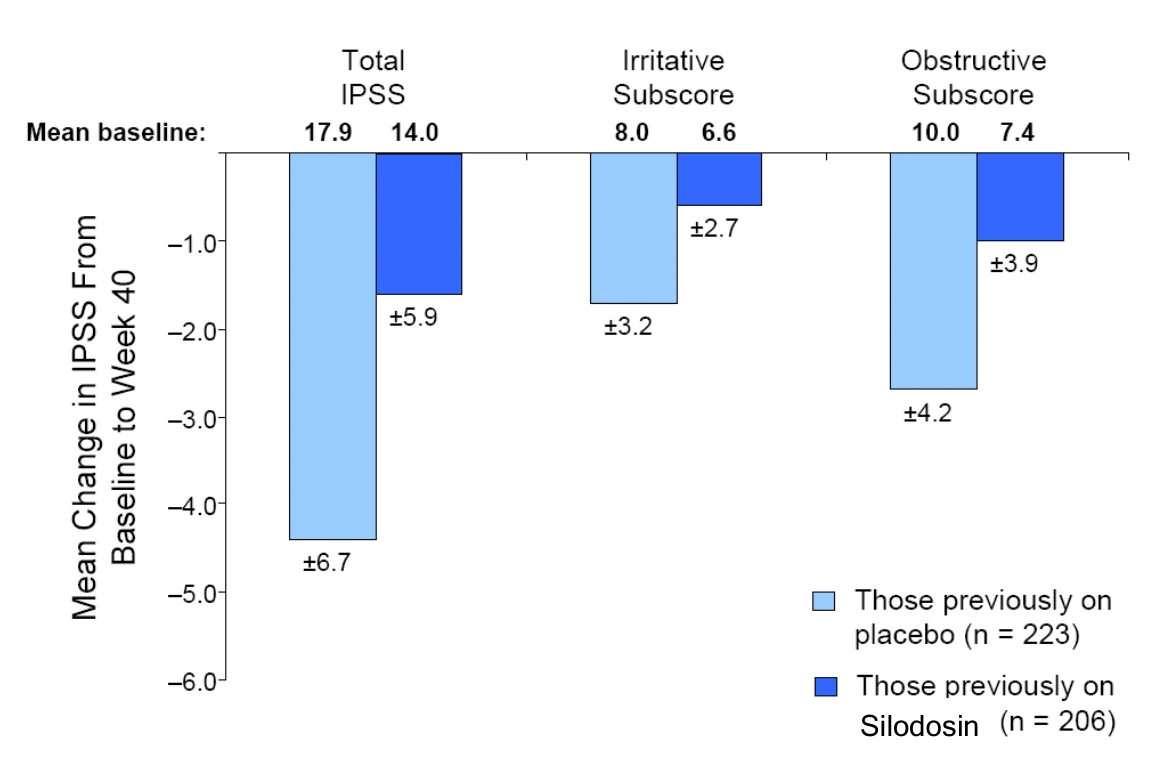
Patients in Studies 1 and 2 who received either silodosin or placebo were allowed to continue in a 40-week open-label extension study. Patients who received silodosin in the double-blind period continued to see improvements in total IPSS as well as irritative and obstructive symptoms for up to 1 year of treatment; total IPSS score decreased by an additional 1.6 in these patients. Figure 6 provides results for all patients in the open-label extension study.
Figure 6 Mean Change (SD) from Baseline (End of Double-Blind Studies) to Week 40 in IPSS Total Score and Subscores in Open-Label Extension Study (Evaluable Population, N = 429)
DETAILED PHARMACOLOGY
Silodosin has high affinity for α1A-Adrenergic Receptor (α1A-AR) subtype (pKi value: 10.4). The selectivity of silodosin for α1A-AR subtype was 162 times and 55.0 times higher than for subtypes α1B-AR and α1D-AR, respectively. In addition, the selectivity of silodosin for subtype α1A-AR was the highest among other α1-AR blockers, including tamsulosin hydrochloride, prazosin hydrochloride, and terazosin hydrochloride. Silodosin had a strong inhibitory effect on contraction induced by treatment with noradrenalin in the lower urinary tract organs such as the
Silodosin
prostate, the urethra and the trigone of the urinary bladder on which subtype α1A-ARs are predominantly located (the pA2 or pKb value: 9.60, 8.71 and 9.35, respectively). The pA2 values of the inhibitory effect on contraction induced by treatment with noradrenalin in the isolated spleen of rats on which α1B-AR subtype is predominantly located, and in isolated thoracic aortas in rats on which α1D-AR is predominantly located, were 7.15 and 7.88, respectively. The receptor binding study and the function study using isolated organs revealed that silodosin had higher selectivity for α1A-AR subtype of the lower urinary tract organs compared to the other α1- AR blockers.
In human plasma two major metabolites of silodosin (those greater than 10 percent of parent drug systemic exposure at steady state) were identified and designated KMD-3213G and KMD-3293. The glucuronide conjugate of silodosin, KMD-3213G, which is not detected in animal plasma, had 1/8 times the affinity of silodosin for human α1-AR. In animals, this human metabolite had 1/4.5 times the affinity for α1A-AR subtype in rats, about 1/2 the inhibitory effect on contraction induced by noradrenalin in the isolated prostate in rats, and not greater than 1/10 the transferability to the prostate of silodosin. KMD-3293, the other major metabolite of silodosin in humans, was detected in animal plasma and had 1/42 times the affinity of silodosin for subtype α1A-AR in humans.
A rat model of benign prostatic hyperplasia, prepared by administering sex hormones, had overactive bladder-like contractions when urine accumulated in the body. Silodosin significantly inhibited the number of overactive cytoid contractions. In secondary pharmacodynamic studies, silodosin had comparatively high binding affinities for β2-AR as well as α1-ARs, but inhibited β2-AR in the isolated uterus in pregnant rats at a higher concentration than the concentration at which silodosin inhibited α1-ARs in the prostate. Furthermore, silodosin had low affinities for other types of receptors except for β2-AR, and accordingly was less likely to exhibit any effects through receptor types other than α1-ARs in clinical use.
The safety pharmacology studies of silodosin revealed minimally significant effects on the central nervous system or on the respiratory system. With regard to the cardiovascular system, a decrease in blood pressure of about 20% of the baseline values was seen in conscious dogs after oral administration of silodosin at 20 mg/kg,(1) but silodosin had no effect on heart rate and electrocardiography in conscious dogs. Silodosin also inhibited hERG current at high concentrations and prolonged APD90 in the myocardial action potential in isolated papillary muscle from guinea pigs. However, these effective concentrations (4,415 ng/mL) are about 72- fold higher than 61.6 ng/mL, the maximum concentration of silodosin in healthy adult human males receiving repeat oral administration of 8 mg, which is the recommended clinical dose.
Thus, silodosin is expected to have little effect on the repolarization in the heart. In a thorough QT electrocardiography study, silodosin capsules 8 mg daily, silodosin capsules 24 mg daily, placebo daily, or a single dose of moxifloxacin 400 mg were administered to healthy male humans. Silodosin capsules 8 mg and 24 mg daily had no statistically significant effect on ECG intervals or cardiac repolarization relative to placebo. Furthermore, there was no dose-response relationship observed with the product.
The main plasma metabolite of silodosin is a glucuronide conjugate (KMD-3213G) that is formed via direct conjugation of silodosin by UDP-glucuronosyltransferase 2B7 (UGT2B7). The second major plasma metabolite (KMD-3293) is formed via alcohol and aldehyde dehydrogenases and reaches plasma exposures similar to that of silodosin. KMD-3213G, which is not detected in animal plasma, had 1/8 times the affinity of silodosin for human α1-AR. In animals, this human metabolite had 1/4.5 times the affinity for α1A-AR subtype in rats, about 1/2 the inhibitory effect on contraction induced by noradrenalin in the isolated prostate in rats, and not greater than 1/10 the transferability of silodosin to the prostate. The safety pharmacology studies in which KMD-3213G was intravenously injected revealed that KMD-3213G had no meaningful effects on the central nervous system, the respiratory system, or the cardiovascular system.
Metabolite KMD-3293 was detected in animal plasma and had 1/42 times the affinity of silodosin for subtype α1A-AR in humans.
TOXICOLOGY
Acute Toxicity
A single oral administration study in rats revealed that the approximate lethal dose was 800 mg/kg for males and females. The approximate lethal doses for male and female rats receiving an intravenous administration were 75 mg/kg and 90 mg/kg, respectively. The single administration study in dogs disclosed that the approximate lethal dose was 1500 mg/kg for orally administered silodosin and 50 mg/kg or more via intravenous injection.
Table 12 Single Dose Toxicity Studies in Rats and Dogs after Oral and Intravenous Administration
| Species | Route | Doses (mg/kg) |
| Rats | oral oral | 500, 1000, 2000 400, 800, 1600 |
| I.V. | 0, 60, 75, 90 | |
| Dogs | oral oral | 1500, 2000 1000, 1500 |
| I.V. | 25, 50 |
Chronic Toxicity
A 1-month administration study in rats revealed fatty degeneration in liver hepatocytes given 60 mg/kg/day or more, and the no observed adverse effect level (NOAEL) of silodosin was estimated at 20 mg/kg/day. A 3-month repeat oral administration study in rats revealed moderate to severe fatty degeneration of hepatocytes and hypertrophy and eosinophilic changes of centrilobular hepatocytes in the males receiving 100 mg/kg/day or more, and hypertrophy of centrilobular hepatocytes in females receiving 400 mg/kg/day or more. The NOAEL of silodosin was estimated to be 25 mg/kg/day in males and 100 mg/kg/day in females. A 26-week oral administration study in rats showed fatty degeneration of hepatocytes in males receiving 15 mg/kg/day or more and in females given 300 mg/kg/day. Males receiving 5 mg/kg/day showed only a mild fatty degeneration of hepatocytes, which was also seen in the control group. The NOAEL of silodosin was estimated to be 5 mg/kg/day. In a 2-week intravenous injection study in rats, mortality was noted in the 50 mg/kg/day group, and the NOAEL of silodosin was estimated to be 10 mg/kg/day.
Following a 28-day administration in rats, plasma evaluations revealed decreased throxine (T4) levels at all dosage levels (50-300 mg/kg/day), increased thyroid stimulating hormone (TSH) at 150 and 300 mg/kg/day, and decreased triiodothyronine (T3) at 300 mg/kg/day. Liver to body weight ratio was increased at 150 and 300 mg/kg/day, along with thyroid/parathyroid to body weight ratio in the 300 mg/kg/day group. Histopathological examination revealed centrilobular hepatocellular hypertrophy and hypertrophy of the thyroid follicular epithelium at 150 and 300 mg/kg/day. Increased hepatic microsomal T4-UDP-GT activity was observed in the 300 mg/kg/day group. Changes in the CYP-dependent enzyme activities also occurred. Most notable were the significant increases in CYP1A at all dosage levels, increases in CYP3A in the 150 and 300 mg/kg/day groups, increases in CYP2B in the 300 mg/kg/day group, and increases in lauric acid 11-hydroxylase and lauric acid 12-hydroxylase in the 150 and 300 mg/kg/day groups.
A 1-month oral administration study in dogs showed degeneration of the seminiferous tubular epithelium in animals receiving 25 mg/kg/day or more, with the NOAEL of silodosin estimated to be less than 25 mg/kg/day. A 13-week oral administration study in dogs revealed decreased body weights in both males and females in the 50 mg/kg/day group, and atrophy of the thymus and retarded maturation of the genitalia in males given 50 mg/kg/day. The NOAEL of silodosin was estimated to be 10 mg/kg/day. A 52-week oral administration study showed decreases in body weight, erythrocyte count, hemoglobin level, and hematocrit level in dogs given 80 mg/kg/day. The NOAEL of silodosin was estimated to be 20 mg/kg/day. A 2-week intravenous administration study revealed no marked changes, and the NOAEL of silodosin was estimated at 25 mg/kg/day.
Table 13 Chronic Dose Toxicity Studies in Rats and Dogs after Oral and Intravenous Administration
| Species | Route | Duration of Dosing | Doses (mg/kg) |
| Rat | oral | 28 days 1 month 1 month 3 months 26 weeks 26 weeks | 0, 50, 150, 300 0, 30, 100, 300, 800 0, 20, 60, 200, 600 0, 25, 100, 400 0, 15, 60, 300 0, 1, 5 |
| I.V. | 2 weeks | 0, 2, 10, 50 | |
| Dog | oral | 2 weeks 1 month 13 weeks 52 weeks | 50, 200, 500 0, 25, 100, 400 0, 10, 50, 100/200 0, 5, 20, 80 |
| I.V. | 2 weeks | 0, 1, 5, 25 |
Mutagenicity Studies
The reverse mutation assay in bacteria, the mouse lymphoma assay, the micronucleus test in mice, and the unscheduled DNA synthesis (UDS) test with rat hepatocytes revealed no genotoxicity potential for silodosin. A positive response was noted in the in vitro chromosomal aberration assay with Chinese hamster culture cells. This positive response was noted only at high levels in which cytotoxicity was noted. Silodosin did not induce chromosome aberrations in the in vivo genotoxicity study conducted when animals were exposed to the drug. Silodosin and its metabolites are not considered genotoxic.
Carcinogenicity Studies
In a 2-year carcinogenicity study, male mice were administered silodosin at 20, 60, and 100/200 mg/kg/day and female mice were administered 60, 150, and 400 mg/kg/day. Decreased body weights were observed at 200 mg/kg/day in males; therefore, the highest dosage was decreased to 100 mg/kg/day at Week 27 of administration. Mammary tumors and pituitary adenomas were observed in females treated at 150 mg/kg/day or higher and females treated at 400 mg/kg/day, respectively. The finding of pituitary adenomas was not statistically significant relative to controls in this study.
In a separate study conducted to elucidate the mechanism of onset of these increases in tumors, mice were administered oral doses of silodosin. Results confirmed increases in blood prolactin levels in the females receiving a single administration of 60 mg/kg/day or more and in females receiving repeat administration of 200 mg/kg/day or more. The mechanism of induction of pituitary and mammary tumors in rodents has been documented in publications as being due to the long-term, excessive stimulation by increased prolactin production and secretion from the pituitary, resulting from suppression of dopamine in the hypothalamus.(2) Accordingly, increased mammary gland and pituitary tumors were considered to be induced by the same mechanism as described above. Non-neoplastic lesions such as an increase in hyperplasia of mammary glands in mice receiving 150 mg/kg/day or more, hyperplasia and hypertrophy of the anterior pituitary, and increases in acinus of the breast and enlarged mammary ducts in mice given 400 mg/kg/day may also be induced by increased production of prolactin and excessive stimulation to the mammary glands. Since prolactin, as well as estrogen and progesterone, accelerates adenomyosis of the uterus in mice,(3) the increase in adenomyosis of the uterus in the female mice receiving 60 mg/kg/day or more may also be induced by increased blood prolactin levels.
In addition, since prolactin stimulates corpus luteal function and increases the synthesis of progesterone as described above, increases in cystic uterine glands in the uterus of mice receiving 150 mg/kg/day or more and enlargement of uterine glands in mice given 400 mg/kg/day, may result from the increased secretion of the uterine gland caused by increased progesterone. It is believed that epidemiologic examination in humans revealed that a risk of mammary gland tumors increases with increased blood prolactin in women.(4)
Increases in mammary gland and pituitary tumors in mice are not considered to be significant for the safety of silodosin in humans for the following reasons: repeated doses in mice of 60 mg/kg did not produce an increase in mammary tumors, and doses of 20 mg/kg did not produce an increase in prolactin levels in the blood. The 150 mg/kg/day dose is 125-fold greater, or more, on a mg/kg/day basis, than the recommended human clinical dose. Increases in prolactin levels have also been reported to be increased by AR blockers for dopamine and include the AR blockers tamsulosin and prazosin. Therefore, these data indicate that silodosin caused a significant increase in mammary tumors at 150 and 400 mg/kg via an indirect or secondary mechanism involving increases in prolactin levels that also produced non-significant increases in pituitary and hepatocellular adenomas. Tamsulosin, likewise, has induced significant increases in mammary tumors via a secondary mechanism involving hyperprolactinemia.(5) The mammary tumors noted are likely a class effect, for which there is no evidence of clinical relevance.
In the rat carcinogenicity study in which males were administered silodosin at 15, 50, and 150 mg/kg/day, and female rats received 15, 80, and 250 mg/kg/day; follicular cell adenomas of the thyroid were seen only in males of the 150 mg/kg/day group.
A repeat oral administration study in rats conducted to elucidate the possible mechanism of onset of increases in thyroid tumors revealed an increase in the liver UDP-GT activity in males receiving 150 mg/kg/day or more. A similar increase was noted in phenobarbital treated male rats. UDP-GT is involved in the metabolism and excretion of thyroid hormones. An increased UDP-GT activity enhances the catabolism of the thyroid hormones T3 and T4. The catabolism accelerates the secretion of TSH from the pituitary through an inhibition of the negative feedback mechanism. It is also known that since thyroid hormone binding protein is decreased due to catabolism, increases in unbound and free thyroid hormone occur in rats. Thus, the half-life of thyroid hormones is much shorter in rats compared to that of other species including humans.(6,7) Accordingly, the increased catabolism of thyroid hormones quickly decreases thyroid hormone levels in the blood, and the secretion of TSH is consequently increased. Thyroid tumor induction by this indirect mechanism occurs in rats more frequently than in mice, and in males more frequently than in females.(6,7) In contrast, it has been reported that thyroid tumors are not induced by this mechanism in humans.(6,7) Therefore, the neoplastic changes in the thyroid observed in the rat carcinogenicity study are considered secondary to a rat-specific, indirect mechanism, and therefore do not pose a risk to humans for the following reasons: the neoplastic changes in the thyroid are induced by the change in the catabolism of thyroid hormones by the indirect mechanism of thyroid tumor induction as previously described,(8) and there is a sufficient safety margin (72-fold) in dosage between the recommended clinical dose and 50 mg/kg/day in which follicular cell adenomas in the thyroid were not induced in male rats. Other drugs and chemicals have induced thyroid tumors in rats by a similar mechanism (9,10) and have been approved for use.
Reproduction and Teratogenicity Studies
In a study of fertility and early embryonic development and implantation in rats, it was determined that the fertility index decreased due to changes in males, and the mating index decreased due to changes in females. The NOAEL was 6 mg/kg/day for the general toxicity in males and females and 6 mg/kg/day and 20 mg/kg/day for the reproductive function and early embryonic development in males and females, respectively. No teratogenic effects were noted in either rats or rabbits in the study. The NOAEL of silodosin for reproductive function and embryo-fetal development was 1000 mg/kg/day in rats and 60 mg/kg/day in rabbits. In a study for effects on pre- and post-natal development, including maternal function in rats, the NOAEL of silodosin was 30 mg/kg/day for maternal function and 300 mg/kg/day for offspring (F1).
Other Toxicology Studies
In a local irritation study conducted using silodosin injections (0.2 mg/mL, pH 7.15) which were to be used in the clinical pharmacology study (BA / effect of diets), no significant muscle damage in rabbits and no human blood hemolysis were observed.
An antigenicity study confirmed that silodosin demonstrated no antigenic potential in mice or guinea pigs.
An in vitro phototoxicity study showed that silodosin produced mild phototoxicity when exposed to Balb/c 3T3 fibroblast cells in vitro. Treatment with silodosin resulted in a decrease in cell survival in the presence of UV-A light, which was illustrated by a decreased uptake of neutral red. An in vivo phototoxicity study exposing Crl:SKH1-hr hairless mice to UVR radiation from a xenon lamp after a single dose of silodosin was conducted. At the highest dosages of 500 mg/kg in male mice and 400 mg/kg in female mice, the mice exhibited mild, transient erythema indicative of phototoxicity. At lower dosages of 0 (Vehicle), 20, and 100 mg/kg in male mice and 0 (Vehicle), 60, and 150 mg/kg in female mice, no skin events indicative of phototoxicity were noted. The NOAEL in male mice was 100 mg/kg and the NOAEL in female mice was 150 mg/kg, which are much greater than the human clinical dose of 0.11 mg/kg.
REFERENCES
- 1. Akiyama K, Noto H, Nishizawa O, Sugaya K, Yamagishi R, Kitazawa M, et al. Effect of KMD-3213, an α1A-adrenoceptor antagonist, on the prostatic urethral pressure and blood pressure in male decerebrate dogs. Int J Urol 2001;8:177-83.
- 2. Klaassen CD, editor. Hormonal carcinogenesis, Chapter 8 Chemical carcinogenesis. Casarett & Doull’s Toxicology, the Basic science of poisons 6th Ed, McGraw-Hill 2001; p.246-8.
- 3. Maekawa A, Yoshida A. Susceptibility of the female genital system to toxic substances. Pathobiology of the aging mouse Vol.1, ILSI Press, Washington DC, 1996;481-93.
- 4. Vonderhaar BK. Prolactin involvement in breast cancer. Endocrine-Related Cancer 1999;6:389-404.
- 5. Physicians Desk Reference, 2006, Medical Economics Corporation, Inc., Montvale, N.J.
- 6. Hill RN, Erdreich LS, Paynter OE, Roberts PA, Rosenthal SL, Wilkinson CF. Thyroid follicular cell carcinogenesis. Fundam Appl Toxicol. 1989;629-97.
- 7. Capen CC. Mechanistic data and risk assessment of selected toxic end points of the thyroid gland. Tox Pathol 1997; #25:39-48.
- 8. McClain M. The significance of hepatic microsomal enzyme induction and altered thyroid function in rats: implications for thyroid gland neoplasia. Tox Pathol 1989;17:294-306.
- 9. Swarm R.L. et al. Observations on the thyroid gland in rats following the administration of sulfamethoxazole and trimethoprim. Tox Appl Pharmacol 1973;24:351-363.
- 10. Hasumura M. et al. Promotion of thyroid carcinoma by para-amino-benzoic acid in rats initiated with N-bis (2-hydroxypropyl) nitrosamine. Tox Sci 2005;86(1):61-67.
- 11. RAPAFLO® (silodosin capsules, 8 mg and 4 mg), Control No.: 213396, Product Monograph, Allergan Inc., Date of Preparation: March 12, 2018.