


Product Monograph - Solifenacin (Sanis Health)
SUMMARY PRODUCT INFORMATION
| Route of Administration | Dosage Form / Strength | All Nonmedicinal Ingredients |
| Oral | Tablet, film coated / 5 mg , 10 mg | Corn starch, hypromellose, iron oxide yellow (5 mg solifenacin tablet) or iron oxide red (10 mg solifenacin tablet), lactose monohydrate, macrogol, magnesium stearate, talc, titanium dioxide. |
INDICATIONS AND CLINICAL USE
SOLIFENACIN (solifenacin succinate) is indicated for:
- Treatment of overactive bladder in adults with symptoms of urge urinary incontinence, urinary urgency and urinary frequency.
Geriatrics:
In placebo controlled clinical studies, similar safety and effectiveness were observed between older (623 patients ≥ 65 years and 189 patients ≥ 75 years) and younger patients (1188 patients
< 65 years) treated with solifenacin succinate. (See ACTION AND CLINICAL PHARMACOLOGY)
Pediatrics:
Safety and effectiveness in children have not yet been established.
CONTRAINDICATIONS
- Patients with urinary retention, dependent on dialysis, gastroparesis or narrow angle glaucoma
- Patients who are hypersensitive to this drug or to any ingredient in the formulation or component of the container. For a complete listing, see DOSAGE FORMS, COMPOSITION AND PACKAGING.
WARNINGS AND PRECAUTIONS
General
SOLIFENACIN, like other anticholinergic drugs, should be administered with caution in patients with impaired ability to sweat, to reduce the risk of heat prostration, and in patients with clinically significant bladder outflow obstruction because of the risk of urinary retention.
SOLIFENACIN may cause blurred vision and somnolence. Patients should be advised to exercise caution in driving or operating machinery until the drug’s effect on vision and somnolence has been determined.
Angioedema of the face, lips, tongue, and/or larynx have been reported with solifenacin. In some cases angioedema occurred after the first dose. Angioedema associated with upper airway swelling may be life threatening. If involvement of the tongue, hypopharynx, or larynx occurs, solifenacin should be promptly discontinued and appropriate therapy and/or measures necessary to ensure a patent airway should be promptly provided.
Anaphylactic reaction has been reported in some patients treated with solifenacin succinate. In patients who develop anaphylactic reactions, SOLIFENACIN should be discontinued and appropriate therapy and/or measures necessary to ensure a patent airway should be promptly provided.
Monitoring and Laboratory Tests
Monitoring of the QT/QTc interval and/or serum electrolyte levels may be appropriate in high risk patients who are being treated with SOLIFENACIN, such as:
Patients with known congenital or acquired QT/QTc interval prolongation or electrolyte disturbances;
Patients who are taking drugs that have been associated with QT/QTc interval prolongation and/or torsade de pointes such as Class IA (e.g. quinidine, procainamide) or Class III (eg amiodarone, sotalol) antiarrhythmic medications or those taking potent CYP3A4 inhibitors.
Carcinogenesis and Mutagenesis
Solifenacin succinate was not mutagenic in the in vitro Salmonella typhimurium or Escherichia coli microbial mutagenicity test or chromosomal aberration test in human peripheral blood lymphocytes, with or without metabolic activation, or in the in vivo micronucleus test in rats.
No increase in tumors was found following the administration of solifenacin succinate to male and female mice for 104 weeks at doses up to 200 mg/kg/day (5 and 9 times human exposure at the maximum recommended human dose [MRHD], respectively), and male and female rats for 104 weeks at doses up to 20 and 15 mg/kg/day, respectively (<1 times exposure at the MRHD).
Cardiovascular
A study of the effect of solifenacin on the QT interval was conducted in 76 healthy women. The QTc interval prolongation effect appeared greater for the 30 mg compared to the 10 mg dose of solifenacin. Although the effect of the highest solifenacin dose (three times the maximum therapeutic dose) studied did not appear as large as that of the positive control moxifloxacin at its therapeutic dose, the confidence interval overlapped. This study was not designed to draw direct statistical comparison between the drugs or the dose levels. (See ACTION AND CLINICAL PHARMACOLOGY). This observation should be considered in clinical decisions to prescribe SOLIFENACIN for patients with a known history of QT prolongation or patients who are taking medications known to prolong the QT interval.
The effect of solifenacin on QTc interval change in males has not been investigated, and caution should be taken in extrapolating the findings of this study to male subjects.
The effect of solifenacin on QTc interval change in elderly subjects with occult renal insufficiency, (in whom plasma concentration of solifenacin might be higher than those observed in younger subjects), has not been investigated.
QT prolongation and Torsades de Pointes have been observed in patients with risk factors such as pre-existing long QT syndrome and hypokalemia.
Caution should be used when prescribing antimuscarinics/anticholinergics to patients with pre-existing cardiac diseases.
Gastrointestinal
SOLIFENACIN, like other anticholinergics should be used with caution in patients with decreased gastrointestinal motility.
Hepatic
SOLIFENACIN should be used with caution in patients with reduced hepatic function. Doses of SOLIFENACIN greater than 5 mg are not recommended in patients with moderate hepatic impairment. (Child-Pugh B). SOLIFENACIN is not recommended for patients with severe hepatic impairment (Child-Pugh C). (See ACTION AND CLINICAL PHARMACOLOGY, DOSAGE AND ADMINISTRATION and ADVERSE REACTIONS).
Renal
Use with caution in patients with reduced renal function. Doses of SOLIFENACIN greater than 5 mg are not recommended in patients with severe renal impairment (CLcr < 30 mL/min). (See ACTION AND CLINICAL PHARMACOLOGY, DOSAGE AND ADMINISTRATION).
Solifenacin succinate is contraindicated in dialysis dependent patients (see CONTRAINDICATIONS).
Sexual Function/Reproduction
No clinical data are available from reproductively competent women who have received long-term treatment with solifenacin succinate. The potential risk to such women is presently unknown. Therefore, SOLIFENACIN should be used during pregnancy only if the potential benefit for the mother justifies the potential risk for the fetus. Women of childbearing potential should be considered for treatment only if using adequate contraception.
In a 13-week toxicity study in mice treated with 400 mg/kg/day [15 times exposure at the maximum recommended human dose (MRHD)] of solifenacin succinate and in a 26-week toxicity study in rats treated with 30 mg/kg/day (<1 times exposure at the MRHD) or greater of solifenacin succinate, follicular degeneration/reduced corpora lutea in the ovaries and/or uterine atrophy were observed in female animals that died or were sacrificed in extremis. Low uterine weight and uterine immaturity were observed in female dogs treated with 3 mg/kg/day (<1 times exposure at the MRHD) or greater of solifenacin succinate in the 13-week toxicity study.
Solifenacin succinate had no effect on reproductive function, fertility or early embryonic development of the fetus in male and female mice treated with 250 mg/kg/day (13 times exposure at the MRHD) of solifenacin succinate for 4 weeks and 2 weeks, respectively, and in male rats treated with 50 mg/kg/day (<1 times exposure at the MRHD) for 4 weeks and female rats treated with 100 mg/kg/day (1.7 times exposure at the MRHD) for 2 weeks.
Special Populations
Pregnant Women: There are no adequate and well-controlled studies investigating the effects of solifenacin succinate in pregnant women. Animal reproduction studies are not always predictive of human response; therefore, SOLIFENACIN should be used during pregnancy only if the potential benefit justifies the potential risk to the fetus.
Women of childbearing potential should be considered for treatment only if using adequate contraception.
Reproduction studies have been performed in mice, rats and rabbits. After oral administration of 14C- solifenacin succinate to pregnant mice, drug-related material has been shown to cross the placental barrier. No embryotoxicity or teratogenicity was observed in mice treated with
30 mg/kg/day (1.2 times exposure at the maximum recommended human dose [MRHD]). Administration of solifenacin succinate to pregnant mice, at doses of 100 mg/kg and greater (3.6 times exposure at the MRHD), during the major period of organ development resulted in reduced fetal body weights. Administration of 250 mg/kg/kg (7.9 times exposure at the MRHD) to pregnant mice resulted in an increased incidence of cleft palate. In utero and lactational exposures to maternal doses of solifenacin succinate of 100 mg/kg/day and greater (3.6 times exposure at the MRHD) resulted in reduced peripartum and postnatal survival, reductions in body weight gain, and delayed physical development (eye opening and vaginal patency). An increase in the percentage of male offspring was also observed in litters from offspring exposed to maternal doses of 250 mg/kg/day. No embryotoxic effects were observed in rats at up to
50 mg/kg/day (<1 times exposure at the MRHD) or in rabbits at up to 50 mg/kg/day (1.8 times exposure at the MRHD).
The effect of solifenacin succinate on labor and delivery in humans has not been studied. There were no effects on natural delivery in mice treated with 30 mg/kg/day (1.2 times exposure at the MRHD). Administration of solifenacin succinate at 100 mg/kg/day (3.6 times exposure at the MRHD) or greater increased peripartum pup mortality.
Nursing Women: It is not known whether solifenacin is excreted in human milk. Because many drugs are excreted in human milk, SOLIFENACIN should not be administered during nursing. A decision should be made whether to discontinue nursing or to discontinue SOLIFENACIN in nursing mothers.
After oral administration of 14C-solifenacin succinate to lactating mice, radioactivity was detected in maternal milk. There were no adverse observations in mice treated with
30 mg/kg/day (1.2 times exposure at the maximum recommended human dose [MRHD]). Pups of female mice treated with 100 mg/kg/day (3.6 times exposure at the MRHD) or greater revealed reduced body weights, postpartum pup mortality or delays in the onset of reflex and physical development during the lactation period.
ADVERSE REACTIONS
Adverse Drug Reaction Overview
Expected side effects of antimuscarinic agents are dry mouth, constipation, blurred vision (accommodation abnormalities), urinary retention, and dry eyes. The most common adverse events reported in patients treated with solifenacin succinate were dry mouth and constipation and the incidence of these side effects was higher in the 10 mg compared to the 5 mg dose group. Compared to twelve weeks of treatment with solifenacin succinate, the incidence and severity of adverse events were similar in patients who remained on the drug for up to 12 months. The most frequent reason for discontinuation due to an adverse event was dry mouth, 1.5%.
Clinical Trial Adverse Drug Reactions
Because clinical trials are conducted under very specific conditions the adverse reaction rates observed in the clinical trials may not reflect the rates observed in practice and should not be compared to the rates in the clinical trials of another drug. Adverse drug reaction information from clinical trials is useful for identifying drug-related adverse events and for approximating rates.
Solifenacin succinate has been evaluated for safety in 1811 patients in randomized, placebo-controlled trials. In the four 12-week double-blind clinical trials, there were three intestinal serious adverse events in patients, all treated with solifenacin succinate 10 mg (one fecal impaction, one colonic obstruction, and one intestinal obstruction). The overall rate of serious adverse events in the double-blind trials was 2%.
Table 1 lists adverse events, regardless of causality, that were reported in randomized, placebo-controlled trials at an incidence greater than placebo and in 1% or more of patients treated with solifenacin succinate 5 or 10 mg once daily for up to 12 weeks.
Table 1 - Percentages of Patients with Treatment-Emergent Adverse Events Exceeding Placebo Rate and Reported by 1% or More Patients for Combined Pivotal Studies
SYSTEM ORGAN CLASS MedDRA Preferred Term | Placebo (%) | Solifenacin succinate 5 mg (%) | Solifenacin succinate 10 mg (%) |
|---|---|---|---|
| Number of Patients | 1216 | 578 | 1233 |
| Number of Patients with Treatment-emergent AE | 634 | 265 | 773 |
Eye Disorders Vision Blurred Dry Eyes NOS | 1.8 0.6 | 3.8 0.3 | 4.8 1.6 |
Gastrointestinal Disorders Dry Mouth Constipation Nausea Dyspepsia Abdominal Pain Upper Vomiting NOS | 4.2 2.9 2.0 1.0 1.0 0.9 | 10.9 5.4 1.7 1.4 1.9 0.2 | 27.6 13.4 3.3 3.9 1.2 1.1 |
General Disorders And Administration Site Conditions Fatigue Edema Lower Limb | 1.1 0.7 | 1.0 0.3 | 2.1 1.1 |
Infections And Infestations Urinary Tract Infection NOS Influenza Pharyngitis NOS | 2.8 1.3 1.0 | 2.8 2.2 0.3 | 4.8 0.9 1.1 |
Nervous System Disorders Dizziness | 1.8 | 1.9 | 1.8 |
Psychiatric Disorders Depression NOS | 0.8 | 1.2 | 0.8 |
Renal And Urinary Disorders Urinary Retention | 0.6 | 0 | 1.4 |
Respiratory, Thoracic And Mediastinal Disorders Cough | 0.2 | 0.2 | 1.1 |
Vascular Disorders Hypertension NOS | 0.6 | 1.4 | 0.5 |
One young male subject developed a reversible increase in hepatic enzymes following a single dose of solifenacin during a Phase I study. Although causality has not been established, special attention should be paid to subjects who develop abnormal liver function tests after starting solifenacin and consideration given to discontinuing treatment.
Post-Market Adverse Drug Reactions
In addition to the adverse events observed in clinical trials, the following events have been reported in association with solifenacin succinate use in worldwide post-marketing experience, although the frequency of events or a causal relationship with solifenacin succinate could not always be confirmed.
General: peripheral edema
Cardiovascular: atrial fibrillation, tachycardia, palpitations, and Torsades de Pointes
Eye Disorder: glaucoma
Gastrointestinal: abdominal pain, dysgeusia, gastroesophageal reflux disease, ileus, stomach discomfort, and vomiting
Hepatobiliary: liver disorders mostly characterized by abnormal liver function tests: AST (aspartate aminotransferase), ALT (alanine aminotransferase), and GGT (gamma-glutamyl transferase)
Immune System: anaphylactic reaction and hypersensitivity reactions including rash, pruritus and urticaria
Investigations: electrocardiogram QT prolonged
Metabolism and Nutrition: decreased appetite and hyperkalemia
Musculoskeletal and connective tissue disorders: muscular weakness
Nervous System: dizziness, headache and somnolence
Psychiatric: confusional state, delirium, disorientation and hallucination
Renal and Urinary: renal impairment and urinary retention
Respiratory, thoracic and mediastinal disorders: dysphonia and nasal dryness
Skin and Subcutaneous Tissue: angioedema with airway obstruction, dry skin, exfoliative dermatitis, and erythema multiforme
DRUG INTERACTIONS
Overview
Concomitant medication with other medicinal products with anticholinergic properties may result in more pronounced therapeutic effects and undesirable effects. An interval of approximately 1 week should be allowed after stopping treatment with SOLIFENACIN, before commencing other anticholinergic therapy.
The therapeutic effect of solifenacin may be reduced by concomitant administration of cholinergic receptor agonists. Solifenacin may reduce the effect of medicinal products that stimulate the motility of the gastrointestinal tract, such as metoclopramide.
Drugs Metabolized by Cytochrome P450: At therapeutic concentrations, solifenacin does not inhibit CYP1A1/2, 2C9, 2C19, 2D6, or 3A4 derived from human liver microsomes.
CYP 3A4 Inhibitors: In vitro drug metabolism studies have shown that solifenacin is a substrate of CYP3A4. Inducers or inhibitors of CYP3A4 may alter solifenacin pharmacokinetics. Therefore, the dose of solifenacin should be maintained at, or dropped to, 5 mg daily while patients are taking a potent CYP3A4 inhibitor such as ketoconazole, clarithromycin, erythromycin, diclofenac, nefazodone, verapamil and others.
Drug-Drug Interactions
Solifenacin is metabolised by CYP3A4. Simultaneous administration of ketoconazole
(200 mg/day), a potent CYP3A4 inhibitor, resulted in a two-fold increase of the AUC of solifenacin, while ketoconazole at a dose of 400 mg/day resulted in a three-fold increase of the AUC of solifenacin. Therefore, the maximum dose of SOLIFENACIN should be restricted to 5 mg, when used simultaneously with ketoconazole or therapeutic doses of other potent CYP3A4 inhibitors. Table 2 shows the investigated potential drug-drug interactions.
Table 2 – Investigated Potential Drug-Drug Interactions
| Drug Name | Ref | Effect | Clinical comment |
|---|---|---|---|
| Digoxin | CT | No significant effect on pharmacokinetics of digoxin in healthy subjects. | |
| Ketoconazole | CT | ↑ solifenacin The mean Cmax and AUC of solifenacin increased by 1.5 and 2.7-fold, respectively. | It is recommended not to exceed a 5 mg daily dose of SOLIFENACIN when administered with therapeutic doses of ketoconazole or other potent CYP3A4 inhibitors. |
| Oral Contraceptives (OCP) | CT | No significant effect on plasma concentration of combined OCPs (ethinyl estradiol/levonorgestrel) | |
| Warfarin | CT | No significant effect on pharmacokinetics of R-warfarin or S-warfarin |
CT = Clinical Trial
Drug-Food Interactions
Co-ingestion of grapefruit juice with SOLIFENACIN may increase the serum level of solifenacin.
Drug-Herb Interactions
Interactions with herbal products have not been established and caution should be taken if such agents are used by patients.
Drug-Laboratory Test Interactions
Interactions with laboratory tests have not been investigated.
DOSAGE AND ADMINISTRATION
Dosing Considerations
Dose Adjustment in Renal Impairment:
For patients with severe renal impairment (CLcr < 30 mL/min), a daily dose of SOLIFENACIN greater than 5 mg is not recommended. Solifenacin succinate is contraindicated in dialysis dependent patients (see CONTRAINDICATIONS).
Dose Adjustment in Hepatic Impairment:
For patients with moderate hepatic impairment (Child-Pugh B), a daily dose of SOLIFENACIN greater than 5 mg is not recommended. Use of SOLIFENACIN in patients with severe hepatic impairment (Child Pugh C) is not recommended.
Dose Adjustment with CYP3A4 Inhibitors:
When administered with therapeutic doses of ketoconazole or other potent CYP3A4 inhibitors, a daily dose of SOLIFENACIN should be maintained at, or dropped to, 5 mg daily.
Recommended Dose and Dosage Adjustment
The recommended dose of SOLIFENACIN is 5 mg once daily. If the 5 mg dose is well tolerated, the dose may be increased to 10 mg once daily.
SOLIFENACIN should be taken with liquids and swallowed whole. SOLIFENACIN can be administered with or without food, without regard to meals.
The maximum effect can be determined after 4 weeks at the earliest.
Missed Dose
If a dose is missed, the next tablet should be taken as planned. Doses should not be doubled to make up for a missed dose.
OVERDOSAGE
Acute: Overdosage with solifenacin succinate can potentially result in severe anticholinergic effects and should be treated accordingly. The highest dose of solifenacin succinate accidentally given to a single patient was 280 mg in a 5-hour period, resulting in mental status changes. The patient was given charcoal treatment and recovered without sequelae.
Chronic: Intolerable anticholinergic side effects (fixed and dilated pupils, blurred vision, failure of heel-to-toe exam, tremors and dry skin) occurred on day 3 in normal volunteers taking 50 mg daily (5 times the maximum recommended therapeutic dose) and resolved within 7 days following discontinuation of drug.
Treatment of Overdosage: In the event of overdose with solifenacin succinate treat with gastric lavage and appropriate supportive measures. ECG monitoring is also recommended.
| For management of a suspected drug overdose, contact your regional Poison Control Centre. |
ACTION AND CLINICAL PHARMACOLOGY
Mechanism of Action
Muscarinic receptors play an important role in several major cholinergically mediated functions, including contractions of urinary bladder smooth muscle and stimulation of salivary secretion. Solifenacin is a competitive muscarinic receptor antagonist with selectivity for the urinary bladder over salivary glands in vitro and in vivo (mice, rats and monkeys). In cells isolated from rats and monkeys, solifenacin inhibited carbachol-induced intracellar calcium mobilization more potently in bladder smooth muscle cells than in salivary gland cells. The bladder selectivity of solifenacin in monkeys is significantly greater than those of other antimuscarinics as illustrated by selectivity ratios (bladder/salivary gland) of 2.1, 0.51, 0.65, 0.46 and 0.61 for solifenacin, oxybutynin, tolterodine, darifenacin and atropine, respectively. In anesthetized rats, solifenacin is also more potent in inhibiting carbachol-induced increases in intravesical pressure than in inhibiting salivary secretion. Although other antimuscarinics also showed some tissue selectivity, the selectivity ratio of solifenacin (6.5) estimated from its potency to inhibit urinary bladder and salivary gland was the greatest among all antimuscarinics tested (1.0 to 2.4).
Pharmacokinetics
Table 3: Summary of Pharmacokinetic Parameters in the Normal Population
| Solifenacin Dose | Cmax ng/mL | t1/2 (h) | AUC 0-24h ng•h/mL |
|---|---|---|---|
| 5 mg od | 32.3 (11.2) | 64.4 (18.6) | 637 (239) |
| 10 mg od | 62.9 (23.1) | 60.9 (17.1) | 1236 (459) |
Data are expressed as mean (SD)
Absorption: After oral administration of solifenacin succinate to healthy volunteers, peak plasma levels (Cmax) of solifenacin are reached within 3 to 8 hours after administration, and at steady state ranged from 32.3 to 62.9 ng/mL for the 5 and 10 mg solifenacin succinate tablets, respectively. The absolute bioavailability of solifenacin is approximately 90%, and plasma concentrations of solifenacin are proportional to the dose administered.
Effect of food: There is no significant effect of food on the pharmacokinetics of solifenacin.
Distribution: Solifenacin is approximately 98% (in vivo) bound to human plasma proteins, principally to α1-acid glycoprotein. Solifenacin is highly distributed to non-CNS tissues, having a mean steady-state volume of distribution of 600 L.
Metabolism: Solifenacin is extensively metabolized in the liver. The primary pathway for elimination is by way of CYP3A4; however, alternate metabolic pathways exist. The primary metabolic routes of solifenacin are through N-oxidation of the quinuclidin ring and 4R-hydroxylation of tetrahydroisoquinoline ring. One pharmacologically active metabolite (4R-hydroxy solifenacin), occurring at low concentrations and unlikely to contribute significantly to clinical activity, and three pharmacologically inactive metabolites (N-glucuronide and the N-oxide and 4R-hydroxy-N-oxide of solifenacin) have been found in human plasma after oral dosing.
Excretion: Following the administration of 10 mg of 14C-solifenacin succinate to healthy volunteers, 69.2 % of the radioactivity was recovered in the urine and 22.5 % in the feces over 26 days. Less than 15% (as mean value) of the dose was recovered in the urine as intact solifenacin. The major metabolites identified in urine were N-oxide of solifenacin, 4R-hydroxy solifenacin and 4R-hydroxy-N-oxide of solifenacin, and in feces 4R-hydroxy solifenacin. The elimination half-life of solifenacin following chronic dosing is approximately 45 - 68 hours.
Special Populations and Conditions
Geriatrics: Multiple dose studies of solifenacin succinate in elderly volunteers (65 to 80 years) showed that Cmax, AUC and t1/2 values were 20 – 25% higher as compared to the younger volunteers (18 to 55 years). (See INDICATIONS AND CLINICAL USE)
Pediatrics: The pharmacokinetics of solifenacin have not been established in pediatric patients.
Gender: The pharmacokinetics of solifenacin are not significantly influenced by gender.
Renal Insufficiency: SOLIFENACIN should be used with caution in patients with renal impairment. There is a 2.1-fold increase in AUC and 1.6-fold increase in t1/2 of solifenacin in patients with severe renal impairment. Doses of solifenacin succinate greater than 5 mg are not recommended in patients with severe renal impairment (CLcr < 30 mL/min) (See WARNINGS AND PRECAUTIONS, DOSAGE AND ADMINISTRATION). Solifenacin succinate is contraindicated in dialysis dependent patients (see CONTRAINDICATIONS).
Hepatic Insufficiency: SOLIFENACIN should be used with caution in patients with reduced hepatic function. There is a 2-fold increase in the t1/2 and 35% increase in AUC of solifenacin in patients with moderate hepatic impairment. Doses of SOLIFENACIN greater than 5 mg are not recommended in patients with moderate hepatic impairment (Child-Pugh B). Solifenacin succinate is not recommended for patients with severe hepatic impairment (Child-Pugh C) (See WARNINGS AND PRECAUTIONS, DOSAGE AND ADMINISTRATION).
Cardiac Electrophysiology
The effect of 10 mg and 30 mg solifenacin succinate on the QT interval was evaluated at the time of peak plasma concentration of solifenacin in a multi-dose, randomized, double-blind, placebo and positive-controlled (moxifloxacin 400 mg) trial. Patients were randomized to one of two treatment groups after receiving placebo and moxifloxacin sequentially. One group (n=51) went on to complete 3 additional sequential periods of dosing with solifenacin 10, 20 and 30 mg while the second group (n=25) in parallel completed a sequence of placebo and moxifloxacin. Study subjects were female volunteers aged 19 to 79 years. The 30 mg dose of solifenacin succinate (three times the highest recommended dose) was chosen for use in this study because this dose results in a solifenacin exposure that covers those observed upon co-administration of 10 mg solifenacin succinate with potent CYP3A4 inhibitors (e.g., ketoconazole, 400 mg). Due to the sequential dose escalating nature of the study, baseline EKG measurements were separated from the final QT assessment (of the 30 mg dose level) by 33 days.
The median difference from baseline in heart rate associated with the 10 and 30 mg doses of solifenacin succinate compared to placebo was –2 and 0 beats/minute, respectively. Because a significant period effect on QTc was observed, QTc effects were analyzed utilizing the parallel placebo control arm rather than the pre-specified intra-patient analysis. Representative results are shown in Table 4.
Table 4: QTc changes in msec (90% CI) from Baseline at Tmax (relative to placebo)
| Drug/Dose | Fridericia method (using median difference) |
| Solifenacin 10 mg | 0 (-5,5) |
| Solifenacin 30 mg | 7 (2,12) |
Results displayed are those derived from the parallel design portion of the study and represent the comparison of Group 1 to time-matched placebo effects in Group 2.
The effect of moxifloxacin on the QT interval was evaluated in 3 different sessions of the trial. All subjects received moxifloxacin in Session 1 while only those subjects in the placebo/moxifloxacin group received moxifloxacin in Sessions 3 and 5. The placebo subtracted mean changes (90% CI) for moxifloxacin in the three sessions (1, 3 and 5) were 11 (7, 14), 12 (8, 17), and 16 (12, 21), respectively.
The QT interval prolonging effect appeared greater for the 30 mg compared to the 10 mg dose of solifenacin. The lower limit of the 90% confidence interval was greater than zero in the 30 mg dose of solifenacin. This study was not designed to draw direct statistical conclusions between the drugs or the dose levels.
The effect of solifenacin on QTc interval change in males has not been investigated, and caution should be taken in extrapolating the findings of this study to male subjects.
STORAGE AND STABILITY
Store SOLIFENACIN at room temperature (15° to 30°C).
DOSAGE FORMS, COMPOSITION AND PACKAGING
SOLIFENACIN 5 mg is available as light yellow, round, film-coated tablet debossed with 05 on one side. It contains 5 mg of solifenacin succinate (equivalent to 3.8 mg of solifenacin).
SOLIFENACIN 10 mg is available as light pink, round, film-coated tablet debossed with 10 on one side and score line on the other side. It contains 10 mg of solifenacin succinate (equivalent to 7.5 mg of solifenacin).
SOLIFENACIN is available in HDPE bottles of 100 tablets and in blister packs of 30 tablets (3 x 10).
SOLIFENACIN tablets are formulated for oral administration. In addition to the active ingredient solifenacin succinate, each SOLIFENACIN tablet also contains the following non-medicinal ingredients: corn starch, hypromellose, iron oxide yellow (5 mg solifenacin tablet) or iron oxide red (10 mg solifenacin tablet), lactose monohydrate, macrogol, magnesium stearate, talc, titanium dioxide.
PART II: SCIENTIFIC INFORMATION
PHARMACEUTICAL INFORMATION
Proper name: Solifenacin succinate
Molecular formula: C23H26N2O2·C4H6O4
Molecular weight: 480.55 g/mol
Structural formula:
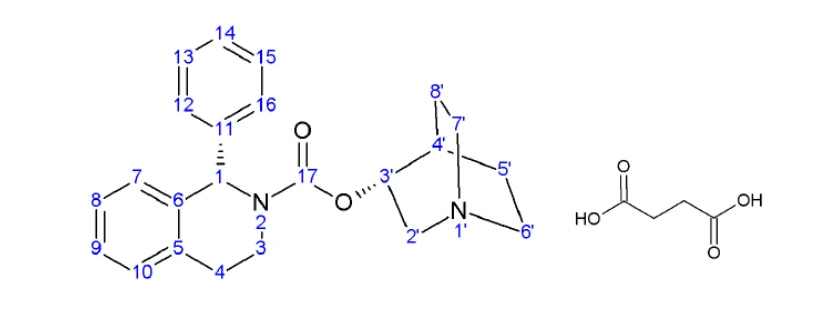
Physicochemical properties: Chemically, solifenacin succinate is butanedioic acid, compounded with (1S)-(3R)-1-azabicyclo[2.2.2]oct-3-yl 3,4-dihydro-1-phenyl-2(1H)-isoquinolinecarboxylate (1:1). Solifenacin succinate is a white to pale-yellowish-white crystal or crystalline powder.
Solubility: It is freely soluble at room temperature in water, glacial acetic acid, dimethyl sulfoxide, and methanol.
CLINICAL TRIALS
Comparative Bioavailability
An open-label, single-dose, randomized, two-period, two-sequence, two-treatment, crossover comparative bioavailability study of SOLIFENACIN 10 mg tablets (Sanis Health Inc.) vs. Vesikur® 10 mg tablets (reference) (solifenacin succinate, Astellas Pharma GmbH, Germany), administered as a 1 x 10 mg dose, was conducted in 24 healthy male subjects (18 to 55 years of age) under fasting conditions. Bioavailability data were measured and the results are summarized in the following table.
SUMMARY TABLE OF THE COMPARATIVE BIOAVAILABILITY DATA
Solifenacin (1 x 10 mg) From measured data Geometric Mean Arithmetic Mean (CV %) | ||||
|---|---|---|---|---|
| Parameter | Test SOLIFENACIN* | Reference Vesikur®† | % Ratio of Geometric Means | 90% Confidence Interval |
AUC72 (ng*h/mL) | 444.77 475.28 (39.62) | 432.99 459.68 (36.66) | 102.72 | 97.39 - 108.34 |
Cmax (ng/mL) | 12.19 12.78 (32.80) | 11.98 12.48 (29.40) | 101.73 | 98.25 - 105.32 |
Tmax§ (h) | 6.02 (22.10) | 5.71 (28.05) | ||
* SOLIFENACIN (solifenacin succinate) 10 mg tablets manufactured for Sanis Health Inc.
† Vesikur® (solifenacin succinate) 10 mg tablets manufactured by Astellas Pharma GmbH, Germany.
§ Expressed as the arithmetic mean (CV%) only.
Due to the reported long half-life of solifenacin, the terminal elimination constant Kel could not be reliably estimated in this study, and therefore AUCI and T½ , which are derived from Kel, are not provided in the summary table.
Study demographics and trial design
Table 5 - Summary of patient demographics in pivotal clinical trials
| Study # | Trial design | Dosage, route of administration and duration | Study subjects (n) | Mean age | Gender (%) |
|---|---|---|---|---|---|
| 905-CL-015 | Randomized, double-blind, placebo-controlled, parallel-group, fixed dose | Placebo, 5 & 10 mg solifenacin and 4 mg tolterodine 12 week | Total :1077 Placebo: 267 Solifenacin 5mg: 279, 10mg: 268, Tolterodine: 263 | Placebo: 58 Solifenacin 5mg: 58 10mg: 57 Tolterodine: 57 |
| F | M | |
| Placebo: | 76 | 24 |
| Solifenacin | ||
| 5 mg: | 73 | 27 |
| 10 mg: | 71 | 29 |
| Tolterodine | 80 | 20 |
| Study # | Trial design | Dosage, route of administration and duration | Study subjects (n) | Mean age | Gender (%) |
|---|---|---|---|---|---|
| 905-CL-018 | " | Placebo, 5 & 10 mg solifenacin 12 week | Total: 907 Placebo: 301 5mg: 299 10mg: 307 | Placebo: 56 5mg: 55 10mg: 56 |
| Placebo: | 81 | 19 |
| 5 mg: | 83 | 17 |
| 10 mg: | 82 | 18 |
| 905-CL-013 | " | Placebo, 10 mg solifenacin 12 week | Total: 672 Placebo: 332 10mg: 340 | Placebo: 59 10mg: 58 |
| Placebo: | 83 | 17 |
| 10 mg: | 80 | 20 |
| 905-CL-014 | " | " | Total: 634 Placebo: 316 10mg: 318 | Placebo: 60 10mg: 60 |
| Placebo: | 82 | 18 |
| 10 mg: | 83 | 17 |
Solifenacin succinate was evaluated in four twelve-week, double-blind, randomized, placebo-controlled, parallel group, multicenter clinical trials for the treatment of overactive bladder in patients having symptoms of urinary frequency, urgency and/or urge or mixed incontinence (with a predominance of urge) [Table 5]. Study 015 also included a tolterodine group. Entry criteria required that patients have symptoms of overactive bladder for ≥ 3 months duration. These studies involved 3027 patients (1811 on solifenacin succinate and 1216 on placebo), and approximately 90% of these patients completed the 12-week studies. Two of the four studies evaluated the 5 and 10 mg solifenacin succinate doses and the other two evaluated only the 10 mg dose. All patients completing the 12-week studies were eligible to enter an open label, long term extension study and 81% of patients enrolling completed the additional 40-week treatment period. The majority of patients were Caucasian (93%) and female (80%) with a mean age of 58 years.
The primary endpoint in all four trials was the mean change from baseline to 12 weeks in number of micturitions/24 hours. Secondary endpoints included mean change from baseline to 12 weeks in number of incontinence episodes/24 hours, and mean volume voided per micturition. The efficacy of solifenacin succinate was similar across patient age and gender. The mean reduction in the number of micturitions per 24 hours was significantly greater with solifenacin succinate 5 mg (2.3; p<0.001) and solifenacin succinate 10 mg (2.7; p<0.001) compared to placebo, (1.4).
The mean reduction in the number of incontinence episodes per 24 hours was significantly greater with solifenacin succinate 5 mg (1.5; p<0.001) and solifenacin succinate 10 mg (1.8; p<0.001) treatment groups compared to placebo (1.1). The mean increase in the volume voided per micturition was significantly greater with solifenacin succinate 5 mg (32.3 mL; p<0.001) and solifenacin succinate 10 mg (42.5 mL; p<0.001) compared with placebo (8.5 mL).
The results for the primary and secondary endpoints in the four individual 12-week clinical studies of solifenacin succinate are reported in Tables 6 through 9.
Table 6 – Mean Change from Baseline to Endpoint for Solifenacin succinate (5 mg and 10 mg daily) and Placebo: 905-CL-015
| Parameter | Placebo (N=253) Mean (SE) | Solifenacin Succinate 5mg (N=266) Mean (SE) | Solifenacin Succinate 10mg (N=264) Mean (SE) | Tolterodine (N=250) Mean (SE) |
|---|---|---|---|---|
Urinary Frequency (Number of Micturitions / 24hours)* Baseline Reduction P value vs. placebo | 12.2 (0.26) 1.2 (0.21) | 12.1 (0.24) 2.2 (0.18) <0.001 | 12.3 (0.24) 2.6 (0.20) <0.001 | 12.1 1.9 <0.05 |
Number of Incontinence Episodes / 24 hours ** Baseline Reduction P value vs. placebo | 2.7 (0.23) 0.8 (0.18) | 2.6 (0.22) 1.4 (0.15) <0.01 | 2.6 (0.23) 1.5 (0.18) <0.01 | 2.3 1.1 N.S. |
Volume Voided per micturition [mL]** Baseline Increase P value vs. placebo | 143.8 (3.37) 7.4 (2.28) | 149.6 (3.35) 32.9 (2.92) <0.001 | 147.2 (3.15) 39.2 (3.11) <0.001 | 147.0 24.4 <0.001 |
*Primary endpoint
**Secondary endpoint
Table 7 – Mean Change from Baseline to Endpoint for Solifenacin succinate (5 mg and 10 mg daily) and Placebo: 905-CL-018
| Parameter | Placebo (N=281) Mean (SE) | Solifenacin Succinate 5 mg (N=286) Mean (SE) | Solifenacin Succinate 10 mg (N=290) Mean (SE) |
|---|---|---|---|
Urinary Frequency (Number of Micturitions / 24 hours)* Baseline Reduction P value vs. placebo | 12.3 (0.23) 1.7 (0.19) | 12.1 (0.23) 2.4 (0.17) <0.001 | 12.1 (0.21) 2.9 (0.18) <0.001 |
Number of Incontinence Episodes / 24 hours** Baseline Reduction P value vs. placebo | 3.2 (0.24) 1.3 (0.19) | 2.6 (0.18) 1.6 (0.16) <0.01 | 2.8 (0.20) 1.6 (0.18) 0.016 |
Volume Voided per micturition [mL]** Baseline Increase P value vs. placebo | 147.2 (3.18) 11.3 (2.52) | 148.5 (3.16) 31.8 (2.94) <0.001 | 145.9 (3.42) 36.6 (3.04) <0.001 |
*Primary endpoint
**Secondary endpoint
Table 8 – Mean Change from Baseline to Endpoint for Solifenacin succinate (10 mg daily) and Placebo: 905-CL-013
| Parameter | Placebo (N=309) Mean (SE) | Solifenacin Succinate 10 mg (N=306) Mean (SE) |
|---|---|---|
Urinary Frequency (Number of Micturitions / 24 hours)* Baseline Reduction P value vs. placebo | 11.5 (0.18) 1.5 (0.15) | 11.7 (0.18) 3.0 (0.15) <0.001 |
Number of Incontinence Episodes / 24 hours** Baseline Reduction P value vs. placebo | 3.0 (0.20) 1.1 (0.16) | 3.1 (0.22) 2.0 (0.19) <0.001 |
Volume Voided per micturition [mL]** Baseline Increase P value vs. placebo | 190.3 (5.48) 2.7 (3.15) | 183.5 (4.97) 47.2 (3.79) <0.001 |
*Primary endpoint
**Secondary endpoint
Table 9 – Mean Change from Baseline to Endpoint for Solifenacin succinate (10 mg daily) and Placebo: 905-CL-014
| Parameter | Placebo (N=295) Mean (SE) | Solifenacin Succinate 10 mg (N=298) Mean (SE) |
|---|---|---|
Urinary Frequency (Number of Micturitions / 24 hours)* Baseline Reduction P value vs. placebo | 11.8 (0.18) 1.3 (0.16) | 11.5 (0.18) 2.4 (0.15) <0.001 |
Number of Incontinence Episodes / 24 hours** Baseline Reduction P value vs. placebo | 2.9 (0.18) 1.2 (0.15) | 2.9 (0.17) 2.0 (0.15) <0.001 |
Volume Voided per micturition [mL]** Baseline Increase P value vs. placebo | 175.7 (4.44) 13.0 (3.45) | 174.1 (4.15) 46.4 (3.73) <0.001 |
*Primary endpoint
**Secondary endpoint
DETAILED PHARMACOLOGY
Animal Pharmacology
Solifenacin is a competitive muscarinic receptor antagonist. In radioligand binding assay, solifenacin has a high affinity for the human muscarinic M3 receptor, with an affinity constant (Ki value) of 9.9 nM. It has marginal selectivity for the muscarinic M3 receptor over the M1 receptor (2.4 times) and moderate selectivity for the muscarinic M3 receptor over the M2 receptor (12 times). Solifenacin does not show any affinity for various other receptors and ion channels except for the sigma receptor and sodium channel site 2, but the affinity for these sites are 100- fold or more lower than that for the muscarinic M3 receptor. In strips of rat and guinea pig urinary bladder, solifenacin competitively antagonized carbachol-induced contractile responses in a concentration-dependent manner. In anesthetized rats, solifenacin increased maximum bladder capacity and decreased maximum intravesical pressure in a dose-dependent manner.
In studies to assess the tissue selectivity of solifenacin using cells isolated from rats and monkeys, solifenacin inhibited carbachol-induced increases in cytosolic-free calcium ion levels ([Ca2+]i) more potently in bladder smooth muscle cells than in salivary gland cells. Further, the bladder selectivity of solifenacin in monkeys was significantly greater than that of other antimuscarinics as illustrated by selectivity ratios (bladder/salivary gland) of 2.1, 0.51, 0.65 and 0.46 for solifenacin, oxybutynin, tolterodine and darifenacin, respectively. In anesthetized mice, solifenacin did not inhibit carbachol-induced salivary secretion at doses which potently inhibited carbachol-induced increases in intravesical pressure. Moreover, intravenously administered solifenacin was significantly more potent in inhibiting carbachol-induced increases in intravesical pressure (ID30 = 0.023 mg/kg) than in inhibiting salivary secretion (ID30 = 0.15 mg/kg) in anesthetized rats, with the bladder selectivity of 6.5. The bladder selectivity of tolterodine estimated from its potency to inhibit urinary bladder and salivary gland was 2.4, whereas oxybutynin (1.1) and darifenacin (1.2) did not show functional selectivity for urinary bladder.
Effects on the respiratory and cardiovascular system have been investigated. In the electrophysiological studies, solifenacin and tolterodine inhibited the potassium current in Chinese hamster ovary (CHO) cells expressing the human ether-a-go-go-related gene (hERG) using a whole-cell patch clamp technique, with IC50 values of 0.27 and 0.0089 mcM, respectively. The IC50 value for solifenacin is 78 times higher than the maximum unbound human plasma concentration (Cmax, u) at the maximum recommended human dose (MRHD). However, solifenacin at concentrations up to 0.3 mcM (87 times higher than the Cmax, u at the MRHD) had no effect on action potential parameters in dog Purkinje fibers and guinea pig papillary muscles. Further, in vivo studies using anesthetized dogs demonstrated that intravenous administered solifenacin increased respiration rate, decreased blood pressure and left ventricular pressure and prolonged PR interval at 1 mg/kg or higher doses, however it had no effect on the QT interval at doses up to 3 mg/kg. At a dose of 10 mg/kg, complete atrioventricular block was observed in 4 of 5 animals and one of the 4 animals died.
Effects of orally administered solifenacin on the central nervous system, pupil size, gastrointestinal system and urinary excretion have been investigated. Solifenacin did not markedly affect the behavior of mice at doses up to 30 mg/kg. In mice and rabbits, solifenacin induced mydriasis, which is attributed to the primary action on muscarinic receptor, at 10 mg/kg or higher doses. Solifenacin at 3 mg/kg or higher doses induced emesis in dogs. However, solifenacin at doses up to 30 mg/kg did not affect gastrointestinal transit in mice and was not irritating to the gastric mucosa of rats. Solifenacin at doses up to 30 mg/kg had no effects on urine volume or electrolyte excretion in saline-loaded rats.
TOXICOLOGY
Table 10 – Key Toxicological Findings in Experimental Animals with Solifenacin Succinate and Respective Multiples of Human Exposure at the Maximum Recommended Therapeutic Dose
| Species/Duration | Key Findings | Dose (mg/kg) | Multiples of Systemic Exposure Compared to Clinical | ||||||
|---|---|---|---|---|---|---|---|---|---|
| Cmax | AUC | ||||||||
| Repeat-Dose Toxicity | |||||||||
| Mouse, 13 weeks | Underactivity, ataxia, tremor, prostration, death | 250 (male) | 24.5 | 12.9 | |||||
| 250 (female) | 23.1 | 13.1 | |||||||
| Mouse, 26 weeks | Injuries in the mucosa of the small intestine | 100 (male) | 8.4 | 3.4 | |||||
| 100 (female) | 7.0 | 2.4 | |||||||
| Rat, 4 weeks | Decreased body weight gain and food consumption | 25 (male) | <1 | <1 | |||||
| 25 (female) | <1 | <1 | |||||||
| Rat, 26 weeks | Wet/yellow staining on perigenital area, high ALP and phosphorus, low ALT and cholesterol | 10 (male) | <1 | <1 | |||||
| 10 (female) | <1 | <1 | |||||||
| Dog, 4 weeks | Salivation, vomiting, tremor, decreased locomotor activity, decreased body weight and food consumption, ECG changes | 30 (male) | 19.1 | 12.1 | |||||
| 30 (female) | 11.8 | 8.1 | |||||||
| Dog, 13 weeks | Salivation, vomiting, ataxia, prostration, tremor, convulsion, abnormal gait/posture, abnormal respiration, ECG changes | 18 (male) | 5.3 | 2.5 | |||||
| Low uterine weight, uterine immaturity | 3 (female) | <1 | <1 | ||||||
| Dog, 52 weeks | Salivation, vomiting, ECG changes | 20 (male) | 11.8 | 6.0 | |||||
| 20 (female) | 9.9 | 5.7 | |||||||
| Genotoxicity | |||||||||
| Rat, single | No clastogenicity | 1000 (male) | 8.2 | 4.9 | |||||
| Carcinogenicity | |||||||||
| Mouse, 2 years | No carcinogenicity | 200 (male) | 11.9 | 5.0 | |||||
| 200 (female) | 14.4 | 9.0 | |||||||
| Rats, 2 years | No carcinogenicity | 20 (male) | <1 | <1 | |||||
| 15 (female) | <1 | <1 | |||||||
| Reproductive and developmental toxicity | |||||||||
| Mouse, pregnant | Low maternal and fetal body weights, an increase in peripartum pup mortality, delays in pup development | 100 (female) | 11.9 | 3.6 | |||||
| Rabbit, pregnant | No effects on embryo-fetal development | 50 (female) | 4.9 | 1.8 | |||||
| Human PK data at the proposed maximum recommended therapeutic dose (10 mg/day) for comparison: | |||||||||
| Human (steady state) | 10 | 1 | 1 | ||||||
Single-Dose Toxicity
Single-dose toxicity studies were conducted in rats and dogs. The approximate lethal doses were considered to be 1000 mg/kg for male rats, 500 mg/kg for female rats and 60 mg/kg for dogs. The results are shown in Table 11.
Table 11 – Results of Single-Dose Toxicity Studies with Solifenacin Succinate
| Species | Route | Dose (mg/kg/day) | No. of Animals | Duration | Findings |
|---|---|---|---|---|---|
| Rat (F344) | Oral (gavage) | Males: 0, 250, 500, 1000, 2000 Females: 0, 125, 250, 500, 1000 | 5/sex | 1 Day | ≥125: Mydriasis. ≥250: Body weight loss or decreased body weight gain in males and females. Decreased locomotor activity in females. 500: 1 female died. ≥500: Decreased locomotor activity in males. Small thymus in females. 1000: 2 males and 4 females died. Prone position and ocular discharge in males and females. Salivation and chronic convulsion in females. 2000: 5 males died. Prone position, lateral position, salivation, twitching, clonic convulsion, edema and necrosis in the glandular mucosa of the stomach. |
| Dog (Beagle) | Oral (capsule) | 0, 10, 30, 60 | 1/sex | 1 Day | ≥10: Vomiting and retching in the male and female. 30: Mucous stool in the male. 60: The female died. Twitching, mydriasis, abnormal gait, urinary incontinence and tonic convulsion in the female that died. |
Repeat-Dose Toxicity
Repeat-dose toxicity studies were conducted in mice, rats, and dogs. Based on the results of metabolism studies, it became clear that the mouse, dog, and human have a similar metabolic profile. Thus the mouse and dog are considered to be appropriate species for the toxicological evaluation of solifenacin succinate. The results are summarized in Table 12.
Table 12 – Results of Repeat-Dose Toxicity Studies with Solifenacin Succinate
| Species, Strain, Number/Sex | Dose (mg/kg/day) Route Duration of Treatment | Findings (at mg/kg/day) | No-adverse-effect-level NOAEL (mg/kg/day) |
|---|---|---|---|
Mouse (CD-1) 12 (main) 6 (recovery) | 0, 30, 100, 250, 400 Oral (gavage) 13 weeks 0, 250, 400 Oral (gavage) 13 weeks followed by 5 weeks recovery | ≥30: Mydriasis in males. 250: 1 female died. ≥250: Underactivity, ataxia, tremor and prostration in males. Mydriasis, low submandibular gland and spleen weights in females. 400: 5 males and 6 females died. Hunched posture, piloerection and abnormal respiration in males and females. Decreased body weight gain, low triglyceride and high relative liver weight in males. Underactivity, ataxia, tremor, prostration, convulsion, low glucose, high relative kidney weight, follicular degeneration, reduced corpora lutea and uterine atrophy in females. All changes reversed during the recovery period. | 100 |
Mouse (CD-1) 15 | 0, 10, 30, 100, 200 Oral (gavage) 26 weeks | 100: Inflammation of the ileum in males and females. Epithelial regeneration and erosion of the duodenum in females. 200: Pigment deposition in the Harderian gland, epithelial regeneration of the duodenum, ulcer of the ileum in males and females. Low total protein and albumin, mobilization of Kupffer cells in the liver, ulcer and inflammation of the jejunum in males. High plasma sodium, low plasma potassium and erosion of the duodenum in females. | 30 |
|---|---|---|---|
Rat (F344) 12 (main) 6 (recovery) | 0, 5, 10, 25, 50 Oral (gavage) 4 weeks 0, 25, 50 Oral (gavage) 4 weeks followed by 4 weeks recovery | ≥10: Mydriasis and abnormal respiratory sound in males and females. Salivation in males. ≥25: Decreased food consumption in males and females. Decreased body weight gain in males. Salivation, soiled fur around the urethral orifice and a soiled coat around the nose and mouth in females. 50: 1 female died. Decreased body weight gain and water consumption in females. All changes recovered or tended to recover during the recovery period. | 10 |
Rat (F344) 15-18 (main) 6 (recovery) | Male: 0, 3, 10, 30, 100/75* Female:0, 3, 10, 30, 60/45* Oral (gavage) 26 weeks Male: 0, 30, 100/75* Female: 0, 30, 60/45* Oral (gavage) 26 weeks followed by 10 weeks recovery *reduced from week 14 | ≥3: Mydriasis in females. ≥10: Salivation and wet/yellow staining on perigenital area in males and females. Mydriasis in males. High ALP and phosphorus, low ALT and cholesterol in females. 30: 5 females died. ≥30: Decreased body weight gain and high adrenal weight in males and females. Decreased food consumption, high ALP and low ALT in males. Respiratory noises, high WBC, neutrophil, lymphocyte and urine pH, low AST, phospholipid and total protein, follicular degeneration and uterine atrophy in females. 60/45: 15 females died. Piloerection, decreased food consumption, high platelet, low glucose and albumin. 100/75: 1 male died. Respiratory noises, high phosphorus, low AST, cholesterol, triglyceride, phospholipid, urine volume, urine potassium and spleen weights. All changes recovered or tended to recover during the recovery period. | 3 |
Dog (Beagle) 3 | 0, 1, 3, 10, 30 Oral (capsule) 4 weeks | ≥10: Vomiting in males and females. 30 : Mydriasis, salivation, decreased locomotor activity, decreased body weight and food consumption, ECG changes (increased amplitude of P-wave, prolongation of P-wave, PR, QRS, QT and QTc intervals) and thymic involution in males and females. Tremor and high kidney weight, surface mucous cell swelling in the fundic region of the stomach in males. | 3 |
Dog (Beagle) 3-4 | 0, 3, 6, 12, 25/18* Oral (capsule) 13 weeks *reduced from week 7 | ≥3: Low uterine weight and uterine immaturity in females. 25/18: Salivation, vomiting, ataxia, prostration, tremor, convulsion, abnormal gait/posture, abnormal respiration and ECG changes (prolongation of P-wave, PR and QTc intervals) in males and females. Transiently high hematocrit and hemoglobin in males and urea nitrogen in females. | Male : 12 Female : Not established |
Dog (Beagle) 4 | 0, 3, 6, 12, 20 Oral (capsule) 52 weeks | 20: Salivation, vomiting, ECG changes (prolongation of P-wave, PR, QRS, QT and QTc intervals) in males and females. Perivascular lymphoid accumulation, edema, transitional cell hyperplasia and vacuolation in the submucosa or submucosa/muscle layer in the urinary bladder in females. | 12 |
|---|
Genotoxicity
The genotoxic potential of solifenacin succinate was evaluated in both in vitro and in vivo studies. Solifenacin succinate was not mutagenic or clastogenic in the in vitro and in vivo studies. The results are shown in Table 13.
Table 13: Results of Genotoxicity Studies with Solifenacin Succinate
| Study Type | Species or Cell Type | Dose Levels | Results |
In vitro bacterial mutagenicity | S. typhimurium TA98, TA100, TA1535, TA1537 E. coli WP2uvrA | 0, 5-1250 mcg/plate | Negative |
In vitro clastogenicity | Human blood lymphocytes | 0, 20.97-160 mcg/mL | Negative |
In vivo clastogenicity | Bone marrow erythrocytes of F344 rats | 0, 250, 500, 1000 mg/kg | Negative |
Carcinogenicity
The carcinogenic potential of solifenacin succinate was evaluated in mice and rats. Administration of solifenacin succinate for up to 104 weeks in mice and rats did not produce significant increases in any tumor type in either males or females. The results are shown in Table 14.
Table 14: Results of Carcinogenicity Studies with Solifenacin Succinate
| Species, Strain Number/Sex | Dose (mg/kg/day) Duration of Treatment | Results |
Mouse (CD-1) 70 | 0, 10, 30, 100, 200 Oral (gavage) 2 years | ≥100: Increased mortality, low body weight and decreased food consumption in males and females. No increases in any type of tumor in males or females. |
Rat (F344) 60 | Males: 0, 3, 10, 20 Females: 0, 3, 7.5, 15 Oral (gavage) 2 years | ≥10: Low body weight in males and females. 15: Increased mortality in females. 20: Decreased food consumption in males. No increases in any type of tumor in males or females. |
Reproductive and Developmental Toxicity
Reproductive and developmental toxicity studies were conducted in mice, rats and rabbits to assess the effects of solifenacin succinate on fertility and early embryonic development, embryo-fetal development and prenatal/postnatal development, including maternal function. The results are summarized in Table 15.
Table 15 - Results of Reproductive and Developmental Toxicity Studies with Solifenacin Succinate
| Study Type | Species, Strain, Number /Sex | Doses (mg/kg/day) Route Duration of Treatment | Important Findings (at mg/kg/day) | No-adverse-effect-level (NOAEL) (mg/kg/Day) | ||||
|---|---|---|---|---|---|---|---|---|
Segment I Fertility and early embryonic development | Mouse (CD-1) 24 males and 24 females | 0, 30, 100, 250 Oral (gavage) Males: 4 weeks prior to and during mating Females: 2 weeks prior to and during mating through Gestation day 6 | ≥100: Decreased food consumption in males. 250: 3 males and 2 females died. No adverse effects on fertility of males or females, or early embryonic development. | F0 males: 30 F0 females: 100 F1 litters: 250 | ||||
Rat (SD) 20 males | 0, 5, 15, 50 Oral (gavage) 4 weeks prior to and during mating | 50: Mydriasis. No adverse effects on fertility or early embryonic development. | F0 males: 50 F1 litters: 50 | |||||
Rat (SD) 20 females | 0, 15, 50, 100 Oral (gavage) 2 weeks prior to and during mating through Gestation day 7 | ≥15: Mydriasis. 100: Decreased body weight gain and food consumption. No adverse effects on fertility or early embryonic development. | F0 females: 50 F1 litters: 100 | |||||
Segment II Embryo-fetal development | Mouse (CD-1) 24 females | 0, 30, 100, 250 Oral (gavage) Gestation day 6-15 | ≥30: Decreased maternal food consumption. ≥100: Decreased maternal body weight gain and low fetal body weight. 250: 5 females died. An increase in the incidence of fetuses with cleft palate. | F0 females: <30 F1 litters: 30 | ||||
Mouse (CD-1) 24 females (Additional study) | 0, 250 Oral (gavage) Gestation day 6-9, 10-15, 6-15 | 250: No increase in the incidence of fetuses with cleft palate in any dosing period. | F0 females: <250 F1 litters: 250 | |||||
Rat (SD) 20 females | 0, 5, 15, 50 Oral (gavage) Gestation day 7-17 | ≥15: Mydriasis. 50: No maternal toxicity or adverse effects on embryo-fetal development. | F0 females: 50 F1 litters: 50 | |||||
Rabbit (NZW) 20 females | 0, 10, 25, 50 Oral (gavage) Gestation day 6-18 | 50: Decreased maternal food consumption, no adverse effects on embryo-fetal development. | F0 females: 25 F1 litters: 50 | |||||
Segment III Prenatal and postnatal development | Mouse (CD-1) 24-30 females | 0, 30, 100, 250 Oral (gavage) Gestation day 6 to Lactation day 20 | 100: 3 females died. ≥100: Decreased maternal food consumption, increased peripartum pup mortality, low pup body weight, delays in eye opening and vaginal patency. 250: 9 females died. Increased postpartum pup mortality, delays in surface righting and pinna unfolding. | F0 females: 30 F1 males: 30 F1 females: 30 | ||||
Local Tolerance and Other Studies
Solifenacin succinate was irritating to the eyes of rabbits. The severity of ocular irritation was dose-dependent. Ocular findings were reduced if the eyes were rinsed immediately after exposure. Solifenacin succinate did not cause dermal or vascular/perivascular irritation in rabbits. Solifenacin succinate was not antigenic in the delayed type skin reaction assay in guinea pigs and did not induce hemolysis in human peripheral blood.
REFERENCES
- 1. Astellas Pharma Canada Inc. Product Monograph, VESICARE®, Control No.: 220842, Date of Revision: December 31, 2018.