


Product Monograph - Steglujan (Merck Canada, 15 mg / 100 mg)
1 INDICATIONS
STEGLUJAN™ (ertugliflozin and sitagliptin tablets) is indicated for use in combination with metformin as an adjunct to diet and exercise, to improve glycemic control in adult patients with type 2 diabetes mellitus (T2DM) who are:
- inadequately controlled on metformin and sitagliptin, or
- already controlled with metformin, sitagliptin and ertugliflozin, as individual components.
See CLINICAL TRIALS Section
1.1 Pediatrics
Pediatrics (<18 years of age): No data are available to Health Canada; therefore, Health Canada has not authorized an indication for pediatric use.
1.2 Geriatrics
Geriatrics (≥ 65 years of age): STEGLUJAN™ should be used with caution in geriatric patients. Evidence from clinical studies suggests that use of ertugliflozin in the geriatric population is associated with an increase in risk of adverse reactions related to volume depletion in this population (see DOSAGE AND ADMINISTRATION, WARNINGS AND PRECAUTIONS, Special Populations, and ACTION AND CLINICAL PHARMACOLOGY).
2 CONTRAINDICATIONS
STEGLUJAN™ is contraindicated in:
- Patients with a history of a hypersensitivity reaction to STEGLUJAN™, ertugliflozin, sitagliptin, or to any ingredient in the formulation, including any non-medicinal ingredient, or component of the container (see WARNINGS AND PRECAUTIONS and ADVERSE REACTIONS, Post-Marketing Adverse Drug Reactions). For a complete listing, see DOSAGE FORMS, STRENGTHS, COMPOSITION AND PACKAGING section.
- Renally impaired patients with an estimated glomerular filtration rate (eGFR) less than 45 mL/min/1.73 m2, severe renal impairment, end-stage renal disease or patients on dialysis.
3 SERIOUS WARNINGS AND PRECAUTIONS BOX
Serious Warnings and Precautions
Diabetic Ketoacidosis
|
4 DOSAGE AND ADMINISTRATION
4.1 Dosing Considerations
- Diuretics: STEGLUJAN™ should be used with caution in patients taking diuretics, particularly loop diuretics, due to the increased risk of adverse events of volume depletion during co-administration (see WARNINGS AND PRECAUTIONS).
4.2 Recommended Dose and Dosage Adjustment
The recommended starting dose of STEGLUJAN™ is 5 mg ertugliflozin/100 mg sitagliptin once daily, taken in the morning, with or without food. In patients tolerating STEGLUJAN™, the dose may be increased to a maximum recommended dose of 15 mg ertugliflozin/100 mg sitagliptin, once daily, if additional glycemic control is needed.
For patients treated with ertugliflozin who are being switched to STEGLUJAN™, the dose of ertugliflozin should be maintained.
In patients with evidence of volume depletion, correct this condition prior to initiation of STEGLUJAN™ (see WARNINGS AND PRECAUTIONS).
Pediatrics (<18 years of age): Safety and effectiveness of STEGLUJAN™ or its individual components in pediatric and adolescent patients have not been established; therefore, Health Canada has not authorized an indication for pediatric use (see INDICATIONS).
Geriatrics (≥ 65 years of age): No dosage adjustment of STEGLUJAN™ is recommended based on age; however, elderly patients may have reduced renal function and be at greater risk for adverse reactions related to volume depletion. Because renal function abnormalities can occur after initiating ertugliflozin, and sitagliptin is known to be substantially excreted by the kidneys, STEGLUJAN™ should be used with caution in patients 65 years or older (see WARNINGS AND PRECAUTIONS, Special Populations).
Renal Impairment: The efficacy of STEGLUJAN™ declines with decreasing renal function (see CLINICAL TRIALS, Study in Special Population – Use in Patients with Type 2 Diabetes and DOSAGE AND ADMINISTRATION, Recommended Dose and Dose Adjustment). Renal function must be assessed prior to initiation of STEGLUJAN™ therapy and periodically thereafter, with more intensive monitoring of glycemic and renal biomarkers, and signs and symptoms of renal dysfunction in patients whose eGFR decreases <60 mL/min/1.73 m2 (see WARNINGS AND PRECAUTIONS, Monitoring and Laboratory Tests, and Renal Function).
STEGLUJAN™ is contraindicated in renally impaired patients with an eGFR less than 45 mL/min/1.73 m2, severe renal impairment, end-stage renal disease or patients on dialysis (see CONTRAINDICATIONS).
STEGLUJAN™ should not be initiated in patients with an eGFR ˂60 mL/min/1.73 m2. Use of STEGLUJAN™ is not recommended in patients with an eGFR persistently <60 mL/min/1.73m2. STEGLUJAN™ should be discontinued if eGFR falls below 50 mL/min/1.73 m2 (see WARNINGS AND PRECAUTIONS, ADVERSE REACTIONS and ACTION AND CLINICAL PHARMACOLOGY).
No dosage adjustment for STEGLUJAN™ is indicated in patients with mild renal impairment (eGFR ≥60 mL/min/1.73 m2).
Hepatic impairment: No dosage adjustment of STEGLUJAN™ is necessary in patients with mild or moderate hepatic impairment. Use of STEGLUJAN™ has not been studied in patients with severe hepatic impairment and is not recommended for use in this patient population (see WARNINGS AND PRECAUTIONS).
4.3 Administration
STEGLUJAN™ should be taken in the morning, with or without food.
4.4 Reconstitution
Not applicable.
4.5 Missed Dose
If a dose of STEGLUJAN™ is missed, it should be taken as soon as the patient remembers. A double dose of STEGLUJAN™ should not be taken on the same day.
5 OVERDOSAGE
In the event of an overdose, employ the usual supportive measures (e.g., remove unabsorbed material from the gastrointestinal tract, employ clinical monitoring [including obtaining an electrocardiogram], and institute supportive treatment) as dictated by the patient’s clinical status.
There is no information available on overdose with STEGLUJAN™ (ertugliflozin and sitagliptin).
Ertugliflozin
Removal of ertugliflozin by hemodialysis has not been studied.
Sitagliptin
During controlled clinical trials in healthy subjects, single doses of up to 800 mg sitagliptin were generally well tolerated. Minimal increases in QTc, not considered to be clinically relevant, were observed in one study at a dose of 800 mg sitagliptin (see ACTION AND CLINICAL PHARMACOLOGY). There is no experience with doses above 800 mg in clinical studies. In Phase I multiple-dose studies, there were no dose-related clinical adverse reactions observed with sitagliptin with doses of up to 600 mg per day for periods of up to 10 days and 400 mg per day for periods of up to 28 days.
Sitagliptin is modestly dialyzable. In clinical studies, approximately 13.5% of the dose was removed over a 3- to 4-hour hemodialysis session. Prolonged hemodialysis may be considered if clinically appropriate. It is not known if sitagliptin is dialyzable by peritoneal dialysis.
| For management of a suspected drug overdose, contact your regional Poison Control Centre. |
6 DOSAGE FORMS, STRENGTHS, COMPOSITION AND PACKAGING
Table 1 – Dosage Forms, Strengths, Composition and Packaging
| Route of Administration | Dosage Form / Strength/Composition | Non-medicinal Ingredients |
| Oral | Tablets 5 mg/100 mg* 15 mg/100 mg* | carnauba wax, croscarmellose sodium, dibasic calcium phosphate anhydrous, ferrosoferric oxide/black iron oxide, hydroxypropyl cellulose, hypromellose, iron oxide red, iron oxide yellow, magnesium stearate, microcrystalline cellulose, sodium stearyl fumarate, and titanium dioxide |
| * Ertugliflozin (as ertugliflozin L-pyroglutamic acid)/sitagliptin (as sitagliptin phosphate) | ||
STEGLUJAN™ (ertugliflozin and sitagliptin tablets) is available in the strengths listed below:
- STEGLUJAN™ tablets, 5 mg/100 mg, are beige, almond-shaped, film-coated tablets debossed with “554” on one side and plain on the other side. They are supplied in bottles of 30 tablets.
- STEGLUJAN™ tablets, 15 mg/100 mg, are brown, almond-shaped, film-coated tablets debossed with “555” on one side and plain on the other side. They are supplied in bottles of 30 tablets.
7 WARNINGS AND PRECAUTIONS
Please see the Serious Warnings and Precautions Box at the beginning of PART I: HEALTH PROFESSIONAL INFORMATION.
General
STEGLUJAN™ is not indicated for use in patients with type 1 diabetes mellitus or for the treatment of diabetic ketoacidosis.
Cardiovascular
Patients at Risk for Volume Depletion, Hypotension and/or Electrolyte Imbalances: STEGLUJAN™ is not recommended for use in patients who are volume-depleted. Due to its mechanism of action, ertugliflozin, a component of STEGLUJAN™, causes diuresis that can result in intravascular volume contraction. Therefore, symptomatic hypotension, including postural dizziness, can occur after initiating STEGLUJAN™ (see ADVERSE REACTIONS).
Caution should be exercised in patients for whom an ertugliflozin-induced decrease in blood pressure could pose a risk. This includes patients who have known cardiovascular disease, patients on anti-hypertensive therapy or on diuretics, who are elderly (≥65 years), patients with impaired renal function (eGFR less than 60 mL/min/1.73 m2), patients with low systolic blood pressure, or patients with intercurrent conditions that may lead to volume depletion (such as gastrointestinal illness).
Before initiating STEGLUJAN™, careful monitoring of volume status is recommended (see WARNINGS AND PRECAUTIONS, Monitoring and Laboratory Tests, and ADVERSE REACTIONS).
Temporary interruption of treatment with STEGLUJAN™ is recommended for patients who develop volume depletion until the fluid loss is corrected.
Endocrine and Metabolism
Diabetic Ketoacidosis: STEGLUJAN™ is not indicated, and should not be used, in patients with type 1 diabetes mellitus. The diagnosis of T2DM should therefore be confirmed before initiating STEGLUJAN™.
Clinical trial and post-market cases of DKA, a serious life-threatening condition requiring urgent hospitalization, have been reported in patients with T2DM treated with SGLT2 inhibitors and cases have been reported in clinical trials with ertugliflozin, a component of STEGLUJAN™ (see ADVERSE REACTIONS). Fatal cases of ketoacidosis have been reported in patients taking SGLT2 inhibitors. In a number of reported cases, the presentation of the condition was atypical with only moderately increased blood glucose values, below 13.9 mmol/L (250 mg/dL).
DKA must be considered in the event of non-specific symptoms such as nausea, vomiting, anorexia, abdominal pain, excessive thirst, difficulty breathing, confusion, unusual fatigue or sleepiness. If these symptoms occur, regardless of blood glucose level, patients should discontinue STEGLUJAN™ treatment and be assessed for diabetic ketoacidosis immediately.
Consider interrupting treatment with STEGLUJAN™ in T2DM patients who are hospitalized for major surgical procedures, serious infections or acute serious medical illnesses.
SGLT2 inhibitors have been shown to increase blood ketones in clinical trial subjects. Conditions that can precipitate DKA while taking STEGLUJAN™ include a very low carbohydrate diet (as the combination may further increase ketone body production), dehydration, high alcohol consumption, and a low beta-cell function reserve. STEGLUJAN™ should be used with caution in these patients and these patients should be monitored closely.
Hypoglycemia: STEGLUJAN™ is not indicated in combination with insulin or insulin secretagogues, such as sulfonylurea (see INDICATIONS). The use of SGLT2 inhibitors in combination with these drugs has been shown to increase the risk of hypoglycemia.
Increases in Low-Density Lipoprotein Cholesterol (LDL-C): Dose-related increases in LDL-C are seen with ertugliflozin, a component of STEGLUJAN™ (see ADVERSE REACTIONS). LDL-C levels should be monitored in patients treated with STEGLUJAN™ and treated as appropriate.
Genitourinary
Genital Mycotic Infections: Ertugliflozin, a component of STEGLUJAN™, increases the risk of genital mycotic infections. Patients who have a history of genital mycotic infections or who are uncircumcised are more likely to develop genital mycotic infections (see ADVERSE REACTIONS). Monitor and treat as appropriate.
Urinary tract infections (including urosepsis and pyelonephritis): Cases of pyelonephritis have been reported in clinical trials with ertugliflozin, a component of STEGLUJAN™ (see
ADVERSE REACTIONS). There have also been post-marketing reports of serious urinary tract infections including urosepsis and pyelonephritis, some of them requiring hospitalization, in patients receiving SGLT2 inhibitors. Treatment with SGLT2 inhibitors increases the risk of urinary tract infections. Evaluate patients for signs and symptoms of urinary tract infections and treat promptly, if indicated.
Hematologic
Elevated Hemoglobin: Mean hemoglobin increased in patients administered ertugliflozin, a component of STEGLUJAN™, as did the frequency of patients with abnormally elevated values for hemoglobin (see ADVERSE REACTIONS). STEGLUJAN™ should be used with caution in patients with elevated hemoglobin.
Hepatic/Biliary/Pancreatic
Pancreatitis: There have been reports of acute pancreatitis, including fatal and non-fatal hemorrhagic or necrotizing pancreatitis, in patients taking sitagliptin, a component of STEGLUJAN™. In a long-term cardiovascular outcomes trial (see ADVERSE REACTIONS and CLINICAL TRIALS, TECOS Cardiovascular Safety Study), there were two adjudication-confirmed deaths due to acute pancreatitis in patients treated with sitagliptin, compared to none in the placebo group. After initiation of STEGLUJAN™, patients should be observed carefully for signs and symptoms of pancreatitis. If pancreatitis is suspected, STEGLUJAN™ should promptly be discontinued and appropriate management should be initiated. Risk factors for pancreatitis include a history of: pancreatitis, gallstones, alcoholism, or hypertriglyceridemia.
Hepatic Impairment: Use of STEGLUJAN™ in patients with severe hepatic impairment is not recommended. Ertugliflozin, a component of STEGLUJAN™, has not been studied in patients with severe hepatic impairment.
There are limited clinical experiences in patients taking sitagliptin, a component of STEGLUJAN™, with moderate hepatic insufficiency and no clinical experience in patients with severe hepatic insufficiency (see ACTION AND CLINICAL PHARMACOLOGY).
Lower Limb Amputation
An increased risk for lower limb amputation (primarily of the toe) has been observed in clinical studies with another SGLT2 inhibitor. A numerical imbalance in non-traumatic lower limb amputations is reported in trials with ertugliflozin, a component of STEGLUJAN™ (see ADVERSE REACTIONS). Based on the current data and the presence of confounding factors, a causal association between ertugliflozin and lower limb amputation remains uncertain. It is anticipated that completion of the ongoing long-term clinical study will further inform on this risk with STEGLUJAN™.
Before initiating STEGLUJAN™, consider factors in the patient history that may predispose them to the need for amputations, such as a history of prior amputation, peripheral vascular disease, neuropathy and diabetic foot ulcers. Counsel patients about the importance of routine preventative foot care and adequate hydration. Monitor patients receiving STEGLUJAN™ for signs and symptoms of infection (including osteomyelitis), new pain or tenderness, sores or ulcers involving the lower limbs, and discontinue STEGLUJAN™ if these complications occur.
Immune
Hypersensitivity Reactions: There have been post-marketing reports of serious hypersensitivity reactions in patients treated with sitagliptin, a component of STEGLUJAN™. These reactions include anaphylaxis, angioedema, and exfoliative skin conditions including Stevens-Johnson syndrome. Onset of these reactions occurred within the first 3 months after initiation of treatment with sitagliptin, with some reports occurring after the first dose. If a hypersensitivity reaction is suspected, discontinue STEGLUJAN™, assess for other potential causes for the event, and institute alternative treatment for diabetes (see CONTRAINDICATIONS and ADVERSE REACTIONS, Post-Marketing Adverse Drug Reactions).
Immunocompromised patients: A dose-related mean decrease in absolute lymphocyte count was observed with other DPP-4 inhibitors. When clinically indicated, such as in settings of unusual or prolonged infection, lymphocyte count should be measured. The effect of sitagliptin, a component of STEGLUJAN™, on lymphocyte counts in patients with lymphocyte abnormalities (e.g. human immunodeficiency virus) is unknown. Immunocompromised patients, such as patients who have undergone organ transplantation or patients diagnosed with human immunodeficiency syndrome have not been studied in the sitagliptin clinical program. Therefore, the efficacy and safety profile of sitagliptin in these patients has not been established.
Monitoring and Laboratory Tests
Blood Glucose and HbA1c: Response to STEGLUJAN™ treatment should be monitored by periodic measurements of blood glucose and HbA1c levels.
LDL-cholesterol: LDL-C levels should be measured at baseline and at regular intervals during treatment with STEGLUJAN™ due to dose-dependent increases in LDL-C seen with STEGLUJAN™ therapy (see ADVERSE REACTIONS).
Renal Function: Renal function must be assessed prior to initiating STEGLUJAN™ and periodically thereafter. More frequent renal function monitoring is recommended in patients with an eGFR below 60 mL/min/1.73 m2. STEGLUJAN™ is contraindicated in patients with renal impairment with an eGFR less than 45 mL/min/1.73m2 (see CONTRAINDICATIONS and DOSAGE AND ADMINISTRATION). STEGLUJAN™ must be discontinued if eGFR falls below 50 mL/min/1.73m2 (see DOSAGE AND ADMINISTRATION).
Monitoring of renal function is recommended prior to and following initiation of any concomitant drug which might have an impact on renal function.
Reduced Intravascular Volume: STEGLUJAN™ is not recommended for use in patients who are volume depleted (see DOSAGE AND ADMINISTRATION). Before initiating STEGLUJAN™, assess volume status, particularly in patients at risk, such as patients with known cardiovascular disease, patients on anti-hypertensive therapy or on diuretics, elderly patients (≥65 years), patients with impaired renal function (eGFR less than 60 mL/min/1.73 m2), or patients with low systolic blood pressure (see WARNINGS AND PRECAUTIONS and DOSAGE AND ADMINISTRATION). In patients with volume depletion, the condition should be corrected prior to initiation of STEGLUJAN™ (see DOSAGE AND ADMINISTRATION).
Volume status should also be assessed in cases of intercurrent conditions that may lead to fluid loss (such as a gastrointestinal illness) for patients already taking STEGLUJAN™. In these patients, careful monitoring of volume status (e.g., physical examination, blood pressure measurements, laboratory tests, including hematocrit, serum electrolytes and renal function tests) is recommended. Temporary interruption of treatment with STEGLUJAN™ should be considered until fluid loss is corrected.
Renal
Ertugliflozin
Ertugliflozin may cause intravascular volume contraction and increases serum creatinine and decreases eGFR. Renal-related adverse reactions can occur after initiating STEGLUJAN™ and the risk is increased in patients with moderate renal impairment (eGFR 30 to less than 60 mL/min/1.73 m2) (see ADVERSE REACTIONS and WARNINGS AND PRECAUTIONS, Special Populations).
The glucose-lowering benefit of ertugliflozin, which decreases with declining renal function, was not demonstrated to be statistically significant in subjects with eGFR less than 60 mL/min/1.73 m2, and adverse reactions are more frequent (see ADVERSE REACTIONS and CLINICAL TRIALS, Study in Special Population – Use in Patients with Type 2 Diabetes).
Renal function must be assessed prior to initiation of STEGLUJAN™ and periodically thereafter (see WARNINGS AND PRECAUTIONS, Monitoring and Laboratory Tests).
STEGLUJAN ™ is contraindicated in patients with an eGFR less than 45 mL/min/1.73 m2, severe renal impairment or on dialysis (see CONTRAINDICATIONS).
STEGLUJAN ™ should not be initiated in patients with an eGFR <60 mL/min/1.73 m2 and must be discontinued if eGFR falls below 50 mL/min/1.73 m2 (see DOSAGE AND ADMINISTRATION).
In patients whose eGFR decreases to <60 mL/min/1.73 m2, close monitoring of renal function is recommended (see DOSAGE AND ADMINISTRATION and WARNINGS AND PRECAUTIONS, Monitoring and Laboratory Tests).
Cases of acute kidney injury have been observed in clinical trials with ertugliflozin, a component of STEGLUJAN™ (see ADVERSE REACTIONS). There have also been post-marketing reports of acute kidney injury some requiring hospitalization and dialysis in patients receiving SGLT2 inhibitors. Patients with moderate renal impairment are more susceptible to these changes (see ADVERSE REACTIONS). Before initiating STEGLUJAN™, consider factors that may predispose patients to acute kidney injury including hypovolemia, chronic renal insufficiency, congestive heart failure and concomitant medications (diuretics, ACE inhibitors, ARBs, NSAIDs). Consider temporarily discontinuing STEGLUJAN™ in any setting of reduced oral intake (such as acute illness or fasting) or fluid losses (such as gastrointestinal illness or excessive heat exposure); monitor patients for signs and symptoms of acute kidney injury. If acute kidney injury occurs, discontinue STEGLUJAN™ promptly and institute treatment
Sitagliptin
Sitagliptin is renally excreted. Renal adverse events, including acute renal failure, have been observed during clinical trials and post-marketing use of sitagliptin in patients with and without known risk factors (see ADVERSE REACTIONS).
Skin
With other members of the DPP-4 inhibitor class, ulcerative and necrotic skin lesions have been reported in monkeys in non-clinical toxicology studies. There is limited experience in patients with diabetic skin complications with sitagliptin, a component of STEGLUJAN™. In keeping with routine care of the diabetic patient, monitoring for skin disorders is recommended.
Bullous Pemphigoid: Post-marketing cases of bullous pemphigoid requiring hospitalization have been reported with the use of DPP-4 inhibitors, including sitagliptin, a component of STEGLUJAN™. In reported cases, patients typically recovered with topical or systemic immunosuppressive treatment and discontinuation of the DPP-4 inhibitor. Tell patients to report development of blisters or erosions while receiving STEGLUJAN™. If bullous pemphigoid is suspected, STEGLUJAN™ should be discontinued and referral to a dermatologist should be considered for diagnosis and appropriate treatment.
7.1 Special Populations
7.1.1 Pregnant Women
STEGLUJAN™ should not be used during pregnancy. There is no experience with the use of STEGLUJAN™ in pregnant women in clinical studies, including no adequate and well controlled studies with STEGLUJAN™ or its individual components in this population. When pregnancy is detected, STEGLUJAN™ should be discontinued. Based on results from animal studies, ertugliflozin may affect renal development and maturation (see NON-CLINICAL TOXICOLOGY).
7.1.2 Breast-feeding
STEGLUJAN™ should not be used in nursing women. There is no information regarding the presence of STEGLUJAN™ or its individual components in human milk, the effects on the breastfed infant, or the effects on milk production. Ertugliflozin and sitagliptin are present in the milk of lactating rats. Since human kidney maturation occurs in utero and during the first 2 years of life when lactational exposure may occur, there may be risk to the developing human kidney if STEGLUJAN™ is used during breast feeding, based on data with ertugliflozin.
7.1.3 Pediatrics
Pediatrics (<18 years of age): No data are available to Health Canada; therefore, Health Canada has not authorized an indication for pediatric use.
7.1.4 Geriatrics
Ertugliflozin
A total of 876 (25.7%) patients of 65 years and older, and 152 (4.5%) patients of 75 years and older were exposed to ertugliflozin across the clinical program (see CLINICAL TRIALS). An increased risk of adverse reactions related to volume depletion was seen with ertugliflozin in patients ≥65 years of age (see ADVERSE REACTIONS). Therapeutic experience in patients aged ≥75 years is limited. STEGLUJAN™ is expected to have diminished antihyperglycemic efficacy in elderly patients who have impaired renal function (see INDICATIONS, DOSAGE AND ADMINISTRATION, WARNINGS AND PRECAUTIONS, Special Populations and ACTION AND CLINICAL PHARMACOLOGY).
Sitagliptin
In clinical studies, no overall differences in safety or effectiveness were observed between subjects 65 years and over and younger subjects. While this and other reported clinical experience have not identified differences in responses between the geriatric and younger patients, older individuals are more likely to have decreased renal function. Renal function should be assessed prior to initiating dosing and periodically thereafter in geriatric patients (see DOSAGE AND ADMINISTRATION and ACTION AND CLINICAL PHARMACOLOGY).
8 ADVERSE REACTIONS
8.1 Adverse Reaction Overview
There have been no clinical studies conducted with STEGLUJAN™ (ertugliflozin and sitagliptin tablets). STEGLUJAN™ tablets demonstrated comparable bioavailability of ertugliflozin and sitagliptin with co-administered tablets of ertugliflozin and sitagliptin in comparative bioavailability studies (see ACTION AND CLINICAL PHARMACOLOGY, Pharmacokinetics).
Ertugliflozin and Sitagliptin
The assessment of safety and tolerability included analyses based on pooled data from two Phase 3 factorial and placebo-controlled study. It included 796 type 2 diabetes mellitus patients treated with ertugliflozin (5 mg or 15 mg) and sitagliptin (100 mg) in combination with metformin for up to 26 weeks (n=399 treated with ertugliflozin 5 mg/sitagliptin + metformin, n=397 treated with ertugliflozin 15 mg/sitagliptin + metformin).
In this data pool, the most common (>1%) adverse reactions were female genital mycotic infections and male genital mycotic infections. The incidence of serious adverse events was 3.3%, and 1.8%, in the ertugliflozin 5 mg/sitagliptin, and ertugliflozin 15 mg/sitagliptin, groups, respectively. No adverse event led to discontinuation in more than 1 subject in any group. The incidence and type of adverse reactions in these studies were similar to the adverse reactions seen with ertugliflozin. There were no additional adverse reactions identified in trials that included sitagliptin relative to the three placebo-controlled studies with ertugliflozin.
Ertugliflozin
A total of 3409 subjects with type 2 diabetes mellitus were exposed to ertugliflozin in seven Phase 3 clinical trials to evaluate the safety of ertugliflozin alone or in combination with other antidiabetic agents.
The primary assessment of safety and tolerability was conducted in a pooled analysis of three Phase 3 placebo-controlled clinical trials where 1544 subjects were randomized and received at least 1 dose of study medication.
In this data pool, the most frequently reported (≥10%) adverse reactions were female genital mycotic infections. The most common (>1%) adverse reactions were male genital mycotic infections and increased urination. The incidences of serious adverse events and adverse events resulting in discontinuation from study medication were similar across groups.
Sitagliptin
Sitagliptin was generally well tolerated in controlled clinical studies as monotherapy and as part of combination therapy with metformin or combination therapy with metformin and a sulfonylurea agent, or add-on combination therapy with insulin (with or without metformin) or as add-on combination therapy with pioglitazone (with or without metformin).
The incidences of serious adverse reactions and discontinuation of therapy due to clinical adverse reactions were generally similar to placebo. The most frequent adverse events in trials of sitagliptin as monotherapy (placebo-controlled) and as add-on combination therapy with metformin (reported regardless of causality, and more common with sitagliptin than other treatments) was nasopharyngitis. The most frequent adverse events with sitagliptin as add-on combination therapy with metformin and a sulfonylurea agent, or as add-on combination therapy with insulin (with or without metformin), was hypoglycemia.
8.2 Clinical Trial Adverse Reactions
Because clinical trials are conducted under very specific conditions, the adverse reaction rates observed in the clinical trials may not reflect the rates observed in practice and should not be compared to the rates in the clinical trials of another drug. Adverse reaction information from clinical trials is useful for identifying drug-related adverse events and for approximating rates.
The adverse reactions listed in Table 2 were reported from a placebo-controlled study in which patients with T2DM who did not achieve adequate glycemic control following an open label period with sitagliptin (100 mg/day) and metformin (≥1500 mg/day) were treated with ertugliflozin 5 mg or 15 mg as add-on therapy for 26 weeks.
Table 2 summarizes adverse events from this study regardless of causality, excluding hypoglycemia, that occurred in ≥2% of patients receiving ertugliflozin, and more commonly than in patients given placebo.
Table 2 – Adverse Events Reported in ≥2% of Patients with Type 2 Diabetes Mellitus (inadequately controlled on sitagliptin and metformin) Treated with Ertugliflozin Occurring More Frequently than in Patients Given Placebo
System Organ Class Preferred Term | Number (%) of Patients | ||
Ertugliflozin 5 mg + Sitagliptin 100 mg + Metformin N = 156 | Ertugliflozin 15 mg + Sitagliptin 100 mg + Metformin N = 153 | Placebo + Sitagliptin + Metformin N = 153 | |
| Infections and infestations | |||
| Female genital mycotic infections† | 8.0% | 12.7% | 1.9% |
| Male genital mycotic infections‡ | 4.9% | 3.7% | 0.0% |
| Urinary tract infections§ | 2.6% | 5.2% | 2.6% |
| Gastrointestinal disorders | |||
| Constipation | 0.0% | 3.3% | 1.3% |
| Renal and urinary disorders | |||
| Increased urination¶ | 2.6% | 2.0% | 1.3% |
† Includes: genital infection fungal, vaginal infection, vulvovaginal candidiasis, vulvovaginal mycotic infection, and vulvovaginitis. Percentages calculated with the number of female subjects in each group as denominator: placebo (N=53), ertugliflozin 5 mg (N=75), ertugliflozin 15 mg (N=71). An additional term reported in the 2-study pool was genital candidiasis.
‡ Includes: balanoposthitis, genital infection, and genital infection fungal. Percentages calculated with the number of male subjects in each group as denominator: placebo (N=100), ertugliflozin 5 mg (N=81), ertugliflozin 15 mg (N=82). An additional term reported in the 2-study pool was balanitis candida.
§ Includes: cystitis, dysuria, streptococcal urinary tract infection, urethritis, and urinary tract infection.
¶ Includes: nocturia, pollakiuria, polyuria, and urine output increased.
Description of selected adverse reactions
Ertugliflozin
Diabetic Ketoacidosis
Cases of diabetic ketoacidosis, a serious life-threatening condition requiring urgent hospitalization, have been reported in 3 of 3409 (0.1%) of ertugliflozin-treated patients with T2DM and 0% of comparator-treated patients across the clinical program. STEGLUJAN™ is not indicated, and should not be used, in patients with type 1 diabetes. Fatal cases of ketoacidosis have been reported in patients taking SGLT2 inhibitors. In some cases, the presentation of the condition was atypical, with blood glucose levels only moderately elevated (<13.9 mmol/L (250 mg/dL) (see WARNINGS AND PRECAUTIONS).
Genital Mycotic Infections
In the pool of three placebo-controlled clinical trials, the incidence of female genital mycotic infections (e.g., genital candidiasis, genital infection fungal, vaginal infection, vulvitis, vulvovaginal candidiasis, vulvovaginal mycotic infection, vulvovaginitis) occurred in 9.1%, 12.2%, and 3.0% of females treated with ertugliflozin 5 mg, ertugliflozin 15 mg, and placebo, respectively. In females, discontinuation due to genital mycotic infections occurred in 0.6% and 0% of patients treated with ertugliflozin and placebo, respectively.
In the same pool, male genital mycotic infections (e.g., balanitis candida, balanoposthitis, genital infection, genital infection fungal) occurred in 3.7%, 4.2%, and 0.4% of males treated with ertugliflozin 5 mg, ertugliflozin 15 mg, and placebo, respectively. Male genital mycotic infections occurred more commonly in uncircumcised males. In males, discontinuations due to genital mycotic infections occurred in 0.2% and 0% of patients treated with ertugloflozin and placebo, respectively. Across the clinical program, phimosis was reported at an incidence of 0.5% in ertugliflozin treated patients; 50% of these male ertugliflozin-treated patients required circumcision.
Hypoglycemia
The incidence of hypoglycemia depended on the type of background therapy used in each study and is shown in Table 3.
Table 3 – Incidence of Overall* and Severe† Hypoglycemia in Placebo- or Comparator- Controlled Clinical Studies
| Monotherapy (26 weeks) | ||||||||||||
Ertugliflozin 5 mg (N =156) | Ertugliflozin 15 mg (N = 152) | Placebo (N = 153) | ||||||||||
| Overall [N (%)] | 4 (2.6) | 4 (2.6) | 1 (0.7) | |||||||||
| Severe [N (%)] | 0 (0.0) | 2 (1.3) | 0 (0.0) | |||||||||
| In Combination with Metformin (26 weeks) | ||||||||||||
Ertugliflozin 5 mg (N = 207) | Ertugliflozin 15 mg (N = 205) | Placebo (N = 209) | ||||||||||
| Overall [N (%)] | 15 (7.2) | 16 (7.8) | 9 (4.3) | |||||||||
| Severe [N (%)] | 1 (0.5) | 0 (0.0) | 1 (0.5) | |||||||||
| In Combination with Metformin and Sitagliptin (Factorial study) (26 weeks) | ||||||||||||
Ertugliflozin 5 mg (N = 250) | Ertugliflozin 15 mg (N = 248) | Sitagliptin (N = 247) | Ertugliflozin 5 mg + Sitagliptin (N = 243) | Ertugliflozin 15 mg + Sitagliptin (N = 244) | ||||||||
| Overall [N (%)] | 14 (5.6) | 13 (5.2) | 9 (3.6) | 13 (5.3) | 22 (9.0) | |||||||
| Severe [N (%)] | 0 (0.0) | 1 (0.4) | 0 (0.0) | 0 (0.0) | 1 (0.4) | |||||||
| In Combination with Metformin and Sitagliptin (26 weeks) | ||||||||||||
Ertugliflozin 5 mg (N = 156) | Ertugliflozin 15 mg (N = 153) | Placebo (N = 153) | ||||||||||
| Overall [N (%)] | 7 (4.5) | 3 (2.0) | 5 (3.3) | |||||||||
| Severe [N (%)] | 1 (0.6) | 0 (0.0) | 1 (0.7) | |||||||||
| Patients with Moderate Renal Impairment (26 weeks) | ||||||||||||
Ertugliflozin 5 mg (N = 148) | Ertugliflozin 15 mg (N = 143) | Placebo (N = 133) | ||||||||||
| Overall [N (%)] | 53 (35.8) | 39 (27.3) | 48 (36.1) | |||||||||
| Severe [N (%)] | 5 (3.4) | 3 (2.1) | 3 (2.3) | |||||||||
* Overall hypoglycemic events: plasma or capillary glucose of less than or equal to 3.89 mmol/L
† Severe hypoglycemic events: required assistance, lost consciousness, or experienced a seizure regardless of blood glucose
In a 52-week study comparing the efficacy and safety of ertugliflozin 5 mg or 15 mg versus glimepiride in patients with inadequate glycemic control on metformin alone, treatment with ertugliflozin resulted in a lower proportion of patients with hypoglycaemic events compared to glimepiride (5.6% for ertugliflozin 5 mg, 8.2% for ertugliflozin 15 mg, 27.2% for glimepiride). Ertugliflozin treatment also resulted in a lower proportion of severe hypoglycemic events compared to glimepiride (0.2% for ertugliflozin 5 mg, 0.2% for ertugliflozin 15 mg, 2.3% for glimepiride).
Impairment of Renal Function
Use of ertugliflozin was associated with increases in serum creatinine and decreases in eGFR, patients with moderate renal impairment at baseline (eGFR 30 to <60 mL/min/1.73 m2) displayed larger mean changes; (see ADVERSE REACTIONS, Abnormal Laboratory Findings: Hematologic, Clinical Chemistry and Other Quantitative Data).
Renal-related adverse reactions (e.g., acute kidney injury, renal impairment, acute prerenal failure) may occur in patients treated with ertugliflozin. A higher incidence of renal-related adverse reactions was seen in a study of patients with moderate renal impairment; events were reported by 2.5%, 1.3%, and 0.6% of patients treated with ertugliflozin 5 mg, ertugliflozin 15 mg, and placebo, respectively.
Lower Limb Amputation
Across seven Phase 3 clinical trials in which ertugliflozin was studied as monotherapy and in combination with other antihyperglycemic agents, non-traumatic lower limb amputations occurred in 1 (0.1%) patient in the comparator group, 3 (0.2%) patients in the ertugliflozin 5 mg group, and 8 (0.5%) patients in the ertugliflozin 15 mg group. A causal association between ertugliflozin and lower limb amputation remains uncertain (see WARNINGS AND PRECAUTIONS).
Volume Depletion
Ertugliflozin causes an osmotic diuresis, which may lead to intravascular volume contraction and adverse reactions related to volume depletion, particularly in patients with impaired renal function (eGFR less than 60 mL/min/1.73 m2), elderly patients (≥65 years) or patients on diuretics (see WARNINGS AND PRECAUTIONS). In the pool of three placebo-controlled clinical trials, adverse reactions related to volume depletion (e.g., dehydration, dizziness postural, presyncope, syncope, hypotension, and orthostatic hypotension) were reported by 0.8%, 1.0%, and 1.7% of patients treated with ertugliflozin 5 mg, ertugliflozin 15 mg, and placebo, respectively. A higher incidence was seen in a study of patients with moderate renal impairment; events were reported by 4.4%, 1.9%, and 0% of patients treated with ertugliflozin 5 mg, ertugliflozin 15 mg, and placebo, respectively. The incidence of volume depletion was increased in patients ≥65 years of age across the clinical trial program, with adverse events reported for 2.2%, 2.6%, and 1.1% of patients treated with ertugliflozin 5 mg, 15 mg, and placebo/comparator, respectively.
Sitagliptin
TECOS Cardiovascular Safety Study:
For details pertaining to study design and patient population, see CLINICAL TRIALS, TECOS Cardiovascular Safety Study.
The incidence of adjudication-confirmed pancreatitis events was higher in the sitagliptin group (0.3%) compared to the placebo group (0.2%). The sitagliptin group experienced a greater number of severe cases of pancreatitis including two confirmed deaths due to pancreatitis, compared to none in the placebo group.
Among patients who were using insulin and/or a sulfonylurea at baseline, the incidence of severe hypoglycemia was 2.7% in patients treated with sitagliptin and 2.5% in patients treated with placebo; among patients who were not using insulin and/or a sulfonylurea at baseline, the incidence of severe hypoglycemia was 1.0% in patients treated with sitagliptin and 0.7% in placebo-treated patients.
8.3 Less Common Clinical Trial Adverse Reactions (<2%)1 other than events listed in Table 2 above
General disorders and administration site conditions: thirst2
Reproductive system and breast disorders: pruritus genital, vulvovaginal pruritus.
- 1 Based on medical assessment (including biological plausibility/mechanism of action/dose response) of adverse events reported in <2% of subjects in the 2-study pool.
- 2 Includes thirst and polydipsia
Note: For a complete listing of common and less common adverse reactions within the ertugliflozin and sitagliptin clinical trial programs, consult the individual Product Monographs.
8.4 Abnormal Laboratory Findings: Hematologic, Clinical Chemistry and Other Quantitative Data
Ertugliflozin
Increases in Hemoglobin
In the pool of three placebo-controlled trials, hemoglobin increases with ertugliflozin were observed. Mean changes (percent changes) from baseline in hemoglobin were 3.5%, 3.5% and 1.4% for ertugliflozin 5 mg, ertugliflozin 15 mg, and placebo, respectively. Elevations of hemoglobin above the upper limit of normal occurred more frequently in patients receiving ertugliflozin than in those receiving placebo (1.5%, 0.7% and 0.0% for ertugliflozin 5 mg, 15 mg, and placebo, respectively).
Increases in Lipids
In the pool of three placebo-controlled trials, dose-related increases in LDL-C and total cholesterol were observed in patients treated with ertugliflozin. Mean percent changes from baseline in LDL-C relative to placebo were 2.6% and 5.4% with ertugliflozin 5 mg and ertugliflozin 15 mg, respectively. Increases in total cholesterol of 1.5% and 4.0% were seen, relative to placebo, for ertugliflozin 5 mg and ertugliflozin 15 mg, respectively. Small non-dose dependent increases were also seen in HDL-C and small decreases were seen in triglyceride levels for both ertugliflozin groups relative to the placebo group.
Increases in Serum Creatinine, Decreases in eGFR and Increases in Blood Urea Nitrogen (BUN)
In the pool of three placebo-controlled clinical trials, mean changes from baseline in creatinine (µmol/L) at 6 weeks were 2.41 and 2.76 for ertugliflozin 5 mg and 15 mg, respectively, compared to 0.24 for placebo. At 26 weeks, mean changes from baseline for creatinine were -0.08 and 0.80 for ertugliflozin 5 mg and 15 mg, respectively, compared to -0.57 for placebo.
At 6 weeks, mean changes from baseline for eGFR (mL/min/1.73 m2) were -2.7 and -3.1 for ertugliflozin 5 mg and 15 mg, respectively, compared to -0.3 for placebo. Mean changes from baseline for eGFR at 26 weeks were 0.5 and -0.6 for ertugliflozin 5 mg and 15 mg, respectively, compared to 0.7 for placebo.
Patients with moderate renal impairment at baseline had larger mean changes in both serum creatinine and eGFR. At 6 weeks, mean changes from baseline for creatinine (µmol/L) were 9.4 and 10.2 for ertugliflozin 5 mg and 15 mg, respectively, compared to -1.4 for placebo. At 26 weeks, mean changes from baseline for creatinine were 7.2 and 9.0 for ertugliflozin 5 mg and 15 mg, respectively, compared to 1.8 for placebo.
At 6 weeks, mean changes from baseline for eGFR (mL/min/1.73 m2) were -3.2 and -4.1 for ertugliflozin 5 mg and 15 mg, respectively, compared to 0.6 for placebo. Mean changes from baseline for eGFR at 26 weeks were -2.7 and -2.6 for ertugliflozin 5 mg and 15 mg, respectively, compared to 0.0 for placebo.
These changes were observed to reverse after treatment discontinuation.
In the pool of three placebo controlled trials, mean percent increases from baseline in BUN were 13.2% and 17.0% for ertugliflozin 5 mg and ertugliflozin 15 mg, respectively, compared to 5.9% for placebo. The proportion of subjects having any occurrence of BUN values ≥50% increase and value >ULN was numerically higher in the ertugliflozin groups (8.8%) relative to the placebo group (5.1%).
Increases in Serum Phosphate
In the pool of three placebo-controlled trials, percent changes from baseline in serum phosphate were 6.8%, 8.5%, and 1.9% with ertugliflozin 5 mg, ertugliflozin 15 mg, and placebo. Elevations of serum phosphate above the upper limit of normal and greater than 0.5 mg/dL occurred more frequently in patients receiving ertugliflozin than in those receiving placebo (5.1%, 5.3% and 1.6% for ertugliflozin 5 mg, 15 mg, and placebo, respectively).
In a clinical trial of patients with moderate renal impairment, percent changes from baseline at Week 26 in serum phosphate were 9.7% with ertugliflozin 5 mg, 7.8% with ertugliflozin 15 mg, and 0.8% with placebo.
Sitagliptin
The incidence of laboratory adverse experiences was similar in patients treated with sitagliptin 100 mg compared to patients treated with placebo. In most clinical studies, a slight decrease in alkaline phosphatase and small increases in uric acid and white blood cell count (due to an increase in neutrophils) were observed. In active comparator studies versus metformin or versus a sulfonylurea agent (glipizide) similar changes were seen in alkaline phosphatase and uric acid.
| Mean Change from Baseline (Standard Error) | ||||
| Study | Treatment Group | Alkaline Phosphatase (IU/L) | Uric Acid (mg/dL) | WBC (cell/microl) |
Placebo-controlled (monotherapy) | Sitagliptin | -5.3 (0.5) | 0.26 (0.04) | 320.2 (71.7) |
| Placebo | -0.8 (0.5) | -0.05 (0.05) | 58.6 (80.0) | |
Active-controlled (monotherapy) | Sitagliptin | -3.9 (0.5) | -0.0 (0.0) | 220.4 (77.7) |
| Metformin | -4.7 (0.5) | 0.1 (0.0) | 184.7 (66.6) | |
| Placebo-controlled (add-on to metformin) | Sitagliptin | -3.1 (0.4) | 0.17 (0.04) | 346.0 (64.3) |
| Placebo | -1.3 (0.7) | 0.05 (0.06) | 142.4 (98.8) | |
Active-controlled (add-on to metformin) | Sitagliptin | -5.7 (0.5) | 0.21 (0.05) | 207.8 (67.4) |
| Glipizide | -3.4 (0.5) | 0.20 (0.05) | 86.0 (62.5) | |
8.5 Clinical Trial Adverse Reactions (Pediatrics)
Not applicable.
8.6 Post-Market Adverse Reactions
Because these reactions are reported voluntarily from a population of uncertain size, it is generally not possible to reliably estimate their frequency or establish a causal relationship to drug exposure.
Ertugliflozin
Not applicable.
Sitagliptin
The following adverse reactions have been identified during post-marketing use of sitagliptin as monotherapy and/or in combination with other antihyperglycemic agents.
Immune system disorders: hypersensitivity reactions including anaphylaxis, angioedema, rash, urticaria, cutaneous vasculitis, and exfoliative skin conditions, including Stevens-Johnson syndrome (see CONTRAINDICATIONS and WARNINGS AND PRECAUTIONS, Hypersensitivity Reactions)
Renal and urinary disorders: worsening renal function, including acute renal failure (sometimes requiring dialysis) (see WARNINGS AND PRECAUTIONS)
Gastrointestinal disorders: acute pancreatitis, including fatal and non-fatal hemorrhagic and necrotizing pancreatitis (see WARNINGS AND PRECAUTIONS); vomiting
Musculoskeletal and connective tissue disorders: arthralgia; myalgia; pain in extremity; back pain
Skin and subcutaneous tissue disorders: pruritus, bullous pemphigoid (see WARNINGS AND PRECAUTIONS, Skin)
9 DRUG INTERACTIONS
9.1 Overview
STEGLUJAN™
Pharmacokinetic drug interaction studies with STEGLUJAN™ have not been performed; however, such studies have been conducted with ertugliflozin and sitagliptin, the individual components of STEGLUJAN™.
Ertugliflozin
In Vitro Assessment of Drug Interactions
In in vitro studies, ertugliflozin and ertugliflozin glucuronides did not inhibit CYP450 isoenzymes (CYPs) 1A2, 2C9, 2C19, 2C8, 2B6, 2D6, or 3A4, and did not induce CYPs 1A2, 2B6, or 3A4. Ertugliflozin was not a time-dependent inhibitor of CYP3A in vitro. Ertugliflozin did not inhibit UGT1A6, 1A9 or 2B7 in vitro and was a weak inhibitor (IC50 >39 µM) of UGT1A1 and 1A4. Ertugliflozin glucuronides did not inhibit UGT1A1, 1A4, 1A6, 1A9, or 2B7 in vitro. Overall, ertugliflozin is unlikely to affect the pharmacokinetics of drugs eliminated by these enzymes. Ertugliflozin is a substrate of P-glycoprotein (P-gp) and breast cancer resistance protein (BCRP) transporters and is not a substrate of organic anion transporters (OAT1, OAT3), organic cation transporters (OCT1, OCT2), or organic anion transporting polypeptides (OATP1B1, OATP1B3). Ertugliflozin or ertugliflozin glucuronides do not meaningfully inhibit P-gp, OCT2, OAT1, or OAT3 transporters, or transporting polypeptides OATP1B1 and OATP1B3, at clinically relevant concentrations. Overall, ertugliflozin is unlikely to affect the pharmacokinetics of concurrently administered medications that are substrates of these transporters.
Sitagliptin
In Vitro Assessment of Drug Interactions
Sitagliptin is not an inhibitor of CYP isozymes CYP3A4, 2C8, 2C9, 2D6, 1A2, 2C19 or 2B6, and is not an inducer of CYP3A4. Sitagliptin is a p-glycoprotein substrate, but does not inhibit p-glycoprotein mediated transport of digoxin. Based on these results, sitagliptin is considered unlikely to cause interactions with other drugs that utilize these pathways.
Sitagliptin is not extensively bound to plasma proteins. Therefore, the propensity of sitagliptin to be involved in clinically meaningful drug-drug interactions mediated by plasma protein binding displacement is very low.
9.2 Drug-Drug Interactions
Ertugliflozin
No clinically significant pharmacokinetic interaction was seen when ertugliflozin was co-administered with metformin (OCT2), sitagliptin (OAT3), glimepiride (CYP2C9), or simvastatin (CYP3A4, OATP1B1, OATP1B3 substrate).
Pharmacokinetic interactions
Effects of other co-administered drugs on ertugliflozin
The effects of co-administered drugs on the pharmacokinetics of ertugliflozin have been assessed in drug-drug interaction studies. Ertugliflozin pharmacokinetics were similar with and without co-administration of metformin, glimepiride, sitagliptin, and simvastatin in healthy subjects (see Table 4).
Co-administration of ertugliflozin with multiple doses of 600 mg once daily rifampin (an inducer of UGT and CYP enzymes) resulted in approximately 39% and 15% mean reductions in ertugliflozin AUC and Cmax, respectively, relative to ertugliflozin administered alone. These changes in exposure are not considered clinically relevant.
Table 4 – Effects of Other Drugs on the Pharmacokinetics of Ertugliflozin
Co-administered drug | Dose of co-administered drug | Dose of ertugliflozin | Geometric mean ratio (ratio with/without co-administered drug); No effect=100% | Clinical comment | |
| AUC (90% CI) | Cmax (90% CI) | ||||
| Metformin | 1000 mg, single dose | 15 mg, single dose | 100.34% (97.43%, 103.34%) | 97.14% (88.77%, 106.30%) | No dosage adjustment needed |
| Sitagliptin | 100 mg, single dose | 15 mg, single dose | 102.27% (99.72%, 104.89%) | 98.18% (91.20%, 105.70%) | No dosage adjustment needed |
| Glimepiride | 1 mg, single dose | 15 mg, single dose | 102.11% (97.19%, 107.27%) | 98.20% (92.17%, 104.63%) | No dosage adjustment needed |
| Simvastatin | 40 mg, single dose | 15 mg, single dose | 102.40% (99.57%, 105.31%) | 105.16% (98.26%, 112.54%) | No dosage adjustment needed |
| Rifampin | 600 mg q.d. x 10 days | 15 mg, single dose (dosed on Day 8) | 61.16% (57.22%, 65.37%) | 84.62% (74.17%, 96.53%) | No dosage adjustment needed |
Effects of ertugliflozin on other co-administered drugs
The effects of ertugliflozin on the pharmacokinetics of co-administered drugs have been assessed in drug-drug interaction studies. Ertugliflozin had no clinically relevant effect on the pharmacokinetics of metformin, glimepiride, sitagliptin, and simvastatin when co-administered in healthy subjects (see Table 5).
Physiologically-based PK (PBPK) modeling suggests that co-administration of mefenamic acid (UGT inhibitor) may increase the AUC and Cmax of ertugliflozin by 1.51- and 1.19-fold, respectively. These predicted changes in exposure of ertugliflozin are not expected to be clinically relevant.
Table 5 – Effects of Ertugliflozin on the Pharmacokinetics of Other Drugs
| Co-administered drug | Dose of co-administered drug | Dose of ertugliflozin | Geometric mean ratio (ratio with/without co-administered drug) No effect=100% | Clinical comment | |
|---|---|---|---|---|---|
| AUC (90% CI) | Cmax (90% CI) | ||||
| Metformin | 1000 mg, single dose | 15 mg, single dose | 100.94% (90.62%, 112.44%) | 94.00% (82.94%, 106.55%) | No dosage adjustment needed |
| Sitagliptin | 100 mg, single dose | 15 mg, single dose | 101.67% (98.40%, 105.04%) | 101.68% (91.65%, 112.80%) | No dosage adjustment needed |
| Glimepiride | 1 mg, single dose | 15 mg, single dose | 109.80% (98.14%, 122.86%) | 97.39% (71.07%, 133.46%) | No dosage adjustment needed |
| Simvastatin | 40 mg, single dose | 15 mg, single dose | 123.83% (90.92%, 168.66%) | 119.05% (97.22%, 145.77%) | No dosage adjustment needed |
Simvastatin acid: 130.46% (108.32%, 157.13%) | Simvastatin acid: 115.66% (95.74%, 139.71%) | ||||
Pharmacodynamic interactions
Diuretics: Ertugliflozin may add to the diuretic effect of diuretics and may increase the risk of dehydration and hypotension. Caution is recommended when STEGLUJAN™ is co-administered with diuretics; particularly loop diuretics (see WARNINGS AND PRECAUTIONS and DOSAGE AND ADMINISTRATION).
Sitagliptin
In clinical studies, as described below, sitagliptin did not meaningfully alter the pharmacokinetics of metformin, glyburide, simvastatin, rosiglitazone, warfarin, or oral contraceptives, providing in vivo evidence of a low propensity for causing drug interactions with substrates of CYP3A4, CYP2C8, CYP2C9, and organic cationic transporter (OCT).
Effects of other drugs on the pharmacokinetics of sitagliptin
Metformin: Co-administration of multiple twice-daily doses of metformin with sitagliptin did not meaningfully alter the pharmacokinetics of sitagliptin in patients with type 2 diabetes.
Cyclosporine: A study was conducted to assess the effect of cyclosporine, a potent inhibitor of p-glycoprotein, on the pharmacokinetics of sitagliptin. Co-administration of a single 100-mg oral dose of sitagliptin and a single 600-mg oral dose of cyclosporine increased the AUC and Cmax of sitagliptin by approximately 29% and 68%, respectively. These modest changes in sitagliptin pharmacokinetics were not considered to be clinically meaningful. The renal clearance of sitagliptin was also not meaningfully altered. Therefore, meaningful interactions would not be expected with other p-glycoprotein inhibitors.
Effects of sitagliptin on the pharmacokinetics of other drugs
In clinical studies, as described below, sitagliptin did not meaningfully alter the pharmacokinetics of metformin, glyburide, simvastatin, rosiglitazone, warfarin, or oral contraceptives, providing in vivo evidence of a low propensity for causing drug interactions with substrates of CYP3A4, CYP2C8, CYP2C9, and organic cationic transporter (OCT). Multiple doses of sitagliptin slightly increased digoxin concentrations; however, these increases are not considered likely to be clinically meaningful and are not attributed to a specific mechanism.
Metformin: Co-administration of multiple twice-daily doses of sitagliptin with metformin, an OCT substrate, did not meaningfully alter the pharmacokinetics of metformin in patients with type 2 diabetes. Therefore, sitagliptin is not an inhibitor of OCT-mediated transport.
Sulfonylureas: Single-dose pharmacokinetics of glyburide, a CYP2C9 substrate, were not meaningfully altered in subjects receiving multiple doses of sitagliptin. Clinically meaningful interactions would not be expected with other sulfonylureas (e.g., glipizide, tolbutamide, and glimepiride) which, like glyburide, are primarily eliminated by CYP2C9.
Simvastatin: Single-dose pharmacokinetics of simvastatin, a CYP3A4 substrate, were not meaningfully altered in subjects receiving multiple daily doses of sitagliptin. Therefore, sitagliptin is not an inhibitor of CYP3A4-mediated metabolism.
Thiazolidinediones: Single-dose pharmacokinetics of rosiglitazone were not meaningfully altered in subjects receiving multiple daily doses of sitagliptin. Therefore, sitagliptin is not an inhibitor of CYP2C8-mediated metabolism. Clinically meaningful interactions with pioglitazone are not expected because pioglitazone predominantly undergoes CYP2C8- or CYP3A4-mediated metabolism.
Warfarin: Multiple daily doses of sitagliptin did not meaningfully alter the pharmacokinetics, as assessed by measurement of S(-) or R(+) warfarin enantiomers, or pharmacodynamics (as assessed by measurement of prothrombin INR) of a single dose of warfarin. Since S(-) warfarin is primarily metabolized by CYP2C9, these data also support the conclusion that sitagliptin is not a CYP2C9 inhibitor.
Oral Contraceptives: Co-administration with sitagliptin did not meaningfully alter the steady-state pharmacokinetics of norethindrone or ethinyl estradiol.
Digoxin: Sitagliptin had a minimal effect on the pharmacokinetics of digoxin. Following administration of 0.25 mg digoxin concomitantly with 100 mg of sitagliptin daily for 10 days, the plasma AUC of digoxin was increased by 11%, and the plasma Cmax by 18%. These increases are not considered to be clinically meaningful.
9.3 Drug-Food Interactions
Administration of STEGLUJAN™ with a high-fat and high-calorie meal decreases ertugliflozin Cmax by 30% and delayed Tmax by 1 hour. Food had no meaningful effect on ertugliflozin AUCinf, or on sitagliptin AUCinf and Cmax, and Tmax. The observed effect of food on ertugliflozin and sitagliptin pharmacokinetics is not considered clinically relevant, and STEGLUJAN™ may be administered with or without food. In Phase 3 clinical trials, STEGLUJAN™ was administered without regard to meals (see DOSAGE AND ADMINISTRATION)
9.4 Drug-Herb Interactions
Interactions with herbal products have not been established.
9.5 Drug-Laboratory Test Interactions
Ertugliflozin
Positive Urine Glucose Test
Monitoring glycemic control with urine glucose tests is not recommended in patients taking medicines containing an SGLT2 inhibitor as SGLT2 inhibitors increase urinary glucose excretion and will lead to positive urine glucose tests. Use alternative methods to monitor glycemic control.
Interference with 1,5-anhydroglucitol (1,5-AG) Assay
Monitoring glycemic control with 1,5-AG assay is not recommended as measurements of 1,5-AG are unreliable in assessing glycemic control in patients taking medicines containing an SGLT2 inhibitor. Use alternative methods to monitor glycemic control.
Sitagliptin
Interactions with laboratory tests have not been established.
9.6 Drug-Lifestyle Interactions
Effects of Smoking, Alcohol, and Diet
The effects of smoking, diet, and alcohol use on the pharmacokinetics of STEGLUJAN™ have not been specifically studied.
Effects on Ability to Drive and Use Machines
No formal studies have been conducted with STEGLUJAN™ on the effects on the ability to drive and use machines. However, patients should be alerted to the elevated risk of adverse reactions related to reduced intravascular volume, such as postural dizziness (see DOSAGE AND ADMINISTRATION, WARNINGS AND PRECAUTIONS, and ADVERSE REACTIONS).
10 ACTION AND CLINICAL PHARMACOLOGY
10.1 Mechanism of Action
STEGLUJAN™
STEGLUJAN™ combines two antihyperglycemic agents with complementary mechanisms of action to improve glycemic control in patients with type 2 diabetes: ertugliflozin, a sodium-glucose co-transporter (SGLT2) inhibitor, and sitagliptin, a DPP-4 inhibitor.
Ertugliflozin
Sodium-glucose co-transporter (SGLT2) is the predominant transporter responsible for reabsorption of glucose from the glomerular filtrate back into the circulation. Ertugliflozin is an inhibitor of SGLT2. By inhibiting SGLT2, ertugliflozin reduces renal reabsorption of filtered glucose and lowers the renal threshold for glucose, and thereby increases urinary glucose excretion.
Sitagliptin
Sitagliptin is an orally-active, potent, and highly selective inhibitor of the dipeptidyl peptidase 4 (DPP-4) enzyme for the treatment of type 2 diabetes. The DPP-4 inhibitors are a novel class of agents that act as incretin enhancers.
Incretin hormones, including glucagon-like peptide-1 (GLP-1) and glucose-dependent insulinotropic polypeptide (GIP), are released by the intestine throughout the day, and levels are increased in response to a meal. The incretins are part of an endogenous system involved in the physiologic regulation of glucose homeostasis. When blood glucose concentrations are normal or elevated, GLP-1 and GIP increase insulin synthesis and release from pancreatic beta cells by intracellular signaling pathways involving cyclic AMP. Progressive beta-cell failure is a feature characterizing the pathogenesis of type 2 diabetes. Treatment with GLP-1 or with DPP-4 inhibitors in animal models of type 2 diabetes has been demonstrated to improve beta cell responsiveness to glucose and stimulate insulin biosynthesis and release. With higher insulin levels, tissue glucose uptake is enhanced.
In addition, GLP-1 lowers glucagon secretion from pancreatic alpha cells. Decreased glucagon concentrations, along with higher insulin levels, lead to reduced hepatic glucose production, resulting in a decrease in blood glucose levels. When blood glucose concentrations are low, stimulation of insulin release and suppression of glucagon secretion by GLP-1 are not observed. GLP-1 does not impair the normal glucagon response to hypoglycemia.
The activity of GLP-1 and GIP is limited by the DPP-4 enzyme, which rapidly hydrolyzes the incretin hormones to produce inactive products. Sitagliptin prevents the hydrolysis of incretin hormones by DPP-4, thereby increasing plasma concentrations of the active forms of GLP-1 and GIP. By enhancing active incretin levels, sitagliptin increases insulin release and decreases glucagon levels in a glucose-dependent manner.
In patients with type 2 diabetes with hyperglycemia, these changes in insulin and glucagon levels lead to lower hemoglobin A1c (HbA1c) and lower fasting and postprandial glucose concentrations.
Sitagliptin demonstrates selectivity for DPP-4, and does not inhibit the DPP-8 or DPP-9 activity in vitro at concentrations approximating those from therapeutic doses. Inhibition of DPP-8 or DPP-9, but not DPP-4, is associated with toxicity in preclinical animal models and alteration of immune function in vitro.
10.2 Pharmacodynamics
Sitagliptin
In patients with type 2 diabetes, administration of single oral doses of sitagliptin leads to inhibition of DPP-4 enzyme activity for a 24-hour period, resulting in a 2- to 3-fold increase in circulating levels of active GLP-1 and GIP, increased plasma levels of insulin and C-peptide, decreased glucagon concentrations, reduced fasting glucose, and reduced glucose excursion following an oral glucose load or a meal.
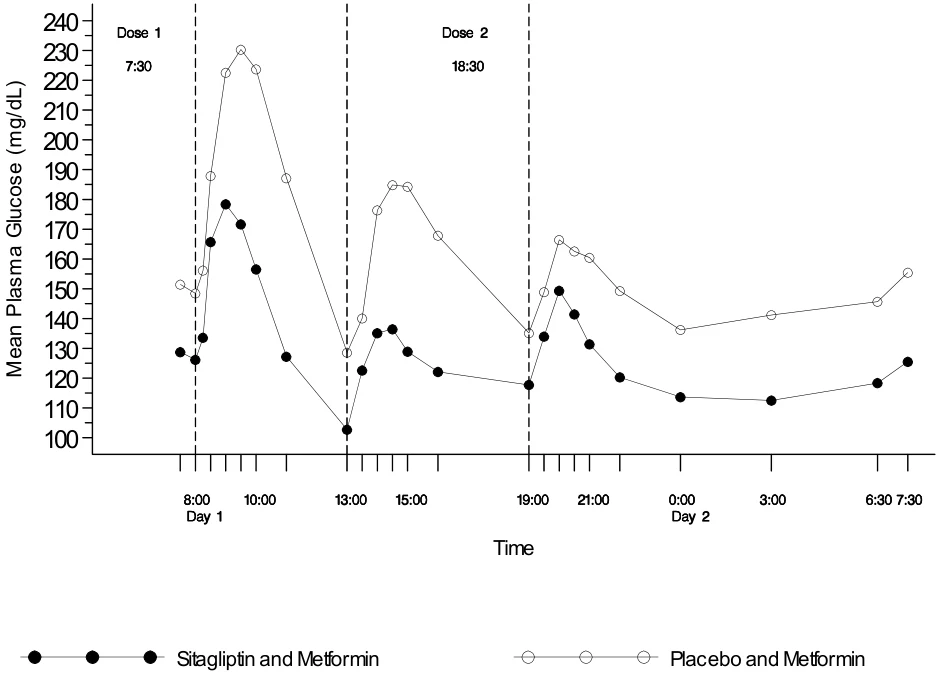
In a study of patients with type 2 diabetes inadequately controlled on metformin monotherapy, glucose levels monitored throughout the day were significantly lower in patients who received sitagliptin 100 mg per day (50 mg twice daily) in combination with metformin compared with patients who received placebo with metformin (see Figure 1).
Figure 1 – 24-hour Plasma Glucose Profile after 4-Week Treatment with Sitagliptin 50 mg BID with Metformin or Placebo with Metformin
In studies with healthy subjects, sitagliptin did not lower blood glucose or cause hypoglycemia, suggesting that the insulinotropic and glucagon suppressive actions of the drug are glucose dependent.
Ertugliflozin
Urinary Glucose Excretion and Urinary Volume
Dose-dependent increases in the amount of glucose excreted in urine were observed in healthy subjects and in patients with T2DM following single- and multiple-dose administration of ertugliflozin. Dose-response modeling indicates that ertugliflozin 5 mg and 15 mg result in near maximal urinary glucose excretion (UGE). Enhanced UGE is maintained after multiple-dose administration. UGE with ertugliflozin also results in increases in urinary volume.
Cardiac Electrophysiology
Ertugliflozin
In a randomized, placebo-and positive controlled, crossover study in 42 healthy subjects, there was no evidence of a treatment-related effect on the QTcF interval, the QRS duration, the PR interval, or ventricular heart rate with a single supratherapeutic oral dose of ertugliflozin 100 mg (6.7 times the maximum recommended dose).
Sitagliptin
In a randomized, placebo-controlled crossover study, 79 healthy subjects were administered a single oral dose of sitagliptin 100 mg, sitagliptin 800 mg (8 times the recommended dose), and
placebo. At the recommended dose of 100 mg, there was no effect on the QTc interval obtained at the peak plasma concentration, or at any other time during the study. Following the 800 mg dose, the maximum increase in the placebo-corrected mean change in QTc from baseline at 3 hours postdose was 8.0 msec. This small increase was not considered to be clinically significant. At the 800-mg dose, peak sitagliptin plasma concentrations were approximately 11 times higher than the peak concentrations following a 100 mg dose.
In patients with type 2 diabetes administered sitagliptin 100 mg (N=81) or sitagliptin 200 mg (N=63) daily, there were no meaningful changes in QTc interval based on ECG data obtained at the time of expected peak plasma concentration.
10.3 Pharmacokinetics
STEGLUJAN™
There have been no clinical efficacy studies conducted with STEGLUJAN™ (ertugliflozin and sitagliptin tablets). However, as shown in randomized, cross-over comparative bioavailability studies conducted in fasted healthy adult subjects, the bioavailability of STEGLUJAN™ tablets is comparable to individual ertugliflozin and sitagliptin tablets administered together at the same respective doses.
Ertugliflozin
The pharmacokinetics of ertugliflozin are similar in healthy subjects and patients with T2DM. Based on the population PK analysis, a T2DM patient had ~9% lower CL/F relative to a healthy subject, which is not considered clinically meaningful. The steady state mean plasma AUC and Cmax were 398 ng∙hr/mL and 81.3 ng/mL, respectively, with 5 mg ertugliflozin once daily treatment, and 1,193 ng∙hr/mL and 268 ng/mL, respectively, with 15 mg ertugliflozin once daily treatment. Steady state is reached after 4 to 6 days of once-daily dosing with ertugliflozin. Ertugliflozin does not exhibit time-dependent pharmacokinetics and accumulates in plasma up to 10-40% following multiple dosing.
Table 6 – Summary of Ertugliflozin Pharmacokinetic Parameters in Healthy Subjects at Steady State
| Ertugliflozin Dose | Cmax1 | AUCτ1 | Tmax1 | ||
|---|---|---|---|---|---|
| 5 mg, multiple dose | 81.3 ng/mL | 398 ng∙hr/mL | 1 hour | ||
| 15 mg, multiple dose | 268 ng/mL | 1,193 ng∙hr/mL | |||
1 Steady state with once daily dosing of ertugliflozin, healthy subjects
Sitagliptin
The pharmacokinetics of sitagliptin have been extensively characterized in healthy subjects and patients with type 2 diabetes. After oral administration of a 100-mg dose to healthy subjects, sitagliptin was rapidly absorbed, with peak plasma concentrations (median Tmax) occurring 1 to 4 hours post-dose. Plasma AUC of sitagliptin increased in a dose-proportional manner. Following a single oral 100-mg dose to healthy volunteers, mean plasma AUC of sitagliptin was 8.52 µM•hr, Cmax was 950 nM, and apparent terminal half-life (t1/2) was 12.4 hours. Plasma AUC of sitagliptin increased approximately 14% following 100-mg doses at steady-state compared to the first dose. The intra-subject and inter-subject coefficients of variation for sitagliptin AUC were small (5.8% and 15.1%). The pharmacokinetics of sitagliptin were generally similar in healthy subjects and in patients with type 2 diabetes.
Table7 – Summary of Sitagliptin’s Pharmacokinetic Parameters in Healthy Volunteers
* Volume of distribution at steady state following an I.V. dose.
Absorption:
STEGLUJAN™
The effects of a high-fat meal on the pharmacokinetics of ertugliflozin and sitagliptin when administered as STEGLUJAN™ tablets are comparable to those reported for the individual tablets. Administration of STEGLUJAN™ with food decreased ertugliflozin Cmax by 30% and delayed Tmax by 1 hour. Food had no meaningful effect on ertugliflozin AUCinf, or on sitagliptin AUCinf and Cmax and Tmax.
Ertugliflozin
Following single-dose oral administration of 5 mg and 15 mg of ertugliflozin, peak plasma concentrations (median Tmax) of ertugliflozin occur at 1 hour post-dose under fasted conditions. Plasma Cmax and AUC of ertugliflozin increase in a dose-proportional manner following single doses from 0.5 mg to 300 mg and following multiple doses from 1 mg to 100 mg. The absolute oral bioavailability of ertugliflozin following administration of a 15 mg dose is approximately 100%.
Sitagliptin
The absolute bioavailability of sitagliptin is approximately 87%. Co-administration of a high-fat meal with sitagliptin phosphate had no effect on the pharmacokinetics of sitagliptin.
Distribution:
Ertugliflozin
The mean steady state volume of distribution of ertugliflozin following an intravenous dose is 85.5 L. Plasma protein binding of ertugliflozin is 93.6% and is independent of ertugliflozin plasma concentrations. Plasma protein binding is not meaningfully altered in patients with renal or hepatic impairment. The blood-to-plasma concentration ratio of ertugliflozin is 0.66.
Sitagliptin
The mean volume of distribution at steady state following a single 100 mg intravenous dose of sitagliptin to healthy subjects is approximately 198 L. The fraction of sitagliptin reversibly bound to plasma proteins is low (38%).
Metabolism:
Ertugliflozin
Metabolism is the primary clearance mechanism for ertugliflozin. The major metabolic pathway for ertugliflozin is UGT1A9 and UGT2B7-mediated O-glucuronidation to two glucuronides that
Cmax nM | t½ (h) | AUC0-∞ µM•hr | Renal Clearance mL/min | Volume of distribution (L)* | |
|---|---|---|---|---|---|
| Single oral dose (100 mg) mean | 950 | 12.4 | 8.52 | 350 | 198 |
are pharmacologically inactive at clinically relevant concentrations. CYP-mediated (oxidative) metabolism of ertugliflozin is minimal (12%).
Sitagliptin
Sitagliptin is primarily eliminated unchanged in urine, and metabolism is a minor pathway. Approximately 79% of sitagliptin is excreted unchanged in the urine.
Following a [14C]sitagliptin oral dose, approximately 16% of the radioactivity was excreted as metabolites of sitagliptin. Six metabolites were detected at trace levels and are not expected to contribute to the plasma DPP-4 inhibitory activity of sitagliptin. In vitro studies indicated that the primary enzyme responsible for the limited metabolism of sitagliptin was CYP3A4, with contribution from CYP2C8.
Elimination:
Ertugliflozin
The mean systemic plasma clearance following an intravenous 100 µg dose was 11.2 L/hr. The mean elimination half-life in T2DM patients with normal renal function was estimated to be 16.6 hours based on the population pharmacokinetic analysis. Following administration of an oral [14C]-ertugliflozin solution to healthy subjects, approximately 40.9% and 50.2% of the drug-related radioactivity was eliminated in feces and urine, respectively. Only 1.5% of the administered dose was excreted as unchanged ertugliflozin in urine and 33.8% as unchanged ertugliflozin in feces, which is likely due to biliary excretion of glucuronide metabolites and subsequent hydrolysis to parent.
Sitagliptin
Following administration of an oral [14C]-sitagliptin dose to healthy subjects, approximately 100% of the administered radioactivity was eliminated in feces (13%) or urine (87%) within one week of dosing. The apparent terminal t1/2 following a 100 mg oral dose of sitagliptin was approximately 12.4 hours and renal clearance was approximately 350 mL/min.
Elimination of sitagliptin occurs primarily via renal excretion and involves active tubular secretion. Sitagliptin is a substrate for human organic anion transporter-3 (hOAT-3), which may be involved in the renal elimination of sitagliptin. The clinical relevance of hOAT-3 in sitagliptin transport has not been established. Sitagliptin is also a substrate of p-glycoprotein, which may also be involved in mediating the renal elimination of sitagliptin. However, cyclosporine, a p-glycoprotein inhibitor, did not reduce the renal clearance of sitagliptin.
Special Populations and Conditions
Pediatrics: No studies with STEGLUJAN™ have been performed in pediatric patients.
Geriatrics:
Ertugliflozin
Based on a population pharmacokinetic analysis, age does not have a clinically meaningful effect on the pharmacokinetics of ertugliflozin. Relative to the ≥45 and <55 ages for the ertugliflozin 5 and 15 mg once-daily doses, median AUCτ changed by <14% across all other ages (<45 and >55 years). However, across clinical studies, patients 65 years and older had a higher incidence of adverse reactions related to volume depletion compared to younger patients treated with ertugliflozin (see DOSAGE AND ADMINISTRATION, WARNINGS AND PRECAUTIONS, ADVERSE REACTIONS).
Sitagliptin
Age did not have a clinically meaningful impact on the pharmacokinetics of sitagliptin based on a population pharmacokinetic analysis of Phase 1 and Phase 2 data. Elderly subjects (65 to 80 years) had approximately 19% higher plasma concentrations of sitagliptin compared to younger subjects.
Sex:
Ertugliflozin
Based on a population pharmacokinetic analysis, gender does not have a clinically meaningful effect on the pharmacokinetics of ertugliflozin. The geometric mean exposure in females was 4% higher compared to males and is not considered clinically meaningful.
Sitagliptin
Gender had no clinically meaningful effect on the pharmacokinetics of sitagliptin based on a composite analysis of Phase 1 pharmacokinetic data and on a population pharmacokinetic analysis of Phase 1 and Phase 2 data.
Ethnic origin:
Ertugliflozin
Based on a population pharmacokinetic analysis, race does not have a clinically meaningful effect on the pharmacokinetics of ertugliflozin. The geometric mean exposure in African American patients was comparable to Caucasian patients. The geometric mean exposure in Asian patients was 7% lower compared to Caucasian patients when matched with covariates such as baseline body weight, baseline eGFR and is not considered clinically meaningful.
Sitagliptin
Race had no clinically meaningful effect on the pharmacokinetics of sitagliptin based on a composite analysis of Phase 1 pharmacokinetic data and on a population pharmacokinetic analysis of Phase 1 and Phase 2 data, including subjects of white, Hispanic, black, Asian, and other racial groups.
Hepatic Insufficiency:
Ertugliflozin
Moderate hepatic impairment (based on the Child-Pugh classification) did not result in an increase in exposure of ertugliflozin. The AUC of ertugliflozin decreased by approximately 13%, and Cmax decreased by approximately 21% compared to subjects with normal hepatic function.
This decrease in ertugliflozin exposure is not considered clinically meaningful. There is no clinical experience in patients with Child-Pugh class C (severe) hepatic impairment. The plasma protein binding of ertugliflozin was unaffected in patients with moderate hepatic impairment.
Sitagliptin
In patients with moderate hepatic insufficiency (Child-Pugh score 7 to 9), mean AUC and Cmax of sitagliptin increased approximately 21% (90% CI: 1%, 46%) and 13% (90% CI: -9%, 42%), respectively, compared to healthy matched controls following administration of a single 100-mg dose of sitagliptin.
Renal Insufficiency:
STEGLUJAN™
Studies characterizing the pharmacokinetics of ertugliflozin and sitagliptin after administration of STEGLUJAN™ in renally impaired patients have not been performed (see DOSAGE AND ADMINISTRATION).
Ertugliflozin
In a Phase 1 clinical pharmacology study in patients with T2DM and mild, moderate, or severe renal impairment (as determined by eGFR), following a single-dose administration of 15 mg, ertugliflozin the mean increases in AUC of ertugliflozin were 1.6-, 1.7- and 1.6-fold for mild, moderate and severe renally impaired patients respectively,, compared to subjects with normal renal function. The Cmax increased by 1.4-fold in mild and moderate renally impaired subjects and decreased by 0.1-fold in severe renally impaired subjects. These increases in ertugliflozin AUC and changes in Cmax are not considered clinically relevant. The 24-hour urinary glucose excretion declined with increasing severity of renal impairment (see WARNINGS AND PRECAUTIONS). The plasma protein binding of ertugliflozin was unaffected in patients with renal impairment.
Sitagliptin
A single-dose, open-label study was conducted to evaluate the pharmacokinetics of a reduced dose of sitagliptin (50 mg) in patients with varying degrees of chronic renal insufficiency compared to normal healthy control subjects. The study included patients with renal insufficiency classified on the basis of creatinine clearance as mild (50 to <80 mL/min), moderate (30 to <50 mL/min), and severe (<30 mL/min), as well as patients with end-stage renal disease (ESRD) on hemodialysis. Compared to normal healthy control subjects, an approximate 1.1 to 1.6-fold increase in plasma AUC of sitagliptin was observed in patients with mild renal insufficiency, which is not a clinically meaningful increase to require dosage adjustment. An approximately 2-fold increase in the plasma AUC of sitagliptin was observed in patients with renal insufficiency classified on the basis of creatinine clearance as moderate (30 to <50mL/min) and an approximately 4-fold increase was observed in patients with severe (<30 mL/min) renal insufficiency and in patients with ESRD on hemodialysis, as compared to normal healthy control subjects.
Obesity:
Ertugliflozin
Based on a population pharmacokinetic analysis body weight does not have a clinically meaningful effect on the pharmacokinetics of ertugliflozin. Relative to the approximate median weight (85 kg), body weight over a range of 59.5 kg to 123 kg (representing 5th and 95th percentiles of the observed weights), was estimated to be associated with ≤31% change in AUCtau, which is not considered clinically relevant.
Genetic Polymorphism: Based on the results of a pooled analysis of AUC values from 20 Phase 1 studies evaluating the impact of UGT1A9 genotype on the pharmacokinetics of ertugliflozin, the effect of the UGT1A9 allelic variants on ertugliflozin AUC was within ±10% of the wild type and is not considered clinically meaningful.
11 STORAGE, STABILITY AND DISPOSAL
Store at 15°C to 30°C. Protect from moisture.
12 SPECIAL HANDLING INSTRUCTIONS
Not applicable.
PART II: SCIENTIFIC INFORMATION
13 PHARMACEUTICAL INFORMATION
STEGLUJAN™ contains ertugliflozin (in the form of ertugliflozin co-crystallized with L-pyroglutamic acid), a SGLT2 inhibitor, and sitagliptin (as sitagliptin phosphate), a DPP-4 inhibitor.
| ertugliflozin | sitagliptin | |
|---|---|---|
| Proper/ Common name | Ertugliflozin L-pyroglutamic acid | Sitagliptin phosphate |
| Chemical name | (1S,2S,3S,4R,5S)-5-(4-chloro-3-(4-ethoxybenzyl)phenyl)-1-(hydroxymethyl)-6,8-dioxabicyclo[3.2.1]octane-2,3,4-triol, compound with (2S)-5-oxopyrrolidine-2-carboxylic acid | 7-[(3R)-3-amino-1-oxo-4-(2,4,5-trifluorophenyl)butyl]-5,6,7,8-tetrahydro-3-(trifluoromethyl)-1,2,4-triazolo[4,3-a]pyrazine phosphate (1:1) monohydrate |
| Molecular formula | C22H25ClO7 (ertugliflozin)/ C22H25ClO7 with C5H7NO3 (ertugliflozin L-PGA). | C16H15F6N5O•H3PO4•H2O |
| Molecular mass | 436.88 Daltons (ertugliflozin) / 566.00 Daltons (ertugliflozin L-PGA) | 523.32 |
| Structural formula | F F F N N N N CF3 O H NH2 . H3PO4 . H2O |
| ertugliflozin | sitagliptin | |
|---|---|---|
| Physicochemical properties | Ertugliflozin is co-crystallized with L-pyroglutamic acid (L-PGA) to form a crystalline, white to off-white powder. Due to rapid dissociation of ertugliflozin L-PGA in aqueous media, the thermodynamic aqueous solubility of ertugliflozin L-PGA cannot be determined. However, using ertugliflozin L-PGA as a source of ertugliflozin, the solubility of ertugliflozin in unbuffered water at pH 5.5, simulated gastric fluid without enzyme at pH 1.2 and phosphate buffered saline at pH 6.5 was found to be 0.76, 0.74 and 0.64 mg/mL respectively. | Sitagliptin phosphate is a white to off-white, crystalline, non-hygroscopic powder. It is soluble in water and N,N-dimethyl formamide; slightly soluble in methanol; very slightly soluble in ethanol, acetone, and acetonitrile; and insoluble in isopropanol and isopropyl acetate. |
14 CLINICAL TRIALS
The clinical efficacy study described below was not conducted with STEGLUJAN™ tablets; however, bioequivalence of STEGLUJAN™ tablets with co-administered ertugliflozin and sitagliptin tablets has been demonstrated (see ACTION AND CLINICAL PHARMACOLOGY, Pharmacokinetics).
14.1 Trial Design and Study Demographics
Table 8 – Summary of Patient Demographics for the Pivotal Clinical Trial in T2DM with Ertugliflozin in Combination with Sitagliptin
| Study # | Trial design | Dosage, route of administration and duration | Study subjects (n=number) | Mean age years (Range) | Gender (% M/F) |
|---|---|---|---|---|---|
| Add-on Therapy with Metformin and Sitagliptin | |||||
| P006/1015 | Randomised, double-blind, placebo-controlled, multicentre | Ertugliflozin 5 mg or Ertugliflozin 15 mg vs. Placebo Tablets, orally, once daily Main treatment period:26 weeks | Ertugliflozin 5 mg: 156 Ertugliflozin 15 mg: 154 Placebo: 153 | 59.1 (34-84) | 56.9/ 43.1 |
14.2 Study Results
Ertugliflozin as Add-on Combination Therapy with Metformin and Sitagliptin
A total of 463 patients with type 2 diabetes mellitus inadequately controlled (HbA1c between 7% and 10.5%) on metformin (≥1500 mg/day for ≥8 weeks) and sitagliptin 100 mg once daily was evaluated for efficacy of ertugliflozin in combination with metformin and sitagliptin.
In Study P006/1015, patients were randomized (1:1:1) to receive ertugliflozin 5 mg, ertugliflozin 15 mg, or placebo administered once daily in addition to continuation of background metformin and sitagliptin therapy. Of randomized and treated patients, 27.1% were aged ≥65 to <75 years, and 2.8% were aged ≥75 years. Mean BMI was 30.8 kg/m2, 72.9% of patients were Caucasian/White, with lesser representation of Asian (20.3%), Black (1.9%), and other races (4.8%). In the study, mean duration of diabetes at screening was 9.5 years.
For the primary endpoint, treatment of ertugliflozin provided statistically significant improvements in HbA1c after 26 weeks of treatment compared to placebo (see Table 9).
Table 9 – Results of a 26-Week (cLDA)* Placebo-Controlled Study of Ertugliflozin in Add-on Combination Therapy to Metformin and Sitagliptin
| Efficacy Parameter | Ertugliflozin 5 mg + Metformin/ Sitagliptin | Ertugliflozin 15 mg + Metformin/ Sitagliptin | Placebo + Metformin/ Sitagliptin |
|---|---|---|---|
| N (FAS) | 156 | 153 | 153 |
| HbA1c (%) | |||
| Baseline (mean) | 8.1 | 8.0 | 8.0 |
| Change from baseline (LS mean†) | -0.78 | -0.86 | -0.09 |
| Difference from placebo (LS mean†, 95% CI) | -0.69‡ (-0.87, -0.50) | -0.76‡ (-0.95, -0.58) | |
| Patients (%) with HbA1c <7% | 32.1§ | 39.9§ | 17.0 |
| N (FAS) | 156 | 153 | 156 |
| FPG (mmol/mL) | |||
| Baseline (mean) | 9.3 | 9.5 | 9.4 |
| Change from baseline (LS mean†) | -1.49 | -1.83 | -0.10 |
| Difference from placebo (LS mean†, 95% CI) | -1.40‡ (-1.82, -0.97) | -1.74‡ (-2.16, -1.31) | |
| N (FAS) | 156 | 153 | 156 |
| Body Weight (kg) | |||
| Baseline (mean) | 87.6 | 86.6 | 86.5 |
| Change from baseline (LS mean†) | -3.35 | -3.04 | -1.32 |
| Difference from placebo (LS mean†, 95% CI) | -2.03‡ (-2.65, -1.40) | -1.72‡ (-2.35, -1.09) |
* cLDA = constrained longitudinal data analysis; FAS = full analysis set; N = includes all randomized, treated patients who had at least one measurement of the outcome variable.
† Least squares means adjusted for treatment, time, prior antihyperglycemic medication.
‡ p<0.001 compared to placebo.
§ p<0.001 compared to placebo (based on adjusted odds ratio comparisons from a logistic regression model using multiple imputation for missing data values).
Statistically significant (p<0.001) reductions in systolic blood pressure were observed with ertugliflozin 5 mg and 15 mg, -3.7 mmHg and -4.3 mmHg, respectively, relative to placebo.
Sitagliptin
TECOS Cardiovascular Safety Study
The Trial Evaluating Cardiovascular Outcomes with Sitagliptin (TECOS) was a randomized double-blind, placebo-controlled, parallel-group, event-driven, multicentre study in patients with type 2 diabetes mellitus (HbA1c ≥6.5 to 8.0%) and established vascular disease (coronary artery disease, ischemic cerebrovascular disease, atherosclerotic peripheral artery disease). The study included 14671 (70.7% male, 29.3% female) patients in the intention-to-treat population who received sitagliptin (N=7332) 100 mg daily (or 50 mg daily if the baseline eGFR was ≥30 and <50 mL/min/1.73 m2) or placebo (N=7339) added to usual care targeting regional standards for HbA1c and CV risk factors. The median duration of treatment was 31 months and the median duration of follow-up was 36 months. Patients with an eGFR <30 mL/min/1.73 m2 were not to be enrolled in the study. The study population included 10863 patients with coronary artery disease, 3588 patients with cerebrovascular disease, 2433 patients with peripheral artery disease, 2643 patients with prior congestive heart failure (including 373 with New York Heart Association [NYHA] class 3 or higher), 2004 patients ≥75 years of age, and 3324 patients with renal impairment (eGFR <60 mL/min/1.73 m2).
The primary cardiovascular endpoint was a composite of the first occurrence of cardiovascular death, non-fatal myocardial infarction, non-fatal stroke, or hospitalization for unstable angina. Secondary cardiovascular endpoints included a composite of the first occurrence of cardiovascular death, non-fatal myocardial infarction, or non-fatal stroke; as well as first occurrence of the following independent CV endpoints: cardiovascular death, myocardial infarction (fatal + non-fatal), stroke (fatal + non-fatal), hospitalization for unstable angina, hospitalization for heart failure, and all-cause mortality. A composite endpoint of first occurrence of death due to heart failure or hospitalization for congestive heart failure was also assessed
Sitagliptin, when added to usual care, did not increase the risk of major adverse cardiovascular events or the risk of death or hospitalization for heart failure compared to usual care without sitagliptin in patients with type 2 diabetes. Superiority to placebo was not demonstrated for any endpoint (Table 10).
Table 10 – Rates of Composite Cardiovascular Outcomes and Key Secondary Outcomes Censored at the End of Follow-up (Intention-to-Treat Population)
Sitagliptin (N=7332) | Placebo (N=7339) | Hazard Ratio (95% CI) | p-value† | ||||||||||
|---|---|---|---|---|---|---|---|---|---|---|---|---|---|
Subjects with Events N (%) | Incidence Rate per 100 Patient-Years* | Subjects with Events N (%) | Incidence Rate per 100 Patient-Years* | ||||||||||
Primary Composite Endpoint (Cardiovascular death, non-fatal myocardial infarction, non-fatal stroke, or hospitalization for unstable angina) | 839 (11.4) | 4.1 | 851 (11.6) | 4.2 | 0.98 (0.89, 1.08) | <0.001 | |||||||
Secondary Composite Endpoint (Cardiovascular death, non-fatal myocardial infarction, or non-fatal stroke) | 745 (10.2) | 3.6 | 746 (10.2) | 3.6 | 0.99 (0.89–1.10) | <0.001 | |||||||
| Secondary Outcome | |||||||||||||
| Cardiovascular death | 380 (5.2) | 1.7 | 366 (5.0) | 1.7 | 1.03 (0.89-1.19) | 0.711 | |||||||
| All myocardial infarction (fatal and non-fatal) | 300 (4.1) | 1.4 | 316 (4.3) | 1.5 | 0.95 (0.81–1.11) | 0.487 | |||||||
| All stroke (fatal and non-fatal) | 178 (2.4) | 0.8 | 183 (2.5) | 0.9 | 0.97 (0.79–1.19) | 0.760 | |||||||
| Hospitalization for unstable angina | 116 (1.6) | 0.5 | 129 (1.8) | 0.6 | 0.90 (0.70–1.16) | 0.419 | |||||||
| Death from any cause | 547 (7.5) | 2.5 | 537 (7.3) | 2.5 | 1.01 (0.90–1.14) | 0.875 | |||||||
| Hospitalization for heart failure‡ | 228 (3.1) | 1.1 | 229 (3.1) | 1.1 | 1.00 (0.83–1.20) | 0.983 | |||||||
| Death due to heart failure or hospitalization for heart failure‡ | 237 (3.2) | 1.1 | 240 (3.3) | 1.1 | 0.99 (0.83, 1.18) | 0.909 | |||||||
* Incidence rate per 100 patient-years is calculated as 100 × (total number of patients with ≥1 event during eligible exposure period per total patient-years of follow-up).
† Based on a Cox model stratified by region. For composite endpoints, the p-values correspond to a test of non-inferiority seeking to show that the hazard ratio is less than 1.3. For all other endpoints, the p-values correspond to a test of differences in hazard rates.
‡ The analysis of hospitalization for heart failure was adjusted for a history of heart failure at baseline.
Study in Special Population
Use in Patients with Type 2 Diabetes Mellitus and Moderate Renal Impairment
The efficacy of ertugliflozin was assessed separately in a dedicated study of diabetic patients with moderate renal impairment (468 patients with eGFR ≥30 to <60 mL/min/1.73 m2).
In Study P001/1016, 202 patients exposed to ertugliflozin (5 mg or 15 mg) had an eGFR between 45 and less than 60 mL/min/1.73 m2 and 111 patients exposed to ertugliflozin (5 mg or 15 mg) had an eGFR between 30 and less than 45 mL/min/1.73 m2.
Ertugliflozin did not show efficacy in this study. In patients with moderate renal impairment, the HbA1c reductions from baseline to Week 26 were not significantly different between placebo and ertugliflozin 5 mg or 15 mg.
15 MICROBIOLOGY
Not applicable.
16 NON-CLINICAL TOXICOLOGY
General Toxicology
Acute Toxicity
Ertugliflozin
Single- doses of ertugliflozin were well tolerated in male and female beagle dogs at 5 or 50 mg/kg (approximately 180 times human exposure at the maximum recommended human dose (MRHD) of 15 mg/day based on AUC comparisons). However, the dose of 500 mg/kg resulted in emesis.
Sitagliptin
The approximate LD50 of sitagliptin given orally to rats is >3000 mg/kg (maximum dose tested). This dose is equivalent to ≥200 times the human exposure based on the recommended daily adult human dose of 100 mg/day. In mice the approximate oral LD50 of sitagliptin is 4000 mg/kg. This dose is equivalent to >385 times the human exposure based on recommended daily adult human dose of 100 mg/day.
Chronic Toxicity
Ertugliflozin
Repeat-dose oral toxicity studies were conducted in mice, rats, and dogs for up to 13, 26, and 39 weeks, respectively. Signs of toxicity that were considered adverse were generally observed at exposures greater than or equal to 47 times the human exposure (AUC) at the MRHD of 15 mg/day. Most toxicity was consistent with pharmacology related to urinary glucose loss and included decreased body weight and body fat, increased food consumption, diarrhea, dehydration, decreased serum glucose and increases in other serum parameters reflective of increased protein metabolism, gluconeogenesis and electrolyte imbalances, and urinary changes such as polyuria, glucosuria, and calciuria. Microscopic changes related to glucosuria and/or calciuria observed only in rodents included, dilatation of renal tubules, hypertrophy of zona glomerulosa in adrenal glands (rats), renal tubular mineralization (rats), and increased trabecular bone (rats). Most of these changes resolved or showed signs of on-going recovery following the 8-week non-dosing recovery period; however, incidences of tubular mineralization remained high in males at the end of the recovery period. There were no adverse toxicity findings in dogs at 379 times the human exposure (AUC) at the MRHD of 15 mg/day.
Sitagliptin
The toxicity potential of sitagliptin was evaluated in a series of repeated dose toxicity studies of up to 53 weeks in dogs and up to 27 weeks in rats. In dogs administered sitagliptin orally at dosages of 2, 10 and 50 mg/kg/day, the no-observed effect level was 10 mg/kg/day (up to 6 times the human exposure based on the recommended daily adult human dose of 100 mg/day). Treatment-related physical signs observed in the 50-mg/kg/day group included open-mouth breathing, salivation, white foamy emesis, ataxia, trembling, decreased activity, and/or hunched posture. These signs were transient, slight in degree, and occurred with decreased incidence during the course of the study. In addition, very slight to slight skeletal muscle degeneration was observed histologically in the 14- and 27-week toxicity studies at the 50-mg/kg/day dose. However, no skeletal muscle degeneration was found in the 53-week toxicity study, indicating the lack of reproducibility or progression of this change with increased duration of treatment. The 50-mg/kg/day dose in dogs resulted in systemic exposure values 26 times the human exposure at the recommended daily adult human dose of 100 mg/day. In rats, sitagliptin administered orally at dosages of up to 180 mg/kg/day (up to 23 times the human exposure based on the recommended daily adult human dose of 100 mg/day), no significant toxicity was observed. The only drug-related effect observed was postdose salivation, likely related to poor palatability of the drug, at doses of 60 mg/kg/day and 180 mg/kg/day.
The treatment-related changes noted in animals do not suggest any clinical concerns at the recommended therapeutic dosages in humans.
Carcinogenesis
Ertugliflozin
In the 2-year mouse carcinogenicity study, ertugliflozin was administered by oral gavage at doses of 5, 15, and 40 mg/kg/day. There were no ertugliflozin-related neoplastic findings at doses up to 40 mg/kg/day (approximately 41 times human exposure at the MRHD of 15 mg/day based on AUC). In the 2-year rat carcinogenicity study, ertugliflozin was administered by oral gavage at doses of 1.5, 5, and 15 mg/kg/day. Ertugliflozin-related neoplastic findings included an increased incidence of benign adrenal medullary pheochromocytoma in male rats at 15 mg/kg/day. This finding may be related to carbohydrate malabsorption leading to altered calcium homeostasis, which has been associated with pheochromocytoma development in rats and has unclear relevancy to human risk. The no-observed-effect-level (NOEL) for neoplasia was 5 mg/kg/day (approximately 16 times human exposure at the MRHD of 15 mg/day).
Sitagliptin
A two-year carcinogenicity study was conducted in male and female rats given oral doses of sitagliptin of 50, 150, and 500 mg/kg/day. There was an increased incidence of hepatic adenomas and carcinomas in the high-dose males and hepatic carcinomas in the high-dose females. This dose in rats results in approximately 58 times the human exposure based on the recommended daily adult human dose of 100 mg/day. This dose level was associated with hepatotoxicity in rats. The no-observed effect level for induction of hepatic neoplasia was 150 mg/kg/day, approximately 19-fold the human exposure at the 100-mg recommended dose. Since hepatotoxicity has been shown to correlate with induction of hepatic neoplasia in rats, this increased incidence of hepatic tumors in rats was likely secondary to chronic hepatic toxicity at this high dose. The clinical significance of these findings for humans is unknown.
A two-year carcinogenicity study was conducted in male and female mice at oral doses of 50, 125, 250, and 500 mg/kg/day. Sitagliptin did not increase tumor incidence in mice in any organ at doses up to 500 mg/kg/day (approximately 68 times the human exposure based on the recommended daily adult human dose of 100 mg/day).
Mutagenesis
Ertugliflozin
Ertugliflozin was not mutagenic or clastogenic with or without metabolic activation in the microbial reverse mutation, in vitro cytogenetic (human lymphocytes), and in vivo rat micronucleus assays.
Sitagliptin
Sitagliptin was not mutagenic or clastogenic in a battery of genetic toxicology studies, including the Ames bacterial assay (microbial mutagenesis test), Chinese hamster ovary cells (CHO cells) chromosome aberration assay, an in vitro cytogenetics assay using CHO cells, an in vitro rat hepatocyte DNA alkaline elution assay (an assay which measures the compound’s ability to induce single strand breaks in DNA), and an in vivo micronucleus assay.
Reproductive and Developmental Toxicology
Reproduction
Ertugliflozin
In the rat fertility and embryonic development study, male and female rats were administered ertugliflozin at 5, 25, and 250 mg/kg/day. No effects on fertility were observed at 250 mg/kg/day (approximately 386 times human exposure at the MRHD of 15 mg/day based on AUC comparisons).
Sitagliptin
No adverse effects upon fertility were observed in male and female rats given sitagliptin orally at doses up to 1000 mg/kg daily (up to approximately 100 times the human exposure based on the recommended daily adult human dose of 100 mg/day) prior to and throughout mating.
Development
Ertugliflozin
In embryo-fetal development studies, ertugliflozin (50, 100 and 250 mg/kg/day) was administered orally to rats on gestation days 6 to 17 and to rabbits on gestation days 7 to 19. Ertugliflozin did not adversely affect developmental outcomes in rats and rabbits at maternal exposures that were 239 and 1,069 times, respectively, the human exposure at the maximum clinical dose of 15 mg/day, based on AUC. At a maternally toxic dose in rats (250 mg/kg/day), lower fetal viability, lower maternal body weight, a higher incidence of a visceral malformation (membranous ventricular septal defect) and skeletal variations were observed at maternal exposure that was 510 times the human exposure at the 15 mg/day maximum clinical dose. In the pre-and post-natal development study, decreased post-natal growth and development were observed in rats administered ertugliflozin gestation day 6 through lactation day 21 at
≥100 mg/kg/day (estimated 239 times the human exposure at the maximum clinical dose of 15 mg/day, based on AUC).
When ertugliflozin was orally administered to juvenile rats from PND 21 to PND 90, increased kidney weight, renal tubule and renal pelvis dilatation, and renal mineralization occurred at doses greater than or equal to 5 mg/kg (13-fold the human exposure) at the maximum clinical dose of 15 mg/day, based on AUC). These effects did not fully reverse within the 1 month recovery period. Following the 4-week non-dosing recovery period, there was no recovery of kidney mineralization. These effects occurred with drug exposure during periods in rats that correspond to the late second and third trimester of human renal development. Similar effects were seen in adult mice and rats.
Sitagliptin
Sitagliptin was not teratogenic in rats at oral doses up to 250 mg/kg or in rabbits given up to 125 mg/kg during organogenesis (up to 32 and 22 times the human exposure based on the recommended daily adult human dose of 100 mg/day). A slight, treatment-related increased incidence of fetal rib malformations (absent, hypoplastic and wavy ribs) was observed in the offspring of rats at oral doses of 1000 mg/kg/day (approximately 100 times the human exposure based on the recommended daily adult human dose of 100 mg/day). The no-observed effect level for developmental effects was 250 mg/kg/day (32 times the human exposure based on the recommended daily adult human dose of 100 mg/day). Treatment-related decreases in the mean preweaning body weight of both sexes and postweaning body weight gain of male animals was observed in offspring of rats at oral doses of 1000 mg/kg. However, animal reproduction studies are not always predictive of the human response.
17 SUPPORTING PRODUCT MONOGRAPHS
- 1. JANUVIA® tablets 25 mg, 50 mg and 100 mg, Submission Control No: 201760, Product Monograph, Merck Canada Inc. (Mar 13, 2017)