


Product Monograph - Survanta
RECENT MAJOR LABEL CHANGES
TABLE OF CONTENTS
Sections or subsections that are not applicable at the time of authorization are not listed.
RECENT MAJOR LABEL CHANGES .......................................................................................... 2
TABLE OF CONTENTS ............................................................................................................ 2
PART I: HEALTH PROFESSIONAL INFORMATION .................................................................... 4
1 INDICATIONS ............................................................................................................. 4
1.1 Pediatrics .................................................................................................................. 4
1.2 Geriatrics .................................................................................................................. 4
2 CONTRAINDICATIONS ................................................................................................ 4
3 SERIOUS WARNINGS AND PRECAUTIONS BOX ........................................................... 5
4 DOSAGE AND ADMINISTRATION ................................................................................ 5
4.1 Dosing Considerations ............................................................................................. 5
4.2 Recommended Dose and Dosage Adjustment ........................................................ 5
4.3 Reconstitution .......................................................................................................... 6
4.4 Administration ......................................................................................................... 6
4.5 Missed Dose ........................................................................................................... 11
5 OVERDOSAGE .......................................................................................................... 12
6 DOSAGE FORMS, STRENGTHS, COMPOSITION AND PACKAGING .............................. 12
7 WARNINGS AND PRECAUTIONS ............................................................................... 12
7.1 Special Populations ................................................................................................ 14
7.1.1 Pregnant Women ............................................................................................. 14
7.1.2 Breast-feeding .................................................................................................. 14
7.1.3 Pediatrics .......................................................................................................... 14
7.1.4 Geriatrics .......................................................................................................... 14
8 ADVERSE REACTIONS............................................................................................... 15
8.1 Adverse Reaction Overview ................................................................................... 15
8.2 Clinical Trial Adverse Reactions ............................................................................. 15
8.2.1 Clinical Trial Adverse Reactions – Pediatrics.................................................... 18
8.3 Less Common Clinical Trial Adverse Reactions ...................................................... 18
8.4 Abnormal Laboratory Findings: Hematologic, Clinical Chemistry and Other Quantitative Data ............................................................................................................. 18
8.5 Post-Market Adverse Reactions ............................................................................. 18
9 DRUG INTERACTIONS .............................................................................................. 18
9.1 Serious Drug Interactions ...................................................................................... 18
9.2 Drug Interactions Overview ................................................................................... 18
9.3 Drug-Behavioural Interactions ............................................................................... 18
9.4 Drug-Drug Interactions .......................................................................................... 18
9.5 Drug-Food Interactions .......................................................................................... 18
9.6 Drug-Herb Interactions .......................................................................................... 18
9.7 Drug-Laboratory Test Interactions......................................................................... 19
10 CLINICAL PHARMACOLOGY ...................................................................................... 19
10.1 Mechanism of Action ....................................................................................... 19
10.2 Pharmacodynamics .......................................................................................... 19
10.3 Pharmacokinetics ............................................................................................. 19
11 STORAGE, STABILITY AND DISPOSAL ........................................................................ 20
12 SPECIAL HANDLING INSTRUCTIONS .......................................................................... 20
PART II: SCIENTIFIC INFORMATION ..................................................................................... 21
13 PHARMACEUTICAL INFORMATION .......................................................................... 21
14 CLINICAL TRIALS ...................................................................................................... 21
14.1 Trial Design and Study Demographics ............................................................. 21
14.2 Study Results .................................................................................................... 23
14.3 Comparative Bioavailability Studies ................................................................ 25
15 MICROBIOLOGY ...................................................................................................... 25
16 NON-CLINICAL TOXICOLOGY .................................................................................... 25
PATIENT MEDICATION INFORMATION ................................................................................ 32
PART I: HEALTH PROFESSIONAL INFORMATION
1 INDICATIONS
SURVANTA (beractant, intratracheal suspension) is indicated for:
- Prevention (prophylaxis) and
- Treatment (rescue) of Respiratory Distress Syndrome (RDS/Hyaline Membrane Disease) in premature infants
Prevention
For prophylactic treatment of infants at risk of developing RDS or who have evidence of pulmonary immaturity.
In premature infants less than 1250 g birth weight or with evidence of surfactant deficiency, give SURVANTA as soon as possible after an airway has been established, preferably within 15 minutes of birth.
Rescue Treatment
For rescue treatment of infants who have developed RDS.
To treat infants with RDS confirmed by X-ray and who require mechanical ventilation, give SURVANTA as soon as possible after an airway has been established, preferably by 8 hours of age.
SURVANTA significantly reduces the incidence of RDS, mortality due to RDS and air leak complications.
The use of SURVANTA in infants less than 600 g birth weight or greater than 1750 g birth weight has not been evaluated in controlled trials. There is no controlled experience with the use of SURVANTA in conjunction with experimental therapies for RDS (e.g., high frequency ventilation or extra-corporeal membrane oxygenation).
1.1 Pediatrics
Pediatrics (premature infants): Based on the data submitted and reviewed by Health Canada, the safety and efficacy of SURVANTA in pediatric patients has been established. Therefore, Health Canada has authorized an indication for pediatric use (see 1 INDICATIONS).
1.2 Geriatrics
No data are available to Health Canada; therefore, Health Canada has not authorized an indication for geriatric use.
2 CONTRAINDICATIONS
There are no known contraindications to treatment with SURVANTA.
3 SERIOUS WARNINGS AND PRECAUTIONS BOX
Serious Warnings and Precautions
- Administer in a highly supervised clinical setting
- SURVANTA can rapidly affect oxygenation and lung compliance. Therefore, frequent and careful clinical observation and monitoring of systemic oxygenation are essential to avoid hyperoxia.
- Transient episodes of bradycardia and decreased oxygen saturation may occur during dosing.
4 DOSAGE AND ADMINISTRATION
4.1 Dosing Considerations
For Intratracheal Administration Only
SURVANTA should be administered by or under the supervision of health professionals experienced in intubation, ventilator management, and general care of premature infants.
During the dosing procedure, transient episodes of bradycardia and decreased oxygen saturation have been reported (see 8 ADVERSE REACTIONS). If these occur, stop the dosing procedure and initiate appropriate measures to alleviate the condition. After stabilization, resume the dosing procedure.
Marked improvements in oxygenation may occur within minutes of administration of SURVANTA. Therefore, frequent and careful clinical observation and monitoring of systemic oxygenation are essential to avoid hyperoxia.
Review of audiovisual instructional materials describing dosage and administration procedures is recommended before using SURVANTA. Materials are available upon request.
4.2 Recommended Dose and Dosage Adjustment
No information is available on the effects of doses other than 100 mg phospholipids/kg, more than 4 doses, dosing more frequently than every 6 hours, or administration after 48 hours of age.
Each dose of SURVANTA is 100 mg of phospholipids/kg birth weight (4 mL/kg). The SURVANTA Dosing Chart (Table 1) shows the total dosage for a range of birth weights.
Table 1 – SURVANTA Dosing Chart
| Weight (grams) | Total Dose (mL) | Weight (grams) | Total Dose (mL) |
| 600 to 650 | 2.6 | 1301 to 1350 | 5.4 |
| 651 to 700 | 2.8 | 1351 to 1400 | 5.6 |
| 701 to 750 | 3.0 | 1401 to 1450 | 5.8 |
| 751 to 800 | 3.2 | 1451 to 1500 | 6.0 |
| 801 to 850 | 3.4 | 1501 to 1550 | 6.2 |
| 851 to 900 | 3.6 | 1551 to 1600 | 6.4 |
| 901 to 950 | 3.8 | 1601 to 1650 | 6.6 |
| 951 to 1000 | 4.0 | 1651 to 1700 | 6.8 |
| 1001 to 1050 | 4.2 | 1701 to 1750 | 7.0 |
| 1051 to 1100 | 4.4 | 1751 to 1800 | 7.2* |
| 1101 to 1150 | 4.6 | 1801 to 1850 | 7.4* |
| 1151 to 1200 | 4.8 | 1851 to 1900 | 7.6* |
| 1201 to 1250 | 5.0 | 1901 to 1950 | 7.8* |
| 1251 to 1300 | 5.2 | 1951 to 2000 | 8.0* |
* suggested dosages based on limited clinical experience in uncontrolled trials
Four doses of SURVANTA can be administered in the first 48 hours of life. Doses should be given no more frequently than every 6 hours.
4.3 Reconstitution
Not applicable.
4.4 Administration
Directions for Use
SURVANTA should be inspected visually for discolouration prior to administration. The colour of SURVANTA is off-white to light brown opaque.
If settling occurs during storage, swirl the vial gently (do not shake) to redisperse. Some foaming at the surface may occur during handling and is inherent to the nature of the product. SURVANTA does not require sonication before use.
SURVANTA is stored refrigerated (2 to 8°C). Before administration, SURVANTA should be warmed by standing at room temperature for at least 20 minutes or warmed in the hand for at least 8 minutes.
Artificial warming methods should not be used. If a prevention dose is to be given, preparation of SURVANTA should begin before the infant's birth.
Unopened, unused vials of SURVANTA that have been warmed to room temperature may be returned to the refrigerator within 24 hours of warming, and stored for future use. SURVANTA should not be warmed and returned to the refrigerator more than once. Each single-use vial of SURVANTA should be entered only once. Used vials with residual drug should be discarded.
Dosing Procedures
General
SURVANTA is administered intratracheally. It can be instilled through a 5 French end-hole catheter inserted into the infant's endotracheal tube by briefly disconnecting the endotracheal tube from the ventilator OR by inserting the catheter through a neonatal suction valve without disconnecting the endotracheal tube from the ventilator or by instillation through the secondary lumen of a double lumen endotracheal tube.
If the drug is instilled through an end-hole catheter, the length of the catheter should be shortened so that the tip of the catheter protrudes just beyond the endotracheal tube above the infant's carina. SURVANTA should not be instilled into a mainstem bronchus.
To ensure homogenous distribution of SURVANTA throughout the lungs, each dose is divided into fractional doses. Each dose can be administered in 2 half-doses or in 4 quarter-doses. Each fractional dose is administered with the infant in a different position.
To administer SURVANTA in 2 half-doses, the recommended positions are:
- Head and body turned approximately 45° to the right
- Head and body turned approximately 45° to the left
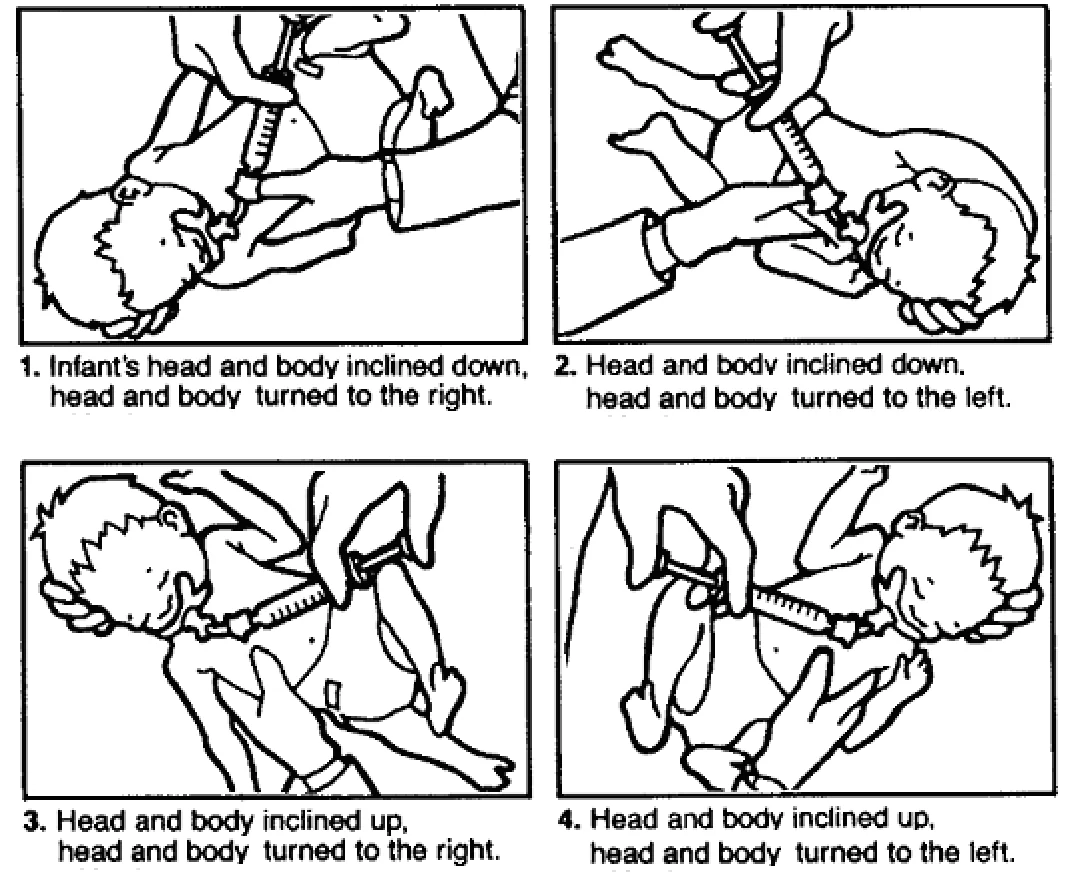
To administer SURVANTA in 4 quarter-doses, the recommended positions are:
- Head and body inclined 5 to 10° down, head and body turned to the right
- Head and body inclined 5 to 10° down, head and body turned to the left
- Head and body inclined 5 to 10° up, head and body turned to the right
- Head and body inclined 5 to 10° up, head and body turned to the left
The positions for 4 quarter-doses are illustrated below:
The dosing procedure is facilitated if one person administers the dose while another person positions and monitors the infant.
The different methods of administering SURVANTA were evaluated in clinical trials. In the 6 single-dose and 4 multiple-dose controlled clinical trials that established safety and efficacy, SURVANTA was instilled through a catheter that was inserted into the infant's endotracheal tube by briefly disconnecting the endotracheal tube from the ventilator. Each dose was administered in 4 quarter-doses as described above.
This method of administering SURVANTA was compared to 2 other methods in a multi-centre, randomized clinical study involving 299 infants weighing 600 g or more with RDS requiring mechanical ventilation. The other methods evaluated were:
- Two half-doses administered by inserting the catheter through the endotracheal tube while the endotracheal tube was briefly disconnected from the ventilator. The half-doses were administered in the 2 positions described above.
- Two half-doses administered without disconnecting the endotracheal tube from the ventilator by inserting the catheter through a neonatal suction valve into the endotracheal tube. The half-doses were administered in the 2 positions described above.
There were no significant differences among the 3 groups in average FiO2, a/APO2, or MAP at 72 hours of age, or in the incidence of pulmonary air leaks, pulmonary interstitial emphysema, patent ductus arteriosus, or mortality at 72 hours of age.
Administration of SURVANTA using a double-lumen endotracheal tube is functionally equivalent to the use of the neonatal suction valve; i.e., delivery of SURVANTA at the distal end of the endotracheal tube without interrupting mechanical ventilation. If an infant is already intubated with a single-lumen endotracheal tube, the infant should not be reintubated with a double-lumen endotracheal tube solely for the purpose of administering SURVANTA.
First Dose
Instillation Through End-Hole Catheter
Determine the total dose of SURVANTA from the SURVANTA Dosing Chart (Table 1) based on the infant's birth weight. Slowly withdraw the entire contents of the vial into a plastic syringe through a large-gauge needle (e.g., at least 20 gauge). Do not filter SURVANTA and avoid shaking.
Attach the pre-measured 5 French end-hole catheter to the syringe. Fill the catheter with SURVANTA. Discard excess SURVANTA through the catheter so that only the total dose to be given remains in the syringe.
Before administering SURVANTA, assure proper placement and patency of the endotracheal tube. At the discretion of the health professional, the endotracheal tube may be suctioned before administering SURVANTA. The infant should be allowed to stabilize before proceeding with dosing.
First Fractional Dose – Prevention Strategy
In the prevention strategy, weigh, intubate and stabilize the infant. Administer the dose as soon as possible after birth, preferably within 15 minutes. Position the infant appropriately and gently inject the first fractional dose through the catheter over 2 to 3 seconds.
After administration of the first fractional dose, remove the catheter from the endotracheal tube.
Manually ventilate with a hand-bag with sufficient oxygen to prevent cyanosis, at a rate of 60 breaths/minute and sufficient positive pressure to provide adequate air exchange and chest wall excursion.
First Fractional Dose – Rescue Strategy
In the rescue strategy, the first dose should be given as soon as possible after the infant is placed on a ventilator for management of RDS. In the clinical trials, immediately before instilling the first fractional dose, the infant's ventilator settings were changed to rate 60/minute, inspiratory time 0.5 second, and FiO2 1.0.
Position the infant appropriately and gently inject the first fractional dose through the catheter over 2 to 3 seconds. After administration of the first fractional dose, remove the catheter from the endotracheal tube. Return the infant to the mechanical ventilator.
Remaining Fractional Doses – Prevention and Rescue Strategies
In both strategies, ventilate the infant for at least 30 seconds or until stable. Reposition the infant for instillation of the next fractional dose.
Instill the remaining fractional doses using the same procedures. After instillation of each fractional dose, remove the catheter and ventilate for at least 30 seconds or until the infant is stabilized. After instillation of the final fractional dose, remove the catheter without flushing it.
Do not suction the infant for 1 hour after dosing unless signs of significant airway obstruction occur.
After completion of the dosing procedure, resume usual ventilator management and clinical care.
Instillation Through Secondary Lumen of a Double-Lumen Endotracheal Tube
Ensure that the infant is intubated with the appropriate size double-lumen endotracheal tube. Determine the total dose of SURVANTA from the SURVANTA Dosing Chart (Table 1) based on the infant's birth weight. Slowly withdraw the total dose from the vial into a plastic syringe through a large-gauge needle (e.g., at least 20 gauge). Do not filter SURVANTA and avoid shaking.
Before administering SURVANTA, assure proper placement and patency of the endotracheal tube. At the discretion of the health professional, the endotracheal tube may be suctioned before administering SURVANTA. The infant should be allowed to stabilize before proceeding with dosing.
First Fractional Dose – Prevention Strategy
In the prevention strategy, weigh, intubate and stabilize the infant. Administer the dose as soon as possible after birth, preferably within 15 minutes. Attach the syringe containing SURVANTA to the secondary lumen. Position the infant appropriately and gently inject the first fractional dose through the secondary lumen over 2 to 3 seconds without interrupting ventilation. If manually ventilated, ventilate with a hand-bag with sufficient oxygen to prevent cyanosis, at a rate of 60 breaths/minute, and sufficient positive pressure to provide adequate air exchange and chest wall excursion.
First Fractional Dose – Rescue Strategy
In the rescue strategy, the first dose should be given as soon as possible after the infant is placed on a ventilator for management of RDS. Immediately before instilling the first fractional dose, change the infant's ventilator settings to rate 60/minute, inspiratory time 0.5 second, and FiO2 1.0.
Position the infant appropriately and gently inject the first fractional dose through the secondary lumen over 2 to 3 seconds without interrupting mechanical ventilation.
Remaining Fractional Doses – Prevention and Rescue Strategies
In both strategies, ventilate the infant for at least 30 seconds or until stable. Reposition the infant for instillation of the next fractional dose.
Instill the remaining fractional doses using the same procedures. After instillation of each fractional dose, ventilate for at least 30 seconds or until the infant is stabilized. After instillation of the final fractional dose, remove the syringe from the secondary lumen, inject 0.5 mL of air to flush the secondary lumen and cap it.
After completion of the dosing procedure, resume usual ventilator management and clinical care.
Repeat Doses
The need for additional doses of SURVANTA is determined by evidence of continuing respiratory distress.
- Dose no sooner than 6 hours after the preceding dose if the infant remains intubated and requires at least 30% inspired oxygen to maintain a PaO2 less than or equal to 80 torr. In controlled clinical trials, 60% of patients (prevention) and 79% of patients (rescue) required more than 1 dose of SURVANTA. 34.8% of patients (prevention) and 52.2% of patients (rescue) required 4 doses.
- Radiographic confirmation of RDS should be obtained before administering additional doses to those who received a prevention dose.
The dosage of SURVANTA for each repeat dose is also 100 mg phospholipids/kg and is based on the infant's birth weight. The infant should not be reweighed for determination of the SURVANTA dosage. Use the SURVANTA Dosing Chart (Table 1) to determine the total dosage.
Prepare SURVANTA and position the infant for administration of each fractional dose as previously described. After instillation of each fractional dose, remove the dosing catheter from the endotracheal tube and ventilate the infant for at least 30 seconds or until stable.
In the clinical studies, ventilator settings used to administer repeat doses were different than those used for the first dose. For repeat doses, the FiO2 was increased by 0.20 or an amount sufficient to prevent cyanosis. The ventilator delivered a rate of 30/minute with an inspiratory time less than 1.0 second. If the infant's pre-treatment rate was 30 or greater, it was left unchanged during SURVANTA instillation.
Manual hand-bag ventilation should not be used to administer repeat doses. During the dosing procedure, ventilator settings may be adjusted at the discretion of the health professional to maintain appropriate oxygenation and ventilation.
After completion of the dosing procedure, resume usual ventilator management and clinical care.
Dosing Precautions
If an infant experiences bradycardia or oxygen desaturation during the dosing procedure, stop the dosing procedure and initiate appropriate measures to alleviate the condition. After the infant has stabilized, resume the dosing procedure.
Rales and moist breath sounds can occur transiently after administration of SURVANTA. Endotracheal suctioning or other remedial action is necessary if clear-cut signs of airway obstruction are present.
4.5 Missed Dose
Not applicable.
5 OVERDOSAGE
Overdosage with SURVANTA has not been reported. Based on animal data, overdosage might result in acute airway obstruction. Treatment should be symptomatic and supportive.
For management of a suspected drug overdose, contact your regional poison control centre.
6 DOSAGE FORMS, STRENGTHS, COMPOSITION AND PACKAGING
SURVANTA is supplied in single-use glass vials containing 4 mL or 8 mL of SURVANTA.
4 mL: Each milliliter contains 25 mg of phospholipids (100 mg phospholipids/4 mL) suspended in 0.9% sodium chloride solution.
8 mL: Each milliliter contains 25 mg of phospholipids (200 mg phospholipids/8 mL) suspended in 0.9% sodium chloride solution.
The formulation is an off-white to light brown opaque liquid.
Composition
SURVANTA is a sterile, non-pyrogenic pulmonary surfactant and natural bovine lung extract. It is supplemented with 3 synthetically derived lipids; colfosceril palmitate (dipalmitoylphosphatidylcholine), palmitic acid and tripalmitin. These latter lipids are added to standardize the composition and to mimic the surface-tension lowering properties of natural lung surfactant. The resulting composition provides an average concentration of 25 mg/mL phospholipids and less than 1.0 mg/mL protein.
Table 2 – Composition of SURVANTA by Chemical Class
| Composition | Quantities (mg/mL) |
| Total Phospholipids | 25 |
| Disaturated Phosphatidylcholine | 11.0 to 15.5 |
| Triglycerides | 0.5 to 1.75 |
| Free Fatty Acids | 1.4 to 3.5 |
| Protein | 0.1 to 0.4 |
| Sodium Chloride | 9.0 |
Description
SURVANTA is heat-sterilized and does not contain preservatives. Its protein content includes 2 hydrophobic surfactant-associated proteins of low molecular weight, commonly known as SP-B and SP-C. It does not contain the hydrophilic, large molecular weight surfactant-associated protein known as SP-A.
7 WARNINGS AND PRECAUTIONS
Please see 3 SERIOUS WARNINGS AND PRECAUTIONS BOX.
General
SURVANTA is intended for intratracheal use only (see 4 DOSAGE AND ADMINISTRATION).
No information is available on the effects of doses other than 100 mg phospholipids/kg, more than 4 doses, dosing more frequently than every 6 hours, or administration after 48 hours of age.
Usage of SURVANTA should be restricted to a highly supervised clinical setting with immediate availability of health professionals experienced with intubation, ventilator management, and general care of premature infants. Vigilant clinical attention should be given to all infants prior to, during, and after administration of SURVANTA. Infants receiving SURVANTA should be frequently monitored with arterial or transcutaneous measurement of systemic oxygen and carbon dioxide.
During the dosing procedure, transient episodes of bradycardia and decreased oxygen saturation have been reported (see 8 ADVERSE REACTIONS). If these occur, stop the dosing procedure and initiate appropriate measures to alleviate the condition. After stabilization, resume the dosing procedure.
The use of SURVANTA in infants less than 600 g birth weight or greater than 1750 g birth weight has not been evaluated in controlled trials. There is no controlled experience with the use of SURVANTA in conjunction with experimental therapies for RDS (e.g., high frequency ventilation or extra-corporeal membrane oxygenation).
Intracranial Hemorrhage
In one of the single-dose rescue studies and one of the multi-dose prevention studies, the rate of intracranial hemorrhage was significantly higher in SURVANTA patients than in control patients (63.3% vs. 30.8%, p = 0.001 and 48.8% vs. 34.2%, p = 0.047, respectively). However, when all controlled studies were pooled, there was no difference between treatment groups in incidences of intracranial hemorrhage.
Carcinogenesis and Mutagenesis
Mutagenicity studies were negative. Carcinogenicity studies were not conducted with SURVANTA.
Immune
Increased probability of post-treatment nosocomial sepsis in SURVANTA-treated infants was observed in clinical trials (see Table 4). The increased risk for sepsis among SURVANTA-treated infants was not associated with increased mortality among these infants.
Monitoring and Laboratory Tests
Vigilant clinical attention should be given to all infants prior to, during, and after administration of SURVANTA. Infants receiving SURVANTA should be frequently monitored with arterial or transcutaneous measurement of systemic oxygen and carbon dioxide.
Reproductive Health: Female and Male Potential
Fertility
Beractant up to 500 mg phospholipids/kg/day, approximately one-third the premature infant dose based on mg/m2/day, was administered subcutaneously to newborn rats for 5 days. These rats reproduced normally and there were no observable adverse effects in their offspring.
Respiratory
Endotracheal Tube Blockage Due to Mucous Plugs
Infants whose ventilation becomes markedly impaired during or shortly after dosing may have mucous plugging of the endotracheal tube, particularly if pulmonary secretions were prominent prior to drug administration. Suctioning of all infants prior to dosing may lessen the chance of mucous plugs obstructing the endotracheal tube. If endotracheal tube obstruction from such plugs is suspected, and suctioning is unsuccessful in removing the obstruction, the blocked endotracheal tube should be replaced immediately. In the multiple-dose studies performed with SURVANTA, there were 4 reports of endotracheal tube blockage out of 1,691 doses (0.2%).
Oxygenation
SURVANTA can rapidly affect oxygenation and lung compliance. In some infants, hyperoxia may occur within minutes of administration of SURVANTA. If hyperoxia develops, and transcutaneous oxygen saturation is in excess of 95%, FiO2 should be reduced until saturation is 90 to 95%. If the improvement in chest expansion seems excessive, peak ventilator inspiratory pressures should be immediately reduced. Failure to reduce inspiratory ventilatory pressures rapidly can result in lung overdistention and fatal pulmonary air leaks.
Hyperoxia, cyanosis and reflux through the endotracheal tube, additionally to bradycardia and decreased oxygen saturation, have been the most frequently reported complications in clinical trials. If reflux occurs, drug administration should be stopped and if necessary, peak inspiratory pressure on the ventilator should be increased by 4 to 5 cm H2O until clearing of the endotracheal tube occurs.
Rales
Rales and moist breath sounds can occur transiently after administration. Endotracheal suctioning or other remedial action is necessary if clear-cut signs of airway obstruction are present.
7.1 Special Populations
7.1.1 Pregnant Women
Not applicable.
7.1.2 Breast-feeding
Not applicable.
7.1.3 Pediatrics
Pediatrics (premature infants): Based on the data submitted and reviewed by Health Canada, the safety and efficacy of SURVANTA in pediatric patients has been established. Therefore, Health Canada has authorized an indication for pediatric use.
7.1.4 Geriatrics
Not applicable.
8 ADVERSE REACTIONS
8.1 Adverse Reaction Overview
The most commonly reported adverse experiences were associated with the dosing procedure.
In the multiple-dose controlled clinical trials, each dose of SURVANTA was divided into 4 quarter-doses. Each quarter dose was instilled through a catheter inserted into the endotracheal tube by briefly disconnecting the endotracheal tube from the ventilator.
Transient bradycardia occurred with 11.9% of doses. Oxygen desaturation occurred with 9.8% of doses. Other reactions during the dosing procedure occurred with fewer than 1% of doses and included endotracheal tube reflux, pallor, vasoconstriction, hypotension, endotracheal tube blockage, hypertension, hypocarbia, hypercarbia, and apnea. No deaths occurred during the dosing procedure, and all reactions resolved with symptomatic treatment.
8.2 Clinical Trial Adverse Reactions
Clinical trials are conducted under very specific conditions. The adverse reaction rates observed in the clinical trials; therefore, may not reflect the rates observed in practice and should not be compared to the rates in the clinical trials of another drug. Adverse reaction information from clinical trials may be useful in identifying and approximating rates of adverse drug reactions in real-world use.
Table 3 summarizes all adverse experiences reported during controlled clinical trials.
There were no statistically significant differences between treatments in the type or number of events reported.
Table 3 – Number of Infants with Adverse Events (All Controlled Studies)*
| Body System/Event | SURVANTA | Sham Air | ||
| Body System/Event | SURVANTA | Sham Air | ||
| N = 840 | % | N = 851 | % | |
| N = 840 | % | N = 851 | % | |
| At Least 1 Event | 49 | 5.8 | 40 | 4.7 |
| Cardiovascular | ||||
| Other cardiovascular adverse events | 7 | 0.8 | 9 | 1.0 |
| Aortic thrombosis | 3 | 0.4 | 0 | 0.0 |
| Hypotension | 3 | 0.4 | 0 | 0.0 |
| Bradycardia | 2 | 0.2 | 1 | 0.1 |
| Central Nervous System | ||||
| Seizure | 6 | 0.7 | 6 | 0.7 |
| Other CNS adverse events | 0 | 0.0 | 1 | 0.1 |
| Gastrointestinal | ||||
| Other gastrointestinal adverse events | 4 | 0.5 | 5 | 0.6 |
| Intestinal perforations | 2 | 0.2 | 5 | 0.6 |
| Volvulus | 2 | 0.2 | 0 | 0.0 |
| Hematologic | ||||
| Coagulopathy | 2 | 0.2 | 0 | 0.0 |
| Other hematologic adverse events | 0 | 0 | 3 | 0.4 |
| Renal | ||||
| Renal failure | 2 | 0.2 | 2 | 0.2 |
| Other renal adverse events | 2 | 0.2 | 1 | 0.1 |
| Respiratory | ||||
| Decreased oxygenation | 9 | 1.1 | 3 | 0.4 |
Pulmonary hemorrhage N = 225 for SURVANTA N = 238 for Sham Air | 2 | 0.9 | 1 | 0.4 |
| Problems with ET tube | 4 | 0.5 | 1 | 0.1 |
| Other respiratory adverse events | 4 | 0.5 | 3 | 0.4 |
| Blood from ET tube | 3 | 0.4 | 0 | 0.0 |
| Systemic | ||||
| Sepsis | 2 | 0.2 | 1 | 0.1 |
| Other systemic adverse events | 2 | 0.2 | 3 | 0.4 |
| Other Adverse Events | 3 | 0.4 | 3 | 0.4 |
* (Events with an incidence ≥ 0.2% are specified)
A clinical study compared the above quarter-dose administration regimen to the same procedure using 2 half-doses and another 2 half-dose procedure with uninterrupted ventilation accomplished by passing the catheter through a neonatal suction valve in the endotracheal tube. With the first dose there was significantly less endotracheal tube reflux observed in the group with the quarter-dose regimen (p = 0.007) than in the group with uninterrupted ventilation. With the first dose there was significantly less oxygen desaturation in the group with uninterrupted ventilation (p = 0.008) than in the other group receiving 2 half-doses. There were no differences in these events after later doses and no differences in heart rate after any doses (see 4.4 Administration).
The occurrence of concurrent illnesses common in premature infants was evaluated in the controlled trials. The rates in all controlled studies are in Table 4.
Table 4 – Percentage of Infants with Concurrent Events
| SURVANTA (%) | Control (%) | |
| Patent ductus arteriosus | 46.9 | 47.1 |
| Intracranial hemorrhage | 48.1 | 45.2 |
| Severe intracranial hemorrhage | 24.1 | 23.3 |
| Pulmonary air leaks | 10.9 | 24.7 * |
| Pulmonary interstitial emphysema | 20.2 | 38.4 * |
| Necrotizing enterocolitis | 6.1 | 5.3 |
| Apnea | 65.4 | 59.6 |
| Severe apnea | 46.1 | 42.5 |
| Post-treatment sepsis | 20.7 | 16.1 ** |
| Post-treatment infection | 10.2 | 9.1 |
| Pulmonary Hemorrhage | 7.2 | 5.3 |
* p < 0.001
** p < 0.05
In one of the single-dose rescue studies and one of the multi-dose prevention studies, the rate of intracranial hemorrhage was significantly higher in SURVANTA patients than in control patients (63.3% vs. 30.8%, p = 0.001 and 48.8% vs. 34.2%, p = 0.047, respectively). However, when all controlled studies were pooled, there was no difference between treatment groups in incidences of intracranial hemorrhage.
Follow-up Evaluations
To date, no long-term complications or sequelae of SURVANTA therapy have been found.
Single-Dose Studies
Six-month adjusted-age follow-up evaluations of 232 infants (115 treated) demonstrated no clinically important differences between treatment groups in pulmonary and neurologic sequelae, incidence or severity of retinopathy of prematurity, rehospitalizations, growth, or allergic manifestations.
Multiple-Dose Studies
Six-month adjusted-age follow-up evaluations have been completed in 631 (345 treated) of 916 surviving infants. There was significantly less cerebral palsy and need for supplemental oxygen in SURVANTA infants than controls. Wheezing at the time of examination was more frequent among SURVANTA infants, although there was no difference in bronchodilator therapy.
Final twelve-month follow-up data from the multiple-dose studies are available from 521 (272 treated) of 909 surviving infants. There was significantly less wheezing in SURVANTA infants than controls in contrast to the 6-month results. There was no difference in the incidence of cerebral palsy at 12 months.
Twenty-four month adjusted-age evaluations were completed in 429 (226 treated) of 906 surviving infants. There were significantly fewer SURVANTA infants with rhonchi, wheezing, tachypnea or neurological findings, compared to infants treated with Sham Air, at the time of examination. No other differences were found.
8.2.1 Clinical Trial Adverse Reactions – Pediatrics
See 8.2 Clinical Trial Adverse Reactions.
8.3 Less Common Clinical Trial Adverse Reactions
Not applicable.
8.4 Abnormal Laboratory Findings: Hematologic, Clinical Chemistry and Other Quantitative Data
Clinical Trial Findings
In the controlled clinical trials, there was no effect of SURVANTA on results of common laboratory tests: white blood cell count, serum sodium, potassium, bilirubin, and creatinine. IgG or IgM antibodies to surfactant–associated proteins SP-B and SP-C were not detected.
Post-Market Findings
Not applicable.
8.5 Post-Market Adverse Reactions
No new adverse reactions have been reported, nor has there been an increase in the incidence of known adverse reactions identified in the clinical trials completed to date.
9 DRUG INTERACTIONS
9.1 Serious Drug Interactions
Not applicable.
9.2 Drug Interactions Overview
No formal drug-drug interaction studies were conducted.
9.3 Drug-Behavioural Interactions
Not applicable.
9.4 Drug-Drug Interactions
No formal drug-drug interaction studies were conducted.
9.5 Drug-Food Interactions
Interactions with food have not been established.
9.6 Drug-Herb Interactions
Interactions with herbal products have not been established.
9.7 Drug-Laboratory Test Interactions
Interactions with laboratory tests have not been established.
10 CLINICAL PHARMACOLOGY
10.1 Mechanism of Action
Deficiency of pulmonary surfactant is an important factor in the development of Respiratory Distress Syndrome (RDS) in premature infants. SURVANTA replenishes surfactant and restores surface activity to the lungs of these infants. It reduces surface tension and concomitantly increases lung compliance.
10.2 Pharmacodynamics
Intratracheally administered SURVANTA distributes rapidly to the alveolar surfaces and stabilizes the alveoli against collapse during respiration thereby increasing alveolar ventilation.
In clinical studies of premature infants with RDS, a significant improvement in oxygenation was demonstrated after treatment with a single dose of SURVANTA. These infants showed a decreased need for supplemental oxygen and an increase in the arterial/alveolar oxygen ratio (a/APO2). Significantly decreased need for respiratory support, as indicated by a lower mean airway pressure, was also observed.
In prophylactic studies of premature infants at high risk of RDS, multiple doses (up to 4 doses within 48 hours) of SURVANTA reduced the incidence and mortality of RDS, reduced the incidence of pulmonary air leaks and pulmonary interstitial emphysema, improved a/APO2 and FiO2 (Fraction of inspired oxygen) at 72 hours of age, and reduced mortality from any cause.
Human Pharmacology
Clinical dose-response studies were not done with SURVANTA. The clinical dose of 100 mg phospholipids/kg/dose was selected because previous experience with the same dose of the lyophilized powder formulation of Surfactant TA demonstrated its acute efficacy and safety.
Animal Pharmacology
In vivo, single doses of SURVANTA improve lung pressure-volume measurements, lung compliance, and oxygenation in premature rabbits and sheep.
Surface-tension lowering cannot be directly measured in vivo.
10.3 Pharmacokinetics
No information is available about the metabolic fate of the surfactant–associated proteins in SURVANTA. The metabolic disposition in humans has not been studied.
Special Populations and Conditions
Pediatrics
See 10 CLINICAL PHARMACOLOGY for the pharmacokinetics of SURVANTA in infants.
Geriatrics
SURVANTA pharmacokinetics have not been investigated in geriatric population.
Sex
No gender-related pharmacokinetic differences have been observed in pediatric patients studied.
Pregnancy and Breast-feeding
Not applicable.
Genetic Polymorphism
No data are available on genetic polymorphism.
Ethnic Origin
Pharmacokinetic differences due to race have not been identified.
Hepatic Insufficiency
The pharmacokinetics of SURVANTA in patients with hepatic impairment have not been determined.
Renal Insufficiency
The pharmacokinetics of SURVANTA in patients with renal impairment have not been determined.
Obesity
Not applicable.
11 STORAGE, STABILITY AND DISPOSAL
Temperature:
Store unopened vials at refrigeration temperature (2 to 8°C).
Unopened, unused vials of SURVANTA that have been warmed to room temperature may be returned to the refrigerator within 24 hours of warming, and stored for future use. Drug should not be warmed and returned to the refrigerator more than once.
Light:
Protect from light. Store vials in carton until ready for use.
Others:
Each single use vial of SURVANTA should be entered with a needle only once. Used vials with residual drug should be discarded.
Keep out of reach and sight of children.
12 SPECIAL HANDLING INSTRUCTIONS
Not applicable.
PART II: SCIENTIFIC INFORMATION
13 PHARMACEUTICAL INFORMATION
Drug Substance
Proper name: beractant
Chemical name: Not applicable
Molecular formula and molecular mass: Not applicable
Other name: Surfactant TA
Structural formula: Not applicable
Physicochemical properties: Not applicable
Pharmaceutical standard: Not applicable
Description: A natural product isolated from bovine lung extracts (Bovine Lung Lipids) containing phospholipids, neutral lipids, fatty acids and protein. It is fortified by the addition of the synthetic lipids, namely dipalmitoyl-phosphatidylcholine (colfosceril palmitate), palmitic acid and tripalmitin (fortification lipids). It is formulated as a sterile, aqueous liquid for intratracheal instillation.
Physical description: Off-white to light brown opaque.
14 CLINICAL TRIALS
14.1 Trial Design and Study Demographics
Clinical effects of SURVANTA (beractant, intratracheal suspension) were demonstrated in 6 single-dose and 4 multiple-dose randomized, multi-center, controlled clinical trials involving approximately 1700 infants. Three open trials, including a Treatment Investigational New Drug (IND), involved more than 8500 infants. Each dose of SURVANTA in all studies was 100 mg phospholipids/kg birth weight and was based on published experience with Surfactant TA, a lyophilized powder dosage form of SURVANTA having the same composition.
The studies were of 2 basic designs: treatment or rescue studies in which surfactant was given to low birthweight infants with established Respiratory Distress Syndrome (RDS), and prevention studies in which surfactant was given shortly after birth to infants at highest risk for RDS.
Table 5 – Summary of Patient Demographics for Clinical Trials in Prevention (Prophylaxis) and Treatment (Rescue) of Respiratory Distress Syndrome (RDS/Hyaline Membrane Disease) in Premature Infants
| Study # | Trial Design | Dosage, Route of Administration and Duration | Study Subjects (n) | Mean Gestational Age (weeks) | Gender (% Male/Female) | ||||
| Study # | Trial Design | Dosage, Route of Administration and Duration | Study Subjects (n) | Mean Gestational Age (weeks) | Gender (% Male/Female) | ||||
| P rev entio n Studies | Study 1 | Randomised, multicenter, double blind, placebo-controlled study | Beractant, intratracheal suspension 100 mg phospholipids/kg birth weight within 15 minutes of birth. Infants could receive 3 additional doses in the first 48 hours. | ||||||
| SURVANTA | 119 | 26.6 | 52/48 | ||||||
| Placebo (Sham Air) | 124 | 26.6 | 48/52 | ||||||
| Study 2* | Randomised, multicenter, double blind, placebo-controlled study | Beractant, intratracheal suspension 100 mg phospholipids/kg birth weight within 15 minutes of birth. Infants could receive 3 additional doses in the first 48 hours. | |||||||
| SURVANTA | 91 | 26.5 | 60/40 | ||||||
| Placebo (Sham Air) | 96 | 26.8 | 59/41 | ||||||
| Resc ue Studies | Study 3* | Randomised, multicenter, double blind, placebo-controlled study | Beractant, intratracheal suspension 100 mg phospholipids/kg birth weight within 8 hours of birth. Infants could receive 3 additional doses in the first 48 hours. | ||||||
| SURVANTA | 198 | 27.8 | 61/39 | ||||||
| Placebo (Sham Air) | 193 | 27.6 | 51/49 | ||||||
| Study 4 | Randomised, multicenter, double blind, placebo-controlled study | Beractant, intratracheal suspension 100 mg phospholipids/kg birth weight within 8 hours of birth. Infants could receive 3 additional doses in the first 48 hours. | |||||||
| SURVANTA | 204 | 27.5 | 57/43 | ||||||
| Placebo (Sham Air) | 203 | 27.4 | 58/42 | ||||||
* Study discontinued when Treatment IND initiated
14.2 Study Results
Prevention Studies
Infants of 600 to 1250 g birth weight and 23 to 29 weeks estimated gestational age were enrolled in 2 multiple-dose studies. A dose of SURVANTA was given within 15 minutes of birth to prevent the development of RDS. Up to 3 additional doses in the first 48 hours, as often as every 6 hours, were given if RDS subsequently developed and infants required mechanical ventilation with an FiO2 ≥ 0.30. Results of Studies 1 and 2 at 28 days of age are shown in Table 6.
Table 6 – Results of Prevention Studies
| Study 1 | Study 2a | ||||||||||||||
SURVANTA (n=119) | Control (n=124) | P-Value | SURVANTA (n=91) | Control (n=96) | P-Value | ||||||||||
| Incidence of RDS (%) | 27.6 | 63.5 | < 0.001 | 28.6 | 48.3 | 0.007 | |||||||||
| Death due to RDS (%) | 2.5 | 19.5 | < 0.001 | 1.1 | 10.5 | 0.006 | |||||||||
| Death or BPD due to RDS (%) | 48.7 | 52.8 | 0.536 | 27.5 | 44.2 | 0.018 | |||||||||
| Death due to any cause (%) | 7.6 | 22.8 | 0.001 | 16.5b | 13.7 | 0.633 | |||||||||
| Air Leaksc (%) | 5.9 | 21.7 | 0.001 | 14.5 | 19.6 | 0.374 | |||||||||
| Pulmonary interstitial emphysema (%) | 20.8 | 40.0 | 0.001 | 26.5 | 33.2 | 0.298 | |||||||||
a. Study discontinued when Treatment IND initiated
b. No cause of death in the SURVANTA group was significantly increased; the higher number of deaths in this group was due to the sum of all causes.
c. Pneumothorax or pneumopericardium
Rescue Studies
Infants of 600 to 1750 g birth weight with RDS requiring mechanical ventilation and an FiO2 ≥ 0.40 were enrolled in 2 multiple-dose rescue studies. The initial dose of SURVANTA was given after RDS developed and before 8 hours of age. Infants could receive up to 3 additional doses in the first 48 hours, as often as every 6 hours, if they required mechanical ventilation and an FiO2 ≥ 0.30. Results of Studies 3 and 4 at 28 days of age are shown in Table 7.
Table 7 – Results of Rescue Studies
| Study 3a | Study 4 | |||||||||||||
SURVANTA (n = 198) | Control (n = 193) | P-Value | SURVANTA (n = 204) | Control (n = 203) | P-Value | |||||||||
| Death due to RDS (%) | 11.6 | 18.1 | 0.071 | 6.4 | 22.3 | < 0.001 | ||||||||
| Death or BPD due to RDS (%) | 59.1 | 66.8 | 0.102 | 43.6 | 63.4 | < 0.001 | ||||||||
| Death due to any cause (%) | 21.7 | 26.4 | 0.285 | 15.2 | 28.2 | 0.001 | ||||||||
| Air Leaksb (%) | 11.8 | 29.5 | < 0.001 | 11.2 | 22.2 | 0.005 | ||||||||
| Pulmonary interstitial emphysema (%) | 16.3 | 34.0 | < 0.001 | 20.8 | 44.4 | < 0.001 | ||||||||
a. Study discontinued when Treatment IND initiated
b. Pneumothorax or pneumopericardium
Acute Clinical Effects
Marked improvements in oxygenation may occur within minutes of administration of SURVANTA. All controlled clinical studies with SURVANTA provided information regarding the acute effects of SURVANTA on the arterial-alveolar oxygen ratio (a/APO2), FiO2, and mean airway pressure (MAP) during the first 48 to 72 hours of life. Significant improvements in these variables were sustained for 48 to 72 hours in SURVANTA-treated infants in 4 single-dose and 2 multiple-dose rescue studies and in 2 multiple-dose prevention studies. In the single-dose prevention studies, the FiO2 improved significantly.
14.3 Comparative Bioavailability Studies
Not applicable.
15 MICROBIOLOGY
No microbiological information is required for this drug product.
16 NON-CLINICAL TOXICOLOGY
Acute Toxicity
SURVANTA was evaluated for acute intratracheal toxicity in mice and rats, for subchronic intratracheal toxicity in rats and ferrets, and for sensitization potential in guinea pigs. Two acute toxicity studies are summarized in Table 8.
The only acute toxicity observed in preclinical studies was dyspnea, and, in extreme cases, death from asphyxiation. These findings occurred in saline-treated control animals as well as in SURVANTA–treated animals.
Subacute Toxicity
One rat and three ferrets multidose, subacute toxicity studies were conducted with SURVANTA. Ferrets were chosen as a non-rodent model because their pulmonary structure resembles that of man. The 4 subacute toxicity studies are summarized in Table 9 to Table 12.
Carcinogenicity
Carcinogenicity studies have not been performed with SURVANTA.
Mutagenicity
Mutagenicity studies were negative.
Reproductive and Developmental Toxicology
Beractant up to 500 mg phospholipids/kg/day, approximately one-third the premature infant dose based on mg/m2/day, was administered subcutaneously to newborn rats for 5 days. These rats reproduced normally and there were no observable adverse effects in their offspring.
Special Toxicology
A special toxicity study was undertaken to determine the antigenicity of SURVANTA. A group of 10 adult male guinea pigs was administered 3 doses of SURVANTA intraperitoneally on alternate days followed 3 weeks later by a single intratracheal challenge dose. Two positive control groups were administered sensitization and challenge doses of egg albumin according to the same schedule and routes of administration for the group administered SURVANTA. Cyanosis, dyspnea, unsteady gait, ataxia, convulsions and deaths were observed in both egg-albumin-treated groups, but no such manifestations of anaphylaxis were seen in the group administered SURVANTA.
Table 8 – Acute Toxicity Studies of SURVANTA
| Species/ Study No. | Sex | Age (weeks) | Route of Administration | Dose Range | Vehicle | Signs | Lethality | Time of Death | ||||||||||
| mg/kga | mL/kg | |||||||||||||||||
Mouse T84-296 | Maleb | 5 | Intratracheal | 160 | 4 | 0.9% saline | Rales | No deathsc | -- | |||||||||
Rat T84-296 | Maleb | 5 | Intratracheal | 160 | 4 | 0.9% saline | Rales | No deaths | -- | |||||||||
| T85-287 | Maleb | 5 | Intratracheal | 100 | 4 | 0.9% saline | Minimal inflammatory response in both groups. Minimal pulmonary inflammatory reactions plus minimal to mild intra-alveolar microgranulomata; still present 7 days after treatment | No deaths | -- | |||||||||
a. mg phospholipid/kg body weight
b. This study was conducted as exploratory research; not all GLP requirements were met. Lyophilized Surfactant TA.
c. One of ten mice died 12 days after treatment but the death was not considered treatment-related.
Table 9 – Two-Week Toxicity Study of Surfactant TA (Abbott-60386X) Administered Intratracheally to Young Rats
| Group | T0 | T1 | T2 | T3 | T4 |
| Dosage (mg phospholipid /kg/day) | 0 (sham-treated) | 0 (0.9% saline) | 100 | 100 (every other day) | 200 (100 twice daily) |
| Dose Volume (mL/kg) | --- | 4 | 4 | 4 | 8 (4 twice daily.) |
| No. Deaths / No. Treated | 0/10 | 1/10* | 1/11* | 2/10* | 6/13* |
| Body Weight Gain | 75% | 63% | 66% | 70% | 57% |
| Toxic Signs | Dyspnea (attributed to intratracheal catheter) | Acute respiratory distress immediately after treatment (attributed to transient airway obstruction by saline or test surfactant) | |||
| Hematology | --- | Bone marrow M:E ratios of saline- and surfactant-treated rats slightly higher than values for sham-treated rats | |||
| Clinical Chemistry | --- | No biologically-meaningful differences from values for sham-treated rats | |||
| Organ Weights | --- | No abnormalities | Increased absolute or relative lung weights | ||
| Anatomic Pathology | Interstitial pneumonia without granulomatous changes in 2/10 sham-treated and 10/10 saline-treated rats | Pulmonary changes characterized by granulomatous pneumonia with fat-positive material in 30/30 surfactant-treated rats (consistent with treatment route and lipoid nature of surfactant) | |||
* Deaths were attributed to mechanical suffocation, not surfactant toxicity.
Table 10 – Three-Day Multiple-Dose Intratracheal Toxicity Study of SURVANTA in Young Ferrets (With One Month Recovery Period)
| Group | T0 | T1 | T2 |
| Dosage (mg phospholipid/kg/day) | 0 (0.9% saline) | 100 | 300 |
| Dose Volume (mL/kg, four times daily) | 12 | 4 | 12 |
| No. Deaths / No. Treated | 0/12 | 0/12 | 0/12 |
| Body Weight Gain | |||
| M | 5.2% | 5.7% | 5.0% |
| F | 6.5% | 2.9% | 2.1% |
| Toxic Signs | Occasional gasping or licking during treatment | Occasional gasping or licking in both groups. Infrequent episodes of ataxia or prostration in high-dosage group attributed to transient airway obstruction | |
| Hematology | -- | No toxicologically-meaningful differences from controls | |
| Clinical Chemistry | -- | No toxicologically-meaningful differences from controls | |
| Organ Weights | -- | Dose-related increased lung weights | |
| Anatomic Pathology | None | Mild inflammatory changes in the lungs at the end of the 3-day treatment period and after a 1-month recovery period | |
Table 11 – Ten-Day Toxicity Study of SURVANTA (Abbott-60386X) Administered Intratracheally to Weanling Ferrets
| Group | T0 | T1 | T2 | T3 |
| Dosage (mg phospholipid/kg/day) | 0 (sham-treated) | 0 (0.9% saline) | 100 | 100 |
| Dose Volume (mL/kg) | --- | 8 | 4 | 8 |
| No. Deaths / No. Treated | 0/8 | 0/8 | 0/8 | 0/8 |
| Body Weight Gain | 24% | 24% | 22% | 21% |
| Toxic Signs | None | Dyspnea immediately after treatment (attributed to transient airway obstruction by saline or test surfactant) | ||
| Hematology | -- | No statistically significant differences from values for sham-treated ferrets | ||
| Clinical Chemistry | -- | No statistically significant differences from values for sham-treated ferrets | ||
| Organ Weights | -- | No statistically significant differences from values for sham-treated ferrets | ||
| Anatomic Pathology | None | None | Sparsely-distributed, minimal to mild, pulmonary microgranulomata in 16/16 surfactant-treated ferrets (consistent with treatment route and lipoid nature of test surfactant) | |
Table 12 – One-Month Intratracheal Toxicity Study of SURVANTA in Young Ferrets
| Group | T0 | T1 | T2 |
| Dosage (mg phospholipid/kg/day) | 0 (0.9% saline) | 300 | 300, twice daily |
| Dose Volume (mL/kg, four times daily) | 12, twice daily | 12 | 12, twice daily |
| No. Deaths / No. Treated | 0/10 | 1/10* | 1/10* |
| Body Weight Gain | |||
| M | 64.6% | ||
| 62.7% | 46.4% | ||
| F | 44.0% | 44.7% | 27.5% |
| Toxic Signs | Occasional gasping during treatment | Occasional gasping during treatment and infrequent episodes of prostration attributed to transient airway obstruction | |
| Hematology | -- | No toxicologically-meaningful differences from controls | |
| Clinical Chemistry | -- | No toxicologically-meaningful differences from controls | |
| Organ Weights | -- | Increased lung weights | |
| Anatomic Pathology | None | Scattered pneumonic infiltrates in lung parenchyma of nearly all SURVANTA-treated ferrets; most severe in high-dosage group | |
* Deaths were attributed to mechanical suffocation.