


Product Monograph - Synarel
SUMMARY PRODUCT INFORMATION
| Route of Administration | Dosage Form / Strength | Clinically Relevant Nonmedicinal Ingredients |
| Intranasal | Nasal solution / spray 2 mg/mL solution (200 μg/spray metered) | Benzalkonium chloride. For a complete listing see Dosage Forms, Composition and Packaging section. |
INDICATIONS AND CLINICAL USE
Synarel (nafarelin acetate) is indicated for hormonal management of endometriosis, including pain relief and reduction of endometriotic lesions. Experience with Synarel for the management of endometriosis has been limited to women 18 years of age and older and treated for 6 months. There is no evidence that pregnancy rates are enhanced or adversely affected by the use of Synarel.
Pediatrics: Synarel is not recommended for use in a patient younger than 18 years of age.
CONTRAINDICATIONS
Synarel (nafarelin acetate) should not be administered to patients who:
- Are hypersensitive to GnRH, GnRH agonist analogues or any of the excipients in Synarel;
- Have undiagnosed abnormal vaginal bleeding;
- Are pregnant or who may become pregnant while receiving the drug (see WARNINGS AND PRECAUTIONS). It is not known whether Synarel causes fetal abnormalities in humans. (see TOXICOLOGY for findings in animals).
- Are breast feeding (see WARNINGS AND PRECAUTIONS).
WARNINGS AND PRECAUTIONS
General
Retreatment: The safety of retreatment as well as of treatment beyond 6 months with Synarel has not yet been established, and therefore retreatment cannot be recommended.
Carcinogenesis and Mutagenesis
As seen with other GnRH agonists, high parenteral doses (up to 100 μg/kg/day in mice for 18 months and 500 μg/kg/day in rats for 24 months) induced hyperplasia and/or neoplasia (without metastasis) of endocrine organs including the pituitary (adenoma/carcinoma). Rodents are particularly sensitive to hormonal stimulation when tested for tumourigenicity. No evidence of tumorigenicity has been reported in monkeys or man. No indication of a mutagenic potential for nafarelin has been reported.
Endocrine and Metabolism
Bone Density: The induced hypoestrogenic state caused by Synarel, results in a small loss in bone density over the course of treatment, some of which may not be reversible. During one six-month treatment period, this bone loss should not be important. In patients with major risk factors for decreased bone mineral content such as chronic alcohol and/or tobacco use, strong family history of osteoporosis or chronic use of drugs that can reduce bone mass such as anticonvulsants or corticosteroids, Synarel therapy may pose an additional risk. In these patients, the risks and benefits must be weighed carefully before therapy with Synarel is instituted. Repeated courses of treatment with gonadotropin releasing hormone analogues are not advisable in patients with major risk factors for loss of bone mineral content.
Genitourinary
Isolated cases of short-term worsening of signs and symptoms or enlargement of ovarian cysts have been reported during initiation of nafarelin acetate therapy: they are sometimes, but not necessarily, associated with a stimulation of the pituitary gland and an initial increase in the levels of circulating gonadal hormones. Many, but not all, of these events occurred in patients with polycystic ovarian disease. These cystic enlargements may resolve spontaneously, generally by about four to six weeks of therapy, but in some cases, worsening of the clinical condition may occasionally require discontinuation of therapy and/or surgical intervention.
Sexual Function/Reproduction
Since menstruation should stop with effective doses of Synarel, the patient should notify her physician, if regular menstruation persists. Patients missing successive doses of Synarel may experience break through vaginal bleeding.
Use of Synarel in human pregnancy has not been studied. After 6 months of therapy with Synarel, 56 patients, who were treated with 400 μg/day, desired and attempted pregnancy. By the end of 18 months post treatment, 17 (30%) patients became pregnant. In the 800 μg/day group, out of 48 patients attempting pregnancy, 25 of them (52%) became pregnant within 18 months post treatment. Full term delivery occurred in 82% and 68% of patients in the 400 and 800 μg/day groups respectively. All newborns were normal except for one male baby who had hydrocele. The mother of the baby was in the 400 μg/day group.
The serum concentration of gonadotropins and estradiol returned promptly to normal after cessation of therapy.
Special Populations
Pregnant Women:
Safe use of Synarel (nafarelin acetate) in pregnancy has not been established clinically. Patients should not use Synarel if they are pregnant or suspected to be pregnant. Before starting treatment with Synarel, pregnancy must be excluded.
When used regularly at the recommended dose, Synarel usually inhibits ovulation and stops menstruation. Contraception is not ensured, however, by taking Synarel, particularly if patients miss successive drug doses. Patients should be advised that if they miss successive doses of Synarel, ovulation may occur with the potential for conception. Therefore, PATIENTS SHOULD USE NONHORMONAL METHODS OF CONTRACEPTION DURING TREATMENT. Patients should be advised to see their physician if they believe they may be pregnant. If a patient becomes pregnant during treatment, the drug must be discontinued, and the patient must be informed of the potential risk to fetal development. There is no experience with Synarel in pregnant women.
Nursing Women:
It is not known whether or to what extent nafarelin is excreted into human breast milk. The effects, if any, on the breast-fed child have not been determined and therefore Synarel should not be used in breast feeding women.
Pediatrics:
The safety and effectiveness of Synarel in children have not been established and therefore Synarel should not be used.
Hepatic or renal impairment:
There is no information on SYNAREL in patients with hepatic or renal insufficiencies. For animal data, see ACTION AND CLINICAL PHARMACOLOGY, Pharmacokinetics.
ADVERSE REACTIONS
As would be expected with a drug which lowers serum estradiol levels, the most frequently reported adverse reactions were those related to hypoestrogenism. Adverse events associated with the hypoestrogenic state induced by Synarel, occurred in clinical studies. The most frequently reported adverse events were hot flashes (90%), decrease in libido (22%), headache (19%), vaginal dryness (19%), emotional lability (15%), acne (13%), myalgia (10%) and reduction in breast size (10%). Estrogen levels returned to normal after treatment was discontinued with resolution of the hypoestrogenic effects. Nasal irritation occurred in about 10% of all patients who used intranasal nafarelin.
Controlled studies included 203 evaluable women (mean age 32 years) treated on average for 170 days with Synarel (nafarelin acetate) 400 μg/day. The adverse reactions most frequently reported and thought to be drug related are tabulated below.
| ADVERSE REACTION | %INCIDENCE (n=203) |
|---|---|
| Central Nervous System | |
Headache Emotional lability Nervousness Insomnia Depression Dizziness Vertigo Incoordination Neurosis Increased sweating | 19 15 9 8 2 1 1 0.5 0.5 0.5 |
| Skin and Appendages | |
Acne Breast atrophy Seborrhea Hirsutism Dry skin Alopecia Chloasma Gynecomastia Herpes Simplex Maculopapular rash | 13 10 8 2 2 0.5 0.5 0.5 0.5 0.5 |
| Urogenital System | |
Vaginal dryness Dyspareunia Menstrual disorder Cystitis Dysuria Urinary incontinence Vaginal Hemorrhage | 19 1 0.5 0.5 0.5 0.5 0.5 |
| ADVERSE REACTION | %INCIDENCE (n=203) |
|---|---|
| Metabolic and nutritional disorders | |
Weight gain Edema Weight loss 1 | 8 8 1 |
| Musculo-Skeletal System | |
Myalgia Arthralgia Myasthenia | 10 1 0.5 |
| Digestive System | |
Nausea Gastrointestinal fullness Increased appetite Anorexia Constipation Diarrhea Gastritis Vomiting | 7 5 1 1 0.5 0.5 0.5 0.5 |
| Respiratory System | |
Rhinitis Epistaxis Dry nose Sinusitis Voice alteration | 10 1 0.5 0.5 0.5 |
| Special Senses | |
Taste perversion Conjunctivitis Ear pain Eye pain | 3 1 0.5 0.5 |
| Body as a whole | |
Asthenia Mucous membrane disorder | 1 0.5 |
| Cardiovascular System | |
Hot flashes Palpitaton | 90.0 0.5 |
| Others | |
Breast pain Decreased libido Increased libido | 3 22 1 |
In approximately 0.2% of adult patients, symptoms suggestive of drug sensitivity, such as chest pain, pruritus, rash, shortness of breath and urticaria have occurred.
Abnormal Hematologic and Clinical Chemistry Findings
Bone Density:
After six months of Synarel treatment, vertebral trabecular bone density and total vertebral bone mass, measured by quantitative computed tomography (QCT), decreased by an average of 8.7% and 4.3%, respectively, compared to pretreatment levels. There was partial recovery of bone density, when assessed 6 months after end of treatment, the average trabecular bone density and total bone mass were 4.9% and 3.3% less than the pretreatment levels, respectively. Total vertebral bone mass, measured by dual photon absorptiometry (DPA), decreased by a mean of 5.9% at the end of treatment. Mean total vertebral mass, re-examined by DPA six months after completion of treatment, was 1.4% below pretreatment levels. There was little, if any, decrease in the mineral content in compact bone of the distal radius and second metacarpal. Use of Synarel for longer than the recommended six months or in the presence of other known risk factors for decreased bone mineral content may cause additional bone loss.
There are no data in changes in bone density in children.
Plasma enzymes:
After 6 months of therapy with 400 μg/day of Synarel, elevations in SGOT outside the normal range were observed in 5 (3%) of 180 patients with normal baseline values. Post treatment evaluations were available for 4 of these patients: the level of SGOT was within the normal range. For SGPT, 2 (3%) of 68 patients with normal baseline had increases outside the normal range. 1 patient, for which data are available, returned to normal during the post-treatment observation. For alkaline phosphatase, 10 (5%) out of 182 patients with normal baseline level had increases outside the normal range at the end of treatment. Post treatment evaluations were available for 8 of these patients: 4 patients were within the normal range, the other 4 patients were above the normal range but this was not considered clinically significant.
Lipids:
At enrollment, 9% of the patients receiving Synarel 400 μg/day had total cholesterol values above 250 mg/dL. These patients also had cholesterol values above 250 mg/dL at the end of treatment.
Of those patients whose pretreatment cholesterol values were below 250 mg/dL, 6% in the Synarel group, had post-treatment values above 250 mg/dL.
The mean (±SEM) pretreatment values for total cholesterol from all Synarel patients were 191.8 (4.3) mg/dL. At the end of the treatment period, the mean values for total cholesterol from all patients in the Synarel group were 204.5 (4.8) mg/dL. The increase from the pretreatment value was statistically significant (p<0.05).
Triglycerides were increased above the upper limit of 150 mg/dL in 12% of the patients who received Synarel.
Following completion of treatment, no patients receiving Synarel had abnormally low HDL cholesterol fractions (less than 30 mg/dL) and none of the patients receiving Synarel had abnormally high LDL cholesterol fractions (greater than 190 mg/dL). There was no increase in the LDL/HDL ratio in patients receiving Synarel.
Other:
In comparative studies, the following changes were seen in approximately 10% to 15% of patients. Synarel treatment was associated with elevations of plasma phosphorous and eosinophil counts, and decreases in serum calcium and WBC counts.
Post-Market Adverse Drug Reactions
Cardiac disorders: Myocardial infarction.
Endocrine disorders: Pituitary apoplexy: During post-marketing surveillance, rare cases of pituitary apoplexy (a clinical syndrome secondary to infarction of the pituitary gland) have been reported after the administration of gonadotropin-releasing hormone agonists. In a majority of these cases, a pituitary adenoma was diagnosed, with a majority of pituitary apoplexy cases occurring within 2 weeks of the first dose, and some within the first hour. In these cases, pituitary apoplexy has presented as sudden headache, vomiting, visual changes, ophthalmoplegia, altered mental status, and sometimes cardiovascular collapse. Immediate medical attention has been required.
Hepatobiliary disorders: Serious liver injury.
Investigations: Blood pressure changes.
Nervous system disorders: Convulsion, Paresthesia, Stroke, Transient ischemic attack.
Reproductive system and breast disorders: Uterine hemorrhage, Ovarian hyperstimulation syndrome.
Respiratory, thoracic and mediastinal disorders: Pulmonary embolism.
Vascular disorders: Deep vein thrombosis.
DRUG INTERACTIONS
Drug-Drug Interactions
No pharmacokinetic drug interaction studies have been conducted with Synarel. However, because nafarelin acetate is a peptide that is primarily degraded by peptidases and not by cytochrome P-450 enzymes, and because the drug is only about 80% bound to plasma proteins at 4EC, drug interactions would not be expected to occur (See ACTION AND CLINICAL PHARMACOLOGY, Pharmacokinetics, Drug Interactions).
Patients with intercurrent rhinitis should consult with their physician before the use of a topical nasal decongestant. If the use of a topical nasal decongestant is required during treatment with Synarel, the decongestant must be used at least 30 minutes after Synarel dosing to decrease the possibility of reducing drug absorption (See ACTION AND CLINICAL PHARMACOLOGY, Pharmacokinetics, Effect of Rhinitis and Topical Nasal Decongestants on Nasal Absorption). The effect of rhinitis or a topical decongestant on Synarel absorption by the nasal mucosa has not yet been determined.
Sneezing during or immediately after dosing may impair absorption of nafarelin acetate. If sneezing occurs upon administration, repeating the dose may be advisable.
Drug-Laboratory Interactions
Administration of nafarelin in therapeutic doses results in suppression of the pituitary-gonadal system. Normal function is usually restored within 4 to 8 weeks after treatment is discontinued. Diagnostic tests of pituitary-gonadal function conducted during the treatment and within 8 weeks after discontinuation of nafarelin therapy may therefore be misleading.
DOSAGE AND ADMINISTRATION
Recommended Dose and Dosage Adjustment
For the management of endometriosis, the recommended daily dose of Synarel (nafarelin acetate) is 400 μg. This is achieved by one spray (200 μg of nafarelin free base) into one nostril in the morning and one spray into the other nostril in the evening. Treatment should be started between days 2 and 4 of the menstrual cycle.
In an occasional patient, the 400 μg daily dose may not produce amenorrhea. For these patients with persistent regular menstruation after 2 months of treatment, the dose of Synarel may be increased to 800 μg daily. The 800 μg dose is administered as one spray into each nostril in the morning (a total of two sprays) and again in the evening.
The recommended duration of administration is six months. The safety of retreatment as well as of treatment beyond 6 months with nafarelin has not yet been established. If the symptoms of endometriosis recur after a course of therapy, and further treatment with Synarel is contemplated, it is recommended that bone density be assessed before retreatment begins to ensure that values are within normal limits.
If the use of a topical nasal decongestant is necessary during treatment with Synarel, the decongestant should not be used until at least 30 minutes after Synarel dosing (see DRUG INTERACTIONS).
At 400 μg/day, an 8 mL bottle of Synarel provides a 30 day supply (about 60 sprays). If the daily dose is increased, increase the supply to the patient to ensure uninterrupted treatment for the recommended duration of therapy.
OVERDOSAGE
| For management of a suspected drug overdose, contact your regional Poison Control Centre. |
ACTION AND CLINICAL PHARMACOLOGY
Mechanism of Action
Nafarelin is an agonistic analogue of the gonadotropin releasing hormone (GnRH). Given as a single intranasal dose, nafarelin stimulates release of the pituitary gonadotropins, LH and FSH, with consequent increase of ovarian steroidogenesis. Repeated intranasal dosing abolishes the stimulatory effect on the pituitary gland. Twice daily administration of 200 μg, as a nasal spray, leads to decreased secretion of gonadal steroids by about 4 weeks. Consequently, tissues and functions that depend on gonadal steroids for their maintenance become quiescent.
Pharmacodynamics
General
The effects of a single 500 μg IN dose of nafarelin on the secretion of LH were investigated in six women who previously had had hysterectomies. Four of them subsequently received single IN doses of 250, 125 and 62.5 μg given at approximately weekly intervals. Serum LH concentrations increased to peak levels 5- to 40-fold higher than predosing baseline levels after 500 μg IN nafarelin. Serum LH levels also increased in response to each of the lower doses in at least three of the four women. Nafarelin, however, could not be detected in the serum of the volunteers who received the 62.5 μg dose, thus indicating that the analog was extremely potent in that very low concentrations (< 50 pg/mL) were sufficient to stimulate the release of LH. Most importantly this study demonstrated that nasal administration of nafarelin might be suitable for clinical applications.
Gonadotropin-Ovarian Responses to 90 or 180 Day Administration of Intranasal Nafarelin
In a single-center, open, parallel, nonrandomized investigation, fifteen healthy volunteers were enrolled to study ovulation inhibition (Part A) and nine additional women with endometriosis were enrolled to study their gonadotropin-ovarian response (Part B). Four doses of IN nafarelin (formulated at three different concentrations) were employed. Volunteers in Part A received nafarelin once a day at doses (expressed as the acetate salt) of 125 μg (0.625 mg/mL spray), 250 μg (1.25 mg/mL spray), or 500 μg (2.5 mg/mL spray) daily for three months. The women in Part B received 500 μg (2.5 mg/mL, expressed as the acetate salt) of nafarelin twice a day for six months. A dose of 500 μg of nafarelin acetate corresponds to a 400 μg dose of nafarelin base.
In all women receiving nafarelin once a day there was little, or at most, inconsistent desensitization of pituitary gonadotropes. There was generally a large, acute increase in serum gonadotropin levels after each dose of nafarelin, which peaked within 2 to 4 hours. In most instances, the acute release of LH and FSH induced a similar, but somewhat delayed, increase in serum concentrations of E2. Although there was only partial pituitary desensitization, some dose-dependent changes in ovarian function were observed. Mean E2 concentrations during the third treatment month were either comparable to (125 and 250 μg dose groups) or below (500 μg dose group) pretreatment values.
The pituitary responses to 1000 μg nafarelin (500 μg twice a day) were quite different. There was a small, but significant, decrease in basal levels of both LH and FSH. In addition, there was almost complete desensitization of the pituitary gonadotropes with only small and inconsistent increases in serum levels of LH and FSH in response to drug administration. Mean basal concentrations of E2 decreased to less than 30 pg/mL by the fourth week of treatment.
The effects of nafarelin administration upon ovulatory ovarian function were dose related. Inhibition of ovulation correlated with the degree of suppression of estradiol secretion. Thus, in those women in whom E2 secretion was suppressed (i.e., women receiving 1000 μg nafarelin/day), ovulation was reliably inhibited. The most common complaint in the women receiving nafarelin, hot flashes, resulted from hypoestrogenemia. They were reported by one subject in each of the 125, 250, and 500 μg/day groups and by all patients receiving 1000 μg/day.
Effects of 500 μg of Nafarelin Acetate Every 12 Hours Upon Endometriosis
The effects of nafarelin treatment on the symptoms and severity of endometriosis (measured according to the American Fertility Society scoring system) were assessed in the patients in Part B of the clinical study described above. There was a significant improvement in both symptoms and physical findings.
The mean disease severity profile (a composite score of the severity of symptoms of pelvic pain, dyspareunia, dysmenorrhea, and the physical findings of pelvic tenderness and pelvic induration) decreased from 6.0 prior to treatment to 2.5 after treatment (p=0.004). Similarly, the extent of organic disease, as judged by laparoscopy or laparotomy prior to and following treatment, decreased from 14.5 to 9.0 (p=0.003).
Gonadotropin-Ovarian Responses to 125 or 250 μg Nafarelin Administered for 6 Months by Once Daily Intranasal Spray
In the final clinical pharmacology study forty-nine normal women were entered into treatment in this open, randomized two center study. Forty-two of the women completed the trial.
The mean monthly basal E2 concentrations in the women receiving 125 μg nafarelin per day were never suppressed below normal follicular phase values and were approximately 50 to 75 pg/mL after the first month of nafarelin administration. In the women who received 250 μg nafarelin per day, serum E2 levels were suppressed in many of the volunteers, and mean monthly basal values were approximately 25 pg/mL after the first month of treatment. In the women who received 125 μg/day, E2 increased acutely in response to nafarelin throughout the treatment period. In those who received 250 μg nafarelin, the acute responses were blunted but were still present even after 180 days of treatment. The acute increases in serum E2 were a consequence of transient increases in serum levels of LH and FSH. The pituitary gonadotropes in all treatment groups were only partially desensitized to the agonistic action of nafarelin.
The ability of nafarelin to inhibit ovulation also was dose-dependent. Ovulation was blocked in 98% of the 136 treatment months in the women receiving the 250 μg/day dose, but in only 88% of the 132 treatment months in the women receiving the 125 μg/day dose. Although vasomotor symptoms were a frequent complaint, none of the subjects discontinued treatment for this reason. In three volunteers, however, the dose was reduced by 50% because of this complaint.
It was concluded from this study that daily administration of nafarelin would not be a practical approach to the development of a clinically acceptable and effective contraceptive. The dose of nafarelin which reliably blocked ovulation (250 μg per day) also produced hypoestrogenemia in most women.
Pharmacokinetics
General
Nafarelin is rapidly absorbed from the nasal mucosa into the systemic circulation after intranasal administration. The relative bioavailability of intranasally administered Nafarelin averaged 2.8% (range 1.2 - 5.6%). This was determined by comparing nafarelin AUC values after a single 400 μg intranasal dose and a 25 μg IV dose and adjusting for the lower IV dose administered. The low relative bioavailability results from the drug not being well absorbed by the nasal mucosa. Maximum plasma concentrations are achieved 10-40 minutes after dosing. Following a single intranasal dose of 200 μg base, the observed average peak concentration of nafarelin is 0.6 ng/mL, whereas following a single dose of 400 μg base, the observed average peak concentration is 1.8 ng/mL (range 1.52-2.0 ng/mL). The average serum half-life of nafarelin following intranasal administration is 3 hours (range 2-4 hours).
The effect of rhinitis or a topical decongestant on intranasally administered Synarel (nafarelin acetate) has not yet been determined with the presently available formulation.
Bioavailability Studies
The systemic bioavailability of nafarelin acetate was assessed in 15 women. The absolute bioavailability of intranasal (IN) nafarelin, determined by comparing nafarelin AUC values after single 400 μg IN and 25 μg IV dose and corrected for the lower IV dose, averaged 2.8% (range: 1.2% - 5.6%). The serum T 1/2 for IN nafarelin averaged 4.4 hr and Tmax averaged 18 min (range: 5 to 40 min). The serum T 1/2 for IV nafarelin averaged 3.9 (range: 2.2 - 7.8) hr. The systemic clearance averaged 0.93 mL/min/kg and the volume of distribution (Vdbeta) averaged 0.31 liters/kg. The pharmacokinetics of nafarelin administered by the IN, SC, or IV route are summarized below.
| Pharmacokinetics of a Single Dose of Nafarelin1 | |||
| Route Dose (μg) | Intranasal 400 | Subcutaneous 400 | Intravenous 25 |
| Tmax (min) | 18 ± 8 | 84.4 ± 67.9 | 2 ± 0 |
| Cmax (ng/mL) | 2.0 ± 1.3 | 9.9 ± 3.2 | 8.2 ± 2.1 |
| T 1/2 (hr) | 4.4 ± 1.8 | 4.6 ± 1.4 | 3.9 ± 1.4 |
| AUC (ng/mL.hr)2 | 4.1 ± 1.8 | 59.8 ± 9.3 | 7.9 ± 1.5 |
| Bioavailability (%)3 | 2.8 ± 1.2 | 79.5 ± 14.3 | 100 |
| Clearance (mL/min/kg) | ND4 | ND | 0.9 ± .2 |
| VdB (L/kg)5 | ND | ND | 0.3 ± .1 |
| Sex | F | M | F |
| 1 All values are mean + SD. Nafarelin quantitated as free base. 2 Area under the curve: 0 - ∞ 3 Systemic bioavailability relative to IV route. 4 ND: not determined. 5 Volume of distribution. | |||
Dose proportionality between single 200 and 400 μg doses
Twelve women received nafarelin doses of 200 μg and 400 μg IN doses of nafarelin (Figure 1). The 200 μg dose was given as one 100 mcL spray to one nostril, whereas the 400 μg dose was given as one 100 μL spray to each nostril. C max was about two-fold higher with the 400 μg dose than with the 200 μg dose (1.52 and 0.63 ng/mL, respectively). Likewise, total AUC after the 400 μg dose (3.86 ng/mL-hr) was about two fold higher than after the 200 μg dose (1.94 ng/mL-hr). Serum T 1/2 was similar after both doses (2.2 h for 200 μg and 2.31 h for 400 μg). These data demonstrate doseproportional pharmacokinetics for IN nafarelin over the dose range used for the endometriosis efficacy studies.
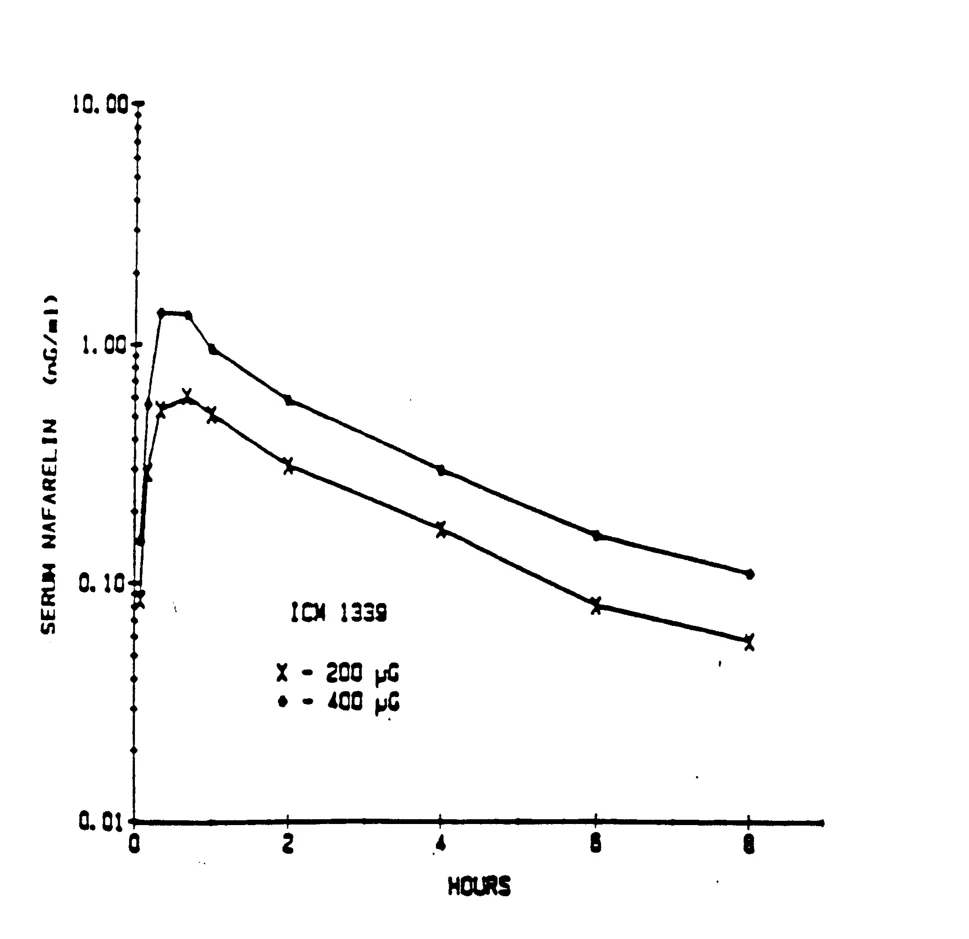
Figure 1. Serum levels of nafarelin achieved after single 200 μg and 400 μg IN doses. Values are average of 12 women. One spray with the 100 μl pump delivered 87% of the target dose of 200 μg, and two sprays with the 100 μl pump delivered 85% of the target 400 μg dose. Nafarelin in the study formulation was quantified as the free base.
Multiple Dose Kinetics
Multiple dose kinetics for nafarelin (200 μg/day and 400 μg/day) were evaluated following IN dosing every 12 hours for 8, 15 and 22 days. Nafarelin did not accumulate in serum after repeated IN administration and there was no suggestion of changes in nasal absorption during this period.
Excretion and Metabolism
Excretion and metabolism were studied with 14C-labeled nafarelin administered to men. Following a single SC injection of 216 μg nafarelin (quantitated as nafarelin free base) containing 8.2 mcCi of (14C)-nafarelin to three men, radioactivity was recovered in both urine and stool. After 7 days, 52%, 55%, and 44% of the administered radioactivity was recovered in urine, whereas 36%, 18%, and 44% was recovered in stool.
The six major radioactive metabolites of nafarelin found in urine were the 6-10 pentapeptide amide (D(2)-Nal-Leu-Arg-Pro-GlyNH2), the 5-10 hexapeptide amide (Tyr-D(2)-Nal-Leu-Arg-Pro-GlyNH2), the 6-7 dipeptide (D(2)-Nal-Leu-OH), 5-7 tripeptide (Tyr-D(2)-Nal-Leu-OH), naphthylalanine and 2-naphthylacetic acid. The 5-10 hexapeptide amide was the most abundant metabolite, accounting for 21.8% of the total radioactivity excreted in the urine over 2 days. The six metabolites, plus nafarelin, accounted for about 85% of the radioactivity recovered in urine, or about 36% of the administered radioactivity. The metabolic profiles of nafarelin in humans, monkeys, and rats are summarized below.
| COMPARISON OF METABOLIC PROFILE OF 14C-NAFARELIN ACETATE IN HUMANS, MONKEYS, AND RATS | ||||
| % of Radioactivity in Dose | ||||
| Metabolite | Human (0-2D urine) | Rhesus Monkey (0-4d urine) | Rat (0-3d urine) | Rat (0-1d bile) |
| Naphthylalanine | 8.3 ± 2.1 | 4.2 ± 2.0 | 1.0 | 0 |
| 6-10 Pentapeptide amide | 4.1 ± 1.0 | 11.3 ± 8.7 | 0.5 | 0 |
| 6-7 Dipeptide | 7.4 ± 0.8 | 8.6 ± 4.1 | 1.4 | 3.1 |
| 5-10 Hexapeptide amide | 9.1 ± 0.7 | 9.3 ± 4.2 | 2.1 | 27.7 |
| 2-Naphthylacetic acid | 1.2 ± 0.3 | 12.2 ± 2.6 | 0.1 | 0 |
| 5-7 Tripeptide | 2.7 ± 0.4 | 1.9 ± 0.8 | 0.7 | 5.2 |
| 1-7 Heptapeptide | 0 | 0 | 0.1 | 8.8 |
| 1-9 Nonapeptide | 0 | 0 | 0 | 7.8 |
| Nafarelin | 2.8 ± 0.4 | 2.7 ± 2.8 | 0 | 12.6 |
| Total Recovered | 35.6 ± 3.0 | 50.2 ± 23.0 | 5.9 | 65.2 |
The activity of the metabolites and the metabolism of nafarelin when administered intranasally have not been studied.
Drug Interactions
Since only 80% of circulating nafarelin is bound to plasma proteins, partial displacement by a concomitantly administered drug would not be expected to create a clinical problem.
Nafarelin is unlikely to interfere with the plasma binding characteristics of other concomitantly administered drugs because of the low dose of nafarelin (400 μg/day, expressed as free base) recommended for clinical use. Since nafarelin is degraded mainly by peptidases and not by cytochrome P-450 mediated oxidative enzymes, nafarelin also would not be expected to participate in competitive interactions with drugs that are oxidized by cytochrome P-450 enzymes.
Kinetics of nafarelin in subjects with kidney or liver impairment
Very little (only about 3%) nafarelin is excreted unchanged via the kidney. The major urinary metabolites are peptide fragments which have no GnRH agonistic activity. Consequently, even moderate impairment of renal function would not be expected to significantly influence total body clearance of nafarelin. Experiments with homogenates of rat liver, kidney and pituitary gland demonstrated that these tissues possess enzymes that degrade nafarelin. It is therefore likely that nafarelin is degraded by peptidases in many tissues. Consequently, the metabolic burden is not solely on the liver and impairment of liver function would not be expected to affect the clearance of nafarelin to a clinically significant degree.
Effects of Rhinitis and a Topical Nasal Decongestant on Nasal Absorption
Absorption of intranasally administered nafarelin might be affected by altered conditions of the nasal mucosa. Accordingly, twelve men with symptomatic perennial rhinitis and 17 men with normal nasal mucosa received 300 μg of IN nafarelin (glycocholate enhanced formulation). Absorption was slightly increased in men with rhinitis as shown by the mean AUC values (11.9 ng/mL/hr in men with rhinitis, compared to 7.0-10.0 ng/mL/hr in normal men). The effect of prior administration of a nasal vasoconstrictor (Nafrin, oxymetazoline hydrochloride) on the absorption of IN nafarelin was also evaluated. Tmax and serum T 1/2 were not affected. Cmax and AUC values for nafarelin were significantly reduced when the decongestant was administered 30 min prior to nafarelin. Absorption of nafarelin in the men with rhinitis after administration of the decongestant, however, was similar to that observed in the normal men.
This is believed to be due to the increased absorption induced by rhinitis which compensates for the decongestant's inhibitory affect on absorption.
STORAGE AND STABILITY
Store upright between 15 - 25ºC. Protect from light and freezing.
SPECIAL HANDLING INSTRUCTIONS
HOW TO USE YOUR SYNAREL® NASAL SPRAY UNIT
To Prime the Pump:
CAUTION: Avoid breathing in the spray during priming.
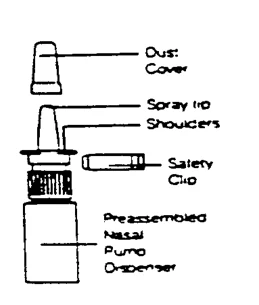
Before you use a bottle of SYNAREL® nasal spray for the first time, you have to prime the spray pump. Follow these steps:
- 1. Remove the safety clip and the plastic dust cover from the spray bottle.
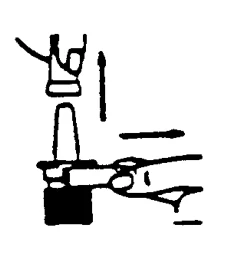
- 2.
Put two fingers on the "shoulders" of the spray bottle and
put your thumb on the bottom of the bottle.
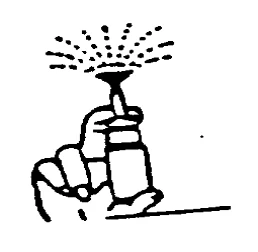
- 3. Point the tip of the bottle away from you and push the bottle -- quickly and firmly 7-10 times -- with your thumb, until a fine spray appears. Usually the spray will appear after about 7 pumps.
To Use SYNAREL®:
- 1. Gently blow your nose to clear both nostrils before you use SYNAREL nasal spray.

- 2. Remove the safety clip and plastic dust cover from the spray bottle.
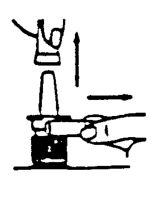
- 3. Bend your head forward a little and put the spray tip into one nostril. (The tip should not reach too far into your nose). Aim the tip toward the BACK and OUTER SIDE of your nose.
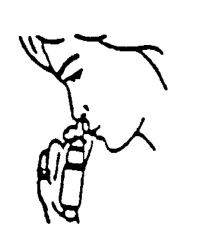
- 4. Close the other nostril with your finger.

- 5. Applying pressure EVENLY to the "shoulders", QUICKLY AND FIRMLY pump the sprayer ONE TIME, at the same time as you sniff in gently.
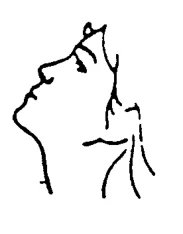
- 6. Remove the sprayer from your nose and tilt your head backwards for a few seconds. This lets the spray spread over the back of your nose.
- 7. Wipe tip of pump with a soft cloth or tissue after each use. Replace the safety clip and plastic dust cover on the spray bottle.
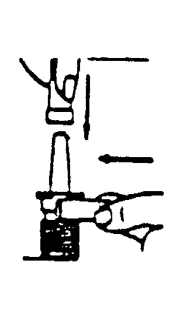
To Clean:
- 1. Be sure to clean the spray tip after every use. Failure to do so may result in a clogged tip that could cause improper dose delivery.
- 2. Hold bottle in horizontal position. Rinse spray tip with warm water while wiping tip with finger or soft cloth for 15 seconds.
- 3. Wipe spray tip with a soft cloth or tissue to dry. Replace the safety clip and plastic dust cover on the spray bottle.
- 4.
DO NOT ATTEMPT TO CLEAN SPRAY TIP USING A POINTED OBJECT. DO NOT ATTEMPT TO DISASSEMBLE PUMP.
IMPORTANT REMINDER
TREATMENT WITH SYNAREL MUST BE UNINTERRUPTED -- WITH NO MISSED DOSES -- TO BE EFFECTIVE. Make sure you use SYNAREL® once each morning and once each evening. Also, make sure to note the date you start each bottle so that you can have your prescription refilled in time to have a new bottle on hand. That way, your treatment will go smoothly without any missed doses.
KEEP OUT OF THE REACH OF CHILDREN. If someone other than the patient is exposed to this medication, contact your physician.
DOSAGE FORMS, COMPOSITION AND PACKAGING
Each 8mL bottle of Synarel (nafarelin acetate) contains nafarelin acetate nasal solution 2 mg/mL (as nafarelin base), in a solution of sorbitol, benzalkonium chloride, glacial acetic acid, sodium hydroxide or hydrochloric acid to adjust pH, and purified water. Each bottle is supplied with a metered spray pump. A dust cover and a leaflet of patient instructions are also included.
After priming the pump unit for Synarel, each actuation of the unit delivers approximately 100 μL of the metered droplet spray containing approximately 200 μg nafarelin base. The contents of one 8mL spray bottle is intended to deliver at least 60 sprays.
PART II: SCIENTIFIC INFORMATION
PHARMACEUTICAL INFORMATION
Drug Substance
Common name: nafarelin acetate
Chemical name:
5-oxo-L-prolyl-L-histidyl-L-tryptophyl-L-seryl-L-tyrosyl-3-(2-naphthyl)-D-alanyl-L-leucyl-L-arginyl-L-prolylglycinamide acetate
Molecular formula and molecular mass: C66 H83 N17013. x C2 H4 02. y H2 0 (1< x <2; 2< y<8)
1322.51 (anhydrous free decapeptide)
Structural formula:
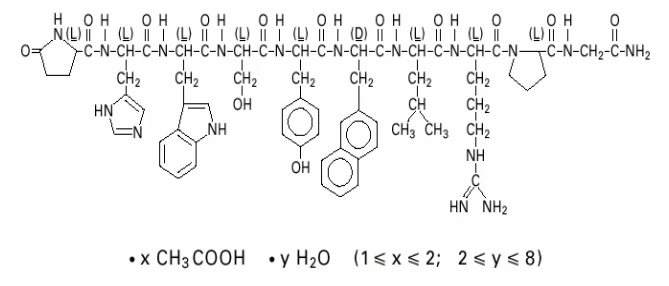
Physicochemical properties: Nafarelin acetate is a fine white to off-white amorphous powder. It is slightly soluble in water, very slightly soluble in 0.02M phosphate buffer (pH 7.58), methanol and ethanol and practically insoluble in acetonitrite and dichloromethane. The apparent pKa's of nafarelin acetate have been determined spectrophotometrically to be 5.93 and 9.92, corresponding to the histidyl and the tyrosyl groups, respectively. The expected pKa of the arginyl group is 12.48, which has not been independently measured due to experimental limitations.
CLINICAL TRIALS
In controlled clinical studies, Synarel at doses of 400 and 800 μg/day for 6 months was shown to relieve the clinical symptoms of endometriosis (pelvic pain, dysmenorrhea, and dyspareunia) and to reduce the size of endometrial implants as determined by laparoscopy. The clinical significance of a decrease in endometriotic lesions is not known at this time. Laparoscopic staging of endometriosis did not necessarily correlate with severity of symptoms.
In 73 patients, Synarel 400 μg daily induced amenorrhea in approximately 65%, 80% and 90% of the patients after 60, 90 and 120 days, respectively. Most of the remaining patients reported episodes of only light bleeding or spotting. In the first, second and third post-treatment months normal menstrual cycles resumed in 4%, 82% and 100%, respectively, of those patients who did not become pregnant.
The distribution of patients, treated with 400 μg/day, by symptom severity at admission, end of treatment and 6 months after treatment is as follows:
| SYMPTOM SEVERITY SCORE | |||||
| N | 0 NONE | 1 – 2 MILD | 3 – 5 MODERATE | 6 – 9 SEVERE | |
| At Admission | 73 | 6 (8%) | 26 (36%) | 28 (38%) | 13 (18%) |
| End of treatment | 73 | 44 (60%) | 23 (32%) | 5 (7%) | 1 (1%) |
| 6 months after treatment | 73 | 37 (51%) | 24 (33%) | 12 (16%) | -- --- |
TOXICOLOGY
Single dose, subchronic and chronic toxicity, carcinogenicity, and reproduction studies were conducted in laboratory animals with an injectable formulation of nafarelin acetate. The test formulations were administered in these studies intraperitoneally (IP), intravenously (IV), subcutaneously (SC), or intramuscularly (IM). Additionally, local irritation, dermal sensitization, and subchronic toxicity studies were conducted in laboratory animals with intranasal (IN) formulations of nafarelin. For reference, the anticipated clinical dose for endometriosis is 400 μg per person per day or 8 μg/kg/day in a 50 kg woman by IN administration.
ACUTE TOXICITY STUDIES
Acute studies with an injectable formulation were performed by SC injection in the mouse, rat, dog and monkey, by IP injection in the mouse and rat, and by IM injection in the rat. Rats were more sensitive to the expected reproductive organ effects of nafarelin than mice, dogs, or monkeys, and male rats were more sensitive than female rats. Male rats administered nafarelin SC and IP had decreased reproductive organ weights, degeneration of spermatocytes and focal necrosis of the seminiferous tubules. Female rats administered nafarelin IP had decreased reproductive organ weights, but no histologic changes. No mortality was seen in any of the species following parenteral administration with dosages as high as 500 μg/kg. In a study where male mice (n=6) were given a single SC injection of 40 mg/kg nafarelin, none of the mice died within the 21 day observation period. Local irritation at the injection site was noted after SC administration in rats and dogs. The acute toxicity studies are summarized in the following table.
| Acute Toxicology with Nafarelin Injectable Formulation | |||||||||||||
|---|---|---|---|---|---|---|---|---|---|---|---|---|---|
Species Strain Sex (n) Age Weight | Route | Observ- Ation Period | Dose (mg/kg) | Mortality (n) | LD50 | Observations | |||||||
Mouse SIM-ICR-FBR Males (20) Females (20) 6-10 weeks 24 - 32g | SC | 7 days | 0 20 100 500 | (0) (0) (0) (0) | Because no animals died, the LD50 is greater than 500 μg/kg. | No signs of toxicity. | |||||||
Mouse SIM-ICR-FBR Males (20) Females (20) 6-10 weeks 22 - 32g | IP | 7 days | 0 20 100 500 | (0) (0) (0) (0) | Because no animals died, the LD50 is greater than 500 μg/kg. | No signs of toxicity. | |||||||
Rat COX-SD Males (20) Females (20) 7-10 weeks 200 - 240g | SC | 7 days | 0 20 100 500 | (0) (0) (0) (0) | Because no animals died, the LD50 is greater than 500 μg/kg. | 1 low dose and 3 high dose females had skin changes at the injection site. Males in all dose groups had decreased reproductive organ weights. Testicular necrosis in 3/5 males in each dose group. Degeneration of spermatocytes in testes and epididymides was attributed to nafarelin. | |||||||
Rat COX-SD Males (20) Females (20) 7 - 10 weeks 185 - 225 g | IP | 7 days | 0 | (0) | Because no animals died, the LD50 is greater than 500 μ/kg. | Males in all dose groups and females in the mid and high-dose groups had decreased reproductive organ weights. Males in all dose groups had acute focal necrosis of seminiferous tubules and degeneration of spermatocytes in testes and epididymides. | |||||||
| Rat | IM | 14 days | 0250 | (0) | Because no | High dose males had reduced testicular and prostatic | |||||||
| Acute Toxicology with Nafarelin Injectable Formulation |
|---|
Species Strain Sex (n) Age Weight | Route | Observ- Ation Period | Dose (mg/kg) | Mortality (n) | LD50 | Observations |
|---|---|---|---|---|---|---|
Sprague-Dawley Males (15) Females (15) 7-10 weeks 200 - 300g | 500 | (0) (0) | animals died, the LD50 is greater than 500 μg/kg. | weights (p<0.05). Low-dose males had lower testicular weight only. Discoloration of the testes was seen in one low-dose and one high-dose male. Minimal atrophy of the testes was seen in one high-dose male. | ||
Rat Sprague-Dawley Males (15) Females (l5) N/A 226-374g | IM | 14 days | 0 250 500 | (0) (0) (0) | Because no animals died, the LD50 is greater than 500 μg/kg | Unilateral testicular white striations in one low-dose male and reduced ovarian size in one low-dose female were noted. Reproductive organ weights generally lower but statistically significantly different from controls (p<0.05). |
Dog Beagle Males (4) Females (4) 16-24 months 7.3 - 16.3 kgs | SC | 7 days | 0 20 100 500 | (0) (0) (0) (0) | Because no animals died, the LD50 is greater than 500 μg/kg | No signs of toxicity observed. Scabs were noted at the injection site of 3 animals. |
Monkey cynomolgus Males (1) Females (1) (feral animals, age unknown) 2.7 and 6.1 kg | SC | 7 days | 500 | (0) | Because no animals died, the LD50 is greater than 500 μg/kg. | SGOT and SGPT levels were elevated at 24 hours after dosing but normal at 7 days after dosing. |
LONG-TERM TOXICITY STUDIES
Intravenous Dosing:
Studies in Rabbits: Groups of 4 (2M; 2F) New Zealand rabbits, weighing 2.3 to 2.9 kg, were administered nafarelin intravenously in doses of 0 (sham) or 50 μg/kg once daily for 14 days. A phosphate/sodium chloride buffered formulation containing 0.5 mg of nafarelin per milliliter was used.
The treatment was well tolerated by rabbits. No evidence of local vein irritation was observed. There were no treatment-related gross, organ weight, or microscopic pathologic changes.
Studies in Dogs: Beagle dogs (2M; 2F pergroup), weighing 8 to 15 kg, were administered nafarelin intravenously in doses of 0 (sham) or 50 μg/kg once daily for 14 days. A phosphate/sodium chloride buffered formulation containing 0.5 mg of nafarelin per milliliter was used.
The treatment was well tolerated by dogs. Pathologic examinations revealed treatment-related atrophic changes in the male reproductive organs and possible synchronization of ovarian cyclic activity in females.
Subcutaneous Dosing:
Studies in Rats:
Rats (10M and 10F per group), weighing 196 to 340g, were given subcutaneous doses of 0 (vehicle), 2, 10, or 50 μg/kg once daily for 28 days. One day after the last dose, blood analyses and necropsy examinations were conducted.
An appreciable gain in body weights and greater food intakes attributable to the test compound were apparent in female but not in male rats. All animals survived for the duration of the study.
In treated male rats as compared with controls, the principal changes observed to be dose related were lower serum testosterone levels, testicular seminiferous tubular atrophy in all 3 treatment groups, sloughed sperm precursor cells in the lumen of seminiferous tubules (4 high dose and 1 low dose animal), lower numbers of spermatozoa in the epididymal tubules, smaller amount of secretory material in the prostate glands and the seminal vesicles, and lower organ weights of the prostate glands and seminal vesicles but not for testes. Additionally, bilateral testicular necrosis (suggestive of infarction) accompanied by mineral deposition was present in 1 male rat in each of the treated groups.
In treated female rats as compared with controls, the following changes were dose related: lower serum progesterone levels, lower numbers of developing follicles and mature corpora lutea, uterine atrophy primarily affecting the myometrium, lower uterine weights, and higher adrenal weights. Follicular luteinization (indicative of lack of ovulation) was noted in low- and mid-dose females, and high-dose females showed no evidence of ovarian cyclic activity. The higher ovarian weights noted in low-dose females were possibly due to follicular luteinization and the lower ovarian weights in high-dose females were apparently due to the lack of cyclic activity.
Studies in Monkeys: Groups of 4 cynomolgus monkeys (2M; 2F) were given subcutaneous doses of 0 (vehicle), 2, 10, or 50 μg/kg once daily for 28 days. Necropsy examinations were conducted 1 day after the last dose.
There were no treatment-related clinical changes and all animals survived for the duration of the study.
In females given the test compound, the serum progesterone levels appeared to be lower than those normally expected during a menstrual cycle and the estradiol levels also appeared to be lower. No changes were noted in serum testosterone levels in males. Gross and histopathological examinations at the end of the treatment period revealed no changes either in the reproductive or other organs of male or female monkeys attributable to the test compound.
Intramuscular Dosing:
Studies in Rats:
Rats (32 males and 50 females per group) were given nafarelin intramuscularly in dosages of 0 (vehicle), 2, 10, or 50 μg/kg once daily. Two separate groups of male rats (n=32) were given 0 (vehicle) or 2 μg of nafarelin/kg/day and were supplemented with testosterone enanthate intramuscularly at a level of 2 mg/rat (or 5 mg/kg) once every 2 weeks. Rats were treated for 6 months then allowed approximately 4 months of nontreatment recovery. Parameters evaluated in treated male and treated female rats during treatment and during the post-treatment recovery period are shown in the following table. (NOTE: The time intervals at which various parameters are shown to be evaluated are approximate).
Toxicologic parameters evaluated in treated males and treated females at various intervals during the study included clinical observations, body weights, food intakes, ophthalmology, hematology, clinical chemistry, urinalyses, and pathology (gross pathology, organ weights, and histopathology).
| Toxicologic | Fertility | Teratologic | Postnatal Development | ||||||||||||||||
Treatment Month | Male | Female | Male | Female | Male | Female | Male | Female | |||||||||||
| 1 | |||||||||||||||||||
| 2 | |||||||||||||||||||
| 3 | X | X | X | X | |||||||||||||||
| 4 | X | X | X | ||||||||||||||||
| 5 | X | X | |||||||||||||||||
| 6 | X | X | X | ||||||||||||||||
Post treatment Month | |||||||||||||||||||
| 1 | X | X | X | X | X | ||||||||||||||
| 2 | |||||||||||||||||||
| 3 | |||||||||||||||||||
| 4 | X | X | X | X | X | ||||||||||||||
To evaluate reproductive effects, treated male rats were mated to untreated female rats and treated female rats were mated to untreated male rats at various intervals during the study. Reproductive evaluations included effects on fertility, teratologic potential, and growth and postnatal development of the offspring.
In treated male rats as compared with controls, the principal changes were slight decreases in weight gain and food intake (high dose), lower serum testosterone levels (high dose), testicular mineralization (all doses), and atrophy of reproductive organs (all doses including testosterone-supplemented group). Testicular mineralization, at the 10 and 50 μg/kg/day dose level and in the group supplemented with testosterone was still present at the end of the 3 month recovery period.
The other changes were noted to be reversible when examined after a 3-month recovery period. There were no treatment-related deaths for the duration of the study.
The high-dose group male rats were infertile after 4 and 6 months of treatment but the fertility and fecundity were within normal limits after a 1-month recovery period. No male-mediated teratologic changes were noted in fetuses and no adverse effects were noted in offspring derived either during the treatment period or the recovery period.
In treated female rats of all dose groups as compared with controls, the principal changes were slightly higher weight gain, lower serum progesterone levels, and atrophy of reproductive organs. Increased adrenal weight and reduced spleen weight were also observed. These changes (except for the body weight differences) were noted to be reversible when examined after a 3-month recovery period. No treatment-related deaths were observed.
Treated female rats of all dose groups were infertile during the treatment period, but the fertility and the fecundity were within normal limits after a 1-month recovery period.
Because of infertility, teratologic evaluations and effects on growth and postnatal development of the offspring could not be conducted for treated females for the duration of treatment.
During the recovery period, there were no female-mediated teratologic findings in fetuses and no adverse effects were noted in the offspring.
In a second chronic toxicity study, groups of 60 rats (30M; 30F), were given daily intramuscular injections of 0 (vehicle), 10, 30, or 100 μg/kg/day of nafarelin for 1 year. Hematology, serum chemistry, and urine analyses were performed at study completion, as well as complete necropsy examinations. Eleven animals died before scheduled termination. These included 1 male and 1 female in the control group; 4 males in the low dose group; 2 males and 1 female in the mid-dose group; and 2 males in the high dose group. The mortality or morbidity was not attributed to nafarelin.
No drug-treatment effects were noted in clinical condition or ophthalmic examination results. Mean body weights for drug-treated males were significantly lower while those of females were significantly higher than those of controls.
Drug-related changes in clinical pathology parameters included decreased mean platelet counts in high-dose males and all drug-treated females and decreased mean leukocyte counts in high-dose males. Elevated liver enzymes and triglyceride and cholesterol levels were also noted. Although these serum chemistry changes are consistent with changes in liver function, no histologic liver changes were present.
There were compound-related histologic changes in testes (Leydig cell hyperplasia at lower doses, atrophy at the highest dose), pituitary gland (hyperplasia and adenomas), adrenal gland (increased weight and cortical hypertrophy), pancreas (islet cell hypertrophy), spleen (decreased weight, atrophy), and bone marrow (reduced cellularity). Suppressive effects on reproductive tissues were observed at all dose levels. Changes in other organs and tissues were present in high-dose males and at all dose levels in females. Immunocytochemical studies of the pituitary gland were performed and reported as an addendum to this report. Decreased gonadotropin staining was observed in high-dose animals compared with controls.
Studies in Monkeys: Groups of 24 cynomolgus monkeys (12M; 12F) were given nafarelin intramuscularly in doses of 0 (vehicle), 2, 10, or 50 μg/kg once daily for 3 or 6 months. The study included a group of monkeys (n=24) that were treated for 6 months and allowed approximately a 4-month nontreatment recovery period.
In treated male monkeys as compared with controls, the principal changes observed to be drug related were weight loss, reduction in testicular size, softer consistency of testes, lower serum testosterone levels, and atrophy of reproductive organs. All animals survived for the duration of the study.
In treated female monkeys as compared with controls, the principal changes observed to be drug related were lack of clinical evidence of menstruation, lower serum estradiol levels, and atrophy of reproductive organs. All animals survived for the duration of the study.
Following the 4-month nontreatment recovery period, both the treated males and treated females appeared to have essentially recovered from the effects of the experimental regimen.
In a second chronic toxicity study, groups of 6 male and 6 female cynomolgus monkeys were given intramuscular doses of nafarelin at 0 (vehicle), 10, 30, or 100 μg/kg/day for 1 year. Blood and urine analyses were performed at intervals during the study and complete necropsy examinations were conducted at study termination. All animals survived until the scheduled study termination.
No drug-related effects were noted in clinical condition or ophthalmic examination results. Menstrual bleeding, however, was suppressed. Drug-related decreases in body weight gain were noted in males, whereas female weight gain was not affected.
No biologically significant drug-related effects were noted in clinical pathology parameters. Suppressive effects were observed histologically in reproductive organs of males and females. Injection-site discolouration was present in males and females.Muscle damage was considered minor and likely to be reversible. No other drug-related histopathologic changes were observed.
Intranasal Dosing:
Studies in Monkeys: Cynomolgus monkeys (3 males and 3 females per group) were administered nafarelin intranasally in doses of 0 (vehicle) or 1 mg/animal twice daily for 28 days. A solution containing 5 mg/mL of nafarelin was used. Assuming average body weights of 4.5 and 2.9 kg, the doses of nafarelin, administered to males and females were 0.44 mg/kg/dayand 0.69 mg/kg/day, respectively.
No treatment-related changes were noted in male monkeys. In treated females, the principal changes compared with control animals included lower organ weights forovaries and uteri, fewer ovarian follicles and corpora lutea, and lesser glandular development of the endometrium.
Studies in Dogs: Two groups of beagle dogs, each composed of 3 males and 3 females, were administered nafarelin intranasally in doses of 0 (sham), 0 (vehicle), or 0.35 mg/animal twice daily for 28 days. An acetate-buffered vehicle formulation containing sodium glycocholate (20 mg/mL) and thimerosal (0.01 mg/mL) was used. The concentration of nafarelin in the test formulation was 1.75 mg/mL. Following 28 days of treatment, the dogs were euthanatized and the nasal cavities were subjected to gross and microscopic pathologic examinations.
No adverse local effects were noted with either the vehicle formulation or the nafarelin formulation.
Study With Degraded Nasal Formulation:
Due to the highly complex degradation of nafarelin resulting in several degradation products which are difficult to isolate, identify and quantitate, the following study was conducted using a degraded nasal formulation.
Studies in Rats: Three groups, each composed of 10 male and 10 female rats, were administered nafarelin intramuscularly in doses of 0 (vehicle), 0.10, or 0.50 mg/kg once daily for 28 days. Urinalysis was conducted during the last week of treatment. Blood analyses and necropsy examinations were performed after 28 days of treatment.
No drug effect was noted in clinical condition. Males had a drug-related decrease in body weight gain and females had a drug-related increase in body weight gain.
There were no toxicologically significant differences in clinical pathology parameters.
Discernible morphologic changes were confined to male and female reproductive organs. They were manifested grossly by decreased size and histologically by differing proportions of cellular constituents and/or secretions within an organ. Testicles from drug-related animals also had increased tubular epithelial cell degeneration. Both dose groups were similarly affected.
In conclusion, degraded nafarelin produced altered weight gain and reproductive organ changes similar to effects produced with undegraded nafarelin.
CARCINOGENICITY STUDIES
Studies in Mice: Equal numbers of male and female Swiss-Webster mice were intramuscularly administered 0 (vehicle) (n=200), 50 (n=100), 150 (n=100), or 500 μg/kg (n=100), of nafarelin once daily for 18 months. The dose absorbed at 500 μg/kg/day is approximately 1000 times the dose absorbed in humans given the recommended intranasal dose.
Nafarelin-treated mice had significantly increased survival (p=0.04) relative to controls. In the control group the % mortality was 25% for females and 43% for males. In treated males the % mortality ranged from 26-38% decreasing with increased dose. Female mortality showed little difference with a range of 12-14%. No drug-related clinical signs were observed. Male body weights were not affected by treatment, although food intakes were often lower than those of controls during the last year of the study. Nafarelin-treated females had higher body weights (p<0.05) and food intakes (p<0.05) during the first 14 months.
The incidence of Harderian gland tumours in high-dose males (p=0.004) and pituitary gland (adenohypophysis) tumours in high-dose females (p=0.005) was increased when compared with controls of the respective sexes. There was no evidence of metastasis of these tumours. In addition, the number of animals with non-neoplastic foci of adenohypophyseal nodular hyperplasia was increased in the high-dose female group when compared with the female control group.
Other non-neoplastic gross and/or histopathologic changes related to nafarelin administration included increased incidence/severity of atrophy/involution of the testes, epididymides, prostate glands, seminal vesicles, ovaries, and/or uterus at all dose levels. Also, low- and mid-dose ovaries had increased numbers of corpora lutea and luteal cell hyperplasia.
The Harderian gland tumours were not considered clinically relevant because of the absence of the Harderian gland in humans. The pituitary tumours were considered the result of prolonged and continuous stimulation of the gland by high doses of this LHRH agonist. Such tumours have been reported in rodents as an effect of long-term administration of other drugs of this class. Immunocytochemical studies of the pituitary gland revealed that the pituitary tumours of control and treated mice were prolactin-positive.
Studies in Rats: Equal numbers of male and female Sprague-Dawley rats were intramuscularly administered 0 (vehicle) (n=200), 10 (n=100), 30 (n=100), or 100 μg/kg (n=100), of nafarelin once daily for 21 (males) or 24 months (females). The animals were observed for 24 months. The dose absorbed at 100 μg/kg/day is approximately 200 times the dose absorbed in humans given the recommended intranasal dose.
No drug-related clinical signs of toxicity were observed. Male body weights generally decreased as doses increased, while female body weights were generally significantly higher than those of controls during most of the study. Nafarelin treatment did not affect the survival of the animals.
Administration of nafarelin resulted in statistically significantly (p<0.05) increased tumour incidence in certain tissues. The incidence of anterior pituitary tumours was increased in all treated male groups and in high-dose females. The incidence of adrenal medullary tumours was increased in the mid- and high-dose female groups. The incidence of pancreatic islet cell tumours was increased in the high-dose male group and in all treated female groups. Testicular interstitial (Leydig) cell adenomas were increased in low- and mid-dose males. Benign ovarian stromal cell tumours were increased in low-dose females. No metastasis was observed for any of these tumours. These changes are considered to be proliferative responses of various endocrine tissues to hormonal alterations induced by chronic exposure to an LHRH agonist in the rat. Immunocytochemical studies of the pituitary tumours revealed that there was a higher proportion of FSH-positive, LH-positive, and immunonegative tumours in treated rats than in controls. The immunonegative tumours were those which failed to stain for any of the pituitary hormones. Immunocytochemical studies of the pancreatic tumours indicated that the tumours contained primarily insulin-positive cells.
MUTAGENICITY STUDIES
Ames Salmonella Assay: Nafarelin was tested in the Ames assay using five strains of Salmonella, with and without metabolic activation. The results were negative for all five strains.
Mitotic Gene Conversion Assay: Nafarelin acetate was tested in the gene conversion assay with yeast strain D7, with and without metabolic activation. Initially the result was negative without activation but apparently positive with activation. Additional experiments were performed to determine whether the positive result indicated true geneticactivityof the drug. The experimental data showed that the apparent positive result was an artifact of the test system caused by metabolic release of tryptophan from the drug by the S-9 fraction and subsequent use of the tryptophan as a nutrient by the yeast cells. In fact, tryptophan alone was "positive" in this test at concentrations that would have been released by metabolism of nafarelin and lower. This result, therefore, was considered an artifact of the test system and not indicative of genetic activity of the drug.
Mouse Micronucleus Assay: Nafarelin was evaluated for clastogenic activity in the in vivo mouse micronucleus assay. Single doses of 0.1, 0.3 or 1.0 mg/kg were given to groups of 30 mice (15 male; 15 female). Animals were sacrificed at 24, 48 and 72 hours. There was no evidence of clastogenic activity in this assay.
Chromosomal Aberration Assay: Nafarelin was evaluated for clastogenic activity in an in vitro cytogenetic assay measuring chromosomal aberration frequencies in Chinese hamster ovary cells. There was no evidence of clastogenic activity in this assay.
REPRODUCTIVE TOXICITY STUDIES
Teratology Studies in Rats: Female rats (n=24/group) with evidence of mating were given nafarelin intramuscularly in doses of 0 (vehicle), 0.4, 1.6, or 6.4 μg/kg once daily from day 5 through day 15 of gestation.
Principal changes noted primarily in the high-dose group dams compared with controls included decreases in the median numbers of live fetuses and corpora lutea and increases in median numbers of resorptions, the resorption index, and the implantation index.
Minor fetal changes that were considered common variations were noted in all dose groups. Four of the 80 fetuses in the high-dose group, however, had anomalies which included hemimelia, syndactylia, reduced amnionic fluid volume; irregular body contour of head, neck, and back; misshapen radius, ulna, and fibula; and laterally compressed cranium. The 4 fetuses in which these changes were noted were derived from 3/9 litters with live fetuses examined in the high-dose group. These fetal changes were not noted in any of the vehicle-control or low- or mid-dose group fetuses examined.
The rat fetal anomalies were seen in the group in which, due to the pharmacologic activity of the compound, a high incidence of fetal resorptions was noted. Fetal resorption is a phenomenon that occurs in rats but not in women.
In an additional teratology study in rats, groups of 15 females with evidence of mating were given nafarelin intramuscularly in doses of 0 (vehicle), 0.4, 1.6, or 6.4 μg/kg once daily from day 7 through day 16 of gestation.
Changes noted in dams receiving nafarelin included an increase in the number of dams that had resorbed all implants, decreased average litter size, and an increase in the average number of early resorptions. All of these changes exhibited a dose response and were considered related to treatment with nafarelin. There was a decrease in the average number of implantations and corpora lutea only in high-dose dams and these decreases were also considered related to treatment.
No gross changes were noted in any of the fetuses from the vehicle-control or low- or mid-dose dams. Changes noted in high-dose fetuses included 1 fetus with a domed head, edema, pes varus, and abnormal flexion of the carpals, and a second fetus with an umbilical hernia and pes varus. The changes in these 2 fetuses were also observed previously in control fetuses. No other changes were noted in any other high-dose fetuses.
Teratology Study in Rabbits: Female New Zealand albino rabbits (n=18/group) were given nafarelin intramuscularly in doses of 0 (vehicle), 0.02, 0.06, or 0.18 μg/kg once daily from day 6 through day 18 of gestation.
Total resorptions and/or abortion were noted in 1 mid-dose and 3 high-dose dams. These changes were most probably due to the expected luteolytic effects of this class of compounds. External, skeletal, and visceral examinations of fetuses did not reveal any changes indicative of a teratogenic or embryotoxic effect of nafarelin.
Teratology Study in Mice: Female mice with evidence of mating (n=25/group) were given nafarelin intramuscularly in doses of 0 (vehicle), 67, 200, or 600 μg/kg once daily from day 6 through day 15 of gestation. External and skeletal or visceral examinations of the fetuses did not reveal any changes indicative of a teratogenic or embryotoxic effect of nafarelin.
Female Fertility and Reproduction Study in Rats: Female rats (n=20/group) were given nafarelin intramuscularly in doses of 0 (vehicle), 0.04, 0.10, or 0.20 μg/kg once daily from 14 days before mating until gestation day 13 or until 21 days postpartum.
Doses of 0.1 or 0.2 μg/kg/day suppressed the estrus cyclic activity (and consequently higher numbers of dams in those groups showed breeding/pregnancy failure) (p<0.05), but doses of 0.04 μg/kg/day did not interfere with estrus cycles.
At all doses of nafarelin, there was a prolongation of the gestation period and/or labor complications (ie, prolonged or difficult parturition). The number of dams with littering complications were 0/19; 5/15; 4/12; and 6/7 in the control, low-dose; mid-dose and high-dose groups respectively. In addition, one animal in each treatment group died at the expected time of parturition, most likely resulting from labor complications. Also, an increased F1 pup mortality was noted that was considered associated with the noted maternal clinical signs. The numbers of dams whose pups were found dead at birth or died afterwards were 0/19; 2/15; 4/12 and 5/7 in the control, low-dose; mid-dose and high-dose groups, respectively.
Maternal treatment did not affect either the postnatal development or the reproductive performance of the surviving offspring.
SPECIAL STUDIES
Rabbit Eye Irritation: An intranasal formulation containing 5 mg/mL of nafarelin was not irritating to the female New Zealand albino rabbit eyes (n=6).
Guinea Pig Sensitization: An intranasal formulation containing 5 mg/mL of nafarelin was not a sensitizer when administered intracutaneously to guinea pigs (n=20) 3 times per week for a total of 10 doses.
REFERENCES
- 1. Barbieri RL. Current Problems in Obstetrics, Gynecology and Fertility. Endometrosis, 1989; 12: 9-31.
- 2. Barbieri RL. Comparison of the pharmacology of nafarelin and danazol. Am J Obstet Gynecol, 1990;162: 581-585.
- 3. Bergquist C. Effects of nafarelin versus danazol on lipids and calcium metabolism. Am J Obstet Gynecol, 1990; 162: 589-591.
- 4. Burry KA, Patton PE, and Illingworth DR. Metabolic changes during medical treatment of endometriosis: Nafarelin acetate versus danazol. Am J Obstet Gynecol, 1989; 160: 1454-1461.
- 5. Chrisp P and Goa KL. Nafarelin: a review of its pharmacodynamic and pharmacokinetic properties, and clinical potential in sex hormone-related conditions. Drugs, 1990; 39:523-551.
- 6. Claesson B and Bergquist C. Clinical experience treating endometriosis with nafarelin. J Reprod Med, 1989; 34(supp): 1025-1028.
- 7. Henzl MR. Gonadotropin-Releasing Hormone (GnRH) Agonists in the Management of Endometriosis: A Review. Clin Obstet Gynecol. 1988; 31: 840-856.
- 8. Henzl MR, Corson SL, Moghissi K, Buttram VC, Berquist C and Jacobson J. Administration of nasal nafarelin as compared with oral danazol for endometriosis. N Engl J Med, 1988; 318(8): 485-489.
- 9. Henzl MR, and Kwei L. Efficacy and safety of nafarelin in the treatment of endometriosis. Am J Obstet Gynecol. 1990; 162:570-574.
- 10. Johansen JS, Riis BJ, Hassager C, Moen M, Jacobson J and Christiansen C. The effect of a gonadotropin-releasing hormone agonist analog (nafarelin) on bone metabolism. J Clin Endocrinol Metab. 1988; 67(4): 701-706.
- 11. Rolland R and van der Heijden PFM. Nafarelin versus danazol in the treatment of endometriosis. Am J Obstet Gynecol, 1990; 162: 586-588.
- 12. Valimaki M, Nilsson CG, Roine R and Ylikorkala O. Comparison between the effects of nafarelin and danazol on serum lipids and lipoproteins in patients with endometriosis. J Clin Endocrinol Metabol, 1989; 69(6): 1097-1103.
- 13. Synarel PSUR for the period 1 February 2000 to 31 July.