


Product Monograph - Teva-Sacubitril / Valsartan
Recent Major Label Changes
Not applicable
Table of Contents
Recent Major Label Changes ................................................................................................................ 2
Table of Contents ................................................................................................................................. 2
Part I: Healthcare Professional Information ......................................................................................... 4
1 INDICATIONS .............................................................................................................................................. 4
1.1 Pediatrics ................................................................................................................................. 4
1.2 Geriatrics ................................................................................................................................. 4
2 CONTRAINDICATIONS ................................................................................................................................ 4
3 SERIOUS WARNINGS AND PRECAUTIONS BOX .......................................................................................... 5
4 DOSAGE AND ADMINISTRATION ................................................................................................................ 5
4.1 Dosing Considerations ............................................................................................................. 5
4.2 Recommended Dose and Dosage Adjustment........................................................................ 5
4.4 Administration ......................................................................................................................... 7
4.5 Missed Dose ............................................................................................................................ 7
5 OVERDOSAGE ............................................................................................................................................. 7
6 DOSAGE FORMS, STRENGTHS, COMPOSITION AND PACKAGING .............................................................. 7
7 WARNINGS AND PRECAUTIONS ................................................................................................................. 9
7.1 Special Populations ............................................................................................................... 12
8 ADVERSE REACTIONS ............................................................................................................................... 13
8.1 Adverse Drug Reaction Overview.......................................................................................... 13
8.2 Clinical Trial Adverse Reactions ............................................................................................. 13
8.4 Abnormal Laboratory Findings: Hematologic, Clinical Chemistry and other Quantitative Data ....................................................................................................................................... 18
8.5 Post-Market Adverse Reactions ............................................................................................ 18
9 DRUG INTERACTIONS ............................................................................................................................... 19
9.1 Serious Drug Interactions ...................................................................................................... 19
9.2 Drug Interactions Overview .................................................................................................. 19
9.3 Drug-Behaviour Interactions ................................................................................................. 20
9.4 Drug-Drug Interactions .......................................................................................................... 21
9.5 Drug-Food Interactions ......................................................................................................... 23
9.6 Drug-Herb Interactions ......................................................................................................... 23
9.7 Drug-Laboratory Test Interactions ........................................................................................ 23
10 CLINICAL PHARMACOLOGY .................................................................................................................... 23
10.1 Mechanism of Action ............................................................................................................ 23
10.2 Pharmacodynamics ............................................................................................................... 23
10.3 Pharmacokinetics .................................................................................................................. 24
11 STORAGE, STABILITY AND DISPOSAL...................................................................................................... 27
Part II: Scientific Information ...........................................................................................................28
13 PHARMACEUTICAL INFORMATION ........................................................................................................ 28
14 CLINICAL TRIALS ..................................................................................................................................... 29
14.1 Clinical Trials by Indication .................................................................................................... 29
14.2 Comparative Bioavailability Studies ...................................................................................... 33
16 NON-CLINICAL TOXICOLOGY .................................................................................................................. 39
17 SUPPORTING PRODUCT MONOGRAPHS ................................................................................................ 41
PATIENT MEDICATION INFORMATION ............................................................................................... 42
Part I: Healthcare Professional Information
1 INDICATIONS
Teva-Sacubitril / Valsartan (sacubitril/valsartan) is indicated for:
- the treatment of heart failure with reduced ejection fraction (HFrEF) in patients with NYHA Class II or III, to reduce the incidence of cardiovascular death and heart failure hospitalisation (see 4 DOSAGE AND ADMINISTRATION).
Teva-Sacubitril / Valsartan should be administered in combination with other heart failure therapies, in place of an angiotensin-converting enzyme inhibitor (ACEi) or angiotensin II receptor blocker (ARB) (see 2 CONTRAINDICATIONS, 4 DOSAGE AND ADMINISTRATION, 7 WARNINGS AND PRECAUTIONS and 14 CLINICAL TRIALS).
Teva-Sacubitril / Valsartan should be initiated, and up-titration conducted, by a physician experienced with the treatment of heart failure.
1.1 Pediatrics
Pediatrics (< 18 years of age): Based on the data submitted and reviewed by Health Canada, the safety and efficacy of sacubitril/valsartan in pediatric patients has not been established.
1.2 Geriatrics
Geriatrics (> 65 years of age): No dosage adjustment is required in patients over 65 years. However, sacubitril/valsartan has been studied in a limited number of patients above the age of 80 years (see 7.1.4 Geriatrics, and 14 CLINICAL TRIALS). Caution is required in these patients (see 4 DOSAGE AND ADMINISTRATION).
2 CONTRAINDICATIONS
Teva-Sacubitril / Valsartan is contraindicated:
- In patients with recent symptomatic hypotension prior to initiation of treatment with Teva-Sacubitril / Valsartan (sacubitril/valsartan)
- With concomitant use with any drug formulation containing an angiotensin-converting enzyme inhibitor, due to potential enhanced risk of angioedema (see 4 DOSAGE AND ADMINISTRATION, 7 WARNINGS AND PRECAUTIONS and 9 DRUG INTERACTIONS). Teva-Sacubitril / Valsartan must not be administered until at least 36 hours have elapsed following discontinuation of ACEi therapy
- In patients with known history of angioedema related to previous ACEi or ARB therapy
- In patients with history of hereditary or idiopathic angioedema
- As for any formulation containing an ACEi or ARB, use of Teva-Sacubitril / Valsartan together with aliskiren-containing drugs is contraindicated in patients with diabetes mellitus, whether Type 1 or 2, or in patients with moderate to severe renal impairment, i.e., eGFR < 60 mL/min/1.73m2 (see 7 WARNINGS AND PRECAUTIONS, General, and Renal, and 9 DRUG INTERACTIONS)
- In pregnant and breastfeeding women (see 7 WARNINGS AND PRECAUTIONS, Reproductive Health, 7.1.1 Pregnancy and 7.1.2 Breastfeeding)
- In patients who are hypersensitive to this drug or to any ingredient in the formulation, including any non-medicinal ingredient, or component of the container. For a complete listing, see 6 DOSAGE FORMS, STREGNTHS, COMPOSITION AND PACKAGING).
3 SERIOUS WARNINGS AND PRECAUTIONS BOX
| When used in pregnancy angiotensin receptor (AT1) blockers (ARB) can cause injury to or even death of the developing fetus. When pregnancy is detected, Teva-Sacubitril / Valsartan should be discontinued as soon as possible (see 7.1 Special Populations). |
|---|
4 DOSAGE AND ADMINISTRATION
4.1 Dosing Considerations
Teva-Sacubitril / Valsartan (sacubitril/valsartan) should normally be used in clinically stable patients in conjunction with other medical treatment for heart failure with reduced ejection fraction (HFrEF), including diuretics, beta-blockers, and mineralocorticoid receptor antagonists (MRA), as appropriate and as tolerated.
Teva-Sacubitril / Valsartan should be used in place of an angiotensin-converting enzyme inhibitor (ACEi) or angiotensin II receptor blocker (ARB) (see 1 INDICATIONS, 2 CONTRAINDICATIONS, and 7 WARNINGS AND PRECAUTIONS).
Teva-Sacubitril / Valsartan should not be initiated in patients with acutely decompensated heart failure, or clinically-relevant ischemic events, such as acute myocardial or cerebral infarction.
In stable patients whose baseline systolic blood pressure, serum potassium and renal function are at acceptable levels (see 7 WARNINGS AND PRECAUTIONS, and 14 CLINICAL TRIALS), Teva-Sacubitril / Valsartan may be initiated.
4.2 Recommended Dose and Dosage Adjustment
The usual recommended starting dose is one tablet of 49 mg sacubitril / 51 mg valsartan taken twice daily. The target dose is one tablet of 97 mg sacubitril / 103 mg valsartan taken twice daily.
A starting dose of one tablet of 24 mg sacubitril / 26 mg valsartan taken twice daily should be considered in certain patients:
- Patients on less than guideline-recommended doses of ACEi or ARB prior to initiation of Teva-Sacubitril / Valsartan
- Patients who have risk factors for hypotension, including patients ≥ 75 years old and patients with low systolic blood pressure (see 7 WARNINGS AND PRECAUTIONS, Hypotension)
The dose of Teva-Sacubitril / Valsartan should be increased every 2-4 weeks, as tolerated by the patient, to the target dose of one tablet of 97 mg sacubitril/ 103 mg valsartan taken twice daily. If patients experience tolerability issues, e.g. symptomatic hypotension or hyperkalemia, consideration should be given to temporary down–titration or treatment interruption of Teva-Sacubitril / Valsartan.
Due to the potential risk of angioedema when used concomitantly with an ACEi, Teva-Sacubitril / Valsartan must not be started until 36 hours has passed following discontinuation of ACEi therapy (see 2 CONTRAINDICATIONS).
Teva-Sacubitril / Valsartan should not be co-administered with any other medication containing an ARB due to the angiotensin II receptor blocking activity of sacubitril/valsartan (see 7 WARNINGS AND PRECAUTIONS, and 9 DRUG INTERACTIONS).
Note that the oral bioavailability of valsartan, when Teva-Sacubitril / Valsartan is administered, is greater than that of valsartan in other marketed tablet formulations (see 10.3 Pharmacokinetics, Absorption). Administer Teva-Sacubitril / Valsartan as directed above, based on patient tolerability, and not on a mg-to-mg substitution basis with valsartan.
Teva-Sacubitril / Valsartan can be administered with or without food.
Monitor serum potassium in all patients treated with Teva-Sacubitril / Valsartan. If hyperkalemia occurs, dose adjustment or interruption of drugs that increase serum potassium may be required, e.g., mineralocorticoid receptor antagonists, or Teva-Sacubitril / Valsartan.
Special populations
Renal impairment
No dose adjustment is required in patients with mild (eGFR 60-90 mL/min/1.73 m2) or moderate (eGFR 30-60 mL/min/1.73 m2) renal impairment. Since there are no adequate data in patients with severe renal impairment (eGFR < 30 mL/min/1.73 m2), Teva-Sacubitril / Valsartan use is not recommended in these patients (see 10.3 Pharmacokinetics, Renal Insufficiency).
Hepatic impairment
No dose adjustment is required when administering Teva-Sacubitril / Valsartan to patients with mild hepatic impairment (Child-Pugh A classification). In patients with moderate hepatic impairment (Child- Pugh B classification), a starting dose of one tablet of 24 mg sacubitril / 26 mg valsartan taken twice daily is recommended.
No studies have been conducted in patients with severe hepatic impairment (Child-Pugh C classification). Therefore, use of Teva-Sacubitril / Valsartan in these patients is not recommended.
Pediatrics (< 18 years of age)
Based on the data submitted and reviewed by Health Canada, the safety and efficacy of sacubitril/valsartan in pediatric patients has not been established.
Geriatrics (> 65 years of age)
No dosage adjustment is required in patients over 65 years (see 10 CLINICAL PHARMACOLOGY, Geriatrics). However, sacubitril/valsartan has been studied in a limited number of patients above the age of 80 years (see 14 CLINICAL TRIALS). In patients ≥ 75 years old, a starting dose of one tablet of 24 mg sacubitril / 26 mg valsartan taken twice daily should be considered (see 4.2 Recommended Dose and Dosage Adjustment, above).
4.4 Administration
Teva-Sacubitril / Valsartan may be administered with or without food (see 10.3 Pharmacokinetics).
4.5 Missed Dose
If a dose is missed, patients should be advised to take it as soon as they remember and then take the next tablet at the usual time. Doses should not be doubled to make up for the missed dose.
5 OVERDOSAGE
Limited clinical data are available with regards to overdosage with sacubitril/valsartan. In healthy volunteers, a single dose of 583 mg sacubitril/617 mg valsartan, equivalent to about six (6) tablets of 97.2 mg sacubitril/ 102.8 mg valsartan, and multiple doses of 437 mg sacubitril/463 mg valsartan, equivalent to about nine (9) tablets of 48.6 mg sacubitril / 51.4 mg valsartan, taken daily over 14 days have been studied and were well tolerated.
Hypotension is the most likely sign of overdosage due to the blood pressure lowering effects of sacubitril/valsartan. Dizziness, syncope, or orthostatic changes may occur. Symptomatic treatment should be provided.
Teva-Sacubitril / Valsartan is unlikely to be removed by hemodialysis due to high protein binding.
| For the most recent information in the management of a suspected drug overdose, contact your regional poison control centre or Health Canada’s toll-free number, 1-844-POISON-X (1-844-764-7669). |
|---|
6 DOSAGE FORMS, STRENGTHS, COMPOSITION AND PACKAGING
Table 1: Dosage Forms, Strengths and Composition
| Route of Administration | Dosage Form / Strength | All Nonmedicinal Ingredients | ||
| Route of Administration | Dosage Form / Strength | All Nonmedicinal Ingredients | ||
| Oral | Film coated tablets: 24 mg sacubitril / 26 mg valsartan 49 mg sacubitril / 51 mg valsartan 97 mg sacubitril / 103 mg valsartan | Colloidal silicon dioxide, crospovidone, hydroxypropyl cellulose, magnesium stearate, microcrystalline cellulose and starch | ||
| Film coating: ferrosoferric oxide (24 mg/26 mg), iron oxide yellow (49 mg/51 mg), iron oxide red (24 mg/26 mg and 97 mg/103 mg), polyethylene glycol, polyvinyl alcohol, talc and titanium dioxide | ||||
Teva-Sacubitril / Valsartan is available in 3 strengths:
- 24 mg sacubitril / 26 mg valsartan
- 49 mg sacubitril / 51 mg valsartan,
- 97 mg sacubitril / 103 mg valsartan
Teva-Sacubitril / Valsartan 24 mg sacubitril / 26 mg valsartan: Purple, capsule-shaped film-coated tablet debossed with “2H” on one side and “TV” on the other side.
Each film-coated tablet contains 24.3 mg sacubitril and 25.7 mg valsartan (as sacubitril valsartan sodium hydrate complex).
Teva-Sacubitril / Valsartan 49 mg sacubitril / 51 mg valsartan: Yellow capsule-shaped film-coated tablet debossed with “3H” on one side and “TV” on the other side.
Each film-coated tablet contains 48.6 mg sacubitril and 51.4 mg valsartan (as sacubitril valsartan sodium hydrate complex).
Teva-Sacubitril / Valsartan 97 mg sacubitril / 103 mg valsartan: Pink capsule-shaped film-coated tablet debossed with “5H” on one side and “TV” on the other side.
Each film-coated tablet contains 97.2 mg sacubitril and 102.8 mg valsartan (as sacubitril valsartan sodium hydrate complex).
Composition
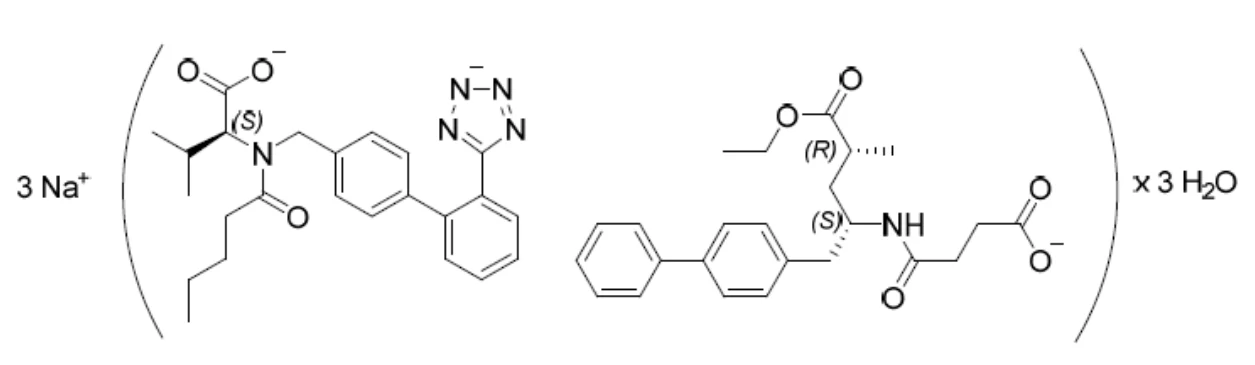
Teva-Sacubitril / Valsartan is a fixed-dose combination. Teva-Sacubitril / Valsartan contains a salt complex of the anionic forms of sacubitril and valsartan, sodium cations, and water molecules in the molar ratio of 1:1:3:3 respectively. Following oral administration, Teva-Sacubitril / Valsartan dissociates into sacubitril (which is further metabolised to sacubitrilat) and valsartan.
Schematic 2-D structure of sacubitril valsartan sodium hydrate complex
Packaging
Teva-Sacubitril / Valsartan film-coated tablets are available in bottles of 100 and unit dose blisters of 60 tablets.
7 WARNINGS AND PRECAUTIONS
See 3 Serious Warnings and Precautions Box
General
- Teva-Sacubitril / Valsartan (sacubitril/valsartan) must not be administered with an ACEi due to the risk of angioedema. Teva-Sacubitril / Valsartan must not be initiated until at least 36 hours have elapsed following discontinuation of ACEi therapy. If treatment with Teva-Sacubitril / Valsartan is stopped, ACEi therapy must not be initiated until 36 hours after the last dose of Teva-Sacubitril / Valsartan (see 2 CONTRAINDICATIONS, 4 DOSAGE AND ADMINISTRATION and 9 DRUG INTERACTIONS).
- Teva-Sacubitril / Valsartan should not be administered with any other drug formulation containing an ARB, due to the angiotensin II receptor blocking activity of Teva-Sacubitril / Valsartan by its valsartan moiety (see 4 DOSAGE AND ADMINISTRATION and 9 DRUG INTERACTIONS).
- Caution is required while co-administering Teva-Sacubitril / Valsartan with direct renin inhibitors such as aliskiren (see 2 CONTRAINDICATIONS, and 9 DRUG INTERACTIONS). In general, such use is not recommended, since this combination has not been adequately studied. Teva-Sacubitril / Valsartan must not be administered with aliskiren in patients with Type 2 diabetes or having significantly impaired renal function (see 2 CONTRAINDICATIONS).
- While BNP is a neprilysin substrate, NT-proBNP is not. Due to the action of sacubitril, use of Teva-Sacubitril / Valsartan would be expected to raise BNP levels, without having a direct effect on NT-proBNP. Therefore, only NT-proBNP, and not BNP, may be a suitable biomarker for the monitoring of heart failure patients treated with Teva-Sacubitril / Valsartan.
Angioedema
Angioedema has been reported in patients treated with sacubitril/valsartan (see 8 ADVERSE REACTIONS, and 10.2 Pharmacodynamics). If angioedema occurs, Teva-Sacubitril / Valsartan should be immediately discontinued and appropriate therapy and monitoring should be provided until complete and sustained resolution of signs and symptoms has occurred. Teva-Sacubitril / Valsartan must not be re-administered. In cases of confirmed angioedema where swelling has been confined to the face and lips, the condition has generally resolved without treatment, although antihistamines have been useful in relieving symptoms.
Angioedema associated with laryngeal edema may be fatal. Where there is involvement of the tongue, glottis or larynx, likely to cause airway obstruction, appropriate therapy, e.g., subcutaneous epinephrine solution 1:1000 (0.3 mL to 0.5 mL), and/or measures necessary to ensure a patent airway, should be promptly administered.
Patients with a prior history of any angioedema have not been studied. As they may be at higher risk for angioedema, caution is recommended if Teva-Sacubitril / Valsartan is used in these patients. Teva-Sacubitril / Valsartan must not be used in patients with a known history of angioedema related to previous ACEi or ARB therapy or in patients with a history of hereditary or idiopathic angioedema (see 2 CONTRAINDICATIONS).
Black patients treated with sacubitril/valsartan appear to have increased susceptibility to develop angioedema. In PARADIGM-HF, angioedema was confirmed in 2.4% of black patients treated with sacubitril/valsartan, compared to 0.5% of black patients treated with enalapril. In the same study, angioedema was confirmed in 0.4% of non-black patients treated with sacubitril/valsartan, compared to 0.2% of non-black patients treated with enalapril.
Hepatic/Biliary/Pancreatic
In patients with moderate hepatic impairment (Child-Pugh B classification), a starting dose of 24.3 mg sacubitril / 25.7 mg valsartan twice daily is recommended (see 4 DOSAGE AND ADMINISTRATION, Special Populations, Hepatic Impairment).
In patients with severe hepatic impairment (Child-Pugh C classification), use of Teva-Sacubitril / Valsartan is not recommended (see 10.3 Pharmacokinetics, Special Populations and Conditions, Hepatic Insufficiency).
Hyperkalemia
As for any drug that acts on the renin-angiotensin-aldosterone system, use of Teva-Sacubitril / Valsartan is associated with an increased risk of hyperkalemia (see 8 ADVERSE REACTIONS). Measure serum potassium before instituting Teva-Sacubitril / Valsartan, and during treatment, as appropriate, taking into account the patient’s predisposition to develop hyperkalemia. Patients with serum potassium > 5.2 mmol/L prior to initiation of treatment with sacubitril/valsartan have not been studied.
In PARADIGM-HF, clinically-relevant hyperkalemia resulted in treatment discontinuation in 0.3% of sacubitril/valsartan treated patients, compared to 0.4% of enalapril-treated patients. Medications known to raise serum potassium levels (e.g. potassium-sparing diuretics, potassium supplements) should be used with caution when co-administered with Teva-Sacubitril / Valsartan. If clinically significant hyperkalemia occurs, or if such risk is high, measures such as reducing dietary potassium, or adjusting the dose of concomitant medications should be considered. Dosage reduction or interruption of Teva-Sacubitril / Valsartan may be required. Careful monitoring of serum potassium is recommended especially in patients with risk factors, such as severe renal impairment, diabetes mellitus, hypoaldosteronism, or in those with a high potassium intake in their diet (see 4 DOSAGE AND ADMINISTRATION).
Hypotension
Sacubitril/valsartan lowers blood pressure and may cause symptomatic hypotension (see 8 ADVERSE REACTIONS). Patients with systolic blood pressure < 100 mmHg at the time of initiation of sacubitril/valsartan have not been studied. Use of Teva-Sacubitril / Valsartan in these patients is not recommended.
Patients with an activated renin-angiotensin system, such as volume- and/or salt-depleted patients (e.g., those being treated with high doses of diuretics), are at greater risk of hypotension when treated with Teva-Sacubitril / Valsartan. In the double-blind period of PARADIGM-HF, 18% of patients treated with sacubitril/valsartan and 12% of patients treated with enalapril reported hypotension as an adverse event, with hypotension reported as a serious adverse event in approximately 1.5% of patients in both treatment arms.
If hypotension occurs, dose adjustment of diuretics, concomitant antihypertensive drugs, and/or
Teva-Sacubitril / Valsartan should be considered, along with treatment of any underlying cause, e.g., hypovolemia. Permanent discontinuation of Teva-Sacubitril / Valsartan is usually not required. Sodium and/or volume depletion should always be corrected before starting treatment with Teva-Sacubitril / Valsartan.
Impaired renal function
As a consequence of inhibiting the renin-angiotensin system (RAS), decreases in renal function may be anticipated in susceptible individuals treated with Teva-Sacubitril / Valsartan. In patients whose renal function depends upon the activity of RAS, e.g., patients with more severe congestive heart failure, treatment with ACEi and ARB has been associated with oliguria, progressive azotemia and, rarely, acute renal failure and death. Closely monitor serum creatinine, and down-titrate or interrupt Teva-Sacubitril / Valsartan in patients who develop a clinically significant decrease in renal function.
Use of Teva-Sacubitril / Valsartan should include appropriate assessment of renal function, before initiation of therapy, and then during treatment, as appropriate.
Patients with renal artery stenosis
Similar to other drugs that affect the renin-angiotensin-aldosterone system, Teva-Sacubitril / Valsartan may increase blood urea and serum creatinine levels in patients with bilateral or unilateral renal artery stenosis. Caution is required in patients with renal artery stenosis, if Teva-Sacubitril / Valsartan is to be used. Careful monitoring of renal function should be carried out.
Reproductive Health
Fertility
No human data on fertility is available. Animal studies with sacubitril/valsartan did not show any effects on fertility or early embryonic development in rats at exposure levels < 0.6-fold the MRHD on the basis of valsartan and < 0.1-fold the MRHD on the basis of sacubitrilat AUC.
7.1 Special Populations
7.1.1 Pregnancy
As for other drugs that also act directly on the renin-angiotensin system (RAS), Teva-Sacubitril / Valsartan must not be used during pregnancy (see 2 CONTRAINDICATIONS).
Drugs that act directly on the renin-angiotensin system can cause fetal and neonatal morbidity and death when administered to pregnant women. When pregnancy is detected, valsartan should be discontinued as soon as possible.
Teratogenic Risk
Teva-Sacubitril / Valsartan exerts some of its effects through angiotensin II antagonism; therefore, a risk to the fetus cannot be excluded. There have been reports of injury to the developing fetus (e.g. spontaneous abortion, oligohydramnios and newborn renal dysfunction), when pregnant women have taken valsartan. If pregnancy is detected during therapy, Teva-Sacubitril / Valsartan should be discontinued as soon as possible.
The use of any drug formulation containing an ARB is not recommended during pregnancy. The use of an ARB during the second or third trimester of pregnancy is known to induce human fetotoxicity (decreased renal function, oligohydramnios, skull ossification retardation) and neonatal toxicity (renal failure, hypotension, hyperkalemia). There have been reports of spontaneous abortion, oligohydramnios and newborn renal dysfunction, when pregnant women have inadvertently taken valsartan.
Infants with histories of in utero exposure to an angiotensin II AT1 receptor blocker should be closely observed for hypotension, oliguria, and hyperkalemia. If oliguria occurs, attention should be directed toward support of blood pressure and renal perfusion. Exchange transfusion may be required as a means of reversing hypotension and/or substituting for impaired renal function; however, limited experience with those procedures has not been associated with significant clinical benefit. Valsartan is not removed from plasma by dialysis.
Animal studies in rats and rabbits showed administration of sacubitril/valsartan during organogenesis resulted in increased embryo-fetal lethality at 0.06-fold the MRHD for sacubitrilat, and 0.72-fold for valsartan, based on AUC in rats and 0.03-fold the MRHD for sacubitrilat, and 2.0-fold for valsartan, based on AUC in rabbits. Sacubitril/Valsartan is teratogenic based on a low incidence of fetal hydrocephaly, associated with maternally toxic doses, which was observed in rabbits at a dose of ≥ 5 mg sacubitril/5 mg valsartan/kg/day (see 16 Non-Clinical Toxicology, Reproductive and developmental toxicity).
Women of child-bearing potential / contraception
Women of childbearing potential should be advised about the consequences of exposure to Teva-Sacubitril / Valsartan during pregnancy, and to use contraception during treatment with Teva-Sacubitril / Valsartan and for one (1) week after their last dose.
7.1.2 Breastfeeding
Limited data show that sacubitril and sacubitrilat, a metabolite of sacubitril, are transferred into human milk.
A published clinical lactation study involving five participants showed that sacubitril and sacubitrilat are present in human milk. The estimated relative infant dose is 0.01% for sacubitril and 0.46% for sacubitrilat when administered at a steady state dose of sacubitril/valsartan, 24 mg/26 mg, twice daily. No detectable levels (below the limit of quantification) of valsartan were reported in human milk.
The components of Teva-Sacubitril / Valsartan, sacubitril and valsartan, have been observed to be excreted in the milk of lactating rats (see 16 NON-CLINICAL TOXICOLOGY). Because of the potential risk for adverse drug reactions in breastfed newborns, a decision should be made whether to abstain from breast-feeding or to discontinue Teva-Sacubitril / Valsartan while breast-feeding, taking into account the importance of Teva-Sacubitril / Valsartan to the mother (see 2 CONTRAINDICATIONS).
7.1.3 Pediatrics
Pediatrics (< 18 years of age): Based on the data submitted and reviewed by Health Canada, the safety and efficacy of sacubitril/valsartan in pediatric patients has not been established.
7.1.4 Geriatrics
Geriatrics (> 65 years of age): No dosage adjustment is required in patients over 65 years. However, sacubitril/valsartan has been studied in a limited number of patients above the age of 80 years (see 14 CLINICAL TRIALS). Caution is required in these patients (see 4 DOSAGE AND ADMINISTRATION).
8 ADVERSE REACTIONS
8.1 Adverse Drug Reaction Overview
The safety of sacubitril/valsartan in patients with heart failure and reduced ejection fraction was evaluated in the pivotal Phase 3 study, PARADIGM-HF, which compared patients treated twice daily with sacubitril/valsartan at doses up to 97.2 mg sacubitril / 102.8 mg valsartan (n=4,203), or enalapril 10 mg (n=4,229) twice daily. Patients randomised to sacubitril/valsartan received treatment for a median duration of exposure of 24 months, with 3,271 patients treated for more than one year.
Discontinuation of therapy due to an adverse event in the double-blind period of the PARADIGM-HF trial occurred in 450 (10.7%) of sacubitril/valsartan-treated patients and 516 (12.2%) patients receiving enalapril. The adverse events most commonly associated with dosage adjustment or treatment interruption were hypotension, hyperkalemia and renal impairment.
In total, 4,138 patients aged 65 years or older were included in the PARADIGM-HF study, of which 2,083 were exposed to sacubitril/valsartan. Of these elderly patients, 1,563 were older than 75 years, of which 784 were treated with sacubitril/valsartan.
8.2 Clinical Trial Adverse Reactions
Clinical trials are conducted under very specific conditions. Therefore, the frequencies of adverse reactions observed in the clinical trials may not reflect frequencies observed in clinical practice and should not be compared to frequencies reported in clinical trials of another drug.
In the PARADIGM-HF trial, patients were required to complete sequential single-blind enalapril and sacubitril/valsartan run-in periods of a median duration of 15 and 29 days, respectively, prior to entering the randomised double-blind period, comparing sacubitril/valsartan and enalapril. During the enalapril run-in period, 1,102 patients (10.5%) were permanently discontinued from the study, 5.6% because of an adverse event, most commonly renal dysfunction (1.7%), hyperkalemia (1.7%) and hypotension (1.4%). During the sacubitril/valsartan run-in period, which followed the enalapril run-in phase, an additional 10.4% of patients permanently discontinued treatment, 5.9% because of an adverse event, most commonly renal dysfunction (1.8%), hypotension (1.7%) and hyperkalemia (1.3%). Because of this run-in design, the adverse reaction rates described below in the randomised double-blind period of the trial, see Table 2 below, may be lower than those expected to be seen in actual clinical practice.
In the double-blind period, safety was evaluated in 4,203 patients treated with sacubitril/valsartan and 4,229 treated with enalapril. In PARADIGM-HF, patients randomised to sacubitril/valsartan received treatment for up to 4.3 years, with a median duration of exposure of 24 months. 3,271 patients were treated with sacubitril/valsartan for more than one year in this trial. Discontinuation of therapy because of an adverse event during the double-blind period occurred in 450 (10.7%) of sacubitril/valsartan-treated patients and in 516 (12.2%) patients receiving enalapril.
Adverse events of interest observed in the PARADIGM-HF trial are presented in Tables 2 and 3, below.
Table 2: Adverse events of interest in the single-blind run-in phases of PARADIGM-HF
| System organ class / preferred term | sacubitril/valsartan N=9,419 n (%) | enalapril N=10,513 n (%) | |||
|---|---|---|---|---|---|
| System organ class / preferred term | sacubitril/valsartan N=9,419 n (%) | enalapril N=10,513 n (%) | |||
| General disorders and administration site conditions | |||||
| Edema peripheral | 75 (0.8) | 55 (0.5) | |||
| Fatigue | 41 (0.4) | 32 (0.3) | |||
| Asthenia | 24 (0.2) | 23 (0.2) | |||
| Metabolism and nutrition disorders | |||||
| Hyperkalemia | 259 (2.8) | 279 (2.7) | |||
| Nervous system disorders | |||||
| Dizziness | 163 (1.7) | 98 (0.9) | |||
| Renal and urinary disorders | |||||
| Renal impairment | 212 (2.3) | 229 (2.2) | |||
| Renal failure | 32 (0.3) | 23 (0.2) | |||
| Respiratory, thoracic and mediastinal disorders | |||||
| Cough | 170 (1.8) | 291 (2.8) | |||
| Skin and subcutaneous tissue disorders | |||||
| Angioedema | 7 (0.1) | 11 (0.1) | |||
| Rash | 31 (0.3) | 21 (0.2) | |||
| Pruritus | 78 (0.8) | 22 (0.2) | |||
| Vascular disorders | |||||
| Hypotension | 291 (3.1) | 214 (2.0) | |||
| Orthostatic hypotension | 29 (0.3) | 7 (0.1) | |||
Table 3: Adverse events of interest in the randomized, double-blind phase of PARADIGM-HF
| System organ class / preferred term | sacubitril/valsartan+ N=4,203 n (%) | Enalapril++ N=4,229 n (%) | |||
|---|---|---|---|---|---|
| System organ class / preferred term | sacubitril/valsartan+ N=4,203 n (%) | Enalapril++ N=4,229 n (%) | |||
| Ear and labyrinth disorders | |||||
| Vertigo | 61 (1.5) | 59 (1.4) | |||
| Gastrointestinal disorders | |||||
| Diarrhea | 194 (4.6) | 189 (4.5) | |||
| Nausea | 88 (2.1) | 100 (2.4) | |||
| General disorders and administration site conditions | |||||
| Fatigue | 125 (3.0) | 129 (3.1) | |||
| Asthenia | 88 (2.1) | 78 (1.8) | |||
| Immune system disorders | |||||
| Drug hypersensitivity | 10 (0.2) | 11 (0.3) | |||
| Hypersensitivity | 7 (0.2) | 8 (0.2) | |||
| Injury, poisoning and procedural complications | |||||
| Fall | 80 (1.9) | 54 (1.3) | |||
| Metabolism and nutrition disorders | |||||
| Hyperkalemia | 488 (11.6) | 592 (14.0) | |||
| Hypokalemia | 139 (3.3) | 107 (2.5) | |||
| Nervous system disorders | |||||
| Dizziness | 266 (6.3) | 206 (4.9) | |||
| Dizziness postural | 24 (0.6) | 12 (0.3) | |||
| Headache | 103 (2.5) | 106 (2.5) | |||
| Renal and urinary disorders | |||||
| Renal impairment | 426 (10.1) | 487 (11.5) | |||
| Renal failure, including acute | 207 (4.9) | 237 (5.6) | |||
| Respiratory, thoracic and mediastinal disorders | |||||
| Cough | 369 (8.8) | 533 (12.6 | |||
| Skin and subcutaneous tissue disorders | |||||
| Angioedema | 19 (0.5) | 10 (0.2) | |||
| Rash | 53 (1.3) | 63 (1.5) | |||
| Pruritus | 57 (1.4) | 39 (0.9) | |||
| Vascular disorders | |||||
| Hypotension | 740 (17.6) | 506 (12.0) | |||
| Syncope | 94 (2.2) | 114 (2.7) | |||
| Orthostatic hypotension | 64 (1.5) | 34 (0.8) | |||
| Subdural hematoma | 12 (0.3) | 5 (0.1) | |||
+ sacubitril/valsartan dosed up to 97.2 mg sacubitril / 102.8 mg valsartan bid, equivalent to one sacubitril/valsartan tablet taken twice daily
++ enalapril dosed up to 10 mg bid
Sacubitril/valsartan-treated patients who experienced a hypotensive event in the double-blind treatment phase were more commonly observed to have other associated hypotensive adverse events, compared to enalapril-treated patients, such as post-baseline systolic blood pressure (SBP) < 90 mmHg (5.2% vs 3.1%, respectively), a drop ≥ 30 mmHg in SBP from baseline (5.4% vs 3.2%), and simultaneous symptomatic hypotension and SBP < 90 mmHg (2.8% vs 1.5%).
Table 4: Hypotension-related adverse events during the randomised double-blind phase of PARADIGM-HF
sacubitril/valsartan N=4203 | Enalapril N=4229 | |||||||||||
|---|---|---|---|---|---|---|---|---|---|---|---|---|
| Number of patients with at least one AE of hypotension | 1027 | 786 | ||||||||||
| SBP at screening (mmHg) | m | n (%) | m | n (%) | ||||||||
| 100-109 | 377 | 138 (36.6) | 432 | 127 (29.4) | ||||||||
| 110-119 | 800 | 252 (31.5) | 766 | 202 (26.4) | ||||||||
| 120-129 | 988 | 263 (26.6) | 950 | 172 (18.1) | ||||||||
| 130-139 | 905 | 193 (21.3) | 944 | 154 (16.3) | ||||||||
| > 140 | 1131 | 180 (15.9) | 1135 | 130 (11.4) | ||||||||
Table 5 shows the estimated cumulative rate of selected adverse events at Day 180 following randomisation for the double blind period, and at Day 180 following start of study drug, accounting for exposure during both the run-in and double blind treatment periods. As expected, the rates of adverse events in both the sacubitril/valsartan and enalapril treatment arms increase when run-in adverse events are added to the double-blind adverse events. This summary presents adverse events reported for 4,203 sacubitril/valsartan-treated patients and 4,229 enalapril-treated patients in the double-blind treatment period, and 9,419 and 10,514 patients, respectively, in the run-in + double blind treatment phases.
Table 5: Estimated Cumulative Rates of Selected Adverse Events at Day 180 in PARADIGM-HF
| sacubitril/valsartan | enalapril | ||||||||
| Selected AE of interest | Estimation scope | Estimate (%) (95% CI) | Estimate (%) (95% CI) | ||||||
| Angioedema (adjudicated) | DB period | 0.29 (0.16, 0.51) | 0.10 (0.04, 0.25) | ||||||
| Run-in + DB | 0.40 (0.25, 0.61) | 0.24 (0.14, 0.38) | |||||||
| Hyperkalemia | DB period | 5.4 (4.7, 6.1) | 6.4 (5.7, 7.2) | ||||||
| Run-in + DB | 7.9 (7.2, 8.7) | 9.2 (8.5, 10.1) | |||||||
| Hypersensitivity | DB period | 0.02 (0.00, 0.17) | 0.10 (0.04, 0.26) | ||||||
| Run-in + DB | 0.07 (0.02, 0.20) | 0.10 (0.04, 0.25) | |||||||
| Hypotension | DB period | 8.8 (8.0, 9.7) | 5.1 (4.5, 5.8) | ||||||
| Run-in + DB | 10.8 (10.0, 11.7) | 6.7 (6.1, 7.5) | |||||||
| Orthostatic hypotension | DB period | 0.94 (0.69, 1.28) | 0.43 (0.27, 0.68) | ||||||
| Run-in + DB | 1.2 (0.9, 1.5) | 0.47 (0.31, 0.70) | |||||||
| Pruritus | DB period | 0.41 (0.25, 0.66) | 0.26 (0.15, 0.47) | ||||||
| Run-in + DB | 0.82 (0.63, 1.07) | 0.36 (0.23, 0.56) | |||||||
| Renal failure (renal failure, acute renal failure) | DB period | 1.3 (1.0, 1.7) | 1.5 (1.1, 1.9) | ||||||
| Run-in + DB | 1.6 (1.3, 2.0) | 1.6 (1.3, 2.0) | |||||||
| Renal impairment | DB period | 3.3 (2.8, 3.9) | 3.9 (3.4, 4.5) | ||||||
| Run-in + DB | 5.7 (5.1, 6.3) | 6.4 (5.8, 7.1) | |||||||
DB = Double Blind
TITRATION was a 12 week safety and tolerability study in 538 patients with chronic heart failure (NYHA Class II – IV) and reduced ejection fraction (left ventricular ejection fraction ≤ 35%), whether naïve to ACEi or ARB therapy (6.6%) or on varying doses of ACEi or ARB prior to study entry. All patients initiated sacubitril/valsartan at 24.3 mg sacubitril / 25.7 mg valsartan bid, were then up-titrated to 48.6 mg sacubitril / 51.4 mg valsartan bid, as tolerated, and then to the target dose of 97.2 mg sacubitril / 102.8 mg valsartan bid, with either a 3-week (condensed) or 6-week (conservative) up-titration regimen. Overall, 76% of patients achieved and maintained the target dose of one tablet of sacubitril/valsartan (97.2 mg sacubitril / 102.8 mg valsartan) taken twice daily without any dose interruption or down-titration over 12-weeks. Adverse events leading to study drug discontinuation are shown in Table 6 below.
Table 6: Adverse events leading to study drug discontinuation in TITRATION
sacubitril/valsartan Condensed titration regimen N=246 n (%) | sacubitril/valsartan Conservative titration regimen N=251 n (%) | ||||
|---|---|---|---|---|---|
| Discontinuation in post-randomization period | |||||
| Any Adverse Event(s) | 20 (8.1) | 14 (5.6) | |||
| Hypotension | 5 (2.0) | 3 (1.2) | |||
| Renal failure / impairment | 6 (2.4) | 1 (0.4) | |||
| Hyperkalemia | 3 (1.2) | 1 (0.4) | |||
| Cardiogenic shock | 2 (0.8) | 0 (0.0) | |||
| Angioedema | 0 | 1 (0.4) | |||
In the run-in phase of the TITRATION study, a dose of 24.3 mg sacubitril / 25.7 mg valsartan given twice daily was used for (1) one week. The incidence of patients with an adverse event leading to treatment discontinuation in this phase of the trial was 5.6%, including, hypotension/orthostatic hypotension 1.7%, hyperkalemia 1.5%, renal failure/impairment 0.8%, drug hypersensitivity 0.2%, and angioedema 0.2%.
8.4 Abnormal Laboratory Findings: Hematologic, Clinical Chemistry and other Quantitative Data
Clinical Trial Findings
Hemoglobin and Hematocrit
Decreases in hemoglobin of > 20% were observed in 5% of sacubitril/valsartan patients, compared with 6% in enalapril-treated patients in the double-blind treatment period.
BUN and Creatinine
Increases in BUN and creatinine of > 50% were observed in 37% and 14%, respectively, of sacubitril/valsartan-treated patients, compared with 41% and 16% in enalapril-treated patients in the double-blind treatment period. Increases in serum creatinine of > 50% were observed in 2.2% of patients in the sacubitril/valsartan run-in period and in 1.4% of those in the enalapril run-in period.
Serum Potassium
In patients treated with either sacubitril/valsartan or enalapril in the double-blind period, approximately 16% had potassium increases > 5.5 mmol/L. Increases of potassium were observed in approximately 4% of both sacubitril/valsartan- and enalapril-treated patients in the run-in phases of PARADIGM-HF.
8.5 Post-Market Adverse Reactions
Sacubitril/Valsartan
The following adverse drug reactions have been derived from post-marketing experience with sacubitril/valsartan via spontaneous case reports and literature cases. Because these reactions are reported voluntarily from a population of uncertain size, it is not possible to reliably estimate their frequency, which is therefore categorized as not known.
Immune system disorders: Hypersensitivity (including rash, pruritus, and anaphylaxis).
Valsartan
Other adverse reactions reported for valsartan in post-marketing use include: anaphylaxis (very rare), angioedema (involving swelling of the face, lips and/or tongue), dermatitis bullous (unknown frequency), renal impairment (very rare), photosensitivity, increase in blood pressure and taste disorders.
The following serious adverse events, irrespective of causality and with unknown frequency, have been reported from clinical studies or post-marketing experiences: Toxic epidermal necrolysis (TEN), Stevens-Johnsons syndrome (SJS), erythema multiforme (EM), toxic skin eruption, skin necrosis, exfoliative rash, pemphigus and pemphigoid.
Cases of muscle pain, muscle weakness, myositis and rhabdomyolysis have been reported in patients receiving angiotensin II receptor blockers.
The following other adverse drug reactions with unknown frequency have been reported from clinical studies or post-marketing experiences: Hypersensitivity including serum sickness, vasculitis, insomnia and libido decrease.
Hepato-biliary disorder: hepatic enzymes increased, including blood bilirubin increased.
9 DRUG INTERACTIONS
9.1 Serious Drug Interactions
|
|---|
9.2 Drug Interactions Overview
In vitro drug metabolism and transporter data suggest that clinically relevant drug-drug interactions may be expected with sacubitril/valsartan, also known as LCZ696, due to inhibition of OATP1B1 and OATP1B3 by sacubitril, and inhibition of OAT3 by sacubitril, sacubitrilat, and valsartan. Drug-drug interactions due to inhibition of other transporters are unlikely.
Both sacubitrilat, the active metabolite of sacubitril, and valsartan are OATP1B1, OATP1B3 and OAT3 substrates. Valsartan is also a MRP2 substrate. Therefore, co-administration of sacubitril/valsartan with inhibitors of OATP1B1, OATP1B3, OAT3 (e.g. rifampin, cyclosporine) or MRP2 (e.g. ritonavir) may increase the systemic exposure of sacubitrilat, or valsartan, respectively.
Although sacubitril is a substrate of P-gp, there is a low likelihood for a clinically-relevant drug interaction of sacubitril/valsartan when co-administered with a P-gp inhibitor because of its high estimated bioavailability of ≥ 60%.
In vitro studies indicate that the potential for CYP 450-based drug interactions is low since there is limited metabolism of sacubitril/valsartan by the cytochrome P450 system. Sacubitril/valsartan does not induce or inhibit CYP isozymes itself.
No clinically meaningful drug-drug interaction was observed with co-administration of sacubitril/valsartan with digoxin, hydrochlorothiazide, amlodipine, omeprazole, carvedilol, or intravenous nitroglycerin in dedicated interaction studies.
Warfarin: Following administration of the target dose of sacubitril/valsartan (97.2 mg sacubitril / 102.8 mg valsartan bid), taken twice daily for five days, a single oral dose of warfarin 25 mg or placebo was administered in healthy subjects. No pharmacokinetic or pharmacodynamic interactions were detected, in respect of plasma concentrations of both enantiomers of warfarin, LCZ696 moieties, or INR values. Evaluation under warfarin steady-state conditions was not conducted.
Furosemide: When the target dose of sacubitril/valsartan (97.2 mg sacubitril / 102.8 mg valsartan bid,) was administered for four days, a single dose of furosemide 40 mg was then administered. Although no clinically-relevant changes in plasma levels of sacubitril, sacubitrilat or valsartan were noted, the Cmax and AUC of furosemide decreased significantly by 50% and 26%, respectively, compared to furosemide administration alone. However, in PARADIGM-HF, there was no evidence of a need for increased dosing of loop diuretic in patients treated with sacubitril/valsartan, compared to enalapril.
Metformin: When metformin 1,000 mg OD for four days was added to LCZ696 (194.3 mg sacubitril / 205.7 mg valsartan given once daily) at steady-state in healthy Japanese subjects, both the Cmax and AUC of metformin were decreased by 23%. Sacubitril/valsartan steady-state pharmacokinetics were not affected.
Oral contraceptive pill: When a single dose of levonorgesterel 150 µg and ethinyl estradiol 30 µg was co-administered with LCZ696 (194.3 mg sacubitril / 205.7 mg valsartan given once daily) at steady-state, although the AUC of levonorgesterel was unchanged, its Cmax decreased by 15%. Pharmacokinetics of ethinyl estradiol did not change. Also, the pharmacokinetics of sacubitrilat and valsartan were not changed in a clinically-relevant manner.
9.3 Drug-Behaviour Interactions
The interaction of Teva-Sacubitril / Valsartan with individual behavioural risks (e.g. cigarette smoking, cannabis use, and/or alcohol consumption) has not been studied.
9.4 Drug-Drug Interactions
Table 7: Established or Potential Drug-Drug Interactions
| Non-proprietary name of the drug product | Source of evidence | Effect | Clinical Comment | ||
|---|---|---|---|---|---|
| Non-proprietary name of the drug product | Source of evidence | Effect | Clinical Comment | ||
| Non-proprietary name of the drug product | Source of evidence | Effect | Clinical Comment | ||
| ACE inhibitors | T | The concomitant use of Teva-Sacubitril / Valsartan with ACEi is contraindicated, as the concomitant inhibition of neprilysin and ACE inhibitor therapy may increase the risk of angioedema. | Teva-Sacubitril / Valsartan must not be started until 36 hours after taking the last dose of ACEi therapy. ACEi therapy must not be started until 36 hours after the last dose of Teva-Sacubitril / Valsartan (see 2 CONTRAINDICATIONS, and 4 DOSAGE AND ADMINISTRATION). | ||
| Aliskiren | CT | The concomitant use of aliskiren with other agents acting on the RAS, such as ARB, is associated with an increased risk of hypotension, hyperkalemia, and deterioration of renal function (including acute renal failure) compared to monotherapy. | Concomitant use with aliskiren is contraindicated in patients with diabetes mellitus or with significant renal impairment (eGFR <60 mL/min/1.73 m2) (see 2 CONTRAINDICATIONS) | ||
| ARB | T | Teva-Sacubitril / Valsartan should not be co-administered with any drug formulation containing an ARB, due to the angiotensin II receptor blocking activity of sacubitril/valsartan (see 7 WARNINGS AND PRECAUTIONS) | Teva-Sacubitril / Valsartan should be used in place of an angiotensin II receptor blocker (see 1 INDICATIONS, 4 DOSAGE AND ADMINISTRATION and 7 WARNINGS AND PRECAUTIONS) | ||
| Statins | T | In vitro data indicates that sacubitril inhibits OATP1B1 and OATP1B3 transporters. Teva-Sacubitril / Valsartan may therefore increase the systemic exposure of OATP1B1 and OATP1B3 substrates such as statins. Co-administration of sacubitril/valsartan increased the Cmax of | Caution should be exercised upon co-administration of Teva-Sacubitril / Valsartan with statins, especially simvastatin, a sensitive OATP1B1/1B3 substrate. Downward dose adjustment of simvastatin and atorvastatin may be considered with such co-administration. | ||
| atorvastatin and its metabolites by up to 2-fold, and AUC by up to 1.3-fold. | |||||
| Sildenafil | CT | Administration of a single dose of 50 mg sildenafil to sacubitril/valsartan at steady-state (194.4 mg sacubitril / 205.6 mg valsartan OD for 5 days) was associated with additional blood pressure reduction (~5/4 mmHg). | Caution should be exercised when sildenafil or another PDE-5 inhibitor is initiated in patients treated with Teva-Sacubitril / Valsartan. | ||
| Potassium | Concomitant use of potassium-sparing diuretics (e.g, triamterene, amiloride), mineralocorticoid antagonists (e.g. spironolactone, eplerenone), potassium supplements, or salt substitutes containing potassium may lead to increases in serum potassium, and to increases in serum creatinine. | Monitoring of serum potassium is required, if Teva-Sacubitril / Valsartan is co-administered with these agents (see 7 WARNINGS AND PRECAUTIONS). | |||
Non-Steroidal Anti-Inflammatory Agents (NSAID), including selective cyclooxygenase-2 inhibitors (COX-2 inhibitors) | Especially in elderly patients, volume-depleted patients (including those on diuretic therapy), or patients with compromised renal function, concomitant use of Teva-Sacubitril / Valsartan and NSAID may lead to an increased risk of worsening of renal function. | Monitoring of renal function is mandatory when initiating or modifying the treatment in patients on Teva-Sacubitril / Valsartan who are taking NSAID concomitantly. In general, avoid such combined use. | |||
| Lithium | T | The potential for a drug interaction between sacubitril/valsartan and lithium has not been investigated. | Careful monitoring of serum lithium levels is recommended during concomitant use with Teva-Sacubitril / Valsartan. If a diuretic is also used, the risk of lithium toxicity may be increased further. | ||
| Reversible increases in serum lithium concentrations and toxicity have been reported during concomitant administration of lithium with ACE inhibitors or angiotensin II receptor antagonists. | |||||
Legend: C = Case Study; CT = Clinical Trial; T = Theoretical
9.5 Drug-Food Interactions
Teva-Sacubitril / Valsartan may be administered with or without food.
9.6 Drug-Herb Interactions
Interactions with herbal products have not been established.
9.7 Drug-Laboratory Test Interactions
Interactions with laboratory tests have not been established.
10 CLINICAL PHARMACOLOGY
10.1 Mechanism of Action
Teva-Sacubitril / Valsartan (sacubitril/valsartan) contains sacubitril, a prodrug that results in neprilysin inhibition via its active metabolite, sacubitrilat, and the angiotensin II Type-1 (AT1) receptor blocker, valsartan. Neprilysin is also known as neutral endopeptidase.
The cardiovascular and renal effects of sacubitril/valsartan in heart failure patients are attributed to the increased levels of peptides that are degraded by neprilysin, including natriuretic peptides such as BNP and ANP, and the simultaneous inhibition of the effects of angiotensin II by valsartan through blockade of the AT1 receptor. Natriuretic peptides exert their effects by activating membrane-bound guanylyl cyclase-coupled receptors, resulting in increased concentrations of the second messenger, cyclic guanosine monophosphate (cGMP), which may lead to physiologically relevant effects, including vasodilation, natriuresis and diuresis, and inhibition of renin and aldosterone release.
10.2 Pharmacodynamics
The pharmacodynamic effects of sacubitril/valsartan were evaluated after single and multiple dose administrations in healthy subjects and in patients with heart failure, and are consistent with simultaneous neprilysin inhibition and renin-angiotensin system blockade. In a 7-day valsartan-controlled study in patients with reduced ejection fraction, administration of sacubitril/valsartan resulted in a significant non-sustained increase in natriuresis, increased urine cGMP, and decreased plasma MR-proANP and NT-proBNP, compared to valsartan.
In a 21-day study in HFrEF patients, sacubitril/valsartan significantly increased urine ANP and cGMP and plasma cGMP, and decreased plasma NT-proBNP, aldosterone and endothelin-1. Sacubitril/valsartan also blocked the AT1-receptor as evidenced by increased plasma renin activity and plasma renin concentrations. In PARADIGM-HF, sacubitril/valsartan decreased plasma NT-proBNP, and increased plasma BNP, along with urine cGMP, compared with enalapril (see 14 CLINICAL TRIALS). While BNP is a neprilysin substrate, NT-proBNP is not (see 7 WARNINGS AND PRECAUTIONS).
In a thorough QTc clinical study in healthy male subjects, single doses of 194 mg sacubitril/206 mg valsartan and 583 mg sacubitril/617 mg valsartan] had no effect on cardiac repolarisation.
Bradykinin is a substrate of both ACE and neprilysin. Thus, inhibition of these enzymes would be expected to lead to increased levels of circulating bradykinin. This phenomenon is likely the basis for the observed increases in the incidence of angioedema with use of each of these treatments.
Neprilysin is one of multiple enzymes involved in the clearance of amyloid-β (Aβ) from the brain and cerebrospinal fluid (CSF). Administration of 194 mg sacubitril/206 mg valsartan once daily for 2 weeks to healthy subjects was associated with an increase in CSF Aβ 1-38 compared to placebo, however, there were no changes in concentrations of CSF Aβ 1-40 and 1-42. The clinical relevance of this finding is unknown (see 16 NON-CLINICAL TOXICOLOGY).
The effects of sacubitril/valsartan on amyloid-β (Aβ) concentrations in cerebrospinal fluid (CSF) and brain tissue were assessed in young (2-4 year old) cynomolgus monkeys treated with 24 mg sacubitril/26 mg valsartan/kg/dayfor 2 weeks. In this study, sacubitril/valsartan affected CSF Aβ clearance, increasing CSF Aβ 1-40, 1-42, and 1-38 levels, with no corresponding increase in Aβ levels in the brain. Aβ accumulation was not observed in the brain of cynomolgus monkeys treated with 146 mg sacubitril/154 mg valsartan/kg/day for 39-weeks.
10.3 Pharmacokinetics
Table 8: Mean plasma pharmacokinetic parameters of sacubitril/valsartan analytes following single dose administration of 97.2 mg sacubitril / 102.8 mg valsartan in healthy subjects
Cmax (ng/mL) | t1/2 (h) | AUC0-12 (ng*h/mL) | Cl/F (L/h) | Vz/F (L) | |
|---|---|---|---|---|---|
| Sacubitril | 1919.7 + 967.83 | 1.43 + 0.64 | 2450.7 + 642.53 | 51.07 + 14.65 | 103.41 + 46.96 |
| Sacubitrilat | 8086.2 + 1617.94 | 11.48 + 2.55 | 58339.7 + 8224.7 | - | - |
| Valsartan | 3969.8 + 1427.66 | 9.9 + 5.14 | 22160.3 + 6502.9 | 5.44 + 2.68 | 75.44 + 50 |
Data is presented as arithmetic mean + SD
The pharmacokinetics of sacubitril, sacubitrilat, and valsartan appear to be linear when sacubitril/ valsartan was administered orally at doses from 50 to 400 mg.
Absorption
Following oral administration, sacubitril/valsartan dissociates into sacubitril, which is then further metabolised to sacubitrilat, and valsartan, which reach peak plasma concentrations in 0.5 hours, 3 hours, and 1.5 hours, respectively. The oral absolute bioavailability of sacubitril and valsartan is estimated to be ≥60% and 23%, respectively.
Oral bioavailability of valsartan, following administration of sacubitril/valsartan, is greater than that of valsartan in other marketed tablet formulations. For example, 26 mg, 51 mg, and 103 mg of valsartan in sacubitril/valsartan are equivalent to 40 mg, 80 mg, and 160 mg of valsartan in other marketed tablet formulations, respectively (see 4.2 Recommended Dose and Dosage Adjustment).
Following twice daily dosing of sacubitril/valsartan, steady-state levels of sacubitril, sacubitrilat, and valsartan, are reached in 3 days. At steady-state, sacubitril and valsartan do not accumulate significantly, while sacubitrilat accumulates by 1.6-fold.
Sacubitril/valsartan administration with food has no clinically significant impact on the systemic exposures of sacubitril, sacubitrilat, or valsartan.
Distribution
Sacubitril, sacubitrilat, and valsartan are highly bound to plasma proteins (94% -97%). Based on the comparison of plasma and CSF exposures, sacubitrilat does cross the blood brain barrier to a very limited extent, i.e., 0.3%. The average apparent volume of distribution of sacubitril and valsartan were 103 and 75 liters, respectively.
Metabolism
Sacubitril is readily converted to sacubitrilat by esterases, with sacubitrilat not further metabolised to a significant extent. Valsartan is minimally metabolised, as only about 20% of the dose is recovered as metabolites. A hydroxyl metabolite has been identified in plasma at low concentrations (<10%).
Elimination
Following oral administration, 52% to 68% of sacubitril (primarily as sacubitrilat) and ~13% of valsartan and its metabolites are excreted in urine; 37% to 48% of sacubitril (primarily as sacubitrilat), and 86% of valsartan and its metabolites are excreted in feces. Sacubitril, sacubitrilat, and valsartan are eliminated from plasma with a mean elimination half-life (t1/2) of approximately 1.4 hours, 11.5 hours, and 9.9 hours, respectively.
Special Populations and Conditions
Pediatrics: Based on the data submitted and reviewed by Health Canada, the safety and efficacy of sacubitril/valsartan in pediatric patients has not been established.
Pediatric study
An analysis from a multinational, randomized, double-blind trial evaluating sacubitril/valsartan versus enalapril in 90 pediatric patients 6 to < 18 years old with heart failure (NYHA/Ross class II-IV) due to systemic left ventricular systolic dysfunction (LVEF ≤ 40%) was performed. The target maintenance dose of sacubitril/valsartan in pediatric patients was 3.1 mg/kg twice daily.
The endpoint in the analysis was the between-group difference in the change in plasma NT-proBNP from baseline to 12 weeks. The reduction from baseline in NT-proBNP was 41% and 26% in the sacubitril/valsartan and enalapril groups, respectively. While the between-group difference was not statistically significant, the reductions of NT-proBNP for sacubitril/valsartan and enalapril in pediatric patients from 6 to < 18 years old were similar to what was seen in adults (see 14 CLINICAL TRIALS).
The population pharmacokinetic analysis including 54 pediatric patients from 6 to < 18 years old indicated comparable exposures in those patients to adults with heart failure, the estimated mean differences at steady state for AUC were less than 15% and for Cmax less than 40%.
The long-term effects of sacubitril/valsartan on development, growth, and/or maturation of organ/system function, as well as the long-term efficacy of treatment with sacubitril/valsartan in pediatric patients to reduce cardiovascular morbidity and mortality, are yet to be demonstrated. Exposure to sacubitril and valsartan in juvenile animals has been associated with bone and kidney effects, respectively (see 16 NON-CLINICAL TOXICOLOGY: Juvenile Toxicology).
- Geriatrics: The exposures of sacubitrilat and valsartan are increased in elderly subjects by 42% and 30%, respectively, compared to younger subjects.
- Sex: The pharmacokinetics of sacubitril, sacubitrilat, and valsartan are similar for male and female subjects.
- Ethnic Origin: The pharmacokinetics of sacubitril, sacubitrilat, and valsartan are comparable across different race and ethnic groups (Caucasians, Blacks, Asians, Japanese and others).
- Hepatic Insufficiency: In patients with mild to moderate hepatic impairment, the exposure of sacubitril increased by 1.5- and 3.4- fold, that of sacubitrilat increased by 1.5- and 1.9-fold, and that of valsartan increased by 1.2-fold and 2.1-fold, respectively, compared to matching healthy subjects. Sacubitril/valsartan has not been studied in patients with severe hepatic impairment (see 4 DOSAGE AND ADMINISTRATION).
Renal Insufficiency: A correlation has been observed between renal function and systemic exposure to sacubitrilat, but not to valsartan. In patients with mild to moderate renal impairment (30-90 mL/min/1.73 m2), the AUC for sacubitrilat was up to 2-fold higher. A 2.7-fold higher AUC for sacubitrilat was observed in patients with severe renal impairment (eGFR <30 mL/min/1.73 m2).
No studies have been performed in patients undergoing dialysis. However, sacubitrilat and valsartan are highly bound to plasma protein and, therefore, unlikely to be effectively removed by dialysis.
11 STORAGE, STABILITY AND DISPOSAL
Store at room temperature (15°C to 30°C). Protect from moisture.
Part II: Scientific Information
13 PHARMACEUTICAL INFORMATION
Drug Substances
| Proper names: | |||||||
|---|---|---|---|---|---|---|---|
| Valsartan | Sacubitril | ||||||
| Chemical Names: | |||||||
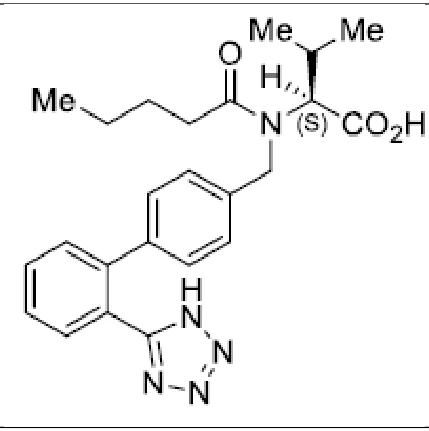
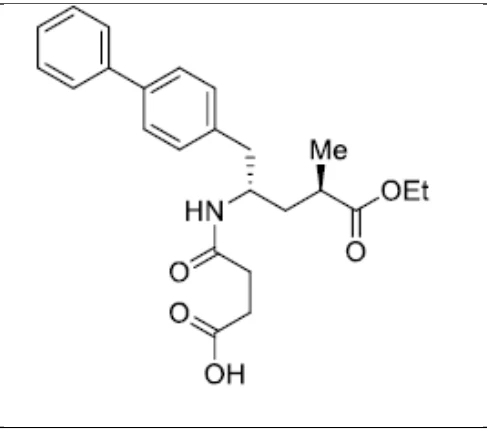
CAS L-Valine, N-(1-oxopentyl)-N-[[2'-(1H-tetrazol-5-yl)[1,1'-biphenyl]-4- yl]methyl]- IUPAC N-Pentanoyl-N-{[2'-(1H-tetrazol-5- yl)[1,1'-biphenyl]-4-yl]methyl}-L-valine | CAS [1,1'-Biphenyl]-4-pentanoic acid, γ-[(3- carboxy-1- oxopropyl)amino]-α-methyl-, α- ethyl ester, (αR, γS) IUPAC 4-{[(1S,3R)-1-([1,1'-Biphenyl]-4-ylmethyl)-4- ethoxy-3-methyl-4-oxobutyl]amino}-4- oxobutanoic acid | ||||||
| Molecular Formulae: | |||||||
| C24H29N5O3 | C24H29NO5 | ||||||
| Molecular weights: | |||||||
| 435.52 g/mol | 411.49 g/mol | ||||||
| Structural formulae: | |||||||
 |  | ||||||
| Dissociation constants: | |||||||
pKa1: 4.76 pKa2: 3.27 | pKa: 4.76 | ||||||
| Physicochemical Properties: | |||||||
| Sacubitril/Valsartan is a white crystalline powder which exhibits spherical agglomerates | |||||||
14 CLINICAL TRIALS
14.1 Clinical Trials by Indication
Heart failure with reduced ejection fraction (HFrEF)
Table 9: Summary of Patient Demographics for Clinical Trials in HFrEF
| Study # | Study Design | Dosage, Route of Administration and Duration | Study Subjects (n) | Age (range) | Sex |
|---|---|---|---|---|---|
| PARADIGM-HF |
| Run-in periods:
Randomised treatment:
Route: oral administration | Screened: 18,071 Randomised: 8,442
| Mean age: 64 years Age distribution:
| 78% male 22% female |
The PARADIGM-HF trial was a multinational, randomised, double-blind trial comparing sacubitril/valsartan to enalapril in 8,442 adult patients with symptomatic chronic heart failure and reduced ejection, i.e., left ventricular ejection fraction ≤ 40% in NYHA Class II-IV. Prior to study enrolment, patients were required to have a plasma B-type natriuretic peptide (BNP) ≥ 150 pg/mL or N-terminal pro-BNP (NT-proBNP) ≥ 600 pg/mL, or, if they had been hospitalised for heart failure in the last 12 months, a BNP ≥ 100 pg/mL or a NT-proBNP ≥ 400 pg/mL. Patients had to have been on an ACEi or ARB at a dose equivalent to at least 10 mg of enalapril daily for at least four weeks prior to screening, and on maximally tolerated doses of beta-blockers.
Patients with symptomatic hypotension, or having a systolic blood pressure of < 100 mmHg at screening were excluded. Patients with eGFR < 30 mL/min/1.73m2 or serum potassium ≥ 5.2 mmol/L at baseline, or those with any history of angioedema, were also excluded.
The primary objective of PARADIGM-HF was to determine whether sacubitril/valsartan, a combination of sacubitril and valsartan, was superior to enalapril alone in reducing the risk of the combined endpoint of cardiovascular (CV) death or hospitalisation for heart failure (HF).
After discontinuing their existing ACEi or ARB therapy, patients entered sequential single-blind run-in periods during which they received enalapril 10 mg twice daily for a median duration of 15 days, followed by one tablet of sacubitril/valsartan containing 48.6 mg sacubitril / 51.4 mg valsartan (referred to as 100 mg in the Clinical Trial) taken twice daily, for a median duration of 29 days. Patients who successfully completed the sequential run-in periods were randomised to receive either one tablet sacubitril/valsartan containing 97.2 mg sacubitril / 102.8 mg valsartan (referred to as 200 mg in the Clinical Trial) (N=4,209) twice-daily or enalapril 10 mg (N=4,233) twice daily in a double-blind manner. The primary endpoint was the first event in the composite of CV death or hospitalisation for HF. The median follow-up duration of double-blind treatment was 27 months, with some patients treated for up to 4.3 years.
In PARADIGM-HF, 18,071 patients with HFrEF were initially screened for enrolment into the trial. Of these, 7,534 did not meet study entry criteria at screening, with 62% of these patients not meeting minimum levels of elevated NT-proBNP as described above, 19% having serum potassium ≥ 5.2 mmol/L, and 5.5% having eGFR < 30 mL/min/1.73m2.
The population enrolled in the trial was 66% Caucasian, 18% Asian, and 5% Black, with a mean age of 64 years, of which 19% were ≥ 75 years, 7% were ≥ 80 years, and <1.5% were ≥ 85 years. In this trial, 78% of patients were male. At randomisation, 70% were NYHA Class II, 24% NYHA Class III, and 0.7% NYHA Class IV. The mean left ventricular ejection fraction was about 29% at baseline. The underlying cause of heart failure was coronary artery disease in 60% of patients. Baseline characteristics revealed that 71% had a history of hypertension, 43% had a history of myocardial infarction, 37% had an eGFR 30-60 mL/min/1.73m2, and 35% had diabetes mellitus. Most patients were taking beta-blockers (94%), mineralocorticoid antagonists (58%), and diuretics (82%). Essentially all patients were taking ACEi or ARB at baseline. Some patients had an implantable cardioverter-defibrillator (ICD) or cardiac resynchronization therapy-defibrillator (CRT-D) (15%).
In the sacubitril/valsartan group, 76% of patients remained on the target dose of one tablet of 97.2 mg sacubitril / 102.8 mg valsartan taken twice daily at the end of the study, with a reported mean daily dose of 182.2 mg sacubitril and 192.8 mg valsartan. In the enalapril group, 75% of patients remained on the target dose of 10 mg twice daily at the end of the study, with a reported mean daily dose of 18.9 mg.
Sacubitril/valsartan demonstrated clinically relevant and statistically significant superiority to enalapril in the randomised data set, reducing the risk of cardiovascular death or heart failure hospitalisations by 20% (hazard ratio (HR): 0.80, 95% CI [0.73; 0.87], 1-sided p =0.0000002) versus enalapril, see Table 8, below. This effect was observed early and was sustained throughout the duration of the trial, see Figure 1, below. Sudden death accounted for 45% of cardiovascular deaths and was reduced by 20% in sacubitril/valsartan-treated patients, compared to enalapril-treated patients (HR 0.80, p= 0.008). Pump failure accounted for 26% of cardiovascular deaths and was reduced by 21% in sacubitril/valsartan-treated patients, compared to enalapril-treated patients (HR 0.79, p = 0.03).
This risk reduction was generally observed consistently across subgroups including: age, gender, race, geography, ejection fraction, renal function, history of diabetes or hypertension, and presence of atrial fibrillation.
The mean change in systolic blood pressure (SBP) from baseline to Month 28 during this study was 0.7 mmHg (from 122.1 mmHg to 122.9 mmHg) in sacubitril/valsartan-treated patients, compared to 3.1 mmHg (from 121.9 mmHg to 125.0 mmHg) Hg) in enalapril-treated patients, a difference of 2.3 mmHg.
Table 10: Results of Key Endpoints in Subjects with HFrEF in PARADIGM-HF Study
sacubitril/valsartan N = 4187 n (%) | Enalapril N = 4212 n (%) | Hazard Ratio (95% CI) | p-value*** | |
|---|---|---|---|---|
| Primary Composite Endpoint of CV Death or First Heart Failure Hospitalization* | 914 (21.8) | 1117 (26.5) | 0.80 (0.73, 0.87) | 0.0000002 |
| CV Death** | 558 (13.3) | 693 (16.5) | 0.80 (0.71, 0.89) | 0.00004 |
| First Heart Failure Hospitalization | 537 (12.8) | 658 (15.6) | 0.79 (0.71, 0.89) | 0.00004 |
| Total HF Hospitalizations# | 851 | 1079 | 0.77 (0.67, 0.89) | 0.0004 |
| All-cause mortality | 711 (17.0) | 835 (19.8) | 0.84 (0.76, 0.93) | 0.0005 |
* The primary endpoint was defined as the time-to-first event
** CV death includes all patients who died up to the cut-off date irrespective of previous hospitalisation.
*** Two-sided p-value for Total HF hospitalizations, all others p-values one sided as pre-specified
♯ Total HF hospitalisations are provided as number of events and therefore the ratio given is a relative rate
Time-to-first-occurrence of the primary composite endpoint of CV death or heart failure hospitalisation, and CV death alone, over the duration of the study are shown below in Figure 1.
Figure 1: Kaplan-Meier curves for the primary composite endpoint and the CV death component from PARADIGM-HF
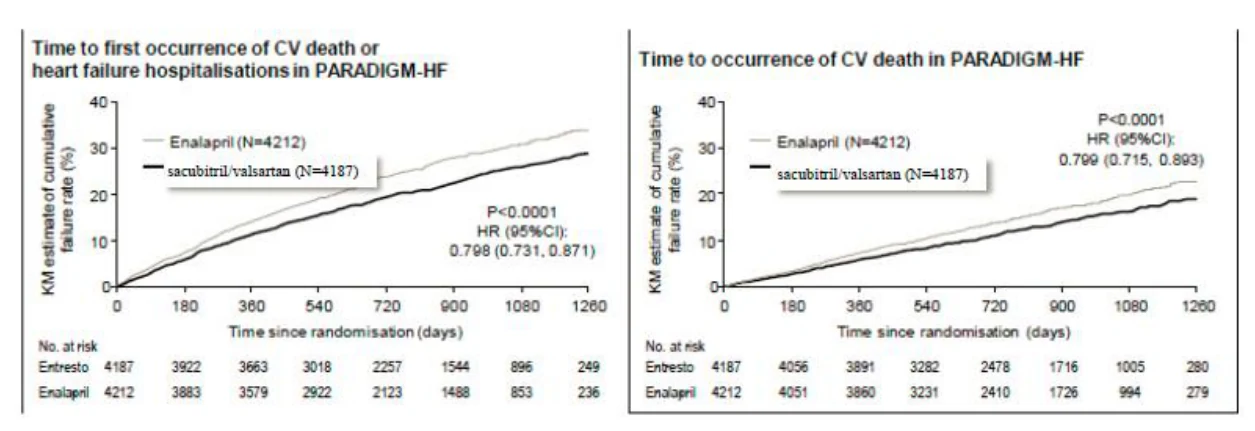
Table 11 below presents results for the primary pre-specified endpoint of CV death and HF hospitalization by NT-proBNP values at screening.
Table 11: Between-treatment comparison of primary endpoint results by NT-proBNP quartiles at screening in PARADIGM-HF
| NT-proBNP (pg/mL) quartile at screening | sacubitril/valsartan | enalapril | sacubitril/valsartan vs. enalapril HR (95% CI) | P-value | ||||||||||
|---|---|---|---|---|---|---|---|---|---|---|---|---|---|---|
| m | n | (%) | m | n | (%) | |||||||||
| <886.0 | 1035 | 118 | 11.4 | 1048 | 175 | 16.7 | 0.66 (0.52, 0.83) | 0.3442 | ||||||
| 886.0 to 1610.5 | 1030 | 180 | 17.5 | 1061 | 226 | 21.3 | 0.78 (0.64, 0.95) | |||||||
| 1610.5 to 3228.0 | 1071 | 248 | 23.2 | 1016 | 267 | 26.3 | 0.87 (0.73, 1.03) | |||||||
| > 3228.0 | 1028 | 363 | 35.3 | 1059 | 442 | 41.7 | 0.81 (0.71, 0.93) | |||||||
m: number of patients at risk
n: number of events
Hazard ratio (95% CI) is from a Cox model with treatment and region fixed factors within each subgroup. The interaction p-value (2-sided) is from the Cox model with additional terms of subgroup by treatment. A hazard ratio < 1 favours sacubitril/valsartan.
N-terminal pro-B-type natriuretic peptide (NT-proBNP) values were obtained in PARADIGM-HF at baseline and during the post-randomisation treatment phase of the trial. Median NTproBNP level at study enrolment was 1,629 pg/mL for sacubitril/valsartan-treated patients, and 1,593 pg/mL for enalapril-treated patients.
For patients having NT-proBNP measurements both at baseline and at 4 weeks following randomisation, median NT-proBNP level was 938 pg/mL at 4 weeks following randomisation, compared to 1,304 pg/mL at baseline, for sacubitril/valsartan-treated patients, a decrease of 28%. For similar enalapril-treated patients, median NT-proBNP level was 1,203 pg/mL at 4 weeks, compared to 1,268 pg/mL at baseline, a decrease of 5%. Similarly, for patients with NT-proBNP measurement at 34 weeks post-randomisation, median NT-proBNP level was 859 pg/mL for sacubitril/valsartan-treated patients, compared to 1,226 pg/mL at baseline, a decrease of 30%. For these enalapril-treated patients, median NT-proBNP was 1,103 pg/mL at 34 weeks, compared to 1,222 pg/mL at baseline, a decrease of 10%. In patients treated with sacubitril/ valsartan, only NT-proBNP, but not BNP, is a suitable biomarker for myocardial wall stress and disease status in heart failure patients (see 7 WARNINGS AND PRECAUTIONS).
14.2 Comparative Bioavailability Studies
A randomized, single-dose, two-treatment, semi-replicate, three-period crossover study to measure the comparative bioavailability of the commercial sacubitril/valsartan (24.3 mg sacubitril/25.7 mg valsartan) versus the clinical service form (CSF) (24.3 mg sacubitril/ 25.7 mg valsartan) was conducted under fasted conditions in 81 male and female healthy volunteers. The data from this study meets the applicable standards for comparative bioavailability from the sacubitril/valsartan (24.3 mg sacubitril/ 25.7 mg valsartan) and the CSF (24.3 mg sacubitril/ 25.7 mg valsartan).
Table 12: Summary Table of the Comparative Bioavailability Data for Sacubitrilat
Sacubitrilat (1 x 24.3 mg sacubitril, administered as the 24.3 mg sacubitril/ 25.7 mg valsartan tablet) From measured data Geometric Mean Arithmetic Mean (CV %) | ||||
|---|---|---|---|---|
| Parameter | sacubitril/valsartan Tablet | CSF Tablet | % Ratio of Geometric Means | Confidence Interval (90%) |
AUCT (ng*hr/mL) | 22000 22800 (26.7) | 22800 23600 (29.3) | 98.85% | 97.63% – 100.08% |
AUCI (ng*hr/mL | 22600 23300 (26.6) | 23400 24200 (29.5) | 98.79% | 97.61% – 99.99% |
Cmax (ng/mL) | 2120 2180 (22.1) | 2160 2220 (22.8) | 99.71% | 97.35% – 102.14% |
| Tmax§ (hr) | 2.32 (44.5) | 2.24 (40.1) | ||
| T1/2§(hr) | 10.1 (22.7) | 10.2 (25.3) | ||
§ Expressed as the arithmetic mean (CV%)
Table 13: Summary Table of the Comparative Bioavailability Data for Valsartan
Valsartan (1 x 25.7 mg, administered as the 50 mg tablet (24.3 mg sacubitril/ 25.7 mg valsartan) From measured data Geometric Mean Arithmetic Mean (CV %) | ||||
|---|---|---|---|---|
| Parameter | sacubitril/valsartan Tablet | CSF Tablet | % Ratio of Geometric Means | Confidence Interval (90%) |
AUCT (ng*hr/mL) | 6430 6890 (36.0) | 6630 7130 (38.2) | 95.70% | 90.05% - 101.45% |
AUCI (ng*hr/mL | 6580 7030 (35.3) | 6810 7300 (37.6) | 95.62% | 90.13% - 101.45% |
Cmax (ng/mL) | 1080 1160 (39.1) | 1100 1190 (39.0) | 95.76% | 89.46% - 102.50% |
| Tmax§ (hr) | 1.59 (37.9) | 1.55 (38.9) | ||
| T1/2§(hr) | 5.76 (31.7) | 6.11 (69.9) | ||
§ Expressed as the arithmetic mean (CV%)
Comparative Bioavailability Studies
A randomized, two-way crossover comparative bioavailability study of Teva-Sacubitril / Valsartan 24 mg/26 mg tablets (Teva Canada Limited) and Entresto 24 mg/26 mg tablets (Novartis Pharmaceuticals Canada Inc.), was conducted in healthy adult male subjects under fasting conditions. Comparative bioavailability data from the 40 subjects that were included in the statistical analysis are presented in the following tables:
Sacubitril (1 x 24 mg sacubitril / 26 mg valsartan) Geometric Mean Arithmetic Mean (CV %) | ||||
| Parameter | Test1 | Reference2 | % Ratio of Geometric Means | 90% Confidence Interval |
AUCT (h·ng/mL) | 607.85 632.41 (27.89) | 582.49 603.84 (26.21) | 104.3 | 101.3 - 107.5 |
AUCI (h·ng/mL) | 612.24 636.63 (27.71) | 587.05 608.16 (26.00) | 104.3 | 101.3- 107.4 |
Cmax (ng/mL) | 524.08 611.65 (59.12) | 496.29 570.46 (56.12) | 105.6 | 90.3- 123.5 |
Tmax3 (h) | 0.50 (0.17 - 3.52) | 0.50 (0.25 - 3.50) | ||
T½4 (h) | 0.79 (23.61) | 0.84 (20.40) | ||
1 Teva-Sacubitril / Valsartan (as sacubitril valsartan sodium hydrate complex) tablets, 24 mg / 26 mg (Teva Canada Limited)
2 Entresto (as sacubitril valsartan sodium hydrate complex) tablets, 24 mg / 26 mg (Novartis Pharmaceuticals Canada Inc.)
3 Expressed as the median (range)
4 Expressed as the arithmetic mean (CV %)
Valsartan (1 x 24 mg sacubitril / 26 mg valsartan) Geometric Mean Arithmetic Mean (CV %) | ||||
| Parameter | Test1 | Reference2 | % Ratio of Geometric Means | 90% Confidence Interval |
AUCT (h·ng/mL) | 8566.90 9110.42 (36.50) | 8400.84 9058.20 (35.97) | 102.0 | 92.9 - 111.9 |
AUCI (h·ng/mL) | 8698.78 9245.95 (36.53) | 8533.37 9197.10 (36.00) | 101.9 | 93.0 - 111.8 |
Cmax (ng/mL) | 1348.88 1419.04 (33.56) | 1316.75 1402.72 (35.12) | 102.4 | 92.59 - 113.3 |
Tmax3 (h) | 1.50 (1.00 - 4.00) | 1.75 (1.00 - 4.50) | ||
T½4 (h) | 5.68 (21.69) | 5.82 (23.94) | ||
1 Teva-Sacubitril / Valsartan (as sacubitril valsartan sodium hydrate complex) tablets, 24 mg / 26 mg (Teva Canada Limited)
2 Entresto (as sacubitril valsartan sodium hydrate complex) tablets, 24 mg / 26 mg (Novartis Pharmaceuticals Canada Inc.)
3 Expressed as the median (range)
4 Expressed as the arithmetic mean (CV %)
A randomized, two-way crossover comparative bioavailability study of Teva-Sacubitril / Valsartan 49 mg/51 mg tablets (Teva Canada Limited) and Entresto 49 mg/51 mg tablets (Novartis Pharmaceuticals Canada Inc.), was conducted in healthy adult male subjects under fasting conditions. Comparative bioavailability data from the 48 subjects who completed the study is presented in the following tables:
Sacubitril (1 x 49 mg sacubitril/51 mg valsartan) Geometric Mean Arithmetic Mean (CV %) | ||||
Sacubitril (1 x 49 mg sacubitril/51 mg valsartan) Geometric Mean Arithmetic Mean (CV %) | ||||
| Parameter | Test1 | Reference2 | % Ratio of Geometric Means | 90% Confidence Interval |
| Parameter | Test1 | Reference2 | % Ratio of Geometric Means | 90% Confidence Interval |
AUCT (ng·hr/mL) | 1317.15 1352.90 (25.66) | 1300.92 1338.55 (24.71) | 101.3 | 97.7 - 104.9 |
AUCI (ng·hr/mL) | 1326.55 1363.18 (25.80) | 1306.37 1343.89 (24.63) | 101.6 | 98.0 - 105.2 |
Cmax (ng/mL) | 1132.71 1301.39 (52.88) | 1110.26 1297.46 (55.07) | 102.0 | 87.5 - 119.0 |
Tmax3 (h) | 0.52 (0.25 - 4.00) | 0.67 (0.25 - 3.00) | ||
t½4 (h) | 1.05 (56.15) | 0.92 (31.40) | ||
1 Teva-Sacubitril / Valsartan (as sacubitril valsartan sodium hydrate complex) tablets, 49 mg / 51 mg (Teva Canada Limited)
2 Entresto (as sacubitril valsartan sodium hydrate complex) tablets, 49 mg / 51 mg (Novartis Pharmaceuticals Canada Inc.)
3 Expressed the median (range)
4 Expressed as the arithmetic mean (CV %)
Valsartan (1 x 49 mg sacubitril/51 mg valsartan) Geometric Mean Arithmetic Mean (CV %) | ||||
| Parameter | Test1 | Reference2 | % Ratio of Geometric Means | 90% Confidence Interval |
AUCT (ng·hr/mL) | 19159.81 20299.22 (32.94) | 18065.61 19001.44 (31.94) | 106.1 | 99.3 -113.3 |
AUCI (ng·hr/mL) | 19463.31 20635.28 (33.17) | 18375.71 19349.95 (32.35) | 105.9 | 99.1 - 113.2 |
Cmax (ng /mL) | 2985.87 3174.39 (35.32) | 2856.02 3021.41 (34.48) | 104.6 | 96.8 - 112.9 |
Tmax3 (h) | 1.50 (1.00 -5.00) | 1.50 (1.00 - 4.50) | ||
t½4 (h) | 6.45 (16.51) | 6.83 (15.61) | ||
1 Teva-Sacubitril / Valsartan (as sacubitril valsartan sodium hydrate complex) tablets, 49 mg / 51 mg (Teva Canada Limited)
2 Entresto (as sacubitril valsartan sodium hydrate complex) tablets, 49 mg / 51 mg (Novartis Pharmaceuticals Canada Inc.)
3 Expressed the median (range)
4 Expressed as the arithmetic mean (CV %)
A randomized, two-way crossover comparative bioavailability study of Teva-Sacubitril / Valsartan 97 mg/103 mg tablets (Teva Canada Limited) and Entresto 97 mg/103 mg tablets (Novartis Pharmaceuticals Canada Inc.), was conducted in healthy adult male subjects under fasting conditions Comparative bioavailability data from the 57 subjects that were included in the statistical analysis are presented in the following tables:
Sacubitril (1 x 97 mg sacubitril/103 mg valsartan) Geometric Mean Arithmetic Mean (CV %) | ||||
| Parameter | Test1 | Reference2 | % Ratio of Geometric Means | 90% Confidence Interval |
AUCT (ng·hr/mL) | 2156.89 2231.21(28.82) | 2153.68 2216.79 (25.53) | 100.2 | 96.8 to 103.6 |
AUCI (ng·hr/mL) | 2176.16 2253.86 (28.64) | 2171.48 2229.48 (25.55) | 100.2 | 96.9 to 103.7 |
Cmax (ng/mL) | 1523.81 1699.89 (52.14) | 1662.36 1827.27 (43.93) | 91.7 | 81.8 to 102.8 |
Tmax3 (h) | 0.50 (0.25-4.00) | 0.52 (0.34-5.00) | ||
T½4 (h) | 0.89 (48.32) | 0.82 (43.17) | ||
1 Teva-Sacubitril / Valsartan (as sacubitril valsartan sodium hydrate complex) tablets, 97 mg / 103 mg (Teva Canada Limited)
2 Entresto (as sacubitril valsartan sodium hydrate complex) tablets, 97 mg / 103 mg (Novartis Pharmaceuticals Canada Inc.)
3 Expressed as the median (range)
4 Expressed as the arithmetic mean (CV %)
Valsartan (1 x 97 mg sacubitril/103 mg valsartan) Geometric Mean Arithmetic Mean (CV %) | ||||
| Parameter | Test1 | Reference2 | % Ratio of Geometric Means | 90% Confidence Interval |
AUCT (ng·hr/mL) | 28658.13 30323.87 (36.81) | 28368.84 30129.63 (36.03) | 101.0 | 94.4 to 108.1 |
AUCI (ng·hr/mL) | 29034.04 30719.12 (36.86) | 28776.75 30541.30 (36.03) | 100.9 | 94.4 to 107.8 |
Cmax (ng/mL) | 4377.95 4581.97 (33.64) | 4547.96 4779.83 (31.00) | 96.3 | 89.4 to 103.6 |
Tmax3 (h) | 2.01 (1.25-4.50) | 2.00 (1.25-4.02) | ||
T½4 (h) | 5.54 (18.80) | 5.61 (19.64) | ||
1 Teva-Sacubitril / Valsartan (as sacubitril valsartan sodium hydrate complex) tablets, 97 mg / 103 mg (Teva Canada Limited)
2Entresto (as sacubitril valsartan sodium hydrate complex) tablets, 97 mg / 103 mg (Novartis Pharmaceuticals Canada Inc.)
3 Expressed as the median (range)
4 Expressed as the arithmetic mean (CV %)
A randomized, two-way crossover comparative bioavailability study of Teva-Sacubitril/Valsartan 97 mg/103 mg tablets (Teva Canada Limited) and ENTRESTO® 97 mg/103 mg tablets (Novartis Pharmaceuticals Canada Inc.) was conducted in healthy, adult, male (n=53) and female (n=3) subjects under high-fat, high-calorie fed conditions. Comparative bioavailability data from the 55 subjects that were included in the statistical analysis are presented in the following table:
Sacubitril (1 x 97 mg sacubitril/103 mg valsartan) Geometric Mean Arithmetic Mean (CV %) | ||||
| Parameter | Test1 | Reference2 | % Ratio of Geometric Means | 90% Confidence Interval |
AUCT (ng·h/mL) | 2456.1 2569.2 (29.7) | 2505.2 2582.6 (27.1) | 98.0 | 93.1 – 103.1 |
AUCI (ng·h/mL) | 2513.1 2617.3 (28.5) | 2561.33 2594.3 (27.1) | 98.1 | 93.2 – 103.2 |
Cmax (ng/mL) | 1255.7 1433.6 (59.7) | 1410.6 1558.7 (42.8) | 89.0 | 78.5 – 100.8 |
Tmax3 (h) | 1.75 (0.50 – 6.00) | 1.77 (0.75 – 6.00) | ||
T1/24 (h) | 1.1 (43.3) | 1.0 (27.9) | ||
1 Teva-Sacubitril/Valsartan (as sacubitril valsartan sodium hydrate complex) tablets, 97 mg/103 mg (Teva Canada Limited)
2 PrENTRESTO® (as sacubitril valsartan sodium hydrate complex) tablets, 97 mg/103 mg (Novartis Pharmaceuticals Canada Inc.)
3 Expressed as the median (range) only
4 Expressed as the arithmetic mean (CV %) only
Valsartan (1 x 97 mg sacubitril/103 mg valsartan) Geometric Mean Arithmetic Mean (CV %) | ||||
Valsartan (1 x 97 mg sacubitril/103 mg valsartan) Geometric Mean Arithmetic Mean (CV %) | ||||
| Parameter | Test1 | Reference2 | % Ratio of Geometric Means | 90% Confidence Interval |
| Parameter | Test1 | Reference2 | % Ratio of Geometric Means | 90% Confidence Interval |
AUCT (ng·h/mL) | 21527.8 23392.8 (38.5) | 20857.5 22434.7 (38.5) | 103.2 | 96.7 – 110.0 |
AUCI (ng·h/mL) | 21951.3 23882.2 (38.8) | 21305.0 22938.1 (38.6) | 103.0 | 96.6 – 109.8 |
Cmax (ng/mL) | 3053.9 3303.7 (38.1) | 3079.6 3298.5 (36.7) | 99.1 | 90.9 – 108.1 |
Tmax3 (h) | 4.00 (1.00 – 6.03) | 3.33 (1.00 – 6.00) | ||
T1/24 (h) | 6.7 (13.6) | 6.8 (18.4) | ||
1 Teva-Sacubitril/Valsartan (as sacubitril valsartan sodium hydrate complex) tablets, 97 mg/103 mg (Teva Canada Limited)
2 PrENTRESTO® (as sacubitril valsartan sodium hydrate complex) tablets, 97 mg/103 mg (Novartis Pharmaceuticals Canada Inc.)
3 Expressed as the median (range) only
4 Expressed as the arithmetic mean (CV %) only
16 NON-CLINICAL TOXICOLOGY
General Toxicology:
Non-clinical safety studies conducted with sacubitril/valsartan included assessment of safety pharmacology, repeated dose toxicity, genotoxicity, carcinogenicity and reproductive and development toxicity.
Most findings seen in repeated toxicity studies were reversible and attributable to the pharmacology of AT1 receptor blockade.
Genotoxicity:
Mutagenicity and clastogenicity studies conducted with sacubitril/valsartan did not reveal any effects at either the gene or chromosome level.
Carcinogenicity:
Carcinogenicity studies conducted in mice and rats with sacubitril and valsartan did not identify any carcinogenic potential for sacubitril/valsartan. The sacubitrilat Cmax at 1,200 mg sacubitril/kg/day in male and female mice was, 14 and 16 times that of the maximum recommended human dose (MRHD), respectively. The sacubitrilat Cmax in male and female rats at 400 mg sacubitril/kg/day was 1.7 and 3.5 times that of the MRHD, respectively. The doses of valsartan studied (high dose of 160 and 200 mg/kg/day in mice and rats, respectively) were about 4 and 10 times, respectively, the MRHD on a mg/m2 basis.
Reproductive and Developmental Toxicology:
A dose of 73 mg sacubitril/77 mg valsartan/kg/day did not show any effects on fertility or early embryonic development in rats (≤ 0.6-fold the MRHD on the basis of valsartan and ≤ 0.1-fold the MRHD on the basis of sacubitrilat AUC).
Sacubitril/valsartan administration during organogenesis resulted in increased embryo-fetal lethality in rats at doses ≥ 49 mg sacubitril/51 mg valsartan (0.06-fold the MRHD for sacubitrilat, and 0.72-fold for valsartan, based on AUC) and in rabbits at doses ≥ 5 mg sacubitril/5 mg valsartan (0.03-fold the MRHD for sacubitrilat, and 2.0-fold for valsartan, based on AUC). Sacubitril/valsartan is teratogenic based on a low incidence of fetal hydrocephaly, associated with maternally toxic doses, which was observed in rabbits at a dose of ≥ 5 mg sacubitril/5 mg valsartan/kg/day.
Pre- and postnatal development studies in rats conducted with sacubitril at doses up to 750 mg/kg/day (1.0-fold the MRHD on the basis of sacubitrilat AUC) and valsartan at doses up to
600 mg/kg/day (≤ 0.9-fold the MRHD on the basis of its AUC) indicate that treatment with sacubitril/valsartan during organogenesis, gestation and lactation may affect pup development (lower pup weights) and survival.
Following an oral dose of [14C] 15 mg sacubitril/15 mg valsartan/kg to lactating rats, transfer of sacubitrilat into milk was observed. After a single oral administration of 3 mg/kg [14C] valsartan to lactating rats, transfer of valsartan into milk was observed.
Juvenile Toxicity:
Sacubitril given orally to juvenile rats from postnatal day (PND) 7 to PND 35 or PND 70 (an age approximately equivalent to neonatal through pre-pubertal development or adulthood in humans) at doses ≥ 400 mg/kg/day (approximately 2-fold the AUC exposure to the active metabolite of sacubitril, LBQ657, at a sacubitril/valsartan pediatric clinical dose of 3.1 mg/kg twice daily) resulted in decreases in body weight, bone length, and bone mass. The decrease in body weight was transient from PND 10 to PND 20 and the effects for most bone parameters were reversible after treatment stopped. Exposure at the No-Observed-Adverse-Effect-Level (NOAEL) of 100 mg/kg/day was approximately 0.5-fold the AUC exposure to LBQ657 at the 3.1 mg/kg twice daily dose of sacubitril/valsartan. The mechanism underlying bone effects in rats and the translatability to pediatric patients are unknown.
Valsartan given orally to juvenile rats from PND 7 to PND 70 (an age approximately equivalent to neonatal through adulthood in humans) produced persistent, irreversible kidney damage at all dose levels. Exposure at the lowest tested dose of 1 mg/kg/day was approximately 0.2-fold the exposure at 3.1 mg/kg twice daily dose of sacubitril/valsartan based on AUC. These kidney effects in neonatal rats represent expected exaggerated pharmacological effects that are observed if rats are treated during the first 13 days of life.
17 SUPPORTING PRODUCT MONOGRAPHS
- 1. Entresto tablets, 24 mg / 26 mg, 49 mg / 51 mg and 97 mg / 103 mg, control number 302188, product monograph, Novartis Pharmaceuticals Canada Inc. 2026-02-26.