


Product Monograph - Teva-Saxagliptin
PART II: SCIENTIFIC INFORMATION
PHARMACEUTICAL INFORMATION............................................................................ 26
CLINICAL TRIALS .......................................................................................................... 26
DETAILED PHARMACOLOGY ...................................................................................... 37
TOXICOLOGY ................................................................................................................. 36
REFERENCES................................................................................................................... 39
PART III: CONSUMER INFORMATION ......................................................................... 40
PrTEVA-SAXAGLIPTIN
saxagliptin (as saxagliptin hydrochloride)
2.5 mg and 5 mg Tablets
PART I: HEALTH PROFESSIONAL INFORMATION
SUMMARY PRODUCT INFORMATION
Route of Administration | Dosage Form / Strength | All Nonmedicinal Ingredients |
| Oral | Tablets / 2.5 mg and 5 mg | Croscarmellose sodium, diluted hydrochloric acid, hypromellose, iron oxide black (2.5 mg), iron oxide red (5 mg), iron oxide yellow (2.5 mg), lactose monohydrate, magnesium stearate, microcrystalline cellulose, macrogol, polyvinyl alcohol – part. hydrolyzed, polyethylene glycol, talc and titanium dioxide. Imprinting black ink includes shellac, iron oxide black, ammonium hydroxide and propylene glycol |
INDICATIONS AND CLINICAL USE
Combination with metformin:
TEVA-SAXAGLIPTIN (saxagliptin) is indicated in patients with type 2 diabetes mellitus to improve glycemic control in combination with metformin when metformin used alone, with diet and exercise, does not provide adequate glycemic control (see CLINICAL TRIALS).
Combination with sulfonylurea:
TEVA-SAXAGLIPTIN is indicated in patients with type 2 diabetes mellitus to improve glycemic control in combination with sulfonylurea when sulfonylurea used alone, with diet and exercise, does not provide adequate glycemic control (see CLINICAL TRIALS).
Combination with insulin (with or without metformin):
TEVA-SAXAGLIPTIN is indicated in patients with type 2 diabetes mellitus to improve glycemic control in combination with premixed or long/intermediate acting insulin (with or without metformin) when premixed or long/intermediate acting insulin (with or without metformin) used alone, with diet and exercise, do not provide adequate glycemic control (see CLINICAL TRIALS).
Combination with metformin and a sulfonylurea:
TEVA-SAXAGLIPTIN is indicated in patients with type 2 diabetes mellitus to improve glycemic control in combination with metformin and a sulfonylurea when dual therapy with these two agents, with diet and exercise, does not provide adequate glycemic control (see CLINICAL TRIALS).
Geriatrics (≥ 65 years of age): No dosage adjustment is required based on age, however greater sensitivity of some older individuals cannot be ruled out (see WARNINGS AND PRECAUTIONS, DOSAGE AND ADMINISTRATION and ACTION AND CLINICAL PHARMACOLOGY).
Pediatrics (< 18 years of age): Safety and effectiveness of saxagliptin in pediatric patients have not been established. Therefore, TEVA-SAXAGLIPTIN should not be used in this patient population.
CONTRAINDICATIONS
Patients who have had a history of any hypersensitivity reaction, including anaphylaxis or angioedema, to saxagliptin or to another DPP-4 inhibitor, or to any ingredient in the formulation (see WARNINGS AND PRECAUTIONS, Hypersensitivity Reactions and ADVERSE REACTIONS, Post-Market Adverse Drug Reactions). For a complete listing, see DOSAGE FORMS, COMPOSITION AND PACKAGING.
Saxagliptin is contraindicated in patients with diabetic ketoacidosis, diabetic coma/precoma or Type I diabetes mellitus. These conditions should be treated with insulin.
WARNINGS AND PRECAUTIONS
Cardiovascular
Patients with Congestive Heart Failure: In a post-market placebo-controlled cardiovascular outcomes trial (SAVOR), hospitalization for heart failure occurred at a greater rate in the saxagliptin group (3.5%) compared to the placebo group (2.8%) [HR =1.27; 95% confidence interval 1.07, 1.51]. In the SAVOR trial, 2105 (12.8%) patients had a history of congestive heart failure, of whom 1056 were randomized to saxagliptin treatment. Caution is warranted if TEVA-SAXAGLIPTIN is used in patients with history of congestive heart failure (especially in those patients who also have renal impairment and/or history of myocardial infarction [MI]). During therapy with TEVA-SAXAGLIPTIN, patients should be observed for signs and symptoms of heart failure. Patients should be advised of characteristic symptoms of heart failure, and to immediately report such symptoms. If heart failure develops, discontinue TEVA-SAXAGLIPTIN and manage according to current standards of care (see ADVERSE REACTIONS, Post-Marketing, Cardiovascular Safety).
Endocrine and Metabolism
A lower dose of sulfonylurea or insulin may be required to reduce the risk of hypoglycemia when used in combination with TEVA-SAXAGLIPTIN (see ADVERSE REACTIONS, Clinical Trial Adverse Drug Reactions and DOSAGE AND ADMINISTRATION).
Loss of control of blood glucose: When a patient stabilized on saxagliptin is exposed to stress such as fever, trauma, infection, or surgery, a loss of control of blood glucose may occur. At such times, it may be necessary to temporarily discontinue TEVA-SAXAGLIPTIN and administer insulin.
Musculoskeletal and connective tissue disorders
Severe and Disabling Arthralgia: Severe and disabling arthralgias have been reported post- marketing in patients taking saxagliptin or other DPP-4 inhibitors. Onset of symptoms following initiation of drug therapy varied from one day to years. Saxagliptin is considered a possible cause for severe joint pain. Patients experienced relief of symptoms upon discontinuation of the medication and some experienced recurrence of symptoms with reintroduction of saxagliptin or another DPP-4 inhibitor. If a patient treated with TEVA-SAXAGLIPTIN, presents with severe joint pain, discontinuation of TEVA-SAXAGLIPTIN and replacement with other antidiabetic medications should be considered (see ADVERSE REACTIONS, Post- Market Adverse Drug Reactions).
Use with potent CYP 3A4 inducers
Using CYP3A4 inducers like carbamazepine, dexamethasone, phenobarbital, phenytoin, and rifampin may reduce the glycemic lowering effect of saxagliptin (see DRUG INTERACTIONS).
Lactose
TEVA-SAXAGLIPTIN tablets contain lactose monohydrate. Patients with hereditary problems of galactose intolerance, the Lapp lactase deficiency or glucose-galactose malabsorption should not take this product.
Hypersensitivity Reactions
There have been post-marketing reports of serious hypersensitivity reactions, including anaphylaxis and angioedema, in patients treated with saxagliptin and other members of this class. Exfoliative skin conditions including Stevens-Johnson syndrome have also been reported in patients treated with saxagliptin and other members of this class, although causality with saxagliptin has not been established. Onset of these reactions occurred within the first 3 months after initiation of the treatment, with some reports occurring after the first dose. If a hypersensitivity reaction to saxagliptin is suspected, discontinue TEVA-SAXAGLIPTIN, assess for other potential causes for the event, and institute alternative treatment for diabetes (see CONTRAINDICATIONS and ADVERSE REACTIONS, Post-Market Adverse Drug Reactions).
Pancreatitis
There have been post-marketing reports of acute and chronic pancreatitis in patients taking saxagliptin. Reports of fatal and non-fatal hemorrhagic or necrotizing pancreatitis were noted in patients taking other members of this class. After initiation of saxagliptin, patients should be observed carefully for signs and symptoms of pancreatitis. If pancreatitis is suspected, TEVA-SAXAGLIPTIN should promptly be discontinued and appropriate management should be initiated. It is unknown whether patients with a history of pancreatitis are at increased risk for the development of pancreatitis while using TEVA-SAXAGLIPTIN. Risk factors for pancreatitis include a history of pancreatitis, gallstones, alcoholism, or hypertriglyceridemia.
Immune
Immunocompromised patients: A dose-related mean decrease in absolute lymphocyte count was observed with saxagliptin. When clinically indicated, such as in settings of unusual or prolonged infection, lymphocyte count should be measured. The effect of saxagliptin on lymphocyte counts in patients with lymphocyte abnormalities (e.g. human immunodeficiency virus) is unknown. See Clinical trial adverse drug reactions, Abnormal Hematologic and Clinical Chemistry Findings.
Immunocompromised patients, such as patients who have undergone organ transplantation or patients diagnosed with human immunodeficiency syndrome, have not been studied in the saxagliptin clinical program. Therefore, the efficacy and safety profile of saxagliptin in these patients has not been established.
Peri-operative considerations
See Endocrine and Metabolism section – Loss of control of blood glucose.
Skin
Ulcerative and necrotic skin lesions have been reported in monkeys in non-clinical toxicology studies (see Part II: TOXICOLOGY, Chronic Toxicity). Although skin lesions were not observed at an increased incidence in clinical trials, there is limited experience in patients with diabetic skin complications.
Rash is noted as an adverse event for saxagliptin (see ADVERSE REACTIONS, Clinical trial adverse drug reactions). In keeping with routine care of the diabetic patient, monitoring for skin disorders is recommended.
Bullous pemphigoid: Post-marketing cases of bullous pemphigoid requiring hospitalization have been reported with the use of saxagliptin and other DPP-4 inhibitors. In reported cases, patients typically recovered with topical or systemic immunosuppressive treatment and discontinuation of the DPP-4 inhibitor.
Tell patients to immediately report development of blisters or erosions while receiving
TEVA-SAXAGLIPTIN. If bullous pemphigoid is suspected, TEVA-SAXAGLIPTIN should be discontinued and referral to a dermatologist should be considered for diagnosis and appropriate treatment.
Special Populations
Pregnant Women: There are no adequate and well-controlled studies in pregnant women. As animal reproduction studies are not always predictive of human response, TEVA-SAXAGLIPTIN is not recommended for use in pregnancy (see TOXICOLOGY).
Nursing Women: Saxagliptin is secreted in the milk of lactating rats. It is not known whether saxagliptin is excreted in human milk. Therefore, TEVA-SAXAGLIPTIN should not be used by a woman who is nursing.
Pediatrics (< 18 years of age): Safety and effectiveness of saxagliptin in pediatric patients have not been established. Therefore, TEVA-SAXAGLIPTIN should not be used in this patient population.
Geriatrics (≥ 65 years of age): Of the total number of subjects (N=4148) studied in controlled clinical safety and efficacy studies of saxagliptin, 634 (15.3%) patients were 65 years and over, of which 59 (1.4%) patients were 75 years and over. No overall differences in safety or effectiveness were observed between subjects 65 years and over and younger subjects. While this clinical experience has not identified differences in responses between the elderly and younger patients, greater sensitivity of some older individuals cannot be ruled out.
Saxagliptin and its major metabolite are known to be eliminated in part by the kidney. Renal function should be assessed prior to initiating TEVA-SAXAGLIPTIN and periodically thereafter in geriatric patients because they are more likely to have decreased renal function. Care should be taken in prescribing TEVA-SAXAGLIPTIN in this population based on renal function (see WARNINGS AND PRECAUTIONS, DOSAGE AND ADMINISTRATION and ACTION AND CLINICAL PHARMACOLOGY).
Hepatic Insufficiency: There are limited clinical data in patients with hepatic impairment taking multiple doses of saxagliptin. The use of TEVA-SAXAGLIPTIN in patients with moderate to severe hepatic impairment is not recommended (see ACTION AND CLINICAL PHARMACOLOGY).
Renal Impairment: TEVA-SAXAGLIPTIN should be used with caution in patients with severe renal impairment, and is not recommended for use in patients with end-stage renal disease (ESRD) requiring hemodialysis. In patients with eGFR < 45 mL/min / 1.73 m2, the dose is 2.5 mg once daily (see DOSAGE AND ADMINISTRATION, Renal Impairment).
Assessment of renal function is recommended prior to initiation of TEVA-SAXAGLIPTIN, and periodically thereafter (see DOSAGE AND ADMINISTRATION, ACTION AND CLINICAL PHARMACOLOGY and CLINICAL TRIALS – Patients with Renal Impairment).
Monitoring and Laboratory Tests
Response should be monitored by periodic measurements of blood glucose and HbA1c (A1C) levels. Assessment of renal function is recommended prior to initiation of TEVA-SAXAGLIPTIN and periodically thereafter. Patients with a history of heart failure or other risk factors for heart failure, including renal impairment, should be closely monitored for signs and symptoms of heart failure.
ADVERSE REACTIONS
Adverse Drug Reaction Overview
Saxagliptin was generally well tolerated in controlled clinical studies as an add- on to metformin, as an add-on to sulfonylurea, as an add-on to insulin (with or without metformin) and as an add-on to metformin and a sulfonylurea with the overall incidence of adverse events similar to that reported with placebo.
In a placebo-controlled clinical study of patients receiving saxagliptin 5 mg or placebo as an add-on to metformin, the incidence of serious adverse events was 9.9% and 5.6% respectively. The most commonly reported adverse events, reported regardless of causality and more common with saxagliptin than placebo, were nasopharyngitis and bronchitis.
Discontinuation of therapy due to adverse events occurred in 7.3% and 4.5% of patients, respectively.
In a placebo-controlled clinical study of patients receiving saxagliptin 5 mg or placebo as an add-on to sulfonylurea (glyburide), the incidence of serious adverse events was 3.6% and 5.6% respectively. The most commonly reported adverse events, reported regardless of causality and more common with saxagliptin than placebo, were hypoglycemia and urinary tract infection. Discontinuation of therapy due to adverse events occurred in 4.7% and 3.4% of patients, respectively.
In a placebo-controlled clinical study of patients receiving saxagliptin 5 mg or placebo as an add-on to insulin (with or without metformin), the incidence of serious adverse events was 8.2% and 8.6% respectively. The most commonly reported adverse events, reported regardless of causality and more common with saxagliptin than placebo, were headache and bronchitis. Discontinuation of therapy due to adverse events occurred in 3.0% and 2.0% of patients, respectively.
In a placebo-controlled clinical study of patients receiving saxagliptin 5 mg or placebo as an add-on to metformin and a sulfonylurea, the incidence of serious adverse events was 2.3% and 5.5% respectively. The most commonly reported adverse events, reported regardless of causality and more common with saxagliptin than placebo, were hypoglycemia, hypertension and diarrhea. Discontinuation of therapy due to adverse events occurred in 0.8 % and 2.3% of patients, respectively.
Clinical Trial Adverse Drug Reactions
Because clinical trials are conducted under very specific conditions the adverse reaction rates observed in the clinical trials may not reflect the rates observed in practice and should not be compared to the rates in the clinical trials of another drug. Adverse drug reaction information from clinical trials is useful for identifying drug-related adverse events and for approximating rates.
Adverse events, reported regardless of causality assessment, in ≥ 2 % of patients treated with either saxagliptin 5 mg or placebo as an add-on to metformin or add-on to sulfonylurea (glyburide) are shown in Table 1.
Table 1 Adverse Events (Regardless of Investigator Assessment of Causality) in the Add-on to Metformina Study and in Add-on to Sulfonylureab Study (24-week Short Term Study and the Long Term Extension) Reported in ≥ 2% of Patients Treated with Either saxagliptin 5 mg or Placebo in at Least One Study
| Number of Patients (%) Add-on to Metformin | Number of Patients (%) Add-on to Sulfonylurea | |||||||||||||||
|---|---|---|---|---|---|---|---|---|---|---|---|---|---|---|---|---|
| Body System/Organ Class Adverse Event | Saxagliptin 5 mg N=191 | Placebo N=179 | Saxagliptin 5 mg N=253 | Placebo N= 267 | ||||||||||||
| Blood and lymphatic system disorders | ||||||||||||||||
Anemia Eosinophilia | 11 (5.8) 6 (3.1) | 3 (1.7) 0 | 2 (0.8) 1 (0.4) | 3 (1.1) 1 (0.4) | ||||||||||||
| Cardiac disorders | ||||||||||||||||
| Coronary artery disease | 4 (2.1) | 0 | 1 (0.4) | 1 (0.4) | ||||||||||||
| Gastrointestinal disorders | ||||||||||||||||
Diarrhea Dyspepsia Toothache Abdominal pain Abdominal pain upper Nausea Vomiting Constipation Gastroesophageal reflux disease Gastritis | 14 (7.3) 11 (5.8) 8 (4.2) 7 (3.7) 7 (3.7) 7 (3.7) 7 (3.7) 5 (2.6) 4 (2.1) 2 (1.0) | 23 (12.8) 8 (4.5) 11 (6.1) 2 (1.1) 5 (2.8) 8 (4.5) 7 (3.9) 3 (1.7) 1 (0.6) 2 (1.1) | 13 (5.1) 9 (3.6) 8 (3.2) 6 (2.4) 10 (4.0) 4 (1.6) 4 (1.6) 2 (0.8) 2 (0.8) 5 (2.0) | 23 (8.6) 7 (2.6) 8 (3.0) 4 (1.5) 8 (3.0) 4 (1.5) 4 (1.5) 3 (1.1) 6 (2.2) 8 (3.0) | ||||||||||||
| General disorders and administration site conditions | ||||||||||||||||
Edema peripheral Chest pain Fatigue Asthenia | 11 (5.8) 5 (2.6) 5 (2.6) 0 | 9 (5.0) 2 (1.1) 7 (3.9) 2 (1.1) | 5 (2.0) 4 (1.6) 8 (3.2) 5 (2.0) | 7 (2.6) 3 (1.1) 3 (1.1) 8 (3.0) | ||||||||||||
| Infections and infestations | ||||||||||||||||
Influenza Nasopharyngitis Bronchitis Upper respiratory tract infection Urinary tract infection Sinusitis Gastroenteritis Tooth infection Gastroenteritis viral Pharyngitis Viral infection Pharyngotonsillitis | 22 (11.5) 21 (11.0) 18 (9.4) 17 (8.9) 15 (7.9) 10 (5.2) 5 (2.6) 5 (2.6) 4 (2.1) 2 (1.0) 1 (0.5) 1 (0.5) | 23 (12.8) 19 (10.6) 11 (6.1) 14 (7.8) 12 (6.7) 9 (5.0) 3 (1.7) 3 (1.7) 2 (1.1) 4 (2.2) 4 (2.2) 1 (0.6) | 16 (6.3) 24 (9.5) 8 (3.2) 22 (8.7) 35 (13.8) 4 (1.6) 7 (2.8) 2 (0.8) 1 (0.4) 19 (7.5) 4 (1.6) 5 (2.0) | 26 (9.7) 27 (10.1) 7 (2.6) 22 (8.2) 29 (10.9) 3 (1.1) 7 (2.6) 2 (0.7) 1 (0.4) 14 (5.2) 6 (2.2) 10 (3.7) | ||||||||||||
| Injury, poisoning, and procedural complications | ||||||||||||||||
| Limb injury | 3 (1.6) | 1 (0.6) | 0 | 7 (2.6) | ||||||||||||
| Investigations | ||||||||||||||||
Blood creatine phosphokinase increased Alanine aminotransferase increased | 4 (2.1) 1 (0.5) | 2 (1.1) 4 (2.2) | 8 (3.2) 4 (1.6) | 4 (1.5) 3 (1.1) | ||||||||||||
| Metabolism and nutrition disorders | ||||||||||||||||
| Hypoglycemiac | 17 (8.9) | 18 (10.1) | 50 (19.8) | 49 (18.4) | ||||||||||||
| Number of Patients (%) Add-on to Metformin | Number of Patients (%) Add-on to Sulfonylurea |
|---|
| Body System/Organ Class Adverse Event | Saxagliptin 5 mg N=191 | Placebo N=179 | Saxagliptin 5 mg N=253 | Placebo N= 267 |
|---|---|---|---|---|
Hypertriglyceridemia Dyslipidemia | 6 (3.1) 3 (1.6) | 2 (1.1) 4 (2.2) | 9 (3.6) 11 (4.3) | 5 (1.9) 10 (3.7) |
| Musculoskeletal and connective tissue disorders | ||||
Arthralgia Back pain Osteoarthritis Myalgia Pain in extremity Exostosis Musculoskeletal pain Muscle spasms | 16 (8.4) 15 (7.9) 8 (4.2) 6 (3.1) 6 (3.1) 4 (2.1) 4 (2.1) 3 (1.6) | 9 (5.0) 16 (8.9) 4 (2.2) 4 (2.2) 13 (7.3) 2 (1.1) 9 (5.0) 4 (2.2) | 17 (6.7) 16 (6.3) 2 (0.8) 6 (2.4) 12 (4.7) 1 (0.4) 4 (1.6) 3 (1.2) | 20 (7.5) 17 (6.4) 7 (2.6) 5 (1.9) 18 (6.7) 1 (0.4) 9 (3.4) 4 (1.5) |
| Nervous system disorders | ||||
Headache Dizziness Parasthesia | 17 (8.9) 8 (4.2) 0 | 20 (11.2) 9 (5.0) 2 (1.1) | 25 (9.9) 3 (1.2) 1 (0.4) | 19 (7.1) 11 (4.1) 6 (2.2) |
| Psychiatric disorders | ||||
Anxiety Depression | 8 (4.2) 6 (3.1) | 5 (2.8) 4 (2.2) | 5 (2.0) 6 (2.4) | 4 (1.5) 2 (0.7) |
| Renal and urinary disorders | ||||
Microalbuminuria Nephrolithiasis Dysuria | 5 (2.6) 4 (2.1) 0 | 4 (2.2) 3 (1.7) 4 (2.2) | 3 (1.2) 0 5 (2.0) | 2 (0.7) 4 (1.5) 7 (2.6) |
| Respiratory, thoracic, and mediastinal disorders | ||||
Cough Pharyngolaryngeal pain | 7 (3.7) 5 (2.6) | 9 (5.0) 3 (1.7) | 14 (5.5) 3 (1.2) | 16 (6.0) 4 (1.5) |
| Skin and subcutaneous tissue disorders | ||||
Rash Alopecia Pruritus | 6 (3.1) 4 (2.1) 3 (1.6) | 5 (2.8) 0 1 (0.6) | 1 (0.4) 0 2 (0.8) | 2 (0.7) 1 (0.4) 6 (2.2) |
| Vascular disorders | ||||
| Hypertension | 9 (4.7) | 12 (6.7) | 21 (8.3) | 13 (4.9) |
a The mean duration of exposure to double-blind study medication, including exposure after the initiation of rescue medication, was 75 weeks (Standard Deviation = 34) for saxagliptin 5 mg plus metformin and 68 weeks (Standard Deviation = 35) for placebo plus metformin groups.
b The mean duration of exposure to double-blind study medication, including exposure after the initiation of rescue medication, was 50 weeks (Standard Deviation = 17) for saxagliptin 5 mg plus glyburide and 48 weeks (Standard Deviation= 17) for placebo plus uptitrated glyburide groups.
c “Hypoglycemia” includes events of Hypoglycemia and Blood Glucose Decreased.
Rash-related adverse events in the add-on to metformin study (24-week short-term and long- term extension) were reported in 4.2% and 2.8% of patients who received saxagliptin 5 mg and placebo, respectively. In the add-on to sulfonylurea study (24-week short-term and long- term extension) rash-related events were reported in 1.6 % and 1.1% of patients who received saxagliptin 5 mg and placebo, respectively.
In a pooled analysis of the 24-week placebo-controlled clinical trials, hypersensitivity-related events, such as urticaria and facial edema were reported in 1.5% and 0.4% of patients who received saxagliptin 5 mg and placebo, respectively. None of these events in patients who received saxagliptin required hospitalization or were reported as life-threatening by the investigators. One saxagliptin-treated patient in this pooled analysis discontinued due to generalized urticaria and facial edema.
In the short-term 24-week add-on to sulfonylurea study (glyburide 7.5 mg), the overall incidence of hypoglycemia was higher for saxagliptin 5 mg versus placebo (14.6% versus 10.1%). The incidence of confirmed hypoglycemic events, defined as symptoms of hypoglycemia accompanied by a fingerstick glucose value of ≤ 2.8 mmol/L, was similar for saxagliptin 5 mg treated group (0.8%) and placebo group (0.7%). In the long-term extension of the add-on to sulfonylurea study, the overall incidence of hypoglycemia was similar for saxagliptin 5 mg (19.8%) versus uptitrated sulfonylurea plus placebo (19.8% versus 18.4%).
The adverse event of hypertension was reported in more patients on saxagliptin 5 mg plus glyburide (8.3%) versus placebo plus glyburide (4.9%) in the add-on to sulfonylurea trial. Analysis of the mean systolic and diastolic blood pressure values did not reveal clinically meaningful changes.
Adverse reactions, reported regardless of causality assessment, in ≥ 2 % of patients treated with either saxagliptin 5 mg or placebo as an add-on to insulin (with or without metformin) are shown in Table 2.
Table 2 Adverse Reactions (Regardless of Investigator Assessment of Causality) in the Add-on to Insulin Studya (24-week Short Term Study and the Long Term Extension) Reported in ≥ 2% of Patients Treated with Either saxagliptin 5 mg or Placebo
Number of Patients (%) Add-on to Insulin (with or without Metformin) | ||||||
|---|---|---|---|---|---|---|
| Body System/Organ Class Adverse Event | Saxagliptin 5 mg + Insulin N=304 | Placebo + Insulin N=151 | ||||
| Blood and lymphatic system disorders | ||||||
| Anemia | 6 (2.0) | 4 (2.6) | ||||
| Gastrointestinal disorders | ||||||
Diarrhea Constipation Abdominal pain Gastritis Nausea | 14 (4.6) 12 (3.9) 8 (2.6) 8 (2.6) 5 (1.6) | 7 (4.6) 5 (3.3) 2 (1.3) 2 (1.3) 5 (3.3) | ||||
| General disorders and administration site conditions | ||||||
| Edema peripheral | 9 (3.0) | 5 (3.3) | ||||
| Infections and infestations | ||||||
Urinary tract infection Nasopharyngitis Upper respiratory tract infection Bronchitis | 24 (7.9) 19 (6.3) 19 (6.3) 16 (5.3) | 12 (7.9) 10 (6.6) 11 (7.3) 5 (3.3) | ||||
Number of Patients (%) Add-on to Insulin (with or without Metformin) |
|---|
| Body System/Organ Class Adverse Event | Saxagliptin 5 mg + Insulin N=304 | Placebo + Insulin N=151 |
|---|---|---|
Pharyngitis Influenza Cystitis Gastroenteritis | 11 (3.6) 10 (3.3) 8 (2.6) 7 (2.3) | 8 (5.3) 14 (9.3) 3 (2.0) 2 (1.3) |
| Investigations | ||
| Blood creatine phosphokinase increased | 7 (2.3) | 1 (0.7) |
| Metabolism and nutrition disorders | ||
| Hypoglycemiab | 69 (22.7) | 40 (26.5) |
| Musculoskeletal and connective tissue disorders | ||
Arthralgia Back pain Osteoarthritis Pain in extremity Musculoskeletal pain | 13 (4.3) 10 (3.3) 7 (2.3) 7 (2.3) 3 (1.0) | 5 (3.3) 6 (4.0) 0 10 (6.6) 6 (4.0) |
| Nervous system disorders | ||
Headache Dizziness | 18 (5.9) 8 (2.6) | 6 (4.0) 3 (2.0) |
| Respiratory, thoracic, and mediastinal disorders | ||
| Cough | 7 (2.3) | 6 (4.0) |
| Vascular disorders | ||
Hypertension Hypertensive crisisc | 9 (3.0) 6 (2.0) | 8 (5.3) 1 (0.7) |
a The mean duration of exposure to double-blind study medication, including exposure after changes in insulin medication, was 47 week (Standard Deviation = 13) for saxagliptin 5 mg plus insulin and 47 weeks (Standard Deviation = 13) for placebo plus insulin groups.
b “Hypoglycemia” includes events of Hypoglycemia and Blood Glucose Decreased.
c Term as reported; cases do not meet medically accepted definition of hypertensive crisis.
In the short-term 24-week add-on to insulin study, the overall incidence of reported hypoglycemia was 18.4% for saxagliptin 5 mg and 19.9% for placebo. The incidence of confirmed hypoglycemic events, defined as symptoms of hypoglycemia accompanied by a fingerstick glucose value of ≤ 2.8 mmol/L, was 5.3% for the saxagliptin 5 mg treated group versus 3.3% for the placebo group. In the long-term extension of the add-on to insulin study, the overall incidence of hypoglycemia was lower for saxagliptin 5 mg (22.7%) versus placebo (26.5%) plus insulin with or without metformin.
Adverse reactions, reported regardless of causality assessment, in ≥ 2 % of patients treated with either saxagliptin 5 mg or placebo as an add-on to metformin and a sulfonylurea are shown in Table 3.
Table 3 Adverse Reactions (Regardless of Investigator Assessment of Causality) in the Add-on to Meformin and a Sulfonylurea (SU) Studya (24-week) Reported in ≥ 2% of Patients Treated with Either saxagliptin 5 mg or Placebo
Number of Patients (%) Add-on to Metformin and SU | |||||||
|---|---|---|---|---|---|---|---|
| Body System/Organ Class Adverse Event | Saxagliptin 5 mg + Metformin + SU N=129 | Placebo + Metformin + SU N=128 | |||||
| Blood and lymphatic system disorders | |||||||
| Anemia | 1 (0.8) | 5 (3.9) | |||||
| Gastrointestinal disorders | |||||||
Diarrhea Flatulence Gastritis Nausea Constipation | 7 (5.4) 4 (3.1) 3 (2.3) 2 (1.6) 1 (0.8) | 5 (3.9) 0 3 (2.3) 4 (3.1) 3 (2.3) | |||||
| Infections and infestations | |||||||
Nasopharyngitis Upper respiratory tract infection Urinary tract infection Pharyngitis Oral candidiasis | 8 (6.2) 6 (4.7) 4 (3.1) 0 0 | 12 (9.4) 6 (4.7) 8 (6.3) 3 (2.3) 3 (2.3) | |||||
| Metabolism and nutrition disorders | |||||||
Hypoglycemiab Dyslipidemia Hyperglycemia | 13 (10.1) 5 (3.9) 4 (3.1) | 8 (6.3) 7 (5.5) 4 (3.1) | |||||
| Musculoskeletal and connective tissue disorders | |||||||
Pain in extremity Arthralgia Back pain | 2 (1.6) 2 (1.6) 1 (0.8) | 4 (3.1) 3 (2.3) 4 (3.1) | |||||
| Nervous system disorders | |||||||
Headache Dizziness Neuropathy peripheral | 4 (3.1) 3 (2.3) 3 (2.3) | 3 (2.3) 2 (1.6) 0 | |||||
| Psychiatric Disorders | |||||||
| Insomnia | 0 | 3 (2.3) | |||||
| Respiratory, thoracic, and mediastinal disorders | |||||||
| Cough | 4 (3.1) | 1 (0.8) | |||||
| Skin and subcutaneous tissue disorders | |||||||
| Rash | 2 (1.6) | 3 (2.3) | |||||
| Vascular disorders | |||||||
| Hypertension | 7 (5.4) | 2 (1.6) | |||||
a The mean duration of exposure to double-blind study medication was 159 days (Standard Deviation = 31) in the saxagliptin 5 mg group and 160 days (Standard Deviation = 30) for the placebo group.
b “Hypoglycemia” includes events of Hypoglycemia and Blood Glucose Decreased.
Serious Adverse Reactions (reported in < 2% of patients) and Adverse Reactions of Interest* (reported in < 2% of patients and in at least 2 patients), Regardless of Investigator Assessment of Causality and Frequency > Placebo, in the Add-on to Metformin, Add-on to Sulfonylurea, Add-on to Insulin (with or without Metformin) Studies (24-week short-term and the long-term extensions) and in the Add-on to Metformin and a Sulfonylurea Study (24-week)
*System Organ Classes were considered to be of interest based on the adverse event profile of the DPP-4 inhibitor class of drugs, non-clinical data for saxagliptin, as well as the patient population.
Blood and lymphatic system disorders*: eosinophilia, lymphopenia, iron deficiency anemia, normochromic normocytic anemia,
Cardiac disorders*: coronary artery disease, left ventricular hypertrophy, atrioventricular block first degree, bundle branch block left, mitral valve incompetence, myocardial ischemia, palpitations, ventricular extrasystoles, acute myocardial infarction, atrioventricular block complete, cardiac failure congestive, cardiogenic shock
Gastrointestinal disorders: abdominal pain, diarrhea, salivary gland mass, vomiting
Hepatobiliary disorders: cholecystitis acute, cholecystitis, hepatitis
Immune system disorders*: hypersensitivity, sarcoidosis
Infections and infestations: cellulitis orbital, clostridium difficile colitis, urosepsis, diverticulitis, lower respiratory tract infection
Injury, poisoning and procedural complications: road traffic accident, ankle fracture, fall, gastrointestinal injury, incisional hernia, limb injury, skin laceration
Investigations*: aspartate aminotransferase increased, c-reactive protein increased, electrocardiogram repolarisation abnormality, blood cholesterol increased, blood pressure increased, electrocardiogram abnormal, lymphocyte count decreased
Metabolism and nutrition disorders: dehydration
Musculoskeletal and connective tissue disorders: arthralgia, osteoarthritis Neoplasms benign, malignant and unspecified (including cysts and polyps): myelodysplastic syndrome, pancreatic cancer, laryngeal cancer
Nervous system disorders: altered state of consciousness, dizziness
Renal and urinary disorders: calculus ureteric, calculus urinary, renal impairment Respiratory, thoracic and mediastinal disorders: hemoptysis, pulmonary embolism Skin and subcutaneous tissue disorders*: rash, alopecia, dermatitis atopic, hyperhidrosis, rash papular, skin lesion, dermatitis contact, dermatitis, dry skin, seborrhoeic dermatitis, urticaria
Surgical and medical procedures: sterilisation
Abnormal Hematologic and Clinical Chemistry Findings
Absolute Lymphocyte Counts: A dose-related mean decrease in absolute lymphocyte count was observed with saxagliptin. From a baseline absolute lymphocyte count of approximately 2200 cells/µL, a mean decrease of approximately 100 cells/µL relative to placebo was observed in a pooled analysis of the placebo-controlled clinical studies. The proportion of patients who were reported to have a lymphocyte count ≤ 750 cells/ µL was 1.5% in the saxagliptin 5 mg group and 0.4% in the placebo group. The decreases in lymphocyte count were not associated with clinically relevant adverse reactions. When clinically indicated, such as in settings of unusual or prolonged infection, lymphocyte count should be measured. The effect of saxagliptin on lymphocyte counts in patients with lymphocyte abnormalities (e.g. human immunodeficiency virus) is unknown.
Platelets: Saxagliptin not demonstrate a clinically meaningful or consistent effect on platelet count in the double-blind, controlled clinical safety and efficacy trials. In the add-on to insulin trial, there was a -2.6% decrease from baseline in platelet count in the saxagliptin group compared with a -0.1% decrease in the placebo group. An event of thrombocytopenia, consistent with a diagnosis of idiopathic thrombocytopenic purpura, was observed in the clinical program. The relationship of this event to saxagliptin is not known.
Urinary white and red blood cell counts: In the add-on to insulin trial, there was a higher percentage of saxagliptin patients, compared to placebo patients who presented with marked urinary red blood cell counts (15.1% saxagliptin versus 3.2% placebo) and urinary white blood cell counts (30.4% versus 18.9%). No consistent findings of urine laboratory abnormalities have been observed in the overall saxagliptin clinical program. No imbalances were observed for either URBC or UWBC in the pooled analysis of Phase 2/3 studies.
Post-Market Adverse Drug Reactions
Additional adverse reactions have been identified during post-marketing use of saxagliptin. Because these reactions are reported voluntarily from a population of uncertain size, it is generally not possible to reliably estimate their frequency or establish a causal relationship to drug exposure.
Blood and lymphatic system disorders: idiopathic thrombocytopenic purpura
Gastrointestinal disorders: acute and chronic pancreatitis (see WARNINGS AND
PRECAUTIONS)
Immune system disorders: Hypersensitivity reactions, including anaphylaxis, angioedema, rash, urticaria and exfoliative skin conditions, including Stevens-Johnson syndrome (see CONTRAINDICATIONS and WARNINGS AND PRECAUTIONS, Hypersensitivity Reactions)
Musculoskeletal and connective tissue disorders: severe and disabling arthralgia (see WARNINGS AND PRECAUTIONS, Musculoskeletal and connective tissue disorders)
Skin and subcutaneous tissue disorders: bullous pemphigoid
Post-Marketing, Cardiovascular Safety
The Saxagliptin Assessment of Vascular Outcomes Recorded in Patients with Diabetes Mellitus-Thrombolysis in Myocardial Infarction (SAVOR) Trial was a CV outcome trial in 16,492 type 2 diabetic patients (median HbA1c = 7.6%) (12959 with established CV disease; 3533 with multiple risk factors only) who were randomized to saxagliptin (n=8280) or placebo (n=8212). The study population also included those ≥ 65 years (n=8561) and ≥ 75 years (n=2330), with normal or mild renal impairment (n=13,916) as well as moderate (n=2240) or severe (n=336) renal impairment. Subjects were followed for a mean duration of 2 years.
The primary endpoint was a composite endpoint consisting of the time-to-first occurrence of any of the following major adverse CV events (MACE): CV death, nonfatal myocardial infarction, or nonfatal ischemic stroke.
The trial established that the upper bound of the 2-sided 95% CI for the estimated risk ratio comparing the incidence of the primary composite endpoint observed with saxagliptin to that observed in the placebo group was <1.3. The study did not demonstrate the superiority of saxagliptin compared with placebo when added to current background therapy, in reducing the primary MACE endpoint (HR 1.00; 95% CI: 0.89, 1.12; p = 0.986).
Hospitalization for heart failure, occurred at a greater rate in the saxagliptin group (3.5%) compared with the placebo group (2.8%) [HR = 1.27; (95% CI 1.07, 1.51). Subjects on saxagliptin with a baseline history of congestive heart failure, especially those who also had renal impairment and/or MI, were at higher absolute risk for hospitalization for heart failure.
DRUG INTERACTIONS
The metabolism of saxagliptin is primarily mediated by P450 3A4/5 (CYP3A4/5).
In in vitro studies, saxagliptin and its major pharmacologically active metabolite neither inhibited nor induced CYP3A4. In addition, in in vitro studies, saxagliptin and its major pharmacologically active metabolite neither inhibited CYP1A2, 2A6, 2B6, 2C9, 2C19, 2D6, 2E1, nor induced CYP1A2, 2B6, 2C9. Therefore, saxagliptin is unlikely to alter the metabolic clearance of coadministered drugs that are metabolized by these enzymes. Saxagliptin is neither a significant inhibitor of P-glycoprotein (P-gp) nor an inducer of P-gp, and is unlikely to cause interactions with drugs that utilize these pathways.
The in vitro protein binding of saxagliptin and its major metabolite in human serum is below measurable levels. Thus, protein binding would not have a meaningful influence on the pharmacokinetics of saxagliptin or other drugs.
Drug-Drug Interactions
Effect of other drugs on saxagliptin
In studies conducted in healthy subjects as described below, the pharmacokinetics of saxagliptin and its major metabolite were not meaningfully altered by metformin, glyburide, pioglitazone, digoxin, simvastatin, diltiazem, ketoconazole, omeprazole, aluminum hydroxide + magnesium hydroxide + simethicone combination, or famotidine. These drugs are considered unlikely to cause a clinically meaningful interaction with saxagliptin.
CYP3A4/5 Inducers: The coadministration of saxagliptin and CYP3A4/5 inducers, other than rifampin (such as carbamazepine, dexamethasone, phenobarbital and phenytoin) have not been studied and may result in decreased plasma concentration of saxagliptin and increased concentration of its major metabolite. Glycemic control should be carefully assessed when saxagliptin is used concomitantly with a potent CYP3A4 inducer.
Metformin: Coadministration of a single dose of saxagliptin (100 mg) and metformin (1000 mg), an OCT-1 and OCT-2 substrate, decreased the Cmax of saxagliptin by 21%; however, the AUC was unchanged. Therefore, metformin is considered unlikely to cause a clinically meaningful interaction with saxagliptin. Meaningful interactions of saxagliptin with other OCT-1 and OCT-2 substrates would not be expected.
Glyburide: Coadministration of a single dose of saxagliptin (10 mg) and glyburide (5 mg), a CYP2C9 substrate, did not affect the pharmacokinetics of saxagliptin. Therefore, glyburide is considered unlikely to cause a clinically meaningful interaction with saxagliptin. Meaningful interactions of saxagliptin with other CYP2C9 substrates would not be expected.
Pioglitazone: Coadministration of multiple once-daily doses of saxagliptin (10 mg) and pioglitazone (45 mg), a CYP2C8 (major) and CYP3A4 (minor) substrate, did not alter the pharmacokinetics of saxagliptin. Therefore, pioglitazone is considered unlikely to cause a clinically meaningful interaction with saxagliptin. Meaningful interactions of saxagliptin with other CYP2C8 substrates would not be expected.
Digoxin: Coadministration of multiple once-daily doses of saxagliptin (10 mg) and digoxin (0.25 mg), a P-gp substrate, did not alter the pharmacokinetics of saxagliptin. Therefore, digoxin is considered unlikely to cause a clinically meaningful interaction with saxagliptin. Meaningful interactions of saxagliptin with other P-gp substrates would not be expected.
Simvastatin: Coadministration of multiple once-daily doses of saxagliptin (10 mg) and simvastatin (40 mg), a CYP3A4/5 substrate, increased the Cmax of saxagliptin by 21%; however, the AUC of saxagliptin was unchanged. Therefore, simvastatin is considered unlikely to cause a clinically meaningful interaction with saxagliptin. Meaningful interactions of saxagliptin would not be expected with other substrates of CYP3A4/5.
Diltiazem: Coadministration of a single dose of saxagliptin (10 mg) and diltiazem (360 mg long-acting formulation at steady state), a moderate inhibitor of CYP3A4/5, increased the Cmax and AUC for saxagliptin by 63% and 109%, respectively. This coadministration was also associated with 44% and 34% decreases in Cmax and AUC(INF) values, respectively of its major metabolite. Therefore, diltiazem is considered unlikely to cause a clinically meaningful interaction with saxagliptin. Meaningful interactions of saxagliptin with other moderate CYP3A4/5 inhibitors would not be expected.
Ketoconazole: Coadministration of a single dose of saxagliptin (100 mg) and ketoconazole (200 mg every 12 hours at steady state), a potent inhibitor of CYP3A4/5 and P-gp, increased the Cmax and AUC for saxagliptin by 62% and 145 % respectively. This coadministration was also associated with 95% and 88% decreases in Cmax and AUC(INF) values, respectively of its major metabolite.
Following coadministration of a single dose of saxagliptin at 20 times the recommended dose (100 mg) with ketoconazole, transient flu-like symptoms and a transient decrease in absolute lymphocyte count were observed. Additionally, transient decreases in absolute lymphocyte count were observed without any flu-like symptoms following coadministration of a single dose of saxagliptin at 4 times the recommended dose (20 mg) with ketoconazole.
Rifampin (Rifampicin): Coadministration of a single dose of saxagliptin (5 mg) with the potent
CYP3A4/5 and P-gp inducer rifampin (600 mg once daily at steady state), decreased the Cmax and AUC of saxagliptin by 53% and 76%, respectively. There was a corresponding increase in Cmax (39%) but no significant change in plasma AUC of the active metabolite. There was no change in the maximum DPP-4 inhibition (%Imax) and only a 6% decrease in the mean area under the effect time curve for DPP-4 inhibition (AUEC) over a 24-hour period (the dosing interval for saxagliptin) when saxagliptin was coadministered with rifampin; however, a shorter DPP-4 inhibition T-HALF was observed during the rifampin coadministration period (25.9 hours for saxagliptin-alone versus 14.5 hours for saxagliptin plus rifampin). See also WARNINGS AND PRECAUTIONS, Use with potent CYP3A4 inducers.
Omeprazole: Coadministration of multiple once-daily doses of saxagliptin (10 mg) and omeprazole (40 mg), a CYP2C19 (major) and CYP3A4 substrate, an inhibitor of CYP2C19, and an inducer of MRP-3, did not alter the pharmacokinetics of saxagliptin. Therefore, omeprazole is considered unlikely to cause a clinically meaningful interaction with saxagliptin. Meaningful interactions of saxagliptin with other CYP2C19 inhibitors or MRP- 3 inducers would not be expected.
Aluminum hydroxide + magnesium hydroxide + simethicone: Coadministration of a single dose of saxagliptin (10 mg) and a liquid containing aluminum hydroxide (2400 mg), magnesium hydroxide (2400 mg), and simethicone (240 mg) decreased the Cmax of saxagliptin by 26%; however, the AUC of saxagliptin was unchanged. Therefore, meaningful interactions of saxagliptin with antacid and antigas formulations of this type would not be expected.
Famotidine: Administration of a single dose of saxagliptin (10 mg) three hours after a single dose of famotidine (40 mg), an inhibitor of hOCT-1, hOCT-2, and hOCT-3, increased the Cmax of saxagliptin by 14%; however, the AUC of saxagliptin was unchanged. Therefore, famotidine is considered unlikely to cause a clinically meaningful interaction with saxagliptin. Meaningful interactions of saxagliptin would not be expected with other inhibitors of hOCT-1, hOCT-2, and hOCT-3.
Effect of saxagliptin on other drugs
In studies conducted in healthy subjects, as described below, saxagliptin did not meaningfully alter the pharmacokinetics of metformin, glyburide, pioglitazone, digoxin, simvastatin, diltiazem, ketoconazole, or an estrogen/progestin combined oral contraceptive. Saxagliptin is considered unlikely to cause a clinically meaningful interaction with these drugs.
Metformin: Coadministration of a single dose of saxagliptin (100 mg) and metformin (1000 mg), an OCT-1 and OCT-2 substrate, did not alter the pharmacokinetics of metformin in healthy subjects. Therefore, saxagliptin considered unlikely to cause a clinically meaningful interaction with metformin. Saxagliptin is not an inhibitor of OCT-1 and OCT-2- mediated transport.
Glyburide: Coadministration of a single dose of saxagliptin (10 mg) and glyburide (5 mg), a CYP2C9 substrate, increased the plasma Cmax of glyburide by 16%; however, the AUC of glyburide was unchanged. Therefore, saxagliptin is considered unlikely to cause a clinically meaningful interaction with glyburide. Saxagliptin does not meaningfully inhibit CYP2C9- mediated metabolism.
Pioglitazone: Coadministration of multiple once-daily doses of saxagliptin (10 mg) and pioglitazone (45 mg), a CYP2C8 substrate, increased the plasma Cmax of pioglitazone by 14%; however, the AUC of pioglitazone was unchanged. Therefore, saxagliptin is considered unlikely to cause a clinically meaningful interaction with pioglitazone. Saxagliptin does not meaningfully inhibit or induce CYP2C8-mediated metabolism.
Digoxin: Coadministration of multiple once-daily doses of saxagliptin (10 mg) and digoxin (0.25 mg), a P-gp substrate, did not alter the pharmacokinetics of digoxin. Therefore, saxagliptin is considered unlikely to cause a clinically meaningful interaction with digoxin. Saxagliptin is not an inhibitor or inducer of P-gp-mediated transport.
Simvastatin: Coadministration of multiple once-daily doses of saxagliptin (10 mg) and simvastatin (40 mg), a CYP3A4/5 substrate, did not alter the pharmacokinetics of simvastatin. Therefore, saxagliptin is considered unlikely to cause a clinically meaningful interaction with simvastatin. Saxagliptin is not an inhibitor or inducer of CYP3A4/5-mediated metabolism.
Diltiazem: Coadministration of multiple once-daily doses of saxagliptin (10 mg) and diltiazem (360 mg long-acting formulation at steady state), a moderate inhibitor of CYP3A4/5, increased the plasma Cmax of diltiazem by 16%; however, the AUC of diltiazem was unchanged. Therefore, saxagliptin is considered unlikely to cause a clinically meaningful interaction with diltiazem.
Ketoconazole: Coadministration of a single dose of saxagliptin (100 mg) and multiple doses of ketoconazole (200 mg every 12 hours at steady state), a potent inhibitor of CYP3A4/5 and P-gp, decreased the geometric means for Cmax and AUC(INF) of ketoconazole by 16% and by 13% respectively, relative to those observed following administration of 200 mg ketoconazole q 12 h alone.
Oral Contraceptives: Coadministration of multiple once-daily doses of saxagliptin (5 mg) and a monophasic combined oral contraceptive containing 0.035 mg ethinyl estradiol/0.250 mg norgestimate for 21 days, did not alter the steady state pharmacokinetics of the primary active estrogen component, ethinyl estradiol, or the primary active progestin component, norelgestromin. The plasma AUC of norgestrel, an active metabolite of norelgestromin, was increased by 13% and the plasma Cmax of norgestrel was increased by 17%. This small magnitude change in AUC and Cmax of norgestrel is not considered to be clinically meaningful. Based on these findings, saxagliptin would not be expected to meaningfully alter the pharmacokinetics of an estrogen/progestin combined oral contraceptive.
Drug-Food Interactions
There are no known interactions with food. Grapefruit juice being a weak inhibitor of CYP3A4 gut wall metabolism may give rise to modest increases in plasma levels of saxagliptin.
Drug-Herb Interactions
Interactions with herbal products have not been established.
Drug-Laboratory Interactions
Interactions with laboratory tests have not been established.
Drug-Lifestyle Interactions
No studies of the effects of saxagliptin on the ability to drive and use machines have been performed. However, TEVA-SAXAGLIPTIN is not expected to affect the ability to drive and use machines.
DOSAGE AND ADMINISTRATION
Dosing Considerations
TEVA-SAXAGLIPTIN (saxagliptin) may be taken with or without food.
Recommended Dose and Dosage Adjustment
The recommended dose of TEVA-SAXAGLIPTIN is 5 mg once daily.
Renal Impairment: Assessment of renal function is recommended prior to initiation of
TEVA-SAXAGLIPTIN and periodically thereafter (see WARNINGS AND PRECAUTIONS, ACTION AND CLINICAL PHARMACOLOGY and CLINICAL TRIALS – Patients with Renal Impairment).
Mild renal impairment
- No dosage adjustment for TEVA-SAXAGLIPTIN is recommended for patients with mild renal impairment (eGFR 60-89 mL/min/1.73 m2 (by Modified Diet in Renal Disease [MDRD] eGFR equation)).
Moderate renal impairment
- No dosage adjustment is required for patients with eGFR ≥ 45 mL/min/1.73 m2.
- For patients with moderate renal impairment with eGFR < 45 mL/min/1.73 m2, the dose is 2.5 mg once daily.
Severe renal impairment
TEVA-SAXAGLIPTIN should be used with caution in patients with severe renal impairment. TEVA-SAXAGLIPTIN is not recommended for patients with end-stage renal disease (ESRD) requiring hemodialysis. For patients with severe renal impairment (eGFR < 30 mL/min/1.73 m2) the recommended dose is 2.5 mg once daily.
Hepatic Impairment: Use of TEVA-SAXAGLIPTIN in patients with moderate to severe hepatic impairment is not recommended due to lack of clinical experience with this patient population.
Pediatrics (<18 years of age): Safety and effectiveness of saxagliptin in pediatric patients have not been established. Therefore, TEVA-SAXAGLIPTIN should not be used in this patient population.
Geriatrics (≥65 years of age): No dosage adjustment for TEVA-SAXAGLIPTIN is required based solely on age (see WARNINGS AND PRECAUTIONS, CLINICAL TRIALS and
ACTION AND CLINICAL PHARMACOLOGY).
Missed Dose
If a dose of TEVA-SAXAGLIPTIN is missed, it should be taken as soon as the patient remembers. A double dose of TEVA-SAXAGLIPTIN should not be taken on the same day.
Administration
TEVA-SAXAGLIPTIN tablets must not be split or cut.
OVERDOSAGE
| For management of a suspected drug overdose, contact your regional Poison Control Centre. |
In the event of an overdose, appropriate supportive treatment should be initiated as dictated by the patient’s clinical status. Saxagliptin and its major metabolite are removed by hemodialysis (23% of dose over 4 hours).
ACTION AND CLINICAL PHARMACOLOGY
Mechanism of Action
Saxagliptin is a potent, selective, reversible, competitive, DPP-4 inhibitor. Saxagliptin demonstrates selectivity for DPP-4 versus other DPP enzymes, including DPP-8 and DPP-9. Saxagliptin has extended binding to the DPP-4 active site, prolonging its inhibition of DPP-47. Saxagliptin exerts its actions in patients with type 2 diabetes by slowing the inactivation of incretin hormones, including glucagon-like peptide-1 (GLP-1). The concentration of active (intact) GLP-1 incretin hormone is increased.
Incretin hormones are released by the intestine throughout the day and concentrations are increased in response to a meal. These hormones are rapidly inactivated by the enzyme DPP-4.
The incretins are part of an endogenous system involved in the physiologic regulation of glucose homeostasis. When blood glucose concentrations are elevated, GLP-1 and GIP increase insulin synthesis and release from pancreatic beta cells. GLP-1 also lowers glucagon secretion from pancreatic alpha cells, leading to reduced hepatic glucose production.
The concentration of GLP-1 is reduced in patients with type 2 diabetes9, but saxagliptin increases active GLP-1 concentration. By increasing active GLP-1 concentration, saxagliptin increases postprandial insulin release and decreases postprandial glucagon concentrations in the circulation in a glucose-dependent manner. In patients with type 2 diabetes with hyperglycemia, these changes in insulin and glucagon levels may lead to lower hemoglobin A1C (HbA1c) and lower fasting and postprandial glucose concentrations.5
Pharmacodynamics
In patients with type 2 diabetes, administration of saxagliptin led to dose- dependent inhibition of DPP-4 enzyme activity for a 24-hour period. After an oral glucose load or a meal, this DPP-4 inhibition resulted in a 2- to 3-fold increase in circulating levels of active GLP-1, decreased postprandial glucagon concentrations, and increased glucose- dependent beta cell responsiveness with higher postprandial insulin and C-peptide concentrations. The rise in insulin and decrease in glucagon were associated with lower fasting glucose concentrations and reduced glucose excursion following an oral glucose load or a meal.
Cardiac electrophysiology: In a randomized, double-blind, placebo-controlled, 4-way crossover, active comparator study, 40 healthy subjects were administered saxagliptin 40 mg (8 times the RHD), saxagliptin 10 mg (2 times the RHD), or placebo once daily for 4 days, or a single dose of moxifloxacin 400 mg as a positive control. The saxagliptin 10 mg and 40 mg treatments were not associated with any prolongation of the QTc, QRS, or PR intervals. In the saxagliptin 10 mg treatment a significant increase in heart rate was observed at 0.5, 1, 1.5, 4, and 12 h post-dosing, with a maximum placebo- and baseline-corrected mean increase of 3.75 (90% 1.55, 5.95) beats per minute at 0.5 post-dosing when the baseline-corrected change in the placebo treatment at this time was -1.4 (90% CI -3.0, 0.1) beats per minute. Significant increases in heart rate were also observed in the saxagliptin 40 mg treatment at 0.5, 4, and 12 hours post-dosing, with a maximum placebo- and baseline-corrected mean increase of 4.5 (90% CI 2.23, 6.82) beats per minute at 4 hours post-dose dose when the baseline-corrected change in the placebo treatment at this time was -3.3 (90% CI -5.0, -1.6) beats per minute. The effect of the recommended 5 mg dose was not investigated in this study.
Pharmacokinetics
The pharmacokinetics of saxagliptin has been extensively characterized in healthy subjects and patients with type 2 diabetes (Table 4).
Table 4 Summary of saxagliptin's pharmacokinetic parameters in healthy subjects
Cmax (ng/mL) | t1/2 (h) | AUC ng.h/mL | Renal Clearance (mL/min) | |
| Single oral dose (5 mg) mean | 24 | 2.5 | 78 | 230 |
Saxagliptin was rapidly absorbed after oral administration, with maximum saxagliptin plasma concentrations (Cmax) usually attained within two hours after administration in the fasted state. The Cmax and AUC values increased proportionally to the increment in the saxagliptin dose. Following a 5 mg single oral dose of saxagliptin to healthy subjects, the mean plasma AUC(INF) values for saxagliptin and its major metabolite were 78 ng·h/mL and 214 ng·h/mL, respectively. The corresponding plasma Cmax values were 24 ng/mL and 47 ng/mL, respectively. The intra-subject coefficients of variation for saxagliptin Cmax and AUC were less than 12%.
Following a single oral dose of 5 mg saxagliptin to healthy subjects, the mean plasma terminal half-life (t1/2) for saxagliptin was 2.5 hours, and the mean t1/2 value for plasma DPP-4 inhibition was 26.9 hours. The inhibition of plasma DPP-4 activity by saxagliptin occurs for at least 24-hours after oral administration of saxagliptin. No appreciable accumulation was observed with repeated once-daily dosing at any dose level. No dose- and time-dependence was observed in the clearance of saxagliptin and its major metabolite over 14 days of once- daily dosing with saxagliptin at doses ranging from 2.5 mg to 400 mg. Results from population-based exposure modeling suggest that the pharmacokinetics of saxagliptin and its major metabolite were similar in healthy subjects and in patients with type 2 diabetes.
Absorption: Saxagliptin may be administered with or without food. The amount of saxagliptin absorbed following an oral dose is at least 75%. Food had relatively modest effects on the pharmacokinetics of saxagliptin in healthy subjects. Administration with a high-fat meal resulted in no change in saxagliptin Cmax and a 27% increase in AUC compared with the fasted state. The time for saxagliptin to reach Cmax (Tmax) was increased by approximately 0.5 hours with food compared with the fasted state. These changes were not considered to be clinically meaningful.
Distribution: The in vitro protein binding of saxagliptin and its major metabolite in human serum is below measurable levels. Thus, changes in blood protein levels in various disease states (e.g., renal or hepatic impairment) are not expected to alter the disposition of saxagliptin.
Metabolism: The metabolism of saxagliptin is primarily mediated by cytochrome P450 3A4/5 (CYP3A4/5). The major metabolite of saxagliptin is also a selective, reversible, competitive DPP-4 inhibitor, half as potent as saxagliptin.
Excretion: Saxagliptin is eliminated by both renal and hepatic pathways. Following a single 50 mg dose of 14C-saxagliptin, 24%, 36%, and 75% of the dose was excreted in the urine as saxagliptin, its major metabolite, and total radioactivity, respectively. The average renal clearance of saxagliptin (~230 mL/min) was greater than the average estimated glomerular filtration rate (~120 mL/min), suggesting some active renal excretion. For the major metabolite, renal clearance values were comparable to estimated glomerular filtration rate. A total of 22% of the administered radioactivity was recovered in feces representing the fraction of the saxagliptin dose excreted in bile and/or unabsorbed drug from the gastrointestinal tract.
Pharmacokinetics of the Major Metabolite: The Cmax and AUC values for the major metabolite of saxagliptin increased proportionally to the increment in the saxagliptin dose. Following single oral doses of 2.5 mg to 400 mg saxagliptin in the fed or fasted states, the mean AUC values for the major metabolite ranged from 2- and 7 times higher than the parent saxagliptin exposures on a molar basis. Following a single oral dose of 5 mg saxagliptin in
the fasted state, the mean terminal half-life (t1/2) value for the major metabolite was 3.1 hours and no appreciable accumulation was observed upon repeated once-daily dosing at any dose.
Special Populations and Conditions
Pediatrics (< 18 years of age): Pharmacokinetics in the pediatric population have not been studied. Therefore, saxagliptin should not be used in this patient population.
Geriatrics (≥ 65 years of age): No dosage adjustment is necessary based on age alone. Elderly subjects (65-80 years) had 23% and 59% higher geometric mean Cmax and geometric mean AUC values, respectively, for parent saxagliptin than young subjects (18-40 years). Differences in major metabolite pharmacokinetics between elderly and young subjects generally reflected the differences observed in parent saxagliptin pharmacokinetics. The difference between the pharmacokinetics of saxagliptin and the major metabolite in young and elderly subjects is likely to be due to multiple factors including declining renal function and metabolic capacity with increasing age.
Gender: No dosage adjustment is necessary based on gender. There were no differences observed in saxagliptin pharmacokinetics between males and females. Compared to males, females had approximately 25% higher exposure values for the major metabolite than males, but the clinical relevance of this difference is unknown.
Race: No dosage adjustment is necessary based on race. An exposure modeling analysis compared the pharmacokinetics of saxagliptin and its major metabolite in 309 white subjects with 105 non-white subjects (consisting of 6 race groups). No significant difference in the pharmacokinetics of saxagliptin and its major metabolite were detected between these two populations.
Body Mass Index: No dosage adjustment is recommended based on body mass index (BMI).
Renal Impairment: A single-dose, open-label study was conducted to evaluate the pharmacokinetics of saxagliptin (10 mg dose) in subjects with varying degrees of chronic renal impairment compared to subjects with normal renal function.
In subjects with approximately eGFR > 45 mL/min / 1.73 m2 by MDRD eGFR equation, the increases of the AUC values of saxagliptin and its major metabolite were not clinically relevant. Dosage adjustment in these patients is not recommended.
In subjects with renal impairment with approximately eGFR < 45 mL/min / 1.73 m2, the AUC values of saxagliptin and its major metabolite were more than 2.1- and 4.5- fold higher, respectively, than AUC values in subjects with normal renal function. The dose of saxagliptin should be reduced to 2.5 mg once daily in patients with renal impairment with approximately eGFR < 45 mL/min / 1.73 m2 (see WARNINGS AND PRECAUTIONS, DOSAGE AND ADMINISTRATION and CLINICAL TRIALS – Patients with Renal Impairment).
Hepatic Impairment: In subjects with hepatic impairment (Child-Pugh classes A, B, and C), mean Cmax and AUC of saxagliptin were up to 8% and 77% higher, respectively, compared to healthy matched controls following administration of a single 10 mg dose of saxagliptin. The corresponding Cmax and AUC of the major metabolite were up to 59% and 33% lower, respectively, compared to healthy matched controls. Use in moderate to severe hepatic impairment is not recommended.
STORAGE AND STABILITY
Temperature: Store at room temperature (15-30°C).
Others: Keep in a safe place out of reach of children and pets. Unused medication should not be disposed of down the drain or in household garbage.
DOSAGE FORMS, COMPOSITION AND PACKAGING
Dosage Forms and Packaging
TEVA-SAXAGLIPTIN 2.5 mg tablets are yellow, round, biconvex film coated tablets with “TV/8067” printed on one side in black ink.
TEVA-SAXAGLIPTIN 5 mg tablets are pink, round, biconvex film coated tablets, with “TV/8066” printed on one side in black ink.
TEVA-SAXAGLIPTIN 2.5 mg and 5 mg tablets: Available in bottles of 100 tablets and unit dose blisters of 30 tablets.
Composition
TEVA-SAXAGLIPTIN tablets contain the following non-medicinal ingredients: Croscarmellose sodium, diluted hydrochloric acid, hypromellose, iron oxide black (2.5 mg), iron oxide red (5 mg), iron oxide yellow (2.5 mg), lactose monohydrate, magnesium stearate, microcrystalline cellulose, macrogol, polyvinyl alcohol – part. hydrolyzed, polyethylene glycol, talc and titanium dioxide. Imprinting black ink includes shellac, iron oxide black, ammonium hydroxide and propylene glycol.
PART II: SCIENTIFIC INFORMATION
PHARMACEUTICAL INFORMATION
Drug Substance
Common Name: Saxagliptin
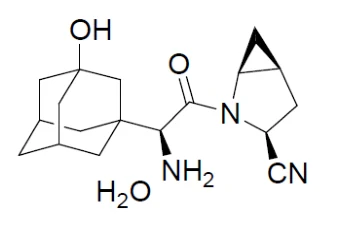
Chemical Name: (1S,3S,5S)-2-[(2S)-2-Amino-2-(3-hydroxyadamantan-1-yl)acetyl]-2-azabicyclo[3.1.0]hexane-3-carbonitrile monohydrate
Molecular Formula: C18H25N3O2·H2O
Molecular Weight: 333.43 g/mole
Structural Formula:
Physicochemical Properties: Saxagliptin monohydrate is non- hygroscopic, white to light yellow or light brown powder. It is soluble in aqueous buffers with pH at 1.0 and 4.5 and sparingly soluble in aqueous buffers with pH 7.5 and water at 37°C.
CLINICAL TRIALS
Comparative Bioavailability Studies
A single-dose, two-period, two-treatment, two-sequence, crossover, comparative bioavailability study of Teva-Saxagliptin 5 mg Tablets (Teva Canada Limited) and Onglyza® 5 mg Tablets (AstraZeneca Canada Inc., Canada) administered as in 20 healthy male and female subjects under fasting conditions. The summary of results for saxagliptin is presented in the following table:
Saxagliptin (1 x 5 mg) From measured data Geometric Mean Arithmetic Mean (CV %) | ||||
|---|---|---|---|---|
| Parameter | Test* | Reference† | % Ratio of Geometric Means | 90% Confidence Interval |
AUCT (ng*h/mL) | 92.4 96.9 (31) | 94.8 99.1 (29) | 97.5 | 92.0 – 103.3 |
AUCI (ng*h/mL) | 96.7 101.5 (31) | 99.2 103.8 (29) | 97.5 | 92.0 – 103.3 |
Cmax (ng/mL) | 29.9 31.6 (32) | 29.5 30.6 (26) | 101.3 | 91.2 – 112.6 |
Tmax§ (h) | 0.7 (0.3-2.0) | 0.5 (0.3-1.3) | ||
T½ ψ (h) | 2.7 (14) | 2.7 (14) | ||
* Teva-Saxagliptin 5 mg Tablets (Teva Pharmaceutical Industries Ltd.)
† Onglyza® 5 mg Tablets (AstraZeneca Canada Inc., Canada) were purchased in Canada
ψ T½ - Expressed as the arithmetic mean (CV%) only
§ Expressed as the median (range) only
CLINICAL TRIALS
Study demographics and trial design
Table 5 Summary of patient demographics for clinical trials in specific indication
| Trial design | Dosage, route of administration and duration | Study subjects per treatment arm Subjects ≥ 65 years of age Subjects ≥ 75 years of age (N=number) | Mean age (Range) | Gender (% M/F) |
|---|---|---|---|---|
| Add-on Combination Therapy with Metformin4 | ||||
| Multicentre, randomized, double-blind, placebo-controlled | Open-label metformin (1500-2500 mg) plus saxagliptin 5 mg or placebo Oral, 24 weeks | Saxagliptin 5 mg N=191 ≥ 65 years N=42 ≥ 75 years N=3 Placebo N=179 ≥ 65 years n=42 ≥ 75 years n=3 | 55 years (26 – 76) | 54/46 |
| Add-on Combination Therapy with Sulfonylurea3 | ||||
| Multicentre, randomized, double-blind, placebo-controlled | open-label glyburide 7.5 mg plus saxagliptin 5 mg or open-label glyburide 7.5 mg plus double-blind glyburide 2.5 mg (total | Saxagliptin 5 mg N=253 ≥ 65 years N=42 ≥ 75 years N=3 | 55 years (18 – 77) | 45/55 |
| Trial design | Dosage, route of administration and duration | Study subjects per treatment arm Subjects ≥ 65 years of age Subjects ≥ 75 years of age (N=number) | Mean age (Range) | Gender (% M/F) |
|---|---|---|---|---|
daily dose of 10 mg titratable to 15 mg) plus placebo Oral, 24 weeks | Placebo N=179 ≥ 65 years n=42 ≥ 75 years n=3 | |||
| Add-on Combination Therapy with Insulin (with or without Metformin) | ||||
| Multicentre, randomized, double-blind, placebo-controlled | open-label insulin (≥ 30 units/day, ≤ 150 units/day) alone or with metformin plus saxagliptin 5 mg or open-label insulin (≥ 30 units/day, ≤ 150 units/day) alone or with metformin plus placebo Oral, 24 weeks | Saxagliptin 5 mg N=304 ≥ 65 years N=71 ≥ 75 years N=6 Placebo N=151 ≥ 65 years n=33 ≥ 75 years n=3 | 57 years (18 – 77) | 41/59 |
| Add-on Combination Therapy with Metformin and a Sulfonylurea | ||||
| Multicentre, randomized, double-blind, placebo-controlled | open-label metformin (≥ 1500 mg and a sulfonylurea (≥ 50% of the maximum dose) plus saxagliptin 5 mg or open-label metformin (≥ 1500 mg) and a sulfonylurea (≥ 50% of the maximum dose) plus placebo Oral, 24 weeks | Saxagliptin 5 mg N=129 ≥ 65 years N=28 ≥ 75 years N=2 Placebo N=128 ≥ 65 years n=33 ≥ 75 years n=7 | 57 years (25 – 83) | 60/40 |
Study results
In patients with type 2 diabetes, the treatment with saxagliptin 5 mg produced clinically relevant and statistically significant improvements in hemoglobin A1c (A1C), fasting plasma glucose (FPG), and postprandial glucose (PPG), including 2-hour PPG following standard oral glucose tolerance test (OGTT), compared to control.
Add-On Combination Therapy with Metformin
A total of 743 patients with type 2 diabetes participated in this randomized, double-blind, placebo-controlled study of 24-week duration, to evaluate the efficacy and safety of saxagliptin in combination with metformin in patients with inadequate glycemic control (A1C ≥ 7% and ≤ 10%) on metformin alone. Patients were required to be on a stable dose of metformin (1500 mg to 2550 mg daily) for at least 8 weeks to be enrolled in this study.
Patients who met eligibility criteria were enrolled in a single-blind, two-week, dietary and exercise placebo lead-in period during which patients received metformin at their pre-study dose, up to 2500 mg daily for the duration of the study. Following the lead-in period, eligible patients were randomized to 2.5 mg, 5 mg, or 10 mg of saxagliptin or placebo in addition to their current dose of open-label metformin. Patients who failed to meet specific glycemic goals during the study were treated with pioglitazone rescue therapy, added on to placebo or saxagliptin plus metformin. Dose titrations of saxagliptin and metformin were not allowed in this study.
In combination with metformin, saxagliptin 5 mg provided significant improvements in A1C, FPG, and PPG compared with the placebo plus metformin group (Table 6).
Table 6 Glycemic Parameters at Week 24 in a Placebo-Controlled Study of saxagliptin in Combination with Metformin§
| Efficacy parameter | Saxagliptin 5 mg + Metformin | Placebo + Metformin |
| A1C (%) | N=186 | N=175 |
Baseline (mean) Change from baseline (adjusted mean ±) Difference from placebo (adjusted mean ±) 95% Confidence Interval Percent of patients achieving A1C < 7% | 8.1 -0.7 -0.8a (-1.0, -0.6) 44%a (81/186) | 8.1 0.1 17% (29/175) |
| FPG (mmol/L) | N=187 | N=176 |
Baseline (mean) Change from baseline (adjusted mean ±) Difference from placebo (adjusted mean ±) 95% Confidence Interval | 9.9 -1.2 -1.3a (-1.7, -0.9) | 9.7 0.07 |
| 2-hour PPG (mmol/L) | N=155 | N=135 |
Baseline (mean) Change from baseline (adjusted mean ±) Difference from placebo (adjusted mean ±) 95% Confidence Interval | 16.4 -3.2 -2.2a (-3.1, -1.3) | 16.4 -1.0 |
| 3-hour PPG AUC (mmol*min/L) | N=146 | N=131 |
Baseline (mean) Change from baseline (adjusted mean ±) Difference from placebo (adjusted mean ±) 95% Confidence Interval | 2721 -532 -349a (-478, -221) | 2631 -183 |
§ Intent-to-treat population using last observation on study prior to pioglitazone rescue therapy.
± Least squares mean adjusted for baseline value.
a p-value <0.0001 compared to placebo
The mean percent change from baseline in A1C over the 24-week period is shown in Figure 1. The proportion of patients achieving A1C <7% (regardless of baseline value) was significantly greater in the saxagliptin 5 mg plus metformin treatment (43.5%) groups compared with the placebo plus metformin group (16.6%). Significant reductions in 2-hour PPG level following standard oral glucose tolerance test were observed in the saxagliptin 5 mg plus metformin treatment group (-3.2 mmol/L) compared with –1.0 mmol/L in the placebo plus metformin group. The proportion of patients who discontinued for lack of glycemic control or who were rescued for meeting prespecified glycemic criteria was higher in the placebo plus metformin group (27%) than in the saxagliptin 5 mg plus metformin group (13%). Higher baseline A1C was associated with a greater adjusted mean change from baseline in A1C with saxagliptin 5 mg. The effect of saxagliptin on lipid endpoints in this study was similar to placebo. Similar changes in body weight were observed in patients who received saxagliptin and placebo therapy (-0.9 kg and -0.9 kg, respectively).
Figure 1 Mean Change from Baseline in A1C in a Placebo-Controlled Study of saxagliptin in Combination with Metformin*
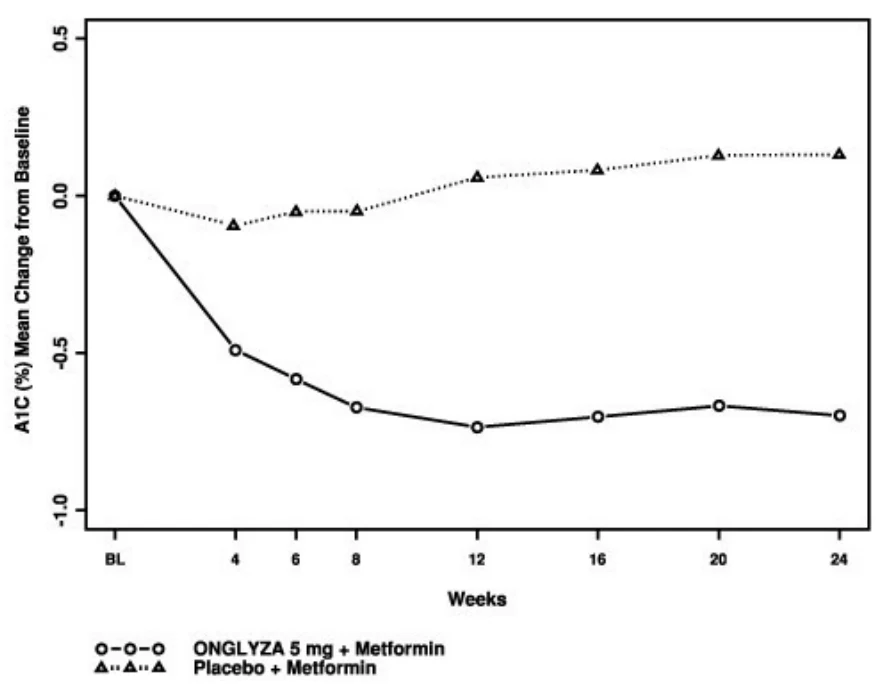
* Intent-to-treat population using last observation on study prior to pioglitazone rescue therapy. Mean change from baseline (LOCF).
Controlled Long-Term Study Extension
Patients who completed all visits during the initial 24-week study period without need for hyperglycemia rescue therapy were eligible to enter a controlled double blind long-term study extension. Of the patients that started the 24-week treatment, 162 (84.8%) and 149 (83.2%) patients were taking saxagliptin 5 mg plus metformin and placebo plus metformin respectively. Patients who received saxagliptin in the initial 24-week study period maintained the same dose of saxagliptin in the long-term extension. Treatment with saxagliptin 5 mg plus metformin was associated with a greater reduction in A1C than in the placebo plus metformin group, and the effect relative to placebo was sustained at Week 50 and Week 102 compared to placebo. The A1C change for saxagliptin 5 mg plus metformin (n=100 observed, n=187 LOCF) compared with placebo plus metformin (n=59 observed, n=175 LOCF) was -0.7% at Week 50. The A1C change for saxagliptin 5 mg plus metformin (n=31 observed, n=184 LOCF) compared with placebo plus metformin (n=15 observed, n=172 LOCF) was -0.7% at Week 102.
Add-On Combination Therapy with a Sulfonylurea
A total of 768 patients with type 2 diabetes participated in this randomized, double-blind, placebo-controlled study of 24-weeks duration, to evaluate the efficacy and safety of saxagliptin in combination with sulfonylurea (SU) in patients with inadequate glycemic control at enrollment (A1C ≥ 7.5% to ≤ 10%) on a submaximal dose of SU alone.
Patients were required to be on a submaximal dose of SU for 2 months or greater to be enrolled in this study. In this study, saxagliptin in combination with a fixed, intermediate dose of SU was compared to titration to a higher dose of SU.
Patients who met eligibility criteria were enrolled in a single-blind, 4-week, dietary and exercise lead-in period and placed on glyburide 7.5 mg once daily. Following the lead-in period, eligible patients with A1C ≥ 7% to ≤ 10% were randomized to either 2.5 mg or 5 mg of saxagliptin plus 7.5 mg glyburide, or placebo plus a 10 mg total daily dose of glyburide. Patients who received placebo were eligible to have glyburide up-titrated to a total daily dose of 15 mg. Up titration of glyburide was not allowed in patients who received saxagliptin 2.5 or 5 mg. Glyburide could be down-titrated in any treatment group once during the 24-week study period due to hypoglycemia as deemed necessary by the investigator. Approximately 92% of patients in the placebo plus glyburide group were up-titrated to a final total daily dose of 15 mg during the study period. Patients who failed to meet specific glycemic goals during the study were treated with metformin rescue, added on to the saxagliptin plus glyburide or the placebo plus up-titrated glyburide group. Dose titration of saxagliptin was not permitted during the study.
In combination with glyburide, saxagliptin 5 mg provided significant improvements in A1C, FPG, and PPG compared with the placebo plus up-titrated glyburide group (Table 7). The mean percent change from baseline in A1C over the 24-week period is shown in Figure 2. The proportion of patients achieving A1C <7.0% (regardless of baseline value) was significantly greater in the saxagliptin 5 mg plus glyburide treatment group (22.8%) compared with the placebo plus up-titrated glyburide group (9.1%). Significant reductions in 2 hour PPG level following standard oral glucose tolerance test were observed in the saxagliptin 5 mg plus glyburide treatment group (-1.9 mmol/L) compared with 0.4 mmol/L in the placebo plus up-titrated glyburide group. The proportion of patients who discontinued for lack of glycemic control or who were rescued for meeting prespecified glycemic criteria was higher in the placebo plus up-titrated glyburide group (30%) than in the saxagliptin 5 mg plus glyburide group (17%). Higher baseline A1C was associated with a greater adjusted mean change from baseline in A1C with saxagliptin 5 mg. The effect of saxagliptin on lipid endpoints in this study was similar to placebo. Small increases in body weight were seen in patients treated with saxagliptin 5 mg plus glyburide and with placebo plus up-titrated glyburide (0.8 kg versus 0.3 kg, p=0.012).
Table 7 Glycemic Parameters at Week 24 in a Placebo-Controlled Study of Saxagliptin in Combination with Glyburide§
| Efficacy parameter | Saxagliptin 5 mg + Glyburide 7.5 mg | Placebo + Up-Titrated Glyburide |
|---|---|---|
| A1C (%) | N=250 | N=264 |
Baseline (mean) Change from baseline (adjusted mean ±) Difference from placebo (adjusted mean ±) 95% Confidence Interval Percent of patients achieving A1C < 7% | 8.5 -0.6 -0.7a (-0.9, -0.6) 23%a (57/250) | 8.4 0.1 9% (24/264) |
| FPG (mmol/L) | N=252 | N=265 |
Baseline (mean) Change from baseline (adjusted mean ±) Difference from placebo (adjusted mean ±) 95% Confidence Interval | 9.7 -0.5 -0.6b (-0.9, -0.2) | 9.7 0.04 |
| Efficacy parameter | Saxagliptin 5 mg + Glyburide 7.5 mg | Placebo + Up-Titrated Glyburide |
|---|---|---|
| 2-hour PPG (mmol/L) | N=202 | N=206 |
Baseline (mean) Change from baseline (adjusted mean ±) Difference from placebo (adjusted mean ±) 95% Confidence Interval | 17.5 -1.9 -2.3a (-2.9, -1.7) | 17.9 0.4 |
| 3-hour PPG AUC (mmol*min/L) | N=195 | N=204 |
Baseline (mean) Change from baseline (adjusted mean ±) Difference from placebo (adjusted mean ±) 95% Confidence Interval | 2794 -278 -344a (-433, -254) | 2875 66 |
§ Intent-to-treat population using last observation on study prior to pioglitazone rescue therapy.
± Least squares mean adjusted for baseline value.
a p-value <0.0001 compared to placebo + up-titrated glyburide
b p-value =0.0020 compared to placebo + up-titrated glyburide
Figure 2 Mean Change from Baseline in A1C in a Placebo-Controlled Study of saxagliptin in Combination with Glyburide*
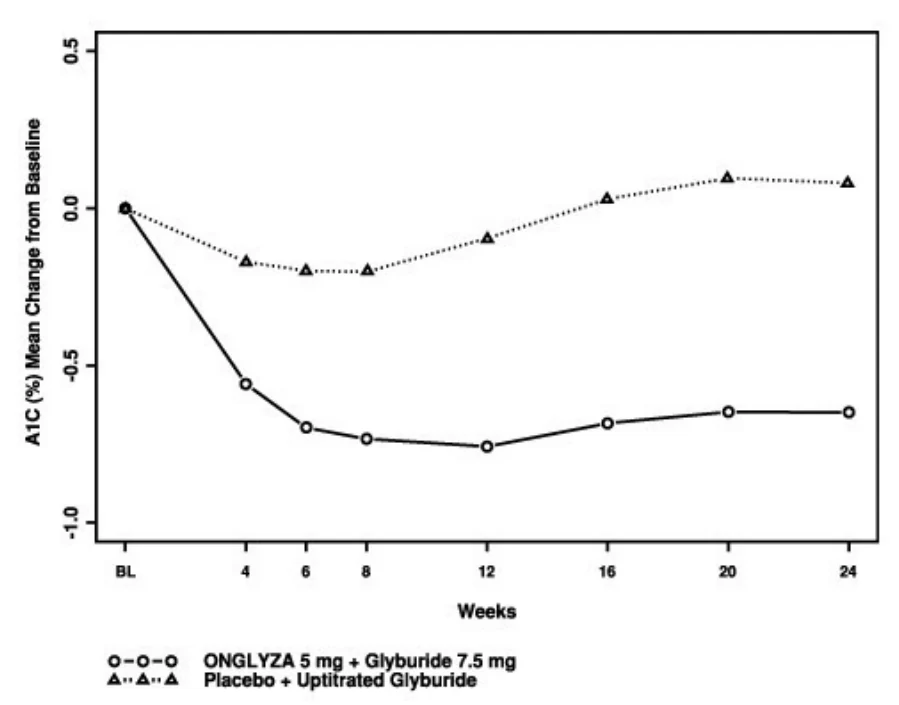
*Intent-to-treat population using last observation on study prior to metformin rescue therapy. Mean change from baseline (LOCF).
Controlled Long-Term Study Extension
Patients who were rescued (based on predefined glucose levels) during the initial 24-week study period as well as those who completed all visits during the initial 24-week study period without the need for rescue therapy were eligible to enter a controlled double blind long-term study extension.
Of the patients that started the 24-week treatment, 227 (89.7%) and 235 (88%) patients were taking saxagliptin 5 mg plus glyburide and placebo plus up-titrated glyburide respectively. Patients who received saxagliptin in the initial 24-week study period maintained the same dose of saxagliptin in the long-term extension. The A1C change for saxagliptin 5 mg plus glyburide (n=99 observed, n=243 LOCF) compared with placebo plus up-titrated glyburide (n=61 observed, n=253 LOCF) was -0.6% at Week 50.
Add-On Combination Therapy with Insulin (with or without Metformin)
A total of 455 patients with type 2 diabetes participated in this randomized, double-blind, placebo-controlled trial of 24-week duration to evaluate the efficacy and safety of saxagliptin in combination with insulin in patients with inadequate glycemic control (A1C ≥7.5% and ≤11%) on insulin alone (N=141) or on insulin in combination with a stable dose of metformin (N=314). Patients were required to be on a stable dose of insulin (≥30 units to ≤150 units daily) with ≤20% variation in total daily dose for ≥8 weeks prior to screening with or without metformin. Patients were on intermediate- or long-acting (basal) insulin or premixed insulin.
Patients using short-acting insulins were excluded unless the short-acting insulin was administered as part of a premixed insulin.
Patients who met eligibility criteria were enrolled in a single-blind, four-week, dietary and exercise placebo lead-in period during which patients received insulin (and metformin, if applicable) at their prestudy dose(s). Following the lead-in period, eligible patients were randomized to saxagliptin 5 mg or placebo in addition to continuing their current dose of insulin (and metformin, if applicable). Patients maintained a stable dose of insulin when possible. Patients who failed to meet specific glycemic goals or who increased their insulin dose by >20% were rescued and subsequently switched to a flexible insulin dose regimen. Dose titrations of saxagliptin and metformin (if applicable) were not allowed in this study.
Saxagliptin 5 mg add-on to insulin with or without metformin provided significant improvements in A1C and PPG compared with placebo add-on to insulin with or without metformin (Table 8). Similar A1C reductions versus placebo were achieved for patients using saxagliptin 5 mg add-on to insulin alone and saxagliptin 5 mg add-on to insulin in combination with metformin (−0.4% and −0.4%, respectively). The proportion of patients who discontinued for lack of glycemic control or who were rescued was 23% in the saxagliptin 5 mg add-on to insulin group and 32% in the placebo add-on to insulin group. The mean daily insulin dose at baseline was 53 units in patients treated with saxagliptin 5 mg and 55 units in patients treated with placebo. The mean change from baseline in daily dose of insulin was an increase of 2 units for the saxagliptin 5 mg group and 5 units for the placebo group.
Table 8 Glycemic Parameters at Week 24 in a Placebo-Controlled Trial of saxagliptin as Add-On Combination Therapy with Insulin*
| Efficacy parameter | Saxagliptin 5 mg + Insulin (+/- Metformin) N=304 | Placebo + Insulin (+/- Metformin) N=151 |
|---|---|---|
| A1C (%) | N=300 | N=149 |
| Efficacy parameter | Saxagliptin 5 mg + Insulin (+/- Metformin) N=304 | Placebo + Insulin (+/- Metformin) N=151 |
|---|---|---|
Baseline (mean) Change from baseline (adjusted mean †) Difference from placebo (adjusted mean †) 95% Confidence Interval Percent of patients achieving A1C < 7% | 8.7 -0.7 -0.4‡ (-0.6, -0.2) 17%§ (52/300) | 8.7 -0.3 7% (10/149) |
| 2-hour PPG (mmol/L) | N=262 | N=129 |
Baseline (mean) Change from baseline (adjusted mean †) Difference from placebo (adjusted mean †) 95% Confidence Interval | 13.9 -1.5 -1.3q (-2.1, -0.5) | 14.2 -0.2 |
| FPG (mmol/L) | N=300 | N=149 |
Baseline (mean) Change from baseline (adjusted mean †) Difference from placebo (adjusted mean †) 95% Confidence Interval | 9.6 -0.6 -0.2# (-0.7, 0.3) | 9.6 -0.3 |
| Mean Total Daily Dose of Insulin (unit) | N=299 | N=151 |
Baseline (mean) Change from baseline (adjusted mean †) Difference from placebo (adjusted mean †) 95% Confidence Interval | 53 2 -3§ (-6, -1) | 55 5 |
* Intent-to-treat population using last observation on study or last observation prior to insulin rescue therapy for patients needing rescue. Mean Total Daily Dose of Insulin: Intent-to-treat population using last observation on study.
† Least squares mean adjusted for baseline value and metformin use at baseline.
‡ p-value <0.0001 compared to placebo + insulin
§ Significance not tested
p-value = 0.0016 compared to placebo + insulin
# Not statistically significant
Controlled Long-Term Study Extension
Following completion of the 24-week short-term treatment period, patients were eligible to enter a controlled double blind long-term treatment period. Patients continued to take the same blinded study medication that they were assigned during the short-term treatment period (saxagliptin 5 mg or placebo added on to insulin with or without metformin). During the long-term treatment extension, changes in both the dose and type of insulin were allowed. Of the patients that continued into the long-term treatment period, 268 (88.2% of randomized) patients and 134 (88.7% of randomized) patients were taking saxagliptin 5 mg and placebo plus insulin with or without metformin, respectively. Results from the extension period demonstrated that reductions from baseline A1C seen in the saxagliptin 5 mg add-on to insulin group compared with the placebo add-on to insulin group were sustained to Week 52; the A1C change for saxagliptin 5 mg (n=244 observed) compared with placebo (n=124 observed) was -0.4% at Week 52. Results were similar for subjects using metformin and not using metformin at baseline. Increases from baseline in mean total daily dose of insulin (MTDDI) were seen in both treatment groups through Week 52, with a numerically smaller increase in the saxagliptin 5 mg group (5 units saxagliptin versus 6 units Placebo).
Add-On Combination Therapy with Metformin and a Sulfonylurea
A total of 257 patients with type 2 diabetes participated in this 24-week, randomized, double- blind, placebo-controlled trial to evaluate the efficacy and safety of saxagliptin in combination with metformin and a sulfonylurea in patients with inadequate glycemic control (A1C ≥ 7% and ≤ 10%) on a stable combined dose of metformin ( ≥ 1500 mg) and sulfonylurea ( ≥ 50% of the maximum recommended dose) for at least eight weeks prior to enrollment.
Patients who met eligibility criteria were entered in a 2-week enrollment period to allow assessment of inclusion/exclusion criteria. Following the 2-week enrollment period, eligible patients were randomized to either double-blind saxagliptin (5 mg once daily) or double- blind matching placebo for 24 weeks. During the 24-week double-blind treatment period, patients continued metformin and sulfonylurea at the same constant dose ascertained during enrollment. Sulfonylurea could be down titrated once in the case of a major hypoglycemic event or recurring minor hypoglycemic events. In the absence of hypoglycemia, titration (up or down) of study medication during the treatment period was prohibited.
Saxagliptin, in combination with metformin and a sulfonylurea, provided significant improvements in A1C and PPG compared with placebo in combination with metformin and a sulfonylurea (Table 9).
Table 9 Glycemic Parameters at Week 24 in a Placebo-Controlled Trial of saxagliptin as Add-On Combination Therapy with Metformin and a Sulfonylurea*
| Efficacy parameter | Saxagliptin 5 mg + Metformin and a Sulfonylurea N=129 | Placebo + Metformin and a Sulfonylurea N=128 |
| A1C (%) | N=127 | N=127 |
Baseline (mean) Change from baseline (adjusted mean †) Difference from placebo (adjusted mean †) 95% Confidence Interval Percent of patients achieving A1C < 7% | 8.4 -0.7 -0.7‡ (-0.9, -0.5) 31%§ (39/127) | 8.2 -0.1 9% (12/127) |
| 2-hour PPG (mmol/L) | N=115 | N=113 |
Baseline (mean) Change from baseline (adjusted mean †) Difference from placebo (adjusted mean †) 95% Confidence Interval | 14.85 -0.65 -0.93q (-1.77, -0.09) | 14.54 0.28 |
| FPG (mmol/L) | N=121 | N=123 |
Baseline (mean) Change from baseline (adjusted mean †) Difference from placebo (adjusted mean †) 95% Confidence Interval | 8.99 -0.29 -0.44# (-0.94, 0.06) | 8.63 0.15 |
* Intent-to-treat population using last observation prior to discontinuation.
† Least squares mean adjusted for baseline value.
‡ p-value <0.0001 compared to placebo + metformin and a sulfonylurea.
§ Significance not tested.
q p-value = 0.0301 compared to placebo + metformin and a sulfonylurea.
# Not statistically significant.
Patients with Renal Impairment
A 12-week, randomized, double-blind, placebo-controlled study was conducted to evaluate the treatment effect of saxagliptin 2.5 mg once daily compared with placebo in 170 patients with type 2 diabetes and renal impairment (85 patients on saxagliptin: moderate [n=48], severe [n=18]; or ESRD [n=19] and 85 patients on placebo). In this study, 98.2% of the patients entered the study on and continued antihyperglycemic medications (insulin and/or oral antihyperglycemic drug) other than the study drug (75.3% on insulin and 31.2% on oral antihyperglycemic drug; some received both).
Treatment with saxagliptin 2.5 mg provided significant improvement in A1C versus placebo (mean reduction from baseline at Week 12 of -0.9% for the saxagliptin group and -0.4% for the placebo group, p=0.007). Improvements in A1C following treatment with saxagliptin 2.5 mg were sustained up to Week 52, however the number of patients who completed 52 weeks without modification of other antihyperglycemic medications was low (26 subjects in the saxagliptin group versus 34 subjects in the placebo group).
There was no adverse effect on renal function at Week 12 or Week 52, consistent with experience in patients with normal renal function in clinical trials. The safety results and profile of saxagliptin throughout the study were consistent with those previously observed in clinical trials.
DETAILED PHARMACOLOGY
Saxagliptin and its major metabolite are potent reversible inhibitors of DPP-4 in vitro with selectivity for DPP-4 versus other enzymes, including other DPP family members such as DPP-8 and DPP-9. Saxagliptin and its major metabolite have extended binding to the DPP-4 active site, prolonging their activity, but do not have extended duration of binding to other enzymes, including DPP-8 and DPP-9. Saxagliptin was a potent inhibitor of T-cell cell surface DPP activity in cell based assays, but did not inhibit T-cell activation either in vitro or in vivo.
Saxagliptin, when dosed orally, demonstrated dose-related inhibition of DPP-4 in ex vivo assays in rats, dogs and cynomolgus monkeys. In acute in vivo studies, saxagliptin increased concentrations of intact GLP-1 in response to a meal in lean rats (maximum effect at 1 mg/kg). Saxagliptin also increased plasma insulin and lowered plasma glucose following an oral glucose tolerance test in obese insulin resistant and diabetic animal rodent models (maximum effect range 0.4 to 1.3 mg/kg). In chronic dosing studies using the progressively diabetic ZDF rat model, saxagliptin (4 mg/kg/day) delayed development of fasting hyperglycemia and the results of oral glucose tolerance tests showed significantly improved glucose homeostasis. These results are consistent with the mechanism of action of saxagliptin and its effects as an anti-hyperglycemic agent.
TOXICOLOGY
Acute Toxicity
Saxagliptin was observed to be well tolerated at single doses up to 2000 mg/kg in mice and rats and 25 mg/kg in cynomolgus monkeys. In rodents, 4000 mg/kg resulted in transient decreases in body-weight gain and activity and/or lethality. In monkeys, overt toxicity and lethality were observed at 50 mg/kg.
Chronic Toxicity
The potential toxicity of saxagliptin was evaluated in a number of repeat-dose studies in mice, rats, dogs and monkeys. Saxagliptin administered to rats for 6 months at doses of 2, 20 and 100 mg/kg/day was well tolerated, causing only at the high dose, minimal splenic lymphoid hyperplasia and pulmonary histiocytosis. The no-observed-adverse-effect-level (20 mg/kg/day) was 36 times (males) and 78 times (females) the human exposure based on the recommended human dose of 5 mg/day (RHD). In dogs, saxagliptin administered orally at 5 and 10 mg/kg/day for 12 months caused toxicity in the intestinal tract, as evidenced by bloody and mucoid feces. The no-observed-adverse-effect-level was 1 mg/kg/day, 4 times the RHD. In monkeys, major target organ changes included skin lesions (scabs, erosions, and ulceration), lymphoid hyperplasia (primarily spleen and bone marrow) and multi-tissue mononuclear-cell infiltrates. Skin healing during the dosing period was observed with recovery of both skin and microscopic changes following a drug-free recovery period. The AUCs at the no effect level for these changes were 1 to 3 times the RHD.
Carcinogenicity
Two-year carcinogenicity studies were conducted in mice and rats at oral doses of 50, 250, and 600 mg/kg/day and 25, 75, 150, and 300 mg/kg/day, respectively. Saxagliptin did not induce tumors in either mice or rats at the highest doses evaluated. The highest doses evaluated in mice were equivalent to approximately 900 (males) and 1210 (females) times the human exposure at the recommended human dose of 5 mg/day (RHD). In rats, AUC exposures were approximately 370 (males) and 2300 (females) times the RHD.
Mutagenesis
The mutagenic and clastogenic potential of saxagliptin was tested at high concentrations and exposures in a battery of genetic toxicity studies including an in vitro Ames bacterial assay, an in vitro cytogenetics assay in primary human lymphocytes, an in vivo oral micronucleus assay in rats, an in vivo oral DNA repair study in rats, and an oral in vivo/in vitro cytogenetics study in rat peripheral blood lymphocytes. Saxagliptin was not mutagenic or clastogenic based on the combined outcomes of these studies. The major metabolite was not mutagenic in an in vitro Ames bacterial assay.
Reproduction
In a rat fertility study, males were treated with oral gavage doses of 100, 200, and 400 mg/kg/day for two weeks prior to mating, during mating, and up to scheduled termination (approximately four weeks total) and females were treated with oral gavage doses of 125, 300, and 750 mg/kg/day for two weeks prior to mating through gestation day 7. No adverse effects on fertility were observed at 200 mg/kg/day (males) or 125 mg/kg/day (females) resulting in respective exposures (AUC) of approximately 630 (males) and 805 (females) times human exposure at the RHD. At higher, maternally toxic doses (300 and 750 mg/kg/day), increased fetal resorptions were observed
(approximately 2150 and 6375 times the RHD). Additional effects on estrous cycling, fertility, ovulation, and implantation were observed at 750 mg/kg (approximately 6375 times the RHD).
Development
Saxagliptin was not teratogenic at any dose evaluated in rats or rabbits. At high doses in rats, saxagliptin caused a minor and reversible developmental delay in ossification of the fetal pelvis at ≥ 240 mg/kg/day (≥ 1560 times the human exposure [AUC] at the RHD). Maternal toxicity and reduced fetal body weights were observed at 900 mg/kg/day (8290 times the RHD). In rabbits, the effects of saxagliptin were limited to minor skeletal variations observed only at maternally toxic doses (200 mg/kg/day, exposures 1420 times the RHD).
Saxagliptin administered to female rats from gestation day 6 to lactation day 20 resulted in decreased body weights in male and female offspring only at maternally toxic doses (≥ 250 mg/kg/day, exposures ≥ 1690 times the RHD). No functional or behavioral toxicity was observed in offspring of rats administered saxagliptin at any dose.
REFERENCES
- 1. Augeri DJ, Robl JA, Betebenner DA et al. Discovery and preclinical profile of saxagliptin (BMS-477118): A highly potent, long-acting, orally active dipeptidyl peptidase IV inhibitor for the treatment of type 2 diabetes. J Med. Chem. 2005;48:5025-37.
- 2. Canadian Diabetes Association Clinical Practice Guidelines Expert Committee. 2008 Clinical Practice Guidelines for the Prevention and Management of Diabetes in Canada. Canadian J Diabetes 2008;32(Suppl 1):S1-S201.
- 3. Chacra AR, Tan GH, Apanovitch A et al. Saxagliptin added to a submaximal dose of sulphonylurea improves glycaemic control compared with uptitration of sulphonylurea in patients with type 2 diabetes: a randomised controlled trial. Int J Clin Pract 2009;63(9):1395-1406.
- 4. DeFronzo RA, Hissa MN, Garber AJ et al. The efficacy and safety of saxagliptin when added to metformin therapy in patients with inadequately controlled type 2 diabetes with metformin alone. Diabetes Care 2009;32:1649-55
- 5. Drucker DJ. Enhancing incretin action for the treatment of type 2 diabetes. Diabetes Care 2003;26:2929-40
- 6. Kim YB, Kopcho LM, Kirby MS et al. Mechanism of Gly-Pro-pNA cleavage catalyzed by dipeptidyl peptidase-IV and its inhibition by saxagliptin (BMS-477118). Arch Biochem Biophys 2006;445:9-18.
- 7. Metzler WJ, Yanchunas J, Weigelt C et al. Involvement of DPP-IV catalytic residues in enzyme saxagliptin complex formation. Protein Sci. 2008;17:240-50.
- 8. Rosenstock J, Sankoh S and List JF. Glucose-lowering activity of the dipeptidyl peptidase-4 inhibitor saxagliptin in drug-naïve patients with type 2 diabetes. Diabetes, Obesity and Met 2008;10:376–86.
- 9. Vilsboll T, Krarup T, Deacon C, Madsbad S, Holst J. Reduced postprandial concentrations of intact biologically active glucagons-like peptide 1 in type 2 diabetic patients. Diabetes 2001;50(3):609-613.
- 10. Scirica BM, Bhatt DL, Braunwald E, Steg PG, Davidson J et al. Saxagliptin and cardiovascular outcomes in patients with type 2 diabetes mellitus. N Engl J Med 2013; 369:1317-1326.
- 11. ONGLYZA® Product Monograph AstraZeneca Canada Inc., Date of Revision: December 12, 2018, Control Number: 212634.
- 12. A comparative bioavailability study (study no. 2015-3793) was performed on TEVA-SAXAGLIPTIN 5 mg Tablets and ONGLYZA® 5 mg Tablets under fasting conditions. Data on file at Teva Canada Limited.