


Product Monograph - Teva-Valsartan
RECENT MAJOR LABEL CHANGES
| 7 WARNINGS AND PRECAUTIONS, Driving and Operating Machinery | 01/2024 |
|---|---|
| 9.1 Serious Drug Interactions | 01/2024 |
TABLE OF CONTENTS
Sections or subsections that are not applicable at the time of authorization are not listed.
RECENT MAJOR LABEL CHANGES .............................................................................................. 2
TABLE OF CONTENTS ................................................................................................................. 2
PART I: HEALTH PROFESSIONAL INFORMATION ........................................................................ 4
1 INDICATIONS .......................................................................................................................... 4
1.1 Pediatrics (< 18 years of age) ............................................................................................ 4
1.2 Geriatrics (> 65 years of age) ............................................................................................ 4
2 CONTRAINDICATIONS ............................................................................................................ 5
3 SERIOUS WARNINGS AND PRECAUTIONS BOX ....................................................................... 5
4 DOSAGE AND ADMINISTRATION ............................................................................................ 5
4.1 Dosing Considerations ...................................................................................................... 5
4.2 Recommended Dose and Dosage Adjustment .................................................................. 6
4.5 Missed Dose ..................................................................................................................... 7
5 OVERDOSAGE ........................................................................................................................ 7
6 DOSAGE FORMS, STRENGTHS, COMPOSITION AND PACKAGING ............................................ 7
7 WARNINGS AND PRECAUTIONS ............................................................................................. 8
7.1 Special Populations ......................................................................................................... 10
7.1.1 Pregnant Women ........................................................................................................ 10
7.1.2 Breast-feeding ............................................................................................................. 11
7.1.3 Pediatrics (< 18 years of age) ....................................................................................... 12
7.1.4 Geriatrics (> 65 years of age) ....................................................................................... 12
8 ADVERSE REACTIONS ........................................................................................................... 12
8.2 Clinical Trial Adverse Reactions ...................................................................................... 12
8.4 Abnormal Laboratory Findings: Hematologic, Clinical Chemistry and Other Quantitative Data ...................................................................................................................................... 14
9 DRUG INTERACTIONS ........................................................................................................... 16
9.1 Serious Drug Interactions ............................................................................................... 16
9.4 Drug-Drug Interactions ................................................................................................... 16
9.5 Drug-Food Interactions ................................................................................................... 19
10 CLINICAL PHARMACOLOGY ................................................................................................ 19
10.1 Mechanism of Action .................................................................................................... 19
10.2 Pharmacodynamics ...................................................................................................... 20
10.3 Pharmacokinetics ......................................................................................................... 21
11 STORAGE, STABILITY AND DISPOSAL .................................................................................. 22
12 SPECIAL HANDLING INSTRUCTIONS .................................................................................... 22
PART II: SCIENTIFIC INFORMATION ......................................................................................... 23
13 PHARMACEUTICAL INFORMATION ..................................................................................... 23
14 CLINICAL TRIALS ................................................................................................................. 24
14.1 Clinical Trials by Indication ........................................................................................... 24
14.2 Comparative Bioavailability Studies .............................................................................. 31
15 MICROBIOLOGY ................................................................................................................. 32
16 NON-CLINICAL TOXICOLOGY .............................................................................................. 32
17 SUPPORTING PRODUCT MONOGRAPH ............................................................................... 38
PATIENT MEDICATION INFORMATION………………………………………………………………………………….39
PART I: HEALTH PROFESSIONAL INFORMATION
1 INDICATIONS
Teva-Valsartan (valsartan tablet) is indicated for:
Hypertension
- For the treatment of mild to moderate essential hypertension.
- Teva-Valsartan may be administered alone, or concomitantly with thiazide diuretics.
- The safety and efficacy of concurrent treatment with Teva-Valsartan and angiotensin converting enzyme inhibitors have not been established.
Following Myocardial Infarction
- To reduce cardiovascular mortality in clinically stable patients with signs or symptoms of left ventricular dysfunction in conjunction with acute myocardial infarction when the use of an angiotensin-converting enzyme inhibitor (ACEI) is not appropriate.
- The combination of valsartan and an angiotensin-converting enzyme inhibitor (ACEI) has not been shown to result in clinically relevant improvement in cardiovascular outcome over valsartan use alone. Accordingly, such combined use is not recommended.
Chronic Heart Failure
- Teva-Valsartan can be used in patients with chronic heart failure who have been shown to be intolerant to an angiotensin converting enzyme inhibitor. There is no evidence that Teva-Valsartan provides added benefits when it is used with ACE inhibitors (see 14 Clinical Trials).
1.1 Pediatrics (< 18 years of age)
The safety and effectiveness of valsartan in children and adolescents (below the age of 18 years) have not been established.
1.2 Geriatrics (> 65 years of age)
No overall difference in efficacy or safety observed versus younger patients, but greater sensitivity of some older individuals cannot be ruled out.
2 CONTRAINDICATIONS
- Teva-Valsartan is contraindicated in patients who are hypersensitive to this drug or to any ingredient in the formulation or component of the container (see 6 DOSAGE FORMS, STRENGTHS, COMPOSITION AND PACKAGING).
- Teva-Valsartan is contraindicated in pregnant and nursing women (see 7.1.2 Breast-feeding).
- Concomitant use of angiotensin receptor antagonists (ARBs) - including Teva-Valsartan - or of angiotensin-converting-enzyme inhibitors (ACEIs) with aliskiren-containing drugs in patients with diabetes mellitus (type 1 or type 2) or moderate to severe renal impairment (GFR <60 mL/min/1.73 m2) is contraindicated (see 7 WARNINGS AND PRECAUTION-General-Dual Blockade of the Renin-Angiotensin System (RAS) and Renal and 9.4 Drug-Drug Interactions, Dual Blockade of the Renin-Angiotensin-System (RAS) with ARBs, ACEIs, or aliskiren-containing drugs).
3 SERIOUS WARNINGS AND PRECAUTIONS BOX
Serious Warnings and Precautions
| Pregnancy: angiotensin receptor (AT1) blockers (ARB) can cause injury to or even death of the developing fetus. When pregnancy is detected, Teva-Valsartan should be discontinued as soon as possible (see 2 CONTRAINDICATIONS and 7.1 Special Populations). |
4 DOSAGE AND ADMINISTRATION
4.1 Dosing Considerations
- Hepatic Impairment: No initial dosage adjustment is required in patients with mild to moderate liver disease. Care should be exercised in patients with liver disease (see 10.3 Pharmacokinetics, and 7 WARNINGS AND PRECAUTIONS - Hepatic/Biliary/Pancreatic).
- Renal Impairment: No initial dosage adjustment is required for patients with renal impairment including those patients requiring hemodialysis. Appropriate monitoring of these patients is however recommended (see 10.3 Pharmacokinetics, and 7 WARNINGS AND PRECAUTIONS - Renal).
- Elderly: No dosage adjustment is usually necessary (see 7.1.4 Geriatrics).
Concomitant Diuretic Therapy: In patients receiving diuretics, Teva-Valsartan therapy should be initiated with caution, since these patients may be volume-depleted and thus more likely to experience hypotension following initiation of additional anti-hypertensive
- to the administration of Teva-Valsartan to reduce the likelihood of hypotension (see 7 WARNINGS AND PRECAUTIONS - Hypotension, and 9 DRUG INTERACTIONS - Diuretics). If this is not possible because of the patient’s condition, Teva-Valsartan should be administered with caution and the blood pressure monitored closely. Thereafter, the dosage should be adjusted according to the individual response of the patient.
4.2 Recommended Dose and Dosage Adjustment
Hypertension
Initiation of therapy requires consideration of recent antihypertensive drug treatment, the extent of blood pressure elevation, salt restriction, and other pertinent clinical factors (see 7 WARNINGS AND PRECAUTIONS - Hypotension). The dosage of antihypertensive agents used with Teva-Valsartan may need to be adjusted.
The recommended initial dose of Teva-Valsartan is 80 mg once daily. The antihypertensive effect is present within 2 weeks and maximal reduction is usually attained within 4 weeks following initiation of therapy. In patients whose blood pressure is not adequately controlled, the daily dose may be increased to a maximum of 320 mg or a thiazide diuretic added. It is not recommended to prescribe the maximum dose of 320 mg without prior up-titration. Teva-Valsartan should be administered consistently with or without food (see 10.3 Pharmacokinetics).
Following Myocardial Infarction
Teva-Valsartan may be initiated as early as 12 hours after a myocardial infarction in clinically stable patients. In order to diminish the risk of hypotension, the recommended starting dose is 20 mg twice daily. Thereafter, patients may be up titrated within 7 days to 40 mg twice daily, with subsequent titrations to a target maintenance dose of 160 mg twice daily, as tolerated. If symptomatic hypotension or renal dysfunction occurs, consideration should be given to dosage reduction. Teva-Valsartan should be given with other standard post-myocardial infarction treatment, including thrombolytics, aspirin and statins, as indicated.
Concomitant use of beta-blockers is to be encouraged with Teva-Valsartan in this clinical setting, if indicated, since further substantial relative risk reduction may be expected with such use over that of valsartan alone.
Heart Failure
The recommended starting dose of Teva-Valsartan is 40 mg twice daily. Titration every two weeks to 80 mg and 160 mg twice daily should be done to the highest dose tolerated by the patient. Consideration should be given to reduce the dose of concomitant diuretics. The maximum recommended dose is 160 mg twice daily.
4.5 Missed Dose
Patients should try to take their dose at the same time each day, preferably in the morning. However, if they have forgotten to take the dose during the day, they should carry on with the next dose at the usual time. They should not double doses.
5 OVERDOSAGE
Limited data are available in regard to overdosage with valsartan in humans. The most likely manifestations of overdosage would be hypotension and tachycardia; bradycardia could occur from parasympathetic (vagal) stimulation. Depressed level of consciousness, circulatory collapse and shock have been reported. If symptomatic hypotension should occur, supportive treatment should be instituted.
Valsartan is not removed from the plasma by dialysis.
| For management of a suspected drug overdose, contact your regional poison control centre. |
|---|
6 DOSAGE FORMS, STRENGTHS, COMPOSITION AND PACKAGING
Table 1 – Dosage Forms, Strengths, Composition and Packaging
| Route of Administration | Dosage Form / Strength/Composition | Non-medicinal Ingredients |
| Oral | Tablets 40 mg, 80 mg, 160 mg and 320 mg | Colloidal silicon dioxide, croscarmellose sodium, iron oxide yellow, iron oxide red, iron oxide black, magnesium stearate, microcrystalline cellulose, polyethylene glycol, polyvinyl alcohol, povidone, talc and titanium dioxide. |
Teva-Valsartan 40 mg Tablets: yellow, ovaloid-shaped, slightly convex coated tablets with beveled edges, engraved with “rph” on one side and “V34” on the other side with a deep score. Supplied in bottles of 100 and blisters of 30 (3 x 10 tablets). Since the 40 mg tablets are scored on one side, these may be used to initiate therapy following myocardial infarction (see 4 DOSAGE AND ADMINISTRATION, Following Myocardial Infarction).
Teva-Valsartan 80 mg Tablets: pale red, round shaped, coated tablets with beveled edges, engraved with “rph” on one side and “V33” on the other side. Supplied in bottles of 100, 500 and blisters of 30 (3 x 10 tablets).
Teva-Valsartan 160 mg Tablets: grey orange, ovaloid-shaped, coated tablets with beveled edges, engraved with “rph” on one side and “V32” on the other side. Supplied in bottles of 100, 500 and blisters of 30 (3 x 10 tablets).
Teva-Valsartan 320 mg Tablets: dark grey-violet, ovaloid-shaped, slightly convex coated tablets with beveled edges, engraved with “rph” on one side and “V31” on the other side. Supplied in bottles of 100 and blisters of 30 (3 x 10 tablets).
7 WARNINGS AND PRECAUTIONS
Please see 3 SERIOUS WARNINGS AND PRECAUTIONS BOX.
General
Angioedema
Angioedema, including swelling of the larynx and glottis, causing airway obstruction and/or swelling of the face, lips, pharynx, and/or tongue has been reported in patients treated with valsartan: some of these patients previously experienced angioedema with other drugs including ACE inhibitors. Teva-Valsartan should be immediately discontinued in patients who develop angioedema, and Teva-Valsartan should not be re-administered.
If laryngeal stridor or angioedema of the face, extremities, lips, tongue, or glottis occurs, Teva-Valsartan should be discontinued immediately, the patient treated appropriately in accordance with accepted medical care, and carefully observed until the swelling disappears. In instances where swelling is confined to the face and lips, the condition generally resolves without treatment, although antihistamines may be useful in relieving symptoms. Where there is involvement of tongue, glottis, or larynx, likely to cause airway obstruction, appropriate therapy (including, but not limited to 0.3 to 0.5 mL of subcutaneous epinephrine solution 1:1000) should be administered promptly (see 8 ADVERSE REACTIONS – Post-Market Findings).
Patients with a known hypersensitivity (anaphylaxis) or angioedema to ARBs should not be treated with Teva-Valsartan (see 8 ADVERSE REACTIONS - Post-Market Findings).
Cardiovascular
Hypotension
Occasionally, symptomatic hypotension has occurred after administration of valsartan, in some cases after the first dose. It is more likely to occur in patients who are volume-depleted by diuretic therapy, dietary salt restriction, dialysis, diarrhea, or vomiting. In these patients, because of the potential fall in blood pressure, therapy should be started under close medical supervision. Similar considerations apply to patients with ischemic heart or cerebrovascular disease, in whom an excessive fall in blood pressure could result in myocardial infarction or cerebrovascular accident.
Caution should be exercised when initiating therapy after acute myocardial infarction. Patients with heart failure or those in the early post-myocardial infarction period that are given Teva-Valsartan commonly have some reduction in blood pressure, but discontinuation of therapy is usually not necessary if patients are well screened prior to instituting treatment and found to be clinically stable. If symptomatic hypotension does occur, consideration should be given to dosage reduction (see 4 DOSAGE AND ADMINISTRATION - Following Myocardial Infarction). In patients treated following myocardial infarction, the recommended regimen of valsartan has been observed to result in a greater incidence of hypotension as a serious adverse event than the conventional dosage regimen of captopril in this indication (see 8 ADVERSE REACTIONS - Following Myocardial Infarction).
In patients with heart failure, a greater incidence of hypotension has been reported. Monitoring and dose adjustment should be considered.
Valvular Stenosis
There is concern on theoretical grounds that patients with aortic stenosis might be at a particular risk of decreased coronary perfusion, because they do not develop as much afterload reduction.
Dual Blockade of the Renin-Angiotensin System (RAS)
There is evidence that co-administration of angiotensin receptor antagonists (ARBs), including Teva-Valsartan, or of angiotensin-converting-enzyme inhibitors (ACEIs) with aliskiren increases the risk of hypotension, syncope, stroke, hyperkalemia and deterioration of renal function, including renal failure, in patients with diabetes mellitus (type 1 or type 2) and/or moderate to severe renal impairment (GFR<60 mL/min/1.73 m2). Therefore, the use of Teva-Valsartan in combination with aliskiren-containing drugs is contraindicated in these patients. Co-administration of ARBs, including Teva-Valsartan, with other agents blocking the RAS such as ACEIs or aliskiren-containing drugs is not recommended in any patient, as adverse outcomes cannot be excluded
Driving and Operating Machinery
Exercise caution when driving or operating a vehicle or potentially dangerous machinery.
Hepatic/Biliary/Pancreatic
On average, patients with mild to moderate chronic liver disease have twice the exposure to valsartan of healthy volunteers as measured by AUC and Cmax. Care should be exercised in administering Teva-Valsartan to these patients (see 10.3 Pharmacokinetics).
Renal
As a consequence of inhibiting the renin-angiotensin-aldosterone system, changes in renal function have been seen in susceptible individuals. In patients whose renal function may depend on the activity of the renin-angiotensin-aldosterone system, such as patients with bilateral renal artery stenosis, unilateral renal artery stenosis to a solitary kidney, or severe congestive heart failure, treatment with agents that inhibit this system has been associated with oliguria, progressive azotemia, and rarely, acute renal failure and/or death. In susceptible patients, concomitant diuretic use may further increase risk.
Following myocardial infarction, major renal dysfunction was observed to occur more frequently with valsartan than with captopril monotherapy (see 8 ADVERSE REACTIONS - Following Myocardial Infarction). The role of modestly lower blood pressure that may occur with valsartan compared to captopril monotherapy is not known.
The incidence of clinically relevant hyperkalemia has also been observed to be increased with valsartan (see 8.4 Abnormal Laboratory Findings: Hematologic, Clinical Chemistry and Other Quantitative Data). Patients exposed to potassium-sparing diuretics and/or potassium supplements were more likely to develop hyperkalemia. Accordingly, their use should be carefully monitored or avoided (see 9 DRUG INTERACTIONS - Agents Increasing Serum Potassium).
Some patients with heart failure have developed increases in blood urea nitrogen, serum creatinine, and potassium. These effects are more likely to occur in patients with pre-existing renal impairment. Dosage reduction and/or discontinuation of Teva-Valsartan may be required. In the Valsartan Heart Failure Trial, in which 93% of patients were on concomitant ACE inhibitors, treatment was discontinued for elevations in creatinine or potassium in a total of 1.0% on valsartan vs. 0.2% on placebo.
Use of valsartan should include appropriate assessment of renal function.
The use of ARBs – including Teva-Valsartan – or of ACEIs with aliskiren-containing drugs is contraindicated in patients with moderate to severe renal impairment (GFR <60 mL/min/1.73 m2) (see 2 CONTRAINDICATIONS and 9.4 Drug-Drug Interactions, Dual Blockade of the Renin-Angiotensin-System (RAS) with ARBs, ACEIs, or aliskiren-containing drugs).
7.1 Special Populations
7.1.1 Pregnant Women
Drugs that act directly on the renin-angiotensin-aldosterone-system (RAAS) can cause fetal and neonatal morbidity and death when administered to pregnant women. When pregnancy is detected, Teva-Valsartan should be discontinued as soon as possible.
The use of ARB is not recommended during pregnancy. Epidemiological evidence regarding the risk of teratogenicity following exposure to angiotensin converting enzyme inhibitors (another class of therapeutic products interfering with the RAAS) during the first trimester of pregnancy has not been conclusive; however a small increase in risk cannot be excluded. Given the current evidence available on the risk with ARB, similar risks may exist for this class of drugs. Patients planning pregnancy should be changed to alternative anti-hypertensive treatments which have an established safety profile for use in pregnancy. When pregnancy is diagnosed, treatment with angiotensin II antagonists should be stopped immediately, and, if appropriate, alternative therapy should be started.
The use of ARBS during the second and third trimesters is known to induce human fetotoxicity (decreased renal function, oligohydramnios, skull ossification retardation) and neonatal toxicity (renal failure, hypotension, hyperkalemia).
There have been reports of spontaneous abortion, oligohydramnios and newborn renal dysfunction, when pregnant women have inadvertently taken valsartan.
Infants with histories of in utero exposure to an angiotensin II AT1 receptor blocker should be closely observed for hypotension, oliguria, and hyperkalemia. If oliguria occurs, attention should be directed toward support of blood pressure and renal perfusion. Exchange transfusion may be required as a means of reversing hypotension and/or substituting for impaired renal function; however, limited experience with those procedures has not been associated with significant clinical benefit. Valsartan is not removed from plasma by dialysis.
Animal Data: No teratogenic effects were observed when valsartan was administered orally to pregnant mice and rats at doses up to 600 mg/kg/day and to pregnant rabbits at oral doses up to 10 mg/kg/day. However, significant decreases in fetal weight, pup birth weight, pup survival rate and slight delays in developmental milestones were observed in studies in which parental rats were treated orally with valsartan at maternally toxic (reduction in body weight gain and food consumption) doses of 600 mg/kg/day during organogenesis or late gestation and lactation. In rabbits, fetotoxicity associated with maternal toxicity (mortality) was observed at doses of 5 and 10 mg/kg/day.
7.1.2 Breast-feeding
It is not known whether valsartan is excreted in human milk but significant levels have been found in the milk of lactating rats. Because many drugs are excreted in human milk and because of their potential for affecting the nursing infant adversely, a decision should be made whether to discontinue nursing or discontinue the drug, taking into account the importance of the drug to the mother.
7.1.3 Pediatrics (< 18 years of age)
The safety and effectiveness of Teva-Valsartan in children and adolescents (below the age of 18 years) have not been established.
7.1.4 Geriatrics (> 65 years of age)
In controlled clinical trials no overall age-related differences were seen in the adverse effect profile but greater sensitivity in some older individuals cannot be ruled out.
8 ADVERSE REACTIONS
8.2 Clinical Trial Adverse Reactions
Clinical trials are conducted under very specific conditions. The adverse reaction rates observed in the clinical trials; therefore, may not reflect the rates observed in practice and should not be compared to the rates in the clinical trials of another drug. Adverse reaction information from clinical trials may be useful in identifying and approximating rates of adverse drug reactions in real-world use.
Hypertension
Valsartan has been evaluated for safety in over 4300 patients treated for hypertension, including more than 600 treated for over 6 months and more than 330 for over 1 year. Of these, 3634 were treated with valsartan monotherapy in controlled clinical trials.
In controlled clinical trials, discontinuation due to AEs occurred in 3.1% and 4.0% of patients treated with valsartan monotherapy and placebo, respectively.
The following potentially serious adverse reactions have been reported rarely with valsartan in controlled clinical trials: syncope, hypotension.
The following table is based on double-blind controlled trials in patients treated with valsartan monotherapy at doses of 80 to 160 mg/day. The table includes all AEs with an incidence of 1% or greater in the valsartan treatment group, irrespective of causal relationship to study drug. No AE appeared to have an incidence related to dose. Therefore, AEs are grouped irrespective of dose.
Table 2 - Hypertension: Occurrence of adverse events during double-blind controlled trials in patients treated with valsartan monotherapy at doses of 80 to 160 mg/day
Valsartan N = 2827 % | Placebo N = 1007 % |
|---|
Valsartan N = 2827 % | Placebo N = 1007 % | |||
|---|---|---|---|---|
| Central Nervous System | ||||
| Headache | 8.5 | 13.6 | ||
| Dizziness | 2.8 | 3.9 | ||
| Respiratory system | ||||
| Upper Respiratory Tract Infection | 2.9 | 2.3 | ||
| Coughing | 2.7 | 1.3 | ||
| Rhinitis | 1.8 | 2.0 | ||
| Sinusitis | 1.5 | 1.7 | ||
| Pharyngitis | 1.3 | 0.7 | ||
| Bronchitis | 1.1 | 1.3 | ||
| Digestive system | ||||
| Diarrhea | 2.5 | 1.6 | ||
| Abdominal Pain | 1.3 | 0.9 | ||
| Nausea | 1.5 | 2.2 | ||
| Dyspepsia | 1.1 | 1.8 | ||
| Musculoskeletal system | ||||
| Arthralgia | 1.3 | 0.9 | ||
| Back Pain | 2.2 | 1.5 | ||
| Body as a whole | ||||
| Fatigue | 1.9 | 1.3 | ||
| Other | ||||
| Viral Infection | 3.1 | 2.6 | ||
In a study conducted with patients taking valsartan at starting doses of 20 mg to 320 mg, an increased incidence of dizziness was observed with valsartan 320 mg (9%) compared to valsartan 20 to 160 mg (2 to 4%). In another study where patients were up-titrated to the 320 mg dose of valsartan, the incidence of dizziness was comparable to the 160 mg dose (1%).
In double-blind controlled trials, the following adverse events were reported with valsartan at an occurrence rate of less than 1% regardless of drug relationship: orthostatic effects, chest pain, palpitations, myalgia, asthenia, somnolence, vertigo, impotence, epistaxis, fibrosing alveolitis (one case), allergic reactions, urticaria, pruritus and rash.
Following Myocardial Infarction
The following table shows the frequency of selected serious adverse events (≥ 0.4% in any treatment group) for the valsartan, valsartan + captopril, and captopril treatment groups in a large, randomized double-blind trial. Serious adverse events related to the disease under study have not been included in this table.
Table 3 - Following Myocardial Infarction: Selected serious adverse events by treatment (safety population)
| Valsartan | Valsartan + Captopril | Captopril | |
|---|---|---|---|
n = 4885 (%) | n = 4862 (%) | n = 4879 (%) | |
| Hypotension [1] | 2.8 | 3.3 | 2.0 |
| Syncope | 0.7 | 0.6 | 0.6 |
| Dizziness | 0.4 | 0.4 | 0.3 |
| Renal causes [2] | 3.1 | 3.0 | 2.0 |
| Hyperkalemia | 0.4 | 0.6 | 0.4 |
| Atrial fibrillation | 1.0 | 0.7 | 0.8 |
| Cough | 0.3 | 0.5 | 0.4 |
| Taste disturbances [3] | 0.1 | 0.4 | 0.3 |
[1] This term includes SAEs related to hypotension, orthostatic hypotension
[2] This term includes SAEs related to acute renal failure, chronic renal failure, blood creatinine increased
[3] This term includes ageusia, dysgeusia, hypogeusia
Major renal dysfunction was observed in 3.8%, 3.7%, and 2.6% of patients in the valsartan, valsartan + captopril, and captopril treatment groups, respectively. Major renal dysfunction was defined as death from a renal cause, a serious adverse event suggestive of renal failure, and temporary or permanent discontinuation of study drug for a renal cause.
Heart Failure
The adverse experience profile of valsartan in heart failure patients was consistent with the pharmacology of the drug and the health status of the patients for the doses of valsartan used in the Valsartan Heart Failure Trial.
8.4 Abnormal Laboratory Findings: Hematologic, Clinical Chemistry and Other Quantitative Data
Clinical Trial Findings
These laboratory findings pertain to trials in hypertension, except as otherwise indicated.
Hyperkalemia: In hypertensive patients, greater than 20% increases in serum potassium were observed in 5.0% of valsartan-treated patients compared to 3.0% of placebo-treated patients. Hyperkalemia as an adverse event occurred in 2.3%, 2.4%, and 1.5% of post-myocardial infarction patients treated with valsartan, valsartan + captopril, and captopril, respectively. In heart failure patients, greater than 20% increases in serum potassium were observed in 10.0% of valsartan-treated patients compared to 5.1% of placebo-treated patients.
Creatinine: Minor elevations in creatinine occurred in 1.1% of patients treated with valsartan and 0.8% of patients given placebo in controlled clinical trials in hypertensive patients. In post-myocardial infarction patients, doubling of serum creatinine was observed in 4.2% of valsartan-treated patients, 4.8% of valsartan + captopril-treated patients, and 3.4% of captopril-treated patients. In heart failure patients, increases in serum creatinine greater than 50% were observed in 3.9% of valsartan-treated patients compared to 0.9% of placebo-treated patients.
Blood Urea Nitrogen (BUN): In heart failure trials, increases in blood urea nitrogen (BUN) greater than 50% were observed in 16.6% of patients treated with valsartan as compared to 6.3% of patients treated with placebo.
Hemoglobin and Hematocrit: In controlled clinical trials, greater than 20% decreases in hemoglobin and hematocrit were observed in 0.4% and 0.8%, respectively, of patients treated with valsartan compared with 0.1% and 0.1% of patients given placebo. One valsartan patient discontinued treatment for microcytic anemia.
Uric Acid: In placebo-controlled trials, elevations of uric acid levels (baseline versus terminal lab) occurred in 2.6% of patients receiving valsartan monotherapy, 8.2% receiving valsartan and hydrochlorothiazide, 6.0% receiving hydrochlorothiazide alone and 2.3% receiving placebo.
Neutropenia: Neutropenia was observed in 1.9% of patients treated with valsartan and 0.8% of patients treated with placebo.
In controlled clinical trials, thrombocytopenia was observed in 0.1% of patients.
Post-Market Findings
Other adverse reactions reported in post-marketing use include: anaphylaxis (very rarely), angioedema (involving swelling of the face, lips and/or tongue), dermatitis bullous (unknown frequency), renal impairment (very rare), photosensitivity, increase in blood pressure and taste disorders.
The following serious adverse events, irrespective of causality and with unknown frequency, have been reported from clinical studies or post-marketing experiences: Toxic epidermal necrolysis (TEN), Stevens-Johnsons syndrome (SJS), erythema multiforme (EM), toxic skin eruption, skin necrosis, exfoliative rash, pemphigus and pemphigoid.
Cases of muscle pain, muscle weakness, myositis and rhabdomyolysis have been reported in patients receiving angiotensin II receptor blockers.
The following other adverse drug reactions with unknown frequency have been reported from clinical studies or post-marketing experiences: Hypersensitivity including serum sickness, vasculitis, insomnia and libido decrease.
Hepato-biliary disorder: Hepatic enzyme increased including blood bilirubin increased.
9 DRUG INTERACTIONS
9.1 Serious Drug Interactions
| Concomitant use of angiotensin receptor antagonists (ARBs) – including Valsartan – or of angiotensin-converting-enzyme inhibitors (ACEIs) with aliskiren-containing drugs in patients with diabetes mellitus (type 1 or type 2) or moderate to severe renal impairment (GFR <60 ml/min/1.73m2) is contraindicated. see 2 CONTRAINDICATIONS and 9.4 Drug-Drug Interactions, Dual Blockade of the Renin-Angiotensin-System (RAS) with ARBs, ACEIs, or aliskiren-containing drugs |
|---|
9.4 Drug-Drug Interactions
The drugs listed in this table are based on either drug interaction case reports or studies, or potential interactions due to the expected magnitude and seriousness of the interaction (i.e., those identified as contraindicated).
Table 4 Established or Potential Drug-Drug Interactions
| Proper/Common name | Source of Evidence | Effect | Clinical comment |
|---|---|---|---|
Agents Increasing Serum Potassium
| T | Concomitant use may lead to increases in serum potassium. | Since Valsartan decreases the production of aldosterone, potassium-sparing diuretics or potassium supplements should be given only for documented hypokalemia and with frequent monitoring of serum potassium. Potassium-containing salt substitutes should also be used with caution. |
| Proper/Common name | Source of Evidence | Effect | Clinical comment |
|---|---|---|---|
| |||
| Diuretics | T | Patients on diuretics, and especially those in whom diuretic therapy was recently instituted, may occasionally experience an excessive reduction in blood pressure after initiation of therapy with Valsartan | The possibility of symptomatic hypotension with the use of Teva-Valsartan can be minimized by discontinuing the diuretic prior to initiation of treatment (see 7 WARNINGS AND PRECAUTIONS – Cardiovascular - Hypotension). No drug interaction of clinical significance has been identified with thiazide diuretics. |
| Digoxin | CT | A single dose of digoxin administered with a single dose of valsartan did not result in a clinically significant interaction. No steady state data are available. | |
| Dual blockade of the Renin-Angiotensin- System (RAS) with ARBs, ACEIs, or aliskiren-containing drugs | CT | See 7 WARNINGS AND PRECAUTIONS, Cardiovascular, Dual Blockade of the Renin-Angiotensin System (RAS). | |
| Lithium and Lithium Salts | CT, C | Reversible increases in serum lithium concentrations and toxicity have been reported during | Serum lithium levels should be monitored carefully if lithium or lithium salts are to be administered. |
| Proper/Common name | Source of Evidence | Effect | Clinical comment |
|---|---|---|---|
concomitant administration of lithium with ACE inhibitors or angiotensin II receptor antagonists, including Valsartan. If a diuretic is also used, the risk of lithium toxicity may presumably be increased further. As with other drugs which eliminate sodium, lithium clearance may be reduced. | |||
Non-Steroidal Anti-Inflammatory Drugs (NSAIDs), including Selective Cyclooxygenase-2 Inhibitors (COX-2 Inhibitors) | CT | When angiotensin II antagonists are administered simultaneously with NSAIDs, attenuation of the antihypertensive effect may occur. Furthermore, in patients who are elderly, volume-depleted (including those on diuretic therapy), or with compromised renal function, concomitant use of angiotensin II antagonists and NSAIDs may lead to an increased risk of worsening of renal function including possible acute renal failure. | Monitoring of renal function is recommended when initiating or modifying the treatment periodically in patients on valsartan who are taking NSAIDs concomitantly. |
| OATP1B1 and/or MRP2 Transporters | T | The results from an in vitro study with human liver tissue indicate that valsartan is a substrate of | Monitor blood pressure as per routine. |
| Proper/Common name | Source of Evidence | Effect | Clinical comment |
|---|---|---|---|
the hepatic uptake transporter, OATP1B1, and the hepatic efflux transporter, MRP2. Co-administration of inhibitors of the uptake transporter (rifampin, cyclosporine) or efflux transporter (ritonavir) may increase the systemic exposure to valsartan. | |||
| Warfarin | CT | Co-administration of valsartan and warfarin over 3 days did not affect the bioavailability of valsartan. Co-administration had no effect on activated partial thromboplastin time (APTT) and resulted in a 12% increase in prothrombin time (PT). | |
Legend: C= Case Study; CT = Clinical Trials; T = Theoretical
9.5 Drug-Food Interactions
See 10.3 Pharmacokinetics – Absorption
10 CLINICAL PHARMACOLOGY
10.1 Mechanism of Action
Valsartan is an orally active angiotensin II AT1 receptor blocker.
Valsartan acts selectively on AT1, the receptor subtype that mediates the known cardiovascular actions of angiotensin II, the primary vaso-active hormone of the renin-angiotensin-system. The AT2 receptor subtype, found in tissues such as brain, endometrium, myometrium and fetal kidney and adrenals, plays no known role in cardiovascular homeostasis to date. Valsartan does not exhibit any partial AT1 receptor agonist activity and has essentially no activity at the AT2 receptor. Valsartan does not bind to or block other hormone receptors or ion channels known to be important in cardiovascular regulation. The primary metabolite, valeryl 4-hydroxy valsartan, is essentially inactive.
Angiotensin II has a wide variety of physiological effects; many are either directly or indirectly involved in blood pressure regulation. A potent vasoconstrictor, angiotensin II exerts a direct pressor response. In addition, it promotes sodium retention and aldosterone secretion.
Blockade of angiotensin II AT1 receptors results in two- to three-fold increase in plasma renin and angiotensin II plasma concentrations in hypertensive patients. Long-term effects of increased AT2 receptor stimulation by angiotensin II are unknown.
Valsartan does not inhibit angiotensin converting enzyme (ACE), also known as kininase II, the enzyme that converts angiotensin I to angiotensin II and degrades bradykinin.
Administration of valsartan to patients with type II diabetes and microalbuminuria has resulted in significant reduction of urinary albumin excretion.
10.2 Pharmacodynamics
Valsartan inhibits the pressor effect of an angiotensin II infusion. An oral dose of 80 mg inhibits the pressor effect by about 80% at peak with approximately 30% inhibition persisting for 24 hours.
After a single oral dose, the antihypertensive activity of valsartan has an onset within approximately 2 hours and peaks within 4-6 hours in most patients.
The anti-hypertensive effect of valsartan persists for 24 hours after dosing. Trough/peak ratio ranges from 0.54 to 0.76. Valsartan reduces blood pressure in hypertensive patients without affecting pulse rate.
During repeated dosing, the maximum blood pressure reduction with any dose is generally attained within 4 weeks, and is sustained during long-term therapy. Combinations with hydrochlorothiazide produce additional reduction in blood pressure.
There is no apparent rebound effect after abrupt withdrawal of valsartan therapy.
Although data available to date indicate a similar pharmacodynamic effect of valsartan in black and white hypertensive patients, this should be viewed with caution since antihypertensive drugs that affect the renin-angiotensin system, such as ACE inhibitors and angiotensin II AT1 receptor blockers, have generally been found to be less effective in low-renin hypertensives (frequently blacks).
10.3 Pharmacokinetics
Since its pharmacokinetics are linear in the 80 to 320 mg dose range, valsartan does not accumulate appreciably in plasma following repeated administration.
The valsartan tablet and capsule dosage forms were found to be bioequivalent in a two-treatment, three period, repeated measure, randomized cross-over study conducted in 40 healthy volunteers and comparing the 320 mg tablet formulation to 2 X 160 mg capsule. The median Tmax values were similar and the mean Cmax values were nearly identical (2.75h versus 3.00 h and 6.162 mg/dL versus 6.164 mg/dL, respectively for the tablet and capsule). The AUC0→∞ was of 42.68 h·mg/L for the tablet and 39.829 h·mg/L for the capsule.
Absorption:
Following oral administration of valsartan alone, peak plasma concentrations of valsartan are reached in 2 – 4 hours. The mean absolute bioavailability of valsartan is about 23%, but with high variability. Giving valsartan with food reduces the area under the valsartan plasma concentration curve (AUC) by 48%. After about 8 hours however, plasma valsartan concentrations are similar in the fed and fasted state. These food effect data were obtained with the capsule formulation of valsartan. The effect of food on the tablet formulation of valsartan remains unknown thus far.
Distribution:
Valsartan is 94-97% bound to serum protein, mainly serum albumin. Steady-state volume of distribution of valsartan after intravenous administration is about 17 L, indicating that valsartan does not distribute into tissues extensively.
Metabolism:
Valsartan is not biotransformed to a high extent as only about 20% of dose is recovered as metabolites. A hydroxyl metabolite has been identified in plasma at low concentrations (less than 10% of the valsartan AUC). This metabolite is pharmacologically inactive. Valsartan biotransformation does not seem to involve the cytochrome P-450 system. The enzyme(s) responsible for valsartan metabolism have not been identified.
Elimination:
Following intravenous administration, valsartan shows bi-exponential decay kinetics (t1/2α <1 hour and t1/2β between 5-9 hours). Following administration of an oral solution of 14C labelled valsartan, 83% of absorbed valsartan is primarily excreted in the feces and 13% in the urine, mainly as unchanged compound. Following intravenous administration, plasma clearance of valsartan is about 2 L/h. The half-life of valsartan is 6 hours.
Special Populations and Conditions
- Pediatrics The safety and effectiveness of valsartan in children and adolescents (below the age of 18 years) have not been established.
- Geriatrics Exposure to valsartan is about 50% higher as measured by AUC and Cmax and the half life is longer in elderly subjects than in young subjects. However, this difference has not been shown to have any clinical significance.
- Sex Plasma concentrations are similar in males and females.
- Hepatic Insufficiency On average, patients with mild to moderate chronic liver disease have twice the exposure to valsartan of healthy volunteers as measured by AUC and Cmax (see 7 WARNINGS AND PRECAUTIONS, and 4 DOSAGE AND ADMINISTRATION).
- Renal Insufficiency Renal clearance accounts for only 30% of total plasma clearance. There is no apparent correlation between renal function and exposure to valsartan, as measured by AUC and Cmax, in patients with different degrees of renal impairment. In patients with renal failure undergoing hemodialysis, limited information showed that exposure to valsartan is comparable to that in patients with creatinine clearance > 10 mL/min.
11 STORAGE, STABILITY AND DISPOSAL
Store Teva-Valsartan tablets in a dry place between 15oC and 30oC, protect from heat, light and humidity.
12 SPECIAL HANDLING INSTRUCTIONS
Not applicable
PART II: SCIENTIFIC INFORMATION
13 PHARMACEUTICAL INFORMATION
Drug Substance
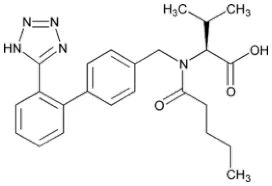
Proper name: Valsartan
Chemical name: (S)-N-valeryl-N-{[2'-(1H-tetrazol-5-yl) biphenyl-4-yl] methyl}-valine
Molecular formula and molecular mass: C24H29N5O3 / 435.5 g/mol
Structural formula:
Physicochemical properties:
Description: Fine white to practically white, practically odourless powder.
Solubility:
| Solvent | Temp. (OC) | Resulting pH | Solubility (g/L) |
|---|---|---|---|
| water | 25 | 3.8 | 0.18 |
| water | 37 | 3.8 | 0.21 |
| 0.1 N HCl | 22 | 1.12 | 0.084 |
| 0.01 N HCl | 37 | 1.0 | 0.10 |
| 0.067 M phosphate buffer, pH = 5.2 | 22 | 4.41 | 0.64 |
| 0.067 M phosphate buffer, pH = 8.0 | 22 | 5.29 | 16.8 |
| chloroform | 27 | - | 56 - 61 |
| ethanol 96% | 26 | - | > 300 |
| methanol p.a. | - | > 500 |
Melting Range: 105 - 110°C with decomposition.
pKa values:
| pKa Values | Solvent | Temp. (°C) | Assignment |
|---|---|---|---|
| 4.73 | Water | 22 | Tetrazole group |
| 3.90 | Water | 22 | Carboxylic group |
14 CLINICAL TRIALS
14.1 Clinical Trials by Indication
Hypertension
In a 6-week controlled study of the incidence of cough in hypertensive patients with a history of cough during ACE inhibitor therapy, the incidence of cough reported in patients receiving valsartan was significantly less than in patients rechallenged with an ACE inhibitor. In addition, an overall analysis of double-blind clinical trials in 4,565 patients revealed that the incidence of spontaneously reported cough was 2.7% in patients treated with valsartan 80 and 160 mg (n=2827), compared to 1.3% in patients treated with placebo (n=1007), whereas the incidence of cough with ACE inhibitors (n=731) was 12.6%.
The antihypertensive effects of valsartan were demonstrated principally in 9 placebo-controlled, 4- to 12-week trials (one in patients over 65) of dosages from 10 to 320 mg/day in patients with baseline diastolic blood pressures of 95-115 mmHg. The studies allowed comparison of once-daily and twice-daily regimens of 160 mg/day; comparison of peak and trough effects; comparison of response by gender, age, and race.
Administration of valsartan to patients with essential hypertension results in a significant reduction of sitting, supine, and standing systolic and diastolic blood pressure, usually with little or no orthostatic change.
In most patients, after administration of a single oral dose, onset of antihypertensive activity occurs at approximately 2 hours, and maximum reduction of blood pressure is achieved within 6 hours. The antihypertensive effect persists for 24 hours after dosing, but there is a decrease from peak effect at lower doses (40 mg) presumably reflecting loss of inhibition of angiotensin II. At higher doses, however (160 mg), there is little difference in peak and trough effect. During repeated dosing, the reduction in blood pressure with any dose is substantially present within 2 weeks, and maximal reduction is generally attained after 4 weeks. In long-term follow-up studies (without placebo control), the effect of valsartan appeared to be maintained for up to two years. The antihypertensive effect is independent of age, gender or race.
Abrupt withdrawal of valsartan has not been associated with a rapid increase in blood pressure.
The 9 studies of valsartan monotherapy included over 2,800 patients randomized to various doses of valsartan and about 1,100 patients randomized to placebo. Doses below 80 mg were not consistently distinguished from those of placebo at trough, but doses of 80, 160 and 320 mg produced dose-related decreases in systolic and diastolic blood pressure, with the difference from placebo of approximately 6-9/3-5 mmHg at 80-160 mg and 8-9/4-7 mmHg at 320 mg. In another study, patients randomized to valsartan 320 mg once daily had an incremental blood pressure reduction of 2.6/1.2 mmHg lower than did patients randomized to valsartan 160 mg once daily.
Patients with an inadequate response to valsartan 80 mg once daily were titrated to either valsartan 160 mg once daily or valsartan 80 mg twice daily, which resulted in a comparable response in both groups. In controlled trials, the antihypertensive effect of once-daily valsartan 80 mg was similar to that of once-daily enalapril 20 mg or once-daily lisinopril 10 mg.
There was essentially no change in heart rate in valsartan-treated patients in controlled trials.
Following Myocardial Infarction
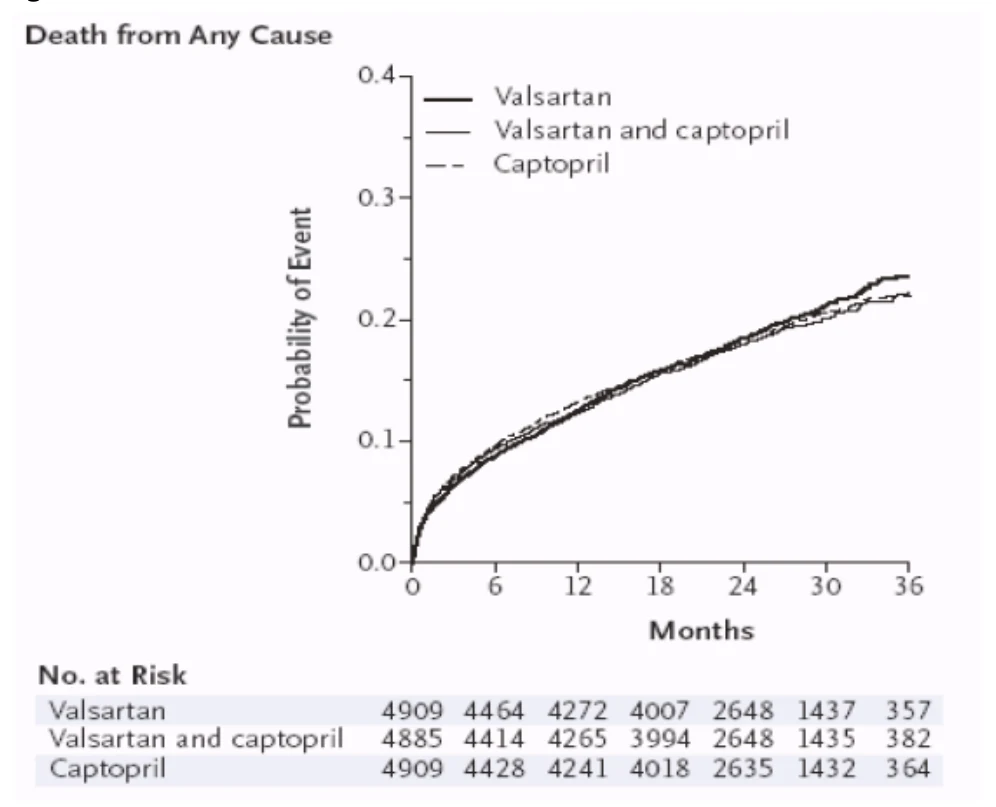
The VALsartan In Acute myocardial iNfarcTion trial (VALIANT) was a randomized, controlled, multinational, double-blind study in 14,703 patients with acute myocardial infarction and signs or symptoms of congestive heart failure and/or evidence of left ventricular systolic dysfunction (manifested as an ejection fraction ≤ 40% by radionuclide ventriculography or ≤ 35% by echocardiography or ventricular contrast angiography). Patients were randomized within 12 hours to 10 days after the onset of myocardial infarction symptoms to one of three treatment groups: valsartan (titrated from 20 mg twice daily to highest tolerated dose up to a maximum of 160 mg twice daily), the ACE inhibitor captopril (titrated from 6.25 mg three times daily to highest tolerated dose up to a maximum of 50 mg three times daily), or the combination of valsartan plus captopril. In the combination group, the dose of valsartan was titrated from 20 mg twice daily to highest tolerated dose up to a maximum of 80 mg twice daily; the dose of captopril was the same as for monotherapy. The mean treatment duration was two years. The mean daily dose of valsartan in the monotherapy group was 217 mg, while that of captopril in the monotherapy group was 104 mg, and that of valsartan 103 mg and captopril 93 mg when used in combination. Baseline therapy included acetylsalicylic acid (91%), beta-blockers (70%), ACE inhibitors (40%), thrombolytics (35%), and statins (34%). The population studied was 69% male, 94% Caucasian, and 53% were 65 years of age or older. The primary endpoint was time to all-cause mortality.
All-cause mortality was similar in the valsartan (19.9%), captopril (19.5%), and valsartan + captopril (19.3%) groups. Note that combining valsartan with captopril did not add further benefit over captopril alone. The hazard ratio for all-cause mortality for valsartan versus captopril was 1.00 (97.5% CI, 0.90 to 1.11; p=0.98), and for valsartan + captopril versus captopril was 0.98 (97.5% CI, 0.89 to 1.09; p=0.73), when adjusted for age and prior MI.
Figure 1
Further, there was no difference in all-cause mortality or cardiovascular mortality between study treatment groups when beta-blockers were administered concomitantly with valsartan, captopril, or the combination of valsartan with captopril. Irrespective of study drug treatment, mortality was about 70% higher in patients not treated with a beta-blocker, suggesting that the known beta-blocker benefit in this population was maintained in this trial.
Heart Failure
A study called Val-HeFT (valsartan in heart failure trial) was carried out in 5,010 patients, predominantly NYHA Class II (62%) and III (36%), male (80%), white (90%) with heart failure primarily due to coronary heart disease (57%) or idiopathic origin (31%) and left ventricular ejection fraction less than 40%. Forty seven percent of the patients were 65 years or older. Patients were randomized double-blindly to valsartan 160 mg (target dose) or placebo twice daily. The double-blind therapy was given in addition to what treating physicians considered adequate treatment: diuretic (86%), digoxin (67%), beta-blocker (35%: carvedilol 15%, metoprolol 12%) and ACE inhibitor 93%. Blood pressure was on average 3/2 mmHg lower in the valsartan group at the end of the trial (average 2 years). The trial was designed with two co-primary endpoints: (1) mortality from any cause and (2) the combined endpoint of all cause mortality and morbidity which was defined as cardiac arrest with resuscitation, hospitalization for worsening heart failure, or intravenous administration of inotropic or vasodilator drugs for 4 hours or longer without hospitalization.
It can be seen in Figure 2 and Table 4 there was no significant difference in mortality (the first primary endpoint) between the two groups of patients. The second co-primary endpoint was statistically significant in favour of valsartan (Table 4). The predominant benefit on the combined endpoint was largely due to a lower incidence of hospitalization for worsening heart failure with valsartan compared to placebo (p=0.001).
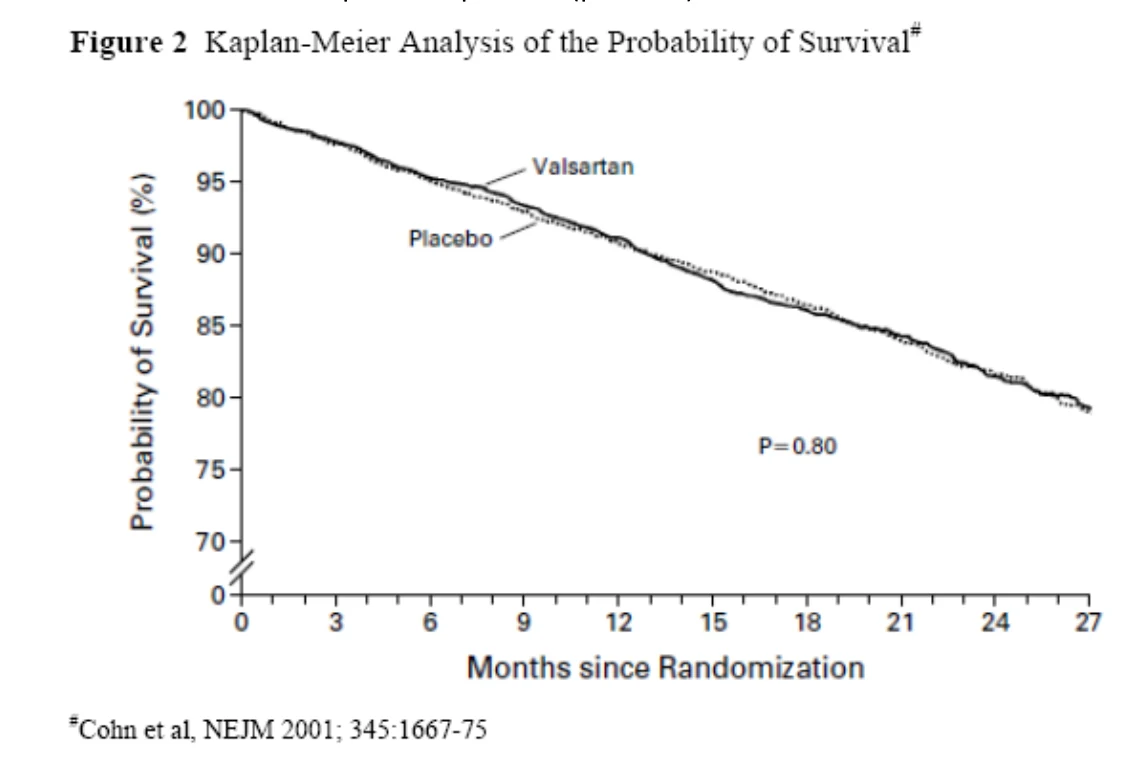
Table 4 Incidence and relative risk of the primary endpoints#
| Event | Valsartan Group (N = 2511) | Placebo Group (N=2499) | Relative Risk (CI)+ | P |
|---|---|---|---|---|
| no. with event (%) | ||||
Death from any cause (during entire trial) Combined end point | 495 (19.7) 723 (28.8) | 484 (19.4) 801 (32.1) | 1.02 (0.88-1.18) 0.87 (0.77-0.97) | 0.80 0.009 |
Death from any cause (at first event) Hospitalization for heart failure Cardiac arrest with resuscitation Intravenous therapy | 356 (14.2) 346 (13.8) 16 (0.6) 5 (0.2) | 315 (12.6) 455 (18.2) 26 (1.0) 5 (0.2) |
|---|
+ The 98% confidence interval (CI) was calculated for the mortality end point (death from any cause), and the 97.5% confidence interval was calculated for the combined mortality-morbidity end point.
† P values were calculated by the log-rank test from time to first event.
#Cohn et al, NEJM 2001; 345:1667-75
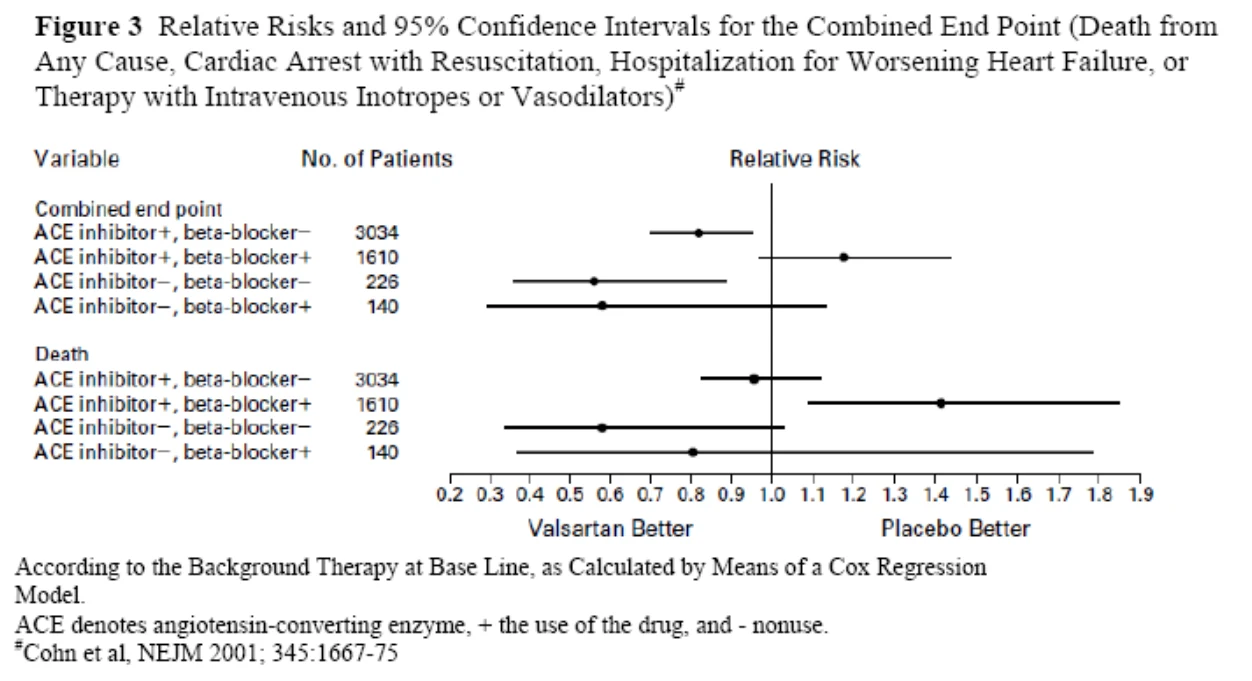
The results obtained from patients on different background therapies are given in Figure 3. The benefits of valsartan were most apparent in patients not receiving either an ACE inhibitor or a beta blocker. However, risk ratios favoring placebo were observed for those patients treated with the triple combination of a beta blocker, an ACE inhibitor and an ARB (angiotensin II receptor blocker), valsartan. These data, however, were obtained from post hoc analyses and could have occurred by chance. Further studies such as VALIANT, where mortality was not increased in these patients, have reduced the concerns regarding the triple combination.
The results of another subgroup in patients not treated with an ACE inhibitor are provided in the following Figure 4 and Table 5. These results suggest that valsartan may be beneficial in patients who are not treated with an ACE inhibitor but remain to be confirmed by results from trials specifically designed to support this suggestion.
Figure 4 Kaplan-Meier curves for mortality in the valsartan (dotted line) and placebo (solid line) groups without angiotensin-converting enzyme (ACE) inhibitor background therapy (p = 0.017 by log-rank test)┼.
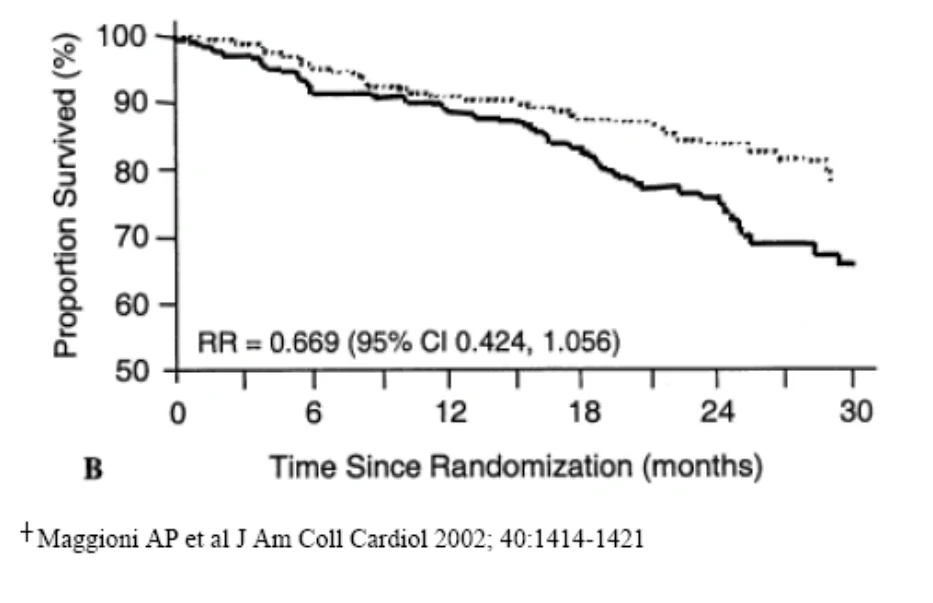
Table 5 Clinical Events in Patients Not Treated with Angiotensin-Converting Enzyme Inhibitors: A) Mortality and Morbidity End Points and B) Total Investigator - Assessed Hospital Admissions┼
| A | Valsartan Group (n = 185) | Placebo Group (n = 181) | RR+ | 95% CI+ | p Value† |
|---|---|---|---|---|---|
Primary end points All-cause mortality Mortality/morbidity Secondary mortality/morbidity end points (first occurrence) Cardiovascular deaths Nonfatal morbid event | 32 (17.3%) 46 (24.9%) 29 (15.7%) 24 (13.0%) | 49 (27.1%) 77 (42.5%) 40 (22.1%) 49 (27.1%) | 0.67 0.56 0.76 0.46 | 0.42-1.06 0.39-0.81 0.46-1.24 0.28-0.76 | 0.017‡ < 0.001‡ 0.074 <0.001‡ |
| A | Valsartan Group (n = 185) | Placebo Group (n = 181) | RR+ | 95% CI+ | p Value† |
|---|---|---|---|---|---|
Sudden death with resuscitation Therapy for HF Hospital admission for HF | 1 (0.5%) 0 24 (13.0%) | 2 (1.1%) 1 (0.6%) 48 (26.5%) | 0.46 - 0.47 | 0.04-5.25 - 0.29-0.78 | 0.529 - <0.001‡ |
| B | Valsartan | Placebo | Diff.§ | % Diff. | p Value¶ |
Hospitalization cause All-cause HF Non-HF | 199 51 148 | 262 117 145 | -63 -66 3 | -24.0 -56.4 2.1 | 0.260 0.010‡ 0.567 |
+ Risk ratio (RR) and 95% confidence interval (CI) obtained using Cox regression, adjusting for New York Heart Association (NYHA) class, left ventricular ejection fraction baseline beta-blocker usage, etiology, and age group.
†Based on log-rank tests.
‡ Statistically significant at p < 0.05.
§ Difference (valsartan - placebo); % Diff = 100 x Diff/placebo.
¶ Based on the Cochran-Mantel-Haenzel test for the number of hospital admissions stratified by beta-blocker usage and NYHA class, using modified ridit scores.
HF = heart failure.
┼ Maggioni AP et al J Am Coll Cardiol 2002; 40:1414-1421
Table 6 Permanent Study Treatment Discontinuations┼
Valsartan (n= 185) | Placebo (n= 181) | Total (n= 181) | p Value+ | |
|---|---|---|---|---|
Adverse events Life-threatening laboratory abnormalities Hypotension ┼ Other Total | 18 (9.7%) 1 (0.5%) 1 (0.5%) 12 (6.5%) 32 (17.3%) | 23 (12.7%) 1 (0.06%) 1 (0.06%) 20 (11.1%) 45 (24.9%) | 41 (11.2%) 2 (0.05%) 2 (0.05%) 32 (8.7%) 77 (21.0%) | 0.367 0.988 0.988 0.122 0.076 |
+ By chi-square test. ┼ Persistent standing systolic blood pressure < 80 mm Hg or symptoms of hypotension. ┼ Maggioni AP et al J Am Coll Cardiol 2002; 40:1414-1421
The most common adverse events regardless of causality were for valsartan and placebo, respectively, dizziness (24% and 19%), and hypotension (15% and 6%). The mean increase in serum creatinine was significantly higher in the valsartan-treated patients (0.18 ± 0.02 vs. 0.10 ± 0.02 mg/dL, p=0.009).
14.2 Comparative Bioavailability Studies
A double blind, randomized, single dose (1 x 5 mg), two way, crossover comparative bioavailability study of Teva-Valsartan 160 mg tablets (Teva Canada Limited) and DIOVAN® 160 mg tablets (Novartis Pharmaceuticals Canada Inc.) was conducted in 48 healthy, adult, male and female subjects under fasting conditions. Comparative bioavailability data from 42 subjects that were included in the statistical analysis are presented in the following table:
Valsartan (1 x 160 mg) Geometric Mean Arithmetic Mean (CV %) | ||||
| Parameter | Test1 | Reference2 | % Ratio of Geometric Means1 | 90% Confidence Interval |
AUC0-t (ng.h/mL) | 16195.95 17730.97 (39.65) | 14852.06 16522.19 (46.79) | 109.1% | 95.9 - 124.1 |
AUC0-inf5 (ng.h/mL) | 17573.99 18678.25 (36.42) | 15286.63 16760.47 (43.69) | 115.0% | 102.9 - 128.5 |
Cmax (ng/mL) | 2731.07 3150.78 (46.23) | 2442.74 2900.92 (55.02) | 111.8% | 91.7 - 136.4 |
Tmax3 (h) | 3.00 (1.00-24.00) | 3.00 (1.50-6.00) | ||
T½ el4,5 (h) | 8.08 (24.33) | 8.35 (31.21) | ||
1 Teva-Valsartan 160 mg tablets (Teva Canada Limited)
2 Diovan® 160 mg tablets (Novartis Pharmaceuticals Canada Inc.)
3 Expressed as median (range) only
4Expressed as the arithmetic mean (CV%) only
5 For these parameters, N = 40
15 MICROBIOLOGY
No microbiological information is required for this drug product.
16 NON-CLINICAL TOXICOLOGY
Pharmacodynamics
The in vitro data support that valsartan is a specific antagonist of the AT1 sub-type receptor, that valsartan does not react at other receptor sites and has an affinity for the receptor that is similar in the rat, marmoset and human; whereas the affinity of valsartan for the AT1 sub-type receptor in the dog is significantly smaller. This is further reinforced by data from in vivo studies and the literature. From animal and human studies, there is also no evidence that AT1 receptor blockade by valsartan together with the resulting Ang II increase causes any arrhythmogenic effects.
Vascular reactivity in the rat to exogenous Ang II is attenuated by sodium restriction and increased during sodium loading. These effects are opposite to those exhibited by the adrenal glomerulosa where sensitivity to Ang II increases during sodium restriction. This phenomenon is the consequence of changes in circulating Ang II levels linked to the altered sodium balance. As expected, in rats, after treatment with valsartan, there is a high level of circulating Ang II, so a down regulation of the receptor could therefore be expected which would reduce the efficacy of valsartan, but vascular receptor density and therefore vascular reactivity in the liver does not decrease after chronic treatment. So valsartan, should not produce internalisation of the Ang II receptor and hence, tolerance. With the increase in circulating Ang II, there is the possibility of some effects through stimulation of the AT2 receptor. The role of the AT2 receptor is currently unknown. No untoward effects were noted in preclinical or clinical studies that might suggest an AT2 receptor mediated action.
The correlation between plasma levels and pharmacological response is not very clear. A similar effect is also seen in the clinic where there is also not a very clear relationship between plasma levels and blood pressure reduction. The variability of the plasma levels is most likely due to the variability in absorption which is pH dependent and thus there will be a limited window of absorption in the alimentary tract. However the critical factor in the relationship between plasma drug levels and effect is that once the AT1 receptors are blocked, increasing plasma concentrations produce very little further action. Therefore this individual variability is not of major importance.
Pharmacokinetics
Results from the absorption, distribution, metabolism and excretion studies show a fairly similar pattern for the rat, marmoset and human though the volume of distribution is greater in the two former species. In the rat the distribution is rapid and valsartan is found mainly in the blood, plasma, liver, lung and renal cortex. In all 3 species the extent of protein binding is comprised between 94% and 97% and the metabolism is fairly low (> 10%) with excretion mainly via the bile. The vast majority of the dose is cleared within 24 hours and there does not appear to be any accumulation on repeated dosing. It does not cross the blood/brain barrier or transfer into the foetus.
General Toxicology:
In preclinical safety studies, high doses of valsartan (200 to 600 mg/kg body weight) caused in rats a reduction of red blood cell parameters (erythrocytes, hemoglobin, hematocrit) and evidence of changes in renal hemodynamics (slightly raised plasma urea, and renal tubular hyperplasia and basophilia in males). These doses in rats (200 and 600 mg/kg/day) are approximately 6 and 18 times the maximum recommended human dose on a mg/m2 basis (calculations assume an oral dose of 320 mg/day and a 60-kg patient). In marmosets at similar doses, the changes were similar though more severe, particularly in the kidney where the changes developed to a nephropathy which included raised urea and creatinine. Hypertrophy of the renal juxtaglomerular cells was also seen in both species. All changes were considered to be caused by the pharmacological action of valsartan which produces prolonged hypotension, particularly in marmosets. In embryofetal development studies (Segment II) in mice rats and rabbits, fetotoxicity was observed in association with maternal toxicity in rats and valsartan doses of ≥ 200 mg/kg/days and in rabbits at doses of ≥ 10 mg/kg/day. In a peri- and postnatal development toxicity (segment III) study, the offspring from rats treated at 600 mg/kg during the last trimester and lactation showed a slightly reduced survival rate and a slight delay in developmental milestones (see 7.1.1 Pregnant Women). The main preclinical safety findings involving the kidney and related effects are attributed to the pharmacological action of the compound. There was no evidence of mutagenicity, clastogenicity, abnormal reproductive performance in rats or carcinogenicity in mice and rats.
Acute Toxicity
| Species | Route | Duration | Dose mg/kg | Major findings |
|---|---|---|---|---|
| Rat | Gavage | Acute | 100 | No adverse findings. |
| Rat | Gavage | Acute | 1000, 2000 | 2000 mg/kg: Diarrhea, white substance (similar to test substance) in feces. Approximate LD50 >2000 mg/kg. |
| Marmoset | Gavage | Acute | 600, 1000 | No effect 600 mg/kg. 1000 mg/kg: Vomiting, white substance (similar to test substance) in vomitus. Approximate LD50 >1000 mg/kg. |
Long-Term Toxicity
| Species | Route | Duration | Dose mg/kg | Major findings |
|---|---|---|---|---|
| Rat | Gavage | 14 day | 60, 200, 600 | Increase in urea at 200 and 600 mg/kg. NOEL = 60 mg/kg. |
| Marmoset | Gavage | 14 day | 60, 200, 600 | Vomiting and mild to moderate increase in urea at 600 mg/kg. NOEL - 200 mg/kg. |
| Species | Route | Duration | Dose mg/kg | Major findings |
|---|---|---|---|---|
| Rat | Intravenous | 14 day | 10, 30, 100 | No adverse findings. NOAEL = 100 mg/kg. |
| Marmoset | Intravenous | 14 day | 6, 20, 60 | No adverse findings. NOAEL = 60 mg/kg. |
| Rat | Gavage | 91 day | 60, 200, 600 | 200 & 600 mg/kg: Increase in urea 600 mg/kg: Renal tubular hyperplasia, glomerular arteriolar hypertrophy. Anemia with regenerative response. NOEL = 60 mg/kg. |
| Marmoset | Gavage | 91 day | 30, 60, 200, 600 → 400 | Plasma urea & creatinine↑from 200 mg/kg. Nephropathy at 200 & 600 mg/kg. Alk. Phos. ↑ at 400 mg/kg. Anemia from 200 mg/kg. Hypertrophy of glomerular arteriole at 400 mg/kg. Adrenal cortex hypertrophy from 200 mg/kg in F. Cachexia including 3 deaths at 600 mg/kg. One death at 200 mg/kg. One death at 400 mg/kg during the recovery period. NOEL = 60 mg/kg. |
| Rat | Gavage | 12 months | 20, 60, 200 | Increase in urea at 60 mg/kg, and anemia and renal arteriolar hypertrophy at 200 mg/kg. NOAEL = 20 mg/kg. |
NOEL No observable effect level.
NOAEL No observable adverse effect level.
Carcinogenicity
| Mouse | Diet | 2 years | 10, 40, 160 | Hyperplasia of gastric mucosa in males. ↓body weight gain at 10 mg/kg. No carcinogenic effect |
| Rat | Diet | 2 years | 10, 50, 200 | ↓body weight gain, anemia, nephropathy at ≥ 50 mg/kg. ↑ urea and creatinine, ↓total proteins and albumin at 200 mg/kg. No carcinogenic effect. |
Genotoxicity:
There is no evidence of compound-related mutagenicity and clastogenicity in a battery of mutagenicity studies covering various end points.
In vitro
| Test | System | μg/mL or *plate | Comments |
| Mutagenicity | Bacteria** | *5.0 - 5000.0 | Negative |
| Mutagenicity | Bacteria*** | *5000.0 | Negative |
| Gene mutation | Chinese hamster cells (V79) | 81.88 - 5550.00 | Negative |
| Chromoso me aberration | Chinese hamster cells (ovary) | 81.88 - 1310.00 | Negative |
In vivo
| Test | System | mg/kg | Comments |
|---|---|---|---|
| Micro-nucleus | Rat | 781.3 - 3 125.0 | Negative |
** S typhimurium - TA98, TA100, TA 1537 E coli - WP2uvrA *** S typhimurium - TA98, TA100, TA1535, TA 1537 E coli - WP2uvrA
Reproductive and Developmental Toxicology:
Segment I
| Species | Route | Duration of dosing | Dose mg/kg | Major findings |
| Rat | Gavage | M - 90 days F - day 14 to 19 or 14 to +20 | 10, 50, 200 | ↓ in field motor actvity at 200 mg/kg in F; no effect on fertility, reproductive performance in F0 & F1 and on F1 development. No effect on kidney development. |
Segment II
| Mouse | Gavage | Day 6 to 15 | 60, 200, 600 | No embryotoxicity, fetotoxicity or teratogenicity at 600 mg/kg. |
| Rat | Gavage | Day 6 to 15 | 60, 200, 600 | Reduced maternal body weight gain at 200 & 600 mg/kg and fetal weights at 600 mg/kg. No embryotoxicity, fetotoxicity or teratogenicity at 600 mg/kg. |
| Rabbit (range finding) | Drench | Day 6 to 18 | 2.5, 15, 30, 45, 50, 150 | Litter losses and deaths at 15 mg/kg and above. One litter loss (1/5) at 2.5 mg/kg. |
| Rabbit | Gavage | Day 6 to 18 Day 7 to 19 | 2, 5, 10 | Increased incidence of low fetal weights at 5 mg/kg. Litter loss and abortion at 5 & 10 mg/kg. No teratogenicity at 10 mg/kg. |
Segment III
| Rat | Gavage | Day 15 to 20 or + 20 | 60, 200, 600 | Slightly reduced post-natal F1 survival and development in the presence of reduced maternal body weight gain at 600 mg/kg. No effect on kidney development. |
|---|
+ - Number of days post-parturition
17 SUPPORTING PRODUCT MONOGRAPH
- 1. DIOVAN (Tablet, 40mg, 80mg, 160mg and 320 mg) Submission control No. 267351, Product Monograph, Novartis Pharmaceuticals Canadda Inc (March 22, 2023).