


Product Monograph - Thyrogen
1 INDICATIONS
THYROGEN ® (thyrotropin alfa for injection) is indicated for:
- use as an adjunctive treatment as pre-therapeutic stimulation for radioiodine ablation of thyroid tissue remnants in patients maintained on thyroid hormone suppression therapy who have undergone a near-total or total thyroidectomy for well-differentiated thyroid cancer without evidence of distant metastatic thyroid cancer.
- use as an adjunctive diagnostic tool for serum thyroglobulin (Tg) testing, with or without radioiodine imaging, in the follow-up of patients with well-differentiated thyroid cancer.
Potential Clinical Uses:
- 1. THYROGEN ® treatment may be used in combination with radioiodine (131I) to ablate thyroid remnants following near-total or total thyroidectomy in patients without evidence of distant metastatic thyroid cancer.
- 2. THYROGEN ® Tg testing may be used in patients with an undetectable Tg on thyroid hormone suppressive therapy, to exclude the diagnosis of residual or recurrent thyroid cancer.
- 3. THYROGEN ® testing may be used in patients requiring serum Tg testing and radioiodine imaging, who are unwilling to undergo thyroid hormone withdrawal testing.
- 4. THYROGEN ® treatment and testing may be used in patients who are either unable to mount an adequate endogenous TSH response to thyroid hormone withdrawal or in whom withdrawal is medically contraindicated.
Considerations in the Use of THYROGEN ®:
- 1. Clinicians employ a wide range of 131I activities to achieve remnant ablation. Published studies of the use of THYROGEN ® to achieve remnant ablation have used 131I activities of 1.1 GBq (30 mCi) to 4.1 GBq (110 mCi) and the Genzyme study employed 3.7 GBq (100 mCi) ± 10% in all patients. Multiple factors contribute to the decision about the activity of 131I that should be administered for a given patient, such as the size of the remnant tissue (a function of aggressiveness of the surgical resection), and the perceived risk of the patient for thyroid cancer recurrence (a function of patient age, primary tumour type and size, extent of disease). Activities of 131I in the 3.7 GBq (100 mCi) range or above achieve remnant ablation more frequently than do lower activities, but may be associated more often with complications of 131I treatment, such as salivary gland pain and swelling, persistent dry mouth, dry eyes or altered taste. Experience with THYROGEN ® in combination with other radioiodine activities, in particular as low as approximately 1.1 GBq (30 mCi), has been accumulated and two large published randomised prospective trials that compared 1.1 GBq (30 mCi) and 3.7 GBq (100 mCi) found that remnant ablation rates were not substantially different between the two radioiodine activities and the THYROGEN ® and thyroid hormone withdrawal methods of TSH stimulation.
- 2. Even when THYROGEN®-stimulated Tg testing is performed in combination with radioiodine imaging, there remains a risk of missing a diagnosis of thyroid cancer or of underestimating the extent of disease. Therefore, thyroid hormone withdrawal Tg testing with radioiodine imaging continues to be the standard diagnostic modality to assess the presence, location and extent of thyroid cancer.
- 3. Although THYROGEN ® appeared noninferior to thyroid hormone withholding, based on <0.1% uptake of radioactive tracer within the thyroid bed at 24 hours in a study of postsurgical thyroid remnant ablation, long-term clinical outcome data are limited. Due to the relatively small clinical experience with THYROGEN ® in remnant ablation, it is not possible to conclude whether long-term thyroid cancer outcomes would be equivalent after use of THYROGEN ® or use of thyroid hormone withholding for TSH elevation prior to remnant ablation.
- 4. THYROGEN ® Tg levels are generally lower than Tg levels after thyroid hormone withdrawal. The extent to which THYROGEN ® Tg levels correlate with Tg levels after thyroid hormone withdrawal has not been adequately studied.
- 5. A newly detectable Tg level or a Tg level rising over time after THYROGEN ®, or a high index of suspicion of metastatic disease, even in the setting of a negative or low-stage THYROGEN ® radioiodine scan, should prompt further evaluation such as thyroid hormone withdrawal to definitively establish the location and extent of thyroid cancer. On the other hand, none of the 31 patients studied with undetectable THYROGEN ® Tg levels (<2.5 ng/mL) had metastatic disease. Therefore, an undetectable THYROGEN ® Tg level suggests the absence of clinically significant disease.
- 6. The decisions whether to perform a THYROGEN ® radioiodine scan in conjunction with a THYROGEN ® serum Tg test and whether and when to withdraw a patient from thyroid hormone are complex. Pertinent factors in these decisions include the sensitivity of the Tg assay used, the THYROGEN ® Tg level obtained, and the index of suspicion of recurrent or persistent local or metastatic disease. In the clinical trials combination Tg and scan testing did enhance the diagnostic accuracy of THYROGEN ® in some cases.
- 7. The signs and symptoms of hypothyroidism which accompany thyroid hormone withdrawal are avoided with THYROGEN ®(see PART II: SCIENTIFIC INFORMATION, CLINICAL TRIALS, Hypothyroid Signs and Symptoms and Quality of life).
1.1 Pediatrics
Pediatrics (< 18 years of age): Safety and effectiveness in patients below the age of 18 years have not been established.
1.2 Geriatrics
Geriatrics (> 65 years of age): Results from controlled trials indicate no difference in the safety and efficacy of Thyrogen® between adult patients less than 65 years and those greater than 65 years of age.
Careful evaluation of benefit risk relationships should be assessed for high risk elderly patients with functioning thyroid tumours and/or patients with heart disease (i.e. valvular heart disease, cardiomyopathy, coronary artery disease, and prior or current tachyarrhythmia) undergoing Thyrogen® administration.
2 CONTRAINDICATIONS
Thyrogen® (thyrotropin alfa for injection) is contraindicated in patients who are hypersensitive to this drug or to any ingredient in the formulation, including any non-medicinal ingredient, or component of the container or component of the container (see 7 WARNINGS AND PRECAUTIONS, General). For a complete listing, see 6 DOSAGE FORMS, STRENGTHS, COMPOSITION AND PACKAGING.
3 SERIOUS WARNINGS AND PRECAUTIONS BOX
Serious Warnings and Precautions
|
|---|
4 DOSAGE AND ADMINISTRATION
4.1 Dosing Considerations
- Thyrogen® (thyrotropin alfa for injection) injections should be supervised by a healthcare professional knowledgeable in the management of thyroid cancer.
- Thyrogen® should be administered intramuscularly only. It should not be administered intravenously.
4.2 Recommended Dose and Dosage Adjustment
A two-injection regimen is recommended for Thyrogen® administration.
The two-injection regimen is Thyrogen®0.9 mg intramuscularly (IM), followed by a second 0.9 mg IM injection 24 hours later.
After reconstitution with 1.2 mL Sterile Water for injection, USP, 1.0 mL solution (containing 0.9 mg thyrotropin alfa), Thyrogen® is administered by intramuscular injection in the gluteal muscle.
No pediatric data are available to Health Canada; therefore, Health Canada has not authorized an indication for pediatric use.
4.3 Reconstitution
Thyrogen® has to be reconstituted with Sterile Water for Injection. Only one vial of Thyrogen® is required per injection.
Instructions for Use (with Aseptic Technique)
Add 1.2 mL of Sterile Water for Injection, USP, to the Thyrogen® powder in the vial. Swirl the contents of the vial gently until all material is dissolved. Do not shake the solution. When reconstituted as directed, the resulting solution has a concentration of 0.9 mg thyrotropin alfa per mL.
Reconstituted Thyrogen® solution should be a clear, colourless solution. Do not use vials exhibiting foreign particles, cloudiness or discoloration. The pH of the reconstituted solution is 6.5 – 7.5.
Withdraw 1.0 mL of the Thyrogen® solution from the product vial. This equals 0.9 mg thyrotropin alfa to be injected.
Thyrogen® does not contain preservatives.
The Thyrogen® solution should be injected within three hours, however the Thyrogen® solution will stay chemically stable for up to 24 hours, if kept in a refrigerator (between 2-8oC). It is important to note that the microbiological safety depends on the aseptic conditions during the preparation of the solution.
Each vial of Thyrogen® and each vial of diluent is intended for single use. Discard unused materials.
Thyrogen® injection material should not be mixed with other substances.
Table 1 - Reconstitution
| Vial Size | Volume of Diluent to be Added to Vial | Approximate Available Volume | Nominal Concentration per mL |
|---|---|---|---|
| 5cc | 1.2 mL | ~ 1.2 mL | 0.9 mg/mL |
4.4 Administration
Thyrogen® (thyrotropin alfa for injection) should be administered intramuscularly only.
4.5 Missed Dose
Not applicable.
4.6 Image Acquisition and Interpretation
The following parameters were utilized in the second Phase 3 study and these parameters are recommended for radioimaging scanning:
- For radioiodine imaging or treatment, radioiodine administration should be given 24 hours following the final Thyrogen® injection. Diagnostic scanning should be performed 48 hours after radioiodine administration whereas post-therapy scanning may be delayed additional days to allow background activity to decline.
- A diagnostic activity of 148 MBq (4mCi) 131I should be used.
- Whole body images should be acquired for a minimum of 30 minutes and/or should contain a minimum of 140,000 counts.
- Scanning times for single (spot) images of body regions should be 10-15 minutes or less if the minimum number of counts is reached sooner (i.e. 60,000 for a large field of view camera, 35,000 counts for a small field of view).
For radioiodine ablation of thyroid tissue remnants, the activity of 131I is carefully selected at the discretion of the nuclear medicine physician.
For serum Tg testing, the serum sample should be obtained 72 hours after the final injection of Thyrogen®.
5 OVERDOSAGE
Data on exposure above the recommended dose is limited to clinical studies and a special treatment program. Three patients in clinical trials, and one patient in the special treatment program experienced symptoms after receiving Thyrogen® (thyrotropin alfa for injection) doses higher than those recommended. Two patients had nausea after a 2.7 mg IM dose, and in one of these patients, the event was accompanied by weakness, dizziness and headache. The third patient experienced nausea, vomiting and hot flashes after 3.6 mg IM dose. In the special treatment program, a 77 year-old non-thyroidectomized patient received 4 doses of Thyrogen®0.9 mg over 6 days, developed atrial fibrillation, cardiac decompensation and terminal myocardial infarction 2 days later.
One additional patient enrolled in a clinical trial who received 0.3 mg Thyrogen® as a single IV bolus, experienced severe nausea, vomiting, diaphoresis, hypotension (BP decreased from 115/66 mm Hg to 81/44 mm Hg) and tachycardia (pulse increased from 75 to 117 bpm) 15 minutes after injection.
When necessary, symptomatic treatment should be considered for potential cardiac symptoms.
In case of overdose, assessment of fluid balance and administration of fluids and/or an antiemetic may be considered.
| For management of a suspected drug overdose, contact your regional poison control centre. |
|---|
6 DOSAGE FORMS, STRENGTHS, COMPOSITION AND PACKAGING
Thyrogen® (thyrotropin alfa for injection) is supplied as a sterile, non-pyrogenic lyophilized product. It is available as a kit containing two 1.1 mg vials (7-26 IU/mg) Thyrogen®(see 13 PHARMACEUTICAL INFORMATION).
Composition:
The quantitative composition of the lyophilized drug per vial is:
| Thyrotropin alfa | 1.1 mg |
|---|---|
| Mannitol | 36 mg |
| Sodium Phosphate | |
| Monobasic, monohydrate | 1.4 mg |
| Dibasic, heptahydrate | 3.7 mg |
| Sodium Chloride | 2.4 mg |
| Nitrogen | qs |
Thyrogen® is preservative free.
Table 2 - Dosage Forms, Strengths, Composition and Packaging
| Route of Administration | Dosage Form / Strength | Clinically Relevant Nonmedicinal Ingredients |
| Intramuscular injection in the gluteal muscle | Lyophilized powder/0.9 mg/mL1 | There are no clinically relevant nonmedicinal ingredients. Nonmedicinal ingredients: Mannitol, Sodium phosphate monobasic monohydrate, Sodium phosphate dibasic heptahydrate, Sodium chloride, Nitrogen, Sterile water for injection |
| 1 Thyrogen® is supplied as a sterile lyophilized powder for reconstitution in a clear 5.0 mL Type I flint tubing vial; gray 20 mm siliconized butyl stopper; 20 mm aluminum 6 bridge seal with a plastic flip off cap dimethicone siliconizing agent | ||
7 WARNINGS AND PRECAUTIONS
Please see 3 SERIOUS WARNINGS AND PRECAUTIONS BOX .
General
Intravenous use has caused rapid onset of: severe nausea, vomiting, diaphoresis, hypotension and tachycardia. This occurred in one patient enrolled in a clinical trial who received 0.3 mg of Thyrogen® as a single IV bolus, experienced severe nausea, vomiting, diaphoresis, hypotension (BP decreased from 115/66 mmHg to 81/44 mmHg) and tachycardia (pulse increased from 75 to 117 bpm) 15 minutes after injection.
Thyrogen® injections should be supervised by a healthcare professional knowledgeable in the management of thyroid cancer. Thyrogen® should only be administered intramuscularly in the gluteal muscle. It should not be administered intravenously.
Caution should be exercised when Thyrogen® is administered to patients who have been previously treated with bovine thyroid stimulating hormone. In particular, patients who have experienced hypersensitivity reactions to bovine or human TSH may be at a greater risk for developing hypersensitivity reactions to Thyrogen®, and appropriate precautions should be undertaken.
The combination of WBS (Whole Body Scan) and Tg testing after Thyrogen® administration improves sensitivity for detection of thyroid remnants of cancer over either alone.
Due to elevation of TSH levels after Thyrogen® administration (0.9 mg x 2), thyroid cancer patients with metastatic disease, particularly in confined spaces (for example, brain, spinal cord, orbit or soft tissues of the neck) may be subject to local edema or focal hemorrhage at the site of these metastases. Enlargement of residual thyroid tissue or metastases can also occur, which may lead to acute symptoms depending on the anatomical location of the tissue. It is recommended that pre-treatment with glucocorticoids be considered for patients in whom local tumour expansion may compromise vital anatomic structures (such as trachea, central nervous system, or extensive macroscopic lung metastases) prior to the administration of Thyrogen® (see ADVERSE REACTIONS).
Thyrogen® adjunctive treatment for radioiodine ablation of thyroid tissue remnants after near total or total thyroidectomy should not be used in patients with distant metastatic thyroid cancer.
Careful evaluation of benefit risk relationships should be assessed for high risk elderly patients with functioning thyroid tumours undergoing Thyrogen® administration. This may result in palpitations or cardiac rhythm disorder (see ADVERSE REACTIONS).
Elimination of Thyrogen® is significantly slower in dialysis-dependent end-stage renal disease (ESRD) patients, resulting in prolonged elevation of TSH levels (see ADVERSE REACTIONS).
In post-marketing experience, there have been rare reports of events leading to death that occurred within 24 hours of administration of Thyrogen® in patients with multiple serious medical problems. For patients for whom Thyrogen®-induced hyperthyroidism could have serious consequences, hospitalization for administration of Thyrogen® and post-administration observation should be considered. Such patients might include those with known heart disease, extensive metastatic disease, or other known serious underlying illness.
Interpretation of Results
As with other diagnostic modalities, false negative results may occur with Thyrogen®. If a high index of suspicion for metastatic disease persists, confirmatory WBS and Tg testing should be considered following thyroid hormone withdrawal.
Thyroglobulin (Tg) antibodies may confound the Tg assay and render Tg levels uninterpretable. Therefore, in such cases, even with a negative or low-stage Thyrogen® radioiodine scan, consideration should be given to evaluating patients further with, for example, a confirmatory thyroid hormone withdrawal scan to determine the location and extent of thyroid cancer.
TSH antibodies have not been reported in patients treated to date. However, exposure has been limited to 27 patients who received Thyrogen® in the clinical trials on more than one occasion and remained antibody negative. There have been several reports of hypersensitivity consisting of urticaria, rash, pruritis, flushing and respiratory signs and symptoms (see ADVERSE REACTIONS).
Carcinogenesis and Mutagenesis
Long-term toxicity studies in animals have not been performed with Thyrogen® to evaluate the carcinogenic potential of the drug. Thyrogen® was not mutagenic in the bacterial reverse mutation assay.
In patients with thyroid cancer, several cases of stimulated tumour growth have been reported during withdrawal of thyroid hormones for diagnostic procedures due to the subsequent prolonged elevation of thyroid stimulating hormone (TSH) levels.
There is a theoretical possibility that Thyrogen®, like thyroid hormone withdrawal, may lead to stimulated tumour growth. In clinical trials with thyrotropin alfa, which produces a short-term increase in TSH levels, no case of tumour growth has been reported.
However, due to elevation of TSH levels after Thyrogen® administration, thyroid cancer patients with metastatic disease, particularly in confined spaces (for example, brain, spinal cord, orbit or soft tissues of the neck) may be subject to local edema or focal hemorrhage at the site of these metastases. It is recommended that pre-treatment with corticosteroids be considered in these patients in whom local tumour expansion may compromise vital anatomic structures prior to the administration of Thyrogen®.
Cardiovascular
Three patients enrolled in clinical trials and/or the Compassionate Use Program developed thromboembolism. Amongst 152 patients in the diagnostic study TSH92-0601, one patient with extensive metastases had a fatal Pulmonary Embolism 8 days after receiving Thyrogen®. Amongst 115 advanced cancer patients treated in the Compassionate Use Program, 2 had Deep Vein Thrombosis (DVT) AEs.
There are several reports in the post-marketing database of DVT and/or Pulmonary Embolism in patients who received Thyrogen®. One patient was on concomitant oral contraceptive therapy, and the other patients had prolonged hospitalization and/or extensive metastatic disease prior to the thromboembolic event.
Caution should be exercised when administering Thyrogen® to patients with a known history of heart disease and with significant residual thyroid tissue. Thyrogen® is known to stimulate residual thyroid tissue to produce a transient but significant rise in serum thyroid hormone concentration when given to patients who have substantial thyroid tissue still in situ. Elevations in thyroid hormone levels may exacerbate underlying heart disease. When appropriate, physicians should undertake precautionary measures to prevent or mitigate hyperthyroidism, monitor patients for evidence of worsening heart disease, and treat signs and symptoms of hyperthyroidism and worsening heart disease.
Careful evaluation of benefit-risk with Thyrogen® treatment should be assessed for high-risk elderly patients with heart disease (e.g., valvular heart disease, cardiomyopathy, coronary artery disease, and prior or current tachyarrhythmia).
See also: Overdosage
Dependence/Tolerance
No studies have been conducted.
Driving and Operating Machinery
Studies have not been conducted.
Ear/Nose/Throat
Not applicable
Endocrine and Metabolism
Careful evaluation of benefit-risk relationships should be assessed for Thyrogen® administration in high-risk elderly patients who have not yet undergone thyroidectomy.
Gastrointestinal
Not applicable
Genitourinary
Not applicable
Hematologic
Three patients enrolled in clinical trials and/or the Compassionate Use Program developed thromboembolism. Amongst 152 patients in the diagnostic study TSH92-0601, one patient with extensive metastases had a fatal Pulmonary Embolism 8 days after receiving Thyrogen®. Amongst 115 advanced cancer patients treated in the Compassionate Use Program, 2 had Deep Vein Thrombosis (DVT) AEs.
There are several reports in the post-marketing database of DVT and/or Pulmonary Embolism in patients who received Thyrogen®. One patient was on concomitant oral contraceptive therapy, and the other patients had prolonged hospitalization and/or extensive metastatic disease prior to the thromboembolic event.
Hepatic/Biliary/Pancreatic
The organ(s) of rhTSH (recombinant human Thyroid Stimulating Hormone) clearance in humans have not been identified, but preclinical studies suggest the involvement of the liver and kidneys.
See also: Detailed Pharmacology
Immune
TSH antibodies have not been reported in patients treated with Thyrogen® in the clinical trials, although only 27 patients who received Thyrogen® treatment more than once underwent testing for the development of TSH antibodies. The occurrence of antibodies which could interfere with endogenous TSH assays cannot be excluded.
Monitoring and laboratory tests
Measurement of serum TSH 72 hours following the second dose of Thyrogen® may show levels below the 25 mU/L normally observed in hypothyroid patients. In pharmacokinetic studies, peak serum TSH levels of 116 ± 38 mU/L were reached between 3 and 24 hours following a single dose of Thyrogen® (see ACTION AND CLINICAL PHARMACOLOGY, Pharmacokinetics). Thyrogen® has an elimination half-life of 25 ± 10 hours, therefore, several days after the second dose of Thyrogen®, the serum TSH levels can fall to levels below those normally observed in hypothyroid cancer patients.
In clinical trials, the reference standard for determining whether patients had thyroid remnant or cancer present was a hypothyroid Tg > 2.0 ng/mL and/or a hypothyroid scan (either diagnostic or post-therapy). This analysis evaluated whether Tg testing after Thyrogen® administration improved the diagnostic sensitivity of a Tg test in patients with a negative Tg on THST using a cut-off of 2.0 ng/mL. It should be noted that Thyrogen® Tg levels are generally lower than hypothyroid Tg levels and thus physicians may need to use a lower Tg cut-off level when using Thyrogen® than would be used with a hypothyroid Tg.
Musculoskeletal
Not applicable.
Neurologic
4/55 patients [7.3%] with CNS metastases experienced acute hemiplegia, hemiparesis, pain or loss of vision within 72 hours of Thyrogen® administration.
Ophthalmologic
See: Neurologic above
Peri-Operative Considerations
Not applicable.
Psychiatric
Not applicable.
Renal
The organ(s) of rhTSH clearance in humans have not been identified, but preclinical studies suggest the involvement of the liver and kidneys.
See also: Detailed Pharmacology
Elimination of Thyrogen® is significantly slower in dialysis-dependent end-stage renal disease (ESRD) patients, resulting in prolonged elevation of TSH levels (see ADVERSE REACTIONS).
Reproductive Health: Female and Male Potential
Fertility
Studies have not been conducted.
Function
Studies have not been conducted.
Teratogenic Risk
It is not known whether Thyrogen® can cause fetal harm when administered to a pregnant woman or can affect reproductive capacity (see 7.1.1 Pregnant Women)
Respiratory
Laryngeal oedema, pain at the site of metastases and respiratory distress requiring tracheotomy have occurred. Sudden rapid and painful enlargement of locally recurring papillary carcinoma has been reported 12-48 hours after Thyrogen® administration. The enlargement was accompanied by dyspnoea, stridor or dysphonia. Rapid clinical improvement occurred following glucocorticoid therapy.
Sensitivity/Resistance
There have been several reports of hypersensitivity reactions (including urticaria, rash, pruritus, flushing and respiratory symptoms) requiring urgent treatment.
Skin
See Sensitivity/Resistance
7.1 Special Populations
7.1.1 Pregnant Women
No experience. Animal reproductive studies and studies to evaluate the effects on fertility have not been conducted with Thyrogen®. It is also not known whether Thyrogen® can cause fetal harm when administered to a pregnant woman or can affect reproductive capacity. Thyrogen® should be used in pregnancy only if the benefit outweighs the risks. Thyrogen® in combination with diagnostic radioiodine whole body scintigraphy is contraindicated in pregnancy, because of the consequent exposure of the foetus to a high dose of radioactive material.
7.1.2 Breast-feeding
It is not known whether the drug is excreted in human milk. Because many drugs are excreted in human milk, caution should be exercised when Thyrogen® is administered to a nursing woman. Patients should not breast-feed.
7.1.3 Pediatrics
Pediatrics (< 18 years of age): No data are available to Health Canada; therefore, Health Canada has not authorized an indication for pediatric use.
7.1.4 Geriatrics (< 65 years of age):
Results from controlled trials indicate no difference in the safety and efficacy of Thyrogen® between adult patients less than 65 years and those greater than 65 years of age.
Careful evaluation of benefit risk relationships should be assessed for high risk elderly patients with functioning thyroid tumours and/or patients with heart disease (i.e. valvular heart disease, cardiomyopathy, coronary artery disease, and prior or current tachyarrhythmia) undergoing Thyrogen® administration.
8 ADVERSE REACTIONS
8.1 Adverse Reaction Overview
Adverse reaction data were derived from post-marketing surveillance and clinical trials. Table 3 below represents adverse reactions experienced by 62 thyroid cancer patients who participated in the clinical trials for Thyrogen® supporting the ablation indication (THYR-008-00 and THYR01605). Table 4 below represents adverse reactions experienced by 381 thyroid cancer patients who participated in the clinical trials for Thyrogen® supporting the diagnostic indication (TSH92-0601 and TSH95-0101).
8.2 Clinical Trial Adverse Reactions
Clinical trials are conducted under very specific conditions. The adverse reaction rates observed in the clinical trials; therefore, may not reflect the rates observed in practice and should not be compared to the rates in the clinical trials of another drug. Adverse reaction information from clinical trials may be useful in identifying and approximating rates of adverse drug reactions in real-world use.
Three patients enrolled in clinical trials and/or the Compassionate Use Program developed thromboembolism. Amongst 152 patients in the diagnostic study TSH92-0601, one patient with extensive metastases had a fatal Pulmonary Embolism 8 days after receiving Thyrogen®. Amongst 115 advanced cancer patients treated in the Compassionate Use Program, 2 had Deep Vein Thrombosis (DVT) AEs.
There are several reports in the post-marketing database of DVT and/or Pulmonary Embolism in patients who received Thyrogen®. One patient was on concomitant oral contraceptive therapy, and the other patients had prolonged hospitalization and/or extensive metastatic disease prior to the thromboembolic event.
Remnant Ablation Indication
Adverse reaction data for the remnant ablation indication are derived from 62 patients who received Thyrogen® as adjunctive treatment for radioiodine ablation of thyroid tissue remnants in THYR-008-00 and follow-up study THYR01605.
In the THYR-008-00 study, patients were randomized to either the hypothyroid or euthyroid group after thyroidectomy. Patients randomised to the Euthyroid group received 0.9 mg Thyrogen® IM once a day for 2 days prior to an ablative activity of 131I (3.7 GBq ± 10%; 100 mCi) administered on the following day. Patients randomised to the Hypothyroid Group did not receive Thyrogen® prior to ablation. An ablative activity of 131I (3.7 GBq ± 10%; 100 mCi) was administered. Eight (±1) months later, patients in both groups were administered Thyrogen® 0.9 mg IM once a day x 2 days for diagnostic purposes. Adverse events were collected in the Euthyroid group for the entire 8-month period including 5 days after the diagnostic dose of Thyrogen®. The THYR01605 study was a follow-up study performed on a subset of patients from the THYR-008-00 study, with a median follow-up of 3.7 years (range 3.4-4.4 years) following radioiodine ablation. Therefore, the study has limited long-term safety data.
Very common adverse events (≥ 10%) reported in the THYR-008-00 clinical trial were insomnia (15.2%), nausea (12.1%), fatigue (12.1%), nasopharyngitis (12.1%) and anxiety (12.1%). All adverse events reported in the THYR01605 trial occurred in only one patient. The frequency of these adverse events was 3.7%. Events reported in patients in the trials are summarized in Table 3.
Table 3 – Summary of Treatment-Emergent Adverse Events by Euthyroid Group and Hypothyroid Group Occurring in Patients During the THYR-008-00 and THYR01605 Studies
| THYR-008-00 | THYR01605 | |||||||||||||||||||||||
|---|---|---|---|---|---|---|---|---|---|---|---|---|---|---|---|---|---|---|---|---|---|---|---|---|
Euthyroid Group 33 Patients | Hypothyroid Group 29 Patients* | Former Euthyroid Group 27 Patients | Former Hypothyroid Group 21 Patients | |||||||||||||||||||||
| AEs | Pts | (%) | AEs | Pts | (%) | AEs | Pts | (%) | AEs | Pts | (%) | |||||||||||||
| Total AEs/Patients with AEs | 130 | 26 | (78.8) | 17 | 11 | (37.9 ) | 12 | 6 | (22.2) | 4 | 2 | (9.5) | ||||||||||||
Blood and lymphatic system disorders | 1 | 1 | (3.0) | 0 | 0 | 0 | 0 | 0 | 0 | 0 | 0 | 0 | ||||||||||||
| Lymphadenopathy | 1 | 1 | (3.0) | 0 | 0 | 0 | 0 | 0 | 0 | 0 | 0 | 0 | ||||||||||||
| Cardiac disorders | 2 | 2 | (6.1) | 0 | 0 | 0 | 0 | 0 | 0 | 0 | 0 | 0 | ||||||||||||
| Palpitations | 2 | 2 | (6.1) | 0 | 0 | 0 | 0 | 0 | 0 | 0 | 0 | 0 | ||||||||||||
| Ear and labyrinth disorders | 1 | 1 | (3.0) | 0 | 0 | 0 | 0 | 0 | 0 | 0 | 0 | 0 | ||||||||||||
| Tinnitus | 1 | 1 | (3.0) | 0 | 0 | 0 | 0 | 0 | 0 | 0 | 0 | 0 | ||||||||||||
| Gastrointestinal disorders | 18 | 11 | (33.3) | 2 | 2 | (6.9) | 2 | 2 | (7.4) | 2 | 1 | (4.8) | ||||||||||||
Nausea Diarrhoea Dry mouth Vomiting Chapped lips Constipation Dysphagia Haemorrhoids Pancreatitis Peptic ulcer Salivary gland disorder Salivary gland enlargement | 7 2 2 0 0 1 1 1 1 1 1 1 | 4 2 2 0 0 1 1 1 1 1 1 1 | (12.1) (6.1) (6.1) 0 0 (3.0) (3.0) (3.0) (3.0) (3.0) (3.0) (3.0) | 1 0 0 0 1 0 0 0 0 0 0 0 | 1 0 0 0 1 0 0 0 0 0 0 0 | (3.4) 0 0 0 (3.4) 0 0 0 0 0 0 0 | 1 0 0 1 0 0 0 0 0 0 0 0 | 1 0 0 1 0 0 0 0 0 0 0 0 | (3.7) 0 0 (3.7) 0 0 0 0 0 0 0 0 | 1 1 0 0 0 0 0 0 0 0 0 0 | 1 1 0 0 0 0 0 0 0 0 0 0 | (4.8) (4.8) 0 0 0 0 0 0 0 0 0 0 | ||||||||||||
| General disorders and administration site conditions | 17 | 8 | (24.2) | 3 | 3 | (10.3 ) | 0 | 0 | 0 | 1 | 1 | (4.8) | ||||||||||||
Fatigue Malaise Asthenia Temperature intolerance Swelling Peripheral coldness Feeling cold Feeling hot Injection site warmth Irritability | 4 3 3 1 0 2 1 1 1 1 | 4 3 2 1 0 1 1 1 1 1 | (12.1) (9.1) (6.1) (3.0) 0 (3.0) (3.0) (3.0) (3.0) (3.0) | 1 0 0 1 1 0 0 0 0 0 | 1 0 0 1 1 0 0 0 0 0 | (3.4) 0 0 (3.4) (3.4) 0 0 0 0 0 | 0 0 0 0 0 0 0 0 0 0 | 0 0 0 0 0 0 0 0 0 0 | 0 0 0 0 0 0 0 0 0 0 | 0 0 1 0 0 0 0 0 0 0 | 0 0 1 0 0 0 0 0 0 0 | 0 0 (4.8) 0 0 0 0 0 0 0 | ||||||||||||
| Hepatobiliary disorders | 1 | 1 | (3.0) | 0 | 0 | 0 | 0 | 0 | 0 | 0 | 0 | 0 | ||||||||||||
| Cholelithiasis | 1 | 1 | (3.0) | 0 | 0 | 0 | 0 | 0 | 0 | 0 | 0 | 0 | ||||||||||||
| Immune system disorders | 1 | 1 | (3.0) | 0 | 0 | 0 | 0 | 0 | 0 | 0 | 0 | 0 | ||||||||||||
| Multiple allergies | 1 | 1 | (3.0) | 0 | 0 | 0 | 0 | 0 | 0 | 0 | 0 | 0 | ||||||||||||
| Infections and infestations | 12 | 11 | (33.3) | 0 | 0 | 0 | 0 | 0 | 0 | 0 | 0 | 0 | ||||||||||||
Nasopharyngitis Urinary tract infection | 4 3 | 4 3 | (12.1) (9.1) | 0 0 | 0 0 | 0 0 | 0 0 | 0 0 | 0 0 | 0 0 | 0 0 | 0 0 | ||||||||||||
| THYR-008-00 | THYR01605 | |||||||||||||||||||||||
|---|---|---|---|---|---|---|---|---|---|---|---|---|---|---|---|---|---|---|---|---|---|---|---|---|
Euthyroid Group 33 Patients | Hypothyroid Group 29 Patients* | Former Euthyroid Group 27 Patients | Former Hypothyroid Group 21 Patients | |||||||||||||||||||||
| AEs | Pts | (%) | AEs | Pts | (%) | AEs | Pts | (%) | AEs | Pts | (%) | |||||||||||||
Cellulitis Ear infection Lower respiratory tract infection Pharyngitis Sinusitis | 1 1 1 1 1 | 1 1 1 1 1 | (3.0) (3.0) (3.0) (3.0) (3.0) | 0 0 0 0 0 | 0 0 0 0 0 | 0 0 0 0 0 | 0 0 0 0 0 | 0 0 0 0 0 | 0 0 0 0 0 | 0 0 0 0 0 | 0 0 0 0 0 | 0 0 0 0 0 | ||||||||||||
| Injury, poisoning and procedural complications | 1 | 1 | (3.0) | 0 | 0 | 0 | 0 | 0 | 0 | 0 | 0 | 0 | ||||||||||||
| Procedural pain | 1 | 1 | (3.0) | 0 | 0 | 0 | 0 | 0 | 0 | 0 | 0 | 0 | ||||||||||||
| Investigations | 2 | 2 | (6.1) | 5 | 5 | (17.2 ) | 0 | 0 | 0 | 0 | 0 | 0 | ||||||||||||
Thyroglobulin present Hepatic enzyme increased Thyroglobulin increased | 2 0 0 | 2 0 0 | (6.1) 0 0 | 3 1 1 | 3 1 1 | (10.3 ) (3.4) (3.4) | 0 0 0 | 0 0 0 | 0 0 0 | 0 0 0 | 0 0 0 | 0 0 0 | ||||||||||||
| Metabolism and nutrition disorders | 1 | 1 | (3.0) | 0 | 0 | 0 | 0 | 0 | 0 | 0 | 0 | 0 | ||||||||||||
| Appetite disorder | 1 | 1 | (3.0) | 0 | 0 | 0 | 0 | 0 | 0 | 0 | 0 | 0 | ||||||||||||
| Musculoskeletal and connective tissue disorders | 20 | 13 | (39.4) | 4 | 3 | (10.3 ) | 1 | 1 | (3.7) | 0 | 0 | 0 | ||||||||||||
Back pain Shoulder pain Arthralgia Neck pain Musculoskeletal stiffness Pain in extremity Muscle spasms Bone pain Muscle tightness Sensation of heaviness | 3 3 3 2 2 4 1 0 1 1 | 3 3 2 2 2 2 1 0 1 1 | (9.1) (9.1) (6.1) (6.1) (6.1) (6.1) (3.0) 0 (3.0) (3.0) | 0 0 1 1 0 0 1 1 0 0 | 0 0 1 1 0 0 1 1 0 0 | 0 0 (3.4) (3.4) 0 0 (3.4) (3.4) 0 0 | 0 0 0 0 0 0 1 0 0 0 | 0 0 0 0 0 0 1 0 0 0 | 0 0 0 0 0 0 (3.7) 0 0 0 | 0 0 0 0 0 0 0 0 0 0 | 0 0 0 0 0 0 0 0 0 0 | 0 0 0 0 0 0 0 0 0 0 | ||||||||||||
| Nervous system disorders | 15 | 8 | (24.2) | 3 | 1 | (3.4) | 4 | 3 | (11.1) | 1 | 1 | (4.8) | ||||||||||||
Headache Paraesthesia Ageusia Hypoaesthesia Dizziness Disturbance in attention Syncope Tremor Memory impairment Migraine | 3 5 3 2 0 0 0 1 0 1 | 3 3 2 2 0 0 0 1 0 1 | (9.1) (9.1) (6.1) (6.1) 0 0 0 (3.0) 0 (3.0) | 0 1 0 0 0 0 0 1 1 0 | 0 1 0 0 0 0 0 1 1 0 | 0 (3.4) 0 0 0 0 0 (3.4) (3.4) 0 | 1 0 0 0 1 1 1 0 0 0 | 1 0 0 0 1 1 1 0 0 0 | (3.7) 0 0 0 (3.7) (3.7) (3.7) 0 0 0 | 0 0 0 0 1 0 0 0 0 0 | 0 0 0 0 1 0 0 0 0 0 | 0 0 0 0 (4.8) 0 0 0 0 0 | ||||||||||||
| Psychiatric disorders | 12 | 11 | (33.3) | 0 | 0 | 0 | 1 | 1 | (3.7) | 0 | 0 | 0 | ||||||||||||
Insomnia Anxiety | 5 4 | 5 4 | (15.2) (12.1) | 0 0 | 0 0 | 0 0 | 1 0 | 1 0 | (3.7) 0 | 0 0 | 0 0 | 0 0 | ||||||||||||
| THYR-008-00 | THYR01605 | |||||||||||||||||||||||
|---|---|---|---|---|---|---|---|---|---|---|---|---|---|---|---|---|---|---|---|---|---|---|---|---|
Euthyroid Group 33 Patients | Hypothyroid Group 29 Patients* | Former Euthyroid Group 27 Patients | Former Hypothyroid Group 21 Patients | |||||||||||||||||||||
| AEs | Pts | (%) | AEs | Pts | (%) | AEs | Pts | (%) | AEs | Pts | (%) | |||||||||||||
Acrophobia Depression Restlessness | 1 1 1 | 1 1 1 | (3.0) (3.0) (3.0) | 0 0 0 | 0 0 0 | 0 0 0 | 0 0 0 | 0 0 0 | 0 0 0 | 0 0 0 | 0 0 0 | 0 0 0 | ||||||||||||
| Renal and urinary disorders | 2 | 2 | (6.1) | 0 | 0 | 0 | 0 | 0 | 0 | 0 | 0 | 0 | ||||||||||||
Glycosuria Renal cyst | 1 1 | 1 1 | (3.0) (3.0) | 0 0 | 0 0 | 0 0 | 0 0 | 0 0 | 0 0 | 0 0 | 0 0 | 0 0 | ||||||||||||
| Reproductive system and breast disorders | 2 | 2 | (6.1) | 0 | 0 | 0 | 1 | 1 | (3.7) | 0 | 0 | 0 | ||||||||||||
Testicular swelling Pelvic pain Testicular pain | 0 1 1 | 0 1 1 | 0 (3.0) (3.0) | 0 0 0 | 0 0 0 | 0 0 0 | 1 0 0 | 1 0 0 | (3.7) 0 0 | 0 0 0 | 0 0 0 | 0 0 0 | ||||||||||||
| Respiratory, thoracic and mediastinal disorders | 11 | 9 | (27.3) | 0 | 0 | 0 | 1 | 1 | (3.7) | 0 | 0 | 0 | ||||||||||||
Pharyngolaryngeal pain Productive cough Sinus congestion Cough Dysphonia Dyspnoea Rhinorrhoea Throat tightness | 3 2 1 1 1 1 1 1 | 3 2 1 1 1 1 1 1 | (9.1) (6.1) (3.0) (3.0) (3.0) (3.0) (3.0) (3.0) | 0 0 0 0 0 0 0 0 | 0 0 0 0 0 0 0 0 | 0 0 0 0 0 0 0 0 | 0 0 1 0 0 0 0 0 | 0 0 1 0 0 0 0 0 | 0 0 (3.7) 0 0 0 0 0 | 0 0 0 0 0 0 0 0 | 0 0 0 0 0 0 0 0 | 0 0 0 0 0 0 0 0 | ||||||||||||
| Skin and subcutaneous tissue disorders | 10 | 8 | (24.2) | 0 | 0 | 0 | 2 | 2 | (7.4) | 0 | 0 | 0 | ||||||||||||
Hyperhidrosis Dry skin Urticaria Blister Increased tendency to bruise Alopecia Rash Skin discolouration | 3 2 2 0 0 1 1 1 | 3 2 2 0 0 1 1 1 | (9.1) (6.1) (6.1) 0 0 (3.0) (3.0) (3.0) | 0 0 0 0 0 0 0 0 | 0 0 0 0 0 0 0 0 | 0 0 0 0 0 0 0 0 | 0 0 0 1 1 0 0 0 | 0 0 0 1 1 0 0 0 | 0 0 0 (3.7) (3.7) 0 0 0 | 0 0 0 0 0 0 0 0 | 0 0 0 0 0 0 0 0 | 0 0 0 0 0 0 0 0 | ||||||||||||
| Surgical and medical procedures | 1 | 1 | (3.0) | 0 | 0 | 0 | 0 | 0 | 0 | 0 | 0 | 0 | ||||||||||||
| Nasal polypectomy | 1 | 1 | (3.0) | 0 | 0 | 0 | 0 | 0 | 0 | 0 | 0 | 0 | ||||||||||||
| * There were a total of 30 patients in the Hypothyroid group. One patient in the Hypothyroid group withdrew from study participation prior to the Month 8 primary efficacy assessment due to an adverse event and is excluded from this analysis. | ||||||||||||||||||||||||
Diagnostic Indication
Adverse reaction data are derived from the two clinical trials, in which 381 patients were treated with Thyrogen® (thyrotropin alfa for injection).
Very common adverse events (≥ 10%) reported in the TSH92-0601 clinical trial was nausea (17.1%). Events reported in patients in the clinical trials supporting the diagnostic indication are summarized in Table 4.
Table 4 - Summary of Treatment-Emergent Adverse Events Occurring in Patients During the TSH92-0601 and TSH95-0101 Studies
| TSH92-0601 | TSH95-0101 | ||||||||||||||
|---|---|---|---|---|---|---|---|---|---|---|---|---|---|---|---|
| AEs | Pts | (%) | AEs | Pts | (%) | ||||||||||
| Total Number of Patients Treated with Thyrogen® | 152 | 229 | |||||||||||||
| Total AEs/Patients with AEs | 65 | 42 | (27.6) | 143 | 79 | (34.5) | |||||||||
| Blood and lymphatic system disorders | 0 | 0 | 0 | 2 | 2 | (0.9) | |||||||||
Anaemia Lymphadenopathy | 0 0 | 0 0 | 0 0 | 1 1 | 1 1 | (0.4) (0.4) | |||||||||
| Cardiac disorders | 0 | 0 | 0 | 3 | 3 | (1.3) | |||||||||
Palpitations Tachycardia | 0 0 | 0 0 | 0 0 | 2 1 | 2 1 | (0.9) (0.4) | |||||||||
| Ear and labyrinth disorders | 0 | 0 | 0 | 1 | 1 | (0.4) | |||||||||
| Ear discomfort | 0 | 0 | 0 | 1 | 1 | (0.4) | |||||||||
| Endocrine disorders | 0 | 0 | 0 | 1 | 1 | (0.4) | |||||||||
| Thyroid pain | 0 | 0 | 0 | 1 | 1 | (0.4) | |||||||||
| Eye disorders | 0 | 0 | 0 | 2 | 2 | (0.9) | |||||||||
Eye inflammation Eye pain | 0 0 | 0 0 | 0 0 | 1 1 | 1 1 | (0.4) (0.4) | |||||||||
| Gastrointestinal disorders | 33 | 31 | (20.4) | 37 | 26 | (11.4) | |||||||||
Nausea Vomiting Abdominal pain Diarrhoea Abdominal discomfort Abdominal pain upper Constipation Gastritis Paraesthesia oral Stomach discomfort | 27 3 1 1 1 0 0 0 0 0 | 26 3 1 1 1 0 0 0 0 0 | (17.1) (2.0) (0.7) (0.7) (0.7) 0 0 0 0 0 | 18 10 3 1 0 1 1 1 1 1 | 16 8 2 1 0 1 1 1 1 1 | (7.0) (3.5) (0.9) (0.4) 0 (0.4) (0.4) (0.4) (0.4) (0.4) | |||||||||
| General disorders and administration site conditions | 10 | 6 | (3.9) | 24 | 20 | (8.7) | |||||||||
Fatigue Pyrexia Asthenia Chills Feeling hot Feeling cold Pain Thirst Chest pain Inflammation Injection site discomfort Injection site pruritus Local swelling Ulcer | 5 0 0 1 1 1 1 1 0 0 0 0 0 0 | 5 0 0 1 1 1 1 1 0 0 0 0 0 0 | (3.3) 0 0 (0.7) (0.7) (0.7) (0.7) (0.7) 0 0 0 0 0 0 | 6 4 3 4 1 0 0 0 1 1 1 1 1 1 | 5 4 3 2 1 0 0 0 1 1 1 1 1 1 | (2.2) (1.7) (1.3) (0.9) (0.4) 0 0 0 (0.4) (0.4) (0.4) (0.4) (0.4) (0.4) | |||||||||
| TSH92-0601 | TSH95-0101 | ||||||||||||
|---|---|---|---|---|---|---|---|---|---|---|---|---|---|
| AEs | Pts | (%) | AEs | Pts | (%) | ||||||||
| Infections and infestations | 1 | 1 | (0.7) | 9 | 9 | (3.9) | |||||||
Influenza Candidiasis Nasopharyngitis Oesophageal candidiasis Parotitis Pneumonia Upper respiratory tract infection | 0 1 0 0 0 0 0 | 0 1 0 0 0 0 0 | 0 (0.7) 0 0 0 0 0 | 4 0 1 1 1 1 1 | 4 0 1 1 1 1 1 | (1.7) 0 (0.4) (0.4) (0.4) (0.4) (0.4) | |||||||
| Injury, poisoning and procedural complications | 0 | 0 | 0 | 2 | 2 | (0.9) | |||||||
Post procedural discomfort Road traffic accident | 0 0 | 0 0 | 0 0 | 1 1 | 1 1 | (0.4) (0.4) | |||||||
| Investigations | 0 | 0 | 0 | 3 | 3 | (1.3) | |||||||
Blood cholesterol abnormal Blood creatinine increased White blood cell count decreased | 0 0 0 | 0 0 0 | 0 0 0 | 1 1 1 | 1 1 1 | (0.4) (0.4) (0.4) | |||||||
| Metabolism and nutrition disorders | 0 | 0 | 0 | 4 | 3 | (1.3) | |||||||
Anorexia Decreased appetite Dehydration Hypercholesterolemia | 0 0 0 0 | 0 0 0 0 | 0 0 0 0 | 1 1 1 1 | 1 1 1 1 | (0.4) (0.4) (0.4) (0.4) | |||||||
| Musculoskeletal and connective tissue disorders | 1 | 1 | (0.7) | 5 | 5 | (2.2) | |||||||
Neck pain Arthralgia Back pain Musculoskeletal pain Myalgia Shoulder pain | 1 0 0 0 0 0 | 1 0 0 0 0 0 | (0.7) 0 0 0 0 0 | 0 1 1 1 1 1 | 0 1 1 1 1 1 | 0 (0.4) (0.4) (0.4) (0.4) (0.4) | |||||||
| Neoplasms benign, malignant and unspecified (incl cysts and polyps) | 0 | 0 | 0 | 1 | 1 | (0.4) | |||||||
| Neoplasm swelling | 0 | 0 | 0 | 1 | 1 | (0.4) | |||||||
| Nervous system disorders | 11 | 10 | (6.6) | 39 | 27 | (11.8) | |||||||
Headache Dizziness Paraesthesia Dysgeusia Tremor | 7 4 0 0 0 | 7 3 0 0 0 | (4.6) (2.0) 0 0 0 | 29 3 4 2 1 | 20 3 4 1 1 | (8.7) (1.3) (1.7) (0.4) (0.4) | |||||||
| Psychiatric disorders | 3 | 2 | (1.3) | 4 | 4 | (1.7) | |||||||
Disorientation Insomnia Nervousness Agitation Claustrophobia Mood swings Sleep disorder | 1 1 1 0 0 0 0 | 1 1 1 0 0 0 0 | (0.7) (0.7) (0.7) 0 0 0 0 | 0 0 0 1 1 1 1 | 0 0 0 1 1 1 1 | 0 0 0 (0.4) (0.4) (0.4) (0.4) | |||||||
| TSH92-0601 | TSH95-0101 | ||||||||||||
|---|---|---|---|---|---|---|---|---|---|---|---|---|---|
| AEs | Pts | (%) | AEs | Pts | (%) | ||||||||
| Reproductive system and breast disorders | 0 | 0 | 0 | 1 | 1 | (0.4) | |||||||
| Metrorrhagia | 0 | 0 | 0 | 1 | 1 | (0.4) | |||||||
| Respiratory, thoracic and mediastinal disorders | 2 | 2 | (1.3) | 3 | 3 | (1.3) | |||||||
Dyspnoea Pulmonary embolism Epistaxis Pharyngolaryngeal pain Sinus congestion | 1 1 0 0 0 | 1 1 0 0 0 | (0.7) (0.7) 0 0 0 | 0 0 1 1 1 | 0 0 1 1 1 | 0 0 (0.4) (0.4) (0.4) | |||||||
| Skin and subcutaneous tissue disorders | 3 | 3 | (2.0) | 2 | 2 | (0.9) | |||||||
Rash Urticaria Rash maculo-papular | 2 0 1 | 2 0 1 | (1.3) 0 (0.7) | 0 2 0 | 0 2 0 | 0 (0.9) 0 | |||||||
| Vascular disorders | 1 | 1 | (0.7) | 0 | 0 | 0 | |||||||
| Hypotension | 1 | 1 | (0.7) | 0 | 0 | 0 | |||||||
TSH antibodies have not been reported in patients treated with Thyrogen® in the clinical trials, although only 27 patients who received Thyrogen® treatment more than once underwent testing for the development of TSH antibodies. The occurrence of antibodies which could interfere with endogenous TSH assays cannot be excluded.
8.3 Less Common Clinical Trial Adverse Reactions
Very rare manifestations of hypersensitivity to Thyrogen® reported in clinical trials, post-marketing settings and in special treatment programs involving patients with advanced disease classified by System Organ Class include: Skin and subcutaneous tissue disorder- urticaria, rash, pruritis, flushing; and Respiratory, thoracic and mediastinal disorder- respiratory signs and symptoms including laryngeal oedema, pain at the site of metastases and respiratory distress requiring tracheotomy. Sudden rapid and painful enlargement of locally recurring papillary carcinoma has been reported 12-48 hours after Thyrogen® administration. The enlargement was accompanied by dyspnoea, stridor or dysphonia. Rapid clinical improvement occurred following glucocorticoid therapy.
8.5 Post-Market Adverse Reactions
- -marketing surveillance indicates that the types of events most frequently reported are similar to those seen in the clinical trials (headache, fatigue, nausea, vomiting, dizziness, paraesthesia, asthenia, diarrhoea, and injection site reactions (e.g. discomfort, pain, and pruritus at site of injection)). Sudden rapid and painful enlargement of locally recurring papillary carcinoma has been reported 12-48 hours after Thyrogen® administration. The enlargement was accompanied by dyspnea, stridor or dysphonia. Rapid clinical improvement occurred following glucocorticoid therapy. There have also been several reports of hypersensitivity reactions (including urticaria, rash, pruritus, flushing and respiratory difficulties requiring treatment) reported in the Post-Marketing setting.
- -marketing experience indicates that Thyrogen® administration may cause transient (< 48 hours) influenza-like symptoms [also called flu-like symptoms (FLS)], which may include fever (>100°F/38°C), chills/shivering, myalgia/arthralgia, fatigue/asthenia/malaise, headache (non-focal), and chills.
- 77-year-old non-thyroidectomized patient with a history of heart disease and spinal metastases who received four Thyrogen® injections over 6 days in a special treatment protocol experienced a fatal MI 24 hours after he received the last Thyrogen® injection. The event was likely related to Thyrogen®-induced hyperthyroidism (see 7 WARNINGS AND PRECAUTIONS).
- -marketing surveillance, as well as from the literature, suggests that elimination of Thyrogen® is significantly slower in dialysis-dependent end-stage renal disease (ESRD) patients, resulting in prolonged elevation of TSH levels. ESRD patients who receive Thyrogen® may have markedly elevated TSH levels for several days after treatment, which may lead to increased risk of headache and nausea.
- -marketing data include cases of atrial arrhythmias in elderly patients with pre-existing cardiac disease who received Thyrogen® and suggest that use of Thyrogen® in this group should be considered carefully.
- -marketing database of DVT and/or Pulmonary Embolism in patients who received Thyrogen®. One patient was on concomitant oral contraceptive therapy, and the other patients had prolonged hospitalization and/or extensive metastatic disease prior to the thromboembolic event.
Cases of stroke have been reported from world-wide post marketing experience. Most of these cases occurred within 72 hours of Thyrogen® administration.
9 DRUG INTERACTIONS
9.2 Drug Interactions Overview
N/A
9.4 Drug-Drug Interactions
Formal interaction studies between Thyrogen® (thyrotropin alfa for injection) and other medicinal products have not been performed. In clinical trials, no interactions were observed between Thyrogen® and the thyroid hormones triiodothyronine (T3) and thyroxine (T4) when administered concurrently.
The use of Thyrogen® allows for radioiodine imaging while patients are euthyroid on T3 and/or T4. Data on radioiodine kinetics indicate that the clearance of radioiodine is approximately 50% greater while euthyroid than during the hypothyroid state when renal function is decreased, thus resulting in less radioiodine retention in the body at the time of imaging. This factor should be considered when selecting the activity of radioiodine for use in radioiodine imaging.
9.5 Drug-Food Interactions
Interactions with food have not been established.
9.6 Drug-Herb Interactions
Interactions with herbal products have not been established.
9.7 Drug-Laboratory Test Interactions
In clinical trials, the reference standard for determining whether patients had thyroid remnant or cancer present was a hypothyroid Tg > 2.0 ng/mL and/or a hypothyroid scan (either diagnostic or post-therapy). This analysis evaluated whether Tg testing after Thyrogen® administration improved the diagnostic sensitivity of a Tg test in patients with a negative Tg on thyroid hormone suppression therapy (THST) using a cut-off of 2.0 ng/mL. It should be noted that Thyrogen® Tg levels are generally lower than hypothyroid-Tg levels and thus physicians may need to use a lower Tg cut-off level when using Thyrogen® than would be used with a hypothyroid Tg.
10 CLINICAL PHARMACOLOGY
10.1 Mechanism of Action
Thyrogen® (thyrotropin alfa for injection) is a heterodimeric glycoprotein produced by recombinant DNA technology. It has comparable biochemical properties to human pituitary thyroid stimulating hormone (TSH). Binding of thyrotropin alfa to TSH receptors on normal thyroid epithelial cells or on well-differentiated thyroid cancer tissue stimulates iodine uptake and organification, and synthesis and secretion of thyroglobulin (Tg), triiodothyronine (T3) and thyroxine (T4).
Thyrogen® is an alternative to thyroid hormone withdrawal for the radioablative treatment and follow-up of patients with a history of well-differentiated thyroid cancer while the patient remains euthyroid on THST (thyroid hormone suppressive therapy).
10.2 Pharmacodynamics
Thyrogen® has comparable biochemical properties to human pituitary TSH. Binding of thyrotropin alfa to TSH receptors on normal thyroid epithelial cells or on well-differentiated thyroid cancer tissue stimulates iodine uptake and organification, and synthesis and secretion of Tg, T3 and T4.
In patients with well-differentiated thyroid cancer, a near total or total thyroidectomy is performed usually followed by radioiodine treatment to remove residual remnant tissue and microscopic residues of malignant tissue. Patients are placed on synthetic thyroid hormone supplements to replace endogenous hormone and to suppress serum levels of TSH in order to avoid TSH-stimulated tumour growth. Thereafter, patients are followed up for the presence of thyroid remnants or residual or recurrent cancer by Tg testing with or without radioiodine imaging. This follow-up testing is most effective when conducted under TSH stimulation, either while they remain on THST and are euthyroid using Thyrogen®, or by Tg testing and radioiodine imaging following thyroid hormone withdrawal.
10.3 Pharmacokinetics
The pharmacokinetics of Thyrogen® were studied in 16 patients with well-differentiated thyroid cancer given a single 0.9 mg IM dose. After injection, mean peak concentrations of 116 + 38 mU/L were reached between 3 and 24 hours after administration (median 10 hours). The mean apparent elimination half-life was found to be 25 + 10 hours. TSH clearance in man has not been fully elucidated, but studies with pituitary derived TSH suggest that the liver and kidney are involved.
Table 5 - Summary of Thyrogen®Pharmacokinetic Parameters in adults with well-differentiated thyroid cancer
| Cmax | Tmax | t½ (h) | AUC0-∞ | CL | Vd | |
| Single dose mean | 116+38mU/L | 22+8.5 hours | 25 ± 10 h | 5088+1728 mU·hr/L | 36.3+ 11.6 mL/min | 68.7+32.1L |
Absorption:
Following a single intramuscular injection of 0.9 mg of thyrotropin alfa (0.9 mg/mL formulation), the mean + SD peak plasma level (Cmax) was 116+38mU/L which occurred approximately at 22+8.5 hours (Tmax). The AUC0→∞ was 5088+1728 mU·hr/L.
Distribution:
As with endogenous TSH, rTSH binds to the TSH receptors on thyroid epithelial cells. The volume of distribution (Vd) is 68.7+32.1L
Metabolism:
Since Thyrogen® is a highly purified, recombinant form of the naturally occurring endogenous TSH, it is reasonable to assume that the metabolic pathway of rhTSH will be common to that of the endogenous TSH (i.e. broken down in the body to its component amino acids).
Elimination:
The major elimination route of TSH is believed to be renal and to a lesser extent hepatic. In contrast, pre-clinical data on endogenous human pituitary derived TSH (phTSH) show that the kidney and liver appear to be the major organs of clearance for phTSH (Szkudlinski et al., 1995). The carbohydrate composition of rhTSH differs from phTSH in both the presence of terminal sialic acid residues and the absence of sulphated GalNAc. These differences may both contribute to the reduced clearance of rhTSH by the liver and enhanced clearance by the kidney (Szkudlinski et al., 1995). Based on these data, the kidney appears to be the major organ of clearance of rhTSH from the plasma, with a smaller additional clearance contributed by the liver. Serum clearance rate in humans was calculated as 36.3±11.6 mL/min.
11 STORAGE, STABILITY AND DISPOSAL
Thyrogen® (thyrotropin alfa for injection) should be stored at 2-8oC. Each vial, after reconstitution with 1.2 mL Sterile Water for Injection, USP, should be inspected visually for particulate matter or discoloration before use. Any vials exhibiting particulate matter or discoloration should not be used.
DO NOT USE Thyrogen® after the expiration date on the vial. Protect from light.
The reconstituted solution should be injected within three hours, however it will stay chemically stable for up to 24 hours, if kept in a refrigerator (between 2-8oC). It is important to know that microbiological safety depends on the aseptic conditions during the preparation of the solution.
12 SPECIAL HANDLING INSTRUCTIONS
Not applicable.
PART II: SCIENTIFIC INFORMATION
13 PHARMACEUTICAL INFORMATION
Drug Substance
Proper name: Thyrotropin alfa for injection
Chemical name: Recombinant Human Thyroid Stimulating Hormone (rhTSH)
Molecular formula and molecular mass:
Overall Molecular Formula: C1039H1602N274O307S27
Molecular Weight: The molecular weight of TSH has been determined by amino acid sequence analysis to be approximately 10,205 for the alpha subunit and 13,503 for the beta subunit. Due to the differences in the observed type of glycosylation in rhTSH from that of phTSH and the fact that the glycosylation is variable and heterogeneous, the molecular formula and weight provided here represent the theoretical protein backbone only.
Structural formula:
Amino acid sequence of the alpha subunit of thyrotropin alfa.
The amino acid sequence contains 92 residues with the two N-linked glycosylation sites at asparagine (Asn) residues 52 and 78 shown in bold print.
1 5 10 15 20 Ala Pro Asp Val Gln Asp Cys Pro Glu Cys Thr Leu Gln Glu Asn Pro Phe Phe Ser Gln 21 25 30 35 40 Pro Gly Ala Pro Ile Leu Gln Cys Met Gly Cys Cys Phe Ser Arg Ala Tyr Pro Thr Pro 41 45 50 55 60 Leu Arg Ser Lys Lys Thr Met Leu Val Gln Lys Asn Val Thr Ser Glu Ser Thr Cys Cys 61 65 70 75 80 Val Ala Lys Ser Tyr Asn Arg Val Thr Val Met Gly Gly Phe Lys Val Glu Asn His Thr 81 85 90 Ala Cys His Cys Ser Thr Cys Tyr Tyr His Lys Ser
Amino acid sequence of the beta subunit of thyrotropin alfa.
The beta subunit is comprised of 118 residues with the single N-linked glycosylation site shown in bold print at asparagine (Asn) residue 23.
1 5 10 15 20 Phe Cys Ile Pro Thr Glu Tyr Thr Met His Ile Glu Arg Arg Glu Cys Ala Tyr Cys Leu 21 25 30 35 40 Thr Ile Asn Thr Thr Ile Cys Ala Gly Tyr Cys Met Thr Arg Asp Ile Asn Gly Lys Leu 41 45 50 55 60 Phe Leu Pro Lys Tyr Ala Leu Ser Gln Asp Val Cys Thr Tyr Arg Asp Phe Ile Tyr Arg 61 65 70 75 80 Thr Val Glu Ile Pro Gly Cys Pro Leu His Val Ala Pro Tyr Phe Ser Tyr Pro Val Ala 81 85 90 95 100 Leu Ser Cys Lys Cys Gly Lys Cys Asn Thr Asp Tyr Ser Asp Cys Ile His Glu Ala Ile 101 105 110 115 118 Lys Thr Asn Tyr Cys Thr Lys Pro Gln Lys Ser Tyr Leu Val Gly Phe Ser Val
Physicochemical properties: Thyrotropin alfa (active ingredient) is human hormone produced by recombinant DNA technology. (See Product Characteristics section below)
Product Characteristics:
Thyrotropin alfa (recombinant human thyroid stimulating hormone, rhTSH), the active ingredient in Thyrogen® is synthesized in a genetically modified Chinese hamster ovary cell line. It is a heterodimeric glycoprotein comprised of two non-covalently linked subunits, an alpha subunit of 92 amino acid residues containing two N-linked glycosylation sites and a beta subunit of 118 residues containing one N-linked glycosylation site. The amino acid sequence of thyrotropin alfa is identical to that of the human pituitary thyroid stimulating hormone.
Thyrotropin alfa is a mixture of glycosylation variants differing from human TSH by absence of sulfated GalNAc and a higher percentage more highly branched carbohydrate structures; in addition, the two alpha subunit glycosylation sites contain a mixture of bi- and triantennary complex oligosaccharides with core fucosylation. The oligosaccharides found on rhTSH are typical of CHO-expressed therapeutic proteins.
The specific activity of thyrotropin alfa is calibrated against the World Health Organization (WHO) recombinant human thyroid stimulating hormone (rhTSH) reference standard. In this way, each lot of Thyrogen® is assigned a specific activity based on international unitage NIBSC 03/192. The biological activity of thyrotropin alfa has been determined to be no less than 7-26 IU/mg by the cell-based bioassay.
14 CLINICAL TRIALS
14.1 Trial Design and Study Demographics
Clinical Trials of Thyrogen® as an Adjunct to Radioiodine Therapy to Achieve Thyroid Remnant Ablation:
A randomized prospective clinical trial comparing the rates of thyroid remnant ablation achieved after preparation of patients either with hypothyroidism or Thyrogen® has been performed. When designed in 2000, the study employed key principles for follow-up endorsed at that time, including:
- use of 131I scanning to assess ablation success,
- exploratory measurement of serum Tg levels with a stimulated Tg cut-off value of 2 ng/mL indicating possible tumour or remnant persistence,
- timing of scanning assessment at 6-12 months post-ablation (8 months selected), and
- thyroid bed trace uptake of isotope was of little or no clinical significance.
Patients (n = 63) with low-risk well-differentiated thyroid cancer underwent near-total thyroidectomy, then were equally randomized to the Hypothyroid group (serum TSH > 25 µU/mL) or thyroxine replacement (Euthyroid group; serum TSH < 5 µU/mL). Patients in the Euthyroid group then received Thyrogen®0.9 mg IM daily on two consecutive days, and then radioiodine 24 hours after the second dose of Thyrogen®. All patients received 3.7 GBq 131I ± 10% (100 mCi) with the intent to ablate any thyroid remnant tissue. The primary endpoint of the study, which was the success of ablation, was assessed 8 months later by a Thyrogen®-stimulated radioiodine scan. Patients were considered successfully ablated if there was no visible thyroid bed uptake on the scan, or if visible, uptake was less than 0.1%. Success of ablation was also measured using two secondary criteria: a Thyrogen®-stimulated serum Tg of less than 2 ng/mL (in patients with no or only low levels of anti-Tg antibodies) and no visible thyroid bed uptake on the radioiodine scan. Neck scans were used, rather than whole body scans. A non-inferiority margin of 20% was selected as the clinically critical difference in the treatment effect which was appropriate for this study at the time when the maximum outpatient dose of 131I for the ablation of thyroid remnants was 1.1 GBq (29.9 mCi) and a success rate of the first attempt at outpatient ablation was approximately 80%, or less.
Table 6 presents demographic data from the THYR-008-00 study and Table 7 summarizes the results of this evaluation:
Table 6 -THYR-008-00 Study: Summary of Patient Demographics and Baseline Characteristics (All Patients Randomised)
| Parameter | Hypothyroid (N=30) | Euthyroid (N=33) | Overall (N=63) |
| Age at Consent (years) | |||
| Mean (SD) | 43.2 (12.50) | 44.5 (12.27) | 43.9 (12.29) |
| Median | 41.0 | 47.0 | 45.0 |
| Range | 20.0-63.0 | 20.0-68.0 | 20.0-68.0 |
| Sex, n (%) | |||
| Female | 24 (80.0) | 26 (78.8) | 50 (79.4) |
| Male | 6 (20.0) | 7 (21.2) | 13 (20.6) |
| Race, n (%) | |||
| Caucasian | 29 (96.7) | 31 (93.9) | 60 (95.2) |
| 0 | 1 (3.0) | 1 (1.6) | |
| Hispanic | 0 | 1 (3.0) | 1 (1.6) |
| Asian | 0 | 0 | 0 |
| Other | 1 (3.3) | 0 | 1 (1.6) |
| Weight (kg) | |||
| Mean (SD) | 69.5 (14.37) | 75.6 (16.90) | 72.7 (15.92) |
| Median | 68.0 | 73.0 | 72.0 |
| Range | 48.6-95.8 | 48.6-125.0 | 48.6-125.0 |
| Thyroid Cancer History, n (%) | |||
| Papillary | 24 (80.0) | 29 (87.9) | 53 (84.1) |
| Follicular | 1 (3.3) | 1 (3.0) | 2 (3.2) |
| Parameter | Hypothyroid (N=30) | Euthyroid (N=33) | Overall (N=63) |
| Combined | 5 (16.7) | 3 (9.1) | 8 (12.7) |
| Tumour Site Classification | |||
| Primary Tumour, n (%) | |||
| T0 | 0 | 1 (3.0) | 1 (1.6) |
| T1 | 4 (13.3) | 8 (24.2) | 12 (19.0) |
| T2 | 22 (73.3) | 22 66.7) | 44 (69.8) |
| T3 | 0 | 0 | 0 |
| T4 | 4 (13.3) | 2 (6.1) | 6 (9.5) |
| Regional Lymph Nodes, n (%) | |||
| NX* | 3 (10.0) | 2 (6.1) | 5 (7.9) |
| N0 | 16 (53.3) | 20 (60.6) | 36 (57.1) |
| N1 | 6 20.0) | 8 (24.2) | 14 (22.2) |
| N1a | 2 (6.7) | 2 (6.1) | 4 (6.3) |
| N1b | 3 (10.0) | 1 (3.0) | 4 (6.3) |
| Distant Metastases, n (%) | |||
| MX** | 5 (16.7) | 4 (12.1) | 9 (14.3) |
| M0 | 25 (83.3) | 29 (87.9) | 54 (85.7) |
| M1 | 0 | 0 | 0 |
* Regional lymph nodes could not be assessed. ** Presence of distant metastases could not be assessed. | |||
The randomization was successful in distributing key patient characteristics between the two groups (Hypothyroid and Euthyroid). As shown in the table above, the mean age and cancer types were similar between the two groups. Twelve patients had T1 tumours and further breakdown showed that two patients were T1N0 in the Euthyroid group but there were none (T1N0) in the Hypothyroid group. There were two T4 patients in the Euthyroid group and four T4 patients in the Hypothyroid group.
Table 7 - Results from the Remnant Ablation Clinical Trial THYR-008-00*
| Groupa | Ablation by Various Criteria at 8 Months [n/N (%)] | ||
|---|---|---|---|
| Thyroid Bed Activity <0.1% | Serum Tg <2 ng/mLb | No Visible Thyroid Bed Activityc | |
| THWd (N=30) | 28/28 (100) | 18/21 (86) | 24/28 (86) |
| rhTSHe (N=33) | 32/32 (100) | 23/24 (96) | 24/32 (75) |
* One patient received an underdose of Thyrogen®, one patient had unsuspected lung metastases, and another patient had a malpositioned follow-up scan. These 3 patients were excluded from the analysis. a 60 of 63 randomized patients completed protocol and have evaluable scans. b Analysis limited to patients without anti-Tg antibodies at screening. 95% CI for difference in ablation rates, rhTSH minus THW = -6.9% to 27.1%. c Interpretation by 2 of 3 reviewers. 95% CI for difference in ablation rates, rhTSH minus THW = -30.5% to 9.1%. d THW = Thyroid Hormone Withdrawal e One patient in the rhTSH group received 0.2 GBq (5.6 mCi) instead of the intended 0.1 GBq (4 mCi) to perform the follow-up scan; this patient was retained in the analysis | |||
Patients in the Euthyroid (Thyrogen®) group experienced less radiation exposure to the blood because the radioiodine residence time was shorter in the Euthyroid patients. The mean dose to blood was calculated by a standard of physics medicine method and based on the formalism of the MIRD Committee of the Society of Nuclear Medicine. The calculation was based on an assumed blood vessel radius of 0.2 mm. In post-hoc analyses, the specific absorbed dose to the blood was significantly lower after administration of rhTSH (median 0.255 mGy/MBq, range 0.179 – 0.458 mGy/MBq, n = 32) than after thyroid hormone withdrawal (median 0.361 mGy/MBq, range 0.190 – 0.820 mGy/MBq, n = 27) (P<0.0001; Wilcoxon Rank-Sum Test). It is not known whether a decrease in radiation exposure has clinical benefits.
A follow-up study was conducted on patients who previously completed the initial study. The main objective of the follow-up study was to confirm the status of thyroid remnant ablation by using Thyrogen® stimulated radioiodine static neck imaging after a median follow up of 3.7 years (range 3.4 to 4.4 years) following radioiodine ablation.
Sixty-one male and female thyroidectomized patients who participated in the original study were planned for inclusion in this follow-up study. Fifty-one patients were enrolled in this study; 48 received Thyrogen® for remnant neck/whole body imaging and/or Tg testing.
Table 8 - Summary of Patient Demographics and Baseline Characteristics (All Patients Who Signed Informed Consent to be in the THYR01605 study)
| Parameter | Former Hypothyroid Group (N=23) | Former Euthyroid Group (N=28) | Overall (N=51) |
| Age at Consent (years) | |||
| Mean (SD) | 47.6 (12.70) | 49.0 (12.37) | 48.3 (12.42) |
| Median | 45.0 | 52.0 | 49.0 |
| Range | 24.0-67.0 | 24.0-71.0 | 24.0-71.0 |
| Sex, n (%) | |||
| Female | 18 (78) | 23 (82) | 41 (80) |
| Male | 5 (22) | 5 (18) | 10 (20) |
| Race, n (%) | |||
| Caucasian | 23 (100) | 27 (96) | 50 (98) |
| 0 | 1 (4) | 1 (2) | |
| Weight (kg) | |||
| N | 22 | 25 | 47 |
| Mean (SD) | 69.8 (14.00) | 77.2 (18.25) | 73.8 (16.65) |
| Median | 71.0 | 72.6 | 72.6 |
| Range | 46.0-95.0 | 50.2-121.0 | 46.0-121.0 |
| Thyroid Cancer History, n (%) | |||
| Papillary | 20 (87) | 25 (89) | 45 (88) |
| Follicular | 0 | 0 | 0 |
| Combined | 3 (13) | 3 (11) | 6 (12) |
| Tumour Site Classification | |||
| Primary Tumour, n (%) | |||
| T0 | 0 | 0 | 0 |
| T1 | 3 (13) | 7 (25) | 10 (20) |
| T2 | 17 (74) | 19 (68) | 36 (71) |
| T3 | 0 | 0 | 0 |
| T4 | 3 (13) | 2 (7) | 5 (10) |
| Regional Lymph Nodes, n (%) |
| Parameter | Former Hypothyroid Group (N=23) | Former Euthyroid Group (N=28) | Overall (N=51) |
| NX* | 1 (4) | 1 (4) | 2 (4) |
| N0 | 12 (52) | 18 (64) | 30 (59) |
| N1 | 6 (26) | 7 (25) | 13 (25) |
| N1a | 2 (9) | 1 (4) | 3 (6) |
| N1b | 2 (9) | 1 (4) | 3 (6) |
| Distant Metastases, n (%) | |||
| MX** | 3 (13) | 3 (11) | 6 (12) |
| M0 | 20 (87) | 25 (89) | 45 (88) |
| M1 | 0 | 0 | 0 |
* Regional lymph nodes could not be assessed. ** Presence of distant metastases could not be assessed. | |||
Of note, 9 patients (distributed similarly in both treatment groups: 5 former Hypothyroid and 4 former Euthyroid patients) received 131I therapy (approximately 3.7 GBq (100 mCi) or more) during the period between the end of the THYR-008-00 study and the initiation of this follow-up study, and were considered ineligible for efficacy assessment. Excluding these 9 patients who received interim radioiodine therapy, a total of 37 patients were eligible for follow-up, provided interim medical information, agreed to receive Thyrogen®, had serum Tg testing and underwent diagnostic radioiodine scanning.
Therefore, limited efficacy data are available from only a subset of patients.
See Table 9 and Table 10.
Table 9 – Summary of Thyroid Remnant Ablation at Visit 4 Intent to Treat Population
| Uptake in Thyroid Bed | Hypothyroid (N=18) n (%) | Euthyroid (N=25) n (%) | 95% CI on Difference In Ablation Rates |
| Negative (No Visible Uptake) | 17 (94) | 21 (84) | (-28.3, 7.4) |
| Positive | 1 (6) | 4 (16) | |
| Uptake < 0.1% on Scans with Visible Uptake | 1 (6) | 4 (16) | |
| No Visible Uptake or Uptake < 0.1% | 18 (100) | 25 (100) | |
Note: Percentages are based on the number of patients in each treatment group with observed/interpretable data. Note: The visible uptakes in the thyroid bed were assessed by 3 independent central readers. The statistics shown for the uptakes (negative/positive) are based on the majority score of the readers’ assessments. Note: In cases where all 3 readers disagree, such results are excluded from this table. | |||
Table 10 – Summary of Thyroid Remnant Ablation at Visit 4 Intent to Treat Population Excluding Patients with Additional Radioiodine Therapy
| Uptake in Thyroid Bed | Hypothyroid (N=15) n (%) | Euthyroid (N=22) n (%) | 95% CI on Difference In Ablation Rates |
| Negative (No Visible Uptake) | 14 (93) | 18 (82) | (-32.0, 9.0) |
| Positive | 1 (7) | 4 (18) | |
| Uptake < 0.1% on Scans with Visible Uptake | 1 (7) | 4 (18) | |
| No Visible Uptake or Uptake < 0.1% | 15 (100) | 22 (100) | |
Note: Percentages are based on the number of patients in each treatment group with observed/interpretable data. Note: The visible uptakes in the thyroid bed were assessed by 3 independent central readers. The statistics shown for the uptakes (negative/positive) are based on the majority score of the readers’ assessments. Note: In cases where all 3 readers disagree, such results are excluded from this table. | |||
Successful ablation also may be inferred when the Thyrogen®-stimulated serum Tg level is < 2 ng/mL, although a lower Tg level is used as a criterion by some experts. The presence of antithyroglobulin antibodies can render results of thyroglobulin assays uninterpretable. A total of 17 patients in the former Hypothyroid group and 20 patients in the former Euthyroid group had antithyroglobulin antibody levels <5 units/mL. Also, it is important to recognize that Tg found in serum of these patients could come from either thyroid remnant tissue or from small amounts of residual tumour present in neck lymph nodes or other locations; in fact, 15 of the 51 patients in this study were known to have neck node involvement even at the very start of the THYR 008 00 study. Importantly, the use of Thyrogen® along with 3.7 GBq (100 mCi) 131I was only intended to accomplish ablation of the normal thyroid remnant tissue, not eliminate all the tumour foci.
In summary, 19/20 (95%) of the patients in the Hypothyroid group and 24/25 (96%) of the patients in the Euthyroid group had successful ablation using a stimulated Tg < 2 ng/mL as the criterion for success (95% CI of the difference in ablation rates of 11.3% to 13.3%). When the 9 patients who had additional therapy during the interim period between the two studies are excluded from this analysis (although only 6 of those patients had Tg levels measured), then a stimulated Tg level < 2 ng/mL occurred in 16/16 (100%) of patients in the Hypothyroid group and in 22/22 (100%) of patients in the Euthyroid group. Thus, all these patients had been ablated.
In the cohort of 51 patients eligible for long-term follow-up, none had a definitive cancer recurrence during the median 3.7 years (range 3.4 – 4.4 yrs) of follow-up. Overall, 48/51 patients (94%) had no evidence of cancer recurrence, 1 patient in the Euthyroid (Thyrogen®) group had possible cancer recurrence (although it was not clear whether this patient had a true recurrence or persistent tumour from the regional disease noted at the start of the THYR-008-00 study), and 2 patients could not be assessed. The cancer-recurrence status of the 10 patients who did not enrol is not known.
One publication found that hypothyroidism had a better rate of success than Thyrogen®, although in that study the radioiodine was administered 48 hours rather than 24 hours after the second dose of Thyrogen®.
Two large prospective randomized studies, the HiLo study (Mallick) and the ESTIMABL study (Schlumberger), compared methods of thyroid remnant ablation in patients with differentiated thyroid cancer who had been thyroidectomised. In both studies, patients were randomized to 1 of 4 treatment groups: Thyrogen® + 1.1 GBq (30 mCi) 131I; Thyrogen® + 3.7 GBq (100 mCi) 131I; thyroid hormone withdrawal + 1.1 GBq (30 mCi) 131I; or thyroid hormone withdrawal + 3.7 GBq (100 mCi) 131I, and patients were assessed about 8 months later.
The HiLo study randomized 438 patients (tumour stages T1-T3, Nx, N0 and N1, M0) at 29 centres. The primary endpoint was rhTSH stimulated Tg <2 ng/mL and/or whole body scan. As assessed by radioiodine imaging and stimulated Tg levels (n = 421), ablation success rates were approximately 86% in all four treatment groups. All 95% confidence intervals for the differences were within ±10 percentage points, indicating in particular non inferiority of the low to the high radioiodine activity. (See Table 11).
Subgroup analysis of patients with T3 or N1 disease showed comparable ablation success rates to the overall cohort. In the patients with T3 and N1 disease the reported results are lower than for the overall cohort, though this small subpopulation (n= 2-12) of patients with T3 and N1 disease makes it difficult to draw conclusions.
The ESTIMABL study randomized 752 patients with low-risk thyroid cancer (tumour stages pT1 < 1 cm and N1 or Nx, pT1 >1-2 cm and any N stage, or pT2 N0, all patients M0) at 24 centres. The primary endpoint was rhTSH stimulated Tg<1 ng/mL and neck ultrasound. Based on 684 evaluable patients, the overall ablation success rate assessed by neck ultrasounds and stimulated Tg levels was 92%, without any statistically significant difference among the four groups. (See Table 12).
It should be noted that long term data (beyond approximately 9 months) in relation to use of the lower activity of radioiodine are not yet available. These studies demonstrated that Thyrogen® was non-inferior to thyroid hormone withdrawal for pre-therapeutic stimulation in combination with radioiodine and that low activity radioiodine plus Thyrogen® is an effective treatment (with reduced radiation exposure) for post-surgical ablation of thyroid remnant tissue.
Results for both trials are summarized below.
Table 11 Successful Remnant Ablation Rates in HiLo Study
| Thyrogen®® | Thyroid Hormone Withdrawal | Total | |||||
|---|---|---|---|---|---|---|---|
Low-dose radioiodine | 91/108 (84.3%) | 91/106 (85.8%) | 182/214 (85.0%) | ||||
High-dose Radioiodine | 92/102 (90.2%) | 92/105 (87.6%) | 184/207 (88.9%) | ||||
| Total | 183/210 (87.1%) | 183/211 (86.7%) | 366/421 (86.9%) | ||||
95% CI of difference in ablation rate (low-dose minus high dose): -10.2% to 2.6% 95% CI of difference in ablation rate (Thyrogen®- Thyroid Hormone Withdrawal): -6.0% to 6.8% | |||||||
Table 12 Successful Remnant Ablation Rates in ESTIMABL Study
| Thyrogen®® | Thyroid Hormone Withdrawal | Total | ||||||
|---|---|---|---|---|---|---|---|---|
Low-dose radioiodine | 160/177 (90.4%) | 156/170 (91.8%) | 316/347 (91.1%) | |||||
High-dose Radioiodine | 159/171 (93.0%) | 156/166 (94.0%) | 315/337 (93.5%) | |||||
| Total | 319/348 (91.6%) | 312/336 (92.9%) | 631/684 (92.3%) | |||||
| 95% CI of difference in ablation rate (low-dose minus high dose): -5.8% to 0.9% 95% CI of difference in ablation rate (Thyrogen® minus Thyroid Hormone Withdrawal): -4.5% to 2.2% | ||||||||
Quality of Life - Remnant Ablation Indication:
Quality of Life (QOL) was measured using the SF-36 Health Survey, a standardized, patient-administered instrument assessing QOL across eight domains measuring both physical and mental functioning. At the week 4 assessment, 29/30 patients in the hypothyroid group and 33/33 (100%) patients in the Thyrogen®-treated euthyroid group completed all domains of the questionnaire. An improvement in QOL for the Thyrogen®-treated euthyroid group compared to the hypothyroid group was observed in 5 of the 8 SF-36 Health Survey domains (physical functioning, role physical, vitality, social functioning and mental health).
Clinical Trials of Thyrogen® as an Adjunctive Diagnostic Tool:
Two Phase 3 clinical trials were conducted in 358 evaluable patients with well-differentiated thyroid cancer to compare 48-hour radioiodine (131I) whole body scans obtained after Thyrogen® (thyrotropin alfa for injection) administration to the whole body scans after thyroid hormone withdrawal. One of these trials also compared thyroglobulin (Tg) levels after Thyrogen® administration to those on thyroid hormone suppressive therapy, and to those after thyroid hormone withdrawal. All Tg testing was performed in a central laboratory using a radioimmunoassay (RIA) with a functional sensitivity of 2.0 ng/mL. Only successfully ablated patients [defined as patients who have undergone total or near total thyroidectomy (removal of both the lobes and most of the isthmus of the thyroid gland) with or without radioiodine ablation and with < 1% uptake in the thyroid bed on a scan after thyroid hormone withdrawal] without detectable anti-thyroglobulin antibodies were included in the Tg data analysis. The maximum Tg value was obtained 72 hours after the final Thyrogen®injection, and this value was used in the analysis (see 0
DOSAGE AND ADMINISTRATION, Recommended Dose and Dosage Adjustment).
14.2 Study results
Diagnostic Radioiodine Whole Body Scan Results
Whole Body Scanning Alone
In one trial (TSH 95-0101), the effectiveness of Thyrogen® in detecting thyroid remnants and thyroid cancer using radioiodine whole body scanning (WBS) was compared to the standard thyroid hormone withdrawal (W/D) in 220 Intent-to-Treat (ITT) patients with evaluable scans. The results of the comparison are presented below in Table 13 and Table 14.
Thyrogen® WBS for the overall population and subgroups were statistically comparable but not identical to WBS following thyroid hormone withdrawal. As shown in Table 13and Table 14, in some patients receiving Thyrogen® the WBS was more sensitive. In the majority of discordant scans however, the WBS following thyroid hormone withdrawal was more sensitive. Although numerically different, the difference in discordant scans was not statistically significant.
Table 13 – Summary of Diagnostic Whole Body Scan (WBS) Data* 0.9 mg Thyrogen®q 24 hr x 2 doses
| Patient Category | Overall (n=113) | POSITIVE WBS (n = 48) | Metastatic Patients** (n = 19) |
| Thyrogen® Scan ≥ Hypothyroid Scan [95% C.I.] | 104/113 (92.0%) [85-96%] | 39/48 (81.3%) [66.9-90.6%] | 15/19 (78.9%) [53.9-93.0%] |
| Hypothyroid Scan ≥ Thyrogen®Scan [95% C.I.] | 110/113 (97.3%) [91.9-99.3%] | 45/48 (93.8%) [81.8-98.4%] | 18/19 (94.7%) [71.9-99.7%] |
| Concordance | 101 (89.4%) | 36 (75.0%) | 14 (73.7%) |
| Discordance Favouring Thyrogen®Phase Favouring Hypothyroid Phase p-value | 12 (10.7%)3 (2.7%)9 (8.0%)0.146 | 12 (25.0%)3 (6.3%)9 (18.8%)0.146 | 5 (26.3%)1 (5.3%)4 (21.1%)0.375 |
≥: equivalent or more sensitive than CI: Confidence Interval * All scans were performed using 148 MBq (4 mCi) of 131I ** Thyrogen® WBS in combination with Tg using a threshold value of ≥ 2ng/mL detected all patients with metastatic disease. | |||
Table 14 – Summary of Diagnostic Whole Body Scan (WBS) Data* 0.9 mg Thyrogen®q 72 hr x 3 doses
| Patient Category | Overall (n = 107) | Positive WBS (n = 60) | Metastatic Patients (n= 30)** |
| Thyrogen® Scan ≥ Hypothyroid Scan [95% C.I.] | 99/107 (92.5%) [85.4-96.5%] | 99/107 (92.5%) [85.4-96.5%] | 26/30 (86.7%) [68.4-95.6%] |
| Hypothyroid Scan ≥ Thyrogen®Scan [95% C.I.] | 102/107 (95.3%) [88.9-98.3%] | 102/107 (95.3%) [88.9-98.3%] | 29/30 (96.7%) [80.9-99.8%] |
| Concordance | 94 (87.9%) | 94 (87.9%) | 25 (83.3%) |
Discordance Favouring Thyrogen®Phase Favouring Hypothyroid Phase p-value | 13 (12.2%) 5 (4.7%) 8 (7.5%) 0.581 | 13 (12.2%) 5 (4.7%) 8 (7.5%) 0.581 | 5 (16.7%) 1 (3.3%) 4 (13.3%) 0.375 |
≥: equivalent or more sensitive than CI: Confidence Interval * All scans were performed using 148 MBq (4 mCi) of 131I ** Thyrogen® WBS in combination with Tg using a threshold value of ≥2ng/mL detected all patients with metastatic disease. | |||
Combination of a Diagnostic WBS and Tg Test
Clinically, Diagnostic WBS is performed in combination with Tg testing. In one trial, the effectiveness of Thyrogen® to detect thyroid remnant or cancer by the combination of WBS and Tg testing was evaluated in 163 successfully ablated Tg antibody-negative patients (two-dose regimen n=78; three- dose regimen n=85). In this study, 125/163 patients had thyroid remnant or cancer present as defined by a hypothyroid Tg ≥ 2 ng/mL or a positive hypothyroid diagnostic scan or post-therapy scan.
In the Thyrogen® two-dose regimen, the prevalence of patients with thyroid remnant or cancer was 57/78 (73 %). The combination of a Thyrogen® scan and a Thyrogen® Tg test correctly identified 50 (88%) of the 57 patients. The combination correctly identified all 9 patients with metastatic disease as confirmed by a post-therapy scan. In the three-dose regimen the number of patients with thyroid remnant or cancer was 68/85 (80 %). The combination of a Thyrogen® scan and a Thyrogen®-stimulated Tg test correctly identified 63/68 (92.6 %) patients and all 23 patients with metastatic disease.
In summary, the combination identified all 32 patients with confirmed metastatic disease. This data along with the presence of discordant scans highlights the importance of concomitant WBS and Tg testing.
Table 15 – Clinical Utility of the Combination of Thyrogen® WBS and Tg Test in Detecting Thyroid Remnant or Cancer
| Dosing Regimen | Thyroid Cancer or Remnant | Patients treated with radioiodine | Metastatic Patients |
0.9 mg Thyrogen® Q 24 hr x 2 doses | 50/57 (88%) | 27/28 (96%) | 9/9 (100%) |
0.9 mg Thyrogen® Q 72 hr x 3 doses | 63/68 (93%) | 45/46 (98%) | 23/23 (100%) |
Tg Testing Alone
Frequently, in the follow up of thyroid cancer patients, Tg levels are monitored while the patient remains on THST so that the potentially debilitating effects of hypothyroidism can be avoided. In the second Phase 3 study, Thyrogen®-stimulated Tg levels were compared to baseline levels (i.e., while the patient was on THST).
Detection of Thyroid Remnant or Cancer
In the two- dose Regimen of the second Phase 3 study, there were 58 patients with thyroid remnant or cancer; however, one patient in this group did not have a Thyrogen®-stimulated Tg value and was, therefore, not included. The Thyrogen®-stimulated Tg levels correctly identified 41/57 (72%) patients, including: all 9 patients with confirmed metastatic cancer, 10 patients with thyroid bed uptake, 19 patients with elevated Tg levels ≥10 ng/mL, and 3 patients with elevated Tg levels < 10 ng/mL. Without Thyrogen® stimulation, Tg on THST correctly identified 21/58 (36%) patients.
In the three-dose Regimen of the second Phase 3 study, there were 68 patients with thyroid remnant or cancer; however, four patients in this group did not have a Tg value on THST and were, therefore, not included in Table 16. The Thyrogen®-stimulated Tg levels correctly identified 52/68 (77%) patients, including: all 23 patients with confirmed metastatic cancer, 16 patients with thyroid bed uptake, all 7 patients with elevated Tg levels ≥10 ng/mL, and 6 patients with elevated Tg levels < 10 ng/mL. Without Thyrogen® stimulation, Tg on THST correctly identified 31/64 (48%) patients.
Table 16 – Detection of Thyroid Remnant or Cancer by Thyrogen®-Stimulated Tg and on THST
| Category | 2 dose | 3 dose | ||
| Thyrogen®®** | THST | Thyrogen®® | THST*** | |
| Metastatic | 9/9 | 5/9 | 23/23 | 18/21 |
| Thyroid Bed Only | 10/20 | 5/21 | 16/29 | 5/27 |
| Elevated Tg Only (≥ 10 ng/mL)* | 19/20 | 11/20* | 7/7 | 6/7 |
| Slightly Elevated Tg Only (2 ng/mL - 10 ng/mL) | 3/8 | 0/8 | 6/9 | 2/9 |
| TOTAL | 41/57 (72%) | 21/58 (36%) | 52/68 (77%) | 31/64 (48%) |
* includes one patient with indeterminate scan classification ** One patient did not have a Thyrogen® Tg value. *** Four patients did not have THST Tg values and were therefore excluded. | ||||
Of note, 4 out of 9 patients (two-dose regimen) and 3 out of 21 patients (three-dose regimen) with metastatic disease, no thyroid remnants were detected while on THST. Data from these patients are presented below in Table 17.
Table 17 – Metastatic Patients detected by Thyrogen®-Stimulated Tg Levels but Missed by Tg on THST
| Dose | Patient No. | TNM stage | Thyrogen®Scan class-ification* | Hypothyroid Scan class-ification* | Tg THST(ng/mL) | Thyrogen®®Tg -72 hr.(ng/mL) | Hypothyroid Tg(ng/mL) | Post-therapy Scan class-ification* |
| 2 dose | 201 | 3 | 1 | 2B | 1.5 | 16.5 | 9.0 | 2B |
| 202 | 1 | 1 | 1 | 0.9 | 5.2 | 22.0 | 2B | |
| 310 | 1 | 4A | 4A | 0.5 | 6.9 | 11.8 | 4A | |
| 1426 | 1 | 0 | 0 | 0.5 | 5.4 | 25.3 | 2B | |
| 3 dose | 207 | 1 | 1 | 1 | 1.5 | 22.2 | 32.8 | 3B |
| 311 | 1 | 1 | 1 | 0.5 | 2.0 | 16.5 | 2B | |
| 1713 | 3 | 0 | 3A | 1.6 | 8.7 | 45.4 | 3A | |
| * American Joint Committee on Cancer, 1992 | ||||||||
These results clearly demonstrate that Thyrogen®-stimulated Tg testing improved the sensitivity of Tg testing while patients were maintained on THST for the detection of thyroid remnant and cancer. Thyrogen® increased the sensitivity of Tg testing by an average of 26% across the three cut-off values. Therefore, Thyrogen® may be used to increase the sensitivity of Tg testing on THST in the long-term follow-up of patients.
Quality of Life – Diagnostic Indication:
Quality of Life (QOL) was measured using the SF-36 Health Survey, a standardized, patient-administered instrument assessing QOL across eight domains measuring both physical and mental functioning. Following Thyrogen® administration, little change from baseline was observed in any of the eight QOL domains of the SF-36. Following thyroid hormone withdrawal, statistically significant negative changes were noted in all eight QOL domains of the SF-36. The difference between treatment groups was statistically significant (p<0.0001) for all eight QOL domains, favouring Thyrogen® over thyroid hormone withdrawal. (FIGURE 1)
FIGURE 1 – SF-36 HEALTH SURVEY RESULTS QUALITY OF LIFE DOMAINS
DIAGNOSTIC INDICATION
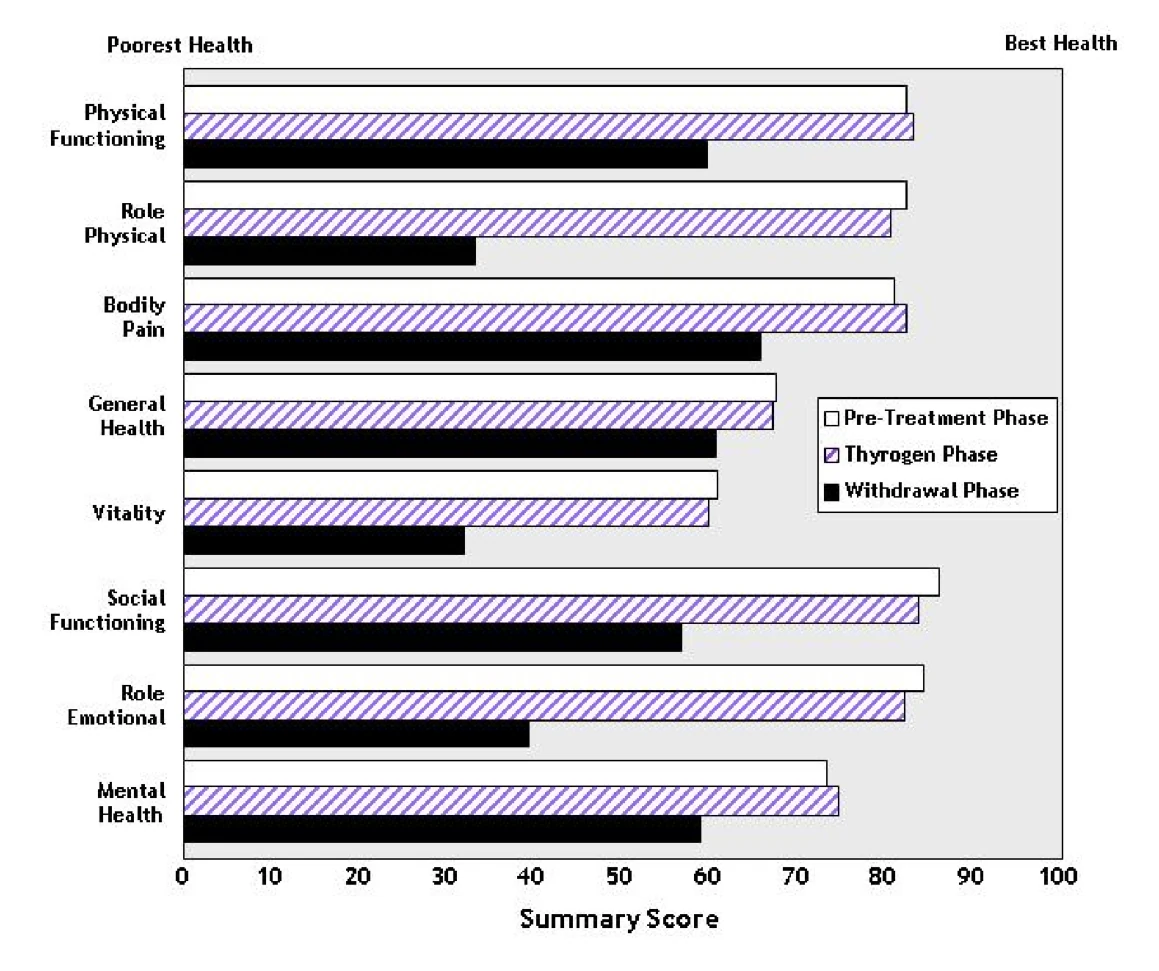
Hypothyroid Signs and Symptoms – Diagnostic Indication:
Thyrogen® administration was not associated with the signs and symptoms of hypothyroidism that accompanied thyroid hormone withdrawal as measured by the Billewicz Scale (FIGURE 2). Statistically significant worsening in all signs and symptoms were observed during the hypothyroid phase (p<0.01).
FIGURE 2 – HYPOTHYROID SYMPTOM ASSESSMENT BILLEWICZ SCALE 0.9 mg Thyrogen®q 24 hours x 2 doses
DIAGNOSTIC INDICATION
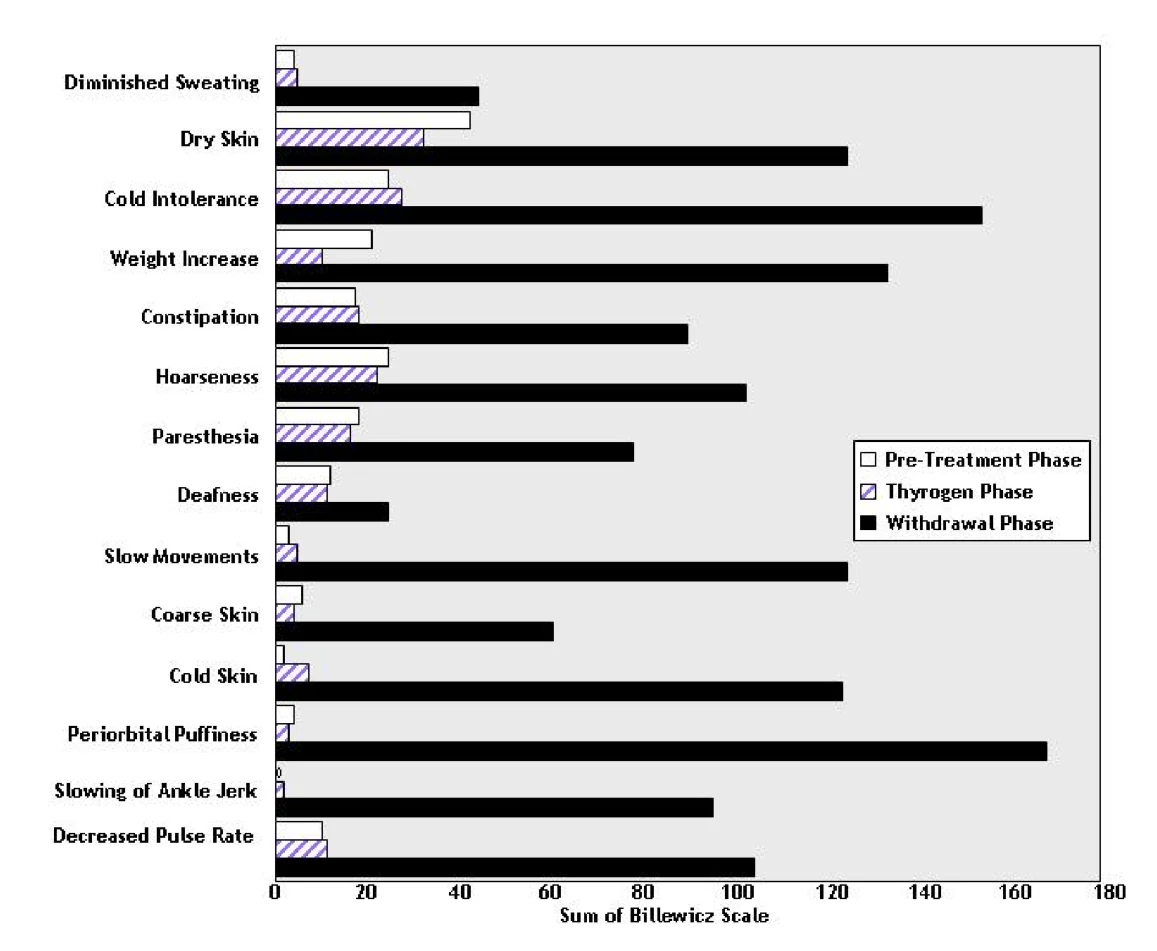
15 MICROBIOLOGY
No microbiological information is required for this drug product.
16 NON-CLINICAL TOXICOLOGY
Summary of Pharmacodynamic Studies
The pharmacodynamic effects of Thyrogen® (thyrotropin alfa for injection)/rhTSH have been assessed by measurement of radioiodine uptake and assessment of thyroid function (serum T3, T4 thyroglobulin, TSH levels) following single and repeated dose intramuscular administration to rhesus monkeys; measurement of plasma T4 levels following intraperitoneal administration to mice and measurement of c-AMP production in a bovine microsomal preparation in vitro.
In rhesus monkeys, radioiodine uptake increased approximately 2-fold following multiple administration (2 units (approximately 0.3 units/Kg) on 3 consecutive days) in both animals but the results were equivocal following a single administration (2 units) since only one animal demonstrated increased uptake. In all cases uptake was higher at 20 hours post radioiodine administration than at 6 hours. In mice, stimulation of T4 levels was sufficiently consistent to allow the use of this model as a bioassay. Thyrogen® was also shown to modulate cAMP production in a bovine microsomal preparation, again in a manner which was consistent across several lots, to allow this method to be used to measure Lot to Lot variation.
In rhesus monkeys, 2 to 3 fold increases in T4 and T3 levels were seen 6 hours after a single injection of rhTSH but Tg levels were unaffected. Plasma concentration of TSH declined from over 500 μIU/mL at the end of the 26 hour post-dose period. In the corresponding multiple dose study, a similar T3 elevation was detected. Interestingly the plasma TSH levels over the 24 hour period following the final dose declined from 100 to 10 μIU/mL. These data imply that, in a multiple dose setting, a plasma concentration of TSH in the range 10-100μIU/mL was effective in raising T3, T4 and Tg levels in contrast to the less marked response seen after a single dose which was associated with a higher peak plasma level. This clearly suggests that a sustained plasma concentration is more effective in triggering the release of thyroid hormones than a higher peak of shorter duration. The reason for the difference in TSH plasma levels following single and multiple administrations of the same dose is not clear at this time.
These studies show that Thyrogen®/rhTSH can modulate a number of physiologically relevant and important processes in a predictable and consistent manner. The range of plasma concentrations seen in the single and repeated dose studies were broadly similar to the Cmax concentrations seen in the pharmacokinetic studies which provides assurance that the observed pharmacodynamic responses occurred over a physiologically relevant range of plasma concentrations.
It is also notable that the doses used were close to the low and intermediate doses used in the primate repeated dose toxicity study and were identical with those used in the single dose study. As doses which produced a physiologically relevant pharmacodynamic response did not lead to any adverse events in toxicity studies, the doses selected in these preclinical studies would support an acceptable safety margin.
Differences in pharmacokinetics observed between rhTSH and human pituitary-derived TSH may be attributable to differences in the carbohydrate moiety; rhTSH is highly sialylated, compared to pituitary human TSH which is predominantly sulfated. In rats, rhTSH is eliminated primarily by the kidney whereas pituitary human TSH is cleared mainly by the liver [Szkudlinski et al.]
Human pharmacodynamics studies were not specifically performed as stand alone investigations. Extensive pharmacodynamics data were collected within the context of the safety and efficacy studies.
Summary of Pharmacokinetic Studies
The pharmacokinetics of Thyrogen® have been evaluated in a series of studies in cynomolgus monkeys following a single intravenous administration and single and repeated intramuscular administrations.
After a single intravenous administration of rhTSH, clearance from plasma was found to be a biphasic process. There was a rapid-phase elimination half-life of about 35 minutes and a post-distribution phase of about 10 hours. The rapid-phase elimination was similar to values obtained from studies in euthyroid humans with purified human pituitary-derived TSH which gave values of between 54 and 100 minutes. These data indicate that the proposed clinical regime, in which patients could be screened twice per year for up to 10 years, would not result in any accumulation of Thyrogen®.
The relationship between rhTSH dose and Cmax was linear following single and multiple intramuscular administrations but there was no consistent relationship for Tmax. Cmax values were consistent between the single and multiple dose regimes ranging from about 32.5 to 780 μIU/mL at doses of 0.36 and 0.572 IU/kg respectively. These results are consistent with those obtained in the pharmacodynamic studies.
Comparison of single dose toxicokinetic and pharmacokinetic data in monkeys and humans given comparable doses show that, although similar peak plasma levels were achieved, the time to achieve peak concentration was longer in man than in monkey. Similarly the plasma half-life in man was longer than in monkey which is the expected result of the allometric scaling effect of body weight on plasma clearance rate. The similarity in Cmax values lead to the conclusion that organ exposure in the primate would be similar to that obtained in man given an equivalent dose. In humans, it is generally accepted that the desired dynamic response is achieved when TSH levels > 25 mU/L are achieved.
Plasma concentrations of T3 and T4 were elevated in a dose-related manner after both single and repeated administrations. After both regimes, T4 values remained elevated 24 hours after dosing although rhTSH were greatly reduced by this time and returned to near baseline levels by approximately 48 hours following a single administration and 144 hours following repeated administration.
Decreases in serum cholesterol, which are associated with increases in levels of thyroid hormone, were similar at all levels and were not related to the number of administrations. The absence of a dose-response suggested that a maximal effect was achieved with the lowest dose. A decrease in serum triglycerides was seen following repeated, but not single, dose administrations suggesting that sustained elevation in T3 and/or T4 levels are required to induce an effect on triglycerides.
A preliminary pharmacokinetic evaluation was conducted in the Phase I/II study, although the number of patients treated with the various doses was too small to make any definitive conclusions. A more complete human study of the pharmacokinetic profiles of Thyrogen® was conducted (TSH94-0301) and was designed as a two-arm, randomized, two-way crossover study to determine the pharmacokinetic profiles of Thyrogen®, including absorption, distribution, and elimination, and to compare the bioavailability of two product formulations. The study enrolled 20 patients with well-differentiated thyroid cancer, of whom sixteen were included in the pharmacokinetic analysis.
Patients in Arm I participated in a cross-over design that compared single 0.9 mg intramuscular doses of two formulations of Thyrogen®, to compare their bioavailability. Patients in Arm II were to receive 0.3 mg dose of Thyrogen® in a cross over design comparing intramuscular (IM) and intravenous (IV) administration. However, Arm II was discontinued after the first patient who received an IV injection of Thyrogen® experienced severe nausea, vomiting and diaphoresis within 15 minutes of receiving the injection.
Study results indicated that the 2 different formulations administered during the Phase III clinical trials exhibited a comparable bioavailability. Study results of the 0.9 mg/mL formulation indicated that the mean maximum serum TSH concentration (Cmax) was 116 ± 38 mU/L, with a mean time to maximum serum concentration (Tmax) of 13 ± 8 hours. The analysis indicated a mean elimination half-life (T ½) of 22 ± 8 hours and mean clearance rate (CI) of 36 ± 12 mL/min.
Toxicology
Seven preclinical studies were conducted to evaluate the toxicologic potential of Thyrogen® (thyrotropin alfa for injection). The in vivo studies included single dose and repeat dose studies conducted in primates and rodents. A bacterial reverse mutation assay (Ames Test) was performed to evaluate mutagenic potential. Overall, the studies demonstrated that:
- No dose-related toxic effects of rhTSH were observed in either the single or repeat dose rodent studies at levels up to 50X the expected human dose.
- No dose-related toxic effects were observed in either the single or repeat dose primate studies at levels up to 10X the expected human dose.
- Thyrogen® had no mutagenic potential, as determined by the bacterial reverse mutation assay.
Long-term toxicity studies in animals to evaluate the carcinogenic potential of Thyrogen® have not been performed. The lack of mutagenicity of Thyrogen® in the bacterial reverse mutation assay and the impurity profile do not suggest the existence of any such material hazard. Administration of Thyrogen® to rodents in a dosage regime similar to that intended for use in man produced none of the well characterized structural changes which can indicate potential oncogenicity after protracted exposure. A tabular summary of the preclinical studies is presented below in Table 18.
Table 18 - Summary of Preclinical Studies
| Study Number | HWI 6354-100 | HWI 6354-101 | HWI 6354-104 | HWI 6354-105 | HWI 6354-108 | N/A | MA G96CD61.502 |
| Study Title | Acute Intramuscular and Intravenous Toxicity Study with rhTSH in Rats | Acute Repeat Dose Intramuscular Toxicity Study with rhTSH in Rats | Single Dose Intramuscular Pharmacokinetics Study with rhTSH in Monkeys | Repeated Dose Intramuscular Pharmacokinetics Study with rhTSH in Monkeys | Single Dose Intravenous Pharmacokinetic Study in Monkeys | Iodine Uptake Study in Monkeys | Evaluation of Thyrogen® in the Bacterial Reverse Mutation Assay |
| Study Type | Toxicity | Toxicity | Pharmacology/Toxi city | Pharmacology/Toxicit y | Pharmacokinetic | Pharmacodynamics | Mutagenicity |
| Study Duration | 14 days | 20 days | 18 days | 2 days | 18 days | 10 days | N/A |
| Animal Species | Crl:CDBR rats | Crl:CDBR rats | Cynomolgus monkeys | Cynomolgus monkey | Cynomolgus monkey | Rhesus monkey | Salmonella typhimurium TA98, TA100TA1535, TA1537 Escherichia coli WB2 uvrA |
| Number of Animals | 45 females45 males | 45 females45 males | 3 females3 males | 3 females3 male | 2 females2 males | 4 females | N/A |
| Dosages | 0, 0.14, 1.4, and7.1 IU/kg x 1 | 0, 0.14, 0.71, and 1.4 IU/kg X 5 days | 0.04, 0.14, and0.57 IU/kg x 1 day | 0.04, 0.14, and0.57 IU/kg X 3 days | 0.57 IU/kg x 1 day | 2 IU X 1 and2 IU X 3 days | Up to 5000 μg/plate for all strains |
| Route of Administration | IM and IV injection | IM injection | IM injection | IM injection | IV injection | IM injection | in vitro |
| Findings | No dose related AEs | No dose related AEs | Well-tolerated, Mild decrease in cholesterol levels Demonstrated T3 and T4 release | Well-tolerated, Mild decrease in cholesterol levels Demonstrated T3 and T4 release | Rapid clearance half-life of 35 minutes; Post-distribution half life 9.8 hours | Increased 131I uptake; demonstrated in vivo potency; demonstrated T3 and T4 release | non-mutagenic |