


Product Monograph - Tibella
RECENT MAJOR LABEL CHANGES
None.
TABLE OF CONTENTS
Sections or subsections that are not applicable at the time of authorization are not listed.
RECENT MAJOR LABEL CHANGES ................................................................................ 2
TABLE OF CONTENTS....................................................................................................... 2
PART I: HEALTH PROFESSIONAL INFORMATION ....................................................... 4
1 INDICATIONS ........................................................................................................... 4
1.1 Pediatrics .......................................................................................................... 4
1.2 Geriatrics .......................................................................................................... 4
2 CONTRAINDICATIONS ........................................................................................... 4
3 SERIOUS WARNINGS AND PRECAUTIONS BOX .............................................. 5
4 DOSAGE AND ADMINISTRATION ......................................................................... 5
4.1 Dosing Considerations..................................................................................... 5
4.2 Recommended Dose and Dosage Adjustment .............................................. 6
4.3 Reconstitution................................................................................................... 6
4.4 Administration................................................................................................... 6
4.5 Missed Dose..................................................................................................... 6
5 OVERDOSAGE ......................................................................................................... 6
6 DOSAGE FORMS, STRENGTHS, COMPOSITION AND PACKAGING .............. 7
7 WARNINGS AND PRECAUTIONS.......................................................................... 7
7.1 Special Populations ....................................................................................... 15
7.1.1 Pregnant Women .........................................................................................15
7.1.2 Breast-feeding..............................................................................................15
7.1.3 Pediatrics......................................................................................................15
7.1.4 Geriatrics ......................................................................................................15
8 ADVERSE REACTIONS......................................................................................... 15
8.1 Adverse Reaction Overview .......................................................................... 15
8.2 Clinical Trial Adverse Reactions ................................................................... 16
8.2.1 Clinical Trial Adverse Reactions – Pediatrics............................................ 19
8.3 Less Common Clinical Trial Adverse Reactions .......................................... 19
8.3.1 Less Common Clinical Trial Adverse Reactions – Pediatrics .................. 20
8.4 Abnormal Laboratory Findings: Hematologic, Clinical Chemistry and Other Quantitative Data ..................................................................................................... 20
8.5 Post-Market Adverse Reactions.................................................................... 20
9 DRUG INTERACTIONS.......................................................................................... 21
9.1 Serious Drug Interactions ............................................................................. 21
9.2 Drug Interactions Overview ........................................................................... 21
9.3 Drug-Behavioural Interactions ....................................................................... 21
9.4 Drug-Drug Interactions .................................................................................. 21
9.5 Drug-Food Interactions .................................................................................. 21
9.6 Drug-Herb Interactions .................................................................................. 22
9.7 Drug-Laboratory Test Interactions ................................................................ 22
10 CLINICAL PHARMACOLOGY............................................................................... 22
10.1 Mechanism of Action .................................................................................. 22
10.2 Pharmacodynamics .................................................................................... 23
10.3 Pharmacokinetics........................................................................................ 23
11 STORAGE, STABILITY AND DISPOSAL ............................................................ 26
12 SPECIAL HANDLING INSTRUCTIONS................................................................ 26
13 PHARMACEUTICAL INFORMATION ................................................................... 27
14 CLINICAL TRIALS .................................................................................................. 27
14.1 Trial Design and Study Demographics ...................................................... 27
14.2 Study Results .............................................................................................. 28
14.3 Comparative Bioavailability Study ............................................................. 28
15 MICROBIOLOGY .................................................................................................... 29
16 NON-CLINICAL TOXICOLOGY ............................................................................. 29
PATIENT MEDICATION INFORMATION .............................. Error! Bookmark not defined.
PART I: HEALTH PROFESSIONAL INFORMATION
1 INDICATIONS
Tibella (tibolone) is indicated for short-term treatment of vasomotor symptoms due to estrogen deficiency in postmenopausal women, more than one year after menopause.
For all women the decision to prescribe Tibella should be based on an assessment of the individual patient’s overall risks and, particularly in the over 60s, should include consideration of the risk of stroke (see WARNINGS AND PRECAUTIONS and ADVERSE REACTIONS).
After careful selection of users, Tibella should be prescribed for the shortest duration consistent with treatment goals. Review the need for continuation of treatment after 6 months, taking into account the risk-benefit ratio for the individual user at that moment (including cardiovascular disease, endometrial cancer and breast cancer, see ADVERSE REACTIONS and WARNINGS AND PRECAUTIONS). Tibella should only be continued for as long as the benefit outweighs the risks.
Tibella should be prescribed only to women with intact uteri since the medication includes progestogenic activity.
1.1 Pediatrics
Pediatrics (≤ 18 years of age): There is no relevant use of Tibella in the pediatric population. No data are available to Health Canada; therefore, Health Canada has not authorized an indication for pediatric use.
1.2 Geriatrics
Geriatrics (> 65 years of age): No dose adjustment is necessary for the elderly. There is limited experience in treating women over age 65 years.
2 CONTRAINDICATIONS
- Liver dysfunction or disease as long as liver function tests have failed to return to normal
- Known or suspected estrogen-dependent or progestin-dependent malignant neoplasia (e.g. endometrial cancer)
- Endometrial hyperplasia, including untreated endometrial hyperplasia
- Known, suspected, or past history of breast cancer; Tibolone increased the risk of breast cancer recurrence in placebo-controlled trials
- Undiagnosed abnormal genital bleeding
- Known or suspected pregnancy and lactation
- Active or past history of arterial thromboembolic disease (e.g., angina, stroke, myocardial infarction, coronary heart disease, Transient Ischemic Attack)
- Active or past history of confirmed venous thromboembolism (such as deep venous thrombosis or pulmonary embolism) or active thrombophlebitis
- Known thrombophilic disorders (e.g. protein C, protein S, or antithrombin deficiency)
- Partial or complete loss of vision due to ophthalmic vascular diseases
- Porphyria
- Hypersensitivity to this drug or to any ingredient in the formulation, including any non-medicinal ingredient, or component of the container. For a complete listing, see DOSAGE FORMS, COMPOSITION AND PACKAGING.
3 SERIOUS WARNINGS AND PRECAUTIONS BOX
4 DOSAGE AND ADMINISTRATION
4.1 Dosing Considerations
Starting Tibella
- Any irregular/unscheduled vaginal bleeding, either on or off Hormone Replacement Therapy (HRT), should be investigated to exclude malignancy before starting Tibella. (see WARNINGS AND PRECAUTIONS)
- Women experiencing a natural menopause should commence treatment with Tibella at least 12 months after their last natural bleed. In case of a surgical menopause, treatment with Tibella may commence immediately. Women being treated with gonadotrophin
Serious Warnings and Precautions
Tibella may increase the risk of stroke, breast cancer and, in women with an intact uterus, endometrial cancer and can be dependent on individual risk factors (See Clinical Trial Adverse Reactions). A complete personal and family medical history should be taken before starting treatment with Tibella. Periodic check-ups are recommended while on the treatment.
The Women’s Health Initiative (WHI) trial examined the health benefits and risks of oral combined estrogen plus progestin therapy (n=16,608) and oral estrogen-alone therapy (n=10,739) in postmenopausal women aged 50 to 79 years.
The estrogen plus progestin arm of the WHI trial (mean age 63.3 years) indicated an increased risk of myocardial infarction (MI), stroke, invasive breast cancer, pulmonary emboli and deep vein thrombosis in postmenopausal women receiving treatment with combined conjugated equine estrogens (CEE, 0.625 mg/day) and medroxyprogesterone acetate (MPA, 2.5 mg/day) for 5.2 years compared to those receiving placebo.
The estrogen-alone arm of the WHI trial (mean age 63.6 years) indicated an increased risk of stroke and deep vein thrombosis in hysterectomized women treated with CEE-alone (0.625 mg/day) for 6.8 years compared to those receiving placebo.
Therefore, the following should be given serious consideration at the time of prescribing:
- Estrogens with or without progestins should not be prescribed for primary or secondary prevention of cardiovascular diseases.
- Estrogens with or without progestins should be prescribed at the lowest effective dose for the approved indication.
Estrogens with or without progestins should be prescribed for the shortest period possible for the approved indication.
- releasing hormone (GnRH) analogues, for example, for endometriosis, may commence treatment with Tibella immediately.
Switching from a sequential or continuous combined HRT preparation
- If changing from a sequential HRT preparation, treatment with Tibella should start the day following completion of the prior regimen. If changing from a continuous combined HRT preparation, treatment can start at any time.
4.2 Recommended Dose and Dosage Adjustment
The dosage is one tablet (2.5 mg) per day. The maximum daily dose is 2.5 mg. The tablets should be swallowed whole with some water or other drink, preferably at the same time every day. When a pack is complete, patients should start a new pack the next day without missing any days on the drug. Tibella may be administered with or without food.
A separate progestogen should not be added with Tibella treatment.
For initiation and continuation of treatment of postmenopausal symptoms, the lowest effective dose for the shortest duration (see WARNINGS AND PRECAUTIONS) should be used.
There is no relevant use of Tibella in the pediatric population; therefore, Health Canada has not authorized an indication for pediatric use.
4.3 Reconstitution
Not applicable.
4.4 Administration
For oral use.
4.5 Missed Dose
A missed dose should be taken as soon as remembered, unless it is more than 12 hours overdue. In the latter case, the missed dose should be skipped and the next dose should be taken at the normal time. Missing a dose may increase the likelihood of breakthrough bleeding and spotting.
5 OVERDOSAGE
The acute toxicity of tibolone in animals is very low. Therefore, toxic symptoms are not expected to occur, even when several tablets are taken simultaneously. In cases of acute overdose, nausea, vomiting and vaginal bleeding in females may occur. No specific antidote is known. Symptomatic treatment can be given if necessary.
| For management of a suspected drug overdose, contact your regional poison control centre. |
6 DOSAGE FORMS, STRENGTHS, COMPOSITION AND PACKAGING
Table 1: Dosage Forms, Strengths, Composition and Packaging.
Tibella is available in packs containing blisters of 1 x 28 tablets, 3 x 28 tablets and 6 x 28 tablets.
7 WARNINGS AND PRECAUTIONS
Please see the Serious Warnings and Precautions Box at the beginning of Part I: Health Professional Information.
General
For the treatment of postmenopausal symptoms, Tibella should only be initiated for symptoms that adversely affect quality of life. In all cases, a careful appraisal of the risks and benefits should be undertaken at least annually and Tibella should only be continued as long as the benefit outweighs the risk.
The risks of stroke, breast cancer and, in women with an intact uterus, endometrial cancer for each woman should be carefully assessed, in the light of her individual risk factors and bearing in mind the frequency and characteristics of both cancers and stroke, in terms of their response to treatment, morbidity and mortality.
Evidence regarding the risks associated with HRT or tibolone in the treatment of premature menopause is limited. Due to the low level of absolute risk in younger women, however, the balance of benefits and risks for these women may be more favorable than in older women.
Tibella is not intended for contraceptive use.
Conditions which need supervision
If any of the following conditions are present, have occurred previously, and/or have been aggravated during pregnancy or previous hormone treatment, the patient should be closely supervised. It should be taken into account that these conditions may recur or be aggravated during treatment with Tibella, in particular:
- Leiomyoma (uterine fibroids) or endometriosis
- Risk factors for thromboembolic disorders (see below)
- Risk factors for estrogen dependent tumors, e.g. 1st degree heredity for breast cancer
- Hypertension
- Liver disorders (e.g. liver adenoma)
- Diabetes mellitus with or without vascular involvement
- Cholelithiasis
- Migraine or (severe) headache
| Route of Administration | Dosage Form / Strength/Composition | Non-medicinal Ingredients |
| Oral | Tablet 2.5 mg | Ascorbyl palmitate, lactose monohydrate, magnesium stearate, mannitol, and potato starch. |
- Systemic lupus erythematosus
- A history of endometrial hyperplasia (see below)
- Epilepsy
- Asthma
- Otosclerosis
Reasons for immediate withdrawal of therapy:
Therapy should be discontinued in case a contra-indication is discovered and in the following situations:
- Jaundice or deterioration in liver function
- Significant increase in blood pressure
- New onset of migraine-type headache
- Pregnancy
Carcinogenesis and Mutagenesis (also see ADVERSE REACTIONS)
Endometrial hyperplasia and carcinoma
The available data from randomised controlled trials are conflicting, however, observational studies have consistently shown that women who are prescribed Tibella in normal clinical practice are at an increased risk of having endometrial cancer diagnosed. In these studies, risk increased with increasing duration of use. Tibolone increases endometrial wall thickness, as measured by transvaginal ultrasound.
Break-through bleeding and spotting may occur during the first months of treatment. Women should be advised to report any break-through bleeding or spotting if it is still present after 6 months of treatment, if it starts beyond that time or if it continues after treatment has been discontinued. The woman should be referred for gynecological investigation, which is likely to include endometrial biopsy to exclude endometrial malignancy.
Breast cancer
Evidence with respect to breast cancer risk in association with tibolone is inconclusive. The Million Women Study (MWS) has identified a significant increase in the risk of breast cancer in association with use of the 2.5 mg dose. This risk became apparent within a few years of use and increased with duration of intake, returning to baseline within a few (at most five) years after stopping treatment (see ADVERSE REACTIONS). These results could not be confirmed in a study using the General Practice Research Database (GPRD).
HRT, especially estrogen-progestogen combined treatment, increases the density of mammographic images which may adversely affect the radiological detection of breast cancer.
Available epidemiological data indicate that the use of combined estrogen plus progestin by postmenopausal women is associated with an increased risk of invasive breast cancer.
In the estrogen plus progestin arm of the WHI trial, among 10,000 women over a one-year period, there were 8 more cases of invasive breast cancer (38 on combined HRT versus 30 on placebo).
The WHI study also reported that the invasive breast cancers diagnosed in the estrogen plus progestin group were similar in histology but were larger (mean [SD], 1.7 cm [1.1] vs 1.5 cm [0.9], respectively; P=0.04) and were at a more advanced stage compared with those diagnosed in the placebo group. The percentage of women with abnormal mammograms
(recommendations for short-interval follow-up, a suspicious abnormality, or highly suggestive of malignancy) was significantly higher in the estrogen plus progestin group versus the placebo group. This difference appeared at year one and persisted in each year thereafter.
In the estrogen-alone arm of the WHI trial, there was no statistically significant difference in the rate of invasive breast cancer in hysterectomized women treated with conjugated equine estrogens versus women treated with placebo.
It is recommended that estrogens with or without progestins not be given to women with existing breast cancer or those with a previous history of the disease (see CONTRAINDCATIONS).
There is a need for caution in prescribing estrogens with or without progestins for women with known risk factors associated with the development of breast cancer, such as strong family history of breast cancer (first degree relative) or who present a breast condition with an increased risk (abnormal mammograms and/ or atypical hyperplasia at breast biopsy).
Other known risk factors for the development of breast cancer such as nulliparity, obesity, early menarche, late age at first full term pregnancy and at menopause should also be evaluated.
It is recommended that women undergo mammography prior to the start of HRT treatment and at regular intervals during treatment, as deemed appropriate by the treating physician and according to the perceived risks for each patient.
The overall benefits and possible risks of hormone replacement therapy should be fully considered and discussed with patients. It is important that the modest increased risk of being diagnosed with breast cancer after 4 years of treatment with combined estrogen plus progestin HRT (as reported in the results of the WHI trial) be discussed with the patient and weighed against its known benefits.
Instructions for regular self-examination of the breasts should be included in this counselling.
Ovarian cancer
Ovarian cancer is much rarer than breast cancer.
Epidemiological evidence from a large meta-analysis suggests a slightly increased risk in women taking estrogen-only or combined estrogen-progestogen HRT, which becomes apparent within 5 years of use and diminishes over time after stopping.
Some other studies, including the Women's Health Initiative (WHI) trial, suggest that the use of combined HRTs may be associated with a similar, or slightly smaller risk (see ADVERSE REACTIONS).
In the Million Women Study it was shown that the relative risk for ovarian cancer with use of tibolone was similar to the risk associated with use of other types of HRT.
Cardiovascular
Venous thromboembolism
Estrogen or estrogen-progestogen HRT is associated with a 1.3 – 3-fold risk of developing venous thromboembolism (VTE), i.e. deep vein thrombosis or pulmonary embolism. The occurrence of such an event is more likely in the first year of HRT than later. In an epidemiological study using a UK database, the risk of VTE in association with tibolone was lower than the risk associated with conventional HRT, but only a small proportion of women were current users of tibolone and a small increase in risk compared with non-use cannot be excluded.
In the estrogen plus progestin arm of the WHI trial, among 10,000 women on combined HRT over a one-year period, there were 18 more cases of venous thromboembolism, including 8 more cases of pulmonary embolism. In the estrogen-alone arm of the WHI trial, among 10,000 women on estrogen therapy over a one-year period, there were 7 more cases of venous thromboembolism, although there was no statistically significant difference in the rate of pulmonary embolism.
Patients with known thrombophilic states have an increased risk of VTE and HRT or tibolone may add to this risk. HRT is therefore contraindicated in these patients.
Generally recognized risk factors for VTE include use of estrogens, older age, major surgery, prolonged immobilization, obesity (BMI > 30 kg/m2), pregnancy/postpartum period, systemic lupus erythematosus (SLE), and cancer. There is no consensus about the possible role of varicose veins in VTE. As in all postoperative patients, prophylactic measures need to be considered to prevent VTE following surgery. If prolonged immobilisation is to follow elective surgery temporarily stopping HRT or tibolone 4 to 6 weeks earlier is recommended, if possible. Treatment should not be restarted until the woman is completely mobilised.
In women with no personal history of VTE but with a first degree relative with a history of thrombosis at young age, screening may be offered after careful counselling regarding its limitations (only a proportion of thrombophilic defects are identified by screening). If a thrombophilic defect is identified which segregates with thrombosis in family members or if the defect is ‘severe’ (e.g., antithrombin, protein S, or protein C deficiencies or a combination of defects) HRT or tibolone is contraindicated.
Women already on anticoagulant treatment require careful consideration of the benefit-risk of use of HRT or tibolone.
If VTE develops after initiating therapy, the drug should be discontinued. Patients should be told to contact their healthcare professional immediately when they are aware of a potential thromboembolic symptom (e.g., painful swelling of a leg, sudden pain in the chest, dyspnea).
Coronary artery disease (CAD)
There is no evidence from randomised controlled trials of protection against myocardial infarction in women with or without existing CAD who received combined estrogen-progestogen or estrogen-only HRT. In an epidemiological study using the GPRD no evidence was found of protection against myocardial infarction in postmenopausal women who received tibolone.
The results of the Heart and Estrogen/progestin Replacement Studies (HERS and HERS II) and the Women’s Health Initiative (WHI) trial indicate that the use of estrogen plus progestin is associated with an increased risk of coronary heart disease (CHD) in postmenopausal women.
WHI trial findings
In the combined estrogen plus progestin arm of the WHI trial, among 10,000 women over a one-year period, there were 7 more cases of CHD (37 on combined HRT versus 30 on placebo).
In the estrogen-alone arm of the WHI trial of women with prior hysterectomy, among 10,000 women over a one-year period, there was no statistically significant difference in the rate of CHD.
HERS and HERS II findings
In the Heart and Estrogen/progestin Replacement Study (HERS) of postmenopausal women with documented heart disease (n=2763, average age 66.7 years), a randomised placebo-controlled clinical trial of secondary prevention of coronary heart disease (CHD), treatment with 0.625 mg/day oral conjugated equine estrogen (CEE) plus 2.5 mg oral medroxyprogesterone acetate (MPA) demonstrated no cardiovascular benefit. Specifically, during an average follow-up of 4.1 years, treatment with CEE plus MPA did not reduce the overall rate of CHD events in postmenopausal women with established coronary heart disease. There were more CHD events in the hormone treated group than in the placebo group in year 1, but not during the subsequent years.
From the original HERS trial, 2321 women consented to participate in an open label extension of HERS known as HERS II. Average follow-up in HERS II was an additional 2.7 years, for a total of 6.8 years overall. After 6.8 years, hormone therapy did not reduce the risk of cardiovascular events in women with CHD.
Ischemic stroke (also see Clinical Trial Adverse Reactions)
Tibolone increases the risk of ischemic stroke from the first year of treatment. The baseline risk of stroke is strongly age-dependent and so the effect of tibolone is greater with older age.
The results of the WHI trial indicate that the use of estrogen-alone and estrogen plus progestin is associated with an increased risk of stroke in postmenopausal women.
WHI trial findings
In the combined estrogen plus progestin arm of the WHI trial, among 10,000 women over a one-year period, there were 8 more cases of stroke (29 on combined HRT versus 21 on placebo)
In the estrogen-alone arm of the WHI trial of women with prior hysterectomy, among 10,000 women over a one-year period, there were 12 more cases of stroke (44 on estrogen-alone therapy versus 32 on placebo).
Blood pressure
Women using hormone replacement therapy sometimes experience increased blood pressure. Blood pressure should be monitored with HRT use. Elevation of blood pressure in previously normotensive or hypertensive patients should be investigated and HRT may have to be discontinued.
Driving and Operating Machinery
Tibella is not known to have any effects on alertness and concentration. Due caution should be exercised when driving or operating a vehicle or potentially dangerous machinery.
Ear/Nose/Throat
Otosclerosis
Estrogens should be used with caution in patients with otosclerosis
Endocrine and Metabolism
Glucose and lipid metabolism
Patients with rare hereditary problems of galactose intolerance, the Lapp lactase deficiency or glucose-galactose malabsorption should not take this medicine.
Treatment with Tibella results in a marked dose-dependent decrease in high-density lipoprotein (HDL) cholesterol (from -16.7% with a 1.25 mg dose to -21.8% for the 2.5 mg dose after 2 years). Total triglycerides and lipoprotein(a) levels were also reduced. The decrease in total cholesterol and very low-density lipoprotein cholesterol (VLDL-C) levels was not dose-dependent. Levels of LDL-C were unchanged. The clinical implication of these findings is not yet known.
Women with pre-existing hypertriglyceridemia should be followed closely during estrogen replacement or HRT, since rare cases of large increases of plasma triglycerides leading to pancreatitis have been reported with estrogen therapy in this condition.
Women with familial hyperlipidemias need special surveillance. Lipid lowering measures are recommended additionally, before treatment is started.
A worsening of glucose tolerance and lipid metabolism have been observed in a significant percentage of peri- and post-menopausal patients. Therefore, diabetic patients or those with a predisposition to diabetes should be observed closely to detect any alterations in carbohydrate or lipid metabolism, especially in triglyceride blood levels.
Calcium and phosphorus metabolism
Because the prolonged use of estrogens with or without progestins influences the metabolism of calcium and phosphorus, estrogens with or without progestins should be used with caution in patients with metabolic and malignant bone diseases associated with hypercalcemia and in patients with renal insufficiency.
Hypothyroidism
Patients who require thyroid hormone replacement therapy and who are also taking estrogen should have their thyroid function monitored regularly to assure that thyroid hormone levels remain in an acceptable range (see Drug-Laboratory Test Interactions).
Treatment with Tibella results in a very minor decrease of thyroid binding globulin (TBG) and total T4. Levels of total T3 are unaltered. Tibolone decreases the level of sex hormone-binding globulin (SHBG), whereas the levels of corticoid binding globulin (CBG) and circulating cortisol are unaffected.
Genitourinary
Vaginal bleeding
Abnormal vaginal bleeding, due to its prolongation, irregularity or heaviness, occurring during therapy should prompt appropriate diagnostic measures to rule out the possibility of uterine malignancy and the treatment should be re-evaluated (also see CLINICAL PHARMACOLOGY).
Uterine leiomyomata
Pre-existing uterine leiomyomata may increase in size during estrogen use. Growth, pain or tenderness of uterine leiomyomata requires discontinuation of medication and appropriate investigation.
Endometriosis
Symptoms and physical findings associated with a previous diagnosis of endometriosis may reappear or become aggravated with estrogen use.
Hepatic/Biliary/Pancreatic
Gallbladder diseases
A 2- to 4-fold increase in the risk of gallbladder disease requiring surgery in women receiving postmenopausal estrogens has been reported.
Jaundice
Caution is advised in patients with a history of liver and/or biliary disorders. If cholestatic jaundice develops during treatment, the treatment should be discontinued, and appropriate investigations carried out.
Liver function tests
Liver function tests should be done periodically in subjects who are suspected of having hepatic disease. For information on endocrine and liver function tests, see the section under Monitoring and Laboratory Tests.
Immune
Angioedema
Estrogen may induce or exacerbate symptoms of angioedema, in particular in women with hereditary angioedema.
Systemic Lupus Erythematosus
Particular caution is indicated in women with systemic lupus erythematosus, as HRT may cause an exacerbation of this condition.
Monitoring and Laboratory Tests
Before initiating or reinstituting any HRT (including Tibella), the patient should have a complete physical examination and family medical history including a blood pressure determination. Breasts and pelvic organs should be appropriately examined and a Papanicolaou smear should be performed. Endometrial biopsy should be done only when indicated. Baseline tests should include mammography, measurements of blood glucose, calcium, triglycerides and cholesterol, and liver function tests.
The first follow-up examination should be done within 3-6 months after initiation of treatment to assess response to treatment. Thereafter, examinations should be made at intervals at least once a year. Appropriate investigations should be arranged at regular intervals as determined by the physician.
The importance of regular self-examination of the breasts should be discussed with the patient.
During treatment, periodic check-ups are recommended of a frequency and nature adapted to the individual woman. Women should be advised what changes in their breasts should be reported to their healthcare professional (see ‘Breast cancer’ below). Investigations, including appropriate imaging tools, e.g. mammography, should be carried out in accordance with currently accepted screening practices, modified to the clinical needs of the individual.
Neurologic
Cerebrovascular insufficiency
Patients who develop visual disturbances, classical migraine, transient aphasia, paralysis or loss of consciousness should discontinue medication.
Patients with a previous history of classical migraine and who develop a recurrence or worsening of migraine symptoms should be re-evaluated.
Dementia
HRT use does not improve cognitive function.
Available epidemiological data indicate that the use of combined estrogen plus progestin in women aged 65 and over may increase the risk of developing probable dementia.
The Women’s Health Initiative Memory Study (WHIMS), a clinical sub-study of the WHI, was designed to assess whether postmenopausal hormone replacement therapy (oral estrogen plus progestin or oral estrogen-alone) reduces the risk of dementia in women aged 65 and over (age range 65-79 years) and free of dementia at baseline.
In the estrogen plus progestin arm of the WHIMS (n=4532), women with intact uteri were treated with daily 0.625 mg conjugated equine estrogens (CEE) plus 2.5 mg medroxyprogesterone acetate (MPA) or placebo for an average of 4.05 years. The results, when extrapolated to 10,000 women treated over a one-year period showed 23 more cases of probable dementia (45 on combined HRT versus 22 on placebo).
In the estrogen-alone arm of the WHIMS (n=2947), women with prior hysterectomy were treated with daily 0.625 mg CEE or placebo for an average of 5.21 years. The results, when extrapolated to 10,000 women treated over a one-year period showed 12 more cases of probable dementia (37 on estrogen-alone versus 25 on placebo), although this difference did not reach statistical significance.
When data from the estrogen plus progestin arm of the WHIMS and the estrogen alone arm of the WHIMS were combined, as per the original WHIMS protocol, in 10,000 women over a one-year period, there were 18 more cases of probable dementia (41 on estrogen plus progestin or estrogen-alone versus 23 on placebo).
Epilepsy
Particular caution is indicated in women with epilepsy, as estrogens with or without progestins may cause an exacerbation of this condition.
Renal
Fluid retention
Estrogens with or without progestins may cause fluid retention. Therefore, particular caution is indicated in cardiac or renal dysfunction, epilepsy or asthma. If, in any of the above-mentioned conditions, a worsening of the underlying disease is diagnosed or suspected during treatment, the benefits and risks of treatment should be reassessed based on the individual case.
Sexual Health
Reproduction and Fertility
Administration of tibolone may result in anti-fertility and embryotoxic effects, likely a consequence of its hormonal properties.
7.1 Special Populations
7.1.1 Pregnant Women (see Contraindications)
Tibella is contraindicated during pregnancy. If pregnancy occurs during treatment with Tibella, treatment should be withdrawn immediately. No clinical data on exposed pregnancies are available. Studies in animals have shown reproductive toxicity. The potential risk for humans is unknown (see NON-CLINICAL TOXICOLOGY).
7.1.2 Breast-feeding (see Contraindications)
Tibella is contraindicated during lactation.
7.1.3 Pediatrics
Pediatrics (≤ 18 years of age): No data are available to Health Canada; therefore, Health Canada has not authorized an indication for pediatric use.
There is no relevant use of Tibella in the pediatric population
7.1.4 Geriatrics
No dose adjustment is necessary for the elderly. There is limited experience in treating women over age 65 years.
8 ADVERSE REACTIONS
8.1 Adverse Reaction Overview
See WARNING AND PRECATIONS regarding potential induction of malignant neoplasms and adverse effects similar to those of oral contraceptives.
The following adverse reactions have been reported with estrogen/progestin combination in general:
Blood and lymphatic system disorders
Altered coagulation tests (see Warnings and Precautions, Drug-Laboratory Tests Interactions).
Cardiac disorders
Palpitations; increase in blood pressure (see Warnings and Precautions); coronary thrombosis.
Endocrine disorders
Increased blood sugar levels; decreased glucose tolerance.
Eye disorders
Neuro-ocular lesions (e.g., retinal thrombosis, optic neuritis); visual disturbances; steepening of the corneal curvature; intolerance to contact lenses.
Gastrointestinal disorders
Nausea; vomiting; abdominal discomfort (cramps, pressure, pain, bloating).
General disorders and administration site conditions
Fatigue; changes in appetite; changes in body weight; change in libido.
Hepatobiliary disorders
Gallbladder disorder; asymptomatic impaired liver function; cholestatic jaundice.
Musculoskeletal and connective tissue disorders
Musculoskeletal pain including leg pain not related to thromboembolic disease (usually transient, lasting 3-6 weeks) may occur.
Nervous system disorders
Aggravation of migraine episodes; headaches; dizziness; neuritis.
Psychiatric disorders
Mental depression; nervousness; irritability.
Renal and urinary disorders
Cystitis; dysuria; sodium retention; edema.
Reproductive system and breast disorders
Breakthrough bleeding; spotting; change in menstrual flow; dysmenorrhea; vaginal itching/discharge; dyspareunia; endometrial hyperplasia; pre-menstrual-like syndrome; reactivation of endometriosis; changes in cervical erosion and amount of cervical secretion; breast swelling and tenderness.
Skin and subcutaneous tissue disorders
Chloasma or melasma, which may persist when drug is discontinued; erythema multiforme; erythema nodosum; hemorrhagic eruption; loss of scalp hair; hirsutism and acne.
Vascular disorders
Isolated cases of: thrombophlebitis; thromboembolic disorders.
8.2 Clinical Trial Adverse Reactions
Clinical trials are conducted under very specific conditions. The adverse reaction rates observed in the clinical trials; therefore, may not reflect the rates observed in practice and should not be compared to the rates in the clinical trials of another drug. Adverse reaction information from clinical trials may be useful in identifying and approximating rates of adverse drug reactions in real-world use.
This section describes undesirable effects, which were registered in 21 placebo-controlled studies (including the LIFT study), with 4079 women receiving therapeutic doses (1.25 or 2.5 mg) of tibolone and 3476 women receiving placebo. The duration of treatment in these studies ranged from 2 months to 4.5 years. Table 2 shows the undesirable effects that occurred statistically significantly more frequently during treatment with tibolone than with placebo.
Table 2: Common Adverse Reactions
| System Organ Class | Common (≥1/100 to <1/10) |
| Gastrointestinal disorders | Lower abdominal pain |
| Skin and subcutaneous tissue disorders | Abnormal hair growth |
| Reproductive system and breast disorders | Vaginal discharge |
| Endometrial thickening | |
| Breast tenderness | |
| Genital pruritus | |
| Vaginal candidiasis | |
| Vaginal hemorrhage* | |
| Pelvic pain | |
| Cervical dysplasia | |
| Genital discharge | |
| Vulvovaginitis | |
| Investigations | Weight increase |
| Abnormal cervical smear | |
* Bleeding that happens at least 12 months after periods have stopped.
Breast cancer
An up to 2-fold increased risk of having breast cancer diagnosed is reported in women taking combined estrogen-progestogen therapy for more than 5 years.
Any increased risk in users of estrogen-only and tibolone therapies is substantially lower than seen in users of estrogen-progestogen combinations.
The level of risk is dependent on the duration of use.
Results of the largest epidemiological study (Million Women Study) are presented.
Table 3: Million Women study – Estimated additional risk of breast cancer after 5 years’ use
Age range (Years) | Additional cases per 1000 never-users of HRT over a 5-year perioda | Risk ratio (95% CI)b | Additional cases per 1000 HRT users over 5 years (95% CI) |
|---|---|---|---|
| Estrogen-only HRT | |||
| 50-65 | 9-12 | 1.2 | 1-2 (0-3) |
| Combined estrogen-progestogen | |||
Age range (Years) | Additional cases per 1000 never-users of HRT over a 5-year perioda | Risk ratio (95% CI)b | Additional cases per 1000 HRT users over 5 years (95% CI) |
|---|---|---|---|
| 50-65 | 9-12 | 1.7 | 6 (5-7) |
| Tibolone | |||
| 50-65 | 9-12 | 1.3 | 3 (0-6) |
a: Taken from baseline incidence rates in developed countries b: Overall risk ratio. The risk ratio is not constant but will increase with increasing duration of use | |||
Endometrial cancer risk
Postmenopausal women with a uterus
The endometrial cancer risk is about 5 in every 1000 women with a uterus not using HRT or tibolone.
The randomised placebo-controlled trial that included women who had not been screened for endometrial abnormalities at baseline, and therefore reflected clinical practice, identified the highest risk of endometrial cancer (LIFT study, mean age 68 years). In this study, no cases of endometrial cancer were diagnosed in the placebo group (n=1,773) after 2.9 years compared with 4 cases of endometrial cancer in the tibolone group (n=1,746). This corresponds to a diagnosis of 0.8 additional case of endometrial cancer in every 1000 women who used tibolone for one year in this study.
Ovarian cancer
Use of estrogen-only or combined estrogen-progestogen HRT has been associated with a slightly increased risk of having ovarian cancer diagnosed.
A meta-analysis from 52 epidemiological studies reported an increased risk of ovarian cancer in women currently using HRT compared to women who have never used HRT (RR 1.43, 95% CI 1.31-1.56). For women aged 50 to 54 years taking 5 years of HRT, this results in about 1 extra case per 2000 users. In women aged 50 to 54 who are not taking HRT, about 2 women in 2000 will be diagnosed with ovarian cancer over a 5-year period.
In the Million Women Study, taking 5 years of tibolone resulted in 1 extra case per 2500 users.
Risk of venous thromboembolism
HRT is associated with a 1.3-3 -fold increased relative risk of developing venous thromboembolism (VTE), i.e., deep vein thrombosis or pulmonary embolism. The occurrence of such an event is more likely in the first year of using HRT.
Results of the WHI studies are presented.
Table 4: WHI Studies - Additional risk of VTE over 5 years’ use
| Age range (years) | Incidence per 1000 women in placebo arm over 5 years | Risk ratio (95% CI) | Additional cases per 1000 HRT users |
|---|---|---|---|
| Oral estrogen-onlyc | |||
| 50-59 | 7 | 1.2 (0.6-2.4) | 1 (-3-10) |
| Oral combined estrogen-progesterone | |||
| 50-59 | 4 | 2.3 (1.2–4.3) | 5 (1-13) |
c: Study in women with no uterus
Risk of coronary artery disease
The risk of coronary artery disease is slightly increased in users of combined estrogen-progestogen HRT over the age of 60. There is no evidence to suggest that the risk of myocardial infarction with tibolone is different to the risk with other HRT.
Risk of ischemic stroke
- The relative risk of ischemic stroke is not dependent on age or on duration of use, but as the baseline risk is strongly age-dependent, the overall risk of ischemic stroke in women who use HRT or tibolone will increase with age (see WARNINGS AND PRECAUTIONS).
- The use of estrogen-only and estrogen + progestogen therapy is associated with an up to 1.5-fold increased relative risk of ischemic stroke. The risk of hemorrhagic stroke is not increased during use of HRT.
A 2.9 year randomised controlled study has estimated a 2.2-fold increase in the risk of stroke in women (mean age 68 years) who used 1.25 mg tibolone (28/2249) compared with placebo (13/2257). The majority (80%) of strokes were ischemic.
The baseline risk of stroke is strongly age dependent. Thus, the baseline incidence over a 5-year period is estimated to be 3 per 1000 women aged 50-59 years and 11 per 1000 women aged 60-69 years.
- For women who use tibolone for 5 years, the number of additional cases would be expected to be about 4 per 1000 users aged 50-59 years and 13 per 1000 users aged 60-69 years.
Table 5: WHI Studies combined - Additional risk of ischemic stroked over 5 years’ use
Age range (years) | Incidence per 1000 women in placebo arm over 5 years | Risk ratio (95%CI) | Additional cases per 1000 HRT users over 5 years |
| 50-59 | 8 | 1.3 (1.1-1.6) | 3 (1-5) |
d no differentiation was made between ischemic and hemorrhagic stroke
Other adverse reactions have been reported in association with estrogen/progestogen treatment:
- Gall bladder disease
- Skin and subcutaneous disorders: chloasma, erythema multiforme, erythema nodosum, vascular purpura
Probable dementia over the age of 65
8.2.1 Clinical Trial Adverse Reactions – Pediatrics
Not applicable. There is no relevant use of Tibella in the pediatric population.
8.3 Less Common Clinical Trial Adverse Reactions
Table 6: Uncommon and Rare Clinical Trial Adverse Reactions
| System organ class | Uncommon | Rare |
| (≥1/1,000 to <1/100) | (≥1/10,000 to <1/1,000) | |
| Metabolism and nutrition disorders | Edema | |
| Gastrointestinal disorders | Abdominal discomfort | |
| Skin and subcutaneous disorders | Acne | Pruritus |
| Reproductive system and breast disorders | Breast discomfort Fungal infection Vaginal mycosis Nipple pain | |
8.3.1 Less Common Clinical Trial Adverse Reactions – Pediatrics
Not applicable. There is no relevant use of Tibella in the pediatric population
8.4 Abnormal Laboratory Findings: Hematologic, Clinical Chemistry and Other Quantitative Data
Treatment with Tibella results in a marked dose-dependent decrease in HDL cholesterol (from
-16.7% with a 1.25 mg dose to -21.8% for the 2.5 mg dose after 2 years). Total triglycerides and lipoprotein(a) levels were also reduced. The decrease in total cholesterol and VLDL-C levels was not dose dependent. Levels of LDL-C were unchanged. The clinical implication of these findings is not yet known.
8.5 Post-Market Adverse Reactions
In market use, other undesirable effects that have been observed include dizziness, rash, seborrheic dermatosis, headache, migraine, visual disturbances (including blurred vision), depression, effects on the musculoskeletal system such as arthralgia or myalgia, changes in liver function parameters, edema, abdominal discomfort and pruritus.
If adverse symptoms persist, the prescription of HRT should be re-considered.
9 DRUG INTERACTIONS
9.1 Serious Drug Interactions
9.2 Drug Interactions Overview
There is limited information regarding pharmacokinetic interactions with tibolone.
- Estrogens may diminish the effectiveness of anticoagulant, antidiabetic and antihypertensive agents.
- Preparations inducing liver enzymes (e.g. barbiturates, hydantoins, carbamazepine, meprobamates, phenylbutazone or rifampicin) may interfere with the activity of orally administered estrogens.
9.3 Drug-Behavioural Interactions
There is no information regarding interactions with lifestyle choices.
9.4 Drug-Drug Interactions
Since Tibella may increase blood fibrinolytic activity, it may enhance the effect of anticoagulants. This effect has been demonstrated with warfarin. Caution should therefore be exercised during the simultaneous use of Tibella and anticoagulants, especially when starting or stopping concurrent Tibella treatment. If necessary, the dose of warfarin should be adjusted.
An in vivo study showed that simultaneous treatment of tibolone affects pharmacokinetics of the cytochrome P450 3A4 substrate midazolam to a moderate extent. Based on this, drug interactions with other CYP3A4 substrates might be expected.
CYP3A4 inducing compounds such as barbiturates, carbamazepine, hydantoins and rifampicin may enhance the metabolism of tibolone and thus affect its therapeutic effect.
9.5 Drug-Food Interactions
Tibella may be administered with or without food.
Serious Drug Interactions
- Tibella may increase blood fibrinolytic activity therefore enhancing the effect of anticoagulants. This effect has been demonstrated with warfarin.
- St. John’s wort (Hypericum perforatum) may induce the metabolism of estrogens and progestogens via CYP3A4. This may lead to changes in the uterine bleeding profile.
9.6 Drug-Herb Interactions
Herbal preparations containing St. John’s wort (Hypericum perforatum) may induce the metabolism of estrogens and progestogens via CYP3A4. Clinically, an increased metabolism of estrogens and progestogens may lead to decreased effect and changes in the uterine bleeding profile.
Physicians and other health care providers should be made aware of other non-prescription products concomitantly used by the patient, including herbal and natural products obtained from the widely spread health stores.
9.7 Drug-Laboratory Test Interactions
Treatment with tibolone results in a very minor decrease of thyroid binding globulin (TBG) and total thyroxine (T4). Levels of total triiodothyronine (T3) are unaltered. Tibolone decreases the level of sex-hormone-binding globulin (SHBG), whereas the levels of corticoid binding globulin (CBG) and circulating cortisol are unaffected.
The results of certain endocrine and liver function tests may be affected by estrogen-containing products:
- increased prothrombin time and partial thromboplastin time; increased levels of fibrinogen and fibrinogen activity; increased coagulation factors VII, VIII, IX, X; increased norepinephrine-induced platelet aggregability; decreased antithrombin III;
- increased thyroxine-binding globulin (TBG), leading to increased circulating total thyroid hormone (T4) as measured by column or radioimmunoassay; T3 resin uptake is decreased, reflecting the elevated TBG; free T4 concentration is unaltered;
- other binding proteins may be elevated in serum i.e., corticosteroid binding globulin (CBG), sex-hormone binding globulin (SHBG), leading to increased circulating corticosteroids and sex steroids respectively; free or biologically active hormone concentrations are unchanged;
- impaired glucose tolerance;
- increased serum triglycerides and phospholipids concentration;
The results of the above laboratory tests should not be considered reliable unless therapy has been discontinued for two to four weeks. The pathologist should be informed that the patient is receiving hormone replacement therapy (HRT) when relevant specimens are submitted.
10 CLINICAL PHARMACOLOGY
10.1 Mechanism of Action
Tibolone is structurally related to the steroidal progestin norethynodrel. As a parent compound, tibolone has no pharmacologic activity. However, in the body, it is converted into three active metabolites: 3α-hydroxy-tibolone, 3β-hydroxy-tibolone, and a Δ4-isomer. The three metabolites display differential tissue-specific effects, which are responsible for the weak estrogenic and progestogenic properties, as well as some androgenic effects of tibolone.
Tibella substitutes for the loss of estrogen production in postmenopausal women and alleviates menopausal symptoms.
10.2 Pharmacodynamics
Tibolone has various tissue-specific effects. It has estrogenic effects on the vagina, on bone and on the thermoregulatory centres in the brain (hot flashes). Based on in vitro data, tibolone inhibits the sulphatase enzyme in cultured breast cancer cells thereby reducing the levels of active estrogens produced in those cells. Due to local conversion to the Δ4-isomer, the endometrial findings have been mainly atrophic or in some cases weakly proliferative, which can, in themselves, be considered normal endometrial states. Therefore, if vaginal bleeding occurs, this usually results from an atrophic endometrium. Tibolone also has androgenic effects on certain metabolic and hematological parameters such as a decrease in plasma high density lipoprotein cholesterol, triglycerides and lipoprotein(a), and may increase blood fibrinolytic activity.
Effects on the endometrium and bleeding patterns
- There have been reports of endometrial hyperplasia and endometrial cancer in patients treated with tibolone (see WARNINGS AND PRECAUTIONS and ADVERSE REACTIONS).
- Amenorrhoea has been reported in 88% of women using tibolone 2.5 mg after 12 months of treatment. Breakthrough bleeding and/or spotting has been reported in 32.6% of women during the first 3 months of treatment, and in 11.6% of women after 11-12 months of use.
The estrogenic effects of tibolone are due to the activities of two of the active metabolites, 3α hydroxy-tibolone and 3β-hydroxy-tibolone. Both active metabolites were shown to have <5% of the activity of ethinyl estradiol in vitro. Of note, these metabolites bind to the estrogen receptors in the vagina, brain, and bone, but have minimal effects on the endometrium, thus minimizing endometrial proliferation.
The Δ4-isomer binds to the progesterone receptor similarly to natural progesterone. However, when compared to norethindrone, the compound has weak progestogenic activity with a potency ~12%. The most clinically relevant effect of the progestogenic activity of the Δ4-isomer is the reduction of endometrial proliferation and elimination of the need for additional therapy with progestins. On the other hand, this activity may lead to a slight decrease in glucose metabolism; however, this is not considered clinically significant because fasting glucose levels have remained within the normal range in clinical trials.
In the brain, androgenic receptors are affected by the Δ4-isomer, which may lead to reductions in sex hormone–binding globulin (SHBG) and increased levels of unbound testosterone. The exact mechanism for this effect has not been elucidated. In addition, the Δ4-isomer interacts with androgenic receptors in hepatic tissue, which alters lipid levels. Clinically, reductions in high-density lipoproteins (HDL) and triglycerides have been noted, while low-density lipoproteins (LDL) appear to be unchanged following tibolone administration.
10.3 Pharmacokinetics
Table 7: Summary of Tibolone Pharmacokinetic Parameters in Postmenopausal Women
| Tibolone | 3α-hydroxy metabolite | 3β-hydroxy metabolite | Δ4-Isomer | ||||||||||||||||
| SD | MD | SD | MD | SD | MD | SD | MD | ||||||||||||
Cmax (ng/mL) | 1,37 | 1,72 | 14,23 | 14,15 | 3,43 | 3,75 | 0,47 | 0,43 | |||||||||||
| Cav erage | - | - | - | 1,88 | - | - | - | - | |||||||||||
| Tmax (h) | 1,08 | 1,19 | 1,21 | 1,15 | 1,37 | 1,35 | 1,64 | 1,65 | |||||||||||
| T1/2 (h) | - | - | 5,78 | 7,71 | 5,87 | - | - | - | |||||||||||
| Cmin (ng/mL) | - | - | - | 0,23 | - | - | - | - | |||||||||||
AUC 0-24 (ng/mL.h) | - | - | 52,23 | 44,73 | 16,23 | 9,20 | - | - | |||||||||||
Absorption: Following oral administration, tibolone is rapidly and extensively absorbed. Due to rapid metabolism, the plasma levels of tibolone are very low. The plasma levels of the Δ4-isomer of tibolone are also very low. Therefore, some of the pharmacokinetic parameters could not be determined. Peak plasma levels of the 3α-hydroxy and the 3β-hydroxy metabolites are higher but accumulation does not occur.
The consumption of food has no significant effects on the extent of absorption.
Distribution: In a study focusing on distribution of tibolone and its metabolites in brain tissues, 6 Ovx cynomolgus monkeys were treated orally with tibolone at a dose of 0.5 mg/kg/day for 36 days. One monkey each was necropsied at 1, 1.25, 2.25, 4, 6 and 24 hours after the final dose. Concentrations of tibolone and its metabolites were measured in the cortex, brain stem, cerebellum, hippocampus, midbrain, corpus callosum, corpus striatum, and hypothalamus. The predominant free metabolites in brain tissues were the 3-hydroxy-tibolones, with the AUCs of 3α-hydroxy-tibolone 15 to 35-fold greater than those of 3β-hydroxy-tibolone. The AUCs of 3α-hydroxy-tibolone were considerably greater than those of the androgenic/progestogenic metabolite, Δ4- tibolone, which were greater than those of 3β-hydroxy-tibolone. AUCs of di-sulphated metabolites were lower than those of 3α-hydroxy-tibolone. Tibolone metabolite patterns were qualitatively similar in all brain tissues measured; however, quantitative, regional differences in metabolite AUCs were observed. Assuming that plasma levels (ng/mL) and tissue levels (ng/g) may be compared, AUCs in most brain tissues were considerably higher for 3α-hydroxy-tibolone, 3β-hydroxy-tibolone, Δ4-tibolone, and mono-sulphated metabolites than in plasma. In contrast, AUCs of di-sulphated metabolites in most brain tissues were considerably lower than in plasma, ranging from 25x less in mid brain to 100x less in other brain regions. The plasma levels of tibolone metabolites did not correlate with brain tissue levels. Tibolone predominantly occurs in the form of its estrogenic metabolites in the brain, including the hypothalamus, consistent with its effectiveness in reducing hot flashes and sweats in clinical studies. The low level of Δ4-tibolone in the hypothalamus suggests that the progestogenic/androgenic effects do not significantly contribute to the alleviation of these symptoms.
Metabolism: Tibolone was metabolised extensively in isolated rat and human hepatocytes
(100% and 94%, respectively), showing both phase I and II metabolism. Rat hepatocytes produced more metabolites relative to those produced by human hepatocytes. The metabolites formed in the isolated cells were similar to those found in vivo.
Tibolone metabolism was studied in vivo after oral administration to rats, rabbits, and dogs. Important phase I metabolic reactions included reduction of the 3-keto to the 3α- or 3β-hydroxy-metabolites with a preference for 3α-hydroxy in rats and 3β-hydroxy in dogs. To a lesser extent, hydroxylation reactions at C2 and C7, and a shift of the Δ5(10)-double bond to a Δ4(5)-position also occurred.
The primary phase II metabolic route was sulphate conjugation of the hydroxyl groups at C3 and C17. No glucuronidation was observed. Since the oxidation reactions comprise only a minor portion of the metabolism of tibolone, it was concluded that cytochrome P450 enzymes do not play a significant role in tibolone metabolism. For both phases, there were quantitative differences in the metabolic profile across species. Profiling of the target organs in female rats and rabbits showed a tissue-specific distribution of metabolites. The majority of the metabolites existed as sulphate conjugates. The same metabolites were found in both the circulation and the tissues; however, different tissues had quantitatively different metabolic profiles
Elimination: Excretion of tibolone is mainly in the form of conjugated (mostly sulphated) metabolites. Part of the administered compound is excreted in the urine, but most is eliminated via the feces.
Special Populations and Conditions
Pediatrics: Not applicable (See WARNINGS AND PRECAUTIONS, Pediatrics).
Geriatrics: Not applicable (See WARNINGS AND PRECAUTIONS, Geriatrics).
Sex: The pharmacokinetics of tibolone has only been evaluated in women.
Pregnancy and Breast-feeding: The use of Tibella during pregnancy is contraindicated. If pregnancy occurs during medication with Tibella, treatment should be withdrawn immediately
Tibolone has shown to have an effect on the uterine expression and distribution of hormone receptors, including estrogen receptor (ER)-α, ER-β, G-protein-coupled ER-1 (GPER), progesterone receptor (PR) A, PRB, androgen receptor (AR), and syndecan-1. In a 2-year study, groups of macaques received tibolone, CEE + MPA, CEE, or vehicle. Administration of tibolone to rodents are associated with anti-fertility and embryotoxic effects, likely a consequence of its hormonal properties. Tibolone was not teratogenic in mice or rats, although it had teratogenic potential in the rabbit at near-abortive doses.
No clinical data on exposed pregnancies are available. Studies in animals have shown that tibolone crosses the placenta in rabbits, and is teratogenic. Oral treatment of rats with tibolone during the period of organogenesis was associated with fetal microphthalmia (doses >/= 0.7mg/kg/day). In rabbits, a range of abnormalities were observed following oral maternal tibolone treatment (doses >/= 0.7mg/kg/day), including hydrocephaly, cleft palate, umbilical hernia, limb flexure and malrotation, bilateral microphthalmia and ocular opacity. The potential risk for humans is unknown.
It is not known whether tibolone is excreted in human milk; therefore, Health Canada has not authorized the use of Tibella while breastfeeding.
Renal Insufficiency: The pharmacokinetic parameters for tibolone and its metabolites were found to be independent of renal function.
11 STORAGE, STABILITY AND DISPOSAL
Store at 15°C - 30°C in original package (blister cards in outer carton) to protect from light and moisture.
Keep out of sight and reach of children.
12 SPECIAL HANDLING INSTRUCTIONS
Not applicable.
PART II: SCIENTIFIC INFORMATION
13 PHARMACEUTICAL INFORMATION
Drug Substance
Proper name: Tibolone
Chemical name: (7α, 17 α)-17-hydroxy-7-methyl-19-norpregn-5(10)-en-20-yn-3-one;
17β-Hydroxy-7α-methyl-19 nor-17α pregn-5(10)-en-20-yn-3-one.
Molecular formula and molecular mass: C21H28O2 312.5 g/mol
Structural formula:
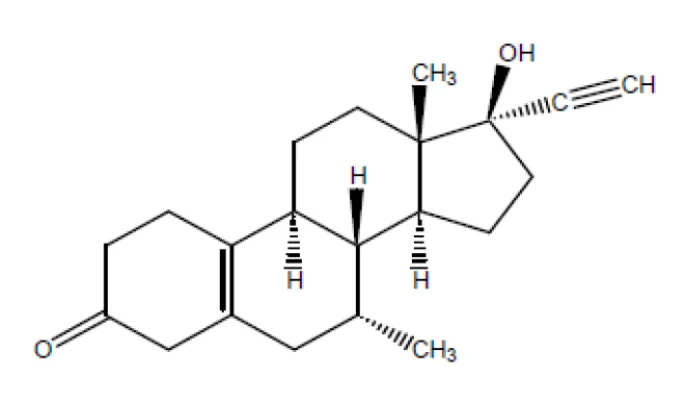
Physicochemical properties: Tibolone is a white powder or crystals. It is practically insoluble in water, soluble in dioxane, acetone, methanol and ethanol. Tibolone has a melting point of 165° to 170°C and a partition coefficient of 3.91 at 40°C (octanol-water). Tibolone is known to occur in two crystal modifications: the more stable monoclinic form I and the triclinic form II. The specific optical rotation is +100° to +106°, calculated on dried substance. Tibolone, as steroids, shows specific rotation due to the presence of six asymmetric carbons.
14 CLINICAL TRIALS
14.1 Trial Design and Study Demographics
A comprehensive literature review was performed to evaluate the effect of tibolone on efficacy and safety outcomes compared to standard therapies and/or placebo in menopausal women requiring treatment of estrogen deficiency symptoms.
The systematic review of published literature included 22 placebo-controlled randomised clinical trials (RCTs) evaluating tibolone in postmenopausal or perimenopausal women. Of these, two studies lasted 3 years (LIFT Study; N=4,538) or longer (LIBERATE Study; N=3,148), eight were
2-years, seven were 1-year, and two were 6-months in duration. Treatment allocation was double-blind in 11, single-blind in one and open-label, or unspecified in five placebo-controlled RCTs. Study populations ranged from 25 to 4538 subjects. The total number of participants in the 19 placebo-controlled studies was approximately 10,471; of these, 5116 received tibolone at doses of 2.5 mg/day or 1.25 mg/day.
The review also included 44 active-controlled RCTs evaluation tibolone in postmenopausal or perimenopausal women. Of these, two studies lasted 3 years (OPAL Study; N=866 and a small study by Thiebaud and colleagues; N=40), six were 2-years, 14 were 1-year and 20 were 6-months in duration. Treatment allocation was double-blind in 12, single-blind in eight, and open-label, or unspecified in 22 active-controlled RCTs. Study populations ranged from 22 to 866 subjects. The total number of participants in the 44 active-controlled studies was approximately 6972; of these, 2723 received tibolone at doses of 2.5 mg/day or 1.25 mg/day.
14.2 Study Results
Effects of Tibolone on Vasomotor Symptoms
Two pivotal, multicentre, randomised, double-blind studies assessed the effects of tibolone on climacteric complaints. One of these studies was a placebo-controlled study and assessed the effects on hot flashes and sweats in groups of about 150 subjects after a 12-week treatment with various doses of tibolone and placebo. The 2.5 mg dose appeared to be the optimal dose for relieving hot flashes, sweats and other climacteric complaints. The other study was an active controlled study that compared the effects of a 48-week treatment of 2.5 mg tibolone with that of a continuous combined estradiol/norethisterone acetate combination in groups of about 220 post-menopausal subjects. Tibolone significantly relieved the climacteric symptoms (hot flashes, sweats, vaginal dryness and rating scores on well-being); the effects appeared to be similar to that of the continuous combined hormone therapy-preparation. The efficacy of tibolone on the climacteric symptoms was confirmed in other published studies.
Effects of Tibolone on Vaginal Bleeding (see CLINICAL PHARMACOLOGY)
Amenorrhea has been reported in 88% of women using tibolone 2.5 mg after 12 months of treatment. Breakthrough bleeding and/or spotting has been reported in 32.6% of women during the first 3 months of treatment, and in 11.6% of women after 11-12 months of use.
14.3 Comparative Bioavailability Study
An open-label, single-centre, single-dose, two-treatment, randomised, four-period, two-sequence crossover bioequivalence study of tibolone 2.5 mg tablet (BioSyent Pharma Inc.) versus Liviella® 2.5 mg tablet (manufactured by MSD Sharp & Dohme GmbH, Germany) was conducted in 60 healthy postmenopausal women under fasting conditions. The results from measured data are summarized in the table below (N=56).
Tibolone (1 x 2.5 mg) From measured data Geometric Mean Arithmetic Mean (CV %) |
|---|
| Parameter | Test1 | Reference2 | % Ratio of Geometric Means | 90% Confidence Interval |
|---|---|---|---|---|
AUCT (ng.h/L) | 2400.30 2503.31 (31.77%) | 2828.69 2988.13 (35.23%) | 84.77 | (82.04; 87.97) |
AUCI (ng.h/L) | 2730.35 2846.45 (31.90%) | 3209.12 3387.45 (34.89%) | 84.91 | (81.98; 87.95) |
CMAX (ng/L) | 1522.67 1414.84 (51.92%) | 1526.64 1712.27 (53.12%) | 82.13 | (75.69; 89.12)3 |
TMAX4 (h) | 1.06 (56.71%) | 1.03 (56.32%) | ||
| T½4 (h) | 5.09 (40.36%) | 5.22 (46.80%) |
1 Tibolone 2.5 mg tablets by BioSyent Pharma Inc.
2 Liviella (tibolone) 2.5 mg tablets manufactured by MSD Sharp & Dohme GmbH, purchased in Germany.
3 Scaled BE Criterion (%) is (73.34; 136.35)
4 Expressed as the arithmetic mean (CV%) only.
15 MICROBIOLOGY
Information is not available for this solid oral dosage form.
16 NON-CLINICAL TOXICOLOGY
General Toxicology
The effects of long-term (150 days) tibolone (1 mg/day) administration on the bladder and urethra was investigated in Ovx rats. Fourteen Ovx rats were separated into 2 groups: 1) placebo control (n=6), and 2) oral tibolone, 1 mg/day (n = 9). After 150 days, bladders and urethras were analysed using Ki-67 immunohistochemistry and histomorphometry. Urothelial thickness and the percent area of collagen fibres and blood vessels in the bladder and urethra were not significantly different between the tibolone and control groups. Urothelium cell proliferation in the bladder showed a low immunopositivity in both groups. Glycogen and glycoprotein contents in urethral epithelium were slightly modified by tibolone, while no change was observed in the bladder. These results demonstrated that long-term administration of tibolone has no effect on urothelial trophism, collagen fibres, the number of vessels, or cell proliferation in the urethra and bladder of Ovx rats.
Genotoxicity
Two studies were designed to examine possible DNA damage levels in peripheral blood leukocytes isolated from postmenopausal women using the alkaline Comet assay.
In the first study, 46 women were categorized in three groups: Group A: 15 surgical menopausal women who underwent surgery for benign conditions, receiving CEE, 0.625 mg/day, for 2.3 years, Group B: 16 spontaneous menopausal women receiving CEE, 0.625 mg/day, plus MPA, 5 mg/day, (CEE + MPA) for 2.4 years, and Group C: 15 spontaneous menopausal women receiving tibolone, 2.5 mg/day, for 2.4 years. The control group consisted of 15 spontaneous menopausal women. DNA damage was significantly greater in Group A and Group B compared with controls (mean total comet scores of 23.93, 19.44, and 10.07, respectively), but no significance was detected between Group C and controls (mean total comet scores of 12.07 and 10.07, respectively). These results show that, unlike CEE and CEE + MPA, tibolone did not induce DNA damage in postmenopausal women.
In the second study, 32 postmenopausal women were randomised into two groups of 16: Group A receiving tibolone, 2.5 mg/day, and alendronate sodium, 10 mg/day, for 12 months, and Group B receiving alendronate sodium, 10 mg/day, alone over the same period. The control group consisted of 16 postmenopausal women who did not receive any treatment. An increase in DNA damage levels was observed in Groups A and B compared with the control group. Tibolone did not significantly amplify this phenomenon, as there was no statistical difference in DNA damage levels between Group A and Group B.
Carcinogenicity
Tibolone treatment, similar to treatment with other sex hormones, in rodent studies demonstrated an association with the development of a range of tumors in long-term oral carcinogenicity studies. These included pituitary adenomas, mammary carcinomas and fibroadenomas, hepatic adenomas, uterine carcinoma, stromal polyps and stromal sarcoma, and carcinomas of the urinary bladder and testes. Although a carcinogenic effect was seen in certain strains of rat (hepatic tumors) and mouse (bladder tumors), the clinical relevance of this is uncertain.
Reproductive Toxicity
In animal studies, administration of tibolone resulted in anti-fertility and embryotoxic effects, likely a consequence of its hormonal properties. Tibolone was not teratogenic in mice or rats, although it had teratogenic potential in the rabbit at near-abortive doses.
Other Toxicity
The effects of tibolone on the metabolism of glucose and fatty acids, and on several metabolism-linked parameters, including the induction of cellular oxidative stress, were investigated in the liver of female Wistar rats. Tibolone was assayed at concentrations ranging from 5 to 100 µM. In isolated perfused livers, tibolone increased glycogenolysis (glucose release) and glycolysis (lactate and pyruvate production), while decreasing oxygen uptake and gluconeogenesis (glucose production). Exposure to tibolone also resulted in increases in both the cytosolic and mitochondrial NADH/NAD+ ratios. In isolated mitochondria, tibolone inhibited oxygen uptake via β-hydroxybutyrate and fatty acid oxidation without affecting the succinate oxidation. This pathway suggests that tibolone has an inhibitory action on the electron flow at complex I of the mitochondrial respiratory chain.
In both perfused livers and isolated mitochondria, tibolone stimulated oxidative stress as evidenced by the increased production of thiobarbituric acid reactive substances, a known marker of oxidative stress. These metabolic alterations suggest that tibolone administration has the potential to increase the risk of hepatic metabolic disturbances, progressing to steatosis and/or steatohepatitis, particularly in the postmenopausal state.