


Product Monograph - Tibsovo
RECENT MAJOR LABEL CHANGES
None at the time of the most recent authorization.
TABLE OF CONTENTS
Sections or subsections that are not applicable at the time of authorization are not listed.
RECENT MAJOR LABEL CHANGES ............................................................................................ 2
TABLE OF CONTENTS .............................................................................................................. 2
PART I: HEALTH PROFESSIONAL INFORMATION ...................................................................... 4
1 INDICATIONS ............................................................................................................... 4
1.1 Pediatrics ................................................................................................................ 4
1.2 Geriatrics ................................................................................................................ 4
2 CONTRAINDICATIONS ................................................................................................. 4
3 SERIOUS WARNINGS AND PRECAUTIONS BOX ............................................................ 5
4 DOSAGE AND ADMINISTRATION ................................................................................. 5
4.1 Dosing Considerations ............................................................................................ 5
4.2 Recommended Dose and Dosage Adjustment ....................................................... 6
4.4 Administration ........................................................................................................ 8
4.5 Missed Dose ........................................................................................................... 9
5 OVERDOSAGE .............................................................................................................. 9
6 DOSAGE FORMS, STRENGTHS, COMPOSITION AND PACKAGING ................................. 9
7 WARNINGS AND PRECAUTIONS .................................................................................. 9
7.1 Special Populations............................................................................................... 12
7.1.1 Pregnant Women ........................................................................................... 12
7.1.2 Breast-feeding ................................................................................................ 12
7.1.3 Pediatrics ........................................................................................................ 12
7.1.4 Geriatrics ........................................................................................................ 13
8 ADVERSE REACTIONS ................................................................................................ 13
8.1 Adverse Reaction Overview .................................................................................. 13
8.2 Clinical Trial Adverse Reactions ............................................................................ 14
8.3 Less Common Clinical Trial Adverse Reactions ..................................................... 16
8.4 Abnormal Laboratory Findings: Hematologic, Clinical Chemistry and Other Quantitative Data ........................................................................................................... 16
8.5 Post-Market Adverse Reactions ........................................................................... 19
9 DRUG INTERACTIONS ................................................................................................ 19
9.3 Drug-Behavioural Interactions .............................................................................. 19
9.4 Drug-Drug Interactions ......................................................................................... 19
9.5 Drug-Food Interactions ......................................................................................... 22
9.6 Drug-Herb Interactions ......................................................................................... 23
9.7 Drug-Laboratory Test Interactions ........................................................................ 23
10 CLINICAL PHARMACOLOGY ....................................................................................... 23
10.1 Mechanism of Action ...................................................................................... 23
10.2 Pharmacodynamics ........................................................................................ 23
10.3 Pharmacokinetics ........................................................................................... 23
11 STORAGE, STABILITY AND DISPOSAL ......................................................................... 25
12 SPECIAL HANDLING INSTRUCTIONS ........................................................................... 25
PART II: SCIENTIFIC INFORMATION ....................................................................................... 26
13 PHARMACEUTICAL INFORMATION ............................................................................ 26
14 CLINICAL TRIALS ........................................................................................................ 26
14.1 Clinical Trials by Indication ............................................................................. 26
15 MICROBIOLOGY ........................................................................................................ 32
16 NON-CLINICAL TOXICOLOGY ..................................................................................... 32
PATIENT MEDICATION INFORMATION .................................................................................. 34
PART I: HEALTH PROFESSIONAL INFORMATION
1 INDICATIONS
- TIBSOVO (ivosidenib) in combination with azacitidine is indicated for the treatment of adult patients with newly diagnosed acute myeloid leukemia (AML) with an isocitrate dehydrogenase-1 (IDH1) R132 mutation who are not eligible to receive intensive induction chemotherapy.
- TIBSOVO monotherapy is indicated for the treatment of adult patients with locally advanced or metastatic cholangiocarcinoma with an IDH1 R132 mutation who were previously treated by at least one prior line of systemic therapy. Documentation of an IDH1 R132 mutation using an appropriate diagnostic test is required prior to treatment with TIBSOVO.
1.1 Pediatrics
Pediatrics (< 18 years of age): No data are available to Health Canada; therefore, Health Canada has not authorized an indication for pediatric use.
1.2 Geriatrics
Geriatrics (> 65 years of age): No overall differences in effectiveness or safety were observed between patients who were 65 years and older compared to younger patients (see 10 CLINICAL PHARMACOLOGY, 10.3 Pharmacokinetics, 14 CLINICAL TRIALS, 4 DOSAGE AND ADMINISTRATION)
2 CONTRAINDICATIONS
TIBSOVO is contraindicated in patients:
- who are hypersensitive to this drug or to any ingredient in the formulation, including any non-medicinal ingredient, or component of the container. For a complete listing, (see 6 DOSAGE FORMS, STRENGTHS, COMPOSITION AND PACKAGING)
- are taking strong CYP3A4 inducers or dabigatran.
- with congenital long QT syndrome.
- with a family history of sudden death or polymorphic ventricular arrythmia.
- with a QT/QTc interval > 500 msec, regardless of the correction method used.
3 SERIOUS WARNINGS AND PRECAUTIONS BOX
Serious Warnings and Precautions
TIBSOVO can cause a serious condition known as differentiation syndrome in patients with AML. Differentiation syndrome can be fatal if not treated, and symptoms may include non-infectious leukocytosis, peripheral edema, pyrexia, dyspnea, pleural effusion, hypotension, hypoxia, pulmonary edema, pneumonitis, pericardial effusion, rash, fluid overload, tumor lysis syndrome and creatinine increased. If differentiation syndrome is suspected, initiate corticosteroid therapy and hemodynamic monitoring until symptom resolution. Patients must be informed of signs and symptoms of differentiation syndrome, be advised to contact their health professional immediately if these occur and the need to carry the Patient Alert Card with them at all times (see 7 WARNINGS AND PRECAUTIONS).
Patients treated with TIBSOVO can develop QT (QTc) prolongation and ventricular arrhythmias. Monitor electrocardiograms and electrolytes. If QTc interval prolongation occurs, dose reduce or interrupt, then resume dose or permanently discontinue TIBSOVO (see 4 DOSAGE AND ADMINISTRATION; 7 WARNINGS AND PRECAUTIONS; 8 ADVERSE REACTIONS). |
|---|
4 DOSAGE AND ADMINISTRATION
4.1 Dosing Considerations
- Treatment should be initiated under the supervision of a health professional experienced in the use of anti-cancer medicinal products.
- Before taking TIBSOVO, patients must have confirmation of an IDH1 R132 mutation using an appropriate diagnostic test.
- An electrocardiogram (ECG) must be performed prior to treatment initiation. Heart rate corrected QT (QTc) should be less than 450 msec prior to treatment initiation and, in the presence of an abnormal QT, the benefit/risk of initiating TIBSOVO should be reassessed. In case QTc interval prolongation is between 480 msec and 500 msec, initiation of treatment with TIBSOVO should remain exceptional and be accompanied by close monitoring.
- An ECG must be performed prior to treatment initiation, at least weekly during the first 3 weeks of therapy and then at least monthly for the duration of therapy. Any abnormalities should be managed promptly (see Table 1 and 7 WARNINGS AND PRECAUTIONS).
- If a moderate or strong CYP3A4 inhibitor cannot be avoided, the dose of TIBSOVO should be reduced to 250 mg once daily. If the moderate or strong inhibitor is discontinued, the dose of TIBSOVO should be increased (after at least 5 half-lives of the CYP3A4 inhibitor) to the recommended dose of 500 mg once daily (see 9 DRUG INTERACTIONS and 8 ADVERSE REACTIONS).
- Complete blood count and blood chemistries should be assessed prior to the initiation of TIBSOVO and for the duration of therapy as clinically indicated.
4.2 Recommended Dose and Dosage Adjustment
- Treatment of Acute myeloid leukemia
The recommended dose is 500 mg TIBSOVO (2 x 250 mg tablets) taken orally once daily.
TIBSOVO should be started on Cycle 1 Day 1 and administered once daily during the 28-day cycle. It should be started in combination with azacitidine at 75 mg/m2 of body surface area, intravenously or subcutaneously, once daily on Days 1-7 of each 28-day cycle. The first treatment cycle of azacitidine should be given at 100% of the dose. It is recommended that patients be treated for a minimum of 6 cycles.
For the posology and method of administration of azacitidine, please refer to the Product Monograph for azacitidine.
Treatment should be continued until disease progression or until treatment is no longer tolerated by the patient (see 4 DOSAGE AND ADMINISTRATION (dose modification), 7 WARNINGS AND PRECAUTIONS and 8 ADVERSE REACTIONS)
- Treatment of Cholangiocarcinoma
The recommended dose is 500 mg TIBSOVO (2 x 250 mg tablets) taken orally once daily.
Treatment should be continued until disease progression or until treatment is no longer tolerated by the patient.
Dose modifications for adverse reactions
| Table 1 - Recommended Dose Modifications for Adverse Reactions | |
|---|---|
| Adverse Reaction | Recommended Action |
Differentiation syndrome (see 7 WARNINGS AND PRECAUTIONS, and 8 ADVERSE REACTIONS) |
|
| Leukocytosis (white blood cell count > 25 x 109/L or an absolute increase in total white blood cell count > 15 x 109/L from baseline), (see 7 WARNINGS AND PRECAUTIONS, 8 ADVERSE REACTIONS) |
|
|---|---|
QTc interval prolongation ˃ 480 to 500 msec (Grade 2, see 7 WARNINGS AND PRECAUTIONS, 9 DRUG INTERACTIONS and 8 ADVERSE REACTIONS) |
|
QTc interval prolongation ˃ 500 msec (Grade 3, see 7 WARNINGS AND PRECAUTIONS, 9 DRUG INTERACTIONS and 8 ADVERSE REACTIONS) |
|
QTc interval prolongation with signs/symptoms of life-threatening ventricular arrhythmia (Grade 4, see 7 WARNINGS AND PRECAUTIONS, 9 DRUG INTERACTIONS and 8 ADVERSE REACTIONS) |
|
|---|---|
| Other Grade 3 or higher adverse reactions |
|
Grade 1 is mild, Grade 2 is moderate, Grade 3 is severe, Grade 4 is life-threatening.
Patients with Renal impairment
No dose adjustment is required in patients with mild (eGFR ≥ 60 to ˂ 90 mL/min/1.73 m2) or moderate (eGFR ≥ 30 to ˂ 60 mL/min/1.73 m2) renal impairment. A recommended dose has not been determined for patients with severe renal impairment (eGFR ˂ 30 mL/min/1.73 m2).
TIBSOVO should be used with caution in patients with severe renal impairment and this patient population should be closely monitored (see 7 WARNINGS AND PRECAUTIONS and 10 CLINICAL PHARMACOLOGY, 10.3 Pharmacokinetics).
Patients with Hepatic impairment
No dose adjustment is required in patients with mild hepatic impairment (Child Pugh class A). A recommended dose has not been determined for patients with moderate and severe hepatic impairment (Child Pugh classes B and C).
TIBSOVO should be used with caution in patients with moderate and severe hepatic impairment and this patient population should be closely monitored (see 7 WARNINGS AND PRECAUTIONS and 10 CLINICAL PHARMACOLOGY, 10.3 Pharmacokinetics).
Geriatrics (≥ 65 years of age)
No dose adjustment is required in elderly patients (≥ 65 years old, see 8 ADVERSE REACTIONS and 10 CLINICAL PHARMACOLOGY, 10.3 Pharmacokinetics). No data are available for patients aged 85 years or older.
Pediatrics (< 18 years of age)
Health Canada has not authorized an indication for pediatric use.
4.4 Administration
TIBSOVO should be taken orally once daily at about the same time each day. Patients should not eat anything for 2 hours before and through 1 hour after taking the tablets. (see 10 CLINICAL PHARMACOLOGY, 10.3 Pharmacokinetics).
The tablets should be swallowed whole with water.
4.5 Missed Dose
If a dose of TIBSOVO is missed, the dose should be taken as soon as possible within 12 hours after the missed dose. Two doses of TIBSOVO should not be taken within 12 hours to make up for a missed dose. Return to normal dosing schedule the next day.
If a dose is vomited, replacement tablets should not be taken. The tablets should be taken as usual the following day.
5 OVERDOSAGE
In the event of overdose, toxicity is likely to manifest as exacerbation of the adverse reactions associated with TIBSOVO (see 8 ADVERSE REACTIONS). Patients should be closely monitored, including ECG monitoring, and provided with appropriate supportive care (see 4 DOSAGE AND ADMINISTRATION and 7 WARNINGS AND PRECAUTIONS).
There is no specific antidote for TIBSOVO overdose.
| For management of a suspected drug overdose, contact your regional poison control centre. |
|---|
6 DOSAGE FORMS, STRENGTHS, COMPOSITION AND PACKAGING
Table 2 – Dosage Forms, Strengths, Composition and Packaging
TIBSOVO is a blue, oval shaped, film-coated tablet approximately 18 mm in length, debossed with “IVO” on one side and “250” on the other side.
TIBSOVO tablets are supplied in HDPE bottles with polypropylene (PP) child resistant closure and polyethylene (PE) faced induction heat seal liner containing 60 tablets each and a silica gel desiccant in a HDPE canister.
7 WARNINGS AND PRECAUTIONS
Please see 3 SERIOUS WARNINGS AND PRECAUTIONS BOX.
General
Differentiation syndrome in patients with Acute Myeloid Leukemia
Differentiation syndrome has been reported following treatment with TIBSOVO (see 8 ADVERSE REACTIONS). Differentiation syndrome may be life-threatening or fatal if not treated (see below and 4 DOSAGE AND ADMINISTRATION). Differentiation syndrome is associated with rapid proliferation and
| Route of Administration | Dosage Form / Strength/Composition | Non-medicinal Ingredients |
| oral | Tablet 250 mg | Colloidal silica (anhydrous), Croscarmellose sodium, Hypromellose, Hypromellose acetate succinate, Indigo carmine aluminum lake, Lactose monohydrate, Magnesium stearate, Microcrystalline cellulose, Sodium lauryl sulfate, Titanium dioxide, Triacetin |
differentiation of myeloid cells. Symptoms include non-infectious leukocytosis, peripheral edema, pyrexia, dyspnea, pleural effusion, hypotension, hypoxia, pulmonary edema, pneumonitis, pericardial effusion, rash, fluid overload, tumor lysis syndrome and creatinine increased. Patients must be informed of signs and symptoms of differentiation syndrome, be advised to contact their health professional immediately if these occur and the need to carry the Patient Alert Card with them at all times.
In study AG120-C-009, the median time to onset of differentiation syndrome was 20 days. Differentiation syndrome occurred as early as 3 days and up to 33 days after treatment initiation during combination therapy.
If differentiation syndrome is suspected, administer systemic corticosteroids and initiate hemodynamic monitoring until symptom resolution and for a minimum of 3 days.
If leukocytosis is observed, initiate treatment with hydroxyurea according to institutional standards of care and leukapheresis as clinically indicated (see 9 DRUG INTERACTIONS).
Taper corticosteroids and hydroxyurea only after resolution of symptoms. Symptoms of differentiation syndrome may recur with premature discontinuation of corticosteroid and/or hydroxyurea treatment. Interrupt treatment with TIBSOVO if severe signs/symptoms persist for more than 48 hours after the initiation of systemic corticosteroids and resume treatment at 500 mg TIBSOVO once daily when the signs/symptoms are moderate or lower and upon improvement in the patient’s clinical condition (see 4 DOSAGE AND ADMINISTRATION).
Cardiovascular
QTc interval prolongation
QTc interval prolongation has been reported following treatment with TIBSOVO (see 8 ADVERSE REACTIONS). An ECG must be performed prior to treatment initiation, at least weekly during the first 3 weeks of therapy and then monthly thereafter if the QTc interval remains ≤ 480 msec (see 4 DOSAGE AND ADMINISTRATION). Any abnormalities should be managed promptly (see 4 DOSAGE AND ADMINISTRATION). In case of suggestive symptomatology, an ECG should be performed as clinically indicated. Conduct regular monitoring of electrolytes. In case of severe vomiting and/or diarrhea, an assessment of serum electrolytes abnormalities, especially hypokalemia and magnesium, must be performed.
QTc interval prolongation can lead to an increased risk of ventricular arrhythmias including torsades de pointes. Torsades de pointes is a polymorphic ventricular tachyarrhythmia. Generally, the risk of torsades de pointes increases with the magnitude of QTc prolongation produced by the drug. If sustained, torsades de pointes can progress to ventricular fibrillation and sudden cardiac death.
Risk factors for torsades de pointes in the general population include, but are not limited to, the following: female gender, age ≥65 years, baseline prolongation of the QTc interval, presence of genetic variants affecting cardiac ion channels or regulatory proteins (especially congenital long QT syndromes), family history of sudden cardiac death at <50 years of age, cardiac disease (e.g., myocardial ischemia or infarction, congestive heart failure, cardiomyopathy, conduction system disease), history of arrhythmias, electrolyte disturbances (e.g., hypokalemia, hypomagnesemia, hypocalcemia), conditions leading to electrolyte disturbances (e.g., persistent vomiting, eating disorders), bradycardia, acute neurological events (e.g., intracranial or subarachnoid hemorrhage, stroke, intracranial trauma), diabetes mellitus, and autonomic neuropathy.
Patients should be informed of the risk of QT prolongation, its signs and symptoms (palpitations, dizziness, syncope or even cardiac arrest) and be advised to contact their health professional immediately if these occur.
Concomitant administration of medicinal products known to prolong the QTc interval, and CYP3A4 inhibitors may increase the risk of QTc interval prolongation and should be avoided whenever possible during treatment with TIBSOVO (see 4 DOSAGE AND ADMINISTRATION and 9 DRUG INTERACTIONS). Patients should be treated with caution and closely monitored for QTc interval prolongation if use of a suitable alternative is not possible. ECG should be performed prior to co-administration and then as clinically indicated. The dose of TIBSOVO should be reduced to 250 mg once daily if a moderate or strong CYP3A4 inhibitor cannot be avoided.
If administration of furosemide is clinically indicated to manage signs/symptoms of differentiation syndrome, patients should be closely monitored for electrolyte imbalances and QTc interval prolongation.
Patients with congestive heart failure or electrolyte abnormalities should be monitored closely, with periodic monitoring of ECGs and electrolytes, during treatment with TIBSOVO.
Treatment with TIBSOVO should be permanently discontinued if patients develop QTc interval prolongation with signs or symptoms of life-threatening arrhythmia (see 4 DOSAGE AND ADMINISTRATION).
TIBSOVO should be used with caution in patients who either have low albumin levels or are underweight.
Dependence/Tolerance
Lactose intolerance
TIBSOVO contains lactose. Patients with rare hereditary problems of galactose intolerance, total lactase deficiency or glucose-galactose malabsorption should avoid this medicinal product.
Driving and Operating Machinery
TIBSOVO has minor influence on the ability to drive and use machines. Fatigue and dizziness have been reported in some patients taking TIBSOVO (see 8 ADVERSE REACTIONS) and should be considered when assessing a patient’s ability to drive or operate machines.
Hepatic/Biliary/Pancreatic
Patients with hepatic impairment
The safety and efficacy of TIBSOVO have not been established in patients with moderate and severe hepatic impairment (Child Pugh classes B and C). TIBSOVO should be used with caution in patients with moderate and severe hepatic impairment and this patient population should be closely monitored (see 4 DOSAGE AND ADMINISTRATION and 10 CLINICAL PHARMACOLOGY, 10.3 Pharmacokinetics).
Renal
Patients with severe renal impairment
The safety and efficacy of TIBSOVO have not been established in patients with severe renal impairment (eGFR ˂ 30 mL/min/1.73 m2). TIBSOVO should be used with caution in patients with severe renal impairment and this patient population should be closely monitored (see 4 DOSAGE AND ADMINISTRATION and 10 CLINICAL PHARMACOLOGY, 10.3 Pharmacokinetics).
Reproductive Health: Female and Male Potential
Women of childbearing potential should have a pregnancy test prior to starting treatment with TIBSOVO and should avoid becoming pregnant during therapy (see 7 WARNINGS AND PRECAUTIONS).
Women of childbearing potential and males with female partners of childbearing potential should use effective contraception during treatment with TIBSOVO and for at least 1 month after the last dose.
TIBSOVO may decrease the systemic concentrations of hormonal contraceptives (such as norethisterone and ethinyl estradiol) and, therefore, concomitant use of an alternative contraceptive method such as barrier contraceptives is recommended (see 7 WARNINGS AND PRECAUTIONS and 9 DRUG INTERACTIONS).
Fertility
There are no human data on the effect of ivosidenib on fertility. No fertility studies in animals have been conducted to evaluate the effect of ivosidenib. Undesirable effects on reproductive organs were observed in a 28-day repeat dose toxicity study (see 16 NON-CLINICAL TOXICOLOGY). The clinical relevance of these effects is unknown.
7.1 Special Populations
7.1.1 Pregnant Women
There are no adequate data on the use of ivosidenib in pregnant women. Studies in animals have shown reproductive toxicity (see 16 NON-CLINICAL TOXICOLOGY).
TIBSOVO is not recommended for use during pregnancy and in women of childbearing potential not using effective contraception. Patients should be informed of the potential risk to the fetus if it is used during pregnancy or if a patient (or female partner of a treated male patient) becomes pregnant during treatment or during the one-month period after the last dose.
7.1.2 Breast-feeding
It is unknown whether ivosidenib and its metabolites are excreted in human milk. No studies in animals have been conducted to evaluate the excretion of ivosidenib and its metabolites in milk. A risk to the newborns/infants cannot be excluded.
Breast-feeding should be discontinued during treatment with TIBSOVO and for at least 1 month after the last dose.
7.1.3 Pediatrics
Pediatrics (< 18 years of age): No data are available to Health Canada; therefore, Health Canada has not authorized an indication for pediatric use.
7.1.4 Geriatrics
Geriatrics (> 65 years of age): No overall differences in effectiveness or safety were observed between patients who were 65 years of age and older compared to younger patients. No dose adjustment is required in elderly patients (≥ 65 years old, see 8 ADVERSE REACTIONS and 10 CLINICAL PHARMACOLOGY, 10.3 Pharmacokinetics). No data are available for patients aged 85 years or older.
8 ADVERSE REACTIONS
8.1 Adverse Reaction Overview
Newly diagnosed acute myeloid leukemia in combination with azacitidine
The safety of TIBSOVO in combination with azacitidine was evaluated in AML patients, in Study AG120-C-009. Patients received at least one dose of either TIBSOVO 500 mg daily or placebo. The median duration of treatment was 6 months (range 0 to 33 months) with TIBSOVO in combination with azacitidine.
The most common adverse reactions were vomiting (22%), neutropenia (19%), electrocardiogram QT prolonged (19%), differentiation syndrome (14%) and thrombocytopenia (14%).
The serious adverse reactions were differentiation syndrome (8%), neutropenia (1%) and thrombocytopenia (1%).
Fatal adverse events occurred in 15% of patients receiving TIBSOVO, including pneumonia and haemorrhage intracranial (3%) cases, and COVID-19, septic shock, ischaemic stroke, seizure, multiple organ dysfunction syndrome, adenocarcinoma and pulmonary embolism (1%). None were considered as treatment-related by the Investigator.
In patients treated with TIBSOVO in combination with azacitidine, the frequency of discontinuation of TIBSOVO due to adverse reactions was 6%. Adverse reactions leading to discontinuation were thrombocytopenia (3%), electrocardiogram QT prolonged and neutropenia (1%).
The frequency of dose interruption of TIBSOVO due to adverse reactions was 31%. The adverse reactions leading to dose interruption were neutropenia (19%), electrocardiogram QT prolonged (8%), thrombocytopenia (7%), leukopenia (3%) and differentiation syndrome (3%).
The frequency of dose reduction of TIBSOVO due to adverse reactions was 18%. Adverse reactions leading to dose reduction were electrocardiogram QT prolonged (10%), neutropenia (7%) and thrombocytopenia (1%).
Previously treated, locally advanced or metastatic cholangiocarcinoma
The safety of TIBSOVO was studied in patients with previously treated, locally advanced or metastatic cholangiocarcinoma in Study AG120-C-005. Patients received at least one dose of either TIBSOVO 500 mg daily or placebo. The median duration of treatment was 2.8 months (range 0.1 to 45.1 months) with TIBSOVO.
The most common adverse reactions were diarrhea (23%), nausea (23%) and fatigue (20%).
The serious adverse reactions were electrocardiogram QT prolonged, hyperbilirubinemia, and jaundice cholestatic (1%).
Fatal adverse events occurred in 5% of patients receiving TIBSOVO, including sepsis (2%) and pneumonia, intestinal obstruction, pulmonary embolism, and hepatic encephalopathy (1%). None were considered treatment-related by the Investigator.
In patients treated with TIBSOVO, the frequency of treatment discontinuation due to adverse reactions was 1%. Adverse reaction leading to discontinuation was hyperbilirubinemia (1%).
The frequency of dose interruption of TIBSOVO due to adverse reactions was 2%. The adverse reactions leading to dose interruption were fatigue (2%) and jaundice cholestatic (1%).
The frequency of dose reduction of TIBSOVO due to adverse reactions was 4%. Adverse reactions leading to dose reduction were electrocardiogram QT prolonged (3%) and neuropathy peripheral (1%).
8.2 Clinical Trial Adverse Reactions
Clinical trials are conducted under very specific conditions. The adverse reaction rates observed in the clinical trials; therefore, may not reflect the rates observed in practice and should not be compared to the rates in the clinical trials of another drug. Adverse reaction information from clinical trials may be useful in identifying and approximating rates of adverse drug reactions in real-world use.
AG120-C-009 Study (Newly diagnosed acute myeloid leukemia in combination with azacitidine)
In the randomized, placebo-controlled, phase 3 Study AG120-C-009, the safety profile of TIBSOVO was studied in patients with newly diagnosed AML. 72 patients were treated with TIBSOVO (500 mg daily) in combination with azacitidine, and 74 patients were given placebo in combination with azacitidine. The most common adverse reactions and laboratory abnormalities observed in Study AG120-C-009 are shown in Table 3.
Table 3 - Adverse Reactions in ≥5% Newly Diagnosed AML Patients Treated with TIBSOVO in Combination with azacitidine in Clinical Study AG120-C-009 (N=72)1,2
System Organ Class Preferred Term | TIBSOVO + azacitidine (N=72) n (%) | Placebo + azacitidine (Before crossover) (N=74) n (%) | ||||
|---|---|---|---|---|---|---|
| Gastrointestinal disorders | ||||||
| Vomiting | 16 (22) | 10 (14) | ||||
| Blood and lymphatic system disorders | ||||||
| Neutropenia | 14 (19) | 5 (7) | ||||
| Thrombocytopenia | 10 (14) | 6 (8) | ||||
| Differentiation syndrome | 10 (14) | 6 (8) | ||||
| Leukocytosis | 7 (10) | 2 (3) | ||||
| Leukopenia | 4 (6) | 1 (1) | ||||
| Investigations | ||||||
| Electrocardiogram QT prolonged | 14 (19) | 2 (3) | ||
|---|---|---|---|---|
| Nervous system disorders | ||||
| Headache | 4 (6) | 0 | ||
| Psychiatric Disorder | ||||
| Insomnia | 4 (6) | 1 (1) | ||
1Data cut-off date 30 Jun 2022
2Adverse drug reactions related to AG120/placebo are included, regardless of relatedness with azacitidine. Relatedness was assessed by investigators.
3Grouped term includes vomiting and retching.
AG120-C-005 Study (Previously treated, locally advanced or metastatic cholangiocarcinoma)
The safety of TIBSOVO was studied in patients with previously treated, locally advanced or metastatic cholangiocarcinoma in Study AG120-C-005 (see 14 CLINICAL TRIALS). Patients received at least one dose of either TIBSOVO 500 mg daily (N=123) or placebo (N=59). The most common adverse reactions and laboratory abnormalities observed in Study AG120-C-005 are shown in Table 4.
Table 4 - Adverse Reactions in ≥5% Patients with Locally Advanced or Metastatic Cholangiocarcinoma Treated with TIBSOVO in Clinical Study AG120-C-005 (N=123) 1,2
System Organ Class Preferred Term | TIBSOVO (N=123) n (%) | Placebo (N=59) n (%) |
|---|---|---|
| Blood and lymphatic system disorders | ||
| Anemia | 6 (5) | 0 |
| Gastrointestinal disorders | ||
| Nausea | 28 (23) | 9 (15) |
| Diarrhea | 28 (23) | 5 (8) |
| Abdominal pain3 | 12 (10) | 3 (5) |
| Vomiting4 | 12 (10) | 8(14) |
| General disorders and administration site conditions | ||
| Fatigue5 | 24 (20) | 7 (12) |
| Metabolism and nutrition disorders | ||
| Decreased appetite | 11 (9) | 4 (7) |
| Investigations | ||
| Aspartate aminotransferase increased | 6 (5) | 1 (2) |
| Electrocardiogram QT prolonged | 8 (7) | 1 (2) |
| Nervous system disorders | ||
| Headache | 10 (8) | 1 (2) |
| Skin and subcutaneous tissue disorders | ||
| Rash6 | 7 (6) | 2 (3) |
1 Final database lock date 21 Jun 2021
2 Adverse drug reactions related to AG120/placebo are included. Relatedness was assessed by investigators.
3 Grouped term includes abdominal pain, abdominal pain upper, abdominal discomfort, abdominal pain lower, epigastric discomfort and abdominal tenderness (and gastrointestinal pain in the placebo group only).
4 Grouped term includes vomiting and retching.
5 Grouped term includes asthenia and fatigue.
6 Grouped term includes rash, rash maculo-papular, erythema, rash macular, dermatitis exfoliative generalized, drug eruption, and drug hypersensitivity.
8.3 Less Common Clinical Trial Adverse Reactions
Newly diagnosed acute myeloid leukemia in combination with azacitidine
Other adverse reactions (all Grades) reported in < 5% of patients treated with TIBSOVO + azacitidine in newly diagnosed AML
Nervous system disorders: Dizziness (4%), Neuropathy peripheral (4% - grouped term includes neuropathy peripheral, peripheral sensory neuropathy, and paraesthesia)
Previously treated, locally advanced or metastatic cholangiocarcinoma
Other adverse reactions (all Grades) reported in < 5% of patients treated with TIBSOVO in cholangiocarcinoma
Gastrointestinal disorders: Ascites (1%)
Hepatobiliary disorders: Jaundice cholestatic (1%), Hyperbilirubinemia (1%)
Investigations: Blood bilirubin increased (3%), Alanine aminotransferase increased (2%), White blood cell count decreased (3%), Platelet count decreased (1%)
Nervous system disorders: Neuropathy peripheral (4% - grouped term includes neuropathy peripheral, peripheral sensory neuropathy, and paraesthesia)
8.4 Abnormal Laboratory Findings: Hematologic, Clinical Chemistry and Other Quantitative Data
Clinical Trial Findings
Newly diagnosed acute myeloid leukemia in combination with azacitidine
Table 5 - Select Laboratory Abnormalities1, 2 (≥10%) That Worsened from Baseline in Patients with AML Who Received TIBSOVO + azacitidine for Hematology Parameters in AG120-C-009 study
| TIBSOVO + azacitidine | Placebo + azacitidine | |||||||||||
|---|---|---|---|---|---|---|---|---|---|---|---|---|
| Parameter | All Grades n (%) | Grade ≥ 3 n (%) | All Grades n (%) | Grade ≥ 3 n (%) | ||||||||
| Leukocytes decreased | 46 (64) | 41 (57) | 48 (65) | 44 (59) | ||||||||
| Platelets decreased | 43 (60) | 34 (47) | 53 (72) | 42 (57) | ||||||||
| Hemoglobin decreased | 41 (57) | 34 (47) | 52 (70) | 44 (59) | ||||||||
| Neutrophils decreased | 19 (26) | 18 (25) | 25 (34) | 23 (32) | ||||||||
| Lymphocytes increased | 18(25) | 1 (1) | 8 (11) | 1 (1) | ||||||||
| Lymphocytes decreased | 41 (57) | 23 (32) | 50 (68) | 28 (38) | ||||||||
1 Laboratory abnormality is defined as new or worsened by at least one grade from baseline, or if baseline is unknown.
2 The denominator used to calculate percentages is the number of treated subjects who can be evaluated for CTCAE criteria for each parameter in each arm.
Table 6 - Select Laboratory Abnormalities1, 2 (≥10%) That Worsened from Baseline in Patients with AML Who Received TIBSOVO + azacitidine for Chemistry Parameters in AG120-C-009 study
| TIBSOVO + azacitidine | Placebo + azacitidine | |||||||||||
|---|---|---|---|---|---|---|---|---|---|---|---|---|
| Parameter | All Grades n n (%) | Grade ≥ 3 n (%) | All Grades n n (%) | Grade ≥ 3 n (%) | ||||||||
| Albumin decrease | 31 (43) | 3 (4) | 44 (59) | 5 (7) | ||||||||
| Bicarbonate decrease | 21 (30) | 1 (1) | 20 (27) | 0 | ||||||||
| Bilirubin increase | 16 (22) | 4 (6) | 16 (22) | 1 (1) | ||||||||
| Glucose increased | 41 (57) | 9 (13) | 35 (47) | 8 (11) | ||||||||
| Phosphate decreased | 29 (40) | 7 (10) | 27 (36) | 9 (12) | ||||||||
| Aspartate Aminotransferase increased | 26 (36) | 0 | 18 (24) | 0 | ||||||||
| Alanine Aminotransferase increase | 14 (19) | 0 | 24 (32) | 0 | ||||||||
| Magnesium decreased | 29 (40) | 1 (1) | 22 (30) | 0 | ||||||||
| Magnesium increase | 8 (11) | 0 | 9 (12) | 1 (1) | ||||||||
| Calcium increase | 14 (19) | 2 (3) | 5 (7) | 2 (3) | ||||||||
| Calcium decrease | 29 (40) | 4 (6) | 32 (43) | 4 (5) | ||||||||
| Alkaline Phosphatase increased | 24 (33) | 0 | 24 (32) | 1 (1) | ||||||||
| Potassium increased | 22 (31) | 4 (6) | 10 (14) | 1 (1) | ||||||||
| Potassium decrease | 23 (32) | 4 (6) | 32 (43) | 12 (16) | ||||||||
| Creatinine increase | 25 (35) | 2 (3) | 31 (42) | 1 (1) | ||||||||
| Sodium decrease | 32 (44) | 11 (15) | 34 (46) | 13 (18) | ||||||||
1 Laboratory abnormality is defined as new or worsened by at least one grade from baseline, or if baseline is unknown.
2 The denominator used to calculate percentages is the number of treated subjects who can be evaluated for CTCAE criteria for each parameter in each arm.
Of the 72 patients with newly diagnosed AML who were treated with TIBSOVO in combination with azacitidine in study AG120-C-009, electrocardiogram QT prolonged was reported and assessed as related to TIBSOVO in 19% of patients. Ten percent (10%) of patients experienced Grade 3 or higher reactions. Based on ECG analysis, 17% of patients treated with TIBSOVO in combination with azacitidine, who had at least one post-baseline ECG assessment, were found to have a QTc interval ˃ 500 msec, 26% had an increase from baseline QTc ˃ 60 msec (Table 7). One percent (1%) of patients discontinued TIBSOVO treatment due to electrocardiogram QT prolonged, dose interruption and reduction were required in 8% and 10% of patients, respectively. The median time to onset of QT prolongation assessed as related to TIBSOVO in patients treated with TIBSOVO was 31 days. Electrocardiogram QT prolonged occurred as early as 4 days and up to 27 months after treatment initiation.
Table 7 - Summary of Notable ECG Values During the On-treatment Period (AG120-C-009 Safety Analysis Set)
| ECG Parameter Criteria | TIBSOVO + azacitidine n (%) | Placebo + azacitidine n (%) |
|---|
| QTcF (msec) | |||
|---|---|---|---|
| >30 increase from baseline | 46 (66) | 28 (39) | |
| >60 increase from baseline | 18 (26) | 10 (14) | |
| >450 | 45 (63) | 25 (35) | |
| >480 | 19 (26) | 6 (8) | |
| >500 | 12 (17) | 2 (3) | |
Abbreviations: ECG = electrocardiogram; QTcF = QT interval corrected for heart rate using Fridericia’s formula.
Previously treated, locally advanced or metastatic cholangiocarcinoma
Table 8 - Selected Laboratory Abnormalities Occurring in ≥ 10% of Patients Receiving TIBSOVO for Hematology Parameters in AG120-C-0051 study
| TIBSOVO | Placebo | ||||||||
|---|---|---|---|---|---|---|---|---|---|
| Parameter | All Grades n (%) | Grade > 3 n (%) | All Grades n (%) | Grade > 3 n (%) | |||||
| Hemoglobin decreased | 48 (40) | 9 (8) | 14 (25) | 0 | |||||
1 Laboratory abnormality is defined as new or worsened by at least one grade from baseline, or baseline is unknown.
Table 9 - Selected Laboratory Abnormalities Occurring in ≥ 10% of Patients Receiving TIBSOVO for Chemistry Parameters in AG120-C-0051 study
| TIBSOVO | Placebo | ||||||||
|---|---|---|---|---|---|---|---|---|---|
| Parameter | All Grades n (%) | Grade > 3 n (%) | All Grades n (%) | Grade > 3 n (%) | |||||
| AST increased | 41 (34) | 5 (4) | 14 (24) | 1 (2) | |||||
| Bilirubin increased | 36 (30) | 15 (13) | 11 (19) | 2 (3) | |||||
1 Laboratory abnormality is defined as new or worsened by at least one grade from baseline, or baseline is unknown.
Of the 123 patients with locally advanced or metastatic cholangiocarcinoma treated with TIBSOVO monotherapy in study AG120-C-005, electrocardiogram QT prolonged was reported and assessed as related to TIBSOVO in 7% of patients. Based on ECG analysis, 2% of patients had a QTc interval ˃ 500 msec and 5% had QTc interval prolongation ˃ 60 msec from baseline (Table 10). Dose reduction to manage signs/symptoms was required in 3% of patients. The median time to onset of QT prolongation assessed as related to TIBSOVO in patients treated with TIBSOVO monotherapy was 30 days. Electrocardiogram QT prolonged occurred as early as 1 day and up to 23 months after treatment initiation.
Table 10 - Summary of Notable ECG values During the On-treatment Period – Cholangiocarcinoma Population (Safety Analysis Set)
| ECG Parameter Criteria | TIBSOVO n (%) | Placebo n (%) |
|---|---|---|
| QTcF (msec) | ||
| >30 increase from baseline | 53 (43) | 10 (17) |
|---|---|---|
| >60 increase from baseline | 6 (5) | 0 |
| >450 | 53 (43) | 11 (19) |
| >480 | 8 (7) | 0 |
| >500 | 3 (2) | 0 |
Abbreviations: ECG = electrocardiogram; QTcF = QT interval corrected for heart rate using Fridericia’s formula.
8.5 Post-Market Adverse Reactions
No new safety information has been identified through post-marketing use.
9 DRUG INTERACTIONS
9.3 Drug-Behavioural Interactions
TIBSOVO has minor influence on the ability to drive and use machines (see 7 WARNINGS AND PRECAUTIONS, 8 ADVERSE REACTIONS).
9.4 Drug-Drug Interactions
The drugs listed in this table are based on either drug interaction case reports or studies, or potential interactions due to the expected magnitude and seriousness of the interaction (i.e., those identified as contraindicated).
Table 11 - Established or Potential Drug-Drug Interactions
| Proper name | Source of Evidence | Effect | Clinical comment |
| Strong CYP3A4 inducers (e.g. carbamazepine, phenobarbital, phenytoin, rifampicin, St. John’s wort (Hypericum perforatum)) | T | Expected to decrease plasma concentrations of ivosidenib. | Concomitant administration of strong CYP3A4 inducers is expected to decrease plasma concentrations of TIBSOVO. Co-administration of strong CYP3A4 inducers with TIBSOVO is contraindicated (see 2 CONTRAINDICATIONS). Clinical studies evaluating the pharmacokinetics of TIBSOVO in the presence of a CYP3A4 inducer have not been conducted. |
| Proper name | Source of Evidence | Effect | Clinical comment |
Moderate CYP3A4 inhibitors (aprepitant, ciclosporin, diltiazem, erythromycin, fluconazole, grapefruit and grapefruit juice, isavuconazole, verapamil) Strong CYP3A4 inhibitors (clarithromycin, itraconazole, ketoconazole, posaconazole, ritonavir, voriconazole) | CT; T | Increases plasma concentrations of ivosidenib. In healthy subjects, administration of a single dose of 250 mg ivosidenib and 200 mg itraconazole once daily for 18 days increased the ivosidenib AUC by 169% (90% CI: 145, 195) with no change in Cmax. | This may increase the risk of QTc interval prolongation and suitable alternatives that are not moderate or strong CYP3A4 inhibitors should be considered whenever possible during treatment with TIBSOVO. Patients should be treated with caution and closely monitored for QTc interval prolongation if use of a suitable alternative is not possible. If use of moderate or strong CYP3A4 inhibitors cannot be avoided, the recommended dose of TIBSOVO should be reduced to 250 mg once daily (see 4 DOSAGE AND ADMINISTRATION and 7 WARNING AND PRECAUTIONS). |
| Medicinal products known to prolong the QTc interval (e.g. anti- arrhythmics, fluoroquinolones, 5 HT3 receptor antagonists, triazole antifungals) | T | Concomitant administration of medicinal products known to prolong the QTc interval may increase the risk of QTc interval prolongation and should be avoided whenever possible during treatment with TIBSOVO. Patients should be treated with caution and closely monitored for QTc interval prolongation if use of a suitable alternative is not possible (see 4 DOSAGE AND ADMINISTRATION and 7 WARNING AND PRECAUTIONS). | |
| Interactions with transporters | T | Ivosidenib is a substrate for P-glycoprotein (P-gp) and has potential to induce P-gp. Ivosidenib is not a substrate for BCRP or hepatic transporters | There is potential for TIBSOVO to alter the systemic exposure to active substances that are predominantly transported by P-gp (e.g., dabigatran). Concomitant administration of dabigatran is contraindicated with TIBSOVO. |
| Proper name | Source of Evidence | Effect | Clinical comment |
| OATP1B1 and OATP1B3. Ivosidenib does not inhibit BCRP, OAT1, and OCT2. ivosidenib is an inhibitor of OAT3, OATP1B1, OATP1B3 and P-gp. | TIBSOVO may increase systemic exposure to OAT3 or OATP1B1 and OATP1B3 substrates. Concomitant administration of OAT3 substrates (e.g. benzylpenicillin, furosemide) or sensitive OATP1B1 and OATP1B3 substrates (e.g. atorvastatin, pravastatin, rosuvastatin) should be avoided whenever possible during treatment with TIBSOVO. Patients should be treated with caution if use of a suitable alternative is not possible. If administration of furosemide is clinically indicated to manage signs/symptoms of differentiation syndrome, patients should be closely monitored for electrolyte imbalances and QTc interval prolongation. | ||
Cytochrome P450 (CYP) enzyme substrates
| T | Ivosidenib induces CYP3A4, CYP2B6, CYP2C8, CYP2C9 and may induce CYP2C19. Co-administration will decrease systemic exposure to substrates of these enzymes. | Use alternative therapies that are not sensitive substrates of CYP3A4, CYP2B6, CYP2C8, CYP2C9 or CYP2C19 during TIBSOVO treatment. If co-administration of TIBSOVO with sensitive CYP3A4, CYP2B6, CYP2C8, CYP2C9 or CYP2C19 substrates is unavoidable, monitor patients for loss of therapeutic effect of these drugs. (see 10 CLINICAL PHARMACOLOGY, 10.3 Pharmacokinetics). Do not administer TIBSOVO with anti-fungal agents that are substrates of CYP3A4 due to |
| Proper name | Source of Evidence | Effect | Clinical comment |
(omeprazole) | expected loss of antifungal efficacy. TIBSOVO may decrease the systemic concentrations of hormonal contraceptives that are substrates of CYP3A4 (such as norethisterone and ethinyl estradiol) and, therefore, concomitant use of a barrier method of contraception is recommended for at least 1 month after the last dose (see 7 WARNING AND PRECAUTIONS, 7.1 Special Populations). | ||
| Uridine diphosphate glucuronosyltransferases (UGTs) substrates (e.g. lamotrigine, raltegravir) | T | Ivosidenib has the potential to induce UGTs and decrease systemic exposure of substrates of UGT enzymes. | Suitable alternatives that are not UGT substrates should be considered during treatment with TIBSOVO. Patients should be monitored for loss of UGT substrate efficacy if use of such medicinal products cannot be avoided. |
Legend: C = Case Study; CT = Clinical Trial; T = Theoretical
Drugs that Affect Electrolytes
TIBSOVO should be used with caution with drugs that can decrease electrolyte levels and possibly increase the risk of QTc interval prolongation. Electrolyte levels should be monitored and maintained within the normal range to mitigate this risk.
Drugs that Reduce Heart Rate
Bradycardia can increase the risk of QTc prolongation and torsades de pointes. TIBSOVO should be used with caution if used concomitantly with drugs that reduce the heart rate. The heart rate should be monitored and maintained within the normal range.
9.5 Drug-Food Interactions
A drug-food interaction study demonstrated that administration of TIBSOVO 500 mg with a high-fat, high-calorie meal increased Cmax and AUCT by approximately 98% and 26%, respectively, but did not have a significant effect on Tmax, relative to administration of TIBSOVO under fasting conditions.
Grapefruit and grapefruit juice may increase plasma concentrations of TIBSOVO.
9.6 Drug-Herb Interactions
Interactions with herbal products have not been established. St. John’s wort herb may interact with TIBSOVO.
9.7 Drug-Laboratory Test Interactions
Interactions with laboratory tests have not been established.
10 CLINICAL PHARMACOLOGY
10.1 Mechanism of Action
Ivosidenib is an inhibitor of the mutant IDH1 enzyme. Mutant IDH1 converts alpha-ketoglutarate (α-KG) to 2-hydroxyglutarate (2-HG) which blocks cellular differentiation and promotes tumorigenesis in both hematologic and non-hematologic malignancies. The mechanism of action of ivosidenib beyond its ability to reduce 2-HG and restore cellular differentiation is not fully understood across indications.
10.2 Pharmacodynamics
Multiple doses of ivosidenib 500 mg daily decreased plasma concentrations of 2-HG in patients with hematological malignancies and cholangiocarcinoma with mutated IDH1 to levels approximating those observed in healthy subjects. In bone marrow of patients with hematological malignancies and in tumor biopsy of patients with cholangiocarcinoma, the mean (% coefficient of variation [%CV]) reduction in 2-HG concentrations were 93.1% (11.1%) and 82.2% (32.4%), respectively.
Using an ivosidenib concentration-QTc model constructed using triplicate ECG data from 136 patients with R/R AML, a concentration-dependent QTc interval prolongation of approximately 16.1 msec (90% CI: 13.3, 18.9) was predicted at the steady-state Cmax based on an analysis of 173 patients with advanced hematological malignancies, primarily R/R AML, who received 500 mg ivosidenib once daily. From a concentration-QTc model generated using triplicate ECG data from 101 patients with solid tumors (45.5% cholangiocarcinoma), a concentration-dependent prolongation of approximately 17.2 msec (90% CI: 14.3, 20.2) was predicted at the steady-state Cmax following a 500 mg daily dose using data from 166 patients with cholangiocarcinoma pooled from a phase 1 and phase 3 study (7 WARNINGS AND PRECAUTIONS, 7.1 Special populations and 9 DRUG INTERACTIONS).
10.3 Pharmacokinetics
Table 12 - Summary of ivosidenib Steady-State Pharmacokinetic Parameters in Cholangiocarcinoma (CCA) and AML patients treated with TIBSOVO
| Cmax | Tmaxa | t½ (h) | AUC | CL/F | Vc/F | |
| Mean (CV%) in CCA | 4,799 ng/mL (33%) | 2 hr | 129 hr (102%) | 86,382 (34%) | 6.1 L/hour (31%) | 3.20 L/kg (47.8%) |
| Mean (CV%) in AML | 6,145 ng/mL (34%) | 2 hr | 98 hr (42%) | 106,326 (41%) | 4.6 L/hour (35%) | 2.97 L/kg (25.9%) |
a Tmax expressed as median
A total of 10 clinical studies have contributed to the characterisation of the clinical pharmacology of ivosidenib. Five studies have been conducted in healthy subjects and 3 studies have been conducted in patients with advanced malignancies including 2 studies in patients with cholangiocarcinoma. Two studies have been conducted in patients with newly diagnosed AML receiving ivosidenib in combination with azacitidine. Pharmacokinetic endpoints have been assessed in plasma and urine. Pharmacodynamic endpoints have been assessed in plasma, urine, tumor biopsy, and bone marrow (for studies in patients with advanced malignancies only).
The steady-state pharmacokinetics of ivosidenib 500 mg were comparable between patients with newly diagnosed AML and cholangiocarcinoma.
Absorption
After a single 500 mg oral dose, the median time to Cmax (Tmax) was approximately 2 hours in newly diagnosed AML patients treated with a combination of ivosidenib and azacitidine and in cholangiocarcinoma patients.
In patients with newly diagnosed AML treated with a combination of ivosidenib (500 mg daily dose) and azacitidine, the mean steady-state Cmax was 6,145 ng/mL (CV%: 34) and the mean steady-state AUC was 106,326 ng hr/mL (CV%: 41).
In patients with cholangiocarcinoma, the mean Cmax was 4,060 ng/mL (%CV: 45) after a single dose of 500 mg and 4,799 ng/mL (CV%: 33) at steady state for 500 mg daily. The AUC was 86,382 ng·hr/mL (CV%: 34).
Accumulation ratios were approximately 1.6 for AUC and 1.2 for Cmax in patients with newly diagnosed AML treated with a combination of ivosidenib and azacitidine and approximately 1.5 for AUC and 1.2 for Cmax in patients with cholangiocarcinoma, over one month, when ivosidenib was administered at 500 mg daily. Steady-state plasma levels were reached within 14 days of once daily dosing.
Significant increases in ivosidenib Cmax (by approximately 98%) and AUCT (by approximately 26%) were observed following administration of a single dose of 500 mg ivosidenib tablets with a high-fat meal (approximately 900 to 1,000 calories, 56% to 60% fat) in healthy subjects (see 9 DRUG INTERACTIONS, 9.5 Drug-Food interactions, 4 DOSAGE AND ADMINISTRATION).
Distribution
Based on a population pharmacokinetic analysis the mean apparent volume of distribution of ivosidenib at steady-state (Vc/F) is 3.20 L/kg (CV%: 47.8) in patients with newly diagnosed AML treated with a combination of ivosidenib and azacitidine and 2.97 L/kg (CV%: 25.9) in patients with cholangiocarcinoma treated with ivosidenib monotherapy.
Metabolism
Ivosidenib was the predominant component (> 92%) of total radioactivity in plasma from healthy subjects. It is primarily metabolised by oxidative pathways mediated largely by CYP3A4 with minor contributions by N dealkylation and hydrolytic pathways.
Ivosidenib induces CYP3A4 (including its own metabolism), and CYP2B6, CYP2C8, CYP2C9, and may induce CYP2C19 and UGTs. Therefore, it may decrease systemic exposure of substrates of these enzymes (see 9 DRUG INTERACTIONS and 7 WARNING AND PRECAUTIONS, 7.1 Special Populations).
Ivosidenib is a substrate for P-glycoprotein (P-gp) and has the potential to induce P-gp. Ivosidenib is not a substrate for BCRP or hepatic transporters OATP1B1 and OATP1B3 (see 4 DOSAGE AND ADMINISTRATION).
Ivosidenib is an inhibitor of OAT3, OATP1B1, OATP1B3 and P-gp. Ivosidenib does not inhibit BCRP, OAT1, and OCT2 (see 9 DRUG INTERACTIONS).
Elimination
In patients with newly diagnosed AML treated with a combination of ivosidenib and azacitidine, the mean apparent clearance of ivosidenib at steady state was 4.6 L/hour (35%) with a mean terminal half-life of 98 hours (42%).
In patients with cholangiocarcinoma, the mean apparent clearance of ivosidenib at steady state was 6.1 L/hour (31%) with a mean terminal half-life of 129 hours (102%).
In healthy subjects, 77% of a single ivosidenib oral dose was found in the faeces of which 67% was recovered unchanged. Approximately 17% of a single oral dose was found in the urine of which 10% was recovered unchanged.
Linearity/non-linearity
The AUC and Cmax of ivosidenib increased in a less than dose proportional manner from 200 mg to 1,200 mg once daily (0.4 to 2.4 times the recommended dose).
Special Populations and Conditions
- Geriatrics: No clinically meaningful effects on the pharmacokinetics of ivosidenib were observed in older patients up to 84 years. The pharmacokinetics of ivosidenib in patients 85 years of age or older is unknown (see 4 DOSAGE AND ADMINISTRATION).
- Hepatic Insufficiency: Using the NCI classification, no clinically meaningful effects on the pharmacokinetics of ivosidenib were observed in patients with mild hepatic impairment. The pharmacokinetics of ivosidenib in patients with moderate and severe hepatic impairment are unknown in patients with newly diagnosed AML and with cholangiocarcinoma. No PK data in patients with hepatic impairment stratified by the Child-Pugh classification are available (see 4 DOSAGE AND ADMINISTRATION).
- Renal Insufficiency: No clinically meaningful effects on the pharmacokinetics of ivosidenib were observed in patients with mild or moderate renal impairment (eGFR ≥ 30 mL/min/1.73 m2). The pharmacokinetics of ivosidenib in patients with severe renal impairment (eGFR < 30 mL/min/1.73 m2) or renal impairment requiring dialysis are unknown (see 4 DOSAGE AND ADMINISTRATION).
- Other: No clinically meaningful effects on the pharmacokinetics of ivosidenib were observed based on gender, race, body weight or ECOG performance status.
11 STORAGE, STABILITY AND DISPOSAL
Store at 15°C - 30°C. Keep the bottle tightly closed in order to protect from moisture.
12 SPECIAL HANDLING INSTRUCTIONS
No special requirements.
PART II: SCIENTIFIC INFORMATION
13 PHARMACEUTICAL INFORMATION
Drug Substance
Proper / Common name: ivosidenib
Chemical name: Glycinamide, 1-(4-cyano-2-pyridinyl)-5-oxo-L-prolyl-2-(2-chlorophenyl)-N- (3,3- difluorocyclobutyl)-N2-(5-fluoro-3-pyridinyl)-, (2S)-
Molecular formula and molecular mass: C28H22ClF3N6O3, 583.0 g/mol
Structural formula:
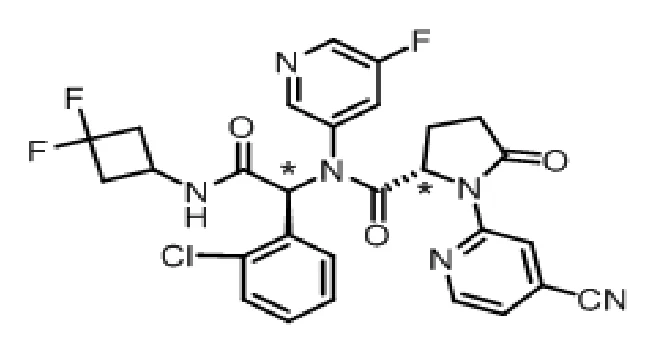
∗ denotes stereocenter
Physicochemical properties: It is a white to light yellow crystalline solid. Ivosidenib is practically insoluble in aqueous solutions between pH 1.2 and 7.4.
14 CLINICAL TRIALS
14.1 Clinical Trials by Indication
Newly diagnosed acute myeloid leukemia in combination with azacitidine
The efficacy and safety of TIBSOVO was evaluated in a randomized, multicenter, double-blind, placebo-controlled clinical study (AG120-C-009) of 146 adult patients with previously untreated AML with an IDH1 mutation who were ineligible for intensive induction chemotherapy, based on at least one of the following criteria: 75 years or older, Eastern Cooperative Oncology Group (ECOG) performance status of 2, severe cardiac or pulmonary disease, hepatic impairment with bilirubin > 1.5 times the upper limit of normal, creatinine clearance < 45 mL/min, or other comorbidity. Gene mutation analysis for central confirmation of IDH1 mutation from bone marrow and/or peripheral blood were conducted for all subjects. Patients were randomized to receive either TIBSOVO 500 mg or matched placebo orally once daily with azacitidine 75 mg/m2/day subcutaneously or intravenously for 1 week every 4 weeks until the end of the study, disease progression or unacceptable toxicity.
Table 13 - Summary of Patient Demographics and Disease Characteristics for Clinical Trials in Newly Diagnosed AML in Combination with azacitidine
TIBSOVO + azacitidine N=72 | Placebo + azacitidine N=74 | |||||||||
|---|---|---|---|---|---|---|---|---|---|---|
| Demographics | ||||||||||
| Age (Years) Median (Min, Max) | 76 (58, 84) | 76 (45, 94) | ||||||||
| Age Categories, n (%) | ||||||||||
| < 65 years | 4 (6) | 4 (5) | ||||||||
| 65 years to < 75 years | 29 (40) | 27 (36) | ||||||||
| ≥ 75 years | 39 (54) | 43 (58) | ||||||||
| Sex, n (%) | ||||||||||
| Male | 42 (58) | 38 (51) | ||||||||
| Female | 30 (42) | 36 (49) | ||||||||
| Race, n (%) | ||||||||||
| Asian | 15 (21) | 19 (26) | ||||||||
| White | 12 (17) | 12 (16) | ||||||||
| Black or African American | 0 | 2 (3) | ||||||||
| Other | 1 (1) | 1 (1) | ||||||||
| Not provided | 44 (61) | 40 (54) | ||||||||
| Disease Characteristics | ||||||||||
| ECOG PS, n (%) | ||||||||||
| 0 | 14 (19) | 10 (14) | ||||||||
| 1 | 32 (44) | 40 (54) | ||||||||
| 2 | 26 (36) | 24 (32) | ||||||||
| IDH1 Mutation, n (%)1 | ||||||||||
| R132C | 45 (63) | 51 (69) | ||||||||
| R132H | 14 (19) | 12 (16) | ||||||||
| R132G | 6 (8) | 4 (5) | ||||||||
| R132L | 3 (4) | 0 | ||||||||
| R132S | 2 (3) | 6 (8) | ||||||||
| Wild type | 1 (1) | 0 | ||||||||
| Missing | 1 (1) | 1 (1) | ||||||||
| Cytogenetic risk status2 n (%) | ||||||||||
| Favorable | 3 (4) | 7 (9) | ||||||||
| Intermediate | 48 (67) | 44 (59) | ||||||||
| Poor | 16 (22) | 20 (27) | ||||||||
| Other | 3 (4) | 1 (1) | ||||||||
| Missing | 2 (3) | 2 (3) | ||||||||
| Transfusion Dependent at Baseline3, n (%) | 39 (54) | 40 (54) | ||||||||
| Type of AML, n (%) | ||||||||||
| De novo AML | 54 (75) | 53 (72) | ||||||||
| Secondary AML | 18 (25) | 21 (28) | ||||||||
| Therapy-related AML | 2 (3) | 1 (1) | ||||||||
| MDS related | 10 (14) | 12 (16) | ||||||||
| MPN related | 4 (6) | 8 (11) | ||||||||
ECOG PS: Eastern Cooperative Oncology Group Performance Status; MPN = Myeloproliferative Neoplasm; MDS = Myelodysplastic syndrome
1 Using confirmatory Abbott RealTime IDH1 assay testing results.
2 Cytogenetic risk status: National Comprehensive Cancer Network (NCCN) guidelines.
3 Patients were defined as transfusion dependent at baseline if they received any red blood cell or platelet transfusion within 56 days prior to the first dose of TIBSOVO.
Efficacy was based on the primary efficacy endpoint event-free survival (EFS), measured from the date of randomization until treatment failure, relapse from remission, or death by any cause. Treatment failure was defined as failure to achieve complete remission (CR) by week 24. Overall Survival (OS), CR rate, CR + CR with partial hematologic recovery (CR + CRh) rate and objective response rate (ORR) were key secondary efficacy endpoints (Table 14 and Figure 1).
| Table 14 - Efficacy Results in Patients with Newly Diagnosed AML in combination with azacitidine | ||||||||||
|---|---|---|---|---|---|---|---|---|---|---|
| Endpoint | TIBSOVO (500 mg daily) + azacitidine N=72 | Placebo + azacitidine N=74 | ||||||||
Event-Free Survival, events (%) Treatment Failure Relapse Death | 46 (63.9) 42 (58.3) 3 (4.2) 1 (1.4) | 62 (83.8) 59 (79.7) 2 (2.7) 1 (1.4) | ||||||||
| Hazard ratio1 (95% CI) | 0.33 (0.16, 0.69) | |||||||||
| OS events (%) | 28 (38.9) | 46 (62.2) | ||||||||
| Median OS (95% CI) months | 24.0 (11.3, 34.1) | 7.9 (4.1, 11.3) | ||||||||
| Hazard ratio1 (95% CI) | 0.44 (0.27, 0.73) | |||||||||
| CR, n (%) | 34 (47.2) | 11 (14.9) | ||||||||
| 95% CI2 | (35.3, 59.3) | (7.7, 25.0) | ||||||||
| Odds Ratio3 (95% CI) | 4.76 (2.15, 10.50) | |||||||||
| CR + CRh rate, n (%) | 38 (52.8) | 13 (17.6) | ||||||||
| 95% CI2 | (40.7, 64.7) | (9.7, 28.2) | ||||||||
| Odds Ratio3 (95% CI) | 5.01 (2.32, 10.81) | |||||||||
| CR + CRi rate, n (%) | 39 (54.2) | 12 (16.2) | ||||||||
| 95% CI2 | (42.0, 66.0) | (8.7, 26.6) | ||||||||
| Odds Ratio3(95% CI) | 5.90 (2.69, 12.97) | |||||||||
CI: confidence interval; CR = Complete remission; CRh = Complete remission with partial hematologic recovery; CRi = Complete remission with incomplete hematologic recovery; OS = Overall survival;
1 Hazard ratio is estimated using a Cox’s proportional hazards model stratified by the randomization stratification factors (AML status and geographic region) with PBO+AZA as the denominator.
(AML status and geographic region). 1-sided p-value < 0.0017 was required to achieve statistical significance.
2 CI of percentage is calculated with the Clopper and Pearson (exact Binomial) method.
3 Cochran-Mantel-Haenszel (CMH) estimate for odds ratio is calculated with PBO+AZA as the denominator.
Figure 1: Kaplan Meier Plot of Overall Survival (OS)
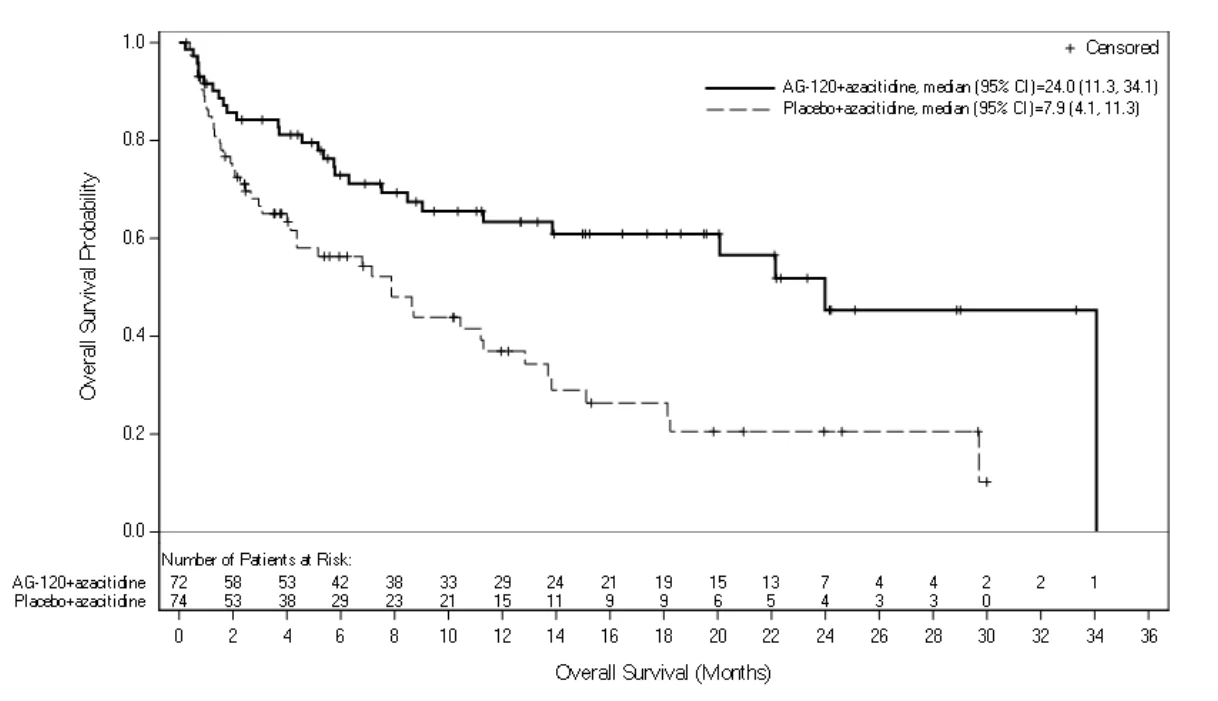
AG120=ivosidenib
An updated OS analysis, carried out at 64.2% (N = 95) of events, confirmed the overall survival benefit of TIBSOVO in combination with azacitidine compared to placebo in combination with azacitidine with a median OS of 29.3 months vs 7.9 months, respectively (HR = 0.42; 95% CI: 0.27 to 0.65).
Previously treated, locally advanced or metastatic cholangiocarcinoma
The efficacy of TIBSOVO was evaluated in a randomized (2:1), multicenter, double-blind, placebo-controlled, phase 3 clinical trial (Study AG120-C-005) of 185 adult patients with locally advanced or metastatic cholangiocarcinoma with an IDH1 R132 mutation whose disease had progressed following at least 1 but not more than 2 prior treatment regimens including at least one gemcitabine- or 5-FU-containing regimen and an expected survival of ≥ 3 months.
Patients were randomized to receive either TIBSOVO 500 mg orally once daily or matched placebo until disease progression or development of unacceptable toxicity. Randomization was stratified by number of prior therapies (1 or 2). Eligible patients who were randomized to placebo were allowed to cross over to receive TIBSOVO after documented radiographic disease progression as assessed by the investigator.
Table 15 - Summary of Patient Demographics and Disease Characteristics for Clinical Trials in Previously Treated, Locally Advanced or Metastatic Cholangiocarcinoma
Placebo (N=61) | TIBSOVO (N=124) | ||
|---|---|---|---|
| Demographic | |||
| Age (Years) Median (Min, Max) | 63.0 (40, 83) | 61 (33, 80) | |
| Age Category (years), n (%) | |||
| <45 | 3 (5) | 11 (9) | |||
|---|---|---|---|---|---|
| 45 - <65 | 33 (54) | 67 (54) | |||
| ≥65 | 25 (41) | 46 (37) | |||
| Sex, n (%) | |||||
| Male | 24 (39) | 44 (36) | |||
| Female | 37 (61) | 80 (65) | |||
| Race, n (%) | |||||
| Asian | 8 (13) | 15 (12) | |||
| White | 35 (57) | 70 (57) | |||
| Other | 1 (2) | 4 (3) | |||
| Missing | 17 (28) | 35 (28) | |||
| Disease Characteristics | |||||
| ECOG at Baseline n (%) | |||||
| 0 | 19 (31) | 49 (40) | |||
| 1-3 | 42 (69) | 75 (60) | |||
| IDH1 Mutation1 n (%) | |||||
| R132C | 45 (74) | 84 (68) | |||
| R132G | 6 (10) | 17 (14) | |||
| R132H | 2 (3) | 0 | |||
| R132L | 7 (12) | 21 (17) | |||
| R132S | 1 (2) | 2 (2) | |||
| Cholangiocarcinoma Type at Diagnosis n (%) | |||||
| Intrahepatic | 58 (95) | 111 (90) | |||
| Extrahepatic and Perihilar | 1 (2) | 5 (4) | |||
| Unknown | 2 (3) | 8 (7) | |||
| Randomization Strata n (%) | |||||
| 1 Prior Line of Therapy | 33 (54) | 66 (53) | |||
| 2 Prior Lines of Therapy | 28 (46) | 58 (47) | |||
| Extent of Disease at Screening n (%) | |||||
| Local/Regional | 5 (8) | 9 (7) | |||
| Metastatic2 | 56 (92) | 115 (93) | |||
| Biliary Stent at Screening n (%) | |||||
| Yes | 7 (11) | 14 (11) | |||
| No | 54 (89) | 110 (89) | |||
| Had Ascites at Screening n (%) | |||||
| Yes | 13 (21) | 34 (27) | |||
| No | 48 (79) | 90 (73) | |||
Abbreviations : Max = maximum ; Min = minimum. Abbreviations: ECOG = Eastern Cooperative Oncology Group; IDH = isocitrate dehydrogenase.
1From IDH1 central testing.
2Subject with both local/regional and metastatic disease is considered as metastatic.
The primary efficacy outcome measure was Progression Free Survival (PFS) as determined by Independent Radiology Center (IRC) according to Response Evaluation Criteria in Solid Tumors (RECIST) v1.1, which was defined as time from randomization to disease progression or death due to any cause.
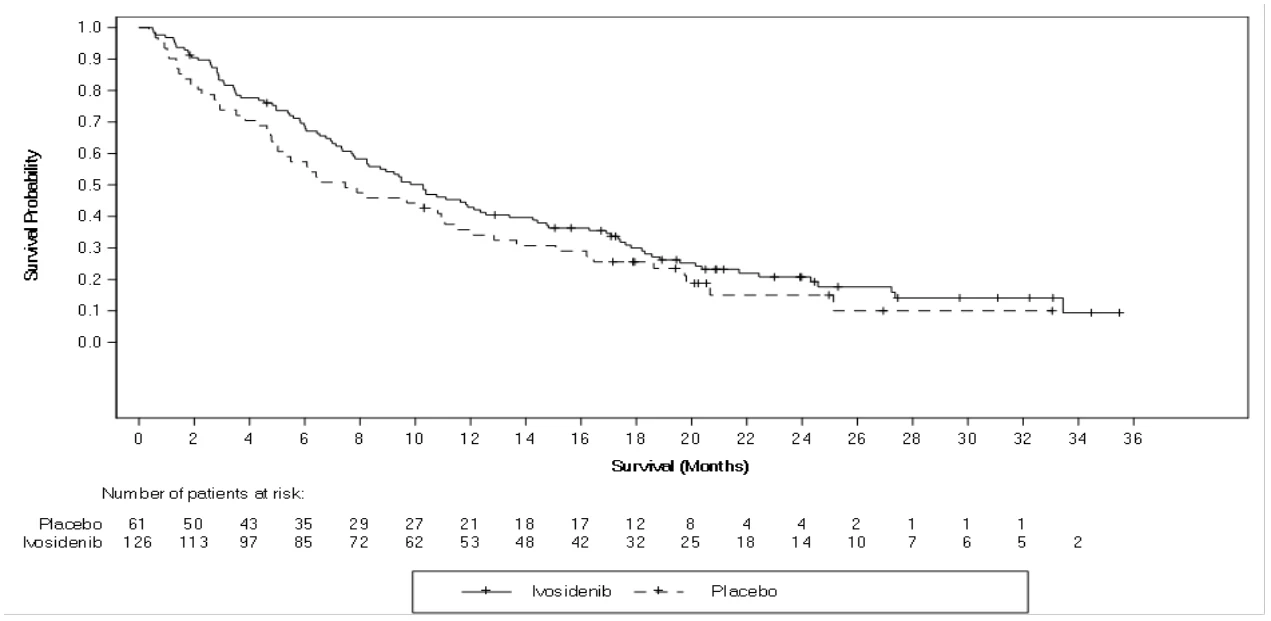
Overall Survival (OS) was a secondary efficacy endpoint. As allowed per protocol, a large proportion (70.5%) of patients in the placebo arm crossed over to receive TIBSOVO following radiographic disease progression as assessed by the Investigator.
Efficacy results are summarised in Table 16.
| Table 16 - Efficacy Results in Patients with Locally Advanced or Metastatic Cholangiocarcinoma | ||||||||||
|---|---|---|---|---|---|---|---|---|---|---|
| Endpoint | TIBSOVO (500 mg daily) | Placebo | ||||||||
| Progression-Free Survival (PFS) by IRC Assessment | N=124 | N=61 | ||||||||
Events, n (%) Progressive Disease Death | 76 (61) 64 (52) 12 (10) | 50 (82) 44 (72) 6 (10) | ||||||||
| Median PFS, months (95% CI) | 2.7 (1.6, 4.2) | 1.4 (1.4, 1.6) | ||||||||
Hazard ratio (95% CI)1 P-value2 | 0.37 (0.25, 0.54) <0.0001 | |||||||||
PFS Rate (%)3 6 months 12 months | 32.0 21.9 | NE NE | ||||||||
| Overall Survival4 | N=126 | N=61 | ||||||||
| Deaths, n (%) | 100 (79) | 50 (82) | ||||||||
| Median OS (months, 95% CI) | 10.3 (7.8, 12.4) | 7.5 (4.8, 11.1) | ||||||||
Hazard ratio (95% CI)1 P-value2 | 0.79 (0.56, 1.12) 0.093 | |||||||||
IRC: Independent Radiology Center; CI: Confidence Interval; NE = not estimable.
1 Hazard ratio is calculated from stratified Cox regression model. Stratification factor is the number of prior line of therapies at randomization.
2 P-value is calculated from the one-sided stratified log-rank test without adjusting for crossover. Stratification factor is the number of prior line of therapies at randomization.
3 Based on Kaplan-Meier estimation. No patients randomized to placebo achieved PFS of 6 months or longer.
4 OS results are based on the final analysis of OS (based on 150 deaths; data cut off: 31 May 2020) which occurred 16 months after the final analysis of PFS (data cut off: 31 January 2019).
Figure 2: Kaplan Meier Plot of Progression-Free Survival per IRC
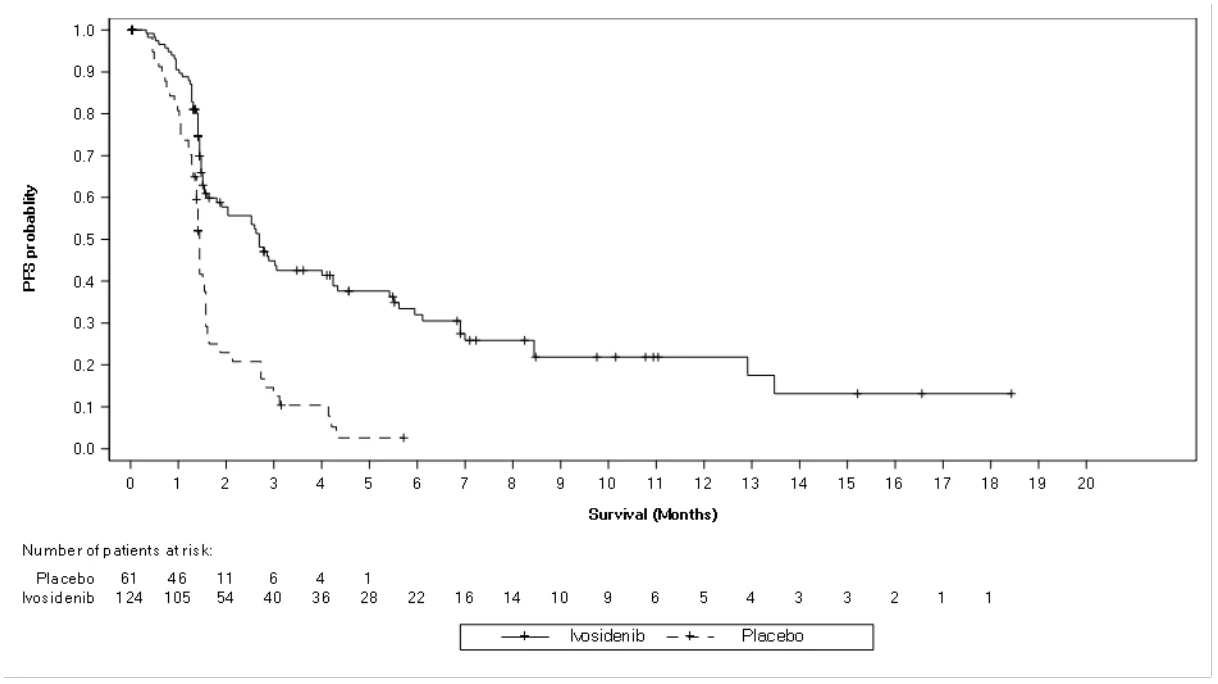
Figure 3: Kaplan-Meier Plot of Overall Survival
15 MICROBIOLOGY
No microbiological information is required for this drug product.
16 NON-CLINICAL TOXICOLOGY
General Toxicology:
Safety pharmacology
The potential of ivosidenib for QT prolongation was evidenced in in vitro and in vivo preclinical studies at clinically relevant plasma levels.
Repeat-dose toxicity
In animal studies at clinically relevant exposures, ivosidenib induced haematologic abnormalities (bone marrow hypocellularity, lymphoid depletion, decreased red cell mass together with extramedullary haematopoiesis in the spleen), gastrointestinal toxicity, thyroid findings (follicular cell hypertrophy/hyperplasia in rats), liver toxicity (elevated transaminases, increased weights, hepatocellular hypertrophy and necrosis in rats and hepatocellular hypertrophy associated with increased liver weights in monkeys) and kidney findings (tubular vacuolation and necrosis in rats). Toxic effects observed on haematologic system, GI system and kidney were reversible whereas the toxic effects observed on liver, spleen and thyroid were still observed at the end of the recovery period.
Carcinogenicity:
Carcinogenicity studies have not been conducted with ivosidenib.
Genotoxicity:
Ivosidenib was not mutagenic or clastogenic in conventional in vitro and in vivo genotoxicity assays.
Reproductive and Developmental Toxicology:
Fertility studies have not been conducted with ivosidenib. In the 28-day repeat dose toxicity study in rats, uterine atrophy was observed in females at non-tolerated dose levels approximately 1.7-fold the clinical exposure (based on AUC) and was reversible after a 14-day recovery period. Testicular degeneration was observed in males at non-tolerated dose levels approximately 1.2-fold the clinical exposure (based on AUC) in animals prematurely euthanized.
In embryofoetal development studies in rats, lower foetal body weights and delayed skeletal ossification occurred in the absence of maternal toxicity. In rabbits, maternal toxicity, spontaneous abortions, decreased foetal body weights, increased post implantation loss, delayed skeletal ossification and visceral development variation (small spleen) were observed. Animal studies indicate that ivosidenib crosses the placenta and is found in foetal plasma. In rats and rabbits, the no adverse effect levels for embryofoetal development were 0.4-fold and 1.4-fold the clinical exposure (based on AUC), respectively.