


Product Monograph - Timentin
Indications and Clinical Use
Treatment
TIMENTIN® (ticarcillin and clavulanic acid for injection, USP) may be appropriate for the treatment of the following infections when caused by TIMENTIN®-susceptible strains of the designated bacteria.
Bacterial Septicemia, when caused by ß-lactamase (excluding Type 1) producing strains of
E.coli, Staphylococcus aureus, and Klebsiella spp.
Lower Respiratory Tract Infections when caused by ß-lactamase (excluding Type 1) producing strains of Staphylococcus aureus, Hemophilus influenzae and Klebsiella spp.
Bone Infections when caused by ß-lactamase producing strains of Staphylococcus aureus.
Skin Structure Infections when caused by ß -lactamase (excluding Type 1) producing strains of
Staphylococcus aureus, E. coli and Klebsiella spp.
Urinary Tract Infections when caused by ß-lactamase (excluding Type 1) producing strains of
E.coli and Klebsiella spp.
Gynecologic Infections when caused by ß-lactamase (excluding Type 1) producing strains of
Bacteroides spp., E. coli, Staphylococcus aureus, Staphylococcus epidermis, and Klebsiella spp.
Intra-abdominal Infections including peritonitis and intra-abdominal abscess, when caused by ß-lactamase (excluding Type 1) producing strains of E. coli, Klebsiella pneumoniae, B. fragilis, and Pseudomonas aeruginosa. The efficacy and safety of TIMENTIN® for the treatment of intra-abdominal infections in infants and children under the age of 12 have not been established.
Appropriate culture and susceptibility tests should be performed before treatment in order to isolate and identify organisms causing infection and to determine their susceptibilities to
TIMENTIN®. Therapy with TIMENTIN® may, however, be initiated before results of such tests are known when there is reason to believe the infection may involve any of the ß-lactamase
(excluding Type 1) producing organisms listed above. Modification of the treatment may be required once these results become available or if there is no clinical response.
The treatment of mixed infections caused by ticarcillin susceptible organisms and ß-lactamase
(excluding Type 1) producing organisms susceptible to TIMENTIN® should not require the addition of another antibiotic due to the ticarcillin content of TIMENTIN®.
Susceptibility to TIMENTIN® will vary with geography and time; local susceptibility data should be consulted where available (see Microbiology, Susceptibility Test Methods).
Prophylaxis
The administration of TIMENTIN® perioperatively (preoperatively, intraoperatively and postoperatively) may reduce the incidence of certain infections in patients undergoing elective surgical procedures (i.e. colorectal surgery and abdominal hysterectomy) that may be classified as contaminated or potentially contaminated.
In patients undergoing cesarean section, who are considered to be at increased risk of infection, intraoperative (after clamping the umbilical cord) and postoperative use of TIMENTIN® may reduce the incidence of surgery related postoperative infections.
The data from all the surgical prophylaxis trials were combined to obtain a sufficient number of patients to suggest that TIMENTIN® may be of value in reducing infection following colorectal surgery, abdominal hysterectomy or high risk cesarean section.
If signs of postsurgical infection should appear, specimens for culture should be obtained for identification of the causative organism(s) so that appropriate therapy may be instituted.
Contraindications
The use of TIMENTIN® (ticarcillin and clavulanic acid for injection, USP) is contraindicated in patients with a history of hypersensitivity to beta-lactam antibiotics (eg. penicillins, clavams, and cephalosporins).
Warnings
Serious and occasionally fatal hypersensitivity (anaphylactoid) reactions have been reported in patients on penicillin therapy. These reactions are more apt to occur in individuals with a history of penicillin hypersensitivity and/or a history of multiple allergens. There have been reports of individuals with a history of cephalosporin hypersensitivity who have experienced severe reactions when treated with penicillins. Before initiating therapy with TIMENTIN® (ticarcillin and clavulanic acid for injection, USP), careful inquiry should be made concerning previous hypersensitivity reactions to beta-lactams (eg. penicillins, cephalosporins and clavams) or other allergens. If an allergic reaction occurs, the administration of TIMENTIN® should be discontinued and appropriate therapy should be instituted. Serious anaphylactoid reactions require immediate emergency treatment with epinephrine. Oxygen, intravenous steroids and airway management, including intubation, should also be used as indicated.
Patients with renal impairment or underlying hemostatic problems should be observed for bleeding manifestations. Such patients should be dosed strictly according to recommendations
(See "DOSAGE AND ADMINISTRATION"). If bleeding occurs the administration of TIMENTIN® should be discontinued and appropriate therapy instituted.
Patients receiving TIMENTIN® may develop hemorrhagic manifestations associated with coagulation abnormalities, such as changes in bleeding time and platelet function, particularly if co-administered with drugs such as ASA or anticoagulants. If these occur, the administration of
TIMENTIN® should be discontinued and appropriate therapy instituted. On withdrawal of the drug, the bleeding time and coagulation abnormalities should revert to normal after approximately 7 days. Other causes of abnormal bleeding should also be considered.
Gastrointestinal
Clostridium difficile-associated disease
Clostridium difficile-associated disease (CDAD) has been reported with use of many antibacterial agents, including TIMENTIN® (see ADVERSE REACTIONS). CDAD may range in severity from mild diarrhea to fatal colitis. It is important to consider this diagnosis in patients who present with diarrhea, or symptoms of colitis, pseudomembranous colitis, toxic megacolon, or perforation of colon subsequent to the administration of any antibacterial agent. CDAD has been reported to occur over 2 months after the administration of antibacterial agents.
Treatment with antibacterial agents may alter the normal flora of the colon and may permit overgrowth of C. difficile. Clostridium difficile produces toxins A and B, which contribute to the development of CDAD. CDAD may cause significant morbidity and mortality. CDAD can be refractory to antimicrobial therapy.
If the diagnosis of CDAD is suspected or confirmed, appropriate therapeutic measures should be initiated. Mild cases of CDAD usually respond to discontinuation of antibacterial agents not directed against C. difficile. In moderate to severe cases, consideration should be given to management with fluids and electrolytes, protein supplementation, and treatment with an antibacterial agent clinically effective against C. difficile. Surgical evaluation should be instituted as clinically indicated, as surgical intervention may be required in certain severe cases.
Precautions
General
The total daily dosage should be reduced when TIMENTIN® (ticarcillin and clavulanic acid for injection, USP) is administered to patients with transient or persistent reduction of urinary output due to renal insufficiency (see DOSAGE AND ADMINISTRATION) because high and prolonged serum antibiotic concentrations can occur from usual doses.
Periodic assessment of organ system functions, including renal, hepatic and hematopoietic function should be made during prolonged therapy with TIMENTIN®.
Bleeding manifestations have occurred in some patients receiving beta-lactam antibiotics.
These reactions have been associated with abnormalities of coagulation tests such as clotting time, platelet aggregation and prothrombin time and are more likely to occur in patients with renal impairment. If bleeding manifestations appear, TIMENTIN® treatment should be discontinued and appropriate therapy instituted.
The passage of any penicillin from blood into brain is facilitated by inflamed meninges and during cardiopulmonary bypass. In the presence of these conditions and particularly when accompanied by renal failure, sufficiently high serum ticarcillin concentration can be attained to produce central nervous system adverse effects: these include myoclonia, convulsive seizures and depressed consciousness.
TIMENTIN® has been reported to cause hypokalemia; therefore, the possibility of this occurring should be kept in mind particularly when treating patients with fluid and electrolyte imbalance.
Periodic monitoring of serum potassium is advisable and, when necessary, corrective therapy should be implemented.
The theoretical sodium content is 4.52 mEq (104 mg) per gram of TIMENTIN®. This should be included in the daily allowance of patients on sodium restricted diets. Electrolyte levels and cardiac status should be monitored carefully during treatment, particularly in patients with hypertension or congestive heart failure.
The possibility of overgrowth by non-susceptible organisms and species originally sensitive to
TIMENTIN® should be kept in mind, particularly during prolonged treatment. If superinfection occurs during therapy, appropriate measures should be taken.
In patients with renal impairment, dosage should be adjusted according to the degree of impairment (see DOSAGE AND ADMINISTRATION).
The safety and efficacy of TIMENTIN® for the treatment of infections in infants from birth to one month of age have not been established.
Pregnancy
The safety of TIMENTIN® in the treatment of infections during human pregnancy is unknown.
TIMENTIN® should only be used during pregnancy if the anticipated benefit to the mother justifies the potential risk to the fetus.
Nursing Mothers
Trace quantities of TIMENTIN® are excreted in breast milk. TIMENTIN® may be administered during the period of lactation. With the exception of the risk of sensitization, there are no detrimental effects for the breast-fed infant.
Drug/Laboratory Test Interactions
TIMENTIN® should not be mixed with an aminoglycoside in the same container. Penicillins can cause substantial inactivation of aminoglycosides.
Probenecid decreases the renal tubular secretion of ticarcillin, thereby increasing serum concentrations and prolonging serum half-life of the antibiotic. Concurrent administration of probenicid delays ticarcillin renal excretion but does not delay the excretion of clavulanic acid.
In common with other antibiotics, ticarcillin may affect the gut flora, leading to lower estrogen reabsorption and reduced efficacy of combined oral contraceptives.
High urine concentrations of ticarcillin (>1500 mg/L 2 hours after an I.V. injection of 3.1 g
TIMENTIN®) may produce false positive protein reactions (pseudoproteinuria) with the following methods: sulfosalicylic acid and boiling test, acetic acid test, biuret reaction and nitric acid test.
The bromphenol blue (Multi-stix) reagent strip test has been reported to be reliable.
The presence of clavulanic acid in TIMENTIN® may cause a non-specific binding of IgG and albumin by red cell membranes leading to a false positive Coombs test.
Adverse Reactions
The following adverse reactions may occur during TIMENTIN® (ticarcillin and clavulanic acid for injection, USP) therapy:
Hypersensitivity reactions: skin rash, pruritus, urticaria, arthralgia, myalgia, drug fever, chills, chest discomfort, bronchospasm, wheezing, and anaphylactic reactions.
Bullous reactions (including erythema multiforme, Stevens-Johnson syndrome and toxic epidermal necrolysis) have been reported very rarely.
Central nervous system: headache, giddiness, or neuromuscular hyperirritability. Convulsions, particularly in patients with impaired renal function or in those receiving high doses.
Gastro-intestinal disturbances: disturbances of taste and smell, stomatitis, flatulence, nausea, vomiting and diarrhea, epigastric pain. Pseudomembranous colitis has been reported (see
Warnings – CDAD).
Hemic and lymphatic systems: thrombocytopenia, leukopenia, neutropenia, eosinophilia and reduction of hemoglobin or hematocrit. Prolongation of prothrombin time and bleeding time.
Bleeding manifestations have occurred.
Hepatic effects: A moderate rise in serum aspartate aminotransferase (AST) and/or serum alanine aminotransferase (ALT) has been noted in patients treated with beta-lactam class antibiotics, but the significance of these findings is unknown. Elevation of serum alkaline phosphatase, serum LDH, and serum bilirubin. Hepatitis and cholestatic jaundice have been reported very rarely.
Local reactions: pain, burning, erythema, swelling and induration at the injection site, phlebitis and thrombophlebitis with intravenous administration.
Other: increased muscle weakness in patients with myasthenia gravis has been reported.
Renal and urinary effects: Elevation of serum creatinine and/or BUN, hypernatremia. Reduction in serum potassium and uric acid. Hypokalaemia has been reported rarely. Hemorrhagic cystitis has been reported very rarely.
Symptoms and Treatment of Overdosage
Gastrointestinal effects such as nausea, vomiting and diarrhea may be evident and should be treated symptomatically.
Disturbances of the fluid and electrolyte balance may be evident and may be treated symptomatically.
TIMENTIN® (ticarcillin and clavulanic acid for injection, USP) overdosage has the potential to cause neuromuscular hyperirritability or convulsive seizures. Ticarcillin and clavulanic acid may be removed from circulation by hemodialysis.
For management of a suspected drug overdose, contact your regional Poison Control Centre.
Further management should be as clinically indicated.
Dosage and Administration
DOSAGE
TIMENTIN® (ticarcillin and clavulanic acid for injection, USP) should be administered only by intravenous infusion over 30 minutes.
Adults:
Treatment
Dosage for any individual patient must take into consideration the site and severity of infection, the susceptibility of the organisms causing infection, and the status of the patient's host defense mechanisms.
The recommended dosage for adults (60 kg or greater) is 3.1 g TIMENTIN® every 4 to 6 hours.
For patients weighing less than 60 kg, the recommended dosage is 200-300 mg/kg/day
TIMENTIN®, based on ticarcillin content, given in divided doses every 4 or 6 hours.
The duration of therapy depends upon the severity of infection. Generally, TIMENTIN® should be continued for at least 2 days after signs and symptoms of infection have disappeared. The usual duration is 10 to 14 days; however, in difficult and complicated infections, more prolonged therapy may be required. In certain infections, involving abscess formation, appropriate surgical drainage should be performed in conjunction with antimicrobial therapy.
Adults with impaired renal function
The serum half-life of TIMENTIN® in patients with renal insufficiency is prolonged, consequently, the dosage regimen must be adjusted. Clinical efficacy data are insufficient at present to establish an appropriate dosage regimen for TIMENTIN® in patients with renal dysfunction.
However, on the basis of theoretical pharmacokinetic considerations (namely absence of any change in the phamacokinetics of ticarcillin due to clavulanic acid and the apparent greater tissue clearance of clavulanic acid as compared to ticarcillin) it is suggested that for infections complicated by renal dysfunction, the dosage regimen as used currently for ticarcillin alone may generally be adopted (see below):
An initial loading dose of 3.1 g TIMENTIN® followed by doses indicated below:
The half lives of ticarcillin and clavulanic acid in patients with renal dysfunction (creatinine clearance < 10 mL/min) is 8.5 and 2.9 hours, respectively.
To calculate creatinine clearance from a serum creatinine value use the following formula.
Ccr = (140-Age) (wt in kg)
72 x Scr(mg/dL)
This is the calculated creatinine clearance for adult males, for females it is 15% less. To convert calculated creatinine clearance to SI units, (mL/second) multiply result by 0.0167.
| Creatinine clearance mL/min | Dosage (based on ticarcillin content) | |
| Over | 60 | 3g every 4 hours |
| 30 – 60 | 2g every 4 hours | |
| 10 – 30 | 2g every 8 hours | |
| Less than | 10 | 2g every 12 hours |
| Less than | 10 with hepatic dysfunction | 2g every 24 hours |
| Patients on peritoneal dialysis | 3g every 12 hours | |
| Patients on hemodialysis | 2g every 12 hours supplemented with 3g after each dialysis | |
Prophylaxis
For surgical prophylaxis the administration of TIMENTIN® should not exceed the recommended dosage regimen, since the continued administration of any antibiotic increases the risk of adverse reactions while, in the majority of surgical procedures, does not reduce the incidence of subsequent infection.
A three dosage regimen of TIMENTIN® is recommended as follows:
Patients undergoing cesarean section: Administer the first dose of 3.1 g TIMENTIN® as soon as the umbilical cord is clamped. The second and third dosage of 3.1 g should be administered at
4 hour intervals after the initial dose for a total of 3 doses.
Patients undergoing abdominal hysterectomy or colorectal surgery: Administer the first dose of
3.1 g TIMENTIN® one half to one hour prior to the initial incision. The second and third dosage of 3.1 g should be administered at 4 hour intervals after the initial dose for a total of 3 doses.
Infants and Children: (under 40 kg (88 lbs)) 1 month - 12 years of age. Clinical and pharmacokinetic data are limited in these age groups. However, the following dosages based on the ticarcillin content have been used. The daily dosages should not exceed the adult dose.
| Infections | Dosage Schedule (mg/kg) * | Total Daily Dosage (mg/kg/day) | |
| Non U.T.I. | severe | 50mg/kg every 4 hours | 300 |
| mild - moderate | 50mg/kg every 6 hours | 200 | |
| U.T.I. | complicated | 50mg/kg every 4 hours | 300 |
| uncomplicated | 50mg/kg every 6 hours | 200 |
*based on ticarcillin content.
Neonates:
The safety and efficacy of TIMENTIN® for the treatment of infections in neonates (birth to one month of age) have not been established.
ADMINISTRATION
TIMENTIN® must not be administered by bolus intravenous injection or by intramuscular injection.
The further diluted intravenous solution of TIMENTIN® should be administered over a period of
30 minutes by direct infusion or through a Y-type intravenous infusion set which may already be in place. If this method or the "piggyback" method of administration is used, it is advisable to discontinue temporarily the administration of any other solutions during the infusion of
TIMENTIN®.
TIMENTIN® should not be physically mixed or administered at the same site with any other antimicrobial agent such as an aminoglycoside.
After reconstitution and further dilution and prior to administration, TIMENTIN®, as with other parenteral drugs, should be inspected visually for particulate matter and discolouration.
Pharmaceutical Information
Drug Substance
Proper Name: TIMENTIN®
Chemical Name: ticarcillin and clavulanic acid
Ticarcillin Disodium:
Structural Formula:
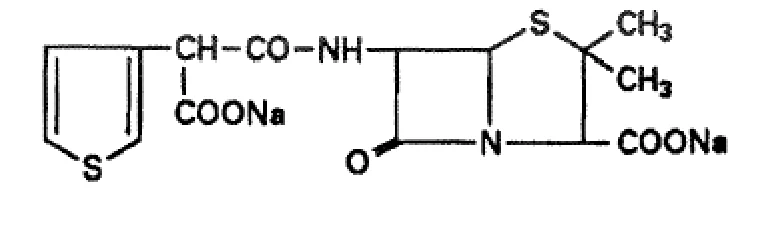
Molecular Formula: C15 H14 N2 Na2 O6 S2
Chemical Name: 6-(carboxy-3-thienylacetyl)amino]-3,3- dimethyl-7oxo-4-thia-1-azabicyclo [3.2.0]
heptane-2- carboxylic acid disodium salt: [2S-[2α,5α,6ß(S*)]]
Molecular Weight: 428.39
Description: Ticarcillin disodium is a white to light yellow powder soluble in water and alcohol; insoluble in chloroform and ether.
Potassium Clavulanate:
Structural Formula:
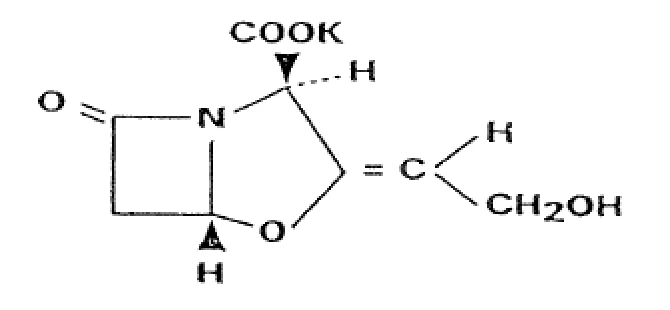
Molecular Formula: C8 H8 N O5 K
Molecular Weight: 199.16 (free acid)
237.25 (potassium salt)
Chemical Name: Potassium (Z)-(2R,5R)-3-(ß-hydroxyethylidene)-
7-oxo-4-oxa-1-azabicyclo(3.2.0)
heptane-2-carboxylate.
Description: A white to pale yellow powder.
Composition
TIMENTIN® vials contain a white to pale yellow powder for reconstitution composed of sterile ticarcillin disodium powder and sterile potassium clavulanate powder (expressed in terms of free acid). TIMENTIN® is very soluble in water (> 600 mg/mL). The reconstituted solution is clear, colourless or pale yellow having a pH of 5.5 to 7.5. For a 3.1 g dose of TIMENTIN® (using either the 3.1 g or 31 g vials), the theoretical sodium dose is 359 mg (15.6 mEq) and the theoretical potassium dose is 19.6 mg (0.5 mEq). Each gram of TIMENTIN® powder
(corresponding to a dose of 866 mg ticarcillin and 29 mg clavulanic acid) contains 104 mg (4.5 mEq) sodium and 5.7 mg (0.15 mEq) potassium.
Stability and Storage Recommendations
TIMENTIN® stock solution at 200 mg/mL or 300 mg/mL (ticarcillin) is stable for up to 6 hours at room temperature (21 – 24°C) or up to 72 hours under refrigeration (4°C).
Further diluted solutions of 200 mg/mL TIMENTIN® Stock solution should be used within the stated time periods as shown below:
Stability Period
| Intravenous Solution | Room Temp. (21-24°C) | Refrigeration (4°C) | |
Sodium Chloride Injection Dextrose Injection 5% Lactated Ringer’s Injection | USP USP USP | 16 hours 8 hours 16 hours | 48 hours 24 hours 48 hours |
Further diluted solutions of 300 mg/mL TIMENTIN® Stock Solution should be used within the stated time periods shown below:
Stability Period
| Intravenous Solution | Room Temp. (21-24°C) | Refrigeration (4°C) | |
Sodium Chloride Injection Dextrose Injection 5% Lactated Ringer’s Injection Sterile Water for Injection | USP USP USP USP | 24 hours 24 hours 24 hours 24 hours | 3 days 3 days 3 days 3 days |
TIMENTIN® vials should be stored at or below 24°C (75°F).
Reconstituted Solutions
For Intravenous Infusion
3.1 g vial:
Reconstitute each vial with 13 mL Sterile Water for injection U.S.P., when dissolved, the concentration of ticarcillin will be approximately 200 mg/mL with a corresponding concentration of 6.7 mg/mL for clavulanic acid (Stock Solution). Conversely, each 5.0 mL of the 3.1 g dose reconstituted with approximately 13 mL of diluent will contain approximately 1 g of ticarcillin and
33 mg of clavulanic acid.
31 g vial:
Reconstitute each vial with 76 mL Sterile Water for Injection U.S.P., when dissolved, concentration of ticarcillin will be approximately 300 mg/mL with a corresponding concentration of 10 mg/mL for clavulanic acid (Stock Solution). Conversely, each 5.0 mL of the 31 g dose reconstituted with approximately 76 mL of diluent will contain approximately 1.5 g of ticarcillin and 50 mg of clavulanic acid.
The dissolved drug should be further diluted to the desired volume using a suitable solution listed below. The further diluted solution of reconstituted drug may then be administered over a period of 30 minutes by direct infusion or through a Y-type intravenous infusion set which may already be in place. If this method or the "piggyback" method of administration is used, it is advisable to discontinue temporarily the administration of any other solutions during the infusion of TIMENTIN®.
Solutions for I.V. Infusion
Sodium Chloride Injection USP
Dextrose Injection 5% USP
Lactated Ringer's Solution USP
Sterile Water for Injection USP
Note: When TIMENTIN® is given in combination with another antimicrobial such as an aminoglycoside, each drug should be given separately in accordance with the recommended dosage and routes of administration for each drug.
After reconstitution and prior to administration, TIMENTIN®, as with other parenteral drugs, should be inspected visually for particulate matter and discolouration.
Availability of Dosage Forms
Each 3.1 g vial contains sterile ticarcillin disodium equivalent to 3 g ticarcillin and sterile potassium clavulanate equivalent to 0.1 g clavulanic acid.
Each 31 g vial contains sterile ticarcillin disodium equivalent to 30 g ticarcillin and sterile potassium clavulanate equivalent to 1 g clavulanic acid.
3.1 g strength available in cartons containing 10 vials with nominal volume of 50 mL.
31 g strength available in cartons containing 10 vials with nominal volume of 100 mL (pharmacy bulk package).
Microbiology
Mechanism of Action
Ticarcillin is a semisynthetic antibiotic with a broad spectrum of bactericidal activity against many Gram-positive and Gram-negative aerobic and anaerobic bacteria. Ticarcillin is derived from the basic penicillin nucleus, 6-amino-penicillanic acid. Ticarcillin disrupts bacterial cell wall development by inhibiting peptidoglycan synthesis and/or by interacting with penicillin-binding proteins. Ticarcillin is susceptible to degradation by β-lactamases, so the spectrum of activity does not normally include organisms which produce these enzymes.
Clavulanic acid is produced by the fermentation of Streptomyces clavuligerus. Clavulanic acid is a β-lactam, structurally related to the penicillins, which inactivates some β-lactamase enzymes commonly found in bacteria resistant to penicillins and cephalosporins. In particular, it has good activity against the clinically important plasmid-mediated β-lactamases frequently responsible for transferred drug resistance.
The formulation of ticarcillin with clavulanic acid in TIMENTIN® protects ticarcillin from degradation by β-lactamase enzymes, effectively extending the antibacterial spectrum of ticarcillin to include many bacteria normally resistant to ticarcillin and other β-lactam antibacterials.
Mechanism of Resistance
Resistance to ticarcillin/clavulanic acid can develop by inactivation by those bacterial beta-lactamases that are not themselves inhibited by clavulanic acid, including class B, C, and D.
Alteration of Penicillin Binding Proteins (PBPs) may also reduce the affinity of the antibacterial agent for the target.
Impermeability of bacteria or efflux pump mechanisms may also cause or contribute to bacterial resistance, particularly in Gram-negative bacteria.
Spectrum of Activity
Ticarcillin/clavulanic acid has been shown to be active against most isolates of the following bacteria, both in vitro and in clinical infections.
Gram-positive bacteria
Staphylococcus aureus (methicillin-susceptible isolates only)
Staphylococcus epidermidis (methicillin-susceptible isolates only)
Gram-negative bacteria
Escherichia coli
Haemophilus influenzae1
Klebsiella species
K. pneumoniae
Pseudomonas aeruginosa
Anaerobic bacteria
Bacteroides fragilis group
1 β-lactamase-negative, ampicillin-resistant (BLNAR) isolates of H. influenzae must be considered resistant to ticarcillin/clavulanic acid.
The following in vitro data are available, but their clinical significance is unknown. At least 90 percent of the following bacteria exhibit an in vitro minimum inhibitory concentration (MIC) less than or equal to the susceptible breakpoint for ticarcillin/clavulanic acid. However, the efficacy of ticarcillin/clavulanic acid in treating clinical infections due to these bacteria have not been established in adequate and well-controlled clinical trials.
Gram-positive bacteria
Staphylococcus saprophyticus
Streptococcus agalactiae (Group B)
Streptococcus bovis
Streptococcus pneumoniae (penicillin-susceptible isolates only)
Streptococcus pyogenes
Viridans group streptococci
Gram-negative bacteria
Citrobacter species
Enterobacter species
E. cloacae
Moraxella catarrhalis
Morganella morganii
Neisseria gonorrhoeae
Pasteurella multocida
Proteus mirabilis
Proteus penneri
Proteus vulgaris
Providencia rettgeri
Providencia stuartii
Pseudomonas species
Serratia marcescens
Anaerobic bacteria
Clostridium species
C. perfringens
C. difficile
C. sporogenes
C. ramosum
C. bifermentans
Eubacterium species
Fusobacterium species
F. nucleatum
F. necrophorum
Peptostreptococcus species
Prevotella melaninogenicus
Veillonella species
Susceptibility Test Methods
The prevalence of acquired resistance is geographically and time dependent and for select species may be very high. Local information on resistance is desirable, particularly when treating severe infections.
Dilution Technique:
Quantitative methods are used to determine antimicrobial MICs. These MICs provide estimates of the susceptibility of bacteria to antimicrobial compounds. The MICs should be determined using a standardized test method (broth and/or agar). The MIC values should be interpreted according to the criteria provided in Table 1.
Diffusion Technique:
Quantitative methods that require measurement of zone diameters can also provide reproducible estimates of the susceptibility of bacteria to antimicrobial compounds. The zone size provides an estimate of the susceptibility of bacteria to antimicrobial compounds. The zone size should be determined using a standardized test method. These procedures use paper discs impregnated with 85 μg TIMENTIN® (75 μg ticarcillin plus 10 μg clavulanic acid) to test the susceptibility of bacteria to ticarcillin/clavulanic acid. The disc diffusion interpretive criteria are provided in Table 1.
Table 1 Disk and MIC breakpoints for ticarcillin/clavulanic acid susceptibility testing
Organism
Zone Diameter Interpretive Criteria*
(mm) (75/10 μg disk)
MIC Interpretive Criteria* (μg/mL)
Susceptible Intermediate Resistant Susceptible Intermediate Resistant
Anaerobe - - - ≤32/2 64/2 ≥128/2
Enterobacteriaceae ≥20 15-19 ≤14 ≤16/2 32/2-64/2 ≥128/2
Hemophilus
influenzae
Note 1 Note 1
Staphylococcus
spp. Note 2 Note 2
Pseudomonas
aeruginosa ≥24 16-23 ≤15 ≤16/2 32/2-64/2 ≥128/2
*Interpretive criteria based on CLSI M100-S24 interpretive criteria
1BLNAR strains of Haemophilus influenzae should be considered resistant to Timentin
2Oxacillin-resistant S. aureus and coagulase-negative staphylococci are considered resistant to Timentin
A report of “Susceptible” indicates the antimicrobial is likely to inhibit growth of the pathogen if the antimicrobial compound reaches the concentrations at the infection site necessary to inhibit growth of the pathogen. A report of “Intermediate” indicates that the result should be considered equivocal, and, if the bacterium is not fully susceptible to alternative, clinically feasible drugs, the test should be repeated. This category implies possible clinical applicability in body sites where the drug product is physiologically concentrated or in situations where a high dosage of the drug product can be used. This category also provides a buffer zone that prevents small uncontrolled technical factors from causing major discrepancies in interpretation. A report of
“Resistant” indicates that the antimicrobial is not likely to inhibit growth of the pathogen if the antimicrobial compound reaches the concentrations usually achievable at the infection site;
other therapy should be selected.
The non-ß-lactamase producing organisms which are normally susceptible to ticarcillin should have similar zone sizes as for ticarcillin.
Staphylococci which appear to be susceptible to TIMENTIN® but are resistant to methicillin, oxacillin or nafcillin must be considered as TIMENTIN® resistant.
Quality Control:
Standard ticarcillin/clavulanic acid powder should provide the range of MIC values noted in
Table 2. For the diffusion technique using the 85 mcg of TIMENTIN® (75 mcg ticarcillin plus
10 mcg clavulanate potassium) the criteria noted in Table 2 should be achieved.
Table 2 Disk and MIC QC ranges for ticarcillin/clavulanic acid susceptibility testing
QC Strain Disk Range* (mm) MIC Range* (μg/mL)
Bacteroides thetaiotaomicron ATCC
29741
- 0.5/2 - 2/2
Escherichia coli ATCC 25922 24 - 30 4/2 - 16/2
Escherichia coli ATCC 35218 21 - 25 8/2 - 32/2
Eubacterium lentum ATCC 43055 - 16/2 – 64/21
Pseudomonas aeruginosa ATCC
27853
20 - 28 8/2 - 32/2
Staphylococcus aureus ATCC 29213 - 0.5/2 - 2/2
Staphylococcus aureus ATCC 25923 29 – 37 -
*Disk and MIC QC ranges as published from CLSI M100-S24
1 Ranges for Eubacterium lentum 43055 represent agar dilution MIC ranges
Pharmacology
Human
In a study using normal male volunteers (age 23-35 years), serum and urine levels were determined after a dose of 50 mg/kg of ticarcillin and 1.7 mg/kg of clavulanic acid (mean of 3490 mg of ticarcillin and 119 mg of clavulanic acid). The mean weight of the 8 volunteers used in the study was 69.8 ±6.4 kg. After the intravenous infusion (30 min.) TIMENTIN® peak serum concentrations of both ticarcillin and clavulanic acid were attained immediately after completion of infusion. Ticarcillin serum levels were similar to those produced by the administration of equivalent amounts of ticarcillin alone with a mean peak serum level of 324 mg/L. The mean serum pharmacokinetic parameters are listed in Table 3. Mean urinary concentrations are presented in Table 4 and pharmacokinetic parameters in Table 5.
Table 3 Mean serum levels in adults After a 30 minute IV infusion of TIMENTIN®
Ticarcillin
TIMENTIN® Dose Cmax (μg/mL) Tmax (h) AUC (μg.h/mL) t1/2 (h) 3.1 g 324 0.5 485 1.13
Clavulanic Acid
TIMENTIN® Dose Cmax (μg/mL) Tmax (h) AUC (μg.h/mL) t1/2 (h) 3.1 g 8.0 0.5 8.2 1.07
Table 4 Mean Urinary Concentrations of Ticarcillin (mg/L) and of Clavulanic Acid
(mg/L) Following a 30 - minute Infusion of TIMENTIN® (50 mg/kg ticarcillin and 1.7 mg/kg clavulanic acid)
Collection Period (h) Ticarcillin (mg/L) Clavulanic Acid (mg/L)
0 – 2 1553 ± 396 40.30 ± 5.6
2 – 4 598 ± 257 9.30 ± 3.9
4 – 6 187 ± 111 1.96 ± 1.0
6 – 12 93 ± 64 0.72 ± 0.32
0 – 12 (total) 2431 ± 828 52.28 ± 10.82
% excreted 69.7 ± 23.7% 43.9 ± 9.1%
Table 5 Pharmacokinetic Parameters
Parameter Ticarcillin Clavulanic Acid
Maximal clearance (mg/L) 324 ± 35 8.0 ± 1.6
Distribution half-life (h) 0.17 ± 0.04 0.188 ±0.098
Elimination half-life (h) 1.12 ± 0.14 1.23 ± 0.12
Area under concentration/time curve (mg. h/L) 474.5 ± 68.3 9.17 ± 2.0 Vdarea (L) 11.2 ± 7.0 23.9 ± 6.9 Vdss (L) 8.98 ± 4.4 16.3 ± 2.7
Plasma clearance (L/min) 0.123 ± 0.036 0.216 ± 0.046
Renal clearance (L/min) 0.087 ± 0.024 0.093 ± 0.022
Percent excretion 70 ± 13 43 ± 7 Vdarea= volume of distribution based on the area under the serum concentration/time curve; Vdss = volume of distribution at steady state.
Protein Binding
Neither component of TIMENTIN® is highly protein bound; ticarcillin has been found to be approximately 45% bound to human serum protein and clavulanic acid has been variously reported to be bound in a range of 9 - 30%.
Effect of Probenecid
Concurrent administration of probenecid and TIMENTIN® produced a higher serum level of ticarcillin (approx. 25%, 3 hours post dosing), an expected effect for an antibiotic excreted via the renal tubules. Probenecid has no effect on serum levels of clavulanic acid which is excreted via the glomerulus.
Impaired Renal Function
An inverse relationship exists between the serum half-life of ticarcillin/clavulanic acid and creatinine clearance (Table 6). The dosage of TIMENTIN® need only be adjusted in cases of severe renal impairment (see DOSAGE AND ADMINISTRATION).
Table 6 Half-life Ticarcillin and Clavulanic Acid after a 30 minute Infusion of
TIMENTIN® (ticarcillin 3 g/1.73 m2, clavulanic acid 100 mg/1.73 m2) in
Subjects (age 18 to 61 years) with Various Degrees of Renal Function.
t ½ (min) % excreted
Subjects (n) CLcr (mL/Min) Ticarcillin Clavulanic Acid Ticarcillin Clavulanic Acid
6 121 (21) 79.3 (25.1) 56.7 (32.5) 78.2 (8.5) 47.5 ( 4.2)
6 71.7 ( 4.4) 97.3 (26.1) 54.2 (17.4) 81.2 ( 6.2) 39.8 ( 2.8)
7 42.6 ( 9.1) 143 (34) 91.2 (44.6) 66.4 (10.4) 36.8 (14.9)
5 18.3 ( 6.7) 295 (68) 144 (71) 60.2 ( 7.3) 20.4 ( 4.4)
Values are means (standard deviation)
Effect of Dialysis
Studies in patients with advanced renal impairment demonstrated appreciable removal of both compounds during hemodialysis, recovering 61% of ticarcillin and 44% of clavulanate from dialysis fluid. The effect of peritoneal dialysis on clavulanate clearance has not been established.
Hepatic Impairment
A statistically significant difference was shown between the non-renal clearance in healthy and hepatic impaired subjects for ticarcillin, and the total and non-renal clearances for clavulanic acid. There were, however, no statistically significant differences in volumes of distribution or in elimination half-life. Dosage adjustments in similar patients would not therefore be necessary on pharmacokinetic grounds.
Metabolism of Clavulanic Acid
Potassium clavulanate has also been administered to healthy volunteers by intravenous infusion. The major route of elimination of clavulanic acid was via the urine and clavulanic acid was the major component (56% of the dose) present in the 0-24 h urine sample. The two major metoblites detected were 2, 5-dihydro-4-(2-hydroxyethyl)-5-oxo-1H-pyrrole-3-carboxylic acid
(10% of the dose) and 1-amino-4-hydroxybutan-2-one (9% of the dose).
Infants and Children
Eight infants and children received TIMENTIN® by 30 minutes I.V. infusion. Serum samples were obtained at various times from 0 to 360 minutes following the end of the third infusion.
Table 7 outlines the details.
Table 7 Summary of Pediatric Pharmacokinetics of TIMENTIN®
No of
pts
Mean Age in
years
(range)
TIMENTIN® dose (mg/kg) IV 30 min
Mean
weight in
Kg (range)
Drug
Evaluated
Cmax
(mg/L)
t 1/2 (h) Vdss (L)
8 3.0 (1.3 – 8) 62.2 13.18
(9.3 – 24)
Ticarcillin 97.3
(33.8)
1.08
(0.26)
0.538 (0.163) Clavulanic acid 4.78
(0.84)
1.07
(0.33)
0.661 (0.192) Cmax - maximum plasma concentration (in milligrams per liter)
t 1/2 - half-life (in hours)
Vdss - volume of distribution at steady state (in liters)
Values are means (standard deviation)
Neonates
Fifteen neonates with suspected septicemia received TIMENTIN® by 30 minute IV infusion.
Serum samples were obtained at various times from 5 minutes to 360 minutes following the first dose. Table 8 outlines the details.
Table 8 Summary of Neonatal Pharmacokinetics of TIMENTIN®
No of
patients
Mean
Age In
Days
(Range)
TIMENTIN®
Dose
(mg/kg IV.
30 min
Mean
Weight
in kg
(Range)
Drug
Evaluated
Cmax
(mg/L)
T ½
(h)
Vdss
(L)
AUC
(mg h/L)
TotCl (L/hr/kg)
11
(5 pre-
mature)
1.6
(0.33-4)
51.75
2.94
(1.0-
5.075
Ticarcillin 199.7
(72.3)
4.11
(2.19)
0.873
(0.37)
1248.5
(1016.6)
0.222 (0.23)
Clavulanic
acid
5.23
(1.44)
1.68
(0.39)
1.070
(0.46)
12.7
(5.83)
0.639 (0.42) 4
(4 pre-
mature)
14
(8-24)
51.75 1.408
(0.8-
2.02)
Ticarcillin 147.6
(43.1)
3.14
(1.84)
0.653
(0.271)
713.8
(538.2)
0.202 (0.171)
Clavulanic
acid
4.81
(1.39)
1.81
(0.88)
0.691
(0.307)
13.2
(9.4)
0.397 (0.403) Cmax - maximum plasma concentration (in milligrams per liter)
T 1/2 - half-life (in hours)
Vdss - volume of distribution at steady state (in liters)
AUC - area under the concentration vs. time curve (in milligram hours per liter)
TotCL - total body clearance (in liters per hour per kilogram)
Values are means (standard deviation)
Toxicology
Animals
Acute Toxicology
The acute toxicity of ticarcillin disodium and potassium clavulanate, formulated in 15:1 and 30:1 ratios was determined in mice and rats dosed intravenously. LD50's are shown in Table 9.
Table 9 Acute Toxicity
Species Route Sex Drug Ratio LD50 (mg/kg)
Mice i.v. M 30:1 >1240
F 30:1 >1240 Rats (4 days) i.v. M 15:1 >2500
F 15:1 >2500 i.v. M 15:1 >5000 F 15:1 >5000
Mice were observed for 14 days and rats were observed for 15 days. There were no mortalities during the dosing or observation period. In mice there were no adverse clinical signs and post-mortem examination revealed no abnormalities in any animal. In rats a dose-related reduction in the rate of weight gain was seen in the female animals. Subcutaneous hemorrhaging occurred at the injection site of all high ratio animals and 9/10 low ratio. No other abnormalities were detected at the terminal autopsy.
Subacute Toxicity
Rats:
Ticarcillin disodium and potassium clavulanate formulated in a 20:1 ratio were administered intravenously to 4 groups of Sprague Dawley rats each comprising 10 males and 10 females at doses of 131.25, 262.5, 525 or 1050 mg/kg/day for 35 days. The control and high dose groups contained an extra 5 animals per sex for use in a 14 day recovery period. Clinical condition and laboratory determinations were monitored and post-mortem and histopathologic determinations were carried out. Convulsions preceded the deaths of 2 males and 1 female high dose rat (1 male was killed in extremis) on days 26 and 31. One further female high dose rat was killed in extremis due to injection site reaction (loss of skin off end of tail) on day 28. Convulsions after dosing were seen in high dose animals from day 17. Severe vein lesions at caudal injection site necessitated occasional subcutaneous dosing at all dose levels. Dose-related general muscular rigidity and reductions in bodyweight gain were seen in animals dosed at 525 and 1050 mg/kg
(males 13% and 19%) and (females 18% and 9%). Inferior weight gain in high dose animals continued during recovery (females 40%, males 9%). Food intake was reduced (≤12%) in all treated rats, and water intake was significantly reduced (≤29%) in all treated females. There was a slight reduction in erythrocyte parameters and evidence of reticulocyte response in animals receiving 1050 mg/kg. At the end of the regression period red cell parameters in treated animals were slightly higher than those of the controls. Platelet counts were increased 17% in high dose males and total leucocyte numbers were reduced 23% in low dose males and 42%,
46% and 38% in females receiving 262.5, 525 and 1050 mg/kg, respectively. There were marginal reductions in the total serum protein (6%) and albumin (7%) in high dose females at the end of dosing and following the recovery.
There was a small dose-related increase in plasma sodium (≤4%) in females. There were no treatment-related changes in the urinalysis data or in the ophthalmoscopy results. There was a dose-related increase in incidence and severity of injection site reactions consisting of reddening of the tissues and scab formation, particularly in males, which was still present at the end of recovery in high dose animals. Increased relative renal weights (≤10%) in 1050 mg/kg females and 525 mg/kg animals persisted through recovery. There were dose-related increases in relative liver weights (≤29%) in all treated males and in high dose females and adrenal weights (≤20%) in all females (except low dose females) and in high dose males. There were reduced relative thymus weights (≤13%) in all treated males and low and high dose females.
After the recovery period relative organ weights in high dose animals were slightly greater than control with the exception of decreased uterus weights in females and decreased thymus weights in males. Hepatocyte swelling and cytoplasmic alteration, accompanied by increase in hepatic glycogen were observed in all high dose males, half of the high dose females and 525 mg/kg males. This persisted through recovery in high dose males.
Dogs:
Ticarcillin disodium and potassium clavulanate formulated in a 20:1 ratio were administered intravenously to 4 groups of beagle dogs each comprising 3 males and 3 females at doses of
131.25, 262.5, 525 and 1050 mg/kg/day for 32 days. A fifth group served as control. The control, low and high dose groups contained an extra two animals per sex for use in a 3 day recovery period. Clinical condition and laboratory determinations were monitored and post-mortem and histopathologic determinations were carried out.
Commencing on the first day of treatment an acute adverse reaction seen as generalized urticaria and oedema occurred among treated animals of both sexes. Wheals and erythema appeared on the head, neck, ears and limbs of the animals. In addition, the tissue about the muzzle, limbs and eyes was edematous. Erythema was noted on the skin of the groin and axilla.
The animals appeared confused and shook their heads. Following onset, symptoms of the reaction persisted for up to two hours after which the animals appeared normal. The reactions recurred with each daily treatment. In one reactor dog (1050 mg/kg), epinephrine given intravenously reversed the symptoms within 60 seconds and feeding of the dogs 2-3 hours prior to treatment appeared to lessen the intensity of the symptoms. Incidence and intensity were dose-dependent with all high dose dogs being affected almost daily, whereas in low dose animals, the reaction was limited to a few dogs and occurred sporadically. Control dogs were unaffected. Retching and emesis occurred occasionally in the dogs dosed at 525 and 1050 mg/kg. Bodyweight, food and water intake measurements, ophthalmological examination and electrocardiographic assessment did not reveal any drug-related changes after 4 weeks of treatment. After two weeks of treatment, the activated partial thromboplastin time (APTT) was elevated in a dose-dependent fashion. This finding was not observed after four weeks. Blood biochemistry, serum protein electrophoresis and urinalysis data did not reveal any difference between treated & control animals. Gross pathological examination was unremarkable however, both absolute and relative group mean liver weights were significantly increased among animals dosed at 1050 mg/kg.
In a similar study, ticarcillin disodium and potassium clavulanate formulated in a 20:1 ratio were administered to 4 groups of dogs each comprising 3 males and 3 females at doses of 131.25,
393.75 and 1050 mg/kg/day plus controls for 28 days. Two additional dogs per sex were included in each of the low, high and control groups for use in a 14 day recovery period.
Retching and emesis occurred during, or immediately following dosing in 3/5 males and 2/5 females given 1050 mg/kg on a maximum of 5/28 treatment days. The activated partial thromboplastin time (APTT) of both sexes treated with 1050 mg/kg was increased at two and four weeks dosing when compared to controls. During the recovery period, these values were comparable to controls. Gross pathological examination revealed increased intensity of staining affinity for PAS (periodic acid-Schiff) in the liver of animals dosed at 393.75 and 1050 mg/kg due to increases in glucose.
Chronic Toxicology
Dogs:
Ticarcillin disodium and potassium clavulanate formulated in a 15:1 ratio were administered intravenously to 4 groups of pure-bred beagle dogs, each comprising 4 males and 4 females at doses of 200, 400 and 800 mg/kg/day for 13 weeks. The control and high dose groups contained an extra two animals per sex for use in a 5 day recovery period. Clinical condition and laboratory determinations were monitored and post-mortem and histopathologic determinations were carried out. One male dog receiving 800 mg/kg/day was killed for humane reasons during week 4 of dosing. At post-mortem examination a perforation was found in the omentum but the condition of this animal was considered to be unrelated to treatment. Vomiting was recorded on occasion for animals from all groups including the control. In the 800 mg/kg/day group, vomiting was recorded for 7/8 animals, usually during or within a few minutes of dosing. An acute adverse reaction consisting of oedema and generalized urticaria occurred during the first 8 weeks of dosing in all dogs receiving 800 mg/kg/day; head shaking during dosing was also seen in these animals over this period and on a single occasion in one animal receiving 400 mg/kg/day. There was an initial decrease (males 2%, females 3%) in bodyweight in high dose animals relating to an initial reduction in food consumption but subsequently food consumption and bodyweight changes were comparable for all groups.
Electrocardiographic assessment showed that by week 13 of the study the mean heart rate for the high dose group was significantly lower (14%) than the control value although individual values remained within normal limits. It was noted that three of the four animals on recovery, previously dosed with 800 mg/kg/day, had higher heart rates during week 5 of recovery than during week 13 of the study. Total white cell counts were lower during week 6 (28%) and week
12 (18%) for high dose females and a similar trend was apparent for male animals.
At the same time there were increased activated partial thromboplastin time (APTT) values
(≤12%) for animals receiving the test compound at all dose levels. During week 6 of dosing, significantly increased total protein levels (≤7%) were recorded for high dose animals and increased albumin levels (≤13%) were recorded for intermediate and high dose animals and for low dose females. Urinalysis revealed lower group mean levels of sodium, potassium and chloride in high dose males compared to controls. These differences were greatest at week 5 of recovery; sodium (52%), potassium (40%) and chloride (41%). At the same time, higher levels were seen in high dose females, sodium (177%), potassium (168%) and chloride (174%). Gross pathological examination showed perivascular haemorrhage at the injection sites for some animals from all dosage groups including the controls. There was no dosage-related trend in total incidence or in severity of reaction recorded. Animals killed after 13 weeks of receiving the test compound were shown to have significantly increased liver weights (≤40%) and the kidney weights for animals receiving 800 mg/kg/day and female animals receiving 400 mg/kg/day had significantly increased (≤23%). The animals killed after 5 weeks recovery had organ weights within normal limits although there was a trend towards increased liver and kidney weights for animals in the high dose group. Histopathological examination showed clumping of the cytoplasm in the hepatocytes of some animals in the intermediate or high dose group and in the high dose animals. This was associated with intracytoplasmic clumping of glycogen. A similar finding was observed at the end of the recovery period in one female animal in the high dose group.
REPRODUCTIVE STUDIES
Fertility and General Reproductive Performance
Rats:
Potassium clavulanate was administered subcutaneously to 3 groups of rats each comprising
36 males and 36 females at doses of 12.5, 25 or 50 mg/kg/day. A fourth group served as control. Male rats were dosed daily for 9 weeks prior to mating through to terminal sacrifice.
Female rats were treated for 2 weeks prior to mating through to day 19 of gestation or through to terminal sacrifice. There were no deaths in the F0 generation. Local reactions at injection sites, including thickening of the skin, haemorrhage and scab formation were seen in occasional animals from all groups. Water consumption was comparable with controls except for a slight increase (≤14%) in 50 mg/kg males during the last 2 weeks of the pre-mating period.
Bodyweights were not adversely affected although weight gain during gestation was slightly greater for treatment groups, but not strictly dose-related. Mating performance, pregnancy rate and duration of gestation were comparable. At autopsy there was slightly more marked local haemorrhage and/or skin thickening or scabbing at injection sites in intermediate dose males and high dose males and females. Litter data at caesarian section were comparable for all groups and incidence of major malformations, minor anomalies, and skeletal variants were comparable for all groups and not considered to be attributable to treatment. Treatment of the F0 generation did not adversely affect the F1 generation as assessed by mean values for pre-weaning development, bodyweight gain, post-weaning development/behavior, mating performance, pregnancy rate and litter values from birth to weaning of the F2 generation.
Teratology
Mice:
Three groups of 40 female mice were mated and potassium clavulanate was then administered subcutaneously from day 6 to day 15 of gestation at doses of 12.5, 25 or 50 mg/kg/day. A fourth group served as control. There were no deaths in the F0 generation. There was an injection site scabbing in one high dose animal. Food and water consumption and bodyweight gain were comparable for treated animals and controls during gestation and lactation. There was a slight increase in total resorptions at 25 mg/kg and 50 mg/kg for litter data obtained on day 17 of gestation and a significant increase in post-implantation loss in the high dose group. Litter and mean foetal weights were comparable with controls. Embryonic and foetal development and duration of gestation were unaffected by treatment. From birth through to weaning mean litter size and weight were slightly reduced in the high dose group. Mean pup weight was slightly higher in the high dose group from day 4 post-partum, and development indices occurred marginally earlier for the majority of observations. In the F1 generation there were no deaths and no signs attributable to treatment of F0 dams. There were no consistent dosage related differences in mean weekly body weight or mean weight gain during gestation and lactation.
Mean age of vaginal opening and reproductive performance was comparable for all groups. A decrease in mean live litter size was seen in mice derived from animals previously given 25 mg/kg and 50 mg/kg resulting in lower mean litter weights compared to controls and superior pup growth.
Rats:
Three groups of 30 female rats were mated and potassium clavulanate was then administered subcutaneously from day 6 to day 15 of gestation at doses of 12.5, 25 or 50 mg/kg/day.
A fourth group served as control. There were no deaths in the F0 generation. There were no statistically significant inter-group differences in food and water consumption, bodyweight gain and duration of gestation. The treatment did not have a statistically significant effect on mean litter size, pre - and post-implantation loss, mean litter or foetal weights or foetal sex ratio in the litters examined at caesarian section. There were no major malformations and the incidences of minor visceral and skeletal anomalies and skeletal variants were similar to controls. There were no statistically significant intergroup differences in mean litter size, pup mortality and litter and mean pup weight throughout lactation. Some retardation of pup growth was seen in several litters in all groups. The developmental indices were similar to controls. There were no deaths in the F1 generation. The overall development was not affected by treatment of F0 dams although mean bodyweight gain was reduced in pups of low dosed dams from week 4 to termination. The mean age of vaginal opening was comparable for all groups. Developmental behavioral tests were similar for all groups. Reproductive performance and subsequent litter parameters were unaffected by treatment. There were no treatment-related abnormalities at terminal post-mortem examination of the F1 and F2 generation.
In a further study three groups of 24 female rats were mated and ticarcillin disodium and potassium clavulanate in a ratio of 20:1 were administered from day 6 to day 15 of gestation at doses of 262.5, 525 or 1050 mg/kg/day. A fourth group served as a control. No deaths occurred.
Bodyweight gain was similar to that observed for the control group. Soft faeces and dose-related injection site reaction (i.e. local irritancy and/or hair loss) were observed in all treatment groups.
With respect to litter parameters, foetal and litter weights, foetal sex ratio, live litter size, and pre
- and post-implantation losses were unaffected by treatment. A statistically significant increase in pre-implantation loss was found in the high dose group but not considered to be treatment related as implantation usually occurs prior to day 6 of gestation when treatment commenced.
Incidences of abnormalities was unaffected by treatment.
Perinatal and Postnatal Studies
Potassium and clavulanate was administered subcutaneously to 3 groups each comprising 20 pregnant rats, at doses of 12.5, 25 or 50 mg/kg/day from day 15 of gestation through lactation to
21 days post-partum. A fourth group served as control. Among parent animals no deaths were observed. Treatment did not affect parent dams as assessed by daily observation, bodyweight change, length of gestation and pregnancy rate. Treatment did not have a statistically significant effect on growth, pre- and post-weaning development indices and reproductive capacity.
Treatment did not affect performance of the F1 generation in the inclined plane and holeboard tests. Faster re-entry times for females only at 25 mg/kg and 50 mg/kg in passive avoidance tests were considered to be of minimal biological significance. For F2 offspring no statistically significant differences were seen for litter parameters or incidence of malformations through to weaning.
MUTAGENICITY:
The effect of TIMENTIN® (ticarcillin disodium and potassium clavulanate formulated in a 15:1 ratio) on chromosomal structure was investigated in human cultured peripheral lymphocytes exposed to concentrations of 400, 2000 or 10,000 mg/L for 24 hours.
The influence of a two-hour co-incubation with a rat liver-derived metabolic activating system (S-
9 mix) was also examined in this test system. Negative control treatment was water.
Cyclophosphamide, a known clastogen which requires metabolic activation to achieve optimum activity, was employed as a positive control. All treatments were established in triplicate. Cell division was arrested by the addition of colcemid (0.4 mg/L), three hours before the cells were harvested. After harvesting, slides were prepared and 100 metaphases were examined from each culture. The highest tested concentration of TIMENTIN® (10,000 mg/L) resulted in a clear toxic effect observed as a 56% reduction in the mitotic indices of non-activated cultures and a
76% reduction in activated cultures. Statistically significant (p<0.05) increases in aberrations over controls were not recorded for any TIMENTIN® treatment. This was true whether gap-type aberrations were included or excluded in the analysis. The positive control, cyclophosphamide, induced significant increases in chromosomal damage over the water controls (p<0.001) only when S-9 mix was included in the treatment.
References or Selected Bibliography
- 1. Neu HC. Contribution of beta-lactamases to bacterial resistance and mechanisms to inhibit beta-lactamase. Amer J Med 1985; 79(5B) : 2-12.
- 2. Jackson D, Cockburn A, Cooper DL, Langley PF, Tasker TCG, White DJ. Clinical pharmacology and safety evaluation of Timentin. Amer J Med 1985; 79(5B) : 44-55.
- 3. Scully ED, Chin N, Neu HC. Pharmacology of ticarcillin combined with clavulanic acid in humans. Amer J Med 1985; 79(5B) : 39-43.
- 4.
Croydon EAP, Hermoso C. An evaluation of the safety and tolerance of Timentin. J
Antimicrob Chemother 1986; 17(c) : 233-240.
- 5. Jungbluth GL, Cooper DL, Doyle GD, Chudzik GM, Jusko WJ. Pharmacokinetics of ticarcillin and clavulanic acid (Timentin) in relation to renal function. Antimicrob Agents Chemother 1986; 30(6) : 896-900,
- 6. Bolton GC, Allen GD, Davies BE, Filer CW, Jeffrey DJ. The disposition of clavulanic acid in man. Xenobiotica 1986; 16 : 853-863.
- 7. Begue P, Quiniou F, Quinet B. Efficacy and pharmacokinetics of Timentin in paediatric infections. J Antimicrob Chemother 1986; 17(c): 81-91.
- 8.
Clinical and Laboratory Standards Institute. Performance Standards for Antimicrobial
Susceptibility Testing; Twenty-Fourth Informational Supplement. CLSI document M100-S24. Wayne, PA: Clinical and Laboratory Standards Institute; 2014.