


Patient Medication Information: uses, side effects, how to take - Trinipatch 0.2
What is TRINIPATCH used for?
TRINIPATCH is used in adults to help reduce the amount and severity of attacks of anginal pain (chest pain). It can be used with other medications used to treat chest pain.
TRINIPATCH will not provide immediate relief for an acute attack of chest pain (an attack that has already started). Sublingual (under the tongue) nitroglycerin should be used for an acute attack.
How does TRINIPATCH work?
When TRINIPATCH is applied to the skin, it releases small amounts of nitroglycerin at a steady rate. This passes through the skin and into your bloodstream. It relaxes and widens your blood vessels, which increases the supply of blood and oxygen to your heart. This helps prevent attacks of chest pain from occurring.
What are the ingredients in TRINIPATCH?
Medicinal ingredients: Nitroglycerin.
Non-medicinal ingredients: Duro Tak 87-2196 and sorbitan mono-oleate.
Patch layers contain LD Polyethylene film, SDM 71 Nitroglycerin mixture and siliconized polyester film.
TRINIPATCH comes in the following dosage forms:
Patch: 0.2 mg/hour, 0.4 mg/hour and 0.6 mg/hour.
Do not use TRINIPATCH if:
- you are allergic to nitroglycerin, nitrates, nitrites, or to any of the ingredients in TRINIPATCH (see What are the ingredients in TRINIPATCH);
- you have poor blood circulation with very low blood pressure;
- you experience low blood pressure when you go from lying down to sitting up;
- you have increased pressure in your skull (intracranial pressure);
- you have narrowing of the heart valves;
- you have severe anemia;
- you have an eye disease called glaucoma or any other condition that increases the pressure in your eyes;
- you are taking any medications called “phosphodiesterase type 5 (PDE5) inhibitors”. This includes erectile dysfunction medications such as VIAGRA® (sildenafil), CIALIS® (tadalafil) and LEVITRA® (vardenafil);
- you are taking ADEMPAS® (riociguat), a medication used to treat high blood pressure in the lungs; if you are unsure, ask your healthcare professional.
To help avoid side effects and ensure proper use, talk to your healthcare professional before you take TRINIPATCH. Talk about any health conditions or problems you may have, including if you:
- have recently had a heart attack or stroke;
- have congestive heart failure;
- have low blood pressure or take diuretics (“water pills”);
- are dehydrated or suffer from excessive vomiting, diarrhea or sweating;
- have low oxygen levels in your blood due to anemia, lung disease or heart failure;
are pregnant, think you may be pregnant or are planning to become pregnant;
- are breastfeeding.
Other warnings you should know about:
Tolerance and physical dependence: Tolerance and physical dependence can occur when you use TRINIPATCH for a long period of time. Long-term use can lead to chest pain attacks happening more easily. Do NOT stop taking TRINIPATCH abruptly without talking to your doctor first, as you may experience unwanted side effects.
Headaches: Daily headaches can occur during treatment with TRINIPATCH. Resist the urge to change your treatment schedule to avoid headaches. The headaches may indicate that the medication is working. You can take mild pain relievers to relieve the headaches, but if they become severe, talk to your healthcare professional.
Discarding the patch: When you remove the patch, there may still be enough nitroglycerin left in the patch to cause harm to children and pets. Make sure to fold the patch in half (sticky side inwards) and dispose of it properly. If your patch becomes stuck to a child or another person, immediately remove the patch and talk to a healthcare professional.
Methemoglobinemia (a type of blood disorder): There are rare cases of people developing this blood disorder when taking nitroglycerin. This is a type of blood disorder which affects your blood’s ability to carry oxygen. If you develop methemoglobinemia your blood may appear chocolate brown and not change colour when exposed to air. Tell your healthcare professional if you think you have methemoglobinemia, there are tests that they can do to check your blood.
Driving and using machines: TRINIPATCH may make you feel lightheaded, faint or dizzy. Give yourself time after using TRINIPATCH to see how you feel before driving a vehicle or using machinery.
Tell your healthcare professional about all the medicines you take, including any drugs, vitamins, minerals, natural supplements or alternative medicines.
The following may also interact with TRINIPATCH:
alcohol;
- medications used to lower blood pressure such as “calcium channel blockers”, “angiotensin converting enzyme (ACE) inhibitors”, “beta-blockers” and diuretics (“water pills”);
- medications used to treat depression called “tricyclic antidepressants”;
- medications used to manage psychosis (antipsychotics) called “tranquilizers”;
- dihydroergotamine, a drug used to treat migraines and headaches;
- medications used to relieve pain and reduce inflammation such as acetylsalicylic acid (ASPIRIN®) and “non-steroidal anti-inflammatory drugs” (NSAIDs);
- heparin, a drug used to decrease blood clotting.
How to take TRINIPATCH:
- Read the entire Instructions for Use below for information on how to apply and use the patch.
- Do not cut the patch.
- Use TRINIPATCH exactly as your doctor has told you to.
INSTRUCTIONS FOR USE:
Each patch has a clear plastic backing and a special adhesive (sticky layer) that keeps the patch firmly in place. The medicinal ingredient, nitroglycerin, is contained in the adhesive, which is directly in contact with your skin.
Follow the steps below for the proper use of the TRINIPATCH patch:
- 1. Deciding Where to Apply the Patch
Choose any area of skin which is most comfortable for you, that is above the knees or elbows. Many patients prefer the chest. It is best if the area is hairless. Avoid skin folds. The skin should not be scarred, burned, irritated or broken, since this may alter the amount of medication you get.
Apply the patch to a different area of skin each day, and wait several days before using the same area again. To help you remember to change the site of patch application regularly, you may wish to use the same area of skin on a particular day of the week (Figure 1).
Serious Drug Interactions Do NOT take TRINIPATCH with:
|
|---|
For example:
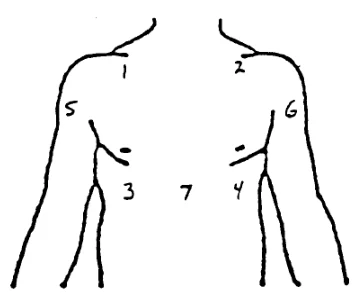
Sunday 1
Monday 2
Tuesday 3
Wednesday 4
Thursday 5
Friday 6
Saturday 7
Sunday 1
Monday 2 etc.
Figure 1
- 2. Preparing the Skin
In order for the patch to stick, the skin must be clean and dry without any creams, lotions, oil or powder. Do NOT apply the patch immediately after showering or bathing. It is best to wait until you are certain your skin is completely dry. If hair is likely to interfere with the patch sticking or removal, it can be clipped but not shaved since this may irritate the skin.
- 3. Opening the Pouch
Each TRINIPATCH patch is individually sealed in a protective pouch. Open this pouch by tearing at the small notch or cut in the side of the pouch. Do not use scissors, since you may accidentally cut the patch. (Figure 2).
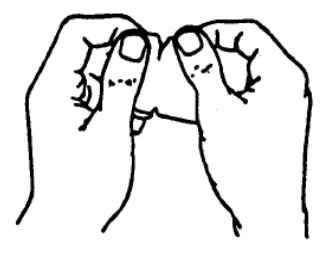
Figure 2
Carefully pick up the system with the overlapping split film facing you (Figure 3).
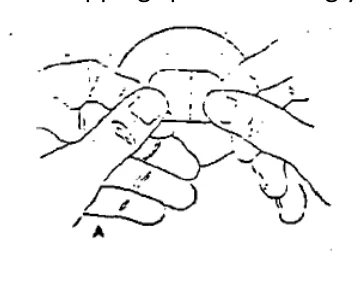
Figure 3
- 4. Recognizing the Patch and Removing the Liner
A plastic liner covers the adhesive (sticky) side of the patch during storage, and must be removed and discarded before patch use.
Remove one side of the overlapping film, exposing the adhesive layer on one side of the patch (Figure 4).
Avoid touching the adhesive. If another person applies the patch for you, they must be careful not to touch the surface which will be applied to the skin (Figure 4).
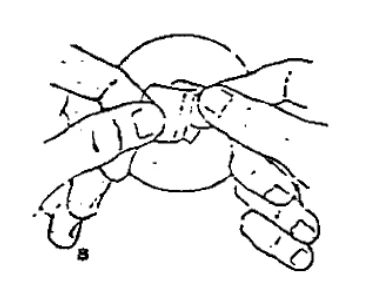
Figure 4
- 5. Applying the Patch
Remember, the skin should be clean and dry without creams, lotions, oil or powder. Apply the side of the patch with the adhesive exposed to your chosen application site (Figure 5).
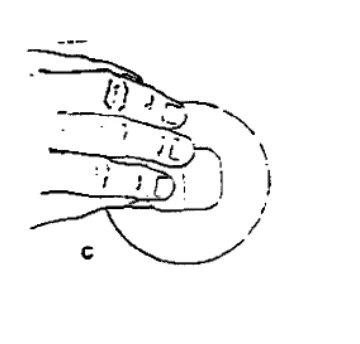
Figure 5
Gently fold the patch in half and roll the patch across the application site. The overlapping films may be discarded (Figure 6).
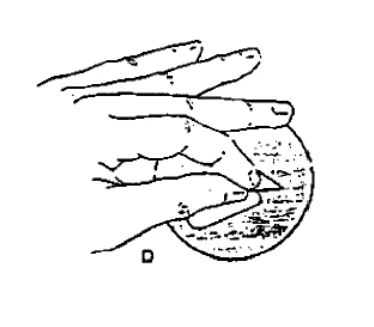
Figure 6
Firmly press the entire surface of the patch to make sure it is secured to your skin (Figure 7).
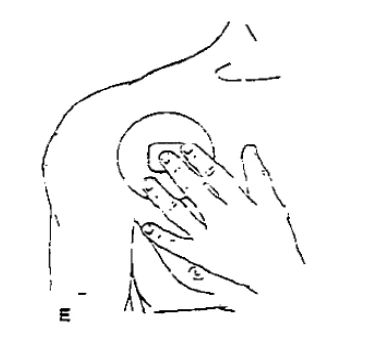
Figure 7
- 6. When and How to Remove the Patch
The patch should be changed according to the schedule prescribed by your doctor. It is important to respect the patch-off period recommended by your doctor. If you forget to remove it at the scheduled time, remove it as soon as possible but continue to follow your original schedule.
Remove the patch by peeling up one edge and then pulling it off. The application area may be gently wiped with a dry tissue. Do not wash the application site or apply lotions or creams until the skin has had a chance to return to normal, about two to three hours.
Each patch can only be applied once. After use, fold the patch in half with the adhesive side inwards. Throw it away safely out of the reach of children and pets.
- 7. What to Do if TRINIPATCH Falls Off
Contact with water (bathing, swimming, showering) or physical activity will not affect the patch. It is unlikely that the patch will fall off. If the patch does fall off, discard it and put a new patch on a different area of skin. Continue to follow your original schedule.
Usual dose:
The starting dose is one 0.2 mg/hour patch per day, usually applied in the morning. Depending on your response and if the dose is well tolerated, your doctor may increase your dose to one 0.4 mg/hour patch per day.
The maximum dose is 0.8 mg/hour per day.
Each patch should be worn for 12 to 14 hours. After this time, take off the patch and do not apply another one for 10 to 12 hours.
Overdose:
| If you think you, or a person you are caring for, have taken too much TRINIPATCH, remove the patch immediately and thoroughly wash the application site. Contact a healthcare professional, hospital emergency department, regional poison control centre or Health Canada’s toll-free number, 1-844 POISON-X (1-844-764-7669) immediately, even if there are no signs or symptoms. |
|---|
Missed Dose:
If you forget to apply TRINIPATCH at the scheduled time, apply it as soon as possible. Apply the next patch at the regular time. However, if it is almost time for your next dose, skip the missed dose and go back to your regular dosing schedule. Do not apply extra patches to make up for a missed dose.
What are possible side effects from using TRINIPATCH?
These are not all the possible side effects you may have when taking TRINIPATCH. If you experience any side effects not listed here, tell your healthcare professional.
- headache
- dizziness or lightheadedness
- flushing of the face
- redness, itching/burning or rash at the application site
- nausea or vomiting
- blurry vision
Serious side effects and what to do about them
| Symptom / effect | Talk to your healthcare professional | Stop taking drug and get immediate medical help | |
| Only if severe | In all cases | ||
| COMMON | |||
| Allergic reactions: skin rash or redness | ✓ | ||
| UNCOMMON | |||
| Hypotension (low blood pressure): dizziness, fainting, light-headedness, blurred vision, nausea, vomiting, fatigue (may occur when you go from lying or sitting to standing up) | ✓ | ||
| Dizziness (excessive) or collapse | ✓ | ||
| Sense of excessive head pressure | ✓ | ||
| Breathing difficulty | ✓ | ||
| Unusual fatigue or faintness | ✓ | ||
| Fainting or unusually rapid heartbeat | ✓ | ||
| UNKNOWN | |||
| Sudden kidney failure: weight gain and swelling of the feet and ankles due to water retention, decreased amount of urine, fatigue, loss of appetite, nausea, overall itchiness | ✓ | ||
If you have a troublesome symptom or side effect that is not listed here or becomes bad enough to interfere with your daily activities, tell your healthcare professional.
Reporting Side Effects
You can report any suspected side effects associated with the use of health products to Health Canada by:
NOTE: Contact your health professional if you need information about how to manage your side effects. The Canada Vigilance Program does not provide medical advice. |
Storage:
Store TRINIPATCH between 15°C - 30°C. Do not refrigerate. Keep each patch in its individually sealed pouch until ready to use.
Keep out of reach and sight of children and pets both before and after use.
If you want more information about TRINIPATCH:
- Talk to your healthcare professional
- Find the full product monograph that is prepared for healthcare professionals and includes this Patient Medication Information by visiting the Health Canada website: (https://www.canada.ca/en/health-canada/services/drugs-health-products/drug-products/drug-product-database.html); the manufacturer’s website (https://knighttx.com), by emailing medinfo@knighttx.com or by calling 1-844-483-5636.