


Product Monograph - Twinrix
Recent Major Label Changes
| Section | Date |
|---|---|
| 4 Dosage and Administration, 4.4 Administration | MAY 2025 |
Table of Contents
Certain sections or subsections that are not applicable at the time of the preparation of the most recent authorized product monograph are not listed.
Recent Major Label Changes ................................................................................................. 2
Table of Contents ................................................................................................................. 2
- 1.
Indications ................................................................................................................ 4
1.1 Pediatrics ................................................................................................................ 4
- 2. Contraindications ...................................................................................................... 4
- 4.
Dosage and Administration ....................................................................................... 4
4.2 Recommended Dose and Dosage Adjustment ...................................................... 4
4.4 Administration ....................................................................................................... 6
- 5. Overdose .................................................................................................................. 8
- 6. Dosage Forms, Strengths, Composition, and Packaging .............................................. 8
- 7.
Warnings and Precautions ....................................................................................... 10
General ............................................................................................................................. 10
Driving and Operating Machinery .................................................................................... 10
Hematologic ..................................................................................................................... 10
Immune ............................................................................................................................ 10
Renal ................................................................................................................................ 10
7.1 Special Populations .............................................................................................. 11
7.1.1 Pregnancy ......................................................................................................... 11
7.1.2 Breastfeeding ................................................................................................... 11
7.1.3 Pediatrics .......................................................................................................... 11
- 8.
Adverse Reactions ................................................................................................... 11
8.2 Clinical Trial Adverse Reactions ........................................................................... 11
8.2.1 Clinical Trial Adverse Reactions – Pediatrics.................................................... 13
8.5 Post-Market Adverse Reactions ........................................................................... 15
- 9.
Drug Interactions .................................................................................................... 16
9.2 Drug Interactions Overview ................................................................................. 16
9.3 Drug-Behavioural Interactions ............................................................................. 16
9.4 Drug-Drug Interactions ........................................................................................ 16
9.5 Drug-Food Interactions ........................................................................................ 16
9.6 Drug-Herb Interactions ........................................................................................ 16
9.7 Drug-Laboratory Test Interactions....................................................................... 17
- 10.
Clinical Pharmacology ............................................................................................. 17
10.2 Pharmacodynamics .............................................................................................. 17
- 11. Storage, Stability, and Disposal ................................................................................ 20
Part 2: Scientific Information .............................................................................................. 21
- 13. Pharmaceutical Information .................................................................................... 21
- 14.
Clinical Trials ........................................................................................................... 21
14.1 Clinical Trials by Indication .................................................................................. 21
Active immunization against hepatitis A and hepatitis B ................................................ 21
- 15. Microbiology ........................................................................................................... 23
- 16. Non-Clinical Toxicology ........................................................................................... 23
Patient Medication Information ......................................................................................... 24
Part 1: Healthcare Professional Information
1. Indications
TWINRIX [combined hepatitis A virus (inactivated) and hepatitis B surface antigen (recombinant) vaccine] is indicated for:
- active immunization against hepatitis A and hepatitis B virus infection in adults, adolescents, children and infants.
1.1 Pediatrics
Pediatrics (1-18 years): TWINRIX is indicated for active immunization against hepatitis A and hepatitis B virus infection in adolescents, children and infants.
2. Contraindications
TWINRIX [combined hepatitis A virus (inactivated) and hepatitis B surface antigen (recombinant) vaccine] should not be administered to individuals with:
- known hypersensitivity to any constituent of the vaccine, or having shown signs of hypersensitivity after previous administration of TWINRIX or monovalent hepatitis A or hepatitis B vaccines.
- known hypersensitivity to neomycin as TWINRIX contains traces of neomycin.
For a complete list of ingredients, see 6 DOSAGE FORMS, STRENGTHS, COMPOSITION AND PACKAGING.
As with other vaccines, the administration of TWINRIX should be postponed in individuals suffering from acute severe febrile illness. The presence of a minor infection, however, is not a contraindication for vaccination.
4. Dosage and Administration
4.2 Recommended Dose and Dosage Adjustment
| Vaccination Schedule* | Age | Vaccine | Dose/volume HAV ELU/ HBV mcg | Dosing Schedule (months) | |||
|---|---|---|---|---|---|---|---|
| 0 | 1 | 6 | 12 | ||||
Standard (3 dose) | Adults over 19 years of age | TWINRIX | (720/20)/1 mL | X | X | X | |
Standard (3 dose) | 1 – 18 years | TWINRIX Junior | (360/10)/0.5 mL | X | X | X | |
Rapid (4 dose) | Adults over 19 years of age | TWINRIX | (720/20)/1 mL | 0,7d,21d XXX | X | ||
| d=days | |||||||
Alternate (2 dose) | 1 - 15 years | TWINRIX | (720/20)/1 mL | X | 6 to 12 months | ||
*The recommended schedule should be adhered to. Once initiated, the primary course of vaccination should be completed with the same vaccine.
Primary Course
Standard Schedule
The standard primary course of vaccination with TWINRIX [combined hepatitis A virus (inactivated) and hepatitis B surface antigen (recombinant) vaccine] consists of three doses, the first administered at the elected date, the second one month later and the third six months after the first dose.
Rapid Schedule
In exceptional circumstances in adults, when travel is anticipated within one month or more after initiating the vaccination course, but where insufficient time is available to allow the standard 0, 1, 6 month schedule to be completed, a schedule of three intramuscular injections given at 0, 7 and 21 days may be used. When this schedule is applied, a fourth dose is recommended 12 months after the first dose.
There are no data to support a rapid vaccination schedule for children and adolescents (1 to 15 years old).
Alternate Schedule
The alternate schedule, for children and adolescents only, consists of two doses of TWINRIX (720 ELU HAV/20 mcg HBV), the first administered at the elected date and the second between six and twelve months after the first dose. The alternate schedule should be used where completion of the 2 dose vaccination course can be assured, such as school based vaccination programs.
Booster Dose
Long-term antibody persistence data following vaccination with TWINRIX are available up to 15 years after vaccination in adults and up to 10 years in infants, children and adolescents. The anti-HBs and anti-HAV antibody titres observed following a primary vaccination course with the combined vaccine are in the range of what is seen following vaccination with the monovalent vaccines. The kinetics of antibody decline are shown to be similar.
General guidelines for booster vaccination can therefore be drawn from experience with the monovalent vaccines.
The anti-HBs and anti-HAV antibody titres observed following a 2 dose vaccination course with TWINRIX are in the same range of what is seen following vaccination with the standard 3 dose schedule.
For the hepatitis B component:
Routine booster vaccinations in immunocompetent persons are not recommended since protection has been shown to last for at least 15 years. Studies of long-term protective efficacy, however, will determine whether booster doses of the vaccine are needed. It is important to recognise that the absence of detectable anti-HBs in a person who has been previously demonstrated to have anti-HBs, does not mean lack of protection, because immune memory persists. Booster doses in this situation are not indicated.
Immunocompromised persons often respond sub-optimally to the vaccine. Subsequent HBV exposures in these individuals can result in disease or the carrier state. Therefore, boosters may be necessary in this population. The optimal timing of booster doses for immunocompromised individuals who are at continued risk of HBV exposure is not known and should be based on the severity of the compromised state and annual monitoring for the presence of anti-HBs.
For the hepatitis A component:
It is not yet fully established whether immunocompetent individuals who have responded to hepatitis A vaccination will require booster doses as protection in the absence of detectable antibodies may be ensured by immunological memory. Guidelines for boosting are based on the extrapolation from the data available required for protection; anti-HAV antibodies have been predicted to persist for at least 20 years (based on mathematical calculations).
In situations where a booster dose of both hepatitis A and hepatitis B is desired, TWINRIX can be given. Alternatively, individuals primed with TWINRIX may be administered a booster dose of either of the monovalent vaccines.
4.4 Administration
Check the expiry date of the vaccine carefully. Do not use vaccine beyond its expiry date.
The vaccine should be inspected visually for any foreign particulate matter and/or coloration prior to administration.
Upon storage, a fine white deposit with a clear colourless layer above may be observed.
The vaccine should be re-suspended before use. When re-suspended, the vaccine will have a uniform hazy white appearance. Discard if the content appears otherwise.
Re-suspension of the vaccine to obtain a uniform hazy white suspension.
The vaccine can be re-suspended following the steps below (Figure 1):
- 1. Hold the syringe upright in a closed hand.
- 2. Shake the syringe by tipping it upside down and back again.
- 3. Repeat this action vigorously for at least 15 seconds.
- 4.
Inspect the vaccine again:
- a. If the vaccine appears as a uniform hazy white suspension, it is ready to use – the appearance should not be clear.
- b. If the vaccine still does not appear as a uniform hazy white suspension - tip upside down and back again for at least another 15 seconds - then inspect again.
Figure 1. Instructions for Use 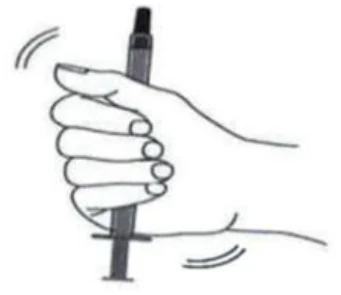 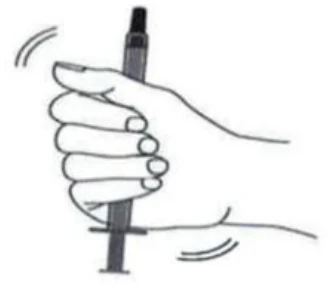 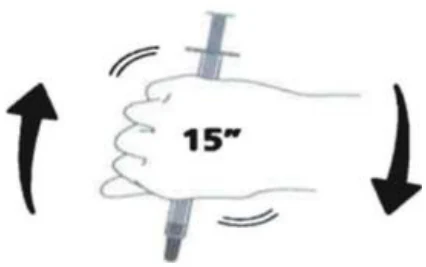
|
|---|
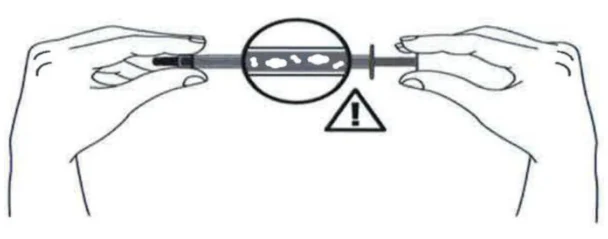
- 2. Inspect the vaccine and if you still observe clouds or white agglomerates, repeat this action for another 15 seconds.
As with other vaccines, the dose of vaccine should be withdrawn under strict aseptic conditions and precautions taken to avoid contamination of the contents.
TWINRIX is for intramuscular injection, preferably in the deltoid region, or in the anterolateral thigh in infants. The vaccine should not be administered intramuscularly in the gluteal region or subcutaneously/intradermally since administration by these routes may result in a less than optimal anti-HAV antibody response.
TWINRIX should never be administered intravenously.
Figure 2. Pre-Filled Syringe Instructions
Hold the syringe by the barrel, not by the plunger. Unscrew the syringe cap by twisting it anticlockwise. | |
|---|---|
To attach the needle, connect the hub to the Luer Lock Adaptor and rotate a quarter turn clockwise until you feel it lock. Do not pull the syringe plunger out of the barrel. If it happens, do not administer the vaccine. |
5. Overdose
Cases of overdose have been reported during post-marketing surveillance. Adverse events reported following overdosage were similar to those reported with normal vaccine administration.
| For the most recent information in the management of a suspected drug overdose, contact your regional poison control centre or Health Canada’s toll-free number, 1-844 POISON-X (1-844-764-7669). |
|---|
- 6. Dosage Forms, Strengths, Composition, and Packaging
To help ensure the traceability of vaccines for patient immunization record-keeping as well as safety monitoring, health professionals should record the time and date of administration, quantity of administered dose (if applicable), anatomical site and route of administration, brand name and generic name of the vaccine, the product lot number and expiry date.
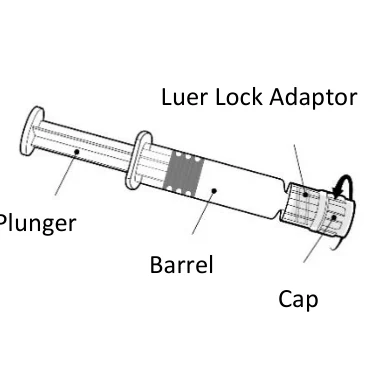 Plunger Barrel Cap Luer Lock Adaptor | |
|---|---|
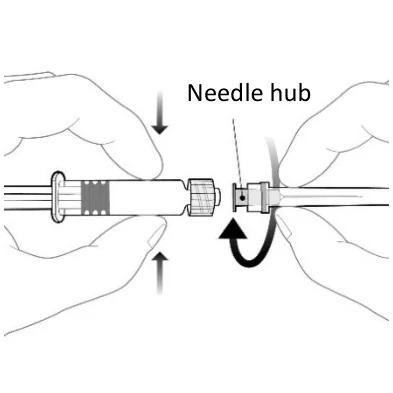 Needle hub |
Table 1 – Dosage Forms, Strengths, Composition and Packaging
| Intramuscular injection | Suspension for injection/ TWINRIX: 720 ELISA units HAV/20 mcg HBV per 1 mL dose. TWINRIX Junior: 360 ELISA units HAV/10 mcg HBV per 0.5 mL dose. | Aluminium (as aluminium hydroxide and aluminium phosphate), sodium chloride, water for injection. Residues*: amino acids for injection, formaldehyde, neomycin sulphate and polysorbate 20. |
*From the manufacturing process
Composition
TWINRIX and TWINRIX Junior vaccines contain the following active ingredients per dose:
ELISA units Hepatitis A | mcg Hepatitis B | Dose Volume | |
|---|---|---|---|
| TWINRIX (Adult) | 720 | 20 | 1 mL |
| TWINRIX Junior | 360 | 10 | 0.5 mL |
The liquid suspension is made isotonic with sodium chloride in water for injection.
TWINRIX meets the World Health Organization requirements for the manufacture of biological substances.
Packaging
TWINRIX [combined hepatitis A virus (inactivated) and hepatitis B surface antigen (recombinant) vaccine] is available as:
- TWINRIX (720 ELISA units HAV/ 20 mcg HBV per 1 mL dose) in single pre-filled syringes in packages of 1 and 10 (adult presentation).
- TWINRIX Junior (360 ELISA units HAV/ 10 mcg HBV per 0.5 mL dose) in single pre-filled syringes in packages of 1 and 10 (pediatric/adolescent presentation).
| Route of Administration | Dosage Forms/ Strengths/Composition | Non-medicinal Ingredients |
of 30
7. Warnings and Precautions
General
TWINRIX will not protect against infection caused by other agents such as hepatitis C, hepatitis E and other pathogens known to infect the liver. It can be expected that hepatitis D will also be prevented by immunization with TWINRIX as hepatitis D (caused by the delta agent) does not occur in the absence of hepatitis B infection.
It is possible that individuals may be in the incubation period of a hepatitis A or hepatitis B infection at the time of vaccination. It is not known whether TWINRIX [combined hepatitis A virus (inactivated) and hepatitis B surface antigen (recombinant) vaccine] will prevent hepatitis A and hepatitis B in such cases.
As with all injectable vaccines, appropriate medication (e.g., adrenaline) should always be readily available in case of anaphylaxis or anaphylactoid reactions following administration of the vaccine. For this reason, the vaccinee should remain under medical supervision for 30 minutes after immunization.
Since there is a possibility that the vaccine may contain trace amounts of neomycin, the possibility of an allergic reaction in individuals sensitive to this substance should be kept in mind when considering the use of TWINRIX (see 6 DOSAGE FORMS, STRENGTHS, COMPOSITION AND PACKAGING).
Syncope (fainting) can occur following, or even before, any vaccination as a psychogenic response to the needle injection. It is important that procedures are in place to avoid injury from faints.
TWINRIX should under no circumstances be administered intravascularly.
Driving and Operating Machinery
TWINRIX has no or negligible influence on the ability to drive and use machines.
Hematologic
TWINRIX can be administered subcutaneously to individuals with thrombocytopenia or bleeding disorders since bleeding may occur following an intramuscular administration to these individuals. Subcutaneous injection may result in a less than optimal antibody response.
Immune
As with other vaccines, in persons with an impaired immune system, adequate anti-HAV and anti-HBs antibody titres may not be obtained after the primary immunization course, and such patients may therefore require administration of additional doses of vaccine. However, no specific dosing recommendations can be made at this time.
Renal
As with other vaccines, hemodialysis patients may not obtain adequate anti-HAV and anti-HBs antibody titres after the primary immunization course and such patients may therefore require administration of additional doses of vaccine. However, no specific dosing recommendations can be made at this time.
of 30
7.1 Special Populations
7.1.1 Pregnancy
TWINRIX should be used during pregnancy only when clearly needed, and when the possible advantages outweigh the possible risks for the fetus.
The effect of TWINRIX on embryo-fetal, peri-natal and post-natal survival and development has not been prospectively evaluated in clinical trials.
The effect of TWINRIX on embryo-fetal, peri-natal and post-natal survival and development has been assessed in rats. Such animal studies do not indicate direct or indirect harmful effects with respect to fertility, pregnancy, embryonal/fetal development, parturition or post-natal development.
7.1.2 Breastfeeding
Adequate human data on use during lactation and adequate animal reproduction studies are not available. TWINRIX should therefore be used with caution in breastfeeding mothers.
7.1.3 Pediatrics
Pediatrics (1-18 years): TWINRIX is indicated for active immunization against hepatitis A and hepatitis B virus infection in adolescents, children and infants.
8. Adverse Reactions
8.2 Clinical Trial Adverse Reactions
Clinical trials are conducted under very specific conditions. Therefore, the frequencies of adverse reactions observed in the clinical trials may not reflect frequencies observed in clinical practice and should not be compared to frequencies reported in clinical trials of another drug.
Adults
The safety profile presented below is based on data from more than 6,000 subjects who received TWINRIX at either the standard 3-dose 0, 1, 6 month schedule or the rapid 4-dose 0, 7, 21 days primary schedule.
In a clinical trial where TWINRIX was administered at 0, 7, 21 days, solicited general symptoms were reported with the same categories of frequency as defined below. After a fourth dose (booster) given at month 12, the incidence of systemic adverse reactions was comparable to that seen after vaccination at 0, 7, 21 days.
of 30
Table 2 - Adverse reactions considered by the investigator as being at least possibly related to TWINRIX vaccination in adults
| Frequency | System/Organ Class | Adverse Event |
|---|---|---|
Very Common: ≥ 10% | General disorders and administration site conditions | Pain and redness at the injection site, fatigue |
| Nervous system disorders | Headache | |
Common: ≥ 1% and < 10% | Gastrointestinal disorders | Gastrointestinal symptoms (such as diarrhea, nausea, vomiting) |
| General disorders and administration site conditions | Swelling at the injection site, injection site reaction, malaise | |
Uncommon: ≥ 0.1% and < 1% | General disorders and administration site conditions | Fever (≥ 37.5°C) |
| Infection and infestations | Upper respiratory tract infection | |
| Musculoskeletal and connective tissue disorders | Myalgia | |
| Nervous system disorders | Dizziness | |
Rare: ≥ 0.01% and < 0.1% | Blood and lymphatic system disorders | Lymphadenopathy |
| General disorders and administration site conditions | Influenza like illness, chills | |
| Metabolism and nutrition disorders | Decreased appetite | |
| Musculoskeletal and connective tissue disorders | Arthralgia | |
| Nervous system disorders | Hypoaesthesia, paraesthesia | |
| Skin and subcutaneous tissue disorders | Rash, pruritus | |
| Vascular disorders | Hypotension | |
Very Rare: < 0.01% | Skin and subcutaneous tissue disorders | Urticaria |
In a comparative study it was noted that the frequency of the solicited adverse events following the administration of TWINRIX is not different from the frequency of the solicited adverse events following the administration of the monovalent vaccines.
of 30
8.2.1 Clinical Trial Adverse Reactions – Pediatrics
The safety profile presented below is based on data from approximately 800 subjects who received TWINRIX Junior at the standard 3-dose 0, 1, 6 month schedule.
Table 3 Adverse reactions considered by the investigator as being at least possibly related to TWINRIX Junior vaccination in children
| Frequency | System/Organ Class | Adverse Event |
|---|---|---|
Very Common: ≥ 10% | General disorders and administration site conditions | Pain and redness at the injection site |
Common: ≥ 1% and < 10% | Gastrointestinal disorders | Gastrointestinal symptoms (such as nausea, diarrhea*, vomiting) |
| General disorders and administration site conditions | Swelling at the injection site, injection site reaction, fatigue, malaise, fever (≥ 37.5°C) | |
| Metabolism and nutrition disorders | Appetite lost | |
| Nervous system disorders | Drowsiness, headache | |
| Psychiatric disorders | Irritability | |
Uncommon: ≥ 0.1% and < 1% | Skin and subcutaneous tissue disorders | Rash |
Rare: ≥ 0.01% and < 0.1% | Blood and lymphatic system disorders | Lymphadenopathy |
| Nervous system disorders | Dizziness | |
| Skin and subcutaneous tissue disorders | Urticaria | |
Very Rare: < 0.01% | General disorders and administration site conditions | Influenza like illness*, chills* |
| Musculoskeletal and connective tissue disorders | Myalgia*, arthralgia* | |
| Nervous system disorders | Paraesthesia*, hypoaesthesia* | |
| Skin and subcutaneous tissue disorders | Pruritus* | |
| Vascular disorders | Hypotension* |
* Refers to adverse reactions observed in clinical trials with TWINRIX
of 30
The safety profile presented below is based on data from approximately 778 subjects who received TWINRIX at the alternate 2-dose 0, 6 to 12 month schedule.
Table 4 Adverse reactions considered by the investigator as being at least possibly related to TWINRIX vaccination in children
| Frequency | System/Organ Class | Adverse Event |
|---|---|---|
Very Common: ≥ 10% | General disorders and administration site conditions | Fatigue, pain and redness at the injection site |
| Metabolism and nutrition disorders | Appetite lost | |
| Nervous system disorders | Headache | |
| Psychiatric disorders | Irritability | |
Common: ≥ 1% and < 10% | Gastrointestinal disorders | Gastrointestinal symptoms |
| General disorders and administration site conditions | Fever, swelling at the injection site | |
| Nervous system disorders | Drowsiness |
of 30
8.5 Post-Market Adverse Reactions
Because post marketing reporting of adverse events is voluntary and from a population of uncertain size, it is not always possible to reliably estimate the frequency of these reactions or establish a causal relationship to drug exposure. Evaluation and interpretation of these post marketing events is confounded by underlying diagnosis, concomitant medications, preexisting conditions, and inherent limitations of passive surveillance.
The following adverse reactions have been reported with either TWINRIX or with GlaxoSmithKline monovalent hepatitis A or B vaccines.
| System/Organ Class | Adverse Event |
|---|---|
| Blood and lymphatic system disorder | Thrombocytopenia, thrombocytopenic purpura |
| Gastrointestinal disorders | Abdominal pain* |
| General disorders and administration site conditions | Immediate injection site pain, stinging and burning sensation |
| Hepatic system disorders | Abnormal liver function tests* |
| Immune system disorders | Anaphylaxis, allergic reactions including anaphylactoid reactions and mimicking serum sickness days to weeks after vaccination (including arthalgia/arthritis, usually transient; fever; urticaria; erythema multiforme) |
| Infections and infestations | Meningitis |
| Musculoskeletal and connective tissue disorders | Arthritis, muscular weakness |
| Nervous system disorders | Encephalopathy, encephalitis, neuritis, neuropathy, paralysis, convulsions, multiple sclerosis*, Guillain-Barre syndrome*, optic neuritis*, myelitis*, facial palsy*, hypoaesthesia, syncope or vasovagal responses to injection |
| Skin and subcutaneous tissue disorders | Angioneurotic oedema, lichen planus, erythema multiforme, Stevens-Johnson syndrome |
| Vascular disorders | Vasculitis |
* “A number of studies have demonstrated no link between hepatitis B vaccine and multiple sclerosis, Guillain-Barre syndrome (GBS), ….” (Canadian Immunization Guide 2006).
of 30
9. Drug Interactions
9.2 Drug Interactions Overview
TWINRIX
Clinical studies have demonstrated that TWINRIX [combined hepatitis A virus (inactivated) and hepatitis B surface antigen (recombinant) vaccine] used in an alternate 2 dose schedule can be administered concomitantly with either diphtheria, tetanus, acellular pertussis, inactivated poliomyelitis, Haemophilus influenzae type b (DTPa-IPV/Hib) or Measles-Mumps-Rubella (MMR) vaccines in the second year of life. In these trials, the injectable vaccines were given at different injection sites.
Although the concomitant administration of TWINRIX and other vaccines has not specifically been studied, it is anticipated that, if different syringes and other injection sites are used, no interaction will be observed.
As with other vaccines, it may be expected that in patients receiving immunosuppressive treatment or patients with immunodeficiency, an adequate response may not be achieved.
TWINRIX Junior
TWINRIX Junior may be administered concomitantly with the Human Papillomavirus vaccine (CERVARIX). Administration of TWINRIX Junior at the same time as CERVARIX has shown no clinically relevant interference in the antibody response to the HPV16/18 antigens in CERVARIX and the hepatitis A antigen in TWINRIX Junior. Anti-hepatitis B geometric mean antibody titres were lower on co-administration of the vaccines but the percentage of subjects reaching anti-HBs ≥ 10mIU/ml (seroprotection) was 98.3% for concomitant vaccination and 100% for TWINRIX Junior given alone. The clinical relevance of the reduced antibody titre and the risk of a substantially reduced immune response to hepatitis B if doses of hepatitis B vaccine are missed are not known.
Only the concomitant administration of TWINRIX Junior with CERVARIX has been specifically studied. It is advised that vaccines other than CERVARIX should not be administered at the same time as TWINRIX Junior.
9.3 Drug-Behavioural Interactions
Effects on the ability to drive and use machines
TWINRIX has no or negligible influence on the ability to drive and use machines.
9.4 Drug-Drug Interactions
No data on concomitant administration of TWINRIX with specific hepatitis A immunoglobulin or hepatitis B immunoglobulin have been generated. However, when the monovalent hepatitis A and hepatitis B vaccines were administered concomitantly with specific immunoglobulins, no influence on seroconversion was observed, although it may result in lower antibody titres.
9.5 Drug-Food Interactions
Interactions with food have not been established.
9.6 Drug-Herb Interactions
Interactions with herbal products have not been established.
of 30
9.7 Drug-Laboratory Test Interactions
Interactions with laboratory tests have not been established.
10. Clinical Pharmacology
10.2 Pharmacodynamics
Data has been obtained from clinical studies involving over 980 adults, adolescents, children and infants using the standard 3 dose vaccination schedule with TWINRIX [combined hepatitis A virus (inactivated) and hepatitis B surface antigen (recombinant) vaccine] and TWINRIX Junior respectively, and a total of 819 children and adolescents aged 1 - 15 years of age using the alternate 2 dose vaccination schedule with TWINRIX.
TWINRIX in Adults
Standard Vaccination Schedule (3 doses at 0, 1, 6 months)
720 ELISA units HAV/ 20 mcg HBV per 1 mL dose.
Anti-HAV response
In a clinical study involving subjects 18-75 years of age, anti-HAV seropositivity rates were 91.1% one month after the first dose of vaccine, 97.6% one month after the second dose of vaccine and 99.5% one month after the third dose of vaccine.
Anti-HBV response
The seroconversion rate one month after the second dose of vaccine was more than 96.5% in adult subjects. At month 7, one month after dose 3, seroprotection was close to 100%.
Anti-HAV response and Anti-HBV response
In a clinical study conducted in subjects over 40 years of age, the seropositivity rate for anti-HAV antibodies and seroprotection rate against hepatitis B following TWINRIX on a 0, 1, 6 month schedule were compared with the seropositivity and seroprotection rates of monovalent hepatitis A and B vaccines when administered separately.
The seroprotection rates against hepatitis B after the administration of TWINRIX were 92% and 57% at 7 and 48 months following the first dose respectively, versus 80% and 40% after the GlaxoSmithKline Biologicals monovalent 20 mcg hepatitis B vaccine, and 71% and 27% after another licensed monovalent 10 mcg hepatitis B vaccine. In all groups, anti-HBs antibody concentrations decreased as age and body mass index increased; concentrations were also lower in males compared with females.
The seropositivity rates for anti-HAV antibodies after TWINRIX were 97% at both 7 and 48 months following the first dose versus 99% and 94% after the GlaxoSmithKline Biologicals monovalent hepatitis A vaccine and 99% and 96% after another licensed monovalent hepatitis A vaccine.
Subjects received an additional dose of TWINRIX to assess the immune memory 48 months after the first dose of the primary vaccination course with the same vaccine. One month after this dose, 95% of subjects elicited anti-HBV antibody concentration ≥ 10 mIU/mL and Geometric Mean Concentrations (GMC) increased by 179-fold (GMC of 7233.7 mIU/mL) indicative of an immune memory response.
Rapid Dosing Schedule (4 doses at 0, 7, and 21 days and booster at 12 months)
720 ELISA units HAV/ 20 mcg HBV per 1 mL dose.
of 30
Anti-HAV response
In a clinical trial comparing TWINRIX at the 0, 7, 21 day primary schedule to the monovalent vaccines administered concomitantly (currently marketed ENGERIX-B and HAVRIX 1440), seropositivity rates for anti-HAV antibodies were 100 and 99.5% at 1 and 5 weeks respectively after the third dose, and reached 100% one month after the fourth dose.
Anti-HBV response
TWINRIX given according to the 0, 7, 21 day primary schedule, resulted in 82 and 85% of vaccinees having seroprotective levels of anti-HBV antibodies at 1 and 5 weeks respectively following the third dose in adults. One month after the fourth dose, all vaccinees demonstrated seroprotective levels of anti-HBs antibodies.
Anti-HAV response and Anti-HBV response
After the fourth dose of the rapid schedule, the immune response to both antigen components was comparable to that seen after completion of the standard vaccination schedule of TWINRIX (0, 1, 6 months).
No statistically significant differences in anti-HAV seropositivity or anti-HBs seroprotection rates were observed at any time point between the two cohorts receiving either TWINRIX or the monovalent vaccines.
TWINRIX Junior in Pediatrics
Standard Vaccination Schedule (3 doses at 0, 1, 6 months)
360 ELISA units HAV/ 10 mcg HBV per 0.5 mL dose.
Anti-HAV response
In clinical studies involving subjects 1-18 years of age, specific humoral antibodies against HAV were detected in more than 93% of the vaccinees at day 15, and 100% of vaccinees one month following vaccination with the 3 dose schedule.
Anti-HBV response
The seroconversion rate one month after the second dose was > 98.0% in subjects aged 1-18 years of age. Immunogenicity of the vaccine was analyzed one month after the third vaccine dose. The seroprotection rate (> 10 IU/L) for hepatitis B was 100%. An anti-HBs antibody titre above 10 IU/L correlates with protection to HBV infection.
TWINRIX in Subjects aged 1-15 years
Alternate Vaccination Schedule (2 doses at 0, and 6 to 12 months)
720 ELISA units HAV/ 20 mcg HBV per 1 mL dose.
Anti-HAV response
In clinical trials using the alternate vaccination schedule, subjects aged 1 to 15 years demonstrated seropositivity rates for anti-HAV antibodies to be 99.1% one month after the first dose and 100% one month after the second dose (i.e., month 7) when given at month 6. When the second dose was of 30
administered at month 12, seropositivity rates for anti-HAV were 99.0% one month later (i.e., month 13).
Anti-HAV antibodies have been shown to persist for at least 10 years following the initiation of a 0, 6 month schedule of TWINRIX (2 dose schedule). After 10 years, anti-HAV seropositivity rates were 100% in both subjects aged 1-11 years and in subjects aged 12-15 years at primary vaccination.
Anti-HBV response
For children and adolescents (1 to 15 years of age), using the alternate schedule, seropositivity rates for anti-HBs antibodies were shown to be 74.2% one month after the first dose and 100% one month after the second dose (i.e., month 7) when given at month 6. The anti-HBs seroprotection rates (titres ≥ 10 IU/L) at these time points were 37.4% and 98.2% respectively.
When the second dose was administered at month 12 with serology testing one month later (i.e., month 13), seropositivity rate for anti-HBs were 99.0%, with seroprotection rates of 97.0%.
Anti-HBs antibodies have been shown to persist for at least 10 years following the initiation of a 0, 6 month schedule. The anti-HBs seroprotection rates at this time point were 77.3% and 85.9% respectively, in children aged 1-11 and 12-15 years old.
In this 2 dose study conducted in subjects aged 12-15 years at primary vaccination, the immune response to both antigen components was comparable to that seen after a 3 dose regimen of the combined vaccine containing 360 ELISA units of hepatitis A virus and 10 mcg of the hepatitis B surface antigen in a 0.5 mL dose.
In a 6 year long term follow-up study involving subjects aged 12-15 years at primary vaccination, anti-HAV seropositivity rates were 100% following a 0, 6 month or a 0, 12 month schedule. The anti-HBs seroprotection rates were 84.8% and 92.9%, respectively.
Duration of Effect
Adults
Protection against hepatitis A and hepatitis B develops within 2 to 4 weeks. In clinical studies, specific humoral antibodies against hepatitis A were observed in approximately 94% of the adults one month after the first dose and in 100% one month after the third dose (i.e., month 7). Specific humoral antibodies against hepatitis B were observed in 70% of the adults after the first dose and approximately 99% after the third dose.
In two long term clinical studies conducted in adults, 15 years after the primary vaccination with TWINRIX, the anti-HAV seropositivity rates were 100% in both studies and the anti-HBs seroprotection rates were 89.3% and 92.9% respectively in study HAB-142 (LT-ATP, n=28) and in study HAB-147 (LT-ATP, n=28).
Pediatrics
In clinical studies of the pediatric population, specific humoral antibodies against hepatitis A were observed in approximately 89% of the subjects one month after the first dose, and in 100% after the third dose (i.e., month 7). Specific humoral antibodies against hepatitis B were observed in approximately 67% of the subjects after the first dose and 100% after the third dose.
In a long-term clinical trial conducted in the pediatric population, persistence of anti-HAV and anti-HBs antibodies has been demonstrated up to 10 years following the course of vaccination in the majority of of 30
vaccinees. After 10 years, anti-HAV seropositivity rate and anti-HBs seroprotection rate were 100% and 85% respectively. The kinetics of decline of anti-HAV and anti-HBs antibodies were shown to be similar to those of monovalent vaccines.
- 11. Storage, Stability, and Disposal
TWINRIX [combined hepatitis A virus (inactivated) and hepatitis B surface antigen (recombinant) vaccine] should be stored at 2 to 8oC.
Do not freeze; discard if the vaccine has been frozen.
Store in the original package in order to protect from light.
Any unused product or waste material should be disposed of in accordance with local requirements.
The expiry date of the vaccine is indicated on the label and packaging.
of 30
Part 2: Scientific Information
13. Pharmaceutical Information
Product Characteristics
TWINRIX [combined hepatitis A virus (inactivated) and hepatitis B surface antigen (recombinant) vaccine] is a combined vaccine formulated of the purified, inactivated hepatitis A (HA) virus and purified hepatitis B surface antigen (HBsAg) (genetically engineered yeast (Saccharomyces cerevisiae) cells), separately adsorbed onto aluminium salts.
TWINRIX confers immunity against hepatitis A virus (HAV) and hepatitis B virus (HBV) infection by inducing specific anti-HAV and anti-HBs antibodies.
14. Clinical Trials
14.1 Clinical Trials by Indication
Active immunization against hepatitis A and hepatitis B
Study HAB-129 performed in healthy adults, compared TWINRIX with thiomersal-free, preservative-free TWINRIX (both vaccines with 20 mcg HBsAg and ≥ 720 EL.U HAV/1 mL dose). An overview of some of the principal features of the study is provided in Table 5. (See also PART I, 10 CLINICAL PHARMACOLOGY).
Table 5 Features of clinical studies investigating the immunogenicity and safety of thiomersal-free and preservative-free combined hepatitis A/hepatitis B vaccine
| Study No. | Countries | Vaccine(s) (Dose) | Population Age | Enrolled | Design | Objectives |
|---|---|---|---|---|---|---|
| HAB - 129 | The Netherlands Germany UK Sweden |
(20 mcg HBsAg and 720 EL.U. HAV antigen/dose) | Adults 18 yrs or older | 466 | Comparative, double-blind, randomized (1:1), controlled, multi-centre (5 centres), parallel study with 2 groups 0, 1 and 6 months schedule | Primary: To demonstrate non-inferiority of the anti-HAV and anti-HBs response induced by PFTF-TWINRIX compared to TWINRIX Secondary: Evaluation of immunogenicity, safety and reactogenicity |
TWINRIX = vaccine with residual thiomersal from HBsAg bulk and 2-phenoxyethanol as preservative
PFTF-TWINRIX = preservative-free, thiomersal-free TWINRIX
The protocol of the non-inferiority study HAB-129 specified the use for the inferential analyses of a 95% CI on the difference in seroprotection rates for anti-HBs antibodies and of a 95% CI on the difference in seropositivity rate for anti-HAV antibodies.
of 30
Table 6 and Table 7 document the results of the inferential analyses for the co-primary objectives of the bivalent vaccine study HAB-129.
The protocol defined criteria for the demonstration of clinical non-inferiority of the responses to the HBsAg and HAV components of the preservative-free and thiomersal-free bivalent vaccine were met.
Table 6 Anti-HBs seroprotection rates at Month 7, ATP cohort, study HAB-129
| Antigen(s), schedule and dose | Vaccine | Descriptive statistics | Inferential statistics | ||||||||
|---|---|---|---|---|---|---|---|---|---|---|---|
Seroprotection rate (≥ 10 mIU/mL) Month 7 | Difference between group in anti-HBs seroprotection rates (≥ 10 mIU/mL) at Month 7 | Pre-defined criteria for clinical non-inferiority | |||||||||
| N | n | % | 95% Cl† | Between groups | Value % | 95% Cl* | |||||
| LL | UL | LL | UL | ||||||||
Combination HBsAg 20 mcg and HAV 720 EL.U. 0, 1 and 6 months | TWINRIX | 213 | 208 | 97.7 | 94.6 | 99.2 | PFTF-TWINRIX - TWINRIX | -2.1 | -6.11 | 1.55 | Lower limit of the Cl for the differences in seroprotection rates greater than -7%; non-inferiority demonstrated |
| PFTF-TWINRIX | 204 | 195 | 95.6 | 91.8 | 98.0 | ||||||
N = number of subjects tested
n/% = number/percentage of subjects seroprotected
† = exact 95% confidence intervals. LL = lower limit. UL = upper limit
* = Standardized two-sided asymptotic 95% Cl
Table 7 Anti-HAV seropositivity rates at Month 7, ATP cohort, study HAB-129
| Group | Descriptive statistics | Inferential statistics | ||||||||
|---|---|---|---|---|---|---|---|---|---|---|
Seroprotection rate (≥ 15 mIU/mL) Month 7 | Difference between group in anti-HAV seropositivity rates (≥ 15 mIU/mL) at Month 7 | Pre-defined criteria for clinical non-inferiority | ||||||||
| N | n | % | 95% Cl† | Between groups | Value % | 95% Cl* | ||||
| LL | UL | LL | UL | |||||||
| TWINRIX | 213 | 212 | 99.5 | 97.4 | 100 | PFTF-TWINRIX - TWINRIX | -0.02 | -2.29 | 2.16 | Lower limit of the CI for the differences in seropositivity rates greater than -7%; non-inferiority demonstrated |
| PFTF-TWINRIX | 204 | 203 | 99.5 | 97.3 | 100 | |||||
N = number of subjects tested
n/% = number/percentage of subjects seropositive
† = exact 95% confidence intervals. LL = lower limit. UL = upper limit
* = Standardized two-sided asymptotic 95% CI
of 30
15. Microbiology
No microbiological information is required for this drug product.
16. Non-Clinical Toxicology
The effect of TWINRIX vaccine on embryo-foetal, peri-natal and post-natal development was assessed in sexually mature female rats.
Two groups of 56 animals received 30 days prior to pairing, by intramuscular administration, either 200 mcl of saline or 200 mcl of TWINRIX vaccine. The 44 animals selected to continue treatment during gestation received on day 6, 8, 11 and 15 after mating either 200 mcL of saline or 200 mcL of TWINRIX vaccine.
From each group, a total of 22 females had their uterine contents examined on Day 20 after mating, and the remaining 22 females in each group were allowed to give birth and rear their offspring to weaning at Day 25 of age.
Treatment of parental females did not adversely affect their clinical condition or bodyweight and food consumption throughout the study. All treated females allocated to the embryo-foetal or littering phases were pregnant. Embryo-foetal development was unaffected by treatment. All littering phase females gave birth to a live litter, and the growth and development of the offspring appeared to be unimpaired in all groups to Day 25 of age.
It was concluded from this study that intramuscular administration of 200 mcL TWINRIX vaccine to female rats during gestation animals was well tolerated. Treatment was not associated with any systemic toxicity to the parental females and there were no effects on pre- or post-natal development of the offspring to Day 25 of age.