


Product Monograph - Typherix
SUMMARY PRODUCT INFORMATION
| Route of Administration | Dosage Form / Strength | Clinically Relevant Nonmedicinal Ingredients |
| Intramuscular Injection | Liquid for injection /25 micrograms Vi capsular polysaccharide of Salmonella typhi per 0.5 mL dose | Sodium phosphate dihydrate Disodium phosphate dihydrate Sodium chloride Phenol Water for injection For a complete listing see Dosage Forms, Composition and Packaging section. |
INDICATIONS AND CLINICAL USE
TYPHERIX® (Salmonella typhi Vi Capsular Polysaccharide vaccine) is indicated for active immunization against typhoid fever in persons two years of age and older. One dose administered intramuscularly ensures protection for at least 3 years. The vaccine must be given at least 2 weeks prior to travel to endemic areas.
The Canadian Immunization Guide (CIG) recommends vaccination for:
- 1. Travelers who will have prolonged exposure to potentially contaminated food and water, especially those traveling to or working in small cities and villages, or to rural areas in countries with a high incidence of disease. Vaccination is not routinely recommended for short-term travel to resort hotels in such countries.
- 2. Persons with on-going household or intimate exposure to an S. typhi carrier.
- 3. Laboratory workers who frequently handle cultures of S. typhi.
CONTRAINDICATIONS
TYPHERIX® should not be administered to subjects with known hypersensitivity to any component of the vaccine or to subjects having shown signs of hypersensitivity after previous administration. For a complete listing, see the DOSAGE FORMS, COMPOSITION AND PACKAGING section of the product monograph.
As with other vaccines, the administration of TYPHERIX® should be postponed in subjects suffering from acute severe febrile illness.
WARNINGS AND PRECAUTIONS
General
The vaccine protects against typhoid fever caused by Salmonella typhi. Protection is not conferred against paratyphoid fever or illness caused by non-invasive Salmonellae.
The importance of scrupulous attention to personal, food and water hygiene must be emphasized for all persons at risk of typhoid fever.
TYPHERIX® should under no circumstances be administered intravascularly.
As with all injectable vaccines, appropriate medical treatment and supervision should always be readily available in case of a rare anaphylactic reaction following the administration of the vaccine.
Syncope (fainting) can occur following, or even before, any vaccination as a psychogenic response to the needle injection. It is important that procedures are in place to avoid injury from faints.
TYPHERIX® should be administered with caution to subjects with thrombocytopenia or bleeding disorders since bleeding may occur following an intramuscular administration to these subjects: following injection, firm pressure should be applied to the site (without rubbing) for at least two minutes.
Special Populations
Pregnant Women: Adequate human data on use during pregnancy and adequate animal reproduction studies are not available.
Nursing Women: Adequate human data on use during lactation and adequate animal reproduction studies are not available.
Pediatrics: TYPHERIX® has not been evaluated in children under 2 years of age. Nevertheless, it is known that children under this age may show a suboptimal response to polysaccharide antigen vaccines. The decision to use the vaccine in this age group should be based upon the risk of exposure to disease.
ADVERSE REACTIONS
Clinical Trial Adverse Drug Reactions
Because clinical trials are conducted under very specific conditions the adverse reaction rates observed in the clinical trials may not reflect the rates observed in practice and should not be compared to the rates in the clinical trials of another drug. Adverse drug reaction information from clinical trials is useful for identifying drug-related adverse events and for approximating rates.
The reactogenicity of TYPHERIX® was determined by systematic recording of local and general reactions to the vaccine. General symptoms occurred more frequently in adolescents and older children than in the adult and younger populations; it is not clear why this phenomenon was observed, but it can be said that the vast majority of symptoms reported were mild and transient in nature. The most frequent local symptom reported was soreness at the injection site, and headache and fever were the most frequent general symptoms.
In clinical studies, in the majority of instances, redness, pain and swelling were usually reported only during the first 48 hours following immunization. The most common reaction, soreness, has been reported in approximately 7% of vaccines.
In clinical studies, systemic reactions were also transient; the incidence of the most frequently reported symptoms, fever, headache, general aches, malaise, nausea and itching did not exceed 9%.
Anaphylaxis, allergic reactions, including anaphylactoid reactions and urticaria have been reported very rarely with TYPHERIX®.
Table 1: Incidence of Solicited Local Symptoms in Healthy Adults
| Symptom (N=551) | n | % | |
| Soreness | All | 52 | 9.4 |
| graded “3" | 2 | 0.4 | |
| Redness | All | 30 | 5.4 |
| >30 mm | 1 | 0.2 | |
| Swelling | All | 10 | 1.8 |
| >30 mm | 0 | - | |
Notes:
N = total number of symptom sheets returned
n = number of symptom sheets with a report of a symptom
graded”3": severe: adverse experience which prevents normal everyday activities
Table 2: Incidence of Solicited General Symptoms in Healthy Adults
| Symptom (N=400) | n | % | |
| Fever | All | 6 | 1.5 |
| Headache | All | 31 | 7.8 |
| graded “3" | 2 | 0.5 | |
| General aches | All | 5 | 1.3 |
| Malaise | All | 16 | 4.0 |
| Nausea | All | 20 | 5.0 |
| Itching | All | 7 | 1.8 |
| graded “3" | 1 | 0.3 | |
Notes:
No general aches, malaise or nausea graded “3" or temperature >39°C reported
graded “3": severe: adverse experience which prevents normal everyday activities
Table 3: Frequency of Solicited Symptoms in Adolescents and Children
(Studies 003, 005, 006)
| 005 (11-18 yrs) | 003 (5-15 yrs) | 006 (2-5 yrs) | |||||||||||||
| N=99 | N=199 | N=170 | |||||||||||||
| n | % | n | % | n | % | ||||||||||
| Local symptoms | |||||||||||||||
| Soreness | All | 16 | 16.2 | 1 | 0.5 | 0 | - | ||||||||
| Redness | All | 1 | 1.0 | 1 | 0.5 | 9 | 5.3 | ||||||||
| Swelling | All | 1 | 1.0 | 7 | 3.5 | 0 | - | ||||||||
| General symptoms | |||||||||||||||
| Fever | All | 8 | 8.1 | 63 | 31.7 | 5 | 2.9 | ||||||||
| > 39°C | 2 | 2.0 | 4 | 2.0 | 0 | - | |||||||||
| Headache | All | 19 | 19.2 | 28 | 14.1 | 0 | - | ||||||||
| General aches | All | 13 | 13.1 | 6 | 3.0 | 1 | 0.6 | ||||||||
| Malaise | All | 4 | 4.0 | 0 | - | 0 | - | ||||||||
| Nausea | All | 3 | 3.0 | 7 | 3.5 | 0 | - | ||||||||
| Itching | All | 8 | 8.1 | 0 | - | 0 | - | ||||||||
Notes:
N = total number of symptom sheets returned
n = number of symptom sheets with a report of a symptom
graded ”3": severe: adverse experience which prevents normal everyday activities
DRUG INTERACTIONS
Drug-Drug Interactions
It may be expected that in patients receiving immunosuppressive treatment or patients with immunodeficiency, an adequate response may not be achieved.
In clinical studies in adults, TYPHERIX® has been administered simultaneously with HAVRIX® 1440, GlaxoSmithKline Biologicals’ inactivated hepatitis A vaccine. There was no adverse effect on either the reactogenicity or immunogenicity of the vaccines when they were administered simultaneously.
The concomitant administration of TYPHERIX® and vaccines other than HAVRIX® 1440 has not specifically been studied.
DOSAGE AND ADMINISTRATION
Recommended Dose
Primary Immunization
A single dose of 0.5 mL containing 25 μg of the Vi polysaccharide of Salmonella typhi is recommended.
For adults 19 years and older TYPHERIX® can be co-administered with HAVRIX® 1440 in opposite arms.
For other injectable vaccines, different syringes and different injection sites must be used.
Booster Dose
For individuals who remain at risk, or who may be re-exposed to risk of typhoid fever, it is recommended that they be revaccinated using a single dose of vaccine every 3 years.
Administration
TYPHERIX® is for intramuscular injection. Vaccines should be inspected for any foreign particulate matter and/or variation of physical aspect. In the event of either being observed, discard the vaccine.
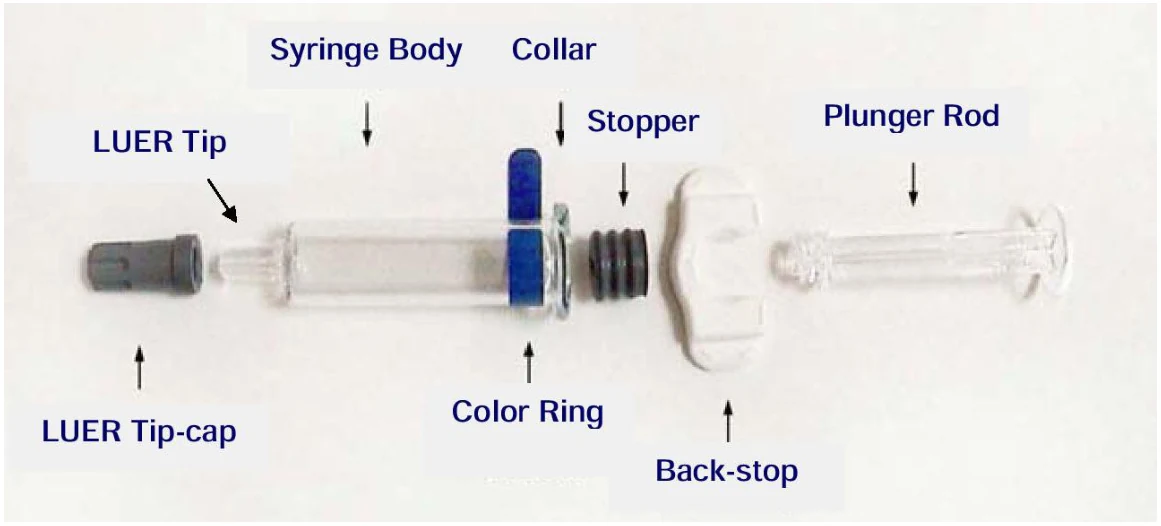
Do not remove the white back-stop from the syringe. Prior to administration, ensure that the plunger rod is firmly attached to the rubber stopper by turning the plunger clockwise until slight resistance is felt. Do not over tighten. Remove syringe LUER Tip-cap and needle cap. Attach needle by pressing and twisting in a clockwise rotation until secured to the syringe.
TYPHERIX® should be administered with caution to subjects with thrombocytopenia or bleeding disorders since bleeding may occur following an intramuscular administration to these subjects: following injection, firm pressure should be applied to the site (without rubbing) for at least two minutes.
TYPHERIX® should under no circumstances be administered intravascularly.
OVERDOSAGE
For management of a suspected drug overdose, contact your regional Poison Control Centre.
ACTION AND CLINICAL PHARMACOLOGY
Typhoid fever is an acute generalized infection caused by Salmonella typhi, an organism for which humans are the only reservoir. The disease affects the reticuloendothelial system, intestinal lymphoid tissue and gall bladder.(1)
The course of typhoid fever may be insidious, with fever that increases in stepwise fashion to reach 39 to 40°C, malaise, anorexia, myalgia, headache and abdominal discomfort. Without appropriate anti-microbial therapy, the fever remains for approximately 10 to14 days. The most frequent serious complications, intestinal perforation and haemorrhage, occur in 0.5 to 1.0% of the infected population.
Typhoid fever is still a common disease and although its incidence is decreasing globally, it is still increasing in Asia, Africa and Latin America where more than 500 cases/100,000 people/year occur and where mortality is significant. In these developing countries, satisfactory control of drinking water, food and sewage disposal has not yet been achieved. Infection is transmitted when susceptible hosts ingest fecally contaminated food or water; small numbers of organisms are ingested and many subclinical and mild infections occur for each fullblown clinical case of the disease.
In endemic areas, the majority of clinical infections occur in 3 to 19 year old children, the incidence decreases in adults from the age of 35 years. In contrast, common-source food outbreaks occur in more developed countries when chronic carriers contaminate food following a breakdown in personal and food hygiene; large numbers of organisms are present, attack rates are high and relatively few subclinical cases follow.
Although the incidence of typhoid fever is declining steadily in Canada, about 70cases have been reported annually over the past 5 years. Only a small number of these infections occur in Canada with the vast majority occurring abroad. The decline in incidence of the disease has been primarily due to improved living conditions and to water and sewage treatment. Vaccine is not believed to have played a significant role. For travelers to areas where sanitation is likely to be poor, immunization is not a substitute for careful selection and handling of food and water.
STORAGE AND STABILITY
The expiry date of the vaccine is indicated on the label and packaging.
Store at +2 to +8°C. Protect from light.
DO NOT FREEZE; discard if vaccine has been frozen.
DOSAGE FORMS, COMPOSITION AND PACKAGING
Dosage Form
TYPHERIX® is available as a single dose of 0.5 mL containing 25 μg of the Vi polysaccharide of Salmonella typhi.
TYPHERIX® is a clear colourless liquid containing the cell surface Vi polysaccharide extracted from Salmonella typhi Ty2 strain.
Composition
The amount of Vi capsular polysaccharide (25 μg) complies with the European Pharmacopoeia and WHO recommendations for a Vi polysaccharide typhoid vaccine. The excipients present in the finished product are sodium chloride, sodium phosphate dihydrate, disodium phosphate dihydrate, phenol and water for injection.
Each 0.5 mL dose of vaccine contains 25 μg of the Vi polysaccharide of Salmonella typhi.
Packaging
Package sizes:
Single dose prefilled syringe in packages of 1, 10, 50, and 100's.
PART II: SCIENTIFIC INFORMATION
PHARMACEUTICAL INFORMATION
Drug Substance
Proper Name: Salmonella typhi Vi polysaccharide vaccine
CLINICAL TRIALS
Study results
Clinical trials have been carried out in over 1,570 subjects, to compare seropositivity (seroconversion is defined as an increase in anti-Vi antibody titres from <150 EL.U/mL pre vaccination to ≥150 EL.U/mL post vaccination) and geometric mean titres (GMT's) in subjects receiving either TYPHERIX® (Salmonella typhi Vi Capsular Polysaccharide Vaccine) or TYPHIM Vi®, (Sanofi Pasteur).
Two weeks after vaccination, seropositivity rates were at a maximum of 96.5% and 96.8% and GMTs were at 1,554 and 1,656 EL.U/mL in TYPHERIX® and TYPHIM Vi®, (Sanofi Pasteur) respectively.
Two years following vaccination, seropositivity rates were 61.4% and 45.9%, and GMT's were 290 and 235 EL.U/mL in TYPHERIX® and TYPHIM Vi®, (Sanofi Pasteur), respectively.
An age related trend could be observed in GMT's: the youngest age-group had a mean GMT of 3,597 EL.U/mL compared with a mean of 1,966 EL.U/mL in adolescents. One month following vaccination, similar seroconversion rate was observed with 99.3% in children and 98.9% in adolescents. TYPHERIX® proved to be immunogenic in both groups, with higher GMT's in children. Antibodies persisted in over 94% of those subjects available to be tested at month 6.
Immunity persists for at least 3 years.
REFERENCES
- 1. Levine MM. Typhoid Fever Vaccines. In Vaccines. Ed Plotkin SA, Orenstein WA. WB Saunders Company. 1999; 781-814.
- 2. Recommendations of the Advisory Committee on Immunization Practices. MMWR 1990; 39 (RR-10):1-5 (updated: 1994).
- 3. National Advisory Committee on Immunization. Canadian Immunization Guide. Ministry of Supply and Services. Government of Canada. 7th Edition 2006.
- 4. Klugman KP, Koornhof HJ, Robbins JB, Le Cam NN. Immunogenicity, efficacy and serological correlate of protection of Salmonella typhi Vi capsular polysaccharide vaccine three years after immunization. Vaccine. 1996; 14(5):435-438.