


Product Monograph - Tzield
Recent Major Label Changes
| 2 Contraindications | 2026-07 |
|---|---|
| 3 Serious Warnings and Precautions Box | 2026-07 |
| 4 Dosage and Administration, 4.1 Dosing Considerations | 2026-07 |
| 7 Warnings and Precautions, Immune, Serious Infections | 2026-07 |
| 7 Warnings and Precautions, Immune, Viral Reactivation | 2026-07 |
Table of Contents
Certain sections or subsections that are not applicable at the time of the preparation of the most recent authorized product monograph are not listed.
Recent Major Label Changes ................................................................................................... 2
Table of Contents ................................................................................................................... 2
Part 1: Healthcare Professional Information ........................................................................... 5
- 1.
Indications ....................................................................................................................... 5
1.1. Pediatrics .................................................................................................................. 5
1.2. Geriatrics .................................................................................................................. 5
- 2. Contraindications ............................................................................................................ 5
- 3. Serious Warnings and Precautions Box ............................................................................ 5
- 4.
Dosage and Administration ............................................................................................. 6
4.1. Dosing Considerations .............................................................................................. 6
4.2. Recommended Dose and Dosage Adjustment ......................................................... 7
4.4. Administration .......................................................................................................... 8
4.5. Missed Dose ............................................................................................................. 9
- 5. Overdose ......................................................................................................................... 9
- 6. Dosage Forms, Strengths, Composition, and Packaging ................................................... 9
- 7.
Warnings and Precautions ............................................................................................. 10
General ............................................................................................................................... 10
Driving and Operating Machinery ....................................................................................... 10
Hematologic ....................................................................................................................... 10
Immune .............................................................................................................................. 11
Monitoring and Laboratory Tests ....................................................................................... 12
Reproductive Health ........................................................................................................... 13
7.1. Special Populations ................................................................................................ 13
7.1.1. Pregnancy ...................................................................................................... 13
7.1.2. Breastfeeding ................................................................................................ 13
7.1.3. Pediatrics ....................................................................................................... 14
7.1.4. Geriatrics ....................................................................................................... 14
- 8.
Adverse Reactions ......................................................................................................... 14
8.1. Adverse Reaction Overview .................................................................................... 14
8.2. Clinical Trial Adverse Reactions .............................................................................. 14
8.2.1. Clinical Trial Adverse Reactions – Pediatrics .................................................. 17
8.3. Less Common Clinical Trial Adverse Reactions ....................................................... 17
8.4. Abnormal Laboratory Findings: Hematologic, Clinical Chemistry, and Other Quantitative Data ............................................................................................................... 18
8.5. Post-Market Adverse Reactions ............................................................................. 18
- 9.
Drug Interactions ........................................................................................................... 18
9.4. Drug-Drug Interactions ........................................................................................... 18
9.5. Drug-Food Interactions........................................................................................... 18
9.6. Drug-Herb Interactions ........................................................................................... 18
9.7. Drug-Laboratory Test Interactions ......................................................................... 19
- 10.
Clinical Pharmacology ................................................................................................... 19
10.1. Mechanism of Action .............................................................................................. 19
10.2. Pharmacodynamics ................................................................................................ 19
10.3. Pharmacokinetics ................................................................................................... 19
10.4. Immunogenicity ...................................................................................................... 20
- 11. Storage, Stability, and Disposal ...................................................................................... 20
Part 2: Scientific Information ................................................................................................ 21
- 13. Pharmaceutical Information .......................................................................................... 21
- 14.
Clinical Trials .................................................................................................................. 22
14.1. Clinical Trials by Indication ..................................................................................... 22
- 15. Microbiology ................................................................................................................. 26
- 16. Non-Clinical Toxicology .................................................................................................. 26
Patient Medication Information ........................................................................................... 28
Part 1: Healthcare Professional Information
1. Indications
TZIELD (Teplizumab) is indicated:
- to delay the onset of Stage 3 type 1 diabetes in adult and pediatric patients 8 years of age and older with Stage 2 type 1 diabetes.
1.1. Pediatrics
Pediatrics (8 to < 18 years of age): Based on the data submitted and reviewed by Health Canada, the efficacy and safety of TZIELD in pediatric patients aged ≥ 8 years has been established. Therefore, Health Canada has authorized an indication for pediatric use (see section 14 Clinical Trials).
Pediatrics (<8 years of age): No data are available to Health Canada; therefore, Health Canada has not authorized an indication for use in pediatric subjects <8 years of age.
1.2. Geriatrics
Geriatrics (≥ 65 years): No data are available to Health Canada; therefore, Health Canada has not authorized an indication for geriatric use.
2. Contraindications
TZIELD is contraindicated in:
- Patients who have had severe hypersensitivity reactions, including anaphylaxis, to teplizumab or any of its excipients (see section 7 Warnings and Precautions). For a complete listing of ingredients in TZIELD see section 6 Dosage Forms, Strengths, Composition, and Packaging.
- Patients who have active viral infection (including Epstein–Barr virus or cytomegalovirus) (see section 7 Warnings and Precautions).
- Patients who have any active serious infection (see section 7 Warnings and Precautions).
- Patients who are immunocompromised (see section 7 Warnings and Precautions).
3. Serious Warnings and Precautions Box
| Viral Reactivation: Serious and life-threatening cases of viral reactivation, including Epstein–Barr virus (EBV) and cytomegalovirus (CMV), have been reported with TZIELD. Patients who are immunocompromised are at increased risk. Some of the serious and life-threatening cases occurred in patients who continued TZIELD treatment despite persistent, severe lymphopenia. Monitor patients for signs and symptoms of viral reactivation following TZIELD treatment and for at least 2 months following the last infusion. For further information on this risk and how to mitigate it, see sections 2 Contraindications; 4.1 Dosing Considerations; and 7 Warnings and Precautions, Immune, Viral Reactivation. |
|---|
4. Dosage and Administration
4.1. Dosing Considerations
Patient Selection
Select adult and pediatric patients 8 years of age and older for TZIELD treatment who have a diagnosis of Stage 2 type 1 diabetes.
Confirm Stage 2 type 1 diabetes by documenting:
- At least two positive pancreatic islet cell autoantibodies
- Dysglycemia* without overt hyperglycemia
- Ensure the clinical history of the patient does not suggest type 2 diabetes.
*In Study TN-10, dysglycemia was defined as an abnormal glucose tolerance by oral glucose tolerance test (OGTT) within 7 weeks of baseline with a result of
(i) fasting plasma glucose ≥6.1 mmol/L (110 mg/dL) and <7.0 mmol/L (<126 mg/dL); or
(ii) 2-hour plasma glucose with a 75-g OGTT ≥7.8 mmol/L (140 mg/dL) and <11.1 mmol/L (200 mg/dL); or
(iii) 30, 60, or 90-minute value on 75-g OGTT of ≥11.1 mmol/L (200 mg/dL).
Laboratory and Infection Evaluation, and Vaccination Prior to Initiation
Prior to initiating TZIELD,
- obtain a complete blood count (with differential) and liver enzyme tests.
- evaluate patients for active Epstein-Barr virus (EBV) and cytomegalovirus (CMV) infection and confirm undetectable viral load [e.g., polymerase chain reaction (PCR) testing] (see section 2 Contraindications and 7 Warnings and Precautions, Immune, Viral Reactivation).
Use of TZIELD is not recommended in patients with (see section 7 Warnings and Precautions):
- Lymphocyte count less than 109 lymphocytes/L
- Hemoglobin less than 100 g/L
- Platelet count less than 150 x 109 platelets/L
- Absolute neutrophil count less than 1.5 x 10⁹ neutrophils/L
- Elevated ALT or AST greater than 1.5 times the upper limit of normal (ULN) or bilirubin greater than 1.5 times ULN
- Chronic active infection other than localized skin infections*
Administer all age-appropriate vaccinations prior to starting TZIELD (see section 7 Warnings and Precautions):
- Administer live-attenuated (live) vaccines at least 8 weeks prior to treatment.
- Administer inactivated (killed) vaccines or mRNA vaccines at least 2 weeks prior to treatment.
* Baseline testing for the following infections were performed in the TN-10 study and other studies with teplizumab within the clinical development program: PPD test, Antibodies to HIV, hepatitis B (anti-hepatitis B core antibody, hepatitis B surface antigen), and hepatitis C virus antibody, Cytomegalovirus antibodies (CMV IgG and IgM) and viral load, Epstein-Barr virus antibodies (EBV IgG, IgM and EBNA) and viral load as indicated.
Premedication
Premedicate prior to TZIELD infusion for at least the first 5 days of dosing with:
- (1) a nonsteroidal anti-inflammatory drug (NSAID) or acetaminophen, and
- (2) an antihistamine, and
- (3) (optional) an antiemetic (see section 7 Warnings and Precautions).
Administer additional doses of premedication if needed.
Treatment discontinuation
Temporary treatment discontinuation may be required according to the severity of laboratory abnormalities. Based on clinical judgment, treatment should be paused if platelet count, neutrophil count, or haemoglobin level decreases significantly.
TZIELD dosing may be temporarily paused for 1-2 days. Dosing may be resumed by administering all remaining doses on consecutive days to complete the 14-day treatment course (e.g. if dosing is missed on Days 4 and 5, dosing may restart at Day 6 with the dosing level specified for Day 4).
Treatment should be permanently discontinued if the patient develops:
- Elevated liver enzymes (ALT or AST greater than 3 times ULN) and bilirubin greater than 2 times ULN (see section 7 Warnings and Precautions, Immune, Cytokine Release Syndrome)
- Prolonged severe lymphopenia (< 0.5 x 10⁹ lymphocytes/L lasting 1 week or longer) (see section 7 Warnings and Precautions, Hematologic, Lymphopenia)
- A serious infection (see section 2 Contraindications)
- Viral reactivation or primary viral infection (such as Epstein-Barr virus or cytomegalovirus) (see section 2 Contraindications)
For additional information, see section 7 Warnings and Precautions and section 8 Adverse Reactions.
4.2. Recommended Dose and Dosage Adjustment
Administer TZIELD by intravenous infusion (over a minimum of 30 minutes), using a body surface area (BSA)-based dosing, once daily for 14 consecutive days as follows:
- Day 1: 65 mcg/m2
- Day 2: 125 mcg/m2
- Day 3: 250 mcg/m2
- Day 4: 500 mcg/m2
- Days 5 through 14: 1,030 mcg/m2
Do not administer two doses on the same day.
Calculation of body surface area (BSA), dose, and volume of drug solution:
BSA:
In the clinical trial TN-10, the Mosteller formula was used to calculate BSA, as shown below. Other methods of calculation are also considered acceptable. It is recommended that a BSA calculator is used.
BSA (in m2) = [(height in cm) x (weight in kg)/3600]1/2
For example, for a patient of height 160 cm and weight 65 kg:
BSA= [(160 x 65)/3600]1/2 = 1.70 m2
Dose:
Therefore teplizumab dose on Day 1 would be = Day 1 dose x BSA = 65 mcg/m2 x 1.70 m2 = 110.5 mcg teplizumab.
Volume of drug solution:
As noted in section 4.4 step 5 below, the 20 mL diluted solution is 100 mcg/mL. Since the calculated desired dose is 110.5 mcg, a volume of 1.1 mL of diluted solution would be the correct amount to add to the sodium chloride IV bag in section 4.4 step 7 in order to have an IV infusion that contains ~110.5 mcg of teplizumab.
Dosage adjustments
Pediatric patients:
Health Canada has not authorized an indication for pediatric use in patients under the age of 8 years.
No dosing adjustments are required in children or adolescents aged 8-<18 years (see section 1 Indications, 1.1 Pediatrics).
Hepatic Impairment
Specific studies of TZIELD in patients with hepatic impairment have not been performed.
Renal impairment
Specific studies of TZIELD in patients with renal impairment have not been performed.
4.4. Administration
Administer TZIELD by intravenous infusion over a minimum of 30 minutes.
Preparation for intravenous administration:
- 1. Must dilute TZIELD prior to use.
- 2. In preparation for dilution, inspect TZIELD visually before use (the supplied solution is clear and colourless). Do not use TZIELD if particulate matter or colouration is seen.
- 3. Prepare TZIELD using aseptic technique. Each vial is intended for single use only.
- 4.
Prepare a:
- a. Sterile glass vial with 18 mL of 0.9% sodium chloride injection or
- b. Polyvinylchloride (PVC) infusion bag with 18 mL of 0.9% sodium chloride injection.
- 5. Remove 2 mL of TZIELD from the vial and slowly add to the 18 mL of 0.9% sodium chloride injection. Mix gently by slowly inverting the vial or rocking the infusion bag. The resulting 20 mL diluted solution contains 100 mcg/mL of teplizumab.
- 6.
Using an appropriately sized syringe (e.g., 5 mL), withdraw the volume of diluted TZIELD solution required for that day’s calculated dose from the 100 mcg/mL solution (see section 4.2
- Recommended Dose and Dosage Adjustment, Calculation of body surface area (BSA), dose, and volume of drug solution).
- 7.
Slowly add contents of the syringe containing the TZIELD dose to a 25 mL 0.9% sodium chloride injection PVC infusion bag. Gently rock the infusion bag to ensure that the solution mixes sufficiently. Do not shake.
Important:
Based on BSA dosing requirements (e.g., >1.94 m2), 2 vials may be needed for days 5 through 14. To make sure the complete dose for each day is contained in 1 infusion bag:
- Prepare 2 dilution solutions of 20 mL each.
- Add the cumulative volume for the calculated dose to a single infusion bag.
- 8. Discard unused portion of remaining diluted TZIELD solution in the sterile glass vial or PVC infusion bag.
- 9. Start the TZIELD infusion within 2 hours of preparation. If not used immediately, store the infusion solution at room temperature [15°C to 30°C] and complete infusion within 4 hours of the start of preparation. Discard the infusion solution if not administered within 4 hours of preparation.
4.5. Missed Dose
If a planned TZIELD infusion is missed, resume dosing by administering all remaining doses on consecutive days to complete the 14-day treatment course. For example, if the dose is missed on Day 3, then proceed to administer the scheduled Day 3 dose at the next available administration.
5. Overdose
There have been no reports of overdose with TZIELD.
| For the most recent information in the management of a suspected drug overdose, contact your regional poison control centre or Health Canada’s toll-free number, 1-844 POISON-X (1-844-764-7669). |
|---|
- 6. Dosage Forms, Strengths, Composition, and Packaging
To help ensure the traceability of biologic products, including biosimilars, healthcare professionals should recognise the importance of recording both the brand name and the non-proprietary (active ingredient) name as well as other product-specific identifiers such as the Drug Identification Number (DIN) and the batch/lot number of the product supplied.
Table 1 – Dosage Forms, Strengths, and Composition
Description
| Route of Administration | Dosage Form/ Strength/Composition | Non-Medicinal Ingredients |
| intravenous infusion | Sterile solution of 2 mg/2 mL teplizumab in single-use vial | dibasic sodium phosphate, monobasic sodium phosphate monohydrate, polysorbate 80, sodium chloride, and water for injection. |
TZIELD is supplied in Type I borosilicate glass vial with a butyl rubber stopper and an aluminum seal with a coloured polypropylene flip-off cap.
Each pack contains 1 vial.
7. Warnings and Precautions
Please see 3 Serious Warnings and Precautions Box.
General
Vaccinations
The safety of immunization with live-attenuated vaccines in patients treated with TZIELD has not been studied. Additionally, TZIELD may interfere with the immune response to vaccination and decrease vaccine efficacy.
- Administer all age-appropriate vaccinations prior to starting TZIELD (see section 4.1 Dosing Considerations, Laboratory and Infection Evaluation, and Vaccination Prior to Initiation).
- Inactivated or mRNA vaccinations are not recommended within the 2 weeks prior to TZIELD treatment, during treatment, or 6 weeks after completion of treatment.
- Live-attenuated vaccinations are not recommended within the 8 weeks prior to TZIELD treatment, during treatment, or up to 52 weeks after treatment.
Driving and Operating Machinery
No studies on the effects on the ability to drive and use machines have been performed. Fatigue has been reported in patients taking TZIELD and this should be taken into account when driving or using machines. While taking TZIELD, patients should be cautioned not to drive, operate dangerous machinery or engage in activities that require alertness or physical coordination if they are experiencing any of these effects.
Hematologic
Lymphopenia
In clinical trials, 80% of patients treated with TZIELD developed lymphopenia compared to 17% of patients in the control group. In approximately 70% of participants treated with TZIELD who experienced lymphopenia, lymphocyte levels began to recover after the fifth day of treatment and returned to pre-treatment values within two weeks after treatment completion and without dose interruption. Severe lymphopenia (<0.5 X 10⁹ cells/L) lasting 1 week or longer occurred in 0.9% of patients treated with TZIELD, and 0.5% of patients treated with TZIELD permanently discontinued TZIELD because of lymphopenia (see section 8 Adverse Reactions).
Monitor white blood cell counts during the treatment period. If prolonged severe lymphopenia (<0.5 X 10⁹ cells/L lasting 1 week or longer) develops, discontinue TZIELD.
In the clinical trials, prior to initiating teplizumab, a complete blood count (CBC) with differential was obtained. During treatment, monitoring of CBC and differential should occur. Monitoring via CBC and differential was done in the main clinical trial (TN-10) on the following days during treatment: 0, 1, 2, 3, 4, 5, 6, 8, 11, 13, and Day 20 and Week 6. Note that Day 0 refers to the first day that teplizumab was received.
Immune
Cytokine Release Syndrome
Cytokine Release Syndrome (CRS) has been observed in patients treated with TZIELD. In clinical trials, CRS was reported in 6% of patients treated with TZIELD compared to 1% of patients in the control group during the treatment period and through 28 days after the last study drug administration. CRS manifestations in patients treated with TZIELD included fever, nausea, fatigue, headache, myalgia, arthralgia, increased alanine aminotransferase (ALT), increased aspartate aminotransferase (AST), and increased total bilirubin. These manifestations typically occurred during the first 5 days of TZIELD treatment (see section 8 Adverse Reactions)
To mitigate CRS:
- Premedicate with antipyretics, antihistamines and/or antiemetics prior to TZIELD treatment (see section 4.1 Dosing Considerations, Premedication).
- Monitor liver enzymes and bilirubin during treatment. Discontinue TZIELD treatment in patients who develop ALT or AST ≥3x ULN and bilirubin >2x ULN at any time, with the exception of those who have been diagnosed with Gilbert’s syndrome.
To treat CRS:
- Medicate with antipyretics, antihistamines and/or antiemetics. Monitor closely and treat in keeping with local guidelines. If severe CRS develops, consider temporarily pausing dosing for 1-2 days (and administer the remaining doses to complete the full 14-day course on consecutive days) or discontinuing treatment.
Hypersensitivity Reactions
Acute hypersensitivity reactions including serum sickness, angioedema, urticaria, rash, vomiting and bronchospasm occurred in patients treated with TZIELD (see section 8 Adverse Reactions). If severe hypersensitivity reactions occur, discontinue use of TZIELD and treat promptly.
Serious Infections
Bacterial and viral infections have occurred in patients treated with TZIELD. In clinical trials, patients treated with TZIELD had a higher rate of serious infections (3.5%) than patients in the control group (2%), including gastroenteritis, cellulitis, pneumonia, abscess, sepsis (see section 8 Adverse Reactions). Epstein-Barr virus (EBV) and cytomegalovirus (CMV) reactivation may occur in patients treated with TZIELD (see section 7 Warnings and Precautions, Immune, Viral Reactivation). TZIELD is contraindicated in patients who are immunocompromised, have active viral infection (including EBV and CMV) or who have any active serious infection (see section 2 Contraindications). TZIELD is also not recommended in patients with chronic infection other than localized skin infections. Monitor patients for signs and symptoms of infection during and after TZIELD treatment. If a serious infection develops, treat appropriately and discontinue TZIELD.
Viral Reactivation:
Serious and life-threatening cases of viral reactivation, including Epstein-Barr virus (EBV) and cytomegalovirus (CMV), have been reported with TZIELD in the post-market setting. Most cases occurred within 2 months following the latest infusion. Individuals who are immunocompromised are at increased risk. Cases of EBV-associated lymphoproliferative disorder may occur in individuals receiving concomitant immunosuppressive therapy and/or with conditions associated with immunologic impairment. Some of the cases occurred in patients who continued TZIELD treatment despite persistent, severe lymphopenia. TZIELD is contraindicated in patients who are immunocompromised, have active viral infection (including EBV and CMV) or who have any active serious infection (see 2 Contraindications).
Prior to initiating treatment with TZIELD, evaluate patients for active EBV and CMV infection and confirm undetectable viral load (e.g., PCR testing). Adhere to lymphocyte monitoring and discontinuation requirements during treatment (see section 4.1 Dosing Considerations and 7 Warnings and Precautions, Hematologic). Monitor for signs and symptoms of EBV and CMV infection during treatment and for at least 2 months following the last infusion. If EBV or CMV infection is suspected, TZIELD should be discontinued, and prompt and complete diagnostic testing should be performed, including verification of viral load. If EBV or CMV infection is confirmed, TZIELD should be permanently discontinued, and appropriate treatment should be initiated.
Educational materials related to the management of possible serious adverse reactions associated with the use of TZIELD, including Cytokine Release Syndrome, serious infection and hypersensitivity reactions have been developed for health professionals and patients/caregivers. They are available upon request by contacting Medical Information via their website at www.sanofimedicalinformation.com.
Monitoring and Laboratory Tests
The known mechanism of action of teplizumab includes partial CD3 agonism which can be associated with the release of cytokines and has been demonstrated to be associated with certain laboratory values (i.e., lymphocytes, liver function tests, neutrophils) that may fluctuate and deviate outside of normal laboratory value reference ranges. Laboratory abnormalities were included in the treatment discontinuation criteria within the clinical development program for teplizumab. More participants on teplizumab discontinued treatment compared to placebo due to these laboratory abnormalities as specified in the clinical protocols. Chemistries, CBC with differential, and liver function testing were followed closely and sometimes daily during dosing with teplizumab and thereafter following completion of dosing. In clinical practice, prior to initiating teplizumab, a complete blood count with differential and liver enzyme tests should be obtained. During treatment, monitoring of complete blood count with differential and liver enzymes should occur. If certain laboratory abnormalities occur (see
Lymphopenia and Cytokine Release Syndrome subsections above), temporarily pausing dosing or discontinuing treatment should occur.
The following laboratory monitoring was used in the main trial (TN-10):
- Chemistries: Days -1, 0, 1, 2, 3, 4, 5, 6, 11, 13; Week 6
- CBC with Differential: Days -1, 0, 1, 2, 3, 4, 5, 6, 8, 11, 13, 20: Week 6
- Liver Function: Days -1, 0, 1, 2, 3, 4, 5, 6, 11, 13: Week 6
Note that Day 0 refers to the first day that teplizumab was received.
Reproductive Health
Fertility
There are no clinical data available for teplizumab on the effects on fertility. Fertility and reproductive performance were unaffected in female and male mice treated with a surrogate anti-mouse CD3 antibody (see section 16 Non-Clinical Toxicology).
7.1. Special Populations
7.1.1. Pregnancy
There are no available data on the use of TZIELD in pregnant women. Available case reports from clinical trials with TZIELD are insufficient to identify a drug-associated risk of major birth defects, miscarriage or other adverse maternal or fetal outcomes.
An embryo-fetal toxicity study with a surrogate anti-mouse CD3 antibody in mice showed an increase in post-implantation loss in the presence of maternal toxicity (see section 16 Non-Clinical Toxicology).
Although there are no data on teplizumab, monoclonal antibodies can be actively transported across the placenta, and TZIELD may cause immunosuppression in the in utero-exposed infant. In a pre- and post-natal development toxicity study with a surrogate anti-mouse CD3 antibody, reductions in T cell populations and a reduction in the adaptive immune response were observed in weaned offspring of pregnant mice (see section 16 Non-Clinical Toxicology). To minimize exposure to a fetus, avoid use of TZIELD during pregnancy and at least 30 days prior to planned pregnancy (see section 10.3 Pharmacokinetics, Elimination).
7.1.2. Breastfeeding
There are no data on the presence of TZIELD in human milk, effects on milk production, or effects on the breastfed child. In a pre- and postnatal development toxicity study in mice, the presence of the surrogate antibody in milk of lactating mice dosed between gestation day 6 and lactation day 19 could not be excluded (see section 16 Non-Clinical Toxicology).
As endogenous maternal IgG and monoclonal antibodies are transferred into human milk, a lactating woman may interrupt breastfeeding and pump and discard breast milk during treatment and for 30 days after TZIELD administration to minimize drug exposure to a breastfed child.
7.1.3. Pediatrics
Pediatrics (8 to <18 years of age): Based on the data submitted and reviewed by Health Canada, the safety and efficacy of TZIELD in pediatric patients aged ≥ 8 years has been established. Therefore, Health Canada has authorized an indication for pediatric use (see section 14 Clinical Trials).
Pediatrics (<8 years of age): No data are available to Health Canada; therefore, Health Canada has not authorized an indication for use in pediatric subjects <8 years of age.
7.1.4. Geriatrics
Geriatrics (>65 years of age): Stage 2 type 1 diabetes is largely a condition that occurs in pediatric and younger adult patients. Clinical studies of TZIELD to delay the onset of Stage 3 T1D did not include patients 65 years of age and older.
8. Adverse Reactions
8.1. Adverse Reaction Overview
The safety of TZIELD was evaluated by integrated analysis of safety data pooled from five controlled clinical studies included 1,018 patients who were randomised in these 5 studies, with study durations ranging from 1 to over 2 years. A total of 791 patients were exposed to teplizumab.
The most frequently observed adverse drug reactions (ADRs) were lymphopenia (80%), leukopenia (63%), neutropenia (40%), blood bicarbonate decreased (38%), and rash (35%) and occurred at a higher frequency in the teplizumab group compared to the control group. A higher frequency of patients in the teplizumab group (14.3%) experienced AEs leading to permanent discontinuation of study drug compared with the control group (3.7%). Ninety-eight (12.4%) patients in the teplizumab group and 20 (8.2%) in the control group experienced 1 or more SAEs (see section 7 Warnings and Precautions).
8.2. Clinical Trial Adverse Reactions
Clinical trials are conducted under very specific conditions. Therefore, the frequencies of adverse reactions observed in the clinical trials may not reflect frequencies observed in clinical practice and should not be compared to frequencies reported in clinical trials of another drug.
Placebo-controlled study in patients with Stage 2 Type 1 Diabetes
The data in Table 2 are derived from the placebo-controlled study (Study TN-10) in patients 8 years of age and older with Stage 2 type 1 diabetes (T1D) (see section 14 Clinical Trials). These data reflect exposure of 44 patients of whom 93% completed the full 14-day treatment course.
| Table 2 – Adverse reactions1 in adult and pediatric patients 8 years of age and older with Stage 2 Type 1 Diabetes (Study TN-10)2 | ||||
|---|---|---|---|---|
| Adverse Reaction | TZIELD N=44 | Placebo N=32 | ||
| Blood and lymphatic system disorders | ||||
| Lymphopenia | 73% | 6% | ||
| Leukopenia | 21% | 0% | ||
| Neutropenia | 5% | 3% | ||
| Skin and subcutaneous tissue disorders | ||||
| Rash3 | 36% | 0% | ||
| Nervous system disorders | ||||
| Headache | 11% | 6% | ||
| Gastrointestinal disorders | ||||
| Nausea | 5% | 3% | ||
| Diarrhea | 5% | 0% | ||
| Infections and infestations | ||||
| Nasopharyngitis | 5% | 0% | ||
| Investigations | ||||
| Alanine aminotransferase increased | 5% | 3% | ||
1 That occurred during treatment and through 28 days after the last study drug administration.
2 Adverse reactions that occurred in 2 or more patients treated with TZIELD.
3 Composite of rash-related terms including rash erythematous, rash macular, rash papular, rash maculo-papular, rash pruritic.
Description of selected adverse reactions
Cytokine Release Syndrome (CRS)
In Study TN-10, CRS was reported in 2% of patients treated with TZIELD compared to 0% of patients in the placebo group.
Of the 46 patients treated with TZIELD that developed CRS (6% of all patients treated with TZIELD) in the pool of 5 clinical trials, 13% of the CRS cases were serious adverse reactions (see section 7 Warnings and Precautions). Liver transaminase elevations were observed in 56% of patients treated with TZIELD who experienced CRS: 64% were up to 2.5 times ULN, 32% were more than 2.5 to 5 times ULN, and 4.5% were 5-10 times ULN.
Serious Infections
In Study TN-10, serious infections (cellulitis, gastroenteritis, pneumonia, wound infection) were reported in 9% (4/44) of patients treated with TZIELD compared to 0% (0/32) of patients treated with placebo any time during or after the first dose of study treatment.
Lymphopenia
In Study TN-10, lymphopenia was reported in 73% of patients treated with TZIELD compared to 6% of patients in the placebo group. The average lymphocyte count nadir occurred at Day 5 of treatment, with recovery and return to baseline by Week 6. The mean reduction at nadir was approximately 75%. (see section 7 Warnings and Precautions).
Rash and Hypersensitivity Reactions
Hypersensitivity reactions were reported with TZIELD in Study TN-10. Serum sickness was observed in 2% (1/44) of patients treated with TZIELD compared to 0% (0/32) of patients in the placebo group. The patient who developed serum sickness had a prior history of positive anti-nuclear antibody and presented with arthralgias and elevated c-reactive protein and low C4 complement five days after completing their course of TZIELD; illness resolved in 2.5 months.
Pool of five controlled clinical studies using TZIELD in Type 1 Diabetes
Adverse reactions in patients treated with TZIELD were also evaluated in a larger pool of adult and pediatric patients who participated in five controlled clinical studies (including Study TN-10 described above):
- One study in patients with Stage 2 T1D (Study TN-10) (see section 14 Clinical Trials),
- Three placebo-controlled studies (Protégé, Encore, Delay) in an unapproved population (Stage 3 T1D),
- One open-label standard-of-care controlled study (AbATE) of TZIELD in an unapproved population, (Stage 3 T1D).
In this pool:
- 791 patients received TZIELD (44 patients with Stage 2 TID and 747 patients from an unapproved population), and
- 245 patients received either placebo or standard of care control (32 patients with Stage 2 T1D and 213 patients from an unapproved population).
Lymphopenia, leukopenia, neutropenia, blood bicarbonate decreased, and rash were the most frequently reported adverse reactions, which occurred at a higher frequency in the teplizumab group compared to the control group. The adverse reactions occurring in ≥5% of patients in the pooled safety analysis of clinical studies are shown in Table 3.
| Table 3 – Adverse reactions occurring in ≥5% of TZIELD patients and ≥5% more than Control in the pooled safety analysis of clinical studies | ||
|---|---|---|
| Adverse Reaction | TZIELD N= 7911 | Control N=245 |
| Blood and lymphatic system disorders | ||
| Lymphopenia | 80% | 17% |
| Leukopenia | 63% | 27% |
| Neutropenia | 40% | 22% |
| Hemoglobin decreased | 29% | 22% |
| Thrombocytopenia | 22% | 10% |
| Skin and subcutaneous tissue disorders | ||
| Rash | 35% | 10% |
| Pruritus | 15% | 6% |
| Gastrointestinal disorders | ||
| Nausea | 20% | 14% |
| Investigations | ||
| Alanine aminotransferase increased | 27% | 11% |
| Aspartate aminotransferase increased | 28% | 20% |
| Blood bicarbonate decreased | 38% | 27% |
| Blood calcium decreased | 13% | 8% |
| General disorders and administration site conditions | ||
| Pyrexia | 24% | 17% |
| Chills | 8% | 3% |
1Delay patients (18) initially randomized to the control arm, who were later also eligible for the open-label administration of teplizumab, are counted once for each treatment arm.
Description of selected adverse reactions
In the pool of 5 clinical trials of Stage 2 or 3 T1D patients:
- Anaphylaxis (with hypoxia and bronchospasm) was observed in one patient treated with TZIELD who was hospitalized.
- Angioedema (periorbital and facial) was observed in 0.3% patients treated with TZIELD, compared to 0% of patients in the control group. Peripheral and generalized edema was reported in 1.6% of patients treated with TZIELD and 0% of patients in the control group.
- Rash was observed in 35% of patients treated with TZIELD compared to 10% of patients in the control group. The majority of events of rash observed with TZIELD treatment were not serious and resolved without intervention; although 0.3% (2/791) of patients treated with TZIELD had a serious rash compared to 0% (0/245) of patients in the placebo group.
- Urticaria was reported in 1.9% of patients treated with TZIELD and in 1.2% of patients in the control group.
Hemoglobin Decreased and Thrombocytopenia
In the pool of 5 clinical trials of Stage 2 or 3 T1D patients, hemoglobin decreased was reported in 29% of patients treated with TZIELD compared to 22% of patients in the placebo group, and thrombocytopenia was reported in 22% of patients treated with TZIELD compared to 10% of patients in the placebo group during the 14-day treatment course; recovery occurred within 2 to 4 weeks of treatment. In clinical trials, 1.5% of patients treated with TZIELD discontinued treatment due to hemoglobin less than 85 g/L (or a decrease of more than 20 g/L to a value less than 100 g/L), and 1% discontinued TZIELD due to platelet count less than 50 x 109 platelets/L.
Liver Enzyme and Bilirubin Elevations
Liver enzyme and bilirubin elevations were observed in patients treated with TZIELD, both in the context of CRS and in patients without CRS. On laboratory analysis, 5.1% of patients treated with TZIELD experienced a peak ALT more than 3 times the ULN compared to 0.8% of patients in the control group. Most liver enzyme elevations were transient and resolved 1-2 weeks after treatment; 98% resolved by follow-up week 14.
8.2.1. Clinical Trial Adverse Reactions – Pediatrics
Adverse reactions observed in pediatric patients 8 years of age and older who received TZIELD were consistent with those reported in adult patients in this study TN-10.
8.3. Less Common Clinical Trial Adverse Reactions
Blood and lymphatic disorders: anemia
Gastrointestinal disorders: vomiting, abdominal pain
General disorders and administrative site conditions: fatigue
Hepatobiliary disorders: hyperbilirubinemia
Immune system disorders: cytokine release syndrome
Nervous system disorders: headache
8.4. Abnormal Laboratory Findings: Hematologic, Clinical Chemistry, and Other Quantitative Data
Clinical Trial Findings
Hematologic
- In the TZIELD group of Study TN-10, decreases from baseline of leukocytes, neutrophils and lymphocytes were greater than the control group. All values returned to baseline at the 1-year follow-up.
Chemistry
- Transient, mild changes were observed with liver function test parameters including ALT, AST, ALP and bilirubin. Increases in ALT and AST generally peaked on Day 8 and resolved by Day 26. A transient and mild decrease in bilirubin occurred with a nadir at Day 8 and returned to baseline on Day 25.
No clinically significant differences were observed between adult and pediatric patients related to abnormal laboratory findings.
Post-Market Findings
No differences have been observed between adult and pediatric patients with regard to abnormal laboratory findings post-market.
8.5. Post-Market Adverse Reactions
The following adverse reactions have also been reported during post-approval use of TZIELD. These adverse reactions are derived from spontaneous reports and other solicited sources and therefore, the frequency is “not known” (cannot be estimated from the available data).
General disorders and administration site conditions: pain, illness.
Infections and infestations: Epstein-Barr virus (EBV) reactivation, cytomegalovirus (CMV) reactivation
9. Drug Interactions
9.4. Drug-Drug Interactions
Interactions with other drugs have not been established.
9.5. Drug-Food Interactions
Interactions with food have not been established.
9.6. Drug-Herb Interactions
Interactions with herbal products have not been established.
9.7. Drug-Laboratory Test Interactions
Interactions with laboratory tests have not been established.
10. Clinical Pharmacology
10.1. Mechanism of Action
Teplizumab binds to CD3 (a cell surface antigen present on T lymphocytes) and delays the onset of Stage 3 type 1 diabetes in adult and pediatric patients 8 years of age and older with Stage 2 type 1 diabetes. The mechanism may involve partial agonistic signaling and deactivation of pancreatic beta cell autoreactive T lymphocytes. Teplizumab leads to an increase in the proportion of regulatory T cells and of exhausted CD8+ T cells in peripheral blood.
10.2. Pharmacodynamics
Clinical studies have shown that teplizumab binds to CD3 molecules on the surface of both CD4+ and CD8+ T cells during treatment, with internalization of the teplizumab/CD3 complex from the surface of T cells. Pharmacodynamic effects include lymphopenia in the absence of depletion of T cells with a nadir on the 5th day of dosing, during a 14-day course of teplizumab treatment (see section 7 Warnings and Precautions). Teplizumab exposure-response relationship and time course of pharmacodynamic response for the safety and effectiveness of teplizumab have not been fully characterized.
10.3. Pharmacokinetics
Steady state concentrations of teplizumab are not expected to be achieved during the 14-day course of the dosing regimen.
Distribution: The central volume of distribution (Vd) of teplizumab was 2.27 L in a 60 kg subject.
Metabolism: Teplizumab is expected to be metabolized into small peptides by catabolic pathways.
Elimination: Teplizumab showed saturable binding and elimination. The population clearance (SD) of teplizumab is 2.7 (1.04) L/day in a 60 kg subject. The population half-life of the terminal elimination was estimated to be 3.2 days.
Special populations and conditions
- Pediatrics: In the population pharmacokinetic analysis, no clinically significant differences in teplizumab pharmacokinetics were observed in pediatric patients 8 years of age and older.
- Geriatrics: Teplizumab pharmacokinetics have not been studied in a geriatric population.
In the population pharmacokinetic analysis, no clinically significant differences in the pharmacokinetics of teplizumab were observed based on age (8 to 35 years old), gender, and racial groups (White, Asians).
The pharmacokinetics of teplizumab have not been studied in patients with hepatic or renal impairment.
BSA-based dosing normalizes the exposure to teplizumab across body weight.
10.4. Immunogenicity
The observed incidence of anti-drug antibodies (ADA) is highly dependent on the sensitivity and specificity of the assay. Differences in assay methods preclude meaningful comparisons of the incidence of anti-drug antibodies in the studies described below with the incidence of anti-drug antibodies in other studies, including those of TZIELD or of other teplizumab products.
In the placebo-controlled study in patients aged 8 years of age and older with Stage 2 type 1 diabetes (Study TN-10) (see section 14 Clinical Trials), approximately 57% of patients treated with TZIELD developed anti-teplizumab antibodies, 46% of whom developed neutralizing antibodies. There was a higher incidence of rash in patients treated with TZIELD who developed anti-teplizumab antibodies (39%) compared to those who did not develop anti-teplizumab antibodies (33%). There is insufficient information to characterize the effects of ADA on pharmacokinetics, pharmacodynamics, or effectiveness of TZIELD.
- 11. Storage, Stability, and Disposal
Refrigerate TZIELD vials at 2°C to 8°C in the original carton to protect from light. Store upright. Do not freeze or shake the vials.
The product does not contain preservative. The diluted product should be used immediately. If not used immediately, store the diluted solution at room temperature [15°C to 30°C] and complete infusion within 4 hours of the start of preparation. Discard the diluted solution if not administered within 4 hours of preparation.
Part 2: Scientific Information
13. Pharmaceutical Information
Drug Substance
Non-proprietary name of the drug substance and Chemical name: teplizumab
Molecular mass: approximately 150 kDa
Physicochemical properties: Teplizumab is a clear to opalescent, colourless solution, with pH of 5.8 to 6.4.
Product Characteristics
Teplizumab is a CD3-directed monoclonal antibody (humanized IgG1 kappa) that is expressed from a recombinant Chinese hamster ovary (CHO) cell line.
14. Clinical Trials
14.1. Clinical Trials by Indication
Stage 2 type 1 diabetes
Table 4 - Summary of patient demographics for clinical trials in Stage 2 Type 1 Diabetes
| Study # | Study design | Dosage, route of administration and duration | Study subjects (n) | Mean age (Range) | Sex |
| Study TN-10 | Phase 2, multicentre, double-blind, randomised (1:1), placebo-controlled study in patients with Stage 2 type 1 diabetes | Teplizumab* vs placebo, single 14-day treatment course Day 0: 51 mcg/m2 Day 1: 103 mcg/m2 Day 2: 207 mcg/m2 Day 3: 413 mcg/m2 Days 4-13: 826 mcg/m2 Total dose ~9034 mcg/m2 Route of Administration: Intravenous Infusion Median duration of follow-up: 24.5 months | 76 n=44 teplizumab n=32 placebo | Median age: 14 years (8.5–49.5) | Male: 42 (55%) Female: 34(45%) |
* The formulation of teplizumab used in the TN-10 study had a higher bioavailability than the commercial product. As such, dose levels in the study were different than those listed under section 4.2 Recommended Dose and Dosage Adjustment. Patients in the teplizumab group of study TN-10 had a total drug exposure that was comparable to the total drug exposure achieved with the authorized recommended TZIELD dosage.
The efficacy of TZIELD was investigated in a randomized, double-blind, event-driven, placebo-controlled study (Study TN-10) in 76 patients, 8 to 49 years of age with Stage 2 type 1 diabetes. Stage 2 type 1 diabetes was defined as having both of the following:
- 1.
Two or more of the following pancreatic islet autoantibodies on two tests, the most recent of which was <6 months prior to study entry:
- Glutamic acid decarboxylase 65 (GAD) autoantibodies
- Insulin autoantibody (IAA)
- Insulinoma-associated antigen 2 autoantibody (IA-2A)
- Zinc transporter 8 autoantibody (ZnT8A)
- Islet cell autoantibody (ICA)
- 2. Dysglycemia on oral glucose tolerance testing (see section 4.1 Dosing Considerations)
Patients with chronic active infections (other than localized skin reactions), history of asthma or atopic disease requiring chronic treatment, and chronic use of steroids or other immunosuppressive agents were excluded from the trial.
In this study, patients were randomized to receive TZIELD or placebo once daily by intravenous infusion for 14 days using the dose escalation scheme shown in Table 4. The primary efficacy endpoint in this study was the time from randomization to development of Stage 3 type 1 diabetes diagnosis.
Baseline Patient Characteristics
In this study, 45% were female; 97% White, 1% Asian, and 1% reported multiracial background. The median age was 14 years (72% were <18 years old) (Table 5).
| Table 5 – Baseline age characteristics of adult and pediatric patients 8 years of age and older with Stage 2 Type 1 Diabetes (Study TN-10)1 | |||||
|---|---|---|---|---|---|
TZIELD N=44 | Placebo N=32 | ||||
| Age Group | |||||
| ≥ 18 Years | 34% | 19% | |||
| < 18 years | 66% | 81% | |||
| Pediatric Age Group Tertiles | |||||
| 8 to <11 years | 21% | 25% | |||
| 11 to <14 years | 27% | 31% | |||
| 14 to <18 years | 18% | 25% | |||
1 Intent to treat (ITT) population
Baseline Disease Characteristics
Table 6 displays the baseline disease characteristics in Study TN-10. There were no clinically meaningful differences in baseline blood glucose parameters according to age (pediatric vs. adult).
| Table 6 – Baseline disease characteristics of adult and pediatric patients 8 years of age and older with Stage 2 Type 1 Diabetes (Study TN-10)1 | ||||||||||
|---|---|---|---|---|---|---|---|---|---|---|
| Table 6 – Baseline disease characteristics of adult and pediatric patients 8 years of age and older with Stage 2 Type 1 Diabetes (Study TN-10)1 | ||||||||||
TZIELD N=44 | Placebo N=32 | |||||||||
TZIELD N=44 | Placebo N=32 | |||||||||
| Glucose, mmol/L2 | ||||||||||
| median (min, max) | 9.2 (6.4, 11.5) | 8.6 (5.7, 11.1) | ||||||||
| HbA1c, % | ||||||||||
| median (min, max) | 5.2 (4.6, 6.1) | 5.3 (4.3, 5.6) | ||||||||
| HLA-DR3/DR4 | ||||||||||
| Both DR3 and DR4 | 25% | 22% | ||||||||
| DR3 only | 23% | 25% | ||||||||
| DR4 only | 36% | 44% | ||||||||
| Missing | 5% | 0 | ||||||||
| Neither DR3 nor DR4 | 11% | 9% | ||||||||
| Autoantibodies Positive (N) | ||||||||||
| 1 | 2% | 0 | ||||||||
| 2 | 27% | 22% | ||||||||
| 3 | 25% | 16% | ||||||||
| 4 | 27% | 44% | ||||||||
| 5 | 18% | 19% | ||||||||
| Autoantibodies Positive | ||||||||||
| GAD65 | 91% | 88% | ||||||||
| IAA | 43% | 34% | ||||||||
| IA-2 | 59% | 75% | ||||||||
| ICA | 66% | 88% | ||||||||
| ZnT8 | 73% | 75% | ||||||||
1 Intent to treat (ITT) population 2 The glucose data are area under the time-concentration curve (AUC) values from the oral glucose tolerance test. Abbreviations: HbA1c=hemoglobin A1c, SD=standard deviation, HLA = human leukocyte antigen.
Study Results
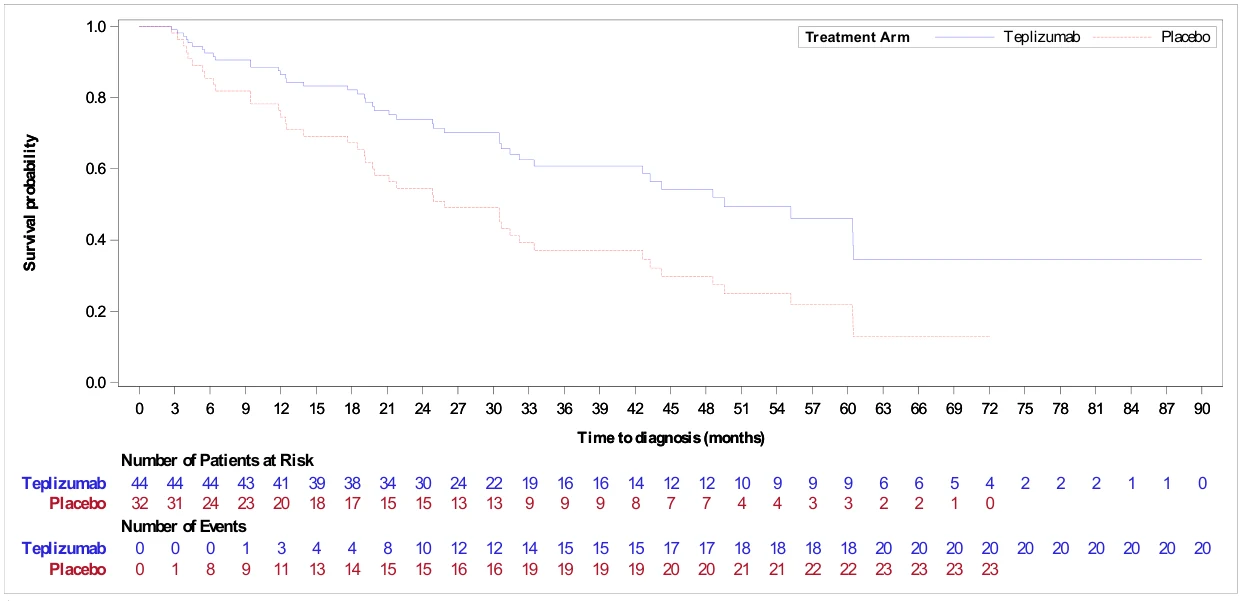
In Study TN-10, the primary efficacy endpoint was the time from randomization to clinical T1D diagnosis. The evaluation of primary endpoint was conducted when a minimum number of 40 T1D events was observed. Stage 3 type 1 diabetes was diagnosed in 20 (45%) of the patients treated with TZIELD and in 23 (72%) of the patients treated with placebo. A Cox proportional hazards model, stratified by age and oral glucose tolerance test status at randomization and adjusted for anti-IA-2 autoantibody and ICA autoantibody, demonstrated that the median time from randomization to Stage 3 type 1 diabetes diagnosis was 50 months in the TZIELD group and 26 months in the placebo group, for a difference of 24 months. With a median follow-up time of 51 months, therapy with TZIELD resulted in a statistically significant delay in the development of Stage 3 type 1 diabetes, hazard ratio 0.484 (95% CI: 0.247 to 0.948; p=0.034) (Figure 1).
Figure 1 –Kaplan-Meier curve of time to diagnosis of Stage 3 Type 1 Diabetes in adult and pediatric patients 8 years of age and older with Stage 2 Type 1 Diabetes by treatment group (Study TN-10)1
1 ITT population
15. Microbiology
No microbiological information is required for this drug product.
16. Non-Clinical Toxicology
General toxicology
In a single dose range-finding study, teplizumab was administered to chimpanzees by a single bolus SC injection at 0, 0.1, 1.0, or 10.0 mg/kg using a staggered, dose escalation design in which dose cohorts contained 3 treatment group animals and 1 control animal. Each dose group of animals was evaluated for adverse clinical signs for 21 days before escalating to the next higher dose level. Mortality occurred in all animals given a single dose of 10.0 mg/kg teplizumab between 31 to 33 days after dosing. These animals showed a marked increase in white blood cells (WBCs) (leukocytes, lymphocytes, and granulocytes) that coincided in time when the animals became moribund and macroscopic and microscopic findings consistent with polymorphic lymphoproliferative disease with secondary sequelae such as pneumonia, glossitis, esophagitis and sepsis. The AUC0-inf at 10 mg/kg was 789,000 ng.day/mL. For chimpanzees given 0.1 or 1.0 mg/kg, there were no adverse, test article -related changes in clinical signs, body weight, food consumption, vital signs (ECGs, heart rate, indirect blood pressure, respiratory rate), physical examinations, injection site observations, or clinical pathology parameters (hematology, clinical chemistry, coagulation). The level of circulating cytokines, including TNF-α, IL-6, and IL-10 were increased in a dose-dependent manner. Markedly decreased circulating CD3+lymphocytes and dose-dependent decreases in CD4+ and CD8+ lymphocytes in whole blood were noted 1 day post-dose, CD3+, CD4+ and CD8+ lymphocyte count reductions were reversible by 42 days after dosing. The no observable adverse effect level (NOAEL) for single-dose toxicity was 1.0 mg/kg SC based on mortality at 10.0 mg/kg. The mean AUC0-inf at the NOAEL was 72,940 ng∙day/mL, equivalent to 12 times the AUC in humans at the recommended clinical dose.
A murine surrogate antibody was administered to CD-1 mice once daily for 6 consecutive days by bolus SC injection at 0, 0.03, 0.3, or 20 mg/kg/day or by bolus IV injection at 0.3 mg/kg/day. Decrease mean absolute lymphocyte count was observed on Study Day 7 at all dose levels. There was partial recovery of lymphocyte numbers during the 6-week recovery period, although a decrease in lymphocyte counts persisted through Study Day 43. Drug-related decreases in T cell subsets populations at all dose levels in the spleen and thymus were consistent with the expected pharmacological inhibition of CD3. Decreased cellularity in the thymus; increased splenic hematopoiesis; neutrophilic infiltrates in mandibular lymph node; and myeloid hyperplasia in femur and sternum bone marrow were observed at all dose levels with partial reversal of the thymic, splenic, and lymph node findings at the end of the 6-week recovery period. Based on the expected pharmacological effects, the NOAELs for the surrogate antibody were 20 mg/kg/day SC and 0.3 mg/kg/day IV.
Genotoxicity
No studies have been performed to assess the genotoxic, including mutagenic, potential of teplizumab.
Carcinogenicity
No long-term studies have been performed to assess the carcinogenic potential of teplizumab.
Reproductive and developmental toxicology
In an embryo-fetal developmental toxicity study, pregnant mice were administered a murine surrogate anti-mouse CD3 antibody by subcutaneous injection at dose levels of 0, 0.03, 0.3, or 20 mg/kg on gestation days 6, 10, and 14. Increase in post-implantation loss occurred in the 20 mg/kg group, in the presence of maternal toxicity.
In a pre- and postnatal development toxicity study in pregnant mice, in which the murine surrogate antibody was administered every 3 days from gestation day (GD) 6 through lactation day (LD) 19 at doses of 0, 0.3, 3, or 20 mg/kg, no maternal toxicity or increased incidence of post-implantation loss was observed. Reductions in T cell populations with or without increases in B cells occurred in offspring of animals in the 3 or 20 mg/kg bw dose groups on post-natal day (PND) 10 and 84, and a reduction in the adaptive immune response to keyhole limpet hemocyanin (KLH) were observed in the male and female offspring on postnatal days 35 and 84 at 20 mg/kg. The surrogate antibody was present in the combined male and female offspring serum at levels 0.3% and 1.5% that of maternal serum at the high dose on LD 11 and LD 13, respectively, representing the last observation day. A trend towards reduction in fertility including reductions in sperm motility was observed in the offspring of dams administered the murine surrogate antibody at 20 mg/kg.
Impairment of Fertility: Fertility and reproductive performance were unaffected in female and male mice that received a murine surrogate anti-mouse CD3 antibody administered by the subcutaneous route at doses up to 20 mg/kg every 3 days for 15 days prior to mating until GD 6 and 28 days prior to and during mating, respectively.
Juvenile toxicity
Juvenile toxicity studies were not conducted with teplizumab or a surrogate antibody.