


Product Monograph - Veregen
SUMMARY PRODUCT INFORMATION
| Route of Administration | Dosage Form / Strength | Clinically Relevant Nonmedicinal Ingredients |
| Topical | (Sinecatechins) Ointment, 10% w/w | Propylene glycol monopalmitostearate, Isopropyl myristate. For a complete listing see Dosage Forms, Composition and Packaging section. |
INDICATIONS AND CLINICAL USE
VEREGEN (sinecatechins) is indicated for the cutaneous treatment of external genital and perianal warts (condylomata acuminata) in immunocompetent patients aged 18 years and over.
Geriatrics (> 65 years of age):
The number of geriatric patients treated with VEREGEN was insufficient to determine whether they respond differently from younger subjects.
Pediatrics (< 18 years of age):
The safety and efficacy of VEREGEN in pediatric patients below the age of 18 years has not been established.
CONTRAINDICATIONS
VEREGEN (sinecatechins) is contraindicated in individuals with a history of sensitivity reactions to the extract from green tea leaves or to any of the components in the formulation or container. For a complete listing see the Dosage Forms, Composition and Packaging section of the Product Monograph.
WARNINGS AND PRECAUTIONS
General
VEREGEN (sinecatechins) should not be applied to open wounds, broken or inflamed skin. Treatment with VEREGEN is not recommended until the skin has completely healed from any previous surgical or drug treatment. Avoid contact with the eyes, nostrils, lips and mouth.
The use of an occlusive dressing should be avoided. VEREGEN is not for ophthalmic, oral, intravaginal, or intra-anal use.
Do not expose the treated area to sunlight or UV irradiation, as VEREGEN has not been tested under these conditions.
The safety and effectiveness for treatment beyond 16 weeks or for multiple treatment courses have not been established.
New warts may develop during treatment.
Safe sex methods (condoms) should be used until complete clearance of all warts as VEREGEN does not eliminate the HPV-virus and does not prevent transmission of the disease.
VEREGEN may weaken condoms and vaginal diaphragms. Therefore, the ointment should be washed off the treated area before the use of condoms and sexual contact. Additional methods of contraception should be considered.
If the sexual partner of the patient is infected, treatment of the sexual partner is advisable to prevent reinfection.
VEREGEN has not been evaluated for the treatment of urethral, intra-vaginal, cervical, rectal, or intra-anal human papilloma viral disease and should not be used for the treatment of these conditions.
Concomitant use of other local treatments in the wart area should be avoided
Carcinogenesis and Mutagenesis
See TOXICOLOGY, Carcinogenicity.
Genitourinary
Female patients with genital warts in the vulvar region should use the ointment with caution as treatment in this area is associated more often with severe local adverse reactions. Accidental application into the vagina must be avoided. In case of accidental application into the vagina immediately wash off the ointment with warm water and mild soap.
Uncircumcised male patients treating warts under the foreskin should retract the foreskin and clean the area daily to prevent phimosis. Treatment should be stopped when early signs of stricture occur (e.g. ulceration, induration or increasing difficulty in retracting the foreskin).
Immune
Patients under immunosuppressive therapy should not use VEREGEN Ointment since the efficacy and safety in immunocompromised patients have not been established.
Local Inflammatory Reactions
Mild local skin reactions such as erythema, pruritus, irritation (mostly burning), pain and oedema at the treatment site are frequent. Treatment may be continued only if the severity of the local skin reaction is acceptable. These reactions should decrease after the first weeks of treatment.
In case of intense local skin reaction causing unacceptable discomfort or increase in severity or associated with lymph nodes, an interruption of treatment should be considered. Treatment with VEREGEN can be resumed after the skin reaction has diminished.
In case a vesicular local reaction occurs, a genital herpes infection should be suspected and ruled out before treatment can be resumed.
Sensitivity
In a dermal sensitization study of VEREGEN
in healthy volunteers, hypersensitivity (type IV) was observed in 5 out of 209 subjects (2.4%) under occlusive conditions.
VEREGEN contains propylene glycol monopalmitostearate which may cause skin irritations and isopropyl myristate which may cause irritation and sensitization of the skin.
Special Populations
Pregnant Women: There are no or limited amount of data from the use of VEREGEN ointment in pregnant women. VEREGEN should not be used in pregnancy unless the benefits to the patient outweigh the potential risks to the fetus. Studies in animals have shown reproductive toxicity (see TOXICOLOGY).
Nursing Women:
It is unknown whether VEREGEN or its metabolites are excreted in human milk. The use of VEREGEN in nursing mothers requires that the possible benefits of the drug be weighed against the potential risk to the infant.
Pediatrics (< 18 years of age):
Safety and efficacy of VEREGEN in patients under the age of 18 years have not been established.
Geriatrics (> 65 years of age):
The number of geriatric patients treated with VEREGEN was insufficient to determine whether they respond differently from younger subjects.
ADVERSE REACTIONS
Adverse Drug Reaction Overview:
In two double-blind, placebo controlled studies for anal and/or genital warts, 400 subjects were exposed to topical VEREGEN (sinecatechins) 10% ointment and 207 subjects were exposed to placebo (vehicle) 3 times daily for up to 16 weeks. The most frequently reported adverse drug reactions (experienced in 83.8% of patients) were local skin and application site reactions at the wart treatment site. Most commonly erythema, pruritus, irritation (mostly burning), pain, oedema, ulcer, indurations and vesicles were observed. Local reactions were of mild intensity in 24.8%, of moderate intensity in 32.0% (male 36.3%/female 27.1%); severe reactions were reported in 26.8% of patients at least once during treatment (male 20.8%/female 33.5%). The percentage of subjects with at least one severe, related local reaction was 26.3% (87/331) for subjects with genital warts only, 23.1% (6/26) for subjects with anal warts and 32.6% (14/43) for subjects with anal and genital warts. In general, the incidence of local reactions increased during the first few weeks of treatment and resolved with continued use.
Clinical Trial Adverse Drug Reactions
Because clinical trials are conducted under very specific conditions the adverse reaction rates observed in the clinical trials may not reflect the rates observed in practice and should not be compared to the rates in the clinical trials of another drug. Adverse drug reaction information from clinical trials is useful for identifying drug-related adverse events and for approximating rates.
The incidence of treatment emergent adverse events observed with VEREGEN in more than 1% of patients in controlled clinical trials are shown in Table 1.
Table 1: Incidence of Adverse Reactions observed in ≥ 1% of patients in pivotal clinical trials
MedDRA System Organ Class / Preferred Term | Placebo Ointment (N=207) | VEREGEN® 10% Ointment (N=400) |
|---|---|---|
General disorders and administration site conditions | 137 (66.2) | 334 (83.5) |
| Application site | ||
| 1 (0.5) | 9 (2.3) |
| 3 (1.4) | 9 (2.3) |
| 67 (32.4) | 269 (67.3) |
| 23 (11.1) | 109 (27.3) |
| 94 (45.4) | 260 (65.0) |
| 66 (31.9) | 254 (63.5) |
| 30 (14.5) | 186 (46.5) |
| 20 (9.7) | 184 (46.0) |
| 23 (11.1) | 159 (39.8) |
| 13 (6.3) | 75 (18.8) |
| 0 | 11 (2.8) |
| 0 | 4 (1.0) |
| 1 (0.5) | 11 (2.8) |
| Infections and infestations | 0 | 11 (2.8) |
| Renal and urinary disorders | 2 (1.0) | 4 (1.0) |
| 2 (1.0) | 3 (0.8) |
| Reproductive system and breast disorders | 1 (0.5) | 5 (1.3) |
| 1 (0.5) | 4 (1.0) |
| Skin and subcutaneous tissue disorders | 2 (1.0) | 3 (0.8) |
| Blood and lymphatic system disorders | 2 (1.0) | 11 (2.8) |
| 2 (1.0) | 9 (2.3) |
Female patients with warts in the vulva had a higher incidence of local skin and application site reactions. Four female patients (1%) interrupted their treatment once due to application site pain, anaesthesia and dermatitis. One female patient (0.3%) discontinued her treatment with VEREGEN because of perineal burning sensation, pain and itching.
For one female patient serious vulvovaginitis was reported during treatment with VEREGEN. Phimosis occurred in 2.7 % of uncircumcised male subjects (5/182) treated with VEREGEN and in 1 % (1/99) with vehicle.
Table 2: Less Common Clinical Trial Adverse Drug Reactions reported in Pivotal Clinical Trials (<1%)
General disorders and administration site conditions: | Local reactions at the application site including, discolouration, discomfort, dryness, erosion, fissure, hyperaesthesia, anaesthesia, scar, nodule, dermatitis, hypersensitivity*, local necrosis*, papules, and eczema* |
|---|---|
| Infections and Infestations: | Application site infection*, application site pustules, herpes simplex, infection*, pyoderma*, staphylococcal infection, urethritis, vaginal candidiasis, vulvovaginitis and vulvitis* |
| Renal and urinary disorders: | Micturition urgency, pollakisuria and urethral meatus stenosis* |
| Reproductive system and breast disorders: | Balanitis, dyspareunia, and vaginal discharge* |
| Skin and subcutaneous tissue disorders: | Rash and papular rash |
*Adverse reactions observed with the higher 15% strength ointment only are included.
DRUG INTERACTIONS
Interactions between VEREGEN and other drugs have not been established.
DOSAGE AND ADMINISTRATION
Up to 250 mg VEREGEN in total, corresponding to about 0.5 cm of ointment strand (max. total single dose) is to be applied three times per day to all external genital and perianal warts.
Apply a small amount of VEREGEN to each wart using the finger(s), dabbing it on to ensure complete coverage and leaving a thin layer of the ointment on the warts (max. 250 mg in total equal to 0.5 cm strand) or as directed by the physician. Patients should wash their hands before and after application of VEREGEN.
It is not necessary to wash off the ointment from the treated area prior to the next application.
VEREGEN is not for ophthalmic, oral, intravaginal, or intra-anal use.
OVERDOSAGE
| For the most recent information in the management of a suspected drug overdose, contact your regional poison control centre or Health Canada's toll-free number, 1-844 POISON-X (1-844-764-7669). |
|---|
Overdosage with any formulation containing sinecatechins has not been reported.
ACTION AND CLINICAL PHARMACOLOGY
Mechanism of Action
The mechanism of action of VEREGEN (sinecatechins) involved in the clearance of genital and perianal warts is unknown. In vitro, sinecatechins inhibited the activation of human keratinocytes. Sincecatechins are also known to have anti-oxidative and anti inflammatory properties. The clinical significance of these findings is unknown.
Pharmacokinetics
The pharmacokinetics of topically applied VEREGEN has not been sufficiently characterized at this time. However, data suggest that systemic exposure to catechins after repeated topical application of VEREGEN is likely to be less than observed after a single oral intake of 400 mL green tea.
STORAGE AND STABILITY
Store between 5oC and 25oC. Do not store above 25oC.
DOSAGE FORMS, COMPOSITION AND PACKAGING
VEREGEN (sinecatechins) is a brown ointment and is supplied in aluminium tubes containing 15 grams or 30 grams of ointment per tube.
Each gram of the ointment contains 100 mg of sinecatechins in a water free ointment base consisting of isopropyl myristate, white petrolatum, cera alba (white wax), propylene glycol monopalmitostearate, and oleyl alcohol.
PART II: SCIENTIFIC INFORMATION
PHARMACEUTICAL INFORMATION
Drug Substance
Proper name: Sinecatechins
Chemical name:
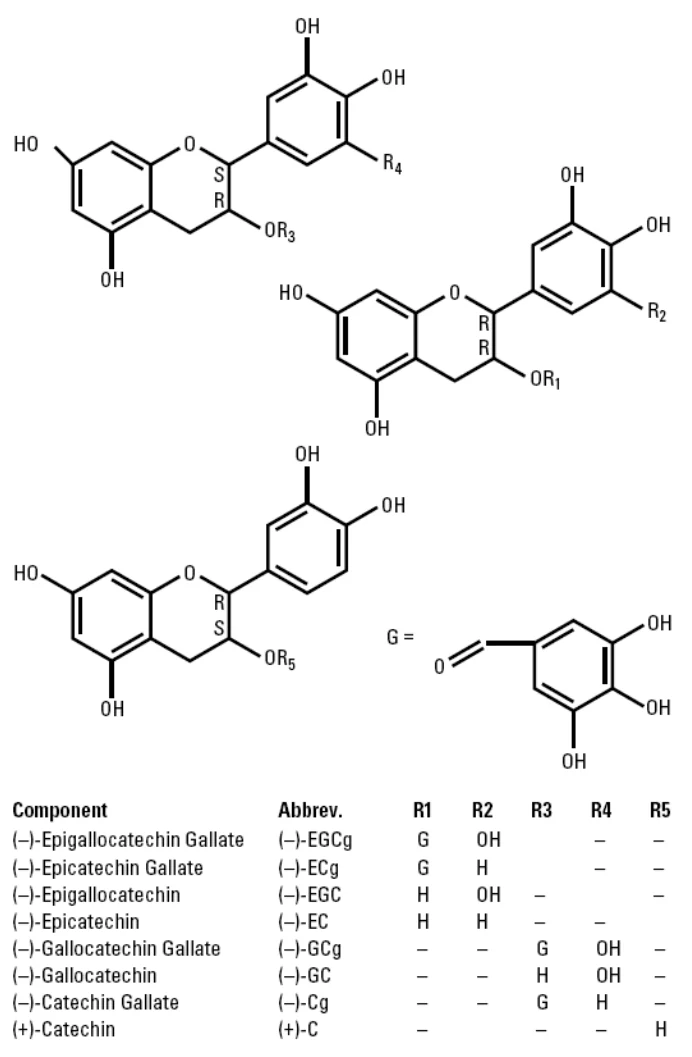
Sinecatechins, is the drug substance in VEREGEN ointment, which is a partially purified fraction of the water extract of green tea leaves from Camellia sinensis (L.) O Kuntze and is a mixture of catechins and other green tea components. Catechins constitute 85 to 95% (by weight) of the total drug substance which includes more than 55% of Epigallocatechin gallate (EGCg), other catechin derivatives such as Epicatechin (EC), Epigallocatechin (EGC), Epicatechin gallate (ECg), and some additional minor catechin derivatives i.e. Gallocatechin gallate (GCg), Gallocatechin (GC), Catechin gallate (Cg), and Catechin (C). In addition to the known catechin components, it also contains gallic acid, caffeine, and theobromine which together constitute about 2.5% of the drug substance. The remaining amount of the drug substance contains undefined botanical constituents derived from green tea leaves. The chemical names and structures of the green tea catechins in sinecatechins are shown below.
Table 3: Green tea catechins in sinecatechins
| Name | CAS No. | Content (%) | Molecular Formula | Molecular Weight |
|---|---|---|---|---|
(−)-Epigallocatechin gallate (active marker) | 989-51-5 | 55.0-72.0 | C22H18O11 | 458.37 |
| (−)-Epicatechin | 490-46-0 | * | C15H14O6 | 290.27 |
| (−)-Epicatechin gallate | 1257-08-5 | * | C22H18O10 | 442.37 |
| (−)-Epigallocatechin | 970-74-1 | * | C15H14O7 | 306.27 |
| (−)-Gallocatechin gallate | 4233-96-9 | * | C22H18O11 | 458.37 |
| (−)-Gallocatechin | 3371-27-5 | * | C15H14O7 | 306.27 |
| (−)-Catechin gallate | 130405-40-2 | * | C22H18O10 | 442.37 |
| (+)-Catechin | 154-23-4 | * | C15H14O6 | 290.27 |
* Not Specified
General Structure of Catechins:
Physicochemical properties:
Physical Form:
Light-red to dull reddish-yellow powder.
Solubility: Freely soluble in water, methanol, tetrahydrofuran, N-dimethylformamide; soluble in ethanol and 1,4-dioxane; sparingly soluble in acetonitrile; slightly soluble in ethyl acetate; and practically insoluble or insoluble in hexane and petroleum ether.
CLINICAL TRIALS
Trial Design and Study Demographics:
The evidence of efficacy of VEREGEN is based on two randomized, double-blind, multi-center, vehicle-controlled studies in immunocompetent patients aged 18 years and over with a diagnosis of external genital and perianal warts. Patients with a minimum of 2 to a maximum of 30 warts over a wart area of 2 to 600 mm2 were included. Subjects who received treatment for genital warts within 30 days prior to study enrollment were excluded. Subjects in both trials were randomized to receive VEREGEN ointment (N= 401) or placebo ointment (N= 207).
The treatment and demographic characteristics are summarized in the following table:
Table 4: Summary of Patient Demographics for Pivotal Clinical Trials
| Study # | Demographics | |||||
| VEREGEN 10% Ointment | Placebo Ointment | |||||
| Dosage: Up to 250 mg TID for a maximum of 16 weeks | ||||||
| CT 1017 | N= 199 Gender: n (%) Male: 110 (55.3) Female: 89 (44.7) Age: Median (range) 27 (16-98) Race: n (%) Caucasian 189 (95.0) African 6 (3.0) Hispanic 0 Asian 1 (0.5) Other 3 (1.5) Wart Area: median (range) [mm2] 51.0 (13-572) | N=103 Gender: n (%) Male: 62 (60.2) Female: 41 (39.8) Age: Median (range) 26 (18-60) Race: n (%) Caucasian 97 (94.2) African 4 (3.9) Hispanic 0 Asian 1 (1.0) Other 1 (1.0) Wart Area: median (range) [mm2] 51.5 (12-490) | ||||
| CT 1018 | N= 202 Gender: n (%) Male: 102 (50.5) Female: 100 (49.5) Age: Median (range) 28 (18-83) Race: n (%) Caucasian 67 (33.2) African 3 (1.5) Hispanic 131 (64.9) Asian 1 (0.5) Other 0 Wart Area: median (range) [mm2] 64.0 (12.0-585.0) | N=104 Gender: n (%) Male: 56 (53.8) Female: 48 (46.2) Age: Median (range) 28 (18-73) Race: n (%) Caucasian 29 (27.9) African 1 (1.9) Hispanic 72 (69.2) Asian 0 Other 1 (1.0) Wart Area: median (range) [mm2] 58.5 (12.0-571.0) | ||||
Efficacy:
The primary efficacy outcome measure was the response rate, defined as the proportion of subjects with complete clearance of all external genital and perianal warts (baseline and new) by week 16. The efficacy results in the ITT population are presented in the following table:
Table 5: Primary Efficacy Results* based on the ITT population
| VEREGEN | Placebo | P value ** | |
|---|---|---|---|
| Complete clearance of all warts | |||
| Overall | 52.4% (210/401) | 35.3% (73/207) | <0.001 |
| Females | 60,8% (115/189) | 43.8% (39/89) | 0.010 |
| Males | 44.8% (95/212) | 28.8% (34/118) | 0.005 |
*Pooled data from study CT 1017 and CT 1018
** Fishers exact test
In VEREGEN-treated patients who completed the studies, the clearance rate of all warts was 60.7% (210/346 in both genders) compared to 44.2% (73/165 in both genders) in placebo-treated patients. For patients treated with VEREGEN 10%, the median time to complete clearance of all warts was 16 weeks. Patients with a protocol defined complete response were followed-up for 12 weeks to assess for recurrence. During this period, the incidence of visual recurrence of warts was 6.5% (13/201) and 5.8% (4/69) in the VEREGEN 10% and placebo treated patients, respectively.
DETAILED PHARMACOLOGY
Animal Pharmacology
Pharmacodynamics:
In vitro studies have demonstrated that sinecatechins inhibit the activation of keratinocytes. Sinecatechins shows in vitro anti-oxidative and anti-inflammatory activity which may inhibit the growth-promoting signalling kinases, various oxygenases, and proteases. The mode of action of sinecatechins involved in the clearance of genital and perianal warts is unknown.
Topical application of sinecatechins did not cause statistically significant effects on the growth of HPV-6 infected human neonatal foreskin xenografts in immunoincompetent mice (scid/scid). The lack of immune mechanisms in SCID mouse model may be responsible for the lack of significant effect.
Safety Pharmacology:
The safety pharmacology testing program included in vivo behavioural, respiratory studies in rats as well as in vitro hERG-assay. No significant effects on behavioural and respiratory changes were observed in the rats treated orally with up to 1000 mg/kg of sinecatechins. Sinecatechins had minimal effect on the HERG channel tail current up to 100 uM dose levels.
The plasma pharmacokinetics properties of VEREGEN 10% Ointment were studied following application to the rat and the minipig by oral, topical, or intravaginal routes. Catechins were absorbed and systemically available only minimally in minipigs and rats following dermal application. No significant accumulation of plasma EGCg concentrations (marker for catechins) was observed following repeated topical or intravaginal applications of sinecatechins 10% Ointment in minipigs, rabbits, or rats. It was noted that EGCg and its metabolites tended to concentrate in the liver after intravenous administration and in the gastrointestinal tract after oral administration in dogs.
Pharmacokinetics
Human Pharmacology
Pharmacodynamics
In a predictive repeated insult patch test (RIPT) involving induction and challenge phases, a low incidence of contact sensitization was reported in healthy skin exposed to VEREGEN 15% ointment. Five of 209 (2.4 %) subjects showed skin reactions indicative of allergic contact dermatitis during the challenge phase. One subject was discontinued after developing allergic contact dermatitis during the induction phase presumably due to previous sensitization to the excipients in VEREGEN. In 4 of the 6 sensitized subjects, the allergic reaction was verified by retesting with the active ingredient (sinecatechins).
Pharmacokinetics
Systemic exposure to EGCg, EGC, ECg, and EC was evaluated following either topical application of VEREGEN® 15% ointment to subjects with external genital and perianal warts (250 mg applied 3 times a day for 7 days) or following oral ingestion of green tea beverage (500 mL ingested 3 times a day for 7 days). Following topical application, plasma concentration of all 4 catechins were below the limit of quantification (<5 ng/mL) on Day 1. After 7 days of topical application, plasma EGC, ECg, and EC concentrations were below the limit of quantification while plasma concentrations of EGCg were measurable in only 2 out of 20 subjects. In these two subjects, systemic availability of EGCg after 7 days was greater following ingestion of the green tea beverage than after topical application of VEREGEN® 15% ointment (by approximately two-fold).
TOXICOLOGYa
Single-dose Toxicity:
Acute toxicity studies with VEREGEN were not conducted in animals.
Repeat Dose Toxicity
In a 13-week dermal toxicity study in rats, a NOAEL for systemic toxicity was established at the maximum feasible dose of 600 mcL VEREGEN 15% ointment per day which represents 1.2-fold the MRHD.
In a 9-month chronic toxicity study in minipigs, the NOAEL for systemic toxicity was established at the highest dose level of 6 g VEREGEN 15% ointment per day (corresponding to 900 mg sinecatechins at the application site) and representing 12-fold the MRHD. Systemic a For calculation of the maximum recommended human dose (MRHD), a 60 kg human receiving 750 mg of the product/day was considered. For oral studies, MRHD comparisons were based on human equivalent dose (HED) derived from the normalization of doses to body surface area using scaling factors of 6 for rats, 12 for rabbits, 20 for dogs and 37 for humans. For topical studies, MRHD comparisons were based on dose per application site, without use of scaling factors.
exposure after dermal application to the skin of mini pigs was low with EGCg plasma levels in the range of the quantification limit.
In a combined toxicity and kinetic study with dermal and intravaginal administration of VEREGEN 15% ointment to female mini pigs substantially higher plasma exposure levels of EGCg (> ~ 40-fold) were observed following intra-vaginal application without systemic toxicity.
In the 13-week oral toxicity studies in rats and dogs, the NOAEL for systemic toxicity of sinecatechins was 90 mg/kg/day and 600 mg/kg/day, representing 12-fold and 259-fold the MHRD, respectively. A NOAEL for systemic toxicity of 500 mg/kg/day (32-fold MRHD) was established at the high dose level of sinecatechins in a 6-months oral carcinogenicity study in mice. Histopathological changes (inflammatory, degenerative and necrotic) in the gastrointestinal tract, liver and pancreas as well as atrophy and lymphoid depletion (spleen and thymus) in lymphoid tissues of rats were observed following high oral doses of sinecatechins, while there were no substantial toxicity findings in dogs and mice.
Local tolerance
In a 9-month chronic toxicity study in minipigs, dermal application of VEREGEN 15% ointment at doses of 0.25, 1.0, and 2.0 g three times daily on a 50 cm2 skin surface area revealed dose-dependent local skin reactions (very slight to severe oedema and erythema) in all treatment groups. Similar local reactions to a lesser degree were observed in the placebo ointment group. The incidence and severity of erythema and edema were most pronounced during Weeks 2 to 6 of the study, and decreased subsequently over time despite continued treatment. In addition, transient eschar formation and red spots at the administration site (or in other areas of the body) were also reported. Morphological changes included minimal to moderate regular hyperplasia of the epidermis, minimal to moderate inflammatory reactions and single incidences of minimal superficial purulent dermatitis at the application sites. The skin reactions subsided within the first three weeks of the recovery period and histopathological examination revealed evidence of reversibility of the local intolerance reactions with minimal dermal irritation (epithelial hyperplasia and inflammatory reactions) at the end of the 6-week recovery period.
During the 13-week repeated dose toxicity study in rats, slight local reactions (oedema and erythema) at the dermal application sites without histopathological changes were noted in some animals in all dose groups (50, 200 or 600 mcL VEREGEN 15% ointment/animal/day).
Dermal application of VEREGEN 15% ointment to the scrotum of male rats at doses of 0.05, 0.20 or 0.60 mL/rat/day for 2 weeks in a male fertility study was associated with scabs and erythema at the application site.
Severe local skin reactions were observed with dermal application of VEREGEN 15% ointment at a dose of 1 g three times daily for 6 days on a 25 cm2 surface area in rabbits.
Marked local skin intolerance reactions were observed in female minipigs after dermal administration of VEREGEN 15% ointment at a dose of 2 g three times daily (6 g total daily dose) on a 50 cm2 skin surface area for 28 days and after intra-vaginal application at a dose of 0.1 or 1.0 mL 3 times/animal/day for 9 days. Histopathology revealed superficial purulent dermatitis and focal or diffuse necrotic dermatitis and reactive hyperplasia by papillomatous proliferation of the epidermis and purulent necrotic vaginitis with neutrophilic granulocytes and cell detritus in the vaginal lumen and reactive purulent inflammatory changes in organs of the urogenital tract.
Intra-vaginal administration of 0.15 mL VEREGEN 15% ointment or cream once daily for 28 days in rats revealed histopathological findings consistent with local irritation of the vagina (moderate to marked acute inflammation with ulcerative lesions and enlarged iliolumber lymph nodes). Recovery was almost complete after the 14 day off-dose period.
Sensitization studies:
VEREGEN 15% Ointment and sinecatechins drug substance induced skin sensitization in two independent animal models, the Guinea Pig Maximization Test, and the Mouse Local Lymph Node Assay.
Carcinogenicity:
In an oral (gavage) carcinogenicity study, sinecatechins was administered daily for 26 weeks to p53 transgenic mice at doses up to 500 mg/kg/day (32-fold MRHD). Treatment with sinecatechins was not associated with an increased incidence of either neoplastic or non-neoplastic lesions in the organs and tissues examined. VEREGEN has not been evaluated in a dermal carcinogenicity study.
Mutagenicity:
Sinecatechins was negative in the Ames test, in vivo rat micronucleus assay, UDS test, and transgenic mouse mutation assay, but positive in the mouse lymphoma mutation assay.
Reproduction and Teratology:
Embryo-fetal development studies were conducted in rats and rabbits using intravaginal and systemic routes of administration, respectively. Oral administration of sinecatechins during the period of organogenesis (gestational Days 6 to 15 in rats or 6 to 18 in rabbits) did not cause treatment related effects on embryo-fetal development or teratogenicity at doses of up to 1,000 mg/kg/day (130-fold MRHD in rats; 259-fold MRHD in rabbits).
In the presence of maternal toxicity (characterized by marked local irritation at the administration sites and decreased body weight and food consumption) in pregnant female rabbits, subcutaneous doses of 12 and 36 mg/kg/day of sinecatechins during the period of organogenesis (gestational Days 6 to 19) resulted in corresponding influences on fetal development including reduced fetal body weights and delays in skeletal ossification. No treatment related effects on embryo-fetal development were noted at 4 mg/kg/day (1.0-fold MRHD).
Daily vaginal administration of VEREGEN 15% ointment to rats from Day 4 before mating and throughout mating until Day 17 of gestation did not cause adverse effects on mating performance and fertility at doses up to 0.15 mL/rat/day. In addition, no treatment-related effects on embryo-fetal development were observed at doses up to 0.15 mL/rat/day (10-fold MRHD).
A pre- and post-natal development study was conducted in rats using vaginal administration of VEREGEN 15% Ointment at doses of 0.05, 0.10 and 0.15 mL/rat/day from Day 6 of gestation through parturition and lactation. The high and intermediate dose levels of 0.15 (10-fold MRHD) and 0.10 mL/rat/day resulted in an increased mortality of the F0 dams, associated with indications of parturition complications. The high dose level of 0.15 mL/rat/day also resulted in an increased incidence of stillbirths. There were no other treatment-related effects on pre- and post-natal development, growth, reproduction and fertility at any dose tested. A NOAEL was established at 0.05 mL/rat/day, 3-fold the MRHD.
REFERENCES
- 1. Disposition pathways and pharmacokinetics of herbal medicines in humans. Curr Med Chem. 2010;17(33):4072-113.
- 2. Hoy SM. Polyphenon E 10% ointment: in immunocompetent adults with external genital and perianal warts. Am J Clin Dermatol. 2012 Aug 1;13(4):275-81.
- 3. Mazzanti et al., Hepatotoxicity from green tea: a review of the literature and two unpublished cases. Eur J Clin Pharmacol (2009) 65:331-341
- 4. Sarma et al., Safety of Green Tea Extracts. A Systematic Review by the US 5.4.53 Pharmacopeia. Drug Safety 2008; 31 (6): 469-484
- 5. Tatti S, Stockfleth E, Beutner KR, Tawfik H, Elsasser U, Weyrauch P, Mescheder A. Polyphenon E: a new treatment for external anogenital warts. Br J Dermatol. 2010 Jan;162(1):176-84. Epub 2009 Jul 27.
- 6. Tyring SK. Sinecatechins: Effects on HPV-Induced Enzymes Involved in Inflammatory Mediator Generation. J Clin Aesthet Dermatol. 2012 Jan;5(1):19-26
- 7. Tzellos TG, Sardeli C, Lallas A, Papazisis G, Chourdakis M, Kouvelas D. Efficacy, safety and tolerability of green tea catechins in the treatment of external anogenital warts: a systematic review and meta-analysis. J Eur Acad Dermatol Venereol. 2011 Mar;25(3):345-53.