


Product Monograph - Vincristine Sulfate Injection USP (Pfizer Canada)
ACTION AND CLINICAL PHARMACOLOGY
The complete mode of action of vincristine sulfate is unknown. In vitro investigations have demonstrated that vincristine is a spindle inhibitor. This inhibition has been linked to a reversible binding of the drug to microtubule and spindle proteins in S phase. Vincristine has also been associated with an interference of RNA synthesis. Whether as a result or independent of these actions, vincristine has been shown to arrest cells in metaphase.
Pharmacokinetic studies in patients with cancer have shown a triphasic serum decay pattern following rapid intravenous injection. The initial, middle, and terminal half-lives are 5 minutes,
2.3 hours, and 85 hours (mean) (range: 19 to 155 hours), respectively. The liver is the major excretory organ, as it is in animals; about 80% of an injected dose appears in the feces and 10 to 20% in the urine. Within 15 to 30 minutes after injection, over 90% of the drug is distributed from the blood into tissue, where it remains tightly, but not irreversibly bound.
Central nervous system leukemia has been reported in patients undergoing otherwise successful therapy with vincristine. This suggests that vincristine does not penetrate well into the cerebrospinal fluid.
Vincristine does not appear to have any constant or significant effect upon the platelets or the red blood cells. Thrombocytopenia, if present when therapy with vincristine is begun, may actually improve before the appearance of marrow remission.
Patients with normal bone marrow function will not exhibit significant leukopenia when recommended doses of vincristine are used.
INDICATIONS AND CLINICAL USE
Vincristine Sulfate Injection USP is indicated in the treatment of acute leukemia.
It has also been shown to be useful in combination with other oncolytic agents in Hodgkin's disease, soft-tissue sarcoma, bony-tissue sarcoma, sarcomas of specialized structures, breast cancer, small cell cancer of the lung, cancer of the uterine cervix, malignant melanoma, colorectal cancer, non-Hodgkin's lymphoma, and Wilms’ tumor.
Current practices of cancer chemotherapy involve the simultaneous use of several agents. For enhanced therapeutic effect without additive toxicity, agents with different dose-limiting clinical toxicities and different mechanisms of action are generally selected. It is rarely possible to achieve equally good results with single agent treatment. Thus, vincristine is often chosen as part of polychemotherapy because of lack of significant bone marrow suppression (at recommended doses) and of unique clinical toxicity (neuropathy).
Multiple agent regimens have been developed for the treatment of a variety of malignant disorders in children. Pediatric patients with neuroblastoma, osteogenic sarcoma, Ewing's sarcoma, rhabdomyosarcoma, Wilms’ tumor, Hodgkin's disease, non-Hodgkin's lymphomas, embryonal carcinoma of the ovaries, and rhabdomyosarcoma of the uterus should be considered candidates for such polychemotherapy treatment.
Patients with true idiopathic thrombocytopenic purpura refractory to splenectomy and short-term treatment with adrenocortical steroids may respond to vincristine, but the drug is not recommended as primary treatment for this disorder. Recommended weekly doses of vincristine sulfate given for 3 to 4 weeks have produced permanent remissions in some patients. If patients fail to respond after 3 to 6 doses, it is unlikely that there will be any results with additional doses.
CONTRAINDICATIONS
Patients with the demyelating form of Charcot-Marie-Tooth Syndrome should not be given Vincristine Sulfate Injection USP. Careful attention should be given to those conditions listed under WARNINGS and PRECAUTIONS.
WARNINGS
THIS PREPARATION IS FOR INTRAVENOUS USE ONLY. IT SHOULD BE ADMINISTERED BY INDIVIDUALS EXPERIENCED IN THE ADMINISTRATION OF VINCRISTINE SULFATE INJECTION USP. The intrathecal administration of vincristine usually results in death.
To reduce the potential for fatal medication errors due to incorrect route of administration, Vincristine Sulfate Injection USP should be diluted in a flexible plastic container and prominently labelled “FOR INTRAVENOUS USE ONLY – FATAL IF GIVEN BY OTHER ROUTES.”
Treatment of patients following inadvertent intrathecal administration of vincristine has included immediate removal of spinal fluid and flushing with Lactated Ringer’s, as well as other solutions and has not prevented ascending paralysis and death. In one case, paralysis in an adult was arrested with some recovery of function by the following treatment initiated immediately after the intrathecal injection:
- 1. As much spinal fluid was removed as could be safely done through lumbar access.
- 2. The subarachnoid space was flushed with Lactated Ringer’s solution infused continuously through a cerebral lateral ventricle at the rate of 150 mL/hour. The fluid was removed through a lumbar access. The Lactated Ringer’s solution was replaced with fresh frozen plasma as soon as it became available.
- 3. Fresh frozen plasma, 25 mL, diluted in 1 L of Lactated Ringer’s solution was infused through the cerebral ventricular catheter at the rate of 75 mL/hour with removal through the lumbar access. The rate of infusion was adjusted to maintain a protein level in the spinal fluid of 150 mg/dL.
- 4. Glutamic acid, 10 g, was given intravenously over 24 hours followed by 500 mg three times daily by mouth for one month or until neurological function was stabilized. The role of glutamic acid in this treatment is not certain and may not be essential.
Vincristine can cause fetal harm when administered to a pregnant woman. When pregnant mice and hamsters were given doses of vincristine that caused resorption of 23 to 85% of fetuses, fetal malformations were produced in those that survived. Five monkeys were given single doses of vincristine between days 27 and 34 of their pregnancies; three of the fetuses were normal at term, and two viable fetuses at term had gross evident malformations.
In several animal species, vincristine can induce teratogenic effects as well as embryo death with doses that are nontoxic to the pregnant animal. There are no adequate and well-controlled studies in pregnant women. If this drug is used during pregnancy, or if the patient becomes pregnant while receiving this drug, she should be apprised of the potential hazard to the fetus. Women of child-bearing potential should be advised to avoid becoming pregnant.
PRECAUTIONS
Acute uric acid nephropathy, which may occur after the administration of oncolytic agents, has also been reported with Vincristine Sulfate Injection USP. In the presence of leukopenia or a complicating infection, administration of the next dose of vincristine warrants careful consideration.
If central nervous system leukemia is diagnosed, additional agents and routes of administration may be required since vincristine sulfate does not appear to cross the blood brain barrier in adequate amounts. Particular attention should be given to dosage and neurologic side effects if vincristine sulfate is administered to patients with preexisting neuromuscular disease and also when other drugs with neurotoxic potential are being used.
Acute shortness of breath and severe bronchospasm have been reported following the administration of vinca alkaloids. These reactions have been encountered most frequently when the vinca alkaloid was used in combination with mitomycin-C. The onset may be within minutes or several hours after the vinca is injected.
Care must be taken to avoid contamination of the eye with concentrations of vincristine used clinically. If accidental contamination occurs, severe irritation (or, if the drug was delivered under pressure, even corneal ulceration) may result. The eye should be thoroughly washed with water immediately.
Since dose-limiting clinical toxicity is manifested as neurotoxicity, clinical evaluation (history, physical examination) is necessary to detect the need for modification of dosage. Following administration of vincristine some individuals may have a fall in the white blood cell count or platelet count, particularly when previous therapy or the disease itself has reduced bone marrow function. Therefore, a complete blood count should be done before administration of each dose. Acute elevation of serum uric acid may also occur during induction of remission in acute leukemia; thus, such levels should be determined frequently during the first three to four weeks of treatment or appropriate measures taken to prevent uric acid nephropathy. The laboratory performing these tests should be consulted for its range of normal values.
Drug Interactions
The simultaneous oral or intravenous administration of phenytoin and antineoplastic chemotherapy combinations that included vincristine sulfate has been reported to reduce blood levels of the anticonvulsant and to increase seizure activity. Dosage adjustments should be based on serial blood level monitoring. The contribution of vincristine sulfate to this interaction is not certain. The interaction may result from reduced absorption of phenytoin or an increase in the rate of its metabolism and elimination.
Laboratory tests both in vivo or in vitro have failed to demonstrate conclusively that this product is mutagenic. Fertility following treatment with vincristine alone for malignant disease has not been studied in humans. Clinical reports of both male and female patients who received multiple agent chemotherapy including vincristine indicate that azoospermia and amenorrhea can occur in postpubertal patients. Recovery occurred many months after completion of chemotherapy in some, but not all, patients. When the same treatment is administered to prepubertal patients, it is much less likely to cause permanent azoospermia and amenorrhea.
Patients who received chemotherapy combinations including vincristine with known carcinogens have developed second malignancies. The contributing role of vincristine in this development has not been determined. No evidence of carcinogenicity was found following intraperitoneal administration of vincristine in rats and mice, although this study was limited.
It is not known whether this drug is excreted in human milk. Because many drugs are excreted in human milk and because of the potential for serious adverse reactions from vincristine in nursing infants, a decision should be made whether to discontinue nursing or the drug, taking into account the importance of the drug to the mother.
ADVERSE REACTIONS
Reporting Side Effects You can report any suspected side effects associated with the use of health products to Health Canada by:
NOTE: Contact your health professional if you need information about how to manage your side effects. The Canada Vigilance Program does not provide medical advice. |
In general, adverse reactions are reversible and are related to dosage. The most common adverse reaction is hair loss; the most troublesome are neuromuscular in origin.
When single weekly doses of this drug are employed, the adverse reactions of leukopenia, neuritic pain, and constipation, are usually of short duration (i.e., less than 7 days). When the dosage is reduced, these reactions may lessen or disappear. They seem to be increased when the calculated amount of drug is given in divided doses. Other adverse reactions, such as hair loss, sensory loss, paresthesia, difficulty in walking, slapping gait, loss of deep tendon reflexes and muscle wasting, may persist for at least as long as therapy is continued. Generalized sensorimotor dysfunction may become progressively more severe with continued treatment. In most instances, they have disappeared by about the sixth week after discontinuance of treatment, but in some patients the neuromuscular difficulties may persist for prolonged periods. Regrowth of hair may occur while maintenance therapy continues. In addition to constipation (mentioned below), paralytic ileus may occur, particularly in young children. The ileus will reverse itself upon temporary discontinuance of vincristine and with symptomatic care. It mimics the "surgical abdomen".
Frequently, there is a sequence in the development of neuromuscular side effects. Initially, only sensory impairment and paresthesias may be encountered. With continued treatment, neuritic pain may appear and, later, motor difficulties. No reports have yet been made of any agent that can reverse the neuromuscular manifestations accompanying therapy with vincristine sulfate.
Convulsions, frequently with hypertension, have been reported in a few patients receiving vincristine sulfate.
Rare occurrences of the syndrome attributed to inappropriate antidiuretic hormone secretion have been observed in patients treated with vincristine sulfate. The syndrome has been described in association with several disease states. There is high urinary sodium excretion in the presence of hyponatremia; renal or adrenal disease, hypotension, dehydration, azotemia and clinical edema are absent. With fluid deprivation, improvement occurs in the hyponatremia and in the renal loss of sodium.
Constipation may take the form of upper colon impaction, and on physical examination, the rectum may be found to be empty. Colicky abdominal pain coupled with an empty rectum may mislead the physician. A flat film of the abdomen is useful in demonstrating this condition. All cases have responded to high enemas and laxatives. A routine prophylactic regimen against constipation is recommended for all patients receiving vincristine sulfate.
Other adverse reactions that have been reported are abdominal cramps, ataxia, foot drop, weight loss, hypertension, hypotension, rash, optic atrophy with blindness, transient cortical blindness, fever, paresthesia and numbness of the digits, oral ulceration, headache, vomiting, diarrhea, and intestinal necrosis and/or perforation. Polyuria, dysuria, and urinary retention due to bladder atony have occurred. Other drugs known to cause urinary retention particularly in the elderly should, if possible, be discontinued for the first few days following administration of vincristine.
Cranial nerve manifestations including isolated paresis and/or paralysis of muscles controlled by cranial motor nerves may occur in the absence of motor impairment elsewhere; extraocular muscles and laryngeal muscles are most commonly involved. Jaw pain, pharyngeal pain, parotid gland pain, bone pain, back pain, limb pain, and myalgias have been reported; pain in these areas may be severe.
Vincristine sulfate does not appear to have any constant or significant effect upon the platelets or the red blood cells.
Serious bone marrow depression is usually not a major dose-limiting event. However, anemia, leukopenia, and thrombocytopenia have been reported. Thrombocytopenia, if present when therapy with vincristine is begun, may actually improve before the appearance of marrow remission.
SYMPTOMS AND TREATMENT OF OVERDOSAGE
Side effects following the use of vincristine sulfate are dose-related. In children under 13 years of age, death has occurred following doses of vincristine sulfate that were ten times those recommended for therapy. Severe symptoms may occur in this patient group following dosages of 3 to 4 mg/m2. Adults can be expected to experience severe symptoms after single doses of 3 mg/m2 or more (see Adverse Reactions). Therefore, following administration of doses higher than those recommended, patients can be expected to experience exaggerated side effects. Supportive care should include the following:
- 1) prevention of side effects resulting from the syndrome of inappropriate antidiuretic hormone secretion (preventative treatment would include restriction of fluid intake and perhaps the administration of a diuretic affecting the function of Henle’s loop and the distal tubule);
- 2) administration of anticonvulsants;
- 3) use of enemas or cathartics to prevent ileus (in some instances, decompression of the gastrointestinal tract may be necessary);
- 4) monitoring the cardiovascular system; and
- 5) determining daily blood counts for guidance in transfusion requirements.
Folinic acid has been observed to have a protective effect in normal mice which were administered lethal doses of vincristine sulfate (Cancer Res, 1963; 23:1390). Isolated case reports suggest that folinic acid may be helpful in treating humans who have received an overdose of vincristine sulfate. It is suggested that 100 mg of folinic acid be administered intravenously every 3 hours for 24 hours and then every 6 hours for at least 48 hours. Theoretically (based on pharmacokinetic data), tissue levels of vincristine sulfate can be expected to remain significantly elevated for at least 72 hours. Treatment with folinic acid does not eliminate the need for the above-mentioned supportive measures.
Most of an intravenous dose of vincristine sulfate is excreted into the bile after rapid tissue binding. Because only very small amounts of the drug appear in dialysate, hemodialysis is not likely to be helpful in cases of overdosage. An increase in the severity of side effects may be experienced by patients with liver disease that is severe enough to decrease biliary excretion.
Enhanced fecal excretion of parenterally administered vincristine has been demonstrated in dogs pretreated with cholestyramine. There are no published clinical data on the use of cholestyramine as an antidote in humans.
There are no published clinical data on the consequences of oral ingestion of vincristine. Should oral ingestion occur, the stomach should be evacuated. Evacuation should be followed by oral administration of activated charcoal and a cathartic.
| For management of a suspected drug overdose, contact your regional poison control centre. |
DOSAGE AND ADMINISTRATION
Dosage
EXTREME CARE MUST BE USED IN CALCULATING AND ADMINISTERING THE DOSE OF VINCRISTINE SULFATE INJECTION USP, SINCE OVERDOSAGE MAY HAVE A VERY SERIOUS OR FATAL OUTCOME. NEUROTOXICITY APPEARS TO BE DOSE RELATED.
The drug is administered INTRAVENOUSLY at weekly intervals.
The concentration of Vincristine Sulfate Injection USP is 1 mg/mL. Do not add extra fluid to the vial prior to the removal of the dose. Withdraw the solution of vincristine into an accurate dry syringe, measuring the dose of vincristine carefully. Do not add extra fluid to the vial in an attempt to empty it completely.
The usual dose of vincristine is 2 mg/m2 for children and 1.4 mg/m2 for adults. Various other dosage schedules have been used.
For children weighing 10 kg or less, the initial dose of vincristine should be 0.05 mg/kg once a week (rather than dose to body surface area), with cautious escalation thereafter, based on effects. Vincristine should not be given to patients receiving radiation therapy through ports that include the liver. When vincristine is used in combination with L-asparaginase, it should be given 12 to 24 hours before the enzyme in order to minimize toxicity, because administering L-asparaginase before vincristine may reduce hepatic clearance of vincristine.
Administration
Preparation for flexible plastic container
Vincristine Sulfate Injection USP when diluted with 0.9% Sodium Chloride Injection or in 5% Dextrose solution in a concentration range of 0.01 mg/mL to 0.1 mg/mL is stable for up to 24 hours, protected from light, at room temperature (15 to 25oC) or refrigerated (2 to 8oC).
Vincristine Sulfate Injection USP must be administered via an intact, free-flowing intravenous needle or catheter. Care should be taken that there is no leakage or swelling occurring during administration (see WARNINGS). The diluted solution should be infused via a flexible plastic container either directly into a vein or into the tubing of a running intravenous infusion. Infusion of the solution may be completed over approximately 5 to 10 minutes.
Caution:
IT IS EXTREMELY IMPORTANT TO BE CERTAIN THAT THE NEEDLE IS PROPERLY POSITIONED IN THE VEIN BEFORE ANY VINCRISTINE IS INFUSED. IF LEAKAGE INTO THE SURROUNDING TISSUE SHOULD OCCUR DURING INTRAVENOUS ADMINISTRATION OF VINCRISTINE SULFATE, IT MAY CAUSE CONSIDERABLE IRRITATION. THE INFUSION SHOULD BE DISCONTINUED IMMEDIATELY, AND ANY REMAINING PORTION OF THE DOSE SHOULD THEN BE INTRODUCED INTO ANOTHER VEIN. LOCAL INJECTION OF HYALURONIDASE AND THE APPLICATION OF MODERATE HEAT TO THE AREA OF LEAKAGE HELP DISPERSE THE DRUG AND ARE THOUGHT TO MINIMIZE DISCOMFORT AND THE POSSIBILITY OF CELLULITIS.
Parenteral drug products should be inspected visually for particulate matter and discolouration prior to administration, whenever solution and container permit.
From a microbiological point of view, the diluted solution should be used immediately. If not used immediately, in-use storage times and conditions prior to use are the responsibility of the user and should not be longer than 6 hours at room temperature (15 to 25 °C) or 24 hours if refrigerated (2 to 8 °C), that is, only if the dilution has taken place in controlled and validated aseptic conditions .
As with all parenteral drug products, intravenous admixtures should be inspected visually for clarity, particulate matter, precipitate, discolouration and leakage prior to administration, whenever solution and container permit. Solutions showing haziness, particulate matter, precipitate, discolouration or leakage should not be used. Discard unused portion (refer to Safe Handling).
Dispensing of Pharmacy Bulk Vials:
Pharmacy Bulk Vials contain 1 mg/mL vincristine sulfate in 5 mL of sterile, unpreserved solution (see Composition).
The availability of Pharmacy Bulk Vials is restricted to hospitals with a recognized intravenous admixture program.
Pharmacy Bulk Vials are intended for multiple dispensing FOR INTRAVENOUS USE ONLY employing a single puncture (see Safe Handling).
The Pharmacy Bulk Vial content should be dispensed within eight hours. Any unused solution should be discarded (refer to Safe Handling). The diluted solutions prepared from the Pharmacy Bulk Vial should be used within 24 hours, when kept at room temperature, from the time of puncture of the Pharmacy Bulk Vial.
Pharmacy Bulk Vials contain no preservatives. Care must be taken to minimize the potential for inadvertent introduction of micro-organisms during manipulation in the hospital environment.
Special Dispensing Information
When diluted for infusion in a flexible plastic container, Vincristine Sulfate Injection USP should be prominently labelled “FOR INTRAVENOUS USE ONLY – FATAL IF GIVEN BY OTHER ROUTES”.
Safe Handling
- 1. Preparation of vinca alkaloids, including vincristine, should be done in a Biological Safety Cabinet.
- 2. Personnel preparing vinca alkaloids should wear safety glasses. If accidental skin contact occurs, the skin should be washed thoroughly.
- 3. Incineration temperatures of 1000⁰C or more should be sufficient for vinca alkaloid wastes. If, for any reason, a vinca alkaloid needs to be returned to the manufacturer, proper precautions should be taken in packing these materials for transport.
PHARMACEUTICAL INFORMATION
Drug Substance
Common Name: Vincristine Sulfate
Chemical Names: (i) Vincaleukoblastine, 22-oxo-, Sulfate (1:1) salt
(ii) Leurocristine Sulfate
Structural Formula:
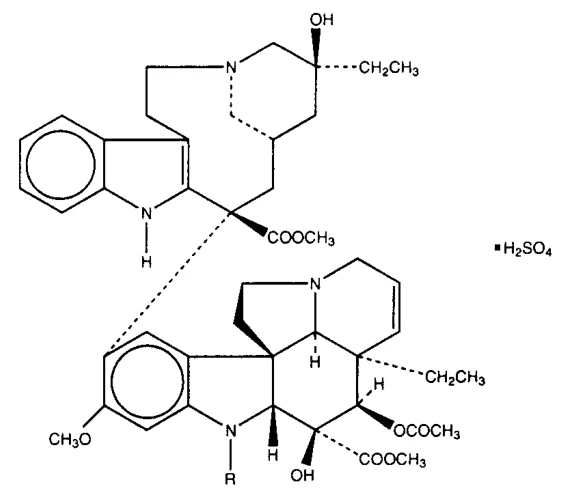
Molecular Formula: C46H56N4O10.H2SO4
Molecular Weight: 923.04 g/mol
Description: Vincristine sulfate is a white to slightly yellow amorphous or crystalline powder, odourless, hygroscopic, freely soluble in water, slightly soluble in alcohol.
Composition:
Vincristine Sulfate Injection USP is a sterile aqueous solution in 2 mL or 5 mL vials containing: 1.0 mg Vincristine Sulfate and 100 mg Mannitol per mL of Sterile Water for Injection. Sodium Hydroxide or Sulphuric Acid may be added for pH adjustment.
Stability and Storage recommendations:
Vincristine Sulfate Injection USP should be stored at 2°C to 8°C, protected from light and freezing. Discard unused portion.
AVAILABILITY OF DOSAGE FORMS
- 1. Vincristine Sulfate Injection USP is available for single use administration, in 2 mL ONCO-TAIN® vials, containing 1.0 mg Vincristine Sulfate and 100 mg Mannitol per mL.
- 2. Vincristine Sulfate Pharmacy Bulk Vials for intravenous use only, are supplied to hospitals with a recognized intravenous admixture program only, as follows:
Vincristine Sulfate Injection USP 1 mg/mL in 5 mL ONCO-TAIN® vial, containing 1.0 mg Vincristine Sulfate and 100 mg Mannitol per mL of sterile unpreserved solution.
PHARMACOLOGY
Cardiovascular and Respiratory Effects of Vincristine in Anesthetized Dogs
An intravenous dose of 1 mg/kg caused no change in respiratory rate, an increase in blood pressure (122.5 to 142.5 mmHg) and a very slight decrease in heart rate. A 2 mg/kg dose caused a minimal increase followed by a decrease in blood pressure, and an increase in respiratory rate (10 to 72 per minute). The heart rate increased (150 to 170 beats per minute) and there was a short period of cardiac irregularity with reversal of the T-wave.
Disposition and Excretion of Vincristine in Mice, Rats, Dogs, and Monkeys
Biphasic curves for the disappearance of the drug from the blood were found in all species with an initial half-life of approximately 15 minutes and a secondary half-life of approximately 75 to 190 minutes. Compared to serum levels, there was a marked accumulation of vincristine in all tissues examined except the brain. The pancreas, spleen, kidneys, lungs, and liver contained the largest amounts. Vincristine and its metabolites appeared in the bile of dogs and monkeys.
Terminal phase half-life in man was 85 ± 69 hours. Considerable interindividual variation in both the terminal elimination half-life of vincristine and the associated volume of distribution occurs.
TOXICOLOGY
Acute Toxicity
The LD50’s of vincristine were determined in mice and rats in two studies.
Mouse LD50 ± S.E. (mg/kg) | Rat LD50 ± S.E. (mg/kg) | |
| Vincristine | 2.1 ± 0.1 | 1.0 ± 0.1 |
| Vincristine | 2.37 ± 0.37 | 1.06 ± 0.075 |
In both rats and mice, toxic doses of vincristine produced hypoactivity, leg weakness, diuresis, diarrhea, and loss of weight. Lethal doses caused delayed deaths associated with anorexia, diarrhea and dehydration.
A comparative mouse LD50 study was carried out in which Vincristine Sulfate for Injection (David Bull Laboratories) and Oncovin (Lilly) were compared. Vincristine Sulfate for Injection (David Bull Laboratories) had an LD50 of 2.5 (2.3 - 2.8) and Oncovin 2.6 (2.4 - 2.8) mg/kg body weight.
Vincristine was administered intravenously to monkeys at dosage levels of 1, 2 or 4 mg/kg. A single dose of 1 mg/kg was well tolerated with no important signs of toxicity. A dose of 2 mg/kg produced leukopenia and thrombocytopenia in eight days. The dose of 4 mg/kg killed a male monkey within 30 hours. The major histopathologic finding in this monkey was a severe acute cytotoxic effect on the granulocytic and erythrocytic series of the bone marrow.
Subacute Toxicity:
Vincristine sulfate was administered intravenously to rats at bolus doses of 0.025, 0.05, 0.1, 0.25, and 0.5 mg/kg five days each week for a total of nine or ten doses. There were no toxic effects in the 0.025, 0.05, and 0.1 mg/kg dose groups. Within three days, the leukocyte count was decreased by 66 to 69% in the 0.25 mg/kg group and 41 to 49% in the 0.5 mg/kg group. The leukocyte count was greater than the control level by the end of the study. In the 0.25 mg/kg group, approximately half of the animals survived but none survived in the 0.5 mg/kg group. Several animals had thymic atrophy and one had testicular atrophy.
Dogs were administered intravenous vincristine at doses of 0.0025, 0.005, 0.01, 0.025, 0.05, and 0.1 mg/kg for one to seven weeks. These studies indicated that multiple large doses of vincristine resulted in reduced leukocyte counts, with a decrease primarily in the granulocytes, and bone marrow hypoplasia. These changes were reversible when the compound was withheld. Repeated doses of 0.025 mg/kg or larger caused severe leukopenia and repeated doses of 0.05 mg/kg resulted in death. Repeated doses of 0.01 mg/kg was a minimal toxic dose and 0.0025 mg/kg was the no-effect dose.
Young adult purebred beagles were given one intravenous dose of vincristine per week for six weeks. The dose groups were 0.02, 0.04, and 0.08 mg/kg. Dogs in the 0.02 or 0.04 mg/kg groups survived the test period but developed moderate leukopenia and a slight reduction in erythrocytic values. Dogs given 0.08 mg/kg had marked leukopenia, anemia and cyclic increases in SGOT. Two of these dogs died with extensive necrosis of the intestinal mucosa, with lymphoid hypoplasia and arrest of spermatogenesis.
Repeated intravenous doses of vincristine were given to groups of one male and one female monkey. The dosage levels were 0.1 or 0.2 mg/kg daily, 1 mg/kg given twice per week, or 1 mg/kg given once per week. Monkeys in all dose groups developed signs of weakness, anorexia, tremors, ataxia, and diarrhea. Leukopenia was evident at all dose levels with arrest of cell mitosis and depression of myeloid and lymphoid tissues. No deaths occurred in the 0.1 mg/kg/day group. Deaths occurred after seven and twelve days in the 0.2 mg/kg/day group; after two or three doses in the 1 mg/kg twice per week group; and after five doses of 1 mg/kg given once per week.
Monkeys given an intravenous dose of 0.08, 0.16, or 0.32 mg/kg per week for 6 weeks survived in good physical condition but developed leukopenia and anemia in a dose-related manner. The hematologic parameters were all reversible after cessation of treatment. The dose of 0.16 mg/kg produced minimal signs of toxicity. Monkeys receiving 0.64 mg/kg developed severe leukopenia, anemia, weight loss, ataxia, lethargy and elevated SGOT and one monkey was killed moribund on day 37. Histopathologic findings consisted of swollen spinal cord neurons and degeneration of the intestinal mucosa.
Neurotoxicity Studies in Experimental Animals
In an attempt to produce neurologic lesions, mice, rats, rabbits, cats, and dogs were given single or repeated large doses of vincristine by the intravenous route. Many of the doses were toxic and even lethal but no signs of paralysis or pathologic lesions of the nervous system were found.
Mice and rats were given single intraperitoneal doses of vincristine ranging from 0.25 to 8 mg/kg. Hindleg paralysis was produced and pathologic lesions were observed in the nerve cells and axons. There were no abnormalities in neuromuscular transmission.
Chickens, guinea pigs, cats, and monkeys were given repeated sublethal but leukopenic doses of vincristine. Chickens developed marked signs of neurotoxicity consisting of ataxia, wing-drop, and an inability to stand, walk or hold head erect. Guinea pigs, like mice and rats, did not develop detectable signs of neurotoxicity even when lethal doses were administered. Cats given doses of 0.03 mg/kg twice per week for three months developed signs of neurotoxicity and had histologic lesions in the spinal cord. Monkeys were given 0.1 to 0.25 mg/kg once a week for nine months with neurotoxic signs developing after 5 to 6.5 months.
Vincristine binds with tubulin and disrupts microtubule formation. The damaged microtubules in the long peripheral axons of nerves block axoplasmic transport. Vincristine at a dose as low as 0.004 µg/mL affects cultured nerve cells.
Genetic Toxicity, Mutagenicity, and Teratogenicity
Prolonged exposures of relatively high concentrations of vincristine do not produce gross morphologic or cytochemical changes in the nucleus or cytoplasm of resting cells and does not prevent these cells from initiating normal prophases. Vincristine can interfere with spermatogenesis, fertility and positive teratogenic effects have been reported in experimental animals. Vincristine is reported to be embryocidal.
BIBLIOGRAPHY
- 1. Byrd RL, Rohrbaugh TM, Raney B, Norris DG. Transient cortical blindness secondary to vincristine therapy in childhood malignancies. Cancer 1981; 47:37-40.
- 2. Cohen SM, Greenspan EM, Weiner MJ, Kabakow B. Triple combination chemotherapy of disseminated melanoma. Cancer 1972; 29:1489-1495.
- 3. Crom WR, Glynn-Barnhart AM, Rodman JH, Teresi ME, Kavanagh RE, Christensen ML, Relling MV, Evans WE. Pharmacokinetics of anti-cancer drugs in children. Clin Pharmacokinet 1987; 12:168-213.
- 4.
Folk RM, Peters AC, Pavkov KL, Swenberg JA. Vincristine (NSC-67574): A retrospective toxicologic evaluation in monkeys and dogs using weekly intravenous injections for 6
weeks. Cancer Chemother Rep Part 3 1974; 5: 1 7-23.
- 5. Grush OC, Morgan SK. Folinic acid rescue for vincristine toxicity. Clin Toxicol 1979; 14:71-78.
- 6.
Holland JF, Scharlau C, Gailani S, Krant MJ, Olson KB, Horton J, Shnider BI, Lynch JJ,
Owens A, Carbone PP, Colsky J, Grob D, Miller SP, Hall TC. Vincristine treatment of advanced cancer: a cooperative study of 392 cases. Cancer Res 1973; 33:1258-1264.
- 7. Johnson IS, Armstrong JC, Gorman M, Burnett JP. The vinca alkaloids: a new class of oncolytic agents. Cancer Res 1963; 23:1390-1427.
- 8. Lightsey AL, McMillan R. Koenig HM. Childhood idiopathic thrombocytopenic purpura. Aggressive management of life-threatening complications. JAMA 1975; 232:734-736.
- 9. Nelson RL, Dyke RW, Root MA. Comparative pharmacokinetics of vindesine, vincristine and vinblastine in patients with cancer. Cancer Treat Rev 1980; 7: 1 7-24.
- 10. Sahenk Z, Brady ST, Mendell JR. Studies on the pathogenesis of vincristine-induced neuropathy. Muscle Nerve 1987; 10:80-84.
- 11.
Shurin SB, Rekate HL, Annable W. Optic atrophy induced by vincristine. Pediatrics 1982;
70:288-291.
- 12. Strother SV, Zuckerman KS, LoBuglio AF. Colchicine therapy for refractory idiopathic thrombocytopenic purpura. Arch Intern Med 1984; 144:2198-2200.
- 13. Todd GC, Griffing WJ, Gibson WR, Morton DM. Animal models for the comparative assessment of neurotoxicity following repeated administration of vinca alkaloids. Cancer Treat Rep 1979; 63:35-41.
- 14.
Vietti TJ, Sullivan MP, Haggard ME, Holcomb TM, Berry DH. Vincristine sulphate and
radiation therapy in metastatic Wilms' tumor. Cancer 1970; 25:12-20.
- 15. Wan Y, Wu T, Damjanov I. Immediate and delayed effects of vincristine administered during early postimplantation stages of murine embryogenesis. J Exp Zool 1983; 227:49-55.
- 16.
Weber W, Nagel-Studer E. Albrecht R. Vincristine infusion. A phase I study. Cancer
Chemother Pharmacol 1979; 3:49-55.
- 17. AHFS Drug Information 1994. American Society of Hospital Pharmacists Inc. Bethesda MD, USA 1994: 703-706.
- 18. USP DI, 13th Edition 1993. United States Pharmacopeial Convention Inc. Rockville MD, USA 1993: 2772-2776.
- 19.
Vincristine Sulfate Injection (vincristine sulfate solution, 1 mg/mL), Submission Control No.: 172295, Product Monograph, Teva Canada Limited. Date of Revision MAR 27, 2014.
Last Revised: July 26, 2021