


Product Monograph - Virazole
INDICATIONS AND CLINICAL USE
RSV infection should be documented by a rapid diagnostic method such as demonstration of viral antigen in respiratory tract secretions by immunofluorescence or ELISA before or during the first 24 hours of treatment. VIRAZOLE (ribavirin for inhalation solution, USP) aerosol is indicated only for lower respiratory tract infection due to RSV. Treatment may be initiated while awaiting rapid diagnostic test results. However, treatment should not be continued without documentation of RSV infection.
Limited clinical data indicate that VIRAZOLE® administered as a small particle aerosol may be beneficial in the treatment of severe respiratory syncytial virus infection in neonates and infants when associated with underlying cardiovascular, pulmonary or immune deficiency. Treatment should be confined to hospitalized patients and administration should be continuous during the period of therapy apart from the time required for ancillary care of the patient. Only severe RSV lower respiratory tract infection is to be treated with VIRAZOLE aerosol.
VIRAZOLE aerosol treatment must be accompanied by and does not replace standard supportive respiratory and fluid management for infants and children with severe respiratory tract infection.
CONTRAINDICATIONS
Use of VIRAZOLE aerosol is contraindicated in women or girls who are or may become pregnant during exposure to the drug. VIRAZOLE may cause fetal harm, and respiratory syncytial virus infection is self-limited in this population. VIRAZOLE is not completely cleared from human blood even four weeks after administration. Although there are no pertinent human data, VIRAZOLE has been found to be teratogenic and/or embryolethal in nearly all species in which it has been tested; however, pregnant baboons given up to 120 mg/kg/day of ribavirin over a 4 day period within the 20 days of organogenesis during gestation failed to exhibit any teratogenic effect.
WARNINGS
Close monitoring of patients and respiratory equipment must be guaranteed when VIRAZOLE (ribavirin for inhalation solution, USP) is used in infants requiring assisted ventilation. Precipitation of VIRAZOLE powder in respiratory equipment may interfere with safe and effective patient ventilation.
Bronchospasm was observed in a tolerance study with ribavirin aerosol in adults with chronic obstructive pulmonary disease and asthma.
Respiratory function should be carefully monitored during treatment. If initiation of VIRAZOLE aerosol treatment appears to produce sudden deterioration of respiratory function, treatment should be stopped and only reinstituted with caution and continuous monitoring.
Although VIRAZOLE is not indicated in adults, the physician should be aware that it is teratogenic in animals (see CONTRAINDICATIONS).
VIRAZOLE administered by aerosol produced cardiac lesions in mice and rats after 30 and 36 mg/kg, respectively, for 4 weeks, and after oral administration in monkeys at 120 mg/kg and rats at 154 to 200 mg/kg for 1 to 6 months. VIRAZOLE aerosol administered to developing ferrets at 60 mg/kg for 10 or 30 days resulted in inflammatory and possibly emphysematous changes in the lungs. Proliferative changes were seen at 131 mg/kg for 30 days. The significance of these findings to human administration is unknown.
VIRAZOLE lyophilized in 6-gram vials is intended for use as an aerosol only.
It has been noted that ribavirin has shown some evidence of mutagenesis in some in vitro test systems. Carcinogenicity studies are incomplete and inconclusive. Some evidence for the production of benign tumors has been shown (see ANIMAL TOXICOLOGY).
PRECAUTIONS
VIRAZOLE (ribavirin for inhalation solution, USP) has been in use for many years in human beings without any reported adverse effects in human fetuses. However, there are no adequate and well-controlled studies in pregnant women, and there is little published evidence of its safety in the early stages of human pregnancy. Since VIRAZOLE is delivered in aerosolized form and because of known teratogenic effects in animals, pregnant women should not care for patients receiving VIRAZOLE, although human teratogenic effects have not been proven.
Patients with lower respiratory tract infection due to respiratory syncytial virus require optimum monitoring and attention to respiratory and fluid status.
Drug Interactions
Interactions of VIRAZOLE with other drugs such as digoxin, bronchodilators, other antiviral agents, antibiotics, or anti-metabolites have not been evaluated. Interference by ribavirin with laboratory tests has not been evaluated. Appropriate attention should be given to the possibility of such interactions.
ADVERSE REACTIONS
The safety data from patients treated with VIRAZOLE (ribavirin for inhalation solution, USP) aerosol has been carefully evaluated in 26 studies. Bronchospasm was observed in a tolerance study with VIRAZOLE aerosol (20 mg/mL) in adults. One of six adult patients with chronic obstructive pulmonary disease and two of six asthmatic adults became dyspneic during the period of VIRAZOLE aerosol administration. These patients required chronic administration of bronchodilators which were discontinued 24 hours prior to VIRAZOLE treatment. An inhalation of a bronchodilator by puffer produced symptomatic relief and return to baseline conditions.
Several serious adverse events occurred in severely ill infants with life-threatening underlying diseases, many of whom required assisted ventilation. These events include worsening of respiratory status, bacterial pneumonia and pneumothorax. The role of VIRAZOLE in these events is indeterminate.
There were nineteen deaths during or shortly after treatment with VIRAZOLE aerosol. No death was attributed to ribavirin aerosol by the investigators.
Some subjects requiring assisted ventilation have experienced serious difficulties, which may jeopardize adequate ventilation and gas exchange. Precipitation of drug within the ventilatory apparatus, including the endotracheal tube, has resulted in increased positive end expiratory pressure and increased positive inspiratory pressure. Accumulation of fluid in tubing ("rain out") has also been noted.
Although anemia has not been reported with use of the aerosol, it occurs frequently with oral and intravenous ribavirin, and most infants treated with the aerosol have not been evaluated 1- or 2-weeks post-treatment when anemia is likely to occur. Reticulocytosis has been reported with aerosol use.
Conjunctivitis has been reported in controlled studies with VIRAZOLE aerosol, however, no significant difference was observed between VIRAZOLE treated and control groups.
SYMPTOMS AND TREATMENT OF OVERDOSAGE
No overdosage with VIRAZOLE (ribavirin for inhalation solution, USP) by aerosol administration has been reported in humans. In man, ribavirin is sequestered in red blood cells for weeks after dosing.
DOSAGE AND ADMINISTRATION
Before use, read thoroughly the ICN Small Particle Aerosol Generator (SPAG) Model SPAG-2 Operator's Manual for small particle aerosol generator operating instructions.
Treatment with VIRAZOLE (ribavirin for inhalation solution, USP) should be instituted as early as possible within the first 3 days of respiratory syncytial virus lower respiratory tract infection. Treatment early in the course of severe lower respiratory tract infection may be necessary to achieve efficacy. Treatment is carried out continuously, apart from the time required for ancillary care, for at least 3 and no more than 7 days, and is part of a total treatment program.
The aerosol is delivered to an infant oxygen hood from the SPAG-2 aerosol generator. Administration by face mask or oxygen tent may be necessary if a hood cannot be employed (see SPAG-2 manual). However, the volume of distribution and condensation area are larger in a tent and efficacy of this method of administering the drug has been evaluated in only a small number of patients. VIRAZOLE aerosol is not to be administered with any other aerosol generating device or from the same reservoir with other aerosolized medications.
Aerosolized bronchodilators, when clinically indicated, should be administered with the ribavirin SPAG-2 generator shut down.
Using the recommended drug concentration of 20 mg/mL ribavirin as the starting solution in the drug reservoir of the SPAG unit, the average aerosol concentration for 1 12-hour period is 190 micrograms/liter (0.19 mg/L) of air.
PHARMACEUTICAL INFORMATION
Drug Substance: Ribavirin, USP
Chemical Name : (1) 1H-1,2,4-Triazole-3-carboxamide,1-ß-D- ribofuranosyl
(2) 1-ß-D-Ribofuranosyl-1H-1,2,4-triazole-3- carboxamide
Structural Formula:
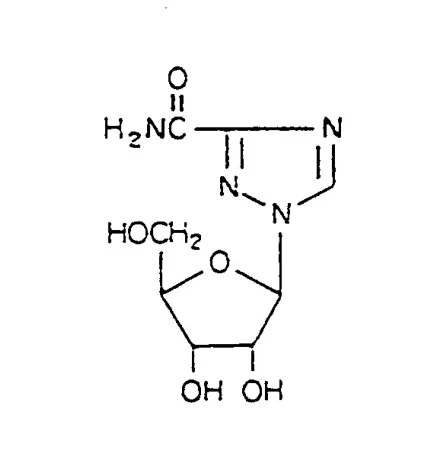
Molecular Formula: C8H12N4O5
Molecular Weight : 244.21 g/mol
Physicochemical Properties
Description: Ribavirin is a colorless, odorless, tasteless, crystalline compound. It is readily soluble in water and slightly soluble in ethanol.
Composition
VIRAZOLE (ribavirin for inhalation solution, USP) is a sterile, lyophilized powder to be reconstituted for aerosol administration. The pH of freshly reconstituted solutions ranges from 5.0 to 6.9. Does not contain any preservative. NOT FOR PARENTERAL USE.
Stability and Storage of Solution
Reconstituted solutions should be prepared immediately before use or may be stored in 100 mL glass vials under sterile conditions at 2 to 6˚C for 24 hours. Further diluted solutions should not be stored.
Storage of VIRAZOLE Vials
Vials containing VIRAZOLE (ribavirin for inhalation solution, USP) sterile, lyophilized powder should be stored in a dry place at 15-25˚C.
Reconstitution
By sterile technique, reconstitute drug with a minimum of 70 mL of sterile USP water for injection or inhalation in the original 100 mL glass vial. Shake well to dissolve completely, about five minutes. Visually check that reconstituted solution is free of visible residue, particulate matter, cloudiness, or discoloration prior to the next dilution step. Transfer to the clean, sterilized 500 mL widemouth Erlenmeyer flask (SPAG-2 Reservoir) and further dilute to a final volume of 300 mL with sterile USP water for injection or inhalation. Shake well. The final concentration should be 20 mg/mL.
Important: This water should not have any antimicrobial agent or other substance added. The solution should be inspected visually for particulate matter and discoloration prior to administration. When the liquid level in the SPAG-2 unit is low, it should be discarded before adding newly reconstituted solution. Solutions that have been placed in the SPAG-2 unit should be discarded at least every 24 hours.
AVAILABILITY
VIRAZOLE (ribavirin for inhalation solution, USP) is supplied in 100 mL glass vials with 6 grams of sterile, lyophilized powder. Four vials are packed in a carton. The drug is administered only by a small particle aerosol generator (SPAG-2).
VIROLOGY
Ribavirin's mechanism(s) of action is unknown, although evidence exists that inhibition of RNA and DNA viruses may be due to ribavirin competition with guanosine in the formation of viral mRNA cap structures and/or interference with enzymes responsible for functional methylation of these molecules which are critical for production of structural viral proteins. The in vitro activity of ribavirin is summarized in Table 1.
Table 1: In vitro viral inhibitory activity of ribavirin
__________________________________________________________________________
DNA Viruses RNA Viruses
__________________________________________________________________________
Virusa Cells M.I.C.b Virusa Cells M.I.C.b
(µg/mL) (µg/mL)
__________________________________________________________________________
AV/3 KB 32 RV/1A KB 10
HSV/1 KB 1 RV/8 KB 32
HSV/1 CE 0.32 PIV/1 KB 10
HSV/1 VERO 100 PIV/1 CE 3.2
HSV/1 HeLa 0.32 PIV/3 KB 10
HSV/2 KB 1 CV/1 KB 100
HSV/2 CE 100 VSV KB 32
HSV/2 RK-13 3.2 VSV RK-13 3.2
MV RK-13 3.2 SSPEV VERO 10
MCMV ME 3.2 SFV CE 32
VV KB 3.2 NDV CE 3.2
VV HeLa 32 MeV VERO 32
VV VERO 320 InfA RMK 1.5
IBRV EBTr 10 MUMPS HeLa 7C
KHF VERO 15C
LAV AT 12.5
RSV HEP-2 3.2
LASSA RAM 10
__________________________________________________________________________ aDNA Viruses: AV/3 Type 3 adenovirus, strain GB. HSV/1 Type 1 herpes simplex virus, strain HF. HSV/2 Type 2 herpes simples virus, strain MS. MV Myxoma virus, strain Sanarelli. MCMV Murine cytomegalo virus, strain Smith. VV Vaccinia virus, strain Lederle CA. IBRV Infectious bovine rhinotracheitis virus, strain LA.
RNA Viruses: RV/1A Type 1A rhinovirus, strain 2060. RV/8 Type 8 rhinovirus, strain CU-MRH. RV/56 Type 56 rhinovirus, strain CH82. PIV/1 Type 1 parainfluenza virus, strain Sendai. PIV/3 Type 3 parainfluenza virus, strain C243. CV/1 Type 1 coxsackie B virus, strain Conn-5. VSV Vesicular stomatitis virus, strain Indiana. SSPEV SSPE measles virus, strain MUN-HT. SFV semliki forest virus, strain original. NDV New castle disease virus, strain L-Kansas. MeV Measles virus, strain Edmonton. Inf A, Influenza A, strain A, England/333/80/H1N1. KHF Korean Hemorrhagic fever virus strain HBL 7990. Mumps virus Enders strain. LAV Lymphadenopathy associated virus. RSV respiratory syncytial virus, long strain. Lassa Fever virus, strain Josiah.
bMinimum Inhibitory Concentration
cED50
PHARMACOLOGY
Pharmacokinetics
Assay for VIRAZOLE (ribavirin for inhalation solution, USP) in human materials is by a radioimmune assay which detects ribavirin and at least one metabolite.
Ribavirin administered by aerosol is absorbed systemically. Four pediatric patients inhaling ribavirin aerosol administered by face mask for 2.5 hours each day for 3 days had plasma concentrations ranging from 0.44 to 1.55 µM, with a mean concentration of 0.76 µM at the end of the treatment period. The plasma half-life was reported to be 9.5 hours. Three pediatric patients inhaling ribavirin aerosol administered by face mask or mist tent for 20 hours each day for 5 days had plasma concentrations ranging from 1.5 to 14.3 µM, with a mean concentration of 6.8 µM.
The bioavailability of ribavirin aerosol is unknown and may depend on the mode of aerosol delivery. After aerosol treatment, peak plasma concentrations are less than the concentration that reduced RSV plaque formation in tissue culture by 85 to 98%. After aerosol treatment, respiratory tract secretions are likely to contain ribavirin in concentrations many fold higher than those required to reduce plaque formation.
In man, rats, and rhesus monkeys, accumulation of ribavirin and/or metabolites in the red blood cells has been noted, plateauing in red cells in man in about 4 days and gradually declining with an apparent half-life of 40 days. The extent of accumulation of ribavirin following inhalation therapy is not well defined. In man, ribavirin is excreted mainly in the urine. The sole metabolite in man is 1,2,4-triazole carboxamide.
In an oral therapy group, patients received 1,000 mg/day (14-16 mg/kg/day) given in 3 divided doses. Plasma ribavirin concentrations were 1.7-5.3 µM approximately 2.5 hours following an oral dose, with a mean value of 3.1 µM. Approximately 35-50% of oral ribavirin is absorbed; human metabolism is unknown following intestinal absorption.
Ribavirin has been administered intravenously. Patients were treated with 1 gram per dose, four times a day for 4 days initially, and then received half gram per dose three times a day for an additional 6 days for a total of 10 days of intravenous therapy. Mean plasma ribavirin levels were 94µM the 1,000 mg dose and 68µM at the 500 mg dose. These plasma ribavirin levels result from a standard parenteral multiple-dose, multiple-day therapeutic regimen.
Pharmacodynamics
Single oral doses of 500, 1,000 or 2,000 mg/kg of ribavirin were given to fasted, adult female Sprague Dawley rats. No alteration in general neurological function or behavior pattern was observed. A moderate cutaneous vasodilation (ear hyperemia) was observed at all doses. In further studies, three anesthetized male dogs were given 1, 10, and 30 mg/kg of ribavirin by direct i.v. injection. The 30 mg/kg dose was also given as a slow infusion over a 38-minute period. No change in cardiovascular or respiratory function was observed at doses of 1 or 10 mg/kg by direct injection or by 30 mg/kg by slow infusion. At 30 mg/kg by direct injection, there were moderate increases in blood pressure and heart rate. These effects were transient, persisting less than two minutes.
TOXICOLOGY
Acute Toxicity
The acute toxicity data for ribavirin are summarized in Table 2. Ribavirin is more toxic when given by the i.p. than the oral route, which may indicate poor absorption from the gastrointestinal tract when large doses are administered or detoxification by the liver. Lethargy, soft feces, and rough coat were noted following acutely toxic doses in rats. At necropsy of rodents which died on test, dark red material indicative of hemorrhage was observed in the gastrointestinal tract. No compound related findings were reported at necropsy of survivors. In dogs there were no deaths during the study. Soft stools and/or diarrhea were noted following dosing. Crater-like areas in the upper duodenum were found at gross necropsy following termination of the study.
Table 2: Acute Toxicity Studies
___________________________________________________________________
Species Sex Route LD50 95%Confidence SE mg/kg
Limits mg/kg
____________________________________________________________________________________
Mouse M p.o. 2100 1600-2600
M i.p. 1300 1060-1540
M i.p. 864 498-1230
M p.o. >10,000
M i.p. 1268 ±120
Rat M p.o. 5300 3800-6800
M&F p.o. 3949 2869-5435
M i.p. 2300 1850-2750
M p.o. 4116 ±749
M i.p. 1758 ±99
F p.o. 5827 ±391
F i.p. 1554 ±99
M&F p.o. 5006 ±463
M&F i.p. 1655 ±72
Guinea Pig M p.o. 2313 ±278
M i.p. 823 ±60
Monkey M&F p.o. >10,000
Dog M&F p.o. >480
____________________________________________________________________________________
Death usually occurred 2 or more days after dosing, preceded by anorexia, lethargy, muscle weakness, and prostration. Gross pathological examination revealed gastrointestinal hemorrhage after oral dosing.
Subacute Toxicity
The subacute toxicity data for ribavirin are summarized in Table 3.
Subacute studies of ribavirin have been conducted in rats, monkeys, dogs and ferrets. As was observed in the acute studies, the dog is abnormally sensitive as compared to rodents or monkeys.
Rats
groups of 10 male and 10 female Charles River rats were administered 0, 30, 60 or 120 mg/kg/day of ribavirin by oral gavage daily for 28 days. No compound related effects were noted with regard to mortality, clinical signs, and clinical chemistry. Significantly lower body weight gain occurred in high and mid dose females and a treatment related decrease in food consumption was noted in mid and high dose males. Significantly reduced circulating red cell mass and increased platelet counts were observed in high dose animals of both sexes although the affected values were noted to be within normal limits. Increased adrenal to body weight ratios in high dose males and females were considered to be an indirect effect due to reduced weight gain in the high dose and were not due to hypertrophy of the organ. The only treatment related finding upon gross necropsy was a small thymus in 1 out of 10 high dose females and 3 out of 10 high dose males. Lymphoid depletion of the thymus, of slight to marked severity in 8 out of 10 high dose males, and of slight to moderate severity in 7 out of 10 high dose females was the only treatment related finding upon histopathologic examination. The lesion was not found in mid or low dose animals nor was lymphoid depletion observed in other organs. Groups of 15 male and 15 female Charles River rats were administered by oral gavage doses of 0 or 200 mg/kg/day of ribavirin for 30 days. A total of 3 male and 5 female ribavirin treated animals died while on test. Emaciation, diarrhea and reductions in body weight gain, food consumption and circulating red cell mass were noted in treated animals. No compound related effects were reported on clinical chemistry, urinalysis or histopathology. Gross necropsy revealed treatment related gastrointestinal inflammation.
Ribavirin was administered daily for 28 days to groups of 70 male and 65 female Charles River rats. The animals were given 0, 30, 90 or 120 mg/kg/day of ribavirin by oral gavage. A high dose group was made up of 85 males and 80 females receiving 200 mg/kg/day for 28 days. Following the last day of dosing, 15 animals/sex/group were sacrificed while the remaining animals were maintained without dosing for four weeks. No compound related effects were observed in the 30 mg/kg group with regard to mortality, hematology, clinical chemistry, gross or microscopic pathology. In the high dose group (200 mg/kg/day), 4 males and 12 females died on test. Dose-related decreases in body weight and feed consumption occurred during dosing and returned towards normal values during the recovery period. Erythrocyte counts, hemoglobin concentration and hematocrit decreased during treatment at the three highest dose levels but returned toward normal values during the recovery period. Clinical chemistry values did not exhibit a consistent pattern during the course of the study, and no lesions indicative of liver or kidney toxicity were reported upon gross or microscopic pathological examination. The initial histopathological examination indicated the bone marrow of the high dose males to have less hematopoetic marrow and more fat cells than the high dose females or controls of each sex. However, further detailed examination did not find abnormally low bone marrow cellularity in high dose males. No other treatment related lesions were found upon histopathological examination.
Groups of 15 male and 15 female Charles River rats were given 0, 30, 60 or 90 mg/kg of ribavirin daily by oral gavage for 30 days. The 90 mg/kg group initially received 15 mg/kg for 15 days and then 90 mg/kg for 30 days. Body weight gain was reduced in high dose animals. No toxicologically significant difference between high dose and control animals were noted with respect to feed consumptions, clinical signs, hematology, clinical chemistry, urinalysis, ophthalmoscopy, organ to body weight ratios or gross or microscopic pathology. The myeloid to erythroid ratio in bone marrow smears was increased in the high dose animals as compared to controls.
As a satellite experiment to the second carcinogenicity study (see Carcinogenicity section for main study), groups of 10 male and 10 female Charles River rats were administered about 154 or
186 mg/kg/day of ribavirin in the diet for up to 48 days. An additional group of 2 male and 2 female rats was given 500 mg/kg/day of ribavirin by gavage for 5 days/week for up to 3 weeks. There were no dietary or gavage controls. Both the dietary and the gavage doses were associated with high mortality and morbidity, 50 to 100 % of the animals in each group died on test or were sacrificed in moribund condition. Cardiac lesions reported as lymphocytosis, endocarditis, myocarditis or hemorrhage occurred at high incidence in all groups. Lymphoid atrophy of the spleen, thymus, lymph nodes, and bone marrow were also reported, and lesions in the liver and pancreas were noted as well. The results of this experiment were confounded, and interpretation made problematic, by lack of concurrent controls and by tissue autolysis in a number of animals which precluded pathological examination of up to 40 % of the animals in the different groups.
Dogs
Groups of 3 male and 3 female Beagle dogs were given 0, 15, 30, or 60 mg/kg of ribavirin/day by oral gavage for 28 days. Three high dose males and two high dose females died or were sacrificed in moribund condition. Dose related clinical findings included diarrhea, soft mucoid stools, ulcerated gums, anorexia, thin appearance, depression, emesis and tremors. Clinical signs were limited to diarrhea and soft mucoid stools in the low dose group. Decreased body weight and food consumption occurred in the high and mid dose animals. Initially, in the high dose, parameters representative of circulating red cell mass were increased probably as a result of dehydration. Subsequently, circulating red cell mass and total leukocyte count decreased below control levels in high dose animals. No consistent decrease outside of the normal range was seen in the mid dose animals. Changes in clinical chemistry parameters and organ weights were reflective of reduced body weight from anorexia and dehydration from diarrhea. Dose related gross pathological changes were small thymus, ulcerated oral mucosa, presence of bile in the stomach, and crater-like depressions in the small intestine. Upon microscopic examination, only mild changes were noted in the gastro-intestinal tract of the low dose animals. In mid and high dose animals, in addition to lesions of the gastrointestinal tract, dose-related primary changes were reported in the thymus and bone marrow with secondary involvement of the adrenals, liver, and spleen.
Monkeys
Studies of the hematological and bone marrow effects of ribavirin were conducted in groups of four Rhesus monkeys given 30 or 100 mg/kg of ribavirin by intramuscular injection daily for 10 days. The low dose group developed a mild, and the high dose group a more severe, normochromic, normocytic anemia by day 10 of treatment. Red cell counts, hematocrit and hemoglobin values decreased during drug administration. The anemia was reversible and normal values were obtained by about day 32 post dosing. No treatment related changes were noted for total or differential leukocyte counts, mean corpuscular hemoglobin (MCH), or mean corpuscular hemoglobin concentration (MCHC). Reticulocyte counts and MCV increased after treatment and returned to control levels by day 65. Osmotic fragility of erythrocytes was unchanged. Dose related thrombocytosis occurred on days 15-22 in both groups; platelet counts returned to control levels on day 42. Platelet function was not affected by treatment. Myeloid: erythroid ratio of bone marrow aspirates increased in both groups by day 10 and returned to baseline by day 22; the increase was not significant in the low-dose group. Myeloid precursors were not affected. Megakaryocytes were increased on day 10 in both groups. It was concluded that administration of ribavirin at 30 or 100 mg/kg/day for 10 days caused a dose-related decrease in circulating red blood cell mass due in part to suppression of late erythroid precursor maturation in bone marrow. This effect was minimal in the low dose animals. Blood and bone marrow effects were completely reversed when treatment was discontinued.
In additional studies, red cells collected from rhesus monkeys and labeled with 3H-diisoproypl-fluorophosphate were reinjected back into the animals. The animals were injected with 0, 15, or 60 mg/kg/day of ribavirin daily for 10 days. A dose related removal of RBC's from the circulation occurred in ribavirin treated animals. The half-life of the labeled cells returned to normal two weeks after discontinuation of ribavirin treatment. Extravascular hemolysis was concluded to be the cause of the red cell removal because ribavirin treatment did not increase serum bilirubin or decrease haptoglobin. Furthermore, in vitro treatment with 4 mM ribavirin did not alter the survival of labeled RBC's injected back into the monkeys nor did it increase susceptibility to lysis from osmotic insult. Doses of 60 mg/kg of ribavirin resulted in a decrease in specific activity of labeled cells following, but not preceding, the end of dosing indicating that ribavirin at this level inhibits release of reticulocytes from the bone marrow. This is substantiated by the marked reticulocytosis that develops post dosing. Thus, ribavirin does not produce anemia by damage to stem cells, but rather by a delay in maturation and by extravascular hemolysis.
Table 3: Subacute Studies
____________________________________________________________________
Period Strain Species Route Group Size Dosage
M & F mg/kg
____________________________________________________________________________________
30 days Charles River rat p.o. gavage 15&15 30,60,90
30 days Charles River rat p.o. gavage 30&30 200
28 days Charles River rat p.o. gavage 10&10 30,60,120
47 days Charles River rat feed, gavage 10&10 152(feed)
10&10 174(feed)
4&4 500(gavage)
30 daysa Charles River rat p.o. gavage 70&66 30,90,120,200
28 days Beagle dog p.o. gavage 3&3 15,30,60
10 daysb Rhesus monkey i.m.inject. 4(M&F) 30,100
10 daysb Rhesus monkey i.m.inject. 3(M&F) 15,30
____________________________________________________________________________________ aInterim sacrifice (5&5) at day 3,7,10,14,21, and 24 of study; sacrifice
(15&15) at day 28 and after a 28-day recovery period.
b10 day dosing followed by recovery period of approximately 40 days.
Mutagenicity
Ribavirin has been tested for mutagenic activity in five strains of Salmonella typhimurium (TA1535, TA1537,TA1538,TA98 and TA100) and found to be non-mutagenic with and without metabolic activation.
In the Rosenkranz polymerase assay using two strains of E.coli (W3110 and P3478), it was not technically possible to draw conclusions because no zones of growth inhibition were found. In vitro cytogenetic assays with ribavirin, using human leukocyte and rat fibroblast cell systems, showed no increase in chromosome breaks over the spontaneous rates.
In the BALB/3T3 mouse cell transformation assay, ribavirin induced an increase in transformed foci at 15.0 µg/mL, but not at 7.5 or 60 µg/mL, in two independent trials. No dose response relationship could be determined nor was the role of metabolic activation assessed.
In the mouse lymphoma L5278Y TK +/- assay system, ribavirin induced dose-related increases in the mutant frequency at the TK locus. However, ribavirin indirectly inhibits thymidine kinase activity. In addition, metabolic activation reduced the response to a nondetectable level.
Ribavirin demonstrated no mutagenic effect in vivo in the sex-linked recessive lethal test in Drosophila. In a host mediated assay in male mice, no mutagenic response was observed. In an in vivo cytogenic study in male albino rats treated with ribavirin for 14 days, no chromosomal aberrations were noted. In an in vivo cytogenetic study in male rats administered ribavirin orally at doses of 30 and 50 mg/kg/day for 5 days and intraperitoneally at 150 mg/kg/day for 5 days, no chromosomal abnormalities were observed.
No evidence of a dominant lethal effect was found in male rats exposed to ribavirin for 5 days via oral and intraperitoneal routes of administration.
Carcinogenicity
Two 2-year carcinogenicity studies in rats have been performed.
One study used Charles River albino rats divided into four groups: control and three different drug-dose levels (30, 60, and 120 mg/kg/day). The highest dose level of the test compound was at or above the maximum tolerated dose.
The results in low and intermediate dose animals were similar to those noted in the control animals. An increased mortality was observed in animals administered ribavirin 120 mg/kg/day and this group was sacrificed after one year on test. Animals in this group also exhibited a macrocytic, normochromic anemia with bone marrow slightly hypercellular with no obvious alteration in the relative number of either myeloid and erythroid cells.
Except for occasional dermal reactions in some high dose animals, the gross pathology findings were similar between control and drug treated animals. The microscopic examination of the tissues and organs revealed no treatment related changes. No evidence of carcinogenicity was observed. As compared to controls, the incidence of pituitary adenomas was increased in males but reduced in females.
The second study used Sprague-Dawley albino rats divided in four groups: control and three different drug dose levels. Mean daily drug consumption was 0, 16, 33, and 70 mg/kg/day for males and 0, 33, 43, and 95 mg/kg/day for female rats. The highest dose level was near the maximum tolerated dose.
Results from this study showed that survivor percentages by week 104 were similar between control and drug-treated animals with better survival in treated females and lower survival in treated males as compared to the controls. Skin lesions, manifested as alopecia at the base of the tail, were observed among some high-dose animals. The only consistent drug-related hematologic change was a decreased red blood cell population. The anemia was not of a greater magnitude than that observed with higher doses administered for only 30 days.
At gross necropsy of animals dying or sacrificed between 3 and 15 months on test, the testes appeared smaller in treated animals, especially in the high dose. However, at terminal sacrifice, there was no treatment-related effect on testicular weight. Atrophy or seminiferous tubules was noted in high and mid-dose rats at the 15-month interim sacrifice along with galactoceles in treated females. Microscopic evaluation of tissues at terminal sacrifice did not show any treatment related neoplastic or non-neoplastic findings.
Although not statistically significant, there was an increased incidence of benign mammary adenomas in females, benign pancreatic tumors in males, and benign adrenal tumors in mid-dose males.
A six-month chronic toxicity study was conducted in male and female rhesus monkeys. The animals were divided into four groups: control and three drug-dose levels (30,60,120 mg/kg/day). Drug-related animals exhibited some hematological variations (reduction of hemoglobin, hematocrit or leukocyte levels) which were significant in only two high-dose males. There were no gross or histological alterations.
Reproductive Studies
Teratology
Rat
Charles River rats given ribavirin orally at doses of 30, 60, or 90 mg/kg daily from gestational day 6 through 15 exhibited an increase in the number of resorption sites and a decrease in numbers of viable pups at all dose levels. There were dose-related increases in the incidence of external and skeletal morphological dysgenesis. Teratogenic abnormalities most frequently observed were anophthalmia, hydrocephalus, gastroschisis, cleft lip or palate, and talipes.
In order to determine the highest non-teratogenic dose, timed pregnant Charles River rats were given ribavirin orally at 0.1, 1.0, and 10 mg/kg daily from gestational day 6 through 15. A teratogenic effect was observed with 10 mg/kg. The primary defect was gastroschisis; changes in eye and head formation found in the previous study were not seen at this dose. No teratogenic effect was seen with the medium or low dose.
Rabbit
New Zealand white rabbits were given ribavirin orally at doses of 0.1, 0.3, and 1.0 mg/kg daily from gestational day 6 through 18; positive controls received thalidomide 37.5 mg/kg daily. Offspring were taken for examination on day 29. There was a significant increase in the number of early and late fetal deaths in high-dose animals, but no dose related increases of terata were noted. There was some evidence that osseous development was delayed in the high-dose group.
Baboon
Single pregnant baboons (Papio hamadryas) were given ribavirin orally injected into a banana which the animals consumed for 4-day periods during gestation as follows:
________________________________________
Gestational Period Dosage of Ribavirin
________________________________________
Day 20-23 60 and 120 mg/kg/day
Day 24-27 120 mg/kg/day
Day 28-31 120 mg/kg/day
Day 32-35 60 and 120 mg/kg/day
Day 36-39 120 mg/kg/day
________________________________________
Absorption occurred with the baboon given 60 mg/kg ribavirin during days 32-35; all other fetuses were removed by caesarian section at gestational day 100.
Two fetuses developed post-mortem hematomas. One fetus had an ileum filled with what appeared to be bile, but without bile or cystic duct blockage, accumulation of bile in the liver or other abnormality. Apart from these features, all fetuses were normal for their stage of development. There was no evidence that ribavirin caused teratogenicity in the baboon as found in other species at the dose levels used.
Fertility
Male, Charles River rats were dosed orally from 40 days of age with 30, 60, or 90 mg/kg ribavirin daily for 60 days, then each was mated with two females dosed at the same rate for the 14 days prior to mating. Reproductive and fertility indices were established. Half the females in each dosage group were sacrificed on gestational day 14 and the remainder were continued on the same dose of ribavirin throughout delivery and lactation to weaning at 21 days of age.
Male mating performance and fertility were not influenced at any dose level. Reproductive performance and fertility of the females were not influenced, but dose-related embryotoxicity and teratological effects were seen. The number of viable pups delivered was reduced in medium and high-dose groups. Dams dosed at the lowest dose weaned similar numbers of pups as controls, but pup survival was reduced during the lactation period in the medium and high-dose groups. There was also a dose-related incidence of diverse terata in delivered offspring.
Inhalation Studies
The studies conducted to prove ribavirin safety by aerosol exposure in different animal species, for different duration and varying initiation of therapy, are as follows:
Ferret Study: Inhalation Toxicity of Inhaled Ribavirin in Suckling Ferrets
To study the effects in developing mammalian lungs, 4 groups of jill ferrets and their litters were given whole body inhalation exposures for 6 hours a day for 10 to 30 consecutive days to concentrations of 0 (vehicle control), 162, 355 or 620 µg/L of ribavirin. The effects including special lung observations in suckling kits were evaluated after exposures, at weaning (40 days) and at puberty (160 days). First the high dose, then the mid dose jills developed lactation failure. Approximately half of the mid dose and three quarters of the high dose kits were found dead or were sacrificed moribund probably due to the resulting nutritional deficiency. There were no test compound-related deaths in the control or low dose kits. Reductions in body weight gain were observed in both 10- and 30-days exposed kits and high dose kits actually lost weight as exposure continued. Some recovery was apparent in survivors. Some discoloration of the liver was seen in thin kits at necropsy. There were no gross or histopathologic lesions in the lungs or tracheas of suckling ferrets attributable to the test article. Ribavirin exposure had no effect on the lavageable cell pool, while lung DNA to protein ratios showed a small, reversible increase in smaller kits. There were no differences in lung function between controls and low dose kits of either group. Effects seen in the higher dose groups were due to differences in size. While there may have been a real dose-related enlargement of alveolar diameters at 40 days of age in males, this had disappeared by puberty. The low dose concentration, which compares to an exposure dose 4 to 7 times that used clinically, appeared to be a no-effect level. Findings at the higher doses are difficult to interpret due to the lactation failures of the jills and resulting slower growth and higher mortality of the kits.
Rat Studies
A 30-day, intranasal instillation subacute toxicity study was carried out with 40 albino rats receiving 20, 60, or 120 mg/kg/day of ribavirin. Study of mortality, clinical reaction, body weight, hematology, clinical chemistry, urinalysis and gross and microscopic pathology revealed no differences between treated and control animals.
Cardiac lesions were reported in a 28-day whole body inhalation study carried out in Charles River rats and CD-1 mice. In order to achieve the required aerosol concentrations, the exhaust ports were turned off in the test chambers, possibly allowing build-up of gaseous waste products. Additionally, the animals were deprived of water for 12 hours/day during the exposure periods which led to dehydration of the test animals. Calculation of the doses delivered was complicated by ingestion of ribavirin by preening of drug deposited on the pelt during the exposures. Estimated doses in rats were 37, 60, and 95 mg/kg/day in the low, mid and high dose groups, respectively. The corresponding estimated doses in mice were 50, 104, and 186 mg/kg/day. There was a high mortality in the ribavirin-treated animals which appears to be dose-related. In rats, the cardiac lesions were reported as inflammation of the epicardium and myocardium and were associated with myofiber necrosis and interstitial edema. The lesion was also reported, at a lower incidence, in vehicle control rats. Multifocal mineralization was the cardiac lesion reported in mice. This lesion in mice is reported to occur spontaneously in inbred strains. Inflammation of the lung with proliferation of the alveolar epithelium was reported in rats. Thymic atrophy, intestinal enteropathy and necrotic lesions of skeletal muscle of the head were reported in mice. Dehydration as well as technical difficulties with the inhalation exposures make this study difficult to evaluate.
A ribavirin aerosol study was conducted in cotton rats infected with RSV. Animals were aerosolized for 4 days for 23.5 hours/day with 600-700 mL per day of the drug solution (1 g ribavirin in 1000 mL water). Groups received 1 mg/mL, 2 mg/mL, 4 mg/mL doses. Deposited amount of drug per gram of lung tissue in 24 hours with a drug concentration of 4 mg/mL was 5 mg/kg/day in a 50-70-gram cotton rat. Virus concentrations in the tissues were reduced 90 % and decreases in mortality and pulmonary inflammation were noted. No drug related side effects were seen.
Primate Studies
Whole body exposure to ribavirin aerosol was performed on healthy squirrel monkeys for four and five consecutive days to investigate different routes and doses for adverse reactions. A group of 8 monkeys received 40 mg/kg/day for 4 days (22 hours per day) via aerosol. No significant drug-related signs of toxicity were seen in animals treated with ribavirin. Slight anemia occurred in both groups (test and control). At necropsy minimal to severe fatty changes were found in the liver. There was severe multifocal and diffuse fatty metamorphosis of the centrilobular region. Minimal to mild fatty metamorphosis or swelling was also seen in the kidney.
One group of 4 squirrel monkeys was exposed to aerosolized ribavirin 40 mg/kg/day for 4 days (5 hours per day), and another group of 6 squirrel monkeys was similarly treated for 5 days. For each control group, water aerosol was administered. No significant adverse effects were observed in either study. A reversible, slight drug related anemia was noted. In the 4-day study in test animals, anemia was slightly more pronounced and there was also a small decrease in white cells. In the 5-day study, no drug related effects were apparent. Anemia in test and control animals evidently resulted from the general blood loss due to repeated bleedings for clinical pathology tests. By day 25, all parameters reversed to pretest levels.
Four rhesus monkeys with body weights ranging between 2.0 to 2.4 kg received 288 mg/day of tritium labeled ribavirin by nasal instillation for 7 days. No signs of toxic exposure were observed.
A 30-day subacute intranasal instillation toxicity study was conducted with 24 rhesus monkeys weighing between 1.8 and 2.9 kg. Animals were divided into 4 groups receiving 0, 48, 144 or 288 mg/day of ribavirin. Study of mortality, clinical reaction, body weight, hematology, clinical chemistry, urinalysis, and gross and microscopic pathology revealed no drug related adverse effects in test animals.
REFERENCES
- 1. Taber L.H., Knight V., Gilbert B.E., McClungH.W. et al. Ribavirin aerosol treatment of bronchiolitis associated with respiratory tract infection in infants. Pediatrics 1983; 72: 613-618
- 2. Hall C.B., McBride J.T., Walsh E.E., Bell D. et al. Aerosolized ribavirin treatment of infants with respiratory syncytial viral infection. N Eng J Med 1983;308:1443-1447
- 3. Hendry R., McIntosh K., Fahnestock M.L., Pierik L.T. Enzyme-linked immunosorbent assay for detection of respiratory syncytial virus infection. J Clin Microbiol 1982;16:329-333
- 4. Gelfand E.W., McCurdy D., Rao D.P., Middleton P.J. Ribavirin treatment of viral pneumonitis in severe combined immunodeficiency disease. Lancet 1983;II:732-733
- 5. Light B., Aoki F. Tolerance of ribavirin aerosol inhaled by normal volunteers and patients with asthma or chronic obstructive airways disease. In:Clinical Applications of Ribavirin. Eds. R.A.Smith, V. Knight and J.A.D.Smith. 1983: 97-105
- 6. Hruska J.F., Bernstein J.M., Douglas Jr R.G., Hall C.B. Effects of ribavirin on respiratory syncytial virus in vitro. Antimicrob Agents Chemother 1980;17:770-775
- 7. Jahrling P.B., Hesse R.A., Eddy G.A., Johnson K.M., Callis R.T., Stephen E.L. Lassa virus infection in rhesus monkeys: pathogenesis and treatment with ribavirin. J Infect Dis 1980;141:580-589
- 8. Hahn F.E. VIRAZOLE (ribavirin). Antibiotics 1979;5:439-458
- 9. McCormick J.B., Mitchell S.W., Getchell J.P., Hicks D.R. Ribavirin suppresses replication of lymphadenopathy-associated virus in cultures of human adult T lymphocytes. Lancet 1984;II:1367-1369
- 10. Kirsi J., North J.A., McKernan P.A., Murray B.K., Canonico P.G., Huggins J.W., Srivasta P.V., Robbins R.K. Broad-spectrum antiviral activity of 2-ß-D-ribofuranosylselenazole-4-carboxamide, A New Antiviral Agent. Antimicrob Agents Chemother 1983;24:353-361
- 11. Decker J.A., Shults R.A. (NIOSH Investigators). Hazard evaluation and technical assistance. 1992;Interm report Florida Hospital,HETA:91-104
- 12. Englund J., Piedra P.A., Jefferson L.S., Wilson S.Z., Taber L.H., Gilbert B.E. High-dose, short-duration ribavirin aerosol therapy in children with suspected respiratory syncytial virus infection. J Pediatr 1990;117:313-320
- 13. Harrison R., Bellows J., Rempel D. Assessing exposures of health-care personnel to aerosols of ribavirin - California. MMWR 1988;37:560-563
- 14. Hillyard I. Preclinical toxicology and safety of ribavirin. In: Smith R., Kirkpatrick W. eds. Ribavirin: A Broad Spectrum Antiviral Agent. New York, NY: Academic Press; 1990:59-71
- 15. Johnson E.M. The effects of ribavirin on development and reproduction: a critical review of published and unpublished studies in experimental animals. J Am Coll Toxicol 1990;9:551-561
- 16. Light B., Aoki F.Y, and Serrette C. Tolerance of ribavirin aerosol inhaled by normal volunteers and patients with asthma or chronic obstructive airway disease. In: Clinical Applications of Ribavirin. Eds. Smith R. and Knight V. Academic Press, New York 1984: 97-105
- 17. Rodriguez W.J., Dang Bui R.H., Connor J.D., Kim H.W., Brandt C.D., Parrott R.H., Burch B. and Mace J. Environmental exposure of primary care personnel to ribavirin aerosol when supervising treatment of infants with respiratory syncytial virus infections. Antimicrobial Agents and Chemotherapy 1987;31 (7):1143-1146
- 18. Smith D.W., Frankel L.R., Mathers L.H., Tang, A.T.S., Ariagno R.L. and Prober C.G. A controlled trial of aerosolized ribavirin in infants receiving mechanical ventilation for severe respiratory syncytial virus infection. N Engl J Med 1991;325:24-29
- 19. American Academy of Pediatrics. Use of ribavirin in the treatment of respiratory syncytial virus infection. Pediatrics 1993;92(3):501-504