


Product Monograph - Voluven
SUMMARY PRODUCT INFORMATION
| Route of Administration | Dosage Form / Strength | Non-medicinal Ingredients |
| Intravenous | Solution for infusion / 6% HES 130/0.4 in 0.9% sodium chloride injection | Sodium chloride, Water for injections, pH adjusted with sodium hydroxide or hydrochloric acid |
INDICATIONS AND CLINICAL USE
VOLUVEN® is indicated for the treatment of hypovolemia due to acute blood loss when crystalloids alone are not considered sufficient.
VOLUVEN® is not a substitute for red blood cells or coagulation factors in plasma.
CONTRAINDICATIONS
VOLUVEN® is contraindicated in patients:
- with fluid overload (hyperhydration), especially in cases of pulmonary edema and congestive cardiac failure.
- with sepsis.
- with renal impairment with oliguria or anuria not related to hypovolemia.
- with critical illness (typically admitted to the intensive care unit).
- with severe liver disease.
- receiving dialysis treatment.
- with severe hypernatremia or severe hyperchloremia.
- with known hypersensitivity to hydroxyethyl starch.
- with intracranial bleeding.
- with pre-existing coagulation or bleeding disorders.
WARNINGS AND PRECAUTIONS
Serious Warnings and Precautions
|
General:
Fluid overload caused by overdose should be avoided in general. Particularly, for patients with cardiac insufficiency or severe kidney dysfunctions the increased risk of hyperhydration must be taken into consideration; posology must be adapted.
Fluid status and rate of infusion should be assessed regularly during treatment, especially in patients with cardiac insufficiency or severe kidney dysfunction.
In case of severe dehydration a crystalloid should be given first. Generally, sufficient fluid should be administered in order to avoid dehydration.
Particular care must be taken in patients with electrolyte abnormalities like hypernatremia and hyperchloremia.
Clinical evaluation and periodic laboratory determinations are necessary to monitor fluid balance, serum electrolyte concentrations, kidney function, acid-base balance, and coagulation parameters during prolonged parenteral therapy or whenever the patient’s condition warrants such evaluation.
Carcinogenesis and Mutagenesis:
See PART II: SCIENTIFIC INFORMATION – Toxicology – Mutagenicity study.
Hematologic:
Monitor the coagulation status in patients undergoing open heart surgery in association with cardiopulmonary bypass as excess bleeding has been reported with other HES solutions in this population. Discontinue the use of VOLUVEN® at the first sign of clinically relevant coagulopathy.
Administration of large volumes of hydroxyethyl starch may transiently alter the coagulation mechanism and decrease hematocrit and plasma proteins due to hemodilution.
Hepatic/Biliary/Pancreatic:
Serum amylase can rise during administration of VOLUVEN® and can interfere with the diagnosis of pancreatitis. The elevated amylase is due to the formation of an enzyme-substrate complex of amylase and hydroxyethyl starch subject to slow elimination and must not be considered diagnostic of pancreatitis.
Monitor liver function in patients receiving HES products, including VOLUVEN®.
Immune:
Anaphylactic/anaphylactoid reactions (hypersensitivity, mild influenza-like symptoms, bradycardia, tachycardia, bronchospasm, non-cardiac pulmonary edema) have been reported with solutions containing hydroxyethyl starch.
If a hypersensitivity reaction occurs, administration of the drug should be discontinued immediately and the appropriate treatment and supportive measures should be undertaken until symptoms have resolved (please refer to section ADVERSE REACTIONS).
Renal:
Avoid use in patients with pre-existing renal dysfunction.
Discontinue use of VOLUVEN® at the first sign of clinically relevant renal injury.
Continue to monitor renal function in hospitalized patients for at least 90 days as use of renal replacement therapy has been recorded up to 90 days after administration of HES products.
Skin:
Pruritus is a known complication of administration of hydroxyethyl starches, though it is more common with prolonged use of high doses
HES-induced pruritus may be delayed in onset, typically one to six weeks after exposure, may be severe and may be of protracted (weeks and months) persistence. It is generally unresponsive to therapy.
Special populations
Pregnant Women:
There are no adequate and well-controlled studies using VOLUVEN® in pregnant women. However, animal studies do not indicate harmful effects with respect to embryo/fetal development, pregnancy, parturition or postnatal development. There were no post-marketing reports of harm when VOLUVEN® was used in pregnant women.
Embryotoxic effects were observed in rabbits when 10% HES 130/0.4 in 0.9% sodium chloride solution is given at 50 mL/kg BW/day. No evidence of teratogenicity was observed.
VOLUVEN® should be used during pregnancy only if the potential benefit justifies the potential risk to the fetus.
Information on the use of VOLUVEN® during labour or delivery is unknown. Use if clearly needed.
Nursing Women:
It is not known whether HES 130/0.4 is excreted in human milk. Because many drugs are excreted in human milk, caution should be exercised when VOLUVEN® is administered to a nursing mother.
A decision on whether to continue/discontinue breast-feeding or to discontinue/continue therapy with VOLUVEN® should be made taking into account the benefit of breast-feeding to the child and the benefit of VOLUVEN® therapy to the nursing mother.
Pediatrics:
Data are limited in children, therefore it is not recommended to use HES products in this population.
Geriatrics:
Of the total number of patients in clinical trials of VOLUVEN® (N=471), 25% were 65-75 years old, while 7% were 75 and older. No overall differences in safety or effectiveness were observed between these subjects and younger subjects. Other reported experience has not identified specific risks for the application of VOLUVEN® in this patient group.
ADVERSE REACTIONS
Adverse reactions with VOLUVEN® reported spontaneously, from clinical trials and in the literature include:
Immune system disorders
Rare: Anaphylactic/anaphylactoid reactions (hypersensitivity, mild influenza-like symptoms, bradycardia, tachycardia, bronchospasm, non-cardiac pulmonary edema) have been reported with solutions containing hydroxyethyl starch (see WARNINGS AND PRECAUTIONS).
Abnormal Hematologic and Clinical Chemistry Findings (Investigations)
Common (dose dependent): Increase in serum amylase (see WARNINGS AND PRECAUTIONS).
Common (dose dependent): At high dosages the dilution effects may result in a corresponding dilution of blood components such as coagulation factors and other plasma proteins and in a decrease of hematocrit.
Skin and subcutaneous tissue disorders
Common (dose dependent): Pruritus, itching (see WARNINGS AND PRECAUTIONS).
Blood and lymphatic system disorders
Rare (in high dose): Blood coagulation disturbances beyond dilution effects can occur depending on the dosage.
Table: Frequency of Occurrence of Adverse Drug Reactions
| System Organ Class | Adverse Drug Reaction | Frequency of Occurrence | |||
| Blood and lymphatic system disorders | Coagulation disorders beyond dilution effects | Rare (in high doses) (>0.01% – ≤ 0.1%) | |||
| Immune system disorders | Anaphylactic / anaphylactoid reactions | Rare (>0.01% – ≤ 0.1%) | |||
| Skin and subcutaneous tissue disorders | Pruritus | Common (dose dependent) (≥1% – < 10%) | |||
| Abnormal hematologic and clinical chemistry findings (Investigations) | Increase of serum amylase | Common (dose dependent) (≥1% – < 10%) | |||
| Decrease of hematocrit | Common (dose dependent) (≥1% – < 10%) | ||||
| Decrease of plasma proteins | Common (dose dependent) (≥1% – < 10%) | ||||
DRUG INTERACTIONS
No interactions of VOLUVEN® with other drugs or nutritional products are known or have been reported to date.
However, mixing VOLUVEN® with other drugs should be avoided.
DOSAGE AND ADMINISTRATION
VOLUVEN® (6% HES 130/0.4 in 0.9% sodium chloride injection) is administered by intravenous infusion only.
Total volume and rate of infusion are dependent on the clinical situation and the individual patient. As with any intravenous fluid, VOLUVEN® should be administered in accordance with accepted clinical practices for fluid and electrolyte management.
In clinical trials, infusions up to 33 mL/kg/day were most commonly used. There is limited experience with infusions between 33 mL/kg/day and 50 mL/kg/day.
The initial 10-20 mL is to be infused slowly, keeping the patient under close observation for possible anaphylactic/anaphylactoid reactions.
VOLUVEN® can be administered repetitively over several days according to the patient’s needs.
The dosage and duration of treatment depends on the duration and extent of hypovolemia, the hemodynamics and on the hemodilution.
Children:
Data are limited in children, therefore it is not recommended to use HES products in this population.
OVERDOSAGE
As with all volume substitutes, overdose with VOLUVEN® can lead to overloading the circulatory system (e.g. pulmonary edema). In this case the infusion should be stopped immediately and if necessary, a diuretic should be administered.
For further information on the management of a suspected drug overdose, contact your regional Poison Control Centre.
ACTION AND CLINICAL PHARMACOLOGY
VOLUVEN® contains 6% hydroxyethyl starch (HES 130/0.4), a tetrastarch. HES 130/0.4 is an artificial colloid, third generation starch, for volume replacement which is characterized by the molar substitution by hydroxyethyl groups (0.4), the mean molecular weight (130,000 Da), the concentration (6%), and the substitution ratio (C2/C6 ratio) of approximately 9:1. The effect on intravascular volume expansion and hemodilution depends on these parameters as well as on the dosage and infusion rate.
Hydroxyethyl starch 130/0.4 is a derivative of thin boiling waxy maize starch, which mainly consists of a glucose polymer (amylopectin) predominately consisting of α-1,4-connected glucose units with several α-1,6-branches. The medium molecular weight (130,000 Da), low degree of substitution (0.4) and narrow molecular weight distribution of hydroxyethyl starch (HES 130/0.4) contained in VOLUVEN® contribute to its beneficial effects on pharmacokinetics and intravascular volume effect.
Pharmacodynamics
Infusion of 500 mL VOLUVEN® over 30 minutes in healthy volunteers results in a plateau-like non-expansive volume increase of approximately 100% of the infused volume which lasts for approximately 4 to 6 hours. Isovolemic exchange of blood with VOLUVEN® maintains blood volume for at least 6 hours.
Pharmacokinetics
The pharmacokinetic profile of HES is complex and largely dependent on its molar substitution as well as its molecular weight. When administered intravenously, molecules smaller than the renal threshold (60,000 – 70,000 Da) are readily and rapidly excreted in the urine, while molecules with higher molecular weights are metabolised by plasma amylase prior to excretion via the renal route.
The mean in vivo molecular weight of VOLUVEN® in plasma is 70,000 – 80,000 Da immediately following infusion and remains above the renal threshold throughout the treatment period.
The volume of distribution of VOLUVEN® after intravenous administration of 500 mL to healthy volunteers is about 5.9 L. Plasma levels of VOLUVEN® remain at 75% of peak concentration at 30 minutes post-infusion and decrease rapidly to 14% at 6 hours post-infusion. Plasma levels of VOLUVEN® return to baseline levels 24 hours following infusion.
Plasma clearance of VOLUVEN® following intravenous administration of 500 mL was 31.4 mL/min with an AUC of 14.3 mg/mL h, following non-linear pharmacokinetics. A single dose of 500 mL of VOLUVEN® results in elimination in the urine of approximately 62% within 72 hours. VOLUVEN® is eliminated from systemic circulation with a t1/2α of 1.4 h and a terminal half life (t1/2ß) of 12.1 h following administration of a single dose of 500 mL.
The kinetics of VOLUVEN® are similar following single and multiple dose administration. No significant plasma accumulation occurred after daily administration of 500 mL of a 10% solution containing HES 130/0.4 over a period of 10 days. Elimination rates in the urine were approximately 70% within 72 hours.
In an experimental model in rats using repetitive doses of 7 mL/kg BW per day of 10% HES 130/0.4 over 18 days, 52 days after the last administration tissue storage was 0.6% of the total administered dose.
Special Populations and Conditions
Renal Insufficiency: Single intravenous administration of VOLUVEN® (500 mL) in subjects with mild to severe renal impairment resulted in a moderate increase in AUC by a factor of 1.7 (95% confidence limits 1.44 and 2.07) only in subjects with ClCr < 50 mL/min compared to ≥ 50 mL/min. However, terminal half-life and peak HES concentration were not affected by renal impairment. Plasma levels of VOLUVEN® return to baseline levels 24 hours following infusion.
Fifty-nine percent of HES 130/0.4 was recovered in the urine of subjects with ClCr ≥ 30 mL/min versus 51% in those with ClCr between 15 to 30 mL/min.
There is no data available on the use of VOLUVEN® in dialysis.
Hepatic Insufficiency: Pharmacokinetic data in patients with hepatic insufficiency are not available.
Age: Pharmacokinetic data in elderly or children are not available.
STORAGE AND STABILITY
To be used immediately after the bottle or bag is opened.
The solution is intended for intravenous administration using sterile equipment.
Use only clear solutions and undamaged containers.
Parenteral drug products should be inspected visually for clarity, particulate matter, precipitate, discoloration and leakage prior to administration. Solutions showing haziness, particulate matter, precipitate, discoloration or leakage should not be used. Discard unused portion.
Do not use VOLUVEN® after expiry date.
Glass infusion bottle storage: at 15 °C – 25 °C for 5 years.
freeflex® bag storage: at 15 °C – 25 °C for 3 years.
Do not freeze.
SPECIAL HANDLING INSTRUCTIONS
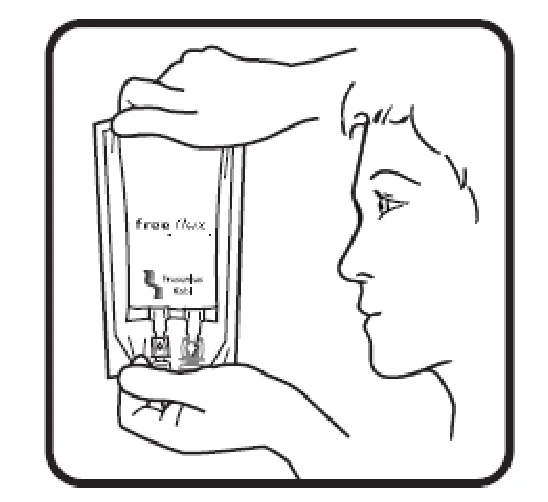
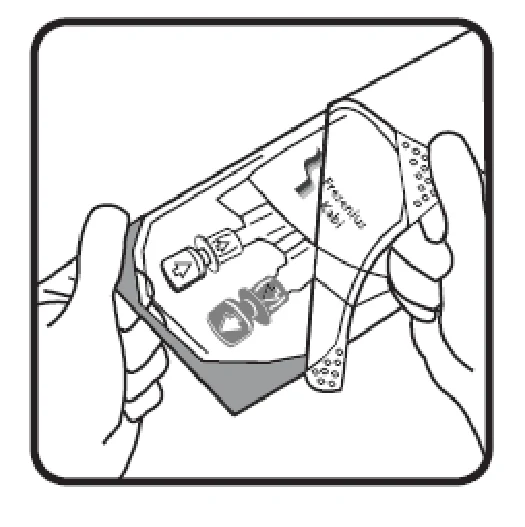
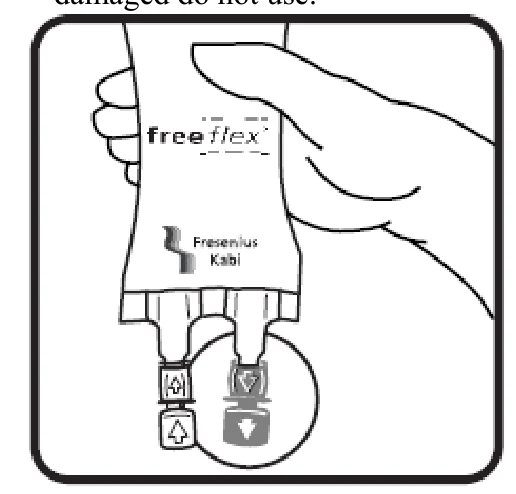
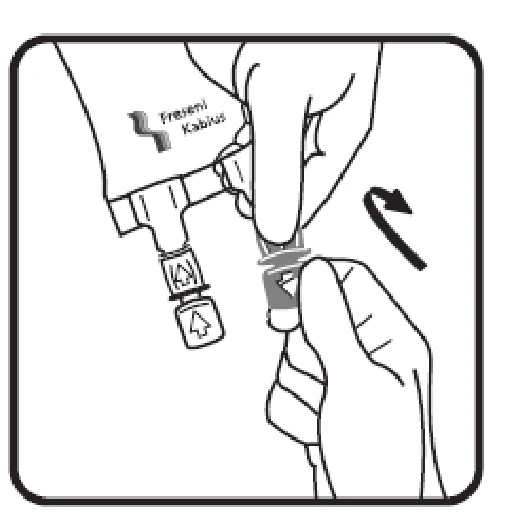
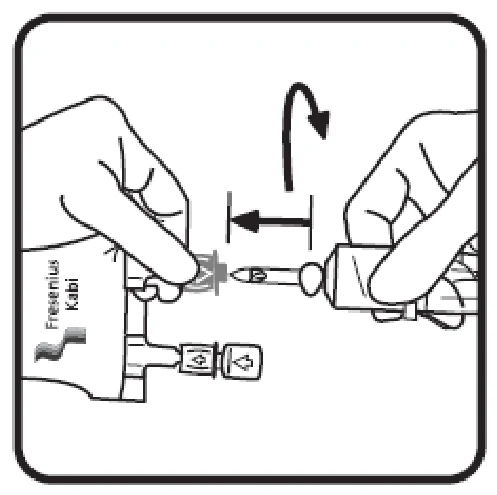
Before administering the product in plastic bags to patient, review these directions:
freeflex® IV Solution Container
These instructions are only intended as guidelines for product use. Please refer to your own departmental guidelines.
 |  |
|
|
 |  |
|
|
 |
|
|
WARNINGS
- 1. Do not remove the freeflex® IV container from its overwrap until immediately before use.
- 2. Parenteral drug products should be inspected visually for particulate matter and discoloration prior to administration, whenever solution and container permit.
- 3. Do not administer unless the solution is clear, free from particles and the freeflex® IV container is undamaged.
- 4. VOLUVEN® should be used immediately after insertion of the administration set.
- 5. Discontinue the infusion if adverse reaction occurs.
- 6. Do not vent.
- 7. It is recommended that administration sets are changed at least once every 24 hours.
- 8. For single use only. Discard unused portion.
Before administering the product in glass infusion bottles to patient, review these directions:
Preparation for Administration
- Check the glass bottle for infusion solution composition, lot number and expiry date.
- Inspect the container for damage or solution leakage at the stopper. If damaged, do not use the solution!
- The infusion solution should be inspected visually for particulate matter and discoloration prior to administration.
- Aseptic technique should be followed during all steps of product preparation and administration.
- Remove the cap from the bottle to expose center portion of the rubber stopper.
- Clean the stopper with germicidal solution such as 70% isopropyl alcohol.
Administration
- Use a sterile vented spike (infusion set) for administration.
- Suspend the bottle from the hanger to see the label contents and follow directions for use printed on the administration set container.
- Discontinue administration and notify physician immediately if patients exhibits signs of adverse reactions.
Incompatibilities
The mixing with other drugs should be avoided. If, in exceptional cases, a mixture with other drugs is required, care should be taken with the compatibility (clouding or precipitation), hygienic injection and a good admixture.
DOSAGE FORMS, COMPOSITION AND PACKAGING
VOLUVEN® (6% hydroxyethyl starch 130/0.4 in 0.9% sodium chloride injection) is supplied sterile and pyrogen free in 250- and 500-mL plastic bags (freeflex®) or in glass infusion bottles for intravenous infusion.
The composition of each 100 mL is as follows:
Poly (O-2-hydroxyethyl) starch (Molar substitution: 0.4) (Mean molecular weight: 130,000 Da) | 6.00 g | ||
| Sodium chloride | 0.90 g | ||
| pH adjusted with sodium hydroxide or hydrochloric acid 25% | q.s. | ||
| Water for injection | q.s. | ||
| Approximate concentration of electrolytes (mmol/L): | |||
| Sodium (Na+) | 154 | ||
| Chloride (Cl-) | 154 | ||
| Theoretical osmolarity (mosmol/L) | 308 | ||
| Titratable acidity (mmol NaOH/L) | < 1.0 | ||
| pH | 4.0 – 5.5 | ||
VOLUVEN®, 6% HES 130/0.4 in 0.9% sodium chloride injection, is supplied in the following primary containers of the following package sizes:
Colourless glass infusion bottle with halobutyl rubber closure and aluminium cap: 10 x 250 mL; 10 x 500 mL
Polyolefin bag (freeflex®) with overwrap: 10, 20, 30 x 250 mL; 10, 15, 20 x 500 mL
PART II: SCIENTIFIC INFORMATION
PHARMACEUTICAL INFORMATION
Drug Substance
Description of Drug Substance
Hydroxyethyl starch is a derivative of amylopectin, which is a highly branched compound of starch. In humans and animals amylopectin is rapidly hydrolyzed by amylase. In order to reduce the metabolic degradation, glucose residues of the amylopectin are reacted with ethylene oxide. The hydroxyethyl groups can be introduced at three positions (C2,C3,C6) of the glucose residues. The degree of substitution and the substitution pattern, expressed by the C2/C6 ratio, determine the enzymatic degradation of HES. HES 130/0.4 contained in VOLUVEN® is characterized by its molar substitution, molecular weight and the C2/C6 ratio.
Proper or common name:
Hydroxyethyl Starch (HES) (130/0.4)
Chemical name:
Poly (O-2 hydroxyethyl) starch
Structural formula:
Average Molecular weight: 110,000 - 150,000 Dalton
Molecular weight (Mw): The molecular weight indicates the weight average. The Mw of HES 130/0.4 lies between 110,000 and 150,000 Dalton, which corresponds approximately to 609 to 830 partially hydroxyethylated glucose units.
Molar substitution (MS): The ratio of hydroxyethyl groups to glucose units is called the molar substitution (MS). The MS for this substance is 0.4 (0.38 – 0.45), tetrastarch, and determines the
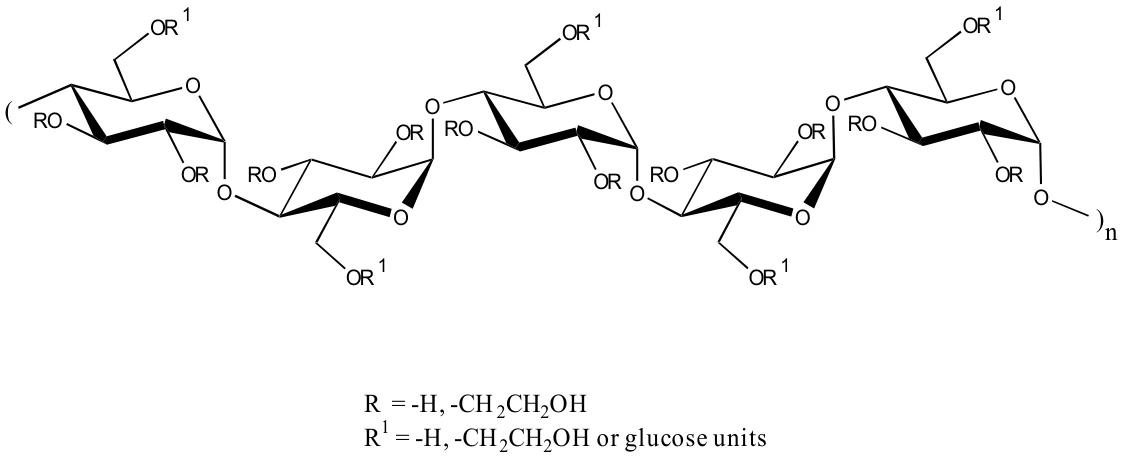
molar ratio of hydroxyethyl ether groups to glucose units.
C2/C6 ratio: This parameter gives information about the preferred position of hydroxyethylation and reflects the different intrinsic reactivity of the secondary and the primary alcohol functionality at the respective positions of the glucose ring. The value of the C2/C6 ratio should be higher than 8 for HES 130/0.4.
Product Characteristics: Hydroxyethyl starch (6% HES 130/0.4, a tetrastarch) in isotonic sodium chloride solution is colorless and clear.
CLINICAL TRIALS
A prospective, controlled, randomised, double-blind, multi-center trial of 100 patients was conducted that evaluated VOLUVEN® (6% hydroxyethyl starch 130/0.4), compared to US approved 6% hetastarch 450/0.7 containing 0.9% saline, for intraoperative volume substitution during major orthopedic surgery. The primary efficacy parameter was the total volume of colloidal solution required.
The primary efficacy variable total volume of colloid solution required for intraoperative volume substitution was equivalent for the two treatment groups. Mean volume was 1613 ± 778 mL for VOLUVEN® and 1584 ± 958.4 mL for hetastarch. The ratio VOLUVEN®/hetastarch was estimated as 1.024 with a 95% confidence interval [0.84;1.25].
The results for the four primary safety variables are shown in the following table:
| Variable | Mean | Ratio VOLUVEN®/Hetastarch | ||
VOLUVEN® N=49 | Hetastarch N=51 | Estimate | 95% Cl | |
| Calculated red blood cell loss [L] | 1.17 | 1.31 | 0.910 | [0.720;1.141] |
| Factor VIII [%] | 100.5 | 81.4 | 1.244 | [1.000;1.563] |
| von Willebrand factor [%] | 97.7 | 88.7 | 1.128 | [0.991;1.285] |
| Fresh frozen plasma (mL) | 72 | 144 | 0.723 | [0.000;2.437] |
A significant difference between treatment groups in fluid input was found for the sum of erythrocyte volumes from packed RBC + salvaged blood + other blood in mL/kg body weight (8.0 mL/kg vs. 13.8 mL/kg).
There were no significant differences noted between the two groups in serious adverse events. Three cases of serious coagulopathies occurred in the hetastarch group only. However, all three cases had also received high doses (>3000 mL) which are known to increase the risk for effects of the drug on the coagulation system.
With respect to the secondary efficacy endpoints of hemodynamic stability, body temperature, hemodynamic parameters, BP, central venous pressure, heart rate, fibrinogen and platelets there was no statistically significant difference between the two treatment groups.
DETAILED PHARMACOLOGY
The pharmacodynamic effect of 6% HES 130/0.4 was examined in a shock model in conscious rats and an exchange model in dogs. In both studies the control group received 6% HES 200/0.5 (pentastarch).
Six percent HES 130/0.4 solution was as effective as 6% HES 200/0.5 solution in maintaining cardio-pulmonary functions during isovolemic hemodilution in Beagle dogs. In the 3-hour follow-up period no additional administration of colloid was necessary.
There were no differences in long-term survival of rats after a single administration of 6% HES 130/0.4 and 6% HES 200/0.5 solution following an induced hemorrhagic shock (67% and 50% blood loss). In the 6% HES 130/0.4 group bled at 67%, the survival rate was 83% since one animal died. However, non-survival of one animal lies within the normal range for this type of experiment. In the corresponding 6% HES 200/0.5 group survival was 100%. Infusion of Ringer's lactate resulted in a 50% survival rate after a 50% blood loss and a 0% survival after a 67% blood loss. In conclusion, 6% HES 130/0.4 had a life saving effect equivalent to 6% HES 200/0.5 in this rat model.
After multiple I.V. administration of 0.7 g per kg BW per day of 10% HES 130/0.4 or 10% HES 200/0.5 solution during 18 consecutive days, the plasma HES concentration in rats treated with 10% HES 130/0.4 was lower compared to rats treated with 10% HES 200/0.5. Ten percent HES 130/0.4 was eliminated faster than 10% HES 200/0.5. In both groups, clear signs of HES tissue storage were detected in lymph nodes and spleen. Numerous empty vacuoles in macrophages were observed. Only a minimal cellular vacuolization was found in the liver and kidney. Histochemical differences between the groups were not observed.
Therefore, a study with radiolabelled 10% 14C-HES 130/0.4 and 10% 14C-HES 200/0.5 solutions was carried out. In animals treated with HES 130 radioactivity decreased from 4.3% of the total administered dose (2.6 g HES 130/animal) on day 3 to 0.6% on day 52. In animals treated with HES 200/0.5 the 14C-activity decreased from 7.7% of the total administered dose (2.7 g HES 200/animal) on day 3 to 2.45% on day 52. These results confirm the faster elimination and lower persistence of HES 130/0.4 in tissue.
MICROBIOLOGY
Not applicable.
TOXICOLOGY
Repeated-Dose Toxicity
The intravenous infusion of 90 mL of 10% HES 130/0.4 per kg BW/day infused over 3 hours each day in rats and dogs for 3 months resulted in no signs of overt toxicity, except for an increased workload on the kidney and the liver, uptake and metabolism of hydroxyethyl starch in the reticulo-endothelial system, hepatic parenchyma, and other tissues associated with the animals´ unphysiological state during the test period.
Reproductive Toxicity
HES 130/0.4 had no teratogenic properties in rats or rabbits. Embryolethal effects were observed in rabbits at 50 mL/kg BW/day of 10% HES 130/0.4. In rats, bolus injection of this dose during pregnancy and lactation reduced body weight of offspring and induced developmental delays. However, embryo-fetotoxicity in rats and rabbits was only observed at maternal-toxic dose levels. Signs of fluid overloading were seen in the dams. Fertility studies on directly exposed animals have not been conducted.
Mutagenicity study
No mutagenic effects were observed with HES 130/0.4 10% solution according to the following tests on mutagenic activity: Salmonella typhimurium reverse mutation assay (in vitro), mammalian cells in the in vitro gene mutation assay (HPRT), assessment of the clastogenic activity in cultured human peripheral lymphocytes (in vitro), bone marrow cytogenetic test in Sprague-Dawley rats.
Sensitization study
In a skin sensitization study, 30 male Dunkin-Hartley guinea pigs were treated intracutaneously and topically with undiluted HES 130/0.4 10% to examine the local irritation. Animals of the control group were treated with isotonic NaCl solution (negative control). The positive control group was treated with potassium dichromate.
No skin irritation after application of HES 130/0.4 10% solution was observed. HES 130/0.4 10% has no sensitizing properties.
Non-antigenicity study
A study in 5 female Dunkin-Hartley guinea pigs was done to demonstrate non-antigenicity of HES 130/0.4 10% in sensitized guinea pigs. After the 48-day sensitization period the animals received 3 mL of HES 130/0.4 10% intravenously.
No sensitizing properties of HES 130/0.4 10% were observed in this animal model.
Blood compatibility study
A study to examine the hemolytic properties of HES 130/0.4 10% solution on human red blood cells was performed. Undiluted HES 130/0.4 10% solution was shown to have no hemolytic effect on human red blood cells.
In an in vitro study, VOLUVEN® and 6% HES 130/0.4 in an isotonic electrolyte solution did not cause hemolysis in human whole blood.
Local tolerance
In a local tolerance study in 12 Himalayan rabbits (6 males and 6 females) were administered a single intravenous infusion (300 mL 10% HES 130/0.4 / 3 hours / animal), intra-arterially (300 mL 10% HES 130/0.4 / 3 hours / animal), paravenously (0.5 mL 10% HES 130/0.4 / animal), and subcutaneously (1 mL 10% HES 130/0.4 / animal). Isotonic saline (NaCl 0.9%) served as a negative control.
Under these test conditions 10% HES 130/0.4 showed good local tolerance in rabbits after intravenous infusion at a dose level that corresponded to 4-5-fold the level used in man. Microscopic investigations did not show any substance-related local changes.
In a further local tolerance test in New Zealand White rabbits, VOLUVEN® and 6% HES 130/0.4 in an isotonic electrolyte solution were administered in intended intravenous administration site as well as in unintended injection sites (intraarterial, paravenous, subcutaneous and intramuscular). Both VOLUVEN® and 6% HES 130/0.4 in an isotonic electrolyte solution showed good local tolerance in rabbits after intravenous infusion and also indicating no difference between both HES solutions.
REFERENCES
- 1. Bork K. Pruritus precipitated by hydroxyethyl starch: a review. Brit J Dermatol 2005; 152: 3-12
- 2. Ellger B, Freyhoff J, van Aken H et al. High-dose volume replacement using HES 130/0.4 during major surgery: Impact on coagulation and incidence of postoperative itching. Ned Tijdschr Anesth 2006; 19:63-8
- 3. Gandhi S, Warltier D, Weiskopf R, et al. Volume substitution therapy with HES 130/0.4 (VOLUVEN®) versus HES 450/0.7 (hetastarch) during major orthopedic surgery. Crit. Care 2005; 9(Suppl 1): 206
- 4. Hoffmann JN, Vollmar B, Laschke M, et al. Hydroxyethyl Starch (130 kD), but Not Crystalloid Volume Support, Improves Microcirculation during Normotensive Endotoxemia. Anesthesiology 2002; 97: 460-70
- 5. Gallandat Huet RCG, Siemons AW, Baus D, et al. A novel hydroxyethyl starch (VOLUVEN) for effective perioperative plasma volume substitution in cardiac surgery. Can J Anaesth 2000; 47: 1207-15
- 6. Ickx BE, Rigolet M, Van der Linden PJ. Cardiovascular and metabolic response to acute normovolemic Anemia. Anesthesiology 2000; 93: 1011-6
- 7. Jungheinrich C, Scharpf R, Wargenau M, et al. The pharmacokinetics and tolerability of an intravenous infusion of the new hydroxyethyl starch 130/0.4 (6%, 500mL) in mild-to-severe renal impairment. Anesth Analg 2002; 95: 544-51
- 8. Jungheinrich C, Sauermann W, Bepperling F, Vogt NH. Volume efficacy and reduced influence on measures of coagulation using hydroxyethyl starch 130/0.4 (6%) with an optimised in vivo molecular weight in orthopaedic surgery – a randomised, double-blind study. Drugs R D 2004; 5: 1-9
- 9. Jungheinrich C, Neff T. Pharmacokinetics of Hydroxyethyl Starch. Clin Pharmacokinet 2005; 44:681-99
- 10. Kasper SM, Strömich A, Kampe S, et al. Evaluation of a new hydroxyethyl starch solution (HES 130/0.4) in patients undergoing preoperative autologous blood donation. J Clin Anesth 2001; 13: 486-90
- 11. Kasper SM, Meinert P, Kampe S, et al. Large-dose Hydroxyethyl Starch 130/0.4 Does Not Increase Blood Loss and Transfusion Requirements in Coronary Artery Bypass Surgery Compared with Hydroxyethyl Starch 200/0.5 at Recommended Doses. Anesthesiology 2003; 99: 42-7
- 12. Koehler H, Kirch W, Weihrauch TR, et al. Macroamylasia after treatment with hydroxyethyl starch. Eur J Clin Invest 1977; 7: 205-11
- 13. Köhler H, Zschiederich H, Linfante A, et al. The elimination of Hydroxyethyl Starch 200/0.5, Dextran 40 and Oxypolygelatin. Klin Wochenschr 1982; 60: 293-301
- 14. Kozek-Langenecker S. Effects of Hydroxyethyl Starch Solutions on Hemostasis. Anesthesiology 2005; 103: 654-60
- 15. Langeron O, Doelberg M, Eng-Than A, et al. Volume replacement during major orthopedic surgery: a new 6% hydroxyethyl starch solution (HES 130/0.4) might reduce blood loss. Anesth Analg 2001; 92: 855-62
- 16. Leuschner J, Opitz J, Winkler A, Scharpf R, Bepperling F. Tissue storage of 14C-labelled hydroxyethyl starch (HES) 130/0.4 and HES 200/0.5 after repeated intravenous administration to rats. Drugs R D 2003; 4(6): 331-8
- 17. Neff TA, Dölberg M, Jungheinrich C, et al. Repetitive large-dose, infusion of the novel hydroxyethyl starch HES 130/0.4 in patients with severe head injury. Anesth Analg, 2003; 96: 1453-9
- 18. Rudolf J. Hydroxyethyl Starch for Hypervolemic Hemodilution in Patients with Acute Ischemic Stroke: A Randomized, Placebo-Controlled Phase II Safety Study, Cerebrovascular Diseases 2002; 14: 33-41
- 19. Standl T, Burmeister MC, Schroeder F, et al. Hydroxyethyl starch (HES) 130/0.4 provides larger and faster increases in tissue oxygenation in comparison with prehemodilution values of HES 70/0.5 or HES 200/0.5 in volunteers undergoing achte normovolemic hemodilution. Anesth Analg 2003; 96: 936-43
- 20. Van der Linden Ph, De Hert S, Deraedt D, et al. Hydroxyethyl Starch 130/0.4 Versus Modified Fluid Gelatin for Volume Expansion in Cardiac Surgery Patients: The Effects on Perioperative Bleeding and Transfusion Needs. Anesth. Analg. 2005; 101: 629-34
- 21. Waitzinger J, Bepperling F, Pabst G, et al. Pharmacokinetics and tolerability of a new hydroxyethyl starch (HES) specification [HES (130/0.4)] after single-dose infusion of 6% or 10% solutions in healthy volunteers. Clin Drug Invest 1998; 16: 151-60
- 22. Waitzinger J, Bepperling, F, Pabst G, et al. Effect of a new hydroxyethyl starch (HES) specification [6% HES (130/0.4)] on blood and plasma volumes after bleeding in 12 healthy male volunteers. Clin Drug Invest 1999; 17: 119-25
- 23. Waitzinger J, Bepperling F, Pabst G, et al. Hydroxyethyl starch (HES) [130/0.4], a new HES specification. Pharmacokinetics and safety after multiple infusions of 10% solution in healthy volunteers. Drugs R D 2003; 4: 149-57