


Product Monograph - Xarelto
SUMMARY PRODUCT INFORMATION
Table 1 – Product Information Summary
| Route of Administration | Dosage Form, Strength | Nonmedicinal Ingredients |
| Oral | Film-coated tablet, 2.5 mg 10 mg, 15 mg and 20 mg | Cellulose microcrystalline, croscarmellose sodium, hypromellose 5 cP, lactose monohydrate, magnesium stearate, sodium lauryl sulphate, ferric oxide yellow (2.5 mg), ferric oxide red (10 mg, 15 mg, 20 mg), hypromellose 15 cP, polyethylene glycol, titanium dioxide |
INDICATIONS AND CLINICAL USE
XARELTO® (rivaroxaban) film-coated tablet (10 mg, 15 mg, 20 mg) is indicated for the:
- prevention of venous thromboembolic events (VTE) in patients who have undergone elective total hip replacement (THR) or total knee replacement (TKR) surgery.
- treatment of venous thromboembolic events (deep vein thrombosis [DVT], pulmonary embolism [PE]) and prevention of recurrent DVT and PE.
- prevention of stroke and systemic embolism in patients with atrial fibrillation, in whom anticoagulation is appropriate.
XARELTO® (rivaroxaban) film-coated tablet (2.5 mg), in combination with 75 mg – 100 mg acetylsalicylic acid (ASA), is indicated for the:
- prevention of stroke, myocardial infarction and cardiovascular death, and for the prevention of acute limb ischemia and mortality in patients with coronary artery disease (CAD) with or without peripheral artery disease (PAD) (see DOSAGE AND ADMINISTRATION).
Acute Pulmonary Embolus in haemodynamically unstable patients, or in those requiring thrombolysis or pulmonary embolectomy
For the treatment of VTE, XARELTO is not recommended as an alternative to unfractionated heparin in patients with pulmonary embolus who are haemodynamically unstable, or who may receive thrombolysis or pulmonary embolectomy, since the safety and efficacy of XARELTO have not been established in these clinical situations (see DOSAGE AND ADMINISTRATION).
Geriatrics
Clinical studies have included patients with an age > 65 years (see WARNINGS AND PRECAUTIONS – Geriatrics (>65 Years of Age) and Renal Impairment, and DOSAGE
AND ADMINISTRATION – Renal Impairment and Geriatrics (>65 years of age)). Safety and efficacy data are available (see CLINICAL TRIALS).
Pediatrics
The safety and efficacy of XARELTO have not been established in children less than 18 years of age. Therefore, XARELTO is not recommended in this patient population.
CONTRAINDICATIONS
- Clinically significant active bleeding, including gastrointestinal bleeding
- Lesions or conditions at increased risk of clinically significant bleeding, eg, recent cerebral infarction (hemorrhagic or ischemic), active peptic ulcer disease with recent bleeding, patients with spontaneous or acquired impairment of hemostasis
Concomitant systemic treatment with strong inhibitors of both CYP 3A4 and P-glycoprotein
(P-gp), such as ketoconazole, itraconazole, posaconazole, or ritonavir (see WARNINGS AND PRECAUTIONS – Drug Interactions)
Concomitant treatment with any other anticoagulant, including
- unfractionated heparin (UFH), except at doses used to maintain a patent central venous or arterial catheter,
- low molecular weight heparins (LMWH), such as enoxaparin and dalteparin,
- heparin derivatives, such as fondaparinux, and
- oral anticoagulants, such as warfarin, dabigatran, apixaban, edoxaban, except under circumstances of switching therapy to or from XARELTO.
- Hepatic disease (including Child-Pugh Class B and C) associated with coagulopathy, and having clinically relevant bleeding risk (see WARNINGS AND PRECAUTIONS – Hepatic Impairment)
Pregnancy (see WARNINGS AND PRECAUTIONS – Special Populations, Pregnant
Women)
Nursing women (see WARNINGS AND PRECAUTIONS – Special Populations, Nursing
Women)
Hypersensitivity to XARELTO (rivaroxaban) or to any ingredient in the formulation, (see
DOSAGE FORMS, COMPOSITION AND PACKAGING).
WARNINGS AND PRECAUTIONS
PREMATURE DISCONTINUATION OF ANY ORAL ANTICOAGULANT, INCLUDING XARELTO, INCREASES THE RISK OF THROMBOTIC EVENTS.
To reduce this risk, consider coverage with another anticoagulant if XARELTO is discontinued for a reason other than pathological bleeding or completion of a course of therapy.
Bleeding
XARELTO, like other anticoagulants, should be used with caution in patients with an increased bleeding risk. Bleeding can occur at any site during therapy with XARELTO. The possibility of a hemorrhage should be considered in evaluating the condition of any anticoagulated patient. Any unexplained fall in hemoglobin or blood pressure should lead to a search for a bleeding site.
Patients at high risk of bleeding should not be prescribed XARELTO (see CONTRAINDICATIONS).
Should severe bleeding occur, treatment with XARELTO must be discontinued and the source of bleeding investigated promptly.
Close clinical surveillance (looking for signs of bleeding or anemia) is recommended throughout the treatment period, especially in the presence of multiple risk factors for bleeding (see Table 2 below).
Table 2 – Factors Which Increase Hemorrhagic Risk
| Factors increasing rivaroxaban plasma levels | Severe renal impairment (CrCl < 30 mL/min) |
| Concomitant systemic treatment with strong inhibitors of both CYP 3A4 and P-gp | |
| Pharmacodynamic interactions | NSAID |
| Platelet aggregation inhibitors, including ASA, clopidrogrel, prasugrel, ticagrelor | |
| Selective serotonin reuptake inhibitors (SSRI), and serotonin norepinephrine reuptake inhibitors (SNRIs) | |
| Diseases / procedures with special hemorrhagic risks | Congenital or acquired coagulation disorders |
| Thrombocytopenia or functional platelet defects | |
| Uncontrolled severe arterial hypertension | |
| Active ulcerative gastrointestinal disease | |
| Recent gastrointestinal bleeding | |
| Vascular retinopathy, such as hypertensive or diabetic | |
| Recent intracranial hemorrhage | |
| Intraspinal or intracerebral vascular abnormalities | |
| Recent brain, spinal or ophthalmological surgery | |
| Bronchiectasis or history of pulmonary bleeding | |
| Others | Age > 75 years |
Concomitant use of drugs affecting hemostasis increases the risk of bleeding. Care should be taken if patients are treated concomitantly with drugs affecting hemostasis such as non-steroidal anti-inflammatory drugs (NSAIDs), acetylsalicylic acid (ASA), platelet aggregation inhibitors or selective serotonin reuptake inhibitors (SSRI), and serotonin norepinephrine reuptake inhibitors (SNRIs) (see also DRUG INTERACTIONS). Patients on treatment with Xarelto 2.5 mg and ASA should only receive chronic concomitant treatment with NSAIDS, if the benefit outweighs the bleeding risk.
In patients with atrial fibrillation and having a condition that warrants single or dual antiplatelet therapy, a careful assessment of the potential benefits against the potential risks should be made before combining this therapy with XARELTO.
Xarelto 2.5 mg BID has not been studied in combination with, or as replacement of dual antiplatelet therapy (DAPT) for the prevention of stroke, myocardial infarction and cardiovascular death, and for the prevention of acute limb ischemia and mortality in patients with coronary artery disease (CAD) with or without peripheral artery disease (PAD). Xarelto 2.5 mg BID is not indicated in patients with unstable atherosclerotic disease when DAPT is indicated.
Concomitant ASA use (almost exclusively at a dose of 100 mg or less) with either XARELTO or warfarin during the ROCKET-AF trial was identified as an independent risk factor for major bleeding (see also DRUG INTERACTIONS).
The antiplatelet agents, prasugrel and ticagrelor, have not been studied with XARELTO, and are not recommended as concomitant therapy.
The use of thrombolytics should generally be avoided during acute myocardial infarction (AMI) or acute stroke in patients treated with rivaroxaban, due to expected increased risk of major bleeding (see DOSAGE AND ADMINISTRATION – Prevention of Stroke and Systemic Embolism in Patients with Atrial Fibrillation, Other situations requiring thrombolytic therapy).
Cardiovascular
See ACTION AND CLINICAL PHARMACOLOGY – Pharmacodynamics.
Patients with valvular disease
Safety and efficacy of XARELTO have not been studied in patients with prosthetic heart valves, or those with hemodynamically significant rheumatic heart disease, especially mitral stenosis. There are no data to support that XARELTO provides adequate anticoagulation in patients with prosthetic heart valves, with or without atrial fibrillation. Therefore, the use of XARELTO is not recommended in this setting.
Of note, in the pivotal Phase III ROCKET AF trial that evaluated XARELTO in the prevention of stroke in atrial fibrillation, 14% of patients had other valvular disease including aortic stenosis, aortic regurgitation, and/or mitral regurgitation. Patients with a history of mitral valve repair were also not excluded from the study. Mitral valve repair rates are not known in ROCKET AF, since information on mitral valve repair status was not specifically collected in this study.
Patients with nonvalvular atrial fibrillation who undergo PCI (Percutaneous Coronary Intervention) with stent placement
Clinical data are available from an open label interventional study with the primary objective to assess safety in patients with nonvalvular atrial fibrillation who undergo PCI with stent placement. Data on efficacy in this population are limited (see DOSAGE AND ADMINISTRATION – Prevention of Stroke and Systemic Embolism in Patients with Atrial Fibrillation; ACTION AND CLINICAL PHARMACOLOGY – Pharmacodynamics, Patients with nonvalvular atrial fibrillation who undergo PCI with stent placement).
Patients with hemorrhagic or lacunar stroke
CAD / PAD patients with a history of previous haemorrhagic or lacunar stroke were not studied. Treatment with XARELTO 2.5 mg twice daily in combination with ASA should be avoided in these patients.
Patients with ischemic, non-lacunar stroke
| CAD / PAD patients who have experienced |
an ischemic, non-lacunar stroke within the previous
| month were not studied. Treatment with XARELTO 2.5 mg twice daily in combination with | |||
| ASA should be avoided in the first month after stroke ( see ACTION AND CLINICAL | |||
| PHARMACOLOGY - Pharmacokinetics). | |||
Drug Interactions
Interaction with strong inhibitors of both CYP 3A4 and P-gp
The use of XARELTO is contraindicated in patients receiving concomitant systemic treatment with strong inhibitors of both CYP 3A4 and P-gp, such as ketoconazole, itraconazole, posaconazole, or ritonavir. These drugs may increase XARELTO plasma concentrations to a clinically relevant degree, ie, 2.6-fold on average, which increases bleeding risk.
Interaction with moderate CYP 3A4 inhibitors
The azole anti-mycotic, fluconazole, a moderate CYP 3A4 inhibitor, or erythromycin, have no clinically relevant effect on rivaroxaban exposure (1.4-fold and 1.3-fold increase, respectively) and may be co-administered with XARELTO in patients with normal renal function (see DRUG INTERACTIONS).
The use of XARELTO in subjects with mild and moderate renal impairment concomitantly treated with combined P-gp and moderate CYP 3A4 inhibitors such as erythromycin increased exposure to rivaroxaban by 1.8- and 2.0-fold, respectively, compared to subjects with normal renal function without comedication. If such use must be undertaken, caution is required.
Interaction with strong CYP 3A4 inducers
The concomitant use of XARELTO with strong inducers of CYP 3A4, such as rifampicin, and the anticonvulsants, phenytoin, carbamazepine, phenobarbital, reduces rivaroxaban exposure (see DRUG INTERACTIONS – Drug-Drug Interactions). Combined use of XARELTO with strong inducers should generally be avoided, since efficacy of XARELTO may be compromised (see DRUG INTERACTIONS – Drug-Drug Interactions).
Hepatic Impairment
Patients with significant hepatic disease (eg, acute clinical hepatitis, chronic active hepatitis, liver cirrhosis) were excluded from clinical trials. Therefore, XARELTO is contraindicated in patients with hepatic disease (including Child-Pugh Class B and C) associated with coagulopathy, and having clinically relevant bleeding risk.
The limited data available for patients with mild hepatic impairment without coagulopathy indicate that there is no difference in pharmacodynamic response or pharmacokinetics as compared to healthy subjects.
Surgery / Procedural Interventions
As with any anticoagulant, patients on XARELTO who undergo surgery or invasive procedures are at increased risk for bleeding. In these circumstances, temporary discontinuation of XARELTO may be required.
If a patient concomitantly receiving platelet aggregation inhibitors is to undergo elective surgery and anti-platelet effect is not desired, platelet aggregation inhibitors should be discontinued as directed by the manufacturer’s prescribing information.
Limited clinical data are available for patients undergoing fracture-related surgery of the lower limbs. These patients were from a subgroup which was not pre-specified for enrollment in an international, non-interventional (no exclusion criteria), open label cohort study designed to compare the incidence of symptomatic thromboembolic events in patients undergoing elective hip or knee surgery while not randomly assigned to treatment with XARELTO or any local standard-of-care pharmacological therapy.
Pre-Operative Phase
If an invasive procedure or surgical intervention is required, XARELTO 10 mg, 15 mg and 20 mg should be stopped at least 24 hours before the intervention, if possible, due to increased risk of bleeding, and based on clinical judgment of the physician. XARELTO 2.5 mg should be stopped at least 12 hours before the intervention. If a patient is to undergo elective surgery and anti-platelet effect is not desired, platelet aggregation inhibitors should be discontinued as per current treatment guidelines. If the procedure cannot be delayed, the increased risk of bleeding should be assessed against the urgency of the intervention. Although there are limited data, in patients at higher risk of bleeding or in major surgery where complete hemostasis may be required, consider stopping XARELTO two to four days before surgery, depending on clinical circumstances.
Peri-Operative Spinal/Epidural Anesthesia, Lumbar Puncture
When neuraxial (epidural/spinal) anesthesia or spinal puncture is performed, patients treated with antithrombotics for prevention of thromboembolic complications are at risk for developing an epidural or spinal hematoma that may result in long-term neurological injury or permanent paralysis.
The risk of these events is even further increased by the use of indwelling epidural catheters or the concomitant use of drugs affecting hemostasis. Accordingly, the use of XARELTO, at doses greater than 10 mg, is not recommended in patients undergoing anesthesia with post-operative indwelling epidural catheters. The risk may also be increased by traumatic or repeated epidural or spinal puncture. If traumatic puncture occurs, the administration of XARELTO should be delayed for 24 hours.
Patients who have undergone epidural puncture and who are receiving XARELTO 10 mg should be frequently monitored for signs and symptoms of neurological impairment (eg, numbness or weakness of the legs, bowel or bladder dysfunction). If neurological deficits are noted, urgent diagnosis and treatment is necessary.
The physician should consider the potential benefit versus the risk before neuraxial intervention in patients anticoagulated or to be anticoagulated for thromboprophylaxis and use XARELTO
10 mg only when the benefits clearly outweigh the possible risks. An epidural catheter should not be withdrawn earlier than 18 hours after the last administration of XARELTO. XARELTO should be administered not earlier than 6 hours after the removal of the catheter.
There is no clinical experience with the use of XARELTO 15 mg and 20 mg, or XARELTO 2.5 mg in combination with ASA in these situations.
Post-Procedural Period
XARELTO should be restarted following an invasive procedure or surgical intervention as soon as adequate hemostasis has been established and the clinical situation allows, in order to avoid unnecessary increased risk of thrombosis.
Renal Impairment
Following oral dosing with XARELTO, there is a direct relationship between pharmacodynamic effects and the degree of renal impairment (see ACTION AND CLINICAL PHARMACOLOGY – Renal Insufficiency).
Determine estimated creatinine clearance (eCrCl) in all patients before instituting XARELTO (see DOSAGE AND ADMINISTRATION).
XARELTO should be used with caution in patients with moderate renal impairment (CrCl 30-49 mL/min), especially in those concomitantly receiving other drugs which increase rivaroxaban plasma concentrations (see DOSAGE AND ADMINISTRATION – Renal Impairment, and DRUG INTERACTIONS – Drug-Drug Interactions).
Physicians should consider the benefit/risk of anticoagulant therapy before administering XARELTO to patients with moderate renal impairment having a creatinine clearance close to the severe renal impairment category (CrCl < 30 mL/min), or in those with a potential to have deterioration of renal function to severe impairment during therapy.
In patients with severe renal impairment (CrCl 15 - <30 mL/min), rivaroxaban plasma levels may be significantly elevated compared to healthy volunteers (1.6-fold on average) which may lead to an increased bleeding risk. Due to limited clinical data, XARELTO must be used with caution in these patients. No clinical data are available for patients with CrCl <15 mL/min. Use is not recommended in patients with CrCL <15ml/min. Patients who develop acute renal failure while on XARELTO should discontinue such treatment.
Due to the high plasma protein binding, ie, about 95%, rivaroxaban is not expected to be removed by dialysis.
Lactose Sensitivity
XARELTO contains lactose. Patients with rare hereditary problems of lactose or galactose intolerance (eg, the Lapp lactase deficiency or glucose-galactose malabsorption) should not take XARELTO.
Special Populations
Pregnant Women
No data are available on the use of XARELTO in pregnant women.
Based on animal data, use of XARELTO is contraindicated throughout pregnancy (see CONTRAINDICATIONS, and TOXICOLOGY – Reproductive Toxicology and Lactation).
If XARELTO is to be used in women of childbearing potential, pregnancy should be avoided.
Nursing Women
No data are available on the use of XARELTO in nursing mothers. In rats, XARELTO is secreted into breast milk. Therefore, XARELTO should only be administered after breastfeeding is discontinued (see CONTRAINDICATIONS, and TOXICOLOGY – Reproductive Toxicology and Lactation).
Geriatrics (>65 Years of Age)
Increasing age is associated with declining renal function. Both of these factors have been observed to result in increased systemic exposure to rivaroxaban, and consequently increased bleeding (see WARNINGS AND PRECAUTIONS – Renal Impairment, and DOSAGE AND ADMINISTRATION – Renal Impairment).
Increasing age may increase hemorrhagic risk. XARELTO 2.5 mg BID + ASA should be used with caution in patients with chronic CAD with or without PAD ≥ 75 years of age. The benefit-risk of the treatment should be individually assessed on a regular basis.
Use with caution in elderly patients, especially those taking concomitant medications that increase systemic exposure of XARELTO (see WARNINGS AND PRECAUTIONS, Drug Interactions, and DRUG INTERACTIONS).
Pediatrics (<18 Years of Age)
The safety and efficacy of XARELTO have not been established in children less than 18 years of age. Therefore, XARELTO is not recommended in this patient population.
Monitoring and Laboratory Tests
The prothrombin time (PT), measured in seconds, is influenced by XARELTO in a dose-dependent way with a close correlation to plasma concentration if the Neoplastin® reagent is used. In patients who are bleeding, measuring the PT using the Neoplastin® reagent may be useful to assist in determining an excess of anticoagulant activity (see DOSAGE AND ADMINISTRATION – Considerations for INR Monitoring of VKA Activity during Concomitant XARELTO Therapy).
Although XARELTO therapy will lead to an elevated INR, depending on the timing of the measurement (see ACTION AND CLINICAL PHARMACOLOGY – Pharmacodynamics), the INR is not a valid measure to assess the anticoagulant activity of XARELTO. The INR is only calibrated and validated for VKA and should not be used for any other anticoagulant, including XARELTO.
At recommended doses, XARELTO affects the measurement of the aPTT and Heptest®. These tests are not recommended for the assessment of the pharmacodynamic effects of XARELTO (see ACTION AND CLINICAL PHARMACOLOGY – Pharmacodynamics).
Converting patients from warfarin to XARELTO, or from XARELTO to warfarin, increases prothrombin time by the Neoplastin® reagent in seconds (or INR values) more than additively
(eg, individual INR values up to 12 may be observed) during concomitant therapy, whereas effects on aPTT and endogenous thrombin potential are additive (see ACTION AND CLINICAL PHARMACOLOGY – Pharmacodynamics).
Anti-Factor-Xa activity is influenced by XARELTO in a dose-dependent fashion. If it is desired to test the pharmacodynamic effects of XARELTO during the switching period, tests of anti-Factor-Xa activity can be used as they are not affected by warfarin. Use of these tests to assess the pharmacodynamic effects of XARELTO requires calibration and should not be done unless XARELTO-specific calibrators and controls are available (see ACTION AND CLINICAL PHARMACOLOGY – Pharmacodynamics).
Although there is no need to monitor anticoagulation effect of XARELTO during routine clinical practice, in certain infrequent situations such as overdosage, acute bleeding, urgent surgery, in cases of suspected non-compliance, or in other unusual circumstances, assessment of the anticoagulant effect of rivaroxaban may be appropriate. Accordingly, measuring PT using the Neoplastin reagent, or Factor-Xa assay using rivaroxaban-specific calibrators and controls, may be useful to inform clinical decisions in these circumstances.
ADVERSE REACTIONS
Prevention of VTE after THR or TKR
The safety of XARELTO (rivaroxaban) 10 mg has been evaluated in three randomized, double-blind, active-control Phase III studies (RECORD 1, RECORD 2, and RECORD 3). In the Phase III studies, 4657 patients undergoing total hip replacement or total knee replacement surgery were randomized to XARELTO, with 4571 patients actually receiving XARELTO.
In RECORD 1 and 2, a total of 2209 and 1228 THR patients, respectively, were randomized to XARELTO 10 mg od. In RECORD 1, the treatment period for both groups was 35±4 days postoperatively. In RECORD 2, patients randomized to XARELTO were treated for 35 ±4 days postoperatively, and patients randomized to enoxaparin received placebo after day 12±2 until day 35±4 postoperatively. In RECORD 3, a total of 1220 TKR patients were randomized to XARELTO 10 mg od, and both groups received study drug until day 12±2 postoperatively.
Treatment of VTE and Prevention of Recurrent DVT and PE
The safety of XARELTO has been evaluated in four phase III trials with 6790 patients treated up to 21 months. Patients were exposed to 15 mg XARELTO twice daily for 3 weeks followed by:
- 20 mg once daily (EINSTEIN DVT, EINSTEIN PE) or
- 20 mg once daily after at least 6 months of treatment for DVT or PE (EINSTEIN Extension), or
20 mg or 10 mg XARELTO once daily after at least 6 months of treatment for DVT or PE
(EINSTEIN CHOICE).
The mean treatment duration was 194 days in EINSTEIN DVT, 183 days in EINSTEIN PE, 188 days in EINSTEIN Extension and 290 days in EINSTEIN CHOICE.
The incidence of adverse events resulting in permanent discontinuation of study drug was 5.0% for XARELTO and 4.4% for enoxaparin/VKA (pooled data from EINSTEIN DVT and EINSTEIN PE), 6.5% for XARELTO and 3.4% for placebo (EINSTEIN Extension) and 4.5% for XARELTO 10 mg, 4.5% for XARELTO 20 mg and 4.2% for ASA (EINSTEIN CHOICE).
Prevention of Stroke and Systemic Embolism in Patients with Atrial Fibrillation (SPAF)
In the pivotal double-blind ROCKET AF study, a total of 14,264 patients with atrial fibrillation at risk for stroke and systemic embolism were randomly assigned to treatment with either rivaroxaban (7,131) or warfarin (7,133) in 45 countries. Patients received XARELTO 20 mg orally once daily (15 mg orally once daily in patients with moderate renal impairment [CrCl: 30-49 mL/min]) or dose-adjusted warfarin titrated to a target INR of 2.0 to 3.0. The safety population included patients who were randomized and took at least 1 dose of study medication. In total, 14,236 patients were included in the safety population, with 7,111 and 7,125 patients in rivaroxaban and warfarin groups, respectively. The median time on treatment was 19 months and overall treatment duration was up to 41 months.
The incidence of adverse events resulting in permanent discontinuation of study drug was 15.8% in the rivaroxaban group and 15.2% in the warfarin group.
Prevention of Stroke, Myocardial Infarction, Cardiovascular Death, and Prevention of Acute Limb Ischemia and Mortality in Patients with CAD with or without PAD
COMPASS, a pivotal Phase III event-driven, randomized, controlled study with a 3 x 2 partial factoral design, randomized 27,395 subjects to receive XARELTO 2.5 mg bid in combination with ASA 100 mg od (9,152), XARELTO 5 mg bid alone (9,117) or ASA 100 mg od (9,126). The intention-to-treat (ITT) analysis set includes all randomized subjects. The median duration of treatment for any of the antithrombotic study drugs was 615 days and was similar for all 3 treatment groups.
The incidence of treatment emergent adverse events leading to permanent discontinuation of antithrombotic study medication was 3.4% in the XARELTO 2.5 mg bid plus ASA 100 mg od arm, and 2.6% in the ASA 100 mg od arm.
Bleeding
Due to the pharmacological mode of action, XARELTO is associated with an increased risk of occult or overt bleeding from any tissue and organ (see WARNINGS AND PRECAUTIONS – Bleeding, and Drug Interactions). The risk of bleeding may be increased in certain patient groups, eg, patients with uncontrolled severe arterial hypertension and/or on concomitant medication affecting hemostasis (see Table 2). The signs, symptoms, and severity (including fatal outcome) will vary according to the location and degree or extent of the bleeding and/or anemia. Hemorrhagic complications may present as weakness, paleness, dizziness, headache or unexplained swelling, dyspnea, and unexplained shock. In some cases as a consequence of anemia, symptoms of cardiac ischemia like chest pain or angina pectoris have been observed. Known complications secondary to severe bleeding such as compartment syndrome and renal failure due to hypoperfusion have been reported for XARELTO. Therefore, the possibility of a hemorrhage should be considered in evaluating the medical condition in any anticoagulated patient.
Major or severe bleeding may occur and, regardless of location, may lead to disabling, life-threatening or even fatal outcomes.
Since the adverse event profiles of the patient populations treated with XARELTO for different indications are not interchangeable, a summary description of major and total bleeding is provided by indication, in Table 3 for VTE prevention in patients undergoing elective THR or TKR surgery, in Table 4 for Treatment of VTE and prevention of recurrent DVT and PE, in Table 5 for stroke prevention in atrial fibrillation, and in Table 7 for prevention of stroke, myocardial infarction (MI), cardiovascular (CV) death, acute limb ischemia (ALI) and mortality in patients with CAD with or without PAD.
Table 3 - RECORD 1, 2, and 3 (VTE Prevention After THR or TKR) – Treatment-Emergent Bleeding Events (Safety Population with Central Adjudication) in Patients Randomized to XARELTO (First Dose 6 to 8 Hours Postoperatively) or Enoxaparin (First Dose 12 Hours Preoperatively)
| Major Bleedinga n (%) | Major Bleeding Including Surgical Site Bleeding Events Associated With Hemoglobin Drops or Transfusions n (%) | Any Bleeding (Major or Nonmajor) n (%) | ||
| RECORD 1 (THR) | XARELTO (N=2209) 10 mg od po for 35±4 days | 6 (0.3) | 40 (1.8) | 133 (6.0) |
| Enoxaparin (N=2224) 40 mg od SC for 36±4 days | 2 (0.1) | 33 (1.5) | 131 (5.9) | |
| P-Value | 0.18 | 0.41 | 0.90 | |
| RECORD 2 (THR) | XARELTO (N=1228) 10 mg od po for 35±4 days | 1 (0.1) | 23 (1.9) | 81 (6.6) |
| Enoxaparin (N=1229) 40 mg od SC for 12±2 days | 1 (0.1) | 19 (1.6) | 68 (5.5) | |
| P-Value | 1.00 | 0.54 | 0.273 | |
| RECORD 3 (TKR) | XARELTO (N=1220) 10 mg od po for 12±2 days | 7 (0.6) | 21 (1.7) | 60 (4.9) |
| Enoxaparin (N=1239) 40 mg od SC for 13±2 days | 6 (0.5) | 17 (1.4) | 60 (4.8) | |
| P-Value | 0.79 | 0.52 | 1.00 | |
Pooled Analysis (RECORD 1, 2, 3) | XARELTO (N=4657) | 14 (0.3) | 84 (1.8) | 274 (5.9) |
| Enoxaparin (N=4692) 40 mg od SC | 9 (0.2) | 69 (1.5) | 259 (5.5) | |
| P-Value | 0.31 | 0.22 | 0.48 | |
a Major bleeding events included: (1) fatal, (2) bleeding into a critical organ (eg, retroperitoneal, intracranial, intraocular or intraspinal bleeding/hemorrhagic puncture), (3) bleeding requiring reoperation, (4) clinically overt extra-surgical site bleeding associated with ≥2 g/dL fall in hemoglobin or leading to infusion of ≥2 units of whole blood or packed cells.
See Table 19 and Table 21 for additional details.
od = once daily, po = oral, SC = subcutaneous
Table 4 - Treatment-Emergent Bleeding Events and Results – Safety Population with Central Adjudication - Pooled Analysis, EINSTEIN DVT, EINSTEIN PE, EINSTEIN Extension and EINSTEIN CHOICE (Treataement of VTE and Prevention of Recurrent DVT and PE)
| Pooled EINSTEIN DVT and EINSTEIN PE | EINSTEIN Extension | EINSTEIN CHOICE | ||||||
| Bleeding event | XARELTO N=4130 | Enox/VKA N=4116 | HR (95%CI) P-value for superiority | 20 mg od N=598 | Placebo N=590 | XARELTO 10 mg N=1127 | XARELTO 20 mg N=1107 | ASA 100 mg N=1131 |
| n (%) | n (%) | n (%) | n (%) | n (%) | n (%) | n (%) | ||
| Major and Clinically Relevant Non-major Bleedinga | 388 (9.4) | 412 (10.0) | 0.93 (0.81-1.06) P=0.27 | 36 (6.0) | 7 (1.2) | 27 (2.4) | 36 (3.3) | 23(2.0) |
| Major bleedingb | 40 (1.0) | 72 (1.7) | 0.54 (0.37-0.80) P=0.0018* | 4 (0.7)b | 0 | 5 (0.4) | 6 (0.5) | 3 (0.3) |
| Fatal Bleeding | 3 (<0.1) | 8 (0.2) | - | 0 | 0 | 0 | 1 (<0.1) | 1 (<0.1) |
| Intracranial | 2 (<0.1) | 4 (<0.1) | - | 0 | 0 | 0 | 0 | 1 (<0.1) |
| Non-Fatal Critical Organ Bleeding | 10 (0.2) | 29 (0.7) | - | 0 | 0 | 2 (0.2) | 4 (0.4) | 1 (<0.1) |
| Intracranial | 3 (<0.1) | 10 (0.2) | - | 0 | 0 | 1 (<0.1) | 3 (0.3) | 1 (<0.1) |
| Non-Fatal Non-Critical Organ Bleeding (Fall in Hb ≥ 2 g/dL and/or Transfusions ≥ 2 Units | 27 (0.7) | 37 (0.9) | - | 4 | 0 | 3 (0.3) | 1 (<0.1) | 1 (<0.1) |
| Gastrointestinal | 12 (0.3) | 20 (0.5) | - | 3 | 0 | 2 (0.2) | 1 (<0.1) | 1 (<0.1) |
| Clinically Relevant Non-Major Bleeding | 357 (8.6) | 357 (8.7) | 0.99 (0.85-1.14) P=0.84 | 32 (5.4)b | 7 (1.2) | 22 (2.0) | 30 (2.7) | 20 (1.8) |
a Primary safety outcome for Pooled EINSTEIN DVT and EINSTEIN PE.
b Primary safety outcome for EINSTEIN Extension and EINSTEIN CHOICE. Major bleeding event was defined as overt bleeding associated with a fall in hemoglobin of 2 g/dL or more; or leading to a transfusion of 2 or more units of packed red blood cells or whole blood; or that occurred in a critical site: intracranial, intraocular, pericardial, intra-articular, intramuscular with compartment syndrome, retroperitoneal; or contributing to death. In EINSTEIN Extension, some patients had more than one event.
See Table 3 for definition of other footnotes.
Clinically relevant non-major bleeding pooled from both EINSTEIN DVT and EINSTEIN PE from a mucosal site occurred in 7.2 % of patients in the XARELTO group and 6.0 % of subjects in the enoxaparin/VKA group. Major bleeding from a mucosal site was observed in 0.6 % of the XARELTO group and 0.7 % of the enoxaparin/VKA group.
Table 5 – ROCKET AF (Prevention of Stroke and Systemic Embolism in Patients with Atrial Fibrillation (SPAF))–Time to the First Occurrence of Bleeding Events While on Treatment (up to Last Dose Plus 2 Days) - Safety Analysis
| XARELTO | Warfarin | ||
| n (%/year) | n (%/year) | HR (95% CI); P-value | |
| Major and Non-major Clinically Relevant Bleeding | 1475 (14.91) | 1449 (14.52) | 1.03 (0.96,1.11); 0.442 |
| Major Bleedinga | 395 (3.60) | 386 (3.45) | 1.04 (0.90,1.20); 0.576 |
| Hemoglobin Drop | 305 (2.77) | 254 (2.26) | 1.22 (1.03,1.44); 0.019* |
| Transfusion (> 2 units) | 183 (1.65) | 149 (1.32) | 1.25 (1.01,1.55); 0.044* |
| Critical Organ Bleed | 91 (0.82) | 133 (1.18) | 0.69 (0.53,0.91); 0.007* |
| Intracranial Hemorrhage | 55 (0.49) | 84 (0.74) | 0.67 (0.47, 0.94); 0.019* |
| Fatal Bleed | 27 (0.24) | 55 (0.48) | 0.50 (0.31,0.79); 0.003* |
| Non-major Clinically Relevant Bleeding | 1185 (11.80) | 1151 (11.37) | 1.04 (0.96,1.13); 0.345 |
a See Table 3 and Table 4 for definition of other footnotes.
* Statistically significant at nominal 0.05 (two-sided).
See Table 28, Table 32, and Table 34 for additional details.
Mucosal major bleeding was more common in the XARELTO group (2.4%/year) as compared to the warfarin group (1.6%/year; HR 1.52 (1.25, 1.83) P < 0.001). Most of the mucosal major bleeding was from a gastrointestinal site.
Intracranial hemorrhage and upper gastrointestinal hemorrhage resulting in death were observed in 24/55 (43.6%) and 1/204 (0.5%) XARELTO patients who experienced these adverse events, respectively, compared to 42/84 (50.0%) and 3/125 (2.4%) warfarin patients who experienced these same events, respectively.
Table 6- COMPASS (patients with chronic CAD with or without PAD) – Modified ISTH Major Bleeding and Minor Bleeding (Time to First Eventa) –Intention-to-Treat Analysis
| Study Population | Patients with CAD or PADb | ||
| Treatment Dosage | XARELTO 2.5 mg bid in combination with ASA 100 mg od, N=9152 | ASA 100 mg od N=9126 | Hazard Ratio (95 % CI) p-valuec |
Primary safety outcome: Modified ISTH major bleeding | 288 (3.1%) | 170 (1.9%) | 1.70 (1.40;2.05) p < 0.00001* |
| 15 (0.2%) | 10 (0.1%) | 1.49 (0.67;3.33) p = 0.32164 |
| 63 (0.7%) | 49 (0.5%) | 1.28 (0.88;1.86) p = 0.19679 |
Table 6- COMPASS (patients with chronic CAD with or without PAD) – Modified ISTH Major Bleeding and Minor Bleeding (Time to First Eventa) –Intention-to-Treat Analysis
| Study Population | Patients with CAD or PADb | ||
| Treatment Dosage | XARELTO 2.5 mg bid in combination with ASA 100 mg od, N=9152 | ASA 100 mg od N=9126 | Hazard Ratio (95 % CI) p-valuec |
| 10 (0.1%) | 8 (0.1%) | 1.24 (0.49;3.14) p = 0.65119 |
| 208 (2.3%) | 109 (1.2%) | 1.91 (1.51;2.41) p<0.00001* |
| 172 (1.9%) | 90 (1.0%) | 1.91 (1.48;2.46) p<0.00001* |
| 36 (0.4%) | 21 (0.2%) | 1.70 (0.99;2.92) p=0.04983 |
| mISTH Major gastrointestinal bleeding | 140 (1.5%) | 65 (0.7%) | 2.15 (1.60;2.89) p < 0.00001* |
| mISTH Major intracranial bleeding | 28 (0.3%) | 24 (0.3%) | 1.16 (0.67;2.00) p = 0.59858 |
| Minor Bleeding | 838 (9.2%) | 503 (5.5%) | 1.70 (1.52;1.90) p < 0.001* |
a For each outcome, the first event experienced per subject is considered; therefore, subsequent events of the same type are not shown.
b Intention-to-treat analysis set, primary analyses.
c XARELTO 2.5 mg plus ASA 100 mg vs. ASA 100 mg; Log-Rank p-value.
d Refers to hospitalization or presentation to an acute care facility with discharge the same day. bid: twice daily; od: once daily; CI: confidence interval; modified ISTH = Modified International Society of
Thrombosis and Hemostasis (ISTH) major bleeding is defined as fatal bleeding, symptomatic bleeding into critical area or organ, bleeding into surgical site requiring reoperation or bleeding leading to hospitalization.
- Table includes events that are classified as major bleedings during the adjudication process.
- Each event is counted in the most severe hierarchical category (fatal; critical organ bleeding; bleeding into surgical site requiring re-operation; bleeding leading to hospitalization) only.
* Statistically significant at nominal 0.05 (two-sided).
Clinical Trial Adverse Drug Reactions
Because clinical trials are conducted under very specific conditions, the adverse reaction rates observed in the clinical trials may not reflect the rates observed in practice and should not be compared to the rates in the clinical trials of another drug. Adverse drug reaction information from clinical trials is useful for identifying drug-related adverse events and for approximating rates.
The most common treatment-emergent adverse events in the three Phase III studies for VTE prevention in elective THR and TKR surgery are presented below in Table 7.
Table 7 – Treatment-Emergent Adverse Drug Reactions Occurring in >1% of Any Treatment Group – Pooled Data of RECORD 1, 2, 3 (VTE Prevention After THR or TKR) – (Patients Valid for Safety Analysisa)
| XARELTO (N=4571) n (%) | Enoxaparin (N=4601) n (%) | |
Blood and lymphatic system disorders Thrombiocytosis (including platelet count increased) | 77 (1.68) | 86 (1.87) |
Gastrointestinal disorders Nausea Diarrhea Abdominal and gastrointestinal pain (including upper abdominal pain, stomach discomfort) Dyspepsia (including epigastric discomfort) Vomiting Constipation | 402 (8.79) 101 (2.21) 88 (1.93) 40 (0.88) 371 (8.12) 293 (6.41) | 402 (8.74) 134 (2.91) 88 (1.91) 49 (1.06) 392 (8.52) 319 (6.93) |
General Disorders and Administration Site Conditions Fever Decreased general strength and energy (including asthenia, fatigue) Edema peripheral | 420 (9.19) 56 (1.23) 190 (4.16) | 427 (9.28) 45 (0.98) 160 (3.48) |
Injury, poisoning, and post-procedural complications Anemia (including laboratory parameter) Post procedural hemorrhage Wound secretion | 263 (5.75) 200 (4.38) 125 (2.73) | 292 (6.35) 192 (4.17) 92 (2.00) |
Investigations Increase in LDH Increase in transaminases Increase in Gamma-glutamyltransferase Increase in alkaline phosphatase | 37 (0.81) 123 (2.69) 74 (1.62) 35 (0.77) | 49 (1.06) 190 (4.13) 121 (2.63) 56 (1.22) |
Musculoskeletal, Connective Tissue, and Bone Disorders Pain in extremity | 74 (1.62) | 55 (1.20) |
Nervous System Disorders Dizziness Headache Syncope (including loss of consciousness) | 149 (3.26) 105 (2.30) 71 (1.55) | 142 (3.09) 96 (2.09) 37 (0.80) |
Skin and subcutaneous tissue disorders Pruritus (including uncommon cases of generalized pruritus) Rash | 97 (2.12) 56 (1.23) | 73 (1.59) 57 (1.24) |
Vascular disorders Hypotension (including blood pressure decreased) Haematoma | 146 (3.19) 47 (1.03) | 147 (3.19) 53 (1.15) |
Note: Incidence = number of events/number at risk, where: number of events = number of patients reporting the event; number at risk = number of patients in reference population
Only treatment emergent adverse events which occurred up to 2 days after the last dose of study medication are included.
a Started after administration of oral study medication (XARELTO or matching placebo tablet).
The most common treatment-emergent adverse events reported by patients valid for safety analysis in the 3 phase III studies for treatment of VTE and prevention of recurrent DVT and PE are presented in Table 8.
Table 8 - Treatment-Emergent Adverse Reactions occurring in >1% of Any Treatment Group – pooled EINSTEIN DVT (11702 DVT) and EINSTEIN PE (11702 PE); EINSTEIN Extension (11899); EINSTEIN CHOICE (16416) b (Treatment of VTE and Prevention of Recurrent DVT and PE) - Safety Analysis
Pooled EINSTEIN DVT and EINSTEIN PE | EINSTEIN Extension | EINSTEIN CHOICE | |||||
| XARELTO (N=4130) n (%) | ENOXAPARIN/VKA (N=4116) n (%) | XARELTO (N=598) n (%) | Placebo (N=590) n (%) | XARELTO 10 mg (N=1127) n (%) | XARELTO 20 mg (N=1107) n (%) | ASA 100 mg (N=1131) n (%) | |
Blood and lymphatic system disorders Anemia | 84 (2.03) | 62 (1.51) | 4 (0.67) | 2 (0.34) | 1 (<0.1) | 3 (0.3) | 0 |
Cardiac disorder Tachycardia | 55 (1.33) | 43 (1.04) | 2 (0.33) | 0 | 0 | 1 (<0.1) | 0 |
Eye disorders Conjunctival hemorrhage | 39 (0.94) | 47 (1.14) | 6 (1.00) | 0 | 2 (0.2) | 6 (0.5) | 4 (0.4) |
Gastrointestinal disorders Gingival bleeding Rectal hemorrhage Abdominal pain Abdominal pain upper Constipation Diarrhea Dyspepsia Nausea Vomiting | 93 (2.25) 90 (2.18) 69 (1.67) 71 (1.72) 187 (4.53) 179 (4.33) 60 (1.45) 153 (3.70) 69 (1.67) | 104 (2.53) 56 (1.36) 53 (1.29) 50 (1.21) 174 (4.23) 164 (3.98) 54 (1.31) 160 (3.89) 96 (2.33) | 11 (1.84) 4 (0.67) 2 (0.33) 10 (1.67) 6 (1.00) 7 (1.17) 8 (1.34) 7 (1.17) 3 (0.50) | 2 (0.34) 4 (0.68) 7 (1.19) 1 (0.17) 5 (0.85) 8 (1.36) 4 (0.68) 6 (1.02) 6 (1.02) | 14 (1.2) 9 (0.8) 1 (<0.1) 2 (0.2) 2 (0.2) 4 (0.4) 1 (<0.1) 3 (0.3) 0 | 28 (2.5) 6 (0.2) 3 (0.3) 2 (0.2) 0 4 (0.4) 3 (0.3) 3 (0.3) 4 (0.4) | 12 (1.1) 7 (0.6) 2 (0.2) 5 (0.4) 7 (0.6) 1 (<0.1) 4 (0.4) 2 (0.2) 2 (0.2) |
General disorders and administration site conditions Pyrexia Edema peripheral Asthenia Fatigue | 111 (2.69) 128 (3.10) 61 (1.48) 90 (2.18 ) | 108 (2.62) 135 (3.28) 60 (1.46) 68 (1.65%) | 5 (0.84) 13 (2.17) 4 (0.67) 6 (1.00) | 7 (1.19) 17 (2.88) 6 (1.02) 3 (0.51) | 1 (<0.1) 0 1 (<0.1) 1 (<0.1) | 2 (0.2) 0 1 (<0.1) 1 (<0.1) | 0 1 (<0.1) 1 (<0.1) 3 (0.3) |
Injury, poisoning and post- procedural complications Wound hemorrhage Contusion Subcutaneous hematoma | 59 (1.43) 145 (3.51) 44 (1.07) | 65 (1.58) 197 (4.79) 61 (1.48) | 11 (1.84) 19 (3.18) 0 | 7 (1.19 ) 16 (2.71) 2 (0.34) | 11 (1.0) 0 33 (2.9) | 11(1.0) 2 (0.2) 24 (2.2) | 8 (0.7) 0 33 (2.9) |
Table 8 - Treatment-Emergent Adverse Reactions occurring in >1% of Any Treatment Group – pooled EINSTEIN DVT (11702 DVT) and EINSTEIN PE (11702 PE); EINSTEIN Extension (11899); EINSTEIN CHOICE (16416) b (Treatment of VTE and Prevention of Recurrent DVT and PE) - Safety Analysis
Pooled EINSTEIN DVT and EINSTEIN PE | EINSTEIN Extension | EINSTEIN CHOICE | |||||
| XARELTO (N=4130) n (%) | ENOXAPARIN/VKA (N=4116) n (%) | XARELTO (N=598) n (%) | Placebo (N=590) n (%) | XARELTO 10 mg (N=1127) n (%) | XARELTO 20 mg (N=1107) n (%) | ASA 100 mg (N=1131) n (%) | |
Investigations Alanine aminotransferase increasedc Aspartate aminotransferase increasedc | 72 (1.74 ) 32 (0.77) | 129 (3.13 ) 44 (1.07) | 2 (0.33) 4 (0.67) | 4 (0.68) 3 (0.51) | - - | - - | - - |
Musculoskeletal, connective tissue and bone disorders Pain in extremity | 230 (5.57) | 221 (5.37) | 29 (4.85) | 35 (5.93) | 4 (0.4) | 2 (0.2) | 1 (<0.1) |
Nervous system disorders Headache Dizziness | 284 (6.88) 102 (2.47) | 242 (5.88) 108 (2.62) | 18 (3.01) 6 (1.00) | 15 (2.54) 8 (1.36 ) | 3 (0.3) 5 (0.4) | 4 (0.4) 4 (0.4) | 3 (0.3) 3 (0.3) |
Renal and urinary disorders Hematuria | 111 (2.69) | 113 (2.75) | 13 (2.17) | 2 (0.34) | 0 | 3 (0.3) | 0 |
Reproductive system and breast disorders Menorrhagiaa Vaginal hemorrhage | 122 (2.95) 54 (1.31) | 64 (1.55) 23 (0.56) | 5 (0.84) 1 (0.17) | 2 (0.34) 5 (0.85) | 10 (0.9) 4 (0.4) | 15 (1.4) 5 (0.5) | 2 (0.2) 2 (0.2) |
Respiratory, thoracic and mediastinal disorders Epistaxis Hemoptysis | 307 (7.43) 100 (2.42) | 271 (6.58) 98 (2.38) | 24 (4.01) 1 (0.17) | 11 (1.86) 1 (0.17) | 41 (3.6) 0 | 41 (3.7) 6 (0.5) | 29 (2.6) 1 (<0.1) |
Table 8 - Treatment-Emergent Adverse Reactions occurring in >1% of Any Treatment Group – pooled EINSTEIN DVT (11702 DVT) and EINSTEIN PE (11702 PE); EINSTEIN Extension (11899); EINSTEIN CHOICE (16416) b (Treatment of VTE and Prevention of Recurrent DVT and PE) - Safety Analysis
Pooled EINSTEIN DVT and EINSTEIN PE | EINSTEIN Extension | EINSTEIN CHOICE | ||||||
| XARELTO (N=4130) n (%) | ENOXAPARIN/VKA (N=4116) n (%) | XARELTO (N=598) n (%) | Placebo (N=590) n (%) | XARELTO 10 mg (N=1127) n (%) | XARELTO 20 mg (N=1107) n (%) | ASA 100 mg (N=1131) n (%) | ||
Skin and subcutaneous tissue disorders Pruritus Rash | 83 (2.01 ) 97 (2.35) | 58 (1.41) 89 (2.16 ) | 2 (0.33 ) 5 (0.84) | 2 (0.34) 7 (1.19) | 8 (0.7) 5 (.4) | 3 (0.3) 3 (0.3) | 3 (0.3) 4 (0.4) | |
Vascular disorders Hematoma | 91 (2.20) | 150 (3.64) | 7 (1.17) | 8 (1.36) | 0 | 1 (<0.1) | 1 (<0.1) | |
| NB | ||||||||
: - Percentages calculated with the number of subjects in each group as denominator
- Incidence is based on number of subjects, not number of events
- Treatment-Emergent (pooled EINSTEIN DVT and EINSTEIN PE) = events that start after randomization and up to 2 days after the last dose of study medication
- Treatment-Emergent (EINSTEIN Extension) = events that start on or after the first dose of study medication and up to 2 days after the last dose of study medication
a Observed as very common for rivaroxaban in women <55 years in pooled 11702 DVT and 11702 PE studies b According to the protocol, a targeted AE reporting was applied in this study, i.e. all serious adverse events
(SAEs), all AEs of special interest, independent if serious or not, all non-serious AEs leading to a permanent study medication discontinuation, and all pregnancies (and their outcomes) in a patient or of the patient’s partner needed to be captured on the eCRF and were reported to PV within 24 hours. Investigators could collect AEs on the eCRF, if deemed important.
c As laboratory measurements related to AST/ALT in Einstein CHOICE were not scheduled but performed as needed, the information is not available
The most common identified treatment-emergent adverse drug reactions in the pivotal Phase III study, ROCKET AF, for prevention of stroke and systemic embolism in patients with atrial fibrillation are presented in Table 9.
Table 9 – Treatment-Emergent Adverse Reactions Occurring in >1% of Any Treatment Group – ROCKET AF (Prevention of Stroke and Systemic Embolism in Patiens with Atrial Fibrillation (SPAF)) - Safety Analysis
| XARELTO (N=7111) n (%) | Warfarin (N=7125) n (%) | |
Blood and lymphatic system disorders Anemia | 219 (3.08) | 143 (2.01) |
Eye disorders Conjunctival hemorrhage | 104 (1.46) | 151 (2.12) |
Gastrointestinal disorders
Diarrhea 379 (5.33) 397 (5.57) Gingival bleeding 263 (3.70) 155 (2.18) Nausea 194 (2.73) 153 (2.15) Rectal hemorrhage 149 (2.10) 102 (1.43) Abdominal pain upper 127 (1.79) 120 (1.68) Vomiting 114 (1.60) 111 (1.56)
Table 9 – Treatment-Emergent Adverse Reactions Occurring in >1% of Any Treatment Group – ROCKET AF (Prevention of Stroke and Systemic Embolism in Patiens with Atrial Fibrillation (SPAF)) - Safety Analysis
| XARELTO (N=7111) n (%) | Warfarin (N=7125) n (%) | |
Dyspepsia Abdominal pain Gastrointestinal hemorrhage | 111 (1.56) 107 (1.50) 100 (1.41) | 91 (1.28) 118 (1.66) 70 (0.98) |
General Disorders and Administration Site Conditions Edema peripheral Fatigue Asthenia Pyrexia | 435 (6.12) 223 (3.14) 125 (1.76) 72 (1.01) | 444 (6.23) 221 (3.10) 106 (1.49) 87 (1.22) |
Injury, poisoning and post-procedural complications Contusion | 196 (2.76) | 291 (4.08) |
Investigations Alanine aminotransferase increased | 144 (2.03) | 112 (1.57) |
Musculoskeletal, Connective Tissue, and Bone Disorders Pain in extremity | 191 (2.69) | 208 (2.92) |
Nervous System Disorders Dizziness Headache Syncope | 433 (6.09) 324 (4.56) 130 (1.83) | 449 (6.30) 363 (5.09) 108 (1.52) |
Renal and urinary disorders Hematuria | 296 (4.16) | 242 (3.40) |
Respiratory tract disorders Epistaxis Hemoptysis | 721 (10.14) 99 (1.39) | 609 (8.55) 100 (1.40) |
Skin and subcutaneous tissue disorders Ecchymosis Pruritus Rash | 159 (2.24) 120 (1.69) 112 (1.58) | 234 (3.28) 118 (1.66) 129 (1.81) |
Vascular disorders Hematoma Hypotension | 216 (3.04) 141 (1.98) | 330 (4.63) 130 (1.82) |
NB: Incidence is based on number of subjects, not number of events
Treatment-Emergent = events that start on or after the first dose of study medication and up to 2 days after the last dose of study medication
The most common identified treatment-emergent adverse drug reactions in the pivotal Phase III study, COMPASS, are presented in Table 10. The COMPASS protocol utilized a selective, or targeted approach to safety data collection. Therefore, efficacy and safety outcomes as well as events expected in this population as specified in the study protocol were not reported as (S)AEs, but were captured on the respective eCRF. This section includes the results of reported TE(S)AEs.
Table 10 – Treatment-Emergent Adverse Reactions Occurring in > 1% of Any Treatment Group – COMPASS (patients with chronic CAD with or without PAD) (Safety Analysis)
XARELTO 2.5 mg bid plus ASA 100 mg od (n=9134) n (%) | ASA 100 mg (n=9107) n (%) | |
Infections and infestations Viral upper respiratory tract infection | 187 2.0% | 193 2.1% |
NB: Incidence is based on number of subjects, not number of events
Less Common Clinical Trial Adverse Drug Reactions
Incidence is ≥0.1% to <1% unless specified.
VTE Prevention in Elective THR and TKR Surgery
Cardiac Disorders: tachycardia
Gastrointestinal Disorders: dry mouth, gastrointestinal tract hemorrhage (including gingival bleeding, rectal hemorrhage, hematemesis)
General Disorders and Administration Site Conditions: feeling unwell (including malaise), localized edema
Hepatobiliary Disorders: hepatic impairment (≥0.01% to <0.1%)
Immune System Disorders: hypersensitivity, anaphylaxis, allergic edema and angioedema, dermatitis allergic
Investigations: bilirubin conjugated increased (with or without concomitant increase of ALT) (≥0.01% to <0.1%), blood bilirubin increased, increased amylase, increased lipase
Renal and Urinary Disorders: renal impairment (including serum creatinine increased, blood urea increased)
Respiratory Tract Disorders: epistaxis
Skin and Subcutaneous Tissue Disorders: contusion, urticaria (including rare cases of generalized urticaria)
Vascular Disorders: urogenital tract hemorrhage
Treatment of VTE and Prevention of Recurrent DVT and PE:
Incidence is ≥0.1% to <1% (pooled EINSTEIN DVT, EINSTEIN PE and EINSTEIN Extension) unless specified. Patients rolled over from EINSTEIN DVT or EINSTEIN PE into EINSTEIN Extension are considered as one patient (N=4556).
Cardiac disorder: tachycardia
Gastrointestinal Disorders: gastrointestinal hemorrhage, hematochezia, hemorrhoidal hemorrhage, melena, mouth hemorrhage, abdominal discomfort, abdominal pain lower, dry mouth
General Disorders and Administration Site Conditions: asthenia, feeling abnormal, malaise
Hepatobiliary Disorders: hepatic impairment
Immune System Disorders: hypersensitivity
Injury, poisoning and post-procedural complications: post-procedural hemorrhage, traumatic hematoma, traumatic hemorrhage, subcutaneous haematoma
Investigations: hemoglobin decreased, aspartate aminotransferase increased, liver function test abnormal, hepatic enzyme increased, transaminases increased, blood bilirubin increased, bilirubin conjugated increased (with or without concomitant increase of ALT), gamma-glutamyl transferase increased, blood alkaline phosphatase increased
Nervous System Disorders: syncope, cerebral and intra cranial hemorrhage (≥0.01% to <0.1%)
Reproductive system and breast disorders: menometrorrhagia, metrorrhagia
Skin and Subcutaneous Tissue Disorders: urticaria, ecchymosis, skin hemorrhage, dermatitis allergic (≥0.01% to <0.1%)
Vascular Disorders: hypotension
In other clinical studies with XARELTO, occurrences of vascular pseudoaneurysm formation following percutaneous intervention have been observed. Very rare cases of adrenal hemorrhage have been reported.
Prevention of Stroke and Systemic Embolism in Patients with Atrial Fibrillation (SPAF)
Cardiac disorders: tachycardia
Eye disorders: eye hemorrhage, vitreous hemorrhage
Gastrointestinal Disorders: melena, upper gastrointestinal hemorrhage, hemorrhoidal hemorrhage, hematochezia, mouth hemorrhage, lower gastrointestinal hemorrhage, anal hemorrhage, gastric ulcer hemorrhage, gastritis hemorrhagic, gastric hemorrhage, hematemesis, abdominal discomfort, abdominal pain lower, dry mouth
General Disorders and Administration Site Conditions: malaise
Hepatobiliary Disorders: hepatic impairment, hyperbilirubinemia, jaundice (≥0.01% to <0.1%)
Immune System Disorders: hypersensitivity, anaphylaxis (≥0.01% to <0.1%), allergic edema and angioedema
Injury, Poisoning, and Post-procedural Complications: post-procedural hemorrhage, wound hemorrhage, traumatic hematoma, incision site hemorrhage, subdural hematoma, subcutaneous hematoma, periorbital hematoma
Investigations: hemoglobin decreased, hematocrit decreased, blood bilirubin increased, liver function test abnormal, aspartate aminotransferase increased, hepatic enzyme increased, blood urine present, creatinine renal clearance decreased, blood creatinine increased, blood urea increased, blood alkaline phosphatase increased, lipase increased, bilirubin conjugated increased (with or without concomitant increase of ALT) (≥ 0.01% to < 0.1%)
Musculoskeletal, Connective Tissue, and Bone Disorders: hemarthrosis, muscle hemorrhage (≥0.01% to <0.1%)
Nervous system disorders: loss of consciousness, hemorrhagic stroke, hemorrhage intracranial
Renal and urinary disorders: renal impairment
Reproductive system disorders: vaginal hemorrhage, metrorrhagia
Skin and Subcutaneous Tissue Disorders: dermatitis allergic, rash pruritic, rash erythemateous, rash generalized, pruritus generalized, urticaria, skin hemorrhage
Vascular disorders: hemorrhage, bleeding varicose vein
Prevention of Stroke, Myocardial Infarction and Cardiovascular Death and Prevention of Acute Limb Ischemia and Mortality in Patients with CAD with or without PAD Blood and Lymphatic System Disorders: anaemia
Cardiac Disorders: atrial fibrillation
Ear and Labyrinth Disorders: vertigo
Eye Disorders: cataract, conjunctivial hemorrhage
Gastrointestinal Disorders: abdominal discomfort, abdominal pain, abdominal pain upper, constipation, dental caries, diarrhea, dyspepsia, gastritis, gingival bleeding, large intestine polyp, lip hemorrhage, melaena, nausea, stomatitis,
General Disorders and Administration Site Conditions: chest pain
Infections and Infestations: bronchitis, cellulitis, gastroenteritis, herpes zoster, influenza, periodontitis, pharyngitis, pneumonia, sepsis,
Injury, poisoning and procedural complications: confusion
Investigations: occult blood positive
Metabolism and Nutrition Disorders: diabetes mellitus
Musculoskeletal and Connective tissue disorders: arthralgia, back pain, lumbar spinal stenosis, musculoskeletal pain, osteoarthritis, pain in extremity, spinal osteoarthritis
Neoplasms Benign, Malignant and Unspecified (incl Cysts and Polyps): lung neoplasm malignant, prostate cancer
Nervous System Disorders: dizziness, headache
Renal and Urinary Disorders: acute kidney injury, hematuria, renal failure
Reproductive System and Breast Disorders: benign prostatic hyperplasia
Respiratory, Thoracic and Mediastinal Disorders: epistaxis, hemoptysis, upper respiratory tract inflammation
Skin and Subcutaneous Tissue Disorders: eczema, hemorrhage subcutaneous, pruritus, rash, urticarial
Postmarketing Adverse Drug Reactions
The following adverse reactions have been identified during post-approval use of XARELTO. Because these reactions are reported voluntarily from a population of uncertain size, it is not always possible to reliably estimate their frequency or establish a causal relationship to drug exposure.
Blood and the Lymphatic System Disorders: agranulocytosis, thrombocytopenia
Hepatobiliary Disorders: cholestasis, hepatitis (including hepatocellular injury)
Immune System Disorders: anaphylaxis, allergic edema and angioedema (with or without urticaria)
Skin and Subcutaneous Tissue Disorders: Stevens-Johnson syndrome
Abnormal Hematologic and Clinical Chemistry Findings
In Phase III clinical trials, in VTE prevention, Treatment of VTE and prevention of recurrent DVT and PE, and SPAF the incidence of increases in transaminases in the XARELTO and comparator arms were similar, see Table 7, Table 8, and Table 9 above.
DRUG INTERACTIONS
XARELTO (rivaroxaban) neither inhibits nor induces CYP 3A4 or any other major CYP isoenzymes.
Concomitant use of drugs affecting hemostasis increases the risk of bleeding. Care should be taken if patients are treated concomitantly with drugs affecting hemostasis such as nonsteroidal anti-inflammatory drugs (NSAIDs), acetylsalicylic acid, and platelet aggregation inhibitors. Due to the increased bleeding risk, generally avoid concomitant use with other anticoagulants (see WARNINGS AND PRECAUTIONS – Bleeding).
Drug-Drug Interactions
The use of XARELTO is contraindicated in patients receiving concomitant systemic treatment with strong inhibitors of both CYP 3A4 and P-gp such as ketoconazole, itraconazole, posaconazole, or ritonavir). These drugs may increase XARELTO plasma concentrations to a clinically relevant degree, ie, 2.6-fold on average, which may lead to bleeding. The azole anti-mycotic, fluconazole, a moderate CYP 3A4 inhibitor, has less effect on rivaroxaban exposure and may be co-administered with caution (see CONTRAINDICATIONS, and WARNINGS AND PRECAUTIONS – Drug Interactions.
In the ROCKET AF clinical trial in patients with atrial fibrillation, no apparent increase in major bleeding was observed in patients in whom amiodarone, a moderate CYP 3A4 inhibitor, was co-administered with rivaroxaban.
Drugs strongly inhibiting only one of the XARELTO elimination pathways, either CYP 3A4 or P-gp, are expected to increase XARELTO plasma concentrations to a lesser extent. The expected increase is considered less clinically relevant, see Table 11.
Table 11 – Established or Potential Drug-Drug Interactions
| Concomitant Drug Class: Drug Name | Reference | Effect | Clinical Comment |
Azole antimycotic: ketoconazole | CT | Co-administration of XARELTO with the azole-antimycotic ketoconazole (400 mg od) a strong CYP 3A4 and P-gp inhibitor, led to a 2.6-fold increase in mean XARELTO steady state AUC and a 1.7-fold increase in mean XARELTO Cmax, with significant increases in its pharmacodynamic effects. | The use of XARELTO is contraindicated in patients receiving systemic treatment with ketoconazole (see CONTRAINDICATIONS and WARNINGS AND PRECAUTIONS
|
| fluconazole | CT | Administration of the moderate CYP 3A4 inhibitor fluconazole (400 mg once daily) led to a 1.4-fold increase in mean XARELTO AUC and a 1.3-fold increase in mean Cmax. | No dose adjustment is required. |
Protease inhibitor: ritonavir | CT | Co-administration of XARELTO with the HIV protease inhibitor ritonavir (600 mg bid), a strong CYP 3A4 and P-gp inhibitor, led to a 2.5-fold increase in mean XARELTO AUC and a 1.6-fold increase in mean XARELTO Cmax, with significant increases in its pharmacodynamic effects. | The use of XARELTO is contraindicated in patients receiving systemic treatment with ritonavir (see CONTRAINDICATIONS and WARNINGS AND PRECAUTIONS
|
Anti-infectives: erythromycin | CT | Erythromycin (500 mg tid), which inhibits CYP 3A4 and P-gp moderately, led to a 1.3-fold increase in mean XARELTO AUC and Cmax. | No dose adjustment is required. For patients with renal impairment see WARNINGS AND PRECAUTIONS
|
| clarithromycin | CT | Clarithromycin (500 mg bid), considered a strong CYP 3A4 inhibitor and moderate P-gp inhibitor, led to a 1.5-fold increase in mean rivaroxaban, and a 1.4-fold increase in Cmax. | The use of XARELTO in combination with clarithromycin may increase the risk of bleeding particularly in patients with underlying disease conditions, and elderly. Caution is required. |
| rifampicin | CT | Co-administration of XARELTO with the strong CYP 3A4 and P-gp inducer rifampicin led to an approximate 50% decrease in mean XARELTO AUC, with parallel decreases in its pharmacodynamic effects. | Strong CYP 3A4 inducers should generally be avoided in combination with XARELTO, as such use can be expected to result in inadequate anticoagulation. |
Anticonvulsants: phenytoin carbamazepine phenobarbital | T | The concomitant use of XARELTO with strong CYP 3A4 inducers (eg, phenytoin, carbamazepine, or phenobarbital) may also lead to a decreased XARELTO plasma concentration. | Strong CYP 3A4 inducers should generally be avoided in combination with XARELTO, as such use can be expected to result in inadequate anticoagulation. |
Table 11 – Established or Potential Drug-Drug Interactions
| Concomitant Drug Class: Drug Name | Reference | Effect | Clinical Comment |
Nonsteroidal Anti-inflammatory Drugs (NSAID): naproxen | CT | Co-administration with naproxen did not affect XARELTO bioavailability and pharmacokinetics. No clinically relevant prolongation of bleeding time was observed when 500 mg naproxen was pre-administered 24 hours before concomitant administration of single doses of XARELTO 15 mg and naproxen 500 mg in healthy subjects. | Concomitant use with XARELTO may increase the risk of bleeding. Promptly evaluate any signs or symptoms of blood loss (see WARNINGS AND PRECAUTIONS – Drug Interactions). |
| acetylsalicylic acid (ASA) | CT | No clinically significant pharmacokinetic or pharmacodynamic interactions were observed when 500 mg ASA was pre-administered 24 hours before concomitant administration of single doses of XARELTO 15 mg and ASA 100 mg in healthy subjects. | Concomitant use with XARELTO increases the risk of bleeding. Promptly evaluate any signs or symptoms of blood loss (see WARNINGS AND PRECAUTIONS
For patients in the ROCKET AF trial, concomitant ASA use (almost exclusively at 100 mg or less) was identified as an independent risk factor for major bleeding with both XARELTO and warfarin. |
Antiplatelet drugs: clopidogrel | CT | In two drug interaction studies of 11 and 13 healthy subjects, clopidogrel 300 mg was pre-administered 24 hours before concomitant administration of single doses of XARELTO 15 mg and clopidogrel 75 mg in healthy subjects. Clopidogrel with or without XARELTO led to an approximately 2-fold increase in the median bleeding time (normal range 2 - 8 minutes). In these studies, between 30% and 40% of subjects who received both XARELTO and clopidogrel had maximum bleeding times of up to 45 minutes. XARELTO alone did not lead to a change in bleeding time at 4 hours or 2 days after administration. There was no change in the pharmacokinetics of either drug. | Concomitant use with XARELTO increases the risk of bleeding. Promptly evaluate any signs or symptoms of blood loss (see WARNINGS AND PRECAUTIONS
|
Table 11 – Established or Potential Drug-Drug Interactions
| Concomitant Drug Class: Drug Name | Reference | Effect | Clinical Comment |
Antithrombotic: enoxaparin | CT | After combined administration of enoxaparin (40 mg single dose) with XARELTO (10 mg single dose), an additive effect on anti-Factor-Xa activity was observed, without any additional effects on clotting tests (PT, aPTT). Enoxaparin did not affect the bioavailability and pharmacokinetics of XARELTO. | Co-administration of XARELTO at doses ≥10 mg with other anticoagulants or antithrombotic therapy has not been adequately studied in clinical trials. Due to the increased bleeding risk, generally avoid concomitant use with other anticoagulants (see WARNINGS AND PRECAUTIONS – Drug Interactions). |
Selective serotonin reuptake inhibitors (SSRI), and serotonin norepinephrine reuptake inhibitors (SNRIs) | T, CT | When concomitantly used in the XARELTO clinical program, numerically higher rates of major or non-major clinically relevant bleeding were observed | As with other anticoagulants, patients on XARELTO are at increased risk of bleeding in case of concomitant use with SSRIs or SNRIs due to their reported effect on platelets. |
Legend: CT=Clinical Trial; T=Theoretical
No pharmacokinetic interaction was observed between warfarin and XARELTO.
There were no mutual pharmacokinetic interactions observed between XARELTO and midazolam (substrate of CYP 3A4), digoxin (substrate of P-gp), or atorvastatin (substrate of CYP 3A4 and P-gp).
Co-administration of the proton pump inhibitor, omeprazole, the H2-receptor antagonist, ranitidine, the antacid, aluminum hydroxide / magnesium hydroxide, or naproxen, clopidogrel, or enoxaparin did not affect XARELTO bioavailability or pharmacokinetics.
Drug-Food Interactions
XARELTO 2.5 mg and 10 mg may be taken with or without food. XARELTO 15 mg and 20 mg should be taken with food (see ACTION AND CLINICAL PHARMACOLOGY – Pharmacokinetics).
Grapefruit juice is a moderate CYP 3A4 inhibitor. Therefore, an increase in XARELTO exposure following grapefruit juice consumption is not expected to be clinically relevant.
Drug-Herb Interactions
The concomitant use of XARELTO with strong CYP 3A4 inducers (eg, St. John’s Wort) may lead to a decreased XARELTO plasma concentration. Strong CYP 3A4 inducers should generally be avoided in combination with XARELTO, as such use can be expected to result in inadequate anticoagulation.
Drug-Laboratory Interactions
Although various clotting parameter tests (PT, aPTT, Heptest®) are affected by the mode of action of XARELTO, none of these clotting tests have been demonstrated to reliably assess the
anticoagulant activity of rivaroxaban following XARELTO administration under usual conditions (see WARNINGS AND PRECAUTIONS – Monitoring and Laboratory Tests, and ACTION AND CLINICAL PHARMACOLOGY – Pharmacodynamics).
The prothrombin time (PT), measured in seconds, is influenced by XARELTO in a dose-dependent way with a close correlation to plasma concentrations if the Neoplastin® reagent is used. In patients who are bleeding, measuring the PT (Neoplastin® reagent) in seconds, but not INR, may be useful to assist in determining an excess of anticoagulant activity (see WARNINGS AND PRECAUTIONS – Monitoring and Laboratory Tests).
DOSAGE AND ADMINISTRATION
As for any non-vitamin K antagonist oral anticoagulant (NOAC) drug, before initiating XARELTO (rivaroxaban), ensure that the patient understands and is prepared to accept adherence to NOAC therapy, as directed.
Determine estimated creatinine clearance (eCrCl) in all patients before instituting XARELTO (rivaroxaban), and monitor renal function during XARELTO treatment, as clinically appropriate. Determination of renal function by eCrCL should occur at least once per year, and especially during circumstances when renal function may be expected to be compromised, ie, acute myocardial infarction (AMI), acute decompensated heart failure (AHF), increased use of diuretics, dehydration, hypovolemia, etc. Clinically relevant deterioration of renal function may require dosage adjustment or discontinuation of XARELTO (see below, Renal Impairment).
Glomerular filtration rate may be estimated by calculating eCrCl, using the Cockroft-Gault formula:
eCrCl (mL/min)=
in males: (140-age) (years) x weight (kg) x 1.23 or, _(140-age) (yrs) x weight (kg) serum creatinine (µmol/L) 72 x serum creatinine (mg/100 mL)
in females: (140-age) (years) x weight (kg) x 1.04 or, (140-age) (yrs) x weight (kg) x 0.85 serum creatinine (µmol/L) 72 x serum creatinine (mg/100 mL)
Recommended Dose and Dosage Adjustment
Prevention of VTE after THR or TKR
The recommended dose is one 10 mg tablet once daily. XARELTO 10 mg may be taken with or without food. The initial dose should be taken within 6 to 10 hours after surgery, provided that hemostasis has been established. If hemostasis is not established, treatment should be delayed.
The duration of administration depends on the type of surgery:
- After elective THR surgery, patients should be administered XARELTO for 35 days.
- After elective TKR surgery, patients should be administered XARELTO for 14 days.
Treatment of VTE and Prevention of recurrent DVT and PE
XARELTO is NOT recommended as an alternative to unfractionated heparin in patients with acute pulmonary embolus who are hemodynamically unstable, or who may receive thrombolysis or pulmonary embolectomy, since the safety and efficacy of XARELTO have not been established in these clinical situations (see INDICATIONS AND CLINICAL USE).
The recommended dose for the initial treatment of acute DVT or PE is 15 mg twice daily (one tablet in the morning and one in the evening) for the first 3 weeks followed by 20 mg once daily for the continued treatment and prevention of recurrent DVT and PE.
Short duration of therapy (at least 3 months) should be considered in patients with DVT or PE provoked by major transient risk factors (e.g. recent major surgery or trauma). The duration of therapy should be individualised after careful assessment of the treatment benefit against the risk for bleeding.
Following completion of at least 6 months treatment for DVT or PE, the recommended dose for prevention of recurrent DVT and PE is 20 mg or 10mg once daily based on an individual assessment of the risk of recurrent DVT and PE against the risk for bleeding. For example, in patients in whom the risk of recurrent DVT or PE is considered high, such as those with complicated comorbidities who are at high risk of VTE recurrence, a dose of 20mg should be considered.
Longer duration of therapy should be considered in patients with DVT or PE provoked by permanent risk factors, unprovoked DVT or PE, or a history of recurrent DVT or PE.
The recommended maximum daily dose is 30 mg during the first 3 weeks of treatment and 20 mg thereafter.
XARELTO 15 mg and 20 mg tablets should be taken with food. XARELTO 10 mg tablets may be taken with or without food.
Prevention of Stroke and Systemic Embolism in Patients with Atrial Fibrillation
The recommended dose is one 20 mg tablet of XARELTO taken once daily with food (see ACTION AND CLINICAL PHARMACOLOGY – Pharmacokinetics, Absorption).
For patients with moderate renal impairment (CrCl 30 – 49 mL/min), the recommended dose is 15 mg once daily with food (see Renal Impairment below).
The recommended maximum daily dose is 20 mg.
Prevention of Stroke, Myocardial Infarction, Cardiovascular Death, Acute Limb Ischemia and Mortality in Patients with CAD with or without PAD.
The recommended vascular protection regimen for patients with CAD with or without PAD is one tablet of 2.5 mg XARELTO twice daily, one of which in combination with a once daily dose of 75 mg - 100 mg ASA. XARELTO 2.5 mg tablets may be taken with or without food.
Treatment should be continued long term provided the benefit outweighs the risk.
In patients with CAD with or without PAD, XARELTO 2.5 mg twice daily is not indicated in combination with dual antiplatelet therapy.
Administration of Crushed Tablets:
For patients who are unable to swallow whole tablets, XARELTO tablets may be crushed and mixed with applesauce immediately prior to use and administered orally. After the administration of a crushed XARELTO 15 mg or 20 mg tablet, the dose should be immediately followed by food.
A crushed XARELTO tablet may be also administered via nasogastric (NG) tube. After confirming gastric placement of the NG tube, the crushed tablet should be suspended in 50 mL of water and administered via the NG tube after which it should be flushed with water. Because rivaroxaban absorption is dependent on the site of drug release in the GI tract, avoid administration of XARELTO distal to the stomach as this can result in reduced absorption and therefore reduced drug exposure. After the administration of a crushed XARELTO 15 mg or 20 mg tablet, the dose should then be immediately followed by enteral feeding (ACTION AND CLINICAL PHARMACOLOGY - Pharmacokinetics, Absorption).
An in vitro compatibility study indicated that there is no adsorption of rivaroxaban from a water suspension of a crushed XARELTO tablet to PVC or silicone nasogastric (NG) tubing.
No studies were conducted to support the crushing and administration of crushed XARELTO 2.5 mg tablets and crushed ASA tablets together either as a mixture with applesauce or as a mixture administered via NG tube.
Acute myocardial infarction (AMI): Consideration should be given to discontinuing XARELTO in the setting of acute myocardial infarction should the treatment of myocardial infarction involve invasive procedures, such as percutaneous coronary revascularization, or coronary artery bypass surgery. Similar consideration should be given if thrombolytic therapy is to be initiated, because bleeding risk may increase. Patients with acute myocardial infarction should be treated according to current clinical guidelines. In this setting, XARELTO may be resumed, when deemed clinically appropriate, for the prevention of stroke and systemic embolism upon completion of these revascularization procedures.
Concomitant use of ASA or clopidogrel with XARELTO in patients with atrial fibrillation increases the risk of bleeding. Concomitant use of ASA or other antiplatelet agents based on medical need to prevent myocardial infarction should be undertaken with caution. Close clinical surveillance is recommended.
Other situations requiring thrombolytic therapy: XARELTO should be discontinued in situations such as acute ischemic stroke where current clinical practice calls for administering thrombolytic therapy. XARELTO treatment may be subsequently resumed as soon as is deemed clinically appropriate. Measurement of a PT time, in seconds, using the Neoplastin reagent, may inform therapeutic decision-making (see WARNINGS AND PRECAUTIONS – Monitoring and Laboratory Tests).
Concomitant use of XARELTO 10 mg, 15 mg and 20 mg with antiplatelet agents: The concomitant use of XARELTO with antiplatelet agents increases the risk of bleeding (see WARNINGS AND PRECAUTIONS – Bleeding). If concomitant antiplatelet therapy is contemplated with XARELTO 10 mg, 15 mg, and 20 mg, a careful assessment of the potential risks should be made against potential benefits, weighing risk of increased bleeding against expected benefit.
Patients with nonvalvular atrial fibrillation who undergo PCI with stent placement: Patients with nonvalvular atrial fibrillation who undergo PCI with stent placement should receive a reduced dose of 15 mg XARELTO once daily (or 10 mg XARELTO once daily for patients with moderate renal impairment [CrCl 30 – 49 mL/min]) in combination with a P2Y12 inhibitor (eg, clopidogrel). This treatment regimen is recommended for a maximum of 12 months after PCI with stent placement (see ACTION AND CLINICAL PHARMACOLOGY – Pharmacodynamics, Patients with nonvalvular atrial fibrillation who undergo PCI with stent placement). After completion of the antiplatelet therapy , rivaroxban dosage should be changed to the standard dose for patients with atrial fibrillation.
Cardioversion:
Patients can be maintained on XARELTO while being cardioverted (see ACTION AND CLINICAL PHARMACOLOGY, Pharmacodynamics, Patients undergoing cardioversion).
Hepatic Impairment
XARELTO is contraindicated in patients with hepatic disease (including Child-Pugh Class B and C) associated with coagulopathy, and having clinically relevant bleeding risk. Patients with severe hepatic impairment or chronic hepatic disease were excluded from pivotal clinical trials.
The limited clinical data for patients with moderate hepatic impairment indicate a significant increase in the pharmacological activity. XARELTO should be used with caution in these patients (see CONTRAINDICATIONS – WARNINGS AND PRECAUTIONS – Hepatic Impairment, and ACTION AND CLINICAL PHARMACOLOGY – Hepatic Insufficiency).
The limited data available for patients with mild hepatic impairment without coagulopathy indicate that there is no difference in pharmacodynamic response or pharmacokinetics as compared to healthy subjects.
| Creatinine Clearance (CrCl) |
Renal Impairment
Table 12 – Dosage and Administration for Patients According to Renal Function
Normal >80 mL/min | Mild 50-80 mL/min | Moderate 30-49 mL/min | Severe* 15 - < 30 mL/min | < 15 mL/min | |
| Prevention of VTE After THR or TKR | 10 mg od | 10 mg od | XARELTO is not recommended | ||
| Treatment of VTE and Prevention of Recurrent DVT and PE | 15 mg bid for 3 weeks, followed by 20 mg od | 15 mg bid for 3 weeks, followed by 20 mg od | |||
| Prevention of recurrent DVT and PE following completion of at least 6 months treatment | 10 mg od or 20 mg od | 10 mg od or 20 mg od | |||
| Prevention of Stroke and Systemic Embolism in Patients with Atrial Fibrillation | 20 mg od | 15 mg od | 15 mg od | ||
| Prevention of Stroke, CV Death, MI, and Prevention of ALI and Mortality in Patients with CAD with or without PAD | 2.5 mg bid + ASA 75 mg - 100 mg od | 2.5 mg bid + ASA 75 mg - 100 mg od | |||
od=once daily, bid=twice daily
*must be used with caution
XARELTO should be used with caution in patients receiving other drugs which increase rivaroxaban plasma concentrations. Physicians should consider the benefit/risk of anticoagulant therapy before administering XARELTO to patients with moderate renal impairment with a creatinine clearance close to the severe renal impairment category (CrCl <30 mL/min) or with a potential to have deterioration of renal function during therapy. Renal function should be followed carefully in these patients (see WARNINGS AND PRECAUTIONS – Renal Impairment, and DRUG INTERACTIONS – Drug-Drug Interactions).
In patients with severe renal impairment (CrCl 15 - <30 mL/min), rivaroxaban plasma levels may be significantly elevated compared to healthy volunteers (1.6-fold on average) which may lead to an increased bleeding risk. Due to limited clinical data, XARELTO must be used with caution in these patients. No clinical data are available for patients with CrCl <15 mL/min. Use is not recommended in patients with CrCL <15ml/min. Patients who develop acute renal failure while on XARELTO should discontinue such treatment.
XARELTO 15 mg and 20 mg tablets should be taken with food (see ACTION AND CLINICAL PHARMACOLOGY – Pharmacokinetics, Absorption).
Gender, Race, or Body Weight
No dose adjustment is required (see ACTION AND CLINICAL PHARMACOLOGY –Gender, Race, and Different Weight Categories).
| Indication |
Geriatrics (>65 years of age)
No dose adjustment is generally required for the elderly. Increasing age may be associated with declining renal function (see WARNINGS AND PRECAUTIONS – Renal Impairment, and DOSAGE AND ADMINISTRATION – Renal Impairment).
Pediatrics (<18 years of age)
The safety and efficacy of XARELTO have not been established in children less than 18 years of age; therefore, XARELTO is not recommended in this patient population.
Switching from Parenteral Anticoagulants to XARELTO
XARELTO can be started when the infusion of full-dose intravenous heparin is stopped or 0 to 2 hours before the next scheduled injection of full-dose subcutaneous low-molecular-weight heparin (LMWH) or fondaparinux. In patients receiving prophylactic heparin, LMWH or fondaparinux, XARELTO can be started 6 or more hours after the last prophylactic dose.
Switching from XARELTO to Parenteral Anticoagulants
Discontinue XARELTO and give the first dose of parenteral anticoagulant at the time that the next XARELTO dose was scheduled to be taken.
Switching from Vitamin K Antagonists (VKA) to XARELTO
To switch from a VKA to XARELTO, stop the VKA and determine the INR. If the INR is ≤ 2.5, start XARELTO at the usual dose. If the INR is > 2.5, delay the start of XARELTO until the INR is ≤ 2.5 (see Considerations for INR Monitoring of VKA Activity during Concomitant XARELTO Therapy).
Switching from XARELTO to a VKA
As with any short-acting anticoagulant, there is a potential for inadequate anticoagulation when transitioning from XARELTO to a VKA. It is important to maintain an adequate level of anticoagulation when transitioning patients from one anticoagulant to another.
XARELTO should be continued concurrently with the VKA until the INR is ≥ 2.0. For the first 2 days of the conversion period, the VKA can be given in the usual starting doses without INR testing (see Considerations for INR Monitoring of VKA Activity during Concomitant XARELTO Therapy). Thereafter, while on concomitant therapy, the INR should be tested just prior to the next dose of XARELTO, as appropriate. XARELTO can be discontinued once the INR is >2.0. Once XARELTO is discontinued, INR testing may be done at least 24 hours after the last dose of XARELTO, and should then reliably reflect the anticoagulant effect of the VKA.
Considerations for INR Monitoring of VKA Activity during Concomitant XARELTO Therapy
In general, after starting VKA therapy, the initial anticoagulant effect is not readily apparent for at least 2 days, while the full therapeutic effect is achieved in 5-7 days. Consequently, INR monitoring in the first 2 days after starting a VKA is rarely necessary. Likewise, the INR may remain increased for a number of days after stopping VKA therapy.
Although XARELTO therapy will lead to an elevated INR, depending on the timing of the measurement (see ACTION AND CLINICAL PHARMACOLOGY – Pharmacodynamics), the INR is not a valid measure to assess the anticoagulant activity of XARELTO. The INR is only calibrated and validated for VKA and should not be used for any other anticoagulant, including XARELTO.
When switching patients from XARELTO to a VKA, the INR should only be used to assess the anticoagulant effect of the VKA, and not that of XARELTO. Therefore, while patients are concurrently receiving XARELTO and VKA therapy, if the INR is to be tested, it should not be before 24 hours after the previous dose of XARELTO, and should be just prior to the next dose of XARELTO, since at this time the remaining XARELTO concentration in the circulation is too low to have a clinically important effect on the INR. If INR testing is done earlier than just prior to the next dose of XARELTO, the reported INR will not reflect the anticoagulation effect of the VKA only, because XARELTO use may also affect the INR, leading to aberrant readings (see ACTION AND CLINICAL PHARMACOLOGY – Pharmacodynamics).
Missed Dose
It is essential to adhere to the dosage schedule provided.
XARELTO 2.5 mg tablets taken twice a day
If a 2.5 mg twice daily dose is missed the patient should continue with the regular 2.5 mg XARELTO dose as recommended at the next scheduled time.
XARELTO 10 mg, 15 mg, or 20 mg tablets taken once a day:
If a dose is missed, the patient should take XARELTO immediately and continue on the following day with the once daily intake as before. A double dose should not be taken to make up for a missed tablet.
XARELTO 15 mg taken twice a day:
If a dose is missed during the 15 mg twice daily treatment phase the patient should take the next dose immediately to ensure the intake of 30 mg total dose per day. In this case two 15 mg tablets may be taken at once. The following day the patient should continue with the regular 15 mg twice daily intake schedule as recommended.
OVERDOSAGE
For management of suspected drug overdose, contact your regional Poison Control Centre.
Overdose following administration of XARELTO (rivaroxaban) may lead to hemorrhagic complications due to its pharmacodynamic properties.
Rare cases of overdose up to 600 mg have been reported without bleeding complications or other adverse reactions. No further increase in average plasma exposure is expected due to limited absorption at supratherapeutic doses of 50 mg or above because of a solubility ceiling effect.
A specific antidote for XARELTO is not available. The use of activated charcoal to reduce absorption in case of XARELTO overdose may be considered. Administration of activated charcoal up to 8 hours after overdose may reduce the absorption of XARELTO.
Due to the high plasma protein binding, XARELTO is not expected to be removed by dialysis (see ACTION AND CLINICAL PHARMACOLOGY – Pharmacokinetics, Distribution).
Management of Bleeding
In the event of hemorrhagic complications in a patient receiving XARELTO, treatment should be temporarily discontinued, and the source of bleeding investigated. XARELTO has a half-life of approximately 5 to 13 hours (see ACTION AND CLINICAL PHARMACOLOGY – Pharmacokinetics). Consideration should be given to the resumption of antithrombotic therapy when clinically appropriate to adequately control risk of underlying thrombosis.
Management of bleeding should be individualised according to the severity and location of the hemorrhage. Appropriate symptomatic treatment should be used as needed, such as mechanical compression (eg, for severe epistaxis), surgical hemostasis with bleeding control procedures, fluid replacement and hemodynamic support, blood products (packed red cells or fresh frozen plasma, depending on associated anemia or coagulopathy) or platelets.
If bleeding cannot be controlled by the above measures, consider administration of one of the following procoagulants:
- activated prothrombin complex concentrate (APCC), eg., FEIBA
- prothrombin complex concentrate (PCC)
- recombinant Factor-VIIa (rFVIIa)
However, there is currently only very limited experience with the use of these products in individuals receiving XARELTO.
In a randomized, double-blind, placebo-controlled study, a non-activated prothrombin complex concentrate (PCC) given to 6 healthy male subjects who had previously received XARELTO, completely reversed its anticoagulant effect within 15 minutes, based on coagulation tests. Although this study may have important clinical implications, this effect of PCC has not yet been confirmed in patients with active bleeding who have been previously treated with XARELTO.
Protamine sulfate and vitamin K are not expected to affect the anticoagulant activity of XARELTO. There is limited experience with tranexamic acid and no experience with aminocaproic acid and aprotinin in individuals receiving XARELTO. There is neither scientific rationale for benefit or experience with the systemic hemostatic desmopressin in individuals receiving XARELTO.
The prothrombin time (PT), measured in seconds, is influenced by XARELTO in a dose-dependent way with a close correlation to plasma concentrations if the Neoplastin® reagent is used. In patients who are bleeding, measuring the PT (Neoplastin® reagent) may be useful to assist in determining an excess of anticoagulant activity. INR should NOT be used to assess the anticoagulant effect of XARELTO (see WARNINGS AND PRECAUTIONS – Monitoring and Laboratory Tests, and ACTION AND CLINICAL PHARMACOLOGY – Pharmacodynamics).
ACTION AND CLINICAL PHARMACOLOGY
Mechanism of Action
XARELTO (rivaroxaban) is a highly selective, direct, antithrombin independent Factor-Xa inhibitor with high oral bioavailability.
Activation of Factor-X to Factor-Xa (FXa) via the intrinsic and extrinsic pathway plays a central role in the cascade of blood coagulation. FXa directly converts prothrombin to thrombin through the prothrombinase complex and, ultimately, this reaction leads to fibrin clot formation and activation of platelets by thrombin. One molecule of FXa is able to generate more than 1000 molecules of thrombin due to the amplification nature of the coagulation cascade. In addition, the reaction rate of prothrombinase-bound FXa increases 300,000-fold compared to that of free FXa and causes an explosive burst of thrombin generation. Selective inhibitors of FXa can terminate the amplified burst of thrombin generation, thereby diminishing thrombin-mediated activation of coagulation.
Pharmacodynamics
There is a clear correlation between plasma rivaroxaban concentration and the degree of anticoagulant effect. The maximal effect (Emax) of rivaroxaban on pharmacodynamic parameters occurs at the same time as Cmax.
A dose-dependent inhibition of Factor-Xa (FXa) activity was observed over the complete dose range closely following the pharmacokinetic profiles which provides the ‘proof of mechanism’ in humans. Inhibition of FXa activity versus rivaroxaban plasma concentration follows a maximum effect (Emax) model. There is a close correlation between FXa inhibition and plasma concentrations with an r value of 0.97.
FXa assay tests require calibration and should not be used unless rivaroxaban-specific calibrators and controls are available.
Prothrombin time (PT), measured in seconds, is influenced by rivaroxaban in a dose-dependent way with a close correlation to plasma concentrations (r = 0.98) if the Neoplastin® reagent is used. Other reagents would provide different results.
Although XARELTO therapy will lead to an elevated INR, depending on the timing of the measurement, the INR is not a valid measure to assess the anticoagulant activity of XARELTO. The INR is only calibrated and validated for VKA and should not be used for any other anticoagulant (see WARNINGS AND PRECAUTIONS – Monitoring and Laboratory Tests).
In patients who are bleeding, measuring the PT (Neoplastin® reagent) may be useful to assist in determining an excess of anticoagulant activity (see WARNINGS AND PRECAUTIONS – Monitoring and Laboratory Tests).
Figure 1 and Figure 2 below show the relative measured effects of rivaroxaban 20 mg once daily for the PT test using the Neoplastin® reagent (Figure 1) and that expressed by the INR (Figure 2).
Figure 1: PT Prolongation (Neoplastin® reagent): Relative prolongation expressed as median of ratio to baseline with warfarin / rivaroxaban treatment and rivaroxaban alone, following last day of warfarin (Day -1) and 4 days of 20 mg rivaroxaban od, PD set, n=84
Figure 2: INR prolongation: Relative prolongation expressed as median of ratio to baseline with warfarin/ rivaroxaban treatment and rivaroxaban alone, following last day of warfarin (Day -1) and 4 days of 20 mg rivaroxaban od, PK/PD set, n=84
The usual expected effect of XARELTO on PT when the Neoplastin® reagent is used is shown in Table 13 below. The dose of 2.5 mg XARELTO is expected to only minimally affect PT.
0
1
2
3
4
5
0 24 48 72 96 120
Hours relative to first administration of rivaroxaban
Warfarin / Rivaroxaban
Rivaroxaban
0
1
2
3
4
5
6
7
0 24 48 72 96 120
Hours relative to first administration of rivaroxaban
Warfarin / Rivaroxaban
Rivaroxaban alone
Table 13 – PT (Neoplastin® reagent) by Indication, Following XARELTO Administration
| Indication | XARELTO Dosage | Plasma concentration Cmax (μg/ L) | Plasma concentration Ctrough (μg/L) | Range of (5/95 percentile) PT (Neoplastin®) Cmax | Range of (5/95 percentile) PT (Neoplastin®) Ctrough |
| Prevention of VTE After THR or TKR | 10 mg od | 101 (7 – 273)a | 14 (4 – 51)c | 13 to 25 secondsa | 12-17 secondsc |
Treatment of VTE and Prevention of Recurrent DVT and PE | 15 mg bid | --- | --- | 17 to 32 secondsa | 14–24 secondsc |
| 20 mg od | 215 (22– 535)a | 32 (6–239)d | 15 to 30 secondsa | 13–20 secondsd | |
| Prevention of Stroke in Patients with Atrial Fibrillation | 15 mg od | 229 (178 – 313)b | 57 (18 – 136)e | 10 to 50 secondsb | 12–26 secondse |
| 20 mg od | 249 (184 – 343)b | 44 (12 – 137)e | 14 to 40 secondsb | 11–26 secondse |
a 2 to 4 hours after drug administration (tmax)
b 1 to 4 hours after drug administration (tmax)
c 8 to 16 hours after drug administration (tmin)
d 18 to 30 hours after drug administration (tmin)
e 16 to 32 hours after drug administration (tmin)
- The activated partial thomboplastin time (aPTT) is prolonged dose-dependently; however, the slope is rather flat and does not allow a sufficient discrimination at the relevant plasma concentrations. Therefore, aPTT is not considered to be adequate for following the pharmacodynamic effects. The r value for aPTT is 0.99.
- Heptest® is prolonged dose-dependently and correlates closely with plasma concentrations, following a curvilinear model. Despite the r value of 0.99 for the relation to plasma concentrations, the Heptest® is not considered optimal to assess the pharmacodynamic effects due to the curvilinear relationship.
QT Prolongation
No QTc prolonging effects were observed in healthy men and women older than 50 years. The treatment difference in QTcF 3 hours post-dose in comparison to placebo as well as QTcF, QTcI and QT analyses at the time of tmax and for post-dose changes in mean and maximum QTcF did not show any dose-related QTcF prolongation at both the 45 mg and the 15 mg dose of rivaroxaban. All changes in LS-means, including their 95% CI, were below 5 milliseconds.
Patients undergoing cardioversion
A prospective, randomized, open-label, multicenter, exploratory study with blinded endpoint evaluation (X-VeRT) was conducted in 1504 patients with non-valvular atrial fibrillation scheduled for cardioversion to compare rivaroxaban with dose-adjusted VKA (randomized 2:1). The rate of stroke occurring within 42 days of cardioversion was low and similar across treatment groups, i.e., rivaroxaban (0.20%) and VKA (0.41%). The rate of major bleeding was also low and similar across treatment groups, i.e., rivaroxaban (0.61%) and VKA (0.80%).
Patients with nonvalvular atrial fibrillation who undergo PCI with stent placement
In a randomized, open label, multicentre study (PIONEER AF-PCI) in patients with nonvalvular atrial fibrillation who underwent PCI with stent placement for primary atherosclerotic disease, the 12-month safety of two antithrombotic regimens was compared. One group of 696 patients received rivaroxaban 15 mg o.d. (10 mg o.d. in patients with CrCl 30-49 mL/min) in combination with a P2Y12 inhibitor (eg, clopidogrel), while a second group of 697 patients received dose-adjusted VKA plus DAPT. Patients with a history of stroke or TIA were excluded from the trial.
The primary safety endpoint, clinically significant bleeding events [a composite of TIMI major bleeding, TIMI minor bleeding and Bleeding Requiring Medical Attention (BRMA)] occurred in 109 patients (15.7%) on the rivaroxaban regimen and in 167 patients (24.0%) on the VKA regimen (HR 0.59; 95% CI 0.47-0.76; p<0.001). This difference in bleeding risk was primarily a result of significantly fewer BRMA events in patients on the rivaroxaban regimen. While a consistent treatment effect for all 3 components of the composite was observed, the low number of TIMI major and TIMI minor bleeding events during the trial prevented the demonstration of a significant difference between the two regimens for these endpoints. The secondary endpoint, a composite of CV death, MI or stroke, occurred in 41 patients (5.9%) on rivaroxaban and in 36 patients (5.2%) on VKA; stent thrombosis occurred in 5 patients on rivaroxaban and in 4 patients on VKA. The study was not designed to compare efficacy between the treatment arms, preventing any conclusions regarding efficacy.
Pharmacokinetics
Absorption
The absolute bioavailability of rivaroxaban is approximately 100% for doses up to10 mg. Rivaroxaban is rapidly absorbed with maximum concentrations (Cmax) appearing 2 to 4 hours after tablet intake.
Intake with food does not affect rivaroxaban AUC or Cmax for doses up to 10 mg. XARELTO 2.5 mg and 10 mg tablets can be taken with or without food. Due to reduced extent of absorption an oral bioavailability of 66% was determined for the 20 mg tablet under fasting conditions. When XARELTO 20 mg tablets are taken together with food, increases in mean AUC by 39% were observed when compared to tablet intake under fasting conditions, indicating almost complete absorption and high oral bioavailability.
The bioavailability of rivaroxaban 10 mg, 15 mg and 20 mg tablets under fed conditions, and 2.5 mg and 10 mg tablets under fasted conditions, demonstrated dose-proportionality. XARELTO 15 mg and 20 mg tablets should be taken with food (see DOSAGE AND ADMINISTRATION, and DETAILED PHARMACOLOGY - Absorption and Bioavailability).
Rivaroxaban pharmacokinetic parameters behave in a linear fashion; no evidence of undue accumulation beyond steady-state was seen after multiple doses.
Interindividual variability (CV%) of rivaroxaban pharmacokinetics ranges from 30% to 40%. This may be increased on the day of surgery and on the following day when interindividual variability is 70%.
Table 14 – Summary of PK Parameters After Oral Administration of 10 mg of Rivaroxaban in Humans
| Cmax [µg/L] | t1/2 [h] | AUC [µg*h/L] | Clearance, Urinary Excretion | Volume of Distribution | |
| Healthy (Young) Subjects | ∼114a | 5-9 | ∼817 | CLsys = ∼10 L/h CLR = 3 – 4 L/h Aeur = 30% - 40% | Vss = ∼50 L |
| Patients | ∼125 | 7-11 | ∼1170 | N/A (no IV data) b Aeur = 22% | N/A (no IV data) |
a = 2 – 4 hours after drug administration (tmax)
b = not available
AUC = area under the plasma-concentration time curve; Aeur = amount of drug excreted unchanged into urine;
CLsys = systemic clearance (after intravenous administration); CLR = renal clearance; Cmax = maximum plasma concentration; t1/2 = terminal elimination half-life; tmax = time to reach Cmax; Vss = volume of distribution at steady state
Absorption of rivaroxaban is dependent on the site of drug release in the GI tract. A 29% and 56% decrease in AUC and Cmax compared to orally ingested tablet was reported when rivaroxaban granulate is released in the proximal small intestine. Exposure is further reduced when drug is released in the distal small intestine, or ascending colon. Avoid administration of rivaroxaban distal to the stomach as this can result in reduced absorption and related drug exposure.
In an open-label, randomized, 3-period, 3-treatment crossover comparative bioavailability study conducted in 44 healthy male and female subjects, the bioavailability (AUCT and Cmax) of rivaroxaban following a single 20 mg dose as a crushed 20 mg tablet mixed in applesauce and administered orally, or as a crushed 20 mg tablet suspended in water and administered via NG tube was comparable to a whole 20 mg tablet administered orally. Each rivaroxaban treatment was taken with a standardized liquid meal. Given, the predictable, dose-proportional pharmacokinetic profile of rivaroxaban, the bioavailability results from this study are likely applicable to lower rivaroxaban doses.
Distribution
Plasma protein binding in humans is high at approximately 92% to 95%, with serum albumin being the main binding component. The volume of distribution is moderate with Vss being approximately 50 L.
Metabolism
Rivaroxaban is eliminated by metabolic degradation (approximately 2/3 of the administered dose) as well as by direct renal excretion of unchanged compound (approximately 1/3). Rivaroxaban is metabolized via CYP 3A4, CYP 2J2, and CYP-independent mechanisms. Oxidative degradation of the morpholinone moiety and hydrolysis of the amide bonds are the major sites of biotransformation.
Excretion
Rivaroxaban and metabolites have a dual route of elimination (via renal and fecal routes).
The clearance and excretion of rivaroxaban are as follows:
- 1/3 of the active drug is cleared as unchanged drug by the kidneys
- 1/3 of the active drug is metabolized to inactive metabolites and then excreted by the kidneys
- 1/3 of the active drug is metabolized to inactive metabolites and then excreted by the fecal route
Based on in vitro investigations, rivaroxaban is a substrate of the transporter proteins P-gp (P-glycoprotein) and BCRP (breast cancer resistance protein).
Unchanged rivaroxaban is the most important compound in human plasma with no major or active circulating metabolites being present. With a systemic clearance of about 10 L/h rivaroxaban can be classified as low-clearance drug. Elimination of rivaroxaban from plasma occurred with terminal half-lives of 5 to 9 hours in young individuals and with terminal half-lives of 11 to 13 hours in the elderly.
Geriatrics (>65 years of age)
Clinical studies have been conducted in older ages, with results of prolonged terminal half-lives (11 to 13 hours in elderly versus 5 to 9 hours in young subjects) accompanied by increases of XARELTO exposure (approximately 50%) compared to young healthy subjects. This difference may be due to reduced renal function in the elderly (see CONTRAINDICATIONS, WARNINGS AND PRECAUTIONS – Renal Impairment, and DOSAGE AND ADMINISTRATION – Renal Impairment).
Gender
There were no clinically relevant differences in pharmacokinetics between male and female patients (see DETAILED PHARMACOLOGY - Gender).
Race
No clinically relevant interethnic differences among Caucasian, African-American, Hispanic, Japanese or Chinese patients were observed regarding pharmacokinetics and pharmacodynamics (see DETAILED PHARMACOLOGY – Race).
Hepatic Insufficiency
A Phase I study investigated the influence of impaired hepatic function in cirrhotic patients (Child-Pugh Class A or B, number of patients 8 per group) on the pharmacodynamics and pharmacokinetics of a single dose of rivaroxaban.
In patients with mild hepatic impairment (Child-Pugh Class A), there was no difference as compared to healthy volunteers with respect to either pharmacodynamics (inhibition of Factor-Xa activity [1.08-fold for AUC and 0.98-fold for Emax]), prolongation of prothrombin time (1.02-fold for AUC and 1.06-fold for Emax), or pharmacokinetics (both total and unbound AUC [1.15 for total and 0.91-fold increase for unbound] and Cmax [0.97 for total and 0.78-fold for unbound]).
Child-Pugh Class B patients had lower baseline Factor-Xa activity levels (0.64 U/mL) compared to healthy subjects and Child-Pugh Class A patients (0.85 U/mL, for both patient populations). Inhibition of Factor-Xa activity was more pronounced in Child-Pugh Class B patients compared to both healthy subjects and Child-Pugh Class A patients. The increase of inhibition was 2.6-fold AUC(0-tn) and 1.2-fold maximal effect (Emax). The group difference was statistically significant, both for AUC(0-tn) (P <0.01) as well as for Emax (P <0.05) of inhibition of Factor-Xa activity. In
line with these results, a relevant difference in prolongation of PT was observed between healthy subjects and Child-Pugh Class B patients. The increase of prolongation was 2.1-fold (AUC(0-tn)) and 1.4-fold (Emax). A statistically significant group-difference was observed for AUC(0 tn) (P <0.0004) as well as Emax (P <0.0001).
Pharmacokinetic parameters also indicated a significant increase in Child-Pugh Class B patients as compared to healthy volunteers both on AUC pharmacokinetics (both total and unbound AUC [2.27-fold for total and 2.57-fold increase for unbound]) and Cmax (1.27-fold for total and 1.38-fold for unbound).
A PK/PD analysis showed that the slope of the prothrombin time/plasma concentration correlation is increased by more than 2-fold for Child-Pugh Class B patients as compared to healthy volunteers. Since the global clotting test PT assesses the extrinsic pathway that is comprised of the coagulation Factor-VII, Factor-X, Factor-V, Factor-II, and Factor-I which are synthesized in the liver, impaired liver function can also result in prolongations of PT in the absence of anticoagulant therapy.
The PK/PD changes observed in Child-Pugh Class B patients are markers for the severity of the underlying hepatic disease which is expected to lead to a subsequent increased bleeding risk in this patient group.
XARELTO is contraindicated in patients with hepatic disease (including Child-Pugh Class B and C) associated with coagulopathy, and having clinically relevant bleeding risk (see CONTRAINDICATIONS, and WARNINGS AND PRECAUTIONS – Hepatic Impairment).
Renal Insufficiency
As active rivaroxaban is partially cleared via the kidneys (30% to 40% of the dose), there is a direct but moderate correlation of systemic exposure to rivaroxaban with degree of renal impairment.
In a Phase I study, following oral single dosing with rivaroxaban 10 mg in subjects with mild (CrCl 50 – 79 mL/min), moderate (CrCl 30 – 49 mL/min), or severe (CrCl 15 – 29 mL/min) renal impairment, rivaroxaban plasma concentrations (AUC) were increased 1.4-, 1.5-, and 1.6-fold, respectively compared to healthy subjects with normal renal function (CrCl ≥80 mL/min).
The overall inhibition of Factor-Xa activity (AUC(0-48h) of effect versus time) was increased in these groups by a factor of 1.5, 1.9, and 2.0, respectively. The relative prolongation of prothrombin time (PT) was also affected by renal impairment and showed even more pronounced effects. AUC(0-48h) of effect versus time was increased by a factor of 1.3, 2.2, and 2.4, respectively.
In Phase II, rivaroxaban plasma concentrations (AUC) were increased 1.2- and 1.5-fold in subjects with mild and moderate renal impairment respectively compared to healthy subjects with normal renal function and the peak inhibition of Factor-Xa activity (AUC(0-48h) of effect versus time) was increased in these groups by a factor of 1.0 and 1.3 respectively. In a pooled analysis of Phase III THR or TKR subjects with mild and moderate renal impairment, the peak PT was increased by 1.0-, and 1.1-fold compared to subjects with normal renal function.
In Phase II (VTE treatment), rivaroxaban plasma concentrations (AUC) were 1.3- and 1.5-fold in subjects with mild and moderate renal impairment, respectively, compared to subjects with normal renal function. In phase III subjects (VTE treatment) with mild renal impairment, the peak PT was increased by 1.1-fold, and 1.2-fold for moderate renal impairment compared to subjects with normal renal function.
In patients with atrial fibrillation evaluated in Phase III, the peak PT was increased by 1.2-fold for both mild and moderate renal impairment compared to subjects with normal renal function.
There was no evidence of substantial drug accumulation in patients with mild or moderate renal impairment.
Different Weight Categories
Extremes in body weight (<50 kg or >120 kg) of patients taking a 10 mg tablet caused less than a 25% change in the plasma concentration of XARELTO (see DETAILED PHARMACOLOGY
- Body Weight).
STORAGE AND STABILITY
Store at 15°C to 30°C.
Store in a safe place out of the reach of children.
DOSAGE FORMS, COMPOSITION AND PACKAGING
Excipients
Cellulose microcrystalline, croscarmellose sodium, hypromellose 5 cP, lactose monohydrate, magnesium stearate, sodium lauryl sulfate
Film-coating
Ferric oxide red (10 mg, 15 mg, 20 mg) or ferric oxide yellow (2.5 mg), hypromellose 15 cP, polyethylene glycol, titanium dioxide
2.5 mg Tablets:
Film-coated, round, biconvex, light yellow immediate release tablets of 6 mm diameter for oral use.
Each tablet has the Bayer Cross on one side and 2.5 and a triangle on the other side.
XARELTO (rivaroxaban) 2.5 mg tablets are supplied in blisters of 14 (physician sample), and HDPE bottles of 100.
10 mg Tablets:
Film-coated, round, biconvex, light red immediate release tablets of 6 mm diameter for oral use.
Each tablet has the Bayer Cross on one side and 10 and a triangle on the other side.
XARELTO (rivaroxaban) 10 mg tablets are supplied in HDPE bottles of 50 and 120, and in blisters of 10, 30, and 100.
15 mg Tablets:
Film-coated, round, biconvex, red immediate release tablets of 6 mm diameter for oral use.
Each tablet has the Bayer Cross on one side and 15 and a triangle on the other side.
XARELTO tablets 15 mg are supplied in HDPE bottles of 90 and blisters of 28, 42 and 100.
20 mg Tablets:
Film-coated, round, biconvex, brown-red immediate release tablets of 6 mm diameter for oral use.
Each tablet has the Bayer Cross on one side and 20 and a triangle on the other side.
XARELTO tablets 20 mg are supplied in HDPE bottles of 90 and blisters of 28, 84 and 100.
Deep Vein Thrombosis (DVT)/Pulmonary Embolism (PE) Starter Pack:
XARELTO tablets are supplied in a 28-day starter blister pack containing 49 tablets: 42 tablets of 15 mg and 7 tablets of 20 mg. The Starter Pack includes 15 mg and 20 mg tablets.
PART II : SCIENTIFIC INFORMATION
PHARMACEUTICAL INFORMATION
Drug Substance
Common Name: Rivaroxaban
Chemical Name: 5-Chloro-N-({(5S)-2-oxo-3-[4-(3-oxo-4-
morpholinyl)phenyl]-1,3-oxazolidin-5-yl}methyl)-2-thiophene-carboxamide
Molecular Formula and
Molecular Mass:
C19 H18 Cl N3 O5 S
435.89
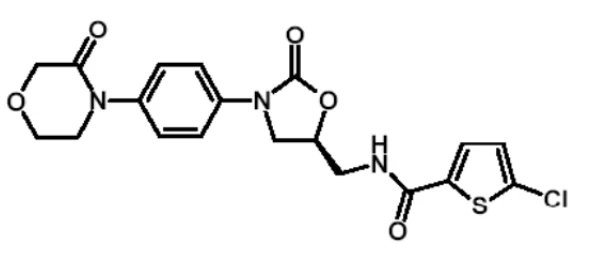
Structural Formula:
Physicochemical Properties: Rivaroxaban is a pure (S)-enantiomer. It is an odorless, nonhygroscopic, white to yellowish powder. Rivaroxaban is practically insoluble in water (7 mg/L, pure water) and remains so in aqueous acidic medium (5 mg/L, in 0.1 M and 0.01 M hydrochloric acid) or buffer systems, pH 3 to 9 (5 mg/L)
CLINICAL TRIALS
Prevention of VTE after THR or TKR
The pivotal studies were designed to demonstrate the efficacy of XARELTO (rivaroxaban) for the prevention of venous thromboembolic events (VTE), ie, proximal and distal deep vein thrombosis (DVT) and pulmonary embolism (PE) in patients undergoing elective total hip replacement (THR) or total knee replacement (TKR) surgery. A once daily dose of 10 mg was selected for all Phase III studies in the prevention of VTE in patients undergoing THR or TKR surgery, based on clinical data generated in Phase II studies. Over 9,500 patients (7,050 in THR surgery; 2,531 in TKR surgery) were studied in these controlled randomized double-blind studies (RECORD 1, 2, and 3).
Pivotal Studies
The RECORD 1 and 3 studies were multicenter, multinational, prospective, double-blind, double-dummy studies in patients randomized to XARELTO or to enoxaparin, see Table 15. A non-inferiority was adopted with the pre-specification that, if non-inferiority was shown, a second analysis would be undertaken to determine if the efficacy of XARELTO was superior to that of enoxaparin. RECORD 1 was conducted in patients undergoing elective THR surgery while RECORD 3 was conducted in patients undergoing elective TKR surgery. In both studies, XARELTO 10 mg once daily started not earlier than 6 hours postoperatively was compared with an enoxaparin dosage regimen of 40 mg once daily started 12 hours preoperatively, as recommended in many countries worldwide. The dose of enoxaparin sodium approved for use in thromboprophylaxis in conjunction with elective THR or TKR surgery in Canada is subcutaneous 30 mg twice daily with the first dose to be administered 12 to 24 hours postoperatively. The primary endpoint was Total VTE a composite of any DVT (distal or proximal), nonfatal PE, or death from any cause. The main secondary endpoint was Major VTE, a composite endpoint comprising proximal DVT, nonfatal pulmonary embolism (PE), and VTE-related death. Other pre-specified secondary efficacy endpoints included the incidence of DVT (any thrombosis, including proximal and distal) and the incidence of symptomatic VTE.
Men and women of 18 years or older scheduled for elective surgery could be enrolled provided that they had no active or high risk of bleeding or other conditions contraindicating treatment with low-molecular-weight heparin, no significant liver disease, were not pregnant or breastfeeding women, or were not using HIV-protease inhibitors.
In RECORD 1 and 3, demographic and surgical characteristics were similar between the two groups except for a significantly larger number of females in RECORD 3 (XARELTO 70% and enoxaparin 66%, P = 0.03). The reasons for exclusion of patients from various analyses in both studies were also similar.
Table 15 – Summary of the Pivotal Studies for the Prevention of Venous Thromboembolic Events (VTE) in Patients Undergoing Elective Total Hip Replacement (THR) or Total Knee Replacement (TKR) Surgery
| Study | Study Design | Treatment Regimen | Patient Populations |
| RECORD 1a | THR patients prospectively randomized to XARELTO or enoxaparin; noninferiority, multinational study. | XARELTO 10 mg od oral for 35±4 days (first dose administered 6 to 8 h postoperatively) Enoxaparin 40 mg od SC for 36±4 days (first dose administered 12 h preoperatively) | Randomized 4541 (2266 XARELTO, 2275 enoxaparin) Safety Population 4433 (2209 XARELTO, 2224 enoxaparin) mITT 3153 (1595 XARELTO, 1558 enoxaparin) mITT (for Major VTE) 3364 (1686 XARELTO, 1678 enoxaparin) Per Protocol 3029 (1537 XARELTO, 1492 enoxaparin) |
| RECORD 3a | TKR patients prospectively randomized to XARELTO or enoxaparin; noninferiority, multinational study. | XARELTO 10 mg od oral for 12±2days (first dose administered 6 to 8 h postoperatively) Enoxaparin 40 mg od SC for 13±2 days (first dose administered 12 h preoperatively) | Randomized 2531 (1254 XARELTO, 1277 enoxaparin) Safety Population 2459 (1220 XARELTO, 1239 enoxaparin) mITT 1702 (824 XARELTO, 878 enoxaparin) mITT (for Major VTE) 1833 (908 XARELTO, 925 enoxaparin) Per Protocol 1631 (793 XARELTO, 838 enoxaparin) |
a The mean age of patients in RECORD 1 and 3 was 63.2±11.4, and 67.6±9 years, respectively. Safety population = The safety population comprised those patients who received at least 1 dose of study drug. mITT = A subject was considered valid for the modified intent-to-treat (MITT) analysis if the subject was (1)
valid for safety analysis; (2) had undergone the appropriate surgery; and (3) had an adequate assessment of thromboembolism.
mITT (for Major VTE) = A subject was valid for MITT analysis of major VTE, if the subject was (1) valid for safety analysis; (2) had undergone the appropriate surgery; and (3) had an adequate assessment of thromboembolism for major VTE.
Per Protocol = the per-protocol (PP) population was to include patients who were (1) valid for the MITT analysis;
(2) had an adequate assessment of thromboembolism that, in case of a positive finding, was done not later than 36 h after stop of active study drug, in case of no finding, was done not later than 72 h after the end of active study drug; and (3) had no major protocol deviations.
Major VTE = composite of proximal DVT, nonfatal PE, or VTE-related death
od = once daily
SC = subcutaneous
The results of the non-inferiority analysis of Total VTE for RECORD 1 and 3 are presented in Table 16. For the primary efficacy analysis, the difference between the incidences in the XARELTO group and the enoxaparin group were estimated, after stratification according to country using the Mantel-Haenszel weighting, and the corresponding asymptotic two-sided 95% confidence interval was determined. Tests for non-inferiority and superiority were both based on the 95% confidence interval. Non-inferiority was shown if the lower limit of the CI was above the pre-specified non-inferiority margin; -3.5% in RECORD 1 and -4% in RECORD 3.
Table 16 – RECORD 1 (THR) and RECORD 3 (TKR): Non-inferiority Analysis of Total VTEa, the Primary Composite Efficacy Endpoint, and its Components –Per Protocol (PP)b Population Through the Double-Blind Treatment Period
| RECORD 1 (THR) | RECORD 3 (TKR) | |||
| XARELTO 10 mg od N=1537 n (%) | Enoxaparin 40 mg od N=1492 n (%) | XARELTO 10 mg od N=793 n (%) | Enoxaparin 40 mg od N=838 n (%) | |
| Total VTEa (primary composite endpoint) | 13 (0.9%) | 50 (3.4%) | 74 (9.3%) | 152 (18.1%) |
Absolute Risk Reductionc 2.5% (1.5% to 3.6%; P <0.001) | Absolute Risk Reductionc 8.7% (5.4% to 12.0%; P <0.001) | |||
| DVT (proximal and/or distal) | 11 (0.7) | 47 (3.2) | 74 (9.3) | 147 (17.5) |
| Nonfatal PE | 2 (0.1) | 1 (<0.1) | 0 | 3 (0.4) |
| Death from all causes | 1 (<0.1) | 2 (0.1) | 0 | 2 (0.2) |
a Total VTE = DVT (proximal and/or distal), nonfatal PE, or death from all causes
b PP = the per-protocol (PP) population was to include patients who were (1) valid for the MITT analysis;
(2) had an adequate assessment of thromboembolism that, in case of a positive finding, was done not later than 36 h after stop of active study drug, in case of no finding, was done not later than 72 h after the end of active study drug; and (3) had no major protocol deviations
c Mantel-Haenszel Weighted Reduction to Enoxaparin (Non-inferiority was shown if the lower limit of the CI was above the pre-specified non-inferiority margin; -3.5% in RECORD 1 and -4% in RECORD 3)
In both pivotal studies, the per-protocol analysis for the primary endpoint showed that XARELTO 10 mg od/day (first dose 6 to 8 hours postoperatively) was not inferior to enoxaparin 40 mg/day (first dose 12 to 24 hours preoperatively).
Since non-inferiority was shown, a pre-specified superiority analysis was undertaken to determine if the efficacy of XARELTO was superior to that of enoxaparin in the modified intent-to-treat population (mITT). The superiority analysis of Total VTE and data for the main secondary endpoint (Major VTE) and other secondary endpoints for RECORD 1 and 3 are presented in Table 17 and Table 18, respectively.
Table 17 – RECORD 1 (THR): Superiority Analysis for Total VTE (Primary Composite Endpoint)a, Major VTE (Main Secondary Endpoint)b and Their Components, and Other Selected Efficacy Endpoints – Modified ITTc (MITT) Population Through the Double-Blind Treatment Period
| Parameter | XARELTO 10 mg | Enoxaparin 40 mg | Absolute Risk Reductiond | P-Value | Relative Risk Reduction | P-Value | ||
| n/N | % (95% CI) | n/N | % (95% CI) | % (95% CI) | % (95% CI) | |||
| Total VTE | 18/1595 | 1.1% (0.7% to 1.8%) | 58/1558 | 3.7% (2.8% to 4.8%) | 2.6% (1.5% to 3.7%) | <0.001 | 70% (49%-82%) | P <0.001 |
| Major VTE | 4/1686 | 0.2% (0.1% to 0.6%) | 33/1678 | 2.0% (1.4% to 2.8%) | 1.7% (1.0% to 2.5%) | <0.001 | 88% (66%-96%) | P <0.001 |
| Death from all causes | 4/1595 | 0.3% (0.1% to 0.6%) | 4/1558 | 0.3% (0.1% to 0.7%) | 0.0% (-0.4% to 0.4%) | 1.00 | -- | -- |
| Nonfatal PE | 4/1595 | 0.3% (0.1% to 0.6%) | 1/1558 | 0.1% (<0.1% to 0.4%) | -0.2% (-0.6% to 0.1%) | 0.37 | -- | -- |
| DVT (proximal and/or distal) | 12/1595 | 0.8% (0.4% to 1.3%) | 53/1558 | 3.4% (2.6% to 4.4%) | 2.7% (1.7% to 3.7%) | <0.001 | -- | -- |
| Proximal DVT | 1/1595 | 0.1% (<0.1% to 0.4%) | 31/1558 | 2.0% (1.4% to 2.8%) | 1.9% (1.2% to 2.7%) | <0.001 | -- | -- |
| Distal DVT only | 11/1595 | 0.7% (0.3% to 1.2%) | 22/1558 | 1.4% (0.9% to 2.1%) | 0.7% (0.0% to 1.5%) | 0.04 | -- | -- |
| VTE-related death | 0/1595 | 0% | 1/1558 | <0.1% | -- | -- | -- | -- |
| Symptomatic VTEe | 6/2193 | 0.3% (0.1% to 0.6%) | 11/2206 | 0.5% (0.3% to 0.9%) | 0.2% (-0.1% to 0.6%) | 0.22 | -- | -- |
a Total VTE = composite of DVT (proximal and/or distal), nonfatal PE, or death from all causes.
b Major VTE = composite of proximal DVT, nonfatal PE, or VTE-related death
c MITT = subject valid for safety analysis, has undergone appropriate surgery, has adequate assessment of thromboembolism d Mantel-Haenszel Weighted Reduction to Enoxaparin given for all endpoints except nonfatal PE and death from all causes, for which unweighted (exact) estimates were given. Superiority was shown if the lower limit of the CI was above zero.
e Safety population for Symptomatic VTE (patients valid for safety analysis who underwent the appropriate surgery). The safety population was used because assessment of symptomatic events is possible in the greater population, regardless of the availability of an adequate venographic assessment.
Table 18 – RECORD 3 (TKR): Superiority Analysis for Total VTE (Primary Composite Endpoint)a, Major VTE (Main Secondary Endpoint)b and Their Components, and Other Selected Efficacy Endpoints – Modified ITT (MITT)c Population Through the Double-Blind Treatment Period
| Parameter | XARELTO 10 mg | Enoxaparin 40 mg | Absolute Risk Reductiond | P-Value | Relative Risk Reduction | P-Value | ||
| n/N | % (95% CI) | n/N | % (95% CI) | % (95% CI) | % (95% CI) | |||
| Total VTE | 79/824 | 9.6% (7.7% to 11.8%) | 166/878 | 18.9% (16.4% to 21.7%) | 9.2% (5.9% to 12.4%) | <0.001 | 49% (35%-61%) | <0.001 |
| Major VTE | 9/908 | 1.0% (0.5% to 1.9%) | 24/925 | 2.6% (1.7% to 3.8%) | 1.6% (0.4% to 2.8%) | 0.01 | 62% (18%-82%) | 0.016 |
| Death from all causes | 0/824 | 0% (0.0% to 0.5%) | 2/878 | 0.2% (0.0% to 0.8%) | 0.2% (-0.2% to 0.8%) | 0.23 | -- | -- |
| Nonfatal PE | 0/824 | 0% (0.0% to 0.3%) | 4/878 | 0.5% (0.1% to 1.2%) | 0.5% (0.0% to 1.2%) | 0.06 | -- | -- |
| DVT (proximal and/or distal) | 79/824 | 9.6% (7.7% to 11.8%) | 160/878 | 18.2% (15.7% to 20.9%) | 8.4% (5.2% to 11.7%) | <0.001 | -- | -- |
| Proximal DVT | 9/824 | 1.1% (0.5% to 2.1%) | 20/878 | 2.3% (1.4% to 3.5%) | 1.1% (-0.1% to 2.3%) | 0.07 | -- | -- |
| Distal DVT only | 70/824 | 8.5% (6.7% to 10.6%) | 140/878 | 15.9% (13.6% to 18.5%) | 7.3% (4.3% to 10.4%) | <0.001 | -- | -- |
| VTE-related death | 0/824 | 0% | 0/878 | 0% | -- | -- | -- | -- |
| Symptomatic VTEe | 8/1201 | 0.7% (0.3% to 1.3%) | 24/1217 | 2.0% (1.3% to 2.9%) | 1.3% (0.4% to 2.2%) | 0.005 | -- | -- |
a Total VTE = composite of DVT (proximal and/or distal), nonfatal PE, or death from all causes.
b Major VTE = composite of proximal DVT, nonfatal PE, or VTE-related death
c MITT = subject valid for safety analysis, has undergone appropriate surgery, has adequate assessment of thromboembolism d Mantel-Haenszel Weighted Reduction to Enoxaparin given for all endpoints except nonfatal PE and death from all causes, for which unweighted (exact) estimates were given. Superiority was shown if the lower limit of the CI was above zero.
e Safety population for Symptomatic VTE (patients valid for safety analysis who underwent the appropriate surgery). The safety population was used because assessment of symptomatic events is possible in the greater population, regardless of the availability of an adequate venographic assessment.
The efficacy results of the pre-specified analysis using a modified intent-to-treat population indicate that XARELTO 10 mg administered postoperatively once daily is superior in preventing DVT to enoxaparin 40 mg once daily (first dose 12 hours preoperatively). The Canadian approved dosage regimen for enoxaparin is 30 mg every 12 hours (first dose is to be administered 12 to 24 hours postoperatively). There are no definitive head-to-head studies to compare the safety and efficacy of the Canadian approved enoxaparin dosage regimen to the enoxaparin dosage regimen used in the RECORD 1 and 3 studies.
In the safety population of 3429 patients treated with XARELTO and 3463 patients treated with enoxaparin in the pivotal studies (RECORD 1 and 3), the results observed for bleeding events have been summarized in Table 19. In RECORD 1, serious drug-related treatment-emergent adverse events were reported in 26 (1.2%) for XARELTO and 23 (1.0%) for enoxaparin. In RECORD 3, serious drug-related treatment-emergent adverse events were reported in 26 (2.1%) for XARELTO and 19 (1.5%) for enoxaparin.
Table 19 – RECORD 1 and 3: Detailed Overview of Treatment-Emergent Bleeding Events (Safety Population)a
| RECORD 1 (THR) | RECORD 3 (TKR) | |||||
| XARELTO 10 mg od N=2209 | Enoxaparin 40 mg od N=2224 | P-Value | XARELTO 10 mg od N=1220 | Enoxaparin 40 mg od N=1239 | P-Value | |
Any Bleeding n (%) (95% CI) | 133 (6.0%) (5.1% to 7.1%) | 131 (5.9%) (5.0% to 7.0%) | 0.90 | 60 (4.9%) (3.8%-6.3%) | 60 (4.8%) (3.7%-6.2%) | 1.0 |
Major Bleedingb n (%) (95% CI) | 6 (0.3%) (0.1%-0.6%) | 2 (0.1%) (<0.1%-0.3%) | 0.18 | 7 (0.6%) (0.2%-1.2%) | 6 (0.5%) (0.2%-1.1%) | 0.79 |
| Fatal Bleedingc | 1 (<0.1%)b | 0 (0.0%) | -- | 0 (0.0%) | 0 (0.0%) | -- |
| Bleeding into a critical organ n (%) | 1 (<0.1%) | 0 (0.0%) | -- | 1 (0.1%) | 2 (0.2%) | -- |
Bleeding leading to reoperation n (%) | 2 (0.1%) | 1 (<0.1%) | -- | 5 (0.4%) | 4 (0.3%) | -- |
| Clinically overt extra-surgical site bleeding leading to a fall in hemoglobin n (%) | 2 (0.1%) | 1 (<0.1%) | -- | 1 (0.1%) | 0 (0.0%) | -- |
Clinically overt extra-surgical site bleeding leading to transfusion of ≥2 units of blood n (%) | 2 (0.1%) | 1 (<0.1%) | -- | 1 (0.1%) | 0 (0.0%) | -- |
Table 19 – RECORD 1 and 3: Detailed Overview of Treatment-Emergent Bleeding Events (Safety Population)a
| RECORD 1 (THR) | RECORD 3 (TKR) | |||||
| XARELTO 10 mg od N=2209 | Enoxaparin 40 mg od N=2224 | P-Value | XARELTO 10 mg od N=1220 | Enoxaparin 40 mg od N=1239 | P-Value | |
| Nonmajor Bleedingd n (%) | 128 (5.8%) | 129 (5.8%) | -- | 53 (4.3%) | 54 (4.4%) | -- |
| Clinically relevant nonmajor bleeding n (%) | 65 (2.9%) | 54 (2.4%) | -- | 33 (2.7%) | 28 (2.3%) | -- |
Hemorrhagic wound complicationse n (%) | 34 (1.5%) | 38 (1.7%) | -- | 25 (2.0%) | 24 (1.9%) | -- |
a Patients may have had more than one type of event, and an event could fall into more than one category;
adjudicated treatment-emergent bleeding events included those beginning after the initiation of the study drug and up to 2 days after last dose of the study drug.
b Major bleeding events included: (1) fatal, (2) bleeding into a critical organ (eg, retroperitoneal, intracranial, intraocular, or intraspinal bleeding/hemorrhagic puncture), (3) bleeding requiring reoperation, (4) clinically overt extra-surgical site bleeding associated with ≥2 g/dL fall in hemoglobin or leading to infusion of ≥2 units of whole blood or packed cells.
c The event occurred before the administration of the first dose of rivaroxaban.
d Nonmajor bleeding events were bleeding events that did not fulfill the criteria of major bleeding. e Composite of excessive wound hematoma and reported surgical-site bleeding.
Phase III Supportive Study
RECORD 2 was a randomized, double-blind, double-dummy, prospective study conducted in 2509 randomized patients (safety population = 2457; mITT = 1733) undergoing THR. The aim of RECORD 2 was to assess extended thromboprophylaxis with XARELTO for 35±4 days. RECORD 2 was similar in study design, inclusion/exclusion criteria and endpoints to RECORD 1, except that enoxaparin 40 mg once daily (first dose given preoperatively) was given for a shorter duration (12±2 days) than XARELTO 10 mg od (35±4 days). Comparative efficacy claims to enoxaparin may not be drawn from this study, due to the differences in the treatment duration of XARELTO and enoxaparin.
Table 20 – RECORD 2 (THR): Superiority Analysis for Total VTE (Primary Composite Endpoint)a, Major VTE (Main Secondary Endpoint)b and Their Components, and Other Selected Efficacy Endpoints – Modified ITTc (MITT) Population Through the Double-Blind Treatment Period
| Parameter | XARELTO 10 mg od for 35±4 days | Enoxaparin 40 mg for 12±2 days | Absolute Risk Reduction | P-Value | Relative Risk Reduction | P-Value | ||
| n/N | % (95% CI) | n/N | % (95% CI) | % (95% CI) | % (95% CI) | |||
| Total VTE | 17/864 | 2.0% (1.2% to 3.1%) | 81/869 | 9.3% (7.5% to 11.5%) | 7.3% (5.2% to 9.4%) | <0.0001 | 79% (65% to 87%) | < 0.001 |
| Major VTE | 6/961 | 0.6% (0.2% to 1.4%) | 49/962 | 5.1% (3.8% to 6.7%) | 4.5% (3.0% to 6.0%) | <0.0001 | 88% (71% to 95%) | < 0.001 |
| Death from all causes | 2/864 | 0.2% (<0.1% to 0.8%) | 6/869 | 0.7% (0.3% to 1.5%) | 0.5% (-0.2% to 1.3%) | 0.29 | -- | -- |
| Nonfatal PE | 1/864 | 0.1% (<0.1% to 0.6%) | 4/869 | 0.5% (0.1% to 1.2%) | 0.3% (-0.2% to 1.1%) | 0.37 | -- | -- |
| DVT (proximal and/or distal) | 14/864 | 1.6% (0.9% to 2.7%) | 71/869 | 8.2% (6.4% to 10.2%) | 6.5% (4.5% to 8.5%) | <0.0001 | -- | -- |
| Proximal DVT | 5/864 | 0.6% (0.2% to 1.3%) | 44/869 | 5.1% (3.7% to 6.7%) | 4.5% (2.9% to 6.0%) | <0.0001 | -- | -- |
| Distal DVT only | 9/864 | 1.0% (0.5% to 2.0%) | 27/869 | 3.1% (2.1% to 4.5%) | 2.0% (0.7% to 3.3%) | 0.0025 | -- | -- |
| VTE-related death | 0/864 | 0% | 1/869 | 0.1% | -- | -- | -- | -- |
| Symptomatic VTEc | 3/1212 | 0.2% (<0.1% to 0.7%) | 15/1207 | 1.2% (0.7% to 2.0%) | 1.0% (0.3% to 1.8%) | 0.0040 | -- | -- |
a Total VTE = composite of DVT (proximal and/or distal), nonfatal PE, or death from all causes.
b Major VTE = composite of proximal DVT, nonfatal PE, or VTE-related death
c MITT = subject valid for safety analysis, has undergone appropriate surgery, has adequate assessment of thromboembolism d Mantel-Haenszel Weighted Reduction to Enoxaparin given for all endpoints except nonfatal PE and death from all causes, for which unweighted (exact) estimates were given. Superiority was shown if the lower limit of the CI was above zero.
e Safety population for Symptomatic VTE (patients valid for safety analysis who underwent the appropriate surgery). The safety population was used because assessment of symptomatic events is possible in the greater population regardless of the availability of an adequate venographic assessment.
Table 21 – RECORD 2 (THR): Detailed Overview of Treatment-Emergent Bleeding Events (Safety Population)a
XARELTO 10 mg od for 35±4 days N=1228 | Enoxaparin 40 mg od for 12±2 days N=1229 | P-Value | |
Any Bleeding n (%) (95% CI) | 81 (6.6%) (5.3% to 8.1%) | 68 (5.5%) (4.3% to 7.0%) | 0.27 |
Major Bleedingb n (%) (95% CI) | 1 (0.1%) (0.0–0.5) | 1 (0.1%) (0.0–0.5) | 1.00 |
| Fatal bleeding | 0 (0.0%) | 0 (0.0%) | -- |
| Bleeding into a critical organ n (%) | 0 (0.0%) | 1 (0.1%) | -- |
| Bleeding leading to reoperation n (%) | 0 (0.0%) | 0 (0.0%) | -- |
Clinically overt extra-surgical site bleeding leading to a fall in hemoglobin n (%) | 1 (0.1%) | 0 (0.0%) | -- |
Clinically overt extra-surgical site bleeding leading to transfusion of ≥2 units of blood n (%) | 1 (0.1%) | 0 (0.0%) | -- |
| Nonmajor Bleedingc n (%) | 80 (6.5%) | 67 (5.5%) | -- |
| Clinically relevant nonmajor bleeding n (%) | 40 (3.3%) | 33 (2.7%) | -- |
| Hemorrhagic wound complicationsd n (%) | 20 (1.6%) | 21 (1.7%) | -- |
a Patients may have had more than one type of event, and an event could fall into more than one category;
adjudicated treatment-emergent bleeding events included those beginning after the initiation of the study drug and up to 2 days after last dose of the study drug.
b Major bleeding events included: (1) fatal, (2) bleeding into a critical organ (eg, retroperitoneal, intracranial, intraocular, or intraspinal bleeding/hemorrhagic puncture), (3) bleeding requiring reoperation, (4) clinically overt extra-surgical site bleeding associated with ≥2 g/dL fall in hemoglobin or leading to infusion of ≥2 units of whole blood or packed cells.
c Nonmajor bleeding events were bleeding events that did not fulfill the criteria of major bleeding. d Composite of excessive wound hematoma and reported surgical-site bleeding.
The results from this study demonstrate that extended duration prophylaxis with 10 mg XARELTO od for 35 days provided clinically meaningful decreases in Total VTE, Major VTE, and symptomatic VTE in THR patients without an increased risk of bleeding.
Treatment of VTE and prevention of recurrent DVT and PE
The EINSTEIN clinical development program consisted of four Phase III studies. The EINSTEIN DVT and EINSTEIN PE studies evaluated the treatment of VTE and prevention of
recurrent DVT and PE. The EINSTEIN Extension study evaluated the benefit of continued treatment in subjects for whom clinical uncertainty regarding the absolute risk-benefit of extended duration existed.
Patients with VTE who were treated either with rivaroxaban or enoxaparin/VKA for 6 or 12 months in EINSTEIN DVT or EINSTEIN PE, or who were treated for 6 to 14 months with VKA and in whom there was equipoise to continue anticoagulant treatment were eligible for enrollment into EINSTEIN Extension. Subjects considered to have been adequately treated with 6 to 12 months of therapy or those who required more prolonged anticoagulation therapy were not included.
In EINSTEIN CHOICE, patients with confirmed symptomatic VTE who completed 6-12 months of anticoagulant treatment and in whom there was equipoise to continue anticoagulant treatment were eligible for the study. Patients with an indication for continued therapeutic-dosed anticoagulation were excluded.
Table 22 - Summary of the Pivotal Studies for the Treatment of VTE and Prevention of Recurrent DVT and PE
| Study | Study Design | Treatment Regimen | Patient Population |
| EINSTEIN DVT | multicenter, randomized, open-label, event-driven non-inferiority study for efficacy | XARELTO 15 mg bid for 3 weeks followed by 20 mg od 3, 6 or 12 monthsa Standard Therapy Enoxaparin bid bridging to therapeutic VKA 3, 6 or 12 monthsa | Randomized 3449 (1731 XARELTO, 1718 Enox/VKA) Safety Population 3429 (1718 XARELTO, 1711 Enox/VKA) Per Protocol 3096 (1525 XARELTO, 1571 Enox/VKA) |
| EINSTEIN PE | Randomized 4833, (2420 XARELTO, 2413 Enox/VKA) Safety Population 4817 ( 2412 XARELTO, 2405 Enox/VKA) Per Protocol 4462 (2224 XARELTO, 2238 Enox/VKA) | ||
| EINSTEIN Extension | multicenter, randomized, double-blind, placebo-controlled, event-driven, superiority study for efficacy in subjects with symptomatic proximal DVT or PE | XARELTO 20 mg once daily or placebo for 6 or 12 monthsa | Randomized 1197 (602 XARELTO, 594 placebo) |
Table 22 - Summary of the Pivotal Studies for the Treatment of VTE and Prevention of Recurrent DVT and PE
| Study | Study Design | Treatment Regimen | Patient Population |
| EINSTEIN CHOICE | comparator (ASA), event-driven, superiority study for efficacy in subjects with symptomatic DVT and/or PE | XARELTO 10 mg, or 20 mg or ASA 100 mg once dailyb | Randomized 3396 (1121 XARELTO 20 mg, 1136 XARELTO 10 mg, 1139 ASA 100 mg) |
a Treatment duration as determined by investigator
b Individual (actual) treatment duration depends on the individual randomization date: either 12 months, 9 to <12 months or 6 months
Safety population = The safety population comprised those subjects who received at least one dose of study medication.
bid = twice daily; od = once daily; VKA = vitamin K antagonist; enox = enoxaparin; ASA= acetylsalicylic acid
Duration of administration in EINSTEIN DVT was up to 12 months (ie, 3, 6 or 12 months) as determined by the investigator, prior to randomization, based on local risk assessment and guidelines. Nearly half of the subjects were treated for 6 to 9 months.
In EINSTEIN DVT, and EINSTEIN PE XARELTO was compared to the standard dual-drug regimen of enoxaparin administered for at least 5 days in combination with VKA until the PT/INR was in therapeutic range (≥ 2.0). VKA alone was then continued, dose-adjusted to maintain the PT/INR values within the therapeutic range of 2.0 to 3.0.
Table 23 – Co-morbid Diseases and Characteristics of Patients in EINSTEIN DVT, EINSTEIN PE and EINSTEIN Extension – ITT Population
| EINSTEIN DVT | EINSTEIN PE | EINSTEIN Extension | EINSTEIN CHOICE | |
| Males (%) | 57% | 53% | 58% | 55% |
| Age, mean (years) | 56 | 58 | 58 | 59 |
| Creatinine Clearance (mL/min) | ||||
| <50 | 7% | 8% | 7% | 5% |
| 50 to <80 | 23% | 25% | 21% | 25% |
| ≥80 | 68% | 66% | 62% | 70% |
| Risk Factors | ||||
| Patients with idiopathic DVT/PE | 48% | 49% | 59% | 41% |
| Recent surgery or trauma | 19% | 17% | 4.1% | 13% |
| Immobilization | 15% | 16% | 14% | 11% |
| Previous VTE | 19% | 19% | 16% | 18% |
| Mean TTR, Enox/VKA arm | 58%a | 63%b | n/a | n/a |
| North American subjects | 64% | 63% | n/a | n/a |
| Pre-randomization anticoagulationc | 73% | 92% | n/a | n/a |
| Actual Treatment Duration in XARELTO arm | ||||
| ≥3 months | 92% | 92% | 91% | n/a |
| ≥6 months | 68% | 73% | 62% | n/a |
| ≥12 months | 3% | 4% | 2% | n/a |
a unadjusted Mean TTR. Adjusted Mean TTR is 60%.
b Adjusted mean TTR.
c Pre-randomization anticoagulation was limited to 24 hours in the majority of cases. n/a=not applicable
Table 24 - Efficacy outcomes in EINSTEIN DVT, EINSTEIN PE and EINSTEIN Extension – ITT population
| EINSTEIN DVT | EINSTEIN PE | EINSTEIN Extension | |||||||
| XARELTO N=1731 | Enox/VKA N=1718 | HRa (95% CI) P-value | XARELTO N=2419 | Enox/VKA N=2413 | HRa (95% CI) P-value | XARELTO N=602 | Placebo N=594 | HRb (95% CI) P-value | |
| Symptomatic Recurrent VTEb | 36 (2.1%) | 51 (3.0%) | 0.68 (0.44-1.04) P<0.001a | 50 (2.1%) | 44 (1.8%) | 1.12 (0.754-1.68) P=0.0026a | 8 (1.3%) | 42 (7.1%) | 0.18 (0.09-0.39) P<0.001 |
| Type of Symptomatic Recurrent VTE | |||||||||
| Fatal PE | 1 (<0.1%) | 0 | - | 3 (0.1%) | 1 | (<0.1%) | 0 | 1 (0.2%) | |
| Death where PE could not be ruled out | 3 (0.2%) | 6 (0.3%) | - | 8 (0.3%) | 6 (0.2%) | - | 1 (0.2%) | 0 | - |
| Recurrent PE only | 20 (1.2%) | 18 (1.0%) | - | 23 (1.0%) | 20 (0.8%) | - | 2 (0.3%) | 13 (2.2%) | - |
| Recurrent DVT plus PE | 1 (<0.1%) | 0 | - | 0 | 2 (<0.1%) | - | n.a. | n.a | - |
| Recurrent DVT only | 14 (0.8%) | 28 (1.6%) | - | 18 (0.7%) | 17 (0.7%) | - | 5 (0.8%) | 31 (5.2%) | - |
| Symptomatic recurrent VTE and all-cause mortality | 69 (4.0%) | 87 (5.1%) | 0.72 (0.53-0.99) P =0.044c | 97 ( 4.0%) | 82 (3.4%) | 1.16 (0.86-1.55) P =0.3333c | 8 (1.3%) | 43 (7.2%) | 0.18 (0.085-0.38) (P<0.0001)c |
| Net Clinical Benefit | 51 (2.9%) | 73 (4.2%) | 0.67 (0.47-0.95) P =0.027c | 83 (3.4%) | 96 (4.0%) | 0.85 (0.63-1.14) P =0.2752c | 12 (2.0%) | 42 (7.1%) | 0.28 (0.15-0.53) P<0.0001 |
| All On-Treatment Vascular Events | 12 (0.7%) | 14 (0.8%) | 0.79 (0.36–1.71) P=0.55c | 35 (1.5%) | 37 (1.5%) | 0.94 0.59-1.49 P=0.7780)c | 3 (0.5) | 44 (0.7%) | 0.74 (0.17-3.3) P =0.69 |
| All-cause Mortality | 38 (2.2%) | 49 (2.9%) | 0.67 (0.44–1.02) (P=0.06)c | 58 (2.4%) | 50 (2.1%) | 1.13 (0.77-1.65) P=0.5260 | 1 (0.2%) | 2 (0.3%) | - |
a P-value for non-inferiority (one-sided); b Some patients had more than one event c P-value for superiority (two-sided) n.a.=not assessed
Table 25 - Efficacy outcomes in EINSTEIN CHOICE
XARELTO 10 mg N=1127 | XARELTO 20 mg N=1107 | ASA 100 mg N=1137 | Rivaroxaban 20 mg vs. ASA 100 mg HRa (95% CI) P-value | Rivaroxaban 10 mg vs. ASA 100 mg HRa (95% CI) P-value | |
| Symptomatic Recurrent VTEb | 13 (1.2%) | 17 (1.5%) | 50 (4.4) | 0.34 (0.20-0.59) P = 0.0001c | 0.26 (0.14-0.47) P <0.001c |
| Symptomatic recurrent VTE and all-cause mortality | 15 (1.3%) | 23 (2.1%) | 55 (4.9%) | 0.42 (0.26-0.68) P=0.0005 | 0.27 (0.15-0.47) P<0.0001 |
| Net Clinical Benefit | 17 (1.5%) | 23 (2.1%) | 53 (4.7%) | 0.44 (0.27-0.71) P = 0.0009c | 0.32 (0.18-0.55) P = <0.0001c |
a P-value for non-inferiority (one-sided);
b Some patients had more than one event
c P-value for superiority (two-sided)
FAS =Full Analysis SET
EINSTEIN DVT
EINSTEIN DVT met its principal objective demonstrating that XARELTO was non-inferior to enoxaparin/VKA for the primary outcome of symptomatic recurrent VTE (HR of 0.68 [95% CI = 0.44-1.04], P<0.001) (Table 24 and Figure 3). The results of per-protocol analyses were similar to those of the intention-to-treat analysis. The pre-specified test for superiority was not statistically significant (P = 0.0764). The incidence rates for the principal safety outcome (major or clinically relevant non-major bleeding events), as well as the secondary safety outcome (major bleeding events), were similar for both groups (HR of 0.97 [95% CI = 0.76-1.22], P = 0.77 and HR of 0.65 [95% CI = 0.33-1.30], P = 0.21, respectively). The pre-defined secondary outcome of net clinical benefit, (the composite of the primary efficacy outcome and major bleeding events), was reported with a HR of 0.67 ([95% CI = 0.47-0.95], nominal P = 0.03) in favour of XARELTO. The relative efficacy and safety findings were consistent regardless of pre-treatment (none, LMWH, unfractioned heparin or fondaparinux) as well as among the 3, 6 and 12-month durations. In terms of other secondary outcomes, vascular events during study treatment occurred in 12 patients (0.7%) in the XARELTO arm and 14 patients (0.8%) in the enoxaparin/VKA group (HR of 0.79 [95% CI = 0.36-1.71], P = 0.55), and total mortality accounted for 38 (2.2%) vs. 49 (2.9%) patients in the XARELTO vs. enoxaparin/VKA arms, respectively, within intended treatment duration (P = 0.06).
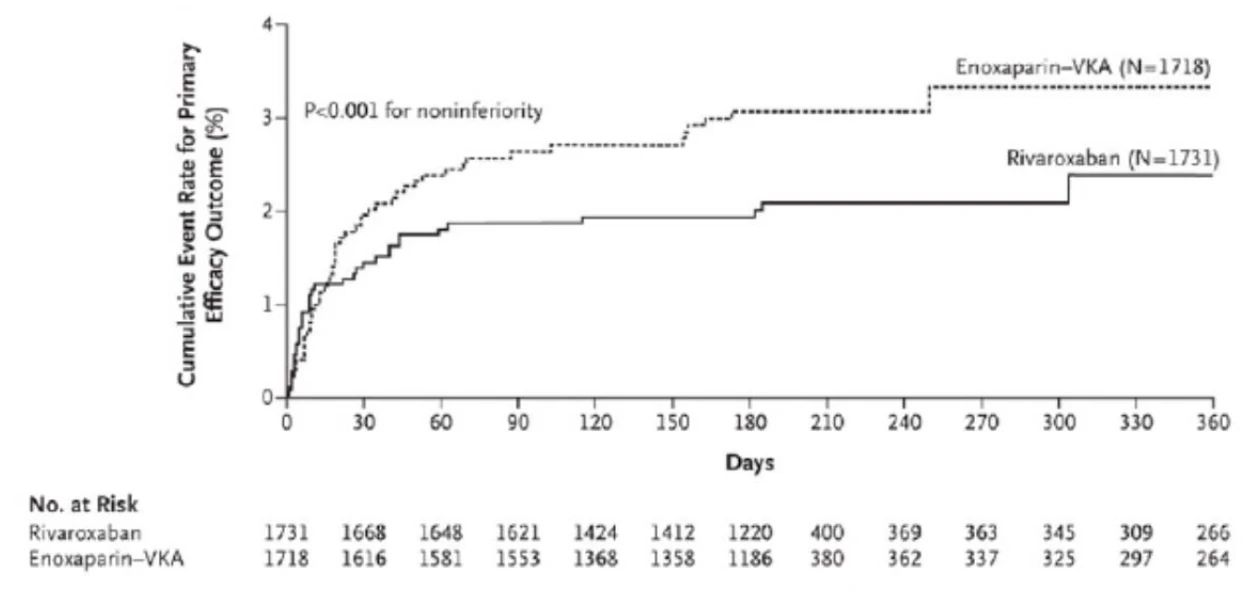
Figure 3: Kaplan-Meier Cumulative Event Rates for the Primary Efficacy Outcome in EINSTEIN-DVT – Intention-to-Treat Population
EINSTEIN PE
EINSTEIN PE met its principal objective demonstrating that XARELTO was non-inferior to enoxaparin/VKA for the primary efficacy outcome of symptomatic recurrent VTE (HR of 1.12 [95% CI: 0.75-1.68], P=0.0026) (Table 24 and Figure 4). The results of per-protocol analyses were similar to those of the intention-to-treat analysis. The pre-specified test for superiority was not statistically significant (P =0.5737). The incidence rate of the principal safety outcome (major or clinically relevant non-major bleeding events) was similar for both groups (HR of 0.90 [95% CI: 0.76 to 1.07] P=0.2305). For major bleeding events, the incidence rate was nominally lower in favour of XARELTO treatment group (HR of 0.49 [95% CI: 0.31 – 0.79]; P=0.003). The pre-defined secondary outcome of net clinical benefit (the composite of the primary efficacy outcome and major bleeding events) was reported with a HR of 0.85 ([95% CI: 0.63-1.14]; P=0.27) in favour of XARELTO. The relative efficacy and safety findings were consistent regardless of pre-treatment (none, LMWH, unfractioned heparin or fondaparinux) as well as among the 3, 6 and 12 month durations. In terms of other secondary outcomes, vascular events during study treatment occurred in 41 patients (1.7%) in the XARELTO arm and 39 patients (1.6%) in the enoxaparin/VKA group (HR of 1.04 [95% CI = 0.67- 1.61], P = 0.86), and total mortality accounted for 58 (2.4%) vs. 50 (2.1%) patients in the XARELTO vs. enoxaparin/VKA arms, respectively, within intended treatment duration (P = 0.53).
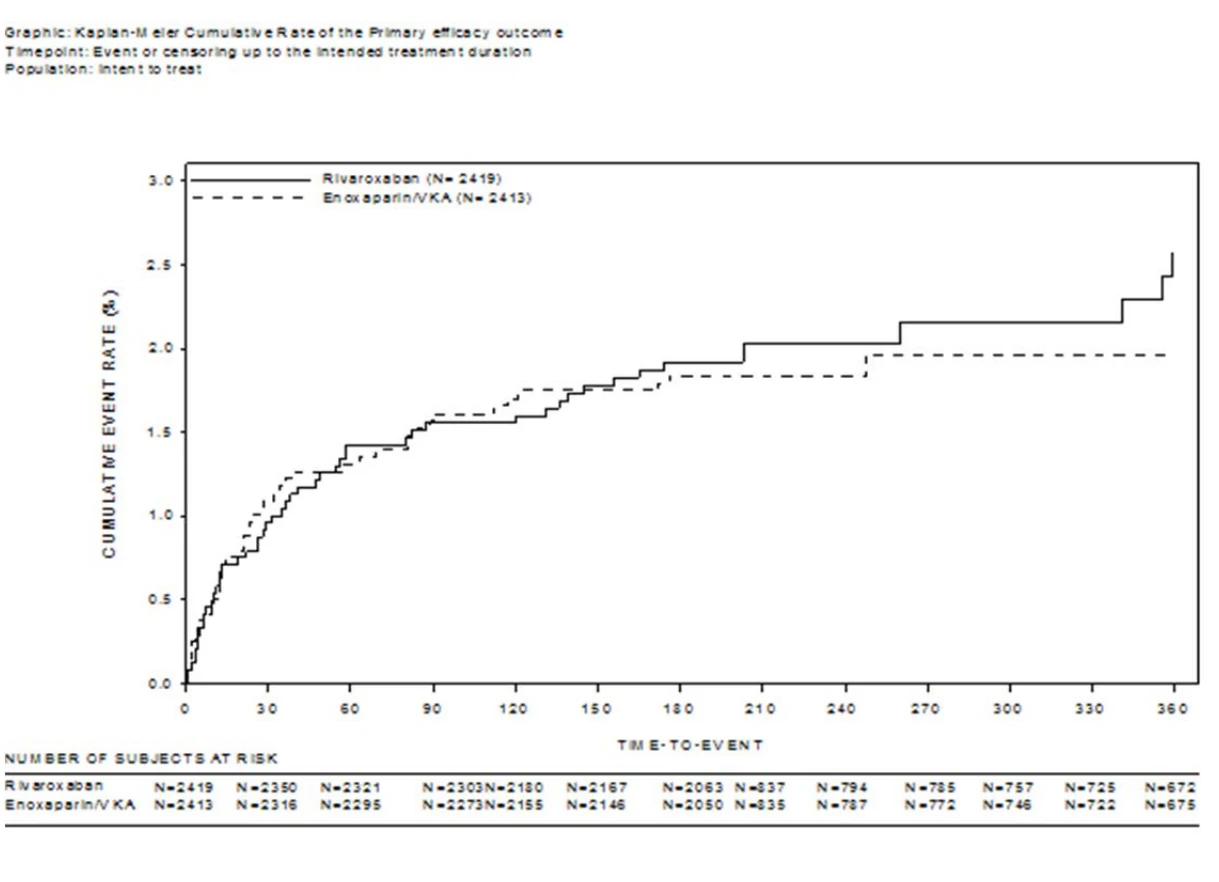
Figure 4: Kaplan-Meier analysis: cumulative rate of primary efficacy outcome in study 11702 PE - ITT Population
EINSTEIN Extension
In the EINSTEIN Extension study, XARELTO was superior to placebo for the primary efficacy outcome with a HR of 0.18 [95% CI = 0.09-0.39], P<0.001 (ie, a relative risk reduction of 82%) (Table 24 and Figure 5). For the principal safety outcome (major bleeding events) there was no significant difference between patients treated with XARELTO compared to placebo (P = 0.11). The pre-defined secondary outcome of net clinical benefit, defined as the composite of the primary efficacy outcome and major bleeding events, was reported with a HR of 0.28 ([95% CI = 0.15-0.53], P < 0.001) in favour of XARELTO. In terms of other secondary outcomes, vascular events occurred in 3 patients in the XARELTO arm and 4 patients in the placebo group (HR of 0.74 [95% CI = 0.17-3.3], P = 0.69), and total mortality accounted for 1 (0.2%) vs. 2 (0.3%) of patients in the XARELTO vs. placebo arms, respectively.
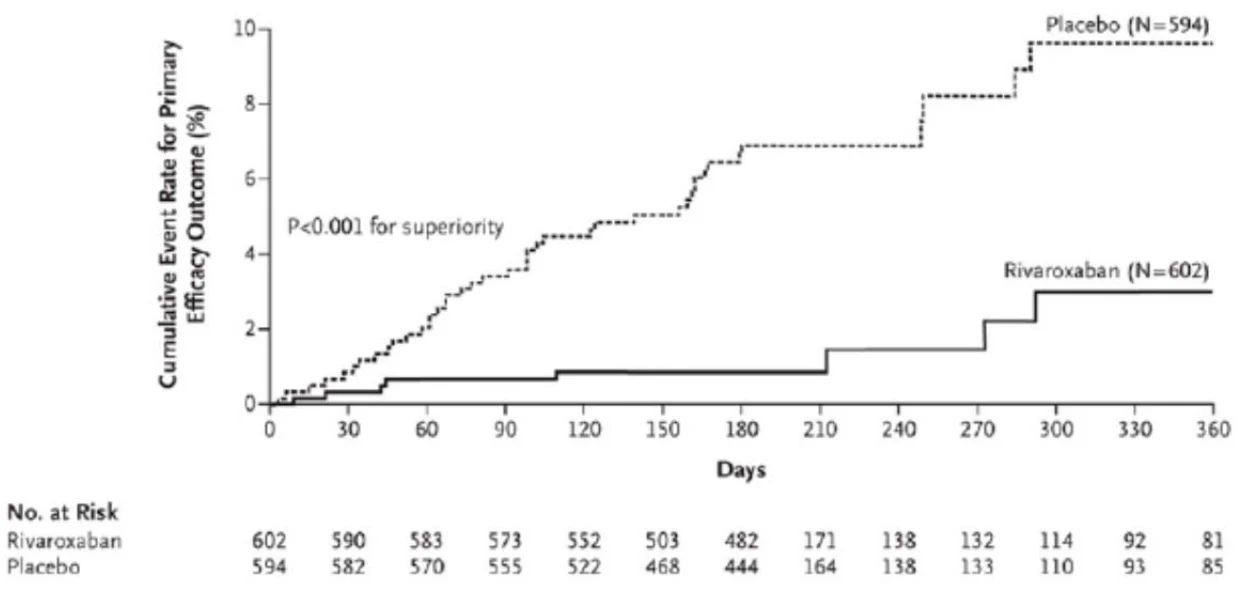
Figure 5: Kaplan-Meier Cumulative Event Rates for the Primary Efficacy Outcome in EINSTEIN Extension
EINSTEIN CHOICE
In EINSTEIN CHOICE 3,396 patients with confirmed symptomatic DVT and/or PE who completed 6-12 months of therapeutic-dose anticoagulation and who did not have an indication for continued anticoagulation in therapeutic doses, were studied for the prevention of fatal PE or non-fatal symptomatic recurrent DVT/PE. Patients with an indication for continued therapeutic-dosed anticoagulation were excluded from the study. The treatment duration was up to 12 months depending on the individual randomization date (median: 351 days). XARELTO 20 mg once daily and XARELTO 10 mg once daily were compared with 100 mg acetylsalicylic acid once daily.
The primary efficacy outcome was symptomatic recurrent VTE defined as the composite of recurrent DVT or fatal or non-fatal PE. The secondary efficacy outcome was the composite of the primary efficacy outcome, MI, ischemic stroke, or non-CNS systemic embolism. 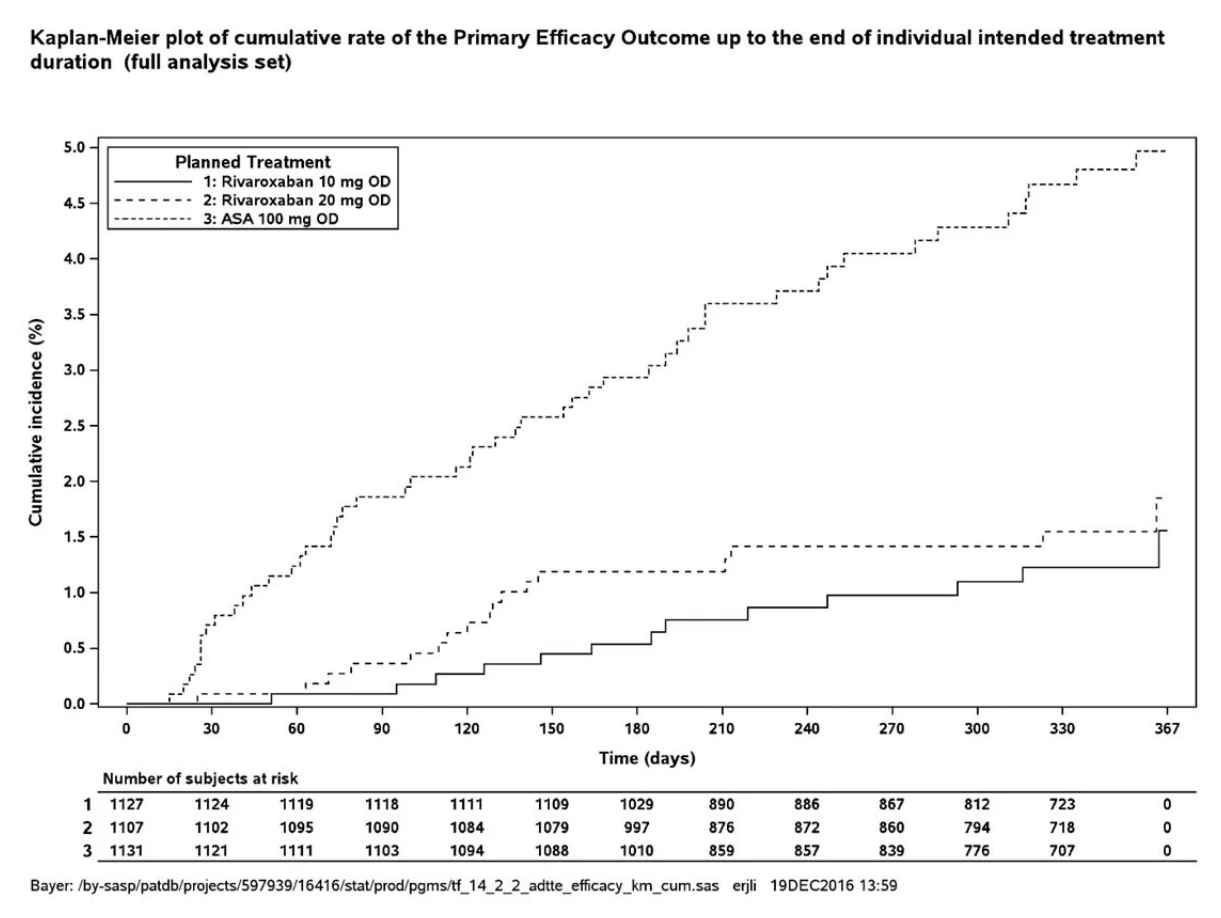
In the EINSTEIN CHOICE study the primary efficacy objective for superiority was met for both XARELTO 20 mg and 10 mg versus acetylsalicylic acid 100mg. The secondary efficacy outcome was significantly reduced when comparing XARELTO 20 mg or 10 mg vs. 100 mg acetylsalicylic acid. The principal safety outcome (major bleeding events) was similar for patients treated with XARELTO 20 mg and 10 mg once daily compared to 100 mg acetylsalicylic acid. The secondary safety outcome (non-major bleeding associated with treatment cessation of more than 14 days) was similar when comparing XARELTO 20 mg or 10 mg vs. 100 mg acetylsalicylic acid. Outcomes were consistent across the patients with provoked and unprovoked VTE (see Table 25).
In a prespecified net clinical benefit analysis (NCB) (primary efficacy outcome plus major bleeding events) of EINSTEIN CHOICE , a HR of 0.44 (95% CI 0.27 - 0.71, p = 0.0009) for XARELTO 20 mg once daily vs 100 mg acetylsalicylic acid once daily and a HR of 0.32 (95% CI 0.18 - 0.55, p <0.0001) for XARELTO 10 mg once daily vs 100 mg acetylsalicylic acid once daily were reported.
Figure 6: Kaplan-Meier analysis: cumulative event rates of the primary efficacy outcome until the end of individual intended treatment duration (FAS)
Prevention of Stroke and Systemic Embolism in Patients with Atrial Fibrillation
Evidence for the effectiveness of XARELTO is derived from the ROCKET AF trial, a prospective, randomized, double-blind, double-dummy, parallel-group, multicenter, pivotal clinical study comparing the efficacy and safety of once daily oral XARELTO with dose-adjusted warfarin in patients with atrial fibrillation at risk of stroke or systemic embolism. In addition to documented atrial fibrillation, patients had prior stroke, TIA or systemic embolism, or 2 or more of the following risk factors without prior stroke:
- clinical heart failure and/or left ventricular ejection fraction ≤35%
- hypertension
- age ≥75 years
- diabetes mellitus
Table 26 – Summary of the ROCKET AF Trial, a Phase III Clinical Trial in Atrial Fibrillation
| Study | Study Design | Treatment Regimen | Populations |
| ROCKET AF | double-blind, randomized parallel-group multinational study | XARELTO 20 mg od (15 mg od for patients with moderate renal impairment [CrCl 30 – 49 mL/min]) Warfarin dose adjusted to an INR of 2.5 (range 2.0 to 3.0) | Randomized 14,264 (7131 XARELTO, 7133 warfarin) Safety Population 14,236 (7111 XARELTO, 7125 warfarin) Per Protocol 14,054 (7008 XARELTO, 7046 warfarin) |
Randomized = The randomized / intent-to-treat population represent all uniquely randomized patients. Safety population = The safety population comprised those patients who received at least 1 dose of study drug. Per Protocol = The per-protocol population was all intent to-treat patients excluding those who have specific pre-defined major protocol deviations that occur by the time of enrollment into the study or during the trial. od = once daily
Patients with prosthetic heart valves, or those with hemodynamically significant rheumatic heart disease, especially mitral stenosis, were excluded from the ROCKET AF study, and thus were not evaluated. These trial results do not apply to patients these conditions, whether in the presence or absence of atrial fibrillation (see WARNINGS AND PRECAUTIONS – Cardiovascular, Patients with valvular disease).
The primary objective of this study was to demonstrate that XARELTO, a direct Factor-Xa inhibitor, was non-inferior to warfarin in reducing the occurrence of the composite endpoint of stroke and systemic embolism. If non-inferiority was shown, a pre-specified step-wise multiple testing procedure was undertaken to determine whether XARELTO was superior to warfarin in primary and secondary endpoints.
The study design, treatment regimen and patient populations are summarized in Table 27 and Table 28. A total of 14,264 patients were randomized with a mean age of 71 years (range 25 to 97 years) and a mean CHADS2 score of 3.5. Patients were randomized to 20 mg once daily XARELTO (15 mg in patients with moderate renal impairment at screening) or to dose-adjusted warfarin, titrated to an INR of 2.0 to 3.0. ROCKET AF had a mean treatment duration of 572 days of XARELTO given as a fixed dose without routine coagulation monitoring.
ROCKET AF studied patients with significant co-morbidities, eg, 55% secondary prevention population (prior stroke / TIA / systemic embolism), see Table 27. For patients randomized to warfarin, the time-in-therapeutic range (TTR) of 2.0 to 3.0 was a mean of 55% (cf. 64% in North American patients).
Table 27 – Co-morbid Diseases and Characteristics of Patients in ROCKET AF Trial – ITT Population
Heart failure and/or left ventricular ejection fraction ≤35% 62% Hypertension 91% Age ≥ 75 years 44% Female 40% Diabetes 40% Prior Stroke / TIA / Systemic Embolism 55%
Strokea 34% TIAa 22% Systemic Embolisma 4% Valvular Disease (not meeting exclusion criteria)b 14% Mean CHADS2 3.5 Prior VKA Use 62% Prior MI 17% a Some patients may have had more than one event, so sum of individual components do not add up to 55%. b Patients with prosthetic heart valves, or those with hemodynamically significant rheumatic heart disease, especially mitral stenosis were excluded from ROCKET AF. Patient with other valvular disease including aortic stenosis, aortic regurgitation, and/or mitral regurgitation did not meet the exclusion criteria. ITT Population = 14, 264 patients
At baseline, 36.5% of patients were on chronic ASA, 2.4% on anticoagulants other than VKAs, 8.7% on Class III antiarrhythmics, 54.5% on angiotensin converting enzyme (ACE) inhibitors, 22.7% on angiotensin receptor blockers, 60.0% on diuretics, 24.0% on oral antidiabetics, and 65.5% on beta blockers.
ROCKET AF demonstrated that in patients with atrial fibrillation, XARELTO is non-inferior to warfarin in the primary efficacy endpoint, a composite of prevention of stroke and systemic embolism in the per protocol population, on-treatment analysis (rivaroxaban: 1.71%/year, warfarin 2.16%/year, HR 0.79, 95% CI 0.66-0.96, P < 0.001). As non-inferiority was met, XARELTO was tested, as per the pre-specified analysis, for superiority in primary and secondary endpoints. XARELTO demonstrated superiority over warfarin for stroke and systemic embolism in the safety population, on-treatment analysis (HR 0.79, 95% CI 0.65 to 0.95, P = 0.015), see Table 28 and Figure 7 below.
Table 28 – ROCKET AF – Time to the First Occurrence of Total Stroke and Systemic Embolism, While on Treatment (up to Last Dose Plus 2 Days) – Safety Population
| Parameter | XARELTO (N=7061) | Warfarin (N=7082) | XARELTO vs Warfarin | |||
| n | %/year | n | %/year | Hazard Ratio (95% CI) | P-value for superiority | |
| Total stroke and systemic embolism (Primary Efficacy Outcome) | 189 | 1.70 | 243 | 2.15 | 0.79 (0.65,0.95) | 0.015* |
| Total Stroke | 184 | 1.65 | 221 | 1.96 | 0.85 (0.70,1.03) | 0.092 |
| Hemorrhagic Stroke | 29 | 0.26 | 50 | 0.44 | 0.59 (0.37,0.93) | 0.024* |
| Ischemic Stroke | 149 | 1.34 | 161 | 1.42 | 0.94 (0.75,1.17) | 0.581 |
| Unknown Stroke Type | 7 | 0.06 | 11 | 0.10 | 0.65 (0.25,1.67) | 0.366 |
| Systemic Embolism | 5 | 0.04 | 22 | 0.19 | 0.23 (0.09,0.61) | 0.003* |
| Other Endpoints | ||||||
| All Cause Death | 208 | 1.87 | 250 | 2.21 | 0.85 (0.70,1.02) | 0.073 |
| Vascular Death | 170 | 1.53 | 193 | 1.71 | 0.89 (0.73,1.10) | 0.289 |
| Myocardial Infarction | 101 | 0.91 | 126 | 1.12 | 0.81 (0.63,1.06) | 0.121 |
Safety population on-treatment analysis = Events (Adjudicated by CEC) While on Treatment (up to Last Dose Plus 2 Days) – Safety Population
Hazard ratio (95% CI) and P-value from Cox proportional hazard model with treatment group as a covariate. p-value (two-sided) for superiority of XARELTO versus warfarin in hazard ratio
* Statistically significant
While the pre-specified primary analysis for superiority used the on-treatment data set for the safety population, an intention-to treat (ITT) analysis was also conducted. In this analysis, the primary endpoint occurred in 269 patients in the rivaroxaban group (2.1% per year) and in 306 patients in the warfarin group (2.4% per year) (hazard ratio, 0.88; 95% CI, 0.74 to 1.03; P<0.001 for non-inferiority; P = 0.12 for superiority).
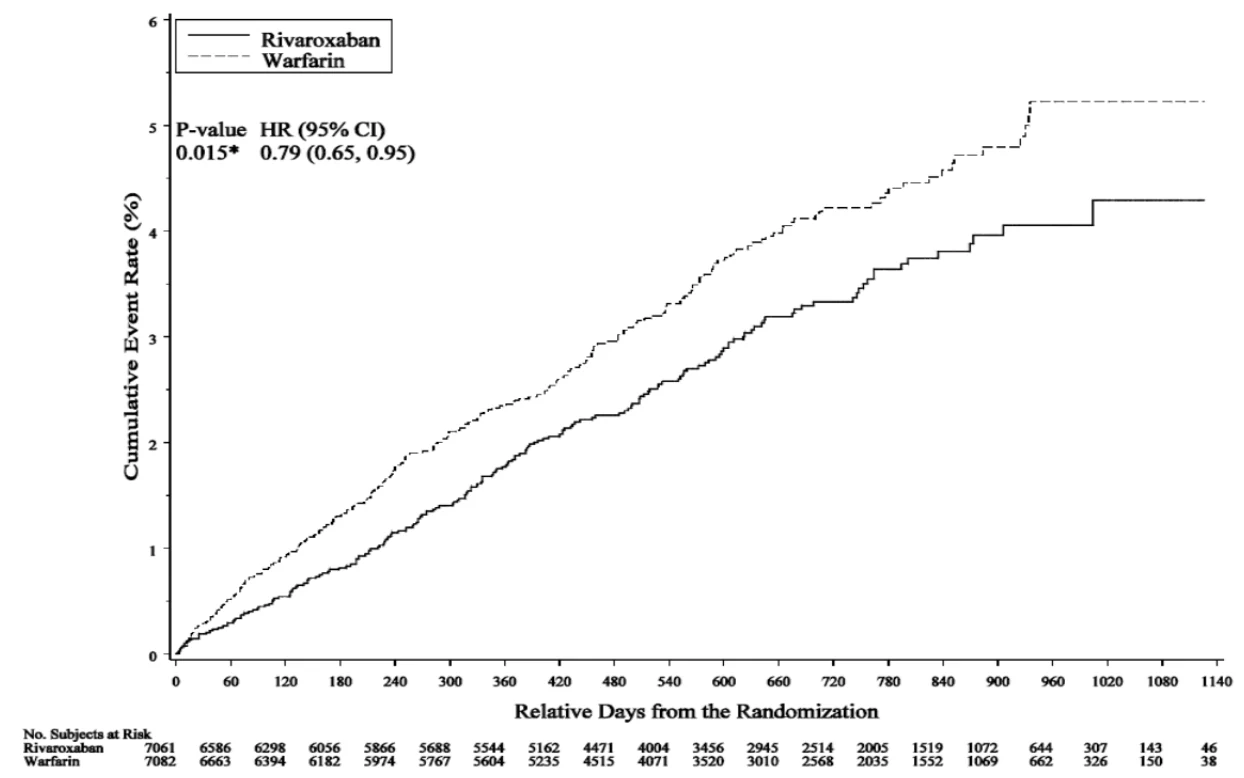
Figure 7: Kaplan-Meier curve of time to first total stroke or systemic embolism in the ROCKET AF trial safety population, on-treatment analysis, includes the 15 mg and 20 mg doses of rivaroxaban
The analysis of the principal safety endpoint demonstrates XARELTO has a similar rate to warfarin for the composite of major and non-major clinically relevant bleeding, see Table 29 below.
Table 29 – ROCKET AF – Time to the First Occurrence of Bleeding Events While on Treatment (up to Last Dose Plus 2 Days) – Safety Population
| Parameter | XARELTO (N=7111) | Warfarin (N=7125) | XARELTO vs Warfarin | |||
| n | %/year | N | %/year | Hazard Ratio (95% CI) | P-value | |
Major and Non-major clinically relevant bleeding event (Principal Safety Endpoint) | 1475 | 14.91 | 1449 | 14.52 | 1.03 (0.96,1.11) | 0.442 |
| Major Bleeding | 395 | 3.60 | 386 | 3.45 | 1.04 (0.90,1.20) | 0.576 |
| Hemoglobin Drop (2g/dL) | 305 | 2.77 | 254 | 2.26 | 1.22 (1.03,1.44) | 0.019* |
| Transfusion (> 2 units) | 183 | 1.65 | 149 | 1.32 | 1.25 (1.01,1.55) | 0.044* |
| Critical Organ Bleed | 91 | 0.82 | 133 | 1.18 | 0.69 (0.53,0.91) | 0.007* |
| Intracranial Hemorrhage | 55 | 0.49 | 84 | 0.74 | 0.67 (0.47, 0.94) | 0.019* |
| Fatal Bleed | 27 | 0.24 | 55 | 0.48 | 0.50 (0.31,0.79) | 0.003* |
| Non-major Clinically Relevant Bleeding | 1185 | 11.80 | 1151 | 11.37 | 1.04 (0.96,1.13) | 0.345 |
All analysis are based on the time to the first event.
Hemoglobin drop = a fall in hemoglobin of 2 g/dL or more.
Transfusion = a transfusion of 2 or more units of packed red blood cells or whole blood. Critical organ bleeding are cases where CEC bleeding site=intracranial, intraspinal, intraocular, pericardial, intra-articular, intramuscular with compartment syndrome or retroperitoneal.
Hazard ratio (95% CI) and P-value from Cox proportional hazard model with treatment group as a covariate. P-value (two-sided) for superiority of XARELTO versus Warfarin in hazard ratio.
* Statistically significant
The incidences of increased liver function tests were low and comparable between the two groups, see Table 30.
Table 30 – ROCKET AF – Incidence of Pre-specified Post-baseline Liver Function Abnormalities – Safety Population
| Parameter | XARELTO (N=7111) | Warfarin (N=7125) | XARELTO vs Warfarin | ||
| n/J | % | n/J | % | Hazard Ratio (95% CI) | |
| ALT> 3xULN | 203/6979 | 2.91 | 203/7008 | 2.90 | 1.01 (0.83,1.23) |
| ALT > 3xULN and TBL > 2xULN | 31/6980 | 0.44 | 33/7012 | 0.47 | 0.95 (0.58,1.55) |
ULN = Upper Limit of Normal Range, n = Number of patients with events, N= Number of patients valid for safety population, J = Number of patients with non-missing lab values, TBL: Total Bilirubin Hazard Ratio (95% CI): time to event analysis using a Cox model with the treatment as the covariate.
The event rates for efficacy and safety outcomes stratified by age groups are presented in Table 31 and Table 32. The event rates for efficacy and safety outcomes stratified by renal function are presented in Table 33 and Table 34.
Table 31 – Efficacy Outcomes by Age Groups in the ROCKET AF Trial, While on Treatment (up to Last Dose Plus 2 Days) – Safety Population
| XARELTO | Warfarin | XARELTO vs Warfarin | ||||
| n/J | Event rate (%/yr) | n/J | Event rate (%/yr) | Hazard Ratio (95% CI) | P-value | |
| Total Stroke and Systemic Embolism (Primary Efficacy Outcome) | ||||||
| All Patients | 189/7061 | 1.70 | 243/7082 | 2.15 | 0.79 (0.65,0.95) | 0.015* |
| < 65 years | 43/1642 | 1.59 | 42/1636 | 1.53 | 1.04 (0.68,1.58) | - |
| 65 to 75 years | 77/2767 | 1.74 | 98/2768 | 2.18 | 0.79 (0.59,1.07) | - |
| > 75 years | 69/2652 | 1.73 | 103/2678 | 2.54 | 0.68 (0.50,0.92) | - |
| > 80 years | 40/1305 | 2.17 | 46/1281 | 2.39 | 0.91 (0.60,1.40) | - |
| ≥85 years | 7/ 321 | 1.75 | 9/ 328 | 1.91 | 0.92 (0.34,2.47) | - |
| Total Stroke | ||||||
| All Patients | 184/7061 | 1.65 | 221/7082 | 1.96 | 0.85 (0.70,1.03) | 0.092 |
| < 65 years | 42/1642 | 1.55 | 36/1636 | 1.31 | 1.18 (0.76,1.84) | - |
| 65 to 75 years | 75/2767 | 1.69 | 90/2768 | 2.00 | 0.84 (0.62,1.14) | - |
| > 75 years | 67/2652 | 1.68 | 95/2678 | 2.34 | 0.72 (0.52,0.98) | - |
| > 80 years | 38/1305 | 2.06 | 42/1281 | 2.18 | 0.95 (0.61,1.48) | - |
| Ischemic Stroke | ||||||
| All Patients | 149/7061 | 1.34 | 161/7082 | 1.42 | 0.94 (0.75,1.17) | 0.581 |
| < 65 years | 30/1642 | 1.11 | 23/1636 | 0.84 | 1.32(0.77,2.28) | - |
| 65 to 75 years | 68/2767 | 1.53 | 66/2768 | 1.47 | 1.04 (0.74,1.46) | - |
| > 75 years | 51/2652 | 1.28 | 72/2678 | 1.77 | 0.72 (0.50,1.03) | - |
| > 80 years | 26/1305 | 1.41 | 33/1281 | 1.71 | 0.83 (0.50,1.39) | - |
| Hemorrhagic Stroke | ||||||
| All Patients | 29/7061 | 0.26 | 50/7082 | 0.44 | 0.59 (0.37,093) | 0.024* |
| < 65 years | 9/1642 | 0.33 | 12/1636 | 0.44 | 0.76 (0.32,1.80) | - |
| 65 to 75 years | 4/2767 | 0.09 | 19/2768 | 0.42 | 0.21 (0.07,0.62) | - |
| > 75 years | 16/2652 | 0.40 | 19/2678 | 0.47 | 0.86 (0.44,1.67) | - |
| > 80 years | 12/1305 | 0.65 | 9/1281 | 0.47 | 1.40 (0.59,3.31) | - |
Table 31 – Efficacy Outcomes by Age Groups in the ROCKET AF Trial, While on Treatment (up to Last Dose Plus 2 Days) – Safety Population
| XARELTO | Warfarin | XARELTO vs Warfarin | ||||
| n/J | Event rate (%/yr) | n/J | Event rate (%/yr) | Hazard Ratio (95% CI) | P-value | |
| Vascular Death | ||||||
| All Patients | 170/7061 | 1.53 | 193/7082 | 1.71 | 0.89 (0.73,1.10) | 0.289 |
| < 65 years | 35/1642 | 1.29 | 44/1636 | 1.60 | 0.81 (0.52,1.26) | - |
| 65 to 75 years | 66/2767 | 1.49 | 70/2768 | 1.56 | 0.95 (0.68,1.33) | - |
| > 75 years | 69/2652 | 1.73 | 79/2678 | 1.94 | 0.89 (0.64,1.23) | - |
| > 80 years | 34/1305 | 1.84 | 35/1281 | 1.81 | 1.01 (0.63,1.62) | - |
| ≥85 years | 15/ 321 | 3.75 | 12/ 328 | 2.54 | 1.44 (0.67,3.08) | - |
Safety population on-treatment analysis = Events (Adjudicated by CEC) While on Treatment (up to Last Dose Plus
2 Days) – Safety Population
n=number of patients with events, J=number of patients in each subgroup.
Hazard ratio (95% CI) and p-value from Cox proportional hazard model with treatment group as a covariate. P-value (two-sided) for superiority of XARELTO versus warfarin in hazard ratio
* Statistically significant
Table 32 – Bleeding Endpoints by Age Groups in the ROCKET AF trial, While on Treatment (up to Last Dose Plus 2 Days) – Safety Population
| XARELTO | Warfarin | XARELTO vs. Warfarin | ||||
| n/J | Event rate (%/yr) | n/J | Event rate (%/yr) | Hazard Ratio (95% CI) | P-value | |
| Major and Non-major Clinically Relevant Bleeding Event (Principal Safety Endpoint) | ||||||
| All Patients | 1475/7111 | 14.91 | 1449/7125 | 14.52 | 1.03 (0.96,1.11) | 0.442 |
| < 65 years | 241/1646 | 9.73 | 260/1642 | 10.41 | 0.93 (0.78,1.11) | - |
| 65 to 75 years | 541/2777 | 13.59 | 556/2781 | 13.95 | 0.98 (0.87,1.10) | - |
| > 75 years | 693/2688 | 20.18 | 633/2702 | 18.09 | 1.12(1.00,1.25) | - |
| > 80 years | 362/1320 | 22.79 | 313/1298 | 18.84 | 1.20 (1.04,1.40) | - |
| ≥85 years | 89/ 326 | 25.46 | 90/ 335 | 22.29 | 1.13 (0.84,1.52) | - |
| Major Bleeding | ||||||
| All Patients | 395/7111 | 3.60 | 386/7125 | 3.45 | 1.04 (0.90,1.20) | 0.576 |
| < 65 years | 59/1646 | 2.21 | 59/1642 | 2.16 | 1.02 (0.71,1.46) | - |
| 65 to 75 years | 133/2777 | 3.04 | 148/2781 | 3.34 | 0.91 (0.72,1.15) | - |
| > 75 years | 203/2688 | 5.16 | 179/2702 | 4.47 | 1.15 (0.94,1.41) | - |
| > 80 years | 118/1320 | 6.50 | 86/1298 | 4.50 | 1.44 (1.09,1.90) | - |
| ≥85 years | 28/ 326 | 7.05 | 32/ 335 | 6.91 | 1.01 (0.61,1.67) | - |
Table 32 – Bleeding Endpoints by Age Groups in the ROCKET AF trial, While on Treatment (up to Last Dose Plus 2 Days) – Safety Population
| XARELTO | Warfarin | XARELTO vs. Warfarin | ||||
| n/J | Event rate (%/yr) | n/J | Event rate (%/yr) | Hazard Ratio (95% CI) | P-value | |
| Intracranial Hemorrhage | ||||||
| All Patients | 55/7111 | 0.49 | 84/7125 | 0.74 | 0.67 (0.47,0.93) | 0.019* |
| < 65 years | 13/1646 | 0.48 | 17/1642 | 0.62 | 0.78 (0.38,1.60) | - |
| 65 to 75 years | 13/2777 | 0.29 | 34/2781 | 0.75 | 0.39 (0.20,0.73) | - |
| > 75 years | 29/2688 | 0.72 | 33/2702 | 0.81 | 0.89 (0.54,1.47) | - |
| > 80 years | 22/1320 | 1.18 | 15/1298 | 0.77 | 1.54 (0.80,2.96) | - |
| Fatal Bleeding | ||||||
| All Patients | 27/7111 | 0.24 | 55/7125 | 0.48 | 0.50 (0.31,0.79) | 0.003* |
| < 65 years | 7/1646 | 0.26 | 11/1642 | 0.40 | 0.65 (0.25,1.66) | - |
| 65 to 75 years | 7/2777 | 0.16 | 19/2781 | 0.42 | 0.37 (0.16,0.89) | - |
| > 75 years | 13/2688 | 0.32 | 25/2702 | 0.61 | 0.53 (0.27,1.03) | - |
| > 80 years | 10/1320 | 0.54 | 12/1298 | 0.62 | 0.87 (0.38,2.02) | - |
| Non-major Clinically Relevant Bleeding | ||||||
| All Patients | 1185/7111 | 11.80 | 1151/7125 | 11.37 | 1.04 (0.96,1.13) | 0.345 |
| < 65 years | 191/1646 | 7.62 | 210/1642 | 8.32 | 0.91 (0.75,1.11) | - |
| 65 to 75 years | 444/2777 | 11.00 | 445/2781 | 11.02 | 1.00 (0.88,1.14) | - |
| > 75 years | 550/2688 | 15.74 | 496/2702 | 13.93 | 1.13 (1.00,1.28) | - |
| > 80 years | 276/1320 | 17.06 | 249/1298 | 14.74 | 1.15 (0.97,1.37) | - |
Safety population on-treatment analysis = Events (Adjudicated by CEC) While on Treatment (up to Last Dose Plus
2 Days) – Safety Population
n=number of patients with events, J=number of patients in each subgroup.
Hazard ratio (95% CI) and P-value from Cox proportional hazard model with treatment group as a covariate. p-value (two-sided) for superiority of XARELTO versus warfarin in hazard ratio
* Statistically significant
Table 33 – Efficacy Outcomes Stratified by Renal Function at Study Entry in the ROCKET AF Trial, While on Treatment (up to Last Dose Plus 2 Days) – Safety Population
| XARELTO | Warfarin | XARELTO vs Warfarin | ||||
| n/J† | Event rate (%/yr) | n/J† | Event rate (%/yr) | Hazard Ratio (95% CI) | P-value | |
| Total Stroke and Systemic Embolism (Primary Efficacy Outcome) | ||||||
| All Patients | 189/7061 | 1.70 | 243/7082 | 2.15 | 0.79 (0.65,0.95) | 0.015* |
| 30 – 49 mL/min | 50/1481 | 2.36 | 60/1452 | 2.80 | 0.84 (0.58,1.22) | - |
| 50 – 80 mL/min | 91/3290 | 1.74 | 128/3396 | 2.39 | 0.73 (0.56,0.96) | - |
| > 80 mL/min | 47/2278 | 1.25 | 54/2221 | 1.43 | 0.87 (0.59,1.28) | - |
| Total Stroke | ||||||
| All Patients | 184/7061 | 1.65 | 221/7082 | 1.96 | 0.85 (0.70,1.03) | 0.092 |
| 30 – 49 mL/min | 49/1481 | 2.31 | 52/1452 | 2.42 | 0.95 (0.64,1.40) | - |
| 50 – 80 mL/min | 88/3290 | 1.68 | 120/3396 | 2.24 | 0.75 (0.57,0.99) | - |
| > 80 mL/min | 46/2278 | 1.22 | 48/2221 | 1.27 | 0.95 (0.64,1.43) | - |
| Ischemic Stroke | ||||||
| All Patients | 149/7061 | 1.34 | 161/7082 | 1.42 | 0.94 (0.75,1.17) | 0.581 |
| 30 – 49 mL/min | 43/1481 | 2.03 | 39/1452 | 1.82 | 1.11(0.72,1.72) | - |
| 50 – 80 mL/min | 69/3290 | 1.32 | 89/3396 | 1.66 | 0.80 (0.58,1.09) | - |
| > 80 mL/min | 36/2278 | 0.95 | 32/2221 | 0.85 | 1.12 (0.70,1.80) | - |
| Hemorrhagic Stroke | ||||||
| All Patients | 29/7061 | 0.26 | 50/7082 | 0.44 | 0.59 (0.37,093) | 0.024* |
| 30 – 49 mL/min | 6/1481 | 0.28 | 11/1452 | 0.51 | 0.55 (0.20,1.48) | - |
| 50 – 80 mL/min | 15/3290 | 0.29 | 25/3396 | 0.47 | 0.62 (0.33,1.17) | - |
| > 80 mL/min | 8/2278 | 0.21 | 14/2221 | 0.37 | 0.57 (0.24,1.35) | - |
| Vascular Death | ||||||
| All Patients | 170/7061 | 1.53 | 193/7082 | 1.71 | 0.89 (0.73,1.10) | 0.289 |
| 30 – 49 mL/min | 55/1481 | 2.59 | 54/1452 | 2.52 | 1.02 (0.70,1.49) | - |
| 50 – 80 mL/min | 75/3290 | 1.43 | 91/3396 | 1.69 | 0.85 (0.62,1.15) | - |
| > 80 mL/min | 40/2278 | 1.06 | 47/2221 | 1.24 | 0.85 (0.56,1.29) | - |
Safety population on-treatment analysis = Events (Adjudicated by CEC) While on Treatment (up to Last Dose Plus
2 Days) – Safety Population
n=number of patients with events, J=number of patients in each subgroup.
†= Patients with CrCl< 30mL/min or missing baseline CrCl are excluded from the rows of CrCl subgroups (30-49 mL/min, 50-80 mL/min, >80 mL/min). The patients are, however, included in the “All Patients” rows. Hazard ratio (95% CI) and p-value from Cox proportional hazard model with treatment group as a covariate. P-value (two-sided) for superiority of XARELTO versus warfarin in hazard ratio
* Statistically significant
Table 34 – Bleeding Endpoints Stratified by Renal Function at Study Entry in the ROCKET AF Trial, While on Treatment (up to Last Dose Plus 2 Days) – Safety Population
| XARELTO | Warfarin | XARELTO vs Warfarin | ||||
| n/Ja | Event rate (%/yr) | n/Ja | Event rate (%/yr) | Hazard Ratio (95% CI) | p-value | |
| Major and Non-Major Clinically Relevant Bleeding Event (Principal Safety Endpoint) | ||||||
| All Patients | 1475/7111 | 14.91 | 1449/7125 | 14.52 | 1.03 (0.96,1.11) | 0.442 |
| 30 – 49 mL/min | 336/1498 | 17.87 | 341/1472 | 18.28 | 0.98 (0.84,1.14) | - |
| 50 – 80 mL/min | 725/3313 | 15.74 | 719/3410 | 15.30 | 1.04 (0.93,1.15) | - |
| > 80 mL/min | 412/2288 | 12.15 | 388/2230 | 11.42 | 1.06(0.92,1.21) | - |
| Major Bleeding | ||||||
| All Patients | 395/7111 | 3.60 | 386/7125 | 3.45 | 1.04 (0.90,1.20) | 0.576 |
| 30 – 49 mL/min | 99/1498 | 4.72 | 100/1472 | 4.72 | 1.00 (0.76,1.32) | - |
| 50 – 80 mL/min | 183/3313 | 3.54 | 197/3410 | 3.72 | 0.95 (0.78,1.17) | - |
| > 80 mL/min | 112/2288 | 3.02 | 89/2230 | 2.38 | 1.26 (0.95,1.67) | - |
| Intracranial Hemorrhage | ||||||
| All Patients | 55/7111 | 0.49 | 84/7125 | 0.74 | 0.67 (0.47,0.93) | 0.019* |
| 30 – 49 mL/min | 15/1498 | 0.70 | 19/1472 | 0.88 | 0.80 (0.41,1.57) | - |
| 50 – 80 mL/min | 27/3313 | 0.51 | 43/3410 | 0.80 | 0.64 (0.40,1.04) | - |
| > 80 mL/min | 13/2288 | 0.34 | 22/2230 | 0.58 | 0.59 (0.30,1.17) | - |
| Fatal Bleeding | ||||||
| All Patients | 27/7111 | 0.24 | 55/7125 | 0.48 | 0.50 (0.31,0.79) | 0.003* |
| 30 – 49 mL/min | 6/1498 | 0.28 | 16/1472 | 0.74 | 0.38 (0.15,0.97) | - |
| 50 – 80 mL/min | 14/3313 | 0.27 | 24/3410 | 0.45 | 0.60 (0.31,1.16) | - |
| > 80 mL/min | 7/2288 | 0.19 | 15/2230 | 0.40 | 0.46 (0.19,1.14) | - |
| Non-major Clinically Relevant Bleeding | ||||||
| All Patients | 1185/7111 | 11.80 | 1151/7125 | 11.37 | 1.04 (0.96,1.13) | 0.345 |
| 30 – 49 mL/min | 261/1498 | 13.67 | 259/1472 | 13.61 | 1.01 (0.85,1.19) | - |
| 50 – 80 mL/min | 596/3313 | 12.77 | 570/3410 | 11.94 | 1.08 (0.96,1.21) | - |
| > 80 mL/min | 327/2288 | 9.48 | 321/2230 | 9.36 | 1.01 (0.86,1.18) | - |
Safety population on-treatment analysis = Events (Adjudicated by CEC) While on Treatment (up to Last Dose Plus
2 Days) – Safety Population
n=number of patients with events, J=number of patients in each subgroup
a= Patients with CrCl< 30 mL/min or missing baseline CrCl are excluded from the rows of CrCl subgroups
(30-49 mL/min, 50-80 mL/min, >80 mL/min). The patients are, however, included in the “All Patients” rows. Hazard ratio (95% CI) and p-value from Cox proportional hazard model with treatment group as a covariate. P-value (two-sided) for superiority of XARELTO versus warfarin in hazard ratio
* Statistically significant
Prevention of Stroke, Myocardial Infarction, Cardiovascular Death and Prevention of Acute Limb Ischemia and Mortality in Adult Patients with CAD with or without PAD
The COMPASS study was designed to demonstrate the efficacy and safety of XARELTO 2.5 mg bid in combination with 100 mg ASA or XARELTO 5 mg bid monotherapy, for the prevention of stroke, myocardial infarction (MI) or cardiovascular (CV) death in patients with stable atherosclerotic vascular disease. In the pivotal, double-blind phase III study 27,395 unique subjects were randomly assigned to antithrombotic study drug. In 2 arms, 18,278 subjects were randomly assigned, in a 1:1 fashion, to XARELTO 2.5 mg bid in combination with ASA 100 mg od, or to ASA 100 mg od (a third study arm with 9,117 participants testing XARELTO 5 mg bid as monotherapy did not show a statistically significant difference in the reduction of stroke, MI or CV death compared to ASA 100 mg od).
Patients with established CAD, PAD or a combination of CAD and PAD were eligible. Patients with CAD who were younger than 65 years of age were also required to have documentation of atherosclerosis involving at least two vascular beds or to have at least two additional cardiovascular risk factors (current smoking, diabetes mellitus, an estimated glomerular filtration rate [eGFR] <60 ml per minute, heart failure, or non-lacunar ischemic stroke ≥1 month earlier). Certain patients were excluded, such as those patients in need of dual antiplatelet therapy, other non-ASA antiplatelet, or oral anticoagulant therapies, as well as patients with a history of ischemic, non-lacunar stroke within 1 month, any history of hemorrhagic or lacunar stroke, or patients with eGFR < 15 ml/min.
COMPASS was stopped prematurely for superiority of the XARELTO 2.5 mg bid + ASA 100 mg od treatment combination after a mean study drug exposure of 668 days (22 months, 1.83 years).
The mean duration of follow-up was 23 months and the maximum follow-up was 3.9 years. The mean age was 68 years and 21% of the subject population were ≥75 years. Of the patients included, 91% had CAD, 27% had PAD, and 18% had both CAD and PAD. Of the patients with CAD, 69% had prior MI, 60% had prior percutaneous transluminal coronary angioplasty (PTCA)/atherectomy/percutaneous coronary intervention (PCI), and 26% had a history of coronary artery bypass grafting (CABG) prior to study. Of the patients with PAD, 49% had intermittent claudication, 27% had peripheral artery bypass surgery or peripheral percutaneous transluminal angioplasty (PTA), 26% had asymptomatic carotid artery stenosis >50%, and 5% had limb or foot amputation for arterial vascular disease.
Study Results
Relative to ASA 100 mg od, XARELTO 2.5 mg bid in combination with ASA 100 mg od was superior in the reduction of the primary composite outcome of stroke, MI or CV death (hazard ratio [HR] 0.76; 95% CI 0.66;0.86; p = 0.00004). The benefit was observed early with a sustained treatment effect over the entire treatment period (see Table 35 and Figure 8). The composite secondary outcomes (composites of coronary heart disease death, or CV death, with MI, ischemic stroke, and acute limb ischemia (ALI)) as well as all-cause mortality were reduced (see Table 35). Acute limb ischemic events were reduced (HR 0.55; 95% CI 0.32-0.92). There was a numerically lower number of amputations (HR 0.64; 95% CI 0.40-1.00). Sixty-five fewer
subjects died with the combination of XARELTO 2.5 mg bid plus ASA 100 mg od vs. ASA 100 mg od alone (HR 0.82; 95% CI 0.71-0.96; p = 0.01062).
There was a significant increase of the primary safety outcome (modified International Society on Thrombosis and Haemostasis [mISTH] major bleeding events) in patients treated with XARELTO 2.5 mg twice daily in combination with ASA 100 mg once daily compared to patients who received ASA 100 mg (see Table 6). However the incidence rates for fatal bleeding events, non-fatal symptomatic bleeding into a critical organ as well as intracranial bleeding events did not differ significantly. The prespecified composite outcome for net clinical benefit (CV death, MI, stroke, fatal or symptomatic critical-organ bleeding events) was reduced (see Table 36). The results in patients with CAD with or without PAD were consistent with the overall efficacy and safety results (see Table 36).
In the 3.8% of patients with a history of ischemic, non-lacunar stroke (median time since stroke: 5 years), the reduction of stroke, MI, CV death, and the increase of major bleeding (net clinical benefit HR 0.64; 95% CI 0.4-1.0) were consistent with the overall population (see WARNINGS AND PRECAUTIONS - Bleeding).
| Table 35 - Efficacy results from the phase III COMPASS Study | |||||||||||
| Overall Study Population | |||||||||||
| Treatment and Dosage | XARELTO 2.5 mg bid | ASA 100 mg od | Hazard Ratio (95 % CI) p-valueb | ||||||||
| plus ASA 100 mg od, | |||||||||||
| N=9152 | N=9126 | ||||||||||
| n (%) | n (%) | ||||||||||
| Primary efficacy outcome: | 0.76 (0.66;0.86) | ||||||||||
| Composite of stroke, MI, CV | 379 (4.1%) | 496 (5.4%) | p = 0.00004# | ||||||||
| death | |||||||||||
| 0.58 (0.44;0.76) | ||||||||||
| 83 (0.9%) | 142 (1.6%) | p = 0.00006 | |||||||||
| 0.86 (0.70;1.05) | ||||||||||
| 178 (1.9%) | 205 (2.2%) | p = 0.14458 | |||||||||
| 0.78 (0.64;0.96) | ||||||||||
| 160 (1.7%) | 203 (2.2%) | p = 0.02053 | |||||||||
| Secondary efficacy outcomes: | 329 (3.6%) | 450 (4.9%) | 0.72 (0.63;0.83) p = 0.00001 | ||||||||
| Coronary heart disease death, | |||||||||||
| MI, ischemic stroke, acute limb | |||||||||||
| ischemia | |||||||||||
| 86 (0.9%) | 117 (1.3%) | 0.73 (0.55;0.96) | ||||||||
| death** | p = 0.02611 | ||||||||||
| 0.51 (0.38;0.69) | ||||||||||
| 64 (0.7%) | 125 (1.4%) | p = 0.00001 | |||||||||
| 0.55 (0.32;0.92) | ||||||||||
| 22 (0.2%) | 40 (0.4%) | p = 0.02093 | |||||||||
| Table 35 - Efficacy results from the phase III COMPASS Study | ||||||||||
| Overall Study Population | ||||||||||
| Treatment and Dosage | XARELTO 2.5 mg bid | ASA 100 mg od | Hazard Ratio (95 % CI) p-valueb | |||||||
| plus ASA 100 mg od, | ||||||||||
| N=9152 | N=9126 | |||||||||
| n (%) | n (%) | |||||||||
| CV death, MI, ischemic stroke, acute limb ischemia | 0.74 (0.65;0.85) | |||||||||
| 389 (4.3%) | 516 (5.7%) | p = 0.00001 | ||||||||
| All-cause mortality | 0.82 (0.71;0.96) p = 0.01062 | |||||||||
| 313 (3.4%) | 378 (4.1%) | |||||||||
| Net Clinical Benefit: | 431 (4.7%) | 534 (5.9%) | 0.80 (0.70;0.91) p=0.00052 | |||||||
| CV death, MI, stroke, fatal or | ||||||||||
| symptomatic critical-organ | ||||||||||
| bleeding events | ||||||||||
| a Intention-to-treat analysis set, primary analyses. | ||||||||||
| b XARELTO 2.5 mg plus ASA 100 mg vs. ASA 100 mg; Log-Rank p-value. | ||||||||||
| # The reduction in the primary efficacy outcome was statistically superior. | ||||||||||
| * Stroke: includes ischemic stroke, hemorrhagic stroke, and uncertain or unknown stroke | ||||||||||
| **CHD: coronary heart disease death is defined as death due to acute MI, sudden cardiac death, or CV | ||||||||||
| procedure. | ||||||||||
| *** Acute limb ischemia is defined as limb-threatening ischemia leading to an acute vascular intervention | ||||||||||
| (i.e., pharmacologic, peripheral arterial surgery/reconstruction, peripheral angioplasty/stent, or | ||||||||||
| amputation). | ||||||||||
| bid: twice daily; od: once daily; CI: confidence interval; MI: myocardial infarction; CV: cardiovascular | ||||||||||
Table 36 - Efficacy and safety results from phase III COMPASS Study - Subgroup analysisa
| Treatment Dosage | XARELTO 2.5 mg bid in combination with ASA 100 mg od, N=9152 n (%) | ASA 100 mg od N=9126 n (%) | Hazard Ratio (95 % CI) p-valueb |
| CAD patients with or without PAD* | N=8313 | N=8261 | |
Primary efficacy outcome: Composite of stroke, MI, or CV death | 347 (4.2%) | 460 (5.6%) | 0.74 (0.65;0.86) p = 0.00003 |
Primary safety outcome: Modified ISTH major bleeding | 263 (3.2%) | 158 (1.9%) | 1.66 (1.37;2.03) p < 0.00001 |
Net clinical benefit**: Stroke, MI, CV death, fatal or symptomatic critical organ bleeding | 392 (4.7%) | 494 (6.0%) | 0.78 (0.69;0.90) p = 0.00032 |
Table 36 - Efficacy and safety results from phase III COMPASS Study - Subgroup analysisa
| Treatment Dosage | XARELTO 2.5 mg bid in combination with ASA 100 mg od, N=9152 n (%) | ASA 100 mg od N=9126 n (%) | Hazard Ratio (95 % CI) p-valueb |
| CAD patients with PAD | N=1656 | N=1641 | |
Primary efficacy outcome: Composite of stroke, MI, or CV death | 94 (5.7%) | 138 (8.4%) | 0.67 (0.52;0.87) p = 0.00262 |
Primary safety outcome: Modified ISTH major bleeding | 52 (3.1%) | 36 (2.2%) | 1.43 (0.93;2.19) p = 0.09819 |
Net clinical benefit**: Stroke, MI, CV death, fatal or symptomatic critical organ bleeding | 101 (6.1%) | 145 (8.8%) | 0.68 (0.53;0.88) p = 0.00327 |
| CAD patients without PAD | N=6657 | N=6620 | |
Primary efficacy outcome: Composite of stroke, MI, or CV death | 253 (3.8%) | 322 (4.9%) | 0.77 (0.66;0.91) P = 0.00232 |
Primary safety outcome: Modified ISTH major bleeding | 211 (3.2%) | 122 (1.8%) | 1.73 (1.38;2.16) P = 0.00000 |
Net clinical benefit**: Stroke, MI, CV death, fatal or symptomatic critical organ bleeding | 291 (4.4%) | 349 (5.3%) | 0.82 (0.71;0.96) P = 0.01436 |
a Intention-to-treat analysis set, primary analyses.
b XARELTO 2.5 mg bid plus ASA 100 mg od vs. ASA 100 mg od; Log-Rank p-value. * NOTE: The PAD and CAD subpopulations in the COMPASS trial, and hence in this analysis partly overlap each other. 65.7% of the patients in the PAD subgroup were also diagnosed with CAD; 19.8% of the patients in the CAD subgroup were also diagnosed with PAD. ** Net Clinical Benefit combines the primary composite efficacy endpoint of the COMPASS trial (stroke,
MI, CV death) and only the most severe components of the primary safety endpoint: life threatening ISTH bleeding (bleeding death and symptomatic bleeding into a critical organ or site). Bleeding into a surgical site requiring reoperation, or bleeding leading to hospitalization are not part of the Clinical Benefit estimate.
modified ISTH = Modified International Society of Thrombosis and Hemostasis (ISTH) major bleeding is defined as fatal bleeding, symptomatic bleeding into critical area or organ, bleeding into surgical site requiring reoperation or bleeding leading to hospitalization.
bid: twice daily; od: once daily; CI: confidence interval; MI: myocardial infarction, CV: cardiovascular
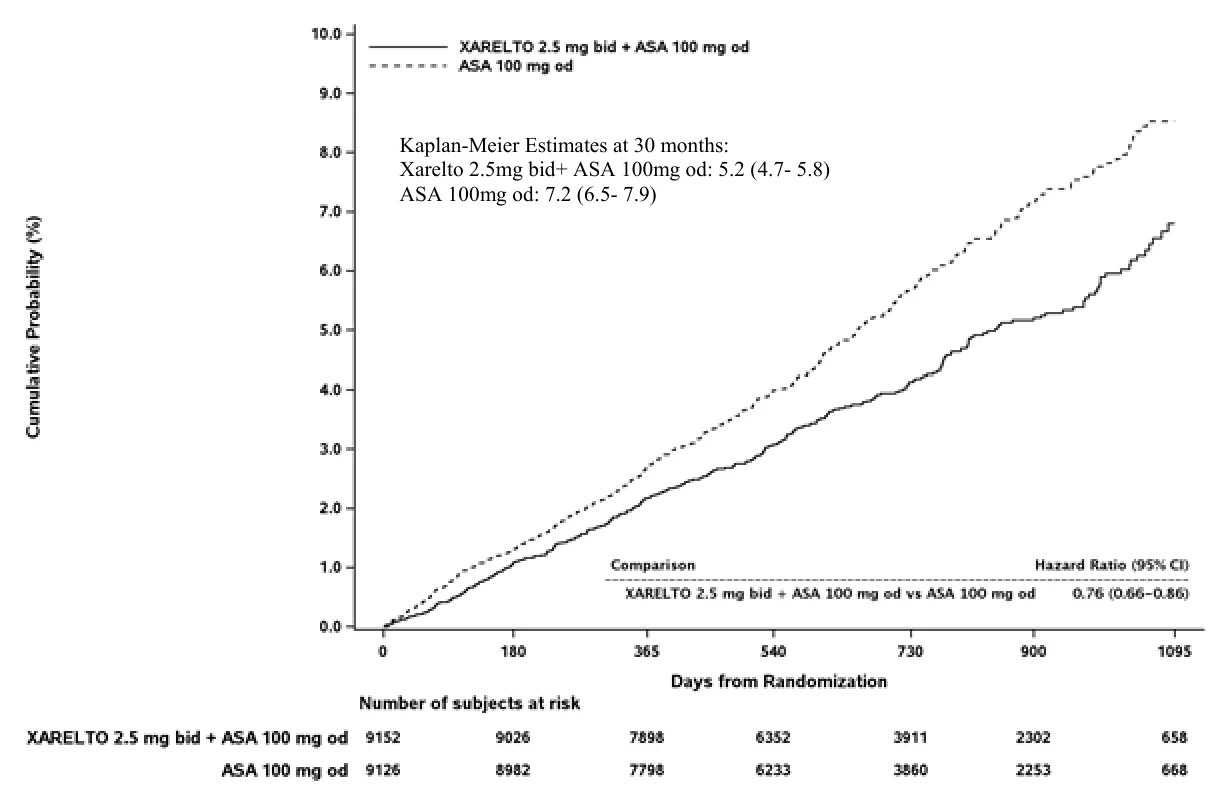
bid: twice daily; od: once daily; CI: confidence interval
Figure 8: Time to First Occurrence of Primary Efficacy Outcome (Stroke, Myocardial Infarction, Cardiovascular death) in COMPASS
Analysis of Patient Subgroups
The incidences and treatment effect of XARELTO 2.5 mg bid in combination with ASA 100 mg od for the primary efficacy and net clinical benefit outcome across major subgroups are presented in Table 37 and Table 38 below. The treatment effect was similar with no significant p-value for interaction across major subgroups.
Kaplan-Meier Estimates at 30 months: Xarelto 2.5mg bid+ ASA 100mg od: 5.2 (4.7- 5.8) ASA 100mg od: 7.2 (6.5- 7.9)
Table 37 - Summary of the Results for the Primary Efficacy Outcome According to Patient Subgroup in the Phase III COMPASS Study
Characteristic XARELTO 2.5 mg
bid + ASA 100 mg
od
ASA 100 mg od HR (95% CI)
No. of subjects/total no. (%)
Overall 379/9152 (4.14%) 496/9126 (5.44%) 0.76 (0.66-0.86) CAD with/without PAD 347/8313 (4.17%) 460/8261 (5.57%) 0.74 (0.65-0.86)
CAD with PAD 94/1656 (5.68%) 138/1641 (8.41%) 0.67 (0.52-0.87) CAD without PAD 253/6657 (3.80%) 322/6620 (4.86%) 0.77 (0.66-0.91) Polyvascular Disease
1 Vascular Bed 265/7078 (3.74%) 322/7039 (4.57%) 0.81 (0.69-0.95) 2 Vascular Beds 93/1613 (5.77%) 135/1589 (8.50%) 0.67 (0.52-0.88) 3 Vascular Beds 21/456 (4.58%) 39/497 (7.85%) 0.57 (0.33-0.97) Age
<65 79/2150 (3.67%) 126/2184 (5.77%) 0.63 (0.48-0.84) 65-74 179/5087 (3.53%) 238/5045 (4.72%) 0.74 (0.61-0.90) ≥75 121/1924 (6.29%) 132/1897 (6.96%) 0.89 (0.69-1.14) Sex
Male 300/7093 (4.23%) 393/7137 (5.51%) 0.76 (0.66-0.89) Female 79/2059 (3.84%) 103/1989 (5.18%) 0.72 (0.54-0.97) Region
North America 63/1304 (4.83%) 80/1309 (6.11%) 0.78 (0.56-1.08) South America 93/2054 (4.53%) 111/2054 (5.40%) 0.84 (0.63-1.10) Western Europe* 117/2855 (4.10%) 141/2855 (4.94%) 0.82 (0.64-1.05) Eastern Europe 59/1607 (3.67%) 90/1604 (5.61%) 0.65 (0.46-0.90)
Asia Pacific 47/1332 (3.53%) 74/1304 (5.67%) 0.62 (0.43-0.89) Race
White 235/5673 (4.14%) 306/5682 (5.39%) 0.76 (0.64-0.90) Black 2/76 (2.63%) 8/92 (8.7%) N.C. N.C. Asian 54/1451 (3.72%) 81/1397 (5.80%) 0.64 (0.45-0.90) Other 88/1952 (4.51%) 101/1955 (5.17%) 0.87 (0.65-1.16) Weight
≤60kg 41/901 (4.55%) 45/836 (5.38%) 0.83 (0.55-1.27) >60kg 335/8241 (4.07%) 448/8285 (5.41%) 0.75 (0.65-0.86) eGFR
<60mL/min 132/2054 (6.43%) 177/2114 (8.37%) 0.75 (0.60-0.94) ≥60mL/min 247/7094 (3.48%) 319/7012 (4.55%) 0.76 (0.64-0.90) Tobacco Use History
Current 80/1944 (4.12%) 122/1972 (6.19%) 0.66 (0.50-0.88) Former 186/4286 (4.34%) 224/4251 (5.27%) 0.81 (0.67-0.99) Never 113/2922 (3.87%) 150/2903 (5.17%) 0.75 (0.59-0.95) Diabetes
Yes 179/3448 (5.19%) 239/3474 (6.88%) 0.74 (0.61-0.90) No 200/5704 (3.51%) 257/5652 (4.55%) 0.77 (0.64-0.93) Hypertension History
Yes 317/6907 (4.59%) 409/6877 (5.95%) 0.76 (0.66-0.89) No 62/2245 (2.76%) 87/2249 (3.87%) 0.71 (0.51-0.98) Lipid Lowering Agent
Yes 325/8239 (3.94%) 428/8158 (5.25%) 0.74 (0.64-0.86) No 54/913 (5.91%) 68/968 (7.02%) 0.85 (0.60-1.22)
Favours
XARELTO 2.5
mg bid + ASA
100 mg od
Favours ASA 100 mg od
N.C. – Not calculated as minimum number of outcomes were not reached.
Western Europe also includes AUS/ISR/ZAF.
0.1 1 10
Table 38 - mISTH Major Bleeding Results According to Patient Subgroup in the Phase III COMPASS Study
Characteristic XARELTO 2.5 mg
bid + ASA 100 mg
od
ASA 100 mg od HR (95% CI)
No. of subjects/total no. (%)
Overall 288/9152 (3.15%) 170/9126 (1.86%) 1.70 (1.40-2.05) CAD with/without PAD 263/8313 (3.16%) 158/8261 (1.91%) 1.66 (1.37-2.03)
CAD with PAD 52/1656 (3.14%) 36/1641 (2.19%) 1.43 (0.93-2.19) CAD without PAD 211/6657 (3.17%) 122/6620 (1.84%) 1.73 (1.38-2.16) Polyvascular Disease
1 Vascular Bed 221/7078 (3.12%) 128/7039 (1.82%) 1.72 (1.39-2.14) 2 Vascular Beds 58/1613 (3.6%) 33/1589 (2.08%) 1.75 (1.14-2.68) 3 Vascular Beds 9/459 (1.96%) 9/497 (1.81%) 1.06 (0.42-2.66) Age
<65 31/2150 (1.44%) 27/2184 (1.24%) 1.18 (0.70-1.97) 65-74 156/5078 (3.07%) 96/5045 (1.90%) 1.63 (1.26-2.10) ≥75 101/1924 (5.25%) 47/1897 (2.48%) 2.12 (1.50-3.00) Sex
Male 224/7093 (3.16%) 142/7137 (1.99%) 1.60 (1.29-1.97) Female 64/2059 (3.11%) 28/1989 (1. 41%) 2.22 (1.42-3.46) Region
North America 59/1304 (4.52%) 41/1309 (3.13%) 1.45 (0.97-2.16) South America 29/2054 (1.41%) 15/2054 (0.73%) 1.93 (1.04-3.60) Western Europe* 119/2855 (4.17%) 69/2855 (2.42%) 1.73 (1.29-2.33) Eastern Europe 28/1607 (1.74%) 21/1604 (1.31%) 1.32 (0.75-2.33)
Asia Pacific 53/1332 (3.98%) 24/1304 (1.84%) 2.21 (1.37-3.58) Race
White 194/5673 (3.42%) 127/5682 (2.24%) 1.53 (1.22-1.91) Black 2/76 (2.63%) 3/92 (3.26%) N.C. N.C. Asian 57/1451 (3.93%) 25/1397 (1.79%) 2.24 (1.40-3.58) Other 35/1952 (1.79%) 15/1955 (0.77%) 2.38 (1.30-4.36) Weight
≤60kg 34/901 (3.77%) 11/836 (1.32%) 2.87 (1.45-5.66) >60kg 254/8241 (3.08%) 159/8285 (1.92%) 1.61 (1.32-1.97) eGFR
<60mL/min 81/2054 (3.94%) 57/2114 (2.70%) 1.47 (1.05-2.07) ≥60mL/min 206/7094 (2.90%) 113/7012 (1.61%) 1.81 (1.44-2.28) Tobacco Use History
Current 61/1944 (3.14%) 32/1972 (1.62%) 1.97 (1.28-3.02) Former 145/4286 (3.38%) 95/4251 (2.23%) 1.52 (1.17-1.96) Never 82/2922 (2.81%) 43/2903 (1.48%) 1.90 (1.32-2.75) Diabetes
Yes 110/3448 (3.19%) 65/3474 (1.87%) 1.70 (1.25-2.31) No 178/5704 (3.12%) 105/5652 (1.86%) 1.69 (1.33-2.15) Hypertension History
Yes 222/6907 (3.21%) 138/6877 (2.01%) 1.61 (1.30-1.99) No 66/2245 (2.94%) 32/2249 (1.42%) 2.06 (1.35-3.14) Lipid Lowering Agent
Yes 260/8239 (3.16%) 148/8158 (1.81%) 1.74 (1.42-2.13) No 28/913 (3.07%) 22/968 (2.27%) 1.37 (0.78-2.40)
Favours 2.5 mg
bid + ASA 100
mg od
Favours ASA 100 mg od
N.C. – Not calculated as minimum number of outcomes were not reached.
Western Europe also includes AUS/ISR/ZAF.
0.1 1 10
DETAILED PHARMACOLOGY
Animal Pharmacology
In Vitro
XARELTO (rivaroxaban) is a competitive, selective, and direct, antithrombin independent Factor-Xa (FXa) inhibitor. It potently inhibits free human FXa, prothrombinase, and clot associated FXa. Rivaroxaban inhibits human FXa with >10 000-fold greater selectivity than for other serine proteases. Its effect on FXa resulted in a prolongation of clotting times in human plasma.
In Vivo
Rivaroxaban given prophylactically showed consistent, dose-dependent antithrombotic activity in both venous (platelet-poor, fibrin-rich) and arterial (platelet-rich, fibrin-poor) thrombosis models in mice, rats, and rabbits, with higher potency in the venous model.
In a rabbit model of venous thrombus growth, oral rivaroxaban given nonprophylactically reduced thrombus growth to a similar extent as observed with known efficacious doses of the control agents nadroparin and fondaparinux.
In a murine model of thromboembolic death, rivaroxaban provided effective protection with greater potency than enoxaparin.
PT values correlated strongly with the plasma concentrations of rivaroxaban.
The antihemostatic effect of rivaroxaban was evaluated in bleeding time models in rats and rabbits. Bleeding times were not significantly affected at antithrombotic doses below the ED50 required for antithrombotic efficacy in the arterial thrombosis models. Rivaroxaban showed an antithrombotic activity/bleeding risk ratio comparable to enoxaparin.
Safety Pharmacology
Safety pharmacology investigation on vital organ systems (cardiovascular system, respiratory system, and central nervous system) as well as on supplemental organ systems (hematology and blood coagulation, gastrointestinal function, renal function, and metabolism) revealed no adverse effect of rivaroxaban.
Studies on ventricular repolarization (hERG K+ current and action potential of isolated rabbit Purkinje fibers in vitro, ECG recordings in dogs) showed no evidence for a proarrhythmic risk in humans.
Human Pharmacology
Pharmacokinetics
Rivaroxaban pharmacokinetics are linear with no relevant accumulation beyond steady state after multiple doses. Variability in pharmacokinetics is moderate with interindividual variability (coefficient of variation) ranging from 30% to 40%.
Absorption and Bioavailability
Rivaroxaban is a low solubility, high permeability compound. Rivaroxaban is readily absorbed after oral administration as solution (Cmax after approximately 30 min) as well as tablet (Cmax after 2 to 4 hours). Oral bioavailability of rivaroxaban is high (80-100%) due to almost complete absorption with/without food (at doses up to 15 mg) and lack of relevant presystemic first-pass extraction of this low-clearance drug.
Due to reduced extent of absorption, an oral bioavailability of 66% was determined for the 20 mg tablet under fasting conditions. When rivaroxaban 20 mg tablets are taken together with food, increases in mean AUC by 39% and mean Cmax by 76% were observed when compared to tablet intake under fasting conditions, indicating almost complete absorption and high oral bioavailability when this dose was taken with food (see DOSAGE AND ADMINISTRATION
- Recommended Dose and Dosage Adjustment).
Distribution
Plasma protein binding for rivaroxaban in humans is high at approximately 92% to 95% in vitro, with serum albumin being the main binding component. No concentration dependency and no gender difference in fraction unbound were detected. Mean rivaroxaban protein-bound fractions determined ex vivo in healthy subjects ranged from 90% to 95%.
Due to its high plasma protein binding, rivaroxaban is not expected to be removed by dialysis.
The binding of rivaroxaban to plasma proteins is fully reversible. In accordance with other species, rivaroxaban is mainly located in plasma; the human plasma-to-blood partition coefficient is 1.40.
Metabolism
Rivaroxaban is eliminated by metabolic degradation (approximately 2/3 of administered dose) as well as by direct renal excretion of unchanged active compound (approximately 1/3 of administered dose). In all investigated species, the oxidative degradation of the morpholinone moiety (catalyzed via CYP 3A4/CYP 3A5 and CYP 2J2 and leading via cleavage of the ring and further oxidation to metabolite M-1) was the major site of biotransformation of rivaroxaban. Unchanged rivaroxaban is the most important compound in human plasma with no major or active circulating metabolites being present. No metabolic conversion of rivaroxaban to its enantiomer was observed in humans.
Taking excretion data and metabolite profiles derived from the mass balance study in man into consideration, present data from the CYP reaction phenotyping study suggests that contribution of CYP 3A4/CYP 3A5 accounts for approximately 18% and CYP 2J2 for approximately 14% of total rivaroxaban elimination, respectively. Besides this oxidative biotransformation, hydrolysis of the amide bonds (approximately 14%) and active, transporter-mediated renal excretion of unchanged drug (approximately 30%) play important roles as elimination pathways.
Excretion
Rivaroxaban and its metabolites have a dual route of elimination, via both renal (66% in total) and biliary/fecal routes; 36% of the administered dose is excreted unchanged via the kidneys via glomerular filtration and active secretion.
The clearance and excretion of rivaroxaban is as follows:
- 1/3 of the active drug is cleared as unchanged drug by the kidneys
- 1/3 of the active drug is metabolized to inactive metabolites and then excreted by the kidneys
- 1/3 of the active drug is metabolized to inactive metabolites and then excreted by the fecal route.
Rivaroxaban has been identified in vitro to be a substrate both of the active transporter P-glycoprotein (P-gp) and of the multidrug transport protein BCRP (‘breast cancer resistance protein’).
With an average systemic plasma clearance of approximately 10 L/h, rivaroxaban is a low-clearance drug lacking relevant first-pass extraction. Mean terminal elimination half-lives of rivaroxaban are in the range of 5 h to 9 h after steady-state tablet dosing regimens in young subjects. Mean terminal elimination half-lives between 11 h to 13 h were observed in the elderly.
Special Populations and Conditions
Geriatrics (>65 Years of Age)
Results from a set of Phase I studies indicate for the target population of elderly higher mean AUC values by 52% in males and by 39% in females when compared to young subjects of the same gender, accompanied by an increase in Cmax by 35% in both genders and by terminal half-lives between 11 and 13 h. Investigating subjects older than 75 years confirmed the expectation, leading to approximately 41% higher AUC values in comparison to young subjects (90% CI [1.20 – 1.66]), mainly due to reduced (apparent) total body clearance and renal clearance. No relevant age effects could be observed for Cmax (Cmax ratio 1.08; 90% CI [0.94-1.25]) or tmax.
Pediatrics (<18 Years of Age)
No clinical data are available for children.
Gender
There were no relevant differences in pharmacokinetics and pharmacodynamics between male and female subjects, especially when taking into account body weight differences.
Body Weight
Extremes in body weight (<50 kg or >120 kg) had only a small influence (increase in maximum concentration by <25% on rivaroxaban plasma concentrations and pharmacodynamics.
Race
Differences in rivaroxaban exposure observed between the various investigated ethnic groups — Caucasians, African-Americans, Hispanics, Chinese and Japanese — were within the normal magnitude of interindividual variability.
With respect to Factor-Xa activity and coagulation parameters, eg, prothrombin time (PT Neoplastin® reagent), neither age, gender, nor body weight affected the PD parameter/rivaroxaban concentration relationship, ie, all observed changes in pharmacodynamics were driven by the respective underlying plasma exposure in these specific subject populations. This is also true for the various investigated ethnic groups — Caucasians, African-Americans, Hispanics, Chinese and Japanese.
Renal Insufficiency
The safety and pharmacokinetics of single-dose XARELTO (10 mg) were evaluated in a study in healthy subjects [CrCl ≥80 mL/min (n=8)] and in subjects with varying degrees of renal impairment (see Table 39). Compared to healthy subjects with normal creatinine clearance, rivaroxaban exposure increased in subjects with renal impairment. Increases in pharmacodynamic effects were also observed.
Table 39 - Percent Increase of Rivaroxaban PK and PD Parameters from Normal in Subjects with Renal Insufficiency from a Dedicated Renal Impairment Study
| Parameter | CrCl (mL/min) | |||
| 50 to 79 | 30 to 49 | 15 to 29 | ||
| N=8 | N=8 | N=8 | ||
Exposure (% increase relative to normal) | AUC | 44 | 52 | 64 |
| Cmax | 28 | 12 | 26 | |
FXa Inhibition (% increase relative to normal) | AUC | 50 | 86 | 100 |
| Emax | 9 | 10 | 12 | |
PT Prolongation (% increase relative to normal) | AUC | 33 | 116 | 144 |
| Emax | 4 | 17 | 20 | |
PT = Prothrombin time; FXa = Coagulation factor Xa; AUC = Area under the concentration or effect curve; Cmax = maximum concentration; Emax = maximum effect; and CrCl = creatinine clearance
In subjects with mild renal impairment, the combined P-gp and moderate CYP 3A4 inhibitor erythromycin (500 mg three times a day) led to a 1.8-fold increase in mean rivaroxaban AUC and 1.6-fold increase in Cmax when compared to subjects with normal renal function without co-medication. In subjects with moderate renal impairment, erythromycin led to a 2.0-fold increase in mean rivaroxaban AUC and 1.6-fold increase in Cmax when compared to subjects with normal renal function without co-medication (see WARNINGS AND PRECAUTIONS – Drug Interactions). Subjects with either mild or moderate renal impairment had a 1.2- and 1.4-fold increase in Factor Xa inhibition, respectively, and a prolongation of prothrombin time of 1.7- and 1.75-fold in subjects with mild and moderate renal impairment, respectively.
Hepatic Insufficiency
The safety and pharmacokinetics of single-dose XARELTO (10 mg) were evaluated in a study in healthy subjects (n=16) and subjects with varying degrees of hepatic impairment (see Table 40). No patients with severe hepatic impairment (Child-Pugh C) were studied. Compared to healthy subjects with normal liver function, significant increases in rivaroxaban exposure were observed in subjects with moderate hepatic impairment (Child-Pugh B). Increases in pharmacodynamic effects were also observed.
Table 40 - Percent Increase of Rivaroxaban PK and PD Parameters from Normal in Subjects with Hepatic Insufficiency from a Dedicated Hepatic Impairment Study
| Parameter | Hepatic Impairment Class (Child-Pugh Class) | ||
Mild (Child-Pugh A) | Moderate (Child-Pugh B) | ||
| N=8 | N=8 | ||
Exposure (% increase relative to normal) | AUC | 15 | 127 |
| Cmax | 0 | 27 | |
FXa Inhibition (% increase relative to normal) | AUC | 8 | 159 |
| Emax | 0 | 24 | |
PT Prolongation (% increase relative to normal) | AUC | 6 | 114 |
| Emax | 2 | 41 | |
PT = Prothrombin time; FXa = Coagulation factor Xa; AUC = Area under the concentration or effect curve; Cmax = maximum concentration; Emax = maximum effect; and CrCl = creatinine clearance
PHASE IV STUDIES
Two Phase IV clinical studies (XALIA and XANTUS) were done to evaluate the effects of rivaroxaban use under real-world (clinical practice) conditions.
XALIA
In addition to the Phase III EINSTEIN program, a prospective, non-interventional, open-label cohort study (XALIA) investigated the long-term safety of XARELTO under real-world conditions (central outcome adjudication including recurrent VTE, major bleeding and death. In 2619 XARELTO-treated patients, rates of major bleeding, recurrent VTE and all-cause mortality for XARELTO were 0.7%, 1.4% and 0.5%, respectively.
These results are consistent with the established safety profile of XARELTO in this population.
XANTUS
In addition to the Phase III ROCKET AF study, a prospective, single-arm, post-authorization, non-interventional, open-label cohort study (XANTUS) with central outcome adjudication including thromoboembolic events and major bleeding has been conducted. 6,785 patients with non-valvular atrial fibrillation were enrolled for prevention of stroke and non-central nervous system (CNS) systemic embolism under real-world conditions. The mean CHADS2 score of the population was 2.0. Major bleeding incidence was 2.1 per 100 patient years. Fatal hemorrhage incidence was 0.2 per 100 patient years and intracranial hemorrhage incidence was 0.4 per 100 patient years. Stroke or non-CNS systemic embolism incidence was 0.8 per 100 patient years. These results are consistent with the established safety profile of XARELTO in this population.
TOXICOLOGY
Acute Toxicity
XARELTO (rivaroxaban) showed low acute toxicity in rats and mice.
Repeated Dose Toxicity
Rivaroxaban was tested in repeat-dose studies up to 6 months in rats and up to 12 months in dogs. Based on the pharmacological mode of action, a NOEL could not be established due to effects on clotting time. All adverse findings, except for a slight body weight gain reduction in
rats and dogs, could be related to an exaggerated pharmacological mode of action of the compound. In dogs, at very high exposures, severe spontaneous bleedings were observed. The NOAELs after chronic exposure are 12.5 mg/kg in rats and 5 mg/kg in dogs.
Carcinogenicity
In 2-year carcinogenicity studies, rivaroxaban was tested in mice, up to 60 mg/kg/day (reaching systemic exposure similar to humans) and in rats (up to 3.6-fold higher than in humans) without demonstration of carcinogenic potential.
Reproductive Toxicology
Rivaroxaban was tested in developmental toxicity studies at exposure levels of up to 38-fold (rat) and up to 89-fold (rabbit) above the therapeutic exposure in humans. The toxicological profile is mainly characterized by maternal toxicity due to exaggerated pharmacodynamic effects.
Up to the highest dose tested, no primary teratogenic potential was identified. [14C]Rivaroxaban -related radioactivity penetrated the placental barrier in rats. In none of the fetal organs and tissues did the exposure in terms of maximum concentrations or AUC exceed the maternal blood exposure. The average exposure in the fetuses based on AUC(0-24) reached about 20% of the exposure in maternal blood. The AUC in the mammary glands was approximately equivalent to the AUC in the blood, which indicates secretion of radioactivity into milk (see CONTRAINDICATIONS).
Rivaroxaban did not show an effect on male or female fertility up to 200 mg/kg.
Lactation
[14C]Rivaroxaban was administered orally to lactating Wistar rats (day 8 to 10 post partum) as a single oral dose of 3 mg/kg body weight.
[14C]Rivaroxaban -related radioactivity was secreted into the milk of lactating rats only to a low extent in relation to the administered dose: The estimated amount of radioactivity excreted with milk was 2.12% of the maternal dose within 32 hours after administration (see CONTRAINDICATIONS).
Mutagenesis
No genotoxicity was observed in a test for gene mutation in bacteria (Ames-Test), in an in vitro test for chromosomal aberrations, or in the in vivo micronucleus test.
REFERENCES
- 1. Agnelli G, Gallus A, Goldhaber SZ, Haas S, Huisman MV, Hull RD, et al. Treatment of proximal deep-vein thrombosis with the oral direct factor Xa inhibitor rivaroxaban (BAY 59-7939): the ODIXa-DVT (Oral Direct Factor Xa Inhibitor BAY 59-7939 in Patients With Acute Symptomatic Deep-Vein Thrombosis) study. Circulation. 2007;116(2):180-7.
- 2. Biemond B, Perzborn E, Friederich P, Levi M, Buetehorn U, Bueller H. Prevention and treatment of experimental thrombosis in rabbits with rivaroxaban (BAY 597939) an oral, direct factor Xa inhibitor. Thromb Haemost. 2007;79:471-7.
- 3. Buller HR, editor. Oral rivaroxaban for the treatment of symptomatic venous thromboembolism: a pooled analysis for the EINSTEIN DVT and EINSTEIN PE Studies. American Society of Hematology Annual Meeting Abstracts; 2012 December 8; Georgia World Congress Center.
- 4.
Buller HR, Prins MH, Lensing AW, Decousus H, Jacobson BF, Minar E ea.
Supplementary Appendix to the article Oral Rivaroxaban for the treatment of symptomatic pulmonary embolism. N Engl J Med. 2012;366(14):128-97.
- 5. Buller HR, Prins MH, Lensin AW, Decousus H, Jacobson BF, Minar E, et al. Oral rivaroxaban for the treatment of symptomatic pulmonary embolism. N Engl J Med. 2012;366(14):1287-97.
- 6.
Eriksson BI, Borris L, Dahl OE, Haas S, Huisman MV, Kakkar AK, et al. Oral, direct
Factor Xa inhibition with BAY 59-7939 for the prevention of venous thromboembolism after total hip replacement. J Thromb Haemost. 2006;4(1):121-8.
- 7. Eriksson BI, Borris LC, Dahl OE, Haas S, Huisman MV, Kakkar AK, et al. A once-daily, oral, direct Factor Xa inhibitor, rivaroxaban (BAY 59-7939), for thromboprophylaxis after total hip replacement. Circulation. 2006;114(22):2374-81.
- 8. Fisher WD, Eriksson BI, Bauer KA, Borris L, Dahl OE, Gent M, et al. Rivaroxaban for thromboprophylaxis after orthopaedic surgery: pooled analysis of two studies. Thromb Haemost. 2007;97(6):931-7.
- 9. Geerts W, Bergqvist D, Pineo G, Heit J, Samama C, Lassen M, et al. Prevention of venous thromboembolism. American College of Chest Physicians evidence-based clinical practice guidelines (8th edition). CHEST. 2008;133:381S-453S.
- 10. Gibson CM, Mega JL, Burton P, Goto S, Verheugt F, Bode C, et al. Rationale and design of the Anti-Xa therapy to lower cardiovascular events in addition to standard therapy in subjects with acute coronary syndrome-thrombolysis in myocardial infarction 51 (ATLAS-ACS 2 TIMI 51) trial: a randomized, double-blind, placebo-controlled study to evaluate the efficacy and safety of rivaroxaban in subjects with acute coronary syndrome. Am Heart J. 2011;161(5):815-21 e6.
- 11. Gibson CM, Mehran R, Bode C, Halperin J, Verheught FW, et al. Prevention of Bleeding in Patients with Atrial Fibrillation Undergoing PCI. N Engl J Med. 2016;375(25):2423-2434.
- 12.
Kakkar AK, Brenner B, Dahl OE, Eriksson BI, Mouret P, Muntz J, et al. Extended duration rivaroxaban versus short-term enoxaparin for the prevention of venous
thromboembolism after total hip arthroplasty: a double-blind, randomised controlled trial. Lancet. 2008;372:31-9.
- 13. Kubitza D, Becka M, Wensing G, Voith B, Zuehlsdorf M. Safety, pharmacodynamics, and pharmacokinetics of BAY 59-7939--an oral, direct Factor Xa inhibitor--after multiple dosing in healthy male subjects. Eur J Clin Pharmacol. 2005;61(12):873-80.
- 14. Kubitza D, Becka M, Zuehlsdorf M, Mueck W. Body weight has limited influence on the safety, tolerability, pharmacokinetics, or pharmacodynamics of rivaroxaban (BAY 59-7939) in healthy subjects. J Clin Pharmacol. 2007;47(2):218-26.
- 15.
Lassen MR, Ageno W, Borris LC, Lieberman JR, Rosencher N, Bandel TJ, et al.
Rivaroxaban versus enoxaparin for thromboprophylaxis after total knee arthroplasty. N Engl J Med. 2008;358(26):2776-86.
- 16. Mega JL, Braunwald E, Wiviott SD, Bassand JP, Bhatt DL, Bode C, et al. Rivaroxaban in patients with a recent acute coronary syndrome. N Engl J Med. 2011;366(1):9-19. Supplementary Appendix. 2011:1-9
- 17. Mega JL, Braunwald E, Wiviott SD, Bassand JP, Bhatt DL, Bode C, et al. Rivaroxaban in patients with a recent acute coronary syndrome. N Engl J Med. 2012;366(1):9-19.
- 18. Moore KT, Vaidyanathan S, Natarajan J, Ariyawansa J, Haskell L, Turner KC. An open-label study to estimate the effect of steady-state erythromycin on the pharmacokinetics, pharmacodynamics, and safety of a single dose of rivaroxaban in subjects with renal impairment and normal renal function. J Clin Pharmacol. 2014;54(12):1407-20.
- 19.
Patel MR, Mahaffey KW, Garg J, Pan G, Singer DE, Hacke W, et al. Rivaroxaban versus
Warfarin in Nonvalvular Atrial Fibrillation and Supplementary Appendix p. 1-23. N Engl J Med. 2011;365(10):883-91.
- 20. Perzborn E, Strassburger J, Wilmen A, Pohlmann J, Roehrig S, Schlemmer KH, et al. In vitro and in vivo studies of the novel antithrombotic agent BAY 59-7939--an oral, direct Factor Xa inhibitor. J Thromb Haemost. 2005;3(3):514-21.
- 21.
Turpie AG, Fisher WD, Bauer KA, Kwong LM, Irwin MW, Kalebo P, et al. BAY 59-
7939: an oral, direct factor Xa inhibitor for the prevention of venous thromboembolism in patients after total knee replacement. A phase II dose-ranging study. J Thromb Haemost. 2005;3(11):2479-86.
- 22. Weitz JI, Bauersachs R, Beyer-Westendorf J, Bounameaux H, Brighton TA, Cohen AT, et al. Two doses of rivaroxaban versus aspirin for prevention of recurrent venous thromboembolism. Rationale for and design of the EINSTEIN CHOICE study. Thromb Haemost. 2015 Aug 31;114(3):645-50.
- 23.
Kenneth T. Moore, Mark A. Krook, Seema Vaidyanathan1, Troy C. Sarich, C. V.
Damaraju, and Larry E. Fields. Rivaroxaban Crushed Tablet Suspension Characteristics and Relative Bioavailability in Healthy Adults When Administered Orally or Via Nasogastric Tube. Clinical Pharmacology in Drug Development. 2014;3(4) 321–327.
- 24.
Ageno W, Mantovani LG, Haas S, Kreutz R, Monje D, Schneider J, van Eickels M,
Gebel M, Zell E, Turpie AG. Safety and effectiveness of oral rivaroxaban versus standard
anticoagulation for the treatment of symptomatic deep-vein thrombosis (XALIA): an international, prospective, non-interventional study. Lancet Haematol 2016; 3: e12–21.
- 25.
Camm AJ, Amarenco P, Haas S, Hess S, Kirchhof P, Kuhls S, van Eickels M, Turpie
AG; XANTUS Investigators. XANTUS: a real-world, prospective, observational study of patients treated with rivaroxaban for stroke prevention in atrial fibrillation. Eur Heart J. 2016; Apr 7;37(14):1145-53.
- 26. Connolly SJ, Eikelboom JW, Bosch J, Dagenais G, Dyal L, Lanas F, et al. Rivaroxaban with or without aspirin in patients with stable coronary artery disease: an international, randomised, double-blind, placebo-controlled trial. Lancet. 2017 Nov 10.
- 27.
Anand SS, Bosch J, Eikelboom JW, Connolly SJ, Diaz R, Widimsky P, et al.
Rivaroxaban with or without aspirin in patients with stable peripheral or carotid artery disease: an international, randomised, double-blind, placebo-controlled trial. Lancet. 2017 Nov 10.