


Patient Medication Information: uses, side effects, how to take - Yuflyma
Serious Warnings and Precautions
Before starting, during and after treatment with YuflymaTM, you should be checked for active or inactive tuberculosis infection with a tuberculin skin test. Any medicine can have side effects. Like all medicines that affect your immune system, YuflymaTM can cause serious side effects. The possible serious side effects include:
|
What is YuflymaTM used for?
YuflymaTM is a medicine that is used in:
- adults with rheumatoid arthritis, which is an inflammatory disease of the joints.
- adults with psoriatic arthritis, which is an inflammatory disease of the joints and skin.
- adults with ankylosing spondylitis, which is a form of arthritis.
- adults with Crohn’s disease, which is an inflammatory disease of the digestive tract.
- patients 2 years of age and older who have polyarticular juvenile idiopathic arthritis.
- children 13 to 17 years weighing ≥ 40 kg who have severe Crohn’s disease or who have Crohn’s disease which has not responded to other usual treatments.
- adults with ulcerative colitis, which is an inflammatory disease of the bowel (colon).
- adults or adolescents (12 to 17 years of age, weighing ≥ 30 kg) with moderate to severe hidradenitis suppurativa (HS) who have not responded to antibiotics. HS is a painful, progressive, chronic inflammatory skin disease that causes nodules, abscesses, sinus tracts and fistulas under the breasts, underarms, buttocks and groin.
- adults with psoriasis, which is an inflammatory disease of the skin. The doctor prescribed YuflymaTM to reduce the signs and symptoms of your plaque psoriasis.
- adults with uveitis, which is an inflammatory disease of the eye.
- children with chronic non-infectious uveitis from 2 years of age with inflammation affecting the front of the eye.
- children 5 to 17 years of age who have ulcerative colitis.
Patients with rheumatoid arthritis, polyarticular juvenile idiopathic arthritis, psoriatic arthritis, ankylosing spondylitis, hidradenitis suppurativa, psoriasis, or uveitis may be given other medicines for their disease before they are given YuflymaTM. If you have ulcerative colitis or you have Crohn’s disease, you will first be given other medicines. If you do not respond well enough to these medicines, you will be given YuflymaTM to reduce the signs and symptoms of your disease.
How does YuflymaTM work?
YuflymaTM is a fully human monoclonal antibody produced by cultured cells. Monoclonal antibodies are proteins that recognize and bind to other unique proteins. YuflymaTM binds to a specific protein called TNF-alpha (also known as tumor necrosis factor). People with rheumatoid arthritis, psoriatic arthritis, ankylosing spondylitis, Crohn’s disease, ulcerative colitis, hidradenitis suppurativa or psoriasis have too much of TNF-alpha in their bodies. The extra TNF-alpha in your body can attack normal healthy body tissues and cause inflammation, especially in the tissues of your bones, cartilage, joints, digestive tract and skin. By binding to TNF-alpha, YuflymaTM decreases the inflammation process of these diseases.
YuflymaTM helps reduce the signs and symptoms of rheumatoid arthritis, polyarticular juvenile idiopathic arthritis and psoriatic arthritis (such as pain and swollen joints), may help improve your ability to perform daily activities (such as getting dressed, walking and climbing stairs), and may help prevent further damage to your bones and joints. In addition, YuflymaTM helps reduce the signs and symptoms of ankylosing spondylitis (back pain and morning stiffness), and adult and pediatric Crohn’s disease or adult and pediatric ulcerative colitis (abdominal pain and diarrhea). YuflymaTM may also help normalize childhood growth and pubertal development and improve the quality of life in children who have Crohn’s disease (such as body image, functional and social skills, and emotional health). YuflymaTM may help improve the work productivity and activity impairment in caregivers of children with Crohn’s disease or ulcerative colitis.
YuflymaTM is also used to treat inflammatory lesions (nodules and abscesses) in adults and adolescents (12 to 17 years of age, weighing ≥ 30 kg) with hidradenitis suppurativa.
YuflymaTM also helps reduce the signs and symptoms of psoriasis (such as pain, itching and scaly patches on skin).
YuflymaTM helps control uveitis by reducing the risk of inflammation and loss of vision in adult and pediatric patients.
YuflymaTM, however, can also lower your body’s ability to fight infections. Taking YuflymaTM can make you more prone to getting infections or make any infection you have worse.
What are the ingredients in YuflymaTM?
Medicinal ingredients: adalimumab
Non-medicinal ingredients: acetic acid, glycine, polysorbate 80, sodium acetate trihydrate, and water for injection
YuflymaTM comes in the following dosage forms:
YuflymaTM (adalimumab injection) is supplied as a sterile solution for subcutaneous administration (20 mg/ 0.2 ml, 40 mg/ 0.4 ml and 80 mg/ 0.8 ml).
Do not use YuflymaTM if:
You/Your child have
- an allergy to any of the ingredients in YuflymaTM (see What are the ingredients in YuflymaTM? section).
- a serious infection such as tuberculosis, infections caused by bacteria or fungi, and bacterial infections that have spread throughout the body (sepsis).
- moderate to severe heart failure (NYHA class III/IV).
To help avoid side effects and ensure proper use, talk to your healthcare professional before you take YuflymaTM. Talk about any health conditions or problems you may have, including if:
- you/your child have or have had any kind of infection including an infection that is in only one place in your/your child’s body (such as an open cut or sore), or an infection that is in your/your child’s whole body (such as the flu). Having an infection could put you/your child at risk for serious side effects from YuflymaTM. If you are unsure, ask your/your child’s doctor.
- you/your child have a history of infections that keep coming back or other conditions that might increase your/your child’s risk of infections, including fungal infections.
- you/your child have ever had tuberculosis, or if you/your child have been in close contact with someone who has had tuberculosis. If you/your child develop any of the symptoms of tuberculosis (a dry cough that doesn't go away, weight loss, fever, night sweats) call your/your child’s doctor right away. Your/your child’s doctor will need to examine you/your child for tuberculosis and perform a skin test.
- you/your child resided or travelled to areas where there is a greater risk for certain kinds of infections such as tuberculosis, histoplasmosis, coccidioidomycosis, blastomycosis, or parasitic infections. These infections are caused by a bacteria or a fungus that can affect the lungs or other parts of your/your child’s body. If you/your child take YuflymaTM these may become active or more severe. If you don’t know if you/your child have lived in or travelled to an area where these infections are common, ask your/your child’s doctor.
- you/your child have ever had liver injury or hepatitis B virus infection or are at risk of developing this infection. Signs and symptoms include the following: yellowing of the skin or eyes (jaundice), feeling of sickness, tiredness, loss of appetite, joint pain, fever, dark brown-colored urine, vomiting, and abdominal pain. If you/your child experience any of these signs and symptoms, contact your/your child’s doctor immediately. These symptoms may occur several months after starting therapy with YuflymaTM.
- you/your child experience any numbness or tingling or have ever had a disease that affects your/your child’s nervous system like multiple sclerosis or Guillain-Barré syndrome.
- you/your child have or have had heart failure.
- you/your child are scheduled to have major surgery or dental procedures.
- you/your child are scheduled to be vaccinated for anything. It is recommended that pediatric patients, if possible, be brought up to date with all immunizations according to current guidelines before starting YuflymaTM.
- you/your child are taking other medicines for your/your child’s rheumatoid arthritis, polyarticular juvenile idiopathic arthritis, psoriatic arthritis, ankylosing spondylitis, Crohn’s disease, psoriasis, or other conditions. You/your child can take other medicines provided your/your child’s doctor has prescribed them or has told you/your child it is acceptable that you/your child take them while you/your child are taking YuflymaTM. It is important that you tell your/your child’s doctor about any other medicines you/your child are taking for other conditions (for example, high blood pressure medicine) before you/your child start taking YuflymaTM.
- you/your child are taking any over-the-counter drugs, herbal medicines and vitamin and mineral supplements.
you/your child are pregnant or could become pregnant
- you/your child are breast-feeding or plan to breast-feed.
If you/your child are not sure or have any questions about any of this information, ask your/your child’s doctor.
Other warnings you should know about:
If you received YuflymaTM while pregnant, your baby may be at higher risk for getting an infection for up to approximately five months after the last dose of YuflymaTM received during pregnancy. It is important that you tell your baby's doctors and other healthcare professionals about your YuflymaTM use during pregnancy so they can decide when your baby should receive any vaccine.
Tell your healthcare professional about all the medicines you take, including any drugs, vitamins, minerals, natural supplements or alternative medicines.
The following may interact with YuflymaTM:
You/your child should not take YuflymaTM with:
- Other TNF-blockers such as Enbrel®, Remicade®, Cimzia®, or Simponi®
- Abatacept (Orencia®)
- Anakinra (Kineret®)
If you have questions, ask your/your child’s doctor.
How to take YuflymaTM:
YuflymaTM is administered by injection under the skin (by subcutaneous injection).
Usual dose:
Adults with Rheumatoid Arthritis, Psoriatic Arthritis or Ankylosing Spondylitis:
The recommended dose is 40 mg administered every other week as a subcutaneous injection.
Patients, aged 2 years and older, with polyarticular juvenile idiopathic arthritis:
Weighing 10 kg to less than 30 kg: the recommended dose of Yuflyma is 20 mg every other week.
Weighing 30 kg or more: the recommended dose of Yuflyma is 40 mg every other week.
For patients who do not require a full 40 mg dose of Yuflyma, a 20 mg pre-filled syringe is also available.
Adults with Crohn’s Disease or Ulcerative Colitis:
The recommended induction dose is 160 mg at Week 0 (dose can be administered as four injections in one day or as two injections per day for two consecutive days), followed by 80 mg at Week 2.
The recommended maintenance dose regimen is 40 mg every other week beginning at Week 4.
Adults with Hidradenitis Suppurativa:
The recommended initial dose is 160 mg, followed by 80 mg two weeks later. The first dose of 160 mg can be administered as four injections in one day or as two injections per day for two consecutive days. The second dose of 80 mg is given as two 40 mg injections in one day.
The recommended maintenance dose regimen is 40 mg every week beginning four weeks after the initial dose.
Adults with Psoriasis or Uveitis:
The recommended dose is an initial dose of 80 mg, followed by 40 mg given every other week starting one week after the initial dose.
Children, 13 to 17 years of age weighing ≥ 40 kg, with Crohn’s disease:
The recommended dose is 160 mg initially at Week 0 (given as four 40 mg injections in one day, or as two 40 mg injections per day for two consecutive days), followed by 80 mg at Week 2 (given as two 40 mg injections). At Week 4, you will begin a maintenance dose of 20 mg every other week. Depending on your response, the doctor may increase the dose to 40 mg every other week (given as one 40 mg injection).
For children who do not require a full 40 mg dose of Yuflyma, a 20 mg pre-filled syringe is also available.
Adolescents, 12 to 17 years of age weighing ≥ 30 kg, with Hidradenitis Suppurativa:
The recommended initial dose is 80 mg administered by subcutaneous injection, followed by 40 mg every other week starting one week later. Depending on your response, the doctor may increase the dose to 40 mg every week.
Children, from 2 years of age with Uveitis:
Weighing less than 30 kg: the usual dose of Yuflyma is 20 mg every other week with methotrexate. Your child’s doctor may also prescribe an initial dose of 40 mg to be administered one week prior to the start of the usual dose if your child is older than 6 years of age.
Weighing 30 kg or more: the usual dose of Yuflyma is 40 mg every other week with methotrexate. Your child’s doctor may also prescribe an initial dose of 80 mg to be administered one week prior to the start of the usual dose.
Children, from 5 to 17 years of age with Ulcerative Colitis:
Weighing less than 40 kg: the induction dose of Yuflyma is 80 mg at Week 0, followed by 40 mg at Week 2. The recommended Yuflyma maintenance dose regimen is 40 mg every other week or 20 mg every week beginning at Week 4.
Weighing 40 kg or more: the induction dose of Yuflyma is 160 mg at Week 0, followed by 80 mg at Week 2. The recommended Yuflyma maintenance dose regimen is 80 mg every other week or 40 mg every week beginning at Week 4.
Overdose:
Missed Dose:
If you/your child forget to give yourself/your child an injection, you/your child should inject the missed dose of YuflymaTM as soon as you/your child remember. Then administer the next dose as you/your child would have on the originally scheduled date.
What are possible side effects from using YuflymaTM?
These are not all the possible side effects you/your child may feel when taking YuflymaTM. If you/your child experience any side effects not listed here, contact your/your child’s healthcare professional.
Like all medicines, YuflymaTM can cause side effects. Most side effects are mild to moderate. However, some may be serious and require treatment.
Tell your/your child’s doctor immediately if you/your child experience any of the following:
- severe rash, hives or other signs of allergic reaction
- swollen face, hands, feet
- trouble breathing, swallowing
- sudden weight gain (this is possibly indicative of new or worsening heart failure)
- bruising or bleeding very easily, looking very pale; this could mean a blood problem such as low red blood cells (anemia) or low platelets
If you/your child think you/your child have taken too much YuflymaTM, contact your/your child’s healthcare professional, hospital emergency department or regional poison control centre immediately, even if there are no symptoms.
Tell the doctor as soon as possible if you/your child notice any of the following:
- signs of infection such as fever, malaise, wounds, dental problems, burning on urination
- feeling weak or tired
- coughing
- tingling
- numbness
- double vision
- arm or leg weakness
- arm or leg pain, swelling or redness
- bump or open sore that does not heal
- red scaly patches or raised bumps that are filled with pus (this could be new or worsening hidradenitis suppurativa, new or worsening psoriasis or a skin infection)
- alopecia (loss of hair)
- changes in the colour of the skin
- changes in the colour of your/your child’s urine (dark or red)
- worsening of the appearance of a scar
- night sweats
- weight loss
- pain in the abdomen or chest
Serious side effects and what to do about them
| Serious side effects and what to do about them | |||
|---|---|---|---|
| Symptom/effect | Talk to your/your child’s healthcare professional | Stop taking drug and get immediate medical help | |
| Symptom/effect | Talk to your/your child’s healthcare professional | Stop taking drug and get immediate medical help | |
| Only if severe | In all cases | ||
| Only if severe | In all cases | ||
| VERY COMMON | |||
| Injection site reaction | ✓ | ||
| COMMON | |||
| Cough and cold symptoms, including sore throat | ✓ | ||
| Headache | ✓ | ||
| Rash | ✓ | ||
| Nausea | ✓ | ||
| Pneumonia | ✓ | ✓ | |
| Fever | ✓ | ||
| Abdominal pain | ✓ | ||
| UNCOMMON | |||
| Tuberculosis | ✓ | ✓ | |
| Other serious infections | ✓ | ✓ | |
| Nerve disorder | ✓ | ✓ | |
| Appendicitis | ✓ | ✓ | |
| Blood clots: abdominal pain, chest pain, leg or arm pain with redness and swelling | ✓ | ✓ | |
| Bladder infection (painful urination) | ✓ | ✓ | |
| Hepatitis [jaundice (yellow skin, dark urine), abdominal pain, tiredness] | ✓ | ✓ | |
If you/your child have a troublesome symptom or side effect that is not listed here or becomes bad enough to interfere with your/your child’s daily activities, talk to your/your child’s healthcare professional.
Reporting Side Effects
You can report any suspected side effects associated with the use of health products to Health Canada by:
NOTE: Contact your health professional if you need information about how to manage your side effects. The Canada Vigilance Program does not provide medical advice. |
Storage:
- Store YuflymaTM in a refrigerator between 36°F to 46°F (2°C to 8°C).
- Keep YuflymaTM in the original carton to protect it from light.
- Do not use YuflymaTM that has been left in direct sunlight.
- Do not freeze YuflymaTM. If YuflymaTM has been frozen, do not use YuflymaTM even if it is thawed.
- If needed, you may store YuflymaTM at room temperature up to 77°F (25°C) for up to 30 days.
- After YuflymaTM has reached room temperature, do not put it back in the refrigerator.
- Keep YuflymaTM and all medicines out of the reach of children.
If you want more information about YuflymaTM:
- Talk to your healthcare professional
- Find the full product monograph that is prepared for healthcare professionals and includes this Patient Medication Information by visiting the Health Canada website: (https://www.canada.ca/en/health-canada/services/drugs-health-products/drug-products/drug-product-database.html)
Celltrion, Inc.
23, Academy-ro,
Yeonsu-gu, Incheon (22014),
Republic of Korea
Last Revised: June 19, 2025
INSTRUCTIONS FOR USE YUFLYMATM
(adalimumab injection)
40 mg/0.4 mL Single-Dose Pre-filled Syringe
For subcutaneous use only
Read and follow the Instructions for Use that come with your Yuflyma Pre-filled Syringe before you start using it and each time you get a refill. There may be new information. This information does not take the place of talking to your healthcare provider about your medical condition or treatment.
Figure A: Parts of Yuflyma Pre-filled Syringe
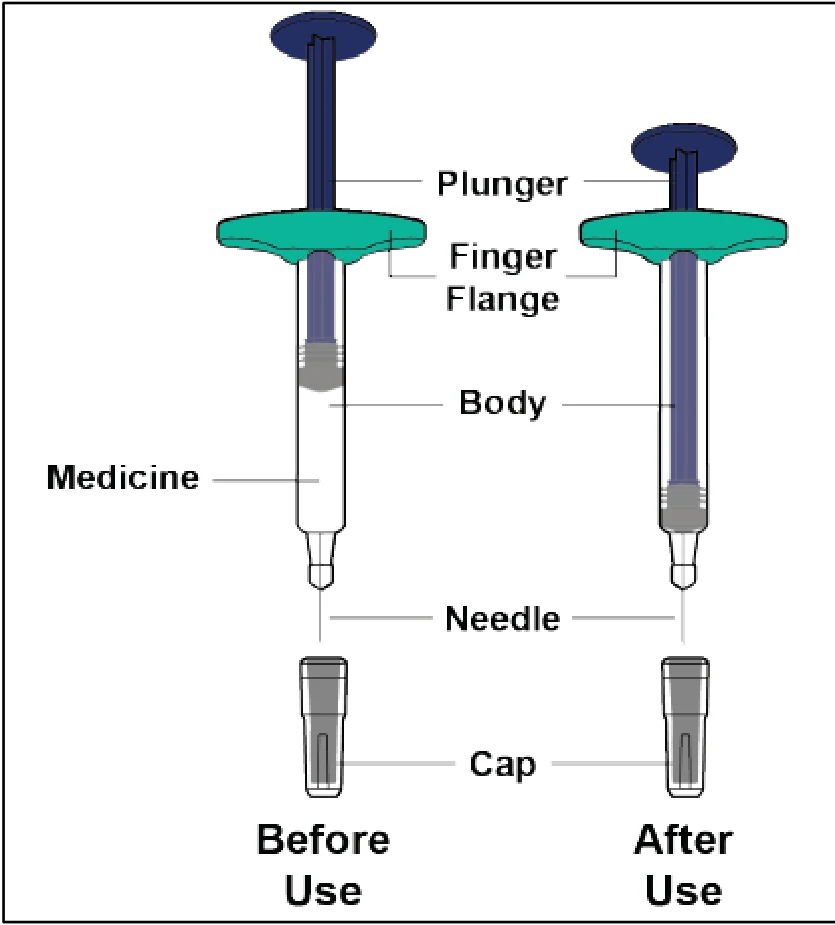
Important Information
- Use the Pre-filled Syringe only if your healthcare provider has trained you on the right way to prepare for and to give an injection.
- Ask your healthcare provider how often you will need to give an injection.
- Do not shake the Pre-filled Syringe at any time.
- Do not remove the Cap until you are ready to inject.
- Do not share the Pre-filled Syringe with anyone.
- Do not pull back on the plunger rod at any time.
How to store the Pre-filled Syringe
- Store the Pre-filled Syringe in a refrigerator between 36°F to 46°F (2°C to 8°C).
- Keep the Pre-filled Syringe in the original carton to protect it from light.
- Do not use a Pre-filled Syringe that has been left in direct sunlight.
- Do not freeze the Pre-filled Syringe. If the Pre-filled Syringe has been frozen, do not use the Pre-filled Syringe even if it is thawed.
- If needed, you may store the Pre-filled Syringe at room temperature up to 77°F (25°C) for up to 30 days.
- After the Pre-filled Syringe has reached room temperature, do not put it back in the refrigerator.
- Keep the Pre-filled Syringe and all medicines out of the reach of children.
Read Instructions on All Pages Before Using the Yuflyma Pre-filled Syringe
PREPARE FOR THE INJECTION
- 1.
Gather the supplies for the injection.
- a. Prepare a clean, flat surface, such as a table or countertop, in a well-lit area.
- b.
Remove 1 Pre-filled Syringe from the carton stored in your refrigerator.
- Hold the Pre-filled Syringe body when removing it from the carton. Do not touch the plunger rod.
- c.
Make sure you have the following supplies:
- - Pre-filled Syringe
- -
1 Alcohol swab
Not included in the carton:
- 1 Cotton ball or gauze
- 1 Adhesive bandage
- sharps disposal container
- 2.
Inspect the Pre-filled Syringe.
- a. Ensure you have the correct medicine (Yuflyma) and dosage.
- b. Look at the Pre-filled Syringe and make sure it is not cracked or damaged.
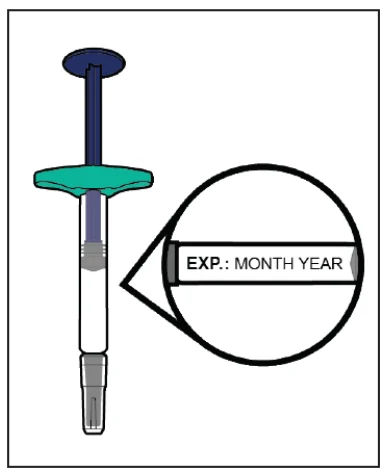
- c. Check the expiration date on the label of the Pre-filled Syringe (see Figure B)
Do not use the Pre-filled Syringe if
- it is cracked or damaged.
- the expiration date has passed.
- 3.
Inspect the Medicine.
- a.
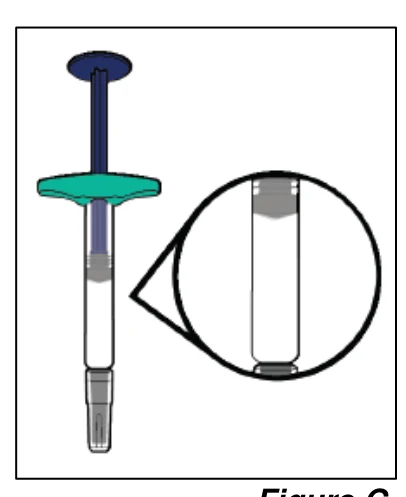
Look at the Medicine and confirm that the liquid is clear, colorless to pale brown, and free of particles (see Figure C).
- Do not use the Pre-filled Syringe, if the liquid is the discolored (yellow or dark brown), cloudy, or contains particles in it.
- You may see air bubbles in the liquid. This is normal.
- a.
- 4.
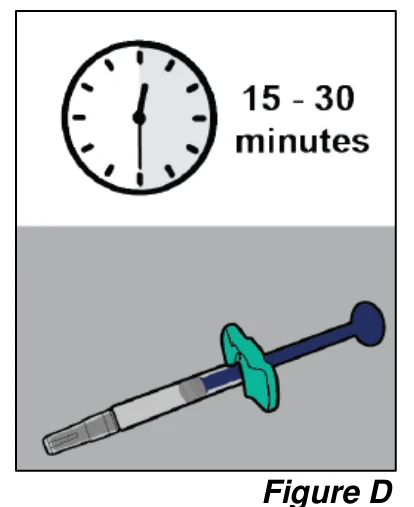
Wait 15 to 30 minutes.
- a.
Leave the Pre-filled Syringe at room temperature 68°F to 77°F (20°C to 25°C) for 15 to 30 minutes to allow it to warm up (see Figure D).
Do not warm the Pre-filled Syringe using heat sources such as hot water or a microwave.
Figure B
Figure C
Figure D
- a.
- 5.
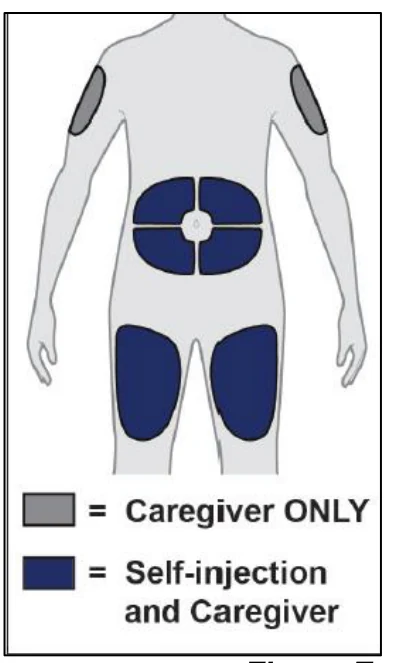
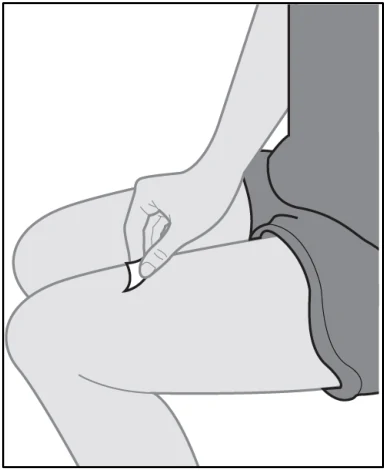
Choose an injection site (see Figure E).
- a.
You may inject into:
- - the front of your thighs.
- - your abdomen except for the 2 in (5 cm) around the belly button (navel).
- -
the outer area of the upper arm if you are a caregiver.
- Do not inject into skin that is within 2 in (5 cm) of your belly button (navel), or is red, hard, tender, damaged, bruised, or scarred.
- If you have psoriasis, do not inject directly into any raised, thick, red or scaly skin patches or lesions on your skin.
- Do not inject through your clothes.
- b.
Rotate the injection site each time you give an
- injection. Each new injection site should be at least 1.2 in (3 cm) away from the injection site you used before.
- a.
- 6.
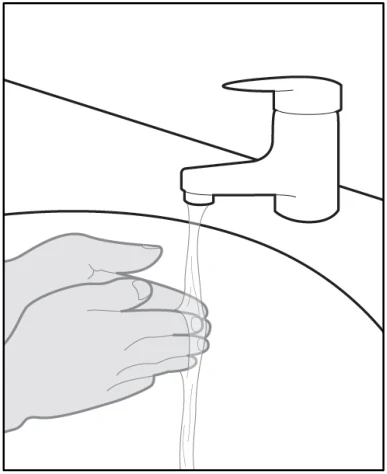
Wash your hands.
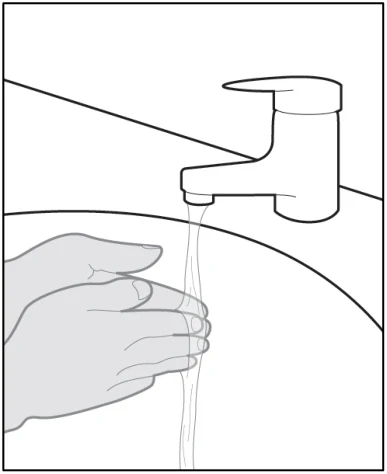
- a. Wash your hands with soap and water and dry them thoroughly (see Figure F).
Figure E
Figure F
- 7.
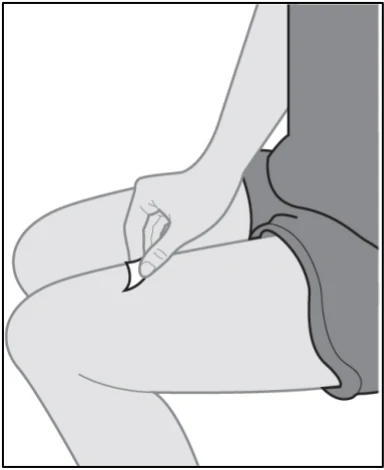
Clean the injection site.
- a. Clean the injection site with an alcohol swab using a circular motion (see Figure G).
- b.
Let the skin dry before injecting.
Do not blow on or touch the injection site again before giving the injection.
Figure G
GIVE THE INJECTION
- 8.
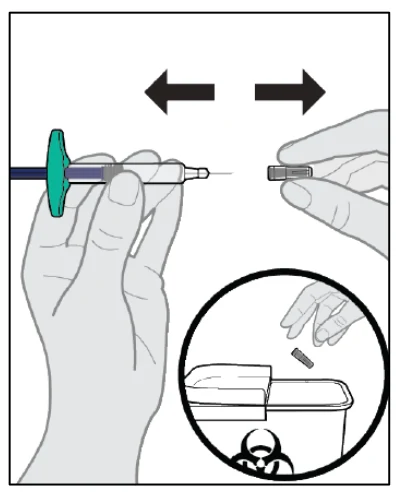
Remove the Cap.
- a.
Hold the Pre-filled Syringe by the injector body with the Cap on top using one hand. Gently pull the Cap straight off with the other hand. Dispose of the Cap in a sharps container (see Step 12 and Figure H).
- Do not pull back on the plunger rod at any time.
- Do not recap the Pre-filled Syringe.
- Do not remove the Cap until you are ready to inject.
- Do not touch the Needle. Doing so may result in a needle stick injury.
- a.
- 9.
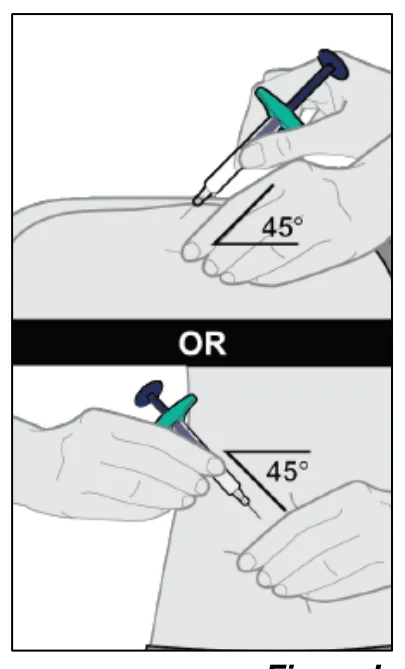
Insert the Pre-filled Syringe into the injection site.
- a. Gently pinch a fold of skin at the injection site with one hand.
- b. With a quick and “dart-like” motion, insert the Needle completely into the fold of the skin at a 45-degree angle (see Figure I).
Figure H
Figure I
- 10.
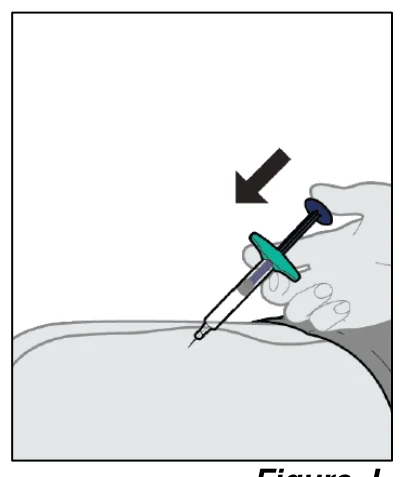
Give the injection.
- a. After the Needle is inserted, release the pinch.
- b.
Slowly push the Plunger all the way down until all of the liquid is injected and the Syringe is empty (see Figure J).
- Do not change the position of the Pre-filled Syringe after the injection has started.
- 11.
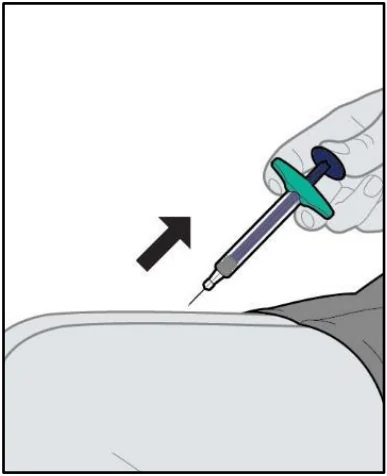
Remove the Pre-filled Syringe from the injection site.
- a.
After the Pre-filled Syringe is empty, remove the Pre-filled Syringe from your skin (see Figure K).
- Some bleeding may occur.
- Do not reuse the Pre-filled Syringe.
- Do not touch the Needle.
- Do not rub the injection site.
- a.
Figure J
Figure K
AFTER THE INJECTION
- 12.
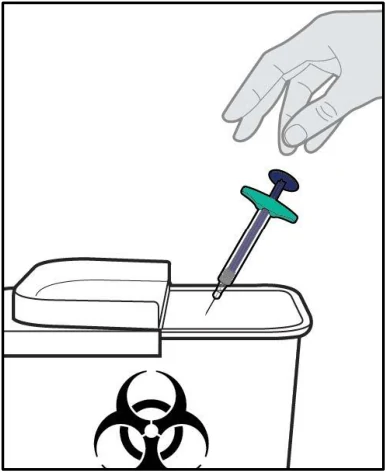
Dispose of the Pre-filled Syringe.
- a.
Put the used Pre-filled Syringe in a sharps disposal container right away after use (see Figure L).
- Do not throw away (dispose of) the Pre-filled Syringe in your household trash.
- If you do not have a sharps disposal container, you may use a household container that is:
- - made of a heavy-duty plastic,
- - can be closed with a tight-fitting, puncture-resistant lid, without sharps being able to come out,
- - upright and stable during use,
- - leak-resistant, and
- - properly labeled to warn of hazardous waste inside the container.
- When your sharps disposal container is almost full, you will need to follow your community guidelines for the right way to dispose of it. There may be state or local laws about how you should throw away used needles and syringes.
- Do not dispose of your used sharps disposal container in your household trash unless your community guidelines permit this. Do not recycle your used sharps disposal container.
- a.
- 13.
Care for the injection site.
- a. Treat the injection site by gently pressing, not rubbing, a cotton ball or gauze to the site and apply an adhesive bandage, if necessary.
Figure L
INSTRUCTIONS FOR USE YUFLYMATM
(adalimumab injection)
40 mg/0.4 mL Single-Dose Pre-filled Syringe with Needle Guard
For subcutaneous use only
Read and follow the Instructions for Use that come with your Yuflyma Pre-filled Syringe with Needle Guard before you start using it and each time you get a refill. There may be new information. This information does not take the place of talking to your healthcare provider about your medical condition or treatment.
Figure A: Parts of Yuflyma Pre-filled Syringe with Needle Guard
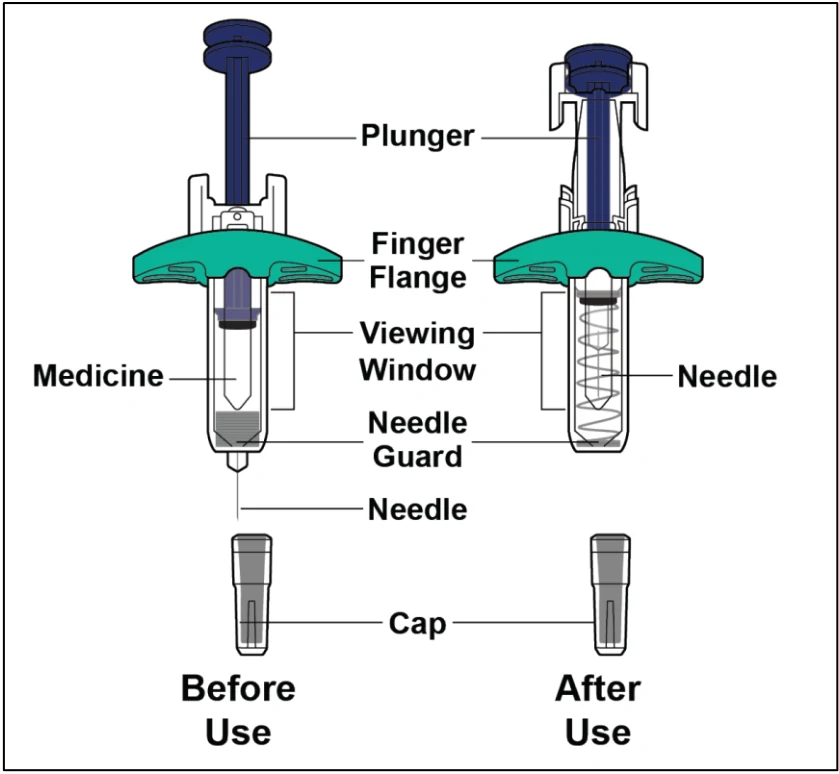
Important Information
- Use the Pre-filled Syringe with Needle Guard only if your healthcare provider has trained you on the right way to prepare for and to give an injection.
- Ask your healthcare provider how often you will need to give an injection.
- Do not shake the Pre-filled Syringe at any time.
- Do not remove the Cap until you are ready to inject.
- Do not share the Pre-filled Syringe with anyone.
- Only use each Pre-filled Syringe for one injection.
- Do not pull back on the plunger rod at any time.
How to store the Pre-filled Syringe
- Store the Pre-filled Syringe in a refrigerator between 36°F to 46°F (2°C to 8°C).
- Keep the Pre-filled Syringe in the original carton to protect it from light.
- Do not use a Pre-filled Syringe that has been left in direct sunlight.
- Do not freeze the Pre-filled Syringe. If the Pre-filled Syringe has been frozen, do not use the Pre-filled Syringe even if it is thawed.
- If needed, you may store the Pre-filled Syringe at room temperature up to 77°F (25°C) for up to 30 days.
- After the Pre-filled Syringe has reached room temperature, do not put it back in the refrigerator.
- Keep the Pre-filled Syringe and all medicines out of the reach of children.
Read Instructions on All Pages Before Using the Yuflyma Pre-filled Syringe
PREPARE FOR THE INJECTION
- 1.
Gather the supplies for the injection.
- a. Prepare a clean, flat surface, such as a table or countertop, in a well-lit area.
- b.
Remove 1 Pre-filled Syringe from the carton stored in your refrigerator.
- Hold the Pre-filled Syringe body when removing it from the carton. Do not touch the plunger rod.
- c.
Make sure you have the following supplies:
- - Pre-filled Syringe
- - 1 Alcohol swab
Not included in the carton:
- 1 Cotton ball or gauze
- 1 Adhesive bandage
- sharps disposal container
- 2.
Inspect the Pre-filled Syringe.
- a. Ensure you have the correct medicine (Yuflyma) and dosage.
- b. Look at the Pre-filled Syringe and make sure it is not cracked or damaged.
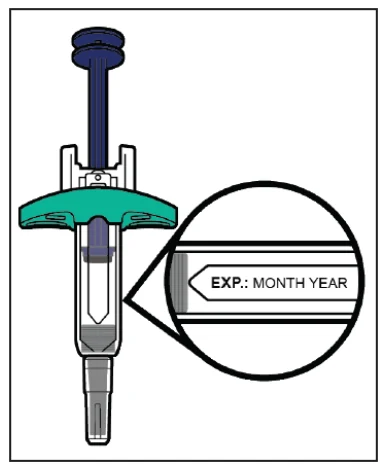
- c.
Check the expiration date on the label of the Pre-filled Syringe (see Figure B)
- Do not use the Pre-filled Syringe if;
- it is cracked or damaged.
- the expiration date has passed.
- 3.
Inspect the Medicine.
- a.
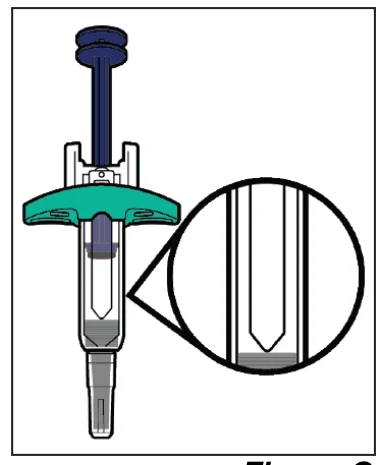
Look at the Medicine and confirm that the liquid is clear, colorless to pale brown, and free of particles (see Figure C).
- Do not use the Pre-filled Syringe if the liquid is the discolored (yellow or dark brown), cloudy, or contains particles in it.
- You may see air bubbles in the liquid. This is normal.
- a.
- 4.
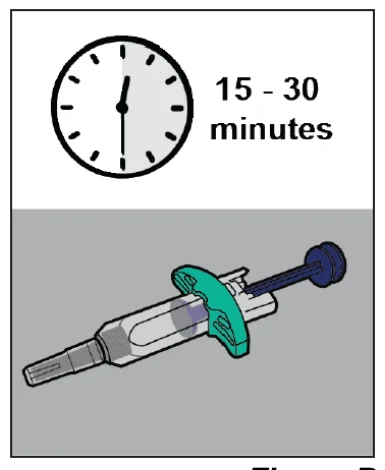
Wait 15 to 30 minutes.
- a.
Leave the Pre-filled Syringe at room temperature 68°F to 77°F (20°C to 25°C) for 15 to 30 minutes to allow it to warm up (see Figure D).
- Do not warm the Pre-filled Syringe using heat sources such as hot water or a microwave.
- a.
Figure B
Figure C
Figure D
- 5.
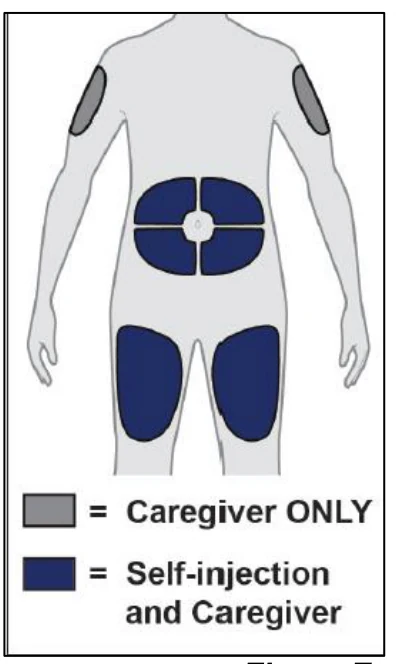
Choose an injection site (see Figure E).
- a.
You may inject into:
- - the front of your thighs.
- - your abdomen except for the 2 in (5 cm) around the belly button (navel).
- -
the outer area of the upper arm if you are a caregiver.
- Do not inject into skin that is within 2 in (5 cm) of your belly button (navel), or is red, hard, tender, damaged, bruised, or scarred.
- If you have psoriasis, do not inject directly into any raised, thick, red or scaly skin patches or lesions on your skin.
- Do not inject through your clothes.
- b.
Rotate the injection site each time you give an injection. Each new injection site should be at least
- 1.2 in (3 cm) away from the injection site you used before.
- a.
- 6.
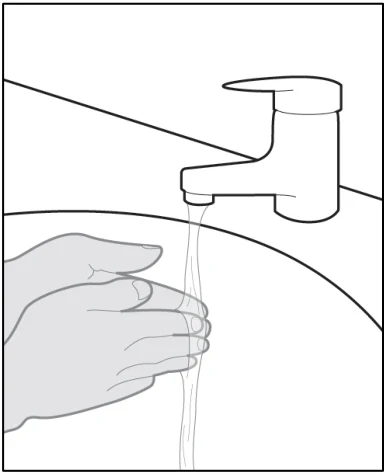
Wash your hands.
- a. Wash your hands with soap and water and dry them thoroughly (see Figure F).
Figure E
Figure F
- 7.
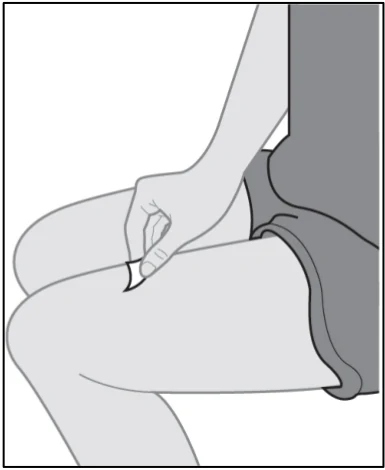
Clean the injection site.
- a. Clean the injection site with an alcohol swab using a circular motion (see Figure G).
- b.
Let the skin dry before injecting.
- Do not blow on or touch the injection site again before giving the injection.
Figure G
GIVE THE INJECTION
- 8.
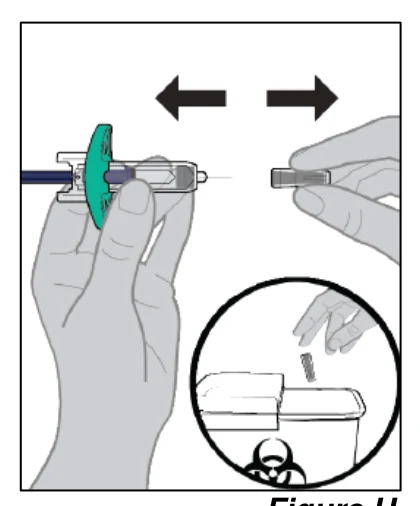
Remove the Cap.
- a.
Hold the Pre-filled Syringe by the injector body with the Cap on top using one hand. Gently pull the Cap straight off with the other hand. Dispose of the Cap in a sharps container (see Step 12 and Figure H).
- Do not pull back on the plunger rod at any time.
- Do not recap the Pre-filled Syringe.
- Do not remove the Cap until you are ready to inject.
- Do not touch the Needle. Doing so may result in a needle stick injury.
- a.
- 9.
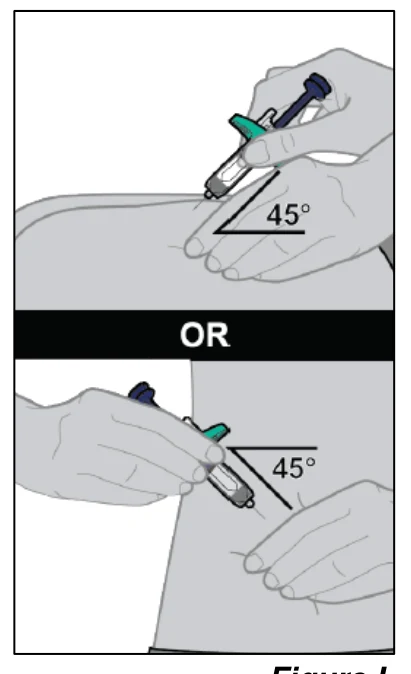
Insert the Pre-filled Syringe into the injection site.
- a. Gently pinch a fold of skin at the injection site with one hand.
- b. With a quick and “dart-like” motion, insert the Needle completely into the fold of the skin at a 45-degree angle (see Figure I).
Figure H
Figure I
- 10.
Give the injection.
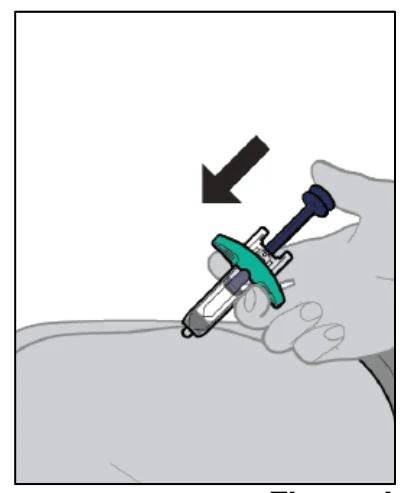
- a. After the Needle is inserted, release the pinch.
- b.
Slowly push the Plunger all the way down until all of the liquid is injected and the Syringe is empty (see Figure J).
- Do not change the position of the Pre-filled Syringe after the injection has started.
- 11.
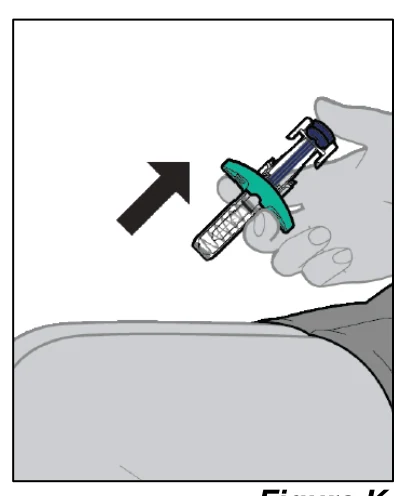
Remove the Pre-filled Syringe from the injection site.
- a.
After the Pre-filled Syringe is empty, slowly lift your thumb from the Plunger until Needle is completely covered by the Needle Guard (see Figure K).
- Some bleeding may occur.
- Do not reuse the Pre-filled Syringe.
- Do not touch or recap the needle.
- Do not rub the injection site.
- a.
Figure J
Figure K
AFTER THE INJECTION
- 12.
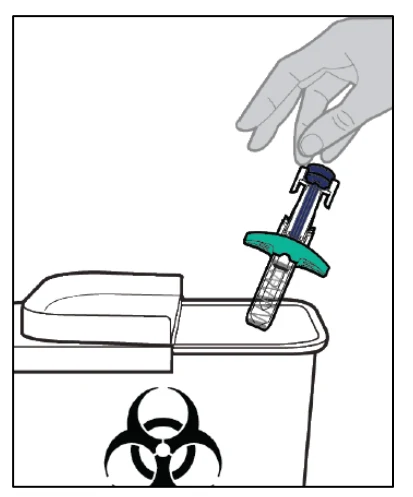
Dispose of the Pre-filled Syringe.
- a.
Put the used Pre-filled Syringe in a sharps disposal container right away after use (see Figure L).
- Do not throw away (dispose of) the Pre-filled Syringe in your household trash.
- If you do not have a sharps disposal container, you may use a household container that is:
- - made of a heavy-duty plastic,
- - can be closed with a tight-fitting, puncture-resistant lid, without sharps being able to come out,
- - upright and stable during use,
- - leak-resistant, and
- - properly labeled to warn of hazardous waste inside the container.
- When your sharps disposal container is almost full, you will need to follow your community guidelines for the right way to dispose of it. There may be state or local laws about how you should throw away used needles and syringes.
- Do not dispose of your used sharps disposal container in your household trash unless your community guidelines permit this. Do not recycle your used sharps disposal container.
- a.
- 13.
Care for the injection site.
- a. Treat the injection site by gently pressing, not rubbing, a cotton ball or gauze to the site and apply an adhesive bandage, if necessary.
Figure L
INSTRUCTIONS FOR USE YUFLYMATM
(adalimumab injection)
40 mg/0.4 mL Single-Dose Auto-injector (pre-filled pen)
For subcutaneous use only
Read and follow the Instructions for Use that come with your Yuflyma Auto-injector before you start using it and each time you get a refill. There may be new information. This information does not take the place of talking to your healthcare provider about your medical condition or treatment.
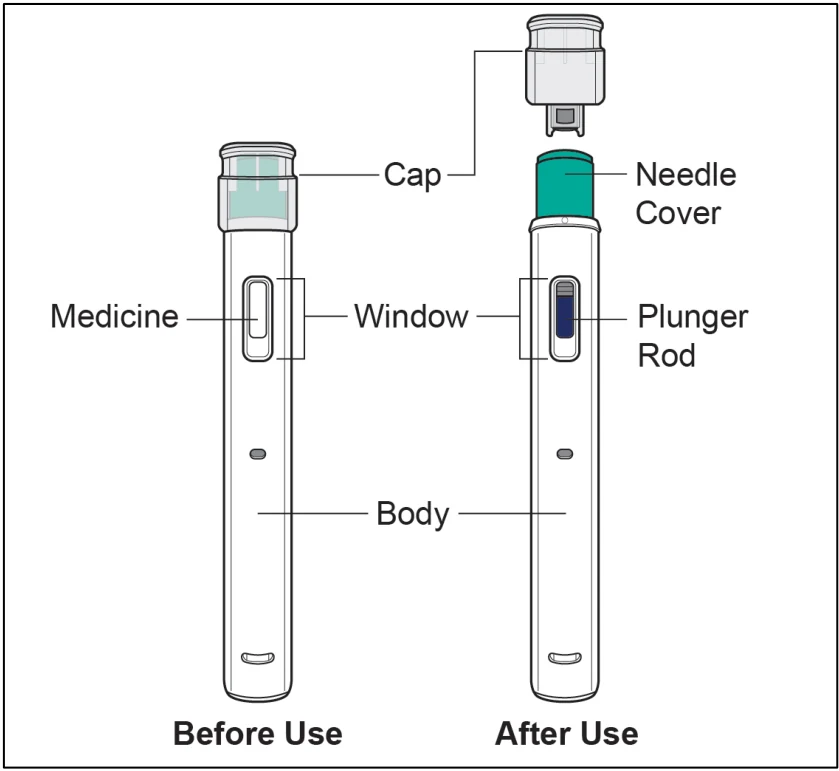
Figure A: Parts of Yuflyma Auto-injector
Important Information
- Use the Auto-injector only if your healthcare provider has trained you on the right way to prepare for and to give an injection.
- Ask your healthcare provider how often you will need to give an injection.
- Do not shake the Auto-injector at any time.
- Do not remove the Cap until you are ready to inject.
- Do not share the Auto-injector with anyone.
How to store the Auto-injector
- Store the Auto-injector in a refrigerator between 36°F to 46°F (2°C to 8°C).
- Keep the Auto-injector in the original carton to protect it from light.
- Do not use an Auto-injector that has been left in direct sunlight.
- Do not freeze the Auto-injector. If the Auto-injector has been frozen, do not use the Auto-injector even if it is thawed.
- If needed, you may store the Auto-injector at room temperature up to 77°F (25°C) for up to 30 days.
- After the Auto-injector has reached room temperature, do not put it back in the refrigerator.
- Keep the Auto-injector and all medicines out of the reach of children.
Read Instructions on All Pages Before Using the Yuflyma Auto-Injection
PREPARE FOR THE INJECTION
- 1.
Gather the supplies for the injection.
- a. Prepare a clean, flat surface, such as a table or countertop, in a well-lit area.
- b. Remove 1 Auto-injector from the carton stored in your refrigerator.
- c.
Make sure you have the following supplies:
- - Auto-injector
- - 1 Alcohol swab
Not included in the carton:
- 1 Cotton ball or gauze
- 1 Adhesive bandage
- sharps disposal container
- 2.
Inspect the Auto-injector.
- a. Ensure you have the correct medicine (Yuflyma) and dosage.
- b. Look at the Auto-injector and make sure it is not cracked or damaged.
- c.
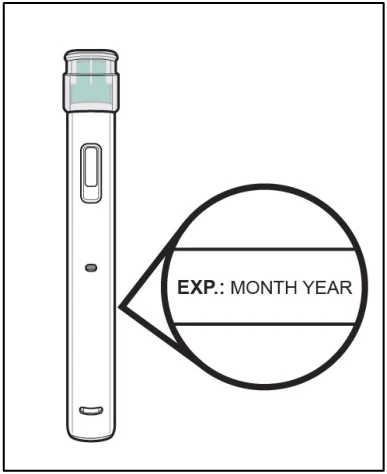
Check the expiration date on the label of the Auto-injector (see Figure B)
- Do not use the Auto-injector if;
- it is cracked or damaged.
- the expiration date has passed.
- 3.
Inspect the Medicine.
- a.
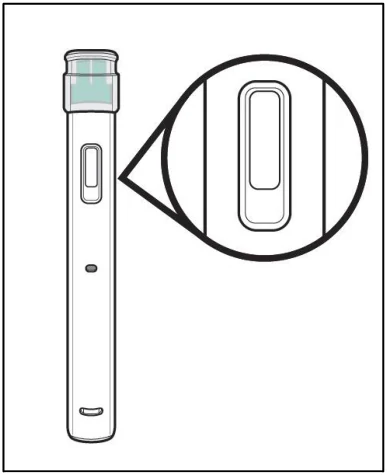
Look through the Window and make sure that the liquid is clear, colorless to pale brown, and free of particles (see Figure C).
- Do not use the Auto-injector if the liquid is the discolored (yellow or dark brown), cloudy, or contains particles in it.
- You may see air bubbles in the liquid. This is normal.
- a.
- 4.
Wait 15 to 30 minutes.
- a.
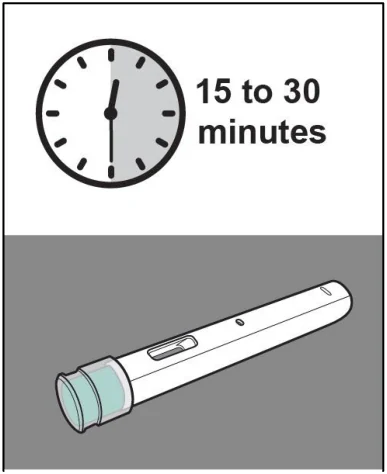
Leave the Auto-injector at room temperature 68°F to 77°F (20°C to 25°C) for 15 to 30 minutes to allow it to warm up (see Figure D).
- Do not warm the Auto-injector using heat sources such as hot water or a microwave.
- a.
Figure B
Figure C
Figure D
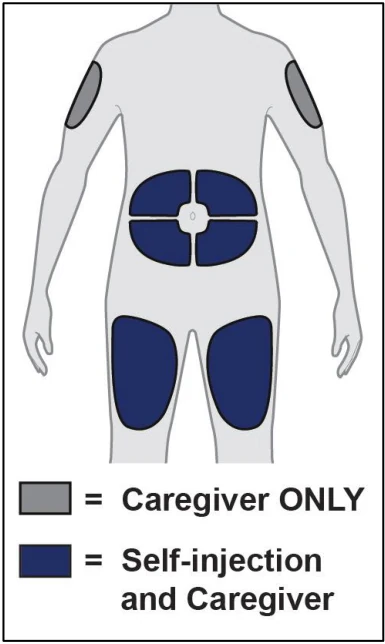
- 5. Choose an injection site (see Figure E).
- a.
You may inject into:
- - the front of your thighs.
- - your abdomen except for the 2 in (5 cm) around the belly button (navel).
- - the outer area of the upper arm if you are a caregiver.
- Do not inject into skin that is within 2 in (5 cm) of your belly button (navel), or is red, hard, tender, damaged, bruised, or scarred.
- If you have psoriasis, do not inject directly into any raised, thick, red or scaly skin patches or lesions on your skin.
- Do not inject through your clothes.
- b.
Rotate the injection site each time you give an injection. Each new injection site should be at least
- 1.2 in (3 cm) away from the injection site you used before.
- 6.
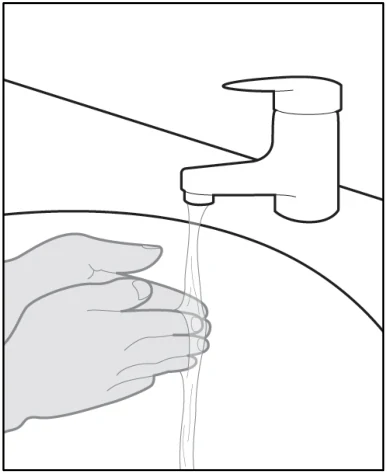
Wash your hands.
- a. Wash your hands with soap and water and dry them thoroughly (see Figure F).
Figure E
Figure F
- 7.
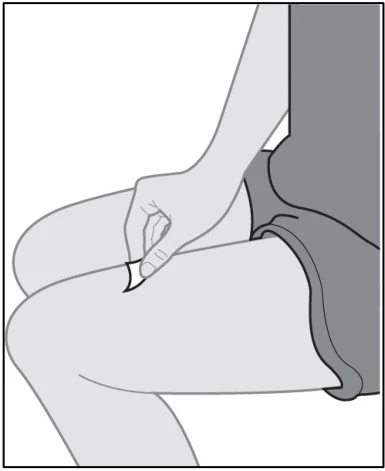
Clean the injection site.
- a. Clean the injection site with an alcohol swab using a circular motion (see Figure G).
- b.
Let the skin dry before injecting.
Do not blow on or touch the injection site again before giving the injection.
Figure G
GIVE THE INJECTION
- 8.
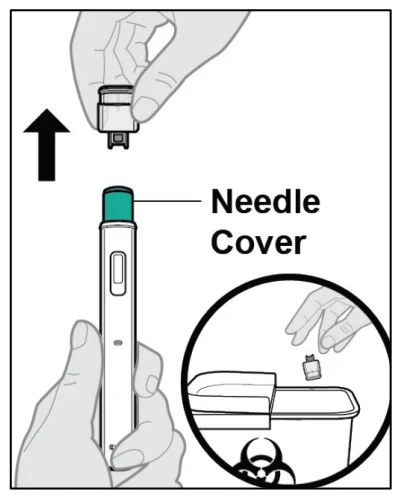
Remove the Cap.
- a.
Hold the Auto-injector by the injector body with the Cap on top using one hand. Gently pull the Cap straight off with the other hand. Dispose of the Cap in a sharps container (see Step 12 and Figure H).
- Do not recap the Auto-injector.
- Do not remove the Cap until you are ready to inject.
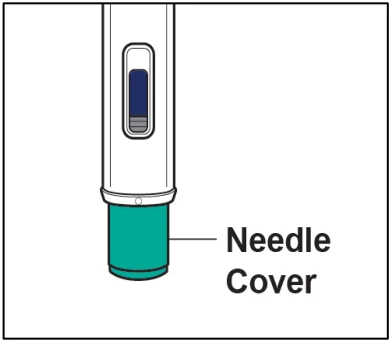
- Do not touch the Needle or Needle Cover. Doing so may result in a needle stick injury.
- a.
- 9.
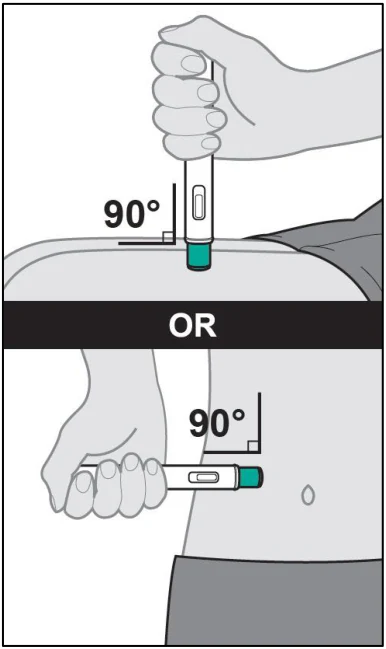
Place the Auto-injector on the injection site.
- a. Hold the Auto-injector so that you can see the Window.
- b. Without pinching or stretching the skin, place the Auto-injector over the injection site at a 90-degree angle (see Figure I).
Figure I
Figure H
- 10.
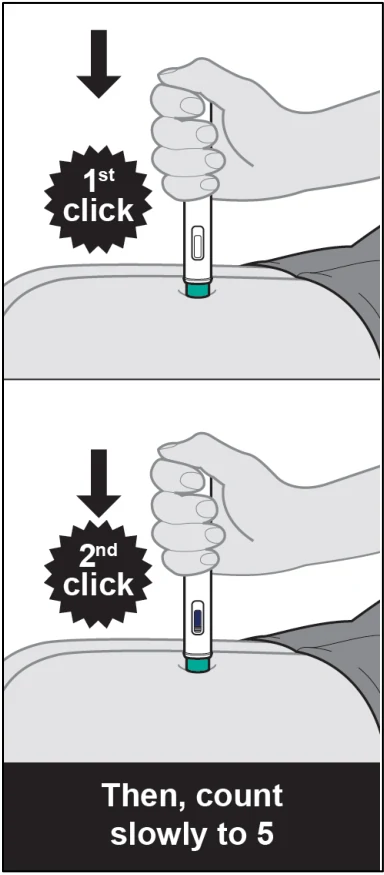
Give the injection (see Figure J).
- a.
Press the Auto-injector firmly against the skin.
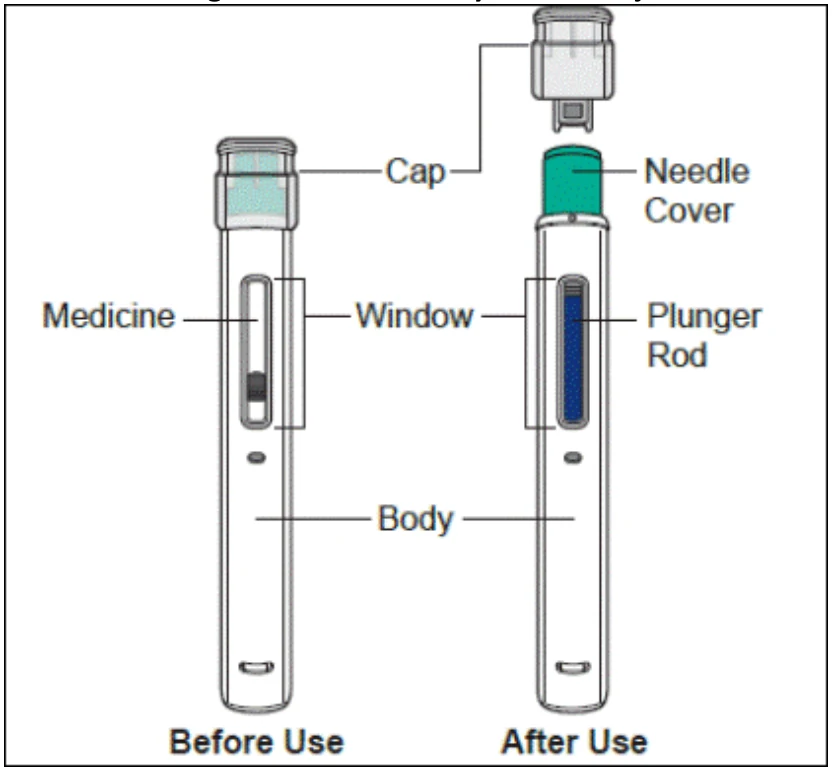
- When the injection starts you will hear the 1st loud “click” and the blue Plunger Rod will begin to fill the Window.
- b.
Keep holding the Auto-injector firmly against the skin and listen for the 2nd loud “click.”
- Do not change the position of the Auto-injector after the injection has started.
- c.
After you hear the 2nd loud “click” continue to hold the Auto-injector firmly against the skin and count slowly to 5 to make sure you inject the full dose.
Figure J
- a.
- 11.
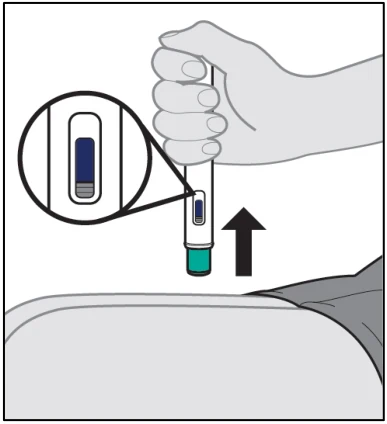
Remove the Auto-injector from the injection site.
- a. Look at the Auto-injector and make sure that the blue Plunger Rod is filling the Window completely
- b.
Remove the Auto-injector from your skin (see Figure K).
- After you remove the Auto-injector from the injection site, the needle will be automatically covered (see Figure L).
If the Window has not turned completely blue or if the medicine is still injecting, this means you have not received a full dose. Call your healthcare provider immediately.
- Some bleeding may occur.
- Do not reuse the Auto-injector.
Do not rub the injection site.
Figure K
Figure L
AFTER THE INJECTION
- 12.
Dispose of the Auto-injector.
- a.
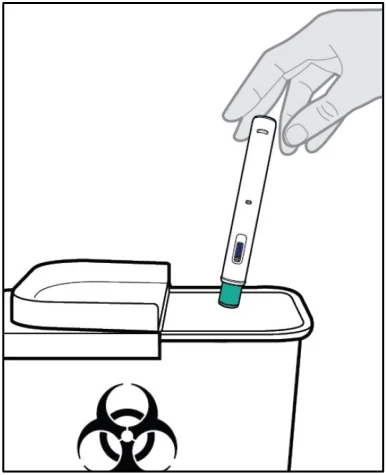
Put the used Auto-injector in a sharps disposal container right away after use (see Figure M).
- Do not throw away (dispose of) the Auto-injector in your household trash.
- If you do not have a sharps disposal container, you may use a household container that is:
- - made of a heavy-duty plastic,
- - can be closed with a tight-fitting, puncture-resistant lid, without sharps being able to come out,
- - upright and stable during use,
- - leak-resistant, and
- - properly labeled to warn of hazardous waste inside the container.
- When your sharps disposal container is almost full, you will need to follow your community guidelines for the right way to dispose of it. There may be state or local laws about how you should throw away used needles and syringes.
- Do not dispose of your used sharps disposal container in your household trash unless your community guidelines permit this. Do not recycle your used sharps disposal container.
- a.
- 13.
Care for the injection site.
- a.
Treat the injection site by gently pressing, not rubbing, a cotton ball or gauze to the site and apply an adhesive bandage, if necessary.
- Figure M
- a.
INSTRUCTIONS FOR USE YUFLYMATM
(adalimumab injection)
80 mg/0.8mL Single-Dose Pre-filled Syringe
For subcutaneous use only
Read and follow the Instructions for Use that come with your Yuflyma Pre-filled Syringe before you start using it and each time you get a refill. There may be new information. This information does not take the place of talking to your healthcare provider about your medical condition or treatment.
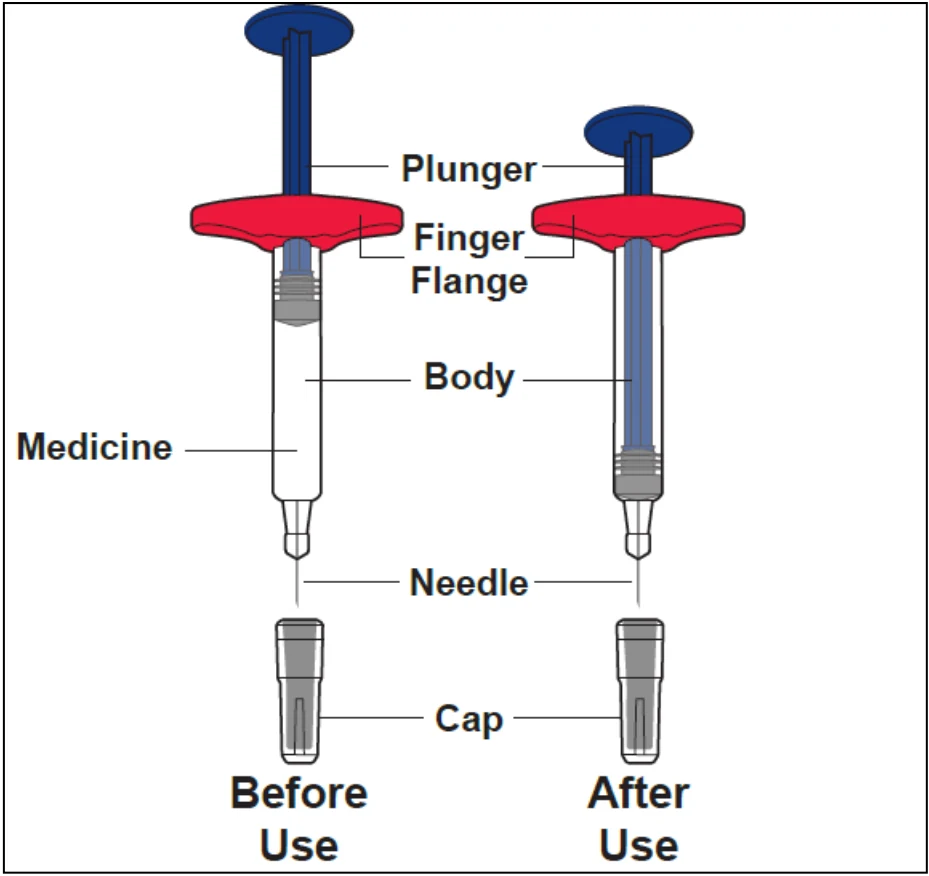
Figure A: Parts of Yuflyma Pre-filled Syringe
Important Information
- Use the Pre-filled Syringe only if your healthcare provider has trained you on the right way to prepare for and to give an injection.
- Ask your healthcare provider how often you will need to give an injection.
- Do not shake the Pre-filled Syringe at any time.
- Do not remove the Cap until you are ready to inject.
- Do not share the Pre-filled Syringe with anyone.
- Do not pull back on the plunger rod at any time.
How to store the Pre-filled Syringe
- Store the Pre-filled Syringe in a refrigerator between 36°F to 46°F (2°C to 8°C).
- Keep the Pre-filled Syringe in the original carton to protect it from light.
- Do not use a Pre-filled Syringe that has been left in direct sunlight.
- Do not freeze the Pre-filled Syringe. If the Pre-filled Syringe has been frozen, do not use the Pre-filled Syringe even if it is thawed.
- If needed, you may store the Pre-filled Syringe at room temperature up to 77°F (25°C) for up to 30 days.
- After the Pre-filled Syringe has reached room temperature, do not put it back in the refrigerator.
- Keep the Pre-filled Syringe and all medicines out of the reach of children.
Read Instructions on All Pages Before Using the Yuflyma Pre-filled Syringe
PREPARE FOR THE INJECTION
- 1.
Gather the supplies for the injection.
- a. Prepare a clean, flat surface, such as a table or countertop, in a well-lit area.
- b.
Remove 1 Pre-filled Syringe from the carton stored in your refrigerator.
- Hold the Pre-filled Syringe body when removing it from the carton. Do not touch the plunger rod.
- c.
Make sure you have the following supplies:
- - Pre-filled Syringe
- - 1 Alcohol swab
Not included in the carton:
- 1 Cotton ball or gauze
- 1 Adhesive bandage
- Sharps disposal container
- 2.
Inspect the Pre-filled Syringe.
- a. Ensure you have the correct medicine (Yuflyma) and dosage.
- b. Look at the Pre-filled Syringe and make sure it is not cracked or damaged.
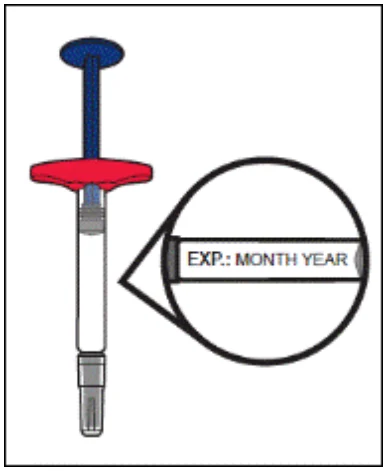
- c. Check the expiration date on the label of the Pre-filled Syringe (see Figure B)
Do not use the Pre-filled Syringe if
- it is cracked or damaged.
- the expiration date has passed.
- 3.
Inspect the Medicine.
- a.
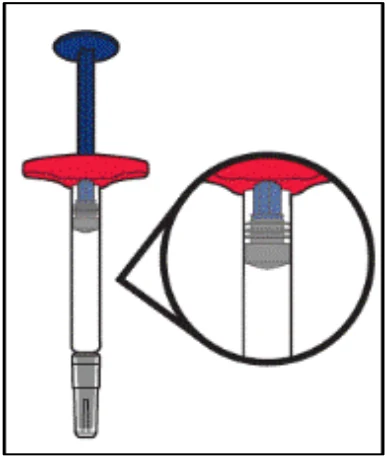
Look at the Medicine and confirm that the liquid is clear, colorless to pale brown, and free of particles (see Figure C).
- Do not use the Pre-filled Syringe, if the liquid is the discolored (yellow or dark brown), cloudy, or contains particles in it.
- You may see air bubbles in the liquid. This is normal.
- a.
- 4.
Wait 15 to 30 minutes.
- a.
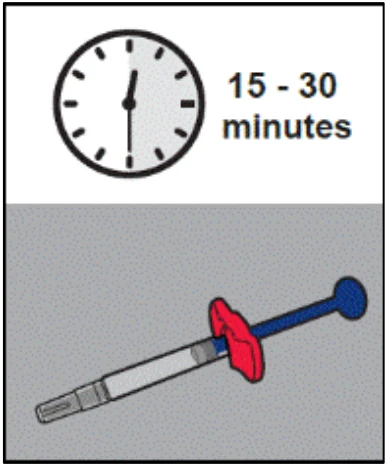
Leave the Pre-filled Syringe at room temperature 68°F to 77°F (20°C to 25°C) for 15 to 30 minutes to allow it to warm up (see Figure D).
Do not warm the Pre-filled Syringe using heat sources such as hot water or a microwave.
Figure C
Figure B
Figure D
- a.
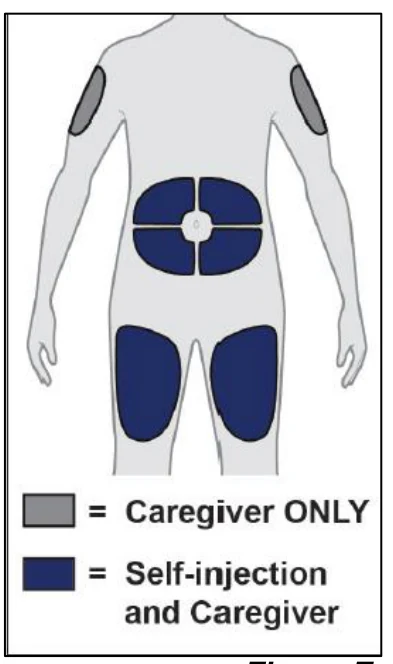
- 5. Choose an injection site (see Figure E).
- a.
You may inject into:
- - the front of your thighs.
- - your abdomen except for the 2 in (5 cm) around the belly button (navel).
- -
the outer area of the upper arm if you are a caregiver.
- Do not inject into skin that is within 2 in (5 cm) of your belly button (navel), or is red, hard, tender, damaged, bruised, or scarred.
- If you have psoriasis, do not inject directly into any raised, thick, red or scaly skin patches or lesions on your skin.
- Do not inject through your clothes.
- b.
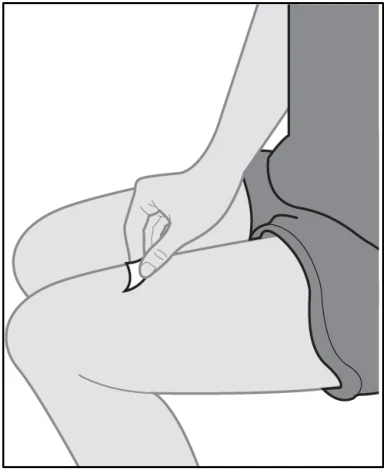
Rotate the injection site each time you give an injection. Each new injection site should be at least 1.2 in (3 cm) away from the injection site you used
- before.
- 6.
Wash your hands.
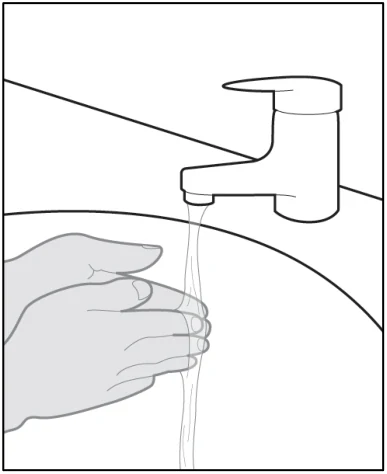
- a. Wash your hands with soap and water and dry them thoroughly (see Figure F).
Figure E
Figure F
- 7.
Clean the injection site.
- a. Clean the injection site with an alcohol swab using a circular motion (see Figure G).
- b.
Let the skin dry before injecting.
Do not blow on or touch the injection site again before giving the injection.
Figure G
GIVE THE INJECTION
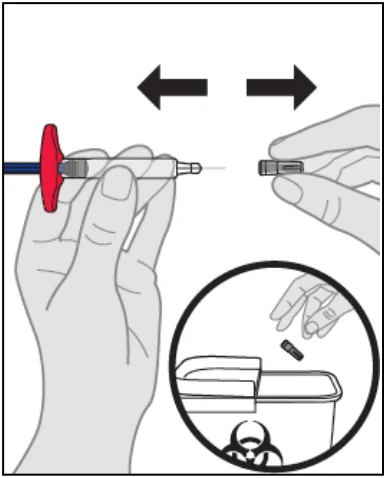
- 8.
Remove the Cap.
- a.
Hold the Pre-filled Syringe by the injector body with the Cap on top using one hand. Gently pull the Cap straight off with the other hand. Dispose of the Cap in a sharps container (see Step 12 and Figure H).
- Do not pull back on the plunger rod at any time.
- Do not recap the Pre-filled Syringe.
- Do not remove the Cap until you are ready to inject.
- Do not touch the Needle. Doing so may result in a needle stick injury.
- a.
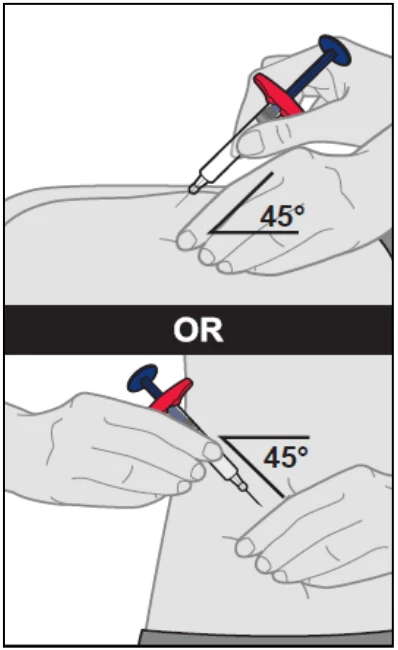
- 9.
Insert the Pre-filled Syringe into the injection site.
- a. Gently pinch a fold of skin at the injection site with one hand.
- b. With a quick and “dart-like” motion, insert the Needle completely into the fold of the skin at a 45-degree angle (see Figure I).
Figure H
Figure I
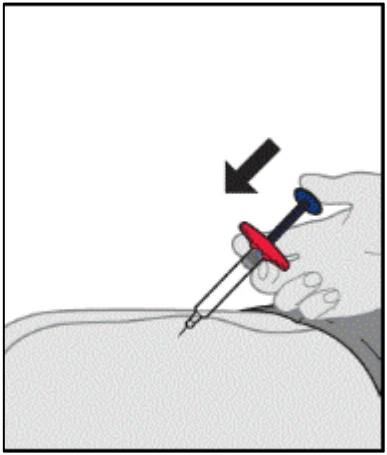
- 10.
Give the injection.
- a. After the Needle is inserted, release the pinch.
- b.
Slowly push the Plunger all the way down until all of the liquid is injected and the Syringe is empty (see Figure J).
- Do not change the position of the Pre-filled Syringe after the injection has started.
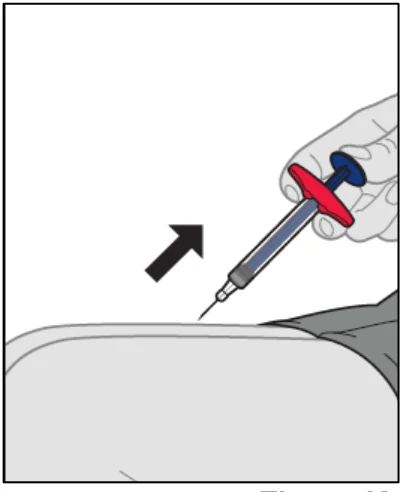
- 11.
Remove the Pre-filled Syringe from the injection site.
- a.
After the Pre-filled Syringe is empty, remove the Pre-filled Syringe from your skin (see Figure K).
- Some bleeding may occur.
- Do not reuse the Pre-filled Syringe.
- Do not touch the Needle.
- Do not rub the injection site.
- a.
Figure J
Figure K
AFTER THE INJECTION
- 12.
Dispose of the Pre-filled Syringe.
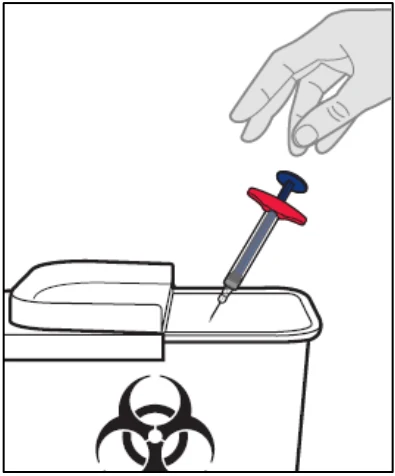
- a.
Put the used Pre-filled Syringe in a sharps disposal container right away after use (see Figure L).
- Do not throw away (dispose of) the Pre-filled Syringe in your household trash.
- If you do not have a sharps disposal container, you may use a household container that is:
- - made of a heavy-duty plastic,
- - can be closed with a tight-fitting, puncture-resistant lid, without sharps being able to come out,
- - upright and stable during use,
- - leak-resistant, and
- - properly labeled to warn of hazardous waste inside the container.
- When your sharps disposal container is almost full, you will need to follow your community guidelines for the right way to dispose of it. There may be state or local laws about how you should throw away used needles and syringes.
- Do not dispose of your used sharps disposal container in your household trash unless your community guidelines permit this. Do not recycle your used sharps disposal container.
- a.
- 13.
Care for the injection site.
- a. Treat the injection site by gently pressing, not rubbing, a cotton ball or gauze to the site and apply an adhesive bandage, if necessary.
Figure L
INSTRUCTIONS FOR USE YUFLYMATM
(adalimumab injection)
80 mg /0.8 mL Single-Dose Pre-filled Syringe with Needle Guard
For subcutaneous use only
Read and follow the Instructions for Use that come with your Yuflyma Pre-filled Syringe with Needle Guard before you start using it and each time you get a refill. There may be new information. This information does not take the place of talking to your healthcare provider about your medical condition or treatment.
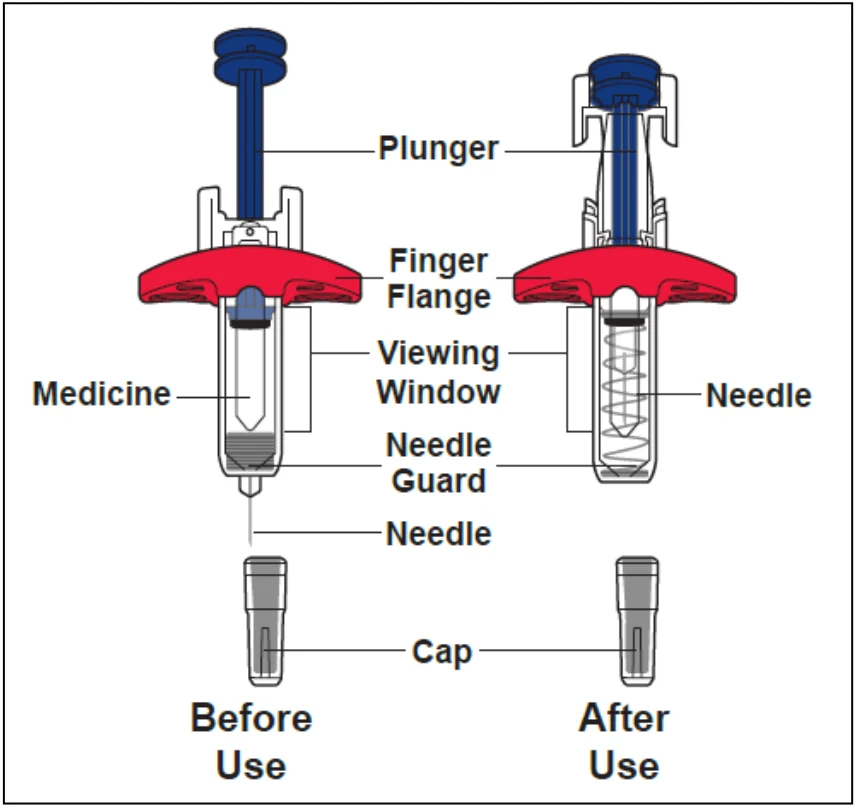
Figure A: Parts of Yuflyma Pre-filled Syringe with Needle Guard
Important Information
- Use the Pre-filled Syringe with Needle Guard only if your healthcare provider has trained you on the right way to prepare for and to give an injection.
- Ask your healthcare provider how often you will need to give an injection.
- Do not shake the Pre-filled Syringe at any time.
- Do not remove the Cap until you are ready to inject.
- Do not share the Pre-filled Syringe with anyone.
- Only use each Pre-filled Syringe for one injection.
- Do not pull back on the plunger rod at any time.
How to store the Pre-filled Syringe
- Store the Pre-filled Syringe in a refrigerator between 36°F to 46°F (2°C to 8°C).
- Keep the Pre-filled Syringe in the original carton to protect it from light.
- Do not use a Pre-filled Syringe that has been left in direct sunlight.
- Do not freeze the Pre-filled Syringe. If the Pre-filled Syringe has been frozen, do not use the Pre-filled Syringe even if it is thawed.
- If needed, you may store the Pre-filled Syringe at room temperature up to 77°F (25°C) for up to 30 days.
- After the Pre-filled Syringe has reached room temperature, do not put it back in the refrigerator.
- Keep the Pre-filled Syringe and all medicines out of the reach of children.
Read Instructions on All Pages Before Using the Yuflyma Pre-filled Syringe
PREPARE FOR THE INJECTION
- 1.
Gather the supplies for the injection.
- a. Prepare a clean, flat surface, such as a table or countertop, in a well-lit area.
- b.
Remove 1 Pre-filled Syringe from the carton stored in your refrigerator.
- Hold the Pre-filled Syringe body when removing it from the carton. Do not touch the plunger rod.
- c.
Make sure you have the following supplies:
- - Pre-filled Syringe
- - 1 Alcohol swab
Not included in the carton:
- 1 Cotton ball or gauze
- 1 Adhesive bandage
- sharps disposal container
- 2.
Inspect the Pre-filled Syringe.
- a. Ensure you have the correct medicine (Yuflyma) and dosage.
- b. Look at the Pre-filled Syringe and make sure it is not cracked or damaged.
- c.
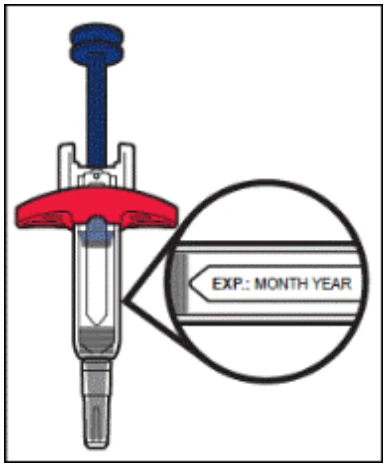
Check the expiration date on the label of the Pre-filled Syringe (see Figure B)
- Do not use the Pre-filled Syringe if;
- it is cracked or damaged.
- the expiration date has passed.
- 3.
Inspect the Medicine.
- a.
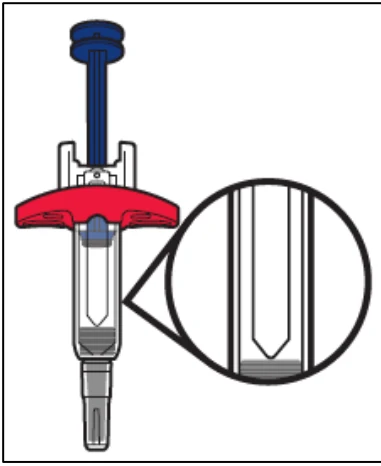
Look at the Medicine and confirm that the liquid is clear, colorless to pale brown, and free of particles (see Figure C).
- Do not use the Pre-filled Syringe if the liquid is the discolored (yellow or dark brown), cloudy, or contains particles in it.
- You may see air bubbles in the liquid. This is normal.
- a.
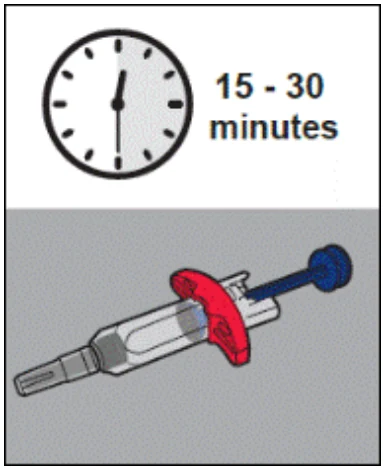
- 4.
Wait 15 to 30 minutes.
- a.
Leave the Pre-filled Syringe at room temperature 68°F to 77°F (20°C to 25°C) for 15 to 30 minutes to allow it to warm up (see Figure D).
Do not warm the Pre-filled Syringe using heat sources such as hot water or a microwave.
Figure D
- a.
Figure B
Figure C
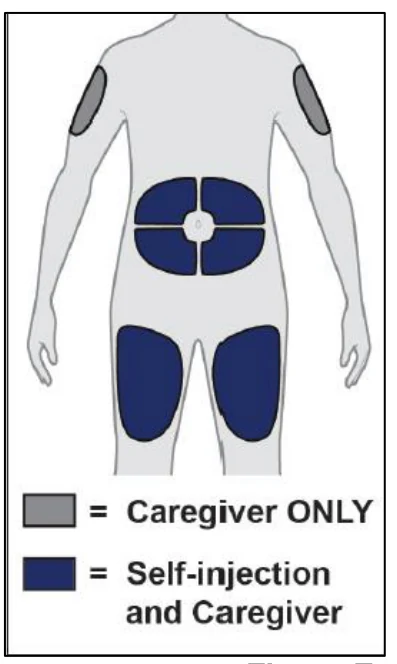
- 5.
Choose an injection site (see Figure E).
- a.
You may inject into:
- - the front of your thighs.
- - your abdomen except for the 2 in (5 cm) around the belly button (navel).
- -
the outer area of the upper arm if you are a caregiver.
- Do not inject into skin that is within 2 in (5 cm) of your belly button (navel), or is red, hard, tender, damaged, bruised, or scarred.
- If you have psoriasis, do not inject directly into any raised, thick, red or scaly skin patches or lesions on your skin.
- Do not inject through your clothes.
- b.
Rotate the injection site each time you give an
- injection. Each new injection site should be at least 1.2 in (3 cm) away from the injection site you used before.
- a.
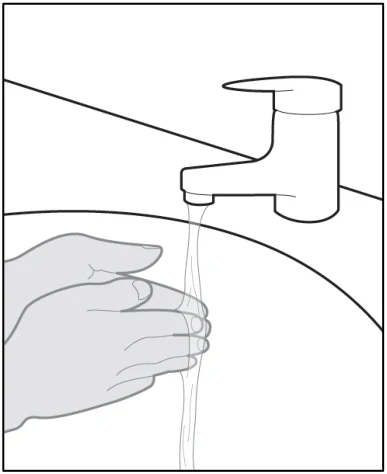
- 6.
Wash your hands.
- a. Wash your hands with soap and water and dry them thoroughly (see Figure F).
Figure E
Figure F
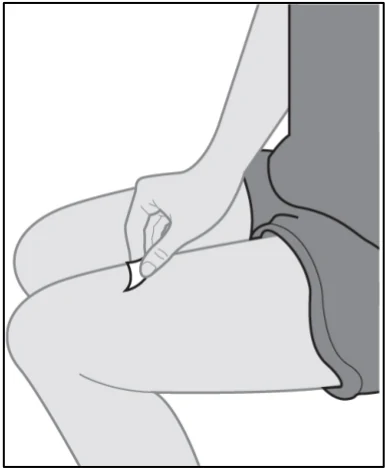
- 7.
Clean the injection site.
- a. Clean the injection site with an alcohol swab using a circular motion (see Figure G).
- b.
Let the skin dry before injecting.
- Do not blow on or touch the injection site again before giving the injection.
Figure G
GIVE THE INJECTION
- 8.
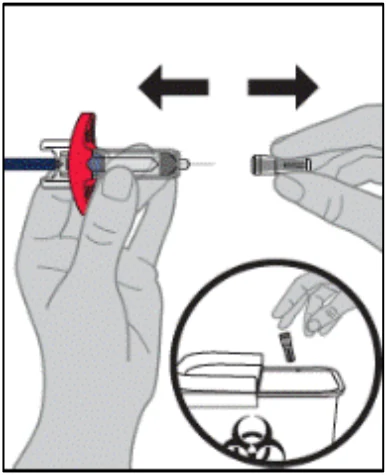
Remove the Cap.
- a.
Hold the Pre-filled Syringe by the injector body with the Cap on top using one hand. Gently pull the Cap straight off with the other hand. Dispose of the Cap in a sharps container (see Step 12 and Figure H).
- Do not pull back on the plunger rod at any time.
- Do not recap the Pre-filled Syringe.
- Do not remove the Cap until you are ready to inject.
- Do not touch the Needle. Doing so may result in a needle stick injury.
- a.
- 9.
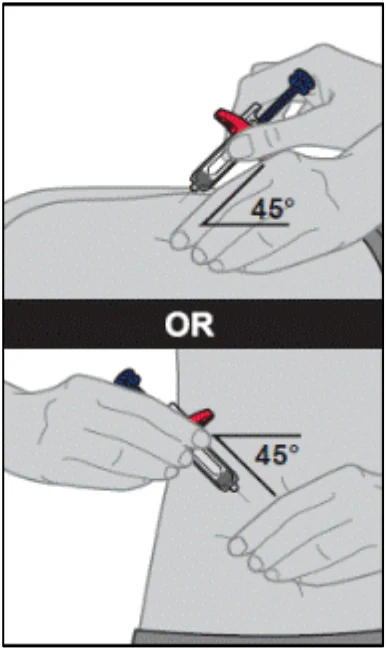
Insert the Pre-filled Syringe into the injection site.
- a. Gently pinch a fold of skin at the injection site with one hand.
- b. With a quick and “dart-like” motion, insert the Needle completely into the fold of the skin at a 45-degree angle (see Figure I).
Figure H
Figure I
- 10.
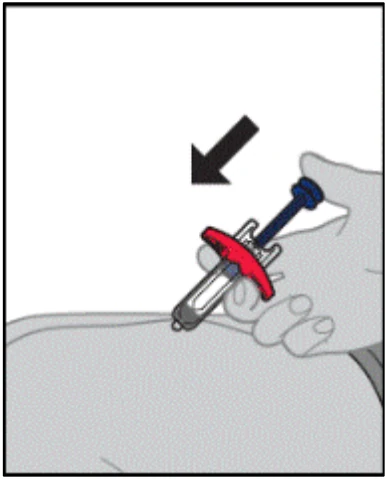
Give the injection.
- a. After the Needle is inserted, release the pinch.
- b.
Slowly push the Plunger all the way down until all of the liquid is injected and the Syringe is empty (see Figure J).
- Do not change the position of the Pre-filled Syringe after the injection has started.
- 11.
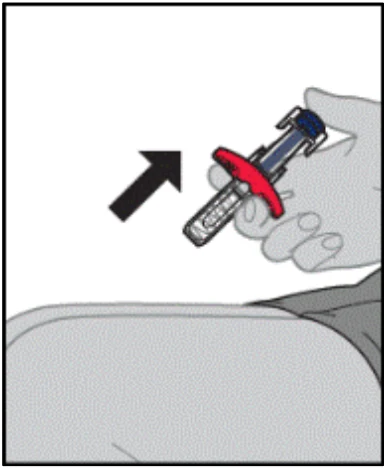
Remove the Pre-filled Syringe from the injection site.
- a.
After the Pre-filled Syringe is empty, slowly lift your thumb from the Plunger until Needle is completely covered by the Needle Guard (see Figure K).
- Some bleeding may occur.
- Do not reuse the Pre-filled Syringe.
- Do not touch or recap the needle.
Do not rub the injection site.
Figure J
Figure K
AFTER THE INJECTION
- a.
- 12.
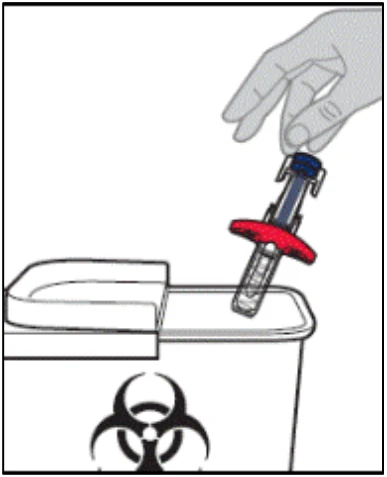
Dispose of the Pre-filled Syringe.
- a.
Put the used Pre-filled Syringe in a sharps disposal container right away after use (see Figure L).
- Do not throw away (dispose of) the Pre-filled Syringe in your household trash.
- If you do not have a sharps disposal container, you may use a household container that is:
- - made of a heavy-duty plastic,
- - can be closed with a tight-fitting, puncture-resistant lid, without sharps being able to come out,
- - upright and stable during use,
- - leak-resistant, and
- - properly labeled to warn of hazardous waste inside the container.
- When your sharps disposal container is almost full, you will need to follow your community guidelines for the right way to dispose of it. There may be state or local laws about how you should throw away used needles and syringes.
- Do not dispose of your used sharps disposal container in your household trash unless your community guidelines permit this. Do not recycle your used sharps disposal container.
- a.
- 13.
Care for the injection site.
- a. Treat the injection site by gently pressing, not rubbing, a cotton ball or gauze to the site and apply an adhesive bandage, if necessary.
Figure L
INSTRUCTIONS FOR USE YUFLYMATM
(adalimumab injection)
80 mg /0.8 mL Single-Dose Auto-injector (pre-filled pen)
For subcutaneous use only
Read and follow the Instructions for Use that come with your Yuflyma Auto-injector before you start using it and each time you get a refill. There may be new information. This information does not take the place of talking to your healthcare provider about your medical condition or treatment.
Figure A: Parts of Yuflyma Auto-injector
Important Information
- Use the Auto-injector only if your healthcare provider has trained you on the right way to prepare for and to give an injection.
- Ask your healthcare provider how often you will need to give an injection.
- Do not shake the Auto-injector at any time.
- Do not remove the Cap until you are ready to inject.
- Do not share the Auto-injector with anyone.
How to store the Auto-injector
- Store the Auto-injector in a refrigerator between 36°F to 46°F (2°C to 8°C).
- Keep the Auto-injector in the original carton to protect it from light.
- Do not use an Auto-injector that has been left in direct sunlight.
- Do not freeze the Auto-injector. If the Auto-injector has been frozen, do not use the Auto-injector even if it is thawed.
- If needed, you may store the Auto-injector at room temperature up to 77°F (25°C) for up to 30 days.
- After the Auto-injector has reached room temperature, do not put it back in the refrigerator.
- Keep the Auto-injector and all medicines out of the reach of children.
Read Instructions on All Pages Before Using the Yuflyma Auto-Injection
PREPARE FOR THE INJECTION
- 1.
Gather the supplies for the injection.
- a. Prepare a clean, flat surface, such as a table or countertop, in a well-lit area.
- b. Remove 1 Auto-injector from the carton stored in your refrigerator.
- c.
Make sure you have the following supplies:
- - Auto-injector
- - 1 Alcohol swab
Not included in the carton:
- 1 Cotton ball or gauze
- 1 Adhesive bandage
- sharps disposal container
- 2.
Inspect the Auto-injector.
- a. Ensure you have the correct medicine (Yuflyma) and dosage.
- b. Look at the Auto-injector and make sure it is not cracked or damaged.
- c.
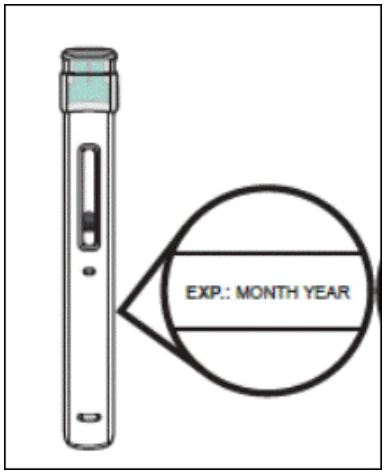
Check the expiration date on the label of the Auto-injector (see Figure B)
- Do not use the Auto-injector if;
- it is cracked or damaged
- the expiration date has passed.
- 3.
Inspect the Medicine.
- a.
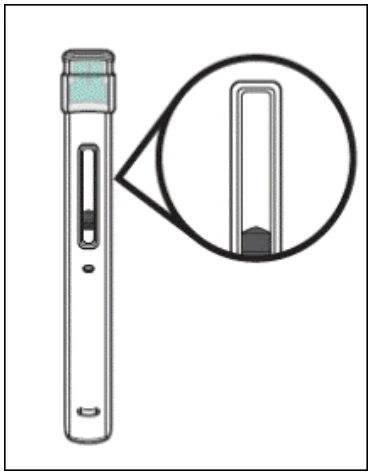
Look through the Window and make sure that the liquid is clear, colorless to pale brown, and free of particles (see Figure C).
- Do not use the Auto-injector if the liquid is the discolored (yellow or dark brown), cloudy, or contains particles in it.
- You may see air bubbles in the liquid. This is normal.
- a.
- 4.
Wait 15 to 30 minutes.
- a.
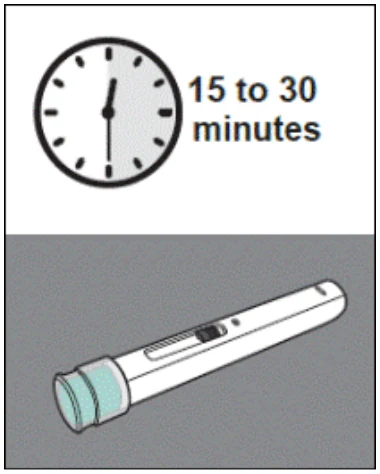
Leave the Auto-injector at room temperature 68°F to 77°F (20°C to 25°C) for 15 to 30 minutes to allow it to warm up (see Figure D).
- Do not warm the Auto-injector using heat sources such as hot water or a microwave.
- a.
Figure B
Figure C
Figure D
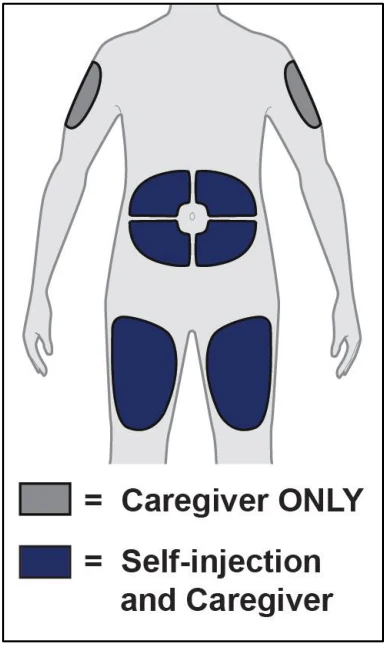
- 5. Choose an injection site (see Figure E).
- a.
You may inject into:
- - the front of your thighs.
- - your abdomen except for the 2 in (5 cm) around the belly button (navel).
- -
the outer area of the upper arm if you are a caregiver.
- Do not inject into skin that is within 2 in (5 cm) of your belly button (navel), or is red, hard, tender, damaged, bruised, or scarred.
- If you have psoriasis, do not inject directly into any raised, thick, red or scaly skin patches or lesions on your skin.
- Do not inject through your clothes.
- b. Rotate the injection site each time you give an injection. Each new injection site should be at least 1.2 in (3 cm) away from the injection site you used before.
- 6.
Wash your hands.
- a.
Wash your hands with soap and water and dry them thoroughly (see Figure F).
Figure E
- a.
Figure F
- 7.
Clean the injection site.
- a. Clean the injection site with an alcohol swab using a circular motion (see Figure G).
- b.
Let the skin dry before injecting.
- Do not blow on or touch the injection site again before giving the injection.
Figure G
GIVE THE INJECTION
- 8.
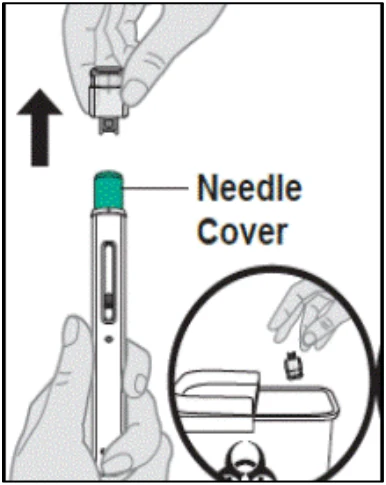
Remove the Cap.
- a.
Hold the Auto-injector by the injector body with the Cap on top using one hand. Gently pull the Cap straight off with the other hand. Dispose of the Cap in a sharps container (see Step 12 and Figure H).
- Do not recap the Auto-injector.
- Do not remove the Cap until you are ready to inject.
- Do not touch the Needle or Needle Cover. Doing so may result in a needle stick injury.
- a.
- 9.
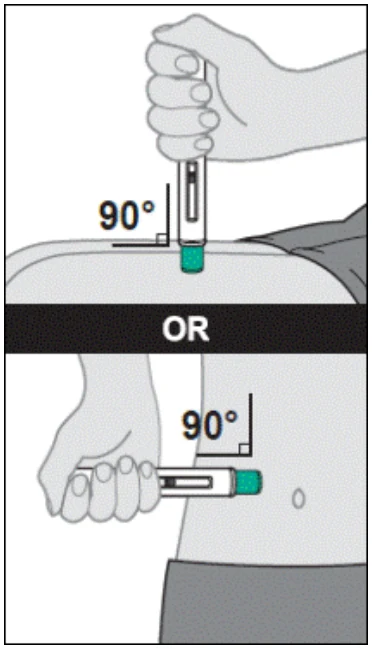
Place the Auto-injector on the injection site.
- a. Hold the Auto-injector so that you can see the Window.
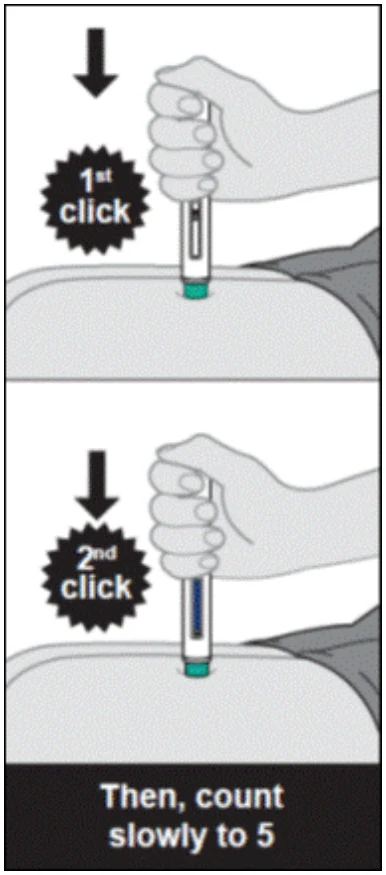
- b. Without pinching or stretching the skin, place the Auto-injector over the injection site at a 90-degree angle (see Figure I).
Figure I
Figure H
- 10.
Give the injection (see Figure J).
- a.
Press the Auto-injector firmly against the skin.
- When the injection starts you will hear the 1st loud “click” and the blue Plunger Rod will begin to fill the Window.
- b.
Keep holding the Auto-injector firmly against the skin and listen for the 2nd loud “click.”
- Do not change the position of the Auto-injector after the injection has started.
- c. After you hear the 2nd loud “click” continue to hold the Auto-injector firmly against the skin and count slowly to 5 to make sure you inject the full dose.
- a.
Figure J
- 11.
Remove the Auto-injector from the injection site.
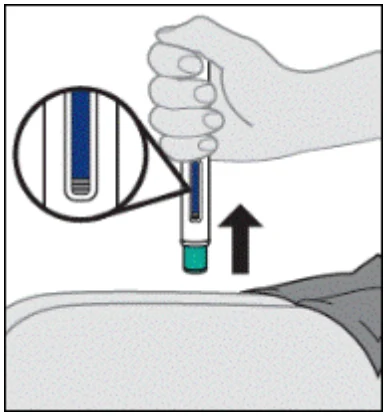
- a. Look at the Auto-injector and make sure that the blue Plunger Rod is filling the Window completely
- b.
Remove the Auto-injector from your skin (see Figure K).
- After you remove the Auto-injector from the injection site, the needle will be automatically covered (see Figure L).
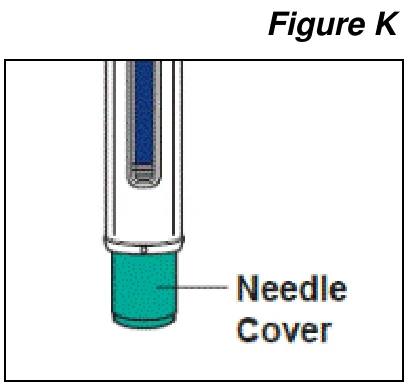
- If the Window has not turned completely blue or if the medicine is still injecting, this means you have not received a full dose. Call your healthcare provider immediately.
- Some bleeding may occur.
- Do not reuse the Auto-injector.
Do not rub the injection site.
Figure K
Figure L
AFTER THE INJECTION
- 12.
Dispose of the Auto-injector.
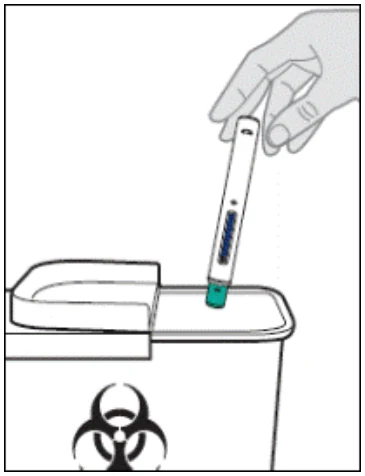
- a.
Put the used Auto-injector in a sharps disposal container right away after use (see Figure M).
- Do not throw away (dispose of) the Auto-injector in your household trash.
- If you do not have a sharps disposal container, you may use a household container that is:
- - made of a heavy-duty plastic,
- - can be closed with a tight-fitting, puncture-resistant lid, without sharps being able to come out,
- - upright and stable during use,
- - leak-resistant, and
- - properly labeled to warn of hazardous waste inside the container.
- When your sharps disposal container is almost full, you will need to follow your community guidelines for the right way to dispose of it. There may be state or local laws about how you should throw away used needles and syringes.
- Do not dispose of your used sharps disposal container in your household trash unless your community guidelines permit this. Do not recycle your used sharps disposal container.
- a.
- 13.
Care for the injection site.
- a.
Treat the injection site by gently pressing, not rubbing, a cotton ball or gauze to the site and apply an adhesive bandage, if necessary.
- Figure M
- a.
INSTRUCTIONS FOR USE YUFLYMATM
(adalimumab injection)
20 mg/0.2 mL Single-Dose Pre-filled Syringe
For subcutaneous use only
Read and follow the Instructions for Use that come with your Yuflyma Pre-filled Syringe before you start using it and each time you get a refill. There may be new information. This information does not take the place of talking to your healthcare provider about your medical condition or treatment.
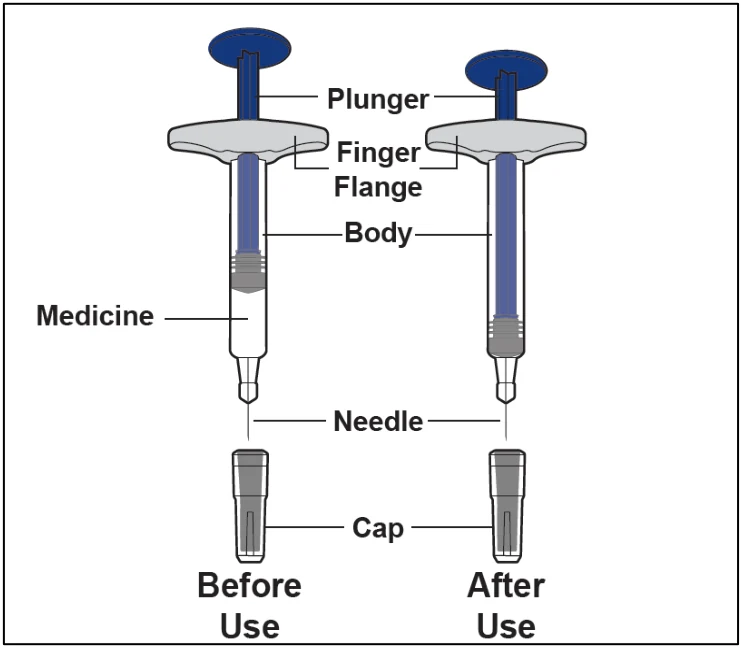
Figure A: Parts of Yuflyma Pre-filled Syringe
Important Information
- Use the Pre-filled Syringe only if your healthcare provider has trained you on the right way to prepare for and to give an injection.
- Ask your healthcare provider how often you will need to give an injection.
- Do not shake the Pre-filled Syringe at any time.
- Do not remove the Cap until you are ready to inject.
- Do not share the Pre-filled Syringe with anyone.
- Do not pull back on the plunger rod at any time.
How to store the Pre-filled Syringe
- Store the Pre-filled Syringe in a refrigerator between 36°F to 46°F (2°C to 8°C).
- Keep the Pre-filled Syringe in the original carton to protect it from light.
- Do not use a Pre-filled Syringe that has been left in direct sunlight.
- Do not freeze the Pre-filled Syringe. If the Pre-filled Syringe has been frozen, do not use the Pre-filled Syringe even if it is thawed.
- If needed, you may store the Pre-filled Syringe at room temperature up to 77°F (25°C) for up to 30 days.
- After the Pre-filled Syringe has reached room temperature, do not put it back in the refrigerator.
- Keep the Pre-filled Syringe and all medicines out of the reach of children.
Read Instructions on All Pages Before Using the Yuflyma Pre-filled Syringe
PREPARE FOR THE INJECTION
- 1.
Gather the supplies for the injection.
- a. Prepare a clean, flat surface, such as a table or countertop, in a well-lit area.
- b.
Remove 1 Pre-filled Syringe from the carton stored in your refrigerator.
- Hold the Pre-filled Syringe body when removing it from the carton. Do not touch the plunger rod.
- c.
Make sure you have the following supplies:
- - Pre-filled Syringe
- - 1 Alcohol swab
Not included in the carton:
- 1 Cotton ball or gauze
- 1 Adhesive bandage
- sharps disposal container
- 2.
Inspect the Pre-filled Syringe.
- a. Ensure you have the correct medicine (Yuflyma) and dosage.
- b. Look at the Pre-filled Syringe and make sure it is not cracked or damaged.
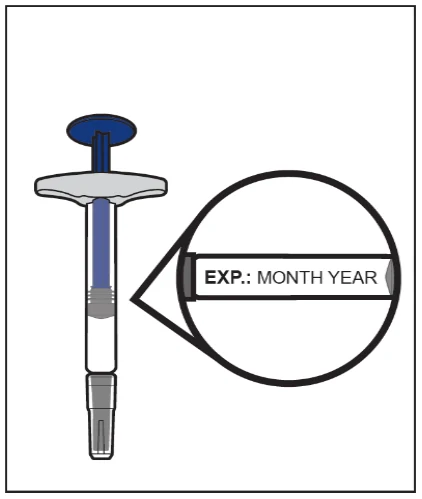
- c. Check the expiration date on the label of the Pre-filled Syringe (see Figure B)
Do not use the Pre-filled Syringe if
- it is cracked or damaged.
the expiration date has passed.
- Inspect the Medicine.
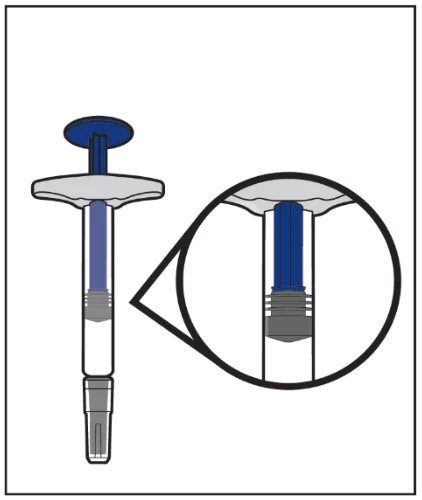
- Look at the Medicine and confirm that the liquid is clear, colorless to pale brown, and free of particles (see Figure C).
- Do not use the Pre-filled Syringe, if the liquid is the discolored (yellow or dark brown), cloudy, or contains particles in it.
- You may see air bubbles in the liquid. This is normal.
- 4.
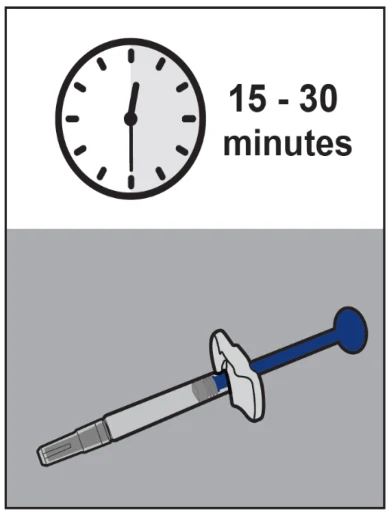
Wait 15 to 30 minutes.
- a.
Leave the Pre-filled Syringe at room temperature 68°F to 77°F (20°C to 25°C) for 15 to 30 minutes to allow it to warm up (see Figure D).
- Do not warm the Pre-filled Syringe using heat sources such as hot water or a microwave.
- a.
Figure B
Figure C
Figure D
- 5.
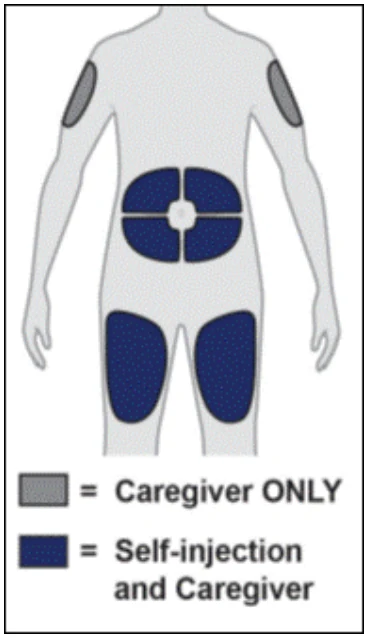
Choose an injection site (see Figure E).
- a.
You may inject into:
- - the front of your thighs.
- - your abdomen except for the 2 in (5 cm) around the belly button (navel).
- -
the outer area of the upper arm if you are a caregiver.
- Do not inject into skin that is within 2 in (5 cm) of your belly button (navel), or is red, hard, tender, damaged, bruised, or scarred.
- If you have psoriasis, do not inject directly into any raised, thick, red or scaly skin patches or lesions on your skin.
- Do not inject through your clothes.
- b.
Rotate the injection site each time you give an injection. Each new injection site should be at least 1.2
- in (3 cm) away from the injection site you used before.
- a.
- 6.
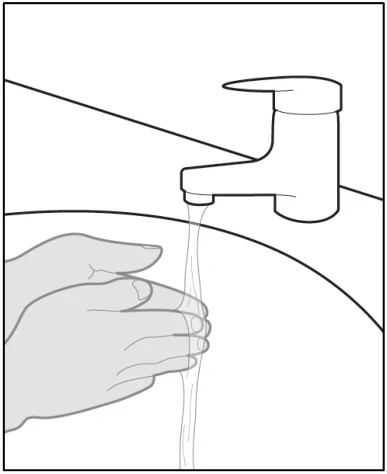
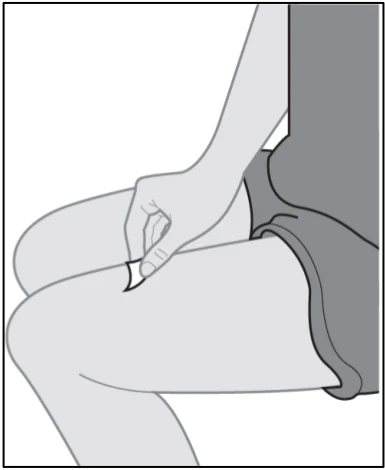
Wash your hands.
- a. Wash your hands with soap and water and dry them thoroughly (see Figure F).
Figure F
Figure E
- 7.
Clean the injection site.
- a. Clean the injection site with an alcohol swab using a circular motion (see Figure G).
- b.
Let the skin dry before injecting.
- Do not blow on or touch the injection site again before giving the injection.
Figure G
GIVE THE INJECTION
- 8.
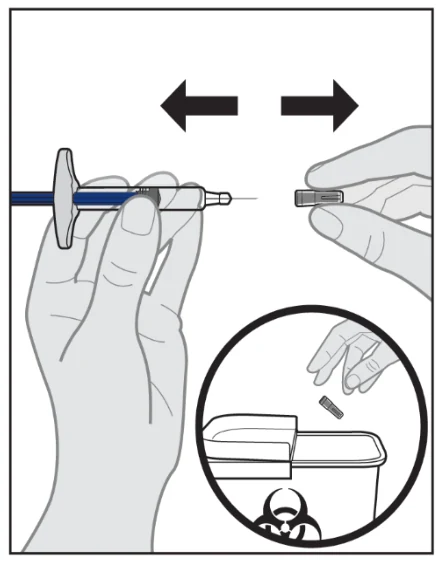
Remove the Cap.
- a.
Hold the Pre-filled Syringe by the injector body with the Cap on top using one hand. Gently pull the Cap straight off with the other hand. Dispose of the Cap in a sharps container (see Step 12 and Figure H).
- Do not pull back on the plunger rod at any time.
- Do not recap the Pre-filled Syringe.
- Do not remove the Cap until you are ready to inject.
- Do not touch the Needle. Doing so may result in a needle stick injury.
- a.
- 9.
Insert the Pre-filled Syringe into the injection site.
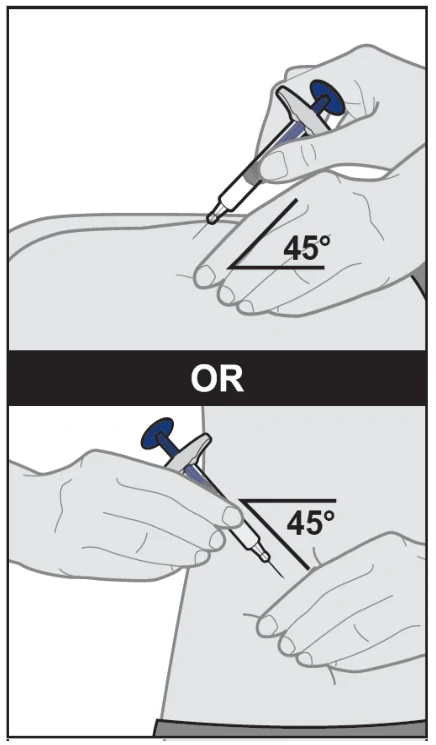
- a. Gently pinch a fold of skin at the injection site with one hand.
- b.
With a quick and “dart-like” motion, insert the Needle completely into the fold of the skin at a 45-degree angle (see Figure I).
Figure H
Figure I
- 10.
Give the injection.
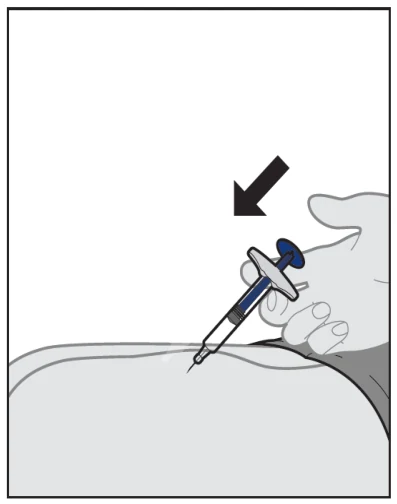
- a. After the Needle is inserted, release the pinch.
- b.
Slowly push the Plunger all the way down until all of the liquid is injected and the Syringe is empty (see Figure J).
- Do not change the position of the Pre-filled Syringe after the injection has started.
- 11.
Remove the Pre-filled Syringe from the injection site.
- a.
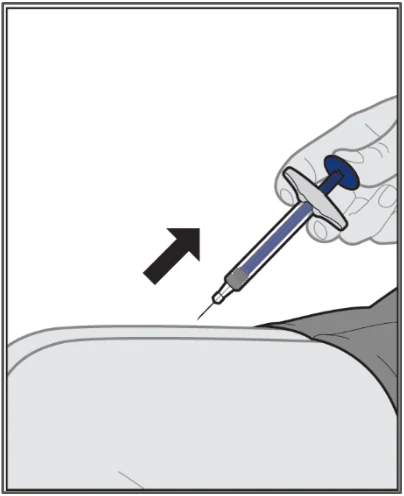
After the Pre-filled Syringe is empty, remove the Pre-filled Syringe from your skin (see Figure K).
- Some bleeding may occur.
- Do not reuse the Pre-filled Syringe.
- Do not touch the Needle.
- Do not rub the injection site.
- a.
Figure K
Figure J
AFTER THE INJECTION
- 12.
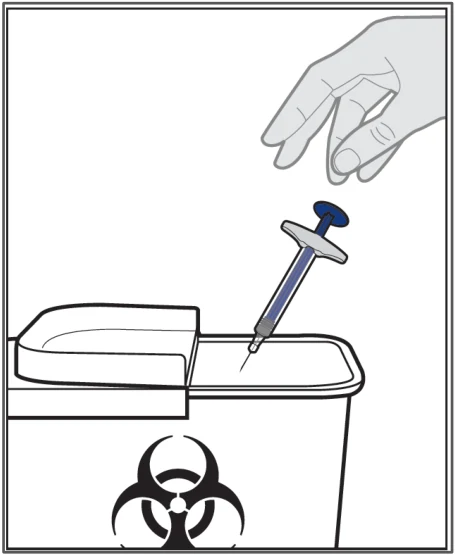
Dispose of the Pre-filled Syringe.
- a.
Put the used Pre-filled Syringe in a sharps disposal container right away after use (see Figure L).
- Do not throw away (dispose of) the Pre-filled Syringe in your household trash.
- If you do not have a sharps disposal container, you may use a household container that is:
- - made of a heavy-duty plastic,
- - can be closed with a tight-fitting, puncture-resistant lid, without sharps being able to come out,
- a.
- - upright and stable during use,
- - leak-resistant, and
- - properly labeled to warn of hazardous waste inside the container.
- When your sharps disposal container is almost full, you will need to follow your community guidelines for the right way to dispose of it. There may be state or local laws about how you should throw away used needles and syringes.
- Do not dispose of your used sharps disposal container in your household trash unless your community guidelines permit this. Do not recycle your used sharps disposal container.
- 13. Care for the injection site.
- a.
Treat the injection site by gently pressing, not rubbing, a cotton ball or gauze to the site and apply an adhesive bandage, if necessary.
Figure L