


Product Monograph - Zoledronic Acid for Injection (Teva Canada)
SUMMARY PRODUCT INFORMATION
| Route of Administration | Dosage Form / Strength | All Non-medicinal Ingredients |
| Intravenous infusion |
|
|
† This corresponds to 4.264 mg zoledronic acid monohydrate
INDICATIONS AND CLINICAL USE
Tumour-Induced Hypercalcaemia (TIH)
ZOLEDRONIC ACID for INJECTION is indicated for the treatment of Tumour-Induced Hypercalcaemia, defined as albumin-corrected serum calcium (cCa) ≥ 12.0 mg/dL (3.0 mmol/L), following adequate saline rehydration. Prior to treatment with ZOLEDRONIC ACID for INJECTION, renal excretion of excess calcium should be promoted by restoring and maintaining adequate fluid balance and urine output.
Bone Metastases of Solid Tumours and Osteolytic Lesions of Multiple Myeloma
ZOLEDRONIC ACID for INJECTION is indicated for the treatment of patients with documented bone metastases from solid tumours (including prostate cancer, breast cancer, lung cancer, renal cell carcinoma and other solid tumours) and patients with osteolytic lesions of multiple myeloma in conjunction with standard care in order to prevent or delay potential complications from the bone lesions (see WARNINGS AND PRECAUTIONS, Deterioration in renal function).
ZOLEDRONIC ACID for INJECTION must only be administered to patients by healthcare professionals experienced in the administration of intravenous bisphosphonates.
CONTRAINDICATIONS
- Hypersensitivity to zoledronic acid or other bisphosphonates, or any of the excipients in the formulation of ZOLEDRONIC ACID for INJECTION (see DOSAGE FORMS, COMPOSITION AND PACKAGING).
- Non-corrected hypocalcaemia at the time of infusion (see WARNINGS AND PRECAUTIONS, Hypocalcaemia).
- Pregnancy and breastfeeding women (see WARNINGS AND PRECAUTIONS, Special populations).
WARNINGS AND PRECAUTIONS
Serious Warnings and Precautions
|
General
Drug Interactions
ZOLEDRONIC ACID for INJECTION (0.8 mg/mL) contains the same active ingredient that is found in ready-to-use zoledronic acid (0.05 mg/mL). Patients being treated with ZOLEDRONIC ACID for INJECTION should not be treated with ready-to-use zoledronic acid (0.05 mg/mL) concomitantly.
ZOLEDRONIC ACID for INJECTION should not be given together with other bisphosphonates since the combined effects of these agents are unknown.
Zoledronic acid is eliminated by renal excretion. Caution is indicated when zoledronic acid is administered in conjunction with drugs that are potentially nephrotoxic (e.g. aminoglycosides, other antineoplastic agents, ASA, NSAIDs), or that can significantly impact renal function (e.g. diuretics, ACE inhibitors, leading to dehydration).
Caution is advised when ZOLEDRONIC ACID for INJECTION is administered with anti-angiogenic drugs, as the incidence of ONJ is increased when these drugs are used concomitantly (see Osteonecrosis of the Jaw, DRUG INTERACTIONS, Drug-Drug Interactions).
Caution is advised when ZOLEDRONIC ACID for INJECTION is administered with loop diuretics (particularly in patients treated for TIH), with aminoglycosides, or with calcitonin, since there may be an additive effect on the risk of developing hypocalcaemia.
ZOLEDRONIC ACID for INJECTION should be used with extreme caution in conjunction with other antineoplastic agents that are known to produce renal dysfunction (it is advised that renal function be monitored) or where the dose depends upon renal function (for example platinum-containing agents).
ZOLEDRONIC ACID for INJECTION should not be mixed with calcium-containing intravenous infusions.
Effects on ability to drive or use machines
In rare cases, somnolence and/or dizziness may occur, in which case the patient should not drive, operate potentially dangerous machinery or engage in other activities that may be hazardous.
Hypocalcaemia
Hypocalcaemia has been reported in patients treated with zoledronic acid. QTc prolongation and neurologic adverse events (tonic-clonic seizures, tetany and numbness) have been reported secondary to cases of severe hypocalcaemia. In some instances, the hypocalcaemia required hospitalization and/or was life-threatening.
Caution is advised when ZOLEDRONIC ACID for INJECTION is administered with other hypocalcaemia-causing drugs (including aminoglycosides, calcitonin, or loop diuretics), as they may have an additive effect resulting in severe hypocalcaemia (see also DRUG INTERACTIONS).
Patients who have undergone thyroid surgery may be particularly susceptible to develop hypocalcaemia due to relative hypoparathyroidism.
Serum albumin-corrected calcium should be measured prior to each dose and during therapy with ZOLEDRONIC ACID for INJECTION (see Monitoring and Laboratory Tests). ZOLEDRONIC ACID for INJECTION is contraindicated in patients who have non-corrected hypocalcaemia at the time of infusion (see CONTRAINDICATIONS).
Tumour-Induced Hypercalcaemia
It is essential in the initial treatment of tumour-induced hypercalcaemia that intravenous rehydration be instituted to restore urine output. All patients, including patients with mild to moderate renal impairment, should be hydrated adequately throughout treatment, but overhydration must be avoided.
In patients with cardiac disease, especially in the elderly, additional saline overload may precipitate cardiac failure (left ventricular failure or congestive heart failure). Fever (influenza-like symptoms) may also contribute to this deterioration.
Carcinogenesis and Mutagenesis
In carcinogenicity studies, zoledronic acid was administered orally (gavage) to rats and mice for at least 104 weeks without evidence of carcinogenic potential. Chronic parenteral administration was not feasible given the potential of the compound to cause severe local irritation. The pharmacological bone changes (nonproliferative hyperostosis) typically observed following long term bisphosphonate administration to young animals with growing skeletons gave clear evidence of systemic exposure to zoledronic acid in both species at all doses.
Six mutagenicity studies were conducted with zoledronic acid: three Ames Assays (using E. coli and/or S. typhimurium), a gene mutation assay using V79 hamster cells, a cytogenetics test with Chinese hamster cells and an in vivo micronucleus assay in rats. There was no evidence of mutagenic potential.
Cardiovascular
In a 3-year, randomized, double-blind controlled trial that evaluated the efficacy and safety of zoledronic acid 5 mg dose once yearly vs. placebo in the treatment of post menopausal osteoporosis (PMO), the overall incidence of atrial fibrillation was 2.5% (96 out of 3,862) and 1.9% (75 out of 3,852) in patients receiving zoledronic acid 5 mg and placebo, respectively. The rate of atrial fibrillation serious adverse events was 1.3% (51 out of 3,862) and 0.6% (22 out of 3,852) in patients receiving zoledronic acid 5 mg and placebo, respectively. The imbalance observed in this trial has not been observed in other trials with zoledronic acid, including those with zoledronic acid 4 mg administered every 3-4 weeks in oncology patients. The mechanism behind the increased incidence of atrial fibrillation in this single clinical trial is unknown.
Hepatic/Biliary/Pancreatic
Hepatic Impairment
As only limited clinical data are available for patients with hepatic impairment, dosage recommendations cannot be given for this group.
Musculoskeletal
Atypical Fractures of the Femur
Atypical subtrochanteric and diaphyseal femoral fractures have been reported in patients receiving bisphosphonate therapy, primarily in patients receiving long-term treatment for osteoporosis. Reports of atypical femoral fracture have also been received in patients treated with zoledronic acid. These transverse or short oblique fractures can occur anywhere along the femur from just below the lesser trochanter to just above the supracondylar flare. These fractures occur after minimal or no trauma and some patients experience thigh or groin pain, often associated with imaging features of stress fractures, weeks to months before presenting with a completed femoral fracture. Fractures are often bilateral; therefore, the contralateral femur should be examined in ZOLEDRONIC ACID for INJECTION-treated patients who have sustained a femoral shaft fracture. Poor healing of these fractures has also been reported. Discontinuation of ZOLEDRONIC ACID for INJECTION therapy in patients suspected to have an atypical femur fracture should be considered pending evaluation of the patient, based on an individual benefit risk assessment.
During ZOLEDRONIC ACID for INJECTION treatment, patients should be advised to report any thigh, hip or groin pain and any patient presenting with such symptoms should be evaluated for an incomplete femur fracture.
Musculoskeletal Pain
In post-marketing experience, severe and occasionally incapacitating bone, joint, and/or muscle pain have been reported in patients taking bisphosphonates, including zoledronic acid (see ADVERSE REACTIONS). The time to onset of symptoms varied from one day to several months after starting treatment. ZOLEDRONIC ACID for INJECTION should be discontinued if symptoms are severe. Most patients had relief of symptoms after stopping treatment. A subset had recurrence of symptoms when re-challenged with the same drug or another bisphosphonate.
Osteonecrosis
Osteonecrosis of the Jaw
Osteonecrosis of the jaw (ONJ) has been reported in cancer patients treated with zoledronic acid or with other bisphosphonates, including zoledronic acid. Although no causal relationship has been established, there is an association between bisphosphonate use and the development of ONJ. Post-marketing experience suggests a greater frequency of reports of ONJ based on tumour type (advanced breast cancer, multiple myeloma) and dental status (dental extractions, periodontal disease, and local trauma including poorly fitting dentures); these are associated with a greater risk of developing ONJ. Cancer patients also receive other treatments that may play a role in the development of ONJ, such as chemotherapy and glucocorticosteroids. Many patients reporting ONJ had signs of local infection including osteomyelitis (see ADVERSE REACTIONS, Post-Market Adverse Drug Reactions).
Presentation of ONJ may include altered local sensation (hyperaesthesia or numbness), maxillofacial pain, “toothaches”, denture sore spots, loose teeth, exposed bone in the oral cavity, impaired healing, recurrent or persistent soft tissue infection in the oral cavity, and marked oral odour. The onset can be from months to years after commencing bisphosphonate therapy. Cancer patients should maintain good oral hygiene. It is recommended that cancer patients be encouraged to have an oral examination of both hard and soft tissues, with appropriate preventive dentistry performed prior to treatment with zoledronic acid. These oral assessments are recommended to be continued at regularly scheduled intervals after zoledronic acid therapy is initiated and during treatment with zoledronic acid (see Monitoring and Laboratory Tests). While receiving zoledronic acid therapy, patients should immediately report any oral symptoms. It is advisable that patients undergo routine dental check-ups during their treatment with zoledronic acid. Patients should avoid invasive dental procedures if possible, but should continue with regular dental cleaning and oral hygiene. Biopsies are not recommended unless metastasis to the jaw is suspected. For patients who develop ONJ while on bisphosphonate therapy, dental surgery may exacerbate the condition. For patients requiring dental procedures, there is no data available to suggest whether discontinuation of bisphosphonate treatment reduces the risk of ONJ. Clinical judgment of the treating physician should guide the management plan of each patient based on individual benefit/risk assessment.
The start of treatment, or of a new course of treatment, should be delayed in patients with unhealed open soft tissue lesions in the mouth.
The following should be considered when evaluating a patient’s risk of developing ONJ:
- Potency of the medicinal product that inhibits bone resorption (higher risk for highly potent compounds)
- Route of administration (higher risk for parenteral administration)
- Cumulative dose of bone resorption therapy
- Co-morbid conditions (e.g. anaemia, coagulopathies) and smoking
- Periodontal disease, poorly fitting dentures, history of dental disease.
Temporary interruption of ZOLEDRONIC ACID for INJECTION treatment should be considered until the condition resolves and contributing factors are mitigated where possible.
Caution is advised when ZOLEDRONIC ACID for INJECTION is administered with anti-angiogenic drugs, as the incidence of ONJ is increased when these drugs are used concomitantly (see DRUG INTERACTIONS, Drug-Drug Interactions).
Osteonecrosis of Other Anatomical Sites
Cases of osteonecrosis of other anatomical sites including the femur, hip, humerus, external auditory canal, tibia, ribs, spine, knee, and metatarsal bones have been reported in patients treated with zoledronic acid (see ADVERSE REACTIONS, Post-Market Adverse Drug Reactions).
Ophthalmologic
Ocular disturbances (conjunctivitis, uveitis, episcleritis, scleritis and orbital inflammation) have been reported with zoledronic acid therapy. Patients with ocular events other than uncomplicated conjunctivitis should be referred to an ophthalmologist for evaluation. Treatment may need to be discontinued.
Peri-Operative Considerations
Patients treated with ZOLEDRONIC ACID for INJECTION should avoid invasive dental procedures if possible. Biopsies are not recommended unless metastasis to the jaw is suspected. For patients who develop ONJ while on bisphosphonate therapy, dental surgery may exacerbate the condition. For patients requiring dental procedures, there is no data available to suggest whether discontinuation of bisphosphonate treatment reduces the risk of ONJ. Clinical judgment of the treating physician should guide the management plan of each patient based on individual benefit/risk assessment. (See also Musculoskeletal, Osteonecrosis, Osteonecrosis of the Jaw)
Renal
Assessment of renal function is recommended in all patients prior to the administration of each dose and during therapy with ZOLEDRONIC ACID for INJECTION.
Deterioration in Renal Function
DUE TO THE RISK OF CLINICALLY SIGNIFICANT DETERIORATION IN RENAL FUNCTION, WHICH MAY PROGRESS TO RENAL FAILURE, SINGLE DOSES OF ZOLEDRONIC ACID for INJECTION SHOULD NOT EXCEED 4 MG AND THE DURATION OF THE INFUSION SHOULD BE NO LESS THAN 15 MINUTES. (See also DOSAGE AND ADMINISTRATION)
Bisphosphonates, including zoledronic acid, have been associated with reports of renal function deterioration. Factors that may increase the potential for deterioration in renal function include dehydration, pre-existing renal impairment, multiple cycles of zoledronic acid or other bisphosphonates, or using a shorter infusion time than currently recommended (the 4 mg dose is given as a single dose intravenous infusion over not less than 15 minutes in not less than 100 mL diluent). Concomitant use of potentially nephrotoxic drugs (i.e. ASA, NSAIDS, diuretics, ACE inhibitors etc.) may also increase the potential for renal function deterioration. Renal function should be assessed prior to the administration of each dose of ZOLEDRONIC ACID for INJECTION and should be monitored appropriately during therapy. Renal deterioration, progression to renal failure (some with fatal outcome) and dialysis have been reported very rarely in cancer patients (e.g., those with hypercalcaemia of malignancy and/or pre-existing renal disease) after the initial dose or a single dose of zoledronic acid. Increases in serum creatinine may occur in some patients with chronic administration of ZOLEDRONIC ACID for INJECTION at recommended doses. Patients with evidence of deterioration in renal function should be appropriately evaluated with consideration given as to whether the potential benefit of continued treatment with ZOLEDRONIC ACID for INJECTION outweighs the possible risk (see also DOSAGE AND ADMINISTRATION).
In clinical trials and from post-marketing surveillance, serious cases of acquired Fanconi syndrome have been reported in patients treated with zoledronic acid. If acquired Fanconi syndrome is detected (hyperaminoaciduria, glucosuria in the presence of normal serum glucose, phosphate wasting, among other clinical features), treatment with ZOLEDRONIC ACID for INJECTION should be discontinued and appropriate treatment should be instated.
ZOLEDRONIC ACID for INJECTION should be used with extreme caution in conjunction with other antineoplastic agents that are either known to produce renal impairment (it is advised that renal function be monitored); or where the dose depends upon renal function (for example platinum-containing agents).
Respiratory
Patients with Asthma
While not observed in clinical trials with zoledronic acid, administration of other bisphosphonates has been associated with bronchoconstriction in acetylsalicylic acid (ASA)-sensitive asthmatic patients. ZOLEDRONIC ACID for INJECTION should be used with caution in patients with aspirin-sensitive asthma.
Special Populations
Renal Impairment: Zoledronic acid is excreted exclusively via the kidney and the risk of adverse reactions may be greater in patients with impaired renal function. The use of ZOLEDRONIC ACID for INJECTION is not recommended in patients with severe renal impairment due to the potential impact of bisphosphonates, including ZOLEDRONIC ACID for INJECTION on renal function and the lack of extensive clinical safety data in these patients. Patients with severe renal impairment were excluded from clinical trials (defined as serum creatinine > 400 μmol/L or > 4.5 mg/dL in patients with tumour-induced hypercalcaemia and serum creatinine > 265 μmol/L or > 3.0 mg/dL in patients with bone metastases of solid tumours and osteolytic lesions of multiple myeloma) and from limited pharmacokinetic studies (defined as creatinine clearance [CrCl]< 30 mL/min) with zoledronic acid.
Close monitoring of renal function is necessary in patients who are receiving concomitant drugs with nephrotoxic potential.
Patients should have their serum creatinine levels assessed prior to each dose of ZOLEDRONIC ACID for INJECTION.
Upon initiation of treatment in patients with bone metastases of solid tumours and osteolytic lesions of multiple myeloma, with mild-to-moderate renal impairment, lower doses of ZOLEDRONIC ACID for INJECTION are recommended. In patients who show evidence of renal deterioration during treatment, appropriate evaluation should be carried out and consideration should be given as to whether the potential benefit outweighs the possible risk. If ZOLEDRONIC ACID for INJECTION treatment is to be continued in these patients, ZOLEDRONIC ACID for INJECTION should only be resumed when serum creatinine returns to within 10% of baseline (see DOSAGE AND ADMINISTRATION).
Women of child-bearing potential
Women of child-bearing potential should be advised to avoid becoming pregnant and advised of the potential hazard to the fetus while receiving ZOLEDRONIC ACID for INJECTION. There may be a risk of fetal harm (e.g. skeletal and other abnormalities) if a woman becomes pregnant while receiving zoledronic acid (see CONTRAINDICATIONS). The impact of variables such as time between cessation of zoledronic acid therapy to conception on this risk has not been established.
Pregnant Women: ZOLEDRONIC ACID for INJECTION is contraindicated during pregnancy (see CONTRAINDICATIONS). There is no clinical evidence to support the use of zoledronic acid in pregnant women, and animal studies suggest zoledronic acid may cause fetal harm when administered to a pregnant woman.
In animal reproduction studies, zoledronic acid was administered subcutaneously to rats and rabbits. Teratogenicity manifested by external, visceral and skeletal malformations was observed in the rat at doses ≥ 0.2 mg/kg (2.4 fold the systemic human exposure at 4 mg based on AUC comparison). There was also evidence of maternal toxicity at ≥ 0.2 mg/kg as well as fetal toxicity at 0.4 mg/kg (2.4 and 4.8 fold the human exposure, respectively). In the rabbit, maternal toxicity was marked at ≥ 0.1 mg/kg due to decreased serum calcium. Zoledronic acid readily crosses the placental barrier and is taken up into the developing fetal skeleton. The potential risk in humans is unknown (see also DETAILED PHARMACOLOGY, Reproductive Toxicity Studies).
Nursing Women: ZOLEDRONIC ACID for INJECTION is contraindicated in breast-feeding women (see CONTRAINDICATIONS). There is no clinical experience with zoledronic acid in lactating women and it is not known whether zoledronic acid passes into breast milk. A study in lactating rats has shown that another bisphosphonate pamidronate passes into the milk. Mothers treated with ZOLEDRONIC ACID for INJECTION should therefore not breast feed their infants.
Fertility: The fertility was decreased in rats dosed subcutaneously with 0.01 mg/kg/day of zoledronic acid, with systemic exposures of 0.12 times the human systemic exposure following an intravenous dose of 4 mg (based on AUC). The effects observed included an increase in pre-implantation losses and a decrease in the number of implantations and live fetuses. There are no data available in humans.
Paediatrics (< 18 years of age): The safety and efficacy of zoledronic acid in pediatric patients have not been established. No toxicology studies have been conducted in juvenile animals. The most frequent finding in growing animals during repeat-dose studies consisted of increased primary spongiosa (non-proliferative hyperostosis) in the metaphysis of long bones. ZOLEDRONIC ACID for INJECTION is not recommended for use in pediatric patients.
Paediatric Osteogenesis Imperfecta (OI)
In a one-year, active-controlled trial which compared zoledronic acid and pamidronate in osteogenesis imperfecta (OI), zoledronic acid was studied in 74 children aged 1 year to 17 years. Of the patients with type I OI, fracture adverse events of long bones in the lower extremities were reported in approximately 26% (femur) and 11% (tibia) of patients treated with zoledronic acid vs. 0% and 3%, respectively, of patients treated with pamidronate.
Geriatrics (> 65 years of age):
Controlled clinical studies of zoledronic acid in TIH do not provide a sufficient number of geriatric subjects to determine whether patients 65 years and older respond differently. The median age in the two controlled clinical trials in patients with tumour-induced hypercalcaemia was 61 years old (range: 21-87 years old).
Controlled clinical studies of zoledronic acid in the treatment of bone metastases of solid tumours and osteolytic lesions of multiple myeloma in patients over age 65 revealed similar efficacy and safety compared to younger patients. The proportion of patients experiencing SREs is lower in the zoledronic acid treatment group when compared to placebo and similar to pamidronate 90 mg. Older patients generally had adverse events similar to those of the overall population. However, because of the greater frequency of decreased hepatic, renal, or cardiac function, and of concomitant disease or other drug therapy in elderly patients, ZOLEDRONIC ACID for INJECTION should be administered with caution in this patient population.
Race: Japanese female subjects had substantially higher systemic exposure, i.e., 47% higher AUC0-24h and 39% higher Cmax than the North American population (see ACTION AND CLINICAL PHARMACOLOGY, Special Populations and Conditions, Race).
Monitoring and Laboratory Tests
Serum electrolytes, creatinine, phosphate, magnesium and calcium, and CBC with differential must be closely monitored in all patients treated with ZOLEDRONIC ACID for INJECTION. Renal function should be assessed prior to the administration of each dose and should be monitored appropriately during therapy with of ZOLEDRONIC ACID for INJECTION (see WARNINGS AND PRECAUTIONS, Renal). Serum albumin-corrected calcium should be measured prior to each dose and should be monitored during therapy with ZOLEDRONIC ACID for INJECTION (see CONTRAINDICATIONS and WARNINGS AND PRECAUTIONS, General, Hypocalcaemia).
Patients with anaemia, leukopenia or thrombocytopenia should have regular haematology assessments.
In tumour-induced hypercalcaemia, either ionized calcium or total serum calcium corrected (adjusted) for albumin should be monitored during treatment with ZOLEDRONIC ACID for INJECTION. Serum calcium levels in patients who have hypercalcaemia of malignancy may not reflect the severity of hypercalcaemia, since hypoalbuminaemia is commonly present. Corrected serum calcium values should be calculated using established algorithms, such as: Albumin-corrected serum calcium (CSC, mmol/L) = tCa + 0.02 (mid-range albumin-measured albumin).
Prior to treatment with ZOLEDRONIC ACID for INJECTION, an oral examination of both hard and soft tissues, with appropriate preventive dentistry is recommended. These careful oral examinations are recommended to be continued at regularly scheduled intervals after
ZOLEDRONIC ACID for INJECTION therapy is initiated and during treatment with ZOLEDRONIC ACID for INJECTION (see WARNINGS AND PRECAUTIONS, Musculoskeletal, Osteonecrosis, Osteonecrosis of the Jaw).
ADVERSE REACTIONS
Adverse Drug Reaction Overview
The most serious adverse drug reactions reported in patients receiving zoledronic acid are: anaphylactic reaction, ocular adverse events, osteonecrosis of the jaw, atypical femoral fracture, atrial fibrillation, renal function deterioration, acute phase reaction, and hypocalcaemia.
Adverse reactions to zoledronic acid are usually mild and transient and similar to those reported for other bisphosphonates. Intravenous administration has been most commonly associated with fever. Within three days after zoledronic acid administration, an acute phase reaction has been reported commonly, with symptoms including pyrexia, fatigue, bone pain and/or arthralgias, myalgias, chills, influenza-like illness, arthritis and joint swelling; these symptoms usually resolve within a few days.
Gastrointestinal reactions such as nausea and vomiting have been reported commonly following intravenous infusion of zoledronic acid. Local reactions at the infusion site, such as redness or swelling and/or pain, were observed infrequently.
Rash or pruritis and chest pain have been reported uncommonly following treatment with zoledronic acid.
As with other bisphosphonates, isolated cases of hypomagnesaemia have been reported. Isolated cases of episcleritis have been reported, uveitis has been reported rarely, blurred vision has been reported uncommonly and cases of conjunctivitis have been reported commonly.
Cardiac arrhythmias associated with hypocalcaemia have been reported rarely following treatment with zoledronic acid. Atrial fibrillation not associated with hypocalcaemia has been reported following treatment with zoledronic acid.
Cases of interstitial lung disease have been reported rarely following treatment with zoledronic acid.
Clinical Trial Adverse Drug Reactions
Tumour-Induced Hypercalcaemia Clinical Trials
Patients with tumour-induced hypercalcaemia may have numerous confounding medical conditions that make causality of adverse events difficult to assess due to the prevalence and wide variety of symptoms related to the underlying disease, its progression and the side effects of cytotoxic chemotherapy.
In patients treated with zoledronic acid, serum calcium may fall to asymptomatic hypocalcaemic levels. This frequently leads to a reduction in renal calcium excretion which is accompanied by a fall in serum phosphate levels that does not require treatment.
Grade 3 [Common Toxicity Criteria (CTC)] serum creatinine was reported in 2.3% and 3.0% of patients receiving zoledronic acid, 4 mg and pamidronate 90 mg, respectively, in the clinical trials in tumour-induced hypercalcaemia. Grade 4 (CTC) serum creatinine was reported in 0% and 1.0% in patients receiving zoledronic acid 4 mg and pamidronate 90 mg, respectively.
Table 1 lists the adverse events considered to be treatment-related in the tumour-induced hypercalcaemia trials.
Table 1: Treatment-Related Adverse Events Reported in Tumour-Induced Hypercalcaemia Clinical Trials
zoledronic acid 4 mg % (N=86) | pamidronate 90 mg % (N=103) | |
| Fever | 7.0 | 9.7 |
| Hypocalcaemia | 5.8 | 1.9 |
| Hypophosphataemia | 3.5 | 1.0 |
| Nausea | 1.2 | 1.0 |
| Pruritus | 1.2 | 0 |
| Skeletal pain | 1.2 | 1.0 |
| Hypomagnesaemia | 1.2 | 0 |
| Taste perversion | 1.2 | 0 |
| Thirst | 1.2 | 0 |
| Pancytopenia | 1.2 | 0 |
| Arthralgia | 1.2 | 0 |
| Bradycardia | 1.2 | 0 |
| Confusion | 1.2 | 0 |
| Fatigue | 1.2 | 0 |
| Hallucination | 1.2 | 0 |
| Vomiting | 1.2 | 0 |
| Chest pain | 1.2 | 0 |
Bone Metastases of Solid Tumours and Osteolytic Lesions of Multiple Myeloma Clinical Trials
The adverse event data pertaining to bone metastases of solid tumours and osteolytic lesions of multiple myeloma are based upon the core and extension phases of the three pivotal controlled trials in this indication (see DETAILED PHARMACOLOGY and CLINICAL STUDIES). These trials included 2042 safety evaluable patients treated with either zoledronic acid 4 mg, pamidronate 90 mg or placebo. Of these 2042 patients who entered the core phase of the trials, 969 completed the core phase, 619 entered the safety extension phase, and 347 completed the extension phase. The median duration of exposure to zoledronic acid 4 mg (core plus extension phases) was 10.5 months for patients with prostate cancer, 12.8 months for patients with breast cancer and multiple myeloma, and 4.0 months for patients with lung cancer and other solid tumours. The mean duration of exposure to zoledronic acid 4 mg (core plus extension phases)
was 11.8 months for patients with prostate cancer, 13.9 months for patients with breast cancer and multiple myeloma, and 5.7 months for patients with lung cancer and other solid tumours (see CLINICAL STUDIES).
In general, zoledronic acid was well tolerated across all studies for various tumour types in patients with bone metastases and in patients with multiple myeloma. The proportion of patients experiencing Grade 3 and Grade 4 laboratory abnormalities and adverse events were similar in patients treated with zoledronic acid and pamidronate.
Grade 3 [Common Toxicity Criteria (CTC)] serum creatinine was reported in 1.3%, 1.5% and 1.7% of patients receiving zoledronic acid 4 mg, pamidronate 90 mg and placebo, respectively. Grade 4 (CTC) serum creatinine was reported in 0.4%, 0.4% and 0% of patients receiving zoledronic acid 4 mg, pamidronate 90 mg and placebo, respectively.
The most commonly reported (>15%) adverse events occurred with similar frequencies in the zoledronic acid, pamidronate and placebo treatment groups, and most of these events may have been related to the underlying disease state or cancer therapy. Table 2 lists the events which occurred in ≥15% of patients regardless of study drug relationship by preferred term and treatment group, in the bone metastases trials.
Table 2: Commonly Reported Events in Three Bone Metastases Clinical Trials
zoledronic acid 4 mg | pamidronate 90 mg | Placebo | |
|---|---|---|---|
| n (%) | n (%) | n (%) | |
| Patients studied | |||
| Total no. of patients studied | 1031 (100) | 556 (100) | 455 (100) |
| Total no. of patients with an AE | 1015 (98.4) | 548 (98.6) | 445 (97.8) |
| Adverse events (preferred term) | |||
| Bone pain | 55.2% | 56.8% | 62.4% |
| Nausea | 46.2% | 47.8% | 37.6% |
| Fatigue | 38.6% | 43.2% | 28.6% |
| Anaemia | 33.4% | 31.5% | 28.1% |
| Vomiting | 32.3% | 32.9% | 26.8% |
| Pyrexia | 31.8% | 30.9% | 19.6% |
| Constipation | 31.0% | 29.1% | 38.2% |
| Dyspnoea NOS | 27.4% | 27.9% | 23.5% |
| Weakness | 24.4% | 19.4% | 25.1% |
| Diarrhoea NOS | 24.2% | 29.1% | 18.2% |
| Myalgia | 23.2% | 25.7% | 16.3% |
| Anorexia | 22.4% | 14.6% | 23.1% |
| Cough | 21.7% | 23.2% | 14.3% |
| Arthralgia | 21.0% | 23.6% | 16.0% |
| Oedema lower limb | 20.9% | 22.7% | 18.5% |
| Malignant neoplasm aggravated | 19.9% | 17.4% | 19.6% |
| Headache NOS | 18.5% | 26.8% | 11.0% |
| Dizziness (excl. vertigo) | 17.5% | 16.4% | 12.7% |
| Insomnia NEC | 16.1% | 20.0% | 16.0% |
| Weight decreased | 15.9% | 9.0% | 13.4% |
zoledronic acid 4 mg | pamidronate 90 mg | Placebo |
|---|
| n (%) | n (%) | n (%) | |
|---|---|---|---|
| Back pain | 15.1% | 19.1% | 8.8% |
| Paresthesia NEC | 14.5% | 15.3% | 7.7% |
| Depression NEC | 14.2% | 17.1% | 10.8% |
| Pain in limb | 13.9% | 15.1% | 11.4% |
NOS: Not otherwise specified NEC: Not elsewhere classified
The adverse events occurring during the studies were generally of a type and frequency expected in patients with cancer and bone metastases, many of whom were undergoing antineoplastic therapy. Except for pyrexia, the absolute difference in the proportions of patients in the zoledronic acid 4 mg group compared with the placebo group for any of the common adverse events did not exceed 10%. Pyrexia, or fever, may occur as part of an acute phase reaction with bisphosphonate administration.
Among less commonly occurring adverse events (<15% of patients in any group), hypocalcaemia was reported in 4.7%, 2.5%, and 0.7% of patients in the zoledronic acid 4 mg, pamidronate, and placebo groups, respectively. Hypokalaemia was reported in 9.7%, 9.0%, and 4.8% of patients in the zoledronic acid 4 mg, pamidronate, and placebo groups, respectively. Arthritis was reported in 2.42%, 4.32% and 3.08% of patients and joint swelling was reported in 1.55%, 2.88% and 1.32% of patients in the zoledronic acid 4 mg, pamidronate and placebo groups, respectively.
Hypotension
Based on the clinical trial experience, the frequency of non-serious hypotensive events is uncommon (between 0.1% and 1.0%).
Deterioration in Renal Function
In a pooled analysis of the laboratory data from the three registration trials of zoledronic acid for the treatment of multiple myeloma and bone metastases from breast, prostate, lung and other solid tumours, renal deterioration was defined as an increase of 44.2 µmol/L (0.5 mg/dL) for patients with normal baseline creatinine (<123.76 µmol/L or <1.4 mg/dL) or an increase of 88.4 µmol/L (1.0 mg/dL) for patients with an abnormal baseline creatinine (≥123.76 µmol/L or ≥1.4 mg/dL). The following are data on the incidence of renal deterioration in patients receiving zoledronic acid 4 mg over 15 minutes in these trials (see Table 3).
Table 3: Percentage of Patients with Renal Function Deterioration Who Were Randomized Following the 15-Minute Infusion Amendment
| Patient Population/Baseline Creatinine | |||||||||
| Multiple Myeloma and Breast Cancer | zoledronic acid 4 mg | pamidronate 90 mg | |||||||
| n/N | (%) | n/N | (%) | ||||||
| Normal | 27/246 | (11.0%) | 23/246 | (9.3%) | |||||
| Abnormal | 2/26 | (7.7%) | 2/22 | (9.1%) | |||||
| Total | 29/272 | (10.7%) | 25/268 | (9.3%) | |||||
| Solid Tumours | zoledronic acid 4 mg | Placebo | |||||||
| n/N | (%) | n/N | (%) | ||||||
| Normal | 17/154 | (11%) | 10/143 | (7%) | |||||
| Abnormal | 1/11 | (9.1%) | 1/20 | (5%) | |||||
| Total | 18/165 | (10.9%) | 11/163 | (6.7%) | |||||
| Prostate Cancer | zoledronic acid 4 mg | Placebo | |||||||
| n/N | (%) | n/N | (%) | ||||||
| Normal | 12/82 | (14.6%) | 8/68 | (11.8%) | |||||
| Abnormal | 4/10 | (40%) | 2/10 | (20%) | |||||
| Total | 16/92 | (17.4%) | 10/78 | (12.8%) | |||||
The risk of deterioration in renal function appeared to be related to time on study, whether patients were receiving zoledronic acid (4 mg over 15 minutes), placebo, or pamidronate.
In a pooled analysis of safety data from the three registration trials of zoledronic acid for the treatment of multiple myeloma and bone metastases from breast, prostate, lung and other solid tumours, the frequency of renal function adverse events (adverse reactions) suspected to be related to zoledronic acid was as follows: multiple myeloma (3.2%), prostate cancer (3.1%), breast cancer (4.3%), lung and other solid tumours (3.2%).
The frequency distribution of chemotherapy-associated adverse events by chemotherapy, renal involvement and treatment group for patients in the primary safety population is provided in Table 4. This includes patients who were administered at least one chemotherapeutic agent during the study (i.e., patients treated with only hormonal agents are not included). Each chemotherapeutic agent is classified in one of the three categories: renally excreted, nephrotoxic, or no renal involvement (see Tables 4-1 and 4-2). For a chemotherapy that is both renally excreted and nephrotoxic, the agent is classified as nephrotoxic.
Patients receiving renally excreted drugs that were not nephrotoxic had a similar incidence of nausea for the zoledronic acid and placebo treatment groups when compared to the nephrotoxic agents. Nausea was higher for the pamidronate treatment group for the nephrotoxic agents when compared to the agents that were not nephrotoxic and renally excreted. Vomiting, stomatitis and anorexia were similar for all of the treatment groups whether or not the agent was renally excreted or nephrotoxic. Alopecia was higher in all groups treated with nephrotoxic drugs when compared to renally excreted drugs.
Table 4: Frequency distribution of chemotoxicities (>1%) by renal involvement and treatment group for patients who were treated with at least one chemotherapy agent (Safety evaluable patients)
| Renal Involvement† | zoledronic acid 4 mg | pamidronate 90 mg | Placebo |
|---|---|---|---|
Renally excreted Number of patients Total with chemotoxicity | 221 161 (72.9%) | 163 100 (61.3%) | 76 54 (71.1%) |
Nausea Vomiting NOS1 Anorexia Appetite decreased NOS Stomatitis Alopecia Malaise Cachexia Gingivitis Mouth ulceration Gingival disorder NOS Malnutrition NOS Pallor | 113 (51.1%) 75 (33.9%) 55 (24.9%) 39 (17.6%) 25 (11.3%) 24 (10.9%) 6 (2.7%) 4 (1.8%) 3 (1.4%) 3 (1.4%) 0 (0.0%) 0 (0.0%) 0 (0.0%) | 68 (41.7%) 48 (29.4%) 23 (14.1%) 16 (9.8%) 21 (12.9%) 18 (11.0%) 3 (1.8%) 1 (0.6%) 3 (1.8%) 2 (1.2%) 0 (0.0%) 2 (1.2%) 0 (0.0%) | 37 (48.7%) 23 (30.3%) 28 (36.8%) 7 (9.2%) 6 (7.9%) 9 (11.8%) 5 (6.6%) 3 (3.9%) 0 (0.0%) 0 (0.0%) 1 (1.3%) 0 (0.0%) 1 (1.3%) |
|---|---|---|---|
Nephrotoxic Number of patients Total with chemotoxicity | 471 345 (73.2%) | 248 191 (77.0%) | 164 116 (70.7%) |
Nausea Vomiting NOS Anorexia Alopecia Appetite decreased NOS Stomatitis Malaise Mouth ulceration Malnutrition NOS Pallor Gingivitis Cachexia | 249 (52.9%) 194 (41.2%) 117 (24.8%) 93 (19.7%) 63 (13.4%) 59 (12.5%) 18 (3.8%) 13 (2.8%) 6 (1.3%) 6 (1.3%) 5 (1.1%) 3 (0.6%) | 136 (54.8%) 99 (39.9%) 46 (18.5%) 54 (21.8%) 23 (9.3%) 36 (14.5%) 10 (4.0%) 5 (2.0%) 2 (0.8%) 2 (0.8%) 2 (0.8%) 0 (0.0%) | 73 (44.5%) 58 (35.4%) 48 (29.3%) 24 (14.6%) 17 (10.4%) 7 (4.3%) 8 (4.9%) 1 (0.6%) 1 (0.6%) 2 (1.2%) 0 (0.0%) 4 (2.4%) |
No renal involvement Number of patients Total with chemotoxicity | 0 0 (0%) | 1 1 (100%) | 0 0 (0%) |
| Nausea | 0 (0%) | 1 (100%) | 0 (0%) |
1 NOS: Not otherwise specified.
† Each chemotherapeutic agent is classified in one of the three categories: renally excreted, nephrotoxic, or no renal involvement (See Tables 4-1 and 4-2)
Table 4-1: Listing of chemotherapy agents by renal involvement*
| Renal Toxic | |
|---|---|
| Preferred term | Preferred term |
Adriamycin + Cyclophosphamide Adriamycin + Vincristine + MTX Aldesleukin BCG Vaccine Carboplatin Cisplatin Cyclophosphamide Cyclophosphamide + 5-FU + Methotrexate Cyclophosphamide + 5-FU + Prednisolone Cyclophosphamide + Doxorubicin + 5-FU Cyclophosphamide + Epirubicin Dacarbazine Etanercept Gallium Nitrate Gemcitabine | Methotrexate Methotrexate sodium Mitomycin Oxaliplatin Paclitaxel Raltitrexed Streptozocin Strontium-89 Taxol – Carboplatin Tegafur Tegafur Uracil Teniposide Thalidomide Thiotepa Topotecan Hydrochloride |
| Renal Toxic |
|---|
| Preferred term | Preferred term |
|---|---|
Gemcitabine Hydrochloride Hydroxycarbamide Ifosfamide Interferon Interferon Alfa Interferon Beta Interferon Gamma Interferon NOS1 lnterleukin-2 M - VAC | Trastuzumab Carboplatin + Etoposide CMF + Dexamethasone CMF + Tamoxifen FAC + Tamoxifen Citrate Topotecan EVCMF (Epirubicine+Vincri+Cycloph.+MTX+5FU) |
1 NOS: Not otherwise specified.
*David S. Fischer, M. Tish Knobf, Henry J. Durivage. The Cancer Chemotherapy Handbook, 5th edition 1997.
Table 4-2: Listing of chemotherapy agents by renal involvement*
| Renally excreted | |
| Preferred term | Preferred term |
5-FU + Calcium folinate Adriamycin + 5-FU Betamethasone Bethamethasone Sodium Phosphate Bleomycin Bleomycin Sulfate Busulfan Capecitabine Carmustine Cytarabine Daunorubicin Dexrazoxane Hydrochloride Docetaxel Doxorubicin Doxorubicin Hydrochloride Epirubicin Epirubicin Hydrochloride Etoposide Exemestane | Floxuridine Flurouracil Formestane Irinotecan Irinotecan Hydrochloride Lomustine Melphalan Melphalan + Prednisolone Mitoxantrone Mitoxantrone Hydrochloride Tropisetron Hydrochloride Vinblastine Vinblastine Sulfate Vincristine Vincristine Sulfate Vindesine Vinorelbine Vinorelbine Bitartrate Vinorelbine Ditartrate Pirarubicin |
*David S. Fischer, M. Tish Knobf, Henry J. Durivage. The Cancer Chemotherapy Handbook, 5th edition. 1997.
Bone metastases from breast cancer: Placebo-controlled trial in Japanese Patients
In a placebo-controlled clinical study in breast cancer patients with bone metastases, 227 patients were evaluated for safety (114 zoledronic acid and 113 placebo) (see CLINICAL TRIALS). Table 5 below illustrates AEs that occurred more frequently in the zoledronic acid compared to placebo. The adverse events occurring during the study were generally of a type and frequency expected in patients with cancer and bone metastases, many of whom were undergoing concurrent antineoplastic therapy.
Table 5: Most Commonly Reported AEs (incidence > 10%) occurring more frequently in the Zoledronic Acid Arm Compared to Placebo
zoledronic acid 4 mg (n=114) n (%) | Placebo (n=113) n (%) | |
| Pyrexia | 63 (55.3) | 37 (32.7) |
| Malaise | 51 (44.7) | 36 (31.9) |
| Headache NOS | 34 (29.8) | 32 (28.3) |
| Hypoaesthesia | 28 (24.6) | 22 (19.5) |
| Arthralgia | 24 (21.1) | 18 (15.9) |
| Dyspnoea NOS | 21 (18.4) | 15 (13.3) |
| Epigastric pain | 19 (16.7) | 8 (7.1) |
| Leukopenia NOS | 17 (14.9) | 16 (14.2) |
| Myalgia | 15 (13.2) | 13 (11.5) |
| Pruritus NOS | 13 (11.4) | 12 (10.6) |
| Oedema lower limb | 13 (11.4) | 4 (3.5) |
| Anaemia NOS | 12 (10.5) | 7 (6.2) |
| Pain NOS | 12 (10.5) | 11 (9.7) |
Shows no. of subjects experiencing at least 1 AE in category in question
Post-Market Adverse Drug Reactions
Cases of ONJ have been reported in patients treated with zoledronic acid. A large retrospective study of the frequency and risk factors for ONJ in cancer patients receiving intravenous bisphosphonates (Hoff, A. et al., 2008) indicated a higher proportion of reported cases in certain cancers, such as advanced breast cancer (1.2%) and multiple myeloma (2.4%), compared to the overall study population (0.72%). The majority of the reported cases of ONJ were associated with invasive dental procedures (such as tooth extraction, dental surgery, or local trauma including poorly fitting dentures), or periodontal disease. Many patients reporting ONJ also had signs of local infection, including osteomyelitis (see WARNINGS AND PRECAUTIONS, Musculoskeletal, Osteonecrosis, Osteonecrosis of the Jaw).
Cases of osteonecrosis of other anatomical sites including the femur, hip, humerus, external auditory canal, tibia, ribs, spine, knee, and metatarsal bones have also been reported in patients treated with zoledronic acid (see WARNINGS AND PRECAUTIONS, Musculoskeletal, Osteonecrosis, Osteonecrosis of Other Anatomical Sites).
Cases of anaphylactic reactions/shock, atrial fibrillation, hypotension leading to syncope or circulatory collapse (primarily in patients with underlying risk factors), somnolence, uveitis, episcleritis, scleritis, orbital inflammation, hypersensitivity reactions including cases of severe allergic reactions, bronchospasm, interstitial lung disease (ILD), urticaria, severe and occasionally incapacitating bone, joint, and/or muscle pain, atypical subtrochanteric and diaphyseal femoral fractures have also been reported. There were reports that had ocular events, bone, joint, and/or muscle pain, and ILD with a bisphosphonate, including zoledronic acid, and had a re-occurrence when re-challenged.
Post marketing events of arthritis and joint swelling, likely occurring as part of an acute phase reaction, have been reported with zoledronic acid administration.
In clinical trials and from post-market surveillance, hypocalcaemia has been reported in patients treated with zoledronic acid. QTc prolongation and neurologic adverse events (including seizures, numbness, and tetany) have been reported secondary to cases of severe hypocalcaemia. In addition, cardiac arrhythmias have been reported with cases of severe hypocalcaemia. Cases of severe hypocalcaemia requiring hospitalization have been reported. In some instances, the hypocalcaemia was life-threatening. Time from the first injection of zoledronic acid to the initial hypocalcaemia-related neurologic or cardiac adverse events ranged from 1 day to several months.
Evidence supports a causal relationship between hypocalcaemia and zoledronic acid therapy based on temporal relationship and the secondary QTc prolongation and neurological events as sequelae of the hypocalcaemia.
In clinical trials and from post-market surveillance, serious cases of acquired Fanconi syndrome have been reported in patients treated with zoledronic acid (see WARNINGS AND PRECAUTIONS, Renal).
Spontaneously reported adverse drug reactions are presented above. Because these events are reported voluntarily from a population of uncertain size, it is not always possible to reliably estimate their frequency or clearly establish a causal relationship to zoledronic acid exposure.
DRUG INTERACTIONS
Zoledronic acid is not systemically metabolized and does not affect human cytochrome P450 enzymes in vitro. Zoledronic acid is not highly bound to plasma proteins (approximately 55%) and therefore, interactions resulting from displacement of highly protein-bound drugs are unlikely.
Drug-Drug Interactions
Co-administration of thalidomide (100 mg once daily for 14 days and then 200 mg thereafter) with zoledronic acid (4 mg given as a 15-minute infusion) in a phase III study did not significantly change the pharmacokinetics of zoledronic acid or creatinine clearance in patients with multiple myeloma.
Caution is indicated when zoledronic acid is used with other potentially nephrotoxic drugs (see also WARNINGS AND PRECAUTIONS, General, Drug Interactions).
Caution is advised when zoledronic acid is administered with aminoglycosides, calcitonin, or loop diuretics; since these agents may have an additive effect on the risk of developing hypocalcaemia (see also WARNINGS AND PRECAUTIONS, General, Drug Interactions).
A drug interaction with zoledronic acid therapy and the concomitant use of anti-angiogenic drugs has been established in cases of ONJ. Retrospective analyses indicate that the incidence of ONJ is increased in patients treated with bisphosphonates and anti-angiogenic drugs concomitantly.
DOSAGE AND ADMINISTRATION
Dosing Considerations
Renal function should be assessed in all patients prior to the administration of each dose of ZOLEDRONIC ACID for INJECTION. Patients with mild to moderate renal impairment require a reduction in dose (see DOSAGE AND ADMINISTRATION, Recommended Dose and Dosage Adjustment). ZOLEDRONIC ACID for INJECTION is not recommended in patients with severe renal impairment (see WARNINGS AND PRECAUTIONS, Serious Warnings and Precautions box, and Special populations, Renal Impairment).
Serum calcium should be measured prior to each dose of ZOLEDRONIC ACID for INJECTION. ZOLEDRONIC ACID for INJECTION is contraindicated in patients who have non-corrected hypocalcaemia at the time of infusion (see CONTRAINDICATIONS).
Patients must be maintained in a well hydrated state prior to and following administration of ZOLEDRONIC ACID for INJECTION.
Renal Impairment: ZOLEDRONIC ACID for INJECTION is excreted exclusively via the kidney and the risk of adverse reactions may be greater in patients with impaired renal function.
Zoledronic acid has not been tested in patients with severe renal impairment (defined in clinical trials as serum creatinine >400 µmol/L or >4.5 mg/dL in patients with tumour-induced hypercalcaemia and serum creatinine >265 µmol/L or >3.0 mg/dL in patients with bone metastases of solid tumours and osteolytic lesions of multiple myeloma (defined in pharmacokinetic studies as baseline creatinine clearance <30 mL/min)). Therefore, its use is not recommended in this patient population (see ACTION AND CLINICAL PHARMACOLOGY, Special Populations and Conditions).
Hepatic Impairment: As only limited clinical data are available for patients with hepatic impairment, dosage recommendations cannot be given for this group.
Recommended Dose and Dosage Adjustment
Tumour-Induced Hypercalcaemia
The recommended dose of ZOLEDRONIC ACID for INJECTION in hypercalcaemia (albumin-corrected serum calcium ≥ 3.0 mmol/L (12 mg/dL)) is 4 mg given as a single dose intravenous infusion over no less than 15 minutes following standard rehydration procedures.
Albumin-corrected serum calcium (CSC, mmol/L) = tCa + 0.02 (mid-range albumin-measured albumin).
Prior to treatment with ZOLEDRONIC ACID for INJECTION renal excretion of excess calcium should be promoted by restoring and maintaining adequate fluid balance and urine output.
Patients who initially show complete or partial response may be retreated with ZOLEDRONIC ACID for INJECTION 4 mg if serum calcium does not return to normal or does not remain normal after initial treatment, although retreatment with zoledronic acid 4 mg in TIH patients has not been assessed for efficacy and safety in prospective studies. It is recommended that at least one week must elapse before retreatment to allow for a full response to the initial dose. In addition, retreatment should be given to only those patients who can tolerate the standard rehydration procedures (i.e., 3 to 5 litres of fluids per day and more than 400 meq of sodium chloride per day). In any patient requiring repeated administration, serum BUN and creatinine must be evaluated and possible deterioration in renal function must be assessed prior to each re-administration (see WARNINGS AND PRECAUTIONS).
Dosage Adjustment: Mild to Moderate Renal Impairment
Dose reduction in patients with tumour-induced hypercalcaemia with mild to moderate renal impairment is not recommended.
Bone Metastases of Solid Tumours and Osteolytic Lesions of Multiple Myeloma
The recommended dose of ZOLEDRONIC ACID for INJECTION in patients with documented metastatic bone lesions from solid tumours and patients with osteolytic lesions of multiple myeloma for patients with CrCl >60 mL/min is 4 mg, given as a single dose intravenous infusion over no less than 15 minutes every 3 to 4 weeks. In patients requiring antineoplastic therapy, ZOLEDRONIC ACID for INJECTION should be administered either prior to or after this treatment. Patients will be required to take an oral calcium supplement of 500 mg and a multivitamin containing at least 400 IU of Vitamin D daily. If a patient has a prior history of hypercalcaemia or develops hypercalcaemia during treatment with calcium and Vitamin D supplementation, the patient is advised to discontinue taking calcium and Vitamin D.
Zoledronic acid has been used with cyclophosphamide, doxorubicin, paclitaxel, anastrozole, melphalan and tamoxifen. It has been given less frequently with docetaxel, dexamethasone, prednisone, carboplatin, letrozole, vinorelbine, cisplatin and gemcitabine.
Dosage Adjustment: Mild to Moderate Renal Impairment
Zoledronic acid has been used in patients with bone metastases of solid tumours and osteolytic lesions of multiple myeloma with mild to moderate renal impairment in clinical trials; their risk of renal deterioration was increased compared to that of patients with normal renal function. Therefore, if ZOLEDRONIC ACID for INJECTION is to be administered to patients with mild to moderate renal impairment (defined as baseline CrCl 30 mL/min to 60 mL/min), doses should be reduced. The following dosing recommendations are based on data from pharmacokinetic studies; however, the efficacy and safety of adjusted dosing has not been prospectively assessed in clinical trials.
Upon treatment initiation, the recommended ZOLEDRONIC ACID for INJECTION doses for patients with reduced renal function (mild and moderate renal impairment) are listed in the following table. These doses are calculated based on pharmacokinetic data in order to achieve the same AUC as that achieved in patients with CrCl of 75 mL/min (see ACTION AND CLINICAL PHARMACOLOGY, Special Populations and Conditions and Renal Impairment). Creatinine clearance is calculated using the Cockcroft-Gault formula†.
†CrCl (mL/min) = 1.2 [140-age (years)] x [total body weight (kg)] {multiply by 0.85 for females}
serum creatinine (µmol/L)
| Baseline Creatinine Clearance (mL/min) | ZOLEDRONIC ACID for INJECTION Recommended Dose ‡ |
| >60 | 4.0 mg |
| 50 - 60 | 3.5 mg |
| 40 – 49 | 3.3 mg |
| 30 – 39 | 3.0 mg |
‡ Doses calculated assuming target AUC of 0.66 (mg•hr/L) (CrCl = 75 mL/min)
During treatment, serum creatinine should be measured before each ZOLEDRONIC ACID for INJECTION dose and treatment should be withheld if renal function has deteriorated. In the clinical studies, renal deterioration was defined as follows:
- For patients with normal baseline creatinine (<123 µmol/L or <1.4 mg/dL), an increase of 44 µmol/L or 0.5 mg/dL
- For patients with abnormal baseline creatinine (>123 µmol/L or >1.4 mg/dL), an increase of 88 µmol/L or 1.0 mg/dL
In the clinical studies, zoledronic acid treatment was resumed only when the creatinine returned to within 10% of the baseline value. ZOLEDRONIC ACID for INJECTION should be re-initiated at the same dose as that prior to treatment interruption.
Renal function should be monitored appropriately during therapy with ZOLEDRONIC ACID for INJECTION. Patients with evidence of renal function deterioration should be appropriately evaluated and consideration should be given as to whether the potential benefit outweighs the possible risk.
Administration
Dilution:
Method of Preparation
ZOLEDRONIC ACID for INJECTION Concentrate
Vials of ZOLEDRONIC ACID for INJECTION concentrate contain overfill allowing for the withdrawal of 5 mL of concentrate (equivalent to 4 mg zoledronic acid for injection). The content of the vials is withdrawn using a sterile syringe. This concentrate should immediately be diluted in 100 mL of sterile 0.9% w/v Sodium Chloride Injection, USP, or 5% w/v Dextrose Injection, USP. Do not store undiluted concentrate in a syringe, to avoid inadvertent injection. Any unused portion of ZOLEDRONIC ACID for INJECTION concentrate should be discarded.
Reduced Doses for Patients with Baseline CrCl ≤ 60 mL/min: Withdraw an appropriate volume of the 5 mL - ZOLEDRONIC ACID for INJECTION concentrate as needed:
- 4.4 mL for 3.5 mg dose
- 4.1 mL for 3.3 mg dose
- 3.8 mL for 3.0 mg dose
The withdrawn concentrate must be diluted in 100 mL of sterile 0.9% w/v Sodium Chloride Injection, USP, or 5% w/v Dextrose Injection, USP. The dose must be given as a single intravenous infusion over no less than 15 minutes.
Incompatibilities
ZOLEDRONIC ACID for INJECTION must not be mixed or come into contact with calcium- or other divalent cation-containing infusion solutions, such as Lactated Ringer’s solution, and should be administered as a single intravenous solution in a line separate from all other drugs over no less than 15 minutes.
Studies with glass bottles, as well as several types of infusion bags and infusion lines made from polyvinylchloride, polyethylene, and polypropylene (pre-filled with 0.9% w/v sodium chloride solution or 5% w/v glucose solution), showed no incompatibility with ZOLEDRONIC ACID for INJECTION.
Stability of Diluted ZOLEDRONIC ACID for INJECTION Solutions
After aseptic dilution, use the product immediately. If not used immediately after dilution with infusion media, for microbiological integrity, the solution should be stored at room temperature protected from direct sunlight or 2°C - 8°C. If refrigerated, the solution should then be equilibrated to room temperature prior to administration. The total time between dilution, storage at room temperature or 2°C - 8°C and end of administration must not exceed 24 hours. Any unused solution should be discarded after 24 hours of preparation.
Strict adherence to the intravenous route is recommended for the parenteral administration of ZOLEDRONIC ACID for INJECTION.
Note: Parenteral drug products should be inspected visually for particulate matter and discoloration prior to administration, whenever solution and container permit.
Store ZOLEDRONIC ACID for INJECTION concentrate at room temperature (15°C - 30°C).
Protect from direct sunlight during storage, dilution, or when administering to the patient. Retain vial in original carton until ready to use. Our sample is stable, when diluted and when administering to the patient under normal lighting conditions in a typical hospital/clinical set up.
OVERDOSAGE
| For management of a suspected drug overdose, contact your regional Poison Control Centre. |
Clinical experience of acute overdose with zoledronic acid is limited. There have been two patients who received maladministration of 32 mg of zoledronic acid given over 5 minutes. Neither patient experienced any clinical nor laboratory toxicity. Clinically relevant hypocalcaemia should be corrected by intravenous administration of calcium gluconate.
In an open label study of zoledronic acid 4 mg in breast cancer patients, a female patient received a single 48 mg dose of zoledronic acid in error. Two days after the overdose the patient experienced a single episode of hyperthermia (38°C), which resolved after treatment. All other evaluations were normal and the patient was discharged seven days after the overdose.
A patient with Non-Hodgkin’s Lymphoma received zoledronic acid 4 mg daily on four successive days for a total dose of 16 mg. The patient developed paraesthesia and abnormal liver function tests with increased GGT (nearly 100 U/L, exact value unknown). The outcome of this case is not known.
Patients who have received doses higher than those recommended should be carefully monitored, since renal function impairment (including renal failure) and serum electrolyte (including calcium, phosphorus and magnesium) abnormalities have been observed.
ACTION AND CLINICAL PHARMACOLOGY
Mechanism of Action
The principal pharmacologic action of zoledronic acid is inhibition of bone resorption. Although the antiresorptive mechanism is not completely understood, several factors are thought to contribute to this action. Zoledronic acid accumulates in bone, where it blocks the resorption of mineralized bone and cartilage. In vitro, zoledronic acid has a very large ratio between the desired inhibition of bone resorption and the adverse effects on bone mineralization. In vitro, zoledronic acid inhibits osteoclastic activity and induces apoptosis in osteoclasts, as well as reducing the formation and recruitment of osteoclasts into bone. Zoledronic acid inhibits the osteoclastic hyperactivity and accelerated bone resorption induced by various stimulatory factors released by tumours. In long-term animal studies, doses of zoledronic acid similar to those recommended for the treatment of hypercalcaemia inhibit bone resorption without adversely affecting the formation, mineralization, or mechanical properties of bone.
In addition to inhibiting osteoclastic bone resorption, zoledronic acid exerts direct anti-tumour effects on cultured human myeloma and breast cancer cells, inhibiting their proliferation and inducing apoptosis. Zoledronic acid also inhibits the proliferation of human endothelial cells in vitro and is anti-angiogenic in animal tumour models. In vitro, zoledronic acid reduces the invasion of human breast cancer cells into the extracellular matrix.
Preclinical data suggest that low micromolar concentrations of zoledronic acid are cytostatic and pro-apoptotic in vitro to a range of human cancer cell lines (breast, prostate, lung, bladder, myeloma). This anti-tumour efficacy may be enhanced when used in combination with other anti-cancer drugs. Preclinical data suggest that zoledronic acid is also anti-proliferative for human fetal osteoblasts and promotes their differentiation, a property that may be potentially relevant for the treatment of bone metastases in prostate cancer. Zoledronic acid has been shown to inhibit the proliferation of human endothelial cells in vitro and is anti-angiogenic in vivo. Zoledronic acid at picomolar concentrations has been shown to inhibit tumour cell invasion through extracellular matrix in preclinical cancer models.
Pharmacodynamics
Clinical studies in TIH demonstrated that the effect of zoledronic acid is characterized by decreases in serum calcium and urinary calcium excretion. Normalization of serum calcium by day 4 was greater for the zoledronic acid 4 mg and 8 mg doses (45% and 56%, respectively) compared with pamidronate 90 mg (33%).
Tumour-Induced Hypercalcaemia
Osteoclastic hyperactivity resulting in excessive bone resorption is the underlying pathophysiologic derangement in tumour-induced hypercalcaemia (TIH, hypercalcaemia of malignancy) and metastatic bone disease. Excessive release of calcium into the blood as bone is resorbed results in polyuria and gastrointestinal disturbances, with progressive dehydration and decreasing glomerular filtration rate. This results in increased renal resorption of calcium, setting up a cycle of worsening systemic hypercalcaemia. Correction of excessive bone resorption and adequate fluid administration to correct volume deficits are, therefore, essential to the management of hypercalcaemia.
Most cases of hypercalcaemia associated with malignancy occur in patients who have breast cancer, squamous-cell tumours of the lung or head and neck, renal cell carcinoma, and certain haematologic malignancies, such as multiple myeloma and some types of lymphomas. A few less common malignancies, including vasoactive intestinal-peptide-producing tumours and cholangiocarcinoma, have a high incidence of hypercalcaemia as a metabolic complication. Patients who have tumour-induced hypercalcaemia can generally be divided into two groups according to the pathophysiologic mechanism involved.
In humoral hypercalcaemia, osteoclasts are activated and bone resorption is stimulated by factors such as parathyroid-hormone-related protein, which are elaborated by the tumour and circulate systemically. Humoral hypercalcaemia usually occurs in squamous-cell malignancies of the lung or head and neck or in genitourinary tumours such as renal cell carcinoma or ovarian cancer. Skeletal metastases may be absent or minimal in these patients.
Extensive invasion of bone by tumour cells can also result in hypercalcaemia due to local tumour products that stimulate bone resorption by osteoclasts. Tumours commonly associated with locally mediated hypercalcaemia include breast cancer and multiple myeloma.
Total serum calcium levels in patients who have tumour-induced hypercalcaemia may not reflect the severity of hypercalcaemia, since concomitant hypoalbuminaemia is commonly present. Ideally, ionized calcium levels should be used to diagnose and follow hypercalcaemic conditions; however, these are not commonly or rapidly available in many clinical situations. Therefore, adjustment of the total serum calcium value for differences in albumin levels is often used in place of measurement of ionized calcium; several nomograms are in use for this type of calculation (see DOSAGE AND ADMINISTRATION).
Bone Metastases of Solid Tumours and Osteolytic Lesions of Multiple Myeloma
Osteolytic bone lesions and metastases commonly occur in patients with multiple myeloma, breast cancer, non-small cell lung cancer, renal cell carcinoma and a variety of other solid tumours. Bone lesions associated with bone metastases from prostate carcinoma classically are osteoblastic in contrast to those from other carcinomas, which are usually osteolytic or mixed osteolytic/osteoblastic. Adenocarcinoma of the prostate spreads most commonly to the well vascularized areas of the skeleton such as the vertebral column, ribs, skull, and the proximal ends of the long bones. Prostate carcinoma cells have long been believed to gain access to the vertebral column and ribs via the Batson venous plexus, which is a low pressure, high volume plexus of vertebral veins that join the intercostal veins.
These bone changes in patients with evidence of osteolytic and osteoblastic skeletal destruction may cause severe bone pain that requires either radiation therapy or narcotic analgesics (or both) for symptomatic relief. These changes also cause pathologic fractures of bone in both the axial and appendicular skeleton. Axial skeletal fractures of the vertebral bodies may lead to spinal cord compression or vertebral body collapse with significant neurologic complications. Patients may also experience episode(s) of hypercalcaemia.
Pharmacokinetics
Summary: Single or multiple (q 28 days) 5-minute or 15-minute infusions of 2, 4, 8 or 16 mg zoledronic acid were given to 64 cancer patients with bone metastases. The post infusion decline of zoledronic acid concentrations in plasma was consistent with a triphasic process showing a rapid decrease from peak concentrations at end-of-infusion to <1% of Cmax after 24 hours post infusion with population half-lives of t½α 0.24 hours and t½ß 1.87 hours for the early disposition phases of the drug, followed by a prolonged period of very low concentrations in plasma between days 2 and 28 post infusion, with a terminal elimination half-life t½γ of 146 hours. The area under the plasma concentration versus time curve (AUC0-24h) of zoledronic acid was linearly related to dose. The accumulation of zoledronic acid following a 28-day dosing schedule over 3 cycles was low, with mean AUC0-24h ratios cycles 2 and 3 versus 1 of 1.13 ± 0.30 and 1.16 ± 0.36, respectively.
Distribution: In vitro and ex vivo studies showed low affinity of zoledronic acid for the cellular components of human blood, with a mean blood to plasma concentration ratio of 0.59 in a concentration range of 30 ng/mL to 5000 ng/mL. The plasma protein binding was low (with the unbound fraction ranging from 60% at 2 ng/mL to 77% at 2000 ng/mL of zoledronic acid).
Biotransformation/Metabolism: Zoledronic acid does not inhibit human P-450 enzymes in vitro. Zoledronic acid does not experience biotransformation.
Excretion: In animal studies <3% of the administered intravenous dose was found in the faeces, with the balance either recovered in the urine or taken up by bone, indicating that the drug is eliminated intact via the kidney. Following an intravenous dose of 20 nCi 14C-zoledronic acid in a cancer patient with bone metastases, the radioactivity excreted in the urine consisted solely of intact drug.
In 64 cancer patients with bone metastases on average (± s.d.) 39 ± 16% of the administered dose was recovered in the urine within 24 hours, with only trace amounts of drug found in urine post day 2. The cumulative percent of drug excreted in the urine over 0-24 hours was independent of dose. The balance of drug not recovered in urine over 0-24 hours, representing drug presumably bound to bone tissue, is slowly released back into the systemic circulation, giving rise to the observed prolonged low plasma concentrations days 2 to 28 post dose. The 0-24 h renal clearance of zoledronic acid was on average (±s.d.) 3.7 ± 2.0 L/h.
Linearity/Non-linearity: Zoledronic acid clearance was reasonably independent of dose and demographic variables, with effects of body weight, gender and race on clearance being within the bounds of the inter-patient variability of clearance, which was 36%.
Increasing the infusion time from 5 minutes to 15 minutes caused a 30% decrease in the zoledronic acid concentration at the end of the infusion, but had no effect on the area under the plasma concentration versus time curve.
Special Populations and Conditions
There are no pharmacokinetic data in patients with hypercalcaemia.
Pediatrics: There are no pharmacokinetic data in pediatric patients (see WARNINGS AND PRECAUTIONS).
Geriatrics: The pharmacokinetics of zoledronic acid were not affected by age in cancer patients with bone metastases aged 38 years to 84 years.
Race: The pharmacokinetics of 2 mg, 4 mg, and 8 mg zoledronic acid have been evaluated in a Phase I study of Japanese patients with cancer and bone metastasis.
Japanese female subjects had substantially higher systemic exposure, i.e., 47% higher AUC0-24h and 39% higher Cmax than the North American population (see the Table below) following a single dose intravenous of zoledronic acid (4 mg over 15 minutes). The exposure of Japanese males were comparable to that of the North American population based on the limited data (n=4 and 1 for AUC and Cmax, respectively).
| Comparative PK between Japanese and North American Population (mean ± SD) | ||||
| Japan | North America | |||
| Female (n=14) | Male (n=4 or 1) | Female (n=16) | Male (n=29) | |
| AUC0-24h, ng-h/mL | 154 ± 38 | 118 ± 40 | 114 ± 22 | 100 ± 32 |
| Cmax, ng-h/mL | 111 ± 22 | 64 | 87 ± 20 | 77 ± 28 |
Hepatic Impairment: There are no pharmacokinetic data in patients with impaired liver function. Zoledronic acid is not cleared by the liver; therefore impaired liver function may not affect the pharmacokinetics of zoledronic acid.
Renal Impairment: Limited pharmacokinetic data are available for zoledronic acid in patients with severe renal impairment (CrCl <30 mL/min). The pharmacokinetic studies were conducted in cancer patients (n=64) typical of the target clinical population, showing renal function mainly in the range of normal to moderately impaired [mean (± s.d.) CrCl 84 ± 29 mL/min, range 22 - 143 mL/min]. In these 64 patients, the renal clearance of zoledronic acid was found to closely correlate with CrCl, representing in the mean (± s.d.) 75 ± 33% of the CrCl. Creatinine clearance is calculated by the Cockcroft-Gault formula† (see DOSAGE AND ADMINISTRATION):
†CrCl (mL/min) = 1.2 [140–age (years) x [total body weight (kg)] {multiply by 0.85 for females} serum creatinine (µmol/L)
Patients with mild renal impairment (CrCl 50 - 80 mL/min) showed increases in plasma AUC of 26% to 36%, whereas patients with moderate renal impairment (CrCl 30 - 50 mL/min) showed increases in plasma AUC of 27 - 41%, compared to patients with normal renal function (CrCl >80 mL/min). However, there were no further increases in the systemic exposure after multiple doses in patients with impaired renal function (see WARNINGS AND PRECAUTIONS).
The population-derived relationship of zoledronic acid clearance with CrCl offers an algorithm for dose reduction in renal impairment. Zoledronic acid systemic clearance (CL) in individual patients can be calculated from the population clearance of zoledronic acid and that individual’s CrCl, as CL (L/h) = 6.5 x (CrCl/90)0-4. This formula can be used to predict zoledronic acid AUC in patients, where CL=Dose/AUC0-∞. The average AUC0-24 in patients with normal renal function was 0.42 mg•h/L and the calculated AUC0-∞ for a patient with CrCl of 75 mL/min was 0.66 mg•h/L following a 4 mg dose of zoledronic acid.
STORAGE AND STABILITY
Store ZOLEDRONIC ACID for INJECTION concentrate at room temperature (15°C - 30°C). Protect from direct sunlight during storage, dilution, or when administering to the patient. Retain vial in original carton until time of use. Our sample is stable, when diluted and when administering to the patient under normal lighting conditions in a typical hospital/clinical set up.
ZOLEDRONIC ACID for INJECTION after aseptic dilution should be used immediately. If not used immediately after dilution with infusion media, for microbiological integrity, the solution should be stored at room temperature protected from direct sunlight or 2°C - 8°C. If refrigerated, the solution should then be equilibrated to room temperature prior to administration. The total time between dilution, storage at room temperature or 2°C - 8°C, and end of administration must not exceed 24 hours. Any unused solution should be discarded after 24 hours of preparation. Only clear solution free from particles and discoloration should be used (see DOSAGE AND ADMINISTRATION, Administration).
Do not use product if solution shows haziness, particulate matter, discolouration, or leakage.
ZOLEDRONIC ACID for INJECTION must be kept out of the reach and sight of children and pets.
DOSAGE FORMS, COMPOSITION AND PACKAGING
ZOLEDRONIC ACID for INJECTION is available as a concentrate in 5mL USP type I glass clear vials closed with rubber stoppers and sealed with aluminum seals
Composition
ZOLEDRONIC ACID for INJECTION Concentrate
Each 5 mL vial of ZOLEDRONIC ACID for INJECTION concentrate contains 4 mg zoledronic acid sterile liquid concentrate. This corresponds to 4.264 mg of zoledronic acid monohydrate. Inactive Ingredients: 220 mg mannitol per vial, as tonicity agent and 24 mg sodium citrate dihydrate per vial, as buffering agent and water for injection.
PART II: SCIENTIFIC INFORMATION
PHARMACEUTICAL INFORMATION
Drug Substance
Proper name: Zoledronic acid
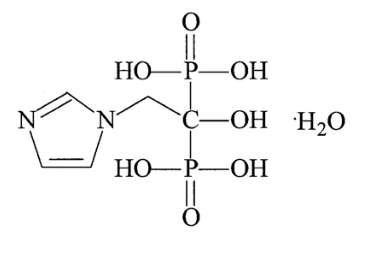
Chemical name: [1-hydroxy-2-(1H-imidazol-1-) ethylidene] bisphosphonic acid
Molecular formula: C5H10N2O7P2 • H2O
Molecular mass: 290.11 g/mol
Structural formula:
Physicochemical properties:
Description: White crystalline powder
Solubility: Sparingly soluble in 0.1N Sodium Hydroxide solution, slightly soluble in water and 0.1N Hydrochloric Acid, and practically insoluble in organic solvents.
pH: The pH of a 0.7% solution of zoledronic acid in water is approximately 2.0
CLINICAL TRIALS
Tumour-Induced Hypercalcaemia
Two identical multicenter, randomized, double-blind, double-dummy studies of zoledronic acid 4 mg given as a 5-minute infusion or pamidronate 90 mg given as a 2-hour infusion were conducted in patients with tumour-induced hypercalcaemia (TIH). Note: Administration of zoledronic acid 4 mg given as a 5-minute intravenous infusion has been shown to result in an increased risk of renal toxicity, as measured by increases in serum creatinine, which can progress to renal failure. The incidence of renal toxicity and renal failure has been shown to be reduced when zoledronic acid 4 mg is given as a 15-minute intravenous infusion over no less than 15 minutes (see WARNINGS AND PRECAUTIONS and DOSAGE AND ADMINISTRATION). TIH was defined as corrected serum calcium (CSC) concentration of ≥12.0 mg/dL (3.00 mmol/L). The primary efficacy variable was the proportion of patients having a complete response, defined as the lowering of the CSC to ≤10.8 mg/dL (2.70 mmol/L) within ten days after drug infusion. Each treatment group was considered efficacious if the lower bound of the 95% confidence interval for the proportion of complete responders was >70%. This was achieved for the zoledronic acid 4 mg group in each study, but not for the pamidronate 90 mg group. To assess the effects of zoledronic acid versus those of pamidronate, the two multicenter TIH studies were combined in a pre-planned analysis. The results showed that zoledronic acid 4 mg was statistically superior to pamidronate 90 mg for the proportion of complete responders at day 7 and day 10. The results also demonstrated a faster normalization of CSC by day 7 for zoledronic acid 4 mg.
The following response rates were observed (Table 6):
Table 6: Proportion of Complete Responders by Day in pooled TIH studies
| Day 4 | Day 7 | Day 10 | ||||
| Zoledronic acid 4 mg (N=86) | 45.3% (p=0.104) | 82.6% (p=0.005) | 88.4% (p=0.002) | |||
| pamidronate 90 mg (N=99) | 33.3% | 63.6% | 69.7% | |||
| P-values vs pamidronate 90mg based on Cochran-Mantel Haenszel adjusting for baseline CSC | ||||||
Secondary efficacy variables, time to relapse and duration of complete response, were also assessed. Time to relapse was defined as the duration (in days) from study infusion until the last CSC value ≤11.6 mg/dL (2.90 mmol/L). Patients who did not have a complete response were assigned a time to relapse of 0 days. Duration of complete response was defined as the duration (in days) from the occurrence of a complete response until the last CSC ≤10.8 mg/dL (2.70 mmol/L). The results showed that zoledronic acid 4 mg had a statistically longer time to relapse than pamidronate.
Table 7: Results for Secondary Efficacy Variables in pooled TIH studies
| zoledronic acid 4 mg | pamidronate 90 mg | |||||||||
| N | Median (days) | P-value | N | Median (days) | ||||||
| Time to relapse | 86 | 30 | 0 | 99 | 17 | |||||
| Duration of complete response | 76 | 32 | NA | 69 | 18 | |||||
P-values vs. pamidronate 90 mg based on Cox regression adjusted for baseline CSC NA: Duration of complete response was not analyzed in the subset of complete responders | ||||||||||
Bone Metastases of Solid Tumours and Osteolytic Lesions of Multiple Myeloma
Three randomized, controlled trials in patients with bone metastases of solid tumours and osteolytic lesions of multiple myeloma were conducted with zoledronic acid The planned duration of therapy in the core studies were 15 months in the trial in patients with prostate cancer, 13 months in the trial in patients with breast cancer and multiple myeloma, and 9 months in the trial in patients with lung cancer and other solid tumours. In addition, an extension phase was included in each trial in order to primarily determine the safety of long-term exposure to zoledronic acid. Patients who successfully completed the primary core phase of treatment were given the option to extend treatment for a total of 24 months (prostate cancer), 25 months (breast cancer and multiple myeloma), and 21 months (lung and other solid tumours). In the trials with patients with breast cancer and multiple myeloma, and in patients with lung cancer and other solid tumours, only the core phase was reported for efficacy as a high percentage of patients did not choose to participate in the extension phase.
The studies were amended twice because of renal toxicity. The zoledronic acid infusion duration was increased from 5 minutes to 15 minutes. After all patients had been accrued, but while dosing and follow-up continued, patients in the 8-mg zoledronic acid treatment arm were switched to 4 mg. Patients who were randomized to the zoledronic acid 8-mg group are not included in these analyses.
Each study evaluated skeletal-related events (SREs), defined as any of the following: pathologic fracture (vertebral or non-vertebral), radiation therapy to bone (including the use of radioisotopes), surgery to bone or spinal cord compression. A change in antineoplastic therapy due to increased pain was considered as an SRE in the prostate cancer study only. Planned analyses included the proportion of patients with an SRE during the core phase of the study (the primary efficacy endpoint) and main secondary efficacy endpoints including time to the first SRE (i.e. the hazard ratio for the first occurrence of an SRE not taking death into consideration (censoring deaths), and multiple event analysis. Multiple event analysis using the Andersen-Gill approach was performed to evaluate the overall effect of zoledronic acid on the occurrence of skeletal complications. This analysis takes into account all clinically meaningful events experienced by the study patients, and considers the total number of events experienced as well as the time from randomization to each event. However, the assumptions required for this analysis are strong and it is difficult to assess whether the data meet the assumptions. For the multiple event analysis, events that occurred in close proximity were counted as one event.
Radiation therapy to bone and pathological fractures were the most common type of skeletal related events.
Bone Metastases due to Prostate Cancer
In a phase III randomized, double-blind trial, zoledronic acid was compared to placebo for the prevention of Skeletal Related Events (SREs) in prostate cancer patients with bone metastases. A total of 422 patients (214 zoledronic acid 4 mg, 208 placebo) with metastatic bone disease from prostate cancer with a rising serum PSA despite hormonal treatment were randomized to receive either zoledronic acid 4 mg administered over 15 minutes or placebo every 3 weeks. The primary efficacy variable was the proportion of patients having an SRE at 15 months. The proportion of patients experiencing at least one SRE (33% for zoledronic acid 4 mg vs. 44% for placebo, p = 0.02) demonstrated statistically significant superiority for zoledronic acid vs. placebo (see Figure 1).
Figure 1
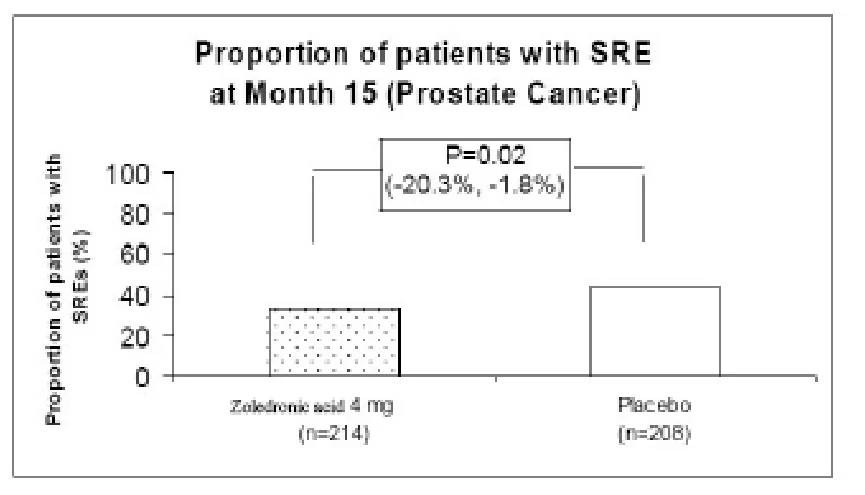 |
Zoledronic acid was superior to placebo for time to first SRE at 15 months (hazard ratio of 0.67, 95% CI: 0.49, 0.91), median of 321 days for placebo vs. median not reached for zoledronic acid 4 mg. Zoledronic acid demonstrated a statistically significant superiority over placebo for time to fracture (p= 0.01).
In addition, of the 146 (81 zoledronic acid, 65 placebo) patients who completed the core phase of the trial, 132 (74 zoledronic acid, 58 placebo) consented to enter the extension phase and 85 (49 zoledronic acid and 36 placebo) completed it. At 24 months, the zoledronic acid 4 mg group had a significantly lower proportion of patients experiencing at least one SRE (of all patients initially randomized) when compared with placebo (38% for zoledronic acid 4 mg, 49% for placebo, p=0.03). No adjustments to the p-values for the two analysis time points were made. The multiple event analysis indicated that prostate cancer patients receiving zoledronic acid 4 mg had a 36% overall reduction in risk (hazard ratio of 0.64, 95% CI: 0.485, 0.84; p=0.002) for skeletal complications compared to placebo over the course of the trial. See Table 8 for the results of the main secondary efficacy analyses.
Table 8: Results of main secondary efficacy variables (Core + Extension Phase)
Prostate Cancer Patients
All SRE
| Core Phase | Core + Extension Phase | |||||||||||||||
zoledronic acid 4 mg | Placebo | zoledronic acid 4 mg | Placebo | |||||||||||||
| N | 214 | 208 | 214 | 208 | ||||||||||||
| Time to First SRE | ||||||||||||||||
| Hazard Ratio (95% CI) vs. placebo | 0.67 (0.49, 0.91) | 0.68 (0.05, 0.91) | ||||||||||||||
| Median Time to SRE* (days) | n.r.** | 321 | 488 | 321 | ||||||||||||
| P-Value† | 0.01 | 0.01 | ||||||||||||||
| Multiple Event Analysis | ||||||||||||||||
| Hazard Ratio (95% CI) vs placebo | 0.64 (0.47, 0.87) | 0.64 (0.48, 0.84) | ||||||||||||||
| P-Value† | 0.004 | 0.002 | ||||||||||||||
* Median Time to first SRE not taking death into consideration (i.e. deaths were censored).
** Not reached.
†p-values vs. placebo based on Cox-regression stratified by presence of distant metastases at initial diagnosis or not.
Bone Metastases from Breast Cancer and Osteolytic Lesions of Multiple Myeloma
The second phase III randomized, double-blind trial was designed to demonstrate comparable efficacy of zoledronic acid 4 mg to pamidronate 90 mg. A total of 1116 patients (561 zoledronic acid 4 mg, 555 pamidronate 90 mg) with either Durie-Salmon Stage III multiple myeloma or Stage IV breast cancer with at least one bone lesion were treated with zoledronic acid 4 mg via 15-minute intravenous (IV) infusion or pamidronate 90 mg via 2-hour IV infusion every 3 to 4 weeks. The primary efficacy endpoint was the proportion of patients experiencing at least one skeletal-related event (SRE) at 13 months. The proportion of patients with an SRE was 44% and 46% for zoledronic acid 4 mg and pamidronate 90 mg, respectively (p=0.46) (see Figure 2).
Figure 2
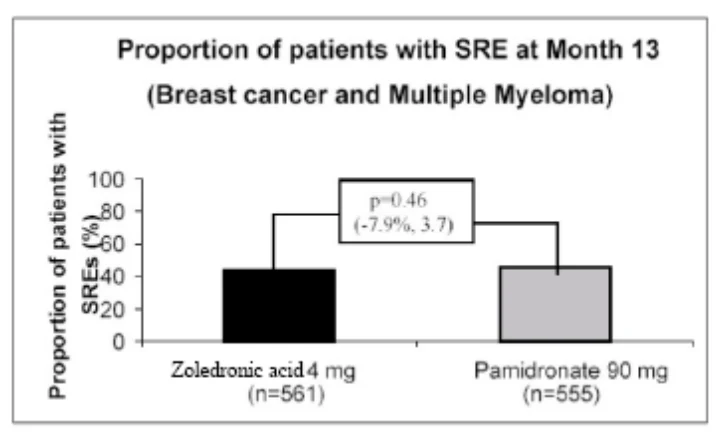 |
Zoledronic acid was demonstrated to be comparable to pamidronate in efficacy for the endpoint of the proportion of patients with an SRE in a non-inferiority analysis. There were no significant differences between zoledronic acid and pamidronate in time to first SRE.
The multiple event analysis indicated that patients with breast cancer and multiple myeloma receiving zoledronic acid 4 mg in this trial had an 11.5% overall reduction in risk (hazard ratio of 0.88, 95% CI: 0.75, 1.05; p = 0.15) for skeletal complications, compared to patients receiving pamidronate 90 mg over the core phase of the trial. See Table 9 for the results of the main secondary efficacy analyses.
Table 9: Results of main secondary efficacy variables (Core Phase)
Breast Cancer and Multiple Myeloma Patients
All SRE
| zoledronic acid 4 mg | pamidronate 90 mg | ||||||
| N | 561 | 555 | |||||
| Time to First SRE | |||||||
| Hazard Ratio (95% CI) vs. pamidronate 90 mg | 0.91 (0.77, 1.09) | ||||||
| Median Time to SRE* (days) | 373 | 363 | |||||
| P-Value† | 0.32 | ||||||
| Multiple Event Analysis | |||||||
| Hazard Ratio (95% CI) vs. pamidronate 90 mg | 0.88 (0.75, 1.05) | ||||||
| P-Value† | 0.15 | ||||||
*Median Time to first SRE not taking death into consideration (i.e. deaths were censored). †p-value vs. pamidronate 90 mg based on Cox-regression stratified by cancer type. | |||||||
In addition, of the 690 (353 zoledronic acid, 337 pamidronate) patients who completed the core phase of the trial, 417 (212 zoledronic acid, 205 pamidronate) consented to enter the extension phase. Another 111 patients continued with open-label pamidronate which at the time was the standard of care. A total of 246 (123 zoledronic acid, 123 pamidronate) patients completed the extension phase. In the extension phase, only the safety data are reported (see ADVERSE REACTIONS).
Bone metastases from breast cancer: Placebo-controlled trial in Japanese Patients
Zoledronic acid was also studied in a double-blind, randomized, placebo-controlled, Phase III trial in 228 patients with documented bone metastases from breast cancer to evaluate the effect of zoledronic acid on the skeletal related event (SRE) rate ratio, calculated as the total number of SRE events (excluding hypercalcaemia and adjusted for prior fracture), divided by the total risk period. Patients received either 4 mg zoledronic acid or placebo every four weeks for one year. Patients were evenly distributed between zoledronic acid-treated and placebo groups.
The SRE rate ratio at one year was 0.61, indicating that treatment with zoledronic acid reduced the rate of occurrence of SREs by 39% compared with placebo (p=0.027). The proportion of patients with at least one SRE (excluding hypercalcaemia) was 29.8% in the zoledronic acid -treated group versus 49.6% in the placebo group (p=0.003). Median time to onset of the first SRE was not reached in the zoledronic acid-treated arm at the end of the study and was significantly prolonged compared to placebo (p=0.007). Zoledronic acid reduced the risk of SREs by 41% in a multiple event analysis (risk ratio=0.59, p=0.019) compared with placebo.
Figure 3: Time to onset of the first SRE (-TIH)
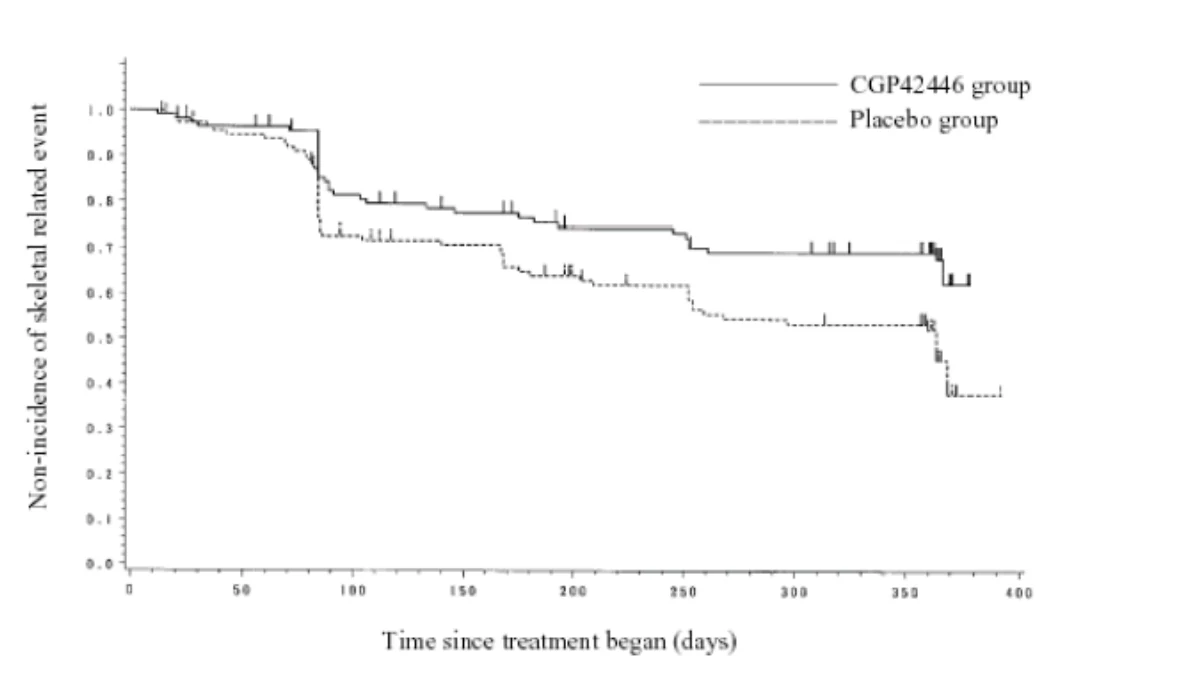
In the zoledronic acid-treated group, decreases in pain scores from baseline (using the Brief Pain Inventory, BPI) occurred from 4 weeks onwards and at every subsequent time point during the study, while the pain score in the placebo group remained unchanged or increased from baseline (Figure 4). Zoledronic acid inhibited the worsening of the analgesic score more than placebo. In addition, 71.8% of zoledronic acid-treated patients versus 63.1% of placebo patients showed improvement or no change in the Eastern Cooperative Oncology Group (ECOG) performance score at the final observation.
Figure 4: Mean change from baseline in Brief Pain Inventory (BPI) pain scores by treatment group and time on study.
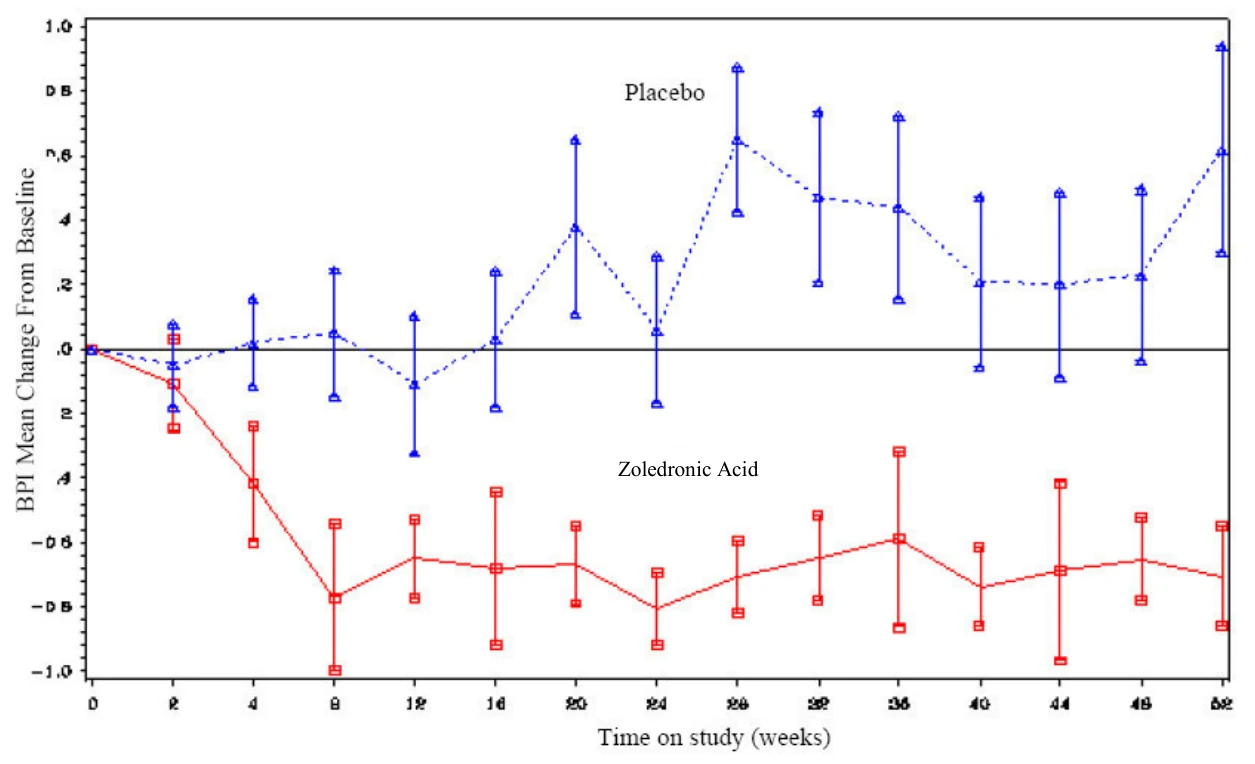
Bone metastases from solid tumours other than breast cancer or prostate cancer
A third phase III randomized, double-blind, placebo-controlled trial compared zoledronic acid to placebo for the prevention of SREs in patients who had solid tumours other than breast cancer or prostate cancer, with osteolytic or mixed bone metastases. Patients had to have at least 1 lytic metastasis for study entry. A total of 257 patients were randomized to zoledronic acid 4 mg; 134 patients with non-small cell lung cancer (NSCLC) and 123 with other solid tumours (OST). A total of 250 patients were randomized to placebo (130 patients with NSCLC, 120 with OST). Patients received either an intravenous infusion of zoledronic acid 4 mg or placebo every 3 weeks. The primary efficacy variable was the proportion of patients having an SRE at nine months. At nine months, the zoledronic acid 4 mg group had a lower proportion of patients experiencing an SRE when compared with placebo (38% for zoledronic acid 4 mg, 44% for placebo, p=0.13), see Figure 5. The difference for the primary efficacy variable was not statistically significant. However, when tumour-induced hypercalcaemia (TIH) was also included as an SRE, the proportion of patients having an SRE reached statistical significance favouring zoledronic acid 4 mg over placebo (38% for zoledronic acid 4 mg and 47% for placebo, p=0.04).
Zoledronic Acid
Figure 5:
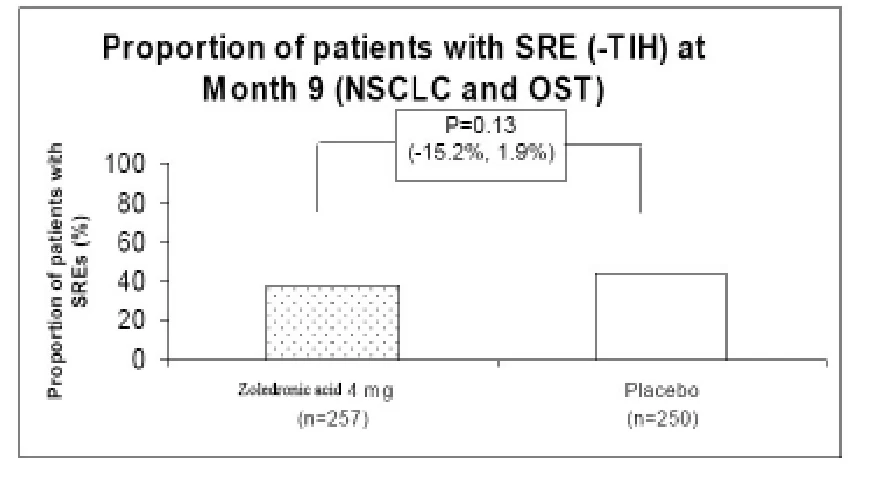 |
Study patients had a median overall survival of 6 months. Zoledronic acid extended the median time to an SRE by greater than two months (67 days) [median of 230 days vs. 163 days, p = 0.02; see Table 10].
The multiple event analysis indicated that patients with lung cancer and other solid tumours (other than breast cancer or prostate cancer) receiving zoledronic acid 4 mg had a 27% overall reduction in risk (hazard ratio of 0.73, 95% CI: 0.57, 0.95; p=0.02) for skeletal complications compared to placebo over the core phase of the trial. See Table 9 for the results of the main secondary efficacy analyses.
Table 10: Results of main secondary efficacy variables (Core Phase)
NSCLC and OST Patients
All SRE (-TIH)
| zoledronic acid 4 mg | Placebo | ||||||
| N | 257 | 250 | |||||
| Time to First SRE | |||||||
| Hazard Ratio (95% CI) vs. placebo | 0.73 (0.55, 0.96) | ||||||
| Median Time to SRE* (days) | 230 | 163 | |||||
| P-Value† | 0.02 | ||||||
| Multiple Event Analysis | |||||||
| Hazard Ratio (95% CI) vs. placebo | 0.73 (0.57, 0.95) | ||||||
| P-Value† | 0.02 | ||||||
*Median Time to first SRE not taking death into consideration (i.e. deaths were censored). †p-value vs. placebo based on Cox-regression stratified by cancer type. | |||||||
In addition, of the 131 (68 zoledronic acid, 63 placebo) patients who completed the core phase of the trial, 69 (34 zoledronic acid, 35 placebo) consented to enter the extension phase and 16 (8 zoledronic acid, 8 placebo) completed it. In the extension phase, only the safety data are reported (see ADVERSE REACTIONS).
DETAILED PHARMACOLOGY
Zoledronic acid belongs to a highly potent class of bisphosphonates which act specifically on bone. It is an inhibitor of osteoclastic bone resorption.
The selective action of bisphosphonates on bone is based on their high affinity for mineralized bone, but the precise molecular mechanism leading to the inhibition of osteoclastic activity is still unclear. In a variety of preclinical assays of bone metabolism, zoledronic acid inhibits bone resorption in vitro at concentrations of 0.3-30 nM, and in vivo at doses of 0.3-30 µg/kg without exerting any untoward effects on either bone formation or mineralization.
In addition to inhibiting osteoclastic bone resorption, zoledronic acid exerts direct anti-tumour effects on cultured human myeloma and breast cancer cells, inhibiting proliferation and inducing apoptosis. It also inhibits human endothelial cell proliferation in vitro and is anti-angiogenic in animals. Moreover, the observation that zoledronic acid reduces the invasion of human breast cancer cells through extracellular matrix in vitro indicates that it may possibly have anti-metastatic properties.
In broad safety screening, no adverse effects were detected on the cardiovascular or central nervous systems at pharmacologically relevant doses for the inhibition of bone resorption.
TOXICOLOGY
Acute Toxicity
| Species | Route | Doses (mg/kg) | Findings |
| Rat | i.v. | 0.6, 6, 30, 60, 80 | > 6 mg/kg: mortality and clinical signs 6 mg/kg: renal findings LD50 = approximately 13 mg/kg |
| Rat | i.v. | 1.6, 8, 16, 32 | >8 mg/kg: mortality, clinical signs, necropsy findings in kidney, liver, GI tract > 1.6 mg/kg: ↓ BW, FC, injection site irritation max. non lethal dose: 1.6 mg/kg min. lethal dose: 8 mg/kg |
| Dog | i.v. | 2, 10 | 2 mg/kg: no clinical signs 10 mg/kg: mortality |
| Mouse | s.c. | 10, 50 | 10 mg/kg: no clinical signs 50 mg/kg: mortality, clinical signs LD50 = 10-50 mg/kg in males and >10mg/kg in females |
| Rat | p.o. | 200, 2000 | >200 mg/kg: ↓ FC,BW, clinical signs, necropsy findings in stomach: enlarged, red lesions 2000 mg/kg: 100% mortality |
The acute parenteral toxicity of zoledronic acid was moderate to marked in the mouse, rat and dog. The estimated LD50 in the mouse (s.c.) and rat (i.v.) was 10-50 mg/kg (males)/>10 mg/kg (females) and 13 mg/kg (males), respectively. Compound-related renal tubular lesions were observed in the rat after one dose at 6 mg/kg. A single intravenous injection in the dog produced clinical signs, intestinal haemorrhage and mortality after 6 days in one male at 10 mg/kg. The other male received 2 mg/kg and survived the 14-day post-dose observation period without clinical signs.
Subacute and Chronic Toxicity
| Study Type | Species | Route | Doses (mg/kg) | Findings | |
|---|---|---|---|---|---|
| Intravenous | |||||
| 10-Day range-finding | Rat | i.v. | 0.06, 0.6, 6 | 0.06 mg/kg: well tolerated 0.6 mg/kg: clin. signs; micro in kidneys, liver 6 mg/kg: sacrifice due to severe clin. signs; micro in bone, kidneys, stomach, liver, thymus, spleen, lymph nodes NOAEL: 0.06 mg/kg | |
| 2-Week | Rat | i.v. | 0.06, 0.6, 3.2 (every third day for 18 days) | ≥0.06 mg/kg: local irritation, non-proliferative hyperostosis ≥0.6 mg/kg: gastric lesions 3.2 mg/kg: mortality, clin signs; ↓ BW/FC, clin lab alterations, ↑ adrenal, kidney, liver wgts, nephropathy, hepatocellular hypertrophy NOAEL: not established | |
| 10-Day range-finding | Dog | i.v. | 0.1, 1 | ≥0.1 mg/kg: micro in bone rib, injection sites 1 mg/kg: clin. signs; micro findings in stomach, intestine, liver, lung, thymus NOAEL: 0.1 mg/kg | |
| 4 week + 1 month recovery | Dog | i.v. | 0.02, 0.06, 0.2 | ≥ 0.06 mg/kg: clinical signs 0.2 mg/kg: clin. signs; micro in GI tract NOAEL: 0.02 mg/kg | |
| 3 month + 1 month recovery | Dog | i.v. | 0.01, 0.03, 0.1→0.2 | ≥0.01 mg/kg: genital tract atrophy (F); ↑ primary spongiosa in bone; splenic histiocytosis; lung inflammation, thymic atrophy ≥0.03 mg/kg: moribund sacrifice at 0.1 → 0.2 mg/kg due to inj.site irritation, ↓ BW/FC, ↑ ALAT/ASAT, ↓ bone AP, PO4, creatinine and ↓ RBC indices; inj. site ulceration, kidney lesions, genital tract (M) & pancreatic atrophy, inflammation of urinary bladder, esophagus, stomach and liver. NOAEL: not established | |
| 26/52-week + 6 month recovery | Dog | i.v. | 0.005, 0.03, 0.1 | All doses: inj site irritation; ↓ phosphate; non-proliferative hyperostosis ≥0.03 mg/kg: micro in kidneys, GI tract; ↑ BUN, ↑ total protein. 0.1 mg/kg: ↓ creatinine, ↑ ASAT, ↓ Ca. NOAEL: 0.005 mg/kg | |
| Bone analyses (26/52-week + 6 month recovery) | Dog | i.v. | 0.005, 0.03, 0.1 | All biomechanical parameters assessing bone quality showed either no deleterious effect or an increase in quality at pharmacologically efficacious doses. | |
| Study Type | Species | Route | Doses (mg/kg) | Findings | |
|---|---|---|---|---|---|
| Subcutaneous | |||||
| 10 day range-finding | Rat | s.c | 0.2, 0.6, 2 | 2 mg/kg: clin. signs; microscopic changes in kidneys, liver; spleen, thymus, lymph nodes, lung and adrenals. ≥0.6 mg/kg: clin. signs ≥ 0.2 mg/kg: Local irritation at the injection sites | |
| 1 month + 1 month recovery | Rat | s.c. | 0.02, 0.06, 0.2 | 0.2 mg/kg: swelling at injection site; clin. signs; micro findings in liver, lymph nodes. ≥ 0.06 mg/kg: clin. signs; micro findings of spleen, injection sites, skeletal muscle; NOAEL: 0.02 mg/kg | |
| 3 month + 1 month recovery | Rat | s.c. | 0.01, 0.03, 0.1 | Tolerated without mortality at doses up to and including 0.1 mg/kg. Non-proliferative hyperostosis. NOAEL 0.01 mg/kg in females. No NOAEL in males due to reduced BW/FC at all doses. | |
| 6/12 month + 6 month recovery | Rat | s.c. | 0.001, 0.003, 0.01 | ≥0.00l mg/kg: ↓ bone AP, ↑ reticulocyte count, splenic hemosiderosis and congestion, ↑ splenic hematopoiesis, ↑ cellularity of femoral/tibial marrow, non-proliferative hyperostosis. Following bone morphometry, no deleterious effects after administration for 12 months. ≥0.003 mg/kg: ↓ RBC parameters, ↑ fibrinogen, renal tubular changes, progressive nephropathy. 0.01 mg/kg: testicular tubular atrophy Bone morphometry on bone (tibia) did not reveal deleterious effects NOAEL: 0.001 mg/kg | |
| Oral | |||||
| 13-week | Mouse | p.o. | 0, 0.3, 3, 10, 30→20 | 0.3 - 30→20 mg/kg: mortality; respiratory signs; ↓ FC; non-proliferative hyperostosis 3 - 30→ 20 mg/kg: ↓BW; laryngeal, tracheal & bronchial inflammation | |
| 10 day range finding | Rat | p.o. | 1, 10, 100 | 1 and 10 mg/kg: well-tolerated 100 mg/kg: mortality & moribund sacrifice after 1 wk; clin. signs; gastritis, GI tract necrosis, acute renal tubular lesions, liver changes; lymphoid depletion spleen, thymus. | |
| 1 month + 1 month recovery | Rat | p.o. | 62060 | 6 mg/kg: well-tolerated ≥20 mg/kg: clin signs; liver, spleen, lymph nodes 60 mg/kg: mortality; GI tract, kidneys, salivary glands, thymus, adrenal, lung, trachea NOAEL: 6 mg/kg | |
| 6 month + 1 month recovery | Rat | p.o. | 0.1, 1, 10 | ≥0.1 mg/kg: bone ≥1 mg/kg: clin signs 10 mg/kg: mortality NOAEL: 0.1 mg/kg | |
| 10 day | Dog | p.o. | 1→30, 10 (for 9d); 30 (for 10d)a | 1→30 mg/kg: clin. signs; micro findings in kidneys, esophagus, liver; non-proliferative hyperostosis. 10 mg/kg: no significant findings | |
| 1 month | Dog | p.o. | 3, 10, 30 | ≥3 mg/kg: clin signs ≥ 10 mg/kg: mortality; liver, lung, thymus 30 mg/kg: gingiva, pancreas, adrenals | |
| 6 month + 1 month recovery | Dog | p.o. | 0.01, 0.1, 1 | Well-tolerated at doses of up to 1 mg/kg. Histological bone changes were considered pharmacologic NOAEL: 1 mg/kg | |
a From day 9 of dosing: 30 mg/kg for an additional 10 days
Reproductive Toxicity Studies
Zoledronic acid was evaluated for potential adverse effects on fertility, labour, delivery and lactation of the parental generation rats as well as development, behaviour and fertility of the F1 generation at doses of 0.01, 0.03 and 0.1 mg/kg; however, many females in the treated groups either died or were sacrificed while moribund at parturition due to difficulty in delivery (dystocia) such that the study was terminated on lactation day 7.
Teratology studies were performed in two species, both via subcutaneous administration of zoledronic acid. Teratogenicity was observed in the rat at doses ≥ 0.2 mg/kg as manifested by external, visceral and skeletal malformations. There were also dose-related increases in the incidence of poor skeletal ossification at ≥ 0.2 mg/kg and evidence of maternal toxicity at ≥ 0.2 mg/kg as well as fetal toxicity at 0.4 mg/kg.
In the rabbit, reduced number of litters with viable fetuses, increased post-implantation loss and total resorption were observed at 0.1 mg/kg. Fatality was shown in dams with decreased serum calcium level at all doses.
| Study Type | Species | Route | Doses (mg/kg) | Findings |
| Segment I | Rat | s.c. | 0.01, 0.03, 0.1 | ≥0.01: maternal toxicity and severe effects on parturition such that the study was terminated on lactation day 7 |
| Segment II range- finding | Rat | s.c. | 0.2, 0.6, 2 | ≥0.2 mg/kg: irritation at injection site ≥0.6 mg/kg: ↓ maternal BW. 9/10 dams with total resorption (embryo/fetal death) of progeny; remaining dam w/ only 2 fetuses (one with cleft palate). |
| Segment II | Rat | s.c. | 0.1, 0.2, 0.4 | ≥0.2 mg/kg: ↓ maternal BW; ↓ fetal wgt: anomalies of viscera and/or skeleton w/ wavy ribs & delay in skeletal maturation. 0.4 mg/kg: 9/24 dams with total resorption of fetuses; some fetuses with edema, cleft palate, short lower jaw, abnormal ossification. |
| Segment II range- finding (pregnant) | Rabbit | s.c. | 0.1, 0.2, 0.4 | 0.2, 0.4 mg/kg: early termination due to severe clinical signs/toxicity. 0.1 mg/kg: Reduced fetal weight: fetal visceral and skeletal development were not examined |
| Segment II | Rabbit | s.c. | 0.01, 0.03, 0.1 | Maternal toxicity at ≥0.01 mg/kg due to ↓ blood calcium. Reduced number of litters with viable fetuses, increased post-implantation loss and total resorption at 0.1 mg/kg. Fetal/embryo development abnormalities cannot be assessed due to an insufficient exposure in the surviving dams. |
Carcinogenicity
Zoledronic acid was administered orally (gavage) to rats and mice for at least 104 weeks without evidence of carcinogenic potential. Chronic parenteral administration was not feasible given the potential of the compound to cause severe local irritation, often after only one or several doses. As zoledronic acid and bisphosphonates in general, manifest poor oral bioavailability, fasting procedures were instituted to facilitate absorption. Nevertheless, the pharmacological bone changes typically observed following long term bisphosphonate administration (non-proliferative hyperostosis) to young animals with growing skeletons gave clear evidence of systemic exposure to zoledronic acid in both species at all doses. An increased incidence of Harderian gland adenomas/adenocarcinomas was observed in males at 0.1 and 1.0 mg/kg and females at doses ≥0.3 mg/kg. These increases were not considered to be related to zoledronic acid administration or biologically meaningful as the Harderian gland is a unique, highly specialized organ which is not present or known to have any correlate in humans; thus, it has no relevance.
| Species | Route | Doses (mg/kg) | Findings |
| Mouse | p.o. | 0.1, 0.3, 1.0 | ≥0.1 mg/kg: non-proliferative hyperostosis ≥0.3 mg/kg: ↓ BW |
| Rat | p.o. | 0.1, 0.5, 2.0 | ≥0.1 mg/kg: non-proliferative hyperostosis ≥0.5 mg/kg: ↓ BW,FC 2.0 mg/kg: ↑ extramedullary hematopoiesis |
Mutagenicity
| Study Type | Findings |
in vitro: Amesa Amesb , Amesc Range: a5000 µg/plate (-S9/+S9), b390 - 25000 µg/plate, c1250 µg/plate (-S9/+S9) | Negative |
in vitro: Cytogenetics test on Chinese hamster cells Range: 9.7 - 1250 µg/mL | Negative |
in vitro: Gene mutation test using V79 Chinese hamster cells Range: 2-15 µg/mL | Negative |
in vivo: Micronucleus in rats Range: 2.6 - 10.4 mg/kg | Negative |
a Bacterial test systems (S. typhimurium), with/without metabolic activation. bBatch control cBacterial test system (S. typhimurium/ E. coli), with/without metabolic activation. | |
There was no evidence of mutagenicity for zoledronic acid in a battery of tests covering various endpoints of genotoxicity.
REFERENCES
- 1. Anderson PK, and Gill RD, Cox’s regression model for counting processes: a large sample study. Ann Statist 1982; 10: 1100-20.
- 2. Arden-Cordone M, Siris E, Lyles K, et al., Antiresorptive effect of a single infusion of microgram quantities of zoledronate in Paget’s disease of bone. Calcif Tissue Int 1997; 60: 415-418.
- 3. Body J, Jortholary A, Romieu G, et al., A dose-finding study of zoledronate in hypercalcemic cancer patients. J Bone Miner Res 1999; 9: 1557-1561.
- 4. Buckler H, Fraser W, Hosking D, et al., Single infusion of zoledronate in Paget’s disease of bone: a placebo-controlled, dose-ranging study. Bone 1999; 24 (S5): 81S-85S.
- 5. Fraunfelder FW, Fraunfelder FT. Bisphosphonates and ocular inflammation. N Engl J Med 2003;348(12):1187-8.
- 6. Fraunfelder FW, Rosenbaum JT. Drug-induced uveitis. Incidence, prevention and treatment. Drug Safety 1997;17(3):197-207.
- 7. Garnero P, Gineyts E, Schaffer A, et al., Measurement of urinary excretion of nonisomerized and beta-isomerized forms of type I collagen breakdown products to monitor the effects of the biphosphonate zoledronate in Paget’s disease. Arthritis Rheum 1998; 41: 354-360.
- 8. Green JR, Müller K, Jaeggi KA. Preclinical Pharmacology of CGP 42-446, a new, potent, heterocyclic bisphosphonate compound. J Bone Miner Res 1994; 9: 745-751.
- 9. Green J, Seltenmeyer Y, Jaeggi K, Widler L, Renal tolerability profile of novel, potent bisphosphonates in two short-term rat models, Pharmacol Toxicol 1997; 80: 225-230.
- 10.Ishizuna K, Ota D, Fukuuchi A, et al., A case of femoral diaphyseal fracture after long-term treatment with zoledronic acid. Breast Cancer 2011; 18:DOI 10.1007/s12282-011-0304-3
- 11. Moore MM, Beith JM. Acute unilateral anterior uveitis and scleritis following a single infusion of zoledronate for metastatic breast cancer. Med J Aust 2008; 188(6): 370-371
- 12. Puhaindran ME, Farooki A, Steensma M, et al., Atypical Subtrochanteric Femoral Fractures in Patients with Skeletal Malignant Involvement Treated with Intravenous Bisphosphonates. J Bone Joint Surg Am. 2011; 93:1235-42
- 13. Risser F, Pfister C, Degen P, An enzyme inhibition assay for the quantitative determination of the new bisphosphonate zoledronate in plasma. J Pharm Biomed Anal 1997; 15: 1877-1880.
- 14. Rosen Lee S, Gordon D, Kaminski M, et al., Zoledronic acid versus pamidronate in the treatment of skeletal metastases in patients with breast cancer or osteolytic lesions of multiple myeloma: A phase III, double-blind, comparative trial. The Cancer Journal. September/October 2001; 7 (5), 377-387.
- 15. Rosen LS, Gordon DH, Dugan W, et al., Zoledronic acid is superior to pamidronate for treatment of bone metastases in breast carcinoma patients with at least one osteolytic lesion. Cancer. 2004; 100:36-43.
- 16. Rosen LS, Gordon DH, Kaminski M, et al., Long-term efficacy and safety of zoledronic acid compared with pamidronate disodium in the treatment of skeletal complications in patients with advanced multiple myeloma and breast cancer. Cancer. 2003;98:1735-1744.
- 17. Saad F, Gleason Donald M, Murray R, et. al., A randomized, placebo-controlled trial of zoledronic acid in patients with hormone-refractory metastatic prostate carcinoma. Journal of the National Cancer Institute October 2, 2002; 94 (19), 1458-1468.
- 18. Saad F, Gleason Donald M, et al., Long-term efficacy of zoledronic acid for the prevention of skeletal complications in patients with metastatic hormone-refractory prostate cancer. Journal of the National Cancer Institute June 2, 2004; 96 (11):879-882.
- 19. Therneau M, Hamilton SA. rhDNase as an example of recurrent event analysis. Statist Med 1997; 16:2029-47.
- 20.
McArthur H, Estilo C, Huryn J, et al (2008). Osteonecrosis of the jaw (ONJ) among intravenous (IV) bisphosphonate- and/or bevacizumab-treated patients at Memorial Sloan-Kettering Cancer Center (MSKCC). J Clin Oncol 26S: Updated Abstract 9588 (with poster, presented at ASCO 2008)
- 21. PrZOMETA* Concentrate Product Monograph by Novartis Pharmaceuticals Canada Inc., Quebec, Canada. Date of Revision: April 13, 2017. Control Number 200447.