


Product Monograph - Zuacta
SUMMARY PRODUCT INFORMATION
Route of Administration | Dosage Form / Strength | Clinically Relevant Nonmedicinal Ingredients |
| Topical | Cream, 0.075% (w/w) | None For a complete listing see Dosage Forms, Composition and Packaging section. |
INDICATIONS AND CLINICAL USE
ZUACTA™ (zucapsaicin) is indicated to be used in conjunction with oral COX-2 inhibitors or NSAIDs for the relief of severe pain in adult patients with osteoarthritis of the knee, not controlled with oral COX-2 inhibitors or NSAIDs alone, for a duration of no more than three months.
Geriatrics (> 65 years of age): Evidence from clinical studies does not suggest any differences in safety or effectiveness in the geriatric population. No dosage adjustment is required based on age. (See ACTION AND CLINICAL PHARMACOLOGY).
Paediatrics (< 18 years of age): ZUACTA is not recommended for use in pediatric patients. Safety and effectiveness have not been established in this age group.
CONTRAINDICATIONS
- Patients with a known history of sensitivity to zucapsaicin or to any ingredient in the formulation or component of the container. For a complete listing, see the DOSAGE FORMS, COMPOSITION AND PACKAGING section.
- Application to broken or irritated skin or areas with a compromised skin barrier.
WARNINGS AND PRECAUTIONS
General
For external use only.
The concurrent use of other topical medications on areas treated with ZUACTA should be avoided.
The safety and efficacy of ZUACTA has not been assessed in patients with history and/or diagnosis of tendonitis, bursitis, partial or complete joint replacement, rheumatoid arthritis, fibromyalgia, connective tissue disease, psoriatic arthritis, erosive inflammatory OA, diffuse idiopathic skeletal hyperostosis, severe neurological or vascular disease. The use of ZUACTA is therefore not recommended in these patients.
The safety and efficacy of ZUACTA has not been assessed in osteoarthritis that is secondary to local joint disorders, systemic metabolic disease, endocrine disorders, bony dysplasia, calcium crystal deposition disease, neuropathic arthropathy, frostbite or congenital abnormalities. The use of ZUACTA is therefore not recommended in these patients.
Respiratory
ZUACTA may induce cough, and therefore special precautions should be taken to avoid getting cream near the face. Wash hands well after application.
Carcinogenesis and Mutagenesis
See TOXICOLOGY
Ophthalmologic
Contact of ZUACTA with the eyes should be avoided due to possible eye irritation. If eye contact occurs, immediately wash the eye with water.
Skin
ZUACTA should be kept away from lips and genital areas. It is not recommended for use on broken or irritated skin or on areas with a compromised skin barrier. After applying ZUACTA with the fingers, hands should be washed immediately with soap and warm water.
ZUACTA should not be used under occlusive dressings.
Patients should avoid taking a hot bath or shower just before or after applying ZUACTA as a burning sensation may result.
Special Populations
Pregnant Women: Adequate and well controlled studies have not been conducted with ZUACTA in pregnant women.
In a pharmacokinetic study of topically administered ZUACTA in healthy volunteers there was no evidence of systemic absorption (lower limit of quantitation= 0.5 ng/mL).
Animal studies do not indicate direct or indirect harmful effects with respect to pregnancy, embryonal/foetal development, and parturition or post natal development. (See TOXICOLOGY).
Because animal studies are not always predictive of human response, ZUACTA should be used with caution during pregnancy only if the potential benefits outweigh the risks.
Nursing Women: It is not known whether zucapsaicin is excreted in human breast milk. The excretion of zucapsaicin in milk has not been studied in animals.
Because many drugs are excreted in human milk, caution should be exercised when ZUACTA is administered to a nursing woman.
Paediatrics (<18 years of age): Safety and effectiveness of ZUACTA in pediatric patients have not been established.
Geriatrics (≥ 65 years of age): The clinical trials with ZUACTA included 491 subjects ≥ 65 years of age. The mean age of subjects in the ZUACTA groups ranged from 61 to 65 years. Evidence from clinical studies does not suggest any differences in safety or effectiveness in the geriatric population. (See ACTION AND CLINICAL PHARMACOLOGY)
ADVERSE REACTIONS
Adverse Drug Reaction Overview
The most common adverse events observed in clinical studies following administration of ZUACTA were application site reactions, manifesting predominantly as a transient burning or warming sensation after application.
Application site burning was reported as related for 33.5% of ZUACTA subjects, 14.9% of zucapsaicin cream 0.01% subjects and 9.3% of vehicle subjects in clinical studies. Application site warmth was reported as related for 4.2% of ZUACTA treated subjects, 2.4% of zucapsaicin cream 0.01% subjects, and 0.8% of vehicle subjects.
Application site burning was the most common severe adverse drug reaction observed in the clinical studies and the most common adverse drug reaction leading to withdrawal, reported in 4 - 7% of ZUACTA treated subjects. Severe application site burning was reported in 6-10% of ZUACTA treated subjects versus ≤ 1% of zucapsaicin cream 0.01% subjects and none of the vehicle controls. There were no withdrawals due to application site burning in the zucapsaicin cream 0.01% subjects and vehicle controls. The percentage of subjects reporting burning sensations during treatment decreased over time in the 12-week controlled study.
Clinical Trial Adverse Drug Reactions
Because clinical trials are conducted under very specific conditions the adverse reaction rates observed in the clinical trials may not reflect the rates observed in practice and should not be compared to the rates in the clinical trials of another drug. Adverse drug reaction information from clinical trials is useful for identifying drug-related adverse events and for approximating rates.
The clinical trial safety database for ZUACTA is comprised of 13 clinical studies where 943 subjects were exposed to ZUACTA cream. In the Phase II and Phase III studies 689 subjects were exposed to ZUACTA with 475 exposed for 3 months, 320 for 6 months and 285 for 12 months.
In a 12-week controlled Phase III clinical study, the incidence of related adverse events reported in >1% of subjects is shown in Table 1.
Table 1: Study WL-1001-05-01: Adverse Drug Reactions in Phase III Study in Subjects with Osteoarthritis of the Knee with Frequency ≥ 1%
System Organ Class | Preferred Term | ZUACTA n = 344 n (%) | Zucapsaicin 0.01% n = 351 n (%) |
| Eye Disorders | |||
| Eye Irritation | 4 (1) | --- | |
| General Disorders and Administration Site Conditions | |||
| Application Site Burning | 120 (35) | 39 (11) | |
| Application Site Warmth | 19 (6) | 10 (3) | |
| Application Site Reaction | 13 (4) | 3 (1) | |
| Application Site Anesthesia | 9 (3) | 4 (1) | |
| Application Site Pruritus | 5 (1) | 2 (1) | |
| Application Site Irritation | 3 (1) | 1 (0.3) | |
| Application Site Rash | 4 (1) | 1 (0.3) | |
| Application Site Pain | 1 (0.3) | 2 (1) | |
| Muskoskeletal and Connective Tissue Disorders | |||
| Arthralgia | 4 (1) | 5 (1) | |
| Osteoarthritis Aggravated | 1 (0.3) | 2 (1) | |
| Nervous System Disorders | |||
| Burning Sensation | 7 (2) | 2 (1) | |
| Headache | 1 (0.3) | 2 (1) | |
| Respiratory, Thoracic and Mediastinal Disorders | |||
| Cough | 6 (2) | --- | |
| Sneezing | 4 (1) | --- | |
Less Common Clinical Trial Adverse Drug Reactions (<1%)
General disorders and administration site conditions: application site dryness, application site cold feeling, application site erythema, application site swelling, pain NOS.
Injury, poisoning and procedural complications: blister.
Musculoskeletal and connective tissue disorders: pain in limb, joint disorder NOS.
Respiratory, thoracic and mediastinal disorders: nasal congestion, dyspnoea NOS, nasal passage irritation, throat irritation.
Skin and subcutaneous tissue disorders: pruritus, erythema, photosensitivity reaction NOS, skin discoloration, rash NOS.
Vascular disorders: flushing.
A total of 351 subjects were enrolled in a long-term open-label study for subjects who completed the controlled Phase III clinical trial. The safety profile was similar in this study with the most commonly reported adverse events being application site burning sensation (22%) and application site warmth (4%).
Clinical Trial Abnormal Hematologic and Clinical Chemistry Findings In the Phase II and Phase III studies, there was no significant increase in the incidence of laboratory abnormalities in subjects receiving ZUACTA compared with either zucapsaicin cream 0.01% or vehicle cream.
DRUG INTERACTIONS
Overview
The concurrent use of other topical medications on areas treated with ZUACTA should be avoided.
Drug-Drug Interactions
Drug-drug interaction studies have not been conducted with ZUACTA.
Drug-Food Interactions
Interactions with food have not been established.
Drug-Herb Interactions
Interactions with herbal products have not been established.
Drug-Laboratory Interactions
Interactions with laboratory tests have not been established.
DOSAGE AND ADMINISTRATION
Dosing Considerations
ZUACTA is indicated for topical application on unbroken skin.
Recommended Dose and Dosage Adjustment
Apply only a small amount of cream (pea size) to each of three locations around the affected knee 3 times daily, with the applications evenly spaced out throughout the waking hours and at least 4 hours apart.
Missed Dose
If an application of ZUACTA is missed, it can be applied as soon as possible, but not within 4 hours of the next dose.
ZUACTA should not be applied more frequently than 3 times daily and applications should be at least 4 hours apart.
Administration
ZUACTA should be used in combination with oral COX-2 inhibitors or NSAIDs.
Using one or two fingers, the cream should be gently rubbed in, in a circular motion. There should be no residue left on the skin. Hands should be washed with soap and warm water immediately after application. ZUACTA should not be applied near the eyes, lips and genital areas.
The area of skin where ZUACTA has been applied should not be covered with bandages or wrapped.
OVERDOSAGE
No cases of overdose have been reported.
For management of a suspected drug overdose, contact your regional Poison Control Centre.
ACTION AND CLINICAL PHARMACOLOGY
Mechanism of Action
Although the precise mechanism of action of zucapsaicin is not fully understood, current evidence suggests that zucapsaicin achieves its antinociceptive effects via the TRPV-1 receptor. It has a mechanism of action similar to that of other capsaicinoids, such as capsaicin. Decreases in dorsal root ganglia and sciatic calcitonin gene-related peptide (CGRP) and substance P (SP) levels indicate that zucapsaicin affects the peptidergic afferent neurons via a desensitization mechanism (see DETAILED PHARMACOLOGY section).
The intended targets for zucapsaicin are the neurons innervating the local area of application, i.e., the skin overlying the painful joints. These are the neurons that transmit pain centrally from a painful joint.
Pharmacodynamics
Owing to the lack of systemic absorption, pharmacodynamic studies on zucapsaicin were not conducted.
Pharmacokinetics
Absorption: A multi-dose study was conducted in healthy volunteers with topical application of a 0.65 g dose of ZUACTA to each knee TID for 7 days. No systemic levels of zucapsaicin were detected in any serum samples, at any day (lower limit of quantitation=0.5 ng/mL). Given the lack of systemic exposure to zucapsaicin, pharmacokinetic analyses were not conducted.
Metabolism: In vitro studies with human hepatocytes, microsomes and known substrates for specific CYP isozymes establish that zucapsaicin can be extensively metabolized by humans. An in vitro study using known substrates for specific CYP isozymes showed moderate inhibition of CYP 1A2 and 2C19. Weak inhibition of CYP 2C9, 2D6, 2E1 and 3A4 was also seen. However, systemic levels of zucapsaicin after topical application are not detected and thus are below the IC50 values for any of the isozymes tested. Thus zucapsaicin is unlikely to affect other drugs metabolized by these isozymes.
STORAGE AND STABILITY
Store between 15° and 30°C. Once opened, the tube should be used within 6 weeks.
Keep in a safe place out of reach of children.
SPECIAL HANDLING INSTRUCTIONS
Hands should be washed with soap and warm water immediately after application of ZUACTA.
In case of accidental entry of ZUACTA into the eyes, lips or genital areas, gently rinse the affected area with soap (no soap for eyes) and cool water or, alternatively, wet a cloth with cold water and gently press it against the area until the burning sensation is removed.
The cap should be secured tightly after use to prevent accidental ingestion.
ZUACTA should be stored and used tubes discarded in a manner that prevents accidental application or ingestion by children or pets.
DOSAGE FORMS, COMPOSITION AND PACKAGING
ZUACTA is available in 30 g and 60 g epoxy-lined aluminum tubes with polypropylene caps.
Each gram of ZUACTA cream contains 0.75 mg of zucapsaicin in a benzyl alcohol, cetyl alcohol, glyceryl stearate, isopropyl myristate, polyethylene glycol 100 stearate, purified water, sorbitol solution, and white petrolatum base.
PART II: SCIENTIFIC INFORMATION
PHARMACEUTICAL INFORMATION
Drug Substance
Common name: Zucapsaicin
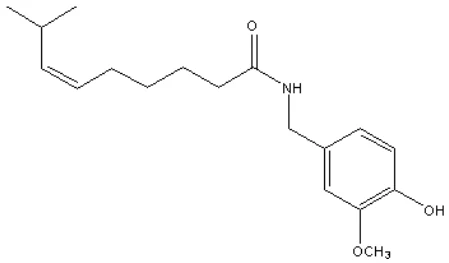
Chemical name: (Z)-8-methyl-N-vanillyl-6-nonenamide
Molecular formula: C18H27NO3
Molecular mass: 305.41
Structural formula:
Physicochemical properties:
Physical Description: White to off-white crystalline powder
Solubility: Zucapsaicin is freely soluble in acetonitrile; very soluble in ethanol, methanol, methylene chloride, tetrahydrofuran, and acetone; soluble in diethyl ether; sparingly soluble in toluene; and practically insoluble in water and hexane.
Polymorphism: No evidence of different polymorphic forms.
Melting Range: 71.5°C -74.5°C.
CLINICAL TRIALS
Study demographics and trial design
An 84-day (12-week) double-blind, randomized, controlled, parallel group, multicenter trial was conducted in 695 patients aged 39 to 76 years of age (mean age 61 years) with osteoarthritis of the knee with pain, physical function and subject global evaluation as the three co-primary endpoints. All patients were receiving a stable dose of oral COX-2 inhibitors (42%) or NSAIDs (58%) and were randomized to receive three times daily applications of either ZUACTA (zucapsaicin cream 0.075%) (n=344) or the inactive control zucapsaicin cream 0.01% (n=351).
In this study, the efficacy of ZUACTA was similar to zucapsaicin cream 0.01% used as the inactive control, for patients experiencing mild to moderate pain while using NSAIDs or COX-2 inhibitors. However, the efficacy of ZUACTA was greater than zucapsaicin cream 0.01% in patients still experiencing severe pain while using oral NSAIDs or COX-2 inhibitors. As a result of investigating a significant baseline-by-treatment interaction for each of the three co-primary endpoints, the results of a piece-wise linear regression were: overall time-weighted average of change from Baseline in WOMAC® Pain Subscale (p = 0.0089), WOMAC® Physical Function Subscale (p < 0.0001), and Subject Global Evaluation (p = 0.0080). For the WOMAC® Pain and WOMAC® Physical Function Subscales, these p-values correspond to treatment differences for Baseline scores > 10 and > 39, respectively. For the SGE, the p-value corresponds to a Bonferroni adjusted p-value for comparing the two regression lines at each Baseline value and with significance at Baseline values of 0 and 1 ( 0 = very poor, 1 = poor). Thus, for all three co-primary endpoints in the 12-week controlled study, the patients with the Baseline scores indicating worse condition were the only patients exhibiting the best response to ZUACTA.
The differences in the estimated mean response between the treatment groups for the population of subjects with higher Baseline WOMAC® Pain Subscale scores, i.e. > 13, corresponding to the patients with severe pain at Baseline are presented below:
Table 2: Study WL-1001-05-01: WOMAC® Pain Subscale: Time-Weighted Average Least Squares Means from Piece-wise Linear Model for the Change from Baseline During the Treatment Period for Severe Baseline WOMAC® Pain Subscale Values
| Baseline Value | ZUACTA N = 79* | Zucapsaicin Cream 0.01% N = 74* | Difference in Estimated Mean Response | P-Value** |
| 14 | 4.36 | 3.64 | 0.71 | 0.0089 |
| 15 | 4.81 | 3.92 | 0.89 | |
| 16 | 5.26 | 4.19 | 1.07 | |
| 17 | 5.72 | 4.47 | 1.25 | |
| 18 | 6.17 | 4.75 | 1.42 | |
| 19 | 6.63 | 5.02 | 1.60 | |
| 20 | 7.08 | 5.30 | 1.78 |
*N = the number of subjects in the ITT population with Baseline WOMAC® Pain Subscale scores > 13 **p-value based upon piece-wise linear model with ITT population
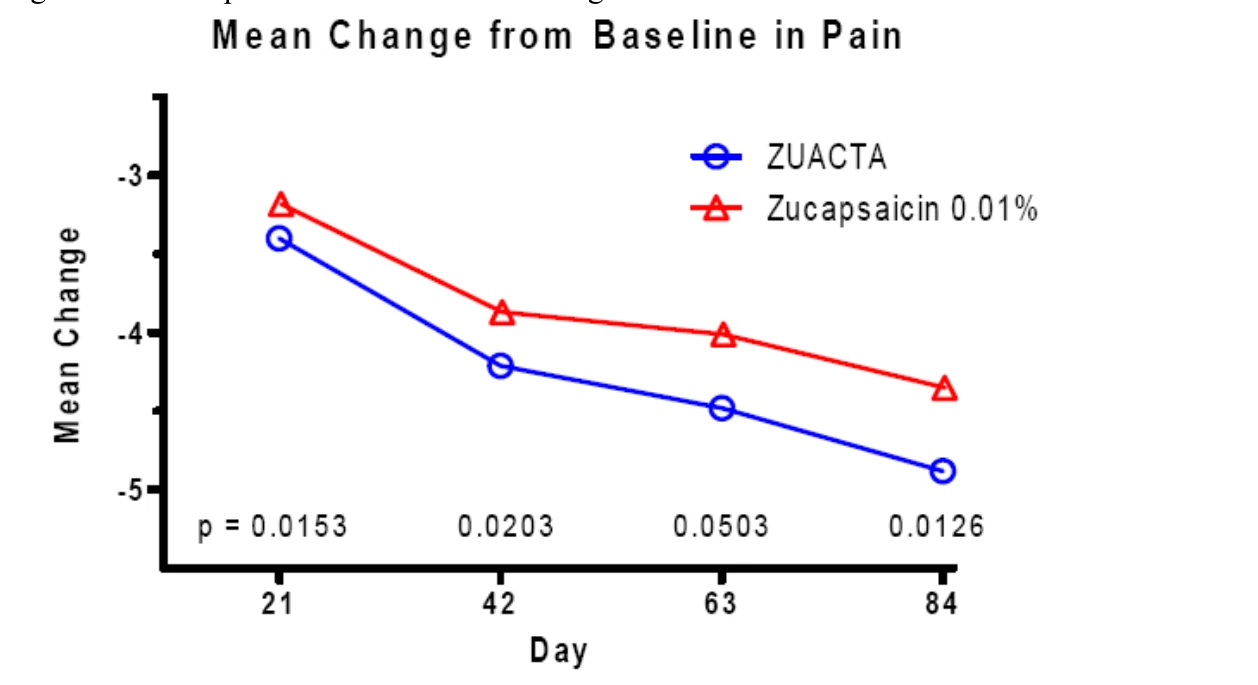
Figure 1 displays graphs of the time-specific mean numeric change from Baseline in the WOMAC® Pain Subscale at each of Days 21, 42, 63, and 84 in the ITT population. There were statistically significant differences in favor of ZUACTA at a majority of time points, including at the end of the study, Day 84 (p=0.0126), in patients with a Baseline score >10.
Figure 1: Time-Specific Mean Numeric Change in WOMAC® Pain Subscale
The clinical efficacy of ZUACTA seen from the primary and secondary results is further supported by results of the OMERACT-OARSI responder criteria. Statistically significant results were seen for the ITT population (p=0.0061) with a clinically relevant treatment effect of 10%, which increased to a treatment effect of 27% (p < 0.0001) for higher Baseline WOMAC® Pain Subscale scores, i.e. >13, corresponding to patients with severe pain at Baseline (Table 3).
Table 3: OARSI Simplified Response of the ITT Population and Patients with Severe Pain (Baseline Pain >13) for Phase III Study WL-1001-05-01
| OARSI Simplified Response | Response | ZUACTA % | Zucapsaicin 0.01% % | Treatment Effect | P-Value |
| ITT Population | Yes No | 68 32 | 58 42 | 10% | 0.0061 |
| Baseline Pain > 13 | Yes No | 78 22 | 51 49 | 27% | <0.0001 |
DETAILED PHARMACOLOGY
PRECLINICAL PHARMACOLOGY
Animal Pharmacodynamic Studies
As ZUACTA is not absorbed systemically, pharmacodynamic studies were not conducted with ZUACTA.
Cardiovascular effects of zucapsaicin were assessed in vivo in a dermal minipig study and an oral dog study. In the 9-month chronic dermal toxicity study in minipigs zucapsaicin cream was administered at 0.075%, 0.75%, and 3.75% with electrocardiographic (ECG) examinations conducted pre-study and at Week 1, 4.5 months and 9 months. In the 4-week oral toxicity study in dogs doses of 0, 3, 10, and 30 mg/kg/day of zucapsaicin were administered with electrocardiographic examinations performed pre-test and during Week 4. In both studies all ECGs were normal at all collection points.
Animal Pharmacokinetic Studies
In-Vivo
Dermal pharmacokinetic studies in rats (6 months) and minipigs (9 months) established that after topical application there was minimal absorption of 0.075% zucapsaicin into the systemic circulation. In the 6 month rat study there was evidence of dose-dependent increases in exposure for creams containing more than 0.075%. However, in the 9 month minipig study, circulation levels of zucapsaicin were generally, but not always, below the limit of quantitation, 2.5 ng/mL. A pharmacokinetic study in rats comparing oral and topical administration showed higher levels of unchanged zucapsaicin with topical administration, possibly reflecting first-pass metabolism after oral administration or poor oral absorption. A rat study with intravenously administered [C14] zucapsaicin established that the half-life for clearance of zucapsaicin and its metabolites is approximately 7 to 11 hr.
In rat distribution studies tissue distribution profiles were similar after dermal and intravenous administration other than in the treated skin (reflecting topical application). Tissue distribution profiles differed after oral administration, possibly reflecting first pass metabolism. These rat studies indicate that the majority of zucapsaicin and its metabolites are eliminated within 72 hours, and that elimination is probably continuing at 72 hr.
The in vivo studies established that zucapsaicin is extensively metabolized by rats, and that the metabolite profile may depend on sex and route of administration, but does not depend on dose after oral administration.
Rat studies showed that zucapsaicin and its metabolites are primarily excreted in urine and feces with a negligible amount in expired air. Of the excreted radioactivity, approximately one half to two thirds was present in the feces indicating biliary excretion. With intravenous and oral administration, the majority of radioactivity excreted in the urine and feces was excreted within the first 24 hr. With dermal administration, excretion was slower, with the majority of
radioactivity excreted within 48 hr, probably reflecting slower absorption to the systemic circulation after dermal administration.
In-Vitro
In a study designed to test for cytochrome P450 metabolism, glucuronidation or sulfation, 1, 10 or 25µM zucapsaicin was incubated with human, rat or porcine hepatic microsomes. There was evidence of disappearance of zucapsaicin within 60 min in all cases, indicating the presence of all types of metabolism with microsomes from all three species.
CLINICAL PHARMACOLOGY
A double-blind study was conducted in 75 healthy volunteers to investigate the tolerance (burning/stinging sensations and erythema) of 0.075% zucapsaicin cream versus 0.075% capsaicin cream in the same vehicle, at the site of topical application. Four daily applications were applied to the forearms of each subject for two consecutive days. The incidence of burning/stinging sensations reported in the zucapsaicin-treated forearm was lower than that of the capsaicin-treated forearm on both days, however, statistical significance was demonstrated during the first day of treatment only (p<0.05). On both days, the incidence of erythema appeared to be lower on the zucapsaicin-treated arm than the capsaicin-treated arm, but no statistical difference was demonstrated.
In a sensitization study conducted in 94 healthy volunteers, only 2 subjects showed some erythema during the induction phase (zucapsaicin and capsaicin groups). No irritation was seen during the challenge phase. None of the test articles was judged to be a significant sensitizer or irritant.
Photoallergic potential of zucapsaicin, capsaicin and vehicle was investigated in a study in healthy adult subjects. Each test article produced minor reactions at the +1 level that were not considered clinically significant.
A study conducted in 11 healthy human subjects demonstrated no potential of zucapsaicin for phototoxicity. Reactions to irradiation were infrequent for all test articles with the reported incidence of reactions similar for both test article and control.
TOXICOLOGY
Acute Toxicology
Single-dose toxicity studies were conducted in mice and rats. The oral LD50 was greater than 87.5 mg/kg in male and <60 mg/kg in female mice. The oral LD50 was greater than 90 mg/kg in male rats and greater than 60 mg/kg in female rats. The intravenous LD50 values were greater than 0.175 mg/kg and 0.25 mg/kg in female and male mice, respectively and greater than 0.25 mg/kg in both male and female rats.
Repeat-dose Toxicology
Table 4 below, outlines the repeat-dose toxicology studies conducted in rats, rabbits, dogs and minipigs with zucapsaicin using the oral and dermal routes of administration.
Table 4: Repeat-dose Toxicology Studies
| Species | Study Duration | Route | No. animals per group | Dose levels (mg/kg total daily dose) | Zucapsaicin Concentrations w/w |
| Rat | 2 weeks | oral | 5M, 5F | 0, 250, 500, 750, 1000 | 0, 5%, 10%, 15%, 20% |
| 4 weeks | oral | 10M, 10F | 0, 50, 250, 500 | 0, 10%, 16.6%, 20% | |
| 4 weeks | dermal | 10M, 10F | 0, 0.6, 6, 20 | 0, 0.075%, 0.75%, 2.5% | |
| 13 weeks | dermal | 15M, 15F | 0, 0.6, 6, 20 | 0, 0.075%, 0.75%, 2.5% | |
| 6 months | dermal | 20M, 20Fb | 0, 1.8, 18, 72 | 0, 0.075%, 0.75%, 3.0% | |
| Dog | 2 weeks (4 days per dose) | oral | 1M, 1F | 50, 100, 5, 10, 25, 40 a | N/Ad |
| 4 weeks | oral | 4M, 4F | 0, 3,10, 30 | N/Ad | |
| Rabbit | 13 weeks | dermal | 10M, 10F | 0, 0.17, 1.71, 5.63 | 0, 0.075%, 0.75%, 2.5% |
| Minipig | 4 weeks | dermal | 1M, 1F | N/Ae | 0, 0.075%, 0.375%, 0.75%, 2.25%, 3.75% |
| 9 months | dermal | 4M, 4Fc | N/Ae | 0, 0.075%, 0.75%, 3.75% |
a Dose escalation study
b Additional 5M, 5F in control and 72 mg/kg/day groups placed on 28 day recovery
c Additional 3M, 3F in control and 3.75% groups placed on 28 day recovery
d Zucapsaicin powder (API) was weighed directly into capsules for administration
e Minipigs were dosed with a consistent amount of zucapsaicin cream applied to a fixed surface area of skin throughout the study. They were not dosed on a mg/kg basis.
Rats: In the 13-week dermal rat study the main finding was a dose-related increase in the incidence and severity of erythema and edema. There were minimal to mild microscopic changes in the skin with a similar histopathological response in vehicle and zucapsaicin groups. Based on these data, 20 mg/kg/day (2.5% zucapsaicin cream) can be considered the systemic NOAEL in rats (refer to hematology findings). The NOAEL for dermal toxicity (refer to microscopic findings, skin treated) was 0.6 mg/kg/day (0.075% zucapsaicin cream).
In the 6-month dermal rat study, the primary response to zucapsaicin was erythema. A dose-related increase in the incidence and severity of erythema was noted in the zucapsaicin cream groups ranging from very slight to moderate at all concentrations (both sexes) and severe scores (males) with higher doses. Microscopic changes at the application site were scored as minimal to mild in severity and included abscess, erosion or ulcer, epidermal exudates, epidermal hyperplasia, inflammation and fibrosis. The systemic NOAEL was considered to be 18 mg/kg/day and 72 mg/kg/day (0.75 and 3.0% zucapsaicin cream) in males and females, respectively. Based on the histopathology data, the dermal NOAEL was 18 mg/kg/day (0.75% zucapsaicin cream) in female rats and 1.8 mg/kg/day (0.075% zucapsaicin cream) in male rats.
Systemic toxicity was not observed in the 13-week dermal rabbit study. The most prevalent effects were topical and consisted of very slight to slight erythema, and slight edema at 0.17 mg/kg/day and 1.71 mg/kg/day (both sexes) and 5.63 mg/kg/day (males). In some females dosed at 5.63 mg/kg/day, a moderate to severe response was observed. Histopathology revealed similar changes in the vehicle control and zucapsaicin groups and included hyperkeratosis and epidermal hyperplasia. The NOAEL was considered to be 1.71 mg/kg/day (0.75% zucapsaicin cream).
In the 13-week intranasal toxicity study at dosage levels of 0.025, 0.25 and 2.5 mg/day conducted in rabbits, a dose-related increase in the incidence of nasal erythema was observed in females at 0.25 and 2.5 mg/day and in males at 2.5 mg/day. The NOAEL was considered to be 0.25 mg/day.
In the 4-week minipig study, very slight erythema was noted at 54 mg/kg/day and 90 mg/kg/day with no histopathological changes in the skin. The systemic and dermal NOAEL was considered to be 90 mg/kg/day (3.75% zucapsaicin cream). In the 9-month minipig study, very slight erythema and edema was noted in all zucapsaicin groups. Slight microscopic changes in the treated skin were seen with a similar incidence in all dose groups. These changes included inflammation, hyperkeratosis, and epidermal exudates. The NOAEL for systemic and dermal toxicity was 90 mg/kg/day (3.75% zucapsaicin cream).
Carcinogenicity
A dermal carcinogenicity study was conducted in a transgenic mouse model (hemizygous Tg.AC) with high concentrations of zucapsaicin (0.075%, 0.3% and 3.0%) and a high frequency of applications of the cream formulation to the skin (3 times per day, 7 days per week for 26 weeks). Zucapsaicin produced test article-related skin papillomas in all zucapsaicin-treated groups in a non-dose related manner. The prevalence of papillomas was significantly less than the positive control group. The papillomas do not appear to be related to the dermal toxicity of zucapsaicin. Dermal exposure to zucapsaicin cream revealed that zucapsaicin is non-oncogenic and produces minimal dermal and systemic toxicity in the Tg.AC mouse model.
Genotoxicity
Zucapsaicin was not mutagenic or clastogenic, with or without metabolic activation, in the Ames bacterial mutagenicity assay or chromosomal aberration assay in Chinese hamster ovary cells. Zucapsaicin was negative in the in vivo mouse micronucleus assay and for induction of chromosome aberrations in bone marrow cells.
Reproductive and Developmental Toxicity
Segment I: Fertility and General Reproductive Performance
To assess the effect of zucapsaicin on fertility and reproduction, zucapsaicin was administered dermally to male rats three times daily for 28 days prior to mating with untreated females at concentrations of 0, 0.075, 0.75 and 3.0%. Total daily dose of zucapsaicin was 0, 1.8, 18 and 72 mg/kg/day, respectively. Females were similarly treated for 14 days prior to mating with untreated males.
There was no effect on any reproductive parameters assessed including the length and number of estrous cycles in treated females, reproductive indices (number of males impregnating a female, copulatory interval, number of pregnant females) in treated males and females, and uterine parameters (number of corpora lutea, implantations, viable embryos, resorptions, pre and postimplantation loss) in treated and untreated females. In males, sperm motility and sperm concentration was decreased at 72 mg/kg/day (3% zucapsaicin cream). In the absence of any effect on fertility or reproductive performance, the toxicological significance of this finding is not clear. However, the rat produces a relatively large amount of sperm (~4 times more per gram of testis when compared with humans) and a significant reduction in sperm count and quality would be needed to observe any functional changes in this species.
The NOEL for reproductive/fertility effects was 18 mg/kg/day (0.75% zucapsaicin cream) for males due to the lower sperm concentrations and 72 mg/kg/day (3.0% zucapsaicin cream) for females.
Segment II: Teratology
In dermal developmental toxicity studies in rats and rabbits, animals were dosed three times daily with vehicle control, 0.075%, 0.75% and 3.0% zucapsaicin cream. Total daily dose of zucapsaicin was 0, 0.18, 1.8 and 72 mg/kg/day, respectively. Zucapsaicin did not affect uterine implantation parameters in either species. No increase in external, skeletal or visceral malformations or variations was noted at any concentration. Fetal body weight and sex ratio were unaffected. The NOEL for developmental effects in rats and rabbits was 72 mg/kg/day (3.0% zucapsaicin cream).
In the rat study, pregnant females exhibited very slight erythema in the placebo and 1.8 mg/kg/day dose groups, and very slight to slight erythema was seen in the 18 and 72 mg/kg/day dose groups. Body weight gain was significantly lower than control in the high dose group during the treatment period. In the rabbit study, dermal irritation was observed in pregnant females in all groups, including the control, with a dose-related increase in severity which largely resolved after treatment ceased. Body weight was unaffected and there was no overall effect on food consumption. The maternal NOEL was 18 mg/kg/day (0.75% zucapsaicin cream) for rats and 72 mg/kg/day (3.0% zucapsaicin cream) for rabbits.
In an oral study conducted in rats at doses of 0 (propylene glycol), 5, 25 and 75 mg/kg/day, no
affect on any uterine parameter was noted. Fetal examinations revealed no visceral malformations. In the high-dose group, a single fetus had an external malformation (rachischisis), and two fetuses exhibited vertebral malformations. Based on these data the NOEL for developmental effects was 25 mg/kg/day. Maternal toxicity was noted in dams at 25 and 75 mg/kg/day, and the NOAEL was 5 mg/kg/day.
Segment III: Perinatal and Postnatal Studies
In a dermal pre- and post-natal development study conducted in rats, zucapsaicin was administered three times daily at concentrations of 0, 0.075%, 0.75% and 3.0% (0, 1.8, 18 and 72 mg/kg total daily dose) on gestation days 6 to 20 and lactation days 4 to 20. The NOEL for F0 maternal toxicity was 1.8 mg/kg/day (0.075% zucapsaicin cream) based on significantly reduced gestation body weights at 18 and 72 mg/kg/day. There were no F0 maternal reproductive effects and the NOEL was 72 mg/kg/day (3.0% zucapsaicin cream). In high-dose F1 pups, body weight was significantly decreased through most of the lactation period and during the post-lactation period. None of the behavioural, developmental or reproductive indices assessed were affected. The NOEL for F1 pup toxicity was 18 mg/kg/day (0.75% zucapsaicin cream).
Eye Irritation
An ocular irritation study was conducted in 3 male New Zealand White rabbits where 0.1 mL of 0.075% zucapsaicin was instilled into the right eye of each animal and irritation was scored up to 72 hours post-dose. Slight conjunctival redness was observed at 1 hour post-dose only and zucapsaicin was considered non-irritating.
REFERENCES
Pham T, van der Heijde D, Altman RD, Anderson JJ, Bellamy N, Hochberg M, et al. OsteoArthritis and Cartilage 2004; 12:389-399.