


Product Monograph - Acetylcysteine Solution
SUMMARY PRODUCT INFORMATION
| Route of Administration | Dosage Form / Strength | Nonmedicinal Ingredients |
|---|---|---|
| Inhalation, Oral, Intravenous | Solution / 200 mg/mL | Disodium Edetate, Sodium Hydroxide , water for injection |
INDICATIONS AND CLINICAL USE
Acetylcysteine Solution is indicated as adjuvant therapy for patients with abnormal, viscid, or inspissated mucous secretions in such conditions as: chronic bronchopulmonary disease (chronic emphysema, emphysema with bronchitis, chronic asthmatic bronchitis, tuberculosis, bronchiectasis and primary amyloidosis of the lung); acute bronchopulmonary disease (pneumonia, bronchitis, tracheobronchitis); pulmonary complications of cystic fibrosis; post tracheostomy care; pulmonary complications associated with surgery; use during anesthesia; post-traumatic chest conditions; atelectasis due to mucous obstruction; diagnostic bronchial studies (bronchograms, bronchospirometry and bronchial wedge catheterization).
Acetylcysteine Solution administered orally or intravenously is also indicated as an antidote to prevent or lessen hepatic injury which may occur following the ingestion of a potentially hepatotoxic quantity of acetaminophen.
CONTRAINDICATIONS
Acetylcysteine Solution is contraindicated in those patients who are sensitive to the drug or to any of the inactive ingredients. There are no contraindications to oral or intravenous administration of acetylcysteine in the treatment of acetaminophen overdose.
WARNINGS AND PRECAUTIONS
General
With the administration of acetylcysteine as a mucolytic agent, the patient may initially notice a slight disagreeable odor which soon becomes not noticeable. With a face mask, there may be stickiness on the face after nebulization which is easily removed by washing with water.
Acetylcysteine is not compatible with rubber and metals, particularly iron, copper and nickel. Silicone and lacquered rubber and plastic are satisfactory for use with acetylcysteine.
Under certain conditions, a colour change may take place in the solution of acetylcysteine in the opened vial. The light purple colour is the result of a chemical reaction which does not significantly impair the safety or mucolytic efficacy of acetylcysteine.
Continued nebulization of an acetylcysteine solution with a dry gas will result in an increased concentration of the drug in the nebulizer because of evaporation of the solvent. Extreme concentration may impede nebulization and efficient delivery of the drug. Dilution of the nebulizing solution with Sterile Water for Injection, as concentration occurs, will obviate this problem.
Fluid overload
Intravenous administration of acetylcysteine can cause fluid overload, potentially resulting in hyponatraemia, seizure and death. Use with caution in children, patients requiring fluid restriction or those who weigh less than 40 kg because of the risk of fluid overload. To avoid fluid overload, use the recommended dilution shown in Table 3 (see DOSAGE AND ADMINISTRATION).
Gastrointestinal
Occasionally severe and persistent vomiting occurs as a symptom of acute acetaminophen overdose. Treatment with oral acetylcysteine may aggravate the vomiting. Patients at risk of gastric hemorrhage (e.g. esophageal varices, peptic ulcers, etc.) should be evaluated concerning the risk of upper gastrointestinal hemorrhage versus the risk of developing hepatic toxicity, and treatment with acetylcysteine given accordingly. Dilution of the acetylcysteine with cola drinks minimizes the propensity of oral acetylcysteine to aggravate vomiting.
Hematologic
Changes in haemostatic parameters have been observed in association with N-acetylcysteine treatment, some leading to decreased prothrombin time, but most leading to a small increase in prothrombin time. Administer Vitamin K if prothrombin time ratio exceeds 1.5 or with fresh frozen plasma if the prothrombin time ratio exceeds 3.0.
Hepatic
If encephalopathy due to hepatic failure is evident, acetylcysteine treatment should be discontinued to avoid further administration of nitrogenous substances. There is no data indicating acetylcysteine adversely influences hepatic failure; however, this remains a theoretical possibility.
Respiratory
After proper administration of acetylcysteine an increased volume of liquefied bronchial secretions may occur. When cough is inadequate, the open airway must be maintained by mechanical suction if necessary. When there is a large mechanical block due to foreign body or local accumulation, the airway should be cleared by endotracheal aspiration, with or without bronchoscopy.
Acetylcysteine should be used with caution in patients with asthma, or where there is a history of bronchospasm. Patients with asthma should be closely monitored during initiation of acetylcysteine therapy and throughout acetylcysteine therapy. If bronchospasm progresses, this medication should be immediately discontinued.
Hypersensitivity
Serious acute hypersensitivity reactions including rash, hypotension, wheezing, and/or shortness of breath have been observed in patients receiving intravenous acetylcysteine for acetaminophen overdose and occurred soon after initiation of the infusion. If a severe hypersensitivity reaction occurs, immediately stop the infusion of acetylcysteine and initiate appropriate treatment.
Hypersensitivity reactions following the intravenous administration of acetylcysteine have been reported. If a severe hypersensitivity reaction occurs, immediately stop the infusion of Acetylcysteine Solution and initiate appropriate treatment.
Generalized urticaria has been observed rarely in patients receiving oral acetylcysteine for acetaminophen overdose. If this occurs and other allergic symptoms appear, treatment with acetylcysteine should be discontinued unless it is deemed essential and the allergic symptoms cannot be otherwise controlled.
Acute flushing and erythema of the skin may occur in patients receiving acetylcysteine intravenously. These reactions usually occur 30 to 60 minutes after initiating the infusion and often resolve spontaneously despite continued infusion of acetylcysteine. If a reaction to acetylcysteine involves more than simply flushing and erythema of the skin, it should be treated as a hypersensitivity reaction.
Management of less severe hypersensitivity reactions should be based upon the severity of the reaction and include temporary interruption of the infusion and/or administration of antihistaminic drugs. The acetylcysteine infusion may be carefully restarted after treatment of the hypersensitivity symptoms has been initiated; however, if the hypersensitivity reaction returns upon re-initiation of treatment or increases in severity, acetylcysteine should be discontinued and alternative patient management should be considered.
Special Populations
Pregnant Women and Nursing Women
Prior to use in pregnancy, the potential risks should be balanced against the potential benefits. The safety of N-acetylcysteine in pregnancy has not been investigated in formal prospective clinical trials. However, clinical experience indicates that use of N-acetylcysteine in pregnancy for the treatment of acetaminophen overdose is effective.
No information is available on the excretion of the drug into breast milk. Breast-feeding is thus not advised during or immediately following the use of this drug.
Disease-Associated Maternal and/or Embryo/Fetal Risk
Acetaminophen and acetylcysteine cross the placenta. Delaying treatment in pregnant women with acetaminophen overdose and potentially toxic acetaminophen plasma levels may increase the risk of maternal and fetal morbidity and mortality.
Monitoring and Laboratory Tests
The plasma or serum levels of acetaminophen of patients being treated for ingestion of a potentially hepatotoxic quantity of acetaminophen should be obtained at least 4 hours after ingestion and throughout treatment with acetylcysteine. In addition, laboratory tests to monitor hepatic and renal function and electrolyte and fluid balance should be obtained prior to and throughout treatment with acetylcysteine (see DOSAGE AND ADMINISTRATION – As an antidote for acetaminophen poisoning, Dosing Considerations).
ADVERSE REACTIONS
Adverse Drug Reaction Overview
Adverse reactions have been included in order of frequency: stomatitis, nausea and rhinorrhea. Sensitivity and sensitization to acetylcysteine have been reported very rarely. A few susceptible patients, particularly asthmatics (see WARNINGS AND PRECAUTIONS), may experience varying degrees of bronchospasm associated with the administration of nebulized acetylcysteine. Most patients with bronchospasms are quickly relieved by the use of a bronchodilator given by nebulization.
Oral or intravenous administration of acetylcysteine, especially in the large doses needed to treat acetaminophen overdose, in order of frequency may result in nausea, vomiting and other gastrointestinal symptoms.
Hypersensitivity reactions following the intravenous administration of acetylcysteine have been reported. Symptoms include acute flushing and erythema of the skin angioedema, tachycardia or hypertension, rashes, pruritus, facial edema, urticaria, hypotension and bronchospasm/ respiratory distress.
Other reported adverse reactions include: injection site reactions, cough, chest tightness or pain, puffy eyes, sweating, malaise, raised temperature, vasodilation, blurred vision, bradycardia, facial or eye pain, syncope, acidosis, thrombocytopenia, respiratory or cardiac arrest, stridor, anxiety, extravasation, arthropathy, arthralgia, deterioration of liver function, generalised seizure, cyanosis, lowered blood urea.
Hypokalaemia and ECG changes have been noted in patients with acetaminophen poisoning irrespective of the treatment given. Monitoring of plasma potassium concentration is, therefore, recommended.
DRUG INTERACTIONS
Drug-Drug Interactions
See DOSAGE AND ADMINISTRATION – Compatibility.
Drug-Laboratory Interactions
Acetylcysteine may cause a false-positive reaction with reagent dipstick tests for urinary ketones.
DOSAGE AND ADMINISTRATION
As a Mucolytic Agent
Dosing Considerations
Acetylcysteine Solution is a 20% solution which may be diluted to a lesser concentration with either sterile normal saline or Sterile Water for Injection.
Nebulization - face mask, mouth piece, tracheostomy: When nebulized into a face mask, mouth piece or tracheostomy, 1-10 mL of the 20% solution may be given every 2-6 hours; the recommended dose for most patients is 3-5 mL of the 20% solution 3 to 4 times daily. Dosages exceeding 20 mL/day of the 20% solution, or equivalent, should not be used long term (greater than 30 days) when nebulized into a face mask, mouth piece or tracheostomy.
Nebulization - tent, croupette: In special circumstances it may be necessary to nebulize into a tent or croupette, and this method of use must be individualized to take into account the available equipment and the patient's particular needs. This form of administration requires very large volumes of the solution, occasionally as much as 300 mL during a single treatment period. If a tent or croupette must be used, the recommended dose is the volume of solution that will maintain a very heavy mist in the tent or croupette for the desired period. Administration for intermittent or continuous prolonged periods, including overnight, may be desirable. Dosages exceeding 20 ml/day of the 20% solution, or equivalent, should not be used long term (greater than 30 days) with nebulization into a tent or croupette.
Direct instillation: When used by direct instillation, 1-2 mL of a 10 to 20% solution may be given as often as every hour.
If required for long term use (greater than 30 days) with direct instillation, dosing with a lower recommended volume (i.e 1 mL every 4 hours) should be used.
Intratracheal instillation: When used for the routine nursing care of patients with tracheostomy, 1 to 2 mL of a 10 to 20% solution may be given every 1 to 4 hours by instillation into the tracheostomy.
Acetylcysteine may be introduced directly into a particular segment of the bronchopulmonary tree by inserting (under local anesthesia and direct vision) a small plastic catheter into the trachea. Two to 5 mL of the 20% solution may then be instilled by means of a syringe connected to the catheter.
Acetylcysteine may also be given through a percutaneous intratracheal catheter. One to 2 mL of the 20% solution every 1 to 4 hours may be given by a syringe attached to the catheter.
Diagnostic bronchograms: For diagnostic bronchial studies, 2 or 3 administrations of 1 to 2 mL of the 20% solution should be given by nebulization or by instillation intratracheally, prior to the procedure.
Administration of aerosol
Materials: Acetylcysteine Solution may be administered using conventional nebulizers made of plastic or glass. Certain materials used in nebulization equipment react with acetylcysteine. The most reactive of these are certain metals (notably iron and copper), and rubber. Where materials may come into contact with acetylcysteine solution, parts made of the following acceptable materials should be used: glass, plastic, aluminium, anodized aluminium, chromed metal, tantalum, sterling silver or stainless steel. Silver may become tarnished after exposure, but this is not harmful to the drug action or the patient.
Nebulizing gases: Compressed tank gas (air) or an air compressor should be used to provide pressure for nebulizing the solution. Oxygen may also be used but should be used with usual caution in patients with severe respiratory disease and CO2 retention.
Apparatus: Acetylcysteine Solution is usually administered as fine nebulae for its local effect, and the nebulizer used should be capable of providing optimal quantities of a suitable range of particle sizes.
The selection of apparatus for nebulization depends upon the desired particle size and rate of administration. Commercially available nebulizers will produce nebulae of acetylcysteine satisfactory for retention in the respiratory tract. Most of the nebulizers tested will supply a high proportion of the drug solution as particles of less than 10 microns in diameter. It has been shown that particle sizes up to 10 microns should be satisfactorily retained in the respiratory tract.
Hand bulbs may be used but are not recommended for routine use for nebulizing Acetylcysteine Solution because their output is generally too small. Some hand-operated nebulizers deliver particles that are larger than optimum for inhalation therapy.
Heated (hot pot) Nebulizer: ACETYLCYSTEINE SOLUTION SHOULD NOT BE PLACED DIRECTLY INTO THE CHAMBER OF A HEATED (HOT POT) NEBULIZER. A heated nebulizer may be part of the nebulization assembly to provide a warm saturated atmosphere if the Acetylcysteine Solution aerosol is introduced by means of a separate unheated nebulizer. Usual precautions for administration of warm saturated nebulae should be observed.
The nebulized solution may be breathed directly from the nebulizer. Nebulizers may also be attached to plastic face masks, plastic face tents, plastic mouthpieces, conventional plastic oxygen tents, or head tents. Suitable nebulizers may also be fitted for use with the various intermittent positive pressure breathing (IPPB) machines.
The nebulizing equipment should be cleaned immediately after use; the residues may occlude the fine orifices or corrode metal parts.
Prolonged Nebulization: When three-fourths of the initial volume of Acetylcysteine Solution has been nebulized, a quantity of Sterile Water for Injection (approximately equal to the volume of solution remaining) should be added to the nebulizer. This obviates any concentration of the agent in the residual solvent remaining after prolonged nebulization.
Storage of opened vials: If only a portion of the solution in the vial is used, the remainder should be stored in a refrigerator and used within 96 hours to minimize contamination.
Compatibility
The physical and chemical compatibility of acetylcysteine solutions with other drugs commonly administered by nebulization, direct instillation, or topical application has been studied. (See Table 1: Compatibility* Tests of acetylcysteine).
Acetylcysteine should not be mixed with all antibiotics. For example, the antibiotics tetracycline hydrochloride, oxytetracycline hydrochloride and erythromycin lactobionate were found to be incompatible when mixed in the same solution. These agents may be administered from separate solutions if administration of these agents is desirable.
Table 1: Compatibility* Tests of acetylcysteine
| Product and/or Agent(s) | Manufacturer (Trademark) | Compatibility Rating | Ratio Tested** | |
|---|---|---|---|---|
| Product and/or Agent(s) | Manufacturer (Trademark) | Compatibility Rating | Ratio Tested** | |
| Product and/or Agent(s) | Manufacturer (Trademark) | Compatibility Rating | Ratio Tested** | |
| Acetylcysteine | Product or Agent | |||
| Acetylcysteine | Product or Agent | |||
| Acetylcysteine | Product or Agent | |||
| ANESTHETIC, GAS | ||||
| Halothane U.S.P. | Wyeth-Ayerst (Halothane) | Compatible | 20 % | Infinite |
| Nitrous Oxide U.S.P. | Nat’l Cylinder Gas Co. | Compatible | 20 % | Infinite |
| ANESTHETIC, LOCAL | ||||
| Cocaine HCl | Merck Frosst | Compatible | 10 % | 5 % |
| Lidocaine HCl | Astra Zeneca (Xylocaine HCl) | Compatible | 10 % | 2 % |
| Tetracaine HCl | Sanofi-Synthalabo (Pontocaine HCl) | Compatible | 10 % | 1 % |
| ANTIBACTERIALS | ||||
| Neomycin Sulfate | Pharmacia & Upjohn (Mycifradin Sulfate) | Compatible | 10 % | 100 mg/mL |
| Streptomycin Sulf. | Merck Frosst | Compatible | 10 % | 200 mg/mL |
| Penicillin G Potas. (mix & use at once) | Eli Lilly | Compatible | 10 % | 100,000 U/mL |
| Bacitracin (mix & use at once) | Pharmacia & Upjohn | Compatible | 10 % | 5000 U/mL |
| Polymyxin B Sulf. | Burroughs Wellcome (Aerosporin) | Compatible | 10 % | 50,000 U/mL |
| Methicillin Sodium | Bristol-Myers | Compatible | 10 % | 500 mg/mL |
| Squibb (Staphcillin) | ||||
| Novobiocin Sodium | Pharmacia & Upjohn (Albamycin) | Compatible | 10 % | 25 mg/mL |
| Dihydrostreptomycin Sulfate | Pharmacia & Upjohn | Compatible | 10 % | 50 mg/mL |
| Kanamycin Sulfate | Bristol-Myers Squibb (Kantrex) | Compatible | 17 % | 85 mg/mL |
| Chloramphenicol Sodium Succinate | Parke-Davis (Chloromycetin) | Compatible | 20 % | 20 mg/mL |
| Oleandomycin Phosp. (mix & use at once) | Roerig | Compatible | 10 % | 25 mg/mL |
| Chlortetracycline HCl | Wyeth-Ayerst (Aueomycin HCl) | Incompatible | 10 % | 12.5 mg/mL |
| Erythromycin Lactobionate | Abbott (Erythrocin) | Incompatible | 10 % | 15 mg/mL |
| Oxytetracycline HCl | Pfizer (Terramycin HCl) | Incompatible | 10 % | 12.5 mg/mL |
| Tetracycline HCl | Wyeth-Ayerst (Achromycin) | Incompatible | 10 % | 12.5 mg/mL |
| Sodium Cephalothin | Eli Lilly (Keflin) | Compatible | 10 % | 110 mg/mL |
| BRONCHODILATORS | ||||
| Isoproterenol HCl | -- | Compatible | 3.0 % | 0.5 % |
| Isoproterenol HCl | -- | Compatible | 10 % | 0.05 % |
| Isoproterenol HCl | -- | Compatible | 20 % | 0.05 % |
| Isoproterenol HCl | Sanofi-Synthalabo (Isuprel 1 %) | Compatible | 13.3 % (2 parts) | 0.33 % (1 part) |
| Epinephrine HCl | Parke-Davis (Adrenalin HCl 1:100) | Compatible | 13.3 % (2 parts) | (1 part) |
| Bronkospray | Breon | Compatible | 13.3 % (2 parts) | (1 part) |
| Aerolone Compound | Eli Lilly | Compatible | 13.3 % (2 parts) | (1 part) |
| CONTRAST MEDIA | ||||
| Propyliodone Susp. | Glaxo (Dionosil) | Compatible | 10 % | 25 % (W/V) |
| Iodized Oil U.S.P. | Fougera (Lipiodol) | Incompatible | 20 %/20 mL | 40 %/10 mL |
| DECONGESTANTS | ||||
| Phenylephrine HCl | -- | Compatible | 3.0 % | 0.25 % |
| Phenylephrine HCl | Sanofi-Synthalabo (Neo-Synephrine) | Compatible | 13.3 % (2 parts) | 0.16 % (1 part) |
| DETERGENTS | ||||
| Alevaire | Sanofi-Synthalabo | Compatible | 13.3 % (2 parts) | (1 part) |
| Tergemist | Abbott | Compatible | 13.3 % (2 parts) | (1 part) |
| ENZYMES | ||||
| Pancreatic Dornase (mix & use at once) | Merck Frosst (Dornavac) | Compatible | 16.7 % | 8000 U/mL |
| Chymotrypsin | Armour | Incompatible | 5 % | 400 mcg/mL |
| Trypsin | Armour | Incompatible | 5 % | 400 mcg/mL |
| SOLVENTS | ||||
| Propylene Glycol | Compatible | 3 % | 10 % | |
| Alcohol | Compatible | 12 % | 10-20 % | |
| STEROIDS | ||||
| Prednisolone 21-Phosphate | Merck Frosst (Hydeltrasol) | Compatible | 16.7 % | 3.3 mg/mL |
| Dexamethasone 21-Phosphate | Merck Frosst (Decadron Phosphate) | Compatible | 16 % | 0.8 mg/mL |
| OTHER AGENTS | ||||
| Hydrogen Peroxide | Incompatible | (All ratios) | ||
*The rating, compatible, means that there was no visible physical change in the admixture and that there was no predicted chemical incompatibility. All of the mixtures have been tested for short-term chemical compatibility by assaying for the concentration of acetylcysteine after mixing. The rating, incompatible, is based on the formation of a precipitate, a change in colour, clarity, or odour, or other physical-chemical alteration.
**Entries are final concentrations. Values in parentheses relate volumes of acetylcysteine solutions to volumes of test solutions.
The supplying of these data should not be interpreted as a recommendation for combining acetylcysteine with other drugs. The table is not presented as positive assurance that no incompatibility will be present, since these data are based only on short-term compatibility studies. Manufacturers of drug products may change formulations. This could alter compatibilities. These data are intended to serve only as a guide for predicting compounding problems.
If it is deemed advisable to prepare an admixture it should be administered as soon as possible after preparation. Do not store unused mixtures.
As an antidote for acetaminophen poisoning
Dosing Considerations
In the case of an overdosage of acetaminophen, Acetylcysteine Solution should be administered immediately if 24 hours or less have elapsed from the reported time of ingestion. To be effective in protecting against severe liver damage, therapy with Acetylcysteine Solution must be started within 10 hours of acetaminophen ingestion. There is some evidence of progressively diminished efficacy thereafter, possibly lasting up to 24 hours. However, if the time of acute acetaminophen ingestion is unknown, Acetylcysteine Solution should be administered immediately.
It should be borne in mind that after a toxic dose of acetaminophen, the patient may appear relatively well initially and may even continue normal activities for a day or two before the onset of hepatic failure.
The following procedure is recommended:
- 1. The stomach should be emptied promptly by lavage.
- 2.
In the case of a mixed drug overdose activated charcoal may be indicated. Activated charcoal will absorb acetylcysteine and reduce its effectiveness. Therefore, if activated charcoal has been administered, intravenous administration of acetylcysteine is recommended. If activated charcoal has been administered, perform gastric lavage before
- administering oral acetylcysteine treatment.
- 3. Obtain a plasma or serum sample to assay for acetaminophen concentration at least 4 hours after acute acetaminophen ingestion. Acetaminophen concentrations obtained earlier than 4 hours post-ingestion may be misleading as they may not represent maximum acetaminophen concentrations. The acetaminophen assay provides a reliable prognostic indication of potential hepatotoxicity and serves as a basis for determining the need for continuing with the maintenance doses of acetylcysteine treatment. (See DOSAGE AND ADMINISTRATION- Interpretation of Acetaminophen Assays).
- 4. Obtain the following blood laboratory measurements to monitor hepatic and renal function and electrolyte and fluid balance: AST, ALT, bilirubin, prothrombin time, international normalized ratio (INR), creatinine, BUN, blood sugar and electrolytes.
- 5. Administer the loading dose of acetylcysteine immediately as outlined in Tables 2 or 3 according to the route of administration employed. Do not wait for blood and laboratory tests to start administration of acetylcysteine.
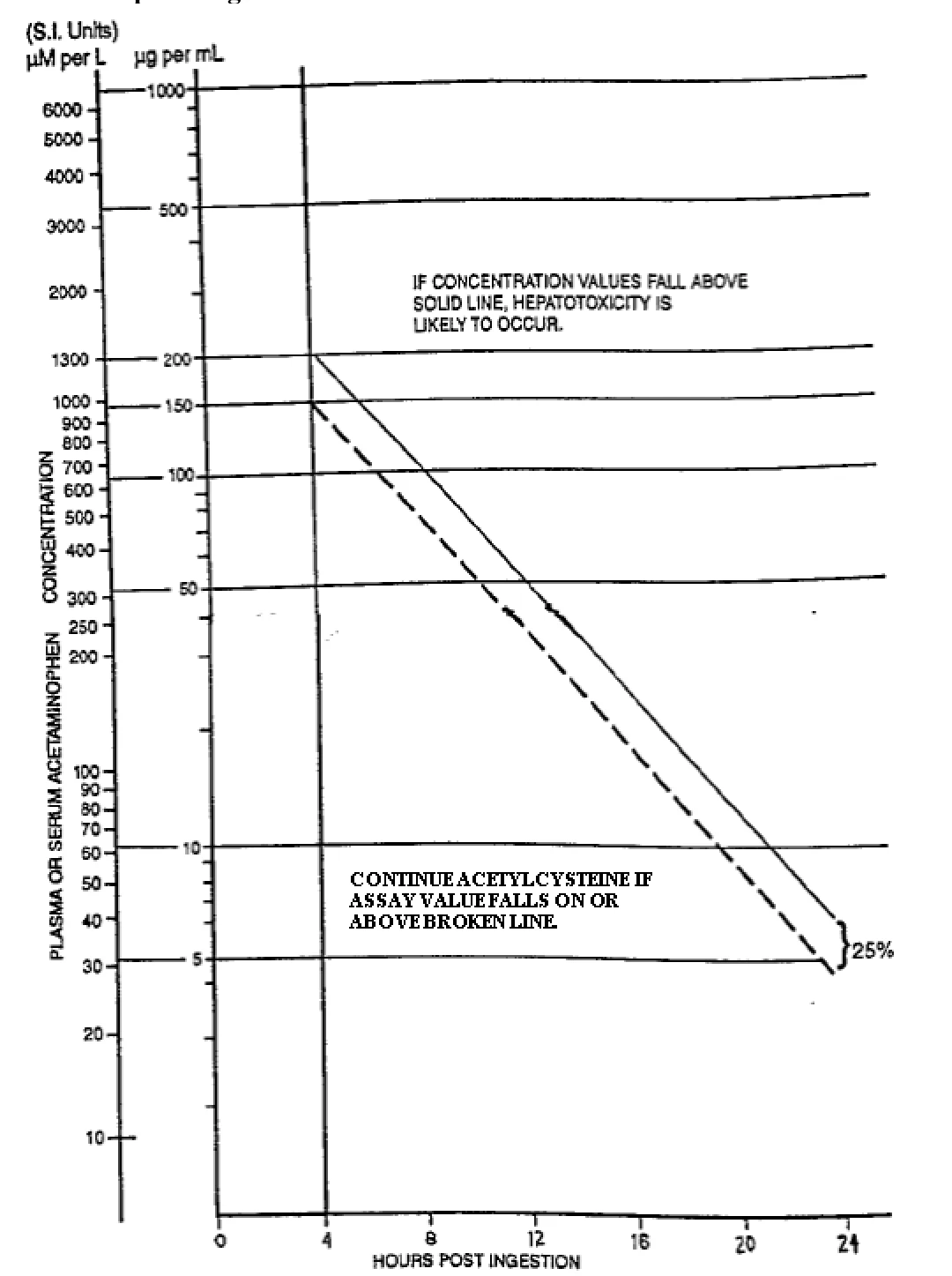
- 6. Maintenance doses should be administered following the loading dose as detailed below and outlined in Tables 2 or 3. Determine the need for continued treatment with acetylcysteine after the loading dose based on the plasma acetaminophen concentration and the possible toxicity line in the nomogram (See DOSAGE AND ADMINISTRATION - Interpretation of Acetaminophen Assays, Figure 1).
- 7. For oral administration, if the patient vomits the oral loading dose or any oral maintenance dose within 1 hour of administration repeat that dose. If the patient is unable to retain the orally administered acetylcysteine, the antidote may be administered by duodenal intubation or by the intravenous route.
- 8. Repeat AST, ALT, bilirubin, prothrombin time, creatinine, BUN, blood sugar and electrolytes daily if acetaminophen plasma level is in the potentially toxic range as discussed below. The tests may be repeated regularly to monitor hepatic function even after the acetaminophen plasma levels are below the toxic level and/or after the last maintenance dose to determine the need for continued treatment with acetylcysteine.
Recommended Dose and Dosage Adjustment
Dosage and Preparation of Acetylcysteine Solution for Oral Administration:
Oral administration requires dilution of the 20% solution with cola drinks, or other soft drinks as diluent, to a final concentration of 5% acetylcysteine (see Table 2: Dosage Guide and Preparation for Oral Administration). If administered via gastric tube or Miller-Abbott tube, water may be used as the diluent. The dilutions should be freshly prepared and utilized within 1 hour. Remaining undiluted solutions in opened vials can be stored in the refrigerator up to 96 hours.
Adults and Pediatrics: The recommended loading dose is 140 mg/kg of body weight. The maintenance dose is 70 mg/kg of body weight. The first maintenance dose is administered 4 hours after the loading dose. The maintenance dose is then repeated at 4 hour intervals for a total of 17 doses unless the acetaminophen assay reveals a non-toxic level as discussed above (step 8 of procedure).
Table 2: Dosage Guide and Preparation for Oral Administration
Doses in relation to body weight are:
| Dose of Acetylcysteine Solution | ||||||||||||
| Body Weight (kg) | Grams Acetylcysteine | mLs of 20% Acetylcysteine | mLs of Diluent | Total mLs of 5% Solution | ||||||||
| Loading Dose (140 mg/kg)** | ||||||||||||
| 100-110 | 15 | 75 | 225 | 300 | ||||||||
| 90-100 | 14 | 70 | 210 | 280 | ||||||||
| 80-90 | 13 | 65 | 195 | 260 | ||||||||
| 70-80 | 11 | 55 | 165 | 220 | ||||||||
| 60-70 | 10 | 50 | 150 | 200 | ||||||||
| 50-60 | 8 | 40 | 120 | 160 | ||||||||
| 40-50 | 7 | 35 | 105 | 140 | ||||||||
| 30-40 | 6 | 30 | 90 | 120 | ||||||||
| 20-30 | 4 | 20 | 60 | 80 | ||||||||
| Maintenance Dose (70 mg/kg)** | ||||||||||||
| 100-110 | 7.5 | 37 | 113 | 150 | ||||||||
| 90-100 | 7 | 35 | 105 | 140 | ||||||||
| 80-90 | 6.5 | 33 | 97 | 130 | ||||||||
| 70-80 | 5.5 | 28 | 82 | 110 | ||||||||
| 60-70 | 5 | 25 | 75 | 100 | ||||||||
| 50-60 | 4 | 20 | 60 | 80 | ||||||||
| 40-50 | 3.5 | 18 | 52 | 70 | ||||||||
| 30-40 | 3 | 15 | 45 | 60 | ||||||||
| 20-30 | 2 | 10 | 30 | 40 | ||||||||
**If patient weighs less than 20 kg, usually patients younger than 6 years, calculate the dose of Acetylcysteine Solution. Three (3) mL of diluent are added to each mL of 20% Acetylcysteine Solution to make a 5% solution. Multiply the patient’s kg weight by the final dose (140 mg/kg or 70 mg/kg) and divide by the concentration of the solution (50 mg/mL). The result is the dose in mL for administration. Each mL of 20 % Acetylcysteine Solution contains 200 mg of acetylcysteine. The loading dose is 140 mg/kg of body weight. The maintenance dose is 70 mg/kg.. Do not decrease the proportion of diluent. Increased gastrointestinal irritation is associated with increased concentrations of Acetylcysteine Solution.
Dosage and Preparation of Acetylcysteine Solution for Intravenous Administration:
Following acetaminophen overdose, Acetylcysteine Solution may be used for intravenous administration according to the Dosage Guide in Table 3. Dilutions recommended should be prepared with 5% dextrose in water as appropriate.
Acetylcysteine Solution for intravenous use should be considered as a single-use container. Solutions recommended under each column in Table 3 should be freshly prepared and used only over times stated.
Adults and Pediatrics: The full course of treatment with acetylcysteine comprises 3 intravenous infusions as detailed in Table 3.
Table 3: Dosage Guide and Preparation for Intravenous Administration
| Infusion | Initial Infusion (5% Dextrose over 15 minutes) | 2nd Infusion (in 500 mL 5% Dextrose over 4 hrs) | 3rd Infusion (in 1 litre 5% Dextrose over 16 hrs) | |
| Body Weight (kg) | Acetylcysteine (mL) | 5% Dextrose (mL) | Acetylcysteine (mL) | Acetylcysteine (mL) |
| 10-15 | 11.25 | 40 | 3.75 | 7.50 |
| 15-20 | 15.00 | 50 | 5.00 | 10.00 |
| 20-25 | 18.75 | 75 | 6.25 | 12.50 |
| 25-30 | 22.50 | 75 | 7.50 | 15.00 |
| 30-40 | 30.00 | 100 | 10.00 | 20.00 |
| 40-50 | 37.50 | 200 | 12.50 | 25.00 |
| 50-60 | 45.00 | 200 | 15.00 | 30.00 |
| 60-70 | 52.50 | 200 | 17.50 | 35.00 |
| 70-80 | 60.00 | 200 | 20.00 | 40.00 |
| 80-90 | 67.50 | 200 | 22.50 | 45.00 |
| 90-100 | 75.00 | 200 | 25.00 | 50.00 |
| 100-110 | 82.50 | 200 | 27.50 | 55.00 |
The volumes and rates of infusion for children suggested in Table 3 must be adjusted according to the medical circumstances. Restrictions in the volumes of parenteral fluids administered and the state of hydration and serum electrolytes for each patient must be monitored closely.
Interpretation of Acetaminophen Assays
The acute ingestion of acetaminophen in quantities of 150 mg/kg or greater may result in hepatic toxicity. However, the reported history of the quantity of a drug ingested as an overdose is often inaccurate and is not a reliable guide to therapy of the overdose. THEREFORE, PLASMA OR SERUM ACETAMINOPHEN CONCENTRATIONS, DETERMINED AS EARLY AS POSSIBLE, BUT NO SOONER THAN FOUR HOURS FOLLOWING AN ACUTE OVERDOSE, ARE ESSENTIAL IN ASSESSING THE POTENTIAL RISK OF HEPATOTOXICITY. (DO NOT WAIT FOR ASSAY RESULTS TO BEGIN ACETYLCYSTEINE TREATMENT).
Nomogram (Rumack-Matthew) for Estimating Potential for Hepatotoxicity from Acute Acetaminophen Ingestion
The Rumack-Matthew nomogram, Figure 1, should be used to estimate the probability that plasma acetaminophen levels in relation to intervals post-ingestion will result in hepatotoxicity.
- 1. When results of the plasma acetaminophen assay are available refer to nomogram (Figure 1) to determine if plasma concentration is in the potentially toxic range. Values above the solid line connecting 200 mcg/mL at 4 hours with 50 mcg/mL at 12 hours are associated with a possibility of hepatic toxicity if an antidote is not administered.
- 2.
If the plasma acetaminophen level is above the broken line continue with maintenance
- doses of acetylcysteine. It is better to err on the safe side and thus the broken line is plotted 25% below the solid line which defines possible toxicity.
- 3. If the plasma acetaminophen level is below the broken line described above, there is minimal risk of hepatic toxicity and acetylcysteine treatment can be discontinued. However, continued monitoring of serum AST and ALT, prothrombin time and INR are recommended and continued treatment with maintenance doses may be required if AST and ALT are still increasing or the INR remains elevated.
- 4. Acetaminophen levels and AST, ALT, prothrombin time and INR should be checked after the last maintenance dose to determine the need for continued treatment with acetylcysteine.
Considerations
- 1. The recommendations for treatment based on this nomogram do not apply to patients who have ingested acetaminophen at dosages higher than those recommended for extended periods of time. The acetylcysteine treatment for these patients should be guided by acetaminophen serum and plasma concentrations and laboratory tests to monitor hepatic and renal function and electrolyte and fluid balance.
- 2. Chronic alcohol ingestion and/or concomitant barbiturate therapy, malnutrition, or CYP450 enzyme inducing drugs may induce a greater formation of the hepatotoxic metabolite (NAPQI) for any given dose of acetaminophen. The nomogram may underestimate the hepatotoxicity risk and consideration should be given to treating these patients even if the acetaminophen concentrations are not in the non-toxic range.
FIGURE 1: Nomogram: Plasma or Serum Acetaminophen Concentration vs. Time Post Acetaminophen Ingestion
Acetaminophen Assay Methodology
Assay procedures most suitable for determining acetaminophen concentrations utilize high pressure liquid chromatography (HPLC) or gas liquid chromatography (GLC). The assay should measure only parent acetaminophen and not conjugated.
Supportive Treatment of Acetaminophen Overdose:
- 1. Maintain fluid and electrolyte balance based on clinical evaluation of state of hydration and serum electrolytes.
- 2. Treat as necessary for hypoglycemia.
- 3. Administer Vitamin K if prothrombin time ratio exceeds 1.5 or fresh frozen plasma if the prothrombin time ratio exceeds 3.0.
- 4. Diuretics and forced diuresis should be avoided. Hemodialysis or peritoneal dialysis have not been found helpful.
OVERDOSAGE
For management of a suspected drug overdose, contact your regional Poison Control Centre.
Overdosage of acetylcysteine has been reported to be associated with effects similar to the hypersensitivity reactions (See WARNINGS AND PRECAUTIONS), but they may be more severe. General supportive measures should be carried out.
ACTION AND CLINICAL PHARMACOLOGY
Mechanism of Action
Mechanism of action as a mucolytic:
The viscosity of pulmonary mucous secretions depends on the concentrations of mucoprotein and to a lesser extent, deoxyribonucleic acid (DNA). The latter increases with increasing purulence owing to cellular debris. The mucolytic action of acetylcysteine is related to the sulfhydryl group in the molecule. This group probably “opens” disulfide linkages in mucus thereby lowering the viscosity. The mucolytic activity of acetylcysteine is unaltered by the presence of DNA, and increases with increasing pH. Significant mucolysis occurs between pH 7 and 9.
Mechanism of action as an antidote for acetaminophen overdose:
Acetaminophen is rapidly absorbed from the upper gastrointestinal tract following ingestion with peak plasma levels occurring between 30 and 60 minutes after therapeutic doses and usually within 4 hours following an overdose. The parent compound, which is non-toxic, is extensively metabolized in the liver to form principally the sulfate and glucuronide conjugates which are also non-toxic and are rapidly excreted in the urine.
A small fraction of the ingested dose is metabolized in the liver via oxidation by the cytochrome P-450 enzyme pathway, primarily CYP2E1, to form a reactive, potentially toxic, intermediate metabolite (N-acetyl-p-benzoquinone imine or NAPQI). NAPQI undergoes rapid conjugation with hepatic glutathione to form the non-toxic cysteine and mercapturic acid derivatives which are then excreted by the kidney.
Therapeutic doses of acetaminophen do not saturate the glucuronide and sulfate conjugation pathways and do not result in formation of sufficient reactive metabolite to deplete glutathione stores.
However, following ingestion of a large overdose (150 mg/kg or greater) of acetaminophen the glucuronide and sulfate conjugation pathways are saturated resulting in a larger fraction of the drug being metabolized via the P-450 pathway. The increased formation of NAPQI may deplete the hepatic stores of glutathione with subsequent binding of the metabolite to protein molecules within the hepatocyte resulting in cellular necrosis.
Acetylcysteine probably protects the liver by maintaining or restoring the glutathione levels, or by acting as an alternate substrate for conjugation with and thus detoxification of the reactive metabolite of acetaminophen, NAPQI.
STORAGE AND STABILITY
Acetylcysteine Solution is not compatible with rubber and metals, particularly iron, copper and nickel.
Storage of Unopened Vials
Store unopened vials between 15 and 30°C. Protect from light. Under certain conditions, a color change may take place in the solution of acetylcysteine in the opened vial. The light purple color is the result of a chemical reaction which does not significantly impair the safety or mucolytic efficacy of acetylcysteine.
Storage of Opened Vials
Acetylcysteine Solution for Oral and Inhalation: Store opened vials in the refrigerator between 2 and 8°C and use within 96 hours. If an admixture is prepared use immediately (See DOSAGE AND ADMINISTRATION - As a mucolytic agent).
Storage of Diluted Solution for IV and/or Oral/Inhalation Solution
Acetylcysteine Solution for Oral Administration: The dilutions should be freshly prepared and utilized within one hour. (See DOSAGE AND ADMINISTRATION - Dosage and Preparation of Acetylcysteine Solution for Oral Administration). Remaining undiluted solutions in opened vials can be stored in the refrigerator up to 96 hours.
Acetylcysteine Solution for Intravenous Infusion: Dilutions should be freshly prepared and used only over times stated. (See DOSAGE AND ADMINISTRATION - Dosage and Preparation of Acetylcysteine Solution for Intravenous Administration). Discard unused portion.
SPECIAL HANDLING INSTRUCTIONS
Do not use previously opened vials for intravenous administration.
DOSAGE FORMS, COMPOSITION AND PACKAGING
Acetylcysteine Solution 20% is available in glass vials of 10 mL and 30 mL, boxes of 1.
Each mL contains acetylcysteine 200 mg, disodium edetate 0.5 mg, sodium hydroxide to adjust pH and water for injection.
The chlorobutyl rubber stopper is not made with natural rubber latex.
PART II: SCIENTIFIC INFORMATION
PHARMACEUTICAL INFORMATION
Drug Substance
Proper name: Acetylcysteine
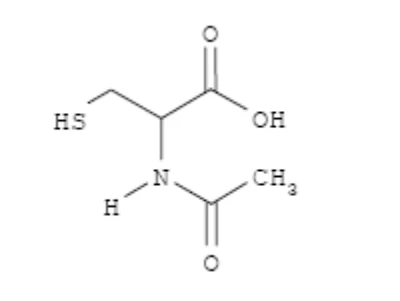
Chemical name: N-acetyl-L-cysteine
Molecular formula and molecular mass: C5H9NO3S ; 163.2 g/mol
Structural Formula:
Physicochemical properties:
Description: White crystalline powder or colourless crystals.
Solubility: Freely soluble in water and alcohol, and practically insoluble in methylene chloride.
Melting Range: 104-110°C.
pH: 2.0 - 2.8 (1% aqueous solution).
DETAILED PHARMACOLOGY
Animal studies
Acetylcysteine is efficacious in preventing lethality from acute acetaminophen overdosage in CF-1 mice, even when therapy is delayed 4½ hours after dosing with acetaminophen. This time frame is especially noteworthy, since unprotected mice become debilitated by 1½ hours, have liver involvement by 3½ hours and die as early as 4 to 5 hours post-overdose.
The protective effect of acetylcysteine in preventing lethality was accompanied by marked hepatoprotection, which was closely reflected by the alanine transaminase (ALT) when the antidote was administered early. However, ALT levels were found to be poor prognostic indicators of survival in late acetylcysteine administration.
Parallel comparisons with reference compounds indicate that acetylcysteine is more efficacious than cysteamine in both overall survival rate and effectiveness on late administration (4½ hours after acetaminophen dosing). Similar studies with methionine indicate that both acetylcysteine and methionine show high efficacy, but that methionine produces a bell-shaped rather than a linear dose response pattern on late administration, i.e., the higher as well as the lower doses resulted in lower survival rates that the mid¬range doses. A highly lethal acetaminophen challenge dose was used (1500 mg/kg) resulting in a 7% survival rate in the untreated mice.
The effects of delayed administration after a less severe challenge (1200 mg/kg) were examined. The survival rate in the untreated mice was 70%. Treatment was initiated 9 hours after overdosing. When acetylcysteine was administered at this time which coincided with peak acetaminophen-induced liver insult, slight protection rather than-exacerbation of toxicity occurred. In this experiment the reference compound, methionine, showed a similar pattern. Cysteamine, in contrast, showed a tendency to worsen the overall condition of animals if treatment was instituted as early as 4½ hours after dosing with 1200 mg/kg of acetaminophen.
Safety assessment of acutely administered acetylcysteine to normal CF-1 mice indicates that it is well tolerated by both oral and intravenous routes.
TOXICOLOGY
Acute toxicity studies conducted in various animal species show that acetylcysteine has low toxicity. The oral LD50 of acetylcysteine was greater than 1000 mg/kg in dogs, greater than 3000 mg/kg in mice and 6000 mg/kg in rats. With parenteral administration (intravenous or intraperitoneal) to the same three species and to guinea pigs, the LD50 ranged between 700 mg/kg for the dog and 2650 mg/kg for the rat.
Gross and microscopic studies performed at autopsy on rats and dogs, treated with very large oral doses of acetylcysteine for 8 weeks, revealed no pathologic abnormalities in either species attributable to the administration of the agent. During administration of the test doses, growth and body weights of the animals were not deleteriously affected. Hemograms and liver function studies revealed no abnormalities attributable to the drug.
Histologic studies were done in guinea pigs exposed to aerosol sprays of 3% and 18% solutions of acetylcysteine for 15 minutes daily for 8 weeks. The histologic sections of the lungs, trachea, bronchi and larynx of these animals were not different from those of the control group exposed to normal saline. The mortality and morbidity rates in the two groups were not significantly different.
Other groups of guinea pigs were exposed to nebulization of the 3% and 18% solutions of acetylcysteine daily for three weeks, rested for two weeks, and then re-exposed for three days. These studies revealed no evidence of sensitization.
Dogs, rabbits and rats were exposed to a chamber atmosphere produced by 30 second nebulization of a 20% solution of acetylcysteine; these test animals remained in the atmosphere for an additional 15 minutes. Exposure was done twice daily for 35 consecutive days. Other groups of rabbits, rats and guinea pigs were exposed to a chamber atmosphere produced by continuous nebulization of a 20% solution of acetylcysteine for 1 hour a day 5 days a week for 12 weeks. No clinical or histopathological changes were found that could be attributed to acetylcysteine.
No evidence of local irritation was observed with acetylcysteine injected intracutaneously in guinea pigs. Ciliary activity in excised rat trachea was not inhibited by topical application of acetylcysteine.
Toxicology mechanism studies indicated that the antidotal profile of acetylcysteine is not related to facilitated plasma or urinary clearance of acetaminophen or acetaminophen metabolites, nor to cleavage of covalent bonds or significant tissue re-distribution of acetaminophen or its metabolites. Acetylcysteine antidotal therapy was associated with increased mercapturate conjugate in the urine, suggesting that acetylcysteine, like endogenous glutathione, may be serving as a substrate for the detoxification of the reactive metabolite of acetaminophen.
REFERENCES
- 1. WellSpring Pharmaceutical Canada Corp. Product Monograph: MUCOMYST. Control number 075829. Date of revision: January 29, 2002.