


Product Monograph - Acyclovir Sodium for Injection
INDICATIONS AND CLINICAL USES
ACYCLOVIR SODIUM FOR INJECTION is indicated for the treatment of initial and recurrent mucosal and cutaneous herpes simplex (HSV-1 and HSV-2) infections and varicella-zoster (shingles) infections in immunocompromised adults and children. It is also indicated for severe initial episodes of herpes simplex infections in patients who may not be immunocompromised.
The indications are based on the results of a number of double-blind, placebo-controlled studies which examined changes in virus excretion, total healing of lesions, and relief of pain. Because of the wide biological variations inherent in herpes simplex infections, the following summary is presented merely to illustrate the spectrum of responses observed to date. As in the treatment of any infectious disease, the best response may be expected when the therapy is begun at the earliest possible moment.
Herpes Simplex Infections in Immunocompromised Patients
A multicenter trial with parenteral acyclovir at a dose of 250 mg/m2 every 8 hours infused over 1 hour (750 mg/m2/day) for 7 days was conducted in 98 immunocompromised patients with orofacial, esophageal, genital and other localized infections (52 treated with acyclovir and 46 with placebo). Acyclovir significantly decreased virus excretion, reduced pain, and promoted scabbing and rapid healing of lesions.
Initial Episodes of Herpes Genitalis
A controlled trial was conducted in 28 patients with initial severe episodes of herpes genitalis with an acyclovir dosage of 5 mg/kg, infused over 1 hour, every 8 hours for 5 days (12 patients with acyclovir and 16 with placebo). Significant treatment effects were seen in elimination of virus from lesions and in reduction of healing times.
In a similar study, 15 patients with initial episodes of genital herpes were treated with acyclovir 5 mg/kg, infused over 1 hour, every 8 hours for 5 days, and 15 with placebo. Acyclovir decreased the duration of viral excretion, new lesion formation, duration of vesicles and promoted more rapid healing of all lesions.
Varicella-Zoster Infections in Immunocompromised Patients
A multicenter trial with acyclovir at a dose of 500 mg/m2 every 8 hours for 7 days was conducted in immunocompromised patients with varicella-zoster (shingles) infections. Ninety-four patients were evaluated (52 patients were treated with acyclovir and 42 with placebo). Acyclovir halted progression of infection as determined by significant reductions in cutaneous dissemination, visceral dissemination, or the proportion of patients deemed treatment failures.
A comparative trial of acyclovir and vidarabine was conducted in 22 severely immunocompromised patients with zoster infections. Acyclovir was shown to be superior to vidarabine as demonstrated by significant differences in the time of new lesion formation, the time to pain reduction, the time to lesion crusting, the time to complete healing, the incidence of fever and the duration of positive viral cultures.
In addition, cutaneous dissemination occurred in none of the 10 acyclovir recipients compared to 5 of the 10 vidarabine recipients who presented with localized dermatomal disease.
Healing Process
Because complete re-epithelialization of herpes-disrupted integument necessitates recruitment of several complex repair mechanisms, the physician should be aware that the disappearance of visible lesions is somewhat variable and will occur later than the cessation of virus excretion.
Diagnosis
Whereas cutaneous lesions associated with herpes simplex and varicella-zoster infections are often pathognomonic, Tzanck smears prepared from lesion exudate or scrapings may assist in diagnosis. Positive cultures for herpes simplex virus offer the only absolute means for confirmation of the diagnosis. Appropriate examinations should be performed to rule out other sexually transmitted diseases. The Tzanck smear does not distinguish varicella-zoster from herpes simplex infections.
CONTRAINDICATIONS
ACYCLOVIR SODIUM FOR INJECTION is contraindicated for patients with hypersensitivity to acyclovir or valacyclovir.
WARNINGS
ACYCLOVIR SODIUM FOR INJECTION is for slow intravenous infusion only. Intravenous infusions must be given over a period of at least 1 hour to reduce the risk of renal tubular damage (see PRECAUTIONS and DOSAGE AND ADMINISTRATION).
In severely immunocompromised patients, the physician should be aware that prolonged or repeated courses of acyclovir may result in selection of resistant viruses associated with infections which may not respond to continued acyclovir therapy. This, however, remains to be clearly established and should be considered as a factor when undertaking therapy. The effect of the use of acyclovir on the natural history of herpes simplex or varicella- zoster is unknown.
Renal failure in some cases resulting in death has been observed with acyclovir therapy (see ADVERSE REACTIONS and SYMPTOMS AND TREATMENT OF OVERDOSAGE).
Thrombotic thrombocytopenic purpura/hemolytic uremic syndrome (TTP/HUS), which has resulted in death, has occurred in immunocompromised patients receiving acyclovir therapy.
PRECAUTIONS
Precipitation of acyclovir crystals in renal tubules can occur if maximum solubility (2.5 mg/mL at 37°C in water) is exceeded. This phenomenon is reflected by a rise in serum creatinine and blood urea nitrogen (BUN) and a decrease in creatinine clearance. With sufficient renal tubular compromise, urine output decreases.
Acute increases in serum creatinine and decreased creatinine clearance have been observed in patients receiving intravenous acyclovir and who were poorly hydrated; or who were receiving concomitant nephrotoxic drugs (e.g., amphotericin B, and aminoglycoside antibiotics); or who had pre-existing renal compromise or damage; or had the dose administered by rapid i.v. injection (less than 10 minutes).
Observed alterations in renal function have been transient, in some instances resolving spontaneously without change in acyclovir dosing regimen. In other instances, renal function improved following increased hydration, dosage adjustment, or discontinuation of therapy.
Administration of ACYCLOVIR SODIUM FOR INJECTION by intravenous infusion must be accompanied by adequate hydration. Since maximum urine concentration occurs within the first 2 hours following infusion, particular attention should be given to establishing sufficient urine flow during that period in order to prevent precipitation in renal tubules. Recommended urine output is $ 500 mL/g of drug infused.
When dosage adjustments are required they should be based on estimated creatinine clearance (see DOSAGE AND ADMINISTRATION).
Approximately 1% of patients receiving intravenous acyclovir have manifested encephalopathic changes characterized by either lethargy, obtundation, tremors, confusion, hallucinations, agitation, seizures or coma. Acyclovir should be used with caution in those patients who have underlying neurologic abnormalities and those with serious renal, hepatic, or electrolyte abnormalities or significant hypoxia. It should also be used with caution in patients who have manifested prior neurologic reactions to cytotoxic drugs or those receiving concomitant intrathecal methotrexate or interferon.
Nursing Mothers
Acyclovir is excreted in human milk. Caution should be exercised when acyclovir is administered to a nursing mother.
Use in Pregnancy
Teratology studies carried out to date in animals have been negative in general. However, in a nonstandard test in rats, there were fetal abnormalities such as head and tail anomalies, and maternal toxicity; since animal reproduction studies are not always predictive of human response, acyclovir should be used during pregnancy only if the physician feels the potential benefit will outweigh the possible harm to the fetus. The potential for high concentrations of acyclovir to cause chromosome breaks in vitro should be taken into consideration in making this decision.
There exist no data, at this time, which demonstrate that the use of acyclovir will prevent transmission of herpes simplex infection to other persons.
Consideration should be given to an alternative treatment regimen if after 5 days of treatment there is no expected clinical improvement in the signs and symptoms of the infection.
Strains of herpes simplex virus which are less susceptible to acyclovir have been isolated from herpes lesions and have also emerged during intravenous treatment with acyclovir.
Use in Elderly
Clinical studies of acyclovir did not include sufficient numbers of patients aged 65 or over, to determine whether they respond differently than younger patients. Other reported clinical experience has identified differences in the severity of central nervous system (CNS) adverse events between elderly and younger patients (see ADVERSE REACTIONS). Acyclovir is known to be substantially excreted by the kidney, and the risk of toxic reactions to this drug may be greater in patients with impaired renal function. Because elderly patients are more likely to have decreased renal function, care should be taken in dose selection, and it may be useful to monitor renal function.
Drug Interactions
Co-administration of probenecid with intravenous acyclovir has been shown to increase the mean t½ and the area under the concentration-time curve. Urinary excretion and renal clearance were correspondingly reduced.
ADVERSE REACTIONS
The following adverse reactions have been reported in controlled and uncontrolled clinical trials in approximately 700 patients who received acyclovir at approximately 5 mg/kg (250 mg/m2) 3 times daily and approximately 200 patients who received approximately 10 mg/kg (500 mg/m2) 3 times daily.
The most frequent adverse reactions reported during acyclovir administration were inflammation or phlebitis at the injection site in approximately 9% of the patients, and transient elevations of serum creatinine or BUN in 5 to 10% [the higher incidence occurred usually following rapid (less than 10 minutes) intravenous infusion]. Nausea and/or vomiting occurred in approximately 7% of the patients (the majority occurring in nonhospitalized patients who received 10 mg/kg). Itching, rash or hives occurred in approximately 2% of patients. Elevation of transaminases occurred in 1 to 2% of patients.
Approximately 1% of patients receiving acyclovir intravenously have manifested encephalopathic changes characterized by either lethargy, obtundation, tremors, confusion, hallucinations, agitation, seizures or coma (see PRECAUTIONS).
Adverse reactions which occurred at a frequency of less than 1% and which were probably or possibly related to intravenous acyclovir administration were: anemia, anuria, hematuria, hypotension, edema, anorexia, lightheadedness, thirst, headache, diaphoresis, fever, neutropenia, thrombocytopenia, abnormal urinalysis (characterized by an increase in formed elements in urine sediment) and pain on urination.
Other reactions have been reported with a frequency of less than 1% in patients receiving intravenously acyclovir, but a causal relationship between acyclovir and the reaction could not be determined. These include pulmonary edema with cardiac tamponade, abdominal pain, chest pain, thrombocytosis, leukocytosis, neutrophilia, ischemia of digits, hypokalemia, purpura fulminans, pressure on urination, hemoglobinemia and rigors.
Post Marketing Experience
In addition to adverse events reported from clinical trials, the following events have been reported voluntarily during postapproval use of acyclovir for injection in clinical practice. These events have been chosen for inclusion due to either their seriousness, frequency of reporting, potential causal connection to acyclovir, or a combination of these factors:
General: angioedema, diaphoresis, fever, headache, pain, peripheral edema, thirst;
Gastrointestinal: diarrhea, gastrointestinal distress, nausea and vomiting;
Hematological
and Lymphatic: disseminated intravascular coagulation, hemolysis, leukopenia, lymphoadenopathy;
Hypersensitivity
and Skin: alopecia, erythema multiforme, rash, Stevens-Johnson syndrome, toxic epidermal necrolysis, rashes including photosensitivity, pruritus, urticaria, and rarely dyspnea, and anaphylaxis. Severe local inflammatory reactions, including tissue necrosis, have occurred following inadvertent infusion of acyclovir into extravascular tissues;
Hepatobiliary Tract
and Pancreas: reversible increase in liver-related enzymes and hyperbilirubinemia.
Hepatitis and jaundice have been reported on very rare occasions;
Musculoskeletal: myalgia;
Nervous: agitation, coma, confusion, dizziness, delirium, hallucinations, obtundation, psychosis, seizure, somnolence, tremors. These symptoms may be marked, particularly in older adults (see PRECAUTIONS);
Special Senses: visual abnormalities;
Urogenital: renal failure, elevated BUN, elevated creatinine (see SYMPTOMS AND
TREATMENT OF OVERDOSAGE).
SYMPTOMS AND TREATMENT OF OVERDOSAGE
Overdoses involving ingestion of up to 20 g of acyclovir have been reported. Adverse events that have been reported in association with overdosage include agitation, coma, seizures and lethargy.
Overdose has been reported following administration of bolus injections, or inappropriately high doses, and in patients whose fluid and electrolyte balance was not properly monitored. This has resulted in elevations in BUN, serum creatinine and subsequent renal failure. Precipitation of acyclovir in renal tubules may occur when the solubility (2.5 mg/mL) in the intratubular fluid is exceeded (see PRECAUTIONS).
A six-hour hemodialysis results in a 60% decrease in plasma acyclovir concentration. Data concerning peritoneal dialysis are incomplete but indicate that this method may be significantly less efficient in removing acyclovir from the blood. In the event of acute renal failure and anuria, the patient may benefit from hemodialysis until renal function is restored (see DOSAGE AND ADMINISTRATION).
DOSAGE AND ADMINISTRATION
CAUTION - ACYCLOVIR SODIUM FOR INJECTION IS INTENDED FOR SLOW INTRAVENOUS INFUSION ONLY, OVER A PERIOD OF AT LEAST ONE HOUR.
Herpes Simplex Infections
Mucosal and Cutaneous Herpes Simplex (HSV-1 and HSV-2) in Immunocompromised Patients Adults: 5 mg/kg infused at a constant rate over at least 1 hour, every 8 hours for 7 days in adult patients with normal renal function.
Children: In children under 12 years of age, equivalent plasma concentrations are attained by infusing 250 mg/m2 at a constant rate over at least 1 hour, every 8 hours for 7 days.
Severe Initial Clinical Episodes of Herpes Genitalis in Immunocompetent Patients The same dose given above - administered for 5 days.
Varicella-Zoster Infections
Zoster in Immunocompromised Patients
Adults: 10 mg/kg infused at a constant rate over at least 1 hour, every 8 hours for 7 days in adult patients with normal renal function.
Children: In children under 12 years of age, equivalent plasma concentrations are attained by infusing 500 mg/m2 at a constant rate over at least 1 hour, every 8 hours for 7 days.
Obese patients should be dosed at 10 mg/kg (Ideal Body Weight).
A maximum dose equivalent to 500 mg/m2 every 8 hours should not be exceeded for any patient.
Patients with Acute or Chronic Renal Impairment
Use the recommended doses and method of administration; and adjust the dosing interval as indicated in Table 1 below.
| Table 1 Dosing in Function of the Creatinine Clearance | ||
CREATININE CLEARANCE (mL/min/1.73m2) | % OF RECOMMENDED DOSE | DOSING INTERVAL (hours) |
| > 50 | 100 | 8 |
| 25 to 50 | 100 | 12 |
| 10 to 25* | 100 | 24 |
| 0 to 10* | 50 | 24 to 48 |
| * Hemodialysis: For patients who require hemodialysis, the mean plasma t½ of acyclovir during dialysis is approximately 5 hours, which results in a 60% decrease in plasma concentrations following a 6-hour dialysis period. Recommended doses should be administered every 24 to 48 hours, and after hemodialysis. | ||
PHARMACEUTICAL INFORMATION
Drug Substance
Common Name: Acyclovir USP
Chemical Name: (1) 6H-Purin-6-one,2-amino-1,9-dihydro-9-[(2-hydroxyethoxy)methyl]
or
(2) 9-[(2-Hydroxyethoxy)methyl]guanine
Structural Formula: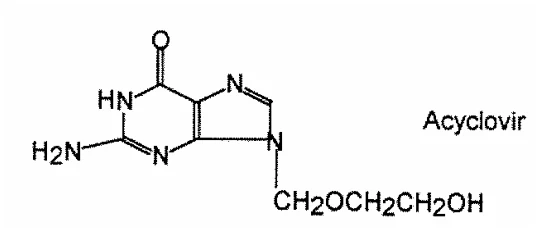
Molecular Formula: C8H11N5O3 Molecular Weight: 225.21
Description: Acyclovir is a white crystalline powder which is freely soluble in dimethylsulfoxide, slightly soluble in dimethylformamide, very slightly soluble in methanol and water, and insoluble in acetone, acetonitrile, dichloroethane ethenol, toluene and chloroform. The pKa is 10.5 (0.3 g in 30 mL dimethylsulfoxide and 25 mL water) and the melting point is 256.5 to 257°C.
Drug Substance (continued)
Common Name: Acyclovir Sodium USP*
Chemical Name: 9-[(2-Hydroxyethoxy)methyl]guanine sodium
Structural Formula: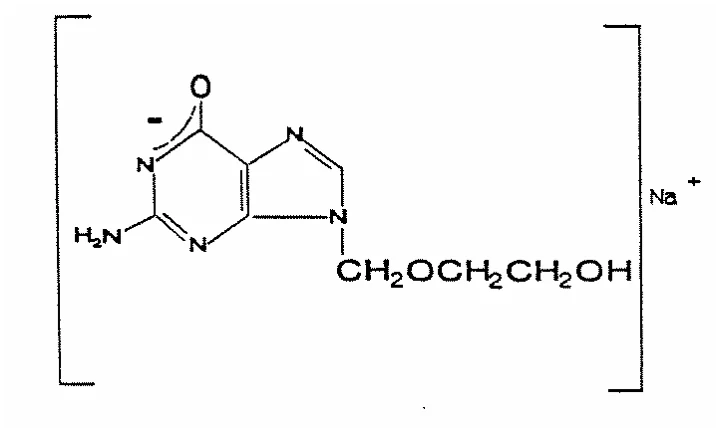
Molecular Formula: C8H10N5NaO3 Molecular Weight: 247.19
Description: Acyclovir sodium is a white crystalline powder with solubility exceeding 100 mg/mL in water at 25°C, but at pH 7.4 and 37°C, the maximum solubility is 2.5 mg/mL.
*Acyclovir sodium is prepared in situ with the aid of sodium hydroxide.
Composition:
Vials contain acyclovir sodium equivalent to 500 mg or 1 g of acyclovir, and sodium hydroxide as pH adjuster. The pH of freshly reconstituted solution (50 mg/mL) is approximately 11.
INSTRUCTIONS FOR USE
Reconstituted Solutions
Solutions for reconstitution: Sterile Water for Injection. Do not use Bacteriostatic Water for Injection which contains benzyl alcohol or parabens. The reconstitution table is (see Table 2).
Table 2 Reconstitution Table | ||
| Vial Size | Volume to be Added to Vial | Approximate Average Concentration |
| 500 mg | 10 mL | 50 mg/mL |
| 1 g | 20 mL | 50 mg/mL |
SHAKE WELL UNTIL DISSOLVED. ASSURE COMPLETE DISSOLUTION BEFORE MEASURING AND TRANSFERRING EACH INDIVIDUAL DOSE. UNUSED PORTIONS OF THE RECONSTITUTED SOLUTION SHOULD BE DISCARDED.
Diluted Solutions for Intravenous Infusion: The calculated dose of the reconstituted solution should be removed and added to an appropriate i.v. solution listed below at a volume selected for administration during each 1-hour infusion. Infusion concentrations exceeding 10 mg/mL are not recommended. Since the vials do not contain any preservatives, any unused portion of the reconstituted solution should be discarded.
ACYCLOVIR SODIUM FOR INJECTION has been shown to be compatible when administered with the following intravenous fluids:
5% Dextrose Injection
5% Dextrose and 0.9% Sodium Chloride Injection
5% Dextrose and 0.2% Sodium Chloride Injection
Ringer's Injection
Normal Saline Injection
Lactated Ringer's Injection
Reconstituted solutions at a concentration of 50 mg/mL should be used within 12 hours if kept at room temperature. Refrigeration may result in the formation of a precipitate which will redissolve at room temperature. Once diluted, the admixtures are to be administered within 24 hours of the initial preparation. The admixtures are not to be refrigerated. Unused portions of the diluted solution should be discarded.
General: The reconstituted and diluted solutions should be inspected visually for discoloration, haziness, particulate matter and leakage prior to administration whenever solution and container permit. Discard unused portion.
Incompatibility: ACYCLOVIR SODIUM FOR INJECTION should not be added to biologic or colloidal fluids (e.g. blood products, protein hydrolysates or amino acids, fat emulsions). Stability and Storage Recommendations
ACYCLOVIR SODIUM FOR INJECTION should be stored between 15 and 25°C.
AVAILABILITY OF DOSAGE FORMS
ACYCLOVIR SODIUM FOR INJECTION is supplied in single dose vials as follows:
o 10 mL vial containing acyclovir sodium equivalent to 500 mg acyclovir, cartons of 5 vials
o 25 mL vial containing the equivalent of 1 g of acyclovir, cartons of 5 vials
VIROLOGY
Spectrum of Activity In Vitro
The quantitative relationship between the in vitro susceptibility of herpes simplex and varicella-zoster viruses to acyclovir and the clinical response to therapy has not been established in man, and virus sensitivity has not been standardized. Sensitivity testing results, expressed as the concentration of drug required to inhibit by 50% the growth of virus in cell culture (ID50), vary greatly depending upon the particular assay used, the cell type employed, and the laboratory performing the test. The ID50 of acyclovir against HSV-1 isolates may range from 0.02 :g/mL (plaque reduction in Vero cells) to 5.9 to 13.5 :g/mL (plaque reduction in green monkey kidney in Vero and GMK cells). The ID50 against HSV-2 ranges from 0.01 :g/mL to 9.9 :g/mL (plaque reduction in Vero and GMK cells, respectively).
Using a dye-uptake method in Vero cells, which gives ID50 values approximately 5- to 10-fold higher than plaque reduction assays, HSV-1 and HSV-2 isolates from several patients were examined. These assays found that 50% of all isolates were sensitive to #0.2 µg/mL acyclovir. For HSV-2 isolates, 50% of all isolates were sensitive to #0.7 :g/mL of acyclovir. Isolates with significantly diminished sensitivity were found in some patients. It must be emphasized that neither the patients nor the isolates were randomly selected and, therefore, do not represent the general population. Most of the less sensitive HSV clinical isolates have been relatively deficient in the viral thymidine kinase (TK). Strains with alterations in viral TK or viral DNA polymerase have also been reported. Prolonged exposure to low concentrations (0.1 :g/mL) of acyclovir in cell culture has resulted in the emergence of a variety of acyclovir-resistant strains.
The ID50 against VZV ranges from 0.17 to 1.53 :g/mL (yield reduction, human foreskin fibroblasts) to 1.85 to 3.98 :g/mL (foci reduction, human embryo fibroblasts [HEF]). Reproduction of EBV genome is suppressed by 50% in superinfected Raji cells or P3HR-1 lymphoblastoid cells by 1.5 :g/mL acyclovir. CMV is relatively resistant to acyclovir with ID50 values ranging from 2.3 to 17.6 :g/mL (plaque reduction, HEF cells) to 1.82 to 56.8 :g/mL (DNA hybridization, HEF cells). The latent state of the human herpes viruses is not known to be sensitive to acyclovir. Resistance
Prolonged exposure of herpes simplex virus (HSV) to subinhibitory concentrations (0.1 :g/mL) of acyclovir in cell structure has resulted in the emergence of a variety of acyclovir-resistant strains. The emergence of resistant strains is believed to occur by "selection" of naturally occurring viruses with relatively low susceptibility to acyclovir. Such strains have been reported in pre-therapy isolates from several clinical studies.
Two resistance mechanisms involving viral thymidine kinase (required for acyclovir activation) have been described. These are: (a) selection of thymidine-kinase-deficient mutants that induce little or no enzyme activity after infection, and (b) selection of mutants possessing a thymidine kinase of altered substrate specificity that is able to phosphorylate the natural nucleoside thymidine but not the acyclovir. The majority of less susceptible viruses arising in vitro are of the thymidine-kinase-deficient type which have reduced infectivity and pathogenicity and less likelihood of inducing latency in animals.
However, an acyclovir-resistant HSV infection in an immunosuppressed bone marrow transplant recipient on extended acyclovir therapy was found to be due to a clinical isolate which had a normal thymidine kinase but an altered DNA polymerase. This third mechanism of resistance involving herpes simplex virus DNA polymerase is due to the selection of mutants encoding an altered enzyme, which is resistant to inactivation by acyclovir triphosphate.
Varicella-zoster virus appears to manifest resistance to acyclovir via mechanisms similar to those seen in herpes simplex virus.
However, limited clinical investigation has revealed no evidence of a significant change in in vitro susceptibility of varicella-zoster virus with acyclovir therapy, although resistant mutants of this virus can be isolated in vitro in a manner analogous to herpes simplex virus. Analysis of a small number of clinical isolates from patients who received oral acyclovir or placebo for acute herpes zoster suggests that in vivo emergence of resistant varicella-zoster virus may occur infrequently. Prolonged acyclovir treatment of highly immunocompromised patients with acquired immunodeficiency syndrome and severe varicella-zoster virus may lead to the appearance of resistant virus.
Cross-resistance to other antivirals occurs in vitro in acyclovir-resistant mutants. Herpes simplex virus mutants which are resistant to acyclovir due to an absence of viral thymidine kinase are cross-resistant to other agents which are phosphorylated by herpesvirus thymidine kinase, such as bromovinyldeoxyuridine, ganciclovir and the 2’-fluoropyrimidine nucleosides, such as 2'-fluoro-5-iodoarabinosyl-cytosine (FIAC).
The clinical response to acyclovir treatment has usually been good for patients with normal immunity from whom herpesvirus, having reduced susceptibility to acyclovir, has been recovered either before, during or after therapy. However, certain patient groups, such as the severely immunocompromised (especially bone marrow transplant recipients) and those undergoing chronic suppressive regimens have been identified as being most frequently associated with the emergence of resistant herpes simplex strains, which may or may not accompany a poor response to the drug. The possibility of the appearance of less sensitive viruses must be recognised when treating such patients, and susceptibility monitoring of clinical isolates from these patients should be encouraged.
In summary, the quantitative relationship between the in vitro susceptibility of herpes simplex and varicella-zoster viruses to acyclovir and the clinical response to therapy has not been clearly established in man. Standardised methods of virus sensitivity testing are required to allow more precise correlations between in vitro virus sensitivity and clinical response to acyclovir therapy.
PHARMACOLOGY
Intravenous administration of acyclovir to adults at 5 mg/kg (approximately 250 mg/m2 body surface area [BSA]) by 1-hour intravenous infusions every 8 hours produces mean steady-state peak and trough concentrations of 9.8 :g/mL and 0.7 :g/mL, respectively. Similar concentrations are achieved in pediatric patients over 1 year of age when doses of 250 mg/m2 BSA are given intravenously every 8 hours.
Concentrations achieved in the cerebrospinal fluid are approximately 50% of plasma values. Plasma protein binding is relatively low (9 to 33%) and drug interactions involving binding site displacement are not anticipated.
Renal excretion of unchanged drug by glomerular filtration and tubular secretion is the major route of acyclovir elimination accounting for 62 to 91% of the dose of intravenously administered 14C-labelled drug in man. The only significant urinary metabolite is 9-carboxymethoxy-methylguanine. An insignificant amount of drug is recovered in feces and expired CO2 and there is no evidence to suggest tissue retention.
The t½ and total body clearance of intravenous acyclovir is dependent on renal function as shown in Table 3 below.
| Table 3 Half-life and Total Body Clearance of i.v. Acyclovir | ||
| Creatinine Clearance (mL/min/1.73 m2 BSA*) | t½ (hr) | Total Body Clearance (mL/min/1.73m2 BSA) |
| > 80 | 2.4 | 332 |
| 50-80 | 2.9 | 251 |
| 15-50 | 3.7 | 185 |
| 0 (Anuric) | 18 | 26 |
| * Body Surface Area | ||
The t½ and total body clearance of intravenous acyclovir in pediatric patients over 1 year of age is similar to adults with normal renal function. Additional data are needed to fully define the pharmacokinetics of i.v. acyclovir in premature infants.
The plasma concentrations of acyclovir in neonates after i.v. infusion of 5, 10 or 15 mg/kg every 8 hours are presented in Table 4 below.
| Table 4 Plasma Concentrations of Acyclovir in Neonates | |||
| Dose | 5 mg/kg q8h | 10 mg/kg q8h | 15 mg/kg q8h |
| Mean peak conc. | 30 :M ±9.9 equivalent to 6.75 :g/mL | 61.2 :M ±18.3 equivalent to 13.8 :g/mL | 86.1 :M ±23.5 equivalent to 19.4 :g/mL |
| Mean trough conc. | 5.3 :M ±3.4 equivalent to 1.19 :g/mL | 10.1 :M ±8.4 equivalent to 2.27 :g/mL | 13.8 :M ±11.1 equivalent to 3.1 :g/mL |
The principal pharmacokinetic parameters in neonate are presented in Table 5 below.
| Table 5 Principal Pharmacokinetic Parameters in Neonates | |
| Cltot (mL/min/1.73 m2) | 105 ± 42 |
| t1/2 (h) | 4.05 ± 1.22 |
| Vdss (L/1.73 m2) | 28.8 ± 9.3 |
Pharmacokinetic parameters in patients with end-stage renal disease are presented in Table 6 below.
| Table 6 Pharmacokinetic Parameters in Patients with End-Stage Renal Disease | |
| Terminal t1/2 (h) | 19.5 ± 5.9 |
| V1 (L/1.73 m2) | 15.3 ± 8.1 |
| Vdss (L/1.73 m2) | 41.2 ± 2.3 |
| V1/Vdss x 100(%) | 37 ± 19.9 |
| Cltot (mL/min/1.73 m2) | 28.6 ± 9.5 |
| Kel (L/h) | 0.15 ± 0.09 |
| Terminal dialysis t1/2 (h) | 5.73 ± 0.85 |
| Coefficient of dialysis extraction | 0.45 ± 0.12 |
Acyclovir dosing in patients with end-stage renal disease is presented in Table 7 below.
| Table 7 Acyclovir Dosing in Patients with End-Stage Renal Disease | ||
| Changing Dosage | Changing Interval | |
| Loading dose | 37% of the standard dosage* (93-185 mg/m2) | Full standard dose (250-500 mg/m2) |
| Maintenance dose | 14% of the standard dosage every 8 hours (35-70 mg/m2) | Full standard dose every 48 hours (250-500 mg/m2) |
| Post-dialysis | 60-100% loading dose | 60-100% standard dose |
| Potential advantages | Minimises fluctuations between peaks and troughs | Less frequent administration |
| * Standard acyclovir dosage (patients with normal renal function) = 250 to 500 mg/m2 initially and every 8 hours. | ||
TOXICOLOGY
Acute Toxicity
The acute toxicity of acyclovir in adult mice and rats is summarized in Table 8 below.
| Table 8 Acute Toxicity in Adult Animals | |||||
| Species | Sex | Route | LD50 | 95% Conf. Level | Signs |
Mouse Rat Mouse Rat Mouse Mouse Rat Rat | M M M M M F M F | Oral Oral i.v. i.v. i.p. i.p. i.p. i.p. | >10,000 >20,000 405 >600 1,454 999 1,305 1,210 | - - - - 1,323-1,662 670-1,364 512-1,733 504-1,580 | None None Ataxia/Depression None Sedation Sedation Sedation Sedation |
Subchronic Toxicity
In a 31-day study in Beagle dogs, acyclovir was administered as a bolus intravenous injection to groups of 8 dogs (4 males and 4 females) at dosage levels of 0, 25, 50 and 100 mg/kg, b.i.d.
Intravenous bolus doses of 50 or 100 mg/kg, produced very high drug plasma levels [range: 45 to 254 :g/mL (200 to 1127 :m)] which were highly toxic. Drug-related effects included infrequent retching and/or emesis, occasional tachycardia and "loud" heartbeat, increased urine output, hyaline droplets in the cytoplasm of the liver parenchymal cells, mild cytologic changes in the colon mucosa and kidney toxicity.
In addition, serious drug-related effects including tremors, cyanosis, prostration and early death, were observed within the first 8 days of the study.
In a second intravenous study, two groups of 8 Beagle dogs (4 males and 4 females) were given acyclovir by bolus injection at dose levels of either 10 or 20 mg/kg, b.i.d. for 31 or 32 consecutive days.
Signs of toxicity were limited to increased water intake and urine output volumes that occurred at the end of the dosing period in dogs given 20 mg/kg. The increased urine output volumes were accompanied by reduction in urine specific gravity and osmolality.
Chronic Toxicity
In Charles River CD-1 (ICR) mice (115/sex/dose group) given acyclovir by oral gavage in a lifetime oral carcinogenicity study, there were no drug-related toxicological effects. Similarly, no treatment-related toxicological effects were observed in Sprague-Dawley rats (100/sex/dose group) given 50, 150 or 450 mg/kg/day acyclovir by oral gavage on a lifetime study.
In a 12-month chronic toxicity study in Beagle dogs, oral acyclovir given at 45 or 50 mg/kg/day was associated with acute toxicity consisting of severe emesis, diarrhea, decreased food consumption, and weight loss during the first two weeks of the study. The dosages were lowered to 10 or 20 mg/kg/day given t.i.d. during the remaining 50 weeks of treatment. With the exception of residual alterations in old keratin at the tips of the claws, there were no signs of treatment-related effects in any of the tissues examined by light microscopy. Nor were there significant alterations in values for the organs weighed at necropsy. Thus, dose levels up to 60 mg/kg/day were well tolerated for one year. The "no dose effect" dose level of acyclovir was 15 mg/kg/day (5 mg/kg t.i.d.); however, the only adverse effects at 30 or 60 mg/kg/day were changes in nails and footpads (30 and 60 mg/kg/day) and mild gastrointestinal signs (60 mg/kg/day).
Reproductive Studies
Acyclovir was administered to pregnant Sprague-Dawley rats by subcutaneous injection during the period of organogenesis (day 6 through day 15 of gestation) at dose levels of 0.0, 6.0, 12.5 and 25.0 mg/kg body weight, b.i.d.
No drug-related effects were noted in maternal body weight values, appearance and behaviour, survival rates, pregnancy rates, or implantation efficiencies. In addition, no drug-related differences were noted in evaluations of fetal size, sex, and development. Therefore acyclovir was not considered to be teratogenic or embryotoxic when administered to rats at levels up to 50.0 mg/kg of body weight per day during organogenesis.
In a second study, female Wistar rats (35/group) were given acyclovir at 0, 6.25, 12.5, or 25 mg/kg b.i.d. subcutaneously from days 7 to 17 of pregnancy, with two-thirds of dams terminated on day 20 of the pregnancy and the remainder allowed to deliver and rear their young. There was no maternal toxicity during the treatment period or subsequently that could be attributed to treatment.
In summary, the results of the two studies indicate that the subcutaneous administration of acyclovir was not associated with any drug-related effects on pregnancy, embryonic or fetal development.
In a third study, groups of 25 pregnant Sprague-Dawley rats were given subcutaneous doses of acyclovir at 6.25, 12.5 or 25 mg/kg b.i.d. on the 6th through the 15th days of gestation. Their fetuses were taken by cesarean section on the 20th day of gestation and examined for gross, visceral and skeletal abnormalities.
There were no signs of teratogenesis or other fetal toxicity. Clinical signs in the dams consisted of marginally decreased body weights at all dose levels and cutaneous scabs and alopecia (dose-related incidence, size and duration of the scabs).
Acyclovir did not impair fertility or reproduction in mice receiving 450 mg/kg/day, p.o. or in rats (25 mg/kg/day, s.c.). In female rabbits treated subcutaneously with acyclovir subsequent to mating, there was a statistically significant decrease in implantation efficiency but no concomitant decrease in litter size at a dose of 50 mg/kg/day. No effect upon implantation efficiency was observed when the same dose was administered intravenously. The intravenous administration of 100 mg/kg/day, a dose known to cause obstructive nephropathy in rabbits, caused a significant increase in fetal resorptions and a corresponding decrease in litter size. However, at a maximum tolerated intravenous dose of 50 mg/kg/day in rabbits, there were no drug-related reproductive effects. Acyclovir caused testicular atrophy in rats receiving intraperitoneal doses of 320 mg/kg/day for 1 month or 80 mg/kg/day for 6 months. Testicular atrophy persisted through the 4-week postdose recovery phase in rats dosed at 320 mg/kg/day; some evidence of recovery of sperm production was evident 30 days postdose.
A teratology study was done in New Zealand White rabbits using essentially the same experimental design as in the rat, except that dosing was from day 6 through day 18 of gestation. No signs of maternal toxicity were observed at any dose, but there was a statistically significant (p<0.05) lower implantation efficiency in the high-dose group. While there were a few terata (teratogenic events) observed in the study (in both control and treated animals) there was no apparent association with drug treatment. There was, however, an apparent dose-related response in the number of fetuses having supernumerary ribs. No similar effect was noted in the rat teratology study or in a reproduction-fertility experiment in mice.
Mutagenicity
Acyclovir has been tested for mutagenic potential in a number of in vitro and in vivo systems:
Microbial: Acyclovir was tested for mutagenic activity in the Ames Salmonella plate assay; in a preincubation modification of the Ames assay; in the Rosenkrantz E. Coli polA+/polA- DNA repair assay; and in the eukaryote S. cerevisiae, D-4. All studies were performed both in the presence and absence of exogenous mammalian metabolic activation.
No positive effects were observed either in the presence or absence of exogenous mammalian metabolic activation, at concentrations of acyclovir up to 300 mg/plate (80 mg/mL).
Mammalian Systems: Acyclovir was tested for mutagenic activity in cultured L5178Y mouse lymphoma cells, heterozygous at the thymidine kinase (TK) locus, by measuring the forward mutation rate to TK-deficiency (TK+/- 6 TK-/-; additional studies were performed at the HGPRT locus and at the Ouabain-resistance marker in these same cells). All studies were performed in the presence and in the absence of exogenous mammalian metabolic activation.
Acyclovir, at a concentration of 50 :g/mL (222 :m) for a 72-hour exposure, has been shown to cause a statistically significant increase in the incidence of morphologically-transformed foci resulting from treating BALB/C-3T3 cells in vitro in the absence of exogenous metabolic activation.
Acyclovir, at concentrations of 62.5 and 125 :g/mL for a 48-hour exposure, did not induce any chromosome aberrations in cultured human lymphocytes in the absence of exogenous metabolic activation. At higher and toxic concentrations - 250 and 500 :g/mL for 48 hours exposure- acyclovir caused a significant increase in the incidence of chromosome breakage. There was also a significant dose-related decrease in mitotic index with exposure to acyclovir.
Acyclovir, at single intravenous doses of 25, 50 and 100 mg/kg, failed to induce chromosome aberrations in bone marrow cells of male and female rats when examined at 6, 24 and 48 hours after treatment.
In summary, the results of these mutagenicity studies showed that acyclovir does not cause single-gene mutations but is capable of breaking chromosomes.
Immunotoxicology Studies
Acyclovir was subjected to a number of in vitro and in vivo immunological tests.
In two in vitro tests, lymphocyte-mediated cytotoxicity and neutrophil chemotaxis, acyclovir showed no inhibitory effects at concentrations as high as 135 :g/mL (600 :m). The compound inhibited rosette formation approximately 50% at 0.9 :g/mL (4 :m).
In four in vivo tests in mice which measured cell-mediated immunity (complement-dependent cellular cytotoxicity, complement-independent cellular cytotoxicity, delayed hypersensitivity and graft vs. host reaction) acyclovir showed no inhibitory effects at single doses up to 200 mg/kg given on day 2 after antigenic stimulation.
Studies were carried out to evaluate the influence of acyclovir in vitro on human lymphocyte function. Inhibitory effects on blastogenesis were seen only in assays examining peak concentrations of potent mitogens, phytohemagglutinin (PHA) and concanavaline (Con A), and only at concentrations of drug above 50 :g/mL (222 :m) and were much less with monilia and tetanus toxoid antigens, where the blastogenic response is characteristically less vigorous. There was very little effect on cytotoxicity or LIF production except at concentrations of 200 :g/mL (890 :m) where there has already been demonstrated to be a direct cytotoxic effect.
Drug Interactions
Co-administration of probenecid with acyclovir has been shown to increase the mean t½ and the area under the concentration-time curve. Urinary excretion and renal clearance were correspondingly reduced. Although Acyclovir has been used concomitantly with zidovudine in some patients with human immunodeficiency virus (HIV) infections without evidence of increased toxicity, such patients should be monitored closely for signs of neurotoxicity during combined therapy. Anti fungal agents (i.e. Amphotericin B and Ketoconazole) have been reported to potentiate the antiviral effect of acyclovir in vitro; the clinical significance of these interactions has not been established.
Acyclovir should be used with caution in patients who have exhibited prior neurologic reactions to interferon since the two drugs have demonstrated an additive or synergistic antiviral effect in vitro. Caution is also advised in patients who have exhibited prior neurologic reactions to intrathecal methotrexate.
REFERENCES
- 1.
AHSF Drug Information. Bethesda Maryland, Published by authority of the American
Society of Hospital Pharmacists. 1995: 404-412.
- 2.
Auwerx J., Knockaert D., Hofkens P., Acyclovir and neurologic Manifestations. Annals Int
Med. 1983; 99: 882-883.
- 3. Balfour H.H. Jr., Bean B., Laskin O.L., et al. Acyclovir halts progression of herpes zoster in immunocompromised patients. N Engl J Med. 1983; 1: 1448-1453.
- 4.
Bean B., Adverse Effects of High-Dose Intravenous Acyclovir in Ambulatory Patients with
Acute Herpes Zoster. Infect Dis. 1985; 151(2): 362-365.
- 5. Blum M.R., Liao S.H., deMiranda P. Overview of acyclovir pharmacokinetic disposition in adults and children. Am J Med. 1982; 73: 186-192.
- 6. Boelert J., Schurgers M., Daneets R., et al. Multiple dose pharmacokinetics of intravenous acyclovir in patients on continuous ambulatory peritoneal dialysis. J Antimicrob chemother. 1987; 20: 69-76.
- 7. Burns W.H., Saral R., Santos G.W., et al. Isolation and characterization of resistant herpes simplex virus after acyclovir therapy. Lancet. 1982; 1: 421-423.
- 8. Collins P., Laroer B.A., Oliver N.M., et al. Characterization of a DNA polymerase mutant of herpes simplex virus from a severely immunocompromised patient receiving acyclovir. J Gen Virol. 1989; 70: 375-382
- 9. Corey L., Fife K.H., Benedetti J.K., et al. Intravenous acyclovir for the treatment of primary genital herpes. Ann Intern Med. 1983; 98: 914-921.
- 10. Crumpacker C.S., Schnipper L.E., Marlowe S.I., et al. Resistance to antiviral drugs of herpes simplex virus isolated from a patient treated with acyclovir. N Engl J Med. 1982; 306: 343-346.
- 11.
DeClerq E. Comparative efficacy of antiherpes drugs in different cell lines. Antimicrob
Agents Chemother 1982; 21: 661-663.
- 12. Derse D., Cheng Y.C., Furman P.A., et al. Inhibition of purified human and herpes virus-induced DNA polymerases by 9-(2-hydroxyehtoxymethyl)guanine triphosphate: effects on primer-template function. J Biol Chem. 1961; 256: 11447-11451.
- 13. Ellis M.N., Keller P.M., Fyle J.A., et al. Clinical Isolate of herpes simplex virus type 2 that induces a thyminide kinase with altered substrate specificity. Antimicrob Agents Chemother 1987; 31: 1117-1125.
- 14. Erlich K.S., Mills J., Cratis P., et al. Acyclovir resistant herpes simplex virus infections in patients with the acquired immunodefiency syndrome. N Engl J Med. 1989; 320: 293-296.
- 15. Field H.J., Darby G., Wildy P. Isolation and characterization of acyclovir-resistant mutants of herpes simplex virus. J. Gen Virol 1980; 49: 115-124.
- 16.
Furman P.A., St. Clair M.H., Fyle J.A., et al. Inhibition of herpes simplex virus- induced
DNA polymerasa activity and viral DNA replication by 9-(2-hydroxyethoxymethyl)guanine and its triphosphate. J Virol. 1979; 32: 72-77.
- 17. Krasny H.C., Liao S.H., deMiranda P., et al. Influence of hemodialysis on acyclovir pharmacokinetics in patients with chronic renal failure. Am J Med. 1982; 73: 202-204.
- 18.
Laskin O.L., Longstreth J.A., Whelton A., et al. Effect of renal failure on
the pharmacokinetics of acyclovir. Am J Med. 1982; 73: 197-201.
- 19. Laskin O.L., deMiranda P., King D.H., et al. Effects of probenecid in the pharmacokinetics and elimination of acyclovir in humans. Antimicrob Agents Chemother. 1982; 69: 468-471.
- 20. McGuirt P.V., Shaw J.E., Elion G.B., et al. Identification of small DNA fragments synthesized in herpes simplex virus-infected cells in the presence of acyclovir. Antimicrob Agents Chemother. 1984; 25: 507-509.
- 21. McLaren C., Ellis M.N., Hunter G.A. A colonmetnic assay for the measurement of the sensitivity of herpes simplex viruses to antiviral agents. Antiviral Res. 1983; 3: 223-234.
- 22.
Meyer L.I., deMiranda P., Sheth N., et al. Acyclovir in human breast milk. Am J Obstel
Gynecol. 1988; 158: 586-588.
- 23.
Miller W.H., Miller R.L. Phosphorylation of acyclovir (acycloguanosina) monophosphate by
GMP kinase. J Biol Chem. 1980; 255: 7204-7207.
- 24. Mindel A., Adler M.W., Sutherland S., et al. Intravenous treatment for primary genital herpes. Lancet. 1982; 1: 697-700.
- 25. Mitchell C.D., Bean B., Gentry S.R., et al. Acyclovir therapy for mucocutaneous herpes simplex infections in immunocompromised patients. Lancet. 1981; 1: 1389-1392.
- 26. Naib Z.M., Nahmias A.J., Josey W.E., et al. Relation of Cytohistopathology of genital herpes virus infection to cervical anaplasia. Cancer Res. 1973; 33: 1452.
- 27. O'Brien J.J., Campoli-Richards D.M. Acyclovir - an updated review of its antiviral activity, pharmacokinetic properties and therapeutic efficacy. Drugs 1989; 37:233-309.
- 28.
Richards D.M. et al., Acyclovir: A Review of its Pharmacodynamic Properties and
Therapeutic Efficacy. Drugs. 1983; 26: 378-438.
- 29. Shah G.M., Winer R.L., Krasny H.C., Acyclovir pharmacokinetics in a patient on continuous ambulatory peritoneal dialysis. Am J Kidney Dis. 1986; 7: 507-510.
- 30. Skoldenberg B., Forsgren M., Aleskog K., et al. Acyclovir versus vindarabine in herpes simplex encephalitis; randomized multicenter study in consecutive Swedish patients. Lancet. 1984; 2: 707-711.
- 31.
Stahlmann R., Klug S., Lewandowski C., et al. Teratogenicity of acyclovir in rats. Infection
1987; 15: 261-262.
- 32. Straus S.E., Tariff H.E., Segin M., et al. Suppression of frequently recurring genital herpes: a placebo-controlled double-blind trial of oral acyclovir. N Engl J Med. 1984; 310: 1545-1550.
- 33. Wade J.C., Newton B., McLaren C., et al. Intravenous acyclovir to treat mucocutaneous herpes simplex virus infection after marrow transplantation: a double-blend trial. Ann Intern Med. 1982; 96: 265-269.