


Product Monograph - Sitavig
SUMMARY PRODUCT INFORMATION
| Route of Administration | Dosage Form / Strength | Clinically Relevant Nonmedicinal Ingredients |
| Buccal | Mucoadhesive buccal tablet 50 mg | None For a complete listing see Dosage Forms, Composition and Packaging section |
INDICATIONS AND CLINICAL USE
SITAVIG™ (acyclovir mucoadhesive buccal tablets) is indicated for the treatment of recurrent herpes labialis (cold sores) in immunocompetent adults.
Geriatrics (≥ 65 years of age):
Clinical studies of SITAVIG™ did not include sufficient numbers of subjects aged 65 and over to determine whether they respond differently from younger subjects.
Pediatrics (<18 years of age):
Safety and effectiveness of SITAVIG™ in pediatric patients have not been established.
CONTRAINDICATIONS
- Patients with known hypersensitivity (e.g., anaphylaxis) to acyclovir, milk protein concentrate, or any other component of the product.
- For a complete listing, see the DOSAGE FORMS, COMPOSITION AND PACKAGING section of the product monograph.
WARNINGS AND PRECAUTIONS
General
SITAVIG™ is a single dose therapy for the treatment of recurrent herpes labialis. Therapy should be initiated at the onset of prodromal symptoms, and prior to the appearance of any signs of herpes labialis lesions. SITAVIG™ should be used in the upper gum region (canine fossa), for recurrent herpes labialis (cold sores) of the lips and around the mouth.
Special Populations
Pregnant Women: SITAVIG™ should be used during pregnancy only if the potential benefit outweighs the potential risk to the fetus. No studies with SITAVIG™ have been performed in pregnant women. Systemic exposure of acyclovir following buccal administration of SITAVIG™ is minimal.
There are no adequate and well-controlled studies of systemic acyclovir in pregnant women.
Animal reproduction studies have not been conducted with SITAVIG. Acyclovir was not teratogenic in the mouse, rabbit or rat at exposures greatly in excess of human exposure.
Nursing Women: There is no experience with SITAVIG™ in nursing mothers. SITAVIG™ should be administered to a nursing mother with caution.
It is not known whether topically applied acyclovir is excreted in breast milk. Systemic exposure following buccal administration is minimal.
After oral (systemic) administration of acyclovir, concentrations have been documented in breast milk in 2 women and ranged from 0.6 to 4.1 times the corresponding plasma levels. These concentrations would potentially expose the nursing infant to a dose of acyclovir up to 0.3 mg/kg/day.
Geriatrics (≥ 65 years of age): Clinical studies of SITAVIG™ did not include sufficient numbers of subjects aged 65 and over to determine whether they respond differently from younger subjects.
Pediatrics (< 18 years of age): Safety and effectiveness of SITAVIG™ in pediatric patients have not been established.
Immunocompromised Patients: The safety of SITAVIG™ has not been studied in immunocompromised subjects.
ADVERSE REACTIONS
Adverse Drug Reaction Overview
The safety of SITAVIG™ was assessed in a Phase III clinical trial reflecting exposure to SITAVIG™ in 378 adult patients with recurrent herpes labialis.
The adverse drug reactions that occurred in ≥ 1% of patients included headache and application site pain. There was no discontinuation of SITAVIG™ due to adverse drug reactions. Most treatment related adverse events were mild or moderate in severity. There were no serious adverse drug reactions reported.
Clinical Trial Adverse Drug Reactions
Because clinical trials are conducted under very specific conditions the adverse reaction rates observed in the clinical trials may not reflect the rates observed in practice and should not be compared to the rates in the clinical trials of another drug. Adverse drug reaction information from clinical trials is useful for identifying drug-related adverse events and for approximating rates.
One randomized, double-blind, placebo controlled trial was conducted in patients with recurrent herpes labialis (cold sores), having at least 4 herpes labialis episodes in the previous year. In this trial, 378 herpes simplex virus (HSV) infected subjects used SITAVIG™ as a single dose, and 397 subjects used placebo. The incidence of adverse drug reactions was similar in the two groups.
Table 1 provides adverse drug reactions that were reported in ≥ 1% of patients treated with SITAVIG™.
Table 1 - Adverse Drug Reactions Reported in ≥ 1% of Patients in Phase 3 Trial
| Event | SITAVIG™ N = 378 (%) | Placebo N = 397 (%) |
|---|---|---|
| Nervous System Disorders | ||
| Headache | 4 (1.1) | 9 (2.3) |
| General Disorders and Administration Site Conditions | ||
| Application Site Pain | 4 (1.1) | 4 (1.0) |
Less Common Clinical Trial Adverse Drug Reactions (<1%)
Blood and Lymphatic System Disorders: Lymphadenopathy, thrombocytopenia.
Ear and Labyrinth Disorders: Vertigo.
Gastrointestinal Disorders: Abdominal pain upper, aphthous stomatitis, diarrhoea, dry mouth, gastrooesophageal reflux disease, gingival pain, lip dry, lip swelling, mouth ulceration, nausea, oral pain, stomach discomfort, stomatitis, vomiting.
General Disorders and Administration Site Conditions: Application site discomfort, application site erythema, application site irritation, application site paraesthesia, influenza like illness, mucosal erosion.
Infections and Infestations: Oral herpes.
Investigations: Alanine aminotransferase increased, aspartate aminotransferase increased, blood creatine increased, blood creatinine increased, gamma-glutamyltransferase increased, mean cell hemoglobin increased.
Musculoskeletal and Connective Tissue Disorder: Myalgia.
Nervous System Disorders: Dizziness, lethargy.
Skin and Subcutaneous Tissue Disorders: Erythema, heat rash, pruritus, rash, rash erythematous.
Vascular Disorders: Epistaxis, flushing.
Post-Market Adverse Drug Reactions
In addition to adverse events identified in clinical trials, the following post-marketing events have been included due to their seriousness, frequency of reporting, potential causal association with SITAVIG™, or a combination of these factors. Because they are reported spontaneously from a population of unknown size, estimates of incidence cannot be made.
Allergic: Swelling of tongue and lip, glossitis and cheilitis.
Central Nervous System: Nightmares, agitation and insomnia.
Other: Incorrect route of administration.
DRUG INTERACTIONS
Overview
No interaction studies have been performed with SITAVIG™. Acyclovir is primarily eliminated unchanged in the urine via active tubular secretion. Drugs administered concomitantly that compete with tubular secretion may increase acyclovir plasma concentrations. However, due to the low dose and minimal systemic absorption of SITAVIG™, systemic drug interactions are unlikely.
Drug-Food Interactions
There was no formal food effect study conducted with SITAVIG™; however, in clinical studies patients were allowed to eat and drink while taking SITAVIG
™.
Drug-Laboratory Interactions
Interactions of SITAVIG with laboratory tests have not been established.
DOSAGE AND ADMINISTRATION
Dosing Considerations
SITAVIG™ is a single dose therapy for the treatment of recurrent herpes labialis. Therapy should be initiated at the onset of prodromal symptoms, and prior to the appearance of any signs of herpes labialis lesions.
In addition,
- SITAVIG™ should not be crushed, chewed, sucked or swallowed.
- Food and drink can be taken normally when SITAVIG™ is in place.
- Avoid any situations which may interfere with adhesion of the tablet such as chewing gum, touching or pressing the tablet after placement, wearing upper denture, and brushing teeth. If the teeth need to be cleaned while the tablet is in place, rinse the mouth gently.
- Drink plenty of liquids in the case of dry mouth.
Recommended Dose and Dosage Adjustment
One SITAVIG™ tablet should be applied as a single dose to the upper gum region (canine fossa). Once applied, the tablet stays in position and should be left in place until it dissolves.
Administration
SITAVIG™ should be applied with a dry finger immediately after taking it out of the blister. The rounded side of the tablet should be placed to the upper gum just above the incisor tooth (canine fossa) and held in place with a slight pressure over the upper lip for 30 seconds to ensure adhesion. For comfort the rounded side should be placed to the upper gum with the flat side facing the inside of the lip.
- If SITAVIG™ does not adhere or falls off within the first 6 hours, the same tablet should be repositioned immediately. If the tablet cannot be repositioned, a new tablet should be placed.
- If SITAVIG™ is swallowed within the first 6 hours, the patient should drink a glass of water and a new tablet should be applied.
- SITAVIG™ does not need to be reapplied if the tablet falls out or is swallowed after the first 6 hours.
OVERDOSAGE
Acyclovir absorption and systemic exposure following application of SITAVIG™ are minimal. Overdose is therefore unlikely.
Symptomatic and supportive care is the basis for management.
| For management of a suspected drug overdose, contact your regional Poison Control Centre. |
|---|
ACTION AND CLINICAL PHARMACOLOGY
Mechanism of Action
Acyclovir is an antiviral drug. It is a synthetic purine nucleoside with inhibitory activity against herpes simplex virus type 1 (HSV-1) and type 2 (HSV-2). Acylovir is phosphorylated intracellularly by the viral encoded thymidine kinase (TK) of HSV into acyclovir monophosphate, a nucleotide analogue. The monophosphate is further converted into diphosphate by cellular guanylate kinase and into triphosphate by a number of cellular enzymes. In a biochemical reaction, acyclovir triphosphate inhibits replication of herpes viral DNA by competing with nucleotides for binding to the viral DNA polymerase and by incorporation into and termination of the growing viral DNA chain. The cellular thymidine kinase of normal, uninfected cells does not use acyclovir effectively as a substrate, hence toxicity to mammalian host cells is low.
Pharmacokinetics
Table 2 - Summary of Acyclovir Buccal Tablet’s Pharmacokinetic Parameters in Saliva Following Application of a Single SITAVIG™ 50 mg Tablet in Healthy Volunteers (N = 12)
| Single dose mean ± SD | (Min – Max) | |
| Cmax (ng/mL) | 440 ± 241 | (149 – 959) |
| Tmax (h) | 7.95 ± 4.08 | (3.07 – 18.05) |
| AUC0-24h (h·ng/mL) | 2900 ± 2400 | (849 – 9450) |
Absorption: SITAVIG™ is applied topically to the gum and releases acyclovir as the buccal tablet gradually dissolves. As shown in Table 2, single dose application of SITAVIG containing 50 mg of acyclovir to the buccal mucosa in 12 healthy volunteers provided mean maximum salivary concentrations of 440 μg/mL 8 hours after application of the tablet. The single local application of SITAVIG provided rapid (<30 min), high (≥IC50) and sustained (≥ 24 hours) acyclovir concentrations in saliva and in labial mucosa, the replication site of HSV-1.
In the Phase 3 study, the levels of acyclovir in saliva were measured within 24 hours of SITAVIG™ application in 56 patients with recurrent herpes labialis (mean value 88.1 micrograms per mL) and were within the range of those observed in the pharmacokinetic study in healthy volunteers.
In healthy volunteers, the median duration of buccal adhesion was 14 hours following application of a single SITAVIG™ 50 mg tablet.
Distribution: Plasma concentrations of acyclovir were measured in 12 healthy volunteers after a single-dose application of SITAVIG™ 50 mg buccal tablet. Acyclovir concentrations had a delayed appearance (undetectable at 5 hours) and were below the concentrations required for antiviral activity (range: 17.5 to 55.3 ng/mL).
Metabolism: Acyclovir is metabolized to 9-[(carboxymethoxy)methyl]guanine (CMMG) and 8-hydroxy-acyclovir (8-OH-ACV) by oxidation and hydroxylation.
Excretion: Acyclovir is primarily excreted unchanged by the kidneys.
STORAGE AND STABILITY
SITAVIG™ should be stored at 20 to 25°C. Protect from moisture. The shelf life is 36 months.
Keep out of reach and sight of children.
DOSAGE FORMS, COMPOSITION AND PACKAGING
SITAVIG™ contains 50 mg of acyclovir and the following inactive ingredients: colloidal silicon dioxide, hypromellose, magnesium stearate, microcrystalline cellulose, milk protein concentrate, povidone and sodium lauryl sulfate.
SITAVIG™ is supplied as a round white to slightly yellow tablet, with a rounded side and a flat side, debossed with an “AL21” on the flat side. SITAVIG™ tablets are packaged into boxes of 2 blisters, each blister containing 1 tablet.
PART II: SCIENTIFIC INFORMATION
PHARMACEUTICAL INFORMATION
Drug Substance
Proper name: acyclovir; aciclovir
Chemical name: 6H-Purin-6-one, 2-amino-1,9-dihydro-9-[(2-ydroxyethoxy)methyl]- 9-[(2-Hydroxyethoxy)methyl]guanine
Molecular formula and molecular mass: C8H11N5O3, 225.2 g/mol
Structural formula:
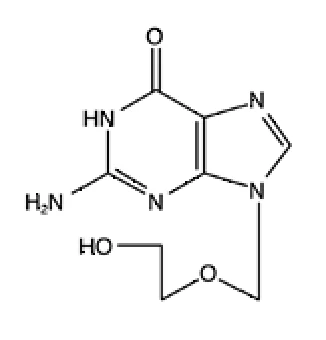
Physicochemical properties: Acyclovir drug substance is a white or almost white crystalline powder. Freely soluble in dimethylsulfoxide, slightly soluble in dimethylformamide, very slightly soluble in methanol and water.
CLINICAL TRIALS
The efficacy and safety of SITAVIG™ (acyclovir mucoadhesive buccal tablets) was evaluated in a randomized, double-blind, placebo-controlled, patient-initiated, multicenter trial. SITAVIG™ was administered as a single dose (n = 378) versus placebo (n = 397) in patients with recurrent herpes labialis (cold sores). All patients had at least 4 herpes episodes in the previous year of whom 68.4% had ≥ 5 episodes. The mean duration of previous herpes episodes was 8.6 (± 3.1) days in the SITAVIG™ group and 8.3 (± 3.0) days in the placebo group.
Patients were instructed to initiate treatment within one hour after the onset of prodromal symptoms and before the appearance of any signs of herpes labialis lesions by applying the tablet to the buccal mucosa in the canine fossa. If the tablet was detached within the first 6 hours, subjects were instructed to reapply a tablet.
Table 3 provides a summary of the Patient Demographics for the Clinical Trial in Recurrent Herpes Labialis.
Study demographics and trial design
Table 3 - Summary of Patient Demographics for Clinical Trial in Recurrent Herpes Labialis
| Study # | Trial Design | Dosage, Route of Administration and Duration | Study Subjects –ITT Population (n=771) | Mean Age (Range) | Gender M/F |
| Study # BA2005/21/02 | Multicentre, multinational, randomized, double-blind | SITAVIG™ 50 mg Placebo Single-dose mucoadhesive tablet applied to the gum | 376 395 | 40 (18 – 80) 42 (18 – 73) | 118/258 124/271 |
Study results
The mean and median durations of the recurrent herpes labialis episode (ITT population, n = 771) were approximately half a day shorter in patients treated with SITAVIG™ compared with patients treated with placebo.
DETAILED PHARMACOLOGY
Pharmacokinetics/Pharmacodynamics
A single-center, randomized, cross-over, pharmacokinetic/pharmacodynamics study was conducted in 12 healthy subjects to compare the pharmacokinetic parameters and tolerability of a single dose of SITAVIG™ in plasma, saliva and labial mucosa to those of a single acyclovir 200 mg oral (systemic) tablet. SITAVIG™ was applied in the morning to the upper gum as a single dose. The comparator, acyclovir 200 mg oral tablet, was administered only once in the morning.
Acyclovir saliva, mucosa and plasma concentrations, duration of SITAVIG™ adhesion, local and general tolerability were assessed.
The single local application of SITAVIG™ provided rapid (<30 min), high (≥IC50) and sustained (≥ 24 hours) acyclovir concentrations in saliva and in labial mucosa, markedly over the IC50 (22.5 ng/mL) and those obtained after a single administration of acyclovir 200 mg tablet (11,700-fold higher for saliva and at least 4-fold higher for labial mucosa). In contrast, plasma concentrations were lower than those observed with acyclovir 200 mg oral tablet with a relative bioavailability corrected by the dose of 49% for SITAVIG™.
The detection of very high acyclovir concentrations in saliva and labial mucosa persisting several hours after SITAVIG™ dislodgment or complete erosion, and the higher acyclovir concentrations in labial mucosa than in saliva support the assumption of acyclovir storage in mucosa.
SITAVIG™ provides low (below the IC50) plasma concentrations and high (over the IC50) concentrations in saliva and labial mucosa. Rapid, high and sustained concentrations of acyclovir at the replication site of HSV-1, allow for a prolonged inhibition of the virus and thereby circumvent the poor intracellular half-life of acyclovir triphosphate.
MICROBIOLOGY
Antiviral Activity
The quantitative relationship between the cell culture susceptibility of herpes viruses to antivirals and the clinical response to therapy has not been established in humans, and virus sensitivity testing has not been standardized. Sensitivity testing results, expressed as the concentration of drug required to inhibit by 50% the growth of virus in cell culture (EC50), vary greatly depending upon a number of factors. Using plaque-reduction assays on Vero cells, the median EC50 value of acyclovir against clinical herpes virus isolates (subjects receiving placebo) was 1.3 μM (range: < 0.56 to 3.3 μM).
Drug Resistance
Resistance of HSV to acyclovir can result from qualitative and quantitative changes in the viral TK and/or DNA polymerase. Clinical isolates of HSV with reduced susceptibility to acyclovir have been recovered from immunocompromised subjects, especially with advanced HIV infection. While most of the acyclovir-resistant mutant isolates from immunocompromised subjects thus far have been found to be TK-deficient, other mutant isolates involving the viral TK gene (TK partial and TK altered) or DNA polymerase have been identified. TK-negative mutants may cause severe disease in infants and immunocompromised adults.
The possibility of viral resistance to acyclovir should be considered in immunocompromised subjects who show poor clinical response during therapy.
TOXICOLOGY
Acute Studies
Single doses of acyclovir by intravenous, oral and intraperitoneal routes, were administered to rats, and no deaths were observed at the maximum practical dose volume. The oral median lethal dose (LD50) of acyclovir in rats was greater than 20,000 mg/kg. The intravenous LD50 was greater than 600 mg/kg, and the intraperitoneal LD50 values in male and female rats were 1,305 and 1,210 mg/kg, respectively.
Mice were also treated with single doses of acyclovir by intravenous, oral and intraperitoneal routes, and no deaths were observed at the maximum practical dose volume. The oral LD50 of acyclovir was greater than 10,000 mg/kg. The intravenous LD50 was 405 mg/kg, for male mice and greater than 600 mg/kg for male rats and the intraperitoneal LD50 values in male and female rats were 1,454 and 999 mg/kg, respectively.
Repeat-Dose Studies
Acyclovir has been studied in repeat-dose toxicity studies in mice (1-month oral administration), rats (21-days intravenous administration) and Beagle dogs (1-month intravenous and 12-months oral administration).
In mice, there were no deaths and body weight gains and food consumption were comparable for control and treated mice. No signs of accumulation of acyclovir in plasma were apparent.
Treatment-related changes in rats were limited to the kidney and occurred at doses of 20 mg/kg/day and higher. These changes included increases in water consumption, urine output, blood urea nitrogen and absolute and relative kidney weights. The renal damage observed was reversible and affected parameters returned to normal after a 15-day post-dose recovery period. The No Observed Effect Level (NOEL) in rats was determined to be 10 mg/kg/day.
In studies of intravenous administration in dogs, high toxicity was revealed by 200 mg/kg/day (all dogs died by Day 8) and 100 mg/kg/day (5/8 dogs died between Day 21 and Day 31). Water intake and urine output generally increased for dogs treated at dose levels of 40 mg/kg/day or higher. The increase in urine output was partially responsible for the clinical apparent dehydration, and was the sign of renal injury (decreased ability to concentrate urine). Microscopic alterations were only observed in the dogs receiving 50 mg/kg/day.
Evaluation of plasma levels in dogs administered 100 and 200 mg/kg/day revealed very high levels in the range of 45 to 254 μg/mL (200 to 1127 μM), whereas the 50 mg/kg/day animals had plasma levels in the 22.5 to 45 μg/mL (100 to 200 μM) range. All dogs given 50 mg/kg/day survived, and clinical signs of toxicity were limited. Dogs treated at 40 mg/kg/day had a slight increase in values for water intake and produced an increased volume of urine having decreased specific gravity and decreased osmolarity. There were no signs of toxicity observed in dogs given 20 mg/kg/day.
In studies of oral administration in dogs, the dose levels were decreased to 30 and 60 mg/kg/day administered three times a day after Day 15, due to acute gastrointestinal toxicity at 45 and 150 mg/kg/day. No toxic effects were observed at the revised dose levels during the remainder of the study. Acyclovir up to 60 mg/kg/day was well tolerated by beagle dogs. Signs of tenderness in the forepaws and breaking and loosening of nails were observed in the 45 and 150 mg/kg/day groups.
Local Tolerance
The local tolerance effect of SITAVIG™ in hamsters was evaluated using the cheek pouch technique. Seven days after application of SITAVIG™ into the hamster cheek pouch, there were no significant effects. The dosage used in this tolerance study is the human dosage that corresponds to a single dose of 500 mg/kg of SITAVIG™ in a hamster.
Carcinogenicity
Acyclovir was tested for carcinogenic potential in lifetime bioassays in rats and mice treated once daily at doses of 0, 50, 150 and 450 mg/kg administered by gavage. All rats and mice were observed for changes in physical condition, toxicosis, body weight, food consumption, and for death. All rats and mice found dead were necropsied. The study was considered as terminated once mortality decreased a group size to approximately 20% of the number of animals of that sex present in the test group when the study started. This was achieved after 110 weeks for male rats and 122 weeks for female rats, and 126 weeks for male mice and 111 weeks for female mice.
In rats, no treatment-related alteration in body weight of food consumption was observed. Ophthalmoscopic examination did not reveal any adverse effects related to the chronic administration of acyclovir. The effect of acyclovir on survival was assessed and revealed that acyclovir neither increased nor decreased the survival of the rats. The effect of treatment on the overall incidences of benign tumour bearing animals (TBAs), malignant TBAs, and total TBAs did not reveal any significant difference between the control group and the treated groups. None of the rats had unusual neoplasms, and there were no more benign or malignant neoplasms in treated rats at all dose levels than in the control group. Acyclovir was not carcinogenic as tested in rats.
In male mice, acyclovir neither increased nor decreased survival. However, in the 150 mg/kg and 450 mg/kg groups, female mice survived significantly longer than the control female mice group. The effect of treatment on the overall incidences of benign tumour bearing animals (TBAs), malignant TBAs, and total TBAs did not reveal any significant difference between the control group and the treated groups. None of the mice had unusual neoplasms, and chronic treatment with acyclovir did not produce non-neoplastic lesions or alter the incidence or severity of common spontaneous disease processes in mice. Acyclovir was not carcinogenic as tested in mice.
Reproduction
Animal reproduction studies have not been conducted with SITAVIG™. Acyclovir was not teratogenic in the rat, rabbit and mouse at exposures greatly in excess of human exposure.
Rats and rabbits were administered 0, 12, 25 and 50 mg/kg/day by subcutaneous injection from Day 6 through Day 15 of gestation in rats and Day 6 through Day 18 of gestation in rabbits. There were no signs of fetotoxicity or maternal toxicity in either species.
Fertility studies were conducted in mice administered 0, 50, 150 and 450 mg/kg/day. The two generation reproduction-fertility test in mice demonstrated that acyclovir did not interfere with fertility, breeding, conception, fetal development, parturition or lactation. Pert- and postnatal developmental indices were normal for all mice.
REFERENCES
Bieber T, et al. Efficacy and Safety of Aciclovir Mucoadhesive Buccal Tablet in Immunocompetent Patients with Labial Herpes (LIP Trial): A Double-Blind, Placebo-Controlled, Self-Initiated Trial. J Drugs Dermatol. 2014; 13(7): 791 – 798.
Lemarchand C, et al. Plasma, saliva and labial mucosa pharmacokinetics and pharmacodynamics of acyclovir Lauriad® mucoadhesive buccal tablet in healthy volunteers. J Clin Pharmacol & Clin Pharmacokinet. 2014; 1(1): 1 – 9.