


Product Monograph - Ganciclovir for Injection, USP
SUMMARY PRODUCT INFORMATION
| Route of Administration | Dosage Form / Strength | All Nonmedicinal Ingredients |
| Intravenous | Sterile lyophilized powder, 500 mg | For a complete listing see DOSAGE FORMS, COMPOSITION AND PACKAGING section. |
INDICATIONS AND CLINICAL USE
Ganciclovir for Injection, USP is indicated for the treatment of cytomegalovirus (CMV) retinitis in immunocompromised patients, including patients with acquired immunodeficiency syndrome (AIDS), iatrogenic suppression secondary to organ transplantation or those administered chemotherapy for neoplasia. Ganciclovir for Injection, USP is also indicated for the prevention of CMV disease in transplant recipients at risk for CMV disease.
The diagnosis of CMV retinitis is primarily an ophthalmologic one and should be made by indirect ophthalmoscopy. Other conditions in the differential diagnosis of CMV retinitis include candidiasis, toxoplasmosis, histoplasmosis, retinal scars, and cotton wool spots, any of which may produce a retinal appearance similar to CMV. For this reason it is essential that the diagnosis of CMV be established by an ophthalmologist familiar with the retinal presentation of these conditions. The diagnosis of CMV retinitis may be aided by culture of CMV from urine, blood, throat, or other sites, but a negative CMV culture does not rule out CMV retinitis.
Geriatrics (≥65 years of age): No studies on the efficacy or safety of ganciclovir specifically in elderly patients have been conducted. Since elderly individuals may have reduced renal function, ganciclovir should be administered to the elderly patients with care and with special consideration of their renal status (See DOSAGE AND ADMINISTRATION: Renal Impairment).
Pediatrics (<18 years of age): The safety and efficacy of ganciclovir in children has not been established. The use of ganciclovir warrants extreme caution due to the probability of long-term carcinogenicity and reproductive toxicity. Administration to children is not recommended unless the potential benefits of treatment outweigh these considerable risks based on careful evaluation.
CONTRAINDICATIONS
Ganciclovir for injection is contraindicated in patients who are hypersensitive to ganciclovir, valganciclovir or to any of the excipients (see DOSAGE FORMS, COMPOSITION, AND PACKAGING).
Due to the similarity of the chemical structure of ganciclovir and that of acyclovir and its pro-drug valacyclovir, a cross-hypersensitivity reaction between these drugs is possible.
WARNINGS AND PRECAUTIONS
Serious Warnings and Precautions
- The clinical toxicity of ganciclovir for injection includes severe leukopenia, neutropenia, anemia, and thrombocytopenia, pancytopenia, bone marrow failure, and aplastic anemia.
- In animal and in vitro studies, ganciclovir was mutagenic, teratogenic, carcinogenic and caused aspermia; therefore it should be considered a potential teratogen and carcinogen in humans.
- Ganciclovir for injection is indicated for use only in immunocompromised patients, where the potential benefit outweighs the risks stated herein.
- The safety and efficacy of ganciclovir for injection have not been evaluated for congenital or neonatal CMV disease, nor for treatment of CMV infection in non-immunocompromised individuals (see INDICATIONS AND CLINICAL USE).
General
In clinical studies with ganciclovir for injection, the maximum single dose studied has been 6 mg/kg infused intravenously over one hour. Larger doses have resulted in increased toxicity. It is likely that more rapid infusions would also result in increased toxicity.
Administration of ganciclovir for injection should be accompanied by adequate hydration. Since ganciclovir is excreted by the kidneys, normal clearance depends on adequate renal function. IF RENAL FUNCTION IS IMPAIRED, DOSAGE ADJUSTMENTS ARE REQUIRED. Such adjustments should be based on measured or estimated creatinine clearance values (see DOSAGE AND ADMINISTRATION: Renal Impairment).
For patients on hemodialysis (CrCl < 10 mL/min), it is recommended that intravenous ganciclovir be used (see DOSAGE AND ADMINISTRATION: Renal Impairment).
Hemodialysis reduces plasma concentrations of ganciclovir by approximately 50% during a 4 hour hemodialysis session (see DOSAGE AND ADMINISTRATION, Hemodialysis).
Carcinogenesis and Mutagenesis
Ganciclovir caused point mutations and chromosomal damage in mammalian cells in vitro and in vivo, but did not cause point mutations in bacterial or yeast cells, dominant lethality in mice, or morphologically transformed cells in vitro.
In a study conducted over 18 months, ganciclovir was carcinogenic in the mouse after oral doses of 20 and 1000 mg/kg/day (approximately 0.1x and 1.4x, respectively, based on area under the plasma concentration curve [AUC] comparisons). The principally affected tissues at the dose of 1000 mg/kg/day were the preputial gland in males, forestomach (nonglandular mucosa) in males and females, and reproductive tissues and liver in females. At dose of 20 mg/kg/day, slightly increased tumor incidences occurred in the preputial and harderian glands in males, forestomach in males and females, and liver in females. All ganciclovir-induced tumours were of epithelial or vascular origin except for histiocytic sarcoma of the liver. No carcinogenic effect occurred at 1 mg/kg/day (estimated as 0.01x the human dose based on AUC comparison). The preputial and clitoral glands, forestomach and harderian glands of mice have no human counterpart. Ganciclovir should be considered a potential carcinogen in humans.
Hematologic
Ganciclovir for injection should not be administered if the absolute neutrophil count is less than 500 cells/mcL or the platelet count is less than 25 000 cells/mcL or the hemoglobin is less than 80 g/L. Severe leukopenia, neutropenia, anemia, thrombocytopenia, pancytopenia, bone marrow failure and aplastic anemia have been observed in patients treated with ganciclovir for injection. The frequency and severity of these events vary widely in different patient populations (see WARNINGS AND PRECAUTIONS: Monitoring and Laboratory Tests; DOSAGE AND ADMINISTRATION, Patients with Severe Leukopenia, Neutropenia, Anemia, Thrombocytopenia and/or Pancytopenia; ADVERSE REACTIONS). Ganciclovir for injection should therefore, be used with caution in patients with pre-existing cytopenias, or with a history of cytopenic reactions to other drugs, chemicals, or irradiation.
It is recommended that complete blood counts including platelet counts be monitored in all patients during therapy, particularly in patients with renal impairment (see WARNINGS AND PRECAUTIONS: Monitoring and Laboratory Tests).
In patients with severe leukopenia, neutropenia, anemia and/or thrombocytopenia, treatment with hematopoietic growth factors and/or the interruption of therapy is recommended (see ADVERSE REACTIONS, DOSAGE AND ADMINISTRATION: Patient Monitoring, Reduction of Dose).
Neutropenia: Neutropenia typically occurs during the first or second week of induction therapy and prior to administration of a total cumulative dose of 200 mg/kg of ganciclovir for injection but may occur at any time during treatment with either formulation. Evidence of recovery of cell counts usually occurs within 3 to 7 days after discontinuing the drug. Colony stimulating factors have been shown to increase neutrophil and white blood cell counts in patients receiving ganciclovir for injection for treatment of CMV retinitis.
Thrombocytopenia: Thrombocytopenia (platelet count of less than 50 000 cells/mcL) was observed in patients treated with ganciclovir for injection. Immunodeficient patients without AIDS were more likely to develop lowered platelet counts than those with AIDS. Patients with initial platelet counts less than 100 000 cells/mcL were also at increased risk of this toxicity of ganciclovir for injection.
Renal
Monitoring renal function during therapy with ganciclovir for injection is essential, especially for elderly patients and those patients receiving concomitant agents that may cause nephrotoxicity.
It is possible that probenecid, as well as other drugs which inhibit renal tubular secretion or resorption, may reduce renal clearance of ganciclovir and could increase its plasma half-life.
Use In Patients With Renal Impairment: Ganciclovir for injection, should be used with caution in patients with impaired renal function. Both the plasma half-life of ganciclovir as well as peak plasma levels are increased in patients with elevated serum creatinine levels.
Patients Undergoing Hemodialysis: Plasma concentrations of ganciclovir are reduced by about 50% during a 4 hour hemodialysis session (see DOSAGE AND ADMINISTRATION: Hemodialysis).
Acute Kidney Injury
Acute kidney injury may occur in:
- Elderly patients with or without reduced renal function. Caution should be exercised when administering ganciclovir for injection to geriatric patients, and dosage reduction is recommended for those with impaired renal function (see DOSAGE AND ADMINISTRATION, Use in Specific Populations).
- Patients receiving potential nephrotoxic drugs. Caution should be exercised when administering ganciclovir for injection to patients receiving potential nephrotoxic drugs.
- Patients without adequate hydration. Adequate hydration should be maintained for all patients.
Sexual Function/Reproduction
Mutagenesis and Carcinogenesis
Prior to initiation of treatment with ganciclovir for injection, women should be advised of the potential mutagenic and teratogenic risk of ganciclovir to the fetus. Women of reproductive potential should be advised to use effective contraception during and for at least 30 days after treatment with ganciclovir for injection. Similarly men are recommended to use condoms with female partners during and for at least 90 days following treatment with ganciclovir for injection (see WARNINGS AND PRECAUTIONS: Carcinogenesis and Mutagenesis). If pregnancy does occur during treatment or within 30 days from stopping treatment the patient must be advised of the potential significant teratogenic risk of ganciclovir to the fetus.
Ganciclovir for injection is considered to be a potential teratogen and carcinogen in humans with the potential to cause birth defects and cancers (see STORAGE AND STABILITY: Special Handling Instructions).
Impairment of Fertility
Ganciclovir for injection inhibit spermatogenesis in humans based on a clinical study, suppression of fertility in females may occur based on animal data. Advise patients that fertility may be impaired with the use of ganciclovir for injection. Animal data indicate that administration of ganciclovir caused inhibition of spermatogenesis and subsequent infertility, which were reversible at lower doses and irreversible at higher doses (see WARNINGS AND PRECAUTIONS, Sexual Function/Reproduction).
Female mice exhibited decreased fertility, decreased mating behaviour, and increased embryolethality after daily intravenous doses of 90 mg/kg (approximately 1.7x the mean drug exposure in humans following the dose of 5 mg/kg, based on AUC comparisons).
In male mice, fertility was decreased after daily intravenous doses of ≥ 2 mg/kg and daily oral doses of ≥ 10 mg/kg. These effects were reversible after daily intravenous doses of 2 mg/kg and daily oral doses of 10 mg/kg, but were irreversible or incompletely reversible after daily intravenous doses of 10 mg/kg and daily oral doses of 100 or 1000 mg/kg. Ganciclovir has also caused hypospermatogenesis in rats after daily oral doses of ≥ 100 mg/kg and in dogs after daily intravenous and oral doses of ≥ 0.4 mg/kg and 0.2 mg/kg, respectively.
Fetal Toxicity
Ganciclovir may cause fetal toxicity when administered to pregnant women based on findings in animal studies. When given to pregnant rabbits at dosages resulting in 2-times the human exposure (based on AUC), ganciclovir caused malformations in multiple organs of the fetuses. Maternal and fetal toxicity were also observed in pregnant mice and rabbits. Therefore, ganciclovir for injection has the potential to cause birth defects. Pregnancy should be avoided in female patients taking ganciclovir for injection and in females with male partners taking ganciclovir for injection.
Ganciclovir has been shown to be embryotoxic in rabbits and mice following intravenous administration, and teratogenic in rabbits. Fetal resorptions were present in at least 85% of rabbits and mice administered 60 mg/kg/day and 108 mg/kg/day (2x the human exposure based on AUC comparisons), respectively. Effects observed in rabbits included: fetal growth retardation, embryolethality, teratogenicity and/or maternal toxicity. Teratogenic changes included cleft palate, anophthalmia/microphthalmia, aplastic organs (kidney and pancreas), hydrocephaly and brachygnathia. In mice, effects observed were maternal/fetal toxicity and embryolethality.
Daily intravenous doses of 90 mg/kg ganciclovir administered to female mice prior to mating, during gestation, and during lactation caused hypoplasia of the testes and seminal vesicles in the month-old male offspring, as well as pathologic changes in the nonglandular region of the stomach. The drug exposure in mice as estimated by the AUC was approximately 1.7x the human AUC.
Skin
Initially reconstituted solutions of ganciclovir for injection have a high pH (pH 11). Despite further dilution in intravenous fluids, phlebitis and/or pain may occur at the site of intravenous infusion. Care must be taken to infuse solutions containing ganciclovir for injection only into veins with adequate blood flow to permit rapid dilution and distribution (see DOSAGE AND ADMINISTRATION).
Ability to Drive and Use Machines
No studies on the effect on the ability to drive and use machines have been performed. Based on the adverse reaction profile, ganciclovir may have a minor influence on the ability to drive and use machines. Adverse reactions, for example seizures, dizziness and confusion may occur in patients receiving ganciclovir for injection. If they occur, such effects may affect tasks requiring alertness including the patient’s ability to drive and operate machinery.
Special Populations
Ganciclovir for injection inhibit spermatogenesis in humans based on a clinical study, suppression of fertility in females may occur based on animal data. Advise patients that fertility may be impaired with the use of ganciclovir for injection. Animal data indicate that administration of ganciclovir caused inhibition of spermatogenesis and subsequent infertility, which were reversible at lower doses and irreversible at higher doses (see WARNINGS AND PRECAUTIONS: Sexual Function/Reproduction).
Because of the mutagenic and teratogenic potential of ganciclovir, women of reproductive potential should be advised to use effective contraception during and for at least 30 days after treatment with ganciclovir for injection. Similarly, men should be advised to use condoms during and for at least 90 days following treatment with ganciclovir for injection unless it is certain that the female partner is not at risk of becoming pregnant (see WARNINGS AND PRECAUTIONS: Sexual Function/Reproduction).
Ganciclovir for injection is considered to be a potential teratogen and carcinogen in humans with the potential to cause birth defects and cancers (see STORAGE AND STABILITY: Special Handling Instructions).
Pregnant Women: The safety of ganciclovir for use in pregnant women has not been established. However, ganciclovir readily diffuses across the human placenta. The use of ganciclovir should be avoided in pregnant women unless the benefit to the mother outweighs the potential risk to the fetus.
Data obtained using an ex vivo human placental model show that ganciclovir crosses the placenta and that simple diffusion is the most likely mechanism of transfer. The transfer was not saturable over a concentration range of 1 to 10 mg/mL and occurred by passive diffusion.
Nursing Women: Human data are not available but animal data indicates that ganciclovir is excreted in the milk of lactating rats. Since many drugs are, and because carcinogenic and teratogenic effects occurred in animals treated with ganciclovir, the possibility of serious adverse reactions from ganciclovir in nursing infants is considered likely. Ganciclovir for injection should not be given to breastfeeding mothers. Mothers should be instructed to discontinue the drug or discontinue nursing if they are receiving ganciclovir for injection.
Pediatric Use: The safety and efficacy of ganciclovir for injection in children has not been established. The use of ganciclovir for injection warrants extreme caution due to the probability of long-term carcinogenicity and reproductive toxicity. Administration to children should be undertaken only after careful evaluation and only if the potential benefits of treatment outweigh these considerable risks.
There has been very limited clinical experience using ganciclovir for injection for the treatment of CMV retinitis in patients under the age of 12 years.
The safety and efficacy of ganciclovir for injection have not been evaluated for congenital or neonatal CMV disease, nor for treatment of CMV infection in non-immunocompromised individuals (see INDICATIONS AND CLINICAL USE).
Geriatric Use: No studies on the efficacy or safety of ganciclovir for injection specifically in elderly patients have been conducted. Since elderly individuals may have reduced renal function, ganciclovir is known to be substantially excreted by the kidney, the risk of toxic reactions to this drug is greater in patients with impaired renal function. Ganciclovir for injection should be administered to the elderly patients with care and with special consideration of their renal status. Renal function should be monitored and dosage adjustments should be made accordingly (see DOSAGE AND ADMINISTRATION: Renal Impairment).
Use In Patients With Renal Impairment: Ganciclovir for injection should be used with caution in patients with impaired renal function. Both the plasma half-life of ganciclovir as well as peak plasma levels are increased in patients with elevated serum creatinine levels.
Use In Patients With Hepatic Impairment: The safety and efficacy of ganciclovir for injection have not been studied in patients with hepatic impairment.
Patients Undergoing Hemodialysis: Hemodialysis reduces plasma concentrations of ganciclovir by approximately 50% after intravenous administration during a 4 hour hemodialysis session (see DOSAGE AND ADMINISTRATION: Hemodialysis).
Patients with HIV and CMV Retinitis: Ganciclovir for injection is not a cure for CMV retinitis, and immunocompromised patients may continue to experience progression of retinitis during or following treatment. Patients should be advised to have ophthalmologic follow-up examinations at a minimum of every 4 to 6 weeks while being treated with ganciclovir for injection. Some patients will require more frequent follow-up.
Patients with HIV may be receiving zidovudine (ZDV); patients should be counselled that as zidovudine and ganciclovir each have the potential to cause neutropenia and anemia, some patients may not tolerate concomitant therapy (see DRUG INTERACTIONS).
Transplant Recipients: Transplant recipients should be counselled regarding the high frequency of impaired renal function in transplant recipients who received ganciclovir for injection in controlled clinical trials, particularly in patients receiving concomitant administration of nephrotoxic agents such as cyclosporine and amphotericin B. Although the specific mechanism of this toxicity, which in most cases was reversible, has not been determined, the higher rate of renal impairment in patients receiving ganciclovir for injection compared with those who received placebo in the same trials may indicate that ganciclovir for injection played a significant role.
Monitoring and Laboratory Tests
Due to the frequency of neutropenia, anemia or thrombocytopenia observed in patients receiving ganciclovir (see ADVERSE REACTIONS), it is recommended that complete blood counts and platelet counts be performed frequently, especially in patients in whom ganciclovir or other nucleoside analogs have previously resulted in leukopenia, or in whom pretreatment neutrophil counts are less than 1000 cells/mcL at the beginning of treatment.
Because dosing modifications based on estimated creatinine clearance are required in patients with renal impairment and because of the incidence of increased serum creatinine levels observed in transplant recipients treated with ganciclovir, patients should have serum creatinine or estimated creatinine clearance monitored carefully (see DOSAGE AND ADMINISTRATION: Renal Impairment and DOSAGE AND ADMINISTRATION: Patient monitoring).
ADVERSE REACTIONS
Clinical Trial Adverse Drug Reactions
Because clinical trials are conducted under very specific conditions the adverse reaction rates observed in the clinical trials may not reflect the rates observed in practice and should not be compared to the rates in the clinical trials of another drug. Adverse drug reaction information from clinical trials is useful for identifying drug-related adverse events and for approximating rates.
Valganciclovir is a pro-drug of ganciclovir, and adverse reactions associated with valganciclovir can be expected to occur with ganciclovir. Therefore, adverse drug reactions reported with IV or oral ganciclovir (not available) or with valganciclovir are included in the table of adverse reactions (see Table 1).
In patients treated with ganciclovir/valganciclovir the most serious and frequent adverse drug reactions are hematological reactions and include neutropenia, anemia and thrombocytopenia.
HIV-1 INFECTED SUBJECTS
The frequencies presented in the table of adverse reactions are derived from a pooled population of HIV-infected patients (n=1704) receiving maintenance therapy with ganciclovir (GAN1697, GAN1653, GAN2304, GAN1774, GAN2226, AVI034, GAN041) or valganciclovir (WV15376, WV15705). Exception is made for agranulocytosis, granulocytopenia and anaphylactic reaction; the frequencies of which are derived from post-marketing experience.
The overall safety profile of ganciclovir/valganciclovir is consistent in HIV and transplant populations except that retinal detachment has only been reported in HIV infected patients with CMV retinitis. However, there are some differences in the frequency of certain reactions. Intravenous ganciclovir is associated with a lower risk of diarrhea compared to oral valganciclovir. Pyrexia, candida infections, depression, severe neutropenia (ANC <500mcL) and skin reactions are reported more frequently in patients with HIV. Renal and hepatic dysfunction is reported more frequently in organ transplant recipients.
Table 1 Frequency of Ganciclovir/Valganciclovir ADRs Reported in HIV Patients Receiving Maintenance Therapy (n=1704)
ADR (MedDRA) System Organ Class | Percentage |
|---|---|
ADR (MedDRA) System Organ Class | Percentage |
ADR (MedDRA) System Organ Class | Percentage |
ADR (MedDRA) System Organ Class | Percentage |
| Infections and infestations: | |
| Candida infections including oral candidiasis | 22.42% |
| Upper respiratory tract infection | 16.26% |
| Sepsis | 6.92% |
| Influenza | 3.23% |
| Urinary tract infection | 2.35% |
| Cellulitis | 1.47% |
| Blood and lymphatic disorders: | |
| Neutropenia | 26.12% |
| Anemia | 19.89% |
| Thrombocytopenia | 7.34% |
| Leukopenia | 3.93% |
| Pancytopenia | 1.06% |
| Bone marrow failure | 0.29% |
| Aplastic anemia | 0.06% |
| Agranulocytosis* | 0.02% |
| Granulocytopenia* | 0.02% |
| Immune system disorders: | |
| Hypersensitivity | 1.12% |
| Anaphylactic reaction* | 0.02% |
| Metabolic and nutrition disorders: | |
| Decreased appetite | 12.09% |
| Weight decreased | 6.46% |
| Psychiatric disorders: | |
| Depression | 6.69% |
| Confusional state | 2.99% |
| Anxiety | 2.64% |
| Agitation | 0.59% |
| Psychotic disorder | 0.23% |
| Thinking abnormal | 0.18% |
| Hallucinations | 0.18% |
| Nervous system disorders: | |
| Headache | 17.37% |
| Insomnia | 7.22% |
| Neuropathy peripheral | 6.16% |
| Dizziness | 5.52% |
| Paraesthesia | 3.58% |
| Hypoaesthesia | 2.58% |
| Seizure | 2.29% |
| Dysgeusia (taste disturbance) | 1.35% |
| Tremor | 0.88% |
| Eye disorders: | |
| Visual impairment | 7.10% |
| Retinal detachment** | 5.93% |
| Vitreous floaters | 3.99% |
| Eye pain | 2.99% |
| Conjunctivitis | 1.58% |
| Macular edema | 1.06% |
| Ear and labyrinth disorders: | |
| Ear pain | 1.17% |
| Deafness | 0.65% |
| Cardiac disorders: | |
| Arrhythmias | 0.47% |
| Vascular disorders: | |
| Hypotension | 2.05% |
| Respiratory, thoracic and mediastinal disorders: | |
| Cough | 18.31% |
| Dyspnoea | 11.80% |
| Gastrointestinal disorders: | |
| Diarrhea | 34.27% |
| Nausea | 26.35% |
| Vomiting | 14.85% |
| Abdominal pain | 10.97% |
| Dyspepsia | 4.81% |
| Flatulence | 4.58% |
| Abdominal pain upper | 4.58% |
| Constipation | 3.70% |
| Mouth ulceration | 3.17% |
| Dysphagia | 2.93% |
| Abdominal distention | 2.41% |
| Pancreatitis | 1.64% |
| Hepato-biliary disorders: | |
| Blood alkaline phosphatase increased | 3.58% |
| Hepatic function abnormal | 3.23% |
| Aspartate aminotransferase increased | 1.88% |
| Alanine aminotransferase increased | 1.23% |
| Skin and subcutaneous tissue disorders: | |
| Dermatitis | 11.80% |
| Night sweats | 7.92% |
| Pruritus | 4.58% |
| Rash | 2.52% |
| Alopecia | 1.29% |
| Dry skin | 0.94% |
| Urticaria | 0.70% |
| Muscolo-skeletal and connective tissue disorders: | |
| Back pain | 4.46% |
| Myalgia | 3.52% |
| Arthralgia | 3.35% |
| Muscle spasms | 2.99% |
| Renal and urinary disorders: | |
| Renal impairment | 2.52% |
| Creatinine clearance renal decreased | 2.35% |
| Blood creatinine increased | 1.88% |
| Kidney Injury | 0.76% |
| Hematuria | 0.70% |
| Reproductive system and breast disorders: | |
| Infertility male | 0.23% |
| General disorders and administration site conditions: | |
| Pyrexia | 33.51% |
| Fatigue | 18.96% |
| Injection site reaction | 6.98% |
| Pain | 5.81% |
| Chills | 5.40% |
| Malaise | 2.11% |
| Asthenia | 2.00% |
| Chest pain | 0.88% |
* The frequencies of these adverse reactions are derived from post-marketing experience.
** Retinal detachment has only been reported in studies in HIV infected patients treated with ganciclovir for injection for CMV retinitis.
Adverse events that occurred during clinical trials of ganciclovir for injection are summarized below, according to the participating study subject population.
Adverse events seen in studies using ganciclovir for injection might also occur in studies using ganciclovir capsules, and vice versa. The safety of ganciclovir for injection in HIV-1 infected patients was studied in several clinical trials. The pooled safety information of the use of ganciclovir for injection for the treatment of CMV disease in HIV infected patients in six clinical trials is displayed below. The data is shown in comparison to the control arm (oral placebo plus intravitreal ganciclovir implant) of one of these studies. Clinical adverse events, which occurred in ≥2% of patients taking intravenous ganciclovir, regardless of causal relationship or seriousness, however at a greater frequency than in the control arm, are summarized in Table 2.
Table 2 Percentage of Patients with Adverse Events Occurring in ≥ 2% of All Patients Receiving Intravenous Ganciclovir
Body Systems Adverse Events | Intravenous Ganciclovir (N = 412) | Control (N = 119) |
Body Systems Adverse Events | Intravenous Ganciclovir (N = 412) | Control (N = 119) |
| Hemic and lymphatic system | ||
| Neutropenia | 25.7% | 11.8% |
| Anemia | 19.7% | 16.8% |
| Thrombocytopenia | 6.6% | 5.0% |
| Leukopenia | 3.2% | 0.8% |
| Lymphadenopathy | 2.9% | 1.7% |
| Gastrointestinal system | ||
| Diarrhea | 26.5% | 24.4% |
| Nausea | - | 21.8% |
| Vomiting | - | 12.6% |
| Abdominal pain | 9.0% | 7.6% |
| Flatulence | - | 1.7% |
| Loose stools | - | 1.7% |
| Dysphagia | 2.7% | 1.7% |
| Esophageal candidiasis | 2.2% | 1.7% |
| Body as a whole | ||
| Pyrexia | 35.9% | 35.3% |
| Headache | 18.7% | 16.0% |
| Candida | 10.4% | 4.2% |
| Injection site infection | 8.0% | 0.8% |
| Sepsis | 6.1% | 3.4% |
| Sepsis secondary | 5.8% | - |
| Anorexia | 4.9% | - |
| Mycobacterium avium complex | 4.9% | 4.2% |
| Pain | 4.6% | 2.5% |
| Chest pain | 4.4% | 3.4% |
| Malaise | - | 0.8% |
| Asthenia | - | 0.8% |
| Blood culture positive | 3.2% | 1.7% |
| Injection site inflammation | 2.2% | - |
| Central and peripheral nervous system | ||
| Confusion | - | 2.5% |
| Hypoesthesia | 3.2% | 1.7% |
| Anxiety | 2.4% | 1.7% |
| Skin and appendages | ||
| Pruritus | 3.2% | 2.5% |
| Respiratory system | ||
| Cough | 16.0% | 15.1% |
| Pneumocystis carinii pneumonia | 7.3% | 2.5% |
| Productive cough | 3.6% | 2.5% |
| Upper respiratory tract infection | - | 0.8% |
| Lower respiratory tract infection | - | 1.7% |
| Sinus congestion | 3.4% | 2.5% |
| Metabolic and nutritional disorders | ||
| Blood alkaline phosphatase increased | 4.4% | 4.2% |
| Blood creatinine increased | 3.2% | 1.7% |
| Musculoskeletal system | ||
| Arthralgia | 2.4% | 1.7% |
Retinal Detachment
Retinal detachment has been observed in subjects with CMV retinitis both before and after initiation of therapy with ganciclovir for injection. The relationship of retinal detachment to therapy with ganciclovir for injection is unknown. Retinal detachment occurred in 11% of patients treated with ganciclovir for injection and in 8% of patients treated with ganciclovir capsules. Patients with CMV retinitis should have frequent ophthalmologic evaluations to monitor the status of their retinitis and to detect any other retinal pathology.
Laboratory abnormalities reported from three clinical trials in HIV infected patients taking oral or intravenous ganciclovir as maintenance treatment for CMV retinitis are listed below. Three hundred twenty-six patients receiving ganciclovir capsules and 179 patients receiving ganciclovir for injection were eligible for the laboratory abnormality analysis.
Table 3 Laboratory Data
Minimum ANC, Hemoglobin, and Platelets and Maximum Serum Creatinine Values during Treatment with ganciclovir for injection and ganciclovir capsules in Three Controlled Clinical Trials*
% of subjects Oral Ganciclovir Capsules† (3000 mg/day) (n = 326) | % of subjects Intravenous Solution‡ 5 mg/kg/day (n = 179) | |||
|---|---|---|---|---|
% of subjects Oral Ganciclovir Capsules† (3000 mg/day) (n = 326) | % of subjects Intravenous Solution‡ 5 mg/kg/day (n = 179) | |||
Neutropenia [n(%)] ANC/mcL | ||||
| < 500 | 18.4 | 25.1 | ||
| 500 to < 750 | 16.6 | 14.3 | ||
| 750 to < 1000 | 19.1 | 26.3 | ||
Anemia [n(%)] Hemoglobin g/dL | ||||
| < 6.5 | 1.6 | 4.6 | ||
| 6.5 to < 8.0 | 10.0 | 16.0 | ||
| 8.0 to < 9.5 | 24.7 | 25.7 | ||
Thrombocytopenia Platelets/mcL | ||||
| < 25 000 | 1.3 | 2.9 | ||
| 25 000 to < 50 000 | 8.1 | 5.1 | ||
| 50 000 to < 100 000 | 20.0 | 22.9 | ||
Serum Creatinine (SeCr) SeCr mg/dL | ||||
| ≥ 2.5 | 0.9 | 1.7 | ||
| ≥ 1.5 to < 2.5 | 12.2 | 13.9 | ||
| * Data from Study ICM 1653, Study ICM 1774, and Study AVI034 pooled | ||||
| † Mean time on therapy = 103 days, including allowed reinduction treatment periods | ||||
| ‡ Mean time on therapy = 91 days, including allowed reinduction treatment periods | ||||
Overall, patients treated with ganciclovir for injection experienced lower minimum ANCs and hemoglobin levels, consistent with more neutropenia and anemia, compared with those who received ganciclovir capsules; P = 0.024 for neutropenia; P = 0.027 for anemia.
For the majority of subjects, maximum serum creatinine levels were less than 1.5 mg/dL and no difference was noted between ganciclovir for injection and ganciclovir capsule for the occurrence of renal impairment. Serum creatinine elevations ≥ 2.5 mg/dL occurred in < 2% of all subjects and no significant differences were noted in the time from the start of maintenance to the occurrence of elevations in serum creatinine values.
TRANSPLANT RECIPIENTS
Several clinical trials have investigated intravenous ganciclovir for the treatment or prevention of CMV disease in transplant patients.
Summarized below are clinical adverse events, which occurred in ≥ 5% of patients taking intravenous ganciclovir in three pooled bone marrow studies, regardless of causal relationship or seriousness. Adverse events which occurred in a higher frequency in the placebo/observational control arm compared to the intravenous ganciclovir arm, have not been included in the Table 4 below.
Table 4 Adverse Events Occurring in ≥ 5% of Patients Taking Intravenous Ganciclovir
Body system Adverse event | Bone marrow transplant Patients (ICM 1308, 1570 and 1689) | ||||
|---|---|---|---|---|---|
Body system Adverse event | Bone marrow transplant Patients (ICM 1308, 1570 and 1689) | ||||
Intravenous Ganciclovir (N = 122) | Placebo/observational control (N = 120) | ||||
Intravenous Ganciclovir (N = 122) | Placebo/observational control (N = 120) | ||||
| Hemic and lymphatic system | |||||
| Pancytopenia | 31% | 25% | |||
| Leukopenia | 20% | 7% | |||
| Body as a whole | |||||
| Headache | 15% | 13% | |||
| Mucous membrane disorder | 14% | 13% | |||
| Pyrexia | 11% | 8% | |||
| Rigors | 7% | 4% | |||
| Sepsis | 7% | 2% | |||
| Anorexia | 7% | 5% | |||
| Face edema | 5% | 2% | |||
| Gastrointestinal system | |||||
| Diarrhea | 24% | 23% | |||
| Nausea | 20% | 19% | |||
| Dyspepsia | 8% | 6% | |||
| Abdominal distension | 8% | 6% | |||
| Metabolic and nutritional disorders | |||||
| Blood creatinine increased | 16% | 13% | |||
| Hepatic function abnormal | 11% | 10% | |||
| Blood magnesium decreased | 11% | 10% | |||
| Hypocalcemia | 9% | 8% | |||
| Hypokalemia | 9% | 8% | |||
| Central and peripheral nervous system | |||||
| Tremor | 8% | 7% | |||
| Confusion | 5% | 3% | |||
| Skin and appendages | |||||
| Dermatitis exfoliative | 10% | 9% | |||
| Respiratory system | |||||
| Rhinitis | 9% | 5% | |||
| Dyspnea | 6% | 4% | |||
| Cardiovascular system | |||||
| Tachycardia | 16% | 15% | |||
| Hypotension | 11% | 7% | |||
| Urogenital system | |||||
| Hematuria present | 16% | 13% | |||
| Special senses | |||||
| Eye hemorrhage | 5% | 3% | |||
| Musculoskeletal system | |||||
| Myalgia | 5% | 3% | |||
Clinical adverse events, which occurred in ≥ 5% of patients taking intravenous ganciclovir in a placebo controlled heart transplant study (ICM 1496), regardless of causal relationship or seriousness, but which occurred in a higher frequency in the intravenous ganciclovir arm (N= 76) compared to the placebo arm (N = 73), are listed below.
Body as a whole: headache (18%), infection (18%)
Metabolic and nutritional disorders: edema (9%)
Central and peripheral nervous system: confusion (5%), peripheral neuropathy (7%)
Respiratory system: pleural effusion (5%)
Cardiovascular system: hypertension (20%)
Urogenital system: renal impairment (14%), kidney injury (12%)
Less Common Clinical Trial Adverse Events (< 1%)
Relevant adverse events, which are not listed above, as they did not fulfil the criteria for inclusion into any of the tables of previous sections are given below.
Body as a Whole: cachexia, dehydration, fatigue, injection site abscess, injection site edema, injection site hemorrhage, injection site pain, injection site thrombosis, malaise, photosensitivity reaction.
Gastrointestinal System: pancreatitis, gastrointestinal disorder, gastrointestinal hemorrhage, eructation, esophagitis, fecal incontinence, gastritis, mouth ulceration, tongue disorder.
Hemic and Lymphatic System: aplastic anemia, bone marrow failure, eosinophilia, splenomegaly.
Central and Peripheral Nervous System: hallucinations, psychotic disorder, euphoric mood, emotional disturbance, hyperkinetic syndrome, myoclonic jerks, abnormal dreams, agitation, amnesia, ataxia, coma, seizure, dry mouth, hypertonia, libido decreased, nervousness, somnolence, thinking abnormal.
Skin and Appendages: dermatitis, acne, alopecia, dry skin, herpes simplex, urticaria.
Special Senses: retinal detachment, vision abnormal, earache, blindness, deafness, eye pain, glaucoma, tinnitus, vitreous disorder.
Metabolic and Nutritional Disorders: blood creatine phosphokinase increased, blood glucose decreased, blood lactic dehydrogenase increased.
Cardiovascular System: arrhythmia (including ventricular arrhythmia), thrombophlebitis deep, phlebitis, migraine.
Urogenital System: impotence, urinary frequency.
Musculoskeletal System: myasthenic syndrome.
Infections: events related to bone marrow failure and immune system compromise such as local and systemic infections and sepsis.
Bleeding Complications: potentially life-threatening bleeding associated with thrombocytopenia.
Hepatic System: hepatitis, jaundice.
Abnormal Hematologic and Clinical Chemistry Findings
Laboratory data from three controlled clinical trials of ganciclovir for injection for the prevention of CMV disease in transplant recipients are summarized below.
Table 5 Laboratory Data
Neutropenia and Thrombocytopenia in Trials for the Prevention of CMV Disease in Transplant Recipients
| Ganciclovir Intravenous* | |||||||||||
|---|---|---|---|---|---|---|---|---|---|---|---|
| Heart Allograft§ | Bone Marrow Allograft† | ||||||||||
| Ganciclovir | Placebo | Ganciclovir | Placebo | ||||||||
| Subjects (number) | n = 76 | n = 73 | n = 57 | n = 55 | |||||||
Neutropenia (ANC/mcL) | |||||||||||
| < 500 | 4% | 3% | 12% | 6% | |||||||
| 500 – 1000 | 3% | 8% | 29% | 17% | |||||||
Thrombocytopenia (platelets/mcL) | |||||||||||
| < 25 000 | 3% | 1% | 32% | 28% | |||||||
| 25 000 – 50 000 | 5% | 3% | 25% | 37% | |||||||
| § Study ICM 1496: Mean duration of treatment = 28 days | |||||||||||
| † Studies ICM 1570 and ICM 1689: Mean duration of treatment = 45 days | |||||||||||
| * ganciclovir for injection | |||||||||||
The following table shows the frequency of elevated serum creatinine values in these controlled clinical trials.
Table 6 Laboratory Data
Elevated Serum Creatinine Values in Trials for the Prevention of CMV Disease in Transplant Recipients
| Ganciclovir Intravenous* | ||||||||||||||||
|---|---|---|---|---|---|---|---|---|---|---|---|---|---|---|---|---|
| Heart Allograft | Bone Marrow Allograft | |||||||||||||||
| ICM 1496 | ICM 1570 | ICM 1689 | ||||||||||||||
| Maximum Serum Creatinine Levels | Ganciclovir (N = 76) | Placebo (n = 73) | Ganciclovir (n = 20) | Control (n = 20) | Ganciclovir (n = 37) | Placebo (n = 35) | ||||||||||
Serum Creatinine (≥ 2.5 mg/dL) | 18% | 4% | 20% | 0% | 0% | 0% | ||||||||||
Serum Creatinine (≥ 1.5 to < 2.5 mg/dL) | 58% | 69% | 50% | 35% | 43% | 44% | ||||||||||
| * ganciclovir for injection | ||||||||||||||||
Patients receiving ganciclovir for injection had elevated serum creatinine levels when compared to those receiving placebo. Most patients in these studies also received cyclosporine. The mechanism of impairment of renal function is not known. However, careful monitoring of renal function during therapy with ganciclovir for injection is essential, especially for those patients receiving concomitant agents that may cause nephrotoxicity.
Description of Selected Adverse Reactions
Neutropenia: The risk of neutropenia is not predictable on the basis of the number of neutrophils before treatment. Neutropenia usually occurs during the first or second week of induction therapy. The cell count usually normalizes within 2 to 5 days after discontinuation of the drug or dose reduction (see WARNINGS AND PRECAUTIONS: Hematologic).
Thrombocytopenia: Patients with low baseline platelet counts (< 100 000/mcL) have an increased risk of developing thrombocytopenia. Patients with iatrogenic immunosuppression due to treatment with immunosuppressive drugs are at greater risk of thrombocytopenia than HIV infected patients (see WARNINGS AND PRECAUTIONS: Hematologic). Severe thrombocytopenia may be associated with potentially life-threatening bleeding.
Post-Market Adverse Events
The following adverse events have been reported since the marketing introduction of ganciclovir for injection and are not listed under adverse reactions above. Because they are reported voluntarily from a population of unknown size, estimates of frequency cannot be made. These events have been chosen for inclusion due to either the seriousness frequency of reporting, the apparent causal connection, or a combination of these factors:
Blood and lymphatic system disorders: hemolytic anemia, hemolytic-uremic syndrome
Cardiac Disorders: cardiac arrest, cardiac conduction abnormality, ischemia, Torsades de Pointes, ventricular tachycardia
Central and peripheral nervous system disorders: extrapyramidal reaction, hallucinations, loss of sense of smell, peripheral oculomotor nerve paralysis
Congenital, familial and genetic disorders: congenital anomaly
Eye disorders: cataracts, dry eyes,
Gastrointestinal disorders: cholelithiasis, cholestasis, intestinal ulceration
Hepatic system disorders: hepatic failure, hepatitis
Immune system disorders: allergic reaction, anaphylactic reaction
Metabolism and nutritional disorders: acidosis, elevated triglyceride levels, hyponatremia inappropriate serum ADH, hypercalcemia
Musculoskeletal and connective tissue disorder: arthritis, rhabdomyolysis
Nervous system disorders: dysesthesia, facial palsy, intracranial hypertension, loss of memory, myelopathy, dysphasia
Reproductive system and breast disorders: infertility, testicular hypotrophy
Respiratory, thoracic and mediastinal disorders: bronchospasm, pulmonary fibrosis
Skin and subcutaneous tissue disorders: exfoliative dermatitis, Stevens-Johnson syndrome
Social circumstances: irritability
Urogenital system disorders: renal tubular disorder
Vascular disorders: stroke, vasculitis
Adverse events from post-marketing spontaneous reports with ganciclovir that were reported in HIV infected or other immunocompromised patients such as transplant recipients, which are not mentioned in any section above, and for which a causal relationship can not be excluded, are: anaphylaxis, decreased fertility in males.
Females and Males of Reproductive Potential
In animal studies ganciclovir was found to impair fertility. In a clinical study renal transplant patients receiving valganciclovir (which is a pro-drug of ganciclovir) for CMV prophylaxis for up to 200 days were compared to an untreated control group. Spermatogenesis was inhibited during treatment with valganciclovir. At follow-up, approximately six months after treatment discontinuation, the mean sperm density in treated patients was comparable to that observed in the untreated control group. In valganciclovir treated patients, all patients with normal sperm density (n=7) and 8/13 patients with low sperm density at baseline, recovered to normal counts after treatment cessation. In the control group, all patients with normal sperm density (n=6) and 2/4 patients with low sperm density at baseline, had normal density at the end of follow-up.
DRUG INTERACTIONS
Ganciclovir
Binding of ganciclovir to plasma proteins is only about 1% ‒ 2%, and drug interactions involving binding site displacement are not anticipated.
Zidovudine
At a dose of 1000 mg of ganciclovir capsules every 8 hours, there was a trend for decreased ganciclovir AUC in the presence of zidovudine, 100 mg every 4 hours (18%), but the decrease was not statistically significant. There was a statistically significant increase in AUC for zidovudine (15%) in the presence of ganciclovir.
Since both zidovudine and ganciclovir have the potential to cause neutropenia and anemia, many patients will not tolerate combination therapy with these two drugs at full dosage strength. A pharmacodynamic interaction may occur during concomitant administration of these drugs.
Didanosine
At an oral dose of 1000 mg of ganciclovir capsules every 8 hours, the steady state AUC0-12 for didanosine, 200 mg every 12 hours, increased approximately 80% when didanosine was administered 2 hours prior to or concurrently with administration of ganciclovir capsules. Decreased steady state AUC (23%) was observed for ganciclovir in the presence of didanosine when the drug was administered 2 hours prior to administration of ganciclovir capsules, but AUC was not affected by the presence of didanosine when the two drugs were administered simultaneously. There were no significant changes in renal clearance for either drug.
When the standard ganciclovir for injection induction dose (5 mg/kg infused over 1 hour every 12 hours) was co-administered with didanosine at a dose of 200 mg orally every 12 hours, the steady state didanosine AUC0-12 increased 70 ± 40% (range, 3 to 121%, n = 11) and Cmax increased 49 ± 48% (range, -28 to 125%). In a separate study, when the standard ganciclovir for injection maintenance dose (5 mg/kg infused over 1 hour every 24 hours) was co-administered with didanosine at a dose of 200 mg orally every 12 hours, didanosine AUC0-12 increased 50 ± 26% (range, 22 to 110%, n = 11) and Cmax increased 36 ± 36% (range, -27 to 94%) over the first didanosine dosing interval. Didanosine plasma concentrations (AUC12-24) were unchanged during the dosing intervals when ganciclovir for injection was not co-administered. Ganciclovir pharmacokinetics were not affected by didanosine. In neither study were there significant changes in the renal clearance of either drug.
At intravenous doses of 5 and 10 mg/kg/day, an increase in the AUC of didanosine ranging from 38 to 67% has been observed confirming a pharmacokinetic interaction during the concomitant administration of these drugs. This increase in didanosine plasma concentration cannot be explained by competition for renal tubular secretion, as there was an increase in the percentage of didanosine dose excreted. This increase could arise from either increased bioavailability or decreased metabolism. However, given the increase in didanosine plasma concentrations in the presence of ganciclovir, patients should be closely monitored for didanosine toxicity (ie. pancreatitis).
Didanosine has been associated with pancreatitis. In three controlled trials, pancreatitis was reported in 2% of patients taking didanosine and ganciclovir for injection. The rates of pancreatitis were similar in the intravenous solution and capsule groups.
Other than laboratory abnormalities, concomitant treatment with zidovudine, didanosine, or zalcitabine did not appear to affect the type or frequency of reported adverse events, with the exception of moderately increased rates of diarrhea. Among patients taking ganciclovir for injection, the diarrhea rates were 51% and 49% respectively with didanosine versus 39% and 35% respectively, without didanosine.
Stavudine
No statistically significant pharmacokinetic interaction was observed when stavudine and oral ganciclovir were given in combination.
Trimethoprim
Trimethoprim statistically significantly decreased the renal clearance of oral ganciclovir by 16.3% and this was associated with a statistically significant decrease in the terminal elimination rate and corresponding increase in half-life by 15%. However, these changes are unlikely to be clinically significant, as AUC0-8 and Cmax were unaffected. The only statistically significant change in trimethoprim pharmacokinetic parameters when co-administered with ganciclovir was an increase in Cmin. However, this is unlikely to be of clinical significance and no dose adjustment is recommended.
Cyclosporin
There was no evidence that introduction of ganciclovir affects the pharmacokinetics of cyclosporin based on the comparison of cyclosporin trough concentrations. However, there was some evidence of increases in the maximum serum creatinine value observed following initiation of ganciclovir therapy.
Imipenem-cilastatin
Seizures have been reported in patients who received ganciclovir for injection and imipenem-cilastatin concomitantly and a pharmacodynamic interaction between these two drugs cannot be discounted. These drugs should not be used concomitantly unless the potential benefits outweigh the risks.
Mycophenolate Mofetil
Following single-dose administration to twelve stable renal transplant patients, no pharmacokinetic interaction was observed between mycophenolate mofetil (1.5 g) and ganciclovir for injection (5 mg/kg). Mean (±SD) ganciclovir AUC and Cmax were 54.3 (±19.0) mcg·h/mL and 11.5 (±1.8) mcg/mL, respectively after coadministration of the two drugs, compared to 51.0 (±17.0) mcg·h/mL and 10.6 (±2.0) mcg/mL, respectively after administration of ganciclovir for injection alone. The mean (±SD) AUC and Cmax of MPA (active metabolite of mycophenolate) after coadministration were 80.9 (±21.6) mcg·h/mL and 27.8 (±13.9) mcg/mL, respectively compared to values of 80.3 (±16.4) mcg·h/mL and 30.9 (±11.2) mcg/mL, respectively after administration of mycophenolate mofetil alone. However, based on the known effects of renal impairment on the pharmacokinetics of ganciclovir and mycophenlate, it is anticipated that coadministration of these agents (which have the potential to compete for mechanisms of renal tubular secretion) will result in increases in ganciclovir concentration and MPAG (inactive metabolite of mycophenolate). In patients with renal impairment in which ganciclovir and mycophenolate are co-administered, the dose recommendations for ganciclovir should be observed and patients monitored carefully.
Probenecid
At a dose of 1000 mg of ganciclovir capsules every 8 hours, ganciclovir serum concentrations increased 45% in the presence of probenecid, 500 mg every 6 hours. Renal clearance of ganciclovir decreased 22%, which is consistent with an interaction involving competition for renal tubular secretion. Patients taking probenecid and ganciclovir capsules should be closely monitored for ganciclovir toxicity.
It is possible that drugs that inhibit replication of rapidly dividing cell populations such as bone marrow, spermatogonia, and germinal layers of skin and gastrointestinal mucosa, may have additive toxicity when administered concomitantly with ganciclovir. In addition, toxicity may be enhanced when ganciclovir is co-administered with other drugs known to be myelosuppressive or associated with renal impairment. Therefore, drugs known to be myelosuppressive or associated with renal impairment including nucleoside analogues (e.g. zidovudine, didanosine, stavudine), immunosuppressants (e.g. ciclosporin, tacrolimus, mycophenolate mofetil), antineoplastic agents (e.g. doxorubicin, vincristine, vinblastine, hydroxyurea) and anti-infectives (e.g. trimethoprim/sulphonamides, dapsone, amphotericin B, flucytosine, pentamidine) , should only be considered for concomitant use with ganciclovir if the potential benefits are judged to outweigh the risks.
Since ganciclovir is excreted through the kidney via glomerular filtration and active tubular secretion (see ACTION AND CLINICAL PHARMACOLOGY: Pharmacokinetics, Excretion), coadministration of ganciclovir with drugs that share the tubular secretion pathway may change the plasma concentrations of ganciclovir and/or the coadministered drug.
Allograft recipients treated with ganciclovir for injection in three controlled clinical studies also received a variety of concomitant medications, including amphotericin B, azathioprine, cyclosporine, muromonab-CD3 (OKT3), and/or prednisone. Increases in serum creatinine were observed in patients treated with ganciclovir plus either cyclosporine or amphotericin B, drugs with known potential for nephrotoxicity (see ADVERSE REACTIONS). In a retrospective analysis of 93 liver allograft recipients receiving ganciclovir (5 mg/kg infused over 1 hour every 12 hours) and oral cyclosporine (at therapeutic doses), there was no evidence of an effect on cyclosporine whole blood concentrations.
DOSAGE AND ADMINISTRATION
Dosing Considerations
Do not administer Ganciclovir for Injection, USP by rapid or bolus intravenous injection. The toxicity of ganciclovir may be increased as a result of excessive plasma levels.
Intramuscular or subcutaneous injection may result in severe tissue irritation due to the high pH (approximately 11) of Ganciclovir for Injection, USP solutions.
Ganciclovir for Injection, USP must be reconstituted and diluted under the supervision of a healthcare professional and administered as an intravenous infusion (see STORAGE AND STABILITY: Special Handling Instructions)
Recommended Dose and Dosage Adjustment
The recommended dose for Ganciclovir for Injection, USP should not be exceeded. The recommended infusion rate for Ganciclovir for Injection should not be exceeded.
Because of individual patient variations in the clinical response of CMV disease and the sensitivity to the myelosuppressive effects of ganciclovir for injection, the treatment of each patient with Ganciclovir for Injection, USP should be individualized on a case by case basis. Changes in dose should be based on regular clinical evaluations as well as on regular hematologic monitoring.
For Treatment of CMV Retinitis:
Induction Treatment
The recommended dose of Ganciclovir for Injection, USP for patients with normal renal function is 5 mg/kg every 12 hours for 14 to 21 days, given as a constant intravenous infusion over one hour.
Maintenance Treatment
Following the induction treatment, the recommended dose of Ganciclovir for Injection, USP is 5 mg/kg given as an intravenous infusion over one hour once per day for seven days each week, or 6 mg/kg once per day for five days each week.
For patients who experience progression of CMV retinitis while receiving maintenance treatment with Ganciclovir for Injection, USP, reinduction treatment using the twice daily regimen of ganciclovir for injection is recommended.
For the Prevention of CMV Disease in Transplant Recipients:
The recommended initial dose for patients with normal renal function is 5 mg/kg (given intravenously at a constant rate over 1 hour) every 12 hours for 7 to 14 days, followed by either 5 mg/kg once per day if on a seven-day weekly regimen, or 6 mg/kg once per day if on a five-day weekly regimen.
The duration of treatment with Ganciclovir for Injection, USP in transplant recipients is dependent upon the duration and degree of immunosuppression. In controlled clinical trials in bone marrow allograft recipients, treatment with ganciclovir for injection was continued until day 100 to 120 post-transplantation. CMV disease occurred in several patients who discontinued treatment with ganciclovir for injection prematurely. In heart allograft recipients, the onset of newly diagnosed CMV disease occurred after treatment with ganciclovir for injection was stopped at day 28 post-transplant, suggesting that continued dosing may be necessary to prevent late occurrence of CMV disease in this patient population.
Patients with Severe Leukopenia, Neutropenia, Anemia, Thrombocytopenia and/or Pancytopenia:
Severe leukopenia, neutropenia, anemia, thrombocytopenia, bone marrow failure and aplastic anemia have been observed in patients treated with ganciclovir. Therapy should not be initiated if the absolute neutrophil count is less than 500 cells/mcL or the platelet count is less than 25 000/mcL or the hemoglobin is less than 80 g/L (see WARNINGS AND PRECAUTIONS: Hematologic; WARNINGS AND PRECAUTIONS: Monitoring and Laboratory Tests; and ADVERSE REACTIONS).
Patient Monitoring
Due to the frequency of leukopenia, granulocytopenia (neutropenia), anemia, thrombocytopenia, pancytopenia, bone marrow failure, and aplastic anemia in patients receiving ganciclovir (see ADVERSE REACTIONS), it is recommended that complete blood counts and platelet counts be performed frequently, especially in patients in whom ganciclovir or other nucleoside analogues have previously resulted in cytopenia, or in whom neutrophil counts are less than 1000 cells/mcL at the beginning of treatment. Patients should have serum creatinine or creatinine clearance values followed carefully to allow for dosage adjustments in renally impaired patients (see DOSAGE AND ADMINISTRATION, Recommended Dose and Dosage Adjustment, Renal Impairment).
Reduction of Dose
Dosage reductions in renally impaired patients are required for ganciclovir for injection (see Renal Impairment section). Dosage reductions should also be considered for patients with neutropenia, anemia and/or thrombocytopenia. Ganciclovir for injection should not be administered in patients with severe neutropenia (ANC less than 500/mcL) or severe thrombocytopenia (platelets less than 25 000/mcL) or severe anemia (hemoglobin less than
80 g/L).
Renal Impairment
For patients with impairment of renal function (see WARNINGS AND PRECAUTIONS), refer to the table 7 below for recommended doses of Ganciclovir for Injection, USP and adjust the dosing interval as indicated.
Table 7 Induction and Maintenance Doses of Ganciclovir for Injection, USP in Renal Impairment
| Creatinine Clearance* (mL/min) | Induction Dose (mg/kg) | Dosing Interval (hours) | Maintenance Dose (mg/kg) | Dosing Interval (hours) |
|---|---|---|---|---|
| ≥ 70 | 5.0 | 12 | 5.0 | 24 |
| 50 to 69 | 2.5 | 12 | 2.5 | 24 |
| 25 to 49 | 2.5 | 24 | 1.25 | 24 |
| 10 to 24 | 1.25 | 24 | 0.625 | 24 |
| < 10 | 1.25 | 3 times per week, following hemodialysis | 0.625 | 3 times per week, following hemodialysis |
Hemodialysis
Dosing for patients undergoing hemodialysis should not exceed 1.25 mg/kg three times per week, following each hemodialysis session. Ganciclovir for injection should be given shortly after completion of the hemodialysis session, since hemodialysis has been shown to reduce plasma levels by approximately 50%.
* Estimated creatinine clearance can be related to serum creatinine by the formula below:
(140 – age [years]) x (body wt [kg])
Creatinine clearance for males = (72) x (0.011 x serum creatinine [mcmol/L])
Creatinine clearance for females = 0.85 x male value
Creatinine Clearance in SI units (mL/S) = 0.01667 x value obtained from the above formula in traditional units (mL/min).
Administration
Infusion concentrations greater than 10 mg/mL are not recommended. Do not administer Ganciclovir for Injection, USP by rapid or bolus intravenous injection. It should be given by constant intravenous infusion over 1 hour.
Reconstitution:
Reconstitution of Sterile Lyophilized Powder: Reconstitute by injecting sterile water for injection into the vial.
| Vial Size | Volume of Diluent to be Added to Vial | Approximate Available Volume | Nominal Concentration per mL |
| 500 mg | 10 mL | 10.29 mL | 50 mg/mL |
Gently swirl in order to ensure complete wetting of the product. Continue swirling until a clear reconstituted solution is obtained. From a microbiological point of view, the reconstituted solution should be used immediately.
Ganciclovir for Injection, USP should not be mixed with other IV products.
Do not use bacteriostatic water for injection containing parabens, since these are incompatible with ganciclovir sodium sterile powder and may cause precipitation.
The reconstituted solution should be inspected for particulate matter or discolouration prior to proceeding with admixture preparation.
Admixture Preparation: The reconstituted solution is further diluted in one of the solutions listed below for intravenous infusion.
Solutions for intravenous infusion: normal saline, dextrose 5% in water, Ringer's injection, lactated Ringer's injection.
OVERDOSAGE
For the most recent information in the management of a suspected drug overdose, contact your regional poison control centre or Health Canada’s toll-free number, 1-844 POISON-X (1-844-764-7669).
Treatment: Hemodialysis may be useful in reducing serum concentrations, given that it reduces plasma concentrations of ganciclovir by approximately 50% during a 4 hour hemodialysis session (see DOSAGE AND ADMINISTRATION: Hemodialysis). Adequate hydration should be maintained. The use of hematopoietic growth factors should be considered.
Reports of overdoses with intravenous ganciclovir, some with fatal outcomes, have been received from clinical trials and during post-marketing experience. In some of these cases, no adverse events were reported. The majority of patients experienced one or more of the following adverse events:
Hematological toxicity: mylosuppression including pancytopenia, bone marrow failure, leukopenia, neutropenia, granulocytopenia
Hepatotoxicity: hepatitis, liver function disorder
Renal Toxicity: worsening of hematuria in a patient with pre-existing renal impairment, acute kidney injury, elevated creatinine
Gastrointestinal toxicity: abdominal pain, diarrhea, vomiting
Neurotoxicity: generalized tremor, seizure
In addition, one adult received 0.4 mL (instead of 0.1 mL) ganciclovir by intravitreal injection, and experienced temporary loss of vision and central retinal artery occlusion secondary to increased intraocular pressure related to the injected fluid volume.
Overdose Experience with Valganciclovir
One adult developed fatal bone marrow failure (medullary aplasia) after several days of dosing that was at least 10-fold greater than recommended for the patient’s degree of renal impairment (decreased creatinine clearance).
ACTION AND CLINICAL PHARMACOLOGY
Mechanism of Action
Ganciclovir is a synthetic nucleoside analogue of guanine which inhibits the replication of herpes viruses both in vitro and in vivo.
Intracellular ganciclovir is phosphorylated to ganciclovir monophosphate by a cellular deoxyguanosine kinase. Further phosphorylation occurs by several cellular kinases to produce ganciclovir triphosphate. It has been shown in vitro that the levels of ganciclovir triphosphate are as much as 100-fold greater in CMV-infected cells than non-infected cells. Thus, there is a preferential phosphorylation of ganciclovir in virus-infected cells. In virus-infected cells, ganciclovir triphosphate is metabolized slowly, with 60 to 70% remaining intracellularly
18 hours after removal of ganciclovir from the extracellular fluid. The antiviral activity of ganciclovir is the result of inhibition of viral DNA synthesis by two modes: (1) ganciclovir triphosphate competitively inhibits dGTP incorporation into DNA by DNA polymerase and (2) incorporation of ganciclovir triphosphate into viral DNA causes subsequent termination or very limited viral DNA elongation.
Ganciclovir inhibits mammalian cell proliferation in vitro at concentrations from 10 to 60 mcg/mL, with bone marrow colony forming cells being most sensitive (IC50 of 10 mcg/mL).
Pharmacokinetics
The pharmacokinetics of ganciclovir for injection have been evaluated in immunocompromised patients with serious CMV disease. In patients with normal renal function, the plasma half-life was 2.9 ± 1.3 hours. Dose independent kinetics were demonstrated over the range of 1.6 to 5.0 mg/kg. Renal excretion through both glomerular filtration and active tubular secretion is the major route of elimination of ganciclovir (see WARNINGS AND PRECAUTIONS: for use in patients with renal impairment). At the end of a one-hour intravenous infusion of 5 mg/kg ganciclovir for injection, total ganciclovir area under the serum concentration vs. time curve (AUC) ranged between 22.1 ± 3.2 (n = 16) and 26.8 ± 6.1 mcg·hr/mL (n = 16) and maximum serum concentration (Cmax) ranged between 8.27 ± 1.02 (n = 16) and 9.0 ± 1.4 mcg/mL (n = 16).
STORAGE AND STABILITY
STABILITY AND STORAGE RECOMMENDATIONS
Ganciclovir for Injection, USP: Store at room temperature (15 °C ‒ 30 °C), avoid excessive heat above 40 °C (104 °F). The reconstituted solution in the vial may be stored at room temperature up to 12 hours and should not be refrigerated.
Ganciclovir for Injection, USP when reconstituted with sterile water for injection, further diluted with 0.9% sodium chloride injection, and stored refrigerated at 5 °C in polyvinyl chloride (PVC) bags, remain physically and chemically stable for 14 days. However, because Ganciclovir for Injection, USP is reconstituted with nonbacteriostatic sterile water, it is recommended that the infusion solution be used within 24 hours of dilution to reduce the risk of bacterial contamination. The reconstituted and further diluted solutions should be stored under refrigeration. Freezing is not recommended.
SPECIAL HANDLING INSTRUCTIONS
Caution should be exercised in the handling and preparation of Ganciclovir for Injection, USP. Avoid ingestion, inhalation or direct contact with the skin and mucous membranes. Ganciclovir for injection should be considered a potential teratogen and carcinogen in humans. Ganciclovir for injection solutions are alkaline (pH approximately 11). The use of latex gloves and safety glasses is recommended to avoid exposure in case of breakage of the vial or other accidental spillage. If the solution contacts the skin or mucous membranes, wash thoroughly with soap and water; rinse eyes for at least 15 minutes with plain water.
Disposal of unused/expired medicines: The release of pharmaceuticals in the environment should be minimized. Medicines should not be disposed of via wastewater and disposal through household waste should be avoided. Use established “collection systems”, if available in your location. Several guidelines for the handling and disposal of hazardous pharmaceuticals (including cytotoxic drugs) are available (e.g., CSHP, 1991). Disposal of ganciclovir for injection should follow provincial, municipal, and local hospital guidelines or requirements.
DOSAGE FORMS, COMPOSITION AND PACKAGING
Ganciclovir for Injection, USP: Each 10 mL vial contains ganciclovir sodium equivalent to
500 mg of ganciclovir. The sodium content is 46 mg (2 mEq).
C315110 Ganciclovir for Injection, USP sterile powder is supplied in 10 mL clear glass vials, containing ganciclovir sodium equivalent to 500 mg of ganciclovir. 25 vials per tray.
PART II: SCIENTIFIC INFORMATION
PHARMACEUTICAL INFORMATION
Drug Substance
Proper Name: ganciclovir sodium
Chemical Name: 9-[[2-hydroxy-1-(hydroxymethyl)-ethoxy]methyl]guanine, monosodium salt.
Molecular Formula and Molecular Mass: C9H13N5NaO4
277.22 g/mol
Structural formula:
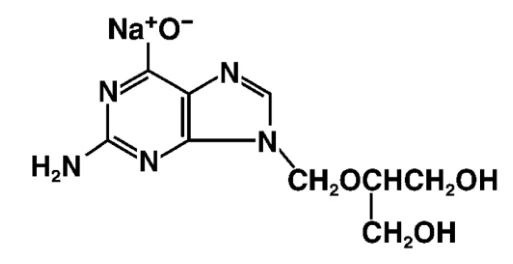
Physicochemical properties: Ganciclovir sodium is a white or almost white crystalline hygroscopic powder with solubility in water > 50 mg/mL
CLINICAL TRIALS
No data available.
DETAILED PHARMACOLOGY
Animal Pharmacodynamic Studies
Ganciclovir exhibited minimal pharmacological activity in a battery of tests for effects on the central nervous, cardiovascular, and immune systems. No consistent effect was observed when ganciclovir was co-administered with different autonomic drugs.
Human Pharmacology
Absorption: The absolute bioavailability of oral ganciclovir under fasting conditions was approximately 5% (n = 6) and following food was 6 ‒ 9% (n = 32). When ganciclovir was administered orally with food at a total daily dose of 3 g/day (500 mg q3h, 6 times daily and 1000 mg TID), the steady-state absorption as measured by area under the serum concentration vs. time curve (AUC) over 24 hours and maximum serum concentrations (Cmax) were similar following both regimens with an AUC0-24 of 15.9 ± 4.2 (mean ± SD) and 15.4 ± 4.3 mcg·hr/mL and Cmax of 1.02 ± 0.24 and 1.18 ± 0.36 mcg/mL, respectively (n = 16).
At the end of a one-hour intravenous infusion of 5 mg/kg ganciclovir, total AUC ranged between 22.1 ± 3.2 (n = 16) and 26.8 ± 6.1 mcg·hr/mL (n = 16) and Cmax ranged between 8.27 ± 1.02 (n = 16) and 9.0 ± 1.4 mcg/mL (n = 16).
Distribution: The steady-state volume of distribution of ganciclovir after intravenous administration was 0.74 ± 0.15 L/kg (n = 98). Cerebrospinal fluid concentrations obtained 0.25 and 5.67 hours post-dose in 3 patients who received 2.5 mg/kg ganciclovir intravenously q8h or q12h ranged from 0.31 to 0.68 mcg/mL representing 24 to 70% of the respective plasma concentrations. Binding to plasma proteins was only 1 ‒ 2% over ganciclovir concentrations of 0.5 and 51 mcg/mL; as such, drug interactions involving binding site displacement are not anticipated.
Metabolism: When administered intravenously, ganciclovir exhibits linear pharmacokinetics over the range of 1.6 to 5.0 mg/kg. Renal excretion of unchanged drug by glomerular filtration and active tubular secretion is the major route of elimination of ganciclovir. In patients with normal renal function, 91.3 ± 5.0% (n = 4) of intravenously administered ganciclovir was recovered unmetabolized in the urine. Systemic clearance of intravenously administered ganciclovir was 3.52 ± 0.80 mL/min/kg (n = 98) while renal clearance was
3.20 ± 0.80 mL/min/kg (n = 47), accounting for 91 ± 11% of the systemic clearance (n = 47).
Special Populations
Renal Impairment: The total body clearance of ganciclovir is linearly correlated with creatinine clearance. In patients with mild, moderate, and severe renal impairment, mean systemic clearances of 2.1, 1.0 and 0.3 mL/min/kg were observed. Patients with renal impairment show an increased elimination half-life. In patients with severe renal impairment elimination half-life was increased by 10-fold.
The pharmacokinetics following intravenous administration of ganciclovir for injection were evaluated in 10 immunocompromised patients with renal impairment who received doses ranging from 1.25 to 5 mg/kg. Decreased renal function results in decreased clearance of ganciclovir (see Error! Reference source not found.).
Table 8 Pharmacokinetics Following Intravenous Administration of Ganciclovir in Immunocompromised Patients with Renal Impairment
CrCl (mL/min) | Subjects (n) | Dose (mg/kg) | Clearance (mL/min) Mean ± SD | Half-Life (hours) Mean ± SD |
|---|---|---|---|---|
| 50 – 79 | 4 | 3.2 – 5 | 128 ± 63 | 4.6 ± 1.4 |
| 25 – 49 | 3 | 3 – 5 | 57 ± 8 | 4.4 ± 0.4 |
| < 25 | 3 | 1.25 – 5 | 30 ± 13 | 10.7 ± 5.7 |
Hemodialysis reduces plasma concentrations of ganciclovir by about 50% after intravenous administration (see SYMPTOMS AND TREATMENT OF OVERDOSAGE).
Race and Gender: The effects of race and gender were examined in pharmacokinetic studies, among 50 patients receiving an oral dose of 1000 mg every 8 hours. Although the numbers of blacks (n = 8; 16%) and hispanics (n = 10; 20%) were small, there appeared to be a trend towards a lower steady-state Cmax and AUC0-8 in these subpopulations as compared to caucasians. No definitive conclusions regarding gender differences could be made because of the small number of females (n = 6; 12%); however, no differences between males and females were observed.
Pediatrics: Ganciclovir pharmacokinetics were studied in 27 neonates, aged 2 to 49 days. At an intravenous dose of 4 mg/kg (n = 14) or 6 mg/kg (n = 13), the pharmacokinetic parameters were, respectively, Cmax of 5.5 ± 1.6 and 7.0 ± 1.6 mcg/mL, systemic clearance of 3.14 ± 1.75 and 3.56 ± 1.27 mL/min/kg, and t1/2 of 2.4 hours (harmonic mean) for both.
Ganciclovir pharmacokinetics were also studied in 10 children, aged 9 months to 12 years. The pharmacokinetic characteristics of ganciclovir were the same after single and multiple (q12h) intravenous doses (5 mg/kg). The steady state volume of distribution was 0.64 ± 2.2 L/kg, Cmax was 7.9 ± 3.9 mcg/mL, systemic clearance was 4.7 ± 2.2 mL/min/kg, and t2 was 2.4 ± 0.7 hours. The pharmacokinetics of intravenous ganciclovir in neonates and children are similar to those observed in adults.
Geriatric: Ganciclovir pharmacokinetics studies have not been conducted in adults older than 65 years of age. However, because ganciclovir is mainly renally excreted and since renal clearance decreases with age a decrease in ganciclovir total body clearance and prolongation of ganciclovir elimination half-life can be anticipated in the elderly. (See DOSAGE AND ADMINISTRATION: Renal Impairment)
VIROLOGY
Clinical Antiviral Effect of Ganciclovir
Of 314 immunocompromised patients enrolled in an open-label study of the treatment of life- or sight-threatening CMV disease with ganciclovir for injection, 121 patients were identified who had a positive culture for CMV within 7 days prior to treatment and had sequential viral cultures after treatment with ganciclovir for injection. Post-treatment virologic response was defined as conversion to culture negativity, or a greater than 100-fold decrease in CMV infectious units, as shown in the following Table 9:
Table 9 Virologic Response
| Culture Source | No. Patients Cultured | No. (%) Patients Responding | Median Days to Response |
|---|---|---|---|
| Urine | 107 | 93 (87%) | 8 |
| Blood | 41 | 34 (83%) | 8 |
| Throat | 21 | 19 (90%) | 7 |
| Semen | 6 | 6 (100%) | 15 |
The antiviral activity of ganciclovir for injection was demonstrated in two separate placebo-controlled studies for the prevention of CMV disease in transplant recipients. One hundred forty-nine heart allograft recipients who were either CMV seropositive or had received seropositive heart allografts were randomized to treatment with ganciclovir for injection (5 mg/kg BID for 14 days followed by 6 mg/kg once daily for 5 days/week for an additional 14 days) or placebo. Seventy-two CMV culture-positive allogeneic bone marrow transplant recipients were randomized to treatment with ganciclovir for injection (5 mg/kg BID for 7 days followed by 5 mg/kg once daily) or placebo until day 100 post-transplant. Ganciclovir for injection suppressed CMV shedding in heart allograft and bone marrow allograft recipients. The antiviral effect of ganciclovir for injection in these patients is summarized in the following Table 10:
Table 10 Patients with Positive CMV Cultures
| Time | Heart Allograft | Bone Marrow Allograft | ||
|---|---|---|---|---|
| Ganciclovir | Placebo | Ganciclovir | Placebo | |
| Pre-Treatment | 1/67 (2%) | 5/64 (8%) | 37/37 (100%) | 35/35 (100%) |
| Week 2 | 2/75 (3%) | 11/67 (16%) | 2/31 (6%) | 19/28 (68%) |
| Week 4 | 3/66 (5%) | 28/66 (43%) | 0/24 (0%) | 16/20 (80%) |
The antiviral activity of ganciclovir for injection was confirmed in two randomized, controlled trials for the maintenance treatment of CMV retinitis in patients with AIDS. Serial cultures of urine were obtained, and cultures of semen, biopsy specimens, blood, and other sources also were obtained when available. Only a small proportion of patients remained culture-positive during maintenance therapy with ganciclovir. The antiviral effect of ganciclovir for injection in the patients in the two studies is summarized in the following Table 11:
Table 11 Patients with Positive CMV Cultures in Two Controlled Clinical Trials
| Patients with Newly Diagnosed CMV Retinitis* | Patients with Stable, Previously Treated CMV Retinitis** | |
|---|---|---|
| Intravenous | Intravenous | |
| Start of Maintenance | 5/37 (13.5%) | 2/66 (3.0%) |
| Anytime During Maintenance | 3/48 (6.3%) | 1/45 (2.2%) |
* Study ICM1653: 3 weeks of treatment with intravenous ganciclovir before start of maintenance
** Study ICM1774: 4 weeks to 4 months treatment with intravenous ganciclovir before start of maintenance
Viral Resistance: Cell Culture: CMV isolates with reduced susceptibility to ganciclovir have been selected in cell culture. Growth of CMV strains in the presence of ganciclovir resulted in the selection of amino acid substitutions in the viral protein kinase pUL97 and the viral DNA polymerase pUL54.
In vivo: Viruses resistant to ganciclovir can arise after prolonged treatment or prophylaxis with ganciclovir by selection of substitutions in pUL97 and/or pUL54. Limited clinical data are available on the development of clinical resistance to ganciclovir and many pathways to resistance likely exist. In clinical isolates, seven canonical pUL97 substitutions, (M460V/I, H520Q, C592G, A594V, L595S, C603W) are the most frequently reported ganciclovir resistance-associated substitutions. These and other substitutions less frequently reported in the literature, or observed in clinical trials, are listed in Table 12.
Table 12 Summary of Resistance-associated Amino Acid Substitutions Observed in the CMV of Patients Failing Ganciclovir Treatment or Prophylaxis
| pUL97 | L405P, A440V, M460I/V/T/L, V466G/M, C518Y, H520Q, P521L, del 590-593, A591D/V, C592G, A594E/G/T/V/P, L595F/S/T/W, del 595, del 595-603, E596D/G/Y, K599E/M, del 600-601, del 597-600, del 601-603, C603W/R/S/Y, C607F/S/Y, I610T, A613V |
| pUL54 | E315D, N408D/K/S, F412C/L/S, D413A/E/N, L501F/I, T503I, K513E/N/R, D515E, L516W, I521T, P522A/L/S, V526L, C539G, L545S/W, Q578H/L, D588E/N, G629S, S695T, I726T/V, E756K, L773V, V781I, V787L, L802M, A809V, T813S, T821I, A834P, G841A/S, D879G, A972V, del 981-982, A987G |
Note: Many additional pathways to ganciclovir resistance likely exist
CMV resistance to ganciclovir has been observed in individuals with AIDS and CMV retinitis who have never received ganciclovir therapy. Viral resistance has also been observed in patients receiving prolonged treatment for CMV retinitis with intravenous ganciclovir. In a controlled study of oral ganciclovir for prevention of AIDS-associated CMV disease, 364 individuals had one or more cultures performed after at least 90 days of ganciclovir treatment. Of these, 113 had at least one positive culture. The last available isolate from each subject was tested for reduced sensitivity, and 2 of 40 were found to be resistant to ganciclovir. These resistant isolates were associated with subsequent treatment failure for retinitis.
The possibility of viral resistance should be considered in patients who show poor clinical response or experience continuous viral excretion during treatment.
Cross-Resistance: Cross-resistance has been reported for amino acid substitutions selected in cell culture by ganciclovir, cidofovir or foscarnet. In general, amino acid substitutions in pUL54 conferring cross-resistance to ganciclovir and cidofovir are located within the exonuclease domains and region V of the viral DNA polymerase. Whereas, amino acid substitutions conferring cross-resistance to foscarnet are diverse, but concentrate at and between regions II (codons 696-742) and III (codons 805-845). The amino acid substitutions that resulted in reduced susceptibility to ganciclovir and either cidofovir and/or foscarnet are summarized in Table 13.
Table 13 Summary of pUL54 Amino Acid Substitutions with Cross-Resistance between Ganciclovir, Cidofovir, and/or Foscarnet
| Cross-resistant to cidofovir | D301N, N408D/K, N410K, F412C/L/S/V, D413E/N, P488R, L501I, T503I, K513E/N, L516R/W, I521T, P522S/A, V526L, C539G/R, L545S/W, Q578H, D588N, I726T/V, E756K, L773V, V812L, T813S, A834P, G841A, del 981- 982, A987G |
Cross-resistant to foscarnet | F412C, Q578H/L, D588N, V715A/M, E756K, L773V, V781I, V787L, L802M, A809V, V812L, T813S, T821I, A834P, G841A/S, del 981-982 |
In Vitro Studies
Ganciclovir is an inhibitor of viral replication in vitro (see Error! Reference source not found.). The relationship between in vitro sensitivity of CMV to antiviral drugs and clinical response has not been established.
Table 14 In Vitro Activity of Ganciclovir
| Virus | IC50 (mcM)* |
|---|---|
| Herpes simplex virus (HSV) | 2.4a |
| Human cytomegalovirus (HCMV) | 0.4 – 11.0 |
| Varicella Zoster virus (VZV) | 32.0 |
| Epstein-Barr virus (EBV) | 1.0 |
| Murine cytomegalovirus (MCMV) | 15.0 |
| Guinea pig cytomegalovirus (GPCMV) | 70.0 |
| * mcM = 10-6M | |
| a Plaque Reduction Assay |
The antiviral activity of ganciclovir against a number of strains of human CMV, in cell culture, is shown in Table 15.
Table 15 In Vitro Antiviral Activity of Ganciclovir Against Human CMV Strains
| Human CMV Strain | Cell Culture | IC50 (mcM)a ganciclovir |
|---|---|---|
| Human CMV Strain | Cell Culture | IC50 (mcM)a ganciclovir |
| AD 169 | MRC-5 | 7 |
| AD 169 | MRC-5 | 1.5 – 6.2 |
| Towne | MRC-5 | 0.4 – 6.2 |
| Towne | WI-38 | 1.0 |
| Major | WI-38 | 4.8 |
| BT 1943 | WI-38 | 1.1 |
| AD 169 | HET | 7 |
| Davis | MRC-5 | 7 |
| Davis | HET | 5 |
| Towne | MRC-5 | 2.0 |
| Davis | MRC-5 | 3.1 |
| AD 16 | MRC-5 | 3.1 |
| Eisenhardt-CID9 | HEL | 2.0 |
| AIDS-O.L. | HEL | 0.8 |
| AIDS-O.C. | HEL | 5.5 |
| CHMC-CID | HEL | 5.9 |
| CMV mononucleosis patients | HEL | 1.0 – 11.0 |
| Renal transplant patients | HEL | 0.5 – 9.5 |
| Male homosexual subjects | HEL | 1.0 – 5.0 |
| a IC50: Median inhibitory dose | ||
| (mcM) | ||
The IC50 of ganciclovir for a variety of cultured mammalian cells is shown in 16.
Table 16 Effects of Ganciclovir on Host Cell Proliferation
| Cell Type | Ganciclovir IC50 (FM S.D.) |
|---|---|
| Human Bone Marrow Colony-forming Cells | 39 ± 73 |
| Human Embryonic Lung (MRC-5) | 110 ± 50 |
| Human Embryonic Tonsil (HET) | 250 ± 80 |
| Squirrel Monkey Lung (SML) | 1500 ± 95 |
| Guinea Pig Embryo (GPE) | 2900 ± 844 |
| Mouse Embryo Fibroblast (MEF) | 210 ± 80 |
| a Results eliminate one marrow resistant to ganciclovir |
In Vivo Studies
In three animal models of CMV infection ganciclovir has shown in vivo activity. These models are acute MCMV infection, MCMV lung infection and interstitial pneumonia, and acute GPCMV.
As shown in Table 17, various doses of ganciclovir were tested for efficacy against mice infected with CMV. A statistically significant increase in numbers of survivors were observed at doses of 10 mg/kg or more. A dose of 25 mg/kg of acyclovir was required to induce a statistically significant effect in the number of surviving mice.
Table 17 Effects of Ganciclovir on MCMV (Smith Strain) Induced Mortality when Treatment was Started 6 Hours After Infection
| Drug (mg/kg)a | Survivors/Total | Mean Survival Time (days)b |
|---|---|---|
| Drug (mg/kg)a | Survivors/Total | Mean Survival Time (days)b |
| Saline | 2/20 (10)c | 4.4 ± 0.78d |
| Ganciclovir | ||
| 1 | 2/20 (10) | 6.2 ± 1.8f |
| 5 | 2/20 (10) | 6.3 ± 1.4f |
| 10 | 8/20 (40)e | 7.7 ± 1.8f |
| 25 | 15/20 (75)e | 6.4 ± 0.55f |
| 50 | 19/20 (95)e | 7.0 ± 0.0f |
| a Half-daily doses were administered s.c. at 9am and 3pm for 5 days | ||
| b Of the mice that died | ||
| c Percent survival | ||
| d Standard deviation | ||
| e Statistically significant (p < 0.05) by Fisher exact test | ||
| f Statistically significant (p < 0.05) by Mann-Whitney U-test | ||
In another experiment, treatment began either 6, 24, 48, 72 or 96 hours after the infection. A statistically significant increase in the number of survivors was observed when ganciclovir therapy was started 48 hours or less after inoculation (Table 18).
Table 18 Effects of 50 mg/kg Ganciclovir on MCMV (Smith Strain) Induced Mortality When Treatment Was Started 6, 24, 48, 72 or 96 Hours After Infection
| Drug (hours after infection)a | Survivors/Total | Mean Survival Time (days)b |
|---|---|---|
| Saline | 2/19 (11)c | 5.2 ± 1.2d |
| Ganciclovir | ||
| 6 | 18/20 (90)e | 6.5 ± 0.71 |
| 24 | 15/19 (79)e | 10.7 ± 3.8 |
| 48 | 9/19 (47)e | 8.0 ± 2.5 |
| 72 | 6/20 (30) | 6.1 ± 1.6 |
| 96 | 1/20 (5) | 4.8 ± 0.71 |
| a Half-daily doses were administered s.c. at 9am and 3pm for 5 days | ||
| b Of the mice that died | ||
| c Percent survival | ||
| d Standard deviation | ||
| e Statistically significant (p < 0.05) by Fisher exact test | ||
| f Statistically significant (p < 0.05) by Mann-Whitney U-test | ||
Doses of ganciclovir ranging from approximately 40 - 300 mg/kg (ad libitum in drinking water starting 24 hours post-infection) reduced salivary titers of MCMV by 84 - 99 percent and lung titers by 97 - 99 percent. Ganciclovir treatment of diffuse interstitial pneumonitis also reduced the replication of MCMV in both lung and salivary glands but did not block pneumonitis development.
Guinea pig CMV is very insensitive to ganciclovir (Table 12), nevertheless, ganciclovir (25 mg/kg intraperitoneally, BID for 7 days) reduces GPCMV titers in the salivary glands.
Histopathology showed that the lesions in the kidney and salivary gland from ganciclovir treated animals were significantly less severe than controls.
TOXICOLOGY
Table 12 to Table 23 summarize the toxicological studies conducted with ganciclovir.
The most sensitive target organ for the primary toxic effects of ganciclovir was the testis. Other systems affected by ganciclovir treatment, but less sensitive than the male reproductive system, were the hematopoietic, integumentary, female reproductive, gastrointestinal, and urinary systems and the developing embryo/fetus. Except for the effects on the male reproductive system, and for some effects on the hematopoietic system and the skin, the changes induced by the administration of the drug occurred at dosages greater than the proposed clinical dose. The adverse effects due to ganciclovir treatment were generally reversible on withdrawal of drug treatment unless the doses used were exceptionally high and except for certain effects on the developing embryo/fetus.
Table 19 Acute Toxicology
Species Strain Sex (N) Age | Route Procedure Volume | Pretest Conditioning | Dose (mg/kg) | Mortality | LD50 | Signs of Toxicity | |
|---|---|---|---|---|---|---|---|
| Study Day | Animals (N) | ||||||
Mouse Swiss-Webster Male (12) Female (12) 8 - 12 weeks | Oral Stomach tube 0.2 mL/10 g body weight | 1 mo. acclim. period; 3 hr. fast prior to dosing | 900 2000 | - - | 0 0 | LD50 > 2000 mg/kg | Clinical condition normal except for occasional inactivity and/or rough coat. No treatment related effects for body weight intakes. |
Mouse Swiss-Webster Male (18) Female (18) 8 - 12 weeks | Intravenous tail-vein inject. 0.2 mL/10 g body weight | 1 mo. accilm. period | 0 900 2000 | - 1** 6 7 8 1** 4 8 | 0 1M, 1F 1F 1M, 1F 1M, 1F 3M 1M, 5F 1F | Estimated LD50 900 mg/kg | Rough coat recorded for vehicle-treated mice. Drug related effects: pallor, unthriftiness, hypothermia, inactivity, labored/increased respiration, necrosis and ulceration at injection site. Decreased body weight and food intakes observed during week 1 postdosing. |
Dog Beagle Male (1) Female (1) 9 - 16 months | Oral Stomach tube 10 mL/kg body weight | 5 - 10 mo. acclim. period; overnight fast prior to dosing | 1000 | - | 0 | LD50 > 1000 mg/kg | No treatment-related changes observed in body weight, gross pathology, hematology or clinical chemistry. |
Dog Beagle Male (1) Female (1) 18 - 29 months | Intravenous cephalic vein injection 5 mL/kg | 13 - 22 mo acclim. period | 500 | 5 7 | 1M 1F | Estimated LD50 < 500 mg/kg | Anorexia, diarrhea, hypothermia, vomiting, collapse, salivation, unthriftiness. Body weight loss of 15 ‒ 20% Sanguinous changes in stomach and intestines. Male: leukopenia; increased BUN, GOT, GPT |
Dog Beagle Male (1) Female (1) 10 Months | Intravenous Cephalic vein injection 1.5 mL/kg | 6 mo. acclim period | 150 | - | 0 | Estimated > 150 mg/kg | No treatment-related effects on clinical condition or body weight. Male (day after dosing): slight increase in RBC count, hemoglobin hematocrit, total protein and albumin. |
| * M = MALE; F = FEMALE | |||||||
| ** Deaths for all animals occurred during or within 1 minute of dosing and were therefore not considered drug-related. | |||||||
Table 20 Multidose Toxicity Studies
Species Strain Duration of Dosing | Route Dose (mg/kg/day) | Mortality | Hematology | Clinical Chemistry | Organ Weights | Pathology | Comments | |
|---|---|---|---|---|---|---|---|---|
Mouse Swiss-Webster 3 months | Gavage (Only male dosed) | |||||||
| 0 | 1/45 | - | - | - | - | - | ||
| 10 | 1/45 | NDE | NDE | Testes decreased | Testicular atrophy & hypospermatogenesis, with complete recovery by 130 days postdosing. | Decreased fertility & increased abnormal sperm morphology, with recovery between 30 ‒ 130 days postdosing. No dominant lethal effect. | ||
| 100 | 0/45 | NDE | NDE | Testes decreased | Testicular atrophy & aspermia | Infertility & increased abnormal sperm morphology. | ||
| 1000 | 4/45 | NDE | NDE. No treatment-related changes in plasma FSH, LH, or testosterone | Testes decreased | Testicular atrophy & aspermia | Infertility & increased abnormal sperm morphology. Decreased food intake & body weight. | ||
Mouse Swiss-Webster 3 months | Gavage (only females dosed) | |||||||
| 0 | 1/85 | - | - | - | - | - | ||
| 100 | 0/85 | NDE | NDE | NDE | NDE | NDE | ||
| 300 | 1/85 | NDE | NDE | NDE | NDE | NDE | ||
| 1000 | 2/85 | NDE | NDE. No treatment-related changes in plasma FSH and LH | NDE | NDE | NDE | ||
NDE = no drug-related effect ND = not done | ||||||||
Table 20 (cont’d)
Species Strain Duration of Dosing | Route Dose (mg/kg/day) | Mortality | Signs of Toxicity | Hematology | Clinical Chemistry | Organ Weights | Pathology |
|---|---|---|---|---|---|---|---|
Species Strain Duration of Dosing | Route Dose (mg/kg/day) | Mortality | Signs of Toxicity | Hematology | Clinical Chemistry | Organ Weights | Pathology |
Species Strain Duration of Dosing | Route Dose (mg/kg/day) | Mortality | Signs of Toxicity | Hematology | Clinical Chemistry | Organ Weights | Pathology |
Species Strain Duration of Dosing | Route Dose (mg/kg/day) | Mortality | Signs of Toxicity | Hematology | Clinical Chemistry | Organ Weights | Pathology |
Mouse Swiss-Webster 1 month | Intravenous (males & females dosed) | ||||||
| 0 | 0/25(M) 0/25 (F) | - | - | - | - | - | |
| 15 | 0/25 (M) 0/25 (F) | NDE | NDE | NDE | Testes decreased Spleen increased (females) | Aspermia and reproductive organ atrophy (males). Partial recovery at 1 month postdosing. | |
| 45 | 5/25 (M) 3/25 (F) | Hypothermia, inactivity, pallor, rough coat, wasting, unthriftiness. Recovery 1 week post-dosing. | NDE | NDE | Testes decreased Spleen increased | Aspermia and reproductive organ atrophy (males). Renal cortical damage. Atrophy of skin adnexal tissue. Little evidence of recovery at 1 month postdosing. | |
| 135 | 8/25 (M) 7/25 (F) | Decreased body weight during first &/or second week of treatment. Hypothermia inactivity, pallor, rough coat, wasting, unthriftiness. Recovery 1 week postdosing. | Decreased erythrocyte count, hemoglobin & haematocrit. Abnormal erythrocyte morphology in some mice. Complete recovery at 1 month postdosing. | Increased GOT, GPT, & BUN in females. Complete recovery at 1 month postdosing. | Males: testes, prostate gland & seminal vesicles decreased; spleen increased. Females: uterus decreased; spleen liver and kidney increased. | Aspermia. Reproductive organ atrophy (males & females). Inhibition of ovarian cycling. Renal cortical damage. Atrophy of skin adnexal tissue. Little evidence of recovery at 1 month postdosing. | |
Rat Sprague-Dawley 3 months | Oral (in feed) (males and females dosed) | ||||||
| 0 | 0/6 (M) 0/6 (F) | - | - | - | - | - | |
| 100 | 0/6 (M) | NDE | NDE | NDE | Testes | Testicular atrophy and | |
| 0/6 (F) | decreased | aspermatogenic tubules. | |||||
| 500 | 0/6 (M) 0/6 (F) | NDE | NDE | NDE | Testes decreased | Testicular atrophy and aspermatogenic tubules. | |
| 1400 | 0/6 (M) 0/6 (F) | NDE | NDE | NDE | Testes decreased | Testicular atrophy and aspermatogenic tubules. | |
| 5000 | 1/6 (M) 0/6 (F) | 8-12% decrease in body weight gain | NDE | NDE | Testes decreased | Testicular atrophy and aspermatogenic tubules. | |
Dog Beagle 1 month | Intravenous | ||||||
| 0 | 0/3 (M) 0/2 (F) | - | - | - | - | - | |
| 0.4 | 0/3 (M) | NDE | NDE | NDE | Testicular atrophy and hypospermatogenesis after a one month recovery. | ||
| 1.2 | 0/3 (M) 0/2 (F) | NDE | NDE | NDE | Testicular atrophy and hypospermatogenesis after a one month recovery. | ||
| 3.6 | 0/3 (M) 0/2 (F) | NDE | NDE | NDE | Testicular atrophy and hypospermatogenesis. Recovery expected based on presence of spermatogonia and primary spermatocytes one month postdosing. | ||
Dog Beagle 3 months | Oral tube (stomach) | ||||||
| Males | 0/6 | - | - | - | - | - | |
0 0.2 | 0/6 | NDE | NDE | NDE | NDE | Minimal-to-slight testicular atrophy and hypospermatogenesis. Sebaceous gland atrophy. Complete recovery from all lesions by 65 days postdosing | |
| 2.0 | 0/6 | Decr. body weight & testes vol. | NDE | NDE | Testes dec. | Testicular atrophy & aspermia. Decr. epididymal sperm. Sebaceous gland atrophy. Complete recovery from all lesions by 4 mths postdosing. | |
| 20.0 | 0/6 | Decr. body wgt. and | Decr. hemoglobin | No treatment | Testes dec. | Testicular atrophy & aspermia. Decr. | |
| testes vol. lacrimation | & hematocrit. Decr. erythrocyte, leukocyte & platelet counts. | related changes in FSH, LH or testosterone | epididymal sperm. Bone marrow hypocellularity. Sebaceous gland & hair follicle atrophy. Complete recovery from all lesions by 4 months postdosing. | ||||
| Females | 0/6 | - | - | - | - | - | |
| 0 | 0/6 | NDE | NDE | NDE | NDE | NDE | |
2.0 6.0 | 0/6 | Decr. body weight Lacrimination | Decr. leukocyte and platelet counts. | NDE | NDE | Bone marrow hypocellularity. Sebaceous gland atrophy. Complete recovery from all lesions by 65 days postdosing. | |
| 20.0 | 1/6 | Decr. body weight Lacrimination | Decr. hemoglobin & hematocrit. Decr. erythrocyte, leukocyte & platelet counts. | No treatment related changes in FSH, LH or testosterone. | NDE | Bone marrow hypocellularity. Sebaceous gland and hair follicle atrophy. Complete recovery from all lesions by 4 months postdosing | |
Dog Beagle 1 month | intravenous 0 | 0/3 (M) 0/3 (F) | - | - | - | - | - |
| 10 | 0/3 (M) 0/3 (F) | Clear ocular discharge | Leukocyte count slightly decreased | NDE | Testes decr. | Decr. bone marrow cellularity. Atrophic testes. Sebaceous gland atrophy. | |
| 30 | 0/3 (M) 1/3 (F) | Clear ocular discharge in all dogs. Decr. body wgt, anorexia emesis hypothermia & bloody diarrhea in female that died. | Decr. leukocytes, platelets, and/or reticulocytes in all dogs partial recovery at 2 wks postdosing. Decr. erythrocytes, hemoglobin & hematocrit in female that died. | Effects similar to high-dose dogs were seen in female that died. | Testes decr. | Decr. bone marrow cellularity. Partial recovery at 2 wks. postdosing. Atrophic testes. Epidermal, sebaceous and hair follicle atrophy. | |
| 90 | 3/3 (M) 3/3 (F) | Decr. body weight anorexia emesis, hypothermia bloody diarrhea dehydration and clear ocular | Decr. leukocytes, reticulocytes & platelets. Incr. erythrocytes hemoglobin and hematocrit. | Decr. Na & Cl. Incr. BUN creatinine alkaline Phosphatase, phosphorous, | Testes normal dogs died too early to show effects. | Decr. bone marrow cellularity. Severe gastrointestinal degeneration & atrophy. Renal tubular dilation. Epidermal sebaceous and hair follicle atrophy. Thymic involution. Ovarian suppression and lymphoid | |
| discharge in all dogs. | cholesterol & triglycerides. | atrophy, possibly secondary to stress of systemic illness. | |||||
| NDE = no drug-related effect; Observations apply to both male and females, unless specified otherwise. | |||||||
Table 21 Reproduction Studies
Species Strain & Sex/Group | Dose Route Breeding/ Sacrifice Schedule | Results/Conclusions |
|---|---|---|
| Fertility And Reproduction | ||
Mouse Swiss-Webster Males: 20/group, dosed for 60 days before mating plus 9 days during mating. Females: 38 - 40/group, undosed | 0, 0.4, 2.0, and 10.0 mg/kg/day intravenous breeding postdosing. 2 months and 6 months. Necropsy (males): 2 months and 7 months. | Decreased fertility in mid- and high-dose males at the end of treatment, associated with atrophy and decreased sperm in testes and epididymis. Mid-dose fertility completely recovered after 2 months, high-dose fertility minimally recovered after 6 months. No treatment-related effects on mating behavior, litter size and survival indices. No dominant lethal effects. |
Mouse Swiss-Webster Males: Undosed Females: 40/group, dosed from 14 days before mating through weaning. | 0, 5, 20 and 90 mg/kg/day intravenous breeding after 14 days dosing (females allowed to litter) and at 2 months postdosing. Necropsy (females): at both mating periods. | Decreased receptivity to mating, decreased pregnancy rate and increased resorption rate in high-dose females at first mating period; offspring showed hypoplastic testes and seminal vesicles, and increased incidence of epithelial hyperplasia and hyperkeratosis of the non-glandular stomach. Complete recovery at 2 months from treatment related changes in mating, fertility and embryolethality. Offspring of low and mid-dose females showed no treatment-related changes, and had normal mating behavior, fertility, and offspring viability for second-generation mating cycle. |
| Teratology | ||
Mouse Swiss-Webster Females: 25/group dosed days 7 - 16 gestation | 0, 12, 36 and 108 mg/kg/day Necropsy day 18 gestation | Decreased body weight gain in high-dose dams, associated with increased resorptions, decreased live-litter size and decreased livefetus weights. Growth retardation in high-dose fetuses, but no treatment-related teratologic changes noted after external, skeletal and visceral examination. |
Rabbit Dutch-Belted Females: 21/group dosed days 7 - 19 gestation | 0, 6, 20 and 60 mg/kg/day Necropsy day 29 gestation | High-dose dams showed clinical signs of toxicosis, decreased body weights and resorption of 12/14 litters. Decreased fetal weight and fetal growth retardation in both mid- and high-dose groups. Fetal malformations observed in two mid-dose and two high-dose dams, including cleft palate, hydrocephaly and microphthalmia; teratogenic effects did not appear to be secondary to maternal toxicity. |
Table 22 Mutagenicity Studies
| Study Type | Dose | Effects | Conclusion |
|---|---|---|---|
| Ames plate test with Salmonella and mitotic gene conversion assay with Saccharomyces (both assays with and without activation) | 1, 10, 100, 500, 1000, 2500, 5000 and 10 000 mcg/plate | Not toxic to bacterial strain TA-100 or yeast strain D at 10 000 mcg/plate; cytotoxicity not evaluated in four other bacterial strains used. Results of both tests conducted in the presence or absence of activation were negative. | DHPG did not demonstrate mutagenic activity in any assays conducted in this evaluation and was considered not mutagenic under these test conditions. |
Ames suspension test with Salmonella (with and without activation) | 500, 1000, 1250, 2500, and 5000 mcg/mL | Not toxic to bacterial strain TA-100 - cytoxicity not evaluated in four other bacterial strains used. Results of both tests conducted in the presence or absence of activation were negative. | DHPG did not demonstrate mutagenic activity in any assays conducted in this evaluation and was considered not mutagenic under these test conditions. |
| Sister chromatid exchange assay with human lymphocytes (with activation only) | 0.250, 0.500, 0.750, 1.0, 1.5 & 2.0 mg/mL | Delayed cell growth at concentrations of 1.0 mg/mL and greater. Results of tests conducted in the presence of activation were positive, at all doses tested. | DHPG was positive at all dose levels in human lymphoblasts under the conditions of this test. |
| Mouse lymphoma forward mutation assay in L5178Y cells, with and without activation | 50, 100, 400, 500, 600, & 800 mcg/mL without activation; 100, 400, 800, & 1000 mcg/mL with activation | Moderate to very high toxicity induced by range of doses used. Results of all tests conducted under conditions of moderate toxicity were positive, with or without activation. | DHPG was positive over a wide range of dose levels under the conditions of this test. |
| Cell transformation assay in BALB/c-3T3 cells, without activation | 1.88, 7.5, 15, 25 and 40 mcg/mL | Complete lethality at concentrations of 62.5 mcg/mL and greater. Cell survival 12.8% at 31.3 mcg/mL, near control levels at concentrations of 3.91 mcg/mL and less. Transformation responses to doses tested not significantly elevated relative to spontaneous transformant frequencies; no evidence of dose-related increase in transforming activity. | DHPG was considered inactive in this assay at the concentrations tested. |
| Mouse micronucleus assay in CD-1(1CR) male and female mice | 50, 150, and 500 mg/kg body weight, intravenous | Bone marrow cytotoxicity observed at high dose. Positive dose response trends seen in both sexes at mid and high doses, with max. | DHPG was considered negative in this assay at 50 mg/kg and positive at 150 and 500 mg/kg. |
Table 23 Other Toxicity Studies
| Protocol | Species Strain | Route Dose | No./Sex Per Group | Study Duration | Results |
|---|---|---|---|---|---|
Single-Dose Gonadotoxicity | Mouse Swiss- Webster | Intravenous 0, 2, 10, 30, 100 & 300 mg/kg | Males: 15/dose group Females: 15/dose group (30,100 & 300 mg/kg only) | Single dose with necropsy at 2 wks., 1 mo. and 3 mos. postdosing | Testicular atrophy & hypospermatogenesis in males at 2 wks. and 1 mo. postdosing after 30, 100 or 300 mg/kg; complete or partial recovery at 3 mos. No treatment-related changes seen in females. |
Single-Dose Gonadotoxicity | Dog Beagle | Intravenous 0, 1, 6, 30 & 150 mg/kg | Males: 2/dose group | Single dose with hemicastration at 1 mo. followed by necropsy at 2 mos, or hemicastration at 2 mos. Followed by necropsy at 4 mos. (1 dog each per dose group) | Hypospermatogenesis at 1 & 2 mos. post-treatment after 30 or 150 mg/kg; complete recovery at 4 mos. No treatment-related changes in clinical condition, body weight, FSH, LH or testosterone. |
| Vein Irritation | Rabbit New Zealand | Intravenous 45 mg/ml solution | Females: 2/dose group | Single dose with necropsy at 10, 30 & 240 minutes postdosing. | No gross or microscopic pathological changes were observed in the treated ear veins. |
REFERENCES
- 1. Alcorn J, and McNamara PJ, Acyclovir, Ganciclovir, and Zidovudine Transfer into Rat Milk. Antimicrobial Agents and Chemotherapy 2002; 46(6):1831–1836.
- 2. Buhles WC, Mastre B, Tinker AJ, Strand V, Koretz S.H and Syntex Collaborative Ganciclovir Treatment Study Group. Ganciclovir treatment of life-or sight-threatening cytomegalovirus infection: Experience in 314 immunocompromised patients. Rev Infect Dis 1988;10(Suppl 3):495-506.
- 3. Canadian Society of Hospital Pharmacists. Guidelines for the Handling and Disposal of Hazardous Pharmaceuticals (Including Cytotoxic Drugs). CSPH, Toronto. January 1991.
- 4. Collaborative DHPG Treatment Study Group. Treatment of serious cytomegalo-virus infections with 9-(1,3-dihydroxy-2-propoxymethyl)guanine in patients with AIDS and other immunodeficiencies. N Engl J Med 1986;314: 801-5.
- 5. Erice A, Chou S, Biron KK, Stanat SC, Balfour HH and Jordan MC. Progressive disease due to ganciclovir-resistant cytomegalovirus in immunocompromised patients. N Engl J Med 1989;320(5):289-93.
- 6. Fletcher CV and Balfour HH. Evaluation of ganciclovir for cytomegalovirus disease. DICP Ann Pharmacother 1989;23:5-11.
- 7. Fletcher CV, Sawchuk R, Chinnock B, de Miranda P and Balfour HH. Human pharmacokinetics of the antiviral drug DHPG. Clin Pharmacol Ther 1986;40: 281-286.
- 8. Fong CKY, Cohen SD, McCormick S and Hsiung GD. Antiviral effect of 9-(1,3,dihydroxy-2-propoxymethyl) guanine against cytomegalovirus infection in a guinea pig model. Elsevier Science Publishers BV. (Biochemical Division). 1987;11-23.
- 9. Freedman PG, Weiner BC and Balthazar E. Cytomegalovirus esophagogastritis in a patient with acquired immuno-deficiency syndrome. Am J Gastro 1985; 80: 434-7.
- 10. Freitas VR, Smee, DF, Chernow M, Boehme R and Matthews TR. Activity of 9-(1,3- dihydroxy-2-propoxymethyl) guanine: compared with that of acyclovir against human, monkey and rodent cytomegaloviruses. Antimicrob Agents Chemo 1985;28:240-5.
- 11. Gertler SL, Pressman J, Price P, Brozinsky S and Miyai K. Gastrointestinal cytomegalovirus infection in a homosexual man with severe acquired immunodeficiency syndrome. Gastroenterology 1983;85:1403-6.
- 12. Goodrich JM, Mori M, Gleaves CA, Du Mond C, Cays M, Ebeling DF, Buhles WC, DeArmond B and Meyers JD. Early treatment with ganciclovir to prevent cytomegalovirus disease after allogeneic bone marrow transplantation. N Engl J Med 1991;325:1601-07.
- 13. Hardy WD. Combined ganciclovir and recombinant human granulocyte-macrophage colony-stimulating factor in the treatment of cytomegalovirus retinits in AIDS patients. J Acquir Immune Defic Syndr 1991;4:S22-S28.
- 14. Hawley DA, Schaefer JF, Schulz DM and Muller J. Cytomegalovirus encephalitis in acquired immunodeficiency syndrome. Am J Clin Pathol 1983;80: 874-7.
- 15. Hochster H, Dieterich D, Bozzette S, Reichman RC, Connor JD, Liebes L, Sonke RL, Spector SA, Valentine F, Pettinelli C, Richman DD. Toxicity of combined ganciclovir and zidovudine for cytomegalovirus disease associated with AIDS. Ann Int Med 1990;113:111-7.
- 16. Jabs DA, Enger C, Bartlett JG. Cytomegalovirus retinitis and acquired immunodeficiency syndrome. Arch Ophthalmol 1989;107:75-80.
- 17. Jacobson MA, O'Donnell JJ, Brodie HR, Wofsy C, and Mills J. Randomized prospective trial of ganciclovir maintenance therapy for cytomegalovirus retinitis. Journal of Medical Virology 1988;25:339-49.
- 18. Jacobson MA, Stanley HD, Heartd SE Ganciclovir with recombinant methionyl human granulocyte-stimulating factor in the treatment of cytomegalovirus disease in AIDS patients. AIDS 1992;6:515-7.
- 19. Hochster H, Dietrich D, et al. Toxicity of Combined Ganciclovir and Zidovudine. Annals of Internal Medicine. 1990;113:111-117.
- 20. Khadem M, Kalish SB, Goldsmith J, Fetkenhour C, O'Grady RB, Phair JP, Chrobak M. Ophthalmologic findings in acquired immune deficiency syndrome (AIDS). Arch Ophthalmol 1984;102:201-6.
- 21. Koretz SH, Buhles WC, Brewin A, Roe RL and Collaborative DHPG Treatment Study Group. Treatment of serious cytomegalovirus infections with 9-(1,3-dihydroxy-2- propoxymethyl) guanine in patients with AIDS and other immunodeficiences. N Engl J Med 1986;314:801-5.
- 22. Laurence J. CMV infections in AIDS patients. Infect in Med 1986;262-5.
- 23. Manuel O. Venetz J-P, et al. Efficacy and safety of universal valganciclovir prophylaxis combined with a tacrolimus/mycophenolate-based regimen in kidney transplantation. SWISS MED Weekly 2007; 137: 669 – 676.
- 24. Merigan TC, Renlund DG, Keay S, Bristow MR, Starnes V, O'Connell JB, Resta S, Dunn D, Gamberg P, Ratkovec RM, Richenbacher WE, Millar, RC, DuMond C, DeAmond B, Sullivan V, Cheney T, Buhles W and Stinson EB. A controlled trial of ganciclovir to prevent cytomegalovirus disease after heart transplantation. N Engl J Med 1992;326:1182-6.
- 25. Morris DJ, Adverse Effects and Drug Interactions of Clinical Importance with Antiviral Drugs. Drug Safety 1994: 10 (4): 281-291.
- 26. Rozenbaum W, Gharakhanian S, Zazoun L, Vaseghi M, De Sahb R, Thomson M. Efficacy and toxicity of ganciclovir maintenance treatment in AIDS-related CMV retinitis. 5th International Conference on AIDS, Montreal 1989.
- 27. Schmidt GM, Horak DA, Niland JC, Duncan SR, Forman SJ, Zaia JA and City of Hope- Stanford-Syntex CMV Study Group. A randomized, controlled trial of prophylactic ganciclovir for cytomegalovirus pulmonary infection in recipients of allogeneic bone marrow transplants. N Engl J Med 1991;324:1005-11.
- 28. Shanley JD, Morningstar J and Jordan MC. Inhibition of murine cytomegalovirus lung infection and intestitial pneumonitis by acyclovir and 9-(1,3-dihydroxy-2-propoxymethyl) guanine. Antimicrob Agent Chomether 1985;28(2):172-5.
- 29. Smee DF, Boehme R, Chernow M, Binko BP and Matthews TR Intracellular metabolism and enzymatic phosphorylation of 9-(1,3-dihydroxy-2-propoxymethyl) guanine and acyclovir in herpes simplex virus-infected and uninfected cells. Biochem Pharmacol 1985;34:1049-56.
- 30. Spector SA, Busch DF, Follansbee S et al. Pharmacokineticv, safety, and antiviral profiles of oral ganciclovir in persons infected with human immunodeficiency virus: a phase I/II study. J Infect Dis 1995;171:1431-7.
- 31. Taburet A-M, and Singlas E, Drug Interactions with Antiviral Drugs. Clinical Pharmacokinetics 1996 May; 30 (5), 385-401.
- 32. The Oral Ganciclovir European and Australian Cooperative Study Group: Intravenous versus oral ganciclovir: European/Australian comparative study of efficacy and safety in the prevention of cytomegalovirus retinitis recurrence in patients with AIDS. AIDS 1995;9:471-7.
- 33. Wilson EJ, Medearis DN, Hansen LA and Rubin RH. 9-(1-3-Dihydroxy-2-Propoxymethyl) guanine prevents death but not immunity in murine cytomegalovirus-infected normal and immunosuppressed BALB/c mice. Antimicrob Agent Chemother 1987;31:1017-20.
- 34. Zeuzem S. Quantification of the initial decline of serum hepatitis C virus RNA and response to interferon alfa. Hepatology 1998;27:1149-56.
- 35. CYTOVENE® (ganciclovir for injection, 500 mg/vial), Control Number 217911, Product Monograph, CHEPLAPHARM Arzneimittel GmbH. July 20, 2018