


Product Monograph - Addnutriv
1 INDICATIONS
Addnutriv™, Trace Elements for Injection, is indicated as part of intravenous solutions for parenteral nutrition to meet basal to moderately increased requirements of the trace elements chromium, copper, iodide, iron, fluoride, manganese, molybdenum, selenium, and zinc in adults. It prevents depletion of endogenous stores of these elements and development of subsequent deficiency symptoms.
1.1 Pediatrics
Pediatrics:
No data are available to Health Canada; therefore, Health Canada has not authorized an indication for pediatric use.
1.2 Geriatrics
Geriatrics (> 65 years of age): Evidence from clinical studies and experience suggests that
Addnutriv can be used in geriatric population, see Warning section.
2 CONTRAINDICATIONS
Addnutriv, Trace Elements for Injection, is contraindicated in patients who are hypersensitive to this product or to any ingredient in the formulation, including any non-medicinal ingredient, or component of the container. For a complete listing, see Dosage Forms, Strengths, Composition and Packaging.
Addnutriv is also contraindicated in:
- Conditions with total biliary obstruction.
- Wilson’s disease, hemochromatosis.
3 DOSAGE AND ADMINISTRATION
3.1 Dosing Considerations
- In patients with renal or hepatic impairment or mild cholestasis, the dose should be adapted.
- In general, longer infusion periods are desirable, as this may minimize renal losses. The typical infusion time for parenteral nutrition is 8 hours.
3.2 Recommended Dose and Dosage Adjustment
Adults: The recommended daily dosage of Addnutriv, in adult patients with basal to moderately increased requirements, is 10 mL (one ampoule).
Pediatrics: Health Canada has not authorized an indication for pediatric use.
3.3 Administration
Addnutriv must not be given undiluted. Addnutriv should be diluted in a parenteral nutrition solution / emulsion before given as an intravenous infusion.
3.4 Reconstitution and Mixing Guidelines
Aseptic addition of Addnutriv, Trace Elements for Injection, to the amino acid or dextrose component of a parenteral nutrition solution under a laminar flow hood conditions is recommended. Addnutriv may only be added to medications and parenteral nutrition solutions for which compatibility has been shown.
Addnutriv is used as an additive to parenteral nutrition admixtures in compounded bags where data are available. Compatibility data are available for the addition of 10 mL Addnutriv to parenteral nutrition products (i.e. SmofKabiven®, Intralipid® 20% and SMOFlipid®), dextrose and electrolytes in prescribed concentrations.
Mixing Guidelines
Admixtures should be prepared in bags suitable for parenteral nutrition compounding according to a defined mixing sequence.
Addnutriv should never be added directly to a lipid emulsion because of the destabilizing effects of trace elements. When adding Addnutriv to SmofKabiven®, a three-chamber bag, it is recommended that the macronutrients from each chamber (amino acid solution, dextrose solution and lipid emulsion) are mixed first (bag activation), before adding Addnutriv and any other additives. Any other additions to the bag should be evaluated by a pharmacist for compatibility. Questions about compatibility may be directed to Fresenius Kabi Canada.
When compounding admixtures, from individual macronutrients and micronutrients, in empty suitable bags, the admixing sequence below may be followed:
- 1. Add Addnutriv and electrolytes (except phosphate solution) to the amino acid solution, mixing well between additions
- 2. Add phosphate to the dextrose solution
- 3. Add the above two solutions to the bag and mix well
- 4. Add vitamins to the lipid emulsion (SMOFlipid 20% or Intralipid 20%)
- 5. Add the mixture to the bag and mix well
4 OVERDOSAGE
In patients with impaired renal or biliary function, there is an increased risk of accumulation of trace elements.
In case of a chronic overload of iron there is a risk of hemosiderosis, which in severe and rare cases can be treated by phlebotomy.
| For management of a suspected drug overdose, contact your regional poison control centre. |
5 DOSAGE FORMS, STRENGTHS, COMPOSITION AND PACKAGING
Table 1 – Dosage Forms, Strengths, and Composition
The active ingredients of Addnutriv correspond to:
| Element | Concentration in 10 mL | |
| (mcg) | (mcmol) | |
| Chromium (Cr3+) | 10 | 0.2 |
| Copper (Cu2+) | 380 | 6 |
| Iron (Fe3+) | 1100 | 20 |
| Manganese (Mn2+) | 55 | 1 |
| Iodine (I-) | 130 | 1 |
| Fluoride (F-) | 950 | 50 |
| Molybdenum (Mo6+) | 19 | 0.2 |
| Selenium (Se4+) | 79 | 1 |
| Zinc (Zn2+) | 5000 | 77 |
The content of sodium and potassium in 10 mL corresponds to:
| Sodium | 1200 mcg | 52 mcmol |
| Potassium | 39 mcg | 1 mcmol |
Osmolality: approximately 3100 mosm/kg water
pH: 2.5
Packaging
Addnutriv, Trace Elements for Injection, is available in 10 mL polypropylene ampoules in cartons of 20 units.
| Route of Administration | Dosage Form / Strength / Composition | Non-medicinal Ingredients |
| Intravenous infusion | Trace Elements for Injection |
| Each 10 mL ampoule contains: | |||
| Chromic chloride hexahydrate | 53.3 mcg | ||
| Cupric chloride dihydrate | 1.02 mg | ||
| Ferric chloride hexahydrate | 5.4 mg | ||
| Manganese chloride tetrahydrate | 198 mcg | ||
| Potassium iodide | 166 mcg | ||
| Sodium fluoride | 2.1 mg | ||
| Sodium molybdate dihydrate | 48.5 mcg | ||
| Sodium selenite | 173 mcg | ||
| Zinc chloride | 10.5 mg | ||
| Hydrochloric acid, water for injection, xylitol |
6 WARNINGS AND PRECAUTIONS
General
Patients should be clinically observed for signs and symptoms of hypersensitivity reactions. In case of hypersensitivity reactions, the infusion should be stopped immediately, and appropriate measures should be taken.
Parenterally administered iron or iodine preparations can cause hypersensitivity reactions on rare occasions, including serious and potentially fatal anaphylactic reactions.
If iron is taken orally in parallel with the administration of Addnutriv, the total intake of iron should be determined to ensure that there is no iron accumulation.
If the treatment is continued for more than 4 weeks, checking of manganese levels in blood is required.
Hepatic/Biliary/Pancreatic
Addnutriv should be used with caution in patients with impaired biliary function in whom the excretion of trace elements may be significantly decreased.
Addnutriv should be used with caution in patients with biochemical or clinical evidence of liver dysfunction (especially cholestasis). Liver dysfunction, including impaired biliary excretion, may interfere with excretion of trace elements, leading to a risk of accumulation
.
Renal
Addnutriv should be used with caution in patients with impaired renal function in whom the excretion of trace elements may be significantly decreased.
6.1 Special Populations
6.1.1 Pregnant Women
Animal reproduction studies or clinical investigations during pregnancy have not been carried out with Addnutriv. The requirements of trace elements in a pregnant woman are slightly increased compared to non-pregnant women.
There is no sufficient data available on use of Addnutriv in pregnant women.
Healthcare professionals should carefully consider the potential risks and benefits for each pregnant patient before prescribing Addnutriv.
6.1.2 Breast-feeding
It is unknown to what extent Addnutriv is excreted in human milk. Because many drugs are excreted in human milk precaution should be exercised.
Healthcare professionals should carefully consider the potential risks and benefits for each case before prescribing the product.
6.1.3 Pediatrics
No data are available to Health Canada; therefore, Health Canada has not authorized an indication for pediatric use.
6.1.4 Geriatrics
In general, dose selection for an elderly patient should be cautious, reflecting the greater frequency of decreased hepatic, renal, or cardiac function, and of concomitant disease or drug therapy.
7 ADVERSE REACTIONS
7.1 Adverse Reaction Overview
Adverse reaction information is based on post-marketing experiences.
7.2 Post-Market Adverse Reactions
Adverse drug reactions with trace elements, administered in combination with parenteral nutrition products, have been reported, and may have been caused by any component of the parenteral nutrition. They were reported at much lower frequencies (< 0.0000001) than the lowest “very rare” frequency of < 1 / 10 000.
Table 2: Serious ADRs by preferred term reported for trace elements
| SOC | Preferred ADR term |
|---|---|
| Cardiac disorders | Cardiac arrest Arrhythmia Palpitations Tachycardia |
| Gastrointestinal disorders | Diarrhea Nausea Vomiting |
| General disorders and administration site conditions | Administration site reaction Chest pain Chest discomfort Chills Death Malaise (Hyper-) Pyrexia Infusion site phlebitis Injection site pain, Pain Swelling (Peripheral) swelling Asthenia |
| Hepatobiliary disorders | Hepatic function abnormal Jaundice Hepatic failure |
| SOC | Preferred ADR term |
|---|---|
| Immune system disorders | Hypersensitivity Anaphylactic shock |
| Infections and infestations | Abdominal sepsis Candida infection Vascular device infection Infective pulmonary exacerbation of cystic fibrosis Dysentery Infection Pneumonia Sepsis Urinary tract infection |
| Injury, poisoning and procedural complications | Hip fracture Product administration error Product dose omission Exposure during pregnancy Product prescribing error Medication error Product use in unapproved indication |
| Investigations | Blood pressure increased Body temperature increased General physical condition abnormal Liver function test abnormal Oxygen saturation decreased Blood potassium increased Renal function test abnormal Urine output decreased Hyperglycemia Hypernatraemia Hyponatraemia Refeeding syndrome Hypovitaminosis |
| Musculoskeletal and connective tissue disorders | Back pain Muscle spasms Myalgia Muscle twitching |
| Nervous system disorders | Cerebral infarction Dysgeusia Headache Paraesthesia Seizure Poor quality sleep Tremor Loss of consciousness |
| Pregnancy, puerperium and perinatal conditions | Abortion spontaneous |
| Psychiatric disorders | Nervousness |
| Renal and urinary disorders | Renal impairment |
| SOC | Preferred ADR term |
|---|---|
| Respiratory, thoracic and mediastinal disorders | Acute pulmonary oedema Dyspnea Respiratory failure |
| Skin and subcutaneous tissue disorders | Cold sweat Erythema Pruritus Rash Hyperhidrosis Urticaria |
| Vascular disorders | Embolism Flushing Hypotension Thrombophlebitis Thrombosis |
8 DRUG INTERACTIONS
8.1 Drug-Drug Interactions
No drug interaction with trace elements have been reported, at the concentrations present in Addnutriv, other than the following:
- Molybdenum interacts with copper to form complexes that increase urinary elimination of copper;
- Amino acids, which are present in all total intravenous nutritional mixtures, could form complex with zinc and copper and the complex could be excreted in urine. However, amino acid loss in urine is usually small;
- Interactions of copper with ascorbic acid from vitamins supplementation of the parenteral nutrition mixture may occur.
8.2 Drug-Food Interactions
The product is administered intravenously; therefore, there is no interaction with food.
8.3 Drug-Herb Interactions
Interactions with herbal products have not been established.
8.4 Drug-Laboratory Test Interactions
Interactions of trace elements on laboratory tests are not known.
8.5 Drug-Lifestyle Interactionsst
Addnutriv has no influence on the ability to drive and use machines.
9 ACTION AND CLINICAL PHARMACOLOGY
9.1 Mechanism of Action
Trace elements are important micronutrients that function as cofactors for the activity of many enzymes and are involved in the metabolism of macronutrients (protein, lipids, dextrose). To the same extent as orally absorbed trace elements, intravenously administered trace elements have the ability to correct clinical deficiency, maintain trace element status, and ensure proper utilization of energy and amino acid substrates.
9.2 Pharmacodynamics
Addnutriv is a mixture of trace elements in amounts normally absorbed from the oral diet and should have no pharmacodynamic effect besides maintaining or replenishing the nutritional status.
9.3 Pharmacokinetics
Absorption:
Addnutriv is administered intravenously with bioavailability of 100%.
Distribution and Metabolism:
Individual trace elements will be taken up by tissue to different extent. The uptake depends on the requirements of the tissue to maintain or restore the concentration of each trace element.
Elimination:
Copper and manganese are normally excreted via the bile, whereas fluoride, iodine, selenium, zinc, and chromium (especially in patients receiving parenteral nutrition) are mainly excreted in urine via the kidneys.
The main route of molybdenum excretion is in urine, although small amounts are excreted via the bile.
Iron is eliminated in small amounts by sweating and desquamation of skin and gut cells. Premenopausal women can lose 30 to 150 mg of iron in the monthly blood loss.
10 STORAGE, STABILITY AND DISPOSAL
Shelf life of the product: 3 years.
Store at room temperature (15°C to 30°C). Do not freeze. No special precautions for storage of the unopened ampoule.
Do not use if the ampoule is damaged.
Addnutriv is for single use in one patient only. Any unused product should be discarded.
Storage after mixing
Chemical and physical in-use stability after dilution has been demonstrated for 24 hours at 25 °C. From a microbiological point of view, the product should be used immediately. If not used immediately, in-use storage times and conditions prior to use are the responsibility of the user and would normally not be longer than 24 hours at 2 °C to 8 °C, unless mixing has taken place in controlled and validated aseptic conditions.
As with all parenteral drug products, reconstituted solution and intravenous admixtures should be inspected visually for clarity, particulate matter, precipitate, discoloration and leakage prior to administration, whenever solution and container permit. Solutions showing haziness, particulate matter, precipitate, discoloration or leakage should not be used. Discard unused portion.
PART II: SCIENTIFIC INFORMATION
11 PHARMACEUTICAL INFORMATION
Drug Substance
| Chemical Name | Structural Formula | Molecular Formula and Molecular Mass | Physicochemical properties |
| Chromic chloride hexahydrate | CrCl3 • 6 H2O | 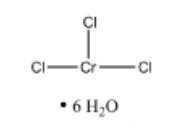 |
|
| Copper chloride dihydrate | CuCl2 • 2 H2O | 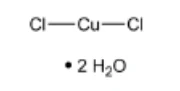 |
|
| Ferric chloride hexahydrate | FeCl3 • 6 H2O | 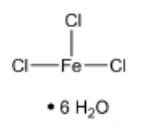 |
|
| Manganese chloride tetrahydrate | MnCl2 • 4 H2O | 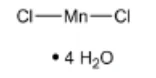 |
|
| Potassium iodide | KI |  |
|
| Sodium fluoride | NaF |  |
|
| Sodium molybdate dihydrate | Na2MoO4 • 2 H2O | 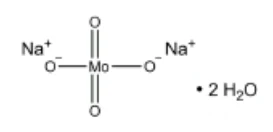 |
|
| Sodium selenite | Na2SeO3 | 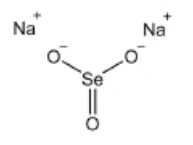 |
|
| Zinc chloride | ZnCl2 | 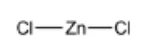 |
|
12 CLINICAL TRIALS
Study demographics and trials design
One prospective, uncontrolled, open-label study (Shenkin 4204) was conducted, in the post-operative period of surgical patients with gastrointestinal disease requiring parenteral nutrition, to evaluate efficacy and safety of Addamel N*, the reference product registered internationally. A total of 16 patients (age range 26 to 77 years; 6 females, 10 males) were administered intravenously 10 mL (1 vial) of Addamel N, daily as part of their parenteral nutrition regimen for at least seven days.
One prospective, uncontrolled, open-label study (Shenkin 4854) was conducted in post-operative surgical patients and patients with inflammatory bowel disease requiring parenteral nutrition to evaluate efficacy and tolerance of Addamel. A total of 28 patients (age range 18 to 81 years; 12 females and 16 males) were administered intravenously 10 mL (1 vial) Addamel daily as part of their parenteral nutrition regimen for at least seven days.
Table 3 - Summary of patient demographics studies with Addamel
| Study No. | Trial design | Dosage | Route of administration | Duration | Treated subjects (n) | Age (years) | |||
| Shenkin 4854 Efficacy and tolerance | Prospective, uncontrolled, open-label | 10 mL (1 vial) | IV as part of parenteral nutrition | ≥7 days | 28 | ≥18 | |||
| Shenkin 4204 Efficacy and safety | Prospective, uncontrolled, open-label | 10 mL (1 vial) | IV as part of parenteral nutrition | ≥7 days | 16 | ≥26 | |||
IV: intravenous; n: number *Addnutriv is the third generation of multitrace elements; whereas Addamel N, is its predecessor and the reference product used for Addnutriv to establish its safety and efficacy. | |||||||||
Study results
In study Shenkin 4204, biochemical assessment indicated that the level of trace element provision was adequate for most patients. No clinical signs of trace element deficiency or toxicity were observed during the study. Parenteral nutrition was well tolerated in most patients. The feeding regimen of two patients had to be stopped due to Staphylococcus aureus septicemia, and 2 other patients developed catheter sepsis after study completion. No adverse reactions occurred in this study that could be related to the use of Addamel N. Addamel N was safe and well-tolerated.
The biochemical assessment in Shenkin 4854 showed that levels of zinc and copper provision were adequate for most patients, the manganese and chromium provision was excessive, and the level of selenium provision was adequate for maintenance but inadequate to correct a pre-existing depletion. No clinical signs of trace element deficiency or toxicity were observed during the study. Three patients died during the study due to complications of underlying diseases. The other 21 patients survived, and the clinical progress was satisfactory in relation to diagnosis. No adverse reactions occurred in this study that could be related to the use of the product. Addamel was safe and well-tolerated.
The safety results of studies Shenkin 4854 and Shenkin 4204 as well as the absence of reported adverse events in numerous publications of studies with Addamel products in combination with the safety profile from post-marketing surveillance with Addamel N and Addnutriv supports the safe use of Addnutriv, if used in the approved dose.