


Product Monograph - Allergenic Extract - Standardized June Grass Pollen
Serious Warnings and Precautions
- Standardized allergenic extract is intended for use by physicians who are experienced in the administration of standardized (BAU/mL) allergenic extracts for immunotherapy and the emergency care of anaphylaxis, or for use under the guidance of an allergy specialist. Standardized grass pollen extracts labeled in BAU/mL are not interchangeable with non-standardized grass pollen extracts labeled in AU/mL. Standardized allergenic extracts are not directly interchangeable with allergenic extracts of the same labeled potency from different manufacturers. For previously untreated patients or patients switching from non-standardized to standardized, see WARNING and PRECAUTIONS section. For previously untreated patients, the initial dose of standardized extract must be based on skin testing as described in the warnings, dosage and administration section. Patients should be instructed to recognize adverse reaction symptoms and cautioned to contact the physician’s office if reaction symptoms occur. As with all allergenic extracts, severe systemic reactions may occur. In certain individuals, these life-threatening reactions may be fatal. Patients should be observed for at least 20 - 30 minutes following treatment, and emergency measures, as well as personnel trained in their use, should be immediately available in the event of a life-threatening reaction. Patients with unstable asthma or steroid dependent asthmatics and patients with underlying cardiovascular disease are at greater risk to a fatal outcome from a systemic allergic reaction.
- This product should not be injected intravenously. Deep subcutaneous routes have proven to be safe.
- Sensitive patients may experience severe anaphylactic reactions resulting in respiratory obstruction, shock, coma and/or death. Adverse events are to be reported to Health Canada, Tel: 866-234-2345 or by Fax: 866-678-6789.
Patients receiving beta-blockers may not be responsive to epinephrine or inhaled bronchodilators. Respiratory obstruction not responding to parenteral or inhaled bronchodilators may require theophylline, oxygen, intubation and the use of life support systems. Parenteral fluid and/or plasma expanders may be utilized for treatment of shock. Adrenocorticosteroids may be administered parenterally or intravenously. Refer to the warnings, precautions and adverse reaction sections below.
Allergenic Extracts, Pollen
Standardized Grass Pollen Extracts
PART I: HEALTH PROFESSIONAL INFORMATION
SUMMARY PRODUCT INFORMATION
Route of Administration | Dosage Form / Strength | Clinically Relevant Nonmedicinal Ingredients |
| Intradermal, Percutaneous, Subcutaneous | Liquid 100,000 BAU/mL | Phenol, Glycerin, Sodium Chloride, Sodium bicarbonate For a complete listing see Dosage Forms, Composition and Packaging section. |
DESCRIPTION
Standardized allergenic extract of grass pollens from Timothy (Phleum pratense), Orchard (Dactylis glomerata), June (Poa pratensis), Red Top (Agrostis alba), Sweet Vernal (Anthoxanthum odoratum), Meadow Fescue (Festuca elatior), Perennial Rye (Lolium perenne), mixture of 4 Standard grass pollen (Timothy, Orchard, June and Redtop) and mixture of 5 Standard grass pollen (Timothy, Orchard, June, Redtop and Sweet Vernal) in the accompanying vial are sterile, and contain glycerine 50% v/v and phenol 0.4% (preservative). Inert ingredients may include sodium chloride for isotonicity and sodium bicarbonate buffer.
Glycerinated pollen extracts, for subcutaneous injection for immunotherapy and/or percutaneous or intracutaneous testing (see Dosage and Administrative section), are prepared from defatted dried pollen extracted in glycerinated Coca’s Fluid, filtered aseptically, and dispensed into multiple dose vials. These are subsequently tested for sterility, safety, and potency.
Source materials are the specific pollens collected from their respective plants. Allergenic extracts are composites of the extractable allergenic and non-allergenic substances from the naturally occurring pollen. The allergenic moiety varies, qualitatively and quantitatively, from species to species and can be a small or large portion of the total extractable material. Due to the complexity of the solution and the physico-chemical properties of the individual molecular entities, insoluble compounds can form. For this reason extracts may exhibit varying degrees of opacity, crystalline or amorphous particles and/or sediment.
Standardized grass pollen extracts labelled in BAU/mL are not directly interchangeable with grass pollen extracts labelled in AU/mL or non-standardized grass pollen extracts.
For ease in use and for lot-to-lot consistency, the potency is expressed in Bioequivalent Allergy Units (BAUs) per millilitre. A value of 10,000 BAU/mL is assigned to the U.S. Food and Drug Administration, Center for Biologics Evaluation and Research (CBER) reference standard that can be diluted 1:0.5 million to produce intradermal ΣE (sum of Erythema) of 50 mm in highly puncture reactive subjects1. A value of 100,000 BAU/mL is assigned to the CBER reference standard that can be diluted 1:5 million to produce intradermal ΣE (sum of Erythema) of 50 mm in highly puncture reactive subjects. The relative potency of each lot of standardized extract has been compared to the official CBER reference standard by an acceptable assay such as ELISA Inhibition.2 When the potency is equivalent by ELISA Inhibition to the reference, the product is assigned 10,000 BAU/mL or 100,000 BAU/mL.
In the ELISA Inhibition assay, a competitive binding assay, the wells of microtiter plates are coated using a characterized allergenic extract. Allergic sera is added to each well. The binding of IgE specific for the coating allergen is inhibited by concentrations of a test sample of an extract of the same allergen. The amount of IgE bound to the solid phase allergen (and subsequently the degree of inhibition) is determined using enzyme-labeled anti-human IgE antibodies and the appropriate substrate. The potency relative to a reference is determined using a parallel line bioassay method.
INDICATIONS AND CLINICAL USE
Standardized Grass Pollen Extracts is indicated for:
- Diagnosis and treatment (hyposensitization therapy) of patients who experience allergic symptoms due to exposure to grass pollen and who exhibit Type I skin sensitivity when tested to those specific allergens.
Hyposensitization (injection) therapy is a treatment for patients exhibiting allergic reactions to seasonal pollens, dust mites, molds, animal danders, and various other inhalants in situations where the offending allergen cannot be avoided.
For previously untreated patients, prior to the initiation of therapy, clinical sensitivity to the standardized grass pollen extract should be established by careful evaluation of the patient’s history confirmed by diagnostic skin testing. Hyposensitization should not be prescribed for sensitivities to allergens which can easily be avoided.
Standardized grass pollen extracts labeled in BAU/mL are not directly interchangeable with grass pollen extracts labeled in AU/mL or non-standardized grass pollen extracts.
100,000 BAU/mL concentrations may be especially useful when patients are hyposensitized to numerous allergens. Mixing of allergenic extracts dilutes the potency of each constituent. Using concentrations such as 100,000 BAU/mL allows for dilution with other extracts without sacrificing immunizing properties.
CAUTION: The final potency of each individual component in a patient mixture should never exceed 10,000 BAU/mL. See also, DOSAGE AND ADMINISTRATION section for discussion of mixture labeling.
Geriatrics:
Allergenic extracts have not been studied systematically in various age groups (see WARNINGS AND PRECAUTIONS, Special Populations).
Pediatrics (< 5 years of age):
Allergenic extracts have not been studied systematically in various age groups (see WARNINGS AND PRECAUTIONS, Special Populations).
Extract usage in children should follow the same precautions as in adults.
CONTRAINDICATIONS
There are no known absolute contraindications to the use of Standardized Grass Pollen Extracts for immunotherapy. Immunotherapy with specific antigens is contraindicated in those individuals who do not exhibit skin test and clinical sensitivity to the particular antigens. (See WARNINGS and PRECAUTIONS).
Allergenic extract injections should not be administered in the presence of diseases characterized by a bleeding diathesis.
Children with nephrotic syndrome (immunization, can cause an exacerbation of their nephrotic disease).
A patient should not be immunized with preparations of allergens to which the patient has not demonstrated symptoms, IgE antibodies, positive skin tests, or properly controlled challenge testing. In most cases, immunotherapy is not indicated for those allergens that can be eliminated or minimized by environmental control.
Patients on beta-blockers are not candidates for immunotherapy, as they can be non-responsive to beta-agonists that may be required to reverse a systemic reaction (also see WARNINGS and ADVERSE REACTIONS). In the presence of active symptoms such as rhinitis, wheezing, dyspnea, etc., the indications of immunotherapy must be weighed carefully against the risk of temporarily aggravating the symptoms by the injection itself.
General contraindications include:
EXTREME SENSITIVITY TO THE SPECIFIC ALLERGEN - Determined from previous anaphylaxis following exposure.
AUTOIMMUNE DISEASE - Individuals with autoimmune disease may be at risk, due to the possibility of routine immunizations exacerbating symptoms of the underlying disease6, 7, 8. Hyposensitization should be given cautiously to patients with this predisposition. Patients with severe cardiorespiratory symptoms are at an additional risk during a systemic reaction. The physician must weigh risk to benefit in these cases.
WARNINGS AND PRECAUTIONS
General
Standardized extracts may be more, less, or equivalently potent compared to non-standardized extracts (See Table 3 in CLINICAL PHARMACOLOGY Section).
Conversion from non-standardized to standardized Grass Pollen Extracts:
There is no one specific formula to convert immunotherapy patients from non-standardized to standardized extracts. However, you may wish to consider the following as part of your overall plan:
A. Time your conversion outside of the height of the grass pollen season.
B. Table 3 describing potency of non-standardized extracts in CLINICAL
PHARMACOLOGY section can be used as a guide in selection dose. CAUTION: By the very nature of non-standardized extracts individual lots may vary more than 10-fold from the average value expressed in these tables. Further, you must consider the rapid decline in potency of non-glycerinated concentrates or aqueous dilutions of glycerinated concentrates of grass pollen extract. The BAU/mL expressed in the tables, therefore, may be overstated when compared to actual patient treatment extracts.
- 1. Refer to the table in the CLINICAL PHARMACOLOGY section and based on the current w/v or PNU, determine an approximate BAU concentration that would be about 1/10 the non-standardized dose that the patient is currently receiving. To compare dose selection by puncture and intradermal testing, compare their wheal and erythema responses. If the reaction to the standardized is equal to or less than the non-standardized, proceed with immunotherapy beginning with 0.05 mL of the standardized extract concentration tested, and proceed to maintenance as described in the DOSAGE AND ADMINISTRATION Section.
- 2. If the intradermal reaction to the standardized extract is greater than the non-standardized dose, dilute 10 fold and repeat until skin response to standardized is equal to or less than nonstandardized, then proceed with immunotherapy.
C. From alum precipitated or modified extracts to standardized extracts: It is recommended that therapy be initiated as if the patient were not previously treated.
Patients should always be observed for at least 20 - 30 minutes after any injection. In the event of a marked systemic reaction (for a description of systemic reactions see Adverse Reaction Section), application of a tourniquet above the injection site and intramuscular administration of 0.2 mL to 1.0 mL (0.01 mg/kg) of Epinephrine Injection (1:1000) is recommended. This dose can be repeated after 15 minutes, as needed. Maximal recommended dose for children between 2 and 12 years of age is 0.5 mL. The tourniquet is then gradually released at 15 minute intervals. Patients under treatment with betablockers may be refractory to the usual dose of epinephrine. DO NOT GIVE ALLERGENIC EXTRACTS INTRAVENOUSLY.
Volume expanders and vasopressor agents may be required to reverse hypotension. Inhalation bronchodilators and parenteral aminophylline may be required to reverse bronchospasm. In cases of respiratory obstruction, oxygen and intubation may be necessary. Life-threatening reactions unresponsive to the above may require cardiopulmonary resuscitation.
Withhold allergenic extracts temporarily or reduce the dose in patients with any one of the following conditions:
- Severe rhinitis or asthma symptoms;
- Infection or flu accompanied by fever;
- Exposure to excessive amounts of clinically relevant allergen prior to therapy.
- Evidence of a local or systemic reaction to the preceding extract injection during a course of immunotherapy.
Patients with unstable asthma or steroid dependent asthmatics and patients with underlying cardiovascular disease are at greater risk to a fatal outcome from a systemic allergic reaction12. See also ADVERSE REACTIONS.
Patients should be instructed to describe any active allergic symptoms such as rhinitis, wheezing, dyspnea, etc. prior to injection including any late reactions from previous administration. Patients should be instructed to remain in the office for 20 to 30 minutes after injection to monitor for adverse reactions.
The physician must be prepared to treat anaphylaxis should it occur and have the necessary drugs and equipment on hand to do so. Extracts should not be administered by the patient or other individuals who are not prepared to treat anaphylaxis should it occur.
Check the prescription or lot number, vial number, strength, and verify the dosage schedule of the prescription for the specific patient. Only after this verification has been made should an injection be given.
A separate, sterile syringe and needle or sterile disposable unit must be used for each patient to prevent the transmission of hepatitis or other infectious agents from person to person. After inserting needle subcutaneously, but before injecting, always withdraw the plunger slightly. If blood appears in the syringe, change the needle and give the injection in another site. Needles should not be recapped and should be disposed of properly.
Do not use the same syringe for different extracts, nor for the diluent after using it for an extract.
Precautions:
- 1. In the presence of active symptoms such as rhinitis, wheezing, dyspnea, etc., the indications of immunotherapy must be weighed carefully against the risk of temporarily aggravating the symptoms by the injection itself. Objective assessment of pulmonary function such as Peak Expiratory Flow Rate (PEFR) before allergen administration and prior to discharge may be useful in unstable asthmatics to reduce the chances of exacerbation of the patient’s asthma. If the protective action of allergenic extract injections is considered essential for the patient’s welfare, appropriate symptomatic therapy with antihistaminic, beta-adrenergic or other drugs might be needed either prior to or in conjunction with the allergenic extract injections.
- 2. Store allergenic extracts between 2° and 8°C at all times, even during use.
- 3. Injections are to be given subcutaneously with the usual sterile precautions using a Tuberculin syringe.
- 4. Care must be taken to avoid injecting into a blood vessel. Pull gently on syringe plunger to determine if a blood vessel has been entered (See boxed Warnings).
- 5. Allergenic extracts slowly become less potent with age. During the course of treatment, it may be necessary to continue therapy with a vial of extract bearing a later expiration date. The initial dose of the extract bearing the later expiration date should be reduced by at least 75% of the amount of the dosage from the previous extract.
- 6. Use standard aseptic precautions when making dilutions.
- 7. Extracts in 50% glycerin can cause discomfort at the site of the injection during the injection. Glycerinated extracts diluted for intradermal testing must be diluted at least twenty-five-fold to less than 2% glycerin (by volume), as glycerin above this level can cause false positive intradermal skin tests. Use of negative control skin test containing an equal concentration of glycerin as the allergen when evaluating intradermal skin tests is recommended.
- 8. Standardized concentrates of allergenic extracts must be diluted prior to initiation of immunotherapy.
Carcinogenesis and Mutagenesis
There is no evidence of carcinogenicity, mutagenesis or impairment of fertility in humans from Standardized Grass Pollen Extracts. No long-term studies in animals have been performed to evaluate carcinogenic potential.
Special Populations
Pregnant Women:
Animal reproduction studies have not been conducted with allergenic extracts. It is also not known whether allergenic extracts can cause fetal harm when administered to a pregnant woman, or can affect reproduction capacity.
Controlled studies of hyposensitization with moderate to high doses of allergenic extracts during conception and all trimesters of pregnancy have failed to demonstrate any risk to the fetus or to the mother13. However, on the basis of histamine’s known ability to contract the uterine muscle, the release of significant amounts of histamine from allergen exposure of hyposensitization overdose should be avoided on theoretical grounds. Therefore, allergenic extracts should be used cautiously in a pregnant woman, and only if clearly needed.
Nursing Women:
It is not known whether this drug is excreted in human milk. Because many drugs are excreted in human milk, caution should be exercised when allergenic extracts are administered to a nursing woman.
Pediatrics (< 5 years of age):
Although extracts have not been studied systematically in various age groups, older children appear to tolerate injections of allergenic extracts well. Children less than five years of age on extract immunotherapy may have an increased risk of a severe reaction, but respond well to skin test diagnosis. Studies with pollenosis and asthma have been conducted in children 15-17.
Extract usage in children should follow the same precautions as in adults. However, to minimize discomfort associated with dose volume, it may be advisable to reduce the volume of the dose by one-half and administer the injection at two different sites.
Geriatrics
Although extracts have not been studied systematically in various age groups, geriatric patients appear to tolerate injections of allergenic extracts well. Geriatric patients are more likely to be on medication that could block the effect of epinephrine or they could be more sensitive to the cardiovascular side effect of epinephrine because of preexisting cardiovascular disease.
Monitoring and Laboratory Tests
Patients receiving allergenic extracts should be kept under observation a minimum of twenty minutes so that any adverse reaction can be observed and properly handled. This time should be extended to at least thirty minutes for high-risk patients such as those with labile or steroid-dependent asthma or those suffering an exacerbation of their symptoms. Airway obstruction in high risk patients can be monitored by peak flow measurements before and after administration of allergens.
ADVERSE REACTIONS
Adverse Drug Reaction Overview
Local: Reactions at the site of injection may be immediate or delayed. Immediate wheal and erythema reactions are ordinarily of little consequence; but if very large, may be the first manifestation of a systemic reaction. If large local reactions occur, the patient should be observed for systemic symptoms for which treatment is outlined below. However, systemic reactions may occur in the absence of large local reactions.
Delayed reactions start several hours after injection with local edema, erythema, itching or pain. They are usually at their peak at 24 hours, and usually require no treatment. Antihistamine drugs may be administered orally.
The next therapeutic dose should be reduced to the dose which did not elicit a reaction, and subsequent doses increased more slowly, i.e., use of intermediate dilutions.
Systemic: It should be noted that anaphylaxis and deaths following the injection of mite and other extracts, including grass pollen extracts have been reported by The British Committee on Safety in Medicine.10 Fatalities from immunotherapy in the United States since 1945 have been extensively reviewed by Lockey, R. F., et al.11 and also more recently by Reid, M.J., et al.12 With careful attention to dosage and administration, such reactions occur infrequently, but it must be remembered that allergenic extracts are highly potent to sensitive individuals and OVERDOSE could result in anaphylactic symptoms. Therefore, it is imperative that physicians administering allergenic extracts understand and be prepared for the treatment of severe reactions.
Systemic reactions are characterized by one or more of the following symptoms: sneezing, mild to severe generalized urticaria, itching, other than at the injection site, extensive or generalized edema, wheezing, asthma, dyspnea, cyanosis, hypotension, syncope and upper airway obstruction. Symptoms may progress to shock and death. Patients should always be observed for at least 20 - 30 minutes after any injection. Volume expanders and vasopressor agents may be required to reverse hypotension. Inhalational bronchodilators and parenteral aminophylline may be required to reverse bronchospasm. Severe airway obstruction, unresponsive to bronchodilator, may require tracheal intubation and use of oxygen. In the event of a marked systemic reaction, application of a tourniquet above the injection site and the administration of 0.2 mL to 1.0 mL of Epinephrine Injection (1:1000) intramuscular is recommended. Maximal recommended dose for children under 2 years of age is 0.3 mL. Maximal recommended dose for children between 2 and 12 years of age is 0.5 mL. The tourniquet should not be left in place without loosening for 90 seconds every 15 minutes.
The next therapeutic injection of extract should be reduced to the dose which did not elicit a reaction, and subsequent doses increased more slowly; i.e., use of intermediate dilutions.
Adverse Events should be reported to Health Canada, Tel: 866-234-2345 or by Fax: 866-678-6789.
Post-Market Adverse Drug Reactions
Common: Allergic symptoms such as generalized skin erythema, urticaria, pruritus, angioedema, rhinitis, wheezing, laryngeal edema, and hypotension.
Less common: Nausea, emesis, abdominal cramps, diarrhea and uterine contractions. Systemic reactions occur with varying frequency in different clinics and are usually less than 1%.
Rarely: Severe reactions caused shock and loss of consciousness, and fatalities.
DRUG INTERACTIONS
Overview
Drugs can interfere with the performance of skin tests.9
Antihistamines: Response to mediator (histamine) released by allergens is suppressed by antihistamines. The length of suppression varies and is dependent on individual patient, type of antihistamine and length of time the patient has been on antihistamines. The duration of this suppression may be as little as 24 hours (chlorpheniramine), and can be as long as 40 days (astemizole).
Tricyclic Antidepressants: These exert a potent and sustained decrease of skin reactivity to histamine which may last for a few weeks.
Beta2 Agonists: Oral terbutaline and parenteral ephedrine, in general, have been shown to decrease allergen induced wheal.
Dopamine: Intravenous infusion of dopamine may inhibit skin test responses.
Beta Blocking Agents: Propranolol can significantly increase skin test reactivity (see boxed Warnings).
Other Drugs: Short acting steroids, inhaled beta2 agonists, theophylline and cromolyn do not seem to affect skin test response.
Drug-Food Interactions
Interactions with food have not been established.
Drug-Herb Interactions
Interactions with herbal products have not been established.
Drug-Laboratory Interactions
Interactions with laboratory tests have not been established.
DOSAGE AND ADMINISTRATION
Dosing Considerations
Parenteral drug products should be inspected visually for particulate matter and discoloration prior to administration whenever solution and container permit.
Prior to use for intradermal testing and immunotherapy, extracts must be prepared by diluting the concentrated extract with sterile diluent. Dilutions should be prepared accurately, using aseptic techniques, with thorough and gentle mixing of extract and diluent by rocking or swirling the vial. After dilution, the vial should be visually inspected for particulate matter and discarded if particulates are observed.
Recommended Dose and Dosage Adjustment
Diagnosis - In diagnosing the sensitive individual, the symptom history must be associated with exposure to the allergen. Skin testing is used in conjunction with a definitive history for diagnosing individual sensitivities.
For the patient with a suspected diagnosis of allergy to more than one antigen, initial screening skin test should include the individual extracts. If a screening skin test with a mixture is used, a positive response should be followed by testing with the individual extracts to determine the degree of sensitivity to each and to guide in the selection of extracts and their concentration for immunotherapy if indicated. Extracts contained in mixtures are more dilute than the individual allergens used separately; therefore, false-negative skin tests may ensue.
An excellent method of recording results is to cover the skin reaction with transparent tape, outline the erythema first then the wheal with an indelible pen, then remove the tape and transfer it to the patient’s permanent record. For preferred results, it is recommended that the actual measurement of the extent of both responses be recorded. This can be accomplished by measuring the longest erythema diameter, then selecting the mid-point of that line and measuring at a 90° angle to that line to determine the orthogonal diameter. The sum of these two measurements is the sum of erythema (∑E); the sum of wheal diameters is determined in a similar manner.
Patient’s response is graded on the basis of the size of erythema and/or wheal.
Percutaneous (prick/scratch/puncture) test:
Prick, scratch, or puncture skin tests should be performed initially using a diluted 100,000BAU/mL glycerinated extract to 10,000 BAU/mL.
What follows are general guidelines for percutaneous testing14. Different devices and/or techniques influence the size of the reaction, therefore it is important to refer to the device manufacturer’s or distributor’s instructions when grading reactions. As a negative control, the diluent should be tested and included in the interpretation in the skin test reactions. Use of a positive control such as histamine base at 1 mg/mL should be used to assess skin test reactivity.
0 No reaction or less than control
+ Erythema greater than control, smaller than a nickel (21 mm diameter)
++ Erythema greater than a nickel in diameter, no wheal +++ Wheal and erythema without pseudopods
++++ Wheal and erythema with pseudopods
A sterile puncture device, needle, scalpel blade, or scarifier is used. A separate sterile device must be used for each patient to prevent transmission of infectious agents. If the device contacts extracts, use a separate device for each antigen to prevent crosscontamination.
The skin is abraded only enough to enter the dermis without drawing blood. Follow the directions for the device being used. The antigen may be applied directly with a puncture device or is introduced by applying a drop of extract to the scratch or prick site, taking care not to touch the skin with the dropper tip.
Intradermal test:
Intradermal testing should start with a dilute solution, usually in the range of 0.1 BAU/mL or less.
Glycerinated extracts diluted for intradermal testing may be diluted at least 25-fold to less than 2% glycerin (by volume) as glycerin above this level can cause false positive intradermal skin tests. Use a negative control skin test with glycerin content equal to the glycerin content of the allergen dose used for intradermal testing. Use of a positive control such as histamine base at 0.1 mg/mL or 0.01 mg/mL should be used to test reactivity.
On the forearm or upper outer aspect of the arm, using a 26 - 27 gauge, short bevel needle, inject intradermally 0.05 mL of the intradermal test solution.
Skin whealing responses should be observed 10 - 20 minutes after administering the test.
A negative skin test is one where the sum of erythema was 0 or equal to the sum of the wheal. As a negative control, the diluent should be tested and included in the interpretation of the skin reactions. What follows are general guidelines for intradermal testing14.
0 No reaction or less than negative control + 3-4 mm wheal with erythema, or erythema alone larger than a nickel (21 mm diameter)
++ 4-8 mm wheal and erythema without pseudopods +++ Over 8 mm wheal and erythema without pseudopods ++++ Wheal and erythema with pseudopods
Immunotherapy - Starting dose for immunotherapy is related directly to a patient’s sensitivity as determined by carefully executed skin testing. Degree of sensitivity can be established by determination of D50 (the intradermal dose, base three, that produces a ∑E = 50 mm).1
A general rule is to begin at 1/10 of the dose that produces sum of erythema of 50 mm (approximately a 2+ positive skin test reaction). For example, if a patient exhibits a 2+ intradermal reaction to 1 BAU/mL, the first dose should be no higher than 0.05 mL of 0.1 BAU/mL. Dosage may be increased by 0.05 mL each time until 0.5 mL is reached, at which time the next 10-fold more concentrated dilution can be used, beginning with 0.05 mL, if no untoward reaction is observed.
If a tolerated dose of allergenic extract has been established, the initial dose from the new extract should be reduced to 25% of the previously well tolerated dose (see also WARNINGS AND PRECAUTIONS).
Interval between doses in the early stages of immunotherapy is no more than once to twice a week, and may gradually be increased to once every two weeks. Generally, maintenance injections may be given as infrequently as once every two weeks to once a month.
Injections are given subcutaneously preferably in the arm. It is advantageous to give injections in alternate arms and routinely in the same area. In some patients, a local tolerance to the allergen may develop thus preventing a possible severe local reaction.
After inserting the needle, but before injecting the dose, pull plunger of the syringe slightly. If blood returns in the syringe, discard the syringe and contents and repeat injection at another site.
Bulk concentrated extracts must be diluted for initial therapy and intradermal skin testing. For recommended diluent, refer to DOSAGE AND ADMINISTRATION section.
Allergenic extracts slowly become less potent with age. During the course of treatment, it may be necessary to continue therapy with a vial of extract bearing a later expiration date. The initial dose of the extract bearing the later expiration date should be lowered to a safe non-reaction-eliciting level. When switching one standardized extract with another, at least 75% reduction in dose is suggested.
Use standard aseptic precautions when making dilutions. The first dose of the new extract should be reduced at least 75% of the amount of the dosage from the previous extract.
Stability studies for diluted forms of this product are not complete. The undiluted product will retain its potency under recommended storage conditions at least until the expiration date on the vial label is reached. It is recommended that minimal amounts of the concentrate be diluted so that the diluted product is used up within a relatively short period of time; i.e., preferably not more than four weeks.
Administration
Standardized Grass Pollen Allergenic Extracts are supplied as sterile solutions for intracutaneous or subcutaneous administration.
When diluting bulk extracts, use of Sterile Diluent for Allergenic Extracts or Sterile Diluent for Allergenic Extracts Normal Saline with HSA are recommended. Dilutions should be made with sterile disposable syringes using aseptic technique. Commonly 10 fold dilutions are used to achieve a desired concentration for intradermal testing or initiation and continuation of immunotherapy. For example, transferring 0.5 mL of a 100,000 BAU/mL extract into 4.5 mL of diluent will yield 5 mL of extract @ 10,000 BAU/mL. Prepare as many additional serial dilutions as necessary to reach the appropriate concentration.
TABLE II
Ten-Fold Dilution Series Dilution Extract Diluent BAU/mL 0 Concentrate 100,000 1 0.5 mL concentrate 4.5 mL 10,000 2 0.5 mL dilution 1 4.5 mL 1,000 3 0.5 mL dilution 2 4.5 mL 100 4 0.5 mL dilution 3 4.5 mL 10 5 0.5 mL dilution 4 4.5 mL 1 6 0.5 mL dilution 5 4.5 mL 0.1
*Due to differences such as source material, preservative, potency dilutions, storage conditions, and length of storage, there is no common potency correlation ratio between extracts standardized in Bioequivalent Allergy Units (BAU) and:
- 1) standardized extracts previously labeled in Allergy Units (AU);
- 2) non-standardized extracts labeled weight-to-volume (w/v);
- 3) non-standardized extracts labeled in Protein Nitrogen Units (PNU); or
- 4) alum-precipitated extracts.
Stock mixtures of grass pollen extracts are compounded from individual grass pollen extracts. The total potency per milliliter (mL) of these mixtures is described in DOSAGE FORMS, COMPOSITION AND PACKING.
OVERDOSAGE
Signs and symptoms of overdose are typically local and systemic reactions. For a description and management of overdose reactions, refer to “Adverse Reactions” section above.
ACTION AND CLINICAL PHARMACOLOGY
Mechanism of Action
Diagnostically (for skin testing), the allergen combines with IgE antibodies fixed to mast cells in the skin.3 This complexing causes an increase in cellular permeability and degranulation of the mast cells releasing chemical mediators. These mediators (such as histamine) are responsible for a local inflammatory response of wheal and erythema typical of a positive skin test reaction and also, the symptoms commonly associated with allergic disease. The more mediator released, the larger the reaction (wheal and erythema).
Treatment consists of the subcutaneous injection of gradually increasing doses of the allergens to which the patient is allergic. It has been demonstrated that this method of treatment induces an increased tolerance to the allergens responsible for the symptoms on subsequent exposure. Although the exact relationships between allergen, skin-sensitizing antibody (IgE) and the blocking antibody (IgG) have not been precisely established, clinically confirmed immunological studies have adduced evidence of the efficacy of hyposensitization therapy.
Numerous controlled studies have demonstrated the clinical efficacy of immunotherapy with cat, dust mites and some pollens, including grass pollen extracts.4 Nevertheless, responses are variable, and in a few studies patients reported no appreciable benefit.
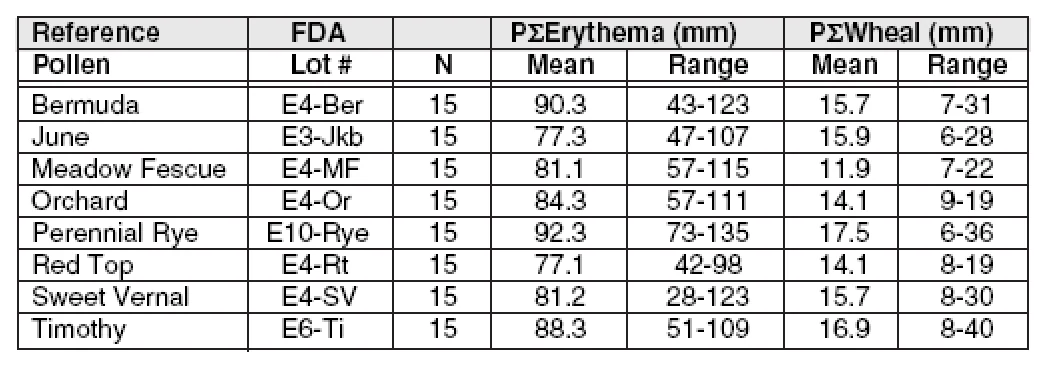
Puncture test data with 10,000 BAU/mL Grass Pollen Extract CBER reference preparations, in 15 grass allergic patients yielded the following sizes of wheal and erythema (∑ = sum of longest diameter and orthogonal cross diameter).5
Table 1: Puncture bifurcated needle data with 10,000 BAU/mL CBER
Reference Grass Pollen Extracts.
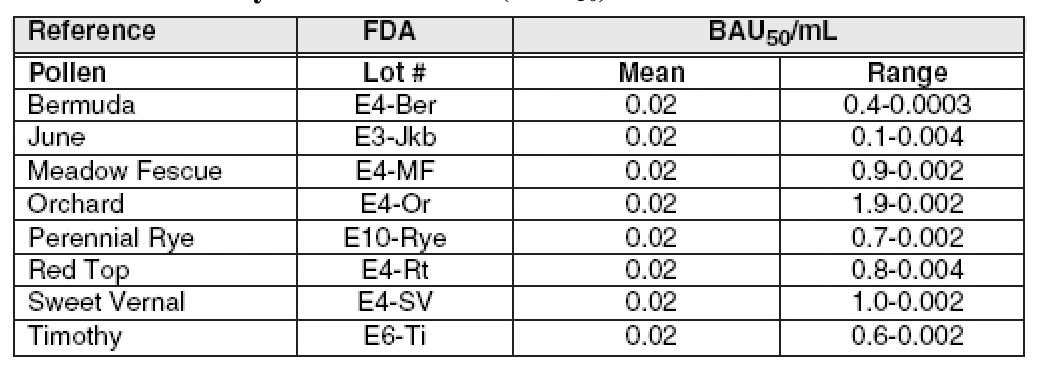
The intradermal dose (BAU50) of the CBER (FDA) Grass Pollen Extract Reference Preparation required to produce a 50 mm Sum of Erythema was calculated based on titration in sensitive individuals.
Table 2: Intradermal Dose of CBER Reference Grass Pollen Extracts for 50 mm Sum of Erythema Diameter (BAU50)5.
An analysis of relative potency of the 1:10 w/v unstandardized grass pollen extracts utilizing the ELISA Inhibition method shows the relative potency in BAU/mL in the following table. CAUTION: By the very nature of unstandardized extracts, individual lots of the unstandardized extracts may vary more than 1 log from the average value expressed in these tables.
TABLE 3: Estimation of Potency Described in BAU/mL by ELISA-Inhibition of ALK Abello, Inc. 1:10 w/v Non-standardized Grass Pollen Extracts Manufactured and Distributed by ALK-Abello, Inc. (Formerly Center Laboratories, Inc.)
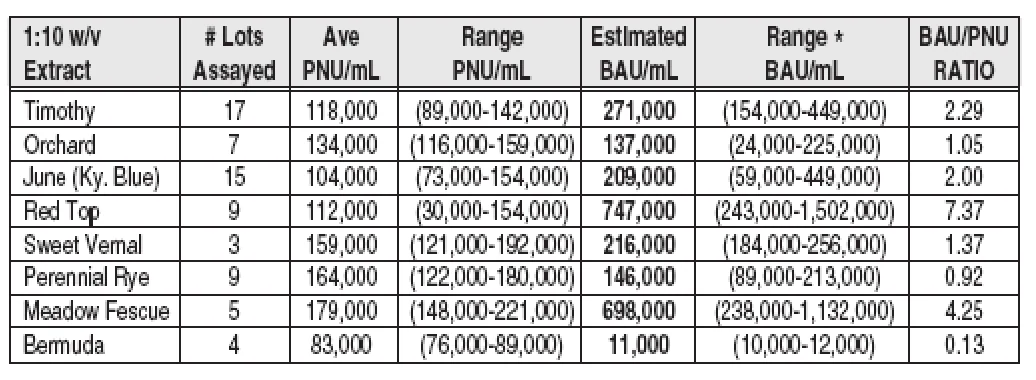
*The BAU/mL range for equivalence to the FDA 100,000 BAU/mL reference is 69,900-143,100.
*The BAU/mL range for equivalence to the FDA 10,000 BAU/mL reference is 6,990-14,310.
*CAUTION: Only a few lots of each non-standardized pollen species have been tested by ELISA Inhibition. The lots tested varied from fresh extracts to extracts more than three years old. Do not assume that these values apply to specific lots that are in distribution. In addition to age, storage temperatures influence potency.
Physicians must exercise care in switching patients from non-standardized to standardized extracts. As with non-standardized extracts, dosage with BAU extracts must be derived based on the patient's sensitivity to the specific pollen. Switching from an extract that was not standardized in BAU cannot be made by a calculated, numerical ratio, but TABLE 3 can be used as a guide. Dose selection can be confirmed by side-by-side testing of non-standardized and standardized extracts at estimated equal doses. See WARNINGS section. Patients being switched from non-standardized extracts from another manufacturer to extracts standardized in BAU can be re-evaluated by diagnostic skin testing to judge the dose to start immunotherapy or to build up to new maintenance dosages.
Duration of Effect
The usual duration of treatment has not been established. A period of two or three years of injection therapy constitutes an average minimum course of treatment. Patients should have sufficient treatments before each pollen season.
STORAGE AND STABILITY
To maintain stability of allergenic extracts, proper storage conditions are essential. Bulk concentrates and diluted extracts are to be stored at 2° to 8° C even during use. Bulk or diluted extracts are not to be frozen. Do not use after the expiration date shown on the vial label.
SPECIAL HANDLING INSTRUCTIONS
Clinicians should be aware that diluted extracts are inherently less stable than concentrates. Dilutions of glycerinated extracts which result in glycerin below 50% may also be less stable. Potency of a particular dilution can be checked by skin test in comparison to a fresh dilution of the extract on an individual known to be allergic to the specific antigen.
DOSAGE FORMS, COMPOSITION AND PACKAGING
For percutaneous testing, 5 mL vial, 100,000 BAU/mL in glycerin 50% (v/v).
For immunotherapy, 10 mL and 50 mL vials 100,000 BAU/mL in glycerin 50% (v/v).
Composition of Standardized Grasses in each product:
Individual standardized grass pollen includes 100,000 BAU/mL of either one of the following grasses: June (Poa pratensis), Meadow Fescue (Festuca elatior), Orchard (Dactylis glomerata), Perennial Rye (Lolium perenne), Redtop (Agrostis alba), Sweet Vernal (Anthoxanthum odoratum), and Timothy (Phleum pratense).
Mixture of 4 standardized grass pollen:
June (Poa pratensis) 25,000 BAU/mL Orchard (Dactylis glomerata) 25,000 BAU/mL Redtop (Agrostis alba) 25,000 BAU/mL Timothy (Phleum pratense). 25,000 BAU/mL
Mixture of 5 standardized grass pollen:
June (Poa pratensis) 20,000 BAU/mL Orchard (Dactylis glomerata) 20,000 BAU/mL Redtop (Agrostis alba) 20,000 BAU/mL Sweet Vernal (Anthoxanthum odoratum) 20,000 BAU/mL Timothy (Phleum pratense). 20,000 BAU/mL
PART II: SCIENTIFIC INFORMATION
PHARMACEUTICAL INFORMATION
Drug Substance
Proper name: Standardized Timothy Grass
Standardized Orchard Grass Standardized June Grass Standardized Redtop
Standardized Sweet Vernal Standardized Perennial Rye Grass Standardized Meadow Fescue Grass
Product Characteristics
Standardized allergenic extract of grass pollens from Timothy (Phleum pratense), Orchard (Dactylis glomerata), June (Poa pratensis), Red Top (Agrostis alba), Sweet Vernal (Anthoxanthum odoratum), Meadow Fescue (Festuca elatior), Perennial Rye (Lolium perenne), mixture of 4 Standard grass pollen (Timothy, Orchard, June and Redtop) and mixture of 5 Standard grass pollen (Timothy, Orchard, June, Redtop and Sweet Vernal) in the accompanying vial are sterile, and contain glycerine 50% v/v and phenol 0.4% (preservative). Inert ingredients may include sodium chloride for isotonicity and sodium bicarbonate buffer.
DETAILED PHARMACOLOGY
The allergic reaction is dependent upon the presence of antigen-specific immunoglobulin E (IgE) antibodies that are bound to specific receptors on mast cells and basophils. The presence of IgE antibodies on mast cells and basophils sensitizes these cells and--upon interaction with the appropriate allergen--histamine and other mediators are released. IgE antibody has been shown to correlate with atopic diseases such as allergic rhinitis and allergic asthma. In the skin these mediators are responsible for the characteristic wheal and flare (erythema) reactions upon allergenic extract skin testing in persons with the specific allergies.
Specific immunotherapy with pollen extracts as employed for many years is helpful in reducing symptoms associated with exposure to the offending allergens. A summary of effectiveness by the Panel on Review of Allergenic Extracts, an advisory committee to the U. S. Food and Drug Administration, has been published. Several mechanisms have been proposed to explain the effectiveness of immunotherapy: an increase in antigen-specific IgG antibodies is frequently associated with clinical effectiveness, although correlation is not consistent in all studies; there is a decrease in specific IgE; and IgE production is suppressed during periods of seasonal or high exposure to the antigen. Other changes following immunotherapy have been noted including development of auto-anti-idiotypic antibodies, a decrease in blood basophil sensitivity to allergen, a decrease in lymphokine production and lymphocyte proliferation by cells exposed to allergen, and development of allergen-specific suppressor cells. The complete mechanisms of immunotherapy are not known and remain the subject of investigation.
REFERENCES
| Reference | |
| 1 | Turkeltaub, P. C. et al. Office of Biologics Research and Review skin test method for evaluation of subject sensitivity to standardized allergenic extracts and for assignment of allergy units to reference preparations using the ID50EAL method. FDA CBER Methods of the Allergenic Products Testing Laboratory. 1993. |
| 2 | Miller, CA; Boyle, KT; and Braun, M. ELISA Competition Assay - Quantitative Determination of Relative Potency of Allergenic Extracts. FDA CBER Methods of the Allergenic Products Testing Laboratory. 1993. |
| 3 | Norman, P. S. The clinical significance of IgE. Hosp. Prac. 1975; 10:41-49 |
| 4 | VanMetre, T. E. and Adkinson, N. F. Immunotherapy for aeroallergen disease. In: Middleton et al. Allergy Principles and Practice 3rd Ed. St. Louis: CV Mosby, 1988:1327. |
| 5 | Data on file at FDA. |
| 6 | Umetsu, D. T. et al. Serum sickness triggered by anaphylaxis: a complication of immunotherapy. J. Allergy Clin. Immunol. 1985; 76:713. |
| 7 | Phannphak, P. and Kohler, P. F. Onset of polyarteritis nodosa during allergic hyposensitization treatment. Am. J. Med. 1980; 68:479. |
| 8 | Kohler, P. F. Immune complexes and allergic disease. In: Middleton et al.: Allergy Principles and Practice 3rd Ed. St. Louis: CV Mosby, 1988:167. |
| 9 | Bousquet, J. In vivo methods for the study of allergy: skin test, techniques, and interpretation. In: Middleton et al.: Allergy Principles and Practice 3rd Ed. St. Louis: CV Mosby, 1988:167. |
| 10 | Committee on the Safety of Medicines. CSM update: desensitizing vaccines. Brit. Med. J. 1986; 293:948. |
| 11 | Lockey, R. F. et al. Fatalities from immunotherapy (IT) and skin testing (ST). J. Allergy Clin. Immunol. 1987; 79:660. |
| 12 | Reid, M. J. et al. Survey of fatalities from skin testing and immunotherapy. 1985-1989. J. Allergy Clin Immunol. 1993; 92:6. |
| 13 | DuBuske L. M. et al. Special problems regarding Allergen Immunotherapy in Immunology and Allergy Clinics of North America, Greenburger, P.A. Ed. February 1992; 145-149. |
| 14 | Freedman, SO; Asthma and Allergic Rhinitis II Clinical Aspects. In Freedman and Gold Clinical Immunology, 2nd Ed. Hagerstown, MD: Harper & Row, 1976; 131. |
| 15 | Sadan N, Rhyne MB, Mellits ED, et al.: Immunotherapy of pollenosis in children: investigation of the immunologic basis of clinical improvement. N Eng J Med 1969;280:623. |
| 16 | Johnstone DE: Value of hyposensitization therapy for perennial bronchial asthma in children. Pediatrics 1961;27:39. |
| 17 | VanAsperin PP, Kemp AS, Mellis CM: Skin test reactivity and clinical allergen sensitivity in infancy. J Allergy Clin Immunol 1994;73:381-6. |