


Product Monograph - Allopurinol
RECENT MAJOR LABEL CHANGES
| 3 Serious Warnings and Precautions Box | 11/2022 |
| 4 Dosage and Administration, 4.2 Recommended Dose and Dosage Adjustment | 11/2022 |
| 7 Warnings and Precautions | 11/2022 |
| 7 Warnings and Precautions, 7.1.4 Geriatrics | 11/2022 |
TABLE OF CONTENTS
Sections or subsections that are not applicable at the time of authorization are not listed.
RECENT MAJOR LABEL CHANGES ......................................................................................... 2
TABLE OF CONTENTS ........................................................................................................... 2
PART I: HEALTH PROFESSIONAL INFORMATION .................................................................... 4
1 INDICATIONS ............................................................................................................. 4
1.1 Pediatrics .................................................................................................................... 4
1.2 Geriatrics ..................................................................................................................... 4
2 CONTRAINDICATIONS ................................................................................................ 4
3 SERIOUS WARNINGS AND PRECAUTIONS BOX ........................................................... 5
4 DOSAGE AND ADMINISTRATION ............................................................................... 5
4.2 Recommended Dose and Dosage Adjustment .......................................................... 5
4.5 Missed Dose ................................................................................................................ 7
5 OVERDOSAGE............................................................................................................ 7
6 DOSAGE FORMS, STRENGTHS, COMPOSITION AND PACKAGING ................................ 7
7 WARNINGS AND PRECAUTIONS ................................................................................. 8
7.1 Special Populations ................................................................................................... 10
7.1.1 Pregnant Women .................................................................................................. 10
7.1.2 Breast-feeding ...................................................................................................... 10
7.1.3 Pediatrics ............................................................................................................... 10
7.1.4 Geriatrics ............................................................................................................... 11
8 ADVERSE REACTIONS .............................................................................................. 11
8.1 Adverse Reaction Overview ...................................................................................... 11
9 DRUG INTERACTIONS .............................................................................................. 13
9.2 Drug Interactions Overview ...................................................................................... 13
9.4 Drug-Drug Interactions ............................................................................................. 13
9.5 Drug-Food Interactions ............................................................................................. 16
9.6 Drug-Herb Interactions ............................................................................................. 16
9.7 Drug-Laboratory Test Interactions ........................................................................... 16
10 CLINICAL PHARMACOLOGY ...................................................................................... 16
10.1 Mechanism of Action ................................................................................................ 16
10.2 Pharmacodynamics ................................................................................................... 17
10.3 Pharmacokinetics ...................................................................................................... 17
11 STORAGE, STABILITY AND DISPOSAL ....................................................................... 19
12 SPECIAL HANDLING INSTRUCTIONS ......................................................................... 19
PART II: SCIENTIFIC INFORMATION ..................................................................................... 20
13 PHARMACEUTICAL INFORMATION .......................................................................... 20
14 CLINICAL TRIALS ...................................................................................................... 21
15 MICROBIOLOGY ...................................................................................................... 21
16 NON-CLINICAL TOXICOLOGY .................................................................................... 21
17 SUPPORTING PRODUCT MONOGRAPHS ................................................................... 22
PATIENT MEDICATION INFORMATION ............................................................................... 23
PART I: HEALTH PROFESSIONAL INFORMATION
1 INDICATIONS
ALLOPURINOL is indicated for:
- Treatment of gout, either primary, or secondary to hyperuricemia which occurs in blood dyscrasias and their therapy.
- Treatment of primary or secondary uric acid nephropathy, with or without accompanying signs or symptoms of gout.
- Prophylactically, to prevent tissue urate deposition or renal calculi in patients with leukemias, lymphomas or other malignancies, receiving antineoplastic treatment (radiation or cytotoxic drugs) which might induce increased uricemia levels. Also, in the therapy and prophylaxis of acute urate nephropathy and resultant renal failure in patients with neoplastic disease who are particularly susceptible to hyperuricemia and uric acid stone formation (especially after radiation therapy or use of antineoplastic drugs).
- Prevention of the occurrence and recurrence of uric acid stones or gravel and renal calcium lithiasis in patients with hyperuricemia and/or hyperuricosuria.
1.1 Pediatrics
Pediatrics(<18 years of age): ALLOPURINOL is contraindicated in children with the exception of those with hyperuricemia secondary to malignancy or with Lesch-Nyhan syndrome, because safety and effectiveness have not been established in other conditions.
See 2 CONTRAINDICATIONS, 4 DOSAGE AND ADMINISTRATION and 7.1.3 Pediatrics
1.2 Geriatrics
Geriatrics (> 65 years of age): Evidence from clinical experience suggests that use in the geriatric population is associated with differences in safety or effectiveness. See 4 DOSAGE AND ADMINISTRATION and 7.1.4 Geriatrics
2 CONTRAINDICATIONS
ALLOPURINOL is contraindicated in:
- Patients who are hypersensitive to this drug or to any ingredient in the formulation, including any non-medicinal ingredient, or component of the container. For a complete listing, see 6 DOSAGE FORMS, STRENGTHS, COMPOSITION AND PACKAGING.
- Breast-feeding women
- Children (except in those with hyperuricemia secondary to malignancy or with Lesch-Nyhan syndrome).
3 SERIOUS WARNINGS AND PRECAUTIONS BOX
Serious Warnings and Precautions
|
4 DOSAGE AND ADMINISTRATION
4.2 Recommended Dose and Dosage Adjustment
Adults: ALLOPURINOL is administered orally. The total daily requirement should be divided into 1 to 3 doses. Daily doses up to and including 300 mg ALLOPURINOL may be taken once a day after a meal. Larger doses should be administered as divided doses of not more than 300 mg. It should be noted that ALLOPURINOL is generally better tolerated if taken following meals.
Treatment of Gout: The dose of ALLOPURINOL varies with the severity of the disease. The minimum effective dose is 100 mg to 200 mg. The average is 200 mg to 300 mg per day for patients with mild gout, 400 mg to 600 mg per day for patients with moderately severe tophaceous gout, and 700 mg to 800 mg in severe conditions. The maximal recommended dose is 800 mg per day in patients with normal renal function.
As no simple method of measuring the blood concentrations of ALLOPURINOL is available, the correct size and frequency of dosage for maintaining the serum uric acid just within the normal range is best determined by using the serum uric acid level as an index.
Once the daily dose of ALLOPURINOL necessary to produce the desired serum uric acid level has been determined, this dose should be continued until the serum uric acid level indicates a need for dosage adjustment.
Normal serum urate levels are achieved in one to three weeks. The upper limit of normal is about 6 mg/dL for men and postmenopausal women and 5 mg/dL for premenopausal women. By the selection of the appropriate dose, together with the use of uricosuric agents in certain patients, it is possible to reduce the serum uric level to normal and, if desired, to hold it as low as 2 to 3 mg/dL. Combined therapy of ALLOPURINOL and uricosurics will often result in a reduction in dosage of both agents.
To reduce the possibility of an increase in acute attacks of gout during the early stages of ALLOPURINOL administration, it is recommended that the patient start with a low dose of
ALLOPURINOL (100 mg to 200 mg daily) and increase at weekly intervals by 100 mg until a serum uric acid level of about 6 mg/dL or less is attained. Also, a maintenance dose of colchicine should be given prophylactically when allopurinol is begun, and a high fluid intake is advisable.
In patients who are being treated with uricosuric agents, colchicine and/or anti-inflammatory agents, it is wise to continue this therapy while adjusting the dosage of ALLOPURINOL until a normal serum uric acid level and freedom from acute attacks have been maintained for several months. If desired, the patient may then be transferred to ALLOPURINOL therapy exclusively.
For the Prevention of Uric Acid Nephropathy During the Vigorous Therapy of Neoplastic Disease:
Treatment with 600 mg to 800 mg daily for two or three days prior to chemotherapy of X-irradiation is advisable. Treatment should be continued at a dosage adjusted to the serum uric acid level until there is no longer a threat of hyperuricemia and hyperuricosuria.
ALLOPURINOL treatment can be maintained during the antimitotic therapy for prophylaxis of the hyperuricemia which may arise during the natural crises of the disease. In prolonged treatment, 300 mg to 400 mg of ALLOPURINOL daily is usually enough to control the serum uric acid level.
It is essential that a daily urinary output of 2 litres or more be maintained during ALLOPURINOL therapy, and neutral or alkaline urine is desirable.
Prophylaxis of Renal Calcium Lithiasis:The recommended starting dose of ALLOPURINOL for the prevention of recurrent calcium stones is 200 mg to 300 mg daily as one dose or individual doses. Therapy should be continued indefinitely. Some patients have received maintenance dosages of 200 mg to 300 mg daily for more than 7 years. In some patients, the maintenance dosage may be reduced to 100 mg to 200 mg daily.
Pediatrics (<18 years of age): ALLOPURINOL is contraindicated in children except for the treatment of secondary hyperuricemia associated with malignancies and in the Lesch-Nyhan syndrome. ALLOPURINOL should be given in doses of 10 mg/kg/day. The response should be evaluated after approximately 48 hours by monitoring serum uric acid and/or urinary uric acid levels and adjusting the dose if necessary. See 2 CONTRAINDICATIONS.
Geriatrics (> 65 years of age): In the absence of specific data, the lowest dosage of ALLOPURINOL which produces satisfactory urate reduction should be used.
Renal Impairment: Since allopurinol and its metabolites are excreted only by the kidney, accumulation of the drug can occur in renal failure and the dose of allopurinol should consequently be reduced. With a creatinine clearance of 20 to 10 mL/min, a daily dosage of 200 mg of ALLOPURINOL is suitable. When the creatinine clearance is less than 10 mL/min, the daily dosage should not exceed 100 mg. With extreme renal impairment (creatinine clearance less than 3 mL/min), the interval between doses may also need to be lengthened. See 7 WARNINGS AND PRECAUTIONS
Hepatic Impairment: Reduced doses should be administered to patients with hepatic impairment. Periodic liver function tests are recommended during the early stages of therapy. The drug should be withdrawn if increased abnormalities in hepatic functions appear. See 7 WARNINGS AND PRECAUTIONS
4.5 Missed Dose
If the patient misses a dose, instruct the patient to take the dose as soon as they remember. If it is almost time for the next dose, inform the patient to skip the missed dose and continue the regular dosing schedule.
5 OVERDOSAGE
Ingestion of up to 22.5 g allopurinol without adverse effect has been reported. Symptoms and signs including nausea, vomiting, diarrhea, and dizziness have been reported in a patient who ingested 20 g allopurinol. Recovery followed general supportive measures.
Massive absorption of ALLOPURINOL may lead to considerable inhibition of xanthine oxidase activity, which should have no untoward effects unless affecting concomitant medication, especially with mercaptopurine and/or azathioprine. No treatment is normally required provided the drug is withdrawn and adequate hydration is maintained to facilitate excretion of the drug. If considered necessary hemodialysis may be used. If, however, other forms of acute distress are observed, gastric lavage should be considered, otherwise the treatment is symptomatic.
| For management of a suspected drug overdose, contact your regional Poison Control Centre. |
6 DOSAGE FORMS, STRENGTHS, COMPOSITION AND PACKAGING
Table 1 – Dosage forms, Strengths, Composition and Packaging
| Route of Administration | Dosage Form / Strength / Composition | Non-medicinal Ingredients |
| Oral | Tablets / 300 mg of allopurinol | Corn starch, FD&C Yellow#6 Lake, lactose, magnesium stearate, povidone |
ALLOPURINOL 300 mg tablets are available in bottles of 100. Each peach-coloured, round, biconvex tablet contains 300 mg allopurinol and is scored on one side.
7 WARNINGS AND PRECAUTIONS
Please see 3 SERIOUS WARNINGS AND PRECAUTIONS BOX.
General
Asymptomatic hyperuricemia per se is generally not considered an indication for use of ALLOPURINOL. Fluid and dietary modification with management of the underlying cause may correct the condition.
Driving and Operating Machinery
Occupational hazards: Due to occasional occurrence of drowsiness, patients should be alerted to the need for precautions when engaging in activities where alertness is mandatory.
Exercise caution when driving or operating a vehicle or potentially dangerous machinery.
Endocrine and Metabolism
Thyroid disorders: Increased TSH values (>5.5 mcIU/mL) were observed in patients on long-term treatment with allopurinol (5.8%) in a long-term open label extension study. Caution is required when allopurinol is used in patients with alteration of thyroid function and increased monitoring of thyroid parameters is recommended during treatment with allopurinol.
Hepatic/Biliary/Pancreatic
Reduced doses should be administered to patients with hepatic impairment. The drug should be withdrawn if increased abnormalities in hepatic functions appear. The incidence of adverse reactions in association with ALLOPURINOL is higher in the presence of hepatic disorder. See 4 DOSAGE AND ADMINISTRATION
Monitoring and Laboratory Tests
Urate/uric acid levels: The dose of ALLOPURINOL should be adjusted by monitoring serum urate concentrations and urinary urate/uric acid levels at appropriate intervals See 4 DOSAGE AND ADMINISTRATION.
Hepatic function: Periodic liver function tests should be performed in all patients on ALLOPURINOL therapy.
Renal function: For patients with renal impairment, if facilities are available to monitor plasma oxipurinol concentrations, the dose of ALLOPURINOL should be adjusted to maintain plasma oxipurinol levels below 100 micromol/litre (15.2 mg/litre).
In patients with decreased renal function or who have concurrent illnesses which can affect renal function such as hypertension and diabetes mellitus, periodic laboratory parameters of renal function, particularly BUN and serum creatinine or creatinine clearance, should be performed and the patient's dosage of ALLOPURINOL reassessed.
Musculoskeletal
ALLOPURINOL treatment should not be started until an acute attack of gout has completely subsided, as further attacks may be precipitated.
Acute gout attacks may be precipitated at the start of treatment with ALLOPURINOL in new patients, and these may continue even after serum uric acid levels begin to fall. Prophylactic administration of colchicine is advisable, particularly in new patients and in those where the previous attack rate has been high. In addition, it is recommended that the patient start with a low dose of ALLOPURINOL (100 mg and 200 mg daily) and the dose be built up slowly until a serum uric acid level of 6 mg/100 mL or less is attained See 4 DOSAGE AND ADMINISTRATION.
If acute gouty attacks develop in patients receiving allopurinol, treatment should continue at the same dosage while the acute attack is treated with a suitable anti-inflammatory agent.
In conditions where the rate of urate formation is greatly increased (e.g., malignant disease and its treatment; Lesch-Nyhan syndrome), the absolute concentration of xanthine in urine could, in rare cases, rise sufficiently to allow deposition in the urinary tract. This risk may be minimized by adequate hydration to achieve optimal urine dilution.
Renal
Reduced doses should be administered to patients with renal impairment. The drug should be withdrawn if increased abnormalities in renal functions appear. Patients under treatment for hypertension or cardiac insufficiency, for example with diuretics or ACE inhibitors, may have some concomitant impairment of renal function and allopurinol should be used with care in this group.
Patients with chronic renal impairment and concomitant diuretic use, in particular thiazides, may be at increased risk of developing hypersensitivity reactions including SJS/TEN associated with allopurinol. Extra vigilance for the signs of hypersensitivity syndrome or SJS/TEN is required and the patient should be informed of the need to stop treatment immediately and permanently at the first appearance of symptoms
The incidence of adverse reactions in association with ALLOPURINOL is higher in the presence of renal disorder.
Adequate therapy with ALLOPURINOL will lead to dissolution of large uric acid renal pelvic stones, with the remote possibility of impaction in the ureter.
Skin
ALLOPURINOL should be discontinued immediately at the appearance of a skin rash, as the rash may be, in some instances, followed by dermatological reactions/hypersensitivity syndrome [ including Stevens-Johnson Syndrome (SJS), toxic Epidermal Necrolysis (TEN) and drug rash with eosinophilia and systemic symptoms (DRESS)]:
Serious and life-threatening allopurinol hypersensitivity reactions have been observed and can manifest in many different ways, including maculopapular exanthema, hypersensitivity syndrome (also known as DRESS) and SJS/TEN. If such reactions occur at any time during treatment, allopurinol should be discontinued immediately. Rechallenge should not be undertaken in patients with hypersensitivity syndrome and SJS/TEN. Extra vigilance for signs of hypersensitivity syndrome or SJS/TEN/DRESS is required and the patient should be informed of the need to stop treatment immediately at the first appearance of symptoms.
The HLA-B*5801 allele has been shown to be associated with an increased risk of developing allopurinol related serious hypersensitivity syndromes, including SJS and TEN. The frequency of the HLA-B*5801 allele varies widely between ethnic populations: up to 20% in Han Chinese population, 8-15% in the Thai, about 12% in the Korean population and 1-2% in individuals of Japanese or European origin. Screening for HLA-B*5801 should be considered before starting treatment with allopurinol in patient subgroups where the prevalence of this allele is known to be high. Chronic kidney disease may increase the risk in these patients additionally. In case that no HLA-B*5801 genotyping is available for patients with Han Chinese, Thai or Korean descent, the benefits should be thoroughly assessed and considered to outweigh the possible higher risks before starting therapy. The use of genotyping has not been established in other patient populations. If the patient is a known carrier of HLA-B*5801 (especially in those who are from Han Chinese, Thai or Korean descent), allopurinol should not be started unless there are no other reasonable therapeutic options and the benefits are thought to exceed risks. SJS/TEN can still occur in patients who are found to be negative for HLA-B*5801 irrespective of their ethnic origin.
7.1 Special Populations
7.1.1 Pregnant Women
ALLOPURINOL is not recommended for use during pregnancy or in women of childbearing potential unless in the judgement of the physician, the potential benefits outweigh the possible risk to the fetus.
7.1.2 Breast-feeding
ALLOPURINOL is contraindicated in breast-feeding women. Reports indicate that allopurinol and oxipurinol are excreted in human breast milk. Concentrations of 1.4 mg/L allopurinol and 53.7 mg/L oxipurinol have been demonstrated in breast milk from woman taking allopurinol 300 mg/day. However, there are no data concerning the effects of allopurinol or its metabolites on breast-fed babies. See 2 CONTRAINDICATIONS.
7.1.3 Pediatrics
Pediatrics (<18 years of age): ALLOPURINOL is contraindicated in children with the exception of those with hyperuricemia secondary to malignancy or with Lesch-Nyhan syndrome, because safety and effectiveness have not been established in other conditions. (See 2 CONTRAINDICATIONS).
7.1.4 Geriatrics
Geriatrics (>65 years of age): In the absence of specific data, the lowest dosage of ALLOPURINOL which produces satisfactory urate reduction should be used. In general, dose selection for an elderly patient should be cautious reflecting the greater frequency of decreased hepatic, renal, or cardiac function, and of concomitant disease or other drug therapy.
8 ADVERSE REACTIONS
8.1 Adverse Reaction Overview
Adverse reactions in association with allopurinol are rare in the overall treated population. The incidence is higher in the presence of renal and/or hepatic disorder. (See 7 WARNINGS AND PRECAUTIONS).
Blood and Lymphatic System:
There have been occasional reports of reduction in the number of circulating formed elements of the blood, including agranulocytosis, thrombocytopenia and aplastic anemia, usually in association with renal and/or hepatic disorders or when concomitant drugs have been administered which have a potential for causing these reactions.
Body as a Whole: General malaise, asthenia, vertigo, rise in Blood Urea Nitrogen (BUN), hyperlipemia, edema, and angioedema.
Fever has been reported to occur with and without signs/symptoms of a more generalized hypersensitivity reaction.
Cardiac Disorders: Angina, bradycardia
Ear and Labyrinth Disorders: Vertigo
Eye Disorders: Cataract, visual disorder, macular changes
Gastrointestinal Disorders: Stomatitis, changed bowel habit.
Diarrhea, intermittent abdominal pain, nausea and vomiting were reported. Gastrointestinal disorders diminish if ALLOPURINOL is taken after meals. Recurrent hematemesis has been reported as an extremely rare event, as has steatorrhoea.
Hepatic Function:
Rare reports of hepatic dysfunction ranging from asymptomatic rises in liver function tests to hepatitis (including hepatic necrosis and granulomatous hepatitis) have been reported without overt incidence of more generalised hypersensitivity.
Immune System Disorders: Hypersensitivity reactions (See 7 WARNINGS AND PRECAUTIONS). Angioimmunoblastic lymphadenopathy has been described rarely following biopsy of a generalized lymphadenopathy. It appears to be reversible on withdrawal of allopurinol.
Infections and Infestations: Furunculosis
Metabolism and Nutrition Disorders: Diabetes mellitus, hyperlipidaemia
Psychiatric Disorders: Depression
Nervous System Disorders: Coma, paralysis, ataxia, neuropathy, paraesthesia, somnolence, headache, taste perversion, drowsiness, peripheral neuritis
Renal and Urinary Disorders: Haematuria, uraemia
Reproductive System and Breast Disorders: Infertility, impotence, gynaecomastia
Skin: Skin Reactions (rash) are the most common reactions and may occur at any time during treatment. They may be pruritic, maculopapular, sometimes scaly, sometimes purpuric and rarely exfoliative. Allopurinol should be withdrawn immediately should such reactions occur. After recovery from mild reactions allopurinol may, if desired, be cautiously reintroduced at a small dose (e.g., 50 mg/day) and gradually increased. If the rash recurs, allopurinol should be permanently withdrawn. Skin reactions associated with exfoliation, fever, chills, nausea and vomiting, lymphadenopathy, arthralgia and/or eosinophilia including Stevens-Johnson Syndrome, DRESS, and Toxic Epidermal Necrolysis have occurred. Associated vasculitis and tissue response may be manifested in various ways including hepatitis, interstitial nephritis and very rarely, epilepsy. If they do occur, it may be at any time during treatment. Allopurinol should be discontinued immediately and permanently. Rechallenge should not be undertaken in patients with hypersensitivity syndrome and SJS/TEN. Extra vigilance for signs of hypersensitivity syndrome or SJS/TEN/DRESS is required and the patient should be informed of the need to stop treatment immediately at the first appearance of symptoms.
Corticosteroids may be beneficial in overcoming such reactions. When generalized hypersensitivity reactions have occurred, renal and/or hepatic disorders have usually been present particularly when the outcome has been fatal.
Angioedema has been reported to occur with and without signs and symptoms of a more generalized allopurinol hypersensitivity reaction.
Very rarely acute anaphylactic shock, fixed drug eruptions, alopecia and discoloured hair have been reported.
Thyroid Disorders: The occurrence of increased thyroid stimulating hormone (TSH) was reported
Vascular disorders: Hypertension
9 DRUG INTERACTIONS
9.2 Drug Interactions Overview
Allopurinol is in a class of medications called xanthine oxidase inhibitors. It works by reducing the production of uric acid in the body. Allopurinol is unlikely to inhibit or induce CYP450 enzymes at clinically relevant concentrations and therefore, has low potential to be involved in drug-drug interactions with drugs that are substrates of CYP450. However, Allopurinol is a xanthine oxidase (XO) inhibitor, and therefore, may cause increased plasma concentrations of drugs metabolized by XO when co-administered, potentially leading to toxicity by these other drugs.
9.4 Drug-Drug Interactions
The drugs listed in this table are based on either drug interaction case reports or studies, or potential interactions due to the expected magnitude and seriousness of the interaction (i.e., those identified as contraindicated).
Table 2 Established or Potential Drug-Drug Interactions
| Common name | Source of Evidence | Effect | Clinical comment |
|---|---|---|---|
| Mercaptopurine or Azathioprine | CT | In patients receiving mercaptopurine or azathioprine, the concomitant administration of 300 to 600 mg of allopurinol/day will require a reduction in dose to approximately one-third or one-fourth of the usual dose of mercaptopurine or azathioprine. | Subsequent adjustment of doses of mercaptopurine or azathioprine should be made on the basis of therapeutic response and any toxic effects. |
| Uricosurics and Salicylates | T | Renal clearance of oxypurinol, the major therapeutically active metabolite of allopurinol, is increased by uricosuric agents such as probenecid or large doses of salicylate and as a consequence the addition of a uricosuric agent may reduce the extent of inhibition of xanthine oxidase by oxypurinol. | However, such combined therapy may be useful in achieving minimum serum uric acid levels provided that total urinary uric acid load does not exceed the competence of the patient’s renal function. |
| Common name | Source of Evidence | Effect | Clinical comment |
|---|---|---|---|
| Coumarin Anticoagulants | CT | It has been reported that under experimental conditions allopurinol prolongs the half-life of the anticoagulant, dicumarol. | There have been rare reports of increased effect of warfarin and other coumarin anticoagulants when co-administered with allopurinol, therefore, all patients receiving anticoagulants must be carefully monitored. |
| Chlorpropamide | T | In the presence of allopurinol, there may be competition in the renal tubule for the excretion of chlorpropamide. | When renal function is poor, the recognized risk of prolonged hypoglycemic activity of chlorpropamide may be increased if allopurinol is given concomitantly. |
| Vidarabine | CT | Evidence suggests that the plasma half-life of vidarabine is increased in the presence of allopurinol. | When the two products are used concomitantly extra vigilance is necessary to recognize enhanced toxic effects. |
| Phenytoin | T | Allopurinol may inhibit hepatic oxidation of phenytoin but the clinical significance has not been demonstrated | The clinical significance has not been demonstrated. |
| Theophylline | CT | Inhibition of the metabolism of theophylline has been reported in normal subjects given relatively high doses of allopurinol (300 mg b.i.d.) under experimental conditions. The mechanism of the interaction may be explained by xanthine oxidase being involved in the biotransformation of theophylline in man. | Although there have been no clinical reports of interaction, theophylline levels should be monitored in patients starting or increasing allopurinol therapy. |
| Common name | Source of Evidence | Effect | Clinical comment |
|---|---|---|---|
| Ampicillin/ Amoxicillin | CT | An increase in the frequency of skin rash has been reported among patients receiving ampicillin or amoxicillin concurrently with allopurinol compared to patients who are not receiving both drugs. The cause of the reported association has not been established. | However, it is recommended that in patients receiving allopurinol an alternative to ampicillin or amoxicillin is used where available. |
| Cyclophosphamide, Doxorubicin, Bleomycin, Procarbazine and Mechloroethamine | CT | Enhanced bone marrow suppression reported among patients with neoplastic disease, (other than leukemia), in the presence of allopurinol. | However, in a well-controlled study of patients treated with cyclophosphamide, doxorubicin, bleomycin, procarbazine and/or mechloroethamine (mustine HCl) allopurinol did not appear to increase the toxic reaction of the cytotoxic agents. |
| Cyclosporin | C | Reports suggest that the plasma concentration of cyclosporin may be increased during concomitant treatment with allopurinol. | The possibility of enhanced cyclosporin toxicity should be considered if the drugs are coadministered. |
| Diuretics | C | An interaction between allopurinol and furosemide that results in increased serum urate and plasma oxypurinol concentrations has been reported. | The occurrence of hypersensitivity reactions to ALLOPURINOL may be increased in patients with decreased renal function receiving thiazides and ALLOPURINOL concurrently. For this reason, in this clinical setting, such combinations should be administered with caution and patients should be observed closely. |
| Common name | Source of Evidence | Effect | Clinical comment |
|---|---|---|---|
| ACE inhibitors | C | An increased risk of hypersensitivity has been reported when allopurinol is given with ACE inhibitors especially in renal impairment. | Such combinations should be administered with caution and patients should be observed closely. |
| Didanosine | CT | In healthy volunteers and HIV patients receiving didanosine, plasma didanosine Cmax and AUC values were approximately doubled with concomitant allopurinol treatment (300 mg daily) without affecting terminal half life. | Co-administration of these 2 drugs is generally not recommended. If concomitant use is unavoidable, a dose reduction of didanosine may be required, and patients should be closely monitored. |
| Aluminium Hydroxide | T | If aluminium hydroxide is taken concomitantly, allopurinol may have an attenuated effect. | There should be an interval of at least 3 hours between taking both medicines. |
Legend: C = Case Study; CT = Clinical Trial; T = Theoretical
9.5 Drug-Food Interactions
Interactions with food have not been established.
9.6 Drug-Herb Interactions
Interactions with herbal products have not been established.
9.7 Drug-Laboratory Test Interactions
Interactions with laboratory tests have not been established.
10 CLINICAL PHARMACOLOGY
10.1 Mechanism of Action
Allopurinol is a structural analogue of hypoxanthine. Reduction in both the serum and urinary uric acid levels is brought about by allopurinol inhibiting the action of xanthine oxidase, the enzyme responsible for the conversion of hypoxanthine to xanthine and xanthine to uric acid. Allopurinol is metabolized to the corresponding xanthine analogue, oxypurinol, which is also an inhibitor of xanthine oxidase. The action of allopurinol in blocking formation of urate differs from that of uricosuric agents which lower the serum uric acid level by increasing urinary excretion of uric acid.
10.2 Pharmacodynamics
Administration of allopurinol generally results in a fall in both serum and urinary uric acid within 2 to 3 days. The magnitude of the decrease can be adjusted to a certain extent by varying the dose of allopurinol. The serum uric acid levels fall gradually and therefore a week or more of allopurinol treatment may be necessary before the full effect is obtained. Uric acid returns to pre-treatment levels slowly, usually after a cessation of therapy. This is due primarily to the accumulation and slow clearance of oxypurinol. In some patients, particularly those with tophaceous gout, a significant fall in urinary uric acid excretion may not occur, possibly due to the mobilization of urate from tissue deposits as the serum uric acid levels begins to fall.
The combined increase in hypoxanthine and xanthine excreted in the urine is usually, but not always, considerably less than the accompanying decline in urinary uric acid. This may be due to pseudo feedback inhibition of purine biosynthesis by allopurinol ribotide.
It has been shown that reutilization of both hypoxanthine and xanthine for nucleotide and nucleic acid synthesis is markedly enhanced when their oxidations are inhibited by allopurinol. This reutilization and the normal feedback inhibition which would result from an increase in available purine nucleotides serve to regulate purine biosynthesis, and, in essence, the defect of the over-producer of uric acid is thereby compensated.
Innate deficiency of xanthine oxidase, which occurs in patients with xanthinuria, as in inborn error of metabolism has been shown to be compatible with comparative well being. While urinary levels of oxypurines attained with full doses of allopurinol may in exceptional cases equal those (250 to 600 mg/day) which in xanthinuric subjects have caused formation of urinary calculi, they usually fall in the range of 50 to 200 mg and no evidence of renal damage has been clinically observed. Xanthine crystalluria has been reported in a few exceptional cases. The serum concentration of oxypurines in patients receiving allopurinol is usually in the range of 0.3 to 0.4 mg/dL compared to a normal level of approximately 0.15 mg/dL. A maximum of 0.9 mg/dL was observed when the serum urate was lowered to less than 2 mg/dL by high doses of the drug. In one exceptional case, a value of 2.7 mg/dL was reached. These are far below the saturation level at which precipitation of xanthine or hypoxanthine would be expected to occur so that tissue deposition is unlikely and has not been observed to date. The solubilities of uric acid and xanthine in the serum are similar (about 7 mg/dL) while hypoxanthine is much more soluble. The finding that the renal clearance of oxypurines is at least ten times greater than that of uric acid explains the relatively low serum oxypurine concentration at a time when the serum uric acid level has decreased markedly. At serum oxypurine levels of 0.3 to 0.9 mg/dL, oxypurine: inulin clearance ratios were between 0.7 and 1.9. The glomerular filtration rate and urate clearance in patients receiving allopurinol do not differ significantly from those obtained prior to therapy. The rapid renal clearance of oxypurines suggests that allopurinol therapy should be of value in allowing a patient with gout to increase his total purine excretion.
10.3 Pharmacokinetics
When taken orally, allopurinol is rapidly absorbed and rapidly metabolized. The main metabolite is oxypurinol, which is itself a xanthine oxidase inhibitor. Allopurinol and its metabolites are excreted by the kidney. The renal handling is such that allopurinol has a plasma half-life of about one hour, whereas that of oxypurinol exceeds 18 hours.
Absorption: Allopurinol is active when given orally and is rapidly absorbed. Estimates of bioavailability vary from 67% to 90%.
Peak plasma levels of allopurinol generally occur approximately 1.5 hours after oral administration of allopurinol. Peak levels of oxipurinol generally occur after 3 to 5 hours after oral administration of allopurinol.
Distribution: Allopurinol is negligibly bound by plasma proteins and therefore variations in protein binding are not expected to significantly alter clearance. The volume of distribution of allopurinol is approximately 1.6 litre/kg.
Metabolism: The main metabolite of allopurinol is oxipurinol, which is also an inhibitor of xanthine oxidase. Other metabolites of allopurinol are allopurinol riboside and oxipurinol-7-riboside.
Elimination: Approximately 20% of the ingested allopurinol is excreted in faeces. Elimination of allopurinol is mainly by metabolic conversion to oxipurinol by xanthine oxidase and aldehyde oxidase, with approximately 10% excreted in the urine in unchanged form. Allopurinol has a plasma half-life of about 1 to 2 hours.
Oxipurinol is a less potent inhibitor of xanthine oxidase than allopurinol, but the plasma half-life of oxipurinol is much longer. The estimate is between 13 and 30 hours in man. Therefore effective inhibition of xanthine oxidase is maintained over a 24-hour period with a single daily dose of allopurinol. Patients with normal renal function taking 300 mg of allopurinol per day will generally have plasma oxipurinol concentrations of 5 to 10 mg/litre.
Special Populations and Conditions
Geriatrics
The kinetics of the medicinal product are not expected to change except in cases with impaired renal function. See 7 WARNINGS AND PRECAUTIONS
Renal Insufficiency
Allopurinol and oxipurinol clearance is greatly reduced in patients with impaired renal function resulting in higher plasma levels in long-term treatment. Patients with renal impairment, creatinine clearance values between 10 and 20 mL/min had plasma oxipurinol concentrations of approximately 30 mg/litre after prolonged treatment with 300 mg allopurinol per day. This is approximately the concentration which would be achieved by doses of 600 mg/day in those with normal renal function. A reduction in the dose of allopurinol is therefore required in patients with renal impairment.
11 STORAGE, STABILITY AND DISPOSAL
ALLOPURINOL should be stored between 15°C and 30°C.
12 SPECIAL HANDLING INSTRUCTIONS
None
PART II: SCIENTIFIC INFORMATION
13 PHARMACEUTICAL INFORMATION
Drug Substance
Proper name: Allopurinol
Chemical name: 1,5-dihydro-4H-pyrazolo[3,4-d]pyrimidin-4-one
Molecular formula and molecular mass: C5H4N4O and 136.11 g/mol
Structural formula:
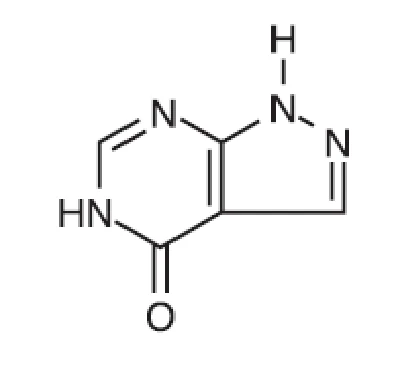
Physicochemical properties:
Description: Allopurinol is a position isomer of the natural purine base hypoxanthine. It is a colourless, odourless, tasteless, solid, insoluble in cold water and dissolves in about 250 parts of hot water. It can be dissolved in water by the addition of one molecular equivalent of sodium hydroxide.
14 CLINICAL TRIALS
The clinical trial data on which the original indication was authorized is not available.
15 MICROBIOLOGY
No microbiological information is required for this drug product.
16 NON-CLINICAL TOXICOLOGY
General Toxicology:
ACUTE ORAL TOXICITY(LD50)
Rats: greater than 1100 mg/kg
Mice: greater than 953 mg/kg
SUBACUTE TOXICITY
In a 13-week feeding experiment in rats, at a drug level of 72 mg/kg/day, 2 of 10 rats died; at 225 mg/kg/day, 4 of 10 died before the completion of the experiment. Both groups exhibited renal tubular damage due to the deposition of xanthine that was more extensive at the higher dose. In chronic feeding experiments, rats showed no toxic effects at a level of 14 mg/kg/day after one year. At a level of 24 mg/kg/day for one year, the rats showed very slight depression of weight gain and food intake, and five out of ten of the animals showed minor changes in the kidney tubules of the type exhibited by the rats on the higher dose described above. Dogs survived oral dosing at 30 mg/kg/day for one year with nil to minor changes in the kidney and no other significant abnormalities. At 90 mg/kg/day for one year, there was some accumulation of xanthine in the kidneys with resultant chronic irritation and slight tubular changes. Occasional hemosiderin-like deposits were seen in the reticuloendothelial system. A higher dose (270 mg/kg/day) resulted in large concentrations in the renal pelves, with severe destructive changes in the kidney secondary to xanthine accumulation. The deposit of xanthine appears to be a function of both the metabolic turnover of purines (which is proportionately larger in the smaller animals) and the degree of inhibition of xanthine oxidase.
Carcinogenicity: No evidence of carcinogenicity has been found in mice and rats treated with allopurinol for up to 2 years.
Genotoxicity: Cytogenetic studies show that allopurinol does not induce chromosome aberrations in human blood cells in vitro at concentrations up to 100 mcg/mL and in vivo at doses up to 600 mg/day for a mean period of 40 months.
Allopurinol does not produce nitroso compounds in vitro or affect lymphocyte transformation in vitro.
Evidence from biochemical and other cytological investigations strongly suggests that allopurinol had no deleterious effects on DNA at any stage of the cell cycle and is not mutagenic.
Reproductive and Developmental Toxicology: Reproductive studies in rats and rabbits indicated that allopurinol did not affect litter size, the mean weight of the progeny at birth or at three weeks postpartum, nor did it cause an increase in animals born dead or with malformations.
One study in mice receiving intraperitoneal doses of 50 or 100 mg/kg on days 10 or 13 of gestation resulted in fetal abnormalities, however in a similar study in rats at 120 mg/kg on day 12 of gestation no abnormalities were observed. Extensive studies of high oral doses of allopurinol in mice up to 150 mg/kg/day during days 8 to 16 of gestation produced no teratogenic effects.
An in vitro study using fetal mouse salivary glands in culture to detect embryotoxicity indicated that allopurinol would not be expected to cause embryotoxicity without also causing maternal toxicity.
17 SUPPORTING PRODUCT MONOGRAPHS
- 1. ZYLOPRIM: Product Monograph, Burroughs-Wellcome. March 9, 1976.
- 2. ZYLOPRIM® (Tablets, 100, 200 and 300 mg), submission control 248178, Product Monograph, AA Pharma Inc. (September 02, 2021).