


Product Monograph - Anzemet Injection 20 mg/mL
ACTION AND CLINICAL PHARMACOLOGY
Dolasetron and its active metabolite, hydrodolasetron (MDL 74156), are selective 5-HT3 receptor antagonists shown not to have activity at other known serotonin receptors and with low affinity for dopamine receptors. The serotonin 5-HT3 receptors are located on the nerve terminals of the vagus in the periphery and centrally in the chemoreceptor trigger zone of the area postrema. It is thought that chemotherapeutic agents produce nausea and vomiting by releasing serotonin from the enterochromaffin cells of the small intestine, and that serotonin then activates the 5-HT3 receptors located on vagal afferents to initiate the vomiting reflex.
Acute, reversible, ECG changes (PR and QTc; QRS widening), caused by dolasetron, have been observed in controlled clinical trials. Dolasetron appears to prolong both depolarization and, to a lesser extent, repolarization time. Although QTc prolongation is primarily due to QRS widening, JT prolongation has also been observed. The magnitude and frequency of the ECG changes increased with dose (related to the peak plasma concentration of hydrodolasetron but not the parent compound). These ECG changes usually returned to baseline within 6 to 8 hours, but in some patients have lasted 24 h or longer. Dolasetron mesylate administration has little or no effect on blood pressure.
In healthy volunteers (N=4), dolasetron mesylate in single intravenous doses up to 5 mg/kg produced no effect on pupil size or meaningful changes in EEG tracings. Results from neuropsychiatric tests revealed that dolasetron mesylate does not alter mood or concentration. Multiple daily doses of dolasetron have no effect on colonic transit in humans. Dolasetron has no effect on plasma prolactin concentrations.
Pharmacokinetics in Humans (Intravenous Administration)
Intravenous dolasetron is rapidly eliminated (t2<10 min) and completely metabolized to the most clinically relevant species, hydrodolasetron. Hydrodolasetron appears rapidly in plasma, with a maximum concentration occurring approximately 0.6 hours after the end of intravenous treatment, and is eliminated with a mean half-life of 7.3 hours (CV=24%, n=30) in adult cancer patients. Hydrodolasetron is eliminated by multiple routes, including renal excretion, after metabolism mainly by glucuronidation and hydroxylation. Hydrodolasetron exhibits linear pharmacokinetics over the intravenous dose range of 50 to 200 mg and they are independent of infusion rate. Doses lower than 50 mg have not been studied. Two-thirds of the administered dose is recovered in the urine and one-third in the faeces. Hydrodolasetron is widely distributed in the body with a mean apparent volume of distribution of 5.8 L/kg (CV=25%; n=24) in adults.
Sixty-nine to 77% of hydrodolasetron is bound to plasma proteins. In a study with 14C- labelled dolasetron, the distribution of radioactivity to blood cells was not extensive. The binding of hydrodolasetron to α1-acid glycoprotein is approximately 51%. The pharmacokinetics are similar in men and women. The pharmacokinetics of hydrodolasetron, in special and targeted patient populations following IV administration of dolasetron, are summarized in Table 1. The pharmacokinetics of hydrodolasetron are similar in adult healthy volunteers and adult cancer patients receiving chemotherapeutic agents. The apparent clearance of hydrodolasetron is not affected by age in adult cancer patients. Following IV administration, the apparent clearance of hydrodolasetron remains unchanged with severe hepatic impairment and decreases 47% with severe renal impairment.
Table 1. Pharmacokinetic Values for Hydrodolasetron Following Intravenous Administration of
Dolasetron Mesylate (1.8 mg/kg)
| Age (years) | Clapp (ml/min/kg) | t2 (hr) | AUC 4 (ng/mlxhr) | Cmax (ng/ml) | |
| Young healthy volunteers (n=24) | 19-40 | 9.4 (28%) | 7.3 (24%) | 2567Β | 457Β |
| Elderly healthy volunteers (n=15) | 65-75 | 8.3 (30%) | 6.9 (22%) | 3021Β | 465Β |
| Cancer patients (n=273) | 19-87 | 10.2 (34%) | 7.5 (43%) | 3640 (32%) | 505 (26%) |
Clapp: apparent clearance Cmax: maximal serum concentration t2: terminal elimination half-life Β: Results dose-normalized to the recommended dose assuming linear kinetics Values in brackets () represent the coefficient of variation in % | |||||
Pharmacokinetics in Humans (Oral Administration)
Oral dolasetron is well absorbed, although parent drug is rarely detected in plasma due to rapid and complete metabolism to the most clinically relevant species, hydrodolasetron. Hydrodolasetron appears rapidly in plasma, with a maximum concentration occurring approximately 1 hour after dosing, and is eliminated with a mean half-life of 8.1 hours (CV=18%; n=30). The apparent absolute bioavailability of oral dolasetron, determined by the major active metabolite hydrodolasetron, is about 75%. Food does not affect the apparent bioavailability of dolasetron taken by mouth. Hydrodolasetron is eliminated by multiple routes, including renal excretion, after metabolism, mainly glucuronidation and hydroxylation. Two-thirds of the administered dose is recovered in the urine and one-third in the faeces. Hydrodolasetron is widely distributed in the body with a mean apparent volume of distribution of 5.8 L/kg (CV=25%; n=24). Sixty-nine to 77% of hydrodolasetron is bound to plasma proteins. The binding of hydrodolasetron to α1-acid glycoprotein is approximately 51%. In a study with 14C-labelled dolasetron, the distribution of radioactivity to blood cells was not extensive. The pharmacokinetics of hydrodolasetron are linear and similar in men and women.
The pharmacokinetics of hydrodolasetron following oral administration, in special and targeted patient populations, are summarized in Table 2. The pharmacokinetics of hydrodolasetron are similar between adult healthy volunteers and cancer patients receiving chemotherapeutic agents. The apparent clearance of hydrodolasetron following oral administration of dolasetron is not affected by age in adult cancer patients. The apparent clearance of hydrodolasetron decreases 42% with severe hepatic impairment and 44% with severe renal impairment.
Table 2. Pharmacokinetic Values for Hydrodolasetron Following Oral Administration of Dolasetron
Mesylate (100 mg)
| Age (years) | Clapp (ml/min/kg) | t2 (hr) | AUC4Β | Cmax (ng/ml) | |
| Young healthy volunteers (n=24) | 19-45 | 10.5 (32%) | 8.2 (21%) | 1605Β | 299Β |
| Elderly healthy volunteers (n=14) | 65-75 | 9.5 (36%) | 7.2 (32%) | 2106Β | 402Β |
| Cancer patients (n=17) | 30-84 | 11.5 (47%) | 7.9 (33%) | -Ή | -Ή |
Clapp: Apparent oral clearance Cmax: Maximal serum concentration t2: Terminal elimination half-life Ή: Sampling times did not allow for determination Β: Results dose-normalized to the recommended dose assuming linear kinetics Values in brackets () represent the coefficient of variation in % | |||||
Clinical Trials
Intravenous Administration
One thousand nine hundred and seventeen patients receiving emetogenic chemotherapy (including high dose cisplatin $70mg/m2) were studied in five randomized, double blind trials in which 597 patients were treated with the recommended dose of 1.8 mg/kg ANZEMET Injection (Table 3). Efficacy was based on complete response rates (no emetic episodes and no rescue medication). ANZEMET Injection (dolasetron mesylate) administered intravenously at a dose of 1.8 mg/kg gave similar results in preventing nausea and vomiting as the other selective 5-HT3 receptor antagonists studied as active comparators. ANZEMET Injection was more effective than metoclopramide.
Table 3. Prevention of Chemotherapy-Induced Nausea and Emesis in Cisplatin‚ Chemotherapy with ANZEMET Injection (1.8 mg/kg)
| Response over 24 hours | Patients responding (%) (n=597) |
| Complete ResponseH | 313 (52.4%) |
| Nausea Scoreq | 10.5 |
| Total Response˜ | 223 (37.4%) |
‚: Cisplatin was used at moderately and highly emetogenic doses; cyclophosphamide, doxorubicin, fluorouracil, epirubicin, and vincristine were used at moderately emetogenic doses and were the most commonly used chemotherapeutic agents in these trials H: No emetic episodes and no rescue medication q: Median 24-hr change from baseline nausea score using visual analog scale (VAS); score range 0 = Anone@ to 100 = Anausea as bad as it could be@ ˜: Complete response plus no nausea (VAS<5mm) | |
Oral Administration
One thousand and twenty six patients receiving emetogenic chemotherapy were studied in three randomized, double blind trials in which 227 patients were treated with 100 mg oral ANZEMET (dolasetron mesylate). Efficacy was based on complete response rates (no emetic episodes and no rescue medication). ANZEMET administered at an oral dose of 100 mg gave similar results in preventing nausea and vomiting as the other selective 5-HT3 receptor antagonists studied as active comparators.
Table 4. Prevention of Chemotherapy-Induced Nausea and Vomiting in Moderately Emetogenic
Chemotherapy with ANZEMET Tablets (100mg)'
| Response over 24 hours | Patients responding (%) (n=227) |
| Complete Response& | 147 (64.8%) |
| Nausea ScoreI | 2.5 |
| Total ResponseG | 111 (48.9%) |
': Cisplatin, carboplatin, doxorubicin, and cyclophosphamide were used at moderately emetogenic doses &: No emetic episodes and no rescue medication I: Median 24-hr change from baseline nausea score using visual analog scale (VAS); score range 0 = Anone@ to 100 = Anausea as bad as it could be@ G: Complete response and no nausea (VAS<5mm) | |
INDICATIONS AND CLINICAL USE
Adults:
ANZEMET (dolasetron mesylate) is indicated for the prevention of nausea and vomiting associated with initial and repeat courses of emetogenic cancer chemotherapy, including high dose cisplatin.
Pediatrics (<18 years of age):
See CONTRAINDICATIONS.
CONTRAINDICATIONS
ANZEMET (dolasetron mesylate) is contraindicated
in patients with known hypersensitivity to the drug or any components of its formulations (see
COMPOSITION).
- Any therapeutic use in children and adolescents under 18 years of age.
- The prevention and treatment of post-operative nausea and vomiting in adults.
These contraindications apply to both intravenous (IV) and oral formulations.
WARNINGS
ECG changes and cardiovascular events
ANZEMET (dolasetron mesylate) can cause ECG interval changes (PR and QTc prolongations and QRS widening) in healthy volunteers and patients. In patients receiving chemotherapy or undergoing surgery, JT prolongations have also been observed following ANZEMET, active comparator or placebo. JT prolongations have not been observed in healthy volunteers receiving ANZEMET. ECG interval changes are related in magnitude and frequency to blood levels of the active metabolite, hydrodolasetron. These changes are self-limiting with declining blood levels. Some patients have interval prolongations for 24 hours or longer. Interval prolongations could lead to cardiovascular consequences, including heart block or cardiac arrhythmias. These have been rarely reported in patients receiving ANZEMET.
Complete heart block was observed interoperatively in a 61-year old woman who received 200 mg ANZEMET (dolasetron mesylate) oral tablet for the prevention of post-operative nausea and vomiting. This patient was also taking verapamil. A 66-year old man receiving chemotherapy was found dead six hours after receiving 1.8 mg/kg (119 mg) intravenous ANZEMET Injection and concomitant anthracycline therapy. Vital signs taken at 1.0 and 4.5 hours after ANZEMET Injection indicated an adequate blood pressure and increasing heart rate. This patient had other potential risk factors including substantial exposure to doxorubicin and concomitant cyclophosphamide.
The use of dolasetron mesylate is contraindicated in children and adolescents under 18 years of age and in adults for the prevention and treatment of post-operative nausea and vomiting (see CONTRAINDICATIONS) as:
- acute electrocardiographic changes have occurred very commonly in pediatrics aged 2 to 18 years;
- individual cases of sustained supraventricular and ventricular arrhythmias, myocardial infarction and one case of fatal cardiac arrest have been reported in association with ANZEMET in pediatrics. A causal relationship with ANZEMET was suspected based on temporal association in all cases. Most of the cases of cardiovascular events occurred in adolescents. In all cases ANZEMET was indicated for postoperative nausea and vomiting. They concerned mainly the I.V. route, and in one case oral administration.
Dolasetron (5-HT3 receptor antagonist) should be administered with caution in patients who have or may develop prolongation of cardiac conduction intervals, particularly QTc., due to potential for additive effects. These include, also patients with AV block II-III, bundle branch block, patients receiving concomitant class I and III antiarrythmics and patients with hypokalemia or hypomagnesemia, patients taking diuretics with potential for inducing electrolyte abnormalities, patients with congenital QT syndrome, patients taking anti-arrhythmic drugs or other drugs which lead to QT prolongation, and cumulative high dose anthracycline therapy. Interval prolongation could lead to cardiovascular consequences, including heart block or cardiac arrhythmias.
Because ANZEMET affects cardiac conductivity, the recommended doses should not be exceeded.
Allergic Reactions
Cross hypersensitivity reactions have been reported in patients who have received other selective 5 HT3 receptor antagonists. It has not been seen with dolasetron mesylate.
PRECAUTIONS
Cardiovascular
Dolasetron (5-HT3 receptor antagonist) should be administered with caution in patients who have or may develop prolongation of cardiac conduction intervals, particularly QTc., due to potential for additive effects (see WARNINGS, ECG changes and cardiovascular events).
Pediatrics (<18 years of age):
See CONTRAINDICATIONS.
Renal Impairment
Dosage adjustment is not necessary in mild to moderate renal impairment. However, dolasetron is not recommended in patients with severe renal impairment because of the possibilitiy of prolonged QTc intervals and other cardiac conduction abnormalities from elevated hydrodolasetron levels.
Hepatic Impairment
Dosage adjustment is not necessary in mild to moderate hepatic impairment. The oral formulation of dolasetron is not recommended in patients with severe hepatic impairment because of the possibilitiy of prolonged QTc intervals and other cardiac conduction abnormalities from elevated hydrodolasetron levels.
Pregnancy
There are no adequate and well-controlled studies in pregnant women. This drug is not recommended for use during pregnancy.
Animal reproduction studies have shown no evidence of teratogenicity when dolasetron mesylate was administered throughout organogenesis.
Lactation
It is not known whether dolasetron is excreted in human milk. ANZEMET should not be administered to a nursing woman.
Geriatrics
Dosage adjustment is not needed in patients over 65.
Carcinogenicity
In a 24-month carcinogenicity study in CD-1 mice, there was a statistically significant (p=0.001) increase in the incidence of combined hepatocellular adenomas and carcinomas in male mice treated orally with 150 mg/kg/day dolasetron and above. No increase in liver tumours was observed at a dose of 75 mg/kg/day in male mice and at doses up to 300 mg/kg/day in female mice.
In a 24 month carcinogenicity study in Sprague-Dawley rats, oral dolasetron mesylate was not tumorigenic at doses up to 150 mg/kg/day in males and 300 mg/kg/day in females.
Drug Interactions
The potential for clinically significant drug-drug interactions posed by dolasetron and hydrodolasetron appears to be low for drugs commonly used in chemotherapy or surgery (see WARNINGS for information about potential interaction with other drugs that prolong QTc intervals). Blood levels of hydrodolasetron increased 24% when dolasetron was coadministered with cimetidine (nonselective inhibitor of cytochrome P-450) for 7 days, and decreased 28% with coadministration of rifampin (potent inducer of cytochrome P-450) for 7 days. ANZEMET Injection has been safely coadministered with drugs used in chemotherapy and surgery. In patients taking furosemide, nifedipine, diltiazem, ACE inhibitors, verapamil, glyburide, propranolol, and various chemotherapy agents, no effect was shown on the clearance of hydrodolasetron. Clearance of hydrodolasetron decreased by about 27% when dolasetron mesylate was administered concomitantly with atenolol. Dolasetron mesylate does not influence anesthesia recovery time in patients. Dolasetron mesylate did not inhibit the antitumor activity of four chemotherapeutic agents (cisplatin, 5-fluorouracil, doxorubicin, cyclophosphamide) in four murine models.
ADVERSE REACTIONS
The safety of ANZEMET (dolasetron mesylate) has been evaluated in over 7,000 patients in North American and European clinical trials. ANZEMET was well tolerated, with headache being the most frequently reported adverse event. The incidence of adverse events from pivotal controlled clinical trials is presented below.
ANZEMET Injection
In controlled and uncontrolled clinical trials, 2265 adult patients received ANZEMET Injection of which 731 patients were treated at the recommended therapeutic dose (1.8 mg/kg). The most frequently reported adverse events ($2%) in patients receiving ANZEMET Injection are presented in Table 5. Patients were receiving chemotherapy (primarily cisplatin) and intravenous fluids. Adverse events were recorded for at least 24 hours following ANZEMET Injection administration.
Table 5. ANZEMET Intravenous Adverse Events $2% in Chemotherapy-Induced Nausea and Vomiting
| Event | ANZEMET Injection 1.8 mg/kg (n=731) |
| Headache | 188 (25.7%) |
| Diarrhea | 93 (12.7%) |
| Fever | 36 (4.9%) |
| Hepatic Function Abnormal' | 28 (3.8%) |
| Fatigue | 25 (3.4%) |
| Abdominal Pain | 23 (3.1%) |
| Tachycardia | 21 (2.9%) |
| Chills/Shivering | 20 (2.7%) |
| Hypertension | 20 (2.7%) |
| Extrasystoles | 19 (2.6%) |
| Pain | 18 (2.5%) |
| Dizziness | 15 (2.1%) |
| ': Includes events coded as SGOT- or SGPT-increased | |
Oral Administration
In controlled clinical trials, 943 patients received oral ANZEMET of which 227 patients were treated at the recommended therapeutic dose (100 mg). These patients were receiving concurrent chemotherapy, predominantly cyclophosphamide and doxorubicin regimens. Table 6 lists adverse events occurring in $2% of patients in comparative clinical trials:
Table 6. Oral ANZEMET Adverse Events Occurring $2% in Chemotherapy-Induced Nausea and
Vomiting Patients
| ANZEMET 100 mg (n=227) | |
| Headache | 52 (22.9%) |
| Diarrhea | 12 (5.3%) |
| Fatigue | 13 (5.7%) |
| Bradycardia | 9 (4.0%) |
| Pain | 7 (3.1%) |
| Dizziness | 7 (3.1%) |
| Tachycardia | 6 (2.6%) |
| T Wave Change | 6 (2.6%) |
| ST-T Wave Change | 6 (2.6%) |
| Chills/Shivering | 5 (2.2%) |
| Dyspepsia | 5 (2.2%) |
LESS FREQUENTLY OCCURRING ADVERSE EVENTS:
ANZEMET Injection:
In controlled and uncontrolled clinical trials the following Adverse Events occurred at a frequency of 0.3% to 2.0% in patients treated with ANZEMET Injection at the recommended dose (1.8 mg/kg):
Application Site: Injection site pain.
Autonomic Nervous System: Dry mouth, flushing.
Body as a Whole: Malaise.
General Cardiovascular: Chest pain, edema, edema peripheral, fluid overload, hypotension.
Central and Peripheral Nervous System: Drowsiness, paresthesia, tremor, vertigo.
Gastro-Intestinal System: Abdominal distension, anorexia, appetite increased, constipation, dyspepsia, flatulence, hiccup, nausea, stomatitis.
Hearing, Taste, and Vision: Taste perversion.
Heart Rate and Rhythm: atrial arrhythmia, sinus arrythmia, atrial flutter/fibrillation, first degree AV block, bradycardia, cardiac arrest, ECG abnormal specific, QT/QTc prolonged, ST-T Wave change, T wave change.
Hematologic: Bone marrow aplasia, epistaxis.
Musculo-Skeletal System: Myalgia.
Psychiatric: Agitation, anxiety, confusion, sleep disorder.
Resistance Mechanism: Sepsis.
Respiratory System: Abnormal breath sounds, bronchospasm, cough, dyspnea, pneumonia, pulmonary congestion, throat irritation, upper respiratory congestion.
Skin and Appendages: Facial edema, increased sweating.
Urinary System: Urinary retention.
Oral Administration:
In controlled clinical trials the following Adverse Events occurred at a frequency of 0.9% to 2.0% in patients treated with oral ANZEMET at the recommended dose (100 mg):
Autonomic Nervous System: Dry mouth, flushing.
Body as a Whole: Fever.
Cardiovascular (general): Dependent edema, hypotension.
Central and Peripheral Nervous System: Drowsiness.
Gastro-Intestinal System: Abdominal pain, anorexia, increased appetite, constipation, eructation, flatulence, nausea.
Hearing, Taste, and Vision: Taste perversion.
Heart Rate and Rhythm: Atrial arrythmia, sinus arrhythmia, extrasystoles.
Liver and Biliary System: SGOT increased.
Metabolic and Nutritional: Dehydration.
Resistance Mechanism: Influenza-like symptoms.
Respiratory System: Dyspnea, nasal irritation, sneezing, throat irritation.
POSTMARKET SURVEILLANCE:
ANZEMET Injection:
Cases of local pain and burning on IV administration have been observed.
In very rare cases, severe hypotension, bradycardia and possibly loss of consciousness may occur immediately or closely following IV bolus administration of dolasetron mesylate. These events have occurred in patients receiving dolasetron mesylate for the prevention of cancer chemotherapy-induced nausea and vomiting.
Dolasetron mesylate has been shown to cause ECG prolongations, including QTc, PR and QRS intervals. These changes are related in magnitude and frequency to blood levels of the active metabolite; the changes are self limiting with declining blood levels. Some patients have interval prolongation for 24 hours or longer. Interval prolongation could lead to cardiovascular consequences including heart block or cardiac arrhythmias. There are very rare reports of wide complex tachycardia or ventricular tachycardia and of ventricular fibrillation/cardiac arrest following intravenous administration.
Individual cases of sustained supraventricular and ventricular arrhythmias, myocardial infarction and one case of fatal cardiac arrest have been reported in association with ANZEMET in pediatrics. A causal relationship with ANZEMET was suspected based on temporal association in all cases. Most of the cases of cardiovascular events occurred in adolescents. In all cases ANZEMET was indicated for postoperative nausea and vomiting. They concerned mainly the I.V. route, and in one case oral administration.
There are rare reports of anaphylactic/anaphylactoid reactions including skin reactions such as rash, puritus, and urticaria, respiratory reactions such as bronchospasm, very rare reports of facial edema/angioedema and shock.
SYMPTOMS AND TREATMENT OF OVERDOSAGE
There have been reports of overdose. Severe hypotension, dizziness and prolongation of the PR, QRS and QTc intervals were reported after overdose intravenous infusion.
It is not known if dolasetron mesylate is removed by hemodialysis or peritoneal dialysis.
Following a suspected overdose of ANZEMET, a patient found to have second-degree or higher AV conduction block should undergo cardiac telemetry monitoring.
There is no known specific antidote for dolasetron mesylate, and patients with suspected overdose should be managed with supportive therapy. Individual doses as large as 5 mg/kg intravenously or 400 mg orally have been safely given to healthy volunteers or cancer patients.
Single intravenous doses of dolasetron mesylate at 160 mg/kg in male mice and 140 mg/kg in female mice and rats of both sexes were lethal. Symptoms of acute toxicity were tremors, depression and convulsions.
DOSAGE AND ADMINISTRATION
The following recommended doses of ANZEMET (dolasetron mesylate) should not be exceeded due to the effects on cardiac conductivity (see WARNINGS, PRECAUTIONS):
Adults:
ANZEMET is contraindicated for the prevention and treatment of post-operative nausea and vomiting in adults
(see CONTRAINDICATIONS).
IV Administration
Adults: The recommended intravenous dosage of ANZEMET Injection is 1.8 mg/kg given as a single dose approximately 30 minutes before chemotherapy. Most patients can be adequately treated with 100 mg. For light patients (<56 kg) or heavy patients (>90 kg), 1.8 mg/kg should be used.
The injection solution can be infused as rapidly as 100 mg over 30 seconds, or it can be diluted in a compatible IV solution such as normal saline or 5% dextrose to 50 mL and infused over 15 minutes. More rapid IV administration should be avoided (see ADVERSE REACTIONS). Dolasetron mesylate should not be mixed with other drugs. Flush the infusion line before and after administration of dolasetron mesylate.
Oral Administration
Adults: The recommended oral dosage of ANZEMET is one 100 mg tablet given within one hour prior to chemotherapy.
Pediatrics
ANZEMET is contraindicated for any therapeutic use in children and adolescents under 18 years of age (see CONTRAINDICATIONS).
Geriatrics
It is not necessary to adjust the dose of dolasetron mesylate in elderly patients.
Hepatic Impairment
No dosage adjustment is necessary in mild to moderate hepatic impairment. However, oral dolasetron is not recommended in patients with severe hepatic impairment because of the possibility of prolonged QTc intervals and other cardiac conduction abnormalities from elevated hydrodolasetron levels.
Renal Impairment
No dosage adjustment is necessary in mild to moderate renal impairment. However, dolasetron is not recommended in patients with severe renal impairment because of the possibility of prolonged QTc intervals and other cardiac conduction abnormalities from elevated hydrodolasetron levels.
PHARMACEUTICAL INFORMATION
Drug Substance
Proper Name: Dolasetron mesylate
Chemical Name: (2α,6α,8α,9α -octahydro-3-oxo-2,6,-methano-2H-quinolizin-8-yl-1H-indole-3
-carboxylate monomethanesulfonate, monohydrate
Chemical Structure:
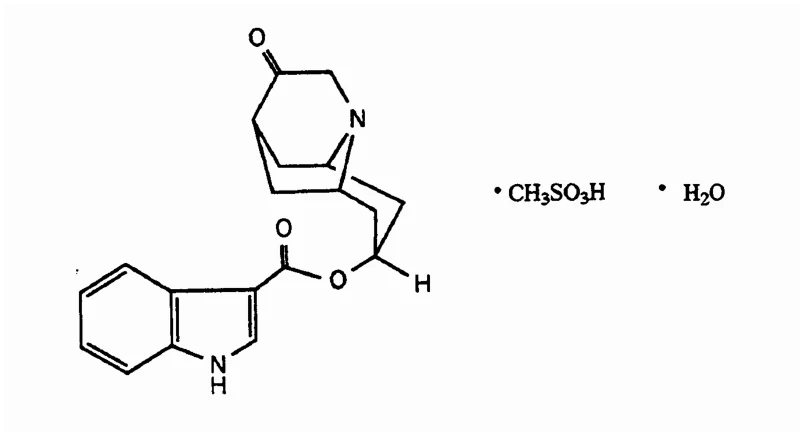
Emperical Formula
:
C19H20N2O
3 • CH3SO3H • H2O
Molecular Weight: 438.50
Description:
Dolasetron mesylate is a white to off-white powder. At room temperature, it is very soluble in water, freely soluble in methanol, slightly soluble in chloroform, and insoluble in hexane.
pH: 3.543 and 4.287 at 5% w/v and 0.5% w/v, respectively
pKa: 6.398 at 25EC
Composition
Injection
ANZEMET (dolasetron mesylate) Injection is a clear, colourless, sterile, non-pyrogenic solution for intravenous injection. Each mL contains 20 mg dolasetron mesylate monohydrate as well as the non-medicinal ingredients mannitol, glacial acetic acid, sodium acetate trihydrate, and water for injection. ANZEMET Injection has a pH range of 3.2 to 3.8.
Tablets
ANZEMET Tablets are available in strengths containing 50 and 100 mg dolasetron mesylate monohydrate per tablet. Each tablet also contains the following non-medicinal ingredients: carnauba wax, croscarmellose sodium, hydroxypropyl methylcellulose, lactose, magnesium stearate, polyethylene glycol, polysorbate 80, pregelatinized starch, titanium dioxide and white wax. The 50 and 100 mg tablet also contain red iron oxide.
STABILITY AND STORAGE RECOMMENDATIONS
ANZEMET (dolasetron mesylate) Injection should be stored at controlled temperature (15 - 30EC) and protected from light.
ANZEMET Tablets should be stored at controlled temperature (15 - 30EC).
Parenteral Products
Administration of Intravenous Infusion Solutions
Compatibility with Intravenous Solutions:
ANZEMET (dolasetron mesylate) Injection should only be admixed with the following recommended infusion fluids:
C 0.9% w/v Sodium Chloride Injection
C 5% w/v Glucose Injection
C 10% w/v Mannitol Injection
C 0.45% w/v Sodium Chloride and 5% w/v Glucose Injection
C Lactated Ringer's Injection
C 5% w/v Glucose Injection and Lactated Ringer's Injection
Dolasetron mesylate is compatible with polypropylene syringes, IV bags, and associated tubing.
Compatibility with Other Drugs:
Dolasetron mesylate should not be mixed with other drugs. Flush the infusion line before and after administration of dolasetron mesylate.
ANZEMET injection at a 4 mg/mL concentration has been determined to be physically incompatible with the following drugs when administrated through the same intravenous line: carmustine, 5-fluorouracil, acyclovir sodium, ampicillin sodium, cefazolin sodium, chloramphenicol sodium succinate, clindamycin phosphate, dexamethasone sodium phosphate, methylpredinisolone sodium succinate, trimethoprim with sulfamethoxazole, aminophylline, amphotericin B, heparin sodium, potassium phosphate and sodium bicarbonate. ANZEMET injection at a concentration of 20 mg/mL is physically incompatible with thiopental sodium.
Note: As with all parenteral drug products, intravenous admixtures should be inspected visually for clarity, particulate matter, precipitate, discolouration and leakage prior to administration, whenever solution and container permit. Solutions showing haziness, particulate matter, precipitate, discolouration or leakage should not be used.
Dilution: To prepare ANZEMET Injection for intravenous infusion, aseptically transfer the appropriate amount of ANZEMET Injection to the desired volume of infusion fluid.
| Diluent Volume | Quantity of ANZEMET Injection | Final Concentration | Administration* | |
| Dose | Infusion Rate | |||
| 50 mL | 50 mg (2.5 mL) | 0.95 mg/mL | 50 mg/15 min | 53 mL/15 min |
| 50 mL | 100 mg (5 mL) | 1.82 mg/mL | 100 mg/15 min | 55 mL/15 min |
* ANZEMET Injection can also be injected over 30 seconds.
Stability and Storage of Diluted Solutions
Dilutions of intravenous fluids should be used immediately after preparation or stored for no more than 24 hours at 2-8EC.
AVAILABILITY OF DOSAGE FORMS
ANZEMET Injection
ANZEMET (dolasetron mesylate) Injection 20 mg/mL is supplied in clear glass vials and ampoules of 5 mL (100 mg dolasetron mesylate).
ANZEMET Tablets
ANZEMET 50 mg pale pink, round, film-coated tablets are printed A50" in the center of the tablet and “A” on the other side.
ANZEMET 100 mg pink, oval, film-coated tablets are printed with "ANZEMET" on one side and A100" on the other.
Tablets are available in bottles of 15 tablets.