


Product Monograph - Aloxi
1 INDICATIONS
ALOXI (palonosetron hydrochloride) injection is indicated in:
- adults for the prevention of acute and delayed nausea and vomiting associated with moderately emetogenic cancer chemotherapy
- adults for the prevention of acute nausea and vomiting associated with highly emetogenic cancer chemotherapy, including high dose cisplatin
- pediatric patients aged 2 to 17 years for the prevention of acute nausea and vomiting associated with moderately and highly emetogenic cancer chemotherapy
ALOXI capsules are indicated in:
- adults for the prevention of acute nausea and vomiting associated with moderately emetogenic cancer chemotherapy
1.1 Pediatrics
Pediatrics (2 to 17 years of age): The safety and efficacy of ALOXI injection has been established in pediatric patients aged 2 to 17 years undergoing moderately and highly emetogenic cancer chemotherapy. Data in patients aged 2 months to 2 years were limited. No data are available in children aged less than 2 months (see ADVERSE REACTIONS/Clinical Trial Adverse Reactions [Pediatrics]; CLINICAL TRIALS).
Safety and effectiveness of ALOXI capsules in patients below the age of 18 years have not been established.
1.2 Geriatrics
No overall differences in safety or effectiveness were observed between patients ≥65 years of age and younger patients (18 to 64 years).
2 CONTRAINDICATIONS
ALOXI is contraindicated in patients who are hypersensitive to this drug or to any ingredient in the formulation, including any non-medicinal ingredient, or component of the container. For a complete listing, see DOSAGE FORMS, COMPOSITION AND PACKAGING.
3 DOSAGE AND ADMINISTRATION
3.1 Dosing Considerations
ALOXI should be used only on the day of chemotherapy. Drug accumulation was observed in subjects administered ALOXI on consecutive days or once every two days for three doses. There are limited safety data available regarding repeated dosing of ALOXI (see ACTION AND CLINICAL PHARMACOLOGY/Pharmacokinetics).
No dose adjustment is required for geriatric patients with renal or hepatic impairment.
ALOXI has been shown to have similar safety profiles between initial and repeat courses of chemotherapy (see ADVERSE REACTIONS/Clinical Trial Adverse Reactions).
3.2 Recommended Dose and Dosage Adjustment
ALOXI Injection
Dosage for Adults
A single 0.25 mg I.V. dose administered over 30 seconds, approximately 30 minutes before the start of chemotherapy.
The efficacy of ALOXI in the prevention of acute nausea and vomiting induced by highly emetogenic chemotherapy was demonstrated mainly in patients who were co-administered prophylactic corticosteroids (see CLINICAL TRIALS).
Dosage for Pediatric Population
Children and Adolescents (aged 2 to 17 years) – A single 0.02 mg/kg I.V. dose (maximum total dose not exceeding 1.5 mg) administered as a 15 minute infusion beginning approximately 30 minutes before the start of chemotherapy (see CLINICAL TRIALS).
ALOXI Capsules
Dosage for Adults
One 0.5 mg capsule administered approximately one hour prior to the start of chemotherapy. ALOXI can be taken with or without food.
3.3 Administration
ALOXI Injection
ALOXI is supplied ready for intravenous injection. ALOXI should not be mixed with other drugs. Flush the infusion line with normal saline before and after administration of ALOXI.
Parenteral drug products should be inspected visually for particulate matter and discolouration before administration, whenever solution and container permit.
4 OVERDOSAGE
There is no known antidote to ALOXI. Overdose should be managed with supportive care.
Fifty adult cancer patients were administered palonosetron at an oral dose of 0.09 mg/kg (equivalent to 6 mg fixed dose in a 70 kg individual) as part of a dose ranging study. This is approximately 12 times the recommended oral dose of 0.5 mg. This dose group had a similar incidence of adverse events compared to the other dose groups and no dose response effects were observed.
Dialysis studies have not been performed; however, due to the large volume of distribution, dialysis is unlikely to be an effective treatment for palonosetron overdose.
For management of a suspected drug overdose, contact your regional Poison Control Centre immediately.
5 DOSAGE FORMS, STRENGTHS, COMPOSITION AND PACKAGING
Table 1 – Dosage Forms, Strengths, Composition and Packaging
ALOXI Injection
ALOXI (palonosetron hydrochloride) injection, 0.25 mg (free base) in 5 mL, is supplied as a single-use sterile, clear, colourless solution in glass vials.
ALOXI Capsules
ALOXI (palonosetron hydrochloride) capsules, 0.5 mg (free base), are supplied as light beige opaque soft gelatin capsules.
| Route of Administration | Dosage Form / Strength | Non-medicinal Ingredients |
| Intravenous | Solution for injection: 0.25 mg palonosetron (as palonosetron hydrochloride)/5 mL (0.05 mg/mL) | Citrate buffer in water, disodium edetate, and mannitol. |
| Oral | Capsule: 0.5 mg palonosetron (as palonosetron hydrochloride) | Black printing ink, butylated hydroxyanisole, gelatin, glycerin, monoglycerides and diglycerides of capryl/capric acid, polyglyceryl oleate, sorbitol, titanium dioxide, water. May contain traces of medium chain triglyceride and lecithin. |
6 WARNINGS AND PRECAUTIONS
Carcinogenesis and Mutagenesis
Statistically significant increased incidences of a variety of different tumours affecting the liver, adrenal gland, mammary gland and other tissues and organs were observed at high doses of palonosetron in a rat carcinogenicity study. In the mouse study the findings were not attributed to palonosetron treatment (see NON-CLINICAL TOXICOLOGY/Carcinogenicity). Experimental evidence indicates that palonosetron is non-mutagenic (see TOXICOLOGY/Genotoxicity).
Cardiovascular
QTc Interval Prolongation:
Caution should be exercised in the concomitant use of ALOXI with medicinal products that increase the QT interval or in patients who have or are likely to develop prolongation of QT interval (e.g., congenital QT Syndrome, electrolyte imbalance). Hypokalemia and hypomagnesemia should be corrected prior to 5-HT3-antagonist administration.
In non-clinical studies, palonosetron possesses the ability to block ion channels involved in ventricular de- and re-polarization and to prolong action potential duration (see ACTION AND CLINICAL PHARMACOLOGY/Pharmacodynamics). At all dose levels tested in the chemotherapy-induced nausea and vomiting pivotal clinical studies, cases of QTc prolongation were reported in the ALOXI treatment groups, although those cases were not considered clinically significant (see ADVERSE REACTIONS/Less Common Clinical Trial Adverse Reactions).
A thorough QT/QTc study with moxifloxacin as a positive control demonstrated a dose-dependent increase from baseline in maximum individually determined QT correction (QTcI) interval and increased numbers of patients with a QTcI change of 30 - 60 msec in three palonosetron dose groups; although, the effect at doses up to 2.25 mg was below that of moxifloxacin. No clinically significant changes were shown on heart rate, atrioventricular conduction and cardiac repolarization (see ACTION AND CLINICAL PHARMACOLOGY/Pharmacodynamics).
Driving and Operating Machinery
ALOXI may cause dizziness, somnolence or fatigue. Due caution should be exercised when driving or operating a vehicle or potentially dangerous machinery.
Gastrointestinal
As ALOXI may increase large bowel transit time, patients with a history of constipation or signs of subacute intestinal obstruction should be monitored following administration.
Hepatic
Hepatic impairment does not significantly affect total body clearance of intravenous palonosetron compared to the healthy subjects. However, the terminal half-lives of palonosetron were increased in patients with moderate and severe degrees of hepatic impairment (see ACTION AND CLINICAL PHARMACOLOGY/Special Populations and Conditions/Hepatic Insufficiency). Dosage adjustment is not necessary in patients with any degree of hepatic impairment.
Renal
Mild to moderate renal impairment does not significantly affect palonosetron pharmacokinetic parameters. The systemic exposure (AUC0-t) of palonosetron increased by approximately 45% in patients with severe renal impairment relative to healthy subjects. Longer terminal half-lives (estimated 115-300 hours) were also reported in some patients with severe renal impairment (see ACTION AND CLINICAL PHARMACOLOGY/Special Populations and Conditions/Renal Insufficiency). Dosage adjustment is not necessary in patients with mild to severe renal impairment. The pharmacokinetics of palonosetron have not been studied in subjects with end-stage renal disease.
Sensitivity/Resistance
Hypersensitivity reactions may occur in patients who have exhibited hypersensitivity to other 5-HT3 receptor antagonists. Hypersensitivity reactions have been very rarely reported post-marketing for intravenous palonosetron: dyspnea, bronchospasm, swelling/edema, erythema, pruritus, rash, and urticaria. No hypersensitivity reactions have been reported for oral palonosetron.
Serotonin Syndrome/Neuroleptic Malignant Syndrome-like Events
Cases of life-threatening serotonin syndrome or neuroleptic malignant syndrome-like events have been reported with 5-HT3 receptor antagonist antiemetics, particularly when given in combination with other serotonergic and/or neuroleptic drugs. Serotonin syndrome symptoms may include mental status changes (e.g., agitation, hallucinations, coma), autonomic instability (e.g., tachycardia, labile blood pressure, hyperthermia), neuromuscular aberrations (e.g., hyperreflexia, incoordination) and/or gastrointestinal symptoms (e.g., nausea, vomiting, diarrhea).
As these syndromes may result in potentially life-threatening conditions, treatment should be discontinued if such events occur and supportive symptomatic treatment should be initiated. If concomitant treatment of ALOXI with a drug affecting the serotonergic neurotransmitter system is clinically warranted, careful observation of the patient is advised, particularly during treatment initiation and dose increases (see DRUG INTERACTIONS).
6.1 Special Populations
6.1.1 Pregnant Women
There are no adequate and well-controlled studies in pregnant women. ALOXI should not be used in pregnant women unless it is considered essential by the physician (see NON-CLINICAL TOXICOLOGY/Reproduction Toxicity).
6.1.2 Breast-feeding
It is not known whether palonosetron is excreted in human milk. Because many drugs are excreted in human milk and because of the potential for serious adverse reactions in infants when breast-feeding, and the potential for tumourigenicity shown for palonosetron in the rat carcinogenicity study, a decision should be made whether to discontinue breast-feeding or to discontinue the drug, taking into account the importance of the drug to the mother (see NON-CLINICAL TOXICOLOGY/Carcinogenicity).
6.1.3 Pediatrics (<18 years)
ALOXI Injection
No data are available in children aged less than 2 months. There are limited data on the use of ALOXI in patients aged 2 months to 2 years (see INDICATION, CLINICAL TRIALS).
ALOXI Capsules
Safety and effectiveness of ALOXI capsules in patients below the age of 18 years have not been established.
7 ADVERSE REACTIONS
7.1 Adverse Reaction Overview
ALOXI Injection
The most common adverse reactions reported in the 633 adult patients treated for the prevention of chemotherapy-induced nausea and vomiting with a single dose of 0.25 mg in the ALOXI I.V. pivotal Phase 3 program were headache (9%) and constipation (5%). Dizziness and diarrhea were reported at a rate of 1%.
In a pediatric study, the safety profile of ALOXI I.V. was comparable to that observed in adults.
ALOXI Capsules
Similarly, the most common adverse reactions reported in the 161 adult patients who received oral palonosetron 0.5 mg were headache (4%) and constipation (0.6%).
7.2 Clinical Trial Adverse Reactions
Because clinical trials are conducted under very specific conditions, the adverse reaction rates observed in the clinical trials may not reflect the rates observed in practice and should not be compared to the rates in the clinical trials of another drug. Adverse reaction information from clinical trials is useful for identifying drug-related adverse events and for approximating rates.
ALOXI Injection
In clinical trials for the prevention of nausea and vomiting induced by moderately or highly emetogenic chemotherapy, 1374 adult patients received palonosetron, including 633 patients that received a single dose of palonosetron 0.25 mg. The duration for monitoring adverse events was 14 days after study drug administration for all patients. Adverse reactions were similar in frequency and severity with ALOXI and ondansetron or dolasetron. Following is a listing of all adverse reactions reported by ≥1% of patients in these trials (Table 2) adverse events known to be caused by chemotherapy such as blood and lymphatic system disorder were not reported as adverse reactions.
Table 12 – Adverse Reactions1 from Chemotherapy-Induced Nausea and Vomiting Studies with Frequency ≥1% in any Treatment Group – ALOXI I.V.
| Adverse Reaction1 | ALOXI 0.25 mg I.V. n = 633 (%) | Ondansetron 32 mg I.V. n = 410 (%) | Dolasetron 100 mg I.V. n = 194 (%) |
| Any adverse reaction | 131 (21%) | 77 (19%) | 61 (31%) |
| Headache | 60 (9%) | 34 (8%) | 32 (16%) |
| Constipation | 29 (5%) | 8 (2%) | 12 (6%) |
| Diarrhea | 8 (1%) | 7 (2%) | 4 (2%) |
| Dizziness | 8 (1%) | 9 (2%) | 4 (2%) |
| Fatigue | 3 (<1%) | 4 (<1%) | 4 (2%) |
| Abdominal Pain | 1 (<1%) | 2 (<1%) | 3 (2%) |
| Appetite decreased | 1 (<1%) | 1 (<1%) | 2 (1%) |
| Insomnia | 1 (<1%) | 3 (<1%) | 3 (2%) |
| Back pain | 0 (0%) | 1 (<1%) | 2 (1%) |
| Dermatitis | 0 (0%) | 0 (0%) | 2 (1%) |
1 Adverse events assessed by investigators as ‘definitively, possibly, or probably’ related to study medications.
In patients who continued with open-label IV palonosetron for additional chemotherapy cycles (median: 2, up to 9), overall safety profiles were similar between initial and repeat courses of chemotherapy.
For adverse reactions in the pediatric population see Section 7.4 Clinical trial Adverse Reactions (Pediatrics).
ALOXI Capsules
In a clinical trial for the prevention of nausea and vomiting induced by moderately emetogenic chemotherapy, a total of 161 adult patients received oral palonosetron 0.5 mg. Following is a listing of drug related adverse reactions reported by ≥1% of patients from the clinical trial.
Table 23 – Adverse Reactions from the Chemotherapy-Induced Nausea and Vomiting Study with Frequency ≥1% – ALOXI Capsules
| Adverse Reaction1 | 0.5 mg oral n = 161 (%) | 0.25 mg I.V. n = 163 (%) |
| Any adverse reaction | 13 (8%) | 26 (16%) |
| Headache | 6 (4%) | 14 (9%) |
| Constipation | 1 (<1%) | 5 (3%) |
1 Adverse events assessed by investigators as ‘definitively, possibly, or probably' related to study medications.
In patients who continued with open-label oral palonosetron for additional chemotherapy cycles (median: 3, up to 4), overall safety profiles were similar between initial and repeat courses of chemotherapy.
7.3 Less Common Clinical Trial Adverse Reactions
ALOXI Injection
In clinical trials, the following infrequently (<1%) reported adverse reactions, assessed by investigators as treatment-related or causality unknown, occurred following a single dose of 0.25 mg ALOXI I.V. in adult patients receiving concomitant cancer chemotherapy:
Cardiac Disorders: bradycardia, extrasystoles, myocardial ischemia, non-sustained tachycardia, sinus arrhythmia, sinus tachycardia, supraventricular extrasystoles, QT prolongation
Ear and Labyrinth Disorders: motion sickness, tinnitus
Eye Disorders: amblyopia, eye irritation
Gastrointestinal Disorders: abdominal pain, dry mouth, dyspepsia, hiccups, flatulence
General Disorders and Administration Site Conditions: asthenia, fatigue, fever, flu-like syndrome, hot flash, weakness
Hepatobiliary Disorders: transient asymptomatic increases in AST and/or ALT and bilirubin
Metabolism and Nutrition Disorders: anorexia, appetite decreased, electrolyte fluctuations, hyperglycemia, hyperkalemia, hypocalcaemia, hypokalemia, metabolic acidosis, metabolic disorders
Musculoskeletal and Connective Tissue Disorders: arthralgia
Nervous System Disorders: hypersomnia, insomnia, paresthesia, peripheral sensory neuropathy, somnolence
Psychiatric Disorders: anxiety, euphoric mood
Renal and Urinary Disorders: glycosuria, urinary retention
Vascular Disorders: vein discoloration, vein distention, hypertension, hypotension
Skin and Subcutaneous Tissue Disorders: allergic dermatitis, rash (including pruritic)
ALOXI Capsules
The infrequently (<1%) reported adverse reactions listed below, assessed by investigators as treatment-related or causality unknown, occurred following a single dose of 0.5 mg ALOXI capsules in adult patients receiving concomitant cancer chemotherapy. In general, adverse reactions were similar between oral and I.V. formulations.
Cardiac Disorders: first degree atrioventricular block, second degree atrioventricular block, transient arrhythmia
Ear and Labyrinth Disorders: motion sickness
Eye Disorders: eye swelling
Gastrointestinal Disorders: constipation, gastritis, nausea
General Disorders and Administration Site Conditions: chills, fatigue
Investigations: blood bilirubin increased
Musculoskeletal and Connective Tissue Disorders: joint stiffness, myalgia, pain in extremity
Nervous System Disorders: dysgeusia
Psychiatric Disorders: insomnia
Respiratory, Thoracic and Mediastinal Disorders: dyspnea
Skin and Subcutaneous Tissue Disorders: erythema, generalized pruritus
7.4 Clinical Trial Adverse Reactions (Pediatrics)
ALOXI Injection
In a clinical trial for the prevention of chemotherapy-induced nausea and vomiting, pediatric patients, aged 2 months to 17 years (mean 8.2 years), were administered either a single infusion of either a subtherapeutic dose of 0.01 mg/kg palonosetron (n = 167) or 0.02 mg/kg palonosetron (n = 163) 30 minutes prior to chemotherapy. Patients underwent up to 4 chemotherapy cycles.
The most common (>1%) adverse reaction was headache.
Less common (<1%) adverse reactions included:
Cardiac disorders: conduction disorder, electrocardiogram QT prolonged, sinus tachycardia
Gastrointestinal disorders: diarrhea
General disorders and administration site conditions: infusion site erythema, infusion site pain, infusion site reaction
Metabolism and nutrition disorders: dehydration
Nervous system disorders: dizziness, dyskinesia
Respiratory, thoracic and mediastinal disorders: cough, dyspnea, epistaxis
Skin and subcutaneous tissue disorders: dermatitis allergic, skin disorder
7.5 Post-Market Adverse Reactions
The following adverse reactions have been identified during post-approval use of ALOXI. Because these reactions are reported voluntarily from a population of uncertain size, it is not always possible to reliably estimate their frequency or establish a causal relationship to drug exposure.
- Hypersensitivity reactions (including anaphylaxis, anaphylactic/anaphylactoid reactions and shock)
- Injection site reactions (such as burning, induration, erythema discomfort and pain)
- Convulsive events
- Syncope
8 DRUG INTERACTIONS
8.1 Overview
Palonosetron is eliminated from the body through both renal excretion and metabolic pathways with the latter mediated via multiple CYP enzymes. Further in vitro studies indicated that palonosetron is not an inhibitor of CYP1A2, CYP2A6, CYP2B6, CYP2C9, CYP2D6, CYP2E1 and CYP3A4/5 (CYP2C19 was not investigated) nor does it induce the activity of CYP1A2, CYP2D6, or CYP3A4/5. Therefore, the potential for clinically significant drug interactions with palonosetron appears to be low.
8.2 Drug-Drug Interactions
The drugs listed below are based on either drug interaction case reports or studies or potential interactions due to the expected magnitude and seriousness of the interaction.
Serotonin Syndrome/Neuroleptic Malignant Syndrome-like Events:
As with other serotonergic agents, serotonin syndrome, a potentially life-threatening condition, may occur with 5-HT3 receptor antagonist antiemetic treatment, particularly with concomitant use of other agents that may affect the serotonergic neurotransmitter system (including triptans, SSRIs, SNRIs, lithium, sibutramine, fentanyl and its analogues, dextromethorphan, tramadol, tapentadol, meperidine, methadone and pentazocine or St. John's Wort [Hypericum perforatum], and with drugs which impair metabolism of serotonin (such as MAOIs, including linezolid [an antibiotic which is a reversible non-selective MAOI], and methylene blue; see WARNINGS AND PRECAUTIONS.)
Atropine:
Prolonged nausea, vomiting and abdominal cramps were reported in patients co-administered with ALOXI 0.25 mg I.V. and atropine prior to chemotherapy. The combination should be avoided.
Metoclopramide:
A study in healthy volunteers involving single-dose I.V. palonosetron (0.75 mg) and steady state oral metoclopramide (10 mg four times daily) demonstrated no significant pharmacokinetic interaction.
Chemotherapeutic Agents:
Palonosetron did not inhibit the antitumour activity of the five chemotherapeutic agents tested (cisplatin, cyclophosphamide, cytarabine, doxorubicin and mitomycin C) in murine tumour models.
Dexamethasone:
Co-administration of a single dose of 0.25 mg I.V. palonosetron and 20 mg I.V. dexamethasone in healthy subjects revealed no pharmacokinetic drug interactions between palonosetron and dexamethasone.
Aprepitant:
In an interaction study in healthy subjects where a single dose of palonosetron 0.25 mg (I.V. bolus) was administered on Day 1 and oral aprepitant for 3 days (125 mg/80 mg/80 mg), the pharmacokinetics of palonosetron were not significantly altered (AUC: no change, Cmax: 15% increase).
Antacid:
Concomitant administration of an antacid (Maalox® liquid 30 mL) had no effect on the oral absorption or pharmacokinetics of a single capsule of palonosetron 0.75 mg in healthy subjects.
Other Medicinal Products:
In clinical trials, palonosetron has been safely administered with corticosteroids, analgesics, antiemetics/antinauseants and antispasmodic agents.
8.3 Drug-Food Interactions
Interactions with food have not been established.
8.4 Drug-Herb Interactions
Interactions with herbal products have not been established.
8.5 Drug-Laboratory Test Interactions
Interactions with laboratory tests have not been established.
9 ACTION AND CLINICAL PHARMACOLOGY
9.1 Mechanism of Action
Palonosetron is a 5-HT3 receptor antagonist with a strong binding affinity for this receptor and little or no affinity for other receptors.
Cancer chemotherapy may be associated with a high incidence of nausea and vomiting, particularly when certain agents, such as cisplatin, are used. 5-HT3 receptors are located on the nerve terminals of the vagus in the periphery and centrally in the chemoreceptor trigger zone of the area postrema. It is thought that chemotherapeutic agents produce nausea and vomiting by releasing serotonin from the enterochromaffin cells of the small intestine and that the released serotonin then activates 5-HT3 receptors located on vagal afferents to initiate the vomiting reflex.
9.2 Pharmacodynamics
In non-clinical studies palonosetron possesses the ability to block ion channels involved in ventricular de-and re-polarization and to prolong action potential duration.
The effect of palonosetron on QTc interval was evaluated in a double-blind, randomized, parallel, placebo and positive (moxifloxacin) controlled trial in adult men and women. The objective was to evaluate the ECG effects of intravenously administered palonosetron at single doses of 0.25 mg, 0.75 mg or 2.25 mg in 221 healthy subjects. The study demonstrated no significant effect on any ECG interval including QTc duration (cardiac repolarization) at doses up to 2.25 mg. However, a dose-dependent increase in maximum QTcI value on Day 1 (6.4, 7.5, 9.0 msec, although the maximum increase was below that of moxifloxacin at 12.9 msec) from baseline and the percentage of subjects with an increased QTcI at the 30 - 60 msec range (0%, 2.2%, 11%) were revealed in the three palonosetron dosing groups.
9.3 Pharmacokinetics
Pharmacokinetics in Repeated Dosing in Adults:
In healthy subjects, I.V. palonosetron 0.25 mg once daily for three consecutive days resulted in a 2.1-fold accumulation (ratio of Day 3 to Day 1 AUC0-24).
Palonosetron 0.25 mg I.V. administered on Days 1, 3 and 5 to testicular cancer patients receiving 20 mg/m2 cisplatin on Days 1 to 5 resulted in a 1.42-fold accumulation (ratio of Day 5 to Day 1 AUC0-t). Mean Cmax in chemotherapy patients on Day 5 was similar to the mean Cmax observed for healthy subjects on Day 3 receiving the same dose for three consecutive days.
Daily dosing of palonosetron in each study produced a similar and predictable pharmacokinetic profile consistent with its long plasma elimination half-life of approximately 40 hours.
Absorption:
ALOXI Injection
After intravenous dosing of palonosetron in healthy subjects and cancer patients, an initial decline in plasma concentrations is followed by a slow elimination from the body. Mean maximum plasma concentration (Cmax) and area under the concentration-time curve (AUC0-∞) are generally dose proportional over the dose range of 0.0003 –0.09 mg/kg in healthy subjects and in cancer
patients. Following administration of a single I.V. dose of palonosetron at 0.003 mg/kg (or 0.21 mg/70 kg) to six cancer patients, mean ± standard deviation (SD) maximum plasma concentration was estimated to be 5.6 ± 5.5 ng/mL and mean AUC was 35.8 ± 20.9 ng•hr/mL.
Following I.V. administration of palonosetron 0.25 mg once every other day for 3 doses in 11 cancer patients, the mean ± SD increase in plasma palonosetron concentration from Day 1 to Day 5 was 42 ± 34%. Following I.V. administration of palonosetron 0.25 mg once daily for 3 days in 12 healthy subjects, the mean increase in plasma palonosetron concentration from Day 1 to Day 3 was 110 ± 45%.
ALOXI Capsules
Table 4 – Mean Pharmacokinetic parameters1 (± standard deviation) of Palonosetron After a Single Dose of 0.5 mg ALOXI Capsules in Healthy Subjects and Cancer Patients
Cmax ng/mL | Tmax (h) | t½ (h) | AUC0-∞ ng•hr/mL | |
Healthy subjects (n = 36) | 0.81 ± 0.17 | 5.1 ± 1.7 | 37 ± 12 | 38.2 ± 11.7 |
Cancer patients (n = 12) | 0.93 ± 0.34 | 5.1 ± 5.9 | 48 ± 19 | 49.7 ± 12.2 |
1 a cross-study comparison
Following oral administration, palonosetron is well absorbed with its absolute bioavailability reaching 97%. After single oral doses using buffered solution in healthy volunteers, mean maximum palonosetron concentrations (Cmax) and area under the concentration-time curve (AUC0-
∞) were dose proportional over the dose range of 0.003 – 0.08 mg/kg in healthy subjects. Mean time to maximum concentration ranged from 3.8 to 5.7 hours after oral dosing.
In 36 healthy male and female subjects given a single oral dose of ALOXI Capsules 0.5 mg, maximum plasma palonosetron concentration (Cmax) was 0.81 ± 0.17 ng/mL (mean ± SD) and time to maximum concentration (Tmax) was 5.1 ± 1.7 hours. In female subjects (n=18), the mean AUC was 35% higher and the mean Cmax was 26% higher than in male subjects (n=18).
In 12 cancer patients given a single oral dose of palonosetron 0.5 mg one hour prior to chemotherapy, Cmax was 0.93 ± 0.34 ng/mL and Tmax was 5.1 ± 5.9 hours. The AUC was 30% higher in cancer patients than in healthy subjects. The mean pharmacokinetic parameters after a single oral dose of 0.5 mg palonosetron are compared between healthy subjects and cancer patients revealed in two studies (Table 4).
A high fat meal did not affect the Cmax and AUC of oral palonosetron. Therefore, ALOXI capsules may be taken without regard to meals.
Distribution: Palonosetron has a volume of distribution of approximately 8.3 ± 2.5 L/kg. Approximately 62% of palonosetron (over palonosetron concentration range of 5.15 – 412 ng/mL) is bound to plasma proteins.
Metabolism: Palonosetron is eliminated by multiple routes with approximately 50% metabolized to form two primary metabolites: N-oxide-palonosetron (accounts for 12.9% of the I.V. dose; 13.5% of the oral dose) and 6-S-hydroxy-palonosetron (accounts for 11.5% of the I.V. dose; 17.2% of the oral dose). These metabolites each have less than 1% of the 5-HT3 receptor antagonist activity of palonosetron. In vitro metabolism studies have suggested that CYP2D6 and to a lesser extent, CYP3A4 and CYP1A2 are involved in the metabolism of palonosetron. However, clinical pharmacokinetic parameters are not significantly different between poor and extensive metabolizers of CYP2D6 substrates.
Elimination:
ALOXI Injection
After a single intravenous dose of 0.01 mg/kg [14C]-palonosetron to healthy subjects, approximately 80% of the dose was recovered within 144 hours in the urine. The amount of unchanged palonosetron excreted in urine represents approximately 42% of the administered dose. In healthy subjects, the total body clearance of palonosetron was 160 ± 35 mL/h/kg and renal clearance was 66.5 ± 18.2 mL/h/kg following a single I.V. dose of approximately 0.75 mg. Mean terminal elimination half-life was approximately 37 hours.
ALOXI Capsules
Following administration of a single oral 0.75 mg dose of [14C]-palonosetron to six healthy subjects, 85% to 93% of the total radioactivity was excreted in urine, and 5% to 8% was eliminated in feces. In healthy subjects given ALOXI Capsules 0.5 mg, the terminal elimination half-life (t½) of palonosetron was approximately 37 hours (mean ± SD), and in cancer patients, t½ was ~48 hours (see Table 4).
Special Populations and Conditions
Pediatrics: Single-dose I.V. ALOXI pharmacokinetic data obtained from pediatric cancer patients showed a dose-proportional increase in mean AUC between the doses of 0.01 mg/kg and 0.02 mg/kg. Following a single dose of I.V. ALOXI 0.02 mg/kg, peak plasma concentration (CT) reported at the end of the 15-minute infusion were highly variable in all age groups. The median half-life was 29.5 hours overall.
There was a trend for decreasing weight normalized palonosetron clearance with increasing patient age. The total body clearance (L/h/kg) in patients 12 to 17 years old was similar to that in healthy adults. There were no apparent differences in volume distribution between age subgroups when expressed as L/kg.
Table 5 – Pharmacokinetic Parameters in Pediatric Cancer Patients following Intravenous Infusion of ALOXI at 0.02 mg/kg over 15 min
| Pediatric Cancer Patientsa | ||||
| <2 y | 2 to <6 y | 6 to <12 y | 12 to <17 y | |
| n = 2 | n = 5 | n = 7 | n = 10 | |
| AUC∞, h•µg/L | 69.0 (49.5) | 103.5 (40.4) | 98.7 (47.7) | 124.5 (19.1) |
| T1/2, hours | 24.0 | 28 | 23.3 | 30.5 |
| n = 6 | n = 14 | n = 13 | n = 19 | |
| Clearancec, L/h/kg | 0.31 (34.7) | 0.23 (51.3) | 0.19 (46.8) | 0.16 (27.8) |
Volume of distributionc,d, L/kg | 6.08 (36.5) | 5.29 (57.8) | 6.26 (40.0) | 6.20 (29.0) |
a Pharmacokinetic parameters expressed as Geometric Mean (coefficient of variance) except for t1/2 which is median.
c Clearance and Volume of distribution in pediatric patients were weight-adjusted from both 0.01 and 0.02 mg/kg dose groups combined.
d Vss is reported for pediatric cancer patients.
Geriatrics: Population pharmacokinetics analysis did not reveal any differences in palonosetron pharmacokinetics between cancer patients ≥65 years of age and younger patients (18 to 64 years). Of the 1374 adult cancer patients in clinical studies of palonosetron, 316 (23%) were ≥65 years old, while 71 (5%) were ≥75 years old. No overall differences in safety or effectiveness were observed between these subjects and the younger subjects, but greater sensitivity in some older individuals cannot be ruled out.
In a cross-study comparison, after a single oral dose (0.75 mg) the systemic exposure of palonosetron (AUC) was similar, but mean Cmax was 15% lower in healthy elderly subjects ≥65 years of age compared with the subjects <65 years of age.
Sex:
ALOXI Injection
No dosage adjustment is necessary based on sex.
ALOXI Capsules
Although a single dose of 0.5 mg ALOXI was associated with a 26-35% higher systemic exposure in female subjects than in male subjects, dosage adjustment is not necessary based on gender.
Ethnic Origin: Intravenous palonosetron pharmacokinetics was characterized in twenty-four healthy Japanese subjects over the dose range of 0.003 – 0.09 mg/kg. Total body clearance was 25% higher and systemic exposure (AUC0-∞) was 35% lower in Japanese male subjects compared to Caucasian males based on a cross-study comparison.
Similarly, oral pharmacokinetics of palonosetron were characterized in 32 healthy Japanese male subjects using solution over the dose range of 0.003 – 0.09 mg/kg. The apparent total body clearance was 26% higher in Japanese males than in Caucasian males based on a cross-study comparison.
No dose adjustment is necessary in Japanese subjects. The pharmacokinetics of palonosetron in other races have not been adequately characterized.
Hepatic Insufficiency: Hepatic impairment does not significantly affect total body clearance of a single dose of intravenous palonosetron compared to healthy subjects. The half-lives of palonosetron increased by 43% and 52% in patients with moderate and severe hepatic impairment (56 and 60 hours, respectively) compared to those of healthy subjects (39 hours). Systemic exposure decreased in patients with mild (by 27%) or severe (by 22%) hepatic impairment.
Renal Insufficiency: Mild to moderate renal impairment does not significantly affect palonosetron pharmacokinetic parameters. The systemic exposure (AUC0-t) to a single dose of intravenous ALOXI increased by approximately 45% in subjects with severe renal impairment relative to healthy subjects. Longer terminal half-lives (estimated 115 – 300 hours) were reported in 3 out of 7 patients with severe renal impairment compared to ~39 hours in healthy volunteers. The pharmacokinetics of palonosetron have not been studied in subjects with end-stage renal disease.
10 STORAGE, STABILITY AND DISPOSAL
ALOXI Injection
Store at 20 to 25ºC; excursions permitted from 15 to 30ºC. Protect from light.
ALOXI Capsules
Store at 20 to 25ºC; excursions permitted from 15 to 30ºC.
PART II: SCIENTIFIC INFORMATION
11 PHARMACEUTICAL INFORMATION
Drug Substance
Proper name: palonosetron hydrochloride
Chemical name: (3aS)-2-[(S)-1-Azabicyclo [2.2.2]oct-3-yl]-
2,3,3a,4,5,6-hexahydro-1-oxo-
1Hbenz[de]isoquinoline hydrochloride
Molecular formula and molecular mass: C19H24N2O·HCl, 332.87
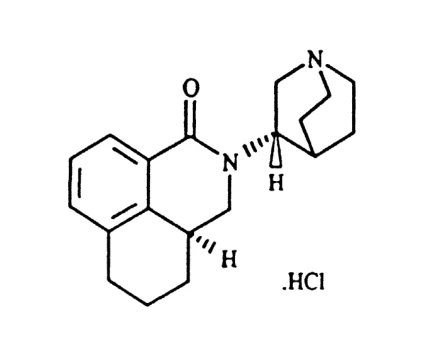
Structural formula:
Physicochemical properties: Palonosetron hydrochloride is a white to off-white crystalline powder. It is freely soluble in water, soluble in propylene glycol, and slightly soluble in ethanol and 2-propanol.
12 CLINICAL TRIALS
12.1 Trial Design and Study Demographics
ALOXI (palonosetron hydrochloride) Injection
Efficacy of single-dose (0.25 mg, 0.75 mg) palonosetron I.V. injection in preventing acute and delayed nausea and vomiting induced by moderately or highly emetogenic chemotherapy was studied in three Phase 3 trials in adults. In these 3-arm double blind studies and one in pediatric patients, efficacy was based on demonstrating non-inferiority of a single dose of ALOXI I.V. compared to ondansetron I.V. or dolasetron I.V. Non-inferiority criteria were met if the lower boundary of the two-sided 97.5% confidence interval for the difference in the complete response rate of palonosetron minus ondansetron or dolasetron was above -15% (non-inferiority margin 15%).
The primary endpoint was Complete Response (no emetic episode and no rescue medication) during the first 24 hours (acute phase) after chemotherapy. Secondary endpoints included Complete Response at further time periods (24-120 hours, delayed phase) and Complete Control (complete response and no more than mild nausea). See section 12.2 Study Results.
Moderately Emetogenic Chemotherapy
Two Phase 3, double-blind trials involving 1132 patients compared single-dose ALOXI I.V. with either single-dose I.V. ondansetron (PALO 99-03) or I.V. dolasetron (PALO-99-04) given 30 minutes prior to moderately emetogenic chemotherapy including carboplatin, cisplatin ≤ 50 mg/m², cyclophosphamide < 1500 mg/m², doxorubicin > 25 mg/m², epirubicin, irinotecan, or methotrexate. Concomitant corticosteroids were not administered prophylactically in PALO-99-03 and were only used by 4-6% of patients in PALO-99-04. The majority of patients in these studies were women (77%), Caucasian (65%, Hispanic: 31%) and naïve to previous chemotherapy (54%).
Table 6 – Summary of Patient Demographics for Pivotal Phase 3 Trials Receiving Moderately Emetogenic Chemotherapy
| Study # | Trial design | Dosage, route of administration and duration | Study subjects (n) | Mean age (Range) | Sex M/F (n/n) |
| PALO-99-03 | Multinational, multicentre, double-blind, double- randomised, balanced, parallel groups, stratified | Palonosetron: 0.25 mg I.V. 0.75 mg I.V.* Ondansetron 32 mg Single, I.V. bolus over 30 seconds, 30 minutes prior to administration of chemotherapy | 189 189 185 | 55 (18-97) years | 54/135 51/138 52/133 |
| PALO-99-04 | Multinational, multicentre, double-blind, double- randomised, balanced, parallel groups, stratified | Palonosetron: 0.25 mg I.V. 0.75 mg I.V. * Dolasetron 100 mg Single, I.V. bolus over 30 seconds, 30 minutes prior to administration of chemotherapy | 189 189 191 | 54 (18-97) years | 34/155 33/156 35/156 |
* Not an approved dose
Highly Emetogenic Chemotherapy
A Phase 3, double-blind trial involving 667 patients compared single dose ALOXI I.V. with single-dose I.V. ondansetron given 30 minutes prior to highly emetogenic chemotherapy including cisplatin ≥60 mg/m², cyclophosphamide, or dacarbazine. Dexamethasone, or in the event of a shortage, methylprednisolone, was co-administered prophylactically before chemotherapy in 67% of patients. Of the 667 patients, 51% were women, 60% Caucasian (Hispanic: 36%), and 59% naïve to previous chemotherapy.
Table 7 – Summary of Patient Demographics for Pivotal Phase 3 Trials Receiving Highly Emetogenic Chemotherapy
| Study # | Trial design | Dosage, route of administration and duration | Study subjects (n) | Mean age (range) | Sex M/F (n/n) |
| PALO-99-05 | Multinational, multicentre, double-blind, double- randomised, balanced, parallel groups, stratified | Palonosetron: 0.25 mg I.V. 0.75 mg I.V. * Ondansetron 32 mg Single, I.V. bolus over 30 seconds, 30 minutes prior to administration of chemotherapy | 223 223 221 | 52 (18-86) years | 108/115 110/113 108/113 |
* Not an approved dose
Pediatrics Population: The efficacy of ALOXI for the prevention of chemotherapy-induced nausea and vomiting in pediatric cancer patients was demonstrated in a randomized, double-blind, non-inferiority active-controlled trial (PALO-10-20). A total of 493 pediatric patients receiving moderately or highly emetogenic chemotherapy for malignant disease were randomized (1:1:1) to receive a single I.V. infusion of palonosetron 0.01 mg/kg (maximum 0.75 mg) or palonosetron 0.02 mg/kg (maximum 1.5 mg) 30 minutes prior to the start of emetogenic chemotherapy, or three I.V. infusions of ondansetron (0.15 mg/kg, maximum total dose 32 mg) 30 minutes prior to the start of emetogenic chemotherapy and at 4 and 8 hours following the first dose of ondansetron. Please refer to Table 8.
The majority (95%) of participants were of Caucasian race. Patients were stratified by age group (< 2 years, 2 to <6 years, 6 to <12 years and 12 to <17 years) and emetogenicity of chemotherapy (moderate and high). However, a limited number of patients aged <2 years were investigated (n = 15 treated with palonosetron 0.02 mg/kg for moderate and high emetogenic chemotherapy combined). In total, 69% of participants received moderate emetogenic chemotherapy compared to 31% who received high emetogenic chemotherapy. The majority of patients (79%) were not naïve to chemotherapy. Emetogenic chemotherapies included doxorubicin, cyclophosphamide (<1500 mg/m2), ifosfamide, cisplatin, dactinomycin, carboplatin, and daunorubicin. Adjuvant corticosteroids, including dexamethasone, were administered with chemotherapy in 55% of patients.
Table 8 – Summary of Patient Demographics for Pivotal Phase 3 Trial in Pediatric Patients Receiving Moderately Emetogenic or Highly Emetogenic Chemotherapy
| Study # | Trial design | Dosage, route of administration and duration | Study subjects (n) | Mean age (Range) | Sex M/F (n/n) |
| PALO-10-20 | Multinational, multicentre, double-blind, double- active controlled, randomised, balanced, parallel groups, stratified | Palonosetron: 0.01 mg/kg I.V. * 0.02 mg/kg I.V. Ondansetron 3 x 0.15 mg/kg Single, I.V. bolus over 15 minutes, beginning 30 minutes prior to administration of chemotherapy | 166 165 162 | 8.2 (0.2-16.9) years | 88/78 76/89 98/64 |
* Not an approved dose
ALOXI Capsules
Moderately Emetogenic Chemotherapy
In a multicentre, randomized, double-blind active control clinical trial of 635 adult patients set to receive moderately emetogenic cancer chemotherapy including cyclophosphamide <1500 mg/m2, doxorubicin, carboplatin, epirubicin, or idarubicin. A single-dose of 0.25 mg, 0.5 mg, or 0.75 mg oral ALOXI capsules given one hour prior to moderately emetogenic chemotherapy was compared to a single-dose of 0.25 mg ALOXI I.V. given 30 minutes prior to chemotherapy. Patients were randomized to either dexamethasone or placebo in addition to their assigned treatment. The majority of patients in the study were women (73%), Caucasian (69%), and naïve to previous chemotherapy (59%).
Table 9 – Summary of Patient Demographics for Pivotal Phase 3 Trial in Adult Patients Undergoing Moderately Emetogenic Chemotherapy
| Study # | Trial design | Dosage, route of administration and duration | Study subjects (n) | Mean age (years) | Sex M/F |
| PALO-03-13 | controlled, randomised, balanced, parallel groups, stratified | Palonosetron: 0.25 mg oral * 0.50 mg oral 0.75 mg I.V. 0.25 mg I.V. Single dose administered orally vs. single I.V. dose | 155 160 158 162 | 57 56 56 58 | 40/115 42/118 44/114 45/117 |
* Not an approved dose
12.2 Study Results
ALOXI Injection
Moderately Emetogenic Chemotherapy
Table 10 – Percentage of Patientsa Responding by Treatment Group and Phase in the Moderately Emetogenic Chemotherapy Study (PALO-99-03) versus Ondansetron
| Time period | I.V. ALOXI 0.25 mg (n = 189) | I.V. Ondansetron 32 mg (n = 185) | Difference I.V. ALOXI minus I.V. Ondansetron | Chi-square test |
Primary Endpoint: Complete Response | [Two sided 97.5% Confidence Interval]b | p-valuec | ||
| 0 – 24 hours | 81.0% | 68.6% | 12.4% [1.8%, 22.8%] | 0.006 |
| 24 – 120 hours | 74.1% | 55.1% | 19.0% [7.5%, 30.3%] | <0.001 |
| 0 – 120 hours | 69.3% | 50.3% | 19.0% [7.4%, 30.7%] | <0.001 |
Secondary Endpoint: Complete Control | [Two sided 95% Confidence Interval] | p-valued | ||
| 0 – 24 hours | 76.2% | 65.4% | 10.8% [1.1%, 20.5%] | 0.022 |
| 24 – 120 hours | 66.7% | 50.3% | 16.4% [6.0%, 26.8%] | 0.001 |
| 0 – 120 hours | 63.0% | 44.9% | 18.1% [7.6%, 28.6%] | <0.001 |
a Intent-to-treat cohort.
b The study was designed to show non-inferiority. A lower bound greater than -15 % demonstrates non-inferiority between ALOXI and comparator.
c Chi-square test. Significance level at α = 0.025.
d Chi-square test. Significance level at α = 0.05.
Table 11 – Percentage of Patientsa Responding by Treatment Group and Phase in the Moderately Emetogenic Chemotherapy Study (PALO-99-04) versus Dolasetron
| Time period | I.V. ALOXI 0.25 mg (n = 189) | I.V. Dolasetron 100 mg (n = 191) | Difference I.V. ALOXI minus I.V. Dolasetron | Chi-square test |
| Primary Endpoint: Complete Response | [Two sided 97.5% Confidence Interval]b | p-valuec | ||
| 0 – 24 hours | 63.0% | 52.9% | 10.1% [-1.7%, 21.9%] | NS |
| 24 – 120 hours | 54.0% | 38.7% | 15.3% [3.4%, 27.1%] | 0.003 |
| 0 – 120 hours | 46.0% | 34.0% | 12.0% [0.3%, 23.7%] | 0.017 |
Secondary Endpoint: Complete Control | [Two sided 95% Confidence Interval] | p-valued | ||
| 0 – 24 hours | 57.1% | 47.6% | 9.5% [-1%, 20%] | NS |
| 24 – 120 hours | 48.1% | 36.1% | 12.0% [1.6%, 22.4%] | 0.018 |
| 0 – 120 hours | 41.8% | 30.9% | 10.9% [0.8%, 21%] | 0.027 |
a Intent-to-treat cohort.
b The study was designed to show non-inferiority. A lower bound greater than -15 % demonstrates non-inferiority between ALOXI and comparator.
c Chi-square test. Significance level at α = 0.025.
d Chi-square test. Significance level at α = 0.05.
NS: not significant
The two pivotal Phase 3 studies demonstrated non-inferiority of a single I.V. dose of ALOXI 0.25 mg in the prevention of acute nausea and vomiting associated with an initial course of moderately emetogenic chemotherapy, vs. I.V. ondansetron 32 mg or I.V. dolasetron 100 mg. In addition, the difference in efficacy in PALO-99-03 was statistically significant in favour of ALOXI (p=0.006) but was not statistically significant in PALO-99-04.
Highly Emetogenic Chemotherapy
Table 12 – Percentage of Patientsa Responding by Treatment Group and Phase in the Highly Emetogenic Chemotherapy Study (PALO-99-05) versus Ondansetron
| Time period | I.V. ALOXI 0.25 mg (n = 223) | I.V. Ondansetron 32 mg (n = 221) | Difference I.V. ALOXI minus I.V. Ondansetron | Chi-square test |
Primary Endpoint: Complete Response | [Two sided 97.5% Confidence Interval]b | p-valuec | ||
| 0 – 24 hours | 59.2% | 57.0% | 2.2% [-8.8%, 13.1%] | NS |
| 24 – 120 hours | 45.3% | 38.9% | 6.4% [-4.6%, 17.3%] | NS |
| 0 – 120 hours | 40.8% | 33.0% | 7.8% [-2.9%, 18.5%] | NS |
Secondary Endpoint: Complete Control | [Two sided 95% Confidence Interval] | p-valued | ||
| 0 – 24 hours | 56.5% | 51.6% | 4.9% [-4.8%, 14.6%] | NS |
| 24 – 120 hours | 40.8% | 35.3% | 5.5% [-4%, 15%] | NS |
| 0 – 120 hours | 37.7% | 29.0% | 8.7% [-0.5%, 17.9%] | NS |
a Intent-to-treat cohort.
b The study was designed to show non-inferiority. A lower bound greater than -15 % demonstrates non-inferiority between ALOXI and comparator.
c Chi-square test. Significance level at α = 0.025.
d Chi-square test. Significance level at α = 0.05.
NS: not significant.
A single I.V. dose of ALOXI 0.25 mg was shown to be non-inferior to I.V. ondansetron 32 mg in preventing acute nausea and vomiting following highly emetogenic chemotherapy.
A subgroup analysis suggested improved efficacy of ALOXI in combination with prophylactic corticosteroids compared to ALOXI alone (see Table 12).
Table 13 – Patients with a Complete Response during the First 24 Hours after Highly Emetogenic Chemotherapy by Corticosteroid Use
Number (%) of patients with Complete Response | Difference I.V. ALOXI minus I.V. Ondansetron [Two sided 97.5% Confidence Interval] | Pairwise testing* I.V. ALOXI vs. I.V. Ondansetron | ||
| I.V. ALOXI 0.25 mg (n = 223) | I.V. Ondansetron 32 mg (n = 221) | |||
With dexamethasone | 97/150 (64.7%) | 82/147 (55.8%) | 8.9% [-4.5%; 22.2%] | NS |
Without dexamethasone | 35/73 (47.9%) | 44/74 (59.5%) | -11.5% [-31.2%; 8.2%] | NS |
*Chi-square p-values.
NS: not significant.
Table 14 – Pediatric Study (PALO-10-20): Proportion of Patients with a Complete Responsea (0-24 hours)
| I.V. ALOXI 0.02 mg/kg (n = 165b) | I.V. Ondansetron 0.15 mg/ kg x 3 (n = 162b) | Difference [97.5% Confidence Interval]c: I.V. ALOXI minus I.V. Ondansetron Comparator |
| 59.4% | 58.6% | 0.36% [-11.7%, 12.4%] |
a Defined as no vomiting, no retching, and no use of antiemetic rescue medication) from 0 to 24 hours (Acute phase) after the start of administration of the most emetogenic chemotherapy during the first cycle. b Based on Full Analysis Set - randomized patients who received the active study drug and highly or moderately emetogenic chemotherapy.
c To adjust for multiplicity of treatment groups, a lower-bound of a 97.5% confidence interval was used to compare to -15%, the negative value of the non-inferiority margin.
As shown in Table 14, I.V. ALOXI 0.02 mg/kg (maximum 1.5 mg) demonstrated non-inferiority to the active comparator during the 0 to 24 hour time interval. Non-inferiority was not achieved with the lower dose investigated.
ALOXI Capsules
Moderately Emetogenic Chemotherapy
Table 15 – Proportion of Patients Achieving Complete Response and Complete Control Post-Chemotherapy – ALOXI Capsules Study (PALO-03-13)
| Time period | Oral ALOXI 0.5 mg (n = 160) | I.V. ALOXI 0.25 mg (n = 162) | Difference Oral ALOXI minus ALOXI Comparator | Chi-square test |
Primary Endpoint: Complete Response | [Two sided 98.3% Confidence Interval]a | p-valueb | ||
| 0 – 24 hours | 76.3% | 70.4% | 5.9% [-6.5%, 18.2%] | NS |
| 24 – 120 hours | 62.5% | 65.4% | -2.9% [-16.3%, 10.5%] | NS |
| 0 – 120 hours | 58.8% | 59.3% | -0.5% [-14.2%, 13.2%] | NS |
Secondary Endpoint: Complete Control | [Two sided 95% Confidence Interval] | p-valuec | ||
| 0 – 24 hours | 74.4% | 68.5% | 5.9% [-4.6%, 16.3%] | NS |
| 24 – 120 hours | 56.3% | 62.3% | -4.0% [-17.4%, 5.2%] | NS |
| 0 – 120 hours | 52.5% | 56.2% | -3.7% [-15.2%, 7.8%] | NS |
a To adjust for multiplicity of treatment groups, a lower-bound of two-sided 98.3% confidence interval was used to compare -15%, the negative value of the non-inferiority margin.
b Chi-square test. Significance level at α = 0.0167 adjusted for multiple comparisons.
c Chi-square test. Significance level at α = 0.05.
NS: not significant.
Efficacy was based on demonstrating non-inferiority of oral palonosetron doses compared to the ALOXI I.V. formulation. Non-inferiority criteria were met if the lower bound of the two-sided 98.3% confidence interval for the difference in complete response rates of oral palonosetron dose minus the I.V. formulation was larger than -15%. The non-inferiority margin was 15%.
As shown in Table 15, ALOXI capsules 0.5 mg demonstrated non-inferiority to the active comparator during the 0 to 24 hour time interval; however, for the 24 to 120 hour time period, non-inferiority was not shown.
Table 16 – Patients with a Complete Response during the First 24 Hours after Moderately Emetogenic Chemotherapy by Corticosteroid Use (Study PALO-03-13)
Number (%) of patients with Complete Response | Difference ALOXI 0.5 mg minus I.V ALOXI 0.25 mg [Two-sided 98.3% Confidence Interval] | Pairwise testing* ALOXI 0.5 mg vs. I.V ALOXI 0.25 mg | ||
Oral ALOXI 0.5 mg (n = 160) | I.V. ALOXI 0.25 mg (n = 162) | |||
With dexamethasone | 68/79 (86.1%) | 68/82 (82.9%) | 3.1% [-11.7; 18.0%] | NS |
Without dexamethasone | 54/81 (66.7%) | 46/80 (57.5%) | 9.2 % [-10.2; 28.6%] | NS |
*Chi-square p-values.
NS: not significant.
Subgroup analysis suggested improved efficacy of ALOXI in combination with prophylactic corticosteroids compared to ALOXI alone (see Table 16).
13 NON-CLINICAL TOXICOLOGY
Single-Dose Toxicity
Deaths, in all species, were usually associated with convulsions and collapse. Other signs included inactivity, tremors, ataxia, laboured respiration, transient vocalisation in rats and emesis in dogs. There were no treatment-related signs in rats treated orally at 100 mg/kg or in dogs treated orally at up to 40 mg/kg. There were no effects associated with gender, or on body weight or food intake in any study, or on clinical pathology in dogs, and there were few necropsy observations.
A single intravenous dose of palonosetron at 30 mg/kg (947 and 474 times the human dose for rats and mice, respectively, based on body surface area), equivalent to an oral dose of 500 mg/kg in rats and 100 mg/kg in dogs (7673 and 5115 times the recommended human oral dose, respectively, based on body surface area), was lethal. The maximum non-lethal dose was 20 mg/kg in both rats and dogs. The major signs of toxicity were convulsions, gasping, pallor, cyanosis and collapse.
Repeat-Dose Toxicity
Chronic intravenous administration to rats and oral treatment to mice at sub-lethal dosages was essentially without any evidence of toxicity. Treatment of dogs at marginally sub-lethal dosages, whether given orally or intravenously, was associated with convulsions, some other signs and, following oral treatment, a few minor clinical pathology changes, of which reduced alkaline phosphatase activity and increased cholesterol concentrations extended to lower oral dosages. There were no consistent pathology changes in dogs or mice, or in rats when treated intravenously. All of these studies were associated with high exposures to palonosetron.
In dogs, deaths were clearly associated with severe signs including convulsions and the signs were generally associated with dosing and short-lived with rapid recovery. It seems likely that similar severe signs that were not observed directly were associated with the treatment-related deaths seen in mice and in intravenously treated rats.
Rats treated orally responded differently. There were numerous changes, including pathology, which extended to dosages well below those associated with increased mortality. Systemic exposure to palonosetron at the no observed adverse effect level was low compared with that following intravenous treatment to rats or dogs, although still well above that expected in human patients. Some of the deaths may have been associated with convulsions or other severe signs but it is probable that other toxic changes were more significant in rats treated orally.
Juvenile Toxicity Studies
Toxicity studies were conducted in neonatal rats and dogs. Rats were treated at Day 4 postpartum by subcutaneous injection and dogs by intravenous injection from 2 weeks of age. In rats the main findings were dose-related changes at the injection sites, mainly in the high dose group (25 mg/kg/day). Other findings included reduction in body weight gains, mild anemia and increased number of lymphocytes but not histopathological changes. In neonatal dogs treated for 28 days with 6 mg/kg/day, there were no clinical or histopathological adverse effects.
Reproduction Toxicity
There was evidence that oral treatment with palonosetron at 60 mg/kg/day affected fertility in both male and female rats; this dosage is associated with histopathological changes in the seminiferous epithelium. A reduction in the number of viable fetuses in males treated intravenously at 10 mg/kg/day is not attributed to treatment.
Evidence of fetal toxicity was limited to low fetal weights in rats treated at 60 or 120 mg/kg/day during pregnancy, with an associated reduction in ossification. There was no similar effect in rabbits. In a pre- and post-natal study, there was evidence of maternal toxicity at 60 mg/kg/day. Postural changes in the F1 generation were probably a consequence of this toxicity. There was no effect on development or reproduction in the F1 generation. Juvenile toxicity studies did not show any evidence of toxicity that was not apparent in adult animals.
The no-observed-adverse-effect levels in each case were similar to or greater than those observed in repeat dose toxicity testing, suggesting that these changes only occur at exposures that significantly exceed those anticipated during clinical use.
Genotoxicity
The weight of evidence indicates that palonosetron lacks genotoxic activity. In the Salmonella (Ames) reverse mutation test, there was no evidence for mutagenic activity. There was also no evidence for mutagenic activity of palonosetron in the CHO/HGPRT forward mutation assay. An in vitro chromosome aberration assay was conducted in CHO cells in which a clastogenic effect was observed in the absence of metabolic activation and an equivocal response with metabolic activation. An additional in vitro photo-chromosome aberration assay performed in V79 cells, was negative. In an in vivo micronucleus test in mice treated intravenously at up to 10 mg/kg, there was no evidence for mutagenic or clastogenic effects. Palonosetron was also tested in the in vivo Unscheduled DNA Synthesis test in rat hepatocytes at intravenous doses of up to 30mg/kg and there was no evidence for DNA damage. Overall, palonosetron is considered non-mutagenic.
Carcinogenicity
Two carcinogenicity studies in the mouse and rat were performed. Systemic exposure to palonosetron in these studies was not linear and increased with duration (Table 17).
Table 17 – Systemic Exposure to Palonosetron during Carcinogenicity Testing
| Species | Dosage mg/kg/day | Time | AUC, ng·h/mL | Cmax, ng/mL | ||
| Male | Female | Male | Female | |||
| Mouse | 60 a | Day 1 | 5475 | 4623 | 1534 | 1729 |
| Weeks 26 - 104 | 9757 | 5644 | 1788 | 1619 | ||
| Rat | 15 | Day 1 | 39 | 39 | 19 | 26 |
| Weeks 26 - 104 | 296 | 443 | 148 | 261 | ||
| 30 / 45 | Day 1 | 362 | 480 | 153 | 141 | |
| Weeks 26 - 104 | 1299 | 3405 | 410 | 947 | ||
| 60 / 90 | Day 1 | 1402 | 2511 | 427 | 703 | |
| Weeks 26 - 104 | 5370 | 10024 | 1420 | 1824 | ||
a Highest dosage = NOAEL.
In the mouse study the only statistically significant tumour incidence was in males treated at 10 mg/kg/day in respect of the combined incidence of malignant lymphoma and malignant pleomorphic lymphoma. The incidences of these common tumour types were clearly unaffected at higher dosages and the finding was not attributed to treatment. Exposure to palonosetron at the high dosage in terms of the AUCs was more than 1100-fold higher in males, and 650-fold higher in females, than found in human patients at the proposed clinical dose.
In the rat study, toxicity was apparent at all dosages although at 15 mg/kg/day this was confined to increased incidences of ungroomed coat and salivation with associated brown staining, increased liver weights and, in males only, increased accumulations of alveolar macrophages in the lungs. In addition to these, toxic changes at the highest dosage included increased mortality, reduced body weights and erythrocyte counts, increased hemosiderosis in the spleen, medullary hyperplasia in the adrenals, progressive nephropathy, clear cell foci in the liver, secretory activity and acinar hyperplasia in the mammary gland, degeneration of the tubular germinal epithelium in the testis, epithelial hyperplasia and/or cysts in the thymus, C-cell hyperplasia in the thyroid, keratin cysts in the skin and hyperplastic and inflammatory lesions in the tail.
In the rat study, there were statistically significant increased incidences of a variety of tumours affecting the adrenal, liver, mammary gland, pancreas, pituitary, skin, tail and thyroid. These tumours occurred at high doses (30 and 60 mg/kg/day) administered for 2 years. Although the underlying mechanism of palonosetron tumourigenicity is not known, it may be associated with disruption of neuroendocrine pathways.