


Product Monograph - Ondansetron Injection USP (Sterimax)
RECENT MAJOR LABEL CHANGES
| 7 WARNING AND PRECAUTIONS, Cardiovascular, Myocardial Ischemia and Coronary Artery Spasm | 04/2022 |
|---|---|
| 7 WARNING AND PRECAUTIONS, Special Populations, 7.1.1 Pregnant Women | 03/2021 |
TABLE OF CONTENTS
Sections or subsections that are not applicable at the time of authorization are not listed.
RECENT MAJOR LABEL CHANGES ............................................................................................. 2
TABLE OF CONTENTS ............................................................................................................... 2
PART I: HEALTH PROFESSIONAL INFORMATION ....................................................................... 4
1 INDICATIONS ................................................................................................................ 4
1.1 Pediatrics ................................................................................................................. 4
1.2 Geriatrics ................................................................................................................. 4
2 CONTRAINDICATIONS .................................................................................................. 5
4 DOSAGE AND ADMINISTRATION .................................................................................. 5
4.1 Dosing Considerations ............................................................................................. 5
4.2 Recommended Dose and Dosage Adjustment ........................................................ 6
4.4 Administration ......................................................................................................... 7
5 OVERDOSAGE ............................................................................................................... 9
6 DOSAGE FORMS, STRENGTHS, COMPOSITION AND PACKAGING .................................. 9
7 WARNINGS AND PRECAUTIONS ................................................................................. 10
7.1 Special Populations................................................................................................ 13
7.1.1 Pregnant Women ............................................................................................... 13
7.1.2 Breast-feeding ................................................................................................... 13
7.1.3 Pediatrics ........................................................................................................... 13
7.1.4 Geriatrics ........................................................................................................... 13
8 ADVERSE REACTIONS ................................................................................................. 13
8.2 Clinical Trial Adverse Reactions ............................................................................. 13
8.5 Post-Market Adverse Reactions ............................................................................ 14
9 DRUG INTERACTIONS ................................................................................................. 16
9.1 Serious Drug Interactions ...................................................................................... 16
9.2 Drug Interactions Overview ................................................................................... 16
9.4 Drug-Drug Interactions .......................................................................................... 16
9.5 Drug-Food Interactions .......................................................................................... 18
9.6 Drug-Herb Interactions .......................................................................................... 18
9.7 Drug-Laboratory Test Interactions ......................................................................... 18
10 CLINICAL PHARMACOLOGY ........................................................................................ 18
10.1 Mechanism of Action ......................................................................................... 18
10.2 Pharmacodynamics ............................................................................................ 18
10.3 Pharmacokinetics ............................................................................................... 20
11 STORAGE, STABILITY AND DISPOSAL .......................................................................... 23
PART II: SCIENTIFIC INFORMATION ........................................................................................ 24
13 PHARMACEUTICAL INFORMATION ............................................................................. 24
14 CLINICAL TRIALS ......................................................................................................... 25
14.1 Trial Design and Study Demographics ................................................................ 25
14.2 Study Results...................................................................................................... 25
16 NON-CLINICAL TOXICOLOGY ...................................................................................... 26
17 SUPPORTING PRODUCT MONOGRAPHS ..................................................................... 29
PATIENT MEDICATION INFORMATION ................................................................................... 30
PART I: HEALTH PROFESSIONAL INFORMATION
1 INDICATIONS
Adults (18-64 years of age)
Ondansetron Injection USP (ondansetron hydrochloride dihydrate) is indicated for:
- the prevention of nausea and vomiting associated with emetogenic chemotherapy, including high dose cisplatin.
- the prevention and treatment of postoperative nausea and vomiting.
1.1 Pediatrics
Prevention of Nausea and Vomiting Associated With Highly Emetogenic Chemotherapy (e.g. cisplatin)
- Pediatrics (< 18 years): Health Canada has not authorized an indication for pediatric use.
Prevention of Nausea and Vomiting Associated With Less Emetogenic Chemotherapy
- Pediatrics (4-12 years of age): Intravenous ondansetron was effective and well tolerated when given to children 4-12 years of age (see 4.2 Recommended Dose and Dosage Adjustment).
- Pediatrics (<4 years of age): Ondansetron Injection USP is not indicated for the treatment of children less than 4 years old.
Prevention and Treatment of Post-Operative Nausea and Vomiting
- Health Canada has not authorized an indication for pediatric use.
1.2 Geriatrics
Prevention of Nausea and Vomiting Associated with Emetogenic Chemotherapy
Efficacy and tolerance of intravenous ondansetron are similar to that observed in younger adults. See 4.2 Recommended Dose and Dosage Adjustment, Chemotherapy induced Nausea and Vomiting, Use in Elderly; 7. WARNINGS AND PRECAUTIONS, Cardiovascular; 7.1.4 Geriatrics; 10.3 Pharmacokinetics, Geriatrics.
Prevention and Treatment of Post-Operative Nausea and Vomiting
Clinical experience in the use of intravenous ondansetron in the prevention and treatment of post-operative nausea and vomiting is limited; Ondansetron Injection USP is not indicated for this use in the geriatric population.
2 CONTRAINDICATIONS
- Ondansetron Injection USP is contraindicated in patients with a history of hypersensitivity to the drug or any components of its formulations. For a complete listing, see 6 DOSAGE FORMS, STRENGTHS, COMPOSITION AND PACKAGING.
- The concomitant use of apomorphine with ondansetron is contraindicated based on reports of profound hypotension and loss of consciousness when apomorphine was administered with ondansetron.
4 DOSAGE AND ADMINISTRATION
4.1 Dosing Considerations
Visually inspect IV solutions and discard if particulate matter or discolouration are observed. See 4.4 Administration.
Ondansetron Injection USP clearance is reduced in patients with moderate or severe hepatic impairment. Their total daily dose should not exceed 8 mg, which may be given as a single intravenous dose. See 7 WARNINGS AND PRECAUTIONS, Hepatic.
Ondansetron Injection USP has important cardiac side-effects (dose-dependent QTc prolongation, coronary artery spasm, myocardial ischemia, and sequelae). These effects are reported more often with intravenous administration, and are expected to be greater with a faster rate of infusion. See 7 WARNINGS AND PRECAUTIONS, Cardiovascular, QTc Interval Prolongation; and Myocardial Ischemia and Coronary Artery Spasm; 9.4 Drug-Drug Interactions, QTc-Prolonging Drugs; 10.2 Pharmacodynamics, Electrocardiography.
Though ondansetron hydrochloride dihydrate efficacy and tolerance were similar for elderly compared to younger adults in chemotherapy clinical trials, exposure-response modelling predicted a greater effect on QTcF in patients ≥75 years of age compared to young adults. See 10.3 Pharmacokinetics, Geriatrics.
Dosing considerations that reduce cardiac risks:
- Use the minimum effective dose.
- Consider use of an oral ondansetron formulations (lower Cmax). Note: Ondansetron Injection USP is only available as a solution for injection.
- Infuse slowly, over a minimum of 15 minutes.
- Maximum IV dose is 16 mg (adults).
- Consider ECG monitoring if treating elderly patients with an IV dose of 16 mg. There is an increased risk for slight QTcF interval prolongation above 10 ms (from baseline) for about 10 min.
Dilute the IV dose in 50 mL to 100 mL of 0.9% Sodium Chloride Injection or 5% Dextrose Injection (see 4.4 Administration):
- Elderly (age ≥65 years): all IV doses
- Adults (age <65 years): IV doses >8 mg.
- Following initial dosing, do not shorten the recommended interval between subsequent IV infusions (e.g. at 4 and 8 hours). Cardiac side effects have been reported after subsequent dosing.
The efficacy of Ondansetron Injection USP in highly emetogenic chemotherapy may be enhanced by the addition of a single intravenous dose of dexamethasone sodium phosphate 20 mg administered prior to chemotherapy.
4.2 Recommended Dose and Dosage Adjustment
Prevention of Highly Emetogenic Chemotherapy Induced Nausea and Vomiting
Caution: To reduce cardiac risks, carefully follow the dosing guidelines under 4.1 Dosing Considerations.
Adults
Initial IV dose of 8 mg (max 16 mg) infused over 15 minutes, given at least 30 minutes prior to chemotherapy
or
- Initial IV dose of 8 mg (max 16 mg) infused over 15 minutes, given at least 30 minutes prior to chemotherapy, followed by two additional IV doses of 8 mg given at 4 and 8 hours after the initial dose
For maintenance of anti-emesis beyond the first 24 hours, patients should be switched to an oral formulation. Note: Ondansetron Injection USP is only available as a solution for injection.
Pediatrics (<18 years of age)
Ondansetron Injection USP is not approved for this use in children.
Prevention of Less Emetogenic Chemotherapy Induced Nausea and Vomiting
Caution: To reduce cardiac risks, carefully follow the dosing guidelines under 4.1 Dosing Considerations.
Adults
- Initial IV dose of 8 mg, infused over 15 minutes, given 30 minutes before chemotherapy
For maintenance of anti-emesis, patients should be switched from Ondansetron Injection USP to an oral formulation. Note: Ondansetron Injection USP is only available as a solution for injection.
Pediatrics (4-<18 years of age)
- Initial IV dose 3 to 5 mg/m2, infused over 15 minutes, at least 30 minutes before chemotherapy.
For maintenance of anti-emesis, patients should be switched from Ondansetron
Injection USP to an oral formulation. Note: Ondansetron Injection USP is only available as a solution for injection.
Pediatrics (<4 years of age)
Ondansetron Injection USP is not indicated for this use in children under 4 years of age.
Geriatrics (65-74 years of age):
- Initial IV dose of 8 mg (max 16* mg), diluted (see 4.4 Administration), infused over 15 minutes, given at least 30 minutes prior to chemotherapy.
- May be followed by two IV doses of 8 mg, diluted, infused over 15 minutes, at least 4 hours apart.
* When the initial dose is 16 mg, there is a predicted increase of the risk for a slight QTcF interval prolongation above 10 ms (from baseline) for about 10 min. ECG monitoring may be considered.
Geriatrics (≥75 years of age):
- Initial IV dose should be 8 mg maximum, diluted, infused over 15 minutes, given at least 30 minutes prior to chemotherapy.
- May be followed by two IV doses** of 8 mg, diluted (see 4.4 Administration), infused over 15 minutes, at least 4 hours apart.
** For the third dose, there is a predicted increase of the risk for a slight QTcF interval prolongation above 10 ms (from baseline) for about 10 min. ECG monitoring may be considered.
Prevention and Treatment of Post-Operative Nausea and Vomiting
Adults
- Prevention: 4 mg IV, undiluted, infused – preferably over 2-5 minutes, and not less than 30 seconds, at induction of anaesthesia.
- Treatment: a single dose of 4 mg IV, infused – preferably over 2-5 minutes, and not less than 30 seconds.
Pediatrics (<18 years of age)
Health Canada has not authorized an indication for the prevention or treatment of post-operative nausea and vomiting in children.
Geriatrics
Health Canada has not authorized an indication for the prevention or treatment of post-operative nausea and vomiting in geriatric patients.
4.4 Administration
Administration of Intravenous Infusion Solutions
As with all parenteral drug products, intravenous admixtures should be inspected visually for clarity, particulate matter, precipitate, discolouration and leakage prior to administration, whenever solution and container permit. Solutions showing haziness, particulate matter, precipitate, or discolouration, or leakage should not be used. See also 11 STORAGE, STABILITY AND DISPOSAL, Stability and Storage of Diluted Solutions.
All IV doses for the elderly, and IV doses over 8 mg for adults, should be diluted in 50-100 ml of 0.9% Sodium Chloride Injection or 5% Dextrose Injection.
- Compatibility with Intravenous Solutions:
Ondansetron Injection USP should only be mixed with the infusion solutions recommended below:
For the single use formulation (2 mg/mL; 2 mL and 4 mL vials):
0.9% w/v Sodium Chloride Injection;
5% w/v Dextrose Injection;
10% w/v Mannitol Injection;
Ringers Injection;
0.3% w/v Potassium Chloride and 0.9% w/v Sodium Chloride Injection;
0.3% w/v Potassium Chloride and 5% w/v Dextrose Injection.
For the multidose formulation (2 mg/mL; 20 mL vials):
5% w/v Dextrose Injection;
0.9% w/v Sodium Chloride Injection;
5% w/v Dextrose and 0.45% w/v Sodium Chloride Injection;
3% w/v Sodium Chloride Injection.
- Compatibility with Other Drugs:
Ondansetron Injection USP should not be administered in the same syringe or infusion with any other medication.
The following drugs may be administered via the Y-site of the administration set, for ondansetron concentrations of 16 to 160 mcg/mL. If the concentrations of cytotoxic drugs required are higher than indicated below, they should be administered through a separate intravenous line.
- Cisplatin - concentrations up to 0.48 mg/mL administered over 1 to 8 hours.
- 5-Fluorouracil - concentrations up to 0.8 mg/mL, administered at rates of at least 20 mL/hour. Higher concentrations of 5-fluorouracil may cause precipitation of ondansetron. The 5-fluorouracil infusion may contain up to 0.045% w/v magnesium chloride.
- Carboplatin - concentrations of 0.18 - 9.9 mg/mL, administered over 10 – 60 minutes.
- Ceftazidime - bolus IV doses, over approximately 5 minutes, of 250 – 2000 mg reconstituted with Water for Injections BP.
Cyclophosphamide - bolus IV doses over approximately 5 minutes, of 100 – 1000 mg,
- reconstituted with Water for Injections BP 5 mL per 100 mg cyclophosphamide.
- Doxorubicin and Epirubicin - bolus IV doses, over approximately 5 minutes, of 10-100 mg as a 2 mg/mL solution. Lyophilized powder presentations can be reconstituted with 0.9% Sodium Chloride Injection USP.
- Etoposide - concentrations of 0.144 - 0.25 mg/mL, administered over 30 – 60 minutes.
5 OVERDOSAGE
At present there is little information concerning overdosage with ondansetron. Individual doses of 84 mg and 145 mg and total daily doses as large as 252 mg have been administered with only mild side effects. There is no specific antidote for ondansetron, therefore, in cases of suspected overdosage, symptomatic and supportive therapy should be given as appropriate.
The use of Ipecac to treat overdosage with ondansetron is not recommended as patients are unlikely to respond due to the antiemetic action of ondansetron itself.
“Sudden blindness” (amaurosis) of 2 to 3 minutes duration plus severe constipation occurred in one patient that was administered 72 mg of ondansetron intravenously as a single dose. Hypotension (and faintness) occurred in another patient that took 48 mg of oral ondansetron. Following infusion of 32 mg over only a 4-minute period, a vasovagal episode with transient second-degree heart block was observed. Neuromuscular abnormalities, autonomic instability, somnolence, and a brief generalized tonic-clonic seizure (which resolved after a dose of benzodiazepine) were observed in a 12-month-old infant who ingested seven or eight 8-mg ondansetron tablets (approximately forty times the recommended 0.1-0.15 mg/kg dose for a pediatric patient). In all instances, the events resolved completely.
Ondansetron prolongs QT interval in a dose-dependent fashion (see 10.2 Pharmacodynamics). ECG monitoring is recommended in cases of overdose.
Cases consistent with serotonin syndrome have been reported in young children following oral overdose.
| For management of a suspected drug overdose, contact your regional poison control centre. |
|---|
6 DOSAGE FORMS, STRENGTHS, COMPOSITION AND PACKAGING
Table 1 – Dosage Forms, Strengths, Composition and Packaging
| Route of Administration | Dosage Form / Strength/Composition | Non-medicinal Ingredients |
|---|---|---|
| Intravenous | Injection/ 2 mg/mL ondansetron (as ondansetron hydrochloride dihydrate) | Single dose vials: citric acid monohydrate, sodium chloride, sodium citrate. Multidose vials: citric acid |
| Route of Administration | Dosage Form / Strength/Composition | Non-medicinal Ingredients |
|---|---|---|
monohydrate, sodium citrate dihydrate, sodium chloride for tonicity and water for injection. Contains preservatives: methylparaben and propylparaben. |
Description
Ondansetron Injection USP contains 2 mg/mL of ondansetron base, in the form of ondansetron hydrochloride dihydrate.
Single dose formulation:
Ondansetron Injection USP (2 mL and 4 mL single use vials) also contain:
citric acid monohydrate 0.5 mg/mL
sodium citrate 0.25 mg/mL
sodium chloride 9 mg/mL
Ondansetron Injection USP, single dose formulation, for intravenous use is supplied in 2 presentations, 2 mL and 4 mL vials, in cartons of 10 vials each. The rubber stoppers are not made with natural rubber latex.
Multidose formulation:
Ondansetron Injection USP (20 mL multidose vials) also contain:
citric acid monohydrate 0.5 mg/mL
sodium citrate dihydrate 0.25 mg/mL
sodium chloride 8.3 mg/mL
methylparaben 1.2 mg/mL
propylparaben 0.15 mg/mL
Ondansetron Injection USP, 2 mg/mL, multidose formulation, is available in 20 mL multidose vials, boxes of 5.
7 WARNINGS AND PRECAUTIONS
General
Ondansetron Injection USP is not effective in preventing motion-induced nausea and vomiting.
Cardiovascular
QTc Interval Prolongation: Ondansetron prolongs the QT interval (see 10.2 Pharmacodynamics,
Electrocardiography). The magnitude of QTc prolongation will depend on the peak serum ondansetron concentration (Cmax), which is substantially determined by the route of administration, the dose and the infusion rate of intravenous ondansetron. In addition, post- marketing cases of torsade de pointes have been reported in patients using ondansetron.
Torsade de pointes is a polymorphic ventricular tachyarrhythmia. Generally, the risk of torsade de pointes increases with the magnitude of QTc prolongation produced by the drug. Torsade de pointes may be asymptomatic or experienced by the patient as dizziness, palpitations, syncope, or seizures. If sustained, torsade de pointes can progress to ventricular fibrillation and sudden cardiac death.
Avoid ondansetron in patients with congenital long QT syndrome. Ondansetron should be administered with caution to patients who have or may develop prolongation of QTc, including congestive heart failure, bradyarrhythmias or patients taking other medicinal products that lead to either QT prolongation or electrolyte abnormalities. See 9.4 Drug-Drug Interactions.
Hypokalemia, hypocalcaemia, and hypomagnesemia should be corrected prior to ondansetron administration.
Additional risk factors for torsade de pointes in the general population include, but are not limited to, the following:
- female gender;
- age 65 years or older;
- baseline prolongation of the QT/QTc interval;
- presence of genetic variants affecting cardiac ion channels or regulatory proteins;
- family history of sudden cardiac death at <50 years;
- cardiac disease (e.g., myocardial ischemia or infarction, left ventricular hypertrophy, cardiomyopathy, conduction system disease);
- history of arrhythmias (especially ventricular arrhythmias, atrial fibrillation, or recent conversion from atrial fibrillation);
- bradycardia (<50 beats per minute);
- acute neurological events (e.g., intracranial or subarachnoid haemorrhage, stroke, intracranial trauma);
- nutritional deficits (e.g., eating disorders, extreme diets);
- diabetes mellitus;
- autonomic neuropathy.
Myocardial Ischemia and Coronary Artery Spasm: Ondansetron can cause coronary artery vasospasm and myocardial ischemia which may lead to myocardial infarction. In some cases, the symptoms appeared immediately after IV infusion, or shortly after oral administration, including after low doses in patients without significant known pre-existing cardiovascular disease or other risk factors. Caution is advised during and after ondansetron administration, and close monitoring is recommended in patients with known or suspected ischemic or vasospastic coronary artery disease or other significant underlying cardiovascular disease.
Driving and Operating Machinery
In psychomotor testing ondansetron does not impair performance nor cause sedation.
Gastrointestinal
As ondansetron is known to increase large bowel transit time, patients with signs of subacute intestinal obstruction should be monitored following administration.
Hepatic/Biliary/Pancreatic
Abnormal liver function test results have been reported, as well as liver failure in clinical trial cancer patients. See 8.2 Clinical Trial Adverse Reactions, Hepatic; and 8.5 Post-Market Adverse Reactions.
Immune
Cross-reactive hypersensitivity has been reported between different 5-HT3 antagonists. Patients who have experienced hypersensitivity reactions to one 5-HT3 antagonist have experienced more severe reactions upon being challenged with another drug of the same class. The use of a different 5-HT3 receptor antagonist is not recommended as a replacement in cases in which a patient has experienced even a mild hypersensitivity type reaction to another 5-HT3 antagonist.
Neurologic
Serotonin syndrome/Neuroleptic Malignant Syndrome: Cases of life-threatening serotonin syndrome or neuroleptic malignant syndrome-like events have been reported with 5-HT3 receptor antagonist antiemetics, including ondansetron hydrochloride dihydrate , when given in combination with other serotonergic and/or neuroleptic drugs. Serotonin syndrome symptoms may include mental status changes (e.g. agitation, hallucinations, coma), autonomic instability (e.g., tachycardia, labile blood pressure, hyperthermia), neuromuscular aberrations (e.g., hyperreflexia, incoordination) and/or gastrointestinal symptoms (e.g. nausea, vomiting, diarrhea). As these syndromes may result in potentially life-threatening conditions, treatment should be discontinued if such events occur and supportive symptomatic treatment should be initiated. If concomitant treatment of Ondansetron Injection USP with a drug affecting the serotonergic neurotransmitter system is clinically warranted, careful observation of the patient is advised, particularly during treatment initiation and dose increases (see 9 DRUG INTERACTIONS).
Reproductive Health: Female and Male Potential
Pregnancy status should be verified for females of reproductive potential prior to starting the treatment with Ondansetron Injection USP.
Females of reproductive potential should be advised that it is possible that Ondansetron
Injection USP can cause harm to the developing fetus. Sexually active females of reproductive potential should use effective contraception (methods that result in less than 1% pregnancy rates) when using Ondansetron Injection USP and for two days after stopping treatment with Ondansetron Injection USP.
7.1 Special Populations
7.1.1 Pregnant Women
The use of ondansetron in pregnancy is not recommended. Ondansetron use during early pregnancy has been associated with a small increase in orofacial malformations. Despite some limitations in methodology, several human epidemiological studies noted an increase in orofacial clefts in infants of women administered ondansetron during the first trimester of pregnancy. Regarding cardiac malformations, the epidemiological studies showed conflicting results.
Ondansetron is not teratogenic in animals (see 16 NON-CLINICAL TOXICOLOGY, Reproductive and Developmental Toxicology).
7.1.2 Breast-feeding
Ondansetron is excreted in the milk of lactating rats. It is not known if it is excreted in human milk, however, nursing is not recommended during treatment with ondansetron.
7.1.3 Pediatrics
Insufficient information is available to provide dosage recommendations for children 3 years of age or younger.
7.1.4 Geriatrics
Early Phase I studies in healthy elderly volunteers showed a slight age-related decrease in clearance, and an increase in half-life of ondansetron. A greater effect on QTcF is predicted in patients ≥75 years of age compared to young adults, based on exposure-response modelling. See 10.3 Pharmacokinetics, Geriatrics.
8 ADVERSE REACTIONS
8.2 Clinical Trial Adverse Reactions
Because clinical trials are conducted under very specific conditions the adverse reaction rates observed in the clinical trials may not reflect the rates observed in practice and should not be compared to the rates in the clinical trials of another drug. Adverse drug reaction information from clinical trials is useful for identifying drug-related adverse events and for approximating rates.
Ondansetron hydrochloride dihydrate has been administered to over 2500 patients worldwide in controlled clinical trials and has been well tolerated.
The most frequent adverse events reported in controlled clinical trials were headache (11%) and constipation (4%). Other adverse events include sensations of flushing or warmth (< 1%).
Cardiovascular
There have been rare reports of tachycardia, angina (chest pain), bradycardia, hypotension, syncope and electrocardiographic alterations.
Central Nervous System
There have been rare reports of seizures. Movement disorders and dyskinesia have been reported in two large clinical trials of ondansetron at a rate of 0.1 – 0.3%.
Dermatological
Rash has occurred in approximately 1% of patients receiving ondansetron.
Eye Disorder
Rare cases of transient visual disturbances (e.g. blurred vision) have been reported during or shortly after intravenous administration of ondansetron, particularly at rates equal to or greater than 30 mg in 15 minutes.
Hepatic/ Biliary / Pancreatic
There were transient increases of SGOT and SGPT of over twice the upper limit of normal in approximately 5% of patients. These increases did not appear to be related to dose or duration of therapy. There have been reports of liver failure and death in patients with cancer receiving concurrent medications including potentially hepatotoxic cytotoxic chemotherapy and antibiotics. The etiology of the liver failure is unclear.
Hypersensitivity
Rare cases of immediate hypersensitivity reactions sometimes severe, including anaphylaxis, bronchospasm, urticaria and angioedema have been reported.
Local Reactions
Pain, redness and burning at the site of injection have been reported.
Metabolic
There have been rare reports of hypokalemia.
Other
There have been reports of abdominal pain, weakness and xerostomia.
8.5 Post-Market Adverse Reactions
Over 250 million patient treatment days of ondansetron hydrochloride dihydrate have been supplied since the launch of the product worldwide. The following events have been spontaneously reported during post-approval use of ondansetron hydrochloride dihydrate, although the link to ondansetron cannot always be clearly established.
The adverse event profiles in children and adolescents were comparable to that seen in adults.
Immune Disorders
Rare cases of hypersensitivity reactions, sometimes severe (e.g., laryngeal edema, stridor, laryngospasm and cardiopulmonary arrest) have also been reported.
Cardiovascular Disorders
There have been rare reports (< 0.01%) of myocardial infarction, myocardial ischemia, angina, chest pain with or without ST segment depression, arrhythmias (including ventricular or supraventricular tachycardia, premature ventricular contractions, and atrial fibrillation), electrocardiographic alterations (including second degree heart block), palpitations and syncope.
Rarely and predominantly with intravenous ondansetron, transient ECG changes including QTc interval prolongation, Torsade de Pointes, ventricular fibrillation, coronary artery spasm, myocardial ischemia, cardiac arrest, and sudden death have been reported (see 7 WARNINGS AND PRECAUTIONS, Cardiovascular).
Eye Disorder
There have been very rare cases of transient blindness following ondansetron treatment, generally within the recommended dosing range and predominantly during intravenous administration.
The majority of blindness cases reported resolved within 20 minutes. Although most patients had received chemotherapeutic agents, including cisplatin a few cases of transient blindness occurred following ondansetron administration for the treatment of post-operative nausea or vomiting and in the absence of cisplatin treatment. Some cases of transient blindness were reported as cortical in origin.
Hepatic/ Biliary / Pancreatic
Occasional asymptomatic increases in liver function tests have been reported.
Nervous System Disorders
Transient episodes of dizziness (<0.1%) have been reported predominantly during or upon completion of IV infusion of ondansetron.
Uncommon reports (<1%) suggestive of extrapyramidal reactions including oculogyric crisis/dystonic reactions (e.g., oro-facial dyskinesia, opisthotonos, tremor, etc.), movement disorders and dyskinesia have been reported without definitive evidence of persistent clinical sequelae.
Serotonin syndrome and neuroleptic malignant syndrome-like events have been reported with
5-HT3 receptor antagonist antiemetics, including ondansetron hydrochloride dihydrate, when given in combination with other serotonergic and/or neuroleptic drugs (see 7 WARNINGS AND PRECAUTIONS, Neurologic).
Respiratory, Thoracic and Mediastinal Disorders
There have also been rare reports of hiccups.
Skin and Subcutaneous Tissue Disorders
Very rare reports have been received for bullous skin and mucosal reactions, including fatal cases. These reports include toxic skin eruptions, such as Stevens-Johnson syndrome and toxic epidermal necrolysis, and have occurred in patients taking other medications that can be associated with bullous skin and mucosal reactions.
9 DRUG INTERACTIONS
9.1 Serious Drug Interactions
Serious Drug Interactions (see 9.4 Drug-Drug Interactions)
|
|---|
9.2 Drug Interactions Overview
Ondansetron is extensively metabolised by multiple hepatic cytochrome P450 enzymes (predominantly CYP3A4, also CYP2D6 and CYP1A2), and clearance is reduced in hepatic insufficiency (see 10.3 Pharmacokinetics, Hepatic Insufficiency). CYP 3A4 inducers can increase ondansetron clearance (see 9.4. Drug-Drug Interactions, CYP 3A4 Inducers).
Ondansetron does not itself appear to induce or inhibit the cytochrome P450 drug- metabolizing enzyme system of the liver.
9.4 Drug-Drug Interactions
CYP 3A4 inducers: Despite the multiplicity of metabolic enzymes capable of metabolising ondansetron, which might be expected to compensate for an increase or decrease in enzyme activity, patients treated with inducers of CYP3A4 (i.e. phenytoin, carbamazepine, and rifampicin) demonstrated an increase in oral clearance of ondansetron and a decrease in ondansetron blood concentrations.
In a pharmacokinetic study of 16 epileptic patients maintained chronically on carbamazepine or phenytoin (CYP 3A4 inducers), reduction in AUC, Cmax and T½ of ondansetron was observed. This resulted in a significant increase in clearance. However, on the basis of the inter-subject variability in the available data, no dosage adjustment can be recommended.
CYP 2D6 inhibitors: No effect in ondansetron clearance secondary to enzyme inhibition has been identified to date.
QTc-Prolonging Drugs: The concomitant use of Ondansetron Injection USP with another QTc- prolonging drug should be carefully considered to determine that the therapeutic benefit outweighs the potential risk. Drugs that have been associated with QTc interval prolongation and/or torsade de pointes include, but are not limited to, the examples in the following list. Chemical/pharmacological classes are listed if some, although not necessarily all, class members have been implicated in QTc prolongation and/or torsade de pointes:
|
|---|
Drugs that Cause Electrolyte Abnormalities: The use of Ondansetron Injection USP with drugs that can disrupt electrolyte levels should be avoided. Such drugs include, but are not limited to, the following:
- loop, thiazide, and related diuretics;
- laxatives and enemas;
- amphotericin B;
- high dose corticosteroids.
The above lists of potentially interacting drugs are not comprehensive. Current information sources should be consulted for newly approved drugs that prolong the QTc interval or cause electrolyte disturbances, as well as for older drugs for which these effects have recently been established.
Tramadol: Data from small studies indicate that ondansetron may reduce the analgesic effect of tramadol.
Apomorphine: Based on reports of profound hypotension and loss of consciousness when ondansetron was administered with apomorphine hydrochloride, concomitant use with apomorphine is contraindicated (see 2 CONTRAINDICATIONS).
Serotonergic Drugs: As with other serotonergic agents, serotonin syndrome, a potentially life-threatening condition, may occur with 5-HT3 receptor antagonist antiemetic treatment when given in combination with other agents that may affect the serotonergic neurotransmitter system [including triptans, SSRIs, SNRIs, lithium, sibutramine, fentanyl and its analogues, dextromethorphan, tramadol, tapentadol, meperidine, methadone, and pertazocine or St. John’s Wort (Hypericum perforatum)], and with drugs which impair metabolism of serotonin [such as MAOIs, including linezolid (an antibiotic which is a reversible non-selective MAOI), and methylene blue] (see 7 WARNINGS AND PRECAUTIONS, Neurologic).
9.5 Drug-Food Interactions
Interactions with food have not been established.
9.6 Drug-Herb Interactions
Interactions with herbs have not been established.
9.7 Drug-Laboratory Test Interactions
Interactions with laboratory tests have not been established.
10 CLINICAL PHARMACOLOGY
10.1 Mechanism of Action
Ondansetron is a selective antagonist of the serotonin receptor subtype, 5-HT3. Its precise mode of action in the control of chemotherapy induced nausea and vomiting is not known.
Cytotoxic chemotherapy and radiotherapy are associated with the release of serotonin (5-HT) from enterochromaffin cells of the small intestine, presumably initiating a vomiting reflex through stimulation of 5-HT3 receptors located on vagal afferents.
Ondansetron may block the initiation of this reflex. Activation of vagal afferents may also cause a central release of serotonin from the chemoreceptor trigger zone of the area postrema, located on the floor of the fourth ventricle. Thus, the antiemetic effect of ondansetron is probably due to the selective antagonism of 5-HT3 receptors on neurons located in either the peripheral or central nervous systems, or both.
The mechanisms of ondansetron's antiemetic action in post-operative nausea and vomiting are not known.
10.2 Pharmacodynamics
Serotonin receptors of the 5-HT3 type are present both peripherally and on vagal nerve terminals. Ondansetron probably acts by preventing activation of these receptors or receptors located in other regions of the central nervous system. Both the peripheral and central nervous systems appear to be involved since both abdominal vagotomy and microinjection of ondansetron and other 5-HT3 antagonists directly into the area postrema eliminate cisplatin-induced emesis, while 5-HT1-like (methiothepin maleate) and 5-HT2 (ketanserin) antagonists have no effect.
Ondansetron is highly selective for 5-HT3 receptors and shows negligible binding to other receptors such as 5-HT1-like, 5-HT2, α1 and α2 adrenoceptors, β1 and β2 adrenoceptors, D1 and D2 muscarinic, nicotinic, GABAA, H1 and H2 receptors.
The pharmacological specificity of ondansetron may explain the observed lack of extrapyramidal side effects often seen following similar therapy with metoclopramide, which preferentially binds to dopamine receptors of the D2 subtype.
In vivo pharmacodynamic studies have investigated the effects of ondansetron on gastric emptying, small bowel transit time and oesophageal motility.
Both oral (16 mg tid) and intravenous (5-10 mg) doses of ondansetron failed to produce a significant effect on gastric emptying in both healthy volunteers and in patients suffering from delayed gastric emptying. However, in one study intravenous doses of 8 mg did increase gastric emptying in over half the volunteers tested.
Intravenous infusion of either 1 mg or 5 mg ondansetron tended to increase small bowel transit times and single intravenous doses of 10 mg ondansetron have been reported to decrease sphincter pressure in the lower oesophagus in some subjects.
Electrocardiography
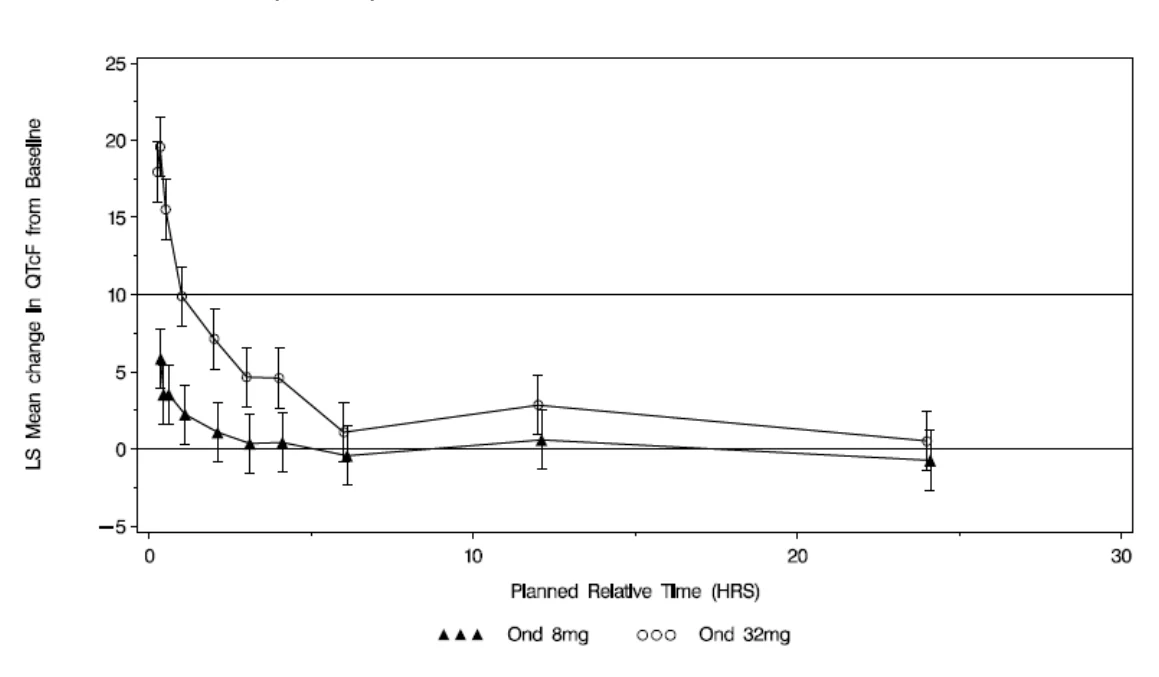
The effect of ondansetron on the QTc interval was evaluated in a double blind, randomized, placebo and positive (moxifloxacin) controlled, crossover study in 58 healthy adult men and women. Ondansetron was tested at single doses of 8 mg and 32 mg infused intravenously over 15 minutes. At the highest tested dose of 32 mg, prolongation of the Fridericia-corrected QTc interval (QT/RR0.33=QTcF) was observed from 15 min to 4 h after the start of the 15 min infusion, with a maximum mean (upper limit of 90% CI) difference in QTcF from placebo after baseline-correction of 19.6 (21.5) msec at 20 min.
At the lower tested dose of 8 mg, QTc prolongation was observed from 15 min to 1 h after the start of the 15 minute infusion, with a maximum mean (upper limit of 90% CI) difference in QTcF from placebo after baseline-correction of 5.8 (7.8) msec at 15 min. The magnitude of QTc prolongation with ondansetron is expected to be greater if the infusion rate is faster than 15 minutes. The 32 mg intravenous dose of ondansetron must not be administered.
No treatment-related effects on the QRS duration or the PR interval were observed at either the 8 or 32 mg dose.
LS Mean Difference (90% CI) in QTcF Interval Between Treatment and Placebo Over Time
An ECG assessment study has not been performed for orally administered ondansetron. On the basis of pharmacokinetic-pharmacodynamic modelling, an 8 mg oral dose of ondansetron is predicted to cause a mean QTcF increase of 0.7 ms (90% CI -2.1, 3.3) at steady-state, assuming a mean maximal plasma concentration of 24.7 ng/mL (95% CI 21.1, 29).
The magnitude of QTc prolongation at the recommended 5 mg/m2 dose in pediatrics has not been studied, but pharmacokinetic-pharmacodynamic modelling predicts a mean increase of 6.6 ms (90% CI 2.8, 10.7) at maximal plasma concentrations.
10.3 Pharmacokinetics
Absorption
- Oral administration
Pharmacokinetic studies in human volunteers showed peak plasma levels of 20-30 ng/mL at around 1½ hours after an 8 mg oral dose of ondansetron. Repeat dosing of an 8 mg tablet every 8 hours for 6 days increased the peak plasma value to 40 ng/mL
- Intravenous administration
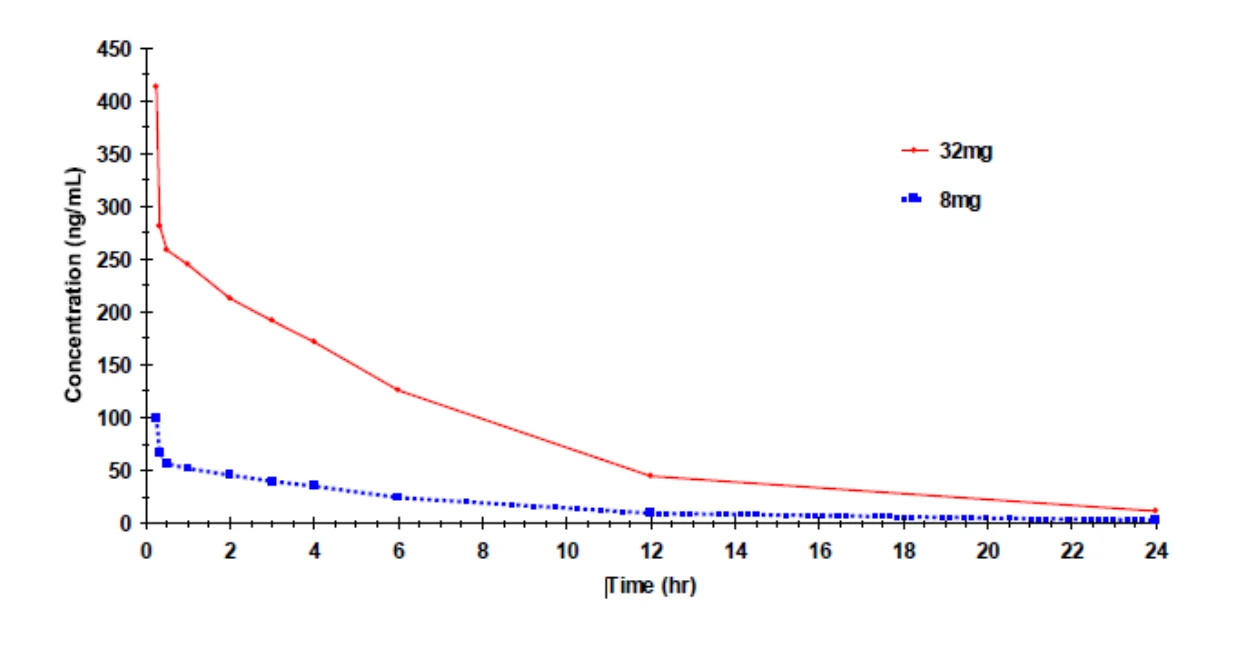
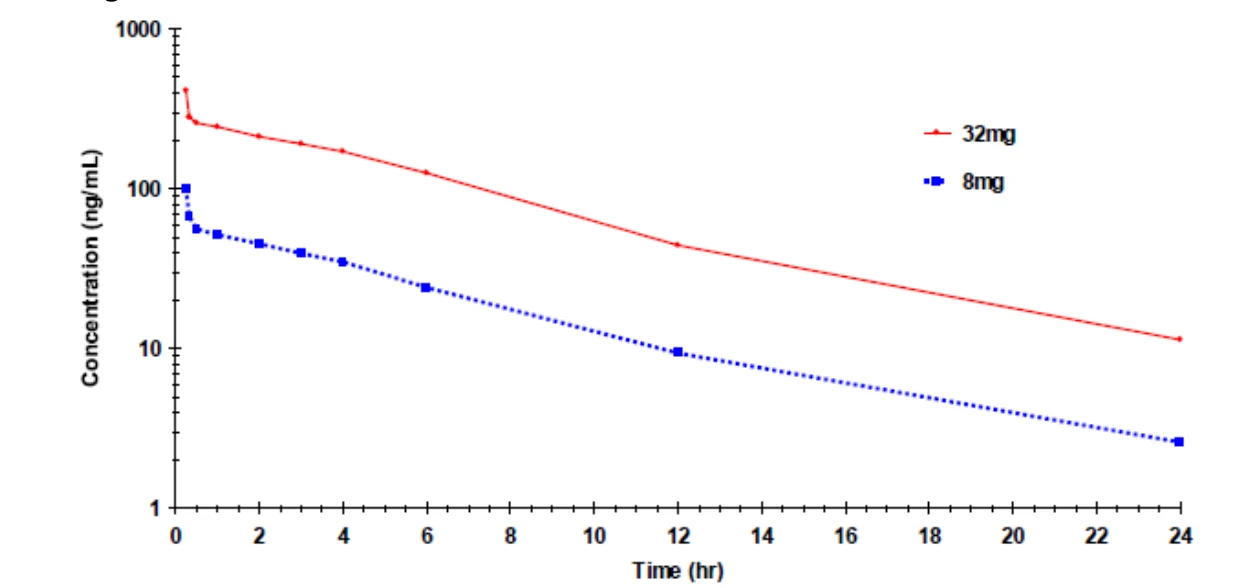
Pharmacokinetic studies in human volunteers: An 8 mg infusion of ondansetron resulted in peak plasma levels of 80-100 ng/mL. A continuous intravenous infusion of 1 mg/hour after the initial 8 mg loading dose of ondansetron maintained plasma levels over 30 ng/mL during the following 24 hour period.
Mean Plasma Concentration-Time Curve for Ondansetron 8mg and 32 mg dose:
Linear Scale
Semi-logarithmic Scale
Distribution
The absolute bioavailability of ondansetron in humans was approximately 60% and the plasma protein binding was approximately 73%.
See also 16. NON-CLINICAL TOXICOLOGY, Non-clinical pharmacokinetics.
Metabolism
In vitro metabolism studies have shown that ondansetron is a substrate for human hepatic cytochrome P450 enzymes, including CYP1A2, CYP2D6 and CYP3A4. In terms of overall ondansetron turnover, CYP3A4 played the predominant role. Because of the multiplicity of metabolic enzymes capable of metabolising ondansetron, it is likely that inhibition or loss of one enzyme (e.g. CYP2D6 enzyme deficiency) will be compensated by others and may result in little change in overall rates of ondansetron clearance. CYP 3A4 inducers can increase clearance (see 9.4 Drug-Drug Interactions, CYP 3A4 inducers).
Elimination
Following extensive metabolism of an orally or intravenously administered dose, ondansetron is excreted in the urine and faeces. In humans, less than 10% of the dose is excreted unchanged in the urine. The major urinary metabolites are glucuronide conjugates (45%), sulphate conjugates (20%) and hydroxylation products (10%).
The half-life of ondansetron after either an 8 mg oral dose or intravenous dose was approximately 3-4 hours and may be extended to 6-8 hours in the elderly.
Special Populations and Conditions
- Geriatrics
Early Phase I studies in healthy elderly volunteers showed a slight age-related decrease in clearance, and an increase in half-life of ondansetron. However, wide inter-subject variability resulted in considerable overlap in pharmacokinetic parameters between young (< 65 years of age) and elderly subjects (≥ 65 years of age) and there were no overall differences in safety or efficacy observed between young and elderly cancer patients enrolled in CINV clinical trials. (See 4.2 Recommended Dose and Dosage Adjustment, Use in Elderly)
Based on more recent ondansetron plasma concentrations and exposure-response modeling, a greater effect on QTcF is predicted in patients ≥75 years of age compared to young adults. Specific dosing information is provided for patients over 65 years of age and over 75 years of age for intravenous dosing. (See 4.2 Recommended Dose and Dosage Adjustment, Use in Elderly)
- Genetic Polymorphism
CYP 2D6: The elimination half-life and plasma levels of a single 8 mg intravenous dose of ondansetron did not differ between subjects classified as poor and extensive metabolisers of sparteine and debrisoquine (CYP 2D6 substrates). No alteration of daily dosage or frequency of ondansetron dosing is recommended for patients known to be CYP 2D6 poor metabolisers.
- Hepatic Insufficiency
The clearance of an 8 mg intravenous dose of ondansetron hydrochloride dihydrate was significantly reduced and the serum half-life significantly prolonged in subjects with severe impairment of hepatic function. In patients with moderate or severe impairment of hepatic function, reductions in dosage are therefore recommended and a total daily dose of 8 mg should not be exceeded. This may be given as a single intravenous dose.
There is no experience in patients who are clinically jaundiced.
- Renal Insufficiency
No alteration of daily dosage, frequency of dosing, or route of administration is required in patients with impaired renal function.
11 STORAGE, STABILITY AND DISPOSAL
Store between 15°C and 30°C. The product should be protected from light and stored in the carton until time of use.
For the 20 mL multidose vial, discard unused portion after 28 days from initial puncture.
Stability and Storage of Diluted Solutions:
Compatibility studies have been undertaken in polyvinyl chloride infusion bags, polyvinyl chloride administration sets and polypropylene syringes. Dilutions of ondansetron in sodium chloride 0.9% w/v or in dextrose 5% w/v have been demonstrated to be stable in polypropylene syringes. It is considered that Ondansetron Injection USP diluted with other compatible infusion fluids would be stable in polypropylene syringes.
Intravenous solutions should be prepared at the time of infusion. Ondansetron Injection USP in vials, when diluted with the recommended intravenous solutions, should be used within 24 hours if stored at room temperature (15°C to 30°C) or used within 72 hours if stored in a refrigerator (2°C to 8°C), due to possible microbial contamination during preparation.
There is no specific instruction for disposal.
PART II: SCIENTIFIC INFORMATION
13 PHARMACEUTICAL INFORMATION
Drug Substance
Proper name: ondansetron hydrochloride dihydrate
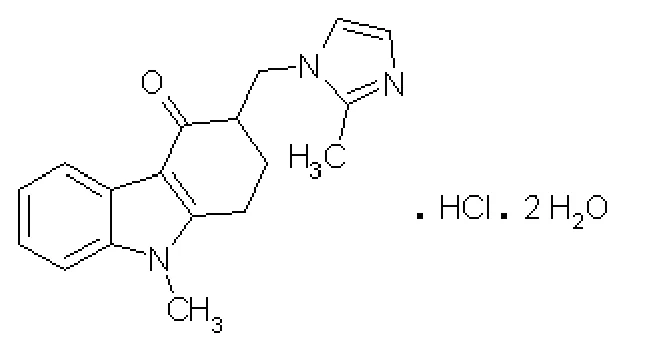
Chemical name: 1,2,3,9-tetrahydro-9-methyl-3-[(2-methyl-1H-imidazol-1- yl) methyl]-4H-carbazol-4-one, hydrochloride dihydrate
Molecular formula and molecular mass:
C18H19N3O.HCl.2H2O, 365.86 g/mol
Structural formula:
Physicochemical properties:
Physical description: White to off white powder.
Physical form: Ondansetron Hydrochloride Dihydrate has one optically active carbon and therefore it can exist as two different enantiomers.
Solubilities: Sparingly soluble in water and alcohol, slightly soluble in methylene chloride and soluble in methanol.
pKa: 7.4
Melting range: 178.5 to 179.5°C
14 CLINICAL TRIALS
14.1 Trial Design and Study Demographics
The clinical trial data on which the original indication was authorized is not available.
14.2 Study Results
Clinical trial results showing the number and percentage of patients exhibiting a complete response to ondansetron (0 emetic episodes) are shown in the tables below for both post-operative and chemotherapy induced emesis.
| Table 2: Prevention of Chemotherapy Induced Emesis - Response Over 24 Hours | |||||
|---|---|---|---|---|---|
| Dose | Ondansetron* 3 doses of 0.15 mg/kg | Placebo* 3 doses of placebo | Ondansetron 8 mg IV + 1 mg/hour, 24 hours | Ondansetron 8 mg IV | Ondansetron 32 mg IV |
| # of patients | 14 | 14 | 168 | 152 | 173 |
Treatment Response 0 emetic episodes 1-2 emetic episodes | 2 (14%) 8 (57%) | 0 (0%) 0 (0%) | 92 (55%) - | 82 (54%) - | 97 (56%) - |
*Results are from an initial study using a different dosing regimen.
| Table 3: Prevention of Post-Operative Emesis – Response Over 24 Hours* | |||
|---|---|---|---|
| Intravenous Prevention | |||
| Dose | Ondansetron 4 mg IV | Placebo | p Value |
| # of patients | 136 | 139 | |
Treatment Response 0 emetic episodes | 103 (76%) | 62 (46%) | <0.001 |
*The majority of patients included in the prevention and treatment of post-operative nausea and vomiting studies using ondansetron have been adult women receiving balanced anesthesia for gynecological surgery.
| Table 4: Treatment of Post-Operative Emesis - Response Over 24 Hours* | |||
|---|---|---|---|
| Intravenous Treatment | |||
| Dose | Ondansetron 4 mg IV | Placebo | p Value |
| # of patients | 104 | 117 | |
Treatment Response 0 emetic episodes | 49 (47%) | 19 (16%) | <0.001 |
*The majority of patients included in the treatment of post-operative nausea and vomiting studies using ondansetron have been adult women receiving balanced anesthesia for gynecological surgery.
16 NON-CLINICAL TOXICOLOGY
Non-clinical pharmacodynamics
Ferret model: The ferret provides an excellent model for demonstrating the antiemetic action of drugs. Emesis can be induced by antineoplastic drugs or whole body irradiation. Behavioural changes associated with these treatments are noted in these animals and may also provide a parallel for the human experience of nausea.
CINV: The antiemetic action of ondansetron has been evaluated in both male and female ferrets given cisplatin (9-10 mg/kg), cyclophosphamide (200 mg/kg) or irradiation (2 and 8 Gy, 250 kV). Intravenous doses of ondansetron (0.1-1 mg/kg) abolished cisplatin-induced emesis for up to 2 hours. In cyclophosphamide-induced emesis, subcutaneous doses of
0.5 mg/kg ondansetron completely eliminated vomiting, significantly reduced retching and delayed the onset of these responses.
RINV: The radiation-induced emesis, 0.5 mg/kg ondansetron alone completely and rapidly eliminated retching and vomiting.
Dexamethasone: The antiemetic effects of ondansetron (0.1 mg/kg) in combination with dexamethasone (2-5 mg/kg) were potentiated in ferrets with cyclophosphamide-induced emesis, compared with ondansetron alone. Ondansetron with dexamethasone produced a significant reduction in retching (65%) and vomiting (72%).
Gastric emptying: Among its secondary effects, ondansetron has also been shown to cause a dose-dependent increase in the rate of gastric emptying in the guinea pig which is significant at doses of 0.01-0.1 mg/kg. As gastric stasis is frequently associated with nausea, stimulation of gastric motility may be a beneficial action of ondansetron. In the cat, dog and monkey, ondansetron has little effect on heart rate, blood pressure or ECG at intravenous doses up to 3 mg/kg.
QT-prolongation: A study in cloned human cardiac ion channels has shown ondansetron has the potential to affect cardiac repolarisation via blockade of hERG potassium channels at clinically relevant concentrations. Dose-dependent QT prolongation has been observed in a thorough QT study in human volunteers (see 10.2 Pharmacodynamics – Electrocardiography).
Non-clinical pharmacokinetics: In mice, rats, rabbits and dogs dosed at 1 mg/kg orally and/or intravenously, the plasma half-life of ondansetron was less than 1 hour, but the half-lives of its metabolites were significantly longer. Peak plasma concentrations of ondansetron in rats and dogs ranged from 351 to 419 ng/mL for the IV dose and 8 to 15 ng/mL for the oral dose. Plasma levels were linear over a 30 fold dose range. In repeat dose studies there was no apparent accumulation of ondansetron.
Ondansetron is almost completely absorbed in animals, and is rapidly metabolized by N- demethylation and hydroxylation of the indole ring, followed by conjugation with glucuronic acid and sulphate. There is significant first-pass metabolism after oral doses.
Ondansetron and its metabolites are rapidly and widely distributed in tissues, reaching higher levels than the corresponding plasma levels. In the rat and dog, ondansetron binds reversibly to tissues containing melanin and elastin. In rats and man, plasma protein binding is about 73%, while it is slightly lower in the dog (60%). Ondansetron and its metabolites cross the blood-brain barrier to only a slight extent.
General Toxicology:
- Acute Toxicity
Single doses of ondansetron up to the LD50 in mice and in rats were generally well tolerated. Reactions, including tremor and convulsive behaviour, occurred only at near lethal levels.
Table 5
| Species | LD50 (mg/kg) | |
|---|---|---|
| Oral | IV | |
Mice Rats | 10-30 100-150 | 1-2.5 15-20 |
All deaths resulted from the acute effects of treatment, the observed clinical signs being consistent with the central nervous system effects associated with behavioural depression. These effects were not associated with any apparent histopathological changes in the brain. No target organ toxicity was identified.
- Long term Toxicity
Table 6 - Subacute Toxicity Studies
| Species | Route | Dose (mg/kg/day) | Duration of Study | Results |
|---|---|---|---|---|
Rats Dogs | Oral IV Oral IV | 160 12 7.5-25 2-8 | 7 weeks 5 weeks 5 weeks 5 weeks | Well tolerated Well tolerated Transient post-dosing clinical reactions associated with behavioural depression (at highest dose levels) |
Maximum daily dose levels in rats were found to be higher when doses were gradually increased. Identical doses were rapidly lethal to rats not previously exposed to ondansetron. Post-dosing reactions, in both rats and dogs, included ataxia, exophthalmia, mydriasis, tremor and respiratory changes. Increases in liver enzymes (SGPT and SGOT) were noted at high dose levels. Dogs dosed at 6.75 mg/kg/day intravenously exhibited vein irritancy in the form of constriction and thickening, creating resistance to needle penetration. The changes were noted after seven days treatment but were reversed by decreasing the dose concentration.
Table 7 - Chronic Toxicity
| Species | Duration | Max. no-effect Dose (mg/kg/day) | Effects |
|---|---|---|---|
Rat Dog | 18 months 12 months | 1 12 | Usually transient and restricted to highest dose |
Carcinogenicity
Table 8 - Carcinogenicity Studies
| Species | Route | Dose (mg/kg/day) | Duration of Study | Results |
|---|---|---|---|---|
Mice Rats | Oral Oral | 1-40 (max. oral dose 30) 1-25 (max. oral dose 10) | 2 years 2 years | No treatment related increases in tumour incidence. Proportion of benign/malignant tumours also remained Consistent with the pathological background of the Animals studied. |
There was no evidence of a tumorigenic effect of ondansetron in any tissue.
Mutagenicity
No evidence of mutagenicity was observed in microbial mutagen tests using mutant strains of Salmonella typhimurium, Escherichia coli or Saccharomyces cerevisiae, with or without a rat-liver post-mitochondrial metabolizing system.
There was also no evidence of damage to genetic material noted in in vitro V-79 mammalian cell mutation studies, in vitro chromosome aberration tests using human peripheral lymphocytes, or in vivo chromosome aberration assays in mouse bone marrow.
Reproductive and Developmental Toxicology
Ondansetron was not teratogenic in rats and rabbits at dosages up to the maximum non- convulsive level, (rat: 15 mg/kg/day, rabbit: 30 mg/kg/day; the maternal dose was approximately 6 and 24 times the maximum recommended human oral dose of 24 mg/day, respectively, based on body surface area). No adverse effects on pregnancy or foetal and post-natal development were detected in rats and no foetal abnormalities were observed in rabbits after oral administration of ondansetron.
A slight maternal toxicity was observed at the highest dose level in intravenous organogenesis (4 mg/kg/day) studies in the rabbit. Effects included maternal body weight loss and increased incidence of early foetal death. In a rat fertility study, there was a dose-related decrease in the proportion of surviving pups of the F2 generation; however, the significance of this is unclear.
Administration of ondansetron to pregnant rats and rabbits indicated there was foetal exposure to low levels of ondansetron and its metabolites. Ondansetron is retained in the foetal eye presumably bound to melanin. In rats, the transfer of ondansetron and its metabolites into breast milk was extensive. The concentration of unchanged ondansetron in breast milk was higher than in corresponding plasma samples.
Daily administration of ondansetron at dosages up to 15 mg/kg/day to pregnant rats (a maternal dose of approximately 6 times the maximum recommended human oral dose of 24 mg/day, based on body surface area) from day 17 of pregnancy to litter day 22 had no effects on pregnancy of the parental generation or on post-natal development and mating of the F1 generation. Foetal development of the F2 generation was comparable to controls; however, the number of implantations and viable foetuses was reduced in the highest dosage group when compared with controls.
17 SUPPORTING PRODUCT MONOGRAPHS
- 1. PrZOFRAN® (Injection, 2 mg/mL), submission control 252778, Product Monograph, Novartis Pharmaceuticals Canada Inc. (NOV 09, 2021)
- 2. PrOndansetron Injection USP (Injection, 2 mg/mL), submission control 260441, Product Monograph, Sandoz Canada Inc. (JUN 13, 2022)