


Product Monograph - Apo-Candesartan
RECENT MAJOR LABEL CHANGES
| N/A |
|---|
TABLE OF CONTENTS
Certain sections or subsections that are not applicable at the time of the preparation of the most recent authorized product monograph are not listed.
RECENT MAJOR LABEL CHANGES ........................................................................................... 2
TABLE OF CONTENTS ............................................................................................................. 2
PART I: HEALTH PROFESSIONAL INFORMATION ..................................................................... 4
1 INDICATIONS .............................................................................................................. 4
1.1 Pediatrics ................................................................................................................... 4
1.2 Geriatrics ................................................................................................................... 4
2 CONTRAINDICATIONS ................................................................................................. 4
3 SERIOUS WARNINGS AND PRECAUTIONS BOX ............................................................ 5
4 DOSAGE AND ADMINISTRATION ................................................................................. 5
4.1 Dosing Considerations .............................................................................................. 5
4.2 Recommended Dose and Dosage Adjustment ......................................................... 5
4.4 Administration .......................................................................................................... 7
4.5 Missed Dose .............................................................................................................. 7
5 OVERDOSAGE ............................................................................................................. 8
6 DOSAGE FORMS, STRENGTHS, COMPOSITION AND PACKAGING ................................. 8
7 WARNINGS AND PRECAUTIONS .................................................................................. 9
7.1 Special Populations ................................................................................................. 11
7.1.1 Pregnant Women .................................................................................................... 11
7.1.2 Breast-feeding ......................................................................................................... 11
7.1.3 Pediatrics ................................................................................................................. 11
7.1.4 Geriatrics ................................................................................................................. 12
8 ADVERSE REACTIONS................................................................................................ 12
8.1 Adverse Reaction Overview .................................................................................... 12
8.2 Clinical Trial Adverse Reactions .............................................................................. 13
8.3 Less Common Clinical Trial Adverse Reactions ....................................................... 16
8.4 Abnormal Laboratory Findings: Hematologic, Clinical Chemistry and Other Quantitative Data .............................................................................................................. 17
8.5 Post-Market Adverse Reactions .............................................................................. 18
9 DRUG INTERACTIONS ............................................................................................... 19
9.1 Serious Drug Interactions ....................................................................................... 19
9.2 Drug Interactions Overview .................................................................................... 19
9.4 Drug-Drug Interactions ........................................................................................... 19
9.5 Drug-Food Interactions ........................................................................................... 22
9.6 Drug-Herb Interactions ........................................................................................... 22
9.7 Drug-Laboratory Test Interactions.......................................................................... 22
10 CLINICAL PHARMACOLOGY ....................................................................................... 22
10.1 Mechanism of Action .............................................................................................. 22
10.2 Pharmacodynamics ................................................................................................. 23
10.3 Pharmacokinetics .................................................................................................... 23
11 STORAGE, STABILITY AND DISPOSAL ......................................................................... 25
12 SPECIAL HANDLING INSTRUCTIONS ........................................................................... 25
PART II: SCIENTIFIC INFORMATION ...................................................................................... 26
13 PHARMACEUTICAL INFORMATION ........................................................................... 26
14 CLINICAL TRIALS ....................................................................................................... 27
14.1 Efficacy and safety studies ...................................................................................... 27
14.3 Comparative Bioavailability Studies ....................................................................... 29
15 MICROBIOLOGY ....................................................................................................... 31
16 NON-CLINICAL TOXICOLOGY ..................................................................................... 31
17 SUPPORTING PRODUCT MONOGRAPHS .................................................................... 35
PATIENT MEDICATION INFORMATION ................................................................................. 36
PART I: HEALTH PROFESSIONAL INFORMATION
1 INDICATIONS
APO-CANDESARTAN (candesartan cilexetil) is indicated for:
Hypertension
- The treatment of mild to moderate essential hypertension.
- APO-CANDESARTAN may be used alone or concomitantly with thiazide diuretics.
- The safety and efficacy of concurrent use with calcium channel blockers have not been established.
Heart Failure
- The treatment of NYHA Class II and III heart failure with ejection fraction ≤ 40% in addition to standard therapy, with or without an ACE inhibitor.
1.1 Pediatrics
Pediatrics (6 to 17 years of age):
Hypertension
APO-CANDESARTAN is indicated for the treatment of essential hypertension in children and adolescents 6 to 17 years of age (see 7.1.3 Pediatrics, 14 CLINICAL TRIALS).
Heart Failure
The safety and efficacy of candesartan cilexetil in the treatment of heart failure has not been established in children and adolescents <18 years.
1.2 Geriatrics
Geriatrics (> 65 years of age): No overall differences in safety or effectiveness were observed between these subjects and younger subjects, and other reported clinical experience has not identified differences in responses between the elderly and younger patients, but greater sensitivity of some older individuals cannot be ruled out.
2 CONTRAINDICATIONS
APO-CANDESARTAN (candesartan cilexetil) is contraindicated in:
- Patients who are hypersensitive to this drug or to any ingredient in the formulation or component of the container. For a complete listing, see 6 DOSAGE FORMS, STRENGTHS, COMPOSITION AND PACKAGING.
- Children aged <1 year.
- Pregnant women (see 7.1.1 Pregnant Women).
- Nursing women (see 7.1.2 Breast-feeding).
- Combination with aliskiren-containing drugs in patients with diabetes mellitus (type 1 or type 2) or moderate to severe renal impairment (GFR < 60 mL/min/1.73m2) (see Dual Blockade of the Renin-Angiotensin System (RAS), Renal and 9.4 Drug-Drug Interactions).
- Patients with rare hereditary problems of galactose intolerance, the Lapp lactase deficiency or glucose-galactose malabsoprtion.
3 SERIOUS WARNINGS AND PRECAUTIONS BOX
Serious Warnings and Precautions
- When used in pregnancy, angiotensin receptor (AT1) blockers (ARBs) can cause injury or even death of the developing fetus. When pregnancy is detected, candesartan cilexetil should be discontinued as soon as possible (see 7.1.1 Pregnant Women).
4 DOSAGE AND ADMINISTRATION
4.1 Dosing Considerations
The dosage of APO-CANDESARTAN (candesartan cilexetil) must be individualized.
4.2 Recommended Dose and Dosage Adjustment
Hypertension
Adults
Initiation of therapy requires consideration of recent antihypertensive treatment, the extent of blood pressure (BP) elevation, salt restriction, and other pertinent clinical factors. The dosage of other antihypertensive agents used with APO-CANDESARTAN may need to be adjusted. BP response is dose related over the range of 4 to 32 mg.
The recommended initial dose of APO-CANDESARTAN is 16 mg, once daily when used as monotherapy. Total daily doses of APO-CANDESARTAN should range from 8 to 32 mg. Doses higher than 32 mg do not appear to have a greater effect on BP reduction, and there is relatively little experience with such doses. Most of the antihypertensive effect is present within 2 weeks and the maximal BP reduction is generally obtained within 4 weeks. For patients with possible depletion of intravascular volume (e.g. patients treated with diuretics, particularly those with impaired renal function) consideration should be given to administration of a lower dose. If BP is not controlled by APO-CANDESARTAN alone, a thiazide diuretic may be added (see 9.4 Drug-Drug Interactions).
Concomitant Diuretic Therapy
In patients receiving diuretics, APO-CANDESARTAN therapy should be initiated with caution, since these patients may be volume-depleted and thus more likely to experience hypotension following initiation of additional antihypertensive therapy.
Whenever possible, all diuretics should be discontinued 2 to 3 days prior to the administration of APO-CANDESARTAN, to reduce the likelihood of hypotension (see Hypotension). If this is not possible because of the patient's condition, APO-CANDESARTAN should be administered with caution and BP monitored closely. Thereafter, the dosage should be adjusted according to the individual response of the patient.
Dosage Adjustments in the Presence of Pathologies
Hepatic Impairment
Mild to moderate hepatic impairment: No dosage adjustment is necessary.
Severe hepatic impairment and/or cholestasis: There is only limited experience. In patients with severely impaired hepatic function, a lower initial dose of 4 mg should be considered.
Renal Impairment
Mild renal impairment: No dosage adjustment is necessary
Moderate or severe renal impairment or patients undergoing dialysis: A lower initial dose of 4 mg should be considered.
Dosage Adjustments in Special Populations
Pediatrics (6 to 17 years of age)
Patients weighing <50 kg: The recommended starting dose is 4 mg once daily.
In some patients whose BP is not adequately controlled, the dose can be increased to 8 mg once daily.
The maximum dose is 8 mg once daily
Patients weighing ≥ 50 kg: The recommended starting dose is 8 mg once daily.
In some patients whose BP is not adequately controlled, the dose can be increased to 16 mg once daily.
The maximum dose is 16 mg once daily.
The dose should be adjusted according to BP response.
Most of the antihypertensive effect is attained within 4 weeks.
Doses >32 mg have not been studied in pediatric patients.
For children with possible intravascular volume depletion (e.g. patients treated with diuretics, particularly those with impaired renal function), APO-CANDESARTAN treatment should be initiated under close medical supervision and a lower starting dose than the general starting dose above should be considered (see 7.1.3 Pediatrics).
Geriatrics (> 65 years of age)
No dosage adjustment is necessary for elderly patients. As greater sensitivity of some older patients cannot be ruled out, appropriate caution is recommended (see 7.1.4 Geriatrics).
Heart Failure
Adults
The usual recommended initial dose for treating heart failure is 4 mg once daily. The target dose is 32 mg once daily which is achieved by doubling the dose at approximately 2 week intervals, as tolerated by the patient. APO-CANDESARTAN can be administered with other heart failure treatments including ACEIs, beta-blockers, diuretics, digoxin, and/or spironolactone.
No initial dose adjustment is necessary for elderly patients or in patients with renal or hepatic impairment.
Pediatrics (6 to 17 years of age)
The safety and efficacy of candesartan cilexetil in the treatment of heart failure have not been established in children and adolescents <18 years of age.
Geriatrics (> 65 years of age)
No dosage adjustment is necessary for elderly patients. As greater sensitivity of some older patients cannot be ruled out, appropriate caution is recommended (see 7.1.4 Geriatrics).
4.4 Administration
APO-CANDESARTAN. should be taken once daily, at approximately the same time each day, with or without food.
4.5 Missed Dose
If a patient misses a dose of APO-CANDESARTAN and remembers within 12 hours, the patient should take the dose as soon as possible and then go back to the regular schedule. If it is more than 12 hours after the patient remembers, they should not take the missed dose; the next dose should be taken on time.
A double dose of APO-CANDESARTAN should never be taken to make up for a missed dose.
5 OVERDOSAGE
Limited data are available in regard to overdosage in humans. The most likely manifestations of overdosage would be hypotension, dizziness and tachycardia; bradycardia could occur from reflex parasympathetic (vagal) stimulation. In case reports detailing overdosage ≤672 mg candesartan cilexetil in adults, patient recovery was uneventful.
If symptomatic hypotension should occur, supportive treatment should be instituted and vital signs monitored. The patient should be placed supine with the legs elevated. If this is not sufficient, plasma volume should be increased by infusion of, for example, isotonic saline solution. Sympathomimetic drugs may also be administered if the above-mentioned measures are not sufficient.
Candesartan cilexetil is not removed from the plasma by hemodialysis.
For the most recent information in the management of a suspected drug overdose, contact your regional poison control centre or Health Canada’s toll-free number, 1-844 POISON-X (1-844-764-7669).
6 DOSAGE FORMS, STRENGTHS, COMPOSITION AND PACKAGING
Table 1 – Dosage Forms, Strengths, Composition and Packaging
Description
APO-CANDESARTAN 4 mg tablets are White to off white coloured, round shaped, biconvex tablets, engraved “APO” on one side and “CA” scored “4” on other side. Available in blister packs of 10 tablets and bottle of 100 tablets.
APO-CANDESARTAN 8 mg tablets are Pink to light pink coloured, round shaped, biconvex tablets, engraved “APO” on one side and “CA” bisect 8 on the other side. Available in blister packs of 10 tablets and bottle of 100 and 500 tablets.
| Route of Administration | Dosage Form / Strength/Composition | Non-medicinal Ingredients |
| Oral | Tablet: 4 mg, 8 mg, 16 mg and 32 mg | Carboxymethyl cellulose calcium, euroxide red iron oxide (except 4 mg tablets), hydroxypropyl cellulose, lactose monohydrate, magnesium stearate, maize starch, triacetin |
APO-CANDESARTAN 16 mg tablets are Pink to light pink coloured, round shaped, biconvex tablets, engraved “APO” on one side and “CA” bisect “16” on the other side. Available in blister packs of 10 tablets and bottle of 100 and 500 tablets.
APO-CANDESARTAN 32 mg tablets are Pink to light coloured, round shaped, biconvex tablets, engraved “APO” on one and “CA” bisect “32” on other side. Available in blister packs of 10 tablets and bottle of 100 tablets.
7 WARNINGS AND PRECAUTIONS
Please see 3 SERIOUS WARNINGS AND PRECAUTIONS BOX.
Cardiovascular
Dual blockade of the Renin-Angiotensin System (RAS): There is evidence that co-administration of angiotensin receptor antagonists (ARBs), such as candesartan cilexetil tablets, or of angiotensin converting enzyme inhibitors (ACEIs) with aliskiren increases the risk of hypotension, syncope, stroke, hyperkalemia and deterioration of renal function, including renal failure, in patients with diabetes mellitus (type 1 or type 2) and/or moderate to severe renal impairment (GFR < 60 mL/min/1.73m2). Therefore, the use of APO-CANDESARTAN in combination with aliskiren-containing drugs is contraindicated in these patients (see 2 CONTRAINDICATIONS).
Further, co-administration of ARBs, including APO-CANDESARTAN, with other agents blocking the RAS, such as ACEIs or aliskiren-containing drugs, is generally not recommended in other patients, since such treatment has been associated with an increased incidence of severe hypotension, decreased renal function (including acute renal failure), and hyperkalemia.
Avoid the concomitant use of ACE inhibitors and ARBs in patients with diabetic nephropathy.
If dual blockade therapy is considered necessary, this should only occur under specialist supervision and subject to frequent close monitoring of renal function, electrolytes and blood pressure.
Hypotension: Occasionally, symptomatic hypotension has occurred after administration of candesartan cilexetil. It is more likely to occur in patients who are volume-depleted by diuretic therapy, dietary salt restriction, dialysis, diarrhea or vomiting, or undergoing surgery with anesthesia. In these patients, because of the potential fall in blood pressure (BP), therapy should be started under close medical supervision. Similar considerations apply to patients with ischemic heart or cerebrovascular disease, in whom an excessive fall in blood pressure could result in myocardial infarction or cerebrovascular accident (see 8 ADVERSE REACTIONS).
Heart Failure: Patients with heart failure given candesartan cilexetil commonly have some reduction in BP. Caution should be observed when initiating therapy.
Triple combination of APO-CANDESARTAN with an ACE-inhibitor and a mineralocorticoid receptor antagonist used in heart failure is also not recommended. Use of these combinations should be under specialist supervision and subject to frequent close monitoring of renal function, electrolytes and blood pressure.
Valvular Stenosis: There is concern on theoretical grounds that patients with aortic stenosis might be at particular risk of decreased coronary perfusion when treated with vasodilators because they do not develop as much afterload reduction.
Driving and Operating Machinery
The effect of candesartan cilexetil on the ability to drive and use machines has not been studied, but based on its pharmacodynamic properties APO-CANDESARTAN is unlikely to affect this ability. When driving vehicles or operating machines, it should be taken into account that dizziness or weariness may occur during treatment. Exercise caution when driving or operating a vehicle or potentially dangerous machinery.
Endocrine and Metabolism
Hyperkalemia
Heart Failure: In heart failure patients treated with candesartan cilexetil, hyperkalemia may occur. During treatment with APO-CANDESARTAN in patients with heart failure, periodic monitoring of serum potassium is recommended, especially when taken concomitantly with ACE inhibitors and potassium-sparing diuretics such as spironolactone.
Renal
Renal Impairment: As a consequence of inhibiting the renin-angiotensin-aldosterone system (RAAS), changes in renal function have been seen in susceptible individuals. In patients whose renal function may depend on the activity of the RAAS, such as patients with bilateral renal artery stenosis, unilateral renal artery stenosis to a solitary kidney, or severe congestive heart failure, treatment with agents that inhibit this system has been associated with oliguria, progressive azotemia, and rarely, acute renal failure and/or death. In susceptible patients, concomitant diuretic use may further increase risk.
The use of ARBs, including candesartan cilexetil, or ACEIs with aliskiren-containing drugs is contraindicated in patients with moderate to severe renal impairment (GFR < 60 mL/min/1.73m2) (see 2 CONTRAINDICATIONS and 9.4 Drug-Drug Interactions).
Use of APO-CANDESARTAN should include appropriate assessment of renal function.
Heart Failure: In heart failure patients, increases in serum creatinine may occur. Dosage reduction, and/or discontinuation of the diuretic, and/or candesartan cilexetil, and/or volume repletion may be required. Monitoring of serum creatinine is recommended during dose escalation and periodically thereafter.
Renal Transplantation: There is limited experience regarding the administration of candesartan cilexetil in adult patients with renal transplant.
7.1 Special Populations
7.1.1 Pregnant Women
APO-CANDESARTAN is contraindicated during pregnancy (see 2 CONTRAINDICATIONS). Drugs that act directly on the RAAS can cause fetal and neonatal morbidity and death when administered to pregnant women. When pregnancy is detected, APO-CANDESARTAN should be discontinued as soon as possible.
Epidemiological evidence regarding the risk of teratogenicity following exposure to ACEIs during the first trimester of pregnancy has not been conclusive; however, a small increase in risk cannot be excluded. Given the current evidence available on the risk with ARBs, similar risks may exist for this class of drugs. Patients planning pregnancy should be changed to alternative anti-hypertensive treatments which have an established safety profile for use in pregnancy. When pregnancy is diagnosed, treatment with ARBs should be stopped immediately, and, if appropriate, alternative therapy should be started.
The use of ARBs during the second and third trimesters is known to induce human fetotoxicity (decreased renal function, oligohydramnios, skull ossification retardation) and neonatal toxicity (renal failure, hypotension, hyperkalemia).
Animal data: Oral doses ≥ 10 mg candesartan cilexetil/kg/day administered to pregnant rats during late gestation and continued through lactation were associated with reduced survival and an increased incidence of hydronephrosis in the offspring. Candesartan cilexetil given to pregnant rabbits at an oral dose of 3 mg/kg/day caused maternal toxicity (decreased body weight and death) but, in surviving dams, had no adverse effects on fetal survival, fetal weight, or external, visceral, or skeletal development. No maternal toxicity or adverse effects on fetal development were observed when oral doses ≤1000 mg candesartan cilexetil/kg/day were administered to pregnant mice.
7.1.2 Breast-feeding
It is not known whether candesartan is excreted in human milk, but significant levels have been found in the milk of lactating rats. Because many drugs are excreted in human milk, and because of their potential for adversely affecting the nursing infant, a decision should be made whether to discontinue nursing or to discontinue the drug, taking into account the importance of the drug to the mother (see 2 CONTRAINDICATIONS).
7.1.3 Pediatrics
Pediatrics (6 to 17 years of age):
In utero exposure: Infants with a history of in utero exposure to ARBs should be closely observed for hypotension, oliguria, and hyperkalemia. If oliguria occurs, attention should be directed toward support of blood pressure and renal perfusion. Exchange transfusion or dialysis may be required as a means of reversing hypotension and/or substituting for impaired renal function; however, limited experience with those procedures has not been associated with significant clinical benefit. Candesartan cilexetil is not removed from plasma by dialysis.
Animal data-Heart development: In preclinical studies in normotensive neonatal and juvenile rats, candesartan caused a reduction in relative and absolute heart weights. As in adult animals, these effects were considered to result from the pharmacological action of candesartan. At the lowest dose of 10 mg/kg, exposure to candesartan was 7 to 54x those found in children aged 6 to <17 years who received 16 mg of candesartan cilexetil. Since a NOAEL (no observed adverse effect level) could not be established in these studies, the safety margin for the effects on heart weight could not be determined. The clinical relevance of this finding is unknown.
Black pediatric patients: The antihypertensive effect of candesartan is less pronounced in Black patients compared with non-Black patients.
Volume-depleted patients: For children with possible intravascular volume depletion (e.g. patients treated with diuretics, particularly those with impaired renal function), APO-CANDESARTAN treatment should be initiated under close medical supervision and a lower starting dose should be considered (see 4 DOSAGE AND ADMINISTRATION, Pediatrics).
Renal impairment: Candesartan cilexetil tablets has not been studied in children aged 6 to 17 years with renal impairment (see 4 DOSAGE AND ADMINISTRATION, Pediatrics).
Hepatic impairment: There are no data on the effects of candesartan cilexetil tablets in pediatric patients with hepatic impairment.
Type 1 diabetes: There is no experience regarding the administration of candesartan cilexetil tablets in children aged 6 to <17 years with type 1 diabetes.
7.1.4 Geriatrics
Geriatrics (> 65 years of age): No overall differences in safety or effectiveness were observed between subjects >65 years of age and younger subjects. In addition, other reported clinical experience has not identified differences in responses between the elderly and younger patients, but greater sensitivity of some older individuals cannot be ruled out.
8 ADVERSE REACTIONS
8.1 Adverse Reaction Overview
Hypertension
Adults
Potentially serious adverse reactions reported rarely with candesartan cilexetil in controlled clinical trials were syncope and hypotension.
Pediatrics (6 to 17 years of age)
The adverse reaction profile of candesartan cilexetil as a treatment for hypertension in pediatric patients appeared similar to that seen in adults. However, the frequency of all adverse events (AEs) seemed higher.
Sinus arrhythmia, which was not reported in adults, was observed in 2.9% and 2.0% of pediatric patients taking candesartan cilexetil for 4 weeks and 1 year, respectively.
Heart Failure
Severe adverse reactions most commonly seen in adult heart failure patients taking candesartan cilexetil in controlled clinical trials were hypotension, hyperkalemia and renal impairment.
8.2 Clinical Trial Adverse Reactions
Clinical trials are conducted under very specific conditions. The adverse reaction rates observed in the clinical trials; therefore, may not reflect the rates observed in practice and should not be compared to the rates in the clinical trials of another drug. Adverse reaction information from clinical trials may be useful in identifying and approximating rates of adverse drug reactions in real-world use.
Hypertension
Adults
APO-CANDESARTAN (candesartan cilexetil) was evaluated for safety in >8700 patients treated for hypertension, including 677 treated for ≥6 months and 626 for ≥1 year. Of these, 8694 were treated with candesartan cilexetil monotherapy in controlled clinical trials.
In placebo-controlled clinical trials, discontinuation due to AEs occurred in 2.9% and 2.7% of patients treated with candesartan cilexetil monotherapy and placebo, respectively.
In the double blind, placebo-controlled trials, the overall incidence of AEs showed no association with dose, age or gender. In these trials, the following AEs reported with candesartan cilexetil occurred in ≥ 1% of patients, regardless of drug relationship:
Table 2 - Adverse events that occurred in ≥ 1% of patients regardless of drug relationship
Candesartan cilexetil
Placebo n = 1388
n = 573
(%)
(%)
Body as a Whole
back pain
3.2
0.9 fatigue
1.5
1.6 abdominal pain
1.5
1.3 peripheral edema
1.0
0.7
Digestive
nausea
1.9
1.3 diarrhea
1.5
1.9 vomiting
1.0
1.2
Nervous/Psychiatric
headache
10.4
10.3 dizziness
2.5
2.3
Respiratory
upper respiratory infection
5.1
3.8 coughing
1.6
1.1 influenza-like symptoms
1.5
0.8 pharyngitis
1.1
0.4 bronchitis
1.0
2.2 rhinitis
1.0
0.4
Clinical trials in which doses ≤32 mg were administered did not result in a significant increase in any of the AEs listed above.
Pediatrics (6 to 17 years of age)
Candesartan cilexetil was evaluated for safety in 240 hypertensive pediatric patients aged
6 to 17 years during a 4-week placebo-controlled clinical trial and in 235 pediatric patients in the 1-year open-label extension study. A total of 213 pediatric patients from the placebo-controlled trial enrolled in the open-label study. There were 178 patients who were treated for ≥1 year.
The adverse reaction profile of candesartan cilexetil in pediatric patients appeared similar to that seen adults. However, the frequency of all AEs seemed higher.
In the placebo-controlled clinical trial, the most common AEs (≥3% of patients) were cough, dizziness, headache, pharyngolaryngeal pain and upper respiratory tract infection. Dizziness was the most common drug-related AE.
In the open-label extension study, 3 out of 240 pediatric patients aged 6 to 17 years experienced worsening renal disease. The association between candesartan and the exacerbation of the underlying condition could not be excluded.
Sinus arrhythmia, which was not reported in adults, was observed in 2.9% and 2.0% of pediatric patients taking candesartan cilexetil for 4 weeks and 1 year, respectively.
Heart Failure
The AE profile of candesartan cilexetil in adult heart failure patients was consistent with the pharmacology of the drug and the health status of the patients. In the CHARM-Alternative and CHARM-Added studies comparing candesartan cilexetil in total daily doses ≤32 mg once daily to placebo, 23.2 % of candesartan cilexetil and 18.4% of placebo patients discontinued the treatment due to AEs.
In these trials, the following AEs reported with candesartan cilexetil occurred in ≥ 1% of patients and with higher frequency than placebo, regardless of drug relationship.
Table 3 - Adverse events reported in CHARM-Alternative and CHARM-Added and occurring with frequency of ≥ 1% regardless of drug relationship
candesartan cilexetil
n = 2289
(%)
placebo n = 2287
(%)
Body as a Whole
Fatigue
1.4
0.9
Cardiovascular Disorders
Hypotension
Syncope
Coronary artery disorder
Cardiac arrest
20.9
3.3
4.2
1.3
11.0
3.2
3.5
1.1
Blood disorders
Anemia
2.8
2.3
Gastro-Intestinal System disorders
Diarrhea
Gastroenteritis
2.4
1.1
1.1
0.7
Liver and Biliary System Disorders
Cholelithiasis
1.1
0.9
Metabolic and Nutritional Disorders
Hyperkalemia
Dehydration
Nonprotein nitrogen increased
Uremia
Gout
7.6
2.5
1.3
1.1
1.0
2.6
1.3
0.3
0.5
0.9 candesartan cilexetil
n = 2289
(%)
placebo n = 2287
(%)
Musculo-Skeletal System Disorders
Arthrosis
1.2
1.0
Nervous System Disorders
Dizziness
Headache
3.4
1.0
2.1
0.7
Urinary System Disorders
Renal function abnormal
Renal failure acute
14.3
3.0
7.2
1.8
8.3 Less Common Clinical Trial Adverse Reactions
Hypertension
The following AEs were reported at an incidence of < 1% in controlled clinical trials (in >1 patient, with higher frequency than placebo):
Body as a Whole: allergy, asthenia, pain, syncope.
Cardiovascular: angina pectoris, circulatory failure, flushing, hypotension, myocardial infarction, peripheral ischemia, thrombophlebitis.
Central and Peripheral Nervous System: hypertonia, hypoesthesia, paresthesia, vertigo.
Gastrointestinal: constipation, dry mouth, dyspepsia, toothache.
Hearing: tinnitus.
Metabolic and Nutritional: diabetes mellitus, hyperkalemia, hyponatremia.
Musculoskeletal: arthritis, arthropathy, myalgia, myopathy, skeletal pain, tendon disorder.
Blood: anemia, epistaxis.
Psychiatric: depression, impotence, neurosis.
Reproductive: menopausal symptoms.
Resistance Mechanism: otitis.
Respiratory: laryngitis.
Skin: eczema, pruritus, rash, skin disorder, sweating, (rarely) urticaria.
Urinary: abnormal urine, cystitis.
Vision: conjunctivitis.
AEs reported at a rate >1% but at about the same or greater incidence in patients receiving placebo, in studies using daily doses >16 mg: albuminuria, arthralgia, chest pain and sinusitis.
Other AEs reported at an incidence of ≥0.5% from >3200 patients treated worldwide include anxiety, dyspnea, fever, gastroenteritis, hematuria, hyperglycemia, hypertriglyceridemia, hyperuricemia, increased creatinine phosphokinase, palpitation, somnolence and tachycardia.
Heart Failure
The following listed AEs occurred in <1% of patients treated with candesartan cilexetil but in ≥2 patients and with more frequent occurrence in the candesartan cilexetil group than in the placebo group (CHARM-Alternative and CHARM-Added).
Liver and Biliary System Disorders: hepatic function abnormal.
Skin and Appendages Disorders: angioedema, pruritus, rash.
White Cell and Resistance Disorders: granulocytopenia, leukopenia.
8.4 Abnormal Laboratory Findings: Hematologic, Clinical Chemistry and Other Quantitative Data
Clinical Trial Findings
Hypertension
In controlled clinical trials, clinically important changes in standard laboratory parameters were rarely associated with administration of candesartan cilexetil.
Liver Function Tests: In controlled clinical trials, elevations of AST and ALT (> 3x the upper limit of normal) occurred in 0.3% and 0.5%, respectively, of patients treated with candesartan cilexetil monotherapy compared to 0.2% and 0.4%, respectively, of patients receiving placebo.
Serum Potassium: A small increase (mean increase of 0.1 mEq/L) was observed in hypertensive patients treated with candesartan cilexetil alone but was rarely of clinical importance.
Creatinine, Blood Urea Nitrogen, and Sodium: Infrequent minor increases in blood urea nitrogen (BUN) and serum creatinine as well as decreases in sodium were observed.
Hemoglobin and Hematocrit: Small decreases in hemoglobin and hematocrit (mean decreases of approximately 0.2 g/dL and 0.5 volume %, respectively) were observed in patients treated with candesartan cilexetil alone but were rarely of clinical importance. Anemia, leukopenia and thrombocytopenia were associated with withdrawal of 1 patient each from clinical trials.
Hyperuricemia: Hyperuricemia was rarely found (0.6% of patients treated with candesartan cilexetil and 0.5% of patients treated with placebo).
Heart Failure
Increases in serum creatinine, potassium and urea, and decreases in hemoglobin and hematocrit were observed.
8.5 Post-Market Adverse Reactions
In post-marketing experience, the following have been reported in patients treated with candesartan cilexetil:
Blood and lymphatic disorders: thrombocytopenia
Cardiac disorders: atrial fibrillation, bradycardia, cardiac failure, palpitations
Digestive: abnormal hepatic function and hepatitis (very rare)
Gastrointestinal disorders: pancreatitis
General disorders and administration site conditions: chest pain, malaise, sudden death
Hematologic: agranulocytosis, leukopenia and neutropenia (very rare)
Immunologic: angioedema (involving swelling of the face, lips and/or tongue) (rare), hypersensitivity
Infections and infestations: pneumonia
Investigations: blood creatinine increased, fall
Metabolic and Nutritional Disorders: hyperkalemia and hyponatremia
Musculoskeletal System: muscle pain, muscle weakness, myositis and rhabdomyolysis
Nervous system disorders: cerebrovascular accident, loss of consciousness, presyncope
Psychiatric disorders: confusional state
Respiratory System Disorders: cough, pulmonary edema
Skin and Appendages Disorders: pruritus, rash and urticarial
Urogenital System: renal impairment, including renal failure in elderly susceptible patients (see Renal)
9 DRUG INTERACTIONS
9.1 Serious Drug Interactions
Serious Drug Interactions
- APO-CANDESARTAN is contraindicated in combination with aliskiren-containing drugs in patients with diabetes mellitus (type 1 or type 2) or moderate to severe renal impairment (GFR < 60 mL/min/1.73m2) (see 2 CONTRAINDICATIONS and 9.4 Drug-Drug Interactions).
9.2 Drug Interactions Overview
In vitro studies indicate that cytochrome P450 isoenzyme CYP2C9 is involved in the biotransformation of candesartan to its inactive metabolite. Based on in vitro data, no interaction would be expected to occur in vivo with drugs whose metabolism is dependent upon cytochrome P450 isoenzymes CYP1A2, CYP2A6, CYP2C9, CYP2C19, CYP2D6, CYP2E1 or CYP3A4.
Interaction studies have only been performed in adults.
9.4 Drug-Drug Interactions
The drugs listed in Table 3 are based on either drug interaction case reports or studies or potential interactions due to the expected magnitude and seriousness of the interaction (i.e. those identified as contraindicated).
Table 4 - Established on Potential Drug-Drug Interactions with candesartan cilexetil
Proper Name
Source of Evidence
Effect
Clinical Comment
Agents Increasing Serum Potassium
T
Candesartan cilexetil decreases the production of aldosterone.
Potassium-sparing diuretics or potassium supplements or other drugs that may increase potassium levels (e.g., heparin, co-trimoxazole) should be given only for documented hypokalemia and with frequent monitoring of serum potassium.
Potassium-containing salt substitute should also be used with caution.
Diuretics
CT
Patients on diuretics, and especially those in
The possibility of symptomatic hypotension
Proper Name
Source of Evidence
Effect
Clinical Comment
whom diuretic therapy was recently instituted, may occasionally experience an excessive reduction of blood pressure after initiation of therapy with candesartan cilexetil.
with the use of candesartan cilexetil can be minimized by discontinuing the diuretic prior to initiation of treatment and/or lowering the initial dose of candesartan cilexetil (see 7 WARNINGS AND PRECAUTIONS, Hypotension). No drug interactions of clinical significance have been identified with thiazide diuretics in patients treated with ≤25 mg hydrochlorothiazide with 16 mg candesartan cilexetil for 8 weeks.
Digoxin
CT
Combination treatment with candesartan cilexetil and digoxin in healthy volunteers had no effect on AUC or Cmax values for candesartan compared to candesartan cilexetil alone.
No dosage adjustment.
Dual blockade of the Renin-Angiotensin-System (RAS) with ARBs, ACEIs or aliskiren-containing drugs
CT
Dual Blockade of the Renin-Angiotensin-System (RAS) with ARBs or ACEIs and aliskiren-containing drugs is contraindicated in patients with diabetes and/or renal impairment. Co-administration of ARBs, ACEIs or aliskiren-containing drugs is generally not recommended in other patients, since such
See 2 CONTRAINDICATIONS and 7 WARNINGS AND PRECAUTIONS, Dual Blockade of the Renin-Angiotensin-System (RAS).
Proper Name
Source of Evidence
Effect
Clinical Comment
treatment has been associated with an increased incidence of severe hypotension, renal failure, and hyperkalemia.
Enalapril
CT
While there is no clinically relevant interaction between candesartan and enalapril, patients with renal impairment showed a higher exposure to both drugs. This is consistent with the known pharmacokinetics of these 2 compounds.
Dosage may need to be adjusted based on the response of the patient.
Lithium Salts
CT
As with other drugs which eliminate sodium, lithium clearance may be reduced.
Serum lithium levels should be monitored carefully if lithium salts are to be administered.
Non-steroidal anti-inflammatory
drugs
(NSAIDs)
CT
Attenuation of the antihypertensive effect may occur when simultaneously administering ARBs and NSAIDs; i.e. selective COX-2 inhibitors, acetylsalicylic acid and non-selective NSAIDs.
As with ACEIs inhibitors, concomitant use of ARBs and NSAIDs may lead to an increased risk of worsening of renal function, including possible acute renal failure, and an increase in serum potassium,
The combination ARBs and NSAIDs should be administered with caution, especially in older patients and in volume depleted patients. Patients should be adequately hydrated and consideration should be given to monitoring renal function after initiation of concomitant therapy and periodically thereafter.
If combination use is necessary, monitor renal function, serum potassium, and blood pressure closely. Dose adjustments may be required.
Proper Name
Source of Evidence
Effect
Clinical Comment especially in patients with poor pre-existing renal function.
Patients with heart failure may be at particular risk.
Warfarin
CT
When candesartan cilexetil was administered at 16 mg once daily under steady state conditions, no pharmacodynamic effect on prothrombin time was demonstrated in subjects stabilized on warfarin.
No dosage adjustment.
Other
No significant drug interactions have been reported with glyburide, nifedipine or oral contraceptives co-administered with candesartan cilexetil to healthy volunteers.
No dosage adjustment.
Legend: C= Case Study; CT= Clinical Trial; T= Theoretical
9.5 Drug-Food Interactions
APO-CANDESARTAN may be taken with or without food (see 4 DOSAGE AND ADMINISTRATION).
9.6 Drug-Herb Interactions
Interactions with herbal products have not been established.
9.7 Drug-Laboratory Test Interactions
Interactions with laboratory tests have not been established.
10 CLINICAL PHARMACOLOGY
10.1 Mechanism of Action
Candesartan cilexetil antagonizes angiotensin II by blocking the angiotensin type one (AT1) receptor. Angiotensin II is the primary vasoactive hormone of RAAS with effects that include vasoconstriction, stimulation of aldosterone secretion and renal reabsorption of sodium.
Candesartan cilexetil, a prodrug, is rapidly converted to the active drug, candesartan, during absorption from the gastrointestinal tract.
Candesartan blocks the vasoconstrictor and aldosterone secreting effects of angiotensin II by selectively blocking the binding of angiotensin II to the AT1 receptor in many tissues, such as vascular smooth muscle and the adrenal gland. Its action is therefore independent of the pathways for angiotensin II synthesis. There is also an AT2 receptor found in many tissues, but it plays no known role in cardiovascular homeostasis to date. Candesartan has a much greater affinity (> 10,000 fold) for the AT1 receptor than for the AT2 receptor. The strong bond between candesartan and the AT1 receptor is a result of tight binding to and slow dissociation from the receptor.
Candesartan does not inhibit ACE, also known as kininase II, the enzyme that converts angiotensin I to angiotensin II and degrades bradykinin, nor does it bind to or block other hormone receptors or ion channels known to be important in cardiovascular regulation.
10.2 Pharmacodynamics
Candesartan inhibits the pressor effects of angiotensin II infusion in a dose dependent manner. After 1 week of once-daily dosing of 8 mg candesartan cilexetil, the pressor effect was inhibited by approximately 90% at peak (4 to 8 hours after dosing) with approximately 50% inhibition persisting at 24 hours.
Plasma concentrations of angiotensin I, angiotensin II, and plasma renin activity, increased in a dose-dependent manner after single and repeated administration of candesartan cilexetil to adult healthy subjects, hypertensive and heart failure patients. A decrease in the plasma concentration of aldosterone was observed when 32 mg of candesartan cilexetil was administered to hypertensive patients.
Animal Pharmacology: In isolated rabbit aorta helical strips, candesartan at 3 x 10-11 to 10-9 M decreased the maximal contractile response induced by angiotensin II. Candesartan at a concentration of 1 nM completely inhibited the response to angiotensin II in a concentration range of 10-10 to 10-7M, an angiotensin II concentration which elicited a full concentration-response curve in the absence of candesartan. The dissociation rate of [3H]-candesartan binding from bovine adrenal cortical membranes, in vitro, was 5x slower (t½ = 66 min) than that of [125I] angiotensin II binding (t½ = 12 min).
10.3 Pharmacokinetics
Absorption: Following oral administration of candesartan cilexetil as a tablet, the absolute bioavailability of candesartan is estimated to be approximately 15%. After tablet ingestion, the peak serum concentration (Cmax) is reached after 3 to 4 hours. Food does not affect the bioavailability of candesartan after candesartan cilexetil administration.
Distribution: The volume of distribution of candesartan is 0.13 L/kg. Candesartan is highly bound to plasma proteins (>99%) and does not penetrate red blood cells. The protein binding is constant at candesartan plasma concentrations well above the range achieved with recommended doses. In rats, it has been demonstrated that candesartan does cross the blood-brain barrier. It has also been demonstrated in rats that candesartan passes across the placental barrier and is distributed in the fetus.
Metabolism: Candesartan cilexetil is rapidly and completely bioactivated to candesartan by ester hydrolysis during absorption from the gastrointestinal tract. It undergoes minor hepatic metabolism by O-deethylation to an inactive metabolite. In vitro studies indicate that cytochrome P450 isoenzyme CYP 2C9 is involved in the biotransformation of candesartan to its inactive metabolite. Based on in vitro data, no interaction would be expected to occur in vivo with drugs whose metabolism is dependent upon cytochrome P450 isoenzymes CYP1A2, CYP2A6, CYP2C9, CYP2C19, CYP2D6, CYP2E1 or CYP3A4.
Elimination: Total plasma clearance of candesartan is 0.37 mL/min/kg, with a renal clearance of 0.19 mL/min/kg. Candesartan is mainly excreted unchanged in urine and feces (via bile). When candesartan cilexetil is administered orally, about 26% of the dose is excreted as candesartan in urine. Following an oral dose of 14C-labeled candesartan cilexetil, approximately 33% of radioactivity is recovered in urine and approximately 67% in feces. Following an intravenous (iv) dose of 14C-labeled candesartan, approximately 59% of radioactivity is recovered in urine and approximately 36% in feces. Biliary excretion contributes to the elimination of candesartan. The elimination half-life of candesartan is approximately 9 hours. After single and repeated administration, the pharmacokinetics of candesartan are linear for oral doses ≤32 mg. Candesartan and its inactive metabolite do not accumulate in serum upon repeated once-daily dosing.
Special Populations and Conditions
Pediatrics (6 to 17 years of age): Pediatric (6 to 17 years of age) hypertensive patients that received a 16 mg dose of candesartan cilexetil had exposure similar to adults given the same dose. The pharmacokinetics (Cmax and AUC) were not modified by age, sex or body weight. From the dose-ranging studies of candesartan cilexetil, there was a dose related increase in plasma candesartan concentrations.
Candesartan cilexetil pharmacokinetics have not been determined in children and adolescent (6 to 17 years of age) with renal insufficiency.
- Geriatrics: The plasma concentration of candesartan was higher in the elderly (≥ 65 years old) (Cmax was approximately 50% higher, and AUC was approximately 80% higher) compared to younger subjects administered the same dose. The pharmacokinetics of candesartan were linear in the elderly, and candesartan and its inactive metabolite did not accumulate in the serum of these subjects upon repeated, once-daily administration.
- Sex: No gender-related differences in the pharmacokinetics of candesartan have been observed.
Hepatic Insufficiency
Mild to moderate hepatic impairment: There was an increase in the AUC of candesartan of approximately 20%. There was no drug accumulation in plasma in these patients.
Moderate to severe hepatic impairment: Cmax and AUC increased up to 5x in a very small group administered a single dose of 16 mg candesartan (see 4 DOSAGE AND ADMINISTRATION, Hepatic Impairment).
Renal Insufficiency
Mild to moderate renal impairment (GFR 31 to 60 mL/min/1.73m2): Cmax and AUC of candesartan increased by 40 to 60% and 50 to 90%, respectively, but t1/2 was not altered, compared to patients with normal renal function (GFR >60 mL/min/1.73m2) during repeated dosing. There was no drug accumulation in plasma.
Severe renal impairment (GFR 15 to 30 mL/min/1.73m2): The increases in Cmax and AUC were 40 to 60% and 110%, respectively. The terminal t½ of candesartan was approximately 2x in patients with severe renal impairment, and these changes resulted in some accumulation in plasma.
Patients undergoing hemodialysis: The pharmacokinetics of candesartan were similar to those in patients with severe renal impairment (see 4 DOSAGE AND ADMINISTRATION, Renal Impairment).
11 STORAGE, STABILITY AND DISPOSAL
Store at controlled room temperature between 15°C to 30°C. Protect from moisture.
12 SPECIAL HANDLING INSTRUCTIONS
Not applicable.
PART II: SCIENTIFIC INFORMATION
13 PHARMACEUTICAL INFORMATION
Drug Substance
Proper name: Candesartan cilexetil
Chemical name: (RS)-1-{[(Cyclohexyloxy)carbonyl]oxy}ethyl
2-ethoxy-1-{[2’-(1H-tetrazol-5-yl)-4-iphenylyl]methyl}-1H-benzimidazole-7-carboxylate
(±)-1-Hydroxyethyl 2-ethoxy-1-[p-(o-1H-tetrazol-5-ylphenyl)benzyl]-7-benzimidazolecarboxylate, cyclohexyl carbonate (ester)
Molecular formula and molecular mass: C33H34N6O6 and 610.66 g/mol
Structural formula:
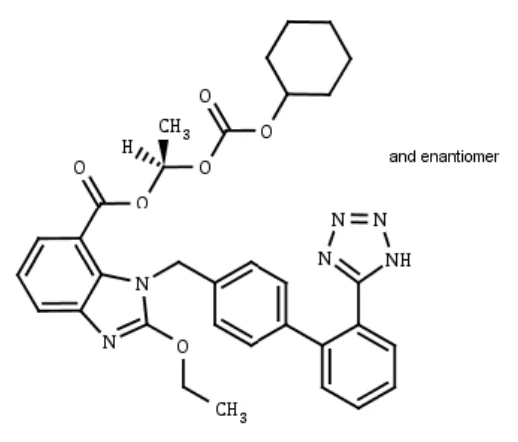
Physiochemical properties: White to off-white powder
14 CLINICAL TRIALS
14.1 Efficacy and safety studies
Hypertension
Adults
Candesartan cilexetil causes a dose-dependent reduction in arterial blood pressure (BP). Systemic peripheral resistance is decreased, while heart rate, stroke volume and cardiac output are not significantly affected. No first dose hypotension was observed during controlled clinical trials with candesartan cilexetil.
Most of the antihypertensive effect was seen within 2 weeks of initial dosing, and the full effect in 4 weeks. With once-daily dosing, BP effect was maintained over 24 hours with trough to peak ratios of BP effect generally >80%. Candesartan cilexetil had an additional BP lowering effect when added to hydrochlorothiazide.
The antihypertensive effect was similar in men and women and in patients < 65 and ≥ 65 years. Candesartan was effective in reducing BP regardless of race, although the effect was somewhat less in Blacks (usually a low-renin population) than in Caucasians.
In long-term studies of ≤ 1 year, the antihypertensive effectiveness of candesartan cilexetil was maintained and there was no rebound after abrupt withdrawal.
Candesartan cilexetil reduces urinary albumin excretion in patients with type II diabetes mellitus, hypertension and microalbuminuria. In a 12-week study of 161 mildly hypertensive patients with type II diabetes mellitus, candesartan cilexetil tablets 8 to 16 mg had no effect on mean A1c.
Pediatrics (6 to 17 years of age)
The antihypertensive effects of candesartan cilexetil were evaluated in hypertensive children aged 6 to < 17 years in a randomised, double-blind, multicentre, 4-week dose-ranging study. A total of 240 patients were randomised to receive either placebo or low (2/4 mg), medium (8/16 mg) or high (16/32 mg) doses of candesartan cilexetil in a ratio of 1:2:2:2. For children who weighed < 50 kg, the doses of candesartan cilextil were 2, 8 or 16 mg once daily. For children who weighed ≥50 kg, the candesartan cilexetil doses were 4, 16 or 32 mg once daily. Of those enrolled, 47% were Black patients and 29% were female; mean age ± SD was 12.9 ± 2.6 years. In addition, the majority of patients were ≥95th percentile for body mass index (BMI) (68.8%) and suffered from primary hypertension (90.2%).
The placebo subtracted effect at trough for sitting systolic BP/ sitting diastolic BP for the different doses ranged from 4.9/3.0 to 7.5/6.2 mm Hg.
In children aged 6 to < 17 years, there was a trend for a lesser effect on BP in Black patients compared to non-Black patients. This was similar to what was observed in adults with hypertension.
Comparative Effects
The antihypertensive efficacy of candesartan cilexetil and losartan potassium have been compared at their once daily maximum doses, 32 mg and 100 mg, respectively, in patients with mild to moderate essential hypertension. Candesartan cilexetil lowered systolic and diastolic blood pressure by 2 to 3 mm Hg on average more than losartan potassium when measured at the time of either peak or trough effect. Both agents were well tolerated.
Heart Failure
In heart failure patients, candesartan cilexetil administration resulted in a dose-related increase in plasma renin activity and angiotensin II concentration, and a decrease in aldosterone levels.
The effects of candesartan cilexetil on mortality and hospitalization due to Congestive Heart Failure (CHF) were evaluated in 2 studies, CHARM-Alternative and CHARM-Added. These were multinational, placebo-controlled, double-blind studies in patients with New York Heart Association (NYHA) functional class II to class IV CHF. Only 3% of the patient population within each of these studies had Class IV CHF as a baseline characteristic. CHARM-Alternative (n=2,028) included patients with LVEF ≤ 40% not treated with ACE inhibitors because of intolerance. CHARM-Added (n=2,548) was carried out in patients with LVEF ≤ 40% tolerant of ACE inhibitors and treated with ACE inhibitors. In these studies patients were randomised to receive either placebo or candesartan cilexetil tablets in addition to standard therapy. Candesartan cilexetil tablets were titrated from 4 mg or 8 mg once daily to 32 mg once daily (mean 23 mg) or the highest tolerated dose. Patients were followed for ≤4 years, with a median of 40 months. Standard therapy included diuretics, β-blockers, ACE inhibitors, digoxin and spironolactone.
The primary composite endpoint of cardiovascular (CV) mortality or first CHF hospitalisation was significantly reduced with candesartan cilexetil in comparison with placebo in CHARM- Alternative (hazard ratio (HR) 0.77, 95% CI 0.67 to 0.89, p<0.001) and in CHARM-Added (HR 0.85, 95% CI 0.75 to 0.96, p=0.011). This corresponded to a relative risk reduction of 23% and 15%, respectively.
Table 5 - CHARM – Alternative: Primary Endpoint and its Components
Endpoint (time to first event) | Candesartan cilexetil (n=1013) | Placebo (n=1015) | Hazard Ratio (95% CI) | p-value (logrank) | Relative Risk Reduction | Absolute Risk Reduction | ||||||
|---|---|---|---|---|---|---|---|---|---|---|---|---|
Endpoint (time to first event) | Candesartan cilexetil (n=1013) | Placebo (n=1015) | Hazard Ratio (95% CI) | p-value (logrank) | Relative Risk Reduction | Absolute Risk Reduction | ||||||
| CV death or | 334 | 406 | 0.77 (0.67-0.89) | <0.001 | 23% | 7.0% | ||||||
| CHF hospitalisation | ||||||||||||
| CV death | 219 | 252 | 0.85 (0.71-1.02) | 0.072 | 15% | 3.2% | ||||||
CHF hospitalisation | 207 | 286 | 0.68 (0.57-0.81) | <0.001 | 32% | 7.7% | ||||||
NOTE: In CHARM-Alternative, 14 patients needed to be treated for the duration of the study (median 34 months) to prevent 1 patient from dying of a CV event or being hospitalised for treatment of HF.
Table 6 - CHARM – Added: Primary Endpoint and its Components
Endpoint (time to first event) | Candesartan cilexetil (n=1276) | Placebo (n=1272) | Hazard Ratio (95% CI) | p-value (logrank) | Relative Risk Reduction | Absolute Risk Reduction |
|---|---|---|---|---|---|---|
CV death or CHF hospitalisation | 483 | 538 | 0.85 (0.75-0.96) | 0.011 | 15% | 4.4% |
| CV death | 302 | 347 | 0.84 (0.72-0.98) | 0.029 | 16% | 3.6% |
CHF hospitalisation | 309 | 356 | 0.83 (0.71-0.96) | 0.013 | 17% | 3.8% |
NOTE: In CHARM-Added, 23 patients needed to be treated for the duration of the study (median 41 months) to prevent 1 patient from dying of a CV event or being hospitalised for treatment of HF.
The secondary composite endpoint of all-cause mortality or first CHF hospitalisation was also significantly reduced with candesartan cilexetil in CHARM-Alternative (HR 0.80, 95% CI 0.70 to 0.92, p=0.001) and CHARM-Added (HR 0.87, 95% CI 0.78 to 0.98, p=0.021). This corresponded to a relative risk reduction of 20% and 13%, respectively.
Treatment with candesartan cilexetil resulted in improved NYHA functional class in CHARM-Alternative (p=0.008 and CHARM-Added (p=0.020).
14.3 Comparative Bioavailability Studies
A randomized, two-way, single dose crossover comparative oral bioavailability study of APO-CANDESARTAN 32 mg tablets (Apotex Inc.) and ATACAND® 32 mg tablets (AstraZeneca Canada Inc.) was conducted in healthy, adult Asian male subjects under fasting conditions. Comparative bioavailability data from the 30 subjects that were included in the statistical analysis are presented in the following table.
Table 7 - Summary Table of the Comparative Bioavailability Data
The bioequivalence of 1 candesartan cilexetil 32 mg tablet and 2 candesartan cilexetil 16 mg tablets was established in a single-blind, single-dose, randomised, two-period crossover study in 50 (33 M/17 F) healthy volunteers. During each treatment period, subjects received candesartan cilexetil as a single oral dose of either 1 x 32 mg or 2 x 16 mg. The 2 treatment periods were separated by a washout of 6 to 14 days. The 90% confidence intervals for the ratio of 1 candesartan cilexetil 32 mg tablet versus 2 candesartan cilexetil 16 mg tablets for AUC0-inf and Cmax fell entirely within the equivalence range of 80% to 125%.
Table 8 - Pharmacokinetic comparison of candesartan cilexetil 1 x 32 mg tablet versus
2 x 16 mg tablets
Candesartan cilexetil (32 mg dose as either 1 x 32 mg or 2 x 16 mg) From measured data, uncorrected for potency Geometric Mean# Arithmetic Mean (CV%) | ||||
|---|---|---|---|---|
| Parameter | Test* (1 x 32 mg) | Reference† (2 x 16 mg) AstraZeneca, Sweden | % Ratio of Geometric Means# | 90% Confidence Interval# |
Candesartan (1 x 32 mg) Geometric Mean Arithmetic Mean (CV%) | ||||
| Parameter | Test1 | Reference2 | % Ratio of Geometric Means | 90% Confidence Interval |
AUCT (ng·h/mL) | 3159.14 3326.95 (31.84) | 2960.14 3114.14 (31.94) | 106.7 | 99.1-114.9 |
AUCI (ng·h/mL) | 3250.19 3422.87 (31.56) | 3108.34 3282.93 (33.02) | 104.6 | 96.8- 113.0 |
Cmax (ng/mL) | 309.42 331.83 (36.10) | 269.94 287.47 (35.19) | 114.6 | 104.0-126.4 |
Tmax3 (h) | 3.00 (2.00-7.00) | 4.00 (2.50-7.00) | ||
T1/24 (h) | 9.69 (32.75) | 11.58 (54.48) | ||
1 APO-CANDESARTAN (as candesartan cilexetil) tablets, 32 mg (Apotex Inc.) 2 ATACAND® (as candesartan cilexetil) tablets, 32 mg (AstraZeneca Canada Inc.) 3 Expressed as the median (range) only. 4 Expressed as the arithmetic mean (CV %) only. | ||||
AUC(0-t) (nmol.h/L) | 6038.5 6396.2 (23.5) | 6056.7 6458.3 (26.2) | 99.7 | 95.9; 103.7 |
|---|---|---|---|---|
AUC(0-∞) (nmol.h/L) | 7032.6 7255.3 (23.8) | 7085.3 7384.2 (28.4) | 99.3 | 95.6; 103.0 |
Cmax (nmol/L) | 559.6 625.0 (32.0) | 548.1 616.8 (32.7) | 102.1 | 95.5; 109.1 |
Tmax § (h) | 4.64 (28.7%) | 4.64 (30.9%) | ||
T½§ (h) | 9.47 (35.3%) | 9.70 (41.7%) |
* Candesartan cilexetil 32 mg tablets
† Candesartan cilexetil 16 mg tablets identical to the tablets currently on the Canadian market (i.e., Candesartan cilexetil 16 mg tablets, DIN 02239092) by AstraZeneca Canada Inc.
§ Expressed as the arithmetic mean (CV%) only
# Based on the least-square means
15 MICROBIOLOGY
No microbiological information is required for this drug product.
16 NON-CLINICAL TOXICOLOGY
General Toxicology
Acute Toxicity:
Table 9 - Acute toxicity
| Route | Species | Sex | LD50 Values |
|---|---|---|---|
| Route | Species | Sex | LD50 Values |
| intraperitoneal | mouse | female male | 891 807 |
| intraperitoneal | rat | female male | 1210 940 |
| intravenous | mouse | female male | 1,170 1,120 |
| intravenous | rat | female male | 1,550 1,350 |
oral study with active metabolite (candesartan) and related substances | mouse | female male | >2,000 mg/kg for all substances tested |
| oral | mouse | female male | >2,000 mg/kg |
| oral | rat | female male | >2,000 mg/kg |
| oral | dog | male | >2,000 mg/kg |
| oral (4 week study) | monkey | female male | >60 mg/kg |
Chronic Toxicity: The toxic potential of candesartan cilexetil was evaluated in a series of repeated-dose oral toxicity studies of ≤26 weeks in rats and ≤1 year in dogs. The "no toxic effect" dosage levels were concluded to be 10 mg/kg/day in the rat and 20 mg/kg/day in the dog.
Table 10 - Toxicity upon repeated oral administration
Species/ Strain | Number of Animals per Group | Duration and Route of Administration | Daily Dose (mg/kg) | Results |
|---|---|---|---|---|
Species/ Strain | Number of Animals per Group | Duration and Route of Administration | Daily Dose (mg/kg) | Results |
Species/ Strain | Number of Animals per Group | Duration and Route of Administration | Daily Dose (mg/kg) | Results |
| rat/F344 | 4 M+4 F | 4 weeks dietary | 0 600 2,000 6,000 | Food consumption decr. in F at 2,000 mg and in M+F at 6,000mg dose level. Urea N2 incr. in M at ≥ 600 mg dosing, and in F at 6,000 mg dosing. Erythrocyte count, hematocrit value, hemoglobin concentration decr. in ≥ 2,000 mg groups. Extramedullary hemapoiesis in all male spleens, hypocellularity in bone marrow of 2 F and gastric ulcer/erosion in 2 F of 6,000 mg group. Hypertrophy of juxtaglomerular cells in kidneys and atrophy of zona glomerulosa in adrenal gland in all treated groups expected pharmacological responses. “No toxic effect”: 2,000 mg/kg/day. |
| rat/F344 | 10 M+10 F | 13 weeks dietary | 0 300 1,000 3,000 | No deaths. Body weight gain suppression in M at ≥ 1,000 mg level. Slight decr. in erythrocyte count, hematocrit value, hemoglobin concentration in F of 300 mg group, M+F at ≥ 1,000 mg dose. |
| Incr. inorganic phosphorus in all M groups, decr. Triglycerides (≥ 1,000 mg male group) and incr. cholesterol (3000 mg male group). | ||||
rat/F344/ Jcl | 10 M+10 F | 26 weeks oral | 0 1 10 100 1,000 | No treatment-related deaths, nor abnormal appearance, clinical signs, opthalmoscopy and urinalysis. Decr. in body weight gain and food consumption (M, 1000 mg dose, week 25). H2O intake + urine output incr. (M, 100, 1,000 mg dose). RBC parameter values decr. (M: 10-1,000 dose; F: 100-1,000 dose). Heart wt. decr. in all except M at 1 mg dose. Ratio of kidney wt:body wt. incr. in M ≥ 10 mg dose, and in F ≥ 100 mg dose level. In M at 1000 mg level, incr. in adrenal wt., decr. in thymus wt. Hypertrophy of juxtaglomerular cell and intimal proliferation of interlobular arteries on kidneys of M+F at 10-1,000 mg. Minor incr. in erosion of stomach in M+F at 1,000 mg. “No toxic effect”: 10 mg/kg/day. |
| rat/F344/Jcl | 10 M+10 F | 2 week study of candesartan cilexetil and rel.substances, oral | 300 (283.2 mg can.cil. + 16.8mg rel. sub.) | No effects by related substances on the changes caused by candesartan cilexetil alone. No toxic effects caused by related substances. |
dog/ Beagle | 3 M+3 F | 29-31 days oral gavage | 0 20 100 300 | No animals died during dosing. Decr. erythrocyte parameters in 1 F in each of 100 mg and 300 mg groups. Dark red focus in stomach mucosa in 1 F at 300 mg dose level. Regeneration of tubular epithelium and dilatation of kidney tubules in 1 F at 100 mg level, 2 F at 300 mg level. Mononuclear cell infiltration in kidney in 2 F in both 100 mg and 300 mg groups. Erosion of stomach mucosa |
in 1 F at 300 mg. No testicular abnormalities. “No toxic effect”: 20 mg/kg/day. | ||||
dog/ Beagle | 4 M+4 F | 26 weeks oral | 0 4 20 100 | Suppression of body wt. and decr. erythrocyte parameters in F at 100 mg. Hypertrophy of juxtaglomerular cells at all dosage levels. Plasma levels of candesartan cilexetil dose-dependent. |
dog/ Beagle | 4 M+4 F | 52 weeks oral | 0 4 20 100 300 | No clinical signs, effects on body wt., food consumption, physiological measurements, urine output, H2O intake, hemotology, coagulation, or organ wts. Hypertrophy of juxtaglomerular cells at all dosage levels. Regeneration of renal tubule incr. in 100-300 mg dose groups. Plasma levels of candesartan cilexetil and metabolite M II dose-dependent. “No toxic effect” at 20 mg/kg/day in dog. |
Carcinogenicity
The carcinogenic potential of candesartan cilexetil was studied in rats after administration in the diet for 24 months. Dose levels were 100, 300 and 1000 mg/kg/day (50 male and 50 female rats per group). No alteration in tumour profile was observed. A 2-year oral gavage study of candesartan cilexetil in mice was performed at daily dosages of 3, 10, 30 and 100 mg/kg/day. There was no alteration in the tumour profile.
Reproductive and Developmental Toxicology
Fertility: In studies concerning male and female rat fertility, no adverse effects were found on the reproductive organs. Mating performance, fertility and necropsy findings were unaffected by candesartan cilexetil treatment of males at 0 to 300 mg/kg/day from 9 weeks before mating to the day before necropsy, and similar findings were observed in females treated from 2 weeks before mating to day 7 of gestation. Fetuses showed no treatment-related abnormalities in mortality, weight, sex ratio, placentae or upon external, visceral or skeletal examinations.
Effects on the development of the kidneys: Animal studies with candesartan cilexetil have demonstrated late fetal and neonatal injury in the kidney. The mechanism is believed to be pharmacologically mediated through effects on the RAAS. The RAAS plays a critical role in kidney development. RAAS blockade has been shown to lead to abnormal kidney development in very young mice. Administering drugs that act directly on the RAAS, such as candesartan cilexetil tablets, can alter normal renal development. Therefore, APO-CANDESARTAN is contraindicated in children <1 year old (see 2 CONTRAINDICATIONS).
Mutagenicity
In vitro studies [bacterial mutagenicity, gene mutation in mammalian (mouse) cells and cytogenic tests (hamster lung cells)] showed that candesartan cilexetil has no mutagenic activity in these systems. Study at the highest doses of the candesartan metabolites (2.5 and 5 mM in the 24-hour treatment series, and 1.25 and 2.5 mM in the 48-hour treatment series) suggested cytotoxicity-mediated clastogenicity as a mechanism for the breakage-type chromosome aberration effects observed. In vivo studies (micronucleus test in mouse and unscheduled DNA synthesis assay in rat) indicate that candesartan cilexetil and its metabolites are neither mutagenic nor clastogenic.
17 SUPPORTING PRODUCT MONOGRAPHS
- 1. ATACAND® (candesartan cilexetil tablets, 4 mg, 8 mg, 16 mg and 32 mg), submission control 283034, Product Monograph, CHEPLAPHARM Arzneimittel GmbH (JUL 11, 2024)