


Product Monograph - Auro-Azilsartan Medoxomil
Recent Major Label Changes
| 7 Warnings and precautions, Gastrointestinal | 2026-02 |
|---|
Table of Contents
Certain sections or subsections that are not applicable at the time of the preparation of the most recent authorized product monograph are not listed.
Recent Major Label Changes .............................................................................................. 2
Table of Contents ............................................................................................................... 2
Part 1: Healthcare Professional Information ....................................................................... 4
- 1.
Indications .............................................................................................................. 4
1.1. Pediatrics .......................................................................................................................... 4
1.2. Geriatrics ........................................................................................................................... 4
- 2. Contraindications .................................................................................................... 4
- 3. Serious Warnings and Precautions Box ................................................................... 4
- 4.
Dosage and Administration ..................................................................................... 4
4.1 Dosing Considerations ...................................................................................................... 4
4.2 Recommended Dose and Dosage Adjustment ................................................................. 5
4.5 Missed Dose ...................................................................................................................... 5
- 5. Overdose ................................................................................................................ 5
- 6. Dosage Forms, Strengths, Composition, and Packaging .......................................... 6
- 7.
Warnings and Precautions ...................................................................................... 6
7.1.Special Populations ............................................................................................................. 8
7.1.1 Pregnancy .......................................................................................................... 8
7.1.2. Breastfeeding .................................................................................................... 9
7.1.3. Pediatrics ........................................................................................................ 10
7.1.4. Geriatrics ........................................................................................................ 10
- 8.
Adverse Reactions ................................................................................................ 10
8.1. Adverse Reaction Overview ............................................................................................ 10
8.2 Clinical Trial Adverse Reactions ...................................................................................... 10
8.3 Less Common Clinical Trial Adverse Reactions ............................................................... 12
8.4 . Abnormal Laboratory Findings: Hematologic, Clinical Chemistry and Other Quantitative Data ........................................................................................................... 12
8.5. Post-Market Adverse Reactions ...................................................................................... 13
- 9.
Drug Interactions .................................................................................................. 13
9.4. Drug-Drug Interactions ................................................................................................... 13
9.5. Drug-Food Interactions ................................................................................................... 15
9.6. Drug-Herb Interactions ................................................................................................... 15
9.7. Drug-Laboratory Test Interactions ................................................................................. 15
- 10.
Clinical Pharmacology ........................................................................................... 15
10.1 Mechanism of Action ...................................................................................................... 15
10.2 Pharmacodynamics ......................................................................................................... 16
10.3 Pharmacodynamics ......................................................................................................... 16
- 11. Storage, Stability and Disposal .............................................................................. 18
- 12. Special Handling Instructions ................................................................................. 18
Part 2: Scientific Information ............................................................................................ 19
- 13. Pharmaceutical Information ................................................................................. 19
- 14.
Clinical Trials ......................................................................................................... 20
14.1 Trial Design and Study Demographics ............................................................................ 20
14.2 Study Results .................................................................................................................. 20
14.3 Comparative Bioavailability Studies ............................................................................... 22
- 15. Microbiology ......................................................................................................... 23
- 16. Non-Clinical Toxicology ......................................................................................... 23
- 17. Supporting Product Monographs .......................................................................... 25
Patient Medication Information ....................................................................................... 26
Part 1: Healthcare Professional Information
1. Indications
- Auro-Azilsartan Medoxomil (azilsartan medoxomil) is an angiotensin II receptor blocker (ARB) indicated for the treatment of mild to moderate essential hypertension.
- Auro-Azilsartan Medoxomil may be used alone or concomitantly with thiazide diuretics or calcium channel blockers.
1.1. Pediatrics
Pediatrics (< 18 years): No data are available to Health Canada; therefore, Health Canada has not authorized an indication for pediatric use.
1.2. Geriatrics (≥ 75 years)
No initial dose adjustment with Auro-Azilsartan Medoxomil is necessary in elderly patients. Abnormally high serum creatinine values were more likely to be reported for patients aged ≥75 years. No other differences in safety or efficacy were observed between elderly patients and younger patients, but caution should be exercised in patients aged ≥75 years who may be at risk for hypotension
2. Contraindications
Auro-Azilsartan Medoxomil (azilsartan medoxomil) is contraindicated in:
- Patients who are hypersensitive to azilsartan medoxomil or to any ingredient in the formulation or component of the container. For a complete listing, see the 6 Dosage Forms, Composition and Packaging section of the product monograph.
- Combination with aliskiren-containing drugs in patients with diabetes mellitus (type 1 or type 2) or moderate to severe renal impairment (GFR < 60 ml/min/1.73m2) (see 7 Warnings and Precautions, Cardiovascular, Dual Blockade of the Renin-Angiotensin System (RAS) and Renal, and 9.4 Drug-Drug Interactions, Dual Blockade of the Renin-Angiotensin-System (RAS) with ARBs, ACEIs or aliskiren-containing drugs).
- Pregnancy (see 7.1.1.Pregnancy).
- Nursing women (see 7.1.2 Breast-Feeding).
3. Serious Warnings and Precautions Box
When used in pregnancy, angiotensin receptor (AT1) blockers (ARBs) can cause injury or even death of the developing fetus. When pregnancy is detected, Auro-Azilsartan Medoxomil (azilsartan medoxomil) should be discontinued as soon as possible (see 7.1 Special Populations).
4. Dosage and Administration
4.1 Dosing Considerations
Geriatrics
No initial dose adjustment with Auro-Azilsartan Medoxomil is necessary in elderly patients. Abnormally high serum creatinine values were more likely to be reported for patients aged ≥75 years. No other differences in safety or efficacy were observed between elderly patients and younger patients, but caution should be exercised in patients aged ≥75 years who may be at risk for hypotension.
Hepatic Impairment
Azilsartan medoxomil has not been studied in patients with severe hepatic impairment and therefore its use is not recommended in this patient group. As total exposure is increased in mild and moderate hepatic impairment patients, care should be exercised, and a lower starting dose is recommended in patients with liver diseases, and the maximum dose of 80 mg Auro-Azilsartan Medoxomil should not be exceeded. Care should be exercised in patients with liver disease, especially in those patients with biliary obstructive disorders, as the majority of azilsartan is eliminated in the bile.
Renal Impairment:
Caution should be exercised in patients with severe renal impairment and ESRD as there is no experience on the use of azilsartan medoxomil in these patients. No dose adjustment is required in patients with mild or moderate renal impairment.
Intravascular volume or salt depletion
Correct volume and/or salt depletion prior to administration.
4.2 Recommended Dose and Dosage Adjustment
The recommended starting dose in adults is 40 mg taken orally once daily. The dose may be increased to a maximum of 80 mg once daily when additional blood pressure reduction is required.
Auro-Azilsartan Medoxomil may be taken with or without food.
4.5 Missed Dose
If a dose of Auro-Azilsartan Medoxomil is missed at its usual time, it should be taken as soon as possible. However, if it is too close to the time of the next dose, the missed dose should be skipped, and treatment should be resumed with the next scheduled dose. A double dose should not be taken.
5. Overdose
Limited data are available in regard to overdosage in humans. The most likely manifestations of overdosage would be hypotension and tachycardia. Bradycardia could be encountered if parasympathetic (vagal) stimulation occurs. If symptomatic hypotension should occur, supportive treatment should be initiated.
Hemodialysis does not remove azilsartan from the systemic circulation.
For the most recent information in the management of a suspected drug overdose, contact your regional poison control centre or Health Canada’s toll-free number, 1-844 POISON-X (1-844-764-7669).
- 6. Dosage Forms, Strengths, Composition, and Packaging
Table 1 – Dosage Forms, Strengths, and Composition
| Route of Administration | Dosage Form / Strength/Composition | Non-medicinal Ingredients |
|---|---|---|
| Oral | Tablet 40 mg, 80 mg | Croscarmellose sodium, HPMC 2910 / Hypromellose, hydroxy propyl cellulose, iron oxide yellow, macrogol/PEG, magnesium aluminometa silicate, magnesium stearate, mannitol, microcrystalline cellulose, talc and titanium dioxide. |
Description
Auro-Azilsartan Medoxomil is supplied in the following dosage strengths:
- 40 mg tablets: White to Off-white, round film coated tablets, debossed with ‘AL’ on one side and ‘40’ on the other side.
- 80 mg tablets: White to Off-white, round film coated tablets, debossed with ‘AL’ on one side and ‘80’ on the other side.
Packaging: HDPE bottles of 30 and 100 tablets and Blister pack of 3x10’s count
7. Warnings and Precautions
(See 3 Serious Warnings and Precautions Box.)
Cardiovascular
Hypotension in Volume- or Salt-Depleted Patients
In patients with an activated renin-angiotensin-aldosterone–system (RAAS), such as volume- and/or salt-depleted patients (e.g., those being treated with high doses of diuretics), symptomatic hypotension may occur after initiation of treatment with azilsartan medoxomil. The condition should be corrected prior to administration of Auro-Azilsartan Medoxomil, or treatment should be started under close medical supervision. If hypotension does occur, the patient should be placed in the supine position and, if necessary, given an intravenous infusion of normal saline. A transient hypotensive response is not a contraindication to further treatment, which usually can be continued without difficulty once the blood pressure has stabilized.
Similar considerations apply to patients with ischemic heart or cerebrovascular disease, in whom an excessive fall in blood pressure could result in myocardial infarction or cerebrovascular accident.
Valvular Stenosis
There is concern on theoretical grounds that patients with aortic stenosis might be at a particular risk of decreased coronary perfusion, because they do not develop as much afterload.
Dual blockade of the Renin-Angiotensin System (RAS)
There is evidence that co-administration of angiotensin receptor blockers (ARBs), such as azilsartan medoxomil , or of angiotensin converting enzyme inhibitors (ACEIs) with aliskiren increases the risk of hypotension, syncope, stroke, hyperkalemia and deterioration of renal function, including renal failure, in patients with diabetes mellitus (type 1 or type 2) and/or moderate to severe renal impairment (GFR < 60 ml/min/1.73m2). Therefore, the use of Auro-Azilsartan Medoxomil in combination with aliskiren-containing drugs is contraindicated in these patients (see 2 Contraindications).
Further, co-administration of ARBs, including Auro-Azilsartan Medoxomil, with other agents blocking the RAS, such as ACEIs or aliskiren-containing drugs, is generally not recommended in other patients, since such treatment has been associated with an increased incidence of severe hypotension, renal failure, and hyperkalemia.
Gastrointestinal
Intestinal angioedema: Intestinal angioedema has been reported in patients treated with angiotensin II receptor antagonists, including azilsartan. These patients presented with abdominal pain (with or without nausea, vomiting or diarrhoea). Symptoms resolved after discontinuation of angiotensin II receptor antagonists. Intestinal angioedema should be included in the differential diagnosis of patients treated with angiotensin II receptor antagonists presenting with abdominal pain. If intestinal angioedema is diagnosed, Auro-Azilsartan Medoxomil should be discontinued and appropriate monitoring should be initiated until complete resolution of symptoms has occurred.
Hepatic/Biliary/Pancreatic
Azilsartan medoxomil has not been studied in patients with severe hepatic impairment and therefore its use is not recommended in this patients group. As total exposure is increased in mild and moderate hepatic impaired patients, care should be exercised, and a lower starting dose is recommended in patients with liver diseases, and the maximum dose of 80 mg Auro-Azilsartan Medoxomil should not be exceeded. Care should be exercised in patients with liver disease, especially in those patients with biliary obstructive disorders, as the majority of azilsartan is eliminated in the bile (see 10 Clinical Pharmacology).
Immune
Angioedema
One case of angioedema was reported and possibly related to the use of azilsartan medoxomil . Angioedema has been reported with other ARBs. There is a potential risk of angioedema with the use of azilsartan medoxomil . If angioedema of the face, extremities, lips, tongue, or glottis occurs, Auro-Azilsartan Medoxomil should be discontinued immediately, the patient should be treated appropriately in accordance with accepted medical care, and carefully observed until the symptoms and signs disappear.
Patients with a known hypersensitivity (anaphylaxis) or angioedema to ARBs should not be treated with Auro-Azilsartan Medoxomil.
Musculoskeletal
Cases of myopathy/rhabdomyolysis have been reported in patients treated with azilsartan medoxomil. In patients who develop unexplained myalgia and muscle weakness, elevated blood creatine phosphokinase, and elevated blood/urine myoglobin, administration should be discontinued, and appropriate measures taken. Caution should be exercised in the development of acute renal failure due to rhabdomyolysis.
Renal
As a consequence of inhibiting the RAAS, changes in renal function may be anticipated in susceptible individuals treated with azilsartan medoxomil. In patients whose renal function may depend on the activity of the RAAS (e.g., patients with severe congestive heart failure, renal artery stenosis, or volume depletion), treatment with ACEIs and ARBs has been associated with oliguria and/or progressive azotemia and rarely with acute renal failure and/or death. Similar results may be anticipated in patients treated with azilsartan medoxomil (see 10 Clinical Pharmacology).
The use of ARBs – including azilsartan medoxomil – or ACEIs with aliskiren-containing drugs is contraindicated in patients with moderate to severe renal impairment (GFR < 60 ml/min/1.73m2) (see 2 Contraindications and 9.4 Drug-Drug Interactions, Dual Blockade of the Renin-Angiotensin-System (RAS) with ARBs, ACEIs, or aliskiren-containing drugs).
In studies of ACEIs in patients with unilateral or bilateral renal artery stenosis, increases in serum creatinine or blood urea nitrogen (BUN) have been reported. There has been no long-term use of azilsartan medoxomil in patients with unilateral or bilateral renal artery stenosis, but similar results may be expected with the use of azilsartan medoxomil.
Use of Auro-Azilsartan Medoxomil should include appropriate assessment of renal function.
Caution should be exercised in hypertensive patients with severe renal impairment and end-stage renal disease (ESRD) as there is no experience on the use of azilsartan medoxomil in these patients. No dose adjustment is required in patients with mild or moderate renal impairment (see 10 Clinical Pharmacology).
There is currently no experience on the use of azilsartan medoxomil in patients who have recently undergone kidney transplantation.
7.1. Special Populations
7.1.1 Pregnancy
Drugs that act directly on RAAS can cause fetal and neonatal morbidity and death when administered to pregnant women. When pregnancy is detected, Auro-Azilsartan Medoxomil should be discontinued as soon as possible.
The use of ARBs is contraindicated during pregnancy (see 2 Contraindications). Epidemiological evidence regarding the risk of teratogenicity following exposure to ACEIs (another class of therapeutic products interfering with the RAAS) during the first trimester of pregnancy has not been conclusive; however, a small increase in risk cannot be excluded. Given the current evidence available on the risk with ARBs, similar risks may exist for azilsartan medoxomil. Patients planning pregnancy should be changed to alternative anti-hypertensive treatments which have an established safety profile for use in pregnancy. When pregnancy is diagnosed, treatment with ARBs should be stopped immediately, and, if appropriate, alternative therapy should be started.
The use of ARBs during the second and third trimesters is known to induce human fetotoxicity (decreased renal function, oligohydramnios, skull ossification retardation) and neonatal toxicity (renal failure, hypotension, hyperkalemia).
Infants with histories of in utero exposure to ARBs should be closely observed for hypotension, oliguria, and hyperkalemia. If oliguria occurs, attention should be directed toward support of blood pressure and renal perfusion. Exchange transfusion or dialysis may be required as a means of reversing hypotension and/or substituting for impaired renal function; however, there is limited experience with these procedures, which have not been associated with significant clinical benefit.
Hemodialysis does not remove azilsartan from the systemic circulation.
Animal Data
Azilsartan medoxomil administered to pregnant rats from gestation day 6 to lactation day 21 at
10 mg/kg/day produced adverse effects on pup viability, delayed incisor eruption, and dilatation of the renal pelvis along with hydronephrosis. This oral dose was associated with a systemic exposure (AUC) to azilsartan in non-pregnant rats of about 4.5x that in humans given 80 mg/day. When administered from gestation days 6-17 or 18 embryo-fetal toxicity occurred at azilsartan medoxomil doses of 1,000 mg/kg/day in rats (dilated renal pelvis and short supernumerary ribs) and 50 mg/kg/day in rabbits (post-implantation loss, embryo-fetal deaths, and decreased number of live fetuses). The azilsartan systemic exposure at the no-observed-adverse-effect levels (NOAELs) (100 mg/kg/day in rats and 30 mg/kg/day in rabbits,) was estimated at 20x and 9x that achieved in humans given 80 mg/day, respectively.
7.1.2. Breastfeeding
It is not known whether azilsartan medoxomil is excreted in human milk, but it has been found in the milk of lactating rats. Because many drugs are excreted in human milk and because of their potential for affecting the nursing infant adversely, a decision should be made whether to discontinue nursing or discontinue the drug, taking into account the importance of the drug to the mother (see 2 Contraindications).
7.1.3. Pediatrics
Safety and efficacy in pediatric patients have not been established. Therefore, Auro-Azilsartan Medoxomil is not indicated in this patient population.
7.1.4. Geriatrics
No initial dose adjustment with Auro-Azilsartan Medoxomil is necessary in elderly patients. Abnormally high serum creatinine values were more likely to be reported for patients aged ≥75 years. No other differences in safety or efficacy were observed between elderly patients and younger patients, but caution should be exercised in patients aged ≥75 years who may be at risk for hypotension.
8. Adverse Reactions
8.1. Adverse Reaction Overview
Treatment with azilsartan medoxomil was generally well tolerated across clinical trials. The overall incidence of adverse reactions was comparable to placebo. In placebo-controlled monotherapy and combination therapy trials:
Withdrawal due to adverse events occurred in:
- 2.4% of patients receiving placebo (19/801)
- 2.2% of patients receiving azilsartan medoxomil 40 mg (24/1072)
- 2.7% of patients receiving azilsartan medoxomil 80 mg (29/1074)
The most commonly reported adverse reactions included:
- Diarrhea
- Dizziness
- Fatigue
- Increased serum creatinine
These reactions were typically mild to moderate in intensity and transient in nature. Serious adverse events were rare and occurred at rates similar to placebo.
8.2 Clinical Trial Adverse Reactions
Clinical trials are conducted under very specific conditions. The adverse reaction rates observed in the clinical trials; therefore, may not reflect the rates observed in practice and should not be compared to the rates in the clinical trials of another drug. Adverse reaction information from clinical trials may be useful in identifying and approximating rates of adverse drug reactions in real-world use.
Azilsartan medoxomil ( was evaluated for safety in a total of 4814 patients in clinical trials. There were 1704 patients treated for ≥6 months and 588 for ≥1 year.
The rates of withdrawals due to adverse events (AEs) in placebo-controlled monotherapy and combination therapy trials were 2.4 % (19/801) for placebo, 2.2% (24/1072) for azilsartan medoxomil 40 mg, and 2.7% (29/1074) for azilsartan medoxomil 80 mg.
In the placebo-controlled monotherapy studies, treatment-emergent AEs occurring at an incidence of
≥1% in patients treated with azilsartan medoxomil are presented in Table 1.
Table 2- Treatment-Emergent Adverse Events Occurring in ≥ 1% of Patients
Placebo (n=435) Case (%) | Azilsartan medoxomil 40 mg (n=698) Case (%) | Azilsartan medoxomil 80 mg (n=704) Case (%) | |
|---|---|---|---|
General Edema Fatigue | 6 (1.4%) 2 (0.5%) | 13 (1.9%) 6 (0.9%) | 14 (2.0%) 14 (2.0%) |
Cardiovascular Arrhythmia | 1 (0.2%) | 8 (1.2%) | 4 (0.6%) |
Ear/Nose /Throat Nasopharyngitis | 6 (1.4%) | 10 (1.4%) | 17 (2.4%) |
Endocrine and Metabolism Dyslipidemia Hypertriglyceridemia | 6 (1.4%) 4 (0.9%) | 19 (2.7%) 8 (1.1%) | 23 (3.3%) 8 (1.1%) |
Gastrointestinal Diarrhea Nausea | 2 (0.5%) 2 (0.5%) | 11 (1.6%) 7 (1.0%) | 17 (2.4%) 8 (1.1%) |
Genitourinary Urinary tract infection | 13 (3.0%) | 17 (2.4%) | 17 (2.4%) |
Musculoskeletal and Connective Tissue Arthralgia Back pain Myalgia Pain in extremity | 3 (0.7%) 4 (0.9%) 1 (0.2%) 5 (1.1%) | 5 (0.7%) 4 (0.6%) 2 (0.3%) 2 (0.3%) | 8 (1.1%) 8 (1.1%) 8 (1.1%) 7 (1.0%) |
Neurology Headache Dizziness | 27 (6.2%) 9 (2.1%) | 33 (4.7%) 20 (2.9%) | 37 (5.3%) 21 (3.0%) |
Respiratory Upper respiratory tract infection | 6 (1.4%) | 3 (0.4%) | 13 (1.8%) |
Monitoring and Laboratory Tests Blood creatine phosphokinase (CPK) increased C-reactive protein (CRP) increased Plasminogen activator inhibitor increased | 8 (1.8%) 4 (0.9%) 7 (1.6%) | 14 (2.0%) 5 (0.7%) 12 (1.7%) | 11 (1.6%) 9 (1.3%) 13 (1.8%) |
8.3 Less Common Clinical Trial Adverse Reactions
The following AEs were reported at an incidence of <1% in placebo-controlled clinical trials (in >1 patient, with higher frequency than placebo):
- Blood and Lymphatic System Disorder: Anemia, Leukopenia
- Ear and Labyrinth Disorders: Vertigo
- Gastrointestinal Disorders: Abdominal discomfort, Abdominal pain, Constipation, Diarrhea, Dry mouth, Dyspepsia, Nausea, Toothache, Vomiting,
- General Disorders and Administration Site Conditions: Fatigue, Feeling abnormal, Oedema peripheral
- Metabolism and Nutrition Disorders: Dyslipidemia, Hyperkalemia, Hypertriglyceridemia
- Musculoskeletal and Connective Tissue Disorders: Muscle spasms, Musculoskeletal pain, Myalgia, Pain in extremity, Rhabdomyolysis
- Nervous System Disorders: Dizziness, Headache, Sinus headache
- Psychiatric Disorders: Anxiety
- Renal and Urinary Disorders: Pollakiuria, Proteinuria
- Reproductive System and Breast Disorders: Erectile dysfunction
- Respiratory, Thoracic and Mediastinal Disorders: Cough, Oropharyngeal pain, Sinus congestion
- Skin and subcutaneous Tissue Disorders: Angioedema, Dermatitis, Hyperhidrosis, Pruritis, Urticaria
- Vascular Disorders: Hypertension, Hypotension
8.4 . Abnormal Laboratory Findings: Hematologic, Clinical Chemistry and Other Quantitative Data
In controlled clinical trials, clinically relevant changes in standard laboratory parameters were uncommon with administration of azilsartan medoxomil .
- Blood creatine phosphokinase: High levels of creatine phosphokinase were observed in 0.3% of patients treated with azilsartan medoxomil. and 0.3% of patients treated with placebo.
Serum creatinine: Small reversible increases in serum creatinine were seen in patients receiving azilsartan medoxomil. The increase may be larger when coadministered with chlorthalidone or hydrochlorothiazide. In addition, patients taking azilsartan medoxomil who had moderate to severe
- renal impairment at baseline or who were >75 years of age were more likely to report with serum creatinine increases.
Increases in low density lipoprotein, alanine aminotransferase (ALT), aspartate aminotransferase (AST), and blood uric acid were seen in <1% of patients treated with azilsartan medoxomil.
- Hemoglobin and Hematocrit: Low hemoglobin, hematocrit, and red blood cell (RBC) counts were observed in 0.2%, 0.4%, and 0.3% of azilsartan medoxomil -treated subjects, respectively. None of these abnormalities were reported in the placebo group. Markedly abnormal (low or high) platelet and white blood cell (WBC) counts were observed in <0.3% of subjects.
8.5. Post-Market Adverse Reactions
The following adverse reactions have been identified during the post-approval use of azilsartan medoxomil. Because these reactions are reported voluntarily from a population of uncertain size, it is not always possible to reliably estimate their frequency or establish a causal relationship to drug exposure.
- Gastrointestinal Disorders: Nausea, Intestinal angioedema
- Musculoskeletal and Connective Tissue Disorders: Arthralgia, muscle spasms, rhabdomyolysis
- Skin and subcutaneous Tissue Disorders: Angioedema, Pruritus, Rash
9. Drug Interactions
9.4. Drug-Drug Interactions
Table 3- Established or Potential Drug-Drug Interaction
| Common Name | Source of Evidence | Effect | Clinical comment |
|---|---|---|---|
| Common Name | Source of Evidence | Effect | Clinical comment |
| Common Name | Source of Evidence | Effect | Clinical comment |
| Agents increasing serum potassium | C | Azilsartan reduces the production of aldosterone. | Potassium-sparing diuretics or potassium supplements should be given only for documented hypokalemia and with frequent monitoring of serum potassium. Potassium-containing salt substitutes should also be used with caution. Concomitant thiazide diuretic use may attenuate any effect that azilsartan may have on serum potassium. |
| Amlodipine | CT | Concomitant administration of azilsartan medoxomil and amlodipine has no effect on steady state pharmacokinetics of amlodipine or azilsartan, but there is isolated transient systolic blood pressure reduction. | There is a possibility of symptomatic hypotension with the concomitant use of azilsartan medoxomil and amlodipine. |
| Antacid | CT | In a short-term study, concomitant administration azilsartan medoxomil and antacid liquid results in a small (18%) decrease in AUC(0-inf) of azilsartan and Tmax delay for 1.5 hour. There is no change in azilsartan Cmax. | - |
| Caffeine, Midazolam, tolbutamide, Dextromethorp han, Fexofenadine cocktail | CT | Azilsartan administered as 40 mg for 5 days, has no clinically significant effect (inhibition or induction) on CYP1A2, CYP2C9, CYP2D6, CYP3A4 or PgP activity. | - |
| CT | Azilsartan medoxomil administered as 80 mg for 5 days has no clinically significant effect (inhibition or induction) on CYP1A2, CYP2C9, CYP2D6 or CYP3A4. Fexofenadine AUC and Cmax were reduced by over 25%, but Tmax was not changed. | PgP may be affected by the use of azilsartan medoxomil, but the clinical impact is unknown. | |
| Digoxin | CT | No significant PK changes are found following coadministration of azilsartan medoxomil and digoxin, which is a PgP substrate. | - |
Dual Blockade of the Renin- Angiotensin-System (RAS) with ARBs, ACEIs or aliskiren containing drugs | CT | Dual Blockade of the Renin-Angiotensin-System with ARBs, ACEIs or aliskiren-containing drugs is contraindicated in patients with diabetes and/or moderate to severe renal impairment (GFR <60 ml/min/1.73m2), and is generally not recommended in other patients, since such treatment has been associated with an increased incidence of severe hypotension, renal failure, and hyperkalemia. | See 2 Contraindications and 7 Warnings and Precautions, Cardiovascular, Dual Blockade of the Renin-Angiotensin-System (RAS). |
| Fluconazole | CT | Concomitant administration of azilsartan and fluconazole (a potent CYP2C9/CYP2C19 inhibitor) increases azilsartan plasma AUC(0-inf) by 42%, Cmax by 14%, and urinary exposure XU (0-24) by 48%. There are no significant effects on azilsartan T1/2 (13.0 hr vs 12.2 hr) or Tmax values (1.73 hr vs 1.76 hr). | CYP2C9/CYP2C19 may be involved in azilsartan medoxomil metabolism, but the clinical impact is unknown. |
| Glyburide | CT | Concomitant administration of azilsartan and glyburide has no effect in glyburide AUC and Cmax. Glyburide Tmax is earlier by 30 minutes. | - |
| Ketoconazole | CT | Concomitant administration of azilsartan and ketoconazole (a potent CYP3A4 inhibitor) reduces azilsartan plasma AUC(0-inf) by 21% and Cmax by 32%. Tmax values are delayed by 1 hour (3.21 vs 2.06 hr). | CYP3A4 may be involved in azilsartan medoxomil metabolism but the clinical impact is unknown. |
| Lithium salts | T | Lithium clearance may be reduced. | Serum lithium levels should be monitored carefully if lithium salts are to be administered. |
| Metformin | CT | Concomitant administration of azilsartan and metformin has no change in azilsartan AUC or Cmax. Azilsartan Tmax is delayed by 30 minutes. Concomitant administration results in a 20% decrease in metformin AUC and a 18% decrease in metformin Cmax. There is no change in metformin Tmax. | - |
NSAIDs (Non- Steroidal Anti-Inflammatory Drugs) | T | In patients who are elderly, volume-depleted (including those on diuretic therapy), or with compromised renal function, co-administration of NSAIDs, including selective COX-2 inhibitors with ARBs, including azilsartan, may result in deterioration of renal function, including possible acute renal failure. These effects are usually reversible. The antihypertensive effect of ARBs, including azilsartan may be attenuated by NSAIDs including selective COX-2 inhibitors. | Renal function should be monitored periodically in patients receiving azilsartan and NSAID therapy, including selective COX-2 inhibitors. |
| Pioglitazone | CT | Concomitant administration has no effect on azilsartan or pioglitazone AUC or Tmax. There is a 14% increase in pioglitazone Cmax; there is no change in azilsartan Cmax. | - |
| Warfarin | CT | Concomitant administration had no effect on warfarin AUC or Cmax. No change is found in pharmacodynamics (PT or INR). S-warfarin Tmax was earlier by 15 minutes; there was no change in S-warfarin Tmax. | - |
Legend: C = Case Study; CT = Clinical Trial; T = Theoretical
9.5. Drug-Food Interactions
Auro-Azilsartan Medoxomil may be taken with or without food.
9.6. Drug-Herb Interactions
Interactions with herbal products have not been established.
9.7. Drug-Laboratory Test Interactions
Interactions with laboratory tests have not been established.
10. Clinical Pharmacology
10.1. Mechanism of Action
Azilsartan medoxomil, a prodrug, is hydrolyzed to azilsartan during absorption from the gastrointestinal tract. Azilsartan is a selective AT1 subtype angiotensin II receptor blocker (ARB).
Angiotensin II is formed from angiotensin I in a reaction catalyzed by angiotensin-converting enzymes (ACE, kinase II). Angiotensin II is the principal pressor agent of the renin-angiotensin system (RAS), with effects that include vasoconstriction, stimulation of synthesis and release of aldosterone, cardiac stimulation, and renal reabsorption of sodium. Azilsartan blocks the vasoconstrictor and aldosterone-secreting effects of angiotensin II by selectively blocking the binding of angiotensin II to the AT1 receptor in many tissues, such as vascular smooth muscle and the adrenal gland. Its action is, therefore, independent of the pathway for angiotensin II synthesis.
An AT2 receptor is also found in many tissues, but this receptor is not known to be associated with cardiovascular homeostasis. Azilsartan has >10,000-fold greater affinity for the AT1 receptor than for the AT2 receptor.
Because azilsartan does not inhibit ACE (kinase II), it should not affect the response to bradykinin. Whether this difference has clinical relevance is not yet known.
Blockade of the angiotensin II receptor inhibits the negative regulatory feedback of angiotensin II on renin secretion, but the resulting increased plasma renin activity and angiotensin II circulating level do not overcome the effect of azilsartan on blood pressure.
10.2 Pharmacodynamics
Azilsartan inhibits the pressor effects of an angiotensin II infusion in a dose-related manner. An azilsartan single dose equivalent to 32 mg azilsartan medoxomil inhibited the maximal pressor effect by approximately 90% at peak, and approximately 60% at 24 hours. In healthy subjects, single and repeated administrations of azilsartan medoxomil increased plasma angiotensin I and II concentrations and plasma renin activity while decreasing plasma aldosterone concentrations; no clinically significant effects on serum potassium or sodium were observed.
In Black patients, who tend to have low-renin hypertension, less blood pressure reduction was observed with azilsartan medoxomil compared with non-Black patients.
Effect on Cardiac Electrocardiography: A randomized, double-blind, placebo- and positive-controlled crossover study was performed to assess the potential of azilsartan to prolong the QTc interval in healthy subjects (N=58). Azilsartan medoxomil was administered as a single 320 mg dose. No clinically or statistically significant effects on the QTc interval were observed.
10.3 Pharmacodynamics
Table 3 – Summary of pharmacokinetic parameter estimates (arithmetic mean ± S.D.) for azilsartan after single and multiple oral doses of azilsartan medoxomil in healthy subjects
| N | Cmax (ng/mL) | T1/2 (h) | AUC (ng∙hr/mL) | |
|---|---|---|---|---|
| Azilsartan medoxomil 40 mg, Single Dose | 47 | 2,549 ± 824 | 11.70 ± 2.83 | 21,036 ± 7,061 |
| Azilsartan medoxomil 80 mg, Single Dose | 74 | 5,170 ± 1,491 | 11.38 ± 2.03 | 40,010 ± 11,043 |
| Azilsartan medoxomil 40 mg, Multiple Doses to Steady-State | 23 | 2,554 ± 652 | ND | 18,156 ± 5,146 |
| Azilsartan medoxomil 80 mg, Multiple Doses to Steady-State | 53 | 5,626 ± 1,273 | ND | 42,488 ± 11,169 |
N: Number of Subjects.
Cmax: peak plasma concentration
T1/2: elimination half-life.
AUC: area under plasma concentration curve
AUC0-inf is presented for single dose and
AUC0-tau is presented for multiple dose
ND: Not determined.
Absorption
Azilsartan medoxomil is rapidly hydrolyzed to azilsartan, a selective antagonist of angiotensin AT1 receptors, in the gastrointestinal tract during absorption. Dose proportionality in exposure was established for azilsartan in the azilsartan medoxomil dose range of 20-320 mg after single or multiple dosing.
The estimated absolute bioavailability of azilsartan medoxomil based on levels of azilsartan is approximately 60%. After oral administration of azilsartan medoxomil, peak plasma concentrations (Cmax) of azilsartan are reached within 1.5-3 hours. Food does not affect the bioavailability of azilsartan.
Distribution
The volume of distribution of azilsartan is approximately 16L. Azilsartan is highly bound to human plasma proteins (>99%), mainly serum albumin. Protein binding is constant at azilsartan plasma concentrations well above the range achieved with recommended doses. In rats, minimal azilsartan-associated radioactivity crossed the blood-brain barrier. Azilsartan and all related metabolites passed across the placental barrier in pregnant rats and were distributed to the fetus.
Metabolism
Azilsartan is metabolized to two primary metabolites. The major metabolite in plasma is formed by O-dealkylation, referred to as metabolite M-II, and the minor metabolite is formed by decarboxylation, referred to as metabolite M-I Systemic exposures to the major and minor metabolites in humans were approximately 50% and <1% of azilsartan, respectively. M-I and M-II do not contribute to the pharmacologic activity of azilsartan medoxomil. The major enzyme responsible for azilsartan metabolism is CYP2C9.
Elimination
Following an oral dose of 14C-labeled azilsartan medoxomil, approximately 55% of radioactivity was recovered in feces and approximately 42% in urine, with 15% of the dose excreted in urine as azilsartan. The elimination half-life of azilsartan is approximately 11 hours and renal clearance is approximately 2.3 mL/min. Steady-state levels of azilsartan are achieved within 5 days and no accumulation in plasma occurs with repeated once-daily dosing.
Special Populations and Conditions
The effect of demographic and functional factors on the pharmacokinetics of azilsartan was studied in single and multiple dose studies. Effects are modest and do not call for dosage adjustment.
- Pediatrics: Pharmacokinetics of azilsartan has not been studied in patients <18 years of age.
- Geriatrics: Pharmacokinetics of azilsartan do not differ significantly between young (age range 18-45) and elderly (age range 65-85) subjects.
- Sex: Pharmacokinetics of azilsartan do not differ significantly between males and females. No dose adjustment is necessary based on gender.
- Ethnic Origin: Pharmacokinetics of azilsartan do not differ significantly between the black and white populations.
- Hepatic Insufficiency: Azilsartan medoxomil has not been studied in patients with severe hepatic impairment and therefore its use is not recommended in this patients group. Total exposure (AUC) was increased by 64% in moderate and by 28% in mild hepatic impairment patients.
- Renal Insufficiency: Total exposure to azilsartan, after a single dose of azilsartan medoxomil, increases by 30%, 25%, and 96%, in subjects with mild, moderate, and severe renal impairment, respectively. Hemodialysis does not remove azilsartan from the systemic circulation.
11. Storage, Stability and Disposal
Store at 15-30°C. Keep container tightly closed. Protect from moisture and light.
12. Special Handling Instructions
Do not repackage Auro-Azilsartan Medoxomil.
Dispense and store Auro-Azilsartan Medoxomil in its original container with provided desiccant to protect Auro-Azilsartan Medoxomil from light and moisture
Part 2: Scientific Information
13. Pharmaceutical Information
Drug Substance
Proper name: Azilsartan Medoxomil
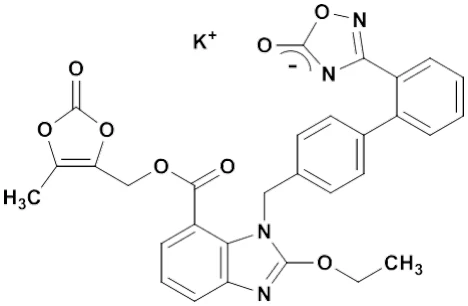
Chemical name: (5-Methyl-2-oxo-1,3-dioxol-4-yl) methyl 2-ethoxy-1- {[2'-(5-oxo-
4,5-dihydro-1,2,4-oxadiazol-3-yl) biphenyl-4-yl] methyl} -1H- benzimidazole-7-carboxylate monopotassium salt.
Molecular formula: C30H23KN4O8
Molecular mass: Azilsartan medoxomil potassium: 606.62 g/mol
Azilsartan medoxomil: 568.53 g/mol
Structural formula:
Physicochemical properties
Solubility: Azilsartan medoxomil potassium is practically insoluble in water and freely soluble in methanol.
14. Clinical Trials
14.1. Trial Design and Study Demographics
Table 4 - Summary of patient demographics for clinical trials
| Study # | Study design | Dosage, route of administration and duration | Study subjects (n) | Mean age (Range) | Sex |
|---|---|---|---|---|---|
| Study 1 | Double-blind, randomized, placebo-controlled | Azilsartan medoxomil 20 mg titrated to 40 mg Azilsartan medoxomil 40 mg titrated to 80 mg Placebo Oral administration 2 weeks titration and 4 weeks treatment | N=280 N=285 N=154 | 56 years (22-84 years) | 54% M 46% F |
| Study 2 | Double-blind, randomized, placebo-controlled | Azilsartan medoxomil 20 mg Azilsartan medoxomil 40 mg Azilsartan medoxomil 80 mg Placebo Oral administration 6 weeks | N=283 N=283 N=285 N=142 | 58 years (21-86 years) | 50% M 50% F |
14.2 Study Results
Two 6-week randomized, double blind studies (Study 1 and Study 2) compared the efficacy on blood pressure of azilsartan medoxomil at doses of 40 mg and 80 mg, with placebo. Blood pressure reductions compared to placebo based on clinic blood pressure measurements at trough and 24 hours mean blood pressure by ambulatory blood pressure monitoring (ABPM) are shown in Table 5 for both studies. Azilsartan medoxomil was statistically superior to placebo for both clinic and 24 hours mean blood pressure measurements.
Table 5 - Placebo-Corrected Mean Change from Baseline in Systolic / Diastolic Blood Pressure at 6 Weeks (mm Hg)
| Study 1 | Study 2 | |||||||||
|---|---|---|---|---|---|---|---|---|---|---|
Clinic Blood Pressure (Mean Baseline 157.4 / 92.5) | 24 Hour Mean by ABPM (Mean Baseline 144.9 / 88.7) | Clinic Blood Pressure (Mean Baseline 159.0 / 91.8) | 24 Hour Mean by ABPM (Mean Baseline 146.2 / 87.6) | |||||||
| Azilsartan medoxomil 40 mg | -14.6 / -6.2 | -13.2 / -8.6 | -12.4 / -7.1 | -12.1 / -7.7 | ||||||
| Azilsartan medoxomil 80 mg | -14.9 / -7.5 | -14.3 / -9.4 | -15.5 / -8.6 | -13.2 / -7.9 | ||||||
Note – All active treatments lead to significantly greater reduction SBP and DBP vs placebo.
# Maximum dose achieved in study 1. Azilsartan medoxomil doses were force-titrated at Week 2 from 20 to 40 mg and from 40 to 80 mg.
Figure 1 shows the 24-hour ambulatory systolic and diastolic blood pressure profiles at endpoint for study 1.
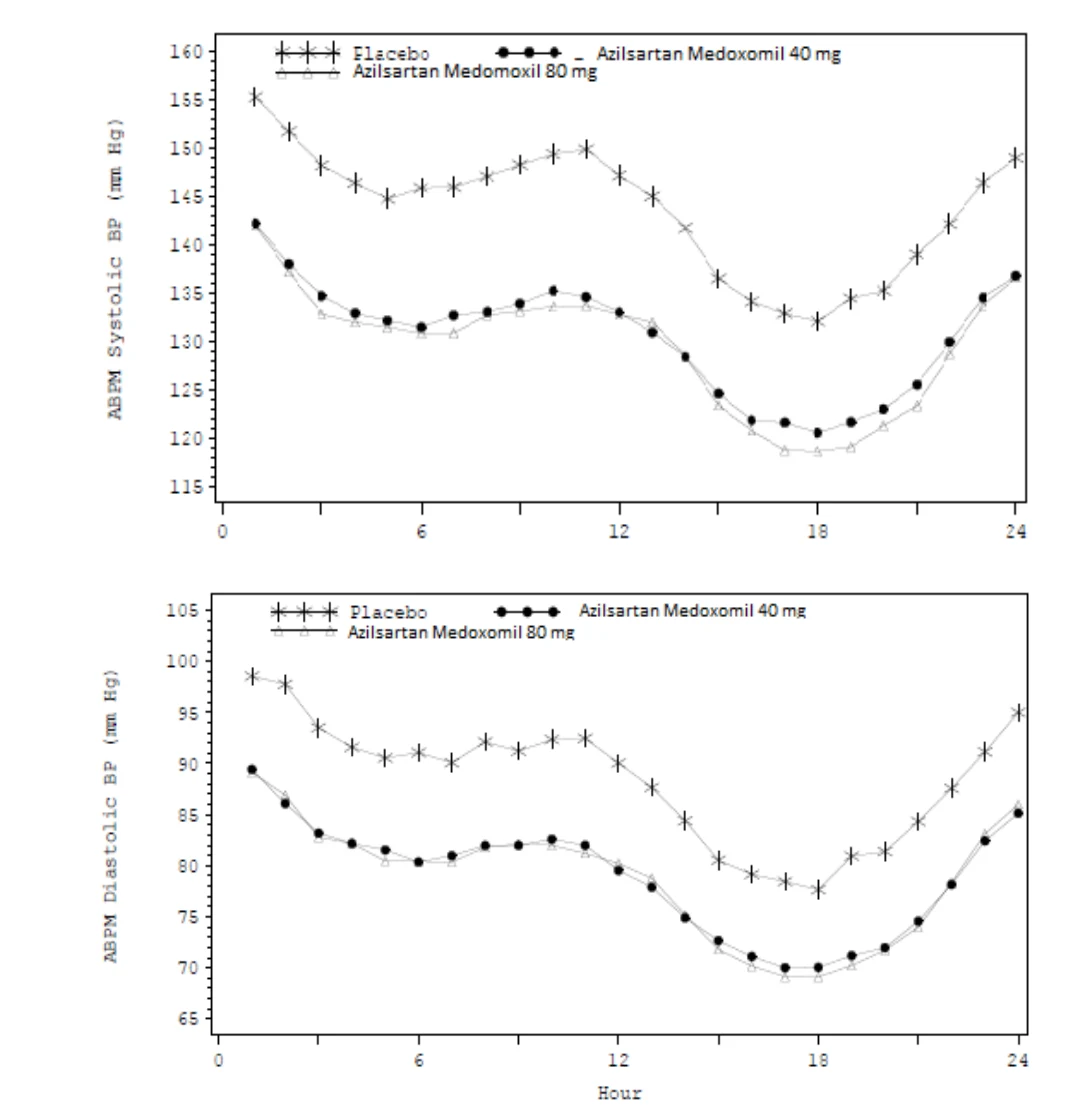
Figure 1: Mean Ambulatory Systolic/Diastolic Blood Pressure at 6 weeks by Dose and Hour
Most of the antihypertensive effect occurs within the first 2 weeks of dosing.
Azilsartan medoxomil was effective in reducing blood pressure regardless of the age, gender, or race of patients, but the effect, as monotherapy, was smaller, approximately half, in black patients, who tend to have low renin levels, as has been seen with ACE inhibitors and other ARBs.
Azilsartan medoxomil 40 and 80 mg co-administered with a calcium channel blocker (amlodipine), or a thiazide-type diuretic (chlorthalidone) resulted in additional blood pressure reductions.
In a controlled trial, when azilsartan medoxomil 40 mg or 80 mg was added on to Chlorthalidone (25 mg) treatment, the resulting decrease in blood pressure was larger than that observed with Chlorthalidone alone.
In a controlled trial, when azilsartan medoxomil 40 mg or 80 mg was added on to Amlodipine (5 mg) treatment, the resulting decrease in blood pressure was larger than that observed with Amlodipine alone.
14.3 Comparative Bioavailability Studies
A double blind, randomized, two-treatment, two-sequence, two-period crossover single dose (1 x 80 mg) oral bioequivalence study of Auro-Azilsartan (Auro Pharma Inc. (Canada)) versus EDARBI® (Valeant Canada LP Valeant Canada S.E.C.) was conducted in 42 healthy adult human male subjects under fasting conditions. A summary of the bioavailability data based on the metabolite, azilsartan, from 38 subjects who completed the study is presented in the following table.
Summary Table of the Comparative Bio-Availability Data
Azilsartan (1 x 80 mg azilsartan medoxomil (as azilsartan medoxomil potassium)) From measured data Geometric Mean Arithmetic Mean (CV %) | ||||
| Parameter | Test1 | Reference2 | % Ratio of Geometric Means | 90% Confidence Interval |
AUCT (ng•h/mL) | 32165.4 33118.6 (23.5) | 33473.7 34539.9 (22.5) | 96.1 | 89.7-102.9 |
AUCI3 (ng•h/mL) | 33646.3 34551.1 (22.1) | 34815.8 35911.7 (22.8) | 96.6 | 90.6–103.1 |
| Cmax (ng/mL) | 4146.9 4275.4 (26.7) | 4300.9 4368.0 (19.0) | 96.4 | 89.6-103.8 |
| Tmax4 (h) | 1.84 (1.00 – 4.00) | 2.00 (1.00 – 5.00) | ||
| T½5 (h) | 9.77 (18.2) | 9.83 (24.2) | ||
1Auro-Azilsartan (azilsartan medoximal (as asilsartan medoxomil potassium)) tablets, 80 mg (Auro Pharma Inc.).
2 EDARBI® (azilsartan medoxomil as (azilsartan medoxomil potassium)) tablets, 80 mg (Valeant Canada LP Valeant Canada S.E.C.).
3 N=37.
4 Expressed as the median (range) only.
5 Expressed as arithmetic mean (% CV) only.
15. Microbiology
No microbiological information is required for this drug product.
16. Non-Clinical Toxicology
Azilsartan medoxomil (pro-drug), azilsartan (active drug) and M-II (main metabolite in human) were evaluated in a program of toxicology studies including: acute and repeat-dose studies in rodents and dogs; genotoxicity studies; rodent carcinogenicity studies and reproductive and developmental studies in rats and rabbits. Essentially there was overlap and concordance of findings in the toxicology studies for azilsartan medoxomil and azilsartan; therefore, mainly findings in studies with azilsartan medoxomil are described in the following section.
The M-II metabolite had a low order of acute toxicity, had no major toxicologic findings in repeat-dose studies, was non-carcinogenic in 26-week Tg.rasH2 mouse and 2-year rat studies, and had no effect on fertility in rats.
Acute Toxicity
Azilsartan medoxomil has low oral acute toxicity in rats and dogs. Doses ≤2,000 mg/kg were administered to rats and ≤30 mg/kg to dogs with no severe clinical signs or mortality. Transient diarrhea and vomiting occurred in dogs at ≤30 mg/kg. Severe clinical signs (including convulsions) occurred after intravenous bolus dosing of azilsartan medoxomil (≥40 mg/kg) in rats, with lethality at 40 mg/kg in males and 200 mg/kg in females.
Long Term Toxicity
Oral repeat-dose toxicity studies demonstrated that the NOAELs for azilsartan medoxomil occurred at
<20 mg/kg/day in mice (13 weeks), 20 (males) and 200 (females) mg/kg/day in rats (6 months), and 60 (males) and 12 (females) mg/kg/day in dogs (6 months). Severe toxicity, including mortality, occurred in dogs administered azilsartan medoxomil at 300 mg/kg/day (males) and ≥100 mg/kg/day (females). Following administration of 300 mg/kg/day (males) and 100 mg/kg/day (females) of azilsartan in the chronic dog study, systemic exposure to azilsartan at 6 months was about 7- fold (both males and females,) compared with exposure at the maximum recommended human dose (MRHD). Clinical and clinical pathology findings and pathologic lesions in several organs (including kidney, gastrointestinal tract and heart) reflected effects secondary to uremia and altered body fluid balance/poor general condition. Deaths were reported in mice at doses ≤200 mg/kg/day. No deaths occurred in rats administered ≥2,000 mg/kg/day for 6 months.
Hematological effects in animals included decreases in erythroid parameters, such as erythrocyte count, hemoglobin concentration, and hematocrit value. Clinical chemistry changes included increases in blood urea nitrogen, creatinine, and total cholesterol, as well as decreased levels of triglycerides, sodium, chloride and calcium. Increased plasma/serum aspartate aminotransferase, alanine aminotransferase and alkaline phosphatase occurred following administration of relatively high dose levels. Urinary excretion of sodium and chloride were decreased.
Histopathological findings in the stomach and kidneys of rodents and dogs, and in adrenals of rats were observed, including changes in the glandular stomach that were seen in mice, rats and dogs. In kidney, hypertrophy or hyperplasia of the juxtaglomerular apparatus is considered to be due to the pharmacological effects of azilsartan on the RAAS. Renal tubular dilatation, basophilia, vacuolization and regeneration were observed in mice, rats, and dogs. These histopathological findings in kidneys (and in stomach in one rat study) occurred, in repeat-dose toxicity studies, at systemic exposure levels similar to the MRHD of 80 mg/day in humans. Atrophy of the adrenal cortex zona glomerulosa, considered to represent a pharmacologic effect, occurred in rats at systemic exposure values of azilsartan that were lower than at the MRHD of 80 mg/day. Reversibility of the adrenal zona glomerulosa atrophy was not evaluated in non-clinical studies. Decreased heart weights were also observed in rats and mice treated with repeated dose of azilsartan medoxomil.
Decreased red blood cell parameters and heart weight, and pathologic changes in kidneys and stomach are anticipated effects in animals secondary to antagonism at angiotensin II type 1 (AT1) receptors.
These findings were eliminated or diminished as a result of saline supplementation in rats.
Mutagenicity
Azilsartan medoxomil, azilsartan, and M-II were positive for structural aberrations in the Chinese Hamster Lung Cytogenetic Assay. Azilsartan medoxomil, azilsartan, and M-II were devoid of genotoxic potential in the bacterial (Ames) mutagenicity assays; azilsartan was negative in the in vitro Chinese Hamster Ovary Cell forward mutation and mouse lymphoma tk locus gene mutation assays; and azilsartan medoxomil and azilsartan were negative in unscheduled DNA synthesis tests in rats, and in vivo mouse and/or rat bone marrow micronucleus assays.
Carcinogenicity
Azilsartan medoxomil was not carcinogenic when assessed in 26-week transgenic (Tg.rasH2) mouse (highest dose tested 450 mg/kg/day) and 2-year rat (highest dose tested 600 mg/kg/day) studies with systemic exposures to azilsartan 7 and 17 (male and female mice) and 25 and 28 (male and female rats) times the average exposure to azilsartan in humans given the MRHD (80 mg azilsartan medoxomil/day).
Reproduction Studies
There was no effect of azilsartan medoxomil on the fertility of male or female rats at oral doses ≤1,000 mg/kg/day, at which systemic exposure (AUC) to azilsartan would be about 30x that at the azilsartan medoxomil MRHD of 80 mg/day.
In pre- and postnatal development studies in rats, adverse effects on pup viability, delayed incisor eruption, and dilatation of the renal pelvis along with hydronephrosis were seen when azilsartan medoxomil was administered to pregnant rats from gestation day 6 to lactation day 21 at 10 mg/kg/day (estimated exposure margin 4.5x the MRHD based on AUC data from non-pregnant rats). Similar studies with azilsartan in rats resulted in F1 generation findings of dilatation of the renal pelvis/ureter (≥0.3 mg/kg/day), lower body weight and survival, and increased incidence of rough kidney surface (≥10 mg/kg/day), and F1 reproductive effects (30 mg/kg/day).
Azilsartan medoxomil was not teratogenic when administered at oral doses ≤1,000 mg/kg/day azilsartan medoxomil/kg/day to pregnant rats or ≤50 mg/kg/day azilsartan medoxomil to pregnant rabbits.
However, embryo-fetal toxicity occurred at azilsartan medoxomil doses of 1,000 mg/kg/day in rats (dilated renal pelvis and short supernumerary ribs) and 50 mg/kg/day in rabbits (increased post-implantation loss, embryo-fetal deaths, and decreased number of live fetuses), with azilsartan systemic exposure at the NOAELs (100 and 30 mg/kg/day, respectively) estimated at 20x and 9x that at the MRHD. Embryo-fetal toxicity was also reported in rats with azilsartan doses of ≥30 mg/kg/day (delayed ossification in the caudal vertebrae) and 100 mg/kg/day (lower male fetal body weight) and at 500 mg/kg/day in rabbits (increased post-implantation loss). Azilsartan crossed the placenta and was found in the fetuses of pregnant rats and was also excreted into the milk of lactating rats.
17. Supporting Product Monographs
- 1. PrEDARBI® Azilsartan Medoxomil Tablets, 40 mg and 80 mg, control 298416, product monograph, Bausch Health, Canada Inc. (2025-10-25)