


Product Monograph - Teva-Telmisartan
RECENT MAJOR LABEL CHANGES
| 2 CONTRAINDICATIONS | 08/2023 |
|---|---|
| 7 WARNINGS AND PRECAUTIONS | 08/2023 |
TABLE OF CONTENTS
Sections or subsections that are not applicable at the time of authorization are not listed.
RECENT MAJOR LABEL CHANGES ............................................................................................ 2
TABLE OF CONTENTS .............................................................................................................. 2
PART I: HEALTH PROFESSIONAL INFORMATION ................................................................... 4
1 INDICATIONS .................................................................................................................. 4
1.1 Pediatrics ........................................................................................................................... 4
1.2 Geriatrics ........................................................................................................................... 4
2 CONTRAINDICATIONS ..................................................................................................... 4
3 SERIOUS WARNINGS AND PRECAUTIONS BOX ................................................................ 5
4 DOSAGE AND ADMINISTRATION ..................................................................................... 5
4.1 Dosing Considerations ...................................................................................................... 5
4.2 Recommended Dose and Dosage Adjustment ................................................................. 5
4.4 Administration .................................................................................................................. 6
4.5 Missed Dose ...................................................................................................................... 6
5 OVERDOSAGE ................................................................................................................. 6
6 DOSAGE FORMS, STRENGTHS, COMPOSITION AND PACKAGING ..................................... 6
7 WARNINGS AND PRECAUTIONS...................................................................................... 7
7.1 Special Populations ......................................................................................................... 10
7.1.1 Pregnant Women: ........................................................................................................ 10
7.1.2 Breast-feeding .............................................................................................................. 11
7.1.3 Pediatrics...................................................................................................................... 11
7.1.4 Geriatrics ...................................................................................................................... 11
8 ADVERSE REACTIONS ..................................................................................................... 11
8.1Adverse Reaction Overview .......................................................................................... 11
8.2 Clinical Trial Adverse Drug Reactions ........................................................................... 11
8.3 Less Common Clinical Trial Adverse Reactions ............................................................ 15
8.4 Abnormal Laboratory Findings: Hematologic Clinical Chemistry and Other Quantitative Data ............................................................................................................... 16
8.5 Post-Market Adverse Reactions ................................................................................... 18
9 DRUG INTERACTIONS .................................................................................................... 18
9.1 Serious Drug Interactions ............................................................................................. 18
9.4 Drug-Drug Interactions ................................................................................................. 18
9.5 Drug-Food Interactions ................................................................................................ 20
9.6 Drug-Herb Interactions ................................................................................................. 21
9.7 Drug-Laboratory Test Interactions ............................................................................... 21
10 CLINICAL PHARMACOLOGY ............................................................................................ 21
10.1 Mechanism of Action .................................................................................................. 21
10.2 Pharmacodynamics .................................................................................................... 21
10.3 Pharmacokinetics ....................................................................................................... 23
11 STORAGE, STABILITY AND DISPOSAL .............................................................................. 25
12 SPECIAL HANDLING INSTRUCTIONS ................................................................................ 25
PART II: SCIENTIFIC INFORMATION ........................................................................................ 26
13 PHARMACEUTICAL INFORMATION................................................................................. 26
14 CLINICAL TRIALS ............................................................................................................ 27
14.1 Clinical Trials by Indication ......................................................................................... 27
14.2 Comparative Bioavailability Studies ........................................................................... 29
15 MICROBIOLOGY............................................................................................................. 30
16 NON-CLINICAL TOXICOLOGY .......................................................................................... 30
17 SUPPORTING PRODUCT MONOGRAPHS ......................................................................... 32
PATIENT MEDICATION INFORMATION ................................................................................... 33
PART I: HEALTH PROFESSIONAL INFORMATION
1 INDICATIONS
Treatment of Essential Hypertension
Teva-Telmisartan is indicated for the treatment of mild to moderate essential hypertension in adults.
Teva-Telmisartan may be used alone or in combination with thiazide diuretics.
The concurrent use with angiotensin converting enzyme inhibitors is not recommended.
1.1 Pediatrics
Pediatrics (< 18 years of age): Based on the data submitted and reviewed by Health Canada, the safety and efficacy of Teva-Telmisartan in pediatric patients has not been established; therefore, Health Canada has not authorized an indication for pediatric use.
1.2 Geriatrics
Geriatrics (> 65 years of age): No dose adjustment is necessary for geriatric patients. It should be recognized, however, that greater sensitivity in some older individuals cannot be ruled out.
2 CONTRAINDICATIONS
Telmisartan is contraindicated in:
- Concomitant use of angiotensin receptor blockers (ARBs) – including Teva-Telmisartan – with aliskiren-containing drugs in patients with diabetes mellitus (type 1 or type 2) or moderate to severe renal impairment (GFR < 60 mL/min/1.73m2) is contraindicated (see 7 WARNINGS AND PRECAUTIONS, Cardiovascular, Dual Blockade of the Renin-Angiotensin System (RAS) and Renal and 9 DRUG INTERACTIONS, Dual Blockade of the Renin— Angiotensin System (RAS) with ARBs, ACEIs or aliskiren-containing drugs).
- Patients who are hypersensitive to this drug or to any ingredient in the formulation or component of the container. For a complete listing, see the 6 DOSAGE FORMS, STRENGTHS COMPOSITION AND PACKAGING section of the product monograph.
- Pregnant women (see 7.1.1 Pregnant Women)
- Breast-feeding (see 7.1.2 Breast-feeding)
Patients with the rare hereditary condition of fructose intolerance (HFI)
- Sorbitol: Teva-Telmisartan contains 38.4 mg of sorbitol per maximum recommended daily dose.
- Sorbitol is a source of fructose.
3 SERIOUS WARNINGS AND PRECAUTIONS BOX
Serious Warnings and Precautions
When used in pregnancy, angiotensin receptor (AT1) blockers (ARB) can cause injury or even death of the developing fetus. When pregnancy is detected, Teva-Telmisartan should be discontinued as soon as possible (see 7.1 Special Populations).
4 DOSAGE AND ADMINISTRATION
4.1 Dosing Considerations
The antihypertensive effect is present within 2 weeks and maximal reduction is generally attained after four weeks. If additional blood pressure reduction is required, a thiazide diuretic may be added.
4.2 Recommended Dose and Dosage Adjustment
Treatment of Essential Hypertension:
The recommended dose of Teva-Telmisartan is 80 mg once daily.
Patients with renal Impairment
No initial dosing adjustment is necessary for patients with renal impairment, but greater sensitivity in some older individuals cannot be ruled out. Markedly reduced telmisartan plasma levels were observed in patients on hemodialysis.
Patients with hepatic Impairment
For patients with hepatic impairment a starting dose of 40 mg is recommended and should be administered with caution (see 7 WARNINGS AND PRECAUTIONS, Hepatic/Biliary/Pancreatic).
When initiating telmisartan therapy at 80 mg dose, monitoring of blood pressure is recommended, and if appropriate adjustment of medications that lower blood pressure may be necessary.
Drug discontinuation
If laryngeal stridor or angioedema of the face, extremities, lips, tongue, or glottis occurs, Teva-Telmisartan should be discontinued immediately, the patient treated appropriately in accordance with accepted medical care, and carefully observed until the swelling disappears.
When pregnancy is detected, Teva-Telmisartan should be discontinued as soon as possible.
4.4 Administration
Teva-Telmisartan are for once-daily oral administration and should be swallowed whole with liquid. Teva-Telmisartan can be taken with or without food.
4.5 Missed Dose
Teva-Telmisartan should be taken at the same time each day, preferably in the morning. However, if a dose is missed during the day, the next dose should be continued at the usual time. Do not double dose.
5 OVERDOSAGE
Limited data are available with regard to overdosage in humans. The most prominent manifestations of overdosage were hypotension and/or tachycardia; bradycardia also occurred. If symptomatic hypotension should occur, supportive treatment should be instituted.
For management of a suspected drug overdose, contact your regional poison control centre.
6 DOSAGE FORMS, STRENGTHS, COMPOSITION AND PACKAGING
Table 1 – Dosage Forms, Strengths, Composition and Packaging
| Route of Administration | Dosage Form / Strength / Composition | Non-medicinal Ingredients |
| oral | Tablet: 40 mg and 80 mg of telmisartan | Hydroxypropyl methylcellulose, magnesium stearate, mannitol, meglumine, povidone, sodium hydroxide and sorbitol |
Teva-Telmisartan is supplied as 40 mg and 80 mg tablets for oral administration.
Teva-Telmisartan 40 mg are white, oblong-shaped, uncoated tablets marked with the “rph” on one side, and “T72” on the other side. Available in bottles of 100 tablets, and in blisters of 30 tablets.
Teva-Telmisartan 80 mg are white, oblong-shaped, uncoated tablets marked with the “rph” on one side, and “T71” on the other side. Available in bottles of 100 and 500 tablets, and in blisters of 30 tablets.
7 WARNINGS AND PRECAUTIONS
Please see 3 SERIOUS WARNINGS AND PRECAUTIONS BOX
General
A case of rare but fatal angioedema occurred in a patient who had been medicated for about 6 months with telmisartan, the active component of Teva-Telmisartan. The Autopsy Report described evidence of edema of the laryngeal mucosa, with terminal respiratory and circulatory failure. This is in the context of approximately 5.2 million patient-years exposure to telmisartan annually.
In instances where swelling is confined to the face and lips, the condition generally resolves without treatment, although antihistamines may be useful in relieving symptoms. Where there is involvement of tongue, glottis, or larynx, likely to cause airway obstruction, appropriate therapy (including, but not limited to 0.3 to 0.5 ml of subcutaneous epinephrine solution 1:1000) should be administered promptly (see 8.5 Post Market Adverse Reactions).
Patients with a known hypersensitivity (anaphylaxis) or angioedema to ARBs should not be treated with Teva-Telmisartan (see 8.2 Clinical Trial Adverse Drug Reactions and 8.5 Post Market Adverse Reactions).
Cardiovascular
Aortic and Mitral Valve Stenosis, Obstructive Hypertrophic Cardiomyopathy
As with other vasodilators, special caution is indicated in patients suffering from aortic or mitral stenosis, or obstructive hypertrophic cardiomyopathy. These patients are at risk of decreased coronary perfusion resulting from a cardiac output that is limited by a fixed cardiac vascular obstruction.
Volume and/or sodium-depleted patients:
In patients who are volume-depleted by diuretic therapy, dietary salt restriction, dialysis, diarrhea or vomiting, symptomatic hypotension may occur after initiation of therapy with telmisartan. Such conditions, especially volume and/or sodium depletion, should be corrected prior to administration of telmisartan. In these patients, because of the potential fall in blood pressure, therapy should be started under close medical supervision.
Ischaemic heart disease
Similar considerations apply to patients with ischemic heart or cerebrovascular disease, in whom an excessive fall in blood pressure could result in myocardial infarction or cerebrovascular accident.
Dual blockade of the Renin-Angiotensin System (RAS)
There is evidence that co-administration of angiotensin receptor blockers (ARBs), such as Teva-Telmisartan, or of angiotensin-converting-enzyme inhibitors (ACEIs) with aliskiren increases the risk of hypotension, syncope, stroke, hyperkalemia and deterioration of renal function, including renal failure, in patients with diabetes mellitus (type 1 or type 2) and/or moderate to severe renal impairment (GFR < 60 ml/min/1.73m2). Therefore, the use of Teva-Telmisartan in combination with aliskiren-containing drugs is contraindicated in these patients (see 2 CONTRAINDICATIONS).
Further, co-administration of ARBs, including Teva-Telmisartan, with other agents blocking the RAS, such as ACEIs or aliskiren-containing drugs, is generally not recommended in other patients, since such treatment has been associated with an increased incidence of severe hypotension, renal failure, and hyperkalemia.
Diabetic Patients:
In diabetic patients with undiagnosed coronary artery disease (CAD) on blood pressure lowering therapy, the risk of fatal myocardial infarction and unexpected cardiovascular death may be increased. In patients with diabetes mellitus, CAD may be asymptomatic and therefore undiagnosed. These patients should undergo appropriate diagnostic evaluation, e.g. exercise stress testing, to detect and to treat CAD accordingly before initiating blood pressure lowering treatment with Teva-Telmisartan.
Driving and Operating Machinery
No studies on the effect on the ability to drive and use machines have been performed. However, when driving vehicles or operating machinery it should be taken into account that dizziness, syncope or vertigo may occasionally occur when taking antihypertensive therapy.
If patients experience these adverse events, they should avoid potentially hazardous tasks such as driving or operating machinery.
Endocrine and Metabolism
Hyperkalemia:
Drugs such as telmisartan that affect the renin-angiotensin-aldosterone system can cause hyperkalemia. Monitoring of serum potassium in patients at risk is recommended. Based on experience with the use of drugs that affect the renin-angiotensin system, concomitant use with potassium-sparing diuretics, potassium supplements, salt substitutes containing potassium or other medicinal products that may increase the potassium level (heparin, etc.) may lead to a greater risk of an increase in serum potassium.
The use of a dual renin-angiotensin-aldosterone system (RAAS) blockade may lead to increased occurrence of hyperkalemia when given as add-on therapy in patients with controlled blood pressure.
Hepatic/Biliary/Pancreatic
Hepatic Impairment: As the majority of telmisartan is eliminated by biliary excretion, patients with cholestasis, biliary obstructive disorders or hepatic insufficiency have reduced clearance of telmisartan. Three to four fold increases in Cmax and AUC were observed in patients with liver impairment as compared to healthy subjects. Teva-Telmisartan should be used with caution in these patients (see 4 DOSAGE AND ADMINISTRATION).
Monitoring and Laboratory Tests
For specific monitoring and laboratory tests, see 7 WARNINGS AND PRECAUTIONS (Cardiovascular, Endocrine and Metabolism, Hepatic and Renal) and 9 DRUG INTERACTIONS sections.
Renal
In patients whose renal function may depend on the activity of the renin-angiotensin-aldosterone system, such as patients with bilateral renal artery stenosis, unilateral renal artery stenosis to a solitary kidney, or severe congestive heart failure, dual blockade of the renin-angiotensin-aldosterone system (e.g. concomitant use of an ARB with an ACE-inhibitor or the direct renin-inhibitor aliskiren) and treatment with agents that inhibit this system have been associated with oliguria, progressive azotemia, and rarely acute renal failure and/or death. There is no experience with long term use of telmisartan tablets in patients with unilateral or bilateral renal artery stenosis but an effect similar to that seen with ACE inhibitors should be anticipated. In susceptible patients, concomitant diuretic use may further increase the risk. Use of telmisartan should include appropriate assessment of renal function in these types of patients.
There is no experience regarding the administration of telmisartan tablets in patients with a recent kidney transplant.
Renal Impairment
The use of ARBs – including Teva-Telmisartan – or of ACEIs with aliskiren-containing drugs is contraindicated in patients with moderate to severe renal impairment (GFR < 60 ml/min/1.73 m2) (see 2 CONTRAINDICATIONS and 9 DRUG INTERACTIONS, Dual Blockade of the Renin-Angiotensin System (RAS) with ARBs, ACEIs or aliskiren-containing drugs).
Telmisartan is not removed from blood by hemofiltration and is not dialyzable.
Reproductive Health: Female and Male Potential
- Fertility
No studies on fertility in humans have been performed. (see 16 NON-CLINICAL TOXICOLOGY, Reproduction).
7.1 Special Populations
7.1.1 Pregnant Women:
Drugs that act directly on the renin-angiotensin-aldosterone system (RAAS) can cause fetal and neonatal morbidity and death when administered to pregnant women. When pregnancy is detected, Teva-Telmisartan should be discontinued as soon as possible.
The use of angiotensin receptor (AT1) blockers (ARBs) is not recommended during pregnancy and should not be initiated during pregnancy. Epidemiological evidence regarding the risk of teratogenicity following exposure to angiotensin converting enzyme inhibitors (another class of therapeutic products interfering with the RAAS) during the first trimester of pregnancy has not been conclusive; however a small increase in risk cannot be excluded. Given the current evidence available on the risk with ARB, similar risks may exist for this class of drugs. Patients planning pregnancy should be changed to alternative anti-hypertensive treatments which have an established safety profile for use in pregnancy. When pregnancy is diagnosed, treatment with angiotensin II blockers should be stopped immediately, and, if appropriate, alternative therapy should be started.
Preclinical studies with telmisartan do not indicate teratogenic effect, but have shown fetotoxicity.
The use of ARBs during the second and third trimesters is known to induce human fetotoxicity (decreased renal function, oligohydramnios, skull ossification retardation) and neonatal toxicity (renal failure, hypotension, hyperkalemia).
Infants with a history of in utero exposure to ARBs should be closely observed for hypotension, oliguria, and hyperkalemia. If oliguria occurs, attention should be directed toward support of blood pressure and renal perfusion. Exchange transfusion may be required as a means of reversing hypotension and/or substituting for disordered renal function; however, limited experience with those procedures has not been associated with significant clinical benefit.
It is not known if telmisartan can be removed from the body by hemodialysis.
No teratogenic effects were observed when telmisartan was administered to pregnant rats at oral doses of up to 50 mg/kg/day and to pregnant rabbits at oral doses up to 45 mg/kg/day with saline supplementation. In rabbits, fetotoxicity (total resorptions) associated with maternal toxicity (reduced body weight gain, mortality) was observed at the highest dose level (45 mg/kg/day). In rats, maternally toxic (reduction in body weight gain and food consumption) telmisartan doses of 50 mg/kg/day in late gestation and during lactation were observed to produce adverse effects in rat fetuses and neonates, including reduced viability, low birth weight, delayed maturation, and decreased weight gain. Significant levels of telmisartan were present in rat milk and rat fetuses’ blood during late gestation.
7.1.2 Breast-feeding
It is not known whether telmisartan is excreted in human milk but significant levels have been found in the milk of lactating rats. Because many drugs are excreted in human milk and because of their potential for affecting the nursing infant adversely, a decision should be made whether to discontinue nursing or discontinue the drug, taking into account the importance of the drug to the mother.
7.1.3 Pediatrics
Pediatrics (< 18 years of age): Teva-Telmisartan is not recommended for use in children below 18 years due to limited data on safety and efficacy.
7.1.4 Geriatrics
Geriatrics (> 65 years of age): Of the total number of patients receiving telmisartan in clinical studies, 551 (18.6%) were 65 to 74 years of age and 130 (4.4%) were > 75 years. No overall age related differences were seen in the adverse effect profile, but greater sensitivity in some older patients cannot be ruled out.
8 ADVERSE REACTIONS
8.1 Adverse Reaction Overview
In patients treated for hypertension the overall incidence of adverse events reported with telmisartan (41.4%) was usually comparable to those reported with placebo (43.9%) in controlled clinical trials. The incidence of adverse events was not dose related and showed no correlation with gender, age or race of the patients. The safety profile of Teva-Telmisartan in patients treated for prevention of cardiovascular morbidity and mortality was consistent with that obtained in hypertensive patients.
8.2 Clinical Trial Adverse Drug Reactions
Clinical trials are conducted under very specific conditions. The adverse reaction rates observed in the clinical trials; therefore may not reflect the rates observed in practice and should not be compared to the rates in the clinical trials of another drug. Adverse drug reaction information from clinical trials is useful in identifying and approximating rates of adverse drug reactions in real-world use.
Telmisartan has been evaluated for safety in 27 clinical trials involving 7968 patients treated for hypertension. Of these 7968 patients, 5788 patients were treated with telmisartan monotherapy including 1058 patients treated for ≥1 year and 1395 patients treated in placebo-controlled trials.
In placebo-controlled trials in the registration program for hypertension, discontinuation of therapy due to adverse events was required in 2.8% of telmisartan patients and 6.1% of placebo patients. The following potentially serious adverse events have been reported rarely with telmisartan in controlled clinical trials: syncope and hypotension. In placebo-controlled trials, no serious adverse event was reported with a frequency of greater than 0.1% in telmisartan-treated patients.
The adverse drug reactions listed below have been accumulated from controlled clinical trials in patients treated for hypertension and from post-marketing reports.
All Clinical Trials
The adverse drug events listed below have been accumulated from 27 clinical trials including 5788 hypertensive patients treated with telmisartan. Adverse events have been ranked under headings of frequency using the following convention: very common (≥ 1/10); common (≥ 1/100, <1/10); uncommon (≥ 1/1000, <1/100); rare (≥1/10000, <1/1000); very rare (< 1/10000)
Body as a Whole, General:
Common: Chest pain, influenza-like symptoms, fatigue, conjunctivitis
Uncommon: Hyperhidrosis, asthenia (weakness)
Blood and Lymphatic System:
Uncommon: Anaemia
Rare: Thrombocytopenia
Not known: Eosinophilia
Cardiovascular System:
Common: Edema, palpitation
Uncommon: Bradycardia, orthostatic hypotension, hypotension
Rare: Tachycardia
Central and Peripheral Nervous System:
Very Common: Headache.
Common: Dizziness, insomnia
Uncommon: Vertigo
Eye Disorders:
Rare: Visual disturbance
Gastro-Intestinal System:
Common: Abdominal pain, diarrhoea, dyspepsia, nausea, constipation, gastritis
Uncommon: Dry mouth, flatulence, vomiting
Rare: Abdominal discomfort
Hepato-biliary Disorders:
Rare: Hepatic function abnormal/liver disorder*.
*Most cases of hepatic function abnormal / liver disorder from post-marketing experience with telmisartan occurred in patients in Japan, who are more likely to experience these adverse reactions.
Immune System:
Rare: Hypersensitivity
Not known: Anaphylactic reaction, angioedema
Infections and Infestations:
Uncommon: Upper respiratory tract infections (including pharyngitis, sinusitis, bronchitis, rhinitis and coughing) and urinary tract infections (including cystits)
Not known: Sepsis including fatal outcome.
Investigations:
Uncommon: Blood creatinine increased.
Rare: Blood uric acid increased, hepatic enzymes increased, blood creatinine phosphokinase increased, haemoglobin decreased.
Metabolism and Nutrition Disorders:
Uncommon: Hyperkalemia.
Rare: Hypoglycemia (in diabetic patients)
Musculo-Skeletal System:
Common: Arthralgia, muscle spasms (cramps in legs) or pain in extremity (leg pain), myalgia, arthritis, arthrosis.
Uncommon: Tendon pain (tendonitis like symptoms), back pain.
Nervous System:
Uncommon: Syncope (faint).
Psychiatric System:
Common: Anxiety, nervousness.
Uncommon: Depression.
Renal and Urinary System:
Uncommon: Renal impairment including acute kidney injury.
Respiratory System:
Common: Dyspnea.
Skin and Appendages System:
Common: Skin disorders like rash
Uncommon: Pruritus
Rare: Erythema, drug eruption, eczema, toxic skin eruption
Not known: Urticaria
Hemoglobin:
Infrequently, a decrease in hemoglobin has been observed which occurs more often during treatment with telmisartan than with placebo.
Placebo-Controlled Trials
In patients treated for hypertension overall incidence of adverse events reported with telmisartan (41.4%) was usually comparable to those reported with placebo (43.9%) in controlled clinical trials. Adverse events occurring in > 1% of 1395 hypertensive patients treated with telmisartan monotherapy in placebo-controlled clinical trials, regardless of drug relationship, include the following:
Table 2: Adverse Events Occurring in > 1% of Hypertensive Patients Treated with Telmisartan Monotherapy
| Adverse Event, by System | Telmisartan Total N = 1395 % | Placebo N = 583 % |
|---|---|---|
| Body as a Whole | ||
| Back Pain | 2.7 | 0.9 |
| Adverse Event, by System | Telmisartan Total N = 1395 % | Placebo N = 583 % |
|---|---|---|
| Chest Pain | 1.3 | 1.2 |
| Fatigue | 3.2 | 3.3 |
| Influenza-Like Symptoms | 1.7 | 1.5 |
| Pain | 3.5 | 4.3 |
| Central & Peripheral Nervous System | ||
| Dizziness | 3.6 | 4.6 |
| Headache | 8.0 | 15.6 |
| Somnolence | 0.4 | 1.0 |
| Gastrointestinal System | ||
| Diarrhea | 2.6 | 1.0 |
| Dyspepsia | 1.6 | 1.2 |
| Nausea | 1.1 | 1.4 |
| Vomiting | 0.4 | 1.0 |
| Musculoskeletal System | ||
| Myalgia | 1.1 | 0.7 |
| Respiratory System | ||
| Coughing | 1.6 | 1.7 |
| Pharyngitis | 1.1 | 0.3 |
| Sinusitis | 2.2 | 1.9 |
| Upper Respiratory Tract Infection | 6.5 | 4.6 |
| Heart Rate and Rhythm Disorders | ||
| ECG abnormal specific | 0.2 | 1.0 |
| Palpitation | 0.6 | 1.0 |
| Cardiovascular Disorders, General | ||
| Hypertension | 1.0 | 1.7 |
| Oedema peripheral | 1.0 | 1.2 |
The incidence of adverse events was not dose-related and did not correlate with the gender, age, or race of patients.
8.3 Less Common Clinical Trial Adverse Reactions
In addition, the following adverse events, with no established causality, were reported at an incidence <1% in placebo-controlled clinical trials.
Autonomic Nervous System Disorders: sweating increased
Body as a Whole: abdomen enlarged, allergy, cyst nos, fall, fever, leg pain, rigors, syncope
Cardiovascular Disorders, General: hypotension, hypotension-postural, leg edema
Central & Peripheral Nervous System Disorder: hypertonia, migraine-aggravated, muscle contraction-involuntary
Gastrointestinal System Disorders: anorexia, appetite increased, flatulence, gastrointestinal disorder nos, gastroenteritis, gastroesophageal reflux, melena, mouth dry, abdominal pain
Heart Rate & Rhythm Disorders: arrhythmia, tachycardia
Metabolic & Nutritional Disorders: diabetes mellitus, hypokalaemia
Musculoskeletal System Disorders: arthritis, arthritis aggravated, arthrosis, bursitis, fascitis plantar, tendinitis
Myo Endo Pericardial & Valve Disorders: myocardial infarction
Psychiatric Disorders: nervousness
Red Blood Cell Disorders: anemia
Reproductive Disorders, Female: vaginitis
Resistance Mechanism Disorders: abscess, infection, bacterial, moniliasis genital, otitis media.
Respiratory System Disorders: bronchospasm, epistaxis, pneumonia, bronchitis
Skin & Appendage Disorders: rash, skin dry
Urinary System Disorders: Dysuria, hematuria, micturition disorder, urinary tract infection
Vascular (Extracardiac) Disorders: cerebrovascular disorder, purpura
Vision Disorders: vision abnormal
8.4 Abnormal Laboratory Findings: Hematologic Clinical Chemistry and Other Quantitative Data
In placebo-controlled clinical trials involving 1041 patients treated with telmisartan monotherapy, clinically relevant changes in standard laboratory test parameters were rarely associated with administration of telmisartan.
Creatinine, Blood Urea Nitrogen:
Increases in BUN (>11.2 mg/dl) and creatinine (>0.5 mg/dl) were observed in 1.5% and 0.6% of telmisartan-treated patients; the corresponding incidence was 0.3% each for placebo-treated patients. These increases occurred primarily with telmisartan in combination with hydrochlorothiazide. One telmisartan treated patient discontinued therapy due to increases in creatinine and blood urea nitrogen.
Hemoglobin, Hemotocrit:
Clinically significant changes in hemoglobin and hematocrit (<10g/dl and <30%, respectively) were rarely observed with telmisartan treatment and did not differ from rates in placebo-treated patients. No patients discontinued therapy due to anemia.
Serum Uric Acid:
An increase in serum uric acid (>2.7 mg/dl) was reported in 1.7% of patients treated with telmisartan and in 0.0% of patients treated with placebo. Clinically significant hyperuricemia (>10mEq/L) was observed in 2.3% of patients with telmisartan, with 0.4% reported in patients at baseline. Increases in serum uric acid were primarily observed in patients who received telmisartan in combination with hydrochlorothiazide. No patient was discontinued from treatment due to hyperuricemia.
Liver Function Tests:
Clinically significant elevations in AST and ALT (>3 times the upper limit of normal) occurred in 0.1% and 0.5% respectively of patients treated with telmisartan compared to 0.8% and 1.7% of patients receiving placebo. No telmisartan-treated patients discontinued therapy due to abnormal hepatic function.
Serum Potassium:
Marked laboratory changes in serum potassium (>+/- 1.4 mEq/L) occurred rarely and with a lower frequency in telmisartan -treated patients (0.3%, 0.1%, respectively) than in placebo patients (0.6%, 0.3%, respectively). Clinically significant changes in potassium (that exceeded 3 mEq/L) were found in 0.6% of telmisartan-treated patients, with 0.5% of these reported at baseline. The corresponding rates for placebo-treated patients were 0.6% and 0.8%.
Cholesterol:
In placebo-controlled trials, marked increases in serum cholesterol were reported in a total of 6 telmisartan-treated patients (0.4%) and no placebo patients. Two of these patients were followed over time, in both cases cholesterol values reverted to baseline levels.
Serum elevations in cholesterol were reported as adverse events in 11 of 3445 patients (0.3%) in all clinical trials. There were no reported cases of hypercholesterolemia in telmisartan-treated patients in placebo-controlled trials.
8.5 Post-Market Adverse Reactions
Since the introduction of telmisartan in the market, cases of anxiety, dizziness, vision troubled, vertigo, abdominal distension, abdominal pain, retching, hyperhidrosis, arthralgia, myalgia, muscle spasm, back pain, asthenia, pain in extremity, fatigue, chest pain, blood creatinine increased, erythema, pruritus, syncope/faint, insomnia, depression, stomach discomfort, vomiting, hypotension (including orthostatic hypotension), bradycardia, tachycardia, abnormal hepatic function/liver disorder, renal impairment ( including acute kidney injury), hyperkalemia, dyspnoea, anaemia, eosinophilia, thrombocytopenia, hyponatraemia and weakness have been reported. The frequency of these effects is unknown. As with other angiotensin II blockers, rare cases of angioedema (including fatal outcome), pruritus, rash and urticaria have been reported.
Cases of muscle pain, muscle weakness, myositis and rhabdomyolysis have been reported in patients receiving angiotensin II receptor blockers.
In addition, since the introduction of telmisartan in the market, cases with increased blood creatinine phosphokinase (CPK) have been reported.
9 DRUG INTERACTIONS
9.1 Serious Drug Interactions
Serious Drug Interactions Concomitant use of angiotensin receptor antagonists (ARBs) –including telmisartan - with aliskiren-containing drugs in patients with diabetes mellitus (type 1 or type 2) or moderate to severe renal impairment (GFR < 60 ml/min/1.73m2) is contraindicated (see 7 WARNINGS AND PRECAUTIONS, Cardiovascular, Dual blockade of the Renin-Angiotensin System (RAS) and Renal, and 9.4 Drug-Drug Interactions, Dual Blockade of the Renin-Angiotensin System (RAS) with ARBs, ACEIs or aliskiren-containing drugs). |
|---|
9.4 Drug-Drug Interactions
The drugs listed in this table are based on either drug interaction case reports or studies, or potential interactions due to the expected magnitude and seriousness of the interaction (i.e., those identified as contraindicated).
Coadministration of Teva-Telmisartan also did not result in a clinically significant interaction with acetaminophen, amlodipine, glyburide, or hydrochlorothiazide.
Table 3: Established or Potential Drug-Drug Interactions with telmisartan
| Telmisartan | Effect | Clinical comment |
|---|---|---|
| Agents increasing serum potassium | Telmisartan reduces the production of aldosterone, | Potassium-sparing diuretics or potassium supplements should be given only for documented hypokalemia and with frequent monitoring of serum potassium. Potassium-containing salt substitutes should also be used with caution. Concomitant thiazide diuretic use may attenuate any effect that telmisartan may have on serum potassium. |
| Digoxin | When telmisartan was co-administered with digoxin, mean increases in digoxin peak plasma concentration (49%) and in trough concentration (20%) were observed. | It is recommended that digoxin levels be monitored with appropriate dose adjustments when initiating, adjusting or discontinuing Teva-Telmisartan, to maintain appropriate plasma digoxin concentrations. |
| Diuretics | Patients on diuretics, and especially those in whom diuretic therapy was recently instituted, may occasionally experience an excessive reduction of blood pressure after initiation of therapy with telmisartan. | The possibility of symptomatic hypotension with the use of telmisartan can be minimized by discontinuing the diuretic prior to initiation of treatment and/or lowering the initial dose of telmisartan (see 7 WARNINGS AND PRECAUTIONS – Cardiovascular, Hypotension and 4 DOSAGE AND ADMINISTRATION). No drug interaction of clinical significance has been identified with thiazide diuretics. |
| Dual Blockade of the Renin-Angiotensin System (RAS) with ARBs, ACEIs or aliskiren-containing drugs | The treatment has been associated with an increased incidence of severe hypotension, renal failure, and hyperkalemia | Dual Blockade of the renin-angiotensin system with ARBs, ACEIs or aliskiren-containing drugs is contraindicated in patients with diabetes and/or renal impairment, and is generally not recommended in other patients. (See 2 CONTRAINDICATIONS and 7 WARNINGS AND PRECAUTIONS, Dual Blockade of the Renin-Angiotensin System). |
| Lithium salts | Reversible increases in serum lithium concentrations and toxicity have been reported during concomitant administration of lithium with | Serum lithium level monitoring is advisable during concomitant use. |
| Telmisartan | Effect | Clinical comment |
|---|---|---|
| angiotensin converting enzyme inhibitors. Rare cases have also been reported with angiotensin II receptor blockers including telmisartan. | ||
| Nonsteroidal Anti-Inflammatory Drugs (NSAIDs) | Combinations of angiotensin-II antagonists (telmisartan) and NSAIDs (including ASA and COX-2 inhibitors) might have an increased risk for acute renal failure and hyperkalemia. NSAIDs (including ASA and COX-2 inhibitors) and angiotensin-II receptor antagonists exert a synergistic effect on the decrease of glomerular filtration. In patients with pre-existing renal impairment, this may lead to acute renal failure. | Blood pressure and kidney function should be monitored more closely in this situation, as occasionally there can be a substantial increase in blood pressure. Monitoring of renal function at the beginning and during the course of the treatment should be recommended. Co-administration of telmisartan did not result in a clinically significant interaction with ibuprofen. |
| Ramipril | In one study, the co-administration of telmisartan and ramipril led to an increase of up to 2.5 fold in the AUC0-24 and Cmax of ramipril and ramiprilat. | The clinical relevance of this observation is not known. |
| Warfarin | Telmisartan administered for 10 days slightly decreased the mean warfarin trough plasma concentration. | The decrease in the mean warfarin trough plasma concentration did not result in a change in International Normalized Ratio (INR) |
9.5 Drug-Food Interactions
When telmisartan is taken with food, the reduction in the area under the plasma concentration-time curve (AUC) of telmisartan varies from approximately 6% (40 mg) to approximately 19% (160 mg), and the reduction in Cmax varies from approximately 26% (40 mg) to 56% (160 mg).
However, three hours after administration, plasma concentrations are similar whether telmisartan is taken with or without food.
9.6 Drug-Herb Interactions
Interactions with herbal products have not been established.
9.7 Drug-Laboratory Test Interactions
Interactions with laboratory tests have not been established.
10 CLINICAL PHARMACOLOGY
10.1 Mechanism of Action
Telmisartan is an orally active angiotensin II AT1 receptor blocker. By selectively blocking the binding of angiotensin II to the AT1 receptors telmisartan blocks the vasoconstrictor and aldosterone secreting effects of angiotensin II. Telmisartan does not exhibit any partial agonist activity at the AT1 receptors, and has essentially no affinity for the AT2 receptors. AT2 receptors have been found in many tissues, but to date they have not been associated with cardiovascular homeostasis. In vitro binding studies indicate that telmisartan has no relevant affinity for other receptors nor does it inhibit human plasma renin.
Telmisartan does not inhibit angiotensin converting enzyme, also known as kininase II, the enzyme that converts angiotensin I to angiotensin II and degrades bradykinin, nor does it affect renin or other hormone receptors or ion channels involved in cardiovascular regulation of blood pressure and sodium homeostasis.
In hypertensive patients blockade of angiotensin II AT1 receptors results in two to three fold increase in plasma renin and angiotensin II plasma concentrations. Long term effects of increased AT2 receptor stimulation by angiotensin II are unknown.
10.2 Pharmacodynamics
Treatment of Essential Hypertension
In normal volunteers, a dose of telmisartan 80 mg inhibited the pressor response to an intravenous infusion of angiotensin II by about 90% at peak with approximately 40% inhibition persisting for 24 hours.
In hypertensive patients with normal renal function, no clinically significant effects on renal plasma flow, filtration fraction, or glomerular filtration rate were observed. In multiple dose studies in hypertensive patients, telmisartan had no adverse effect on renal function as measured by serum creatinine or blood urea nitrogen.
The antihypertensive effects of telmisartan were demonstrated in 6 placebo-controlled clinical trials, in a total of 1773 patients, 1031 of whom were treated with telmisartan tablets. Upon initiation of antihypertensive treatment with telmisartan, blood pressure was reduced after the first dose and there was a gradual increase in the antihypertensive effect during continued treatment for < 12 weeks, with most of the increase occurring during the first month. Onset of antihypertensive activity occurs within 3 hours after administration of a single oral dose. The antihypertensive effect of once daily administration of telmisartan is maintained for the full 24-hour dose interval. The magnitude of blood pressure reduction from baseline, after placebo subtraction, was on average (SBP/DBP) -11.3/-7.3 mmHg for telmisartan 40 mg once daily, and -13.7/-8.1 mmHg for telmisartan 80 mg once daily. Upon abrupt cessation of treatment with telmisartan, blood pressure gradually returned to baseline values over a period of several days. During long term studies (without placebo control) the effect of telmisartan appeared to be maintained for > 1 year.
For those patients treated with telmisartan 80 mg once daily who required additional blood pressure reduction, addition of a low dose of hydrochlorothiazide (12.5 mg) resulted in incremental blood pressure reductions of -9.4/-7.0 mmHg.
The antihypertensive effect of once-daily telmisartan (40-80 mg) was similar to that of once-daily amlodipine (5-10 mg), atenolol (50-100 mg), enalapril (5-20 mg) and lisinopril (10-40 mg).
There was essentially no change in heart rate in telmisartan-treated patients in controlled trials.
In clinical trials with post-dose in-clinic monitoring no excessive blood pressure lowering peak effect was observed even after the first dose, and the incidence of symptomatic orthostasis was very low (0.04%). With automated ambulatory blood pressure monitoring, the 24-hour trough-to-peak ratio for telmisartan was determined to be at least 80% for both systolic and diastolic blood pressure.
The antihypertensive effect of telmisartan is not influenced by patient age, weight or body mass index.
Diabetic Patients: Multiple exploratory post hoc analyses were carried out on the three cardiovascular (CV) outcome trials (ONTARGET, TRANSCEND and PRoFESS). In TRANSCEND and PRoFESS, an increased risk of unexpected CV death was seen with telmisartan versus placebo in diabetics without previously diagnosed coronary artery disease (CAD) but not in those with a documented history of CAD. No such increased risk was demonstrated in ONTARGET for telmisartan versus ramipril in diabetes patients without previously diagnosed CAD.
These findings in diabetics with added cardiovascular risk, could be related to a pre-existing but asymptomatic or silent CAD. Diabetics with undiagnosed and therefore untreated CAD may be at increased risk when lowering blood pressure too far, e.g. when initiating antihypertensive therapy, due to a further reduction of perfusion in an already narrowed coronary artery.
In in vitro studies, telmisartan displaced 125I-angiotensin II from its binding site at the AT1 receptor with an inhibitor constant (Ki) of 3.7 nM.
In isolated strips of rabbit aorta, telmisartan exerted potent angiotensin II antagonism: the calculated dissociation constant was KB 3.3•10-10M.
In vivo results showed that telmisartan was a potent and long acting blocker antagonist of the functional response to exogenously administered angiotensin II in rats, rabbits and dogs after both intravenous and oral administration. Telmisartan showed dose dependent and long lasting (>24h) antihypertensive effects after single or repeated oral administration in various rodent models of experimental hypertension.
10.3 Pharmacokinetics
Table 4 - Summary of telmisartan pharmacokinetic parameters (arithmetic means, CV%) in healthy volunteers, male, range: 20-47 years
| Administra tion | Cmax (ng/mL) | Tmax (h) | t½ (h) | AUC0-∞ (ng h/mL) | CL (mL/min) | Vz/f (L) |
| 40 mg, single dose, tablet | 32.1 (44.9) | 1.75 (27.9) | 19.6 (36.8) | 360 (61.5) | 2670 (61.4) | 4490 (84.9) |
Table 5 - Summary of telmisartan pharmacokinetic parameters (geometric means, CV%) in healthy volunteers, males and females, range: 18-45 years
| Administration | Cmax (ng/mL) | Tmax* (h) | t½ (h) | AUC0-∞ (ng h/mL) | CL (mL/min) | Vz/f (L) |
|---|---|---|---|---|---|---|
| 80 mg, single dose, tablet | 245 (69.4) | 1.00 (0.5-2.00) | 27.29 (37.28) | 1280 (91.71) | 1766 (68.68) | 3890 (95.49) |
| *Median |
Absorption: Following oral administration, telmisartan is well absorbed, with a mean absolute bioavailability of about 50%. Mean peak concentrations of telmisartan are reached in 0.5-1 hour after dosing.
The pharmacokinetic profile is characterized by greater than proportional increases of plasma concentrations (Cmax and AUC) with increasing doses > 40 mg. Telmisartan shows bi-exponential decay kinetics with a terminal elimination half life of approximately 24 hours, and does not accumulate in plasma upon repeated once-daily dosing.
Distribution: Telmisartan is >99.5% bound to plasma protein, mainly albumin and a1-acid glycoprotein. Plasma protein binding is constant over the concentration range achieved with therapeutic doses. The volume of distribution for telmisartan is approximately 500 liters, indicating additional tissue binding sites.
When telmisartan is taken with food, the reduction in the area under the plasma concentration-time curve (AUC) of telmisartan varies from approximately 6% (40 mg) to approximately 19% (160 mg), and the reduction in Cmax varies from approximately 26% (40 mg) to 56% (160 mg). However, three hours after administration, plasma concentrations are similar whether telmisartan is taken with or without food.
Metabolism: Telmisartan is metabolized by conjugation with glucuronic acid to form an acylglucuronide of telmisartan. This glucuronide is the only metabolite which has been identified in human plasma and urine. Following both oral dosing and intravenous administration of radiolabeled telmisartan, the parent compound represented approximately 85% and the glucuronide approximately 11% of total radioactivity in plasma. No pharmacological activity has been shown for the glucuronide conjugate.
The CYP 450 isoenzymes are not responsible for telmisartan metabolism.
Elimination: Total plasma clearance of telmisartan is > 800 mL/min. Half-life and total clearance appear to be independent of dose. Biliary excretion is the main route of elimination of telmisartan and its metabolite. Following intravenous and oral administration of C14 labelled telmisartan 0.91% and 0.49% of administered dose were found in the urine as glucuronide, respectively. Most of the oral and intravenous dose, >97%, was excreted in feces as the parent compound.
Special Populations and Conditions
- Pediatrics: Telmisartan pharmacokinetics have not been investigated in patients <18 years of age.
- Geriatrics: The pharmacokinetics of telmisartan do not differ between the geriatric and those younger than 65 years (see 4 DOSAGE AND ADMINISTRATION).
- Sex: Plasma concentrations of telmisartan are generally 2-3 fold higher in females than in males. No dosage adjustment is necessary. Women have a lower telmisartan clearance and have a greater systolic blood pressure response at trough than men.
- Genetic Polymorphism: No studies were conducted to evaluate the influence of genetic polymorphisms on the pharmacokinetics or pharmacodynamics of telmisartan.
- Ethnic origin: Blood pressure in hypertensive black patients (usually a low renin population) is significantly reduced by telmisartan (compared to placebo), but less so than in non-black patients.
- Hepatic Insufficiency: In patients with hepatic insufficiency, plasma concentrations of telmisartan are increased, and absolute bioavailability approaches 100%. A lower starting dose should be considered (see 7 WARNINGS AND PRECAUTIONS and 4 DOSAGE AND ADMINISTRATION).
- Renal Insufficiency: Renal excretion of telmisartan is negligible. No dosage adjustment is necessary in patients with renal insufficiency. In patients on hemodialysis both Cmax and AUC of telmisartan were markedly reduced as compared to healthy volunteers. Telmisartan is not removed by hemodialysis (see 7 WARNINGS AND PRECAUTIONS and 4 DOSAGE AND ADMINISTRATION)
11 STORAGE, STABILITY AND DISPOSAL
For bottles: Store between 15°C and 30°C. Keep container tightly closed. Protect from moisture.
For blisters: Store between 15°C and 30°C. Protect from moisture. Tablets should not be removed from blisters until immediately prior to administration.
12 SPECIAL HANDLING INSTRUCTIONS
There are no special handling instructions.
PART II: SCIENTIFIC INFORMATION
13 PHARMACEUTICAL INFORMATION
Drug Substance
Proper name: Telmisartan
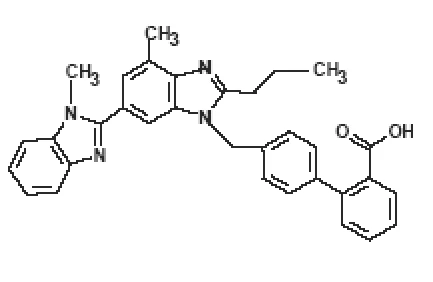
Chemical name: [1,1'-Biphenyl]-2-carboxylic acid,4'-[(1,4'- dimethyl-2'-propyl[2,6'-bi-1H- benzimidazol]-1'-yl)methyl]-(CAS)1
Molecular formula and molecular mass: C33H30N4O2, 514.63 g/mol
Structural formula:
Physicochemical properties:
Description:
Telmisartan is a white to off-white, odorless crystalline powder. It is practically insoluble in water and in the pH range of 3 to 9, sparingly soluble in strong acid (except HCL), and soluble in strong base.
Polymorphism:
Exhibits two different polymorphic modifications; Form A (thermodynamically more stable), Form B, and a third pseudo polymorphic form.
Melting Point: 269 ± 1°C (polymorphic Form A)
183 ± 1°C (polymorphic Form B)
Apparent partition coefficient: log papp = 3.2
14 CLINICAL TRIALS
14.1 Clinical Trials by Indication
Indication 1
Treatment of mild to moderate essential hypertension in adults
Table 6 - Summary of patient demographics for clinical trials in the treatment of mild to moderate essential hypertension in adults
| Study # | Study | Dosage, route of administration and duration | Study subjects (n=number) | Mean age (Range) | Gender |
|---|---|---|---|---|---|
| 502.202 | Randomized, Double blind, Placebo-controlled in mild to moderate essential hypertensive patients | Treatment doses: 40 mg, 80 mg, 120 mg (40 mg + 80 mg) once daily Route of Administration: Oral Duration of treatment: 4 weeks | 207 | 51.8 (30-68) | 62% male/ 38% female |
| 502.203 | Randomized, Double blind, Placebo-controlled in mild to moderate essential hypertensive patients | Treatment doses: 20 mg, 40 mg, 80 mg, 120 mg (40 mg + 80 mg), 160 mg (80 mg + 80 mg) once daily Route of Administration: Oral Duration of treatment: 4 weeks | 274 | 52.3 (28-72) | 69% male/ 31% female |
| 502.206 | Randomized, Double blind, Placebo-controlled in mild to moderate essential hypertensive patients | Treatment doses: 40 mg, 80 mg, 120 mg, 160 mg (80 mg + 80 mg) once daily Route of Administration: Oral Duration of treatment: 12 weeks | 440 | 54.1 (21-83) | 64% male/ 36% female |
*median age
T=telmisartan
Study Results
Table 7 - Results of study #502.202 in the treatment of mild to moderate essential hypertension in adults
| Primary Endpoint(s) | Associated value and statistical significance for Drug and placebo at specific dosages |
|---|---|
| Change from baseline in supine DBP at trough (24 hours post dosing) at last double-blind visit. | Intent-to-Treat Supine Blood Pressure Results Adjusted Mean Changes from Baseline (mmHg) Treatment N Systolic Diastolic Placebo 43 +3.5 -1.5 Telmisartan 40 mg 40 -10.0**** - 7.9*** Telmisarta8 80 mg 41 -15.5**** - 8.7*** Telmisartan 120 mg 41 -12.5**** - 9.8**** ***: p < 0.001 vs. Placebo ****: p < 0.0001 vs. Placebo |
BP = blood pressure
DBP = diastolic blood pressure
SBP = systolic blood pressure
Table 8 - Results of study #502.203 in the treatment of mild to moderate essential hypertension in adults
| Primary Endpoint(s) | Associated value and statistical significance for Drug and placebo at specific dosages |
|---|---|
Change from baseline in supine DBP at trough (24-hours post-dosing) at the last observation during the double-blind phase | Intent-to-Treat Analysis of the Change from Baseline in Supine Blood Pressure Adjusted1 Mean Change (S.E.) (mmHg) Treatment N Diastolic Systolic (baseline = 102.4) (baseline = 151.2) Placebo 46 -0.4 (1.2) 3.2 (1.9) Telmisartan 20 mg 47 -6.9 (1.1)**** -3.3 (1.8)* Telmisartan 40 mg 47 -8.6 (1.2)**** -7.8 (1.9)**** Telmisartan 80 mg 44 -10.5 (1.2)**** -9.8 (1.9)**** Telmisartan 120 mg 45 -8.9 (1.2)**** -9.1 (1.9)**** Telmisartan 160 mg 44 -9.4 (1.2)**** -11.7 (2.0)**** 1 Based on a model with the effects of baseline blood pressure, center, treatment and treatment by-center interaction. Legend for treatment comparison with placebo: |
*: p < 0.05 (two-sided test) ****: p < 0.0001 |
BP = blood pressure
DBP = diastolic blood pressure
SBP = systolic blood pressure
Table 9 - Results of study #502.206 in the treatment of mild to moderate essential hypertension in adults
| Primary Endpoint(s) | Associated value and statistical significance for Drug and placebo at specific dosages |
|---|---|
| Change from baseline in supine DBP and SBP at trough (24 hours post-dosing) at the last observation during the double-blind phase. | Intent-to-Treat Analysis of the Change from Baseline in Supine Blood Pressure at Trough Adjusted1 Mean Changes (S.E.) (mmHg) Treatment N Diastolic Systolic (baseline = 100.4) (baseline = 153.9) Placebo 74 -1.8 (0.9) +0.8 (1.6) Telmisartan 40 mg 72 -9.3 (0.9)**** -11.6 (1.6)**** Telmisartan 80 mg 71 -9.7 (0.9)**** -11.8 (1.6)**** Telmisartan 120 mg 72 -8.8 (0.9)**** -10.0 (1.5)**** Telmisartan 160 mg 73 -8.6 (0.9)**** -11.9 (1.5)**** 1 Based on a model with the effects of baseline blood pressure, center, treatment and treatment-by-center interaction ****: p < 0.0001 Note: Significance of the treatment-by-center interaction was 0.5789 and 0.1557 for diastolic and systolic, respectively. |
BP = blood pressure
DBP = diastolic blood pressure
SBP = systolic blood pressure
14.2 Comparative Bioavailability Studies
A randomized, two-way, single-dose, crossover comparative bioavailability study of TEVA-TELMISARTAN 80 mg tablets (Teva Canada Limited) with PrMICARDIS® 80 mg tablets [Boehringer Ingelheim (Canada) Ltd./Ltée] was conducted in healthy, adult, male subjects under fasting conditions. Comparative bioavailability data from 28 subjects that were included in the statistical analysis are presented in the following table:
SUMMARY TABLE OF THE COMPARATIVE BIOAVAILABILITY DATA
Telmisartan (1 x 80 mg) From measured data Geometric Mean Arithmetic Mean (CV %) | ||||
| Parameter | Test1 | Reference2 | % Ratio of Geometric Means | 90% Confidence Interval |
AUC0-72 (ng·h/mL) | 901.85 1125.05 (64.5) | 947.18 1161.10 (61.2) | 95.2 | 89.2 – 101.7 |
AUC∞ (ng·h/mL) | 1112.82 1359.80 (63.4) | 1224.23 1493.59 (64.0) | 90.9 | 84.3 – 98.0 |
Cmax (ng/mL) | 162.78 186.39 (56.1) | 171.51 206.13 (72.0) | 94.9 | 82.8– 108.8 |
Tmax3 (h) | 1.00 (0.50 – 2.00) | 0.67 (0.33 – 3.00) | ||
T½4 (h) | 21.41 (27.0) | 24.36 (49.7) | ||
1 Teva-Telmisartan 80 mg tablets (Teva Canada Limited).
2 Micardis® 80 mg tablets (Boehringer Ingelheim (Canada) Ltd./ Ltée.) were purchased in Canada.
3 Expressed as the median (range) only
4Expressed as the arithmetic mean (CV%) only
15 MICROBIOLOGY
No microbiological information is required for this drug product.
16 NON-CLINICAL TOXICOLOGY
General Toxicology:
In acute oral toxicity studies no deaths and no changes occurred in rats or dogs at 2000 mg/kg, the highest oral dose tested. The i.v. LD50 in rats was 150-200 mg/kg in males and 200-250 mg/kg in females.
Chronic oral toxicity of telmisartan was evaluated in studies following administration of doses < 500 mg/kg for < 26 weeks in rats, and < 1 year in dogs. Chronic intravenous toxicity was evaluated in studies of < 4 weeks at doses < 20 mg/kg in rats and < 50 mg/kg in dogs.
Repeated dose administration of telmisartan resulted in marked and long lasting hypotension, hyperplasia of juxtaglomerular apparatus and lesions of the gastrointestinal tract. Further effects were reduced body weight gain, heart weight and red blood cell indices, increased potassium and AST and ALT, the latter in the absence of morphological evidence of toxicity. No effect doses were not identified for decreased erythroid indices, increased BUN and juxtaglomerular hypertrophy/hyperplasia in rats and dogs.
Gastric and/or duodenal mucosal erosions and ulcers were seen in rats given ≥4 mg/kg orally or ≥2 mg/kg i.v. and in dogs given ≥40 mg/kg orally. Most lesions were small, focal or multifocal in distribution and limited to the mucosa and submucosa. Ulcers and erosions healed rapidly after drug withdrawal.
Hypertrophy of the juxtaglomerular apparatus and increased granularity of renin-producing cells of the juxtaglomerular apparatus, afferent arterioles and interlobular arteries of the kidney were observed in rats at doses of ≥1 mg/kg and in dogs at ≥5 mg/kg. In rats and dogs subjected to long term treatment with telmisartan, plasma renin activity returned to normal levels after 26 to 52 weeks of treatment. Reversible slight to mild increases in serum potassium levels occurred in rats at oral doses of ≥4 mg/kg. In dogs, non-progressive increases in serum potassium levels were noted at 50 and 500 mg/kg in the 52 week oral study. Minimal to mild, reversible increases in blood urea nitrogen and creatinine were evident at oral doses of ≥4 mg/kg in rats and ≥5 mg/kg in dogs.
Slight to mild reversible reductions of red blood cell count, hematocrit, and/or hemoglobin were observed after repeated oral dosing with telmisartan ≥50 mg/kg in the rat and ≥5 mg/kg in the dog.
Carcinogenicity:
The carcinogenic potential of telmisartan was assessed in 2-year feeding studies in mice at doses of 10, 100 and 1000 mg/kg and in rats at 3, 15 and 100 mg/kg. Drug administration did not affect survival time in either study and also tumor mortality was not increased. Incidence and time to appearance of palpable masses showed no treatment influence in mice and rats. No increases were observed in overall tumor incidence, incidence of benign and malignant tumors or tumor multiplicity.
Genotoxicity:
Telmisartan was not mutagenic at a concentration range of 10 to 2500 ug/plate in the bacterial reverse mutation assay, with or without metabolic activation. No potential for chromosomal damage was found in the mouse micronucleus test at a dose range of 250 to 1000 mg/kg. No forward mutations at the HPRT locus in V79 cells were induced at a concentration range of 10 to 100 ug/ml, with or without metabolic activation. No chromosomal aberrations were induced in human peripheral lymphocytes in vitro at concentrations ≤100 ug/ml without metabolic activation and concentrations ≤200 ug/ml with metabolic activation.
Reproductive and Developmental Toxicology:
Reproduction
In studies on fertility and reproductive performance in male and female rats no effect on mating performance, reproductive organs, or fertility in either sex, or on litter parameters was observed with telmisartan doses of 5-100 mg/kg. No teratogenic or embryotoxic potential in rats was observed at doses < 50 mg/kg administered from day 7 through day 16 of pregnancy. However, at toxic dose levels, non-clinical studies indicated some hazardous potential of telmisartan to fetal development (increased number of late resorptions in rabbits) and to the postnatal development of the offspring: lower body weight, delayed eye opening, and higher mortality.
No effects of telmisartan on male or female fertility were observed.
Telmisartan was detectable in the placenta, fetus and amniotic fluid of rats after single oral doses of 1 mg/kg.
17 SUPPORTING PRODUCT MONOGRAPHS
- 1. PrMicardis (Telmisartan tablets, 40 mg and 80 mg), submission control #264047, Product Monograph, Boehringer Ingelheim (Canada) Ltd. (October 4, 2022)