


Product Monograph - Apo-Cefadroxil
INDICATIONS AND CLINICAL USE
APO-CEFADROXIL (cefadroxil) is indicated for the treatment of the following infections when caused by susceptible strains of the organisms indicated:
- Acute uncomplicated urinary tract infections when caused by E. coli, Klebsiella species and some strains of Proteus mirabilis.
- Skin and skin structure infections caused by Staphylococcus aureus and/or Group A ß -hemolytic streptococci.
- Acute pharyngitis-tonsillitis, when caused by Group A ß -hemolytic streptococci.
- Lower respiratory tract infections, including pneumonia, caused by S. pneumoniae (D. pneumonia), S. Pyogenes (Group A ß -hemolytic streptococci), K. pneumoniae and S. aureus.
Prior to and during therapy, appropriate bacteriological studies should be performed in order to identify and determine the susceptibility of the causative organism(s).
To reduce the development of drug-resistant bacteria and maintain the effectiveness of APO-CEFADROXIL and other antibacterial drugs, APO-CEFADROXIL should be used only to treat infections that are proven or strongly suspected to be caused by susceptible bacteria.
CONTRAINDICATIONS
APO-CEFADROXIL (cefadroxil) is contraindicated in patients with a known hypersensitivity to the cephalosporin group of antibiotics.
WARNINGS
Cephalosporin antibiotics (including APO-CEFADROXIL (cefadroxil)) should be administered with great caution to patients with known hypersensitivity to the penicillins. Clinical and laboratory evidence exists of cross-allergenicity between the penicillin and cephalosporin groups of antibiotics. There have been reports of patients who have had reactions to both classes of antibiotics (including fatal anaphylactoid reactions after parenteral administration).
APO-CEFADROXIL should be administered with caution and then only when absolutely necessary to any patient who has a history of some form of allergy, particularly to drugs.
The normal flora of the colon is altered by treatment with broad spectrum antibiotics and this may permit overgrowth of clostridia. Studies indicate that one primary cause of antibiotic-associated colitis is a toxin produced by Clostridium difficile.
With the use of cephalosporins and other broad spectrum antibiotics, pseudomembranous colitis has been reported. It is therefore important to consider its diagnosis in patients who develop diarrhea in association with antibiotic use.
Mild cases of colitis may respond to drug discontinuance alone. Moderate to severe cases should be managed with fluid, electrolyte and protein supplementation as indicated. When the colitis is not relieved by drug discontinuance or when it is severe, oral vancomycin is the treatment of choice for antibiotic-associated pseudomembranous colitis. Other causes of colitis should also be considered.
Severe Cutaneous Adverse Reactions
Severe cutaneous adverse reactions (SCAR) such as acute generalized exanthematous pustulosis (AGEP), drug reaction with eosinophilia and systemic symptoms (DRESS), Stevens-Johnson syndrome (SJS), and toxic epidermal necrolysis (TEN) have been reported in association with beta-lactam treatment, When SCAR is suspected, APO-CEFADROXIL should be discontinued and appropriate therapy and/or measures should be taken.
Susceptibility/Resistance:
Development of Drug-Resistant Bacteria
Prescribing APO-CEFADROXIL in the absence of a proven or strongly suspected bacterial infection is unlikely to provide benefit to the patient and risks the development of resistant drug-resistant bacteria.
Potential for Microbial Overgrowth
Prolonged use of APO-CEFADROXIL can result in the overgrowth of non–susceptible organisms. Careful observation of the patient is essential. If superinfection occurs during therapy, the administration of APO-CEFADROXIL should be discontinued and appropriate measures taken. An alternate therapy should be instituted if an organism becomes resistant during treatment with APO-CEFADROXIL
PRECAUTIONS
A MINIMUM OF 10 DAYS TREATMENT IS RECOMMENDED FOR INFECTIONS CAUSED BY GROUP A ß–HEMOLYTIC STREPTOCOCCI.
Patients should be carefully monitored to detect the development of any adverse effect or other manifestations of drug idiosyncrasy. If an allergic reaction to APO-CEFADROXIL (cefadroxil) occurs, its administration should be discontinued and the patient treated with the usual agents (e.g., epinephrine, other pressor amines, or corticosteroids).
APO-CEFADROXIL should be used with caution in the presence of markedly impaired renal function (i.e., a creatinine clearance rate of less than 0.85 mL/sec/1.73 m2 (50 mL/min/1.73 m2), (See DOSAGE AND ADMINISTRATION). In patients with known or suspected renal impairment careful clinical evaluation and appropriate laboratory studies should be performed prior to and during therapy, since cefadroxil can accumulate in serum and tissues.
If APO-CEFADROXIL is to be used for long-term therapy, hematologic, renal and hepatic functions should be monitored periodically.
During treatment with the cephalosporin antibiotics, positive direct Coombs tests have been reported. In hematologic studies or in transfusion cross-matching procedures, when antiglobulin tests are performed on the minor side or in Coombs testing of newborns whose mothers have received cephalosporin antibiotics before parturition, it should be noted that a positive Coombs test may be due to the drug.
During treatment with cefadroxil, a false positive reaction for glucose in the urine may occur with Benedict’s or Fehling’s solution or with Clinitest tablets, but not with enzyme-based tests such as Clinistix or Tes-Tape.
Use in Pregnancy:
The safety of cefadroxil in the treatment of infections during pregnancy has not been established. Therefore, during pregnancy the administration of APO-CEFADROXIL is not recommended. If in the opinion of the attending physician, the administration of APO-CEFADROXIL is necessary, its use requires that the anticipated benefits be weighed against the possible hazards to the fetus.
Nursing Mothers:
Cephalosporin antibiotics are excreted in human breast milk and therefore, would be ingested by the neonate during breast feeding. Nursing mothers receiving APO-CEFADROXIL should discontinue breast-feeding.
ADVERSE REACTIONS
Adverse reactions observed during use of cefadroxil include:
Gastrointestinal: The most frequently observed have been nausea and vomiting. The incidence and severity are dose dependent and the latter has been severe enough to warrant cessation of therapy, but infrequently.
Other reactions reported were abdominal cramps, gastric upset, heartburn, gas and diarrhea.
Hypersensitivity: Rash, swollen and running eyes, urticaria, eosinophilia, angioedema and positive direct Coombs test.
Central Nervous System:
Dizziness, weakness, drowsiness, vertigo, nervousness and headaches.
Miscellaneous: Vaginitis, monilial vaginitis, vaginal itching, cramps in side and legs, transient neutropenia and elevations in BUN, alkaline phosphatase and AST (SGOT).
These adverse effects were seen during clinical trials in 5.8% of patients.
SYMPTOMS AND TREATMENT OF OVERDOSAGE
There is no specific antidote for overdosage with APO-CEFADROXIL. Therefore, treatment should be symptomatic.
DOSAGE AND ADMINISTRATION
APO-CEFADROXIL (cefadroxil) is administered orally and may be taken without regard to meals.
The incidence and severity of gastrointestinal complaints is dose dependent. Administration with food may be helpful to diminish potential intestinal complaints.
A MINIMUM OF 10 DAYS TREATMENT IS RECOMMENDED FOR INFECTIONS CAUSED BY GROUP A ß–HEMOLYTIC STREPTOCOCCI.
ADULTS:
Normal Renal Function: The recommended dose is 1 to 2 g per day.
Urinary Tract Infections:
The recommended daily dose is 1 to 2 g. This may be given as a single dose at bedtime or divided into 500 mg to 1 g doses for twice a day administration (every 12 hours). The usual duration of therapy is 10 days. While shorter or longer courses may be appropriate for some patients, cefadroxil should be administered for a sufficient period of time to render the urine sterile. The sterility of the urine should be re-evaluated 2 to 4 weeks after cessation of therapy.
Acute Pharyngitis and Tonsillitis:
The recommended dose is 1 g per day in single (qd) or divided doses (bid). Treatment should be for a minimum of 10 days and continued for a minimum of 48 to 72 hours beyond the time that the patient becomes asymptomatic or evidence of bacterial eradication has been obtained.
Lower Respiratory Tract Infections: The recommended dose is 500 mg to 1 g two times per day (every 12 hours).
Skin and Skin Structure Infections: 1 g daily in a single dose.
Impaired Renal Function: The dosage of APO-CEFADROXIL should be adjusted according to creatinine clearance rates to prevent drug accumulation.
In adults the dose is 1 g for a patient with normal renal function (see above) and the maintenance dose (based on the creatinine clearance rate) is 500 mg at the time intervals listed below:
| Creatinine Clearance | Dose Interval (hours) |
| (mL/sec/1.73 m2) | (mL/min/1.73 m2) |
0 - 0.17 0.17 - 0.43 0.43 - 0.85 | |
0 - 10 10 - 25 25 - 50 | 36 24 12 |
Patients with creatinine clearance rates greater than 0.85 mL/sec/1.73 m2 (50 mL/min/1.73 m2) may be dosed as for those patients with normal renal function.
PHARMACEUTICAL INFORMATION
Drug Substance
Common Name: Cefadroxil
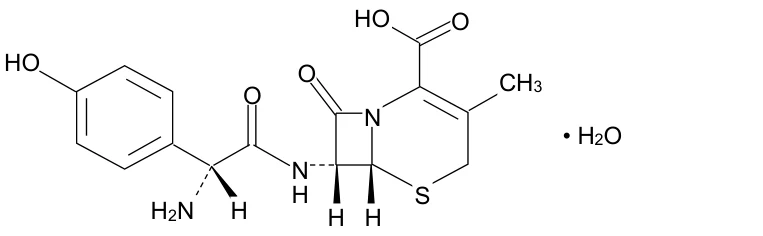
Chemical Names: 1) 5-Thia-1-azabicyclo[4.2.0]-oct-2-ene-2-carboxylic acid, 7-[[amino(4-hydroxyphenyl)-acetyl]amino]-3-methyl-8-oxo-, monohydrate, [6R-[6α, 7β(R*)]]-
- 2) (6R,7R)-7-[(R)-2-Amino-2-(p-hydroxyphenyl)acetamido]-3-methyl-8-oxo-5-thia-1-azabicyclo[4.2.0]oct-2-ene-2- carboxylic acid monohydrate.
Structural Formula:
Molecular Formula: C16H17N3O5S•H2O
Molecular Weight: 381.40 g/mol
Description: A white or off-white crystalline powder. Slightly soluble in water; practically insoluble in alcohol, in chloroform and in ether.
Composition:
APO-CEFADROXIL (cefadroxil) capsules contain cefadroxil monohydrate equivalent to 500 mg cefadroxil, along with the following non-medicinal ingredients: colloidal silicon dioxide, croscarmellose sodium, stearic acid, talc.
The capsule shell contains the following non-medicinal ingredients: FD&C blue #1, FD&C red #40, gelatin, grey ink and titanium dioxide.
The edible grey ink on the capsule shells contains the non–medicinal ingredients: ammonium hydroxide, black iron oxide, shellac, propylene glycol, potassium hydroxide, and titanium dioxide.
Stability and Storage Recommendations
Store at room temperature (15°C to 30°C), in tightly closed containers.
AVAILABILITY OF DOSAGE FORMS
APO-CEFADROXIL (cefadroxil) is available as a white opaque body, maroon opaque cap, hard gelatin capsule imprinted 'APO 500' with off-white powder fill, containing 500 mg of cefadroxil (as monohydrate). Available in bottles of 100 capsules.
MICROBIOLOGY
The antibacterial activity of cefadroxil was determined in vitro on 555 strains of gram-negative and gram-positive organisms. These results are outlined in Table I in terms of cumulative percentage as determined by the agar dilution method. Many strains of H. influenzae and most strains of enterococci species (Strep. faecalis and Strep. faecium), Enterobacter species, indole-positive Proteus species, Providencia stuartii and Serratia species are resistant to cefadroxil. Cefadroxil has no activity against Pseudomonas and Herella species.
| Table 1 | ||||||||||||
| Cumulative % of Strains Inhibited at Indicated Concentrations (mcg/mL) | ||||||||||||
| Organism (No. of Strains) | 0.13 | 0.25 | 0.50 | 1 | 2 | 4 | 8 | 16 | 32 | 63 | 125 | 250 |
| GRAM-POSITIVE | ||||||||||||
| Str. Pyogenes (28) | 89.2 | 100 | -- | -- | -- | -- | -- | -- | -- | -- | -- | -- |
| Str. Pneumoniae (20) | -- | 5 | 20 | 40 | 95 | 100 | -- | -- | -- | -- | -- | -- |
| S. aureus (17) (non- penicillinase producing) | -- | -- | -- | 11.7 | 100 | -- | -- | -- | -- | -- | -- | -- |
| S. aureus (10) (penicillinase producing) | -- | -- | -- | -- | 31.4 | 85.6 | 100 | -- | -- | -- | -- | -- |
| Str. Faecalis (14) | -- | -- | -- | -- | -- | -- | -- | 7.1 | 7.1 | 100 | -- | -- |
| GRAM-NEGATIVE | ||||||||||||
| N. gonorrhoeae (16) | -- | -- | -- | 12.5 | 18.7 | 49.9 | 81.1 | 100 | -- | -- | -- | -- |
| Shigella sp. (12) | -- | -- | -- | -- | -- | 8.3 | 74.9 | 100 | -- | -- | -- | -- |
| Salmonella (32) | -- | -- | -- | -- | -- | -- | 62.5 | 96.5 | 100 | -- | -- | -- |
| K. pneumoniae (62) | -- | -- | -- | -- | -- | -- | 56.4 | 90.2 | 96.6 | 98.2 | 100 | -- |
| P. mirabilis (51) | -- | -- | -- | -- | -- | -- | 3.90 | 64.6 | 97.9 | 100 | -- | -- |
| E. coli (96) | -- | -- | -- | -- | -- | 6.2 | 54.1 | 90.5 | 92.5 | 96.6 | 96.6 | 96.6 |
| H. influenzae (24) | -- | -- | -- | -- | -- | -- | -- | 20.9 | 95.9 | 100 | -- | -- |
| P. stuartii (31) | -- | -- | -- | -- | -- | -- | 3.2 | 12.8 | 38.6 | 67.0 | 96.6 | 100 |
| P. vulgaris (4) | -- | -- | -- | -- | -- | -- | -- | 25.0 | 50.0 | 50.0 | 75.0 | 100 |
In Vivo Studies
Male Swiss-Webster mice were fasted overnight and then challenged by the intraperitoneal injection of sufficient pathogens to kill untreated animals within 72 hours. The challenge organisms included Str. pyogenes, Str. pneumoniae, S. aureus, E. coli, K. pneumoniae and P. mirabilis. Cefadroxil was given orally at the time of infection and repeated 2 hours later for S. aureus infections. In the case of the other organisms, cefadroxil was given orally at 1 and 3.5 hours after injection of the bacteria. The results are summarized in Table II.
| Table II Protective Activity of Apo-Cefadroxil in Mice | ||
| Organism (No. of Strains) | Challenge (Mean # of organisms) | Protective Dose50 (mg/kg) |
Str. pyogenes (3) Str. pneumoniae (3) S. aureus
E. coli (2) K. pneumoniae (1) P. mirabilis (1) | 6.7 x 10⁶ 2.0 x 10⁵ 1.5 x 10⁸ 1.0 x 10⁹ 6.0 x 10⁴ 4.0 x 10⁴ 3.0 x 10⁶ | 1.23 22.0 2.7 18.5 14.0 85.0 64.0 |
Male Swiss-Webster mice were challenged by injecting P. mirabilis into the right hind leg muscle only (0.2 mL of a suspension containing 108 organisms). Immediately following the bacterial challenge, cefadroxil was administered either orally or subcutaneously, and thigh enlargement was measured 24 hours later. When administered by the oral route, cefadroxil had an ED50 of 85 mg/kg; the ED50 was 80 mg/kg by the subcutaneous route.
ß Lactamase Susceptibility
The susceptibility of cefadroxil to hydrolysis by cell-free extracts containing different β-lactamases is shown in Table III.
Table III Relative Susceptibility to Hydrolysis by Beta-Lactamases | ||
| Enzyme | Organism (Source of Enzyme) | Relative Rate of Hydrolysis* |
| Class | Type | |
I II III IV -- | a b a a a b -- | Enterobacter cloacae Escherichia coli Proteus mirabilis E. coli Klebsiella pneumoniae K. pneumoniae Staphylococcus aureus (A9606) | 595 48 <1 <1 <1 2 <1 |
| *Benzyl penicillin = 100 | |||
PHARMACOLOGY
Animal:
After oral administration of cefadroxil at 50 mg/kg to four groups of rats (sampling was performed at 0.5, 1, 2 and 4 hours), maximum concentrations were reached at 0.5 hours in the liver (18.9 mcg/g), kidney (136 mcg/g) and muscle (4.88 mcg/g) and at 1 hour in the lungs (5.63 mcg/g), spleen (3.88 mcg/g) and heart (2.63 mcg/g). In the brain insignificant concentrations were seen (0.83 mcg/g).
Human:
Following oral administration, cefadroxil is well absorbed, with 93% of a 500 mg dose being recovered unchanged in the urine after 24 hours. The presence of food does not inhibit the absorption of cefadroxil from the gastrointestinal tract.
Approximately 20% of the dose of cefadroxil is bound to the serum proteins. The apparent volume of distribution is 14 to 17% of body weight.
Following single oral doses the
total urinary excretion of cefadroxil has been determined in a number of experiments. The results are summarized in Table IV.
| Table IV | ||||
| Dose of Apo-Cefadroxil (mg) | Cumulative Urinary Excretion (mg) | |||
| 0-3 hr. | 3-6 hr. | 6-12 hr. | Total 0-12 hr. | |
500 1000 | 290 455 | 115 264 | 44 111 | 449 830 |
The following table (Table V) shows various pharmacokinetic values for 500, 1000 and 2000 mg doses.
Table V Pharmacokinetic Parameters in Normal Human Volunteers | |||
| Parameter | Dose of Apo-Cefadroxil (mg) | ||
| 500 | 1000 | 2000 | |
Time to peak concentration: Tmax (hr) Peak concentration: Cmax (mcg/mL) Area under the curve: AUC (mcg/hr/mL) Half-life (hr) | 1.28 14.8 45.3 1.34 | 2.00 23.63 94.20 1.51 | 2.00 32.7 167.42 -- |
Lower Respiratory Tissue Levels
Seven patients received cefadroxil as a 500 mg single dose. At 12 hours, the pleural exudate contained cefadroxil at a level of 2.1 mcg/mL compared to 0.8 mcg/mL in the serum. The pleural fluid concentration after 8 hours and 12 hours following the administered dose is shown in Table VI.
| Table VI Pleural Fluid Concentration Following a Single 500 mg Oral Dose of Apo-Cefadroxil | ||
| No. of Cases | Time (hrs) Post-Dose | Apo-Cefadroxil Conc. |
| Pleural Fluid (mcg/mL) | Serum (mcg/mL) | |
| 7 | 8 12 | |
3.6 2.1 | 3.4 0.8 | |
In another study, following a single 1 g dose of cefadroxil, the mean pleural exudate and mean serum levels demonstrated a similar pattern 3 to 5 hours post administration i.e., the pleural fluid concentration is higher than the serum concentration (Table VII).
| Table VII Measurement of Apo-Cefadroxil in Respiratory Tissues and Fluids Following a Single 1 g Dose | ||||||||||
| Fluid or Tissue | No. of Cases | Time (hrs) Post-Dose | Apo-Cefadroxil Conc. | |||||||
| Fluids (mcg/mL) Tissue (mcg/g) | Serum (mcg/mL) | |||||||||
Sputum Pleural Exudate Lungs | 9 4 22 | 3-4 3-5 2-4 | 1.3 11.4 7.4 | Not done 9.4 11.5 | ||||||
Results from Table VI and Table VII indicate that tissue and fluid compartments act as a depot for cefadroxil after serum concentrations have diminished.
Renal Impairment
Twenty fasting patients with varying degrees of renal impairment as determined by creatinine clearance (from anuric to 1.76 mL/sec/1.73 m2 (105.7 mL/min/1.73 m2)) were administered single 1000 mg doses of cefadroxil. Blood and urinary concentrations of cefadroxil were monitored for up to 48 hours after drug administration. The results of this study show that as creatinine clearance decreases the elimination rate constant also decreases but the half-life increases.
In another study, eight fasting patients with varying degrees of severe renal impairment were administered single 1000 mg doses of cefadroxil. Creatinine clearances varied from 0.004 to 0.54 mL/ sec/1.73 m2 (0.24 to 32.35 mL/min/1.73 m2). Blood and urinary concentrations of cefadroxil were monitored for up to 48 hours after drug administration. A linear inverse correlation between the half-life of cefadroxil and creatinine clearance was observed.
TOXICOLOGY
Acute Toxicity:
The LD50 values (See Table VIII) were determined for cefadroxil in mice and rats. The observation period after the single injection was 7 days.
| Table VIII | |||||
| Species | Age | Sex | No. of Animals | Route of Admin. | LD50 (mg/kg) |
Mouse* Mouse* Mouse Mouse Rat Rat** Rat** Rat** Rat** | Adult Adult Adult Adult 24-48 hrs. Adult Adult Adult Adult | M&F M&F M&F M&F M&F M&F M&F M&F M&F | 80 80 40 60 50 60 60 40 40 | p.o. i.p. i.v. s.c. p.o. p.o. i.p. i.v. s.c. | >7000 >7000 >1500 >5000 >8000 >8000 >6000 >1000 >5000 |
| *Swiss-Webster mice; **Sprague-Dawley rats. | |||||
There were no deaths observed in mice or in young rats. In adult rats, one death occurred following an intraperitoneal dose of 6000 mg/kg and 3 deaths following an intravenous dose of 1000 mg/kg. At high doses, ataxia, decreased activity and prostration were observed.
Two adult beagle dogs (one male and one female) received cefadroxil orally at a dose of 500 mg/kg. One of the animals exhibited emesis and slight drowsiness while the other exhibited moderate drowsiness and had a slight increase in the heart rate.
Subacute Toxicity:
Four groups of 30 Sprague–Dawley rats (15 males and 15 females) received cefadroxil administered orally at doses of 0, 200, 400 or 600 mg/kg/day for 14 weeks. In males dosed at 400 and 600 mg/kg, liver weights were increased by 11% and the combined relative weights of seminal vesicles and prostate glands were decreased by 16 to 21% for all treated groups.
Adrenal weights of females in the 400 and 600 mg/kg groups were decreased by 12 to 16%. At autopsy no histological abnormalities were observed.
Three groups of 10 male and 10 female weanling rats were administered cefadroxil, by gavage, at doses of 0, 2000 or 4000 mg/kg/day for 4 weeks. An increase in SGPT (112%) in half of the animals in the 2 treated groups; a slight decrease in serum protein levels in both treated groups; and a decrease in serum glucose values in the high dose groups were observed. At necropsy increased cecum size (1.5 to 3 fold) and decreased heart (10.5 to 15.9%), liver (4.9 to 6.1%) and spleen (10.8 to 25.7%) weights were seen, although no histological changes in the organs were noted.
Apo-Cefadroxil was administered orally at doses of 0, 100, 200 or 400 mg/kg/day to four groups of young beagle dogs (3 males and 3 females per group) for a period of 13 weeks. By the end of the study, the animals in the 200 and 400 mg/kg/dose groups had a marginally lower food intake (10 to 18%) and body weight (6.8%). At autopsy, no histological abnormalities were observed. However, in the high dose group, the spleen and gonad weights in female dogs were elevated (78% and 88%, respectively) while in the 200 mg/kg dose group, the relative adrenal weights were increased by 45%. At all drug dose levels, there was an increased incidence of emesis (dose related) and proteinuria.
Chronic Toxicity:
Four groups of 30 Charles River rats (15 males and 15 females) received cefadroxil administered orally (admixed in the feed) at doses of 0, 100, 316 or 1000 mg/kg/day for a period of 26 weeks. There were no deaths, however, significantly increased (p<0.05) kidney weights in the middle (11%) and high (16%) dose group males were observed.
Cefadroxil was administered to four groups of beagle dogs (3 males and 3 females) at doses of 0, 200, 400 or 600 mg/kg/day for 26 weeks (once a day for the first week, then twice daily for the remainder of the experiment). A decrease was seen in weight gain (24.6%) in the middle dose female group and in all treated groups a slight decrease in total serum proteins and albumin levels were observed.
Renal Toxicity:
Male mice were pretreated with intraperitoneal injections of furosemide (20 or 40 mg/kg) or 0.9% saline. Fifteen minutes later they were injected intraperitoneally with 0.9% saline or doses of 1396, 2792 or 5584 mg/kg of cefadroxil. Forty–eight hours following the injections, urine evaluation (pH, glucose and urine protein) and histological examination of kidneys were conducted. A slight weight loss in the high dose cefadroxil group pretreated with furosemide was noted. No evidence of renal injury was observed.
Fertility and Reproduction Study:
Cefadroxil administered orally at doses of 0, 200 or 400 mg/kg/day during gestation to three groups of 40 Sprague-Dawley rats per group (15 males and 25 females) did not modify pregnancy nor alter the percentage of resorptions. The males were dosed for 77 days prior to mating and the females for 14 days prior to mating. The percentage of stillbirths in each group was 3.3, 1.8 and 1.3 for the 400, 200 and 0 mg/kg dose groups, respectively.
Teratology Studies:
No discernible effect on nidation or on maternal or fetal survival was found after the oral administration of cefadroxil at doses of 0, 100, 250 or 500 mg/kg/day given b.i.d. to pregnant Sprague-Dawley rats and Swiss mice on gestation day 6 through day 15.
Perinatal - Postnatal Study:
Pregnant Sprague–Dawley rats received cefadroxil administered in doses of 0, 250 or 500 mg/kg/day given b.i.d. from day 14 of gestation to post-partum day 21. There were no adverse drug related effects on fetal birth weight, survival or growth observed.
BIBLIOGRAPHY
- 1. Ballantyne FN. Comparative efficacy of cefadroxil and cefaclor in the treatment of skin and soft-tissue infections. Clin Ther 1985; 7: 487-91.
- 2. Beisel L. Efficacy and safety of cefadroxil in bacterial pharyngitis. J Int Med Res 1980; 8(Suppl. 1): 87-93.
- 3. Bernhardt LL. Tissue and fluid concentrations ofcefadroxil monohydrate. J Int Med Res 1980; 8(Suppl. 1): 58-63.
- 4. Blaser MJ, Klaus BD, Jacobson JA, et al. Comparison ofcefadroxil and cephalexin in the treatment of community-acquired pneumonia. Antimicrob Agents Chemother 1983; 24: 163-7.
- 5. Buck RE, Price KE. Cefadroxil, a new broad-spectrum cephalosporin. Antimicrob Agents Chemother 1977; 11(2): 324-330.
- 6. Castro M. A comparative study of cefadroxil and co-trimoxazole in patients with lower respiratory tract infections. Drugs 1986; 32 (Suppl. 3): 50-6.
- 7. Cutler RE, Blair AD, Kelly MR. Cefadroxil kinetics in patients with renal insufficiency. Clin Pharmacol Ther 1979; 25: 514-21.
- 8. Gerber MA. A comparison of cefadroxil and penicillin V in the treatment of streptococcal pharyngitis in children. Drugs 1986; 32 (Suppl. 3): 29-32
- 9. . Hartstein AI, Patrick KE, Jones SR, Miller MJ, Bryant RE. Comparison of pharmacological and antimicrobial properties of cefadroxil and cephalexin. Antimicrob Agents Chemother 1977; 12(1): 93-97.
- 10. Hickey TE, Botta Jr JA, Clemento Jr AJ. Cefadroxil - a new antibiotic with low toxicity potential. Curr Ther Res 1978; 23(5): 608-616.
- 11. Jolly ER, Henness DM, Richards Jr D. Human safety, tolerance and pharmacokinetic studies of cefadroxil - a new cephalosporin antibiotic for oral administration. Curr Ther Res 1977; 22(5): 727-736.
- 12. Kafetzis, DA, Siafas CA, Georgakopoulos PA, Papadatos CJ. Passage of cephalosporins and amoxicillin into the breast milk. Acta Paediatr Scand 1981; 70: 285-8.
- 13. Lode H, Stahlmann R, Koeppe P. Comparative pharmacokinetics of cephalexin, cefaclor, cefadroxil and CGP 9000. Antimicrob Agents Chemother 1979; 16(1): 1-6.
- 14. Nightingale CH. Penetration and concentration of cefadroxil in sputum, lung and pleural fluid. Drugs 1986; 32 (Suppl 3): 17-20.
- 15. Pfeffer M, Jackson A, Ximenes J, Perche de Menezes J. Comparative human oral clinical pharmacology of cefadroxil, cephalexin and cephradine. Antimicrob Agents Chemother 1977; 11(2): 331-338.
- 16. Quintiliani R. Efficacy of a twice-daily regimen of cefadroxil in the treatment of respiratory tract infections. Drugs 1986; 32 (Suppl. 3): 43-9.
- 17. Sandberg T, Henning C, Iwarson S, Paulsen O. Cefadroxil once daily for three or seven days versus amoxicillin for seven days in uncomplicated urinary tract infections in women. Scand J Infect Dis 1985; 17: 83-7.
- 18. Santella PJ, Berman E. Cefadroxil - sustained antimicrobial effect in bacterial infections. A review of clinical studies. Curr Ther Res 1978; 23(2): 148-158.
- 19. Santella PJ, Tanrisever B, Berman E. An overview of results of world–wide clinical trials with cefadroxil. J Int Med Res 1978; 6: 441-451.
- 20. Tanrisever B, Santella PJ. Cefadroxil. A review of its antibacterial, pharmacokinetic and therapeutic properties in comparison with cephalexin and cephradine. Drugs 1986; 32 (Suppl. 3): 1-16.
- 21. Tzias V, Dontas AS, Petrikkos G, et al. Three-day antibiotic therapy in bacteriuria of old age. J Antimicrob Chemother 1990; 26: 705-11.
- 22. Wilson JP, Koren JF, Daniel RC, Chapman SW. Cefadroxil-induced ampicillinexacerbated pemphigus vulgaris: case report and review of the literature. Drug Intel Clin Pharm 1986; 20: 219-23.
- 23. ZeLuff B, Catchpole M, Lowe P, et al. Cefadroxil compared with cefaclor in the treatment of streptococcal pneumonia in adults. Drugs 1986; 32(Suppl.3): 39-42.
- 24. AHFS Drug Information 1995, American Society of Hospital Pharmacists Inc., Bethesda, MD, U.S.A., 98-106.
- 25. Martindale, The Extra Pharmacopoeia, 30th Edition. The Royal Pharmaceutical Society of Great Britain. London, England, 1993, p 127.
- 26. Physicians' Desk Reference, 48th Edition, 1994, N.J. U.S.A., pp. 1799-800.
- 27. Product Monograph for Duricef (Cefadroxil). Bristol Laboratories of Canada, Ottawa, ON. August 7, 1987.
- 28. Product Monograph TEVA-CEFADROXIL, Teva Canada Limited 30 Novopharm Court Toronto, Ontario Canada, M1B 2K9 Date of Revision: May 20, 2020 Control Number: 234939.