


Product Monograph - Apo-Chlorthalidone
RECENT MAJOR LABEL CHANGES
| 2 CONTRAINDICATIONS | 03/2022 |
|---|---|
| 7 WARNINGS AND PRECAUTIONS | 03/2022 |
TABLE OF CONTENTS
Sections or subsections that are not applicable at the time of authorization are not listed.
RECENT MAJOR LABEL CHANGES ........................................................................................... 2
TABLE OF CONTENTS ............................................................................................................. 2
PART I: HEALTH PROFESSIONAL INFORMATION ..................................................................... 4
1 INDICATIONS .............................................................................................................. 4
1.1 Pediatrics ................................................................................................................... 4
1.2 Geriatrics ................................................................................................................... 4
2 CONTRAINDICATIONS ................................................................................................. 4
4 DOSAGE AND ADMINISTRATION ................................................................................. 5
4.1 Dosing Considerations .............................................................................................. 5
4.2 Recommended Dose and Dosage Adjustment ......................................................... 5
4.5 Missed Dose .............................................................................................................. 5
5 OVERDOSAGE ............................................................................................................. 5
6 DOSAGE FORMS, STRENGTHS, COMPOSITION AND PACKAGING ................................. 6
7 WARNINGS AND PRECAUTIONS .................................................................................. 6
7.1 Special Populations ................................................................................................. 10
7.1.1 Pregnant Women .............................................................................................. 10
7.1.2 Breast-feeding ................................................................................................... 11
7.1.3 Pediatrics ........................................................................................................... 11
7.1.4 Geriatrics ........................................................................................................... 11
8 ADVERSE REACTIONS................................................................................................ 11
8.1 Adverse Reaction Overview .................................................................................... 11
8.5 Post-Market Adverse Reactions .............................................................................. 13
9 DRUG INTERACTIONS ............................................................................................... 13
9.3 Drug-Behavioural Interactions ................................................................................ 13
9.4 Drug-Drug Interactions ........................................................................................... 13
9.5 Drug-Food Interactions ........................................................................................... 16
9.6 Drug-Herb Interactions ........................................................................................... 17
9.7 Drug-Laboratory Test Interactions.......................................................................... 17
10 CLINICAL PHARMACOLOGY ....................................................................................... 17
10.1 Mechanism of Action ........................................................................................ 17
10.2 Pharmacodynamics ........................................................................................... 17
10.3 Pharmacokinetics .............................................................................................. 18
11 STORAGE, STABILITY AND DISPOSAL ......................................................................... 19
12 SPECIAL HANDLING INSTRUCTIONS ........................................................................... 19
PART II: SCIENTIFIC INFORMATION ...................................................................................... 21
13 PHARMACEUTICAL INFORMATION ........................................................................... 21
14 CLINICAL TRIALS ....................................................................................................... 22
15 MICROBIOLOGY ....................................................................................................... 22
16 NON-CLINICAL TOXICOLOGY ..................................................................................... 22
17 SUPPORTING PRODUCT MONOGRAPHS .................................................................... 22
PATIENT MEDICATION INFORMATION ................................................................................. 23
PART I: HEALTH PROFESSIONAL INFORMATION
1 INDICATIONS
APO-CHLORTHALIDONE (chlorthalidone) is indicated for:
- Treatment of hypertension. It may be used alone or in association with other antihypertensive agents.
- Adjunctive therapy of edema associated with: renal disease, congestive heart failure of mild to moderate degree (functional class II, III), glomerular filtration rate greater than 30 mL/min; ascites due to cirrhosis of the liver in stable patients; estrogen therapy; corticosteroid therapy.
1.1 Pediatrics
Pediatrics (<18 years of age): No data are available to Health Canada; therefore, Health Canada has not authorized an indication for pediatric use.
1.2 Geriatrics
Geriatrics (>65 years of age): Evidence from clinical studies and experience suggests that use in the geriatric population is associated with differences in safety or effectiveness. See 4.2 Recommended Dose and Dosage Adjustment and 7 WARNINGS AND PRECAUTIONS, Monitoring and Laboratory Tests.
2 CONTRAINDICATIONS
Chlorthalidone is contraindicated in:
- Patients with hypersensitivity or suspected hypersensitivity to chlorthalidone and other sulfonamide derivatives or to any ingredient in the formulation, including any non-medicinal ingredient, or component of the container. For a complete listing, see 6 DOSAGE FORMS, STRENGTHS, COMPOSITION AND PACKAGING.
- Patients with anuria, severe renal failure (creatinine clearance lower than 30 mL/min), severe hepatic failure, refractory hypokalemia or conditions involving enhanced potassium loss, hyponatremia, hypercalcemia, hyperuricemia (history of gout or uric acid calculi), untreated Addison’s Disease and concomitant lithium therapy.
- Pregnancy. See 7.1.1 Pregnant Women.
- Breastfeeding. See 7.1.2 Breastfeeding.
4 DOSAGE AND ADMINISTRATION
4.1 Dosing Considerations
Therapy should be initiated with the lowest possible dose, and be titrated thereafter to gain maximum therapeutic benefit while keeping side effects to a minimum (e.g., determine the minimum effective maintenance dose for each patient). A single dose daily or every other day given in the morning with food is recommended.
4.2 Recommended Dose and Dosage Adjustment
Hypertension: Usual adult dose is 25 to 50 mg daily. The clinically useful dosage range is 25 to 50 mg daily. Doses greater than 50 mg per day increase metabolic complications and are rarely of therapeutic benefit. For a given dose, the full effect is reached after 3 to 4 weeks. For long-term therapy, the lowest possible dosage sufficient to maintain an optimal effect should be employed; this applies particularly to elderly patients.
If the decrease in blood pressure obtained using doses of 25 or 50 mg/day proves inadequate, combined treatment with other antihypertensive drugs (such as beta-blockers) is recommended.
Edema of Specific Origin. See 1 INDICATIONS: The lowest effective dose is to be identified by titration. Maintenance doses should not exceed 50 mg/day and should be administered over limited periods only. The dosage should be individually adapted to the clinical picture and patient's response
The therapeutic effect of chlorthalidone occurs even without salt restriction and is well sustained during continued use.
Pediatrics: Health Canada has not authorized an indication for pediatric use.
4.5 Missed Dose
If the patient misses a dose, instruct the patient to take the dose as soon as they remember. If it is almost time for the next dose, inform the patient to skip the missed dose and continue the regular dosing schedule.
5 OVERDOSAGE
Symptoms: Symptoms of chlorthalidone overdosage may include nausea, weakness, dizziness, somnolence, hypovolemia, hypotension and electrolyte disturbances associated with cardiac arrhythmias and muscle spasm.
Treatment: There is no specific antidote. To reduce absorption, induce vomiting or gastric lavage and administer activated charcoal. Intravenous dextrose-saline and potassium chloride may be given, if necessary, with due caution.
| For management of a suspected drug overdose, contact your regional poison control centre. |
|---|
6 DOSAGE FORMS, STRENGTHS, COMPOSITION AND PACKAGING
Table 1 – Dosage Forms, Strengths, Composition and Packaging
| Route of Administration | Dosage Form / Strength/Composition | Non-medicinal Ingredients |
|---|---|---|
| oral | tablet 50 mg of chlorthalidone | colloidal silicon dioxide, D&C yellow #10, FD&C yellow #6, magnesium stearate and microcrystalline cellulose |
Each yellow, round, scored, flat-faced, beveled-edge tablet, engraved 50 on one side, contains: chlorthalidone 50 mg. Available in bottles of 100.
7 WARNINGS AND PRECAUTIONS
General
The antihypertensive effect of ACE inhibitors is potentiated in the presence of agents that increase plasma renin activity (diuretics). Use of chlorthalidone should be either discontinued or the daily dose reduced when an ACE inhibitor is added to a diuretic agent.
Cardiovascular
A cautious dosage schedule should be adopted in patients with severe coronary arteriosclerosis.
Concomitant administration of chlorthalidone and digitalis requires caution. Electrolytes and digitalis levels should be monitored closely. Adjustment of digitalis/chlorthalidone dosing or provision of supplemental potassium may be required. Thiazide-induced electrolyte disturbances, i.e. hypokalemia, hypomagnesemia, increase the risk of digitalis toxicity, which may lead to fatal arrhythmic events.
Driving and Operating Machinery
Occupational hazards: Because dizziness and impaired patient reaction time are possible side effects of chlorthalidone, especially at the start of therapy, patients should be warned about the possible hazards of operating machines or driving motor vehicles.
Endocrine and Metabolism
Metabolic Effects: Chlorthalidone may raise the serum uric acid level, but attacks of gout (in predisposed patients) are rarely observed during chronic treatment. In cases where prolonged and significant elevation of blood uric acid concentrations is considered potentially deleterious, concomitant use of a uricosuric agent is effective in reversing hyperuricemia without loss of diuretic and/or antihypertensive activity.
Small and partially reversible increases in plasma concentrations of total cholesterol, triglycerides, or low-density lipoprotein cholesterol were reported in patients during long-term treatment with thiazides and thiazide-like diuretics. The clinical relevance of these findings is equivocal. Chlorthalidone should not be used as a first-line drug for long-term treatment in patients with hypercholesterolemia. If chlorthalidone must be used, serum lipids should be regularly monitored. If there is a rise in lipid levels, withdrawal of chlorthalidone should be considered.
Chlorthalidone should not be used as a first-line drug for long-term treatment in patients with overt diabetes mellitus, chlorthalidone may impair glucose tolerance. Increases in serum glucose may occur. Close monitoring of glycaemia is recommended in the initial phase of therapy and in prolonged therapy, tests for glucosuria should be carried out at regular intervals.
Pathological changes in the parathyroid glands, with hypercalcemia and hypophosphatemia, have been observed in a few patients on prolonged thiazide therapy. The common complications of hyperparathyroidism such as renal lithiasis, bone resorption, and peptic ulceration have not been seen. Discontinue thiazides and their analogues before carrying out tests for parathyroid function.
Hepatic/Biliary/Pancreatic
In patients with impaired hepatic function or progressive liver disease, caution should be exercised since even minor alterations in fluid and electrolyte balance or of serum ammonia may precipitate hepatic coma.
Should be used with caution in patients with impaired hepatic function. See 2 CONTRAINDICATIONS.
Immune
The possibility of exacerbation or activation of systemic lupus erythematosus has been reported with thiazide diuretics, which are structurally related to chlorthalidone. However, systemic lupus erythematosus has not been reported following chlorthalidone administration.
Monitoring and Laboratory Tests
Fluid status and Serum Electrolytes
Patients receiving thiazides and their analogues should be carefully observed for clinical signs of fluid and electrolyte imbalance. As chlorthalidone is a diuretic, an inappropriately high dose can cause severe volume depletion. Serum sodium, potassium, chloride, and calcium levels should be checked periodically to detect possible electrolyte disturbances. Warning signs or symptoms of fluid and electrolyte imbalance include dryness of mouth, thirst, weakness, lethargy, drowsiness, restlessness, muscle pains or cramps, muscular fatigue, hypotension, oliguria, tachycardia, cardiac arrhythmias or corresponding ECG changes and gastrointestinal disturbances such as nausea and vomiting.
Close monitoring of fluid status and serum electrolytes is indicated particularly in older patients, in patients receiving digitalis preparations for cardiac failure, those taking an abnormal (low in potassium) diet in patients suffering from gastrointestinal complaints, vomiting excessively or receiving parenteral fluids, patients with ascites due to liver cirrhosis, and in patients with edema due to nephrotic syndrome. For the latter condition, chlorthalidone should be used only under close control in normokalemic patients with no signs of volume depletion or severe hypoalbuminemia.
Hypokalemia may develop, especially with brisk diuresis, when severe cirrhosis is present or after prolonged therapy. In all combination treatment regimens, maintenance or normalization of the potassium balance should be closely checked. If hypokalemia is accompanied by clinical signs (e.g., muscular weakness, paresis and ECG alteration), chlorthalidone should be discontinued.
As with thiazide diuretics, kaluresis induced by chlorthalidone is dose dependent, and there is inter-individual variability in magnitude. With chlorthalidone dosing at 25 mg/day, serum potassium concentration decreases an average of 0.5 mmol/L. If chronic treatment with chlorthalidone is contemplated, serum potassium concentrations should be determined initially, and then 3 to 4 weeks later. If, thereafter, potassium balance is not disturbed further, concentrations should be assessed every 4 to 6 months. Conditions that may alter potassium balance (especially in the presence of brisk diuresis) include: vomiting, diarrhea, malnutrition, change in renal function (e.g., nephrosis), liver cirrhosis, hyperaldosteronism, or concomitant use of corticosteroids or ACTH.
Titrated co-administration of an oral potassium salt (e.g., KCl) may be considered in patients: receiving digitalis; exhibiting signs of coronary heart disease (unless they are also receiving an ACE inhibitor); on high doses of a beta-adrenergic agonist; whose plasma potassium concentrations are less than 3.0 mmol/L. Combined treatment consisting of chlorthalidone and a potassium salt or a potassium-sparing diuretic must be avoided in patients also receiving ACE inhibitors. See 9.4 Drug-Drug Interactions, ACE Inhibitors.
If oral potassium preparations are not tolerated, chlorthalidone may be combined with a potassium-sparing diuretic (e.g., triamterene).
Excessively strict low-salt diets should be avoided. Hyponatremia, accompanied by neurological symptoms (nausea, debility, progressive disorientation, apathy), has been observed in isolated cases.
Should hypochloremic alkalosis or hyponatremia occur, consider appropriate therapy. Water restriction rather than actual salt replacement may be considered appropriate treatment of any chloride deficit except in rare instances when hyponatremia is life threatening, then appropriate salt replacement is the therapy of choice.
Magnesium levels:
Patients receiving relatively high doses of thiazides or their analogues may develop hypomagnesemia accompanied by such signs and symptoms as nervousness, muscle spasm, and cardiac arrhythmias.
Uric Acid Levels:
Hyperuricemia may occur or gout may be precipitated in certain patients receiving chlorthalidone.
Serum glucose levels:
Serum glucose levels may increase with chronic use.
Thiazides may decrease protein bound iodine levels without signs of thyroid disturbance.
Neurologic
A cautious dosage schedule should be adopted in patients with severe cerebral arteriosclerosis.
Ophthalmologic
Choroidal effusion, Acute Myopia and Secondary Angle-Closure Glaucoma
Chlorthalidone is a thiazide-like diuretic. Thiazide diuretics, which are sulfonamides, can cause an idiosyncratic reaction resulting in choroidal effusion associated with acute transient myopia and/or acute angle-closure glaucoma. Symptoms include acute onset of decreased visual acuity or ocular pain and typically occur within hours to a week of a drug initiation. Untreated acute-angle glaucoma can lead to permanent vision loss. The primary treatment is to discontinue the chlorthalidone as rapidly as possible. Prompt medical or surgical treatment may need to be considered if the intraocular pressure remains uncontrolled. Risk factors for developing acute angle closure glaucoma may include a history of sulfonamide or penicillin allergy.
Peri-Operative Considerations
Treatment with thiazide diuretics should be initiated cautiously in postsympathectomy patients since the antihypertensive effects may be enhanced.
Renal
Chlorthalidone should be used with caution in patients with renal disease, as its use may precipitate azotemia. See 2 CONTRAINDICATIONS. Because of the possibility of progression of renal damage, periodic determination of the BUN and serum creatinine are indicated. Should there be an elevation of either parameter, treatment should be discontinued. Like thiazides, chlorthalidone may lose its diuretic efficacy when glomerular filtration rate drops below 30 mL/min, a point at which treatment with loop diuretics may be more appropriate.
Sensitivity/Resistance
Sensitivity reactions may occur in patients with a history of allergy or bronchial asthma.
Skin
Photosensitivity
During treatment with chlorthalidone, long-term sun exposure is not recommended, as there is a risk of occurrence of photosensitivity symptoms.
7.1 Special Populations
7.1.1 Pregnant Women
Chlorthalidone, like other diuretics, can cause placental hypoperfusion. Since they do not prevent or alter the course of EPH (edema, proteinuria, hypertension)-gestosis (pre-eclampsia), these drugs must not be used to treat hypertension in pregnant women. The use of chlorthalidone for other indications (e.g., Adjunctive therapy of edema associated with congestive heart failure of mild to moderate degree (functional class II, III)) is also contraindicated. See 2 CONTRAINDICATIONS.
Chlorthalidone crosses the placental barrier. Levels in fetal whole blood were about 15% of those found in the maternal blood of mothers receiving 50 mg chlorthalidone daily pre- and postpartum. Concentration in amniotic fluid is approximately 4% of maternal blood levels.
7.1.2 Breast-feeding
Thiazide-like diuretics, like chlorthalidone, are excreted in human milk. Because many drugs are excreted in human milk and because of their potential for affecting the nursing infant adversely, use in lactating mothers is contraindicated. A decision should be made whether to discontinue nursing or discontinue the drug, taking into account the importance of the drug to the mother. See 2 CONTRAINDICATIONS.
7.1.3 Pediatrics
No data are available to Health Canada; therefore, Health Canada has not authorized an indication for pediatric use.
7.1.4 Geriatrics
Geriatrics: Evidence from clinical studies and experience suggests that use in the geriatric population is associated with differences in safety or effectiveness. See 4.2 Recommended Dose and Dosage Adjustment and 7 WARNINGS AND PRECAUTIONS, Monitoring and Laboratory Tests.
8 ADVERSE REACTIONS
8.1 Adverse Reaction Overview
Serious adverse reactions:
Serious adverse reactions include cardiac arrhythmia, dyspnea, aplastic anemia and agranulocytosis.
Most frequent adverse reactions (≥10%):
The most frequent adverse reactions include hypokalemia, hyperuricemia, and hyperlipidemia.
Other adverse reactions are listed below by system organ class and frequency. Frequency estimates are as follows: very common: ≥10%, common: ≤1 to <10%, uncommon: ≤0.1% to <1%, rare: ≤0.01 to≤0.1% and very rare: <0.01%.
Blood and lymphatic system disorders:
Rare: thrombocytopenia, leukopenia and eosinophilia.
Eye disorders:
Rare: disturbances of vision.
Not known: Choroidal effusion, acute myopia and acute angle-closure glaucoma (Cases of choroidal effusion with visual field defect have been reported after the use of thiazide and thiazide-like diuretics).
Gastrointestinal disorders:
Common: minor gastrointestinal distress.
Rare: mild nausea and vomiting, gastric pain, constipation, and diarrhea.
Very rare: pancreatitis.
Hepatobiliary disorders:
Rare: intrahepatic cholestasis or jaundice.
Investigations:
Common: decreased reaction time.
Metabolism and nutrition disorders:
Common: hyponatremia, hypomagnesemia, hyperglycemia and loss of appetite.
Uncommon: gout.
Rare: hypercalcemia, worsening of diabetic metabolic state.
Very rare: hypochloremic alkalosis.
Nervous system disorders:
Common: dizziness, slow mentation.
Rare: paresthesia, headache.
Renal and urinary disorders:
Rare: glycosuria, allergic interstitial nephritis.
Reproductive system and breast disorders
Common: impotence.
Respiratory, thoracic and mediastinal disorders:
Rare: idiosyncratic pulmonary edema (respiratory disorders).
Skin and subcutaneous tissue disorders:
Common: urticaria and other forms of skin rash.
Rare: photosensitivity.
Vascular disorders:
Common: postural hypotension, which may be aggravated by alcohol, anesthetics or sedatives.
Very rare: vasculitis.
8.5 Post-Market Adverse Reactions
Information is not available.
9 DRUG INTERACTIONS
9.3 Drug-Behavioural Interactions
Consuming alcohol may modify the effect of this product. Limit alcohol consumption during treatment.
Patients should also be cautioned that taking alcohol can increase the chance of dizziness and cause the blood pressure to fall even more.
Orthostatic hypotension may occur when taking APO-CHLORTHALIDONE and may be aggravated by alcohol, anesthetics or sedatives.
9.4 Drug-Drug Interactions
The drugs listed in this table are based on either drug interaction case reports or studies, or potential interactions due to the expected magnitude and seriousness of the interaction (i.e., those identified as contraindicated).
Table 2 - Established or Potential Drug-Drug Interactions
| Common name | Source of Evidence | Effect | Clinical comment |
| ACE inhibitors | T | The antihypertensive effect of ACE inhibitors is potentiated in the presence of agents that increase plasma renin activity (diuretics). | A cautious dosage schedule should therefore be adopted when an ACE inhibitor is added to a diuretic agent. |
| Alcohol, barbiturates and narcotics | C | Potentiation of orthostatic hypotension may occur | Avoid alcohol, barbiturates or narcotics, especially with initiation of therapy. |
| Allopurinol | T | Co-administration of thiazide diuretics may increase the incidence of hypersensitivity reactions to allopurinol. | Dosage adjustment of allopurinol may be required. |
| Amantadine | T | Co-administration of thiazide diuretics may increase the risk of adverse effects from amantadine. | |
| Amphotericin B | T | Amphotericin B increases the risk of hypokalemia induced by thiazide diuretics. | Monitor serum potassium level. |
| Anticholinergics (e.g., atropine, biperiden) | T | The bioavailability of thiazide-type diuretics may be increased by anticholinergic agents, apparently due to a decrease in gastrointestinal motility and rate of gastric emptying. | Dose adjustment of thiazide may be required. |
| Antihypertensive Agents | T | Diuretics potentiate the action of antihypertensive agents (e.g., methyldopa, beta-blockers, vasodilators, calcium antagonists, ACE inhibitors). | Careful monitoring of the doses is required until the patient is stabilized. |
| Antineoplastic Agents (e.g., cyclophosphamide, methotrexate) | T, C | Concomitant use of thiazide diuretics may reduce renal excretion of cytotoxic agents and enhance the myelosuppressive effects. | Hematological status should be closely monitored in patients receiving this combination. Dose adjustment of cytotoxic agents may be required. |
| Common name | Source of Evidence | Effect | Clinical comment |
| Bile acid sequestrants, e.g. Cholestyramine and colestipol resins | T | Absorption of thiazide diuretics is decreased by cholestyramine because Bile acid sequestrants bind thiazide diuretics in the gut and impair gastrointestinal absorption by 43- 85%., A decrease in pharmacological effect may be expected. | Give thiazide 2-4 hours before or 6 hours after the bile acid sequestrant. Maintain a consistent sequence of administration. Monitor blood pressure, and increase dose of thiazide, if necessary. |
| Calcium or Vitamin D supplements | T C | Concomitant use of thiazide diuretics may decrease urinary excretion of calcium, and co-administration of Vitamin D may potentiate the increase in serum calcium. Concomitant use of thiazide-type diuretics may cause hypercalcemia by increasing tubular calcium reabsorption. | Monitor serum calcium, especially with concomitant use of high doses of calcium supplements, and signs of hypercalcemia. Dose reduction and/or withdrawal of calcium and/or Vitamin D supplements may be necessary. |
| Corticosteroids and Adrenocorticotropic hormone (ACTH) | T | The hypokalemic effects of diuretics may be increased by corticosteroids, ACTH and amphotericin. | Monitor serum potassium, and adjust medications, as required. |
| Curare Derivatives and Ganglionic Blocking Agents | T | Thiazides may increase responsiveness to curare derivatives and ganglionic blocking agents. | |
| Cyclosporin | T | Concomitant treatment with diuretics may increase the risk of hyperuricemia and gout-type complications. | |
| Diazoxide | T | Thiazide diuretics may enhance the hyperglycemic effect of diazoxide. | |
| Digitalis | CT, T | Thiazide-induced electrolyte disturbances, i.e. hypokalemia, hypomagnesemia, increase the risk of digitalis-induced toxicity, which may lead to fatal arrhythmic events. See 7 WARNINGS AND PRECAUTIONS, Cardiovascular. | Concomitant administration of chlorthalidone and digitalis requires caution. Monitor electrolytes and digitalis levels closely. Supplement potassium or adjust doses of digitalis or chlorthalidone, as required. |
| Common name | Source of Evidence | Effect | Clinical comment |
| Insulin and Oral Antidiabetic Agents | CT T | Thiazide-induced hyperglycemia may compromise blood sugar control. Depletion of serum potassium augments glucose intolerance | Monitor glycemic control, supplement potassium if necessary, to maintain appropriate serum potassium levels, and adjust diabetes medications as required. It may be necessary to adjust the dosage of insulin or oral antidiabetic agents in response to changes in glucose tolerance that chlorthalidone may produce. See 7 WARNINGS AND PRECAUTIONS, Endocrine and Metabolism. |
| Lithium | T | Diuretics enhance the cardiotoxic (manifested in ECG changes) and neurotoxic (manifested by ataxia, confusion, and mental disorientation) effects of lithium and these drugs should not be administered concurrently. | In those rare instances when these drugs must be given together, patients should be observed closely for signs and symptoms of lithium toxicity. Close monitoring of serum electrolytes and lithium concentrations and maintenance of adequate fluid, potassium and sodium intake are also necessary. |
| NSAIDs | CT | Concomitant administration of certain NSAIDs (e.g., indomethacin) may weaken the diuretic and antihypertensive activity of thiazides, and there have been isolated reports of a deterioration of renal function in predisposed patients. | If combination use is necessary, monitor renal function, serum potassium, and blood pressure closely. Dose adjustments may be required. |
Legend: C = Case Study; CT = Clinical Trial; T = Theoretical
9.5 Drug-Food Interactions
Interactions with food have not been established.
9.6 Drug-Herb Interactions
Interactions with herbal products have not been established.
9.7 Drug-Laboratory Test Interactions
Interactions with laboratory tests have not been established.
10 CLINICAL PHARMACOLOGY
10.1 Mechanism of Action
Chlorthalidone inhibits reabsorption of sodium and chloride in the distal renal tubule thus promoting water loss. The higher urine volume increases potassium loss. Little information is available on the absorption of the drug. Its long elimination half-life and clinical experience place it as a long-acting thiazide derivative. This may not be important clinically because the biological effects of thiazides particularly as antihypertensives may be prolonged compared to their elimination rate. The longer acting agents appear to cause increased potassium loss.
Although a mild diuretic, its combination with loop diuretics is particularly potent because the latter presents much more sodium chloride to the distal tubule.
The blood pressure lowering effects are initially due to volume reduction but the persisting effect includes other undetermined mechanisms that reduce peripheral resistance. A high salt intake reverses its antihypertensive effect.
10.2 Pharmacodynamics
Chlorthalidone is a benzothiadiazine (thiazide)-related diuretic with a long duration of action.
Thiazide and thiazide-like diuretics act primarily on the distal renal tubule (early convoluted part), inhibiting NaCl¯ reabsorption (by antagonising the Na+Cl¯ cotransporter) and promoting Ca++ reabsorption (by an unknown mechanism). The enhanced delivery of Na+ and water to the cortical collection tubule and/or the increased flow rate leads to increased secretion and excretion of K+ and H+.
In persons with normal renal function, diuresis is induced after the administration of 12.5mg chlorthalidone. The resulting increase in urinary excretion of sodium and chloride and the less prominent increase in urinary potassium are dose dependent and occur both in normal and in oedematous patients. The diuretic effect sets in after 2 to 3 hours, reaches its maximum after 4 to 24 hours and may persist for 2 to 3 days.
Thiazide-induced diuresis initially leads to decreases in plasma volume, cardiac output, and systemic blood pressure. The renin-angiotensin-aldosterone system may possibly become activated.
In hypertensive individuals, chlorthalidone gently reduces blood pressure. On continued administration the hypotensive effect is maintained, probably due to the fall in peripheral resistance; cardiac output returns to pretreatment values, plasma volume remains somewhat reduced and plasma renin activity may be elevated.
On chronic administration, the antihypertensive effect of chlorthalidone is dose dependent between 12.5 and 50mg/day. Raising the dose above 50mg increases metabolic complications and is rarely of therapeutic benefit.
As with other diuretics, when chlorthalidone is given as monotherapy, blood pressure control is achieved in about half of patients with mild to moderate hypertension. In general, elderly and black patients are found to respond well to diuretics given as primary therapy. Randomised clinical trials in the elderly have shown that treatment of hypertension or predominant systolic hypertension in older persons with low-dose thiazide diuretics, including chlorthalidone, reduces cerebrovascular (stroke) coronary heart and total cardiovascular morbidity and mortality.
Combined treatment with other antihypertensives potentiates the blood-pressure lowering effects. In the large proportion of patients failing to respond adequately to monotherapy, a further decrease in blood pressure can thus be achieved.
In renal diabetes insipidus, chlorthalidone paradoxically reduces polyuria. The mechanism of action has not been elucidated.
10.3 Pharmacokinetics
Absorption
The bioavailability of an oral dose of 50 mg chlorthalidone is approximately 64%, peak blood concentrations being attained after 8 to 12 hours. For doses of 25 and 50 mg, Cmax values average 1.5mcg/mL (4.4 microcmol/L) and 3.2 mcg/mL (9.4 micromol/L) respectively. For doses up to 100 mg there is a proportional increase in AUC. On repeated daily doses of 50 mg, mean steady-state blood concentrations of 7.2 mcg/mL (21.2 micromol/L), measured at the end of the 24 to hour dosage interval, are reached after 1 to 2 weeks.
Distribution:
In blood, only a small fraction of chlorthalidone is free, due to extensive accumulation in erythrocytes and binding to plasma proteins. Owing to the large degree of high affinity binding to the carbonic anhydrase of erythrocytes, only some 1.4% of the total amount of chlorthalidone in whole blood was found in plasma at steady state during treatment with 50 mg doses. In vitro, plasma protein binding of chlorthalidone is about 76% and the major binding protein is albumin.
Chlorthalidone crosses the placental barrier and passes into the breast milk. In mothers treated with 50 mg chlorthalidone daily before and after delivery, chlorthalidone levels in foetal whole blood are about 15% of those found in maternal blood. Chlorthalidone concentrations in amniotic fluid and in the maternal milk are approximately 4% of the corresponding maternal blood level.
Metabolism:
Metabolism and hepatic excretion into bile constitute a minor pathway of elimination. Within 120 hours, about 70% of the dose is excreted in the urine and in the faeces, mainly in unchanged form.
Elimination
The major portion of an absorbed dose of chlorthalidone from whole blood and plasma is excreted by the kidneys with an elimination half-life averaging 50 hours. The elimination half-life is unaltered after chronic administration. The major part of an absorbed dose of chlorthalidone is excreted by the kidneys, with a mean renal clearance of 60 ml/min. Metabolism and hepatic excretion into the bile constitute a minor way of elimination. Within 120 hours, about 70% of the dose is excreted in the urine and in the feces, mainly in an unchanged form.
Special Populations and Conditions
- Geriatrics In elderly patients, the elimination of chlorthalidone is slower than in healthy young adults, although absorption is the same. Therefore, close medical observation is indicated when treating patients of advanced age with chlorthalidone.
- Renal Insufficiency Renal dysfunction does not alter the pharmacokinetics of chlorthalidone, the rate limiting factor in the elimination of the drug from blood or plasma being most probably the affinity of the drug to the carbonic anhydrase of erythrocytes. No dosage adjustment is needed in patients with impaired renal function.
11 STORAGE, STABILITY AND DISPOSAL
Store at room temperature (15°C to 30°C).
APO-CHLORTHALIDONE should never be disposed of in household trash. Disposal via a pharmacy Take-back program is recommended.
12 SPECIAL HANDLING INSTRUCTIONS
None
PART II: SCIENTIFIC INFORMATION
13 PHARMACEUTICAL INFORMATION
Drug Substance
Proper name: chlorthalidone
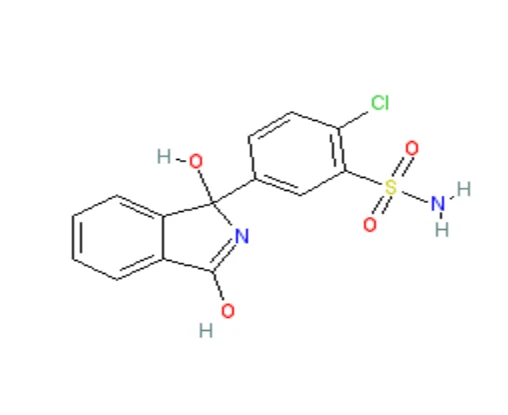
Chemical name: 2-chloro-5-(1,3-dihydroxy-1H-isoindol-1-yl)benzene-1-sulfonamide
Molecular formula and molecular mass: C14H11ClN2O4S; 338.76
Structural formula:
Physicochemical properties:
Physical Form White or yellowish-white powder.
Solubility Very slightly soluble in water, soluble in acetone and in methanol, practically insoluble in methylene chloride. It dissolves in dilute solutions of the alkali hydroxides.
Partition Coefficient Log P = 0.85.
Ionisation constant (pKa) The sulfonamide function present in Chlorthalidone is considered to be responsible for the acid dissociation. The ionisation constant of Chlorthalidone in water is 9.36, which indicates that Chlorthalidone is a weakly mono-acidic compound.
14 CLINICAL TRIALS
The clinical trial data on which the original indication was authorised is not available.
15 MICROBIOLOGY
No microbiological information is required for this drug product.
16 NON-CLINICAL TOXICOLOGY
General Toxicology: Information is not available.
Carcinogenicity: Information is not available.
Genotoxicity: Information is not available.
Reproductive and Developmental Toxicology:
Chlorthalidone had no effect on fertility in rats. Reproduction studies have been performed in the rat and the rabbit at doses up to 420 times the human dose and have revealed no evidence of harm to the fetus due to chlorthalidone.
Special Toxicology: Information is not available.
Juvenile Toxicity: Information is not available.
17 SUPPORTING PRODUCT MONOGRAPHS
1 EDARBYCLOR® Tablets; azilsartan medoxomil potassium and chlorthalidone 40 mg/12.5 mg, 80 mg/12.5 mg and 40 mg/25 mg; Submission Control 246568 Product Monograph Bausch Health, Canada Inc. July 12, 2021
2 TENORETIC® Tablets; atenolol and chlorthalidone tablets 50/25 mg and 100/25 mg Submission Control 190685 Product Monograph AstraZeneca Canada, Inc. July 12, 2016